



Abstract
The Sustainable Development Goals (SDGs) represent a global agenda for achieving a sustainable future for people and the planet to inform decision and policy making at all levels. Children should have a significant voice in shaping the world they will inherit; indeed, SDG 17 is focussed on partnership for the goals. The aim of the present study was to investigate which SDGs are depicted in children's drawings of themselves talking to provide researchers and policy makers insights into their perceptions about, and solutions for, the SDGs. The Children Draw Talking Global Online Gallery (https://www.csu.edu.au/research/childrens-voices-centre/research/childrens-voices) included 200 drawings from children from 24 countries. Children aged 2–12 years responded to the online prompt ‘draw yourself talking’ and submitted their drawing and explanation. A 15-member interdisciplinary research team analysed the drawings to determine their alignment with the seventeen SDGs. Most of the 200 drawings (n = 191, 95.5%) could be coded with at least one SDG. Overall, there were 359 representations of SDGs coded across the data set of 200 drawings. Many children included green public spaces and housing (SDG 11), education (SDG 4), and decision-making (SDG 16) while others portrayed reducing inequality (SDG 10) and addressing poverty (SDG 1). This research demonstrated that children may be implicitly aware of factors related to the Sustainable Development Goals across their lives and provides an exemplar of how children's voices could be included using arts-based methods.
Keywords
I Introduction
The Sustainable Development Goals (United Nations, 2015) represent a global agenda for the achievement of a sustainable future for people and the planet. The framework consists of 17 interconnected goals designed to address complex socio-economic and environmental challenges such as poverty, inequality, health, education, and climate change. Although signatory governments coordinate and monitor national strategies, the implementation of these goals requires active participation from all citizens. SDG17 encourages partnership for the goals, including Target 17.17 that states ‘Encourage and promote effective public, public-private and civil society partnerships, building on the experience and resourcing strategies of partnerships’. Communication is fundamental to the accomplishment of each of the SDGs (McLeod and Marshall, 2023). Many have advocated for ‘Communication for all’ as SDG 18, an additional SDG goal (Vargas and Lee, 2023; McLeod et al., 2023; Servaes and Yusha’u, 2023).
Support and engagement at all levels of society, including children, is important to enable global achievement of the SDGs by 2030 (United Nations, 2023). The 2030 Agenda stated that this generation could be the first to succeed in ending poverty – and the last to have a chance of saving the planet. This higher purpose remains within grasp, but it requires an unprecedented effort by individual Governments, a renewed sense of common purpose across the international community and a global alliance for Sustainable Development Goals-related action across business, civil society, science, young people, local authorities and more. (United Nations, 2023: 4)
Children are central to the SDGs and should be involved in policies and programs at all levels, ‘investments are not just monetary: citizen participation and community action, including the voices of children themselves, are powerful forces for change that must be mobilised to reach the SDGs’ (Clark et al., 2020: 605). Children provide unique and often compelling insights when they are afforded their human right to ‘seek, receive and impart information and ideas of all kinds, regardless of frontiers…’ as articulated in Articles 12 and 13 of the Convention on the Rights of the Child (United Nations, 1989).
Researchers’ understanding of the importance of children's voice, their right to have their views sought, and taken seriously are evident throughout literature addressing the communication rights discourse (McLeod, 2018) and children's rights discourse (Cronin and McLeod, 2022; Mahony et al., 2024; McCormack et al., 2019; Reynaert et al., 2009). However, Lundy (2007) identifies that for the full extent of this human right to be conveyed ‘space, voice, audience, and influence’ are necessary (p. 927). The use of arts-based participatory methods with children can enable children the space to express their voice on matters that affect them (Clark, 2010; Harrison, 2014; Martin, 2019; Roulstone and McLeod, 2011). Drawing is an early form of non-verbal communication (Tversky, 2014), therefore, the use of children's drawing as a participatory data collection tool can support listening to children's voices. Children may experience social and attitudinal barriers to full communicative participation in their communities. Embracing all children's voices requires participatory methods that intentionally embed inclusive principles that support all children, including children who experience a communication disability and/or speak a non-dominant language (McLeod, 2018).
Arts-based methods that enable adults to respectfully listen to young children, particularly those marginalised geographically, linguistically, economically, educationally, and because of disability, have been innovatively applied to ensure children's participation in research activities. For example, in the Sound Effects Study (McCormack et al., 2022), researchers listened to 124 Australian children aged 4–5 years whose parents and teachers were concerned about their talking, and who were clinically assessed as having a speech sound disorder (SSD). Children were invited to ‘draw yourself talking to someone’ using the Sound Effects Study Drawing Protocol. Children's responses reflected the World Health Organization's International Classification of Functioning Disability and Health (ICF) domains of: Body Structure (e.g., portraying talking and listening as an action requiring mouths and ‘listening ears’); Body Function (e.g., talking represented by letters, speech bubbles, and other symbols indicative of an understanding of the importance of the written communication mode); Activities and Participation and Environmental Factors (e.g., drawing talking as an activity that involves a variety of people). Children typically portrayed themselves as happy when talking; however, some children portrayed negativity and isolation when talking. For example, one child indicated restricted participation with their comment, ‘they don’t let me play’, and other children indicated the impact of their SSD by choosing to omit talking from their drawing altogether (McCormack et al., 2022).
1. Context of the current study
The Children Draw Talking study (McLeod et al., 2025) invited children to ‘draw yourself talking to someone’ and submit their drawings online, adapting the Sound Effects Study Drawing Protocol. There were 200 drawings submitted by children from 24 countries and these are available in the Children Draw Talking Global Online Gallery (https://www.csu.edu.au/research/childrens-voices-centre/research/childrens-voices). Two analyses of the Children Draw Talking Global Online Gallery have been undertaken. A children's advisory panel considered and interpreted the drawings to respond to the United Nations’ call for input into the Human Rights 75 Youth Declaration and the resulting document was published on the United Nations website (https://www.ohchr.org/sites/default/files/documents/issues/youth/hr75/submissions/subm-views-youth-led-cso-early-childhood-interdisciplinary-resear.pdf). The second analysis of the Children Draw Talking Global Online Gallery (McLeod et al., 2025) was undertaken by 15 interdisciplinary researchers using the following frameworks: descriptive (McCormack et al., 2022; Restoy et al., 2022), developmental (de Lemos and Doig, 1999), focal point (Holliday et al., 2009; McCormack et al., 2022), meaning making (Vygotsky, 1997), and systemic functional linguistics transitivity analytic frameworks (Halliday and Matthiessen, 2004; O’Halloran et al., 2019). The analysis demonstrated many commonalities across the artworks, despite being drawn from children from 24 countries. The descriptive analysis showed most felt happy when they talked to others (e.g., friends, family, animals, and teachers), and often talked about toys, animals, people, activities, and culture. The developmental analysis showed a correlation between age and ability to draw. The focal points identified were ‘body parts and facial expressions, talking and listening, proximity to others, relationships and connections, and positivity and vibrancy’ (McLeod et al., 2025: 1). Ten themes were identified in the meaning making analysis: ‘relationships, places, actions, natural elements, human made elements, cultural experiences, logical thinking, emotion, imagination, and concepts’ (McLeod et al., 2025: 1). The systemic functional linguistics transitivity analysis demonstrated the richness in the children's depictions by identifying numerous processes, participants, and circumstances. The current study presents an analysis of the Children Draw Talking Global Online Gallery using the lens of the SDGs. Researchers can champion children's voices by considering their understanding of the SDGs.
2. Aim
The aim of the present study was to investigate which Sustainable Development Goals are depicted in children's drawings of themselves talking.
II Method
1. Ethics
The research was approved by the Charles Sturt University Human Research Ethics Committee (approval number H23498). Children's research participation was consented to by caregivers and children provided assent. Names in this paper were chosen by each child and caregiver and are a pseudonym or their own name.
2. Participants
Participants were 200 children aged 2–12 (M = 6.13 years, SD = 2.16) who submitted a drawing for the Early Childhood Voices Conference (ECV2022). Participants spoke 23 different languages and were from 24 countries (Figure 1): Armenia (2), Australia (86), Australia/Fiji (1), Australia/Bangladesh (1), Bangladesh (6), Canada (1), China (1), Croatia (6), Ghana (4), Greece (3), Hong Kong SAR China (2), Hungary (2), Indonesia (30), Iran (4), Latvia (1), Malaysia (2), Netherlands (4), New Zealand (2), Poland (1), Slovakia (3), Spain (1), United Kingdom (4), United States (27), Vietnam (4), ‘Africa’ (n = 1), and no response (1). Over a quarter (28.5%, n = 57) of caregivers had indicated that they had concerns about how their child talked or made speech sounds.
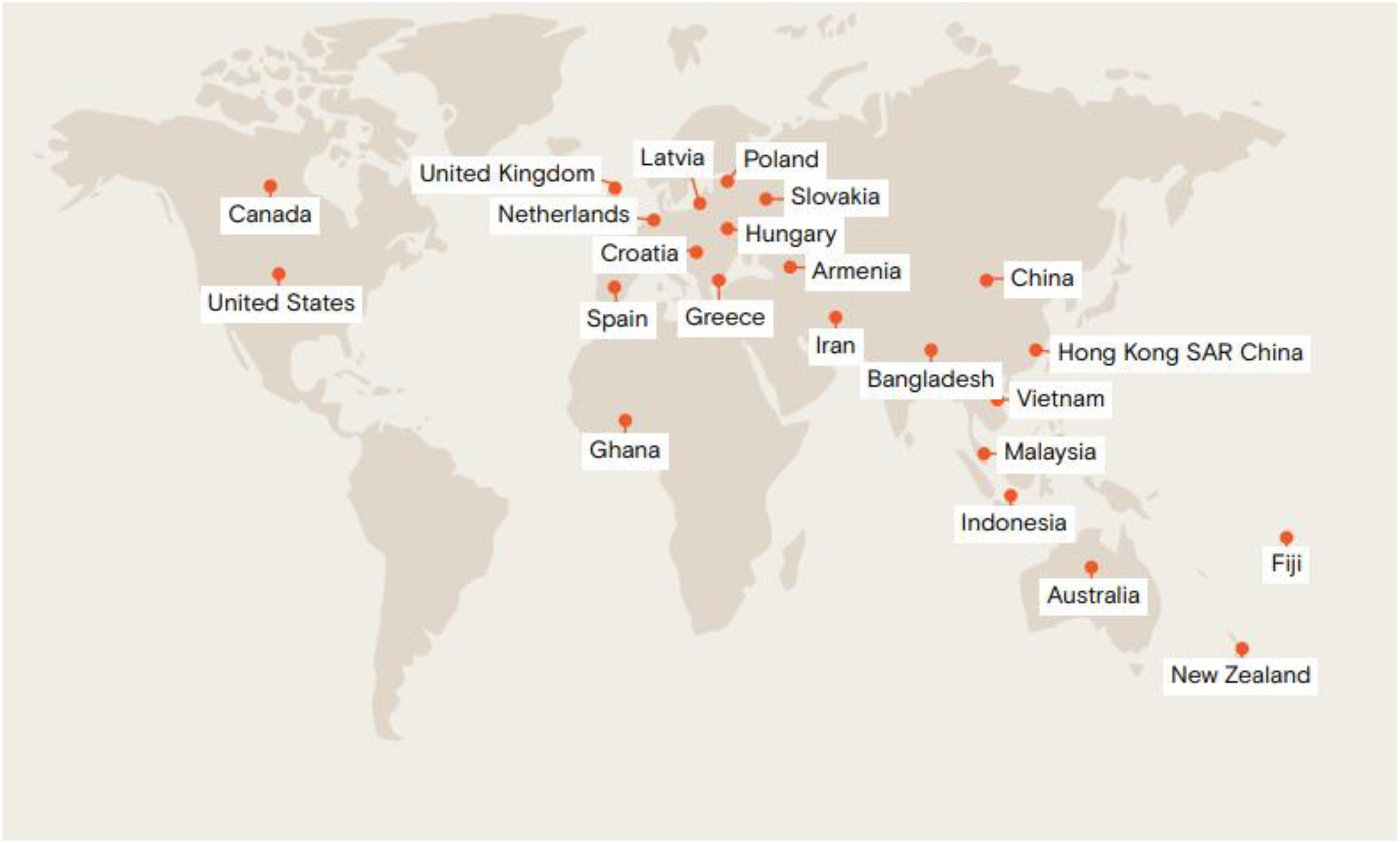
Countries (n = 24) represented in the children draw talking global online gallery. Reprinted with permission from Sharynne McLeod, Carolyn Gregoric, and the Charles Sturt University Children's Voices Centre.
3. Method
As a component of the Early Childhood Voices Conference (ECV2022), children across the world were invited to respond to the online prompt ‘draw yourself talking’ and answer four questions: ‘Who is in the drawing?’, ‘Where are you in the picture?’, and ‘What are you talking about?’, ‘How do you feel about talking’. Caregivers wrote their child's responses to these questions by following the Early Childhood Voices Drawing Protocol (McLeod et al., 2025). Caregivers added the child's name/pseudonym, age, country, languages spoken and answered ‘Do you have concerns about how your child talks or how they make speech sounds?’ (Glascoe, 2000). Caregivers digitised (photographed/scanned) the drawing and uploaded the drawings and their responses via Submittable (online platform) or email. On submission, caregivers had to provide consent and ask their child to provide assent for the drawing and responses to be displayed in the Children Draw Talking Global Online Gallery (https://www.csu.edu.au/research/childrens-voices-centre/research/childrens-voices).
4. Data analysis
The interdisciplinary research team (authors of this paper) located in Australia and Fiji included educators (early childhood, primary and middle school) and health professionals (e.g., speech pathologists, nurses, physiotherapists, and psychologists). The team analysed the 200 children's drawings to determine their alignment with the seventeen SDGs. A code book was created by the research team to determine whether each drawing included a representation of one or more of the seventeen SDGs, and if so, which SDG targets and indicators they depicted. Deductive coding was undertaken using the code book based on the SDGs and targets (Fife and Gossner, 2024). Coding decisions involved small group online consensus discussions with between two and four authors where each drawing and accompanying explanation were discussed with reference to the SDG coding framework. When consensus was reached this was recorded and analysed in an Excel spreadsheet. When agreement was not reached authors discussed the coding to reach consensus. When no SDG could be identified this was recorded.
III Results
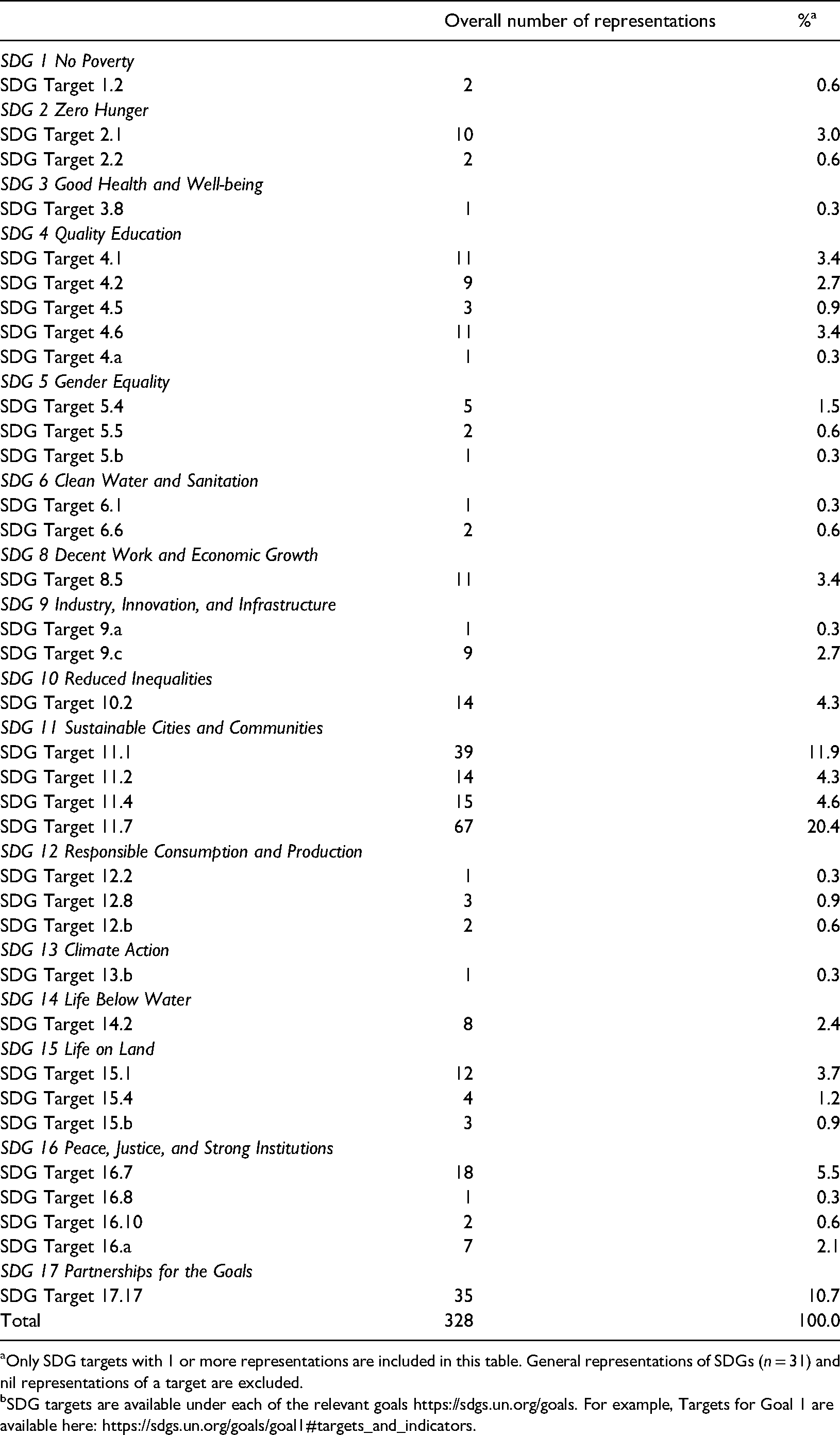
Overall, there were 359 representations of SDGs, 328 of a specific SDG target and 31 generalised depictions, coded across the data set of 200 drawings (Table 1 and Appendix). Most of the 200 drawings (n = 191, 95.5%, M = 5.5 years, SD = 2.22) represented SDG concepts. The average number of SDGs represented in each included drawing was 1.9 (range: 1–5) (Table 1). All SDGs, except SDG7 Affordable and Clean Energy, were represented. Only the drawings coded as portraying SDGs were included in the findings reported below (n = 191). The drawings (n = 9, 4.5%) that were not coded as representing an SDG displayed treasure, monsters and other imaginary figures. These were excluded from further analysis. Each of the SDGs will be described providing both an overall summary of the drawings that depicted that SDG and a specific example (Figure 2).
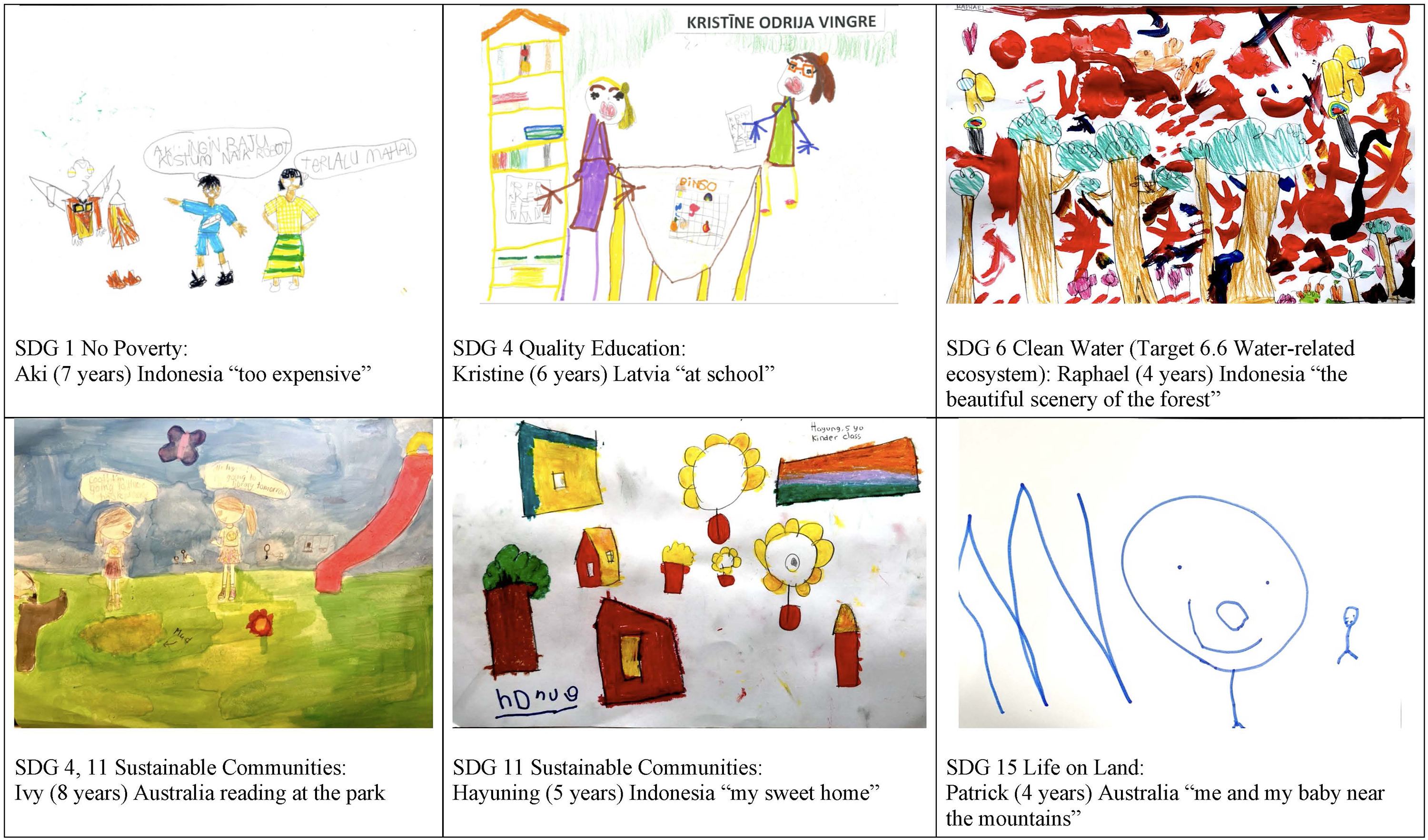
Examples of children's drawings related to SDGs. © Reprinted with permission from Sharynne McLeod, Carolyn Gregoric, and the Charles Sturt University Children's Voices Centre, 2025.
Overall SDG representations from the children draw talking global online gallery (n = 191 drawings).a
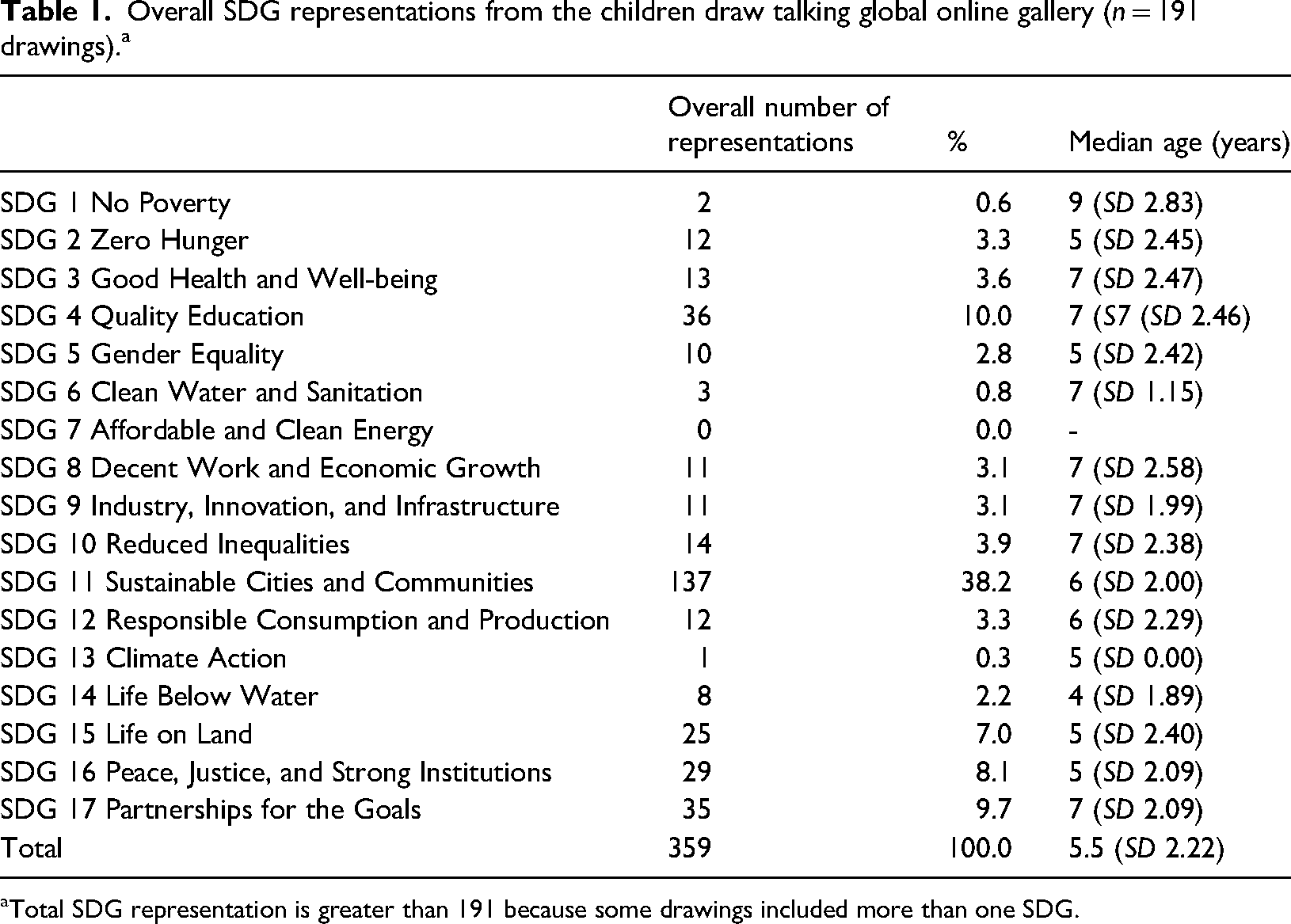
Total SDG representation is greater than 191 because some drawings included more than one SDG.
SDG 1 No Poverty (n = 2, 0.6%). Despite the range of countries represented, only two children's drawings were coded as focusing on SDG 1. Both drawings were coded as relating to Target 1.2. ‘…reduce at least by half the proportion of men, women and children of all ages living in poverty in all its dimensions’. For example, Aki (7 years, Indonesia) commented ‘I told my aunt that I want the clothes/costume. She said it was too expensive’.
SDG2 Zero Hunger (n = 12, 3.3%). Ten children's drawings were coded as depicting ‘Target 2.1 … access by all people … to safe, nutritious and sufficient food all year round’ and two were coded as depicting Target 2.2 ‘end all forms of malnutrition’. For example, Melissa (4 years, Australia) said she had drawn ‘Me and my Dad is cooking my dinner’.
SDG3 Good Health and Well-Being (n = 13, 3.3%). Twelve of the children's drawings were coded as SDG 3, and one was specifically coded with Target 3.8 relating to ‘access to quality essential health-care services … medicines and vaccines’. For example, Harlan (5 years, Australia) explained that his drawing depicted ‘I am sick at home & mamma is sick as well… We’re not talking because we are sick’.
SDG 4 Quality Education (n = 36, 10.0%). Many children's drawings were coded as depicting SDG 4 and included schools, preschools, and examples of themselves reading and writing. Children's drawings were coded as focusing on Targets 4.1 (11 drawings) ‘ensure that all girls and boys complete free, equitable and quality primary and secondary education leading to relevant and effective learning outcomes’, Targets 4.2 (9), 4.5 (3), 4.6 (11) ‘…achieve literacy and numeracy…’, 4a (1), and 4 overall (1) (Appendix). For example, Arad (5 years, Iran) said he drew ‘I am standing in the school office’. Ivy (8 years, Australia), described her picture by stating ‘I love chatting with friends about the books I read’. In another example, Kristine (6 years, Latvia) illustrated herself and a speech therapist ‘playing a word game … in school’.
SDG 5 Gender Equality (n = 10, 2.8%). Children's drawings were coded as focusing on Targets 5.4 (5 drawings), 5.5 (2 drawings), 5b (1 drawing), and 5 overall (1 drawing) (Appendix). For example, several children's drawings were coded as relating to Target 5.4, because they ‘recognise and value unpaid care and domestic work’. For example, Layla (3 years, England) drew a picture of herself and her mother ‘Telling Mummy I love you…Because I like Mummy playing with me’. Target 5.b ‘Enhance the use of enabling technology, in particular information and communications technology, to promote the empowerment of women’ was demonstrated by Elsie (9 years, Australia) who was comfortably using communications technology with her friend ‘Talking on Zoom… Greeting each other then we’ll go into deeper conversation. It's a new way of talking now. It's just how we do it now’.
SDG 6 Clean Water and Sanitation (n = 3, 0.8%). One of the children's drawings was coded as focusing on Target 6.1 ‘safe and affordable drinking water for all’ and two were coded as focusing on Target 6.6 ‘protect and restore water-related ecosystems, including mountains, forests, wetlands, rivers, aquifers and lakes’. For example, Charlie (6 years, USA) drew ‘Mrs. Breha and me…at the park… That's snow above us and grass with a pond’. Raphael (4 years, Indonesia) drew a vibrant picture ‘about the beautiful scenery of the forest’.
SDG 8 Decent Work and Economic Growth (n = 11, 3.1%). Eleven children's drawings were coded as focusing on Target 8.5 ‘… full and productive employment and decent work for all women and men, including for young people and persons with disabilities’. For example, Lachlan (9 years, Australia) drew himself as an astronaut. His friend asked, ‘How is being an astronaut?’ and his response was ‘It is fun, but it requires a lot of hard work’. Omid (7 years, Iran) drew himself making a robot and said, ‘Because in the future I want to become a robot maker’. Teoh (9 years, Malaysia) drew a model in a fashion show and said, ‘I want to be a model next time’. Lincoln (10 years, Australia) drew a picture of two people sitting at a table, and he described his drawing as: ‘Me and the boss… talking about what we are doing…because I am kind’.
SDG 9 Industry, Innovation, and Infrastructure (n = 11, 3.1%). Eleven drawings were coded as relating to Target 9a ‘access to information and communications technology’ and Target 9c ‘technological and technical support to African countries, least developed countries, landlocked developing countries and small island developing States’. Most of these were drawn by children in Indonesia. For example, Landung (9 years, Indonesia) drew Monster Emerald ‘Because Landung likes to play Minecraft games’.
SDG 10 Reduced Inequalities (n = 14, 3.9%). All 14 drawings were coded as relating to Target 10.2 ‘By 2030, empower and promote the social, economic and political inclusion of all, irrespective of age, sex, disability, race, ethnicity, origin, religion or economic or other status’. For example, Kinan (7 years, Indonesia) who had a communication disability drew ‘Me and Dad. This is the guy who made the candy… I want to have some candy and Dad allowed it… Sometimes I feel ashamed to talk to other people. But I’m not ashamed to be with my Papa and Mama’.
SDG 11 Sustainable Cities and Communities (n = 137, 38.2%). SDG 11 was the most prominently identified goal across the children's drawings. SDG 11 was represented by houses, backyards, parks and playgrounds. Two drawings depicted sustainable cities and communities broadly. Most of the drawings (n = 67) depicted Target 11.7 ‘…access to safe, inclusive and accessible, green and public spaces, in particular for women and children…’ and many children spent considerable time using green colours in their drawings. For example, Lila (9 years, USA) drew herself and her friend ‘in the green space’. Ivy who lives in Australia and speaks Vietnamese and English painted a vibrant green grass park and a slide with herself discussing books with her friend. Target 11.1 ‘safe and affordable housing’ was depicted in 39 drawings. For example, Hayuning (5 years, Indonesia) drew ‘my sweet home’ and said she was ‘talking about my house full of flowers and trees’. Target 11.2 ‘safe, affordable, accessible and sustainable transport systems for all’ was depicted in 14 drawings. For example, Vid (4 years, Croatia) drew himself and his friend next to a train and described the drawing as ‘In the city of Uarazdin…just walking…talking about trains’. Target 11.4 ‘safeguard the world's cultural and natural heritage’ was depicted in 15 drawings. For example, Yuchen (9 years, China) explained that her drawing depicted: ‘We drove to the Palace Museum to celebrate the birthday of my country. I am saying happy birthday to my country, I love you!’
SDG 12 Responsible Consumption and Production (n = 12, 3.3%). Six of the drawings were coded as relating to SDG 12 in general, with others being coded as relating to Target 12.2 ‘efficient use of natural resources,’ 12 b ‘sustainable tourism that creates jobs and promotes local culture and products,’ and 12.8 ‘relevant information and awareness for sustainable development and lifestyles in harmony with nature’ (Appendix). For example, Tymon (8 years, Poland) drew ‘Me and a spider’ and said ‘I’m inviting the spider up to the tree house for some apple cake…I love nature and little creatures’.
SDG 13 Climate Action (n = 1, 0.3%). SDG13 was the least represented SDG with only one drawing being coded as 13b ‘effective climate change-related planning and management’. Surprisingly, only a few children drew the sun, even though this is often depicted in young children's drawings. A few drew clouds and rain.
SDG 14 Life Below Water (n = 8, 2.2%). Eight drawings were coded as relating to Target 14.7 ‘sustainably manage and protect marine and coastal ecosystems’. For example, Avin (3 years, Iran) drew ‘Some imaginary animals and they are like a shark, frog, beside some trees and they are talking to a circle… In different places; under the sea, beside a tree, here at home’. Ayy (7 years, Indonesia) drew ‘At the beach, at sea…I am watching sharks swimming at the sea…Because I like to be at the beach’.
SDG 15 Life on Land (n = 25, 7.0%). Twelve drawings were coded as relating to Target 15.1 ‘…terrestrial and inland freshwater ecosystems and their services, in particular forests, wetlands, mountains and drylands…’. Four were coded as relating to Target 15.4 ‘conservation of mountain ecosystems,’ three were coded as relating to Target 15.b ‘sustainable forest management’ and six related broadly to SDG 15 (Appendix). For example, Patrick (4 years Australia) drew ‘me and my baby… near the mountains’.
SDG 16 Peace, Justice, and Strong Institutions (n = 29, 8.1%). Eighteen drawings were coded as relating to Target 16.7 ‘Ensure responsive, inclusive, participatory and representative decision-making at all levels’. These drawings demonstrated children's negotiation and decision-making. Other drawings were coded as relating to Targets 16.8, 16.10, 16a and SDG 16 generally (Appendix). For example, Neo (5 years, Croatia) drew ‘Dina and me…At the wedding…Getting married and dancing…Because I adore her’.
SDG 17 Partnerships for the Goals (n = 35, 9.7%). Thirty-five drawings were coded as relating to Target 17.17 ‘Encourage and promote effective public, public-private and civil society partnerships’. Often, SDG 17 was exemplified by best friends and sharing. For example, Rhylee (4 years, Australia) drew herself talking to her father and sister about ‘sharing toys’.
A drawing portraying five SDGs (Shashwata, Bangladesh, age 5 years) is an example of interrelationships between the goals. Shashwata said ‘We are talking about the beauty of our village home. We are living in a rented tiny apartment house at Khulna city and once or twice in a year we visit our village home. Our village home is very beautiful. There are many things to enjoy and play. There are my grandmother, uncles and cousins. There is a pond with fishes, trees, birds, river, paddy fields, cows, goats and open yard to play’ (SDG 5, SDG 11, SDG 12, SDG 13, SDG 16) (Figure 3).
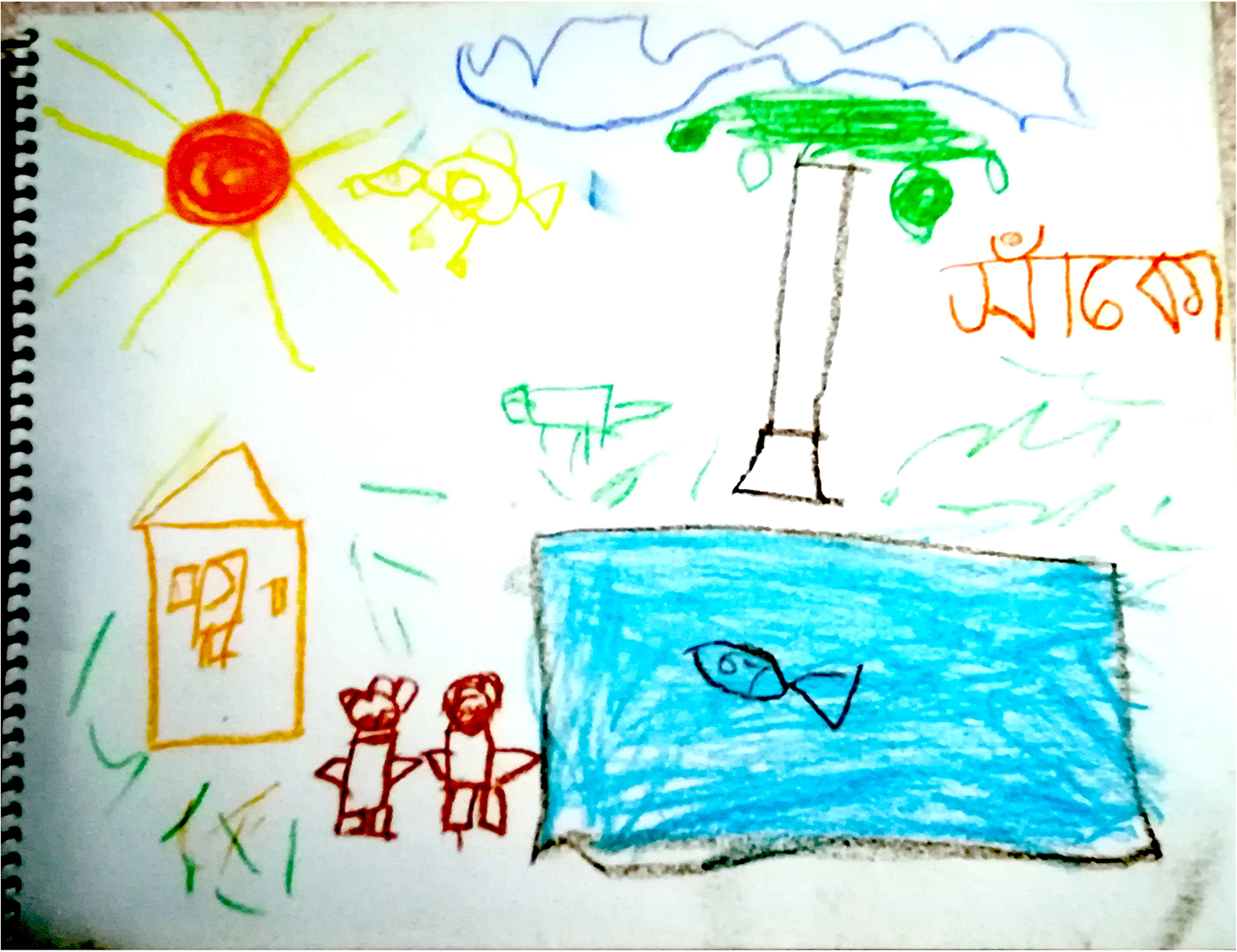
A drawing by Shashwata aged 5 from Bangladesh demonstrating SDG 5, SDG 11, SDG 12, SDG 13, and SDG 16: “We are talking about the beauty of our village home. We are living in a rented tiny apartment house at Khulna city and once or twice in a year we visit our village home. Our village home is very beautiful. There are many things to enjoy and play. There are my grandmother, uncles and cousins. There is a pond with fishes, trees, birds, river, paddy fields, cows, goats and open yard to play.” ©Reprinted with permission from Sharynne McLeod, Carolyn Gregoric, and the Charles Sturt University Children's Voices Centre, 2025.
IV Discussion
Children are stakeholders and future citizens of the 2030 world envisioned by the SDGs. This research was undertaken to include children's voices, enabling meaningful participation in shaping the future they will inherit. This study provided an example of how children's art and creativity can amplify their voices, providing ‘space, voice, audience, and influence’ (Lundy, 2007: 927) for their insights. Although the original drawing prompt ‘draw yourself talking to someone’ did not refer to the SDGs, the researchers coded the majority of children's drawings as incorporating elements of the SDGs. The fact that children were not invited to draw their response to the SDGs is seen as a strength of the research. By using the open-ended prompt to ‘draw yourself talking,’ the research demonstrated that children may be implicitly aware of factors related to the SDGs across their lives.
Children are important stakeholder voices when considering the priorities of the SDGs. Many of these 200 children from 24 countries highlighted access to green public spaces and housing (SDG11), education (SDG 4), and decision-making (SDG 16), while others portrayed topics relating to the challenges in reaching SDG goals, such as reducing inequality (SDG 10) and addressing poverty (SDG 1). Children's SDG representations in the current study predominantly focussed on different SDGs than those that dominate the academic literature (Yumnam et al., 2024). When these children drew themselves talking, they rarely drew images relating to zero hunger (SDG 2), good health and well-being (SDG 3), and climate action (SDG 13); however, they did depict elements in their drawings relating to sustainable cities and communities (SDG 11) (Gregoric et al., 2025a).
The diversity of drawings across each of the SDGs may demonstrate the depth to which children are capable of comprehending and contributing to the SDGs. The children's drawings depict energy, ideas, and optimism for the future as well as issues with the current state of the world (Clark et al., 2020). Knowledge of the SDGs can be effectively imparted to children and is increasingly shaping educational methodologies and curricula. Educators are working with students to increase understandings of the SDGs using a range of pedagogical tools, including arts-based methods. Arts-based approaches enable children to consider the SDGs differently (Chapman and O’Gorman, 2022). For example, Weng and colleagues (2024) combined digital animation with learning about SDG 15, life on land, in Grade 5 (elementary school) classrooms in Taiwan.
1. Limitations and future directions
It is important to acknowledge some of the limitations of the study including that the children were not invited to represent the SDGs, and the interpretations of the drawings were made by adults. The sample was collected by caregivers via an unmoderated remote research protocol without direct researcher interaction (Gregoric et al., 2025b; Shields et al., 2021). Children's responses may have been different if they interacted with researchers. Additionally, the submission form was written in English, requiring adults with English competence to be included in the research (encouragingly, many of the children spoke languages other than English and included Chinese, Indonesian, and Vietnamese orthography on the drawings). There was not a representative spread of countries, with more drawings from Australia and Indonesia than from other countries. Nor were children 13 to 18 years represented in the data. The Lundy model (2007) provided a framework for listening to children's voices about the SDGs as expressed through drawings by considering space, voice, audience, and influence. Currently children have limited space or opportunity to provide their views about the SDGs. An inclusive space needs to be created to invite children's views. Ideally, this space is with trusted adults and in familiar surroundings. Online collection of drawings facilitated this inclusivity and familiarity (McLeod et al., 2025). The current research's protocol was based on the face-to-face elicitation with the Sound Effects Study Drawing Protocol (McCormack et al., 2022). Children have a voice when they can freely express their views on what matters to them at the time via their preferred communication means – and are listened to. Many children communicate via drawings and the current study has demonstrated that elicitation can be remote, the researchers do not need to be face-to-face. There is potentially a broad audience for children's voices if adults are prepared to listen. SDG17 encourages partnership for the goals, including Target 17.17 that states ‘Encourage and promote effective public, public-private and civil society partnerships, building on the experience and resourcing strategies of partnerships’ and 17.9 that encourages States Parties to ‘Enhance international support for implementing effective and targeted capacity-building in developing countries to support national plans to implement all the Sustainable Development Goals, including through North-South, South-South and triangular cooperation’. The current research provided a mechanism whereby children's voices can have influence and are valued.
V Conclusion
It is possible to advance the SDGs by including children's voices as expressed through their drawings. The SDGs focus on people and the planet. Although many of the SDGs impact children, so far, decision making has largely excluded children's participation. Yet, when provided with child-friendly means to participate, children can meaningfully communicate their ideas and contribute to finding solutions to the challenges targeted by the SDGs. This research supports the possibility that young children can partner with adults (SDG 17) using child-centred methods to provide researchers and policy makers insights into their perceptions about, and solutions for, the SDGs. Arts-based methods of data collection potentially enable children of all ages from across the globe to meaningfully contribute to discussions about the SDGs. Our sample of children's drawings illustrates the relevance of SDGs in their lives and children's capacity to participate in discussions about their future. Children have important insights about the world that can be highlighted when researchers apply child-centred research methods. Future research should recognise young children as partners with adults. Together, we can provide solutions to help the world meet the SDGs and make a better future for all children.
Footnotes
Acknowledgements
The authors thank the Australian advisory panel of children for their contributions to this research and all children who submitted a drawing to the Children Draw Talking Global Online Gallery. An earlier version of this paper was presented at the 2024 International Conference on Sustainable Development (ICSD)  .
.
Data availability statement
Declaration of conflicting interests
The authors declared no potential conflicts of interest with respect to the research, authorship, and/or publication of this article.
Ethical approval and informed consent statements
The research was approved by the Charles Sturt University Human Research Ethics Committee (approval number H23498). Children's research participation was consented to by caregivers and children provided assent. Names in this paper were chosen by the children and their caregivers and are a pseudonym or their own name.
Funding
The authors disclosed receipt of the following financial support for the research, authorship, and/or publication of this article: The Children Draw Talking research was undertaken by members of the Children's Voices Centre (previously known as the Early Childhood Interdisciplinary Research Group funded by the Charles Sturt University Sturt Scheme).
ORCID iDs
Appendix. SDG representations by SDG target from the Children Draw Talking Global Online Gallery. a
| Overall number of representations | %a | |
|---|---|---|
| SDG 1 No Poverty | ||
| SDG Target 1.2 | 2 | 0.6 |
| SDG 2 Zero Hunger | ||
| SDG Target 2.1 | 10 | 3.0 |
| SDG Target 2.2 | 2 | 0.6 |
| SDG 3 Good Health and Well-being | ||
| SDG Target 3.8 | 1 | 0.3 |
| SDG 4 Quality Education | ||
| SDG Target 4.1 | 11 | 3.4 |
| SDG Target 4.2 | 9 | 2.7 |
| SDG Target 4.5 | 3 | 0.9 |
| SDG Target 4.6 | 11 | 3.4 |
| SDG Target 4.a | 1 | 0.3 |
| SDG 5 Gender Equality | ||
| SDG Target 5.4 | 5 | 1.5 |
| SDG Target 5.5 | 2 | 0.6 |
| SDG Target 5.b | 1 | 0.3 |
| SDG 6 Clean Water and Sanitation | ||
| SDG Target 6.1 | 1 | 0.3 |
| SDG Target 6.6 | 2 | 0.6 |
| SDG 8 Decent Work and Economic Growth | ||
| SDG Target 8.5 | 11 | 3.4 |
| SDG 9 Industry, Innovation, and Infrastructure | ||
| SDG Target 9.a | 1 | 0.3 |
| SDG Target 9.c | 9 | 2.7 |
| SDG 10 Reduced Inequalities | ||
| SDG Target 10.2 | 14 | 4.3 |
| SDG 11 Sustainable Cities and Communities | ||
| SDG Target 11.1 | 39 | 11.9 |
| SDG Target 11.2 | 14 | 4.3 |
| SDG Target 11.4 | 15 | 4.6 |
| SDG Target 11.7 | 67 | 20.4 |
| SDG 12 Responsible Consumption and Production | ||
| SDG Target 12.2 | 1 | 0.3 |
| SDG Target 12.8 | 3 | 0.9 |
| SDG Target 12.b | 2 | 0.6 |
| SDG 13 Climate Action | ||
| SDG Target 13.b | 1 | 0.3 |
| SDG 14 Life Below Water | ||
| SDG Target 14.2 | 8 | 2.4 |
| SDG 15 Life on Land | ||
| SDG Target 15.1 | 12 | 3.7 |
| SDG Target 15.4 | 4 | 1.2 |
| SDG Target 15.b | 3 | 0.9 |
| SDG 16 Peace, Justice, and Strong Institutions | ||
| SDG Target 16.7 | 18 | 5.5 |
| SDG Target 16.8 | 1 | 0.3 |
| SDG Target 16.10 | 2 | 0.6 |
| SDG Target 16.a | 7 | 2.1 |
| SDG 17 Partnerships for the Goals | ||
| SDG Target 17.17 | 35 | 10.7 |
| Total | 328 | 100.0 |
Only SDG targets with 1 or more representations are included in this table. General representations of SDGs (n = 31) and nil representations of a target are excluded.
SDG targets are available under each of the relevant goals https://sdgs.un.org/goals. For example, Targets for Goal 1 are available here: https://sdgs.un.org/goals/goal1#targets_and_indicators.