




Abstract
Communication is essential to everyday life; however, youth experiences of post-concussion communication changes are often overlooked and misunderstood. Researchers have yet to investigate how socio-cultural values, assumptions and beliefs about communication and concussion shape youths’ concussion recoveries. Concussions are commonly misunderstood as ‘mild’ injuries with limited impact on daily life. However, approximately 30% of youth experience far-reaching, complex or prolonged concussion symptoms, including changes in communication. Ecocultural theory provided the framework for this arts-based reflexive collective case study. The study aimed to explore (mis)understandings of communication and concussion that youth aged 16–25 years navigated during their recoveries. Five youths participated in in-depth interviews and contributed arts-based materials representing their experiences. Using multiple forms of participant communication, including verbal expression, artwork, poetry, journal entries and photography, enriched the understanding of the cases. Family member interviews further explored socio-cultural and relational understandings and expectations of communication and concussion recovery. Reflexive thematic analysis yielded themes of normative communication, hard work, time and independence. Navigating (mis)understandings of post-concussion communication changes and assumptions about ‘typical’ concussion recoveries added to the unseen and unacknowledged recovery burden the youth experienced, and affected their sense of identity and participation in daily activities. Identifying and challenging these (mis)understandings of concussion and communication changes is an essential first step to easing the burden experienced by youth navigating these changes and creating more inclusive communication environments. Research findings emphasise the need to conduct studies that not only include but also prioritise the perspectives and experiences of young people who communicate in varied ways by using methods that allow participants to draw on their communication strengths and express their experiences across multiple modalities. This information is essential for guiding the development and implementation of youth-centred communication interventions, education programs, and advocacy activities.
Keywords
Introduction
Adolescence is a pivotal stage of social, emotional and academic development, during which communication abilities are central to participation in school, peer relationships and everyday activities (Harasym et al., 2024a; MacDonald, 2017; Rogers, 2025). Concussions are a significant health concern for young people, with one in 10 youths sustaining a concussion annually (Farmer et al., 2021). While most youth demonstrate symptom resolution within the first month post-injury, approximately 30% experience prolonged concussion symptoms, including disruptions in communication, cognition, motor skills, sleep and emotional responses (Ewing-Cobbs et al., 2018; Reed et al., 2019). A range of concussion-related communication changes have been reported, including disrupted cognitive communication skills, which interfere with the ability to process, understand or express oneself using verbal or written language (MacDonald, 2017), difficulties with speech production (Hardin and Kelly, 2019) and stuttering (Cherry and Gordon, 2017). Although these communication difficulties are often invisible to others and viewed as ‘mild’, changes in speaking, listening, reading, writing and interacting with others can profoundly disrupt youths’ sense of identity and ability to meet the social, academic and relational demands of daily life (Harasym, 2023; Harasym et al., 2024a, 2024b). Youth experiencing prolonged post-concussion symptoms are therefore at heightened risk for academic difficulties, lower rates of friendships, increased loneliness and adverse mental health outcomes, particularly when communication difficulties are present (Valovich McLeod et al., 2017).
Timely access to rehabilitation services is considered best practice in concussion management (Lumba-Brown et al., 2018; O’Brien et al., 2022), including speech-language pathology (SLP) services when communication difficulties are identified (MacDonald, 2025; MacDonald and Shumway, 2024; Speech-Language and Audiology Canada, 2019). Despite calls to prioritise communication-focused concussion care (Speech-Language and Audiology Canada, 2019), communication concerns are rarely described in standardised concussion screening tools or concussion management protocols (MacDonald, 2025), and fewer than half of individuals who could benefit from SLP services receive care (MacDonald, 2017; MacDonald and Shumway, 2024). These service gaps render the health, educational and social consequences of post-concussion communication changes largely unaddressed (MacDonald, 2017). Youth, in particular, stand to benefit from early and responsive communication supports, given their reliance on communication skills to navigate school, employment, social relationships and recreational contexts during this life stage (Brown et al., 2019).
Misunderstandings of concussions may reduce youths’ opportunities to receive social-emotional support from family and peers, and hinder the implementation of academic accommodations. Young people experiencing debilitating yet invisible and subjective concussion symptoms after what is typically considered a ‘mild’ injury report facing scrutiny about the validity of their concerns from parents and other significant adults, such as teachers and coaches (Bridel et al., 2019). Educational contexts are primary settings for youths’ post-concussion recovery. However, researchers have identified gaps in educators’ concussion knowledge and ability to implement return-to-learn protocols and academic accommodations (O’Neill et al., 2017). These gaps are significant, as such supports may directly or indirectly mitigate the impact of post-concussion communication difficulties on classroom activities, including note-taking, reading comprehension, assignment completion, and test-taking. Although an estimated 40% to 70% of students who sustain a concussion require academic accommodations, teachers and school administrators may lack the training, guidance, or resources necessary to implement these supports effectively (Heyer et al., 2015; O’Neill et al., 2017). Moreover, limited or inaccurate understandings of concussion symptoms and recovery trajectories can further constrain educators’ ability to recognise students’ needs and respond appropriately (Bridel et al., 2019; Heyer et al., 2015). Lack of support and skepticism of concussion symptoms from teachers and parents, as well as concerns about poor grades and falling behind in their studies, can contribute to youths’ feelings of frustration, isolation, and anxiety. Navigating these challenges and misunderstandings adds to youths’ emotional burden during their concussion recoveries (Bridel et al., 2019; Caron et al., 2017).
Research on post-concussion communication changes has been shaped by biomedical frameworks that prioritise symptom measurement and clinician-reported outcomes, often relying on proxy accounts from healthcare providers, educators or family members to validate the often subjective, invisible and variable experiences of youth experiencing communication changes after a concussion (Brooks et al., 2022; Buck et al., 2012). The perspectives of youth experiencing prolonged or complex concussion symptoms are markedly underrepresented in the concussion literature, and research attending to the ecological, cultural and social-relational dimensions of youth concussion recovery is particularly sparse (Bridel et al., 2019; Eagle, 2014, 2014; Mah et al., 2022).
Taken together, these findings point to a critical need for research that centres youths’ perspectives on how concussion and communication are understood and (mis)understood within their recovery contexts. Understanding how socio-cultural assumptions about concussion shape young people's experiences of communication changes is essential to informing communication-focused concussion rehabilitation and educational practices. This research requires an approach that actively values and includes the perspectives of youth, regardless of communication modality, language or ability to communicate in dominant or privileged ways, to guide the development and delivery of client-centred, evidence-based communication interventions (McCormack et al., 2022; McLeod, 2018). Accordingly, this research focuses on using a range of communication modalities to listen and learn from youth to: (1) make visible the socio-cultural assumptions, values and beliefs that shape youths’ experiences of post-concussion communication changes; (2) explore how youth and their family members navigate these assumptions, values and beliefs during their recoveries; and (3) identify practice implications for youth concussion rehabilitation. This research is relevant to speech-language pathologists, healthcare professionals, and educators seeking to better recognise, respond to, and advocate for youth experiencing post-concussion communication changes.
Theoretical framework
Drawing on the work of interpersonal communication scholars (c.f. Schrodt, Braithwaite & Phillips, 2021), we conceptualised communication as symbolic, interactive, relational, dynamic, complex and co-constructed within environmental, social and cultural systems. Ecocultural theory was selected as the study's guiding theoretical framework, as it allows for the exploration of the ecological, social and cultural systems of youth experiencing post-concussion communication changes encountered in their daily lives. Ecocultural theory draws attention to activity settings as units of cultural analysis, prompting researchers to inquire about ‘the who, what, when, where, and whys of everyday life’ (O’Donnell and Tharp, 1990: 253). The following five activity settings are typically used to frame an ecocultural analysis: (a) people present, (b) task demands, (c) scripts for conduct, (d) motivations, feelings and purposes and (e) cultural assumptions, values and beliefs (Weisner, 2002). Acknowledging communication's integral role in daily activities, activity settings and the maintenance and transmission of social and cultural assumptions, values and beliefs, we asked: (1) What communication and concussion (mis)understandings do youth encounter during their concussion recoveries? (2) How do youth navigate and (re)produce these communication and concussion (mis)understandings as they adapt to post-concussion communication changes in their daily lives?
Methods
Arts-based reflexive collective case study design
By drawing upon collective case study methodology (Stake, 1995), reflexive methodology (Alvesson and Sköldberg, 2018) and arts-based methods (Barone and Eisner, 2012), we crafted an arts-based reflexive collective case study to address the research questions (Harasym, 2023; Harasym et al., 2024a, 2024b). Collective case study design (Schoepf and Klimow, 2022; Stake, 1995) involves gathering data to form a collection of cases that yield a deep understanding of the phenomenon of interest. This study focused on characterising the dominant communication and concussion (mis)understandings that youth participants encountered during concussion recovery. Informed by ecocultural theory, the cases were built around each youth participant to construct an in-depth understanding of how the youth navigated and (re)produced these (mis)understandings in their daily lives. To listen to and learn from youth who communicate differently, the research team employed principles of accessible and inclusive research and arts-based research methods to enhance the cognitive and communication support provided to the participants during the interviews (Harasym et al., 2024b; McCormack et al., 2022). Specifically, arts-based methods (a) provided youth with an opportunity to direct their involvement and influence in the research process, (b) made space for youth to engage in alternate ways of expressing their experiences and feelings about their post-concussion communication changes, (c) supported youths’ memory and communication during data collection, (d) facilitated participant–researcher reflexive dialogue and researcher reflexivity and (e) enhanced the overall richness of data collected (Harasym et al., 2024a, 2024b).
Reflexivity is the intentional and ongoing process of identifying and critically reflecting on how personal experiences, values and assumptions, situated in societal, historical, cultural, political and geographical contexts, shape how we interpret and respond to others’ actions (Bourdieu and Wacquant, 1992; Lumsden, 2019). This study offers one perspective among many. Each research team member brought their own professional insights, paradigmatic perspectives and personal experiences to the work. As a speech-language pathologist, Author 1's in-clinic experiences inspired the research questions and decision to incorporate arts-based methods to enrich data collection and generation. Supervising authors (2, 3 and 4) contributed expertise from physical therapy, SLP and occupational therapy, and research experience in concussions, communication sciences and qualitative methodologies. We acknowledge the limitations posed by our positionalities, as none of the authors has personally experienced changes in communication after a concussion. Ongoing researcher reflexivity was essential to mitigating these limitations, and our varied experiences enhanced our ability to challenge assumptions, values and beliefs. Critical self-reflection, reflexive journaling and reflexive dialogue with research team members were purposefully and systematically embedded in the research process to support ongoing identification and questioning of the assumptions, values and beliefs that influenced the research.
Participant recruitment and case descriptions
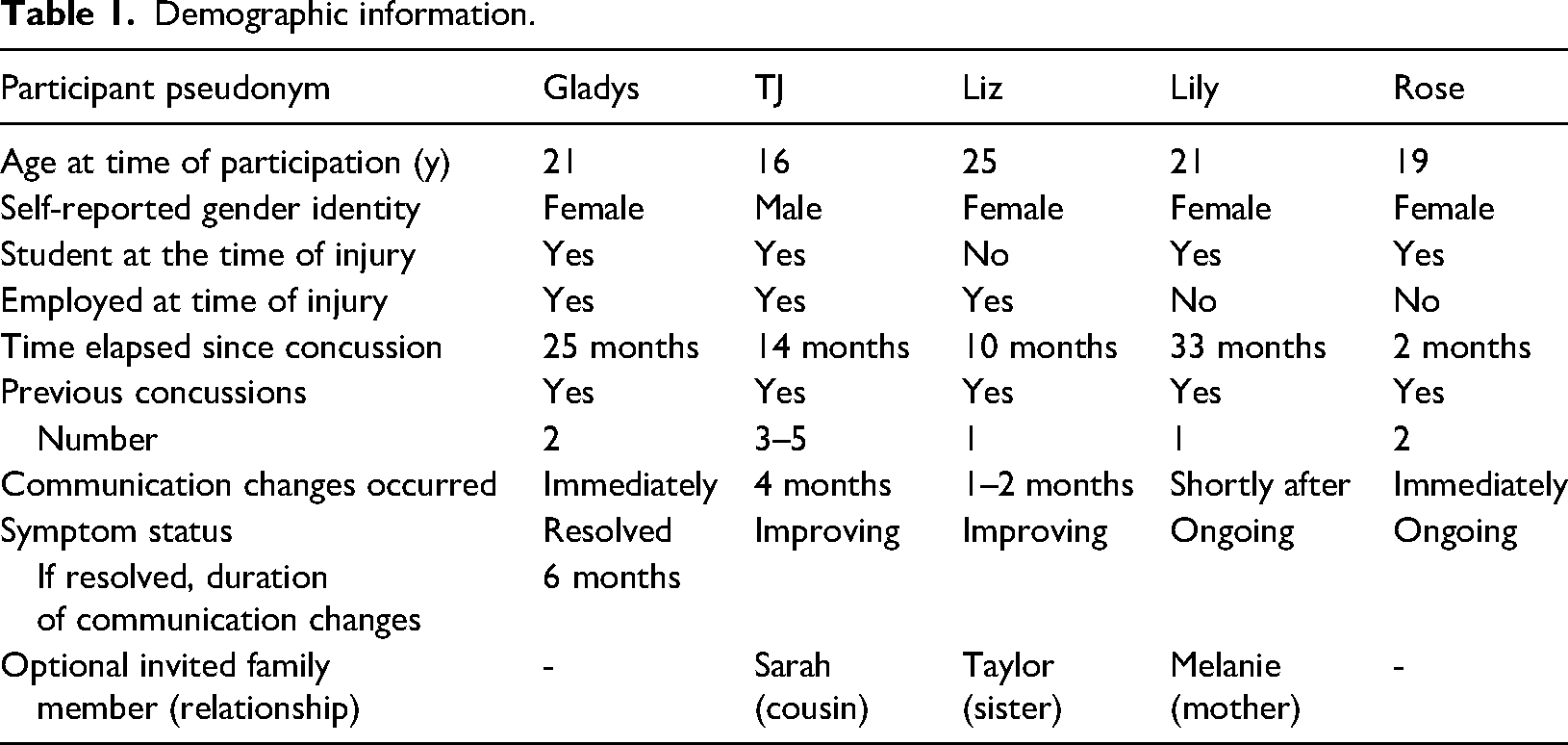
Five youth participants and three family members participated in the study (Table 1). Following ethics approval from the University of Alberta Health Research Ethics Board, REB: Pro00103888, and Dalhousie University Health Sciences Research Ethics Board, REB#: 2021-5585, participants were recruited through email, social media, word-of-mouth and partnerships with concussion healthcare providers. Youths aged 15 and older were deemed able to provide consent for study participation. Broad inclusion criteria were employed to promote maximum variation across cases (Flyvbjerg, 2006). English-speaking Canadian youth aged 15–30 years (Garriguet, 2021) who experienced communication changes following concussion, including talking, listening, reading, writing or social interaction, were invited to participate in the study. No constraints were placed on the number of previous concussions sustained or the time elapsed since the concussion. Youth had the opportunity to invite a family member to participate in an interview, which provided additional insights into how they navigated changes in communication within the context of their family life.
Demographic information.
Data generation
Guided by qualitative standards of credibility, rigour, and trustworthiness, multiple perspectives and data sources were woven together to generate rich and contextualised case descriptions (Geertz, 1973) that resonate with the reader (Tracy, 2010). Cases were composed of multiple data sources: (a) responses to pre-interview questions; (b) three semi-structured participant interviews; (c) arts-based participant-generated materials (PGMs); (d) invited family member interview (optional); (e) researcher field notes, reflexive journaling and reflexive dialogue. Three semi-structured participant interviews were held over a 3–6-week period. Interviews were conducted virtually via secure videoconferencing and lasted 60–90 min. Virtual semi-structured interviews with family members lasted 30–60 min. All interviews were recorded and transcribed verbatim. Researcher observations and reflexive journal entries were made during and following each interview. Researchers met regularly to review each case and reflect on participant stories and materials, engage in reflexive dialogue and refine interview guides.
The youth participants completed a series of questions before the first interview to provide the interviewer with contextual information to guide the discussions. Pre-interview questions gathered information about the youths’ pre-injury roles and routines, post-concussion communication changes observed, history of previous concussions, the time elapsed since the concussion and their current recovery status. During the first interview, the youth were asked to share their personal definitions of communication and describe their pre- and post-injury daily roles, routines and responsibilities. At the end of the first interview, the participants were invited to gather or create materials they felt represented their experiences of concussion and communication changes. Submission of these materials was optional, and prior artistic experience was not required. No number of materials was stipulated. Examples of PGMs were provided to participants, such as photographs, videos, journal entries, artwork, poems or songs; however, the verbal and written instructions were intentionally open-ended (Harasym, 2023). This decision allowed the youth to engage with the research topic through their preferred modes of expression, thereby amplifying their perspectives and enhancing their autonomy in the data generating process (Harasym et al., 2024b). Participants were asked to submit their materials electronically through a secure link before the second interview. The second interview focused on youths’ experiences of post-concussion communication changes guided by the PGMs. Images of PGMs were imported into a PowerPoint slideshow and displayed alongside the interviewer's real-time notes using the videoconference’s share screen function. The interviewer recorded notes, visible to the participant, to provide real-time cognitive and communication support and to create opportunities for the participant and interviewer to repair any misunderstandings. The third interview focused on participants’ recovery experiences and what they would like others to understand about post-concussion communication changes.
In keeping with the study objectives and ecocultural framework, participants were given the option to nominate a family member to join the study, allowing the research team to learn more about the impact of the youths’ post-concussion communication changes on their relationships with meaningful conversation partners and daily interactions within their social and cultural contexts. The objective of these interviews was to deepen our understanding of how (mis)understandings of concussion and communication were navigated and (re)produced in the context of youths’ family life. To ensure that the youths’ voices were not invalidated or overshadowed by the inclusion of family members in the data collection process, family member interviews were optional, and participants could choose whom to invite to join the study (e.g., a parent, sibling or cousin). Additionally, the youth participants could join the family member interview to participate in the discussion and sense-making process. Three participants decided to invite a family member, and two of those youth participated in the family member interviews.
Data analysis
Reflexive thematic analysis (Braun and Clarke, 2022) was employed to integrate reflexivity within the analysis. The first author conducted interviews and led data analysis activities. The last author reviewed raw data and facilitated reflexive dialogue throughout data collection and analysis. Data management and analysis were supported by Quirkos 2.5.2 (2022) software. First, interview transcripts, PGMs, reflexive memos and observations were analysed to identify unique patterns of meaning specific to each case. Next, a cross-case analysis was completed to identify shared patterns of meaning and their nuances. Early patterns in the data gathered across cases were compared and considered, and candidate themes were generated, discussed and refined. Reflexive writing and concept mapping were used to assist with the process of visualising the complexity within themes and the relationships among concepts for the five cases.
Results
The individual and cross-case analyses allowed for the development of a rich and nuanced understanding of the concussion and communication (mis)understandings the youth encountered in their daily lives, and of the unique ways they navigated, resisted, and reshaped these (mis)understandings during their concussion recoveries. Four themes were generated: ‘Don’t let them hear you stutter', ‘They smirk “but you’re not dying”’, ‘This is going to take some time’, and ‘I ask for help a lot sooner now’. Centred around normative communication, hard work, time, and independence, these themes illuminate how (mis)understandings of communication and concussion recovery shaped participants’ everyday lives from their point of view.
Theme 1: ‘Don’t let them hear you stutter’: Navigating and redefining normative communication values, beliefs, and assumptions while renegotiating one’s sense of self
‘Eloquent’, ‘well-spoken’, ‘intelligent’, ‘social’ and ‘chatty’; the value youth placed on their communication abilities was evident in the words they used to describe themselves pre-injury. Youth reported fear, loss, frustration, isolation and embarrassment as the communication changes threatened their sense of self. Afraid of judgment, participants withdrew from interactions to obscure their communication difficulties. Over time, participants adapted to their communication behaviours and redefined their definitions of ‘successful’ communication.
Gladys
Weeks away from beginning a post-secondary nursing program, Gladys was nineteen years old when she sustained a concussion playing soccer. After the injury, Gladys had difficulty with written and verbal communication and began to reduce her social interactions with family, classmates and co-workers. She adopted the persona of the ‘quiet student’ in class, uncharacteristic of her usual chatty and fun-loving self. Gladys wrote the poem ‘Inside’ (Figure 1) shortly after her concussion, as a way to express the fear, pain, fatigue and loss she was experiencing. In the poem, Gladys wrote, ‘You don’t know when you lost yourself’, highlighting the connection between her communication and identity.
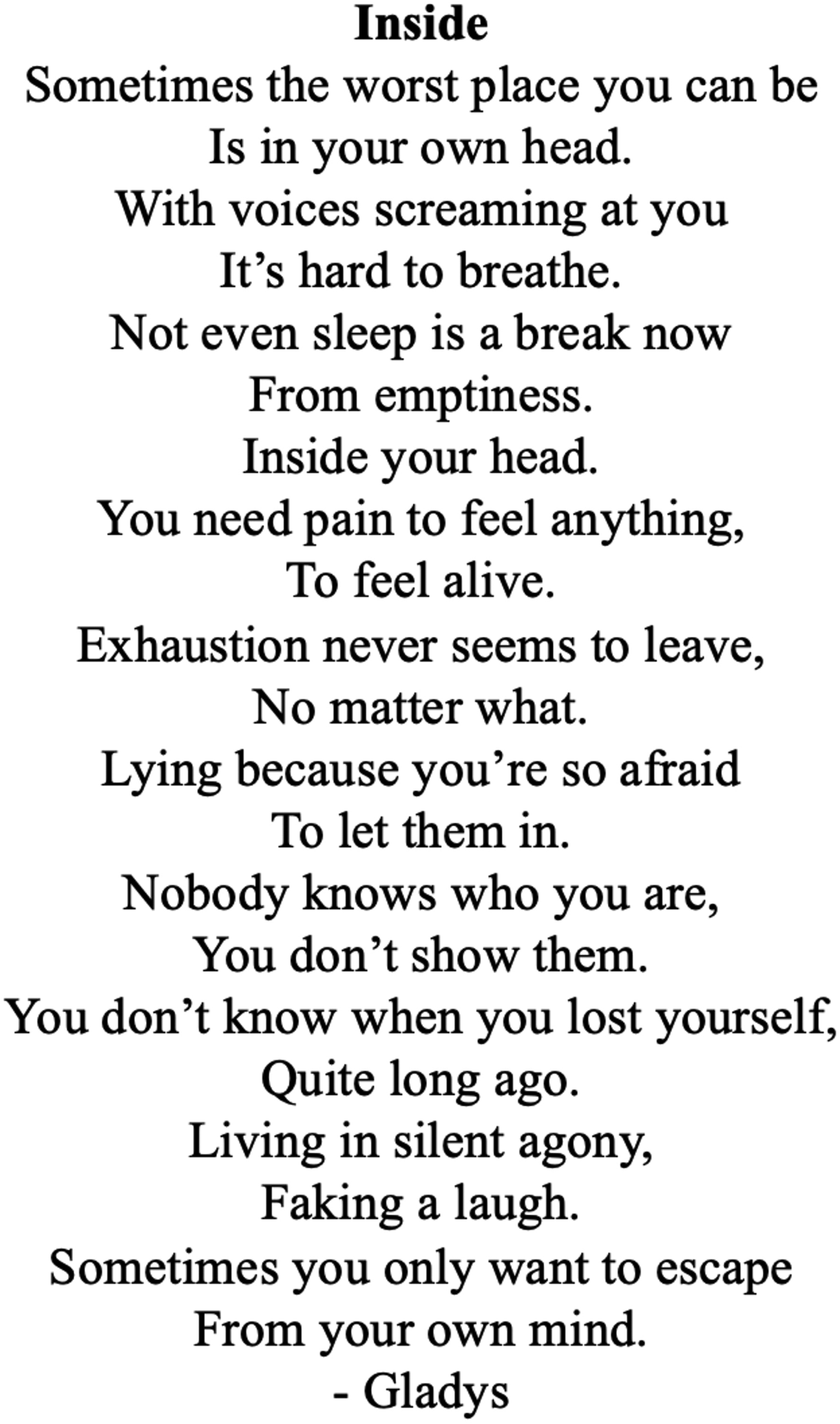
‘Inside’ (Poem, by Gladys).
Lily
The concussion Lily sustained in her final year of high school resulted in difficulties with word-finding, verbal and written expression, reading comprehension and social communication, in addition to a range of physical concussion symptoms. Unable to work at her after-school job and on leave from school, the communication changes affected her friendships, peer relationships and self-identity. It's very frustrating, and it made me feel like I got stupider…I couldn't keep my focus. I couldn't understand what I was reading. It felt like I had become illiterate, which was so hard to stomach because of how much I loved to read before. – Lily
Rose
Active and outgoing, Rose was a first-year engineering student at the time of her concussion. Living away from home in student residences, Rose thrived on relationships with her floor-mates. Her concussion symptoms, including sensitivity to light, headaches, fatigue, word-finding difficulties and challenges participating in large-group conversations, altered her daily routines, leading to feelings of frustration. She stated, ‘I used to be pretty eloquent. I consider myself someone who knows a lot of fun words…but…I would have phrases I would say and…afterwards I'd be like, “Oh hold on, what was that phrase again?”’
Liz
Liz, a self-described extrovert who loved to connect with family, friends in her social circles and customers and co-workers in the workplace, sustained a concussion in a motor vehicle accident. Liz shared the overwhelming fatigue she experienced during communication activities. She described feeling self-conscious and worried about her communication changes, ‘I'm now quiet and concussed and not able to communicate quite as well’.
TJ
When 16-year-old TJ sustained a concussion at work, he experienced challenges with speech fluency, word-finding, verbal and written expression, reading comprehension and social interactions. He described his desire to conceal his communication difficulties, saying, ‘I don't really want to look so stupid. I don't want to look so confused’. TJ explained how fear of judgement kept him from participating in interactions with friends and co-workers, ‘It was like I was an inferior person…I was so scared I would not speak anything’. TJ believed there would be social implications if others had trouble understanding him during a conversation, saying, ‘I look so out of it, and I want to fit in…it's…been difficult because you try to be yourself…you want to fit in yourself – be sure you're fitting into society’.
Theme 2: ‘They smirk “but you’re not dying”’: Navigating and resisting the belief that concussions are ‘just a bump on the head’
Youth participants felt pressure to demonstrate effort and strength to recover from their so-called ‘mild’ injuries, referring to the ‘push through the pain’ mentality instilled in them during their upbringings. Participants called for normalising and validating the range of concussion experiences that occur and reframing the narrative that young people are ‘lazy’ or enjoying the time spent away from their daily roles and responsibilities.
Lily
For Lily, the word ‘concussion’ established an unrealistic expectation for her recovery experiences, she explained, ‘When you say “concussion”, people are like, “Oh, that's no big deal,” but if you say, “acquired brain injury”, people are like, “Oh, that sounds a lot more serious,” and they mean the same thing’. Lily shared that many people often misunderstand the variability in concussion recovery trajectories: ‘Your experience with your concussion…that lasted a month isn't the universal experience’.
Gladys
In a poem she authored after the first interview, Gladys wrote, ‘They smirk “but you're not dying’” (Figure 2). She explained, ‘Obviously, people…would not smirk at you and be like, “Oh well, you're not dying,”…but that's how it felt to me’. Gladys was also concerned her parents would minimise or judge her experiences, stating, ‘It was how I was brought up…we didn't really talk about our feelings…it was like…“You just got hit in the head, you'll be okay.”’
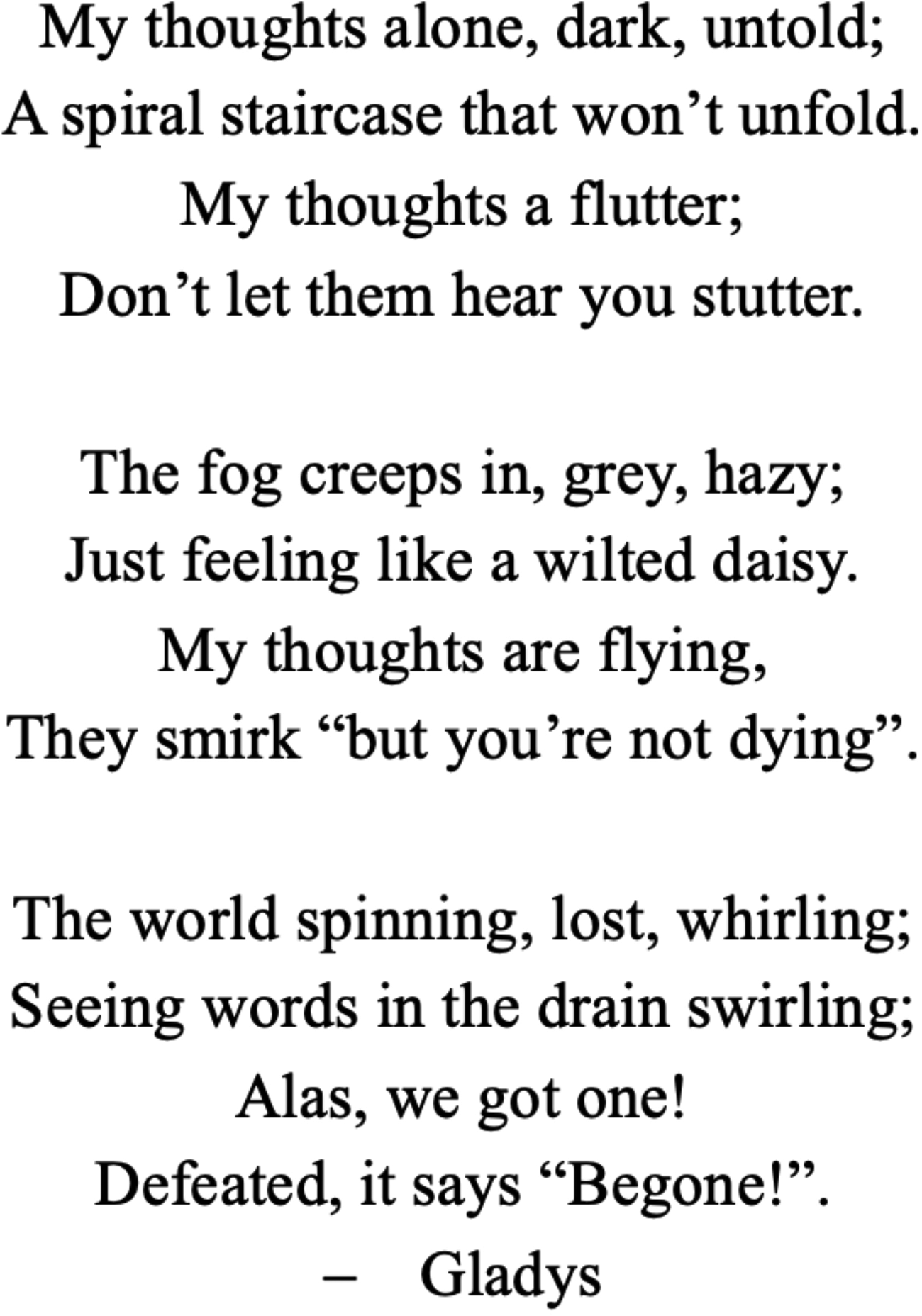
Untitled (Poem, by Gladys).
TJ
Participants experienced pressure to demonstrate physical strength and strength of character during their recoveries. TJ explained, ‘It's partly in my mind and also [from] people around me, like my Dad…I saw it as something…I'd have to conquer…because if I didn't defeat it, it would make me a weakling’. TJ shared that his father said, ‘I should…start acting like a grown-up…whatever pain I feel…I should learn to live with it and learn to get strong’. To TJ, this lack of understanding motivated him to engage in practice activities to support his communication, ‘I wanted to prove him wrong…I won't let my sickness or my humanness hold me down’. TJ read books and watched YouTube videos on components of effective communication and designed practice activities focused on synthesising information read in books or obtained by listening to lectures online. While describing sketches from his notebook (Figure 3), TJ reproduces the misunderstanding that youth who are recovering from a concussion are not trying hard enough, I was…feeling lazy…so I had to draw that…when I'd check my journal, I would remember…‘okay I have to do this’…it was boring that day…I had to do the learning and reading…I had to…get in the mood to ensure…I'm not just having some holiday sitting there. – TJ
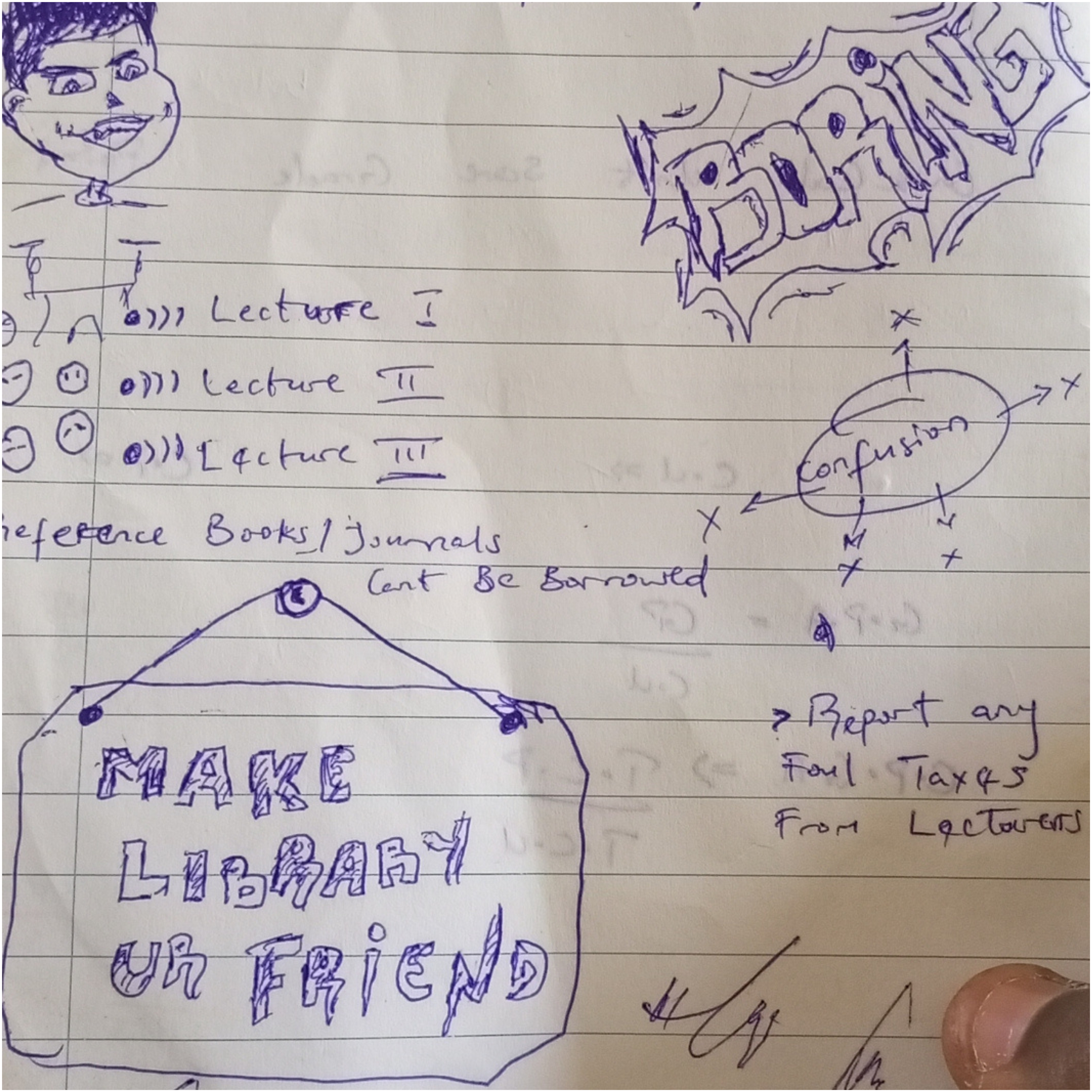
‘My Journal’ (Journal entry, by TJ).
Liz
Liz's upbringing shaped her initial reaction to her concussion, stating, ‘I went to work because…the mindset we come from is “Let's fight through the pain, keep moving, if you're not bleeding you're fine.”’ Her father's value of hard work and ‘push through the pain’ mentality contradicted her healthcare providers’ recommendations. Liz explained, ‘Doing nothing is how he could help me, and that's very difficult…he doesn't like doing nothing, and he doesn't like when the people around him do nothing’. Participants called for education and resources to relieve the pressure youth felt when navigating socio-cultural beliefs about ‘typical’ concussion experiences. Liz's sister, Taylor, described how she helped family members understand, Sometimes my Dad would be like, ‘Just suck it up’, [and I would say] ‘Dad, her brain literally can't suck it up right now…this is not her, this is not the Liz we love…her brain is trying to help her but it's going to take time’. – Taylor
Theme 3: ‘This is going to take some time’: Navigating and (re)producing time-based expectations
The youth participants encountered and navigated the misunderstanding that they ‘should be better by now’. They described feeling frustrated when they were not recovering according to the timelines presented by health care professionals or concussion guidelines. Communication changes also affected youths’ ability to keep pace with conversations and work or school tasks. The need for additional time to process information and formulate responses can affect an individual's ability to participate in in-person conversations. All participants described an increased awareness of the expectation for timely responses during communication tasks. Several participants adapted by changing communication modalities, favouring texting or handwritten letters over face-to-face conversations.
Lily
Lily described the emotional effort involved in navigating concussion recovery expectations and (mis)understandings when peers who shared their experiences of recovering from a concussion within a month of injury asked her, ‘Why are you not better, like, are you making it up, or are you faking it?’ For Lily, repeatedly explaining to others that ‘you can have these long-term concussions’ was exasperating. She explained, ‘I'm already frustrated by the way that the concussion affects me… it's even more frustrating to have people not even believe me’. Additionally Lily was negatively impacted by physician beliefs and attitudes about her recovery trajectory, sharing, ‘My neurologist actually stopped seeing me because she said that I wasn't ever gonna get better…it made me cry’. Lily's difficulties processing written and auditory information made completing schoolwork challenging: ‘I couldn't keep up with my notes or the speed...the teacher is going at’. Peer interactions were also affected as she recalled a classmate calling her ‘stupid’ when she experience word-finding difficulties at school. Lily explained how she (re)produced time-related misunderstandings: ‘Concussion makes me feel like I'm failing…I keep books around me to remind me that I am making progress, it is taking me a little longer but I'm getting there’, she continued, ‘you can try your best to speed up the process, but it's going to be something that takes time’.
Gladys
Gladys described how taking longer to find words during face-to-face conversations and the social expectation to provide a timely response impacted her interactions with her mother, ‘I didn't want to talk to anyone because I felt embarrassed about having to take extra time to think about what to say’. Gladys also felt pressure to ask and answer questions promptly when meeting new people as a way of managing how she was perceived, explaining, ‘I don't want to give them the wrong impression’. Gladys went on to describe how she resisted time pressures by implementing cognitive-behavioural strategies, ‘You can take a pause and…think about it for a second and that's okay…but at the same time that's hard to do’. Gladys reported texting was a more accessible mode of communication than face-to-face conversation, explaining, ‘I had time to sit and think with my thoughts…I didn't have to feel embarrassed about not answering right away’. Like Lily, Gladys also navigated and reframed her own expectations about her concussion recovery time and fear that she may never fully recover. She told herself, ‘No, eventually it will [get better]…this is going to take some time’. Gladys recommended that concussion education programs focus on normalising individual differences in recovery, reassuring youth that ‘it's okay if you take longer to get better than someone else’.
Liz
Liz coped with the time pressure of face-to-face conversation by handwriting letters to her friends and family, sharing, ‘I had convinced myself this is my only form of communication’. Liz prioritised taking time to heal over engaging in social activities, stating, ‘It's just going to take me as long as it takes me, and everybody else in my life is just going to have to deal with it’. During her interviews, Liz shared how her expectations for the time needed to recover and return to her pre-injury daily routines changed as her recovery unfolded. Looking at an acute-stage diary entry that read, ‘Progress has been very slow’, Liz reflected, Eight days into my recovery, and I'm already complaining about how progress has been slow…six months later, I'm just getting back to full-time [work]…I was feeling that it was slow because [the doctor] said to me, ‘If you take this seriously, you could be back to full-time in four-to-six weeks’. – Liz
Rose
Rose submitted photos (Figure 4a–c) capturing the impact frequent breaks and slowed processing had on her while completing university tasks, explaining, ‘Those photos were taken on the same day…during exam finals. I was playing catch-up…trying to teach myself the lessons…and watch lectures that I'd missed…[with the] late days, I'd get headaches, and I'd be tired’. Rose described how subtle changes in processing speed made keeping up with conversations challenging, ‘Your ability to interpret what they're saying and make sentences based on that [is affected.] It sometimes takes a little bit longer for me to process…hopefully, the conversation hasn't moved on by that time’. Participants adjusted to changes in their memory and planning abilities by using external devices, such as calendars and spreadsheets, to track commitments. Rose submitted a spreadsheet she developed to track completed and upcoming tasks, such as assignments and exams. Over time, she expanded the spreadsheet to include the time required for each task and incorporated social activities, helping her balance her academic responsibilities with leisure.
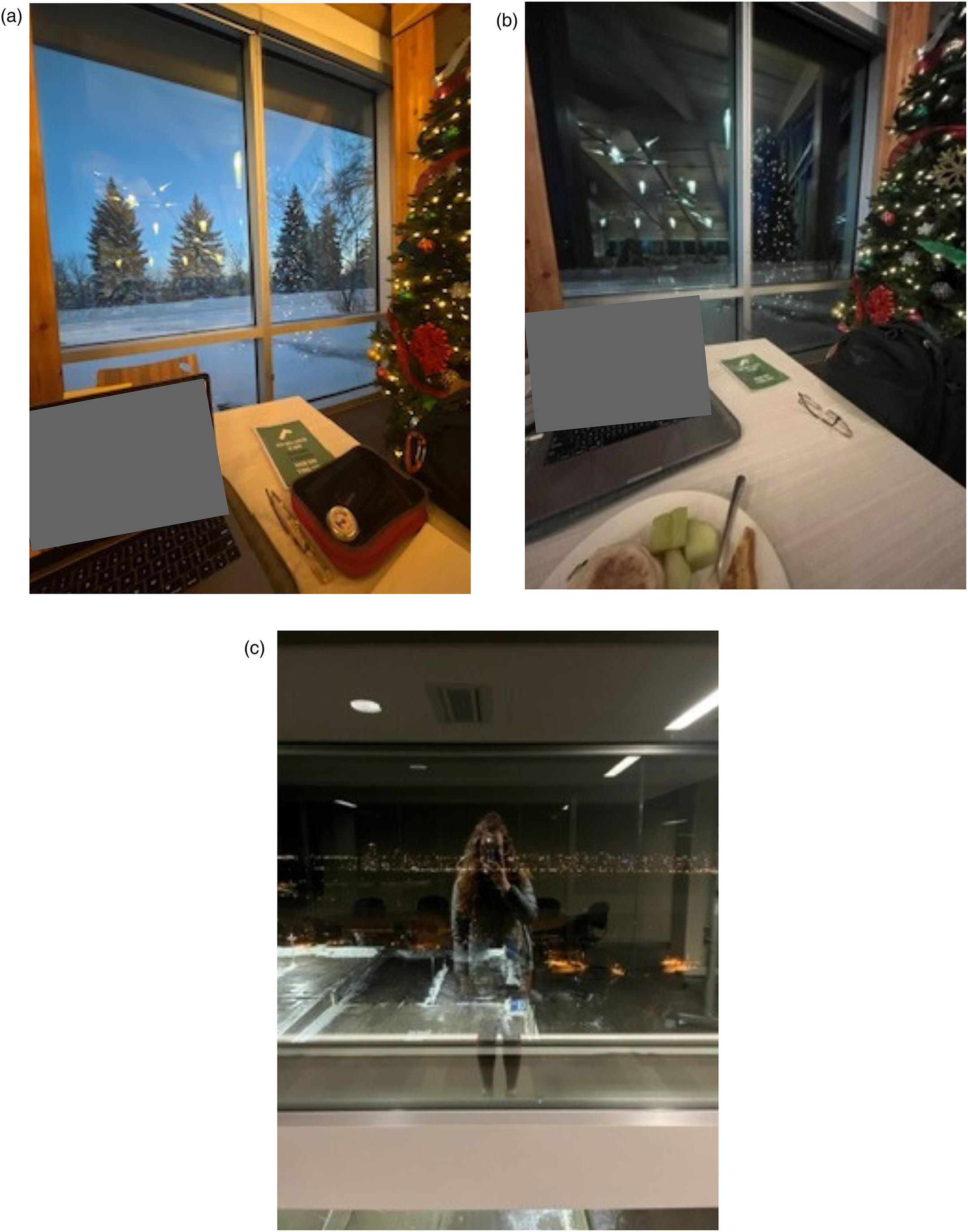
(a) ‘Working at Sunrise’ (Photograph, by Rose). (b) ‘Working to Sunset’ (Photograph, by Rose). (c) ‘Late Nights’ (Photograph, by Rose).
Theme 4: ‘I ask for help a lot sooner now’: Navigating expectations of independence and (re)prioritising interdependence
Youth described how post-concussion communication changes disrupted their ability to participate independently in daily activities, and how this loss of independence affected their social, academic and vocational roles and responsibilities. Participants also asserted their independence by implementing strategies to support their communication changes on their own and preferred not to discuss their challenges with their parents directly. Youth reported becoming more accepting of assistance during their recoveries, re-prioritising interdependence and collaboration over independence, and some experienced increased confidence when facing challenges.
TJ
Living away from his parents, 16-year-old TJ relied on his cousin and roommates for help with his communication, including reading, listening, and memory. He explained, ‘Whenever I would talk with them they would list things down for me so I wouldn’t forget…I am really grateful for their help’. TJ's cousin, Sarah, described how she helped TJ feel more positive and connected, ‘you need to…find out what makes them happy and make sure that they aren’t always alone’. Drawing on TJ's interest in video games, Sarah sparked his interest in engaging with her, stating, ‘When he’d give me a smile and I knew, “Yes! I’ve gotten him to smile, finally!”’
Lily
Prioritising interdependence over independence also positively affected participants’ relationships. Lily reported an increased closeness in her relationship with her mother, Melanie, as she relied on her for emotional support and assistance with physical tasks. Melanie also shared the pressure she felt to help Lily meet societal expectations of increased independence as Lily transitioned into adulthood, ‘Before, she was…more self-reliant, she trusted her instincts, and now it's like, “Can you read this over? Can you look at this?” Always wanting a second opinion just to make sure’.
Gladys
Some youth, including Gladys, reported feeling too overwhelmed to discuss their challenges directly with family or friends. It was helpful when parents, teachers or health professionals demonstrated support in non-verbal ways without speaking directly about their concerns. Youth appreciated adults who respected their desire to maintain independence and autonomy by giving them time and space to solve challenges independently or with gentle guidance, allowing them to save face. Gladys observed that she became more reliant on her classmates to explain a topic if she had trouble understanding a concept. Reflecting on how her concussion changed her perspective on independence, Gladys stated, ‘It's kind of a blessing in disguise…if I were to be hit in the head again…I would ask for help sooner’.
Rose
Rose reported avoiding asking for help and accommodations at school immediately following her concussion. As she adapted to new communication needs, her priorities shifted, and she began to value collaboration over independence. Rose found her classmates, teaching assistants and professors had been ‘really understanding about it’ and the increased collaboration improved her understanding of concepts, explaining, ‘It's a lot easier to learn or understand something if you teach somebody else’. Rose believed learning to collaborate with others in this way would benefit her career as an engineer.
Discussion
The findings reinforce the importance of engaging meaningfully with young people with diverse communication strengths and needs to learn about the social, cultural and ecological factors that influence their concussion recoveries. Offering participants multiple communication modalities for expression through arts-based research methods created additional opportunities to understand the nuances of youths’ experiences with greater depth. When youth encounter common misunderstandings about concussions, including ‘you're not dying’, ‘you should be better by now’ and ‘just push through the pain’, they experience added pressure to recover ‘better’, ‘faster’, and shame or embarrassment when they need more time to heal. Frequent dismissals by family members, educators, or medical professionals can affect a youth's well-being and hinder their access to supports or services. Identifying the socio-cultural assumptions, values and beliefs underlying these misunderstandings and sharing alternative ways of understanding concussion and communication changes can help shift the narrative and create more inclusive communication environments.
The overarching misunderstanding that ‘all concussions are mild’ sets unrealistic recovery expectations for the approximately 30% of youth who will experience complex and prolonged concussion symptoms (Ewing-Cobbs et al., 2018). All participants demonstrated awareness of their strengths and needs and were motivated to independently seek solutions and strategies to adapt to their communication changes. Additionally, some participants reported becoming more accepting of assistance during their recoveries and re-prioritised interdependence and collaboration over independence as they renegotiated their autonomy. Being independent and ‘living one's own life’ (Beck and Beck-Gernsheim, 2002: 3) is highly regarded in individualistic cultures; however, through our communication activities and relationships, humans are, by nature, interdependent (Braithwaite and Schrodt, 2021). Amid socio-cultural pressures to uphold and reproduce these norms, participants sometimes preferred to refrain from discussing their challenges with family. Consequently, the pressure to uphold unrealistic expectations of recovery, time and independence may have contributed to feelings of isolation and helplessness.
Time functioned as more than a practical constraint in youths’ recovery narratives; it reflected broader socio-cultural expectations embedded within dominant communication norms. Needing additional time to complete communication-based tasks could therefore threaten youths’ sense of independence and constrain their ability to perform the expected scripts of conduct in school, work and social contexts. Although evidence supports the use of pacing and resource management strategies to facilitate youths’ gradual return to daily activities following a concussion (Hunt et al., 2018), Western cultural ideals of efficiency, independence, resilience, and the expectation to ‘overcome’ adversity can undermine the implementation of these strategies (Bridel et al., 2019). Within these contexts, youth may internalize time-based expectations, subscribing to a ‘play through pain’ mentality (Zanin et al., 2020) and feeling pressure to deny or downplay their symptoms. Additionally, our findings support efforts by youth and health professionals to implement strategies to resist time pressure in conversation, while also highlighting the importance of shifting the time-based social scripts that shape daily communication. ‘Successful’ communication is not solely the responsibility of the individual experiencing communication changes; it is co-constructed by interlocutors. Communication partner training programs provide an opportunity to critically reflect on time-based assumptions, while broadening understandings of communication competence and fostering greater acceptance of various speech rates and patterns.
Ultimately, post-concussion communication differences can undermine youths’ confidence in their ability to meet socially and culturally based scripts for conduct, affecting their sense of identity, leading to feelings of self-stigma and shame. Communication is not only relied on for the co-construction of meaning, self-expression and relationship development, but is also integral to the co-creation of self (Braithwaite and Schrodt, 2021). Our findings further reinforce the connection between communication changes and threats to identity. Participants used words such as ‘eloquent’, ‘well-spoken’, ‘intelligent’ or ‘social’ to describe their pre-injury selves and ‘stupid’ and ‘inferior’ when referring to themselves post-concussion and reported feeling as though they had ‘lost themselves’. Changes in word-finding, speech fluency, language formulation or comprehension post-concussion affected participants’ ability to meet academic goals and fit in socially. Participants altered their participation in social settings, indicating they wanted to present themselves as ‘normal’ communicators and shifting how they viewed themselves as students, employees or family members. Avoidance of communication activities in response to communication changes or differences is a finding reported in studies of individuals with acquired communication changes, such as brain injury (Buckeridge et al., 2020) and laryngectomy (van Sluis et al., 2020), as well as neurodevelopmental communication differences, such as stuttering (Plexico et al., 2009). A meta-synthesis of qualitative research on post-TBI experiences that challenge self-identity highlighted social rejection and stigma as central themes across studies (Villa et al., 2021).
Goffman's Face Theory views humans as actors in the performance of their everyday lives (Goffman, 1956). Environmental contexts, social roles and responsibilities influence the identity, or face, a young person chooses to perform. Face Theory provides a framework for exploring how youths’ identities are mediated by communication and how young people and communication partners seek to save face during interactions (Miller-Ott and Alvarez, 2021). In the current study, the face youth participants presented to communication partners was influenced by contextually based scripts for social conduct (e.g., the exchange of pleasantries while checking out at the grocery store or engaging in peer interactions in the classroom) and their role in that context (e.g., patron or student). Participant accounts of embarrassment following moments of word-finding difficulty, stuttering or other disruptions to the flow and ease of communication demonstrated that even subtle communication changes may lead to what Goffman (2009) calls a spoiled identity or stigma. Embarrassment can occur when one is unable to meet social expectations, and this corrective facework motivates one to change future behaviour (Hastings and Castle Bell, 2018).
Youth participants described experiencing fear related to stigma, defying communication norms, overt negative listener reactions and social rejection while navigating communication changes. For example, similar to experiences reported by people who stutter, the youth reported experiencing ‘urgency and fear’ when pausing longer than socially acceptable during a conversation (Plexico et al., 2009: 96). Such fear can lead to minimising and masking concussion symptoms (Valovich McLeod et al., 2017). Participants engaged in protective behaviours to save face, such as avoiding communication situations, limiting communication partners and giving the impression of understanding during moments of auditory comprehension difficulty to pass as a ‘normal’ communicator. Participants were also resourceful and developed their own unique strategies to minimise the impact of communication changes by engaging in communication practice activities, such as reading books and watching tutorials on YouTube. Perceiving and adapting to differences in communication abilities while saving face by masking communication difficulties to blend in with dominant normative behaviours creates invisible work for youth who communicate differently. Invisible work refers to efforts or labour that go unseen and unacknowledged (Daniels, 1987). This invisible work increases the recovery burden experienced by youth during a time when concussion symptoms are already negatively impacting their energy and cognitive resources.
Implications
Communication changes can impact youths’ sense of self, and attempting to independently ‘push through the pain’ of concussion symptoms and hide communication changes to pass as a ‘normal’ communicator can contribute to feelings of isolation, anxiety, frustration and depression. Youth may believe they are failing to recover ‘properly’ and worry others will think they are ‘lazy’ or ‘weak’ when they experience longer or unexpected symptoms. The potential burden for young people experiencing sudden post-concussion communication changes is substantial, as research shows that communication differences are primarily invisible, underacknowledged and stigmatised (Boyle, 2018; van Sluis et al., 2020). Participants called for the development of education programs aimed at families and academic personnel to normalise the broad range of concussion experiences and recovery trajectories to help other youth. Speech-language pathologists are uniquely positioned to disrupt harmful misunderstandings through affirming practices and advocacy when engaging with youth, their families and other education and service providers. When conventional concussion and communication assumptions, values and beliefs are identified, challenged and reframed, young people may experience less pressure and more support and connection during their recoveries.
Limitations and future directions
Due to feasibility constraints, convenience sampling was used to enroll eligible participants. Future studies will benefit from the purposive recruitment of participants from more diverse gender identities and cultural, racial, linguistic and socio-economic backgrounds. Adhering to local COVID-19 prevention measures, data was collected virtually and digitally. The use of electronic recruitment materials and virtual data collection methods may have deterred or inadvertently excluded some potential participants. Some youth may not have had access to the technology needed to participate, and others may have chosen to limit their use of digital media as part of their concussion recovery. Virtual data collection also offered important advantages. It enabled the inclusion of participants and family members from diverse geographical locations and enhanced convenience and comfort by allowing them to join sessions at a time and place of their choosing. This flexibility afforded greater control over their environments, helping them reduce or manage factors that could trigger or exacerbate concussion symptoms.
Measures were implemented to address potential concerns that prospective participants might opt out of the study due to the expectation of generating artistic works as part of the protocol (cf. Harasym et al., 2024b). These strategies included using the term ‘creative’ rather than ‘artistic’ or implying that participants required artistic skills to engage in the study. Additionally, participants had the autonomy to determine the nature and number of artefacts they wished to submit for discussion, and gathering and submitting PGMs was an optional, not compulsory, component of participation. Notably, all participants chose to submit materials, and no concerns about the use of arts-based methods were expressed or noted during data generation. The youths’ high level of engagement with the arts-based approach resonated with their interests and strengths, suggesting that arts-based methods hold promise as an inclusive data-collection technique to enhance future communication science research (Harasym et al., 2024b).
Conclusions
The underrepresentation of youths’ perspectives and experiences of communication changes post-concussion in concussion research reinforces the (mis)understandings youth encounter in their everyday lives. These (mis)understandings about concussions and subsequent communication changes can have real-life consequences for youth during their recoveries. Experiencing negative listener reactions and limiting communication participation at home, school or in the community can contribute to increased feelings of loneliness, changes in relationships and academic difficulties (Cook et al., 2023). Adding to youths’ recovery burden, many of the concussion- and communication-based socio-cultural assumptions, values and beliefs youth encounter in their environments require additional and often unrecognised effort to navigate. Sharing youths’ stories and unpacking the misunderstandings and misconceptions they faced during recovery is the first step to easing this burden. Youth participants described how they adapted to, resisted and reframed concussion- and communication-specific assumptions, values, and beliefs during their recoveries. Their insights offer new ways to (re)frame and share information with those who support young people after concussion, including families, education professionals and health and rehabilitation professionals.
The results of this arts-based reflexive collective case study strengthen calls for the disruption of communication norms and concussion recovery misunderstandings and reinforce the need for communication and mental health services to support young people and their families during all phases of concussion recovery. We call for continued socio-cultural examinations of concussions and communication that centres the perspectives of youth to advance researchers’ and practitioners’ understanding of communication changes post-concussion and to inform best practices in youth concussion recovery, including communication interventions, education programs and advocacy efforts.
Footnotes
Acknowledgements
The authors express our deepest gratitude to the youth participants for sharing their experiences and artistic works to help others understand what it feels like to navigate communication changes after a concussion. The authors thank the research team members who provided transcription support for the study.
Ethical approval and informed consent
The University of Alberta's Health Research Ethics Board (No: Pro00103888, March 25, 2021) and Dalhousie University Health Sciences Research Ethics Board (REB#: 2021-5585, May 31, 2021) granted study approval. Informed written consent was obtained prior to study participation and the collection and dissemination of participant-generated arts-based materials.
Declaration of conflicting interests
The author(s) declared no potential conflicts of interest with respect to the research, authorship and/or publication of this article.
Funding
The author(s) disclosed receipt of the following financial support for the research, authorship and/or publication of this article: Jessica A. Harasym was supported by a Social Sciences and Humanities Research Council of Canada doctoral fellowship [752-2021-2339] and a graduate studentship funded by the Stollery Children's Hospital Foundation through the Women and Children's Health Research Institute. The research was supported by grant funding from the University of Alberta, Faculty of Rehabilitation Medicine, Thesis Operating Grant and Dalhousie University, Faculty of Health, Research Development Grant.
Data availability
Due to ethical considerations regarding participant privacy and anonymity, supporting data is unavailable.
