




Abstract
Team collaboration is an essential component of augmentative and alternative communication (AAC) services that directly impacts outcomes for students in special schools. Given the central role of the Special Education Teacher (SET) in the AAC team, there is a need to explore and understand SETs’ perceptions to support effective team collaboration. This study explored the perceptions of SETs on team working and collaboration in AAC service delivery in Ireland during a period of significant systemic change. A qualitative interview approach was utilised to explore the perceptions of five SETs working with students who use AAC in special education settings in Ireland. The dataset was analysed through the process of reflexive thematic analysis and identified four themes. Participants valued team collaboration but perceived it as inconsistent or non-existent in current practice. The impact of recent service changes on collaboration was highlighted, with all participants recognising a need for enhanced collaboration. Facilitators to collaboration identified included child centredness, shared goals, role clarity, sharing of knowledge and resources, and effective working relationships.
Keywords
Introduction/background
AAC in the special education setting
In education, spoken language acts as an instrument through which instruction occurs, meanings and connections are formed, and knowledge and skills are transferred and demonstrated (Kathard et al., 2015). School-age children who experience communication difficulties have limited access to this instrument, placing them at risk of potentially adverse effects on their participation, learning and social relationships (DePaepe and Wood, 2001; Thatcher et al., 2008). For children with the most severe speech and language difficulties, their ability to reliably use speech and language to effectively meet their communicative needs across settings with different communication partners is affected (Iacono et al., 2022). Augmentative and alternative communication (AAC) can offer these children a means to connect and interact with others and importantly, the opportunity to engage with education and to communicate and participate meaningfully in their school settings and beyond (Beukelman and Light, 2020; Chung and Stoner, 2016). AAC includes a wide range of tools and strategies. Aided AAC systems involve the use of additional resources, both electronic and non-electronic, referred to as high-tech and low-tech AAC, respectively (Moorcroft et al., 2020), for example, speech generating devices, pictures, photos, communication boards and objects. Unaided AAC systems do not require any additional equipment, for example, manual sign, eye pointing and facial expressions (Moorcroft et al., 2020). Often, various AAC systems and strategies are implemented simultaneously within the classroom (Kent-Walsh et al., 2008). Autistic children and children with developmental disabilities, such as cerebral palsy, intellectual disability or other disabilities, may use or benefit from AAC. Some of these children may also experience special education needs (SENs) secondary to significant physical, sensory and/or learning disabilities (Light and Drager, 2007), and may attend a special education setting to support their complex learning needs with smaller class sizes, and functional, differentiated instruction (Kauffman and Hornby, 2020).
In the last decade, the fields of AAC and special education have exemplified change and transformation (Light et al., 2019; Shevlin and Banks, 2021). Advancements in knowledge and technology have increased access to AAC (Light et al., 2019) and supported higher communication and participation expectations for children (Soto and Zangari, 2009). The number of children identified with SEN has grown concomitantly (Shevlin and Banks, 2021), now accounting for approximately a quarter of school-going children in Ireland (Shevlin and Banks, 2021), aligning with prevalence rates reported in Europe (Hills et al., 2010; Van der Veen et al., 2010). Mirroring the increasing prevalence of children with SEN, special education provision in Ireland has grown and expanded (Shevlin and Banks, 2021). This was reflected in the national government expenditure, which included a 46% increase in special education teaching positions and a 56% increase in special needs assistant positions (NCSE, 2019). Despite the marked evolution in special education and AAC, the need for an integrated approach to AAC in special schools has remained constant (Calculator and Black, 2009).
The AAC service provision in special education is acknowledged as an intricate and ongoing process due to many factors including the complex interplay between the students’ communication, social, physical, sensory, behavioural and learning needs and preferences (Light and McNaughton, 2013), the family's needs and preferences, environmental factors and the opportunities and barriers therein (Binger et al., 2012; Light and McNaughton, 2013), which evolve and change over the child's life (Beukelman and Mirenda, 2005). Ensuring children have access to quality AAC services requires a well-functioning AAC team (Binger et al., 2012; Kent-Walsh et al., 2008).
The AAC team
The AAC team composition may vary depending on the age, capabilities, needs and preferences of the individual as well as the service model and available resources (Alant et al., 2013; Biggs and Hacker, 2021).
For many schoolchildren, the AAC team may include the speech and language therapist (SLT) and the special education teacher (SET) in partnership with the child and their family (Bailey et al., 2006; Beukelman and Light, 2020; Norrie et al., 2021). Other team members may include communication partners from various settings, occupational therapists, physiotherapists, psychologists, social workers, vendors, technicians and medical personnel (Chung and Stoner, 2016). SLTs typically play a key role in the AAC team (IASLT, 2016; Kent-Walsh et al., 2008), providing a range of AAC-related supports, for example AAC evaluation, system recommendations, intervention and training support (Lynch et al., 2019).
Similarly, SETs may also have a core role in the AAC team (Da Fonte et al., 2022). SETs are well positioned to support effective AAC integration and participation in the classroom (Da Fonte and Boesch, 2016), particularly given that most school-going children in Ireland spend a minimum of 28 h in school each week (Department of Education, 2019). Studies suggest the SET may hold several AAC team roles including assessing choice-making, designing and reviewing AAC systems, identifying vocabulary needs and gaps, supporting students’ AAC use through meaningful, naturalistic opportunities and providing training and support to others (Da Fonte and Boesch, 2016; Light and McNaughton, 2014). However, adopting these AAC roles is not without challenges, with studies reporting SETs experience inadequate training, time limitations and inconsistent support (Andzik et al., 2019; Bailey et al., 2006; Da Fonte and Boesch, 2016; Soto et al., 2001b). Limited or absent pre-service training may also contribute to the challenges experienced (Andzik et al., 2019). Effective team collaboration can in itself support AAC learning and facilitate effective service delivery (Andzik et al., 2019; Feiler and Watson, 2011; Tönsing and Dada, 2016).
AAC team collaboration
Through collaboration, team members use their collective expertise to optimise communication outcomes for children (Da Fonte et al., 2022). Team collaboration is characterised by a shared understanding of respective roles and responsibilities and a willingness for role flexibility (Soto et al., 2001b). Effective teams engage in frequent, productive and efficient interactions with clearly defined responsibilities and actions, where all members are active and contributive (Hunt et al., 2002; Soto et al., 2001a). Irrespective of the team's composition, size and structure, collaboration between team members is possible (Ogletree, 2021) and deemed essential for AAC service delivery (DePaepe and Wood, 2001; Soto et al., 2001a).
Effective AAC team collaboration is considered to positively impact students’ outcomes, increasing social interactions, class engagement and academic performance (Chung and Stoner, 2016; Hunt et al., 2002). Furthermore, team members report experiencing satisfaction and empowerment through collaboration (Batorowicz and Shepherd, 2011; Greenstock and Wright, 2011; Leatherman and Wegner, 2022). Conversely, a lack of collaboration can be a barrier to positive AAC outcomes (Lund and Light, 2007).
Several factors may impact AAC team collaboration including service accessibility (Chung and Stoner, 2016; Tollerfield, 2003), understanding of team members’ roles (Baxter et al., 2009; Chung and Stoner, 2016; Feiler and Watson, 2011; Kent-Walsh et al., 2008; Uthoff et al., 2021) and team members’ working relationships (Batorowicz and Shepherd, 2011; Beukelman and Mirenda, 2005). It is recognised that perspectives, experiences and knowledge contribute to collaborative relationships and outcomes (Snell and Janney, 2005). Knowledge and attitudinal barriers can result in negative impressions and experiences, which in turn may influence expectations of students’ learning potential (Soto and Zangari, 2009) and perceptions of team belonging (McLaren et al., 2007). Organisational change is another factor that may impact team collaboration and may be particularly important to consider in the Irish context, given the recent disability service reform.
Change in the Irish disabilities’ landscape
The implementation of national policy initiatives in Ireland, including Sláintecare and Progressing Disabilities Services for Children and Young People (PDS), has resulted in a significant change in health and social care services for children with disabilities. Clinical services previously located on-site in special education settings were reassigned to local community teams, cleaving clinical and educational teams. In many areas, services changed from intervention focused to a largely consultative model of service delivery (Law et al., 2002). Much attention in the national mainstream media and social media suggests these changes have had a detrimental impact on students, their families and schools (Molloy, 2021; O’Riordan, 2021). Despite government assurance that service reform ‘should not be done on a basis that undermines existing provision in existing special schools’ (Dáil Éireann, 2021), the reality on the ground seems quite different. Families report significant concerns regarding service access, team communication and service quality, including inadequate interagency working with schools (Inclusion Ireland, 2022). These concerns were echoed by the Irish SLT professional body who describe ‘systemic failures’ within the newly established service model (IASLT, 2022).
Paediatric disability services in Ireland have undergone a paradigm shift, which has radically altered how SETs function in the AAC team, while AAC services are continually changing, and demands for the integrated use of AAC in classrooms are increasing (Da Fonte and Boesch, 2016). The current context brings into focus the need for effective health and education sector collaboration (Beukelman and Light, 2020; Da Fonte et al., 2022; Uthoff et al., 2021). No existing studies of team collaboration in AAC service delivery in Ireland were identified. Furthermore, little research explores SET perspectives. SETs working in Ireland may offer important insights to help AAC teams shape practice and optimise AAC outcomes in a service reform and change context (Chung and Stoner, 2016).
Aim and objectives
This study aimed to understand how SETs working in Ireland perceive AAC team working and collaboration through three research questions:
What are the perceptions of SETs on current AAC team working practices? What are SETs’ perceptions of collaboration in AAC teams? What do SETs perceive as facilitators to AAC team collaboration?
Methodology
Research design
The study utilised a critical realist ontological lens and contextualist epistemology (Braun and Clarke, 2022). A qualitative research methodology aligned with the study's theoretical positioning and allowed for individual, in-depth interview to explore SETs’ perspectives (Creswell and Poth, 2016).
Research ethics approval was obtained from the Research Ethics Committee of the School of Linguistic, Speech and Communication Sciences, Trinity College Dublin.
Participants
Six SETs were recruited to the study using purposive sampling. One SET withdrew from interviewing due to time and availability constraints, resulting in a total of five participants. All participants met the study’s inclusion criteria of:
working as a special education teacher; three or more years’ special education teaching experience; teaching students aged 4–18 years, who use AAC.
Purposive sampling was used to recruit participants from a diverse range of educational settings, serving different student populations across Ireland (Table 1). The concepts of information power (Malterud et al., 2016) were applied to determine the sample size. An initial sample size approximation was six to ten participants. During the recruitment, it was found that recruiting participants was challenging, potentially due to the teaching demands given the COVID 19 pandemic and the service reforms. The researcher engaged in continuous reflective evaluation on the complexity of the data during the data collection process and the initial analysis. It was determined that the sample generated sufficient information power to address the research questions.
Profile of interviewed participants.
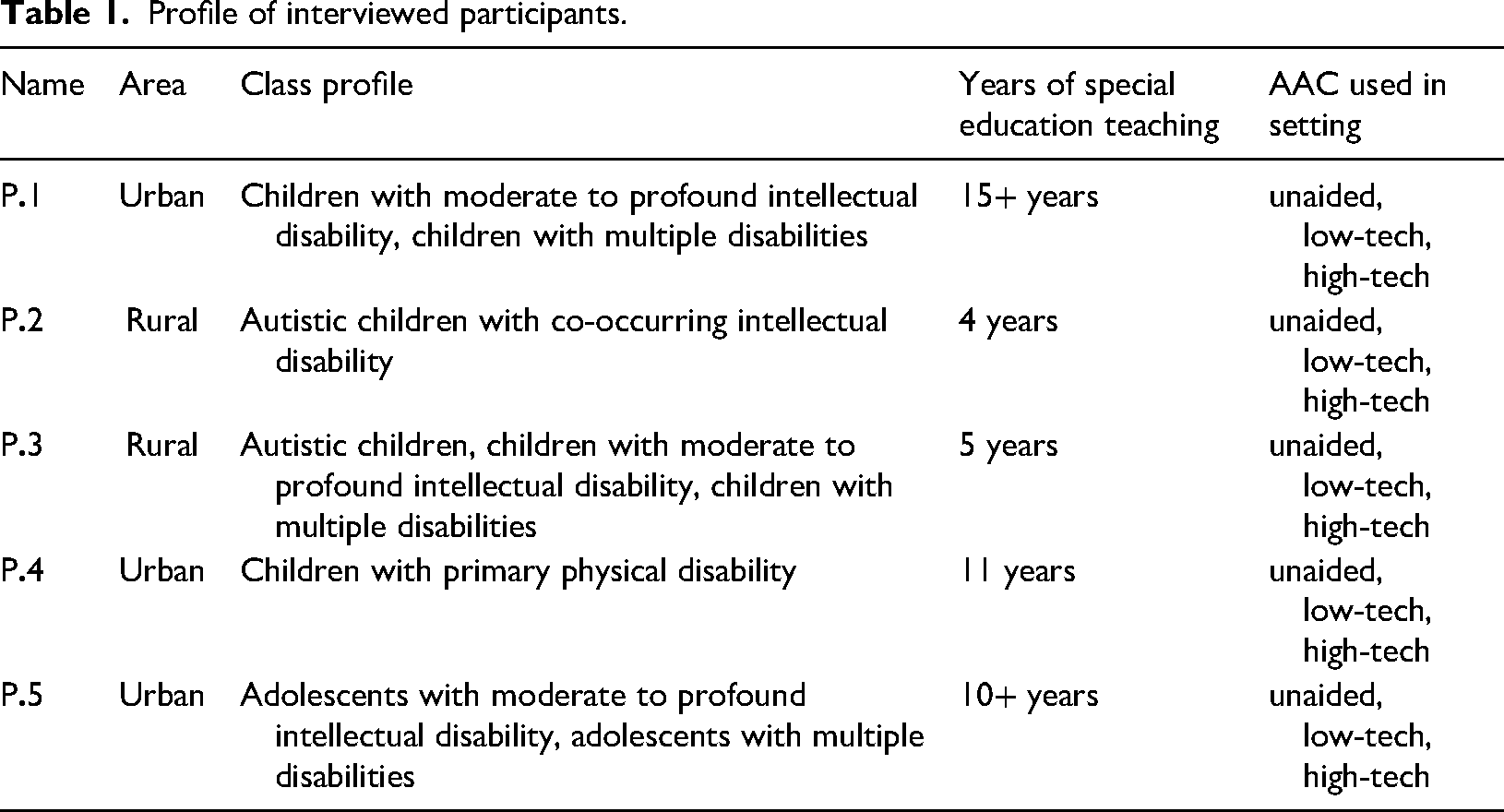
Profile of interviewed participants.
Using a publicly available list, principal teachers of 25 special schools and classes were contacted with a request to be gatekeepers for the study. The principals circulated the study information to the teaching staff who met inclusion criteria. Teachers interested in participating contacted the researcher directly and provided informed consent prior to participation. Additional study recruitment took place though social media channels, with potential participants contacting the first author directly.
All participants were interviewed online using the Zoom platform. Interviews were conducted by the first author (an SLT with extensive AAC team experience in a range of contexts). Participants chose the location from which they were interviewed, the majority choosing their classroom after school hours. Interviews lasted approximately 1 h. Each interview was audio-recorded with permission, through Zoom's recording feature. Recordings were stored to a password protected drive. To address the trustworthiness of the study, field notes and reflexive journaling were utilised through the data collection process and beyond.
A self-developed topic guide was shared with participants before the interview (see Appendix A). The topic guide was developed through an iterative process, involving a literature review and consultation with working clinicians and area experts. The first three questions were designed to elicit demographic information of the participants, their settings, class profiles and current AAC team. This section supported establishing a shared understanding between the participant and the researcher on the context of the participant's perspectives, as well as putting participants at ease and facilitating the development of rapport. Questions four and five elicited information on the participants’ role identity within the AAC team and their perceptions on factors influencing their role identity. Questions six, seven and eight were designed to elicit participants’ views on the facilitators and barriers to effective team collaboration in the AAC service delivery, and how teams might enhance collaboration. Question nine was designed to offer participants the opportunity to say more, clarify and reflect on the information shared during the interview. Feedback from clinicians and area experts included input on the language and terminology used and the structuring of the topic guide. Some questions were reviewed to include clarifying statements and to reduce the use of jargon. The interview guide was piloted with a SET who met the study's inclusion criteria. Changes to the topic guide were not required following the pilot, and the data gathered was included in the final dataset.
Data analysis
Reflexive thematic analysis was used to explore participants’ perspectives and identify differences and similarities in the dataset (Braun and Clarke, 2006). Data analysis was conducted by the first author in line with Braun and Clarke's (2006) six-phased method. Verbatim transcription was completed by the first author during which all identifying information was fully anonymised. Initial coding was completed using both hard copy transcripts and NVivo 12 and refined through an iterative process in consultation with the second author. Initial themes were identified to develop a thematic map using an inductive approach to ensure themes were closely linked with the data (Norwell et al., 2017). Themes were reviewed alongside coded data extracts to ensure coherence, and the initial thematic map was considered within the context of the whole dataset. The thematic map was finalised to reflect the relationships between the themes and to depict how the themes interacted to tell the story of the data.
Member checking for the accuracy of finalised themes was not conducted, given the ontological and epistemological assumptions underlying this study. A series of strategies were employed to facilitate quality in addition to the use of Braun and Clarke's ‘15-point checklist’ (2022, p. 269). Reflexive journaling was an important strategy in ensuring quality (Norwell et al., 2017) and was utilised to engage in the review and reflection with the second author. Additional quality strategies included strong efforts to identify theme names that portrayed the essence of the themes and to draw from published reflexive thematic analysis articles.
Findings
AAC team collaboration was viewed as a child-focused process occurring within a dynamic context, characterised by equal participation of team members. The thematic map (Figure 1) was designed to convey the four themes identified: ‘the child at the centre’, ‘a seat at the table’, ‘a journey to collaboration’ and ‘a changing landscape’, while also aiming to depict how the themes interacted to tell the story of the data.
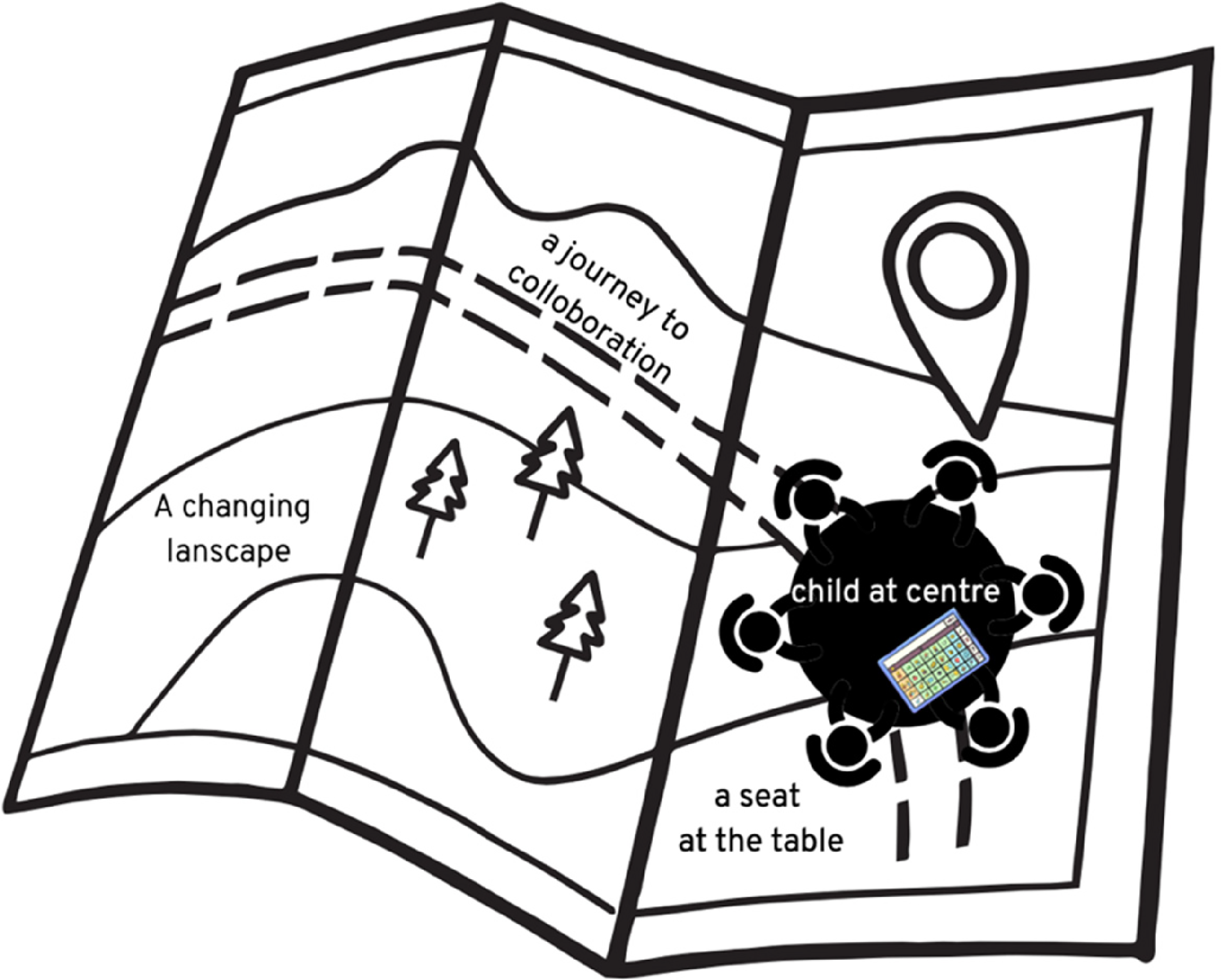
Thematic map. Image credits ©[dustick] via canva, ©[marrtenvanderwerfcollection] via canva, ©[drawntoaac] via canva.
Students were considered central to all stages of AAC service provision, and the SETs’ focus on individual students’ needs and preferences was evident throughout the data. Participants argued AAC teams need to retain this focus, as described by one teacher: ‘you have to keep the child first and foremost, it's not just about this lovely device or lovely system that you've seen working beautifully somewhere else. If that's irrelevant to that child, then as beautiful as it may be […] you just have to adapt and move on […] that's the crux of the whole thing, can we keep the child front and centre?’ (P.1).
As part of tailoring services to the individual, participants emphasised the importance of being aware of and understanding the specific classroom context. The ‘world of the classroom’ was illustrated as a unique environment that all team members need to understand to enable effective collaboration: ‘sometimes trying to describe what happens in the classroom is quite difficult […] trying to describe the madness, […] you can only imagine […] the sheer amount of noise or screaming, or feeds going off’ (P.4).
There was consensus across participants that in-depth knowledge of each child's unique profile of strengths and needs, and their specific classroom context, is the cornerstone of an effective AAC intervention.
Theme 2: a seat at the table
Successful AAC services were characterised by joint working, where team members come together to support the child: ‘it's a full team, regardless of your position within the team, there's something […] to be added by everybody […]’ (P.1), recognising the need for a collaborative rather than consultative model.
Participants considered the following ‘seats at the table’: a) their own role identity; b) parents as partners; c) special needs assistants; and d) SLTs.
SETs’ role identity
The SET's role was recognised as essential for all AAC teams supporting school-aged children: ‘the teacher's input almost becomes more important as they go along, because it's the teachers […] with whom the students are using the device’ (P.4)
While SETs recognised the importance of their role on AAC teams, their ability to undertake that role was influenced by several factors related to role identity, including role boundaries, attitudes and beliefs, and self-efficacy. One participant highlighted the challenges she had experienced in taking on an active role, which were related to beliefs and self-efficacy: ‘sometimes the staff, and me included in the past, have been afraid of devices, because we don't know enough […] the speech and language therapist does that and we're not going to touch it, because I'm afraid I'm going to wreck it’ (P.1).
Participants indicated that they considered their role to be dynamic, responsive to the individual and the context. In the absence of team support, SETs emphasised their active role in growing AAC systems, relying on their initiative and resourcefulness: ‘I’m just googling usually […] I’m not trained, you just go looking, and hope for the best.’ (P.4). The recent widespread organisational changes were also considered to have impacted role identity, with the SET assuming new AAC roles under the new service model: ‘it hasn't been something that was ever discussed […] in the run up to PDS (the new service model) […] that the teachers would have to step up’ (P.4). While describing their proactive leadership role, no participants self-identified as AAC team leads.
Parents as partners
Participants viewed their relationship with parents on the AAC team as a partnership that was considered essential to the collaboration. Engaging the two stakeholders who typically spend the most time with the child was considered pivotal to success:
‘between the teacher and the parents, they’re spending so much time with the child every day, we know personally what their capabilities are, what their needs are, and what's most frustrating them, or what really needs to be worked on’ (P.2),
suggesting there may be more opportunities to enhance AAC services through a greater focus on partnership.
Special needs assistant
Participants indicated that while SNAs are recognised as team members who support children extensively in the classroom, their unique skillset may be undervalued, with limited engagement of SNAs in AAC service delivery:
“the SNAs will be working very closely with students […] more so than the teacher, and they're never involved in any type of team discussions” (P.4)
Existing workloads may be a barrier to SNA involvement, as well as knowledge and attitudinal barriers: ‘SNAs are struggling because they're not familiar with technology. They're not coming at it with a positive attitude […] they see it as a hindrance […] and it's not their fault, because they're literally not getting trained in it’ (P.2).
SLTs
SLTs were considered AAC team leads, with specialist knowledge and skills, who influence the nature of team collaboration: ‘it just depends what team you’re on and what SLT you are working with, and that decides how positive the experience is’ (P.2).
Participants identified a critical need for SLTs to share knowledge and skills ‘it's vital you teach us to understand, because we’re the ones with the power to change things, we’re the ones who spend an incredible amount of time with the child, and the knowledge you have is useless to my child unless you share it with me, because you get to spend so little time with the child in question.’ (P.5)
While SETs valued a model of AAC working where parents, teachers, SNAs and SLTs work together collaboratively, the findings suggest many children are receiving AAC services that do not draw on the full range of expertise and experience needed for optimal service delivery.
Theme 3: a journey to collaboration
SETs recognised that AAC teams often go through a process described as a journey: ‘we went through the full journey […] they're not easy journeys with the kids […] often it's a journey for the parents to understand or appreciate AAC’ (P.5
SETs indicated that past opportunities to work alongside SLTs had been important in developing knowledge and skills. For example, ‘many years ago [SLT name] would have evangelised me AAC-wise and taught me an awful lot’ (P.5). Participants expressed concerns for new SETs who only experience the new service model and consultative approach. ‘They (new SETs) are coming in here, they hardly meet a therapist. They go into an autism class and they’re faced with [AAC system name] and communication devices, and visual schedules, and how would they know what to do? How would they understand it? How would they understand why?’ (P.5).
Participants indicated new SETs could be supported to develop their AAC knowledge and skills through explicit discussion of roles and responsibilities, developing shared goals, and upskilling by SLTs.
SETs indicated they lack training, which negatively affects AAC implementation: ‘we've had no training in schools on them (high-tech devices) […] classes are just so frustrated […] there could be four different devices within that class […] and no idea how to go about incorporating them into class life’ (P.3).
SETs valued AAC training that is practical, meaningful and relevant to their class: it's how you provide training that makes people feel better, and feel more knowledgeable and empowered coming out of it […] ‘cause actually something useful has happened there’ (P.5). Suggesting the manner in which information sharing occurs is critical. Inadequate and inaccessible sharing of AAC knowledge was indicated to have far-reaching consequences: ‘when I don't understand something or the reason behind something, I won't encourage it, I won’t use it, I won't do it’ (P.2).
Effective team relationships were identified as a cornerstone of collaboration, with good communication a defining characteristic: ‘it's annoyingly trite, but communication really is the key thing in terms of this being effective’ (P.4). Positive team relationships were considered a protective factor, whereas the absence of good working relationships was suggested to influence negative perceptions of therapy supports and engender professional hierarchies: ‘it's like the inspector coming to assess your teaching […] “Uh oh, here's the clinician” […] “here's the speech and language therapist” […] you might feel the pressure that day […] that relationship piece is probably not there […]’ (P.1).
An absence of positive working relationships may create an ‘us-and-them’ division, which in turn perpetuates poor working relationships. Understanding that team members may be at different stages of learning about AAC is important, as is ensuring SLT services encompass training and shared learning opportunities to support teachers, and other team members who are new to AAC.
Theme 4: a changing landscape
The AAC team context at the time of the study was largely defined by change. Change was described at the organisational, environmental, cultural and personal levels. Participants acknowledged the changing profile of students attending special education: ‘they're all getting a bit more complex now…we noticed a huge change in the last few years […]’ (P.1), suggesting possible pedagogical changes. The need for teams to be aware of research and service developments was also emphasised: ‘get up to date with the technology, with the new ideas in autism, new research, […] make sure that you're on the ball’ (P.2).
However, increasing workloads may mitigate against upskilling: ‘you’re always being asked to do more, and more, and more, until you feel like crawling under a stone, because the paperwork is getting bigger, and bigger, and bigger, and bigger, and there's no more hours in the day’ (P.5).
Competing demands and limited capacity may have far-reaching implications for team collaboration and AAC service delivery.
The widespread organisational changes were discussed, with largely negative experiences of the new service model identified: ‘there isn’t yet a feeling of team now with PDS’ (P.5). One participant commented: ‘there wouldn't be any real interactions between the therapists and the teachers’ (P.4). The model was also considered to challenge effective collaboration due to differences in the availability of services, differing approaches within services, and a lack of cohesion amongst SLTs: ‘some of my kids are […] on two different teams […] sometimes, if you have two or three SLTs in one room, they're all telling you different things, it can be very confusing’ (P.2).
While participants shared disapproving views of service changes, with uncertainty strongly resonating within the data, there was also recognition of change as a process and an optimism for the possibility of future collaboration: ‘PDS wasn’t rolled out at all or ready to go in September, it was still finding its feet, so maybe next year will be different’ (P.5).
The changing landscape of children's disability services has altered the way AAC services are delivered in Irish schools. However, SETs recognised that despite the considerable impact of recent changes, there was potential for improved collaboration once the new service model becomes embedded.
Discussion
This study was the first in Ireland to explore the perceptions of SETs on team collaboration in AAC service delivery at a time of significant systemic change. The study aimed to understand how SETs working in Ireland perceive current AAC team working practices, collaboration within AAC teams and facilitators to effective team collaboration.
Participants perceived AAC teams in special schools in Ireland as multidisciplinary in structure and approach, with inconsistent or non-existent team collaboration. While team working was suggested to be influenced by environmental factors (Baxter et al., 2012; Soto et al., 2001b; Tönsing and Dada, 2016), it also appeared to be largely determined by the individuals involved (Wright, 1996).
The variability of access to SLTs was prominent in the data, with the effects of service capacity and accessibility impacting team function and efficacy (Biggs and Hacker, 2021; Chung and Stoner, 2016; Tollerfield, 2003). A lack of transparency and clarity in service allocation to special schools was evident, attributed mainly to recent organisational changes under the PDS. Given this large-scale change process and the disparity in service delivery discussed by participants, it is possible the current service reorganization may have contributed to current perceptions. Another possible contributor, that pre-existed PDS, is the long-standing difference in health and education service provisions (Baxter et al., 2009; Quigley and Smith, 2022; Tollerfield, 2003), particularly in relation to clinical resource management and prioritisation. The fundamental differences in ideology and practice between these two systems may also propagate uncertainty in service accessibility.
AAC team roles were also a significant feature in the data, with the perceived role of the SLT as gatekeeper to AAC resources, knowledge and support (Greenstock and Wright, 2011; Norrie et al., 2021). The SLT was also looked upon as the team leader (Bailey et al., 2006), differing from previous studies (Andzik et al., 2019; Leatherman and Wegner, 2022), who described the SET in this role. It is possible that the historic influence of specialist AAC clinical services in Ireland have shaped current-day perceptions. Another potential explanation may be the presence of professional hierarchies, often an unintended consequence of the consultative model of service delivery (Law et al., 2002; McLaren et al., 2007). The potential role for SNAs was also notable. Their relatively constant presence in the student's school life and their intimate knowledge of the child they support were emphasized (Feiler and Watson, 2011), despite not being recruited to the AAC team.
Challenges to current team approaches were described, including insufficient training, inconsistency of support, differences between various SLTs’ approaches to AAC and the demands on SETs outweighing their current capacities. These findings suggested SETs working in Ireland share similar challenges to those experienced by SETs outside of the Irish context (Andzik et al., 2019; Da Fonte and Boesch, 2016; Soto et al., 2001b; Tönsing and Dada, 2016). Despite over a decade of research highlighting these challenges (Alant et al., 2013; Baxter et al., 2012; Chung and Stoner, 2016; Da Fonte and Boesch, 2016; Feiler and Watson, 2011), perceived barriers to effective AAC service delivery not only continue to exist but, as suggested in this study, appear to be increasing. Participants considered increased team collaboration between education and health sectors (Light et al., 2019) as a step towards remediating some identified barriers, particularly given the changing landscape in which they operate (Light et al., 2019; Norrie et al., 2021). Collaboration was considered the ‘ideal’ and was described as a process (Snell and Janney, 2005) that was deeply rooted in interprofessional relationships (Batorowicz and Shepherd, 2011).
Several actions conducive to team collaboration were identified, including shared understanding of roles (Baxter et al., 2009; Chung and Stoner, 2016; Greenstock and Wright, 2011; Uthoff et al., 2021), frequent and effective communication (Biggs and Hacker, 2021; Kent-Walsh et al., 2008; Soto et al., 2001a), shared goals (Kent-Walsh et al., 2008; Snell and Janney, 2005), stakeholders’ active involvement (Chung and Stoner, 2016) and effective exchange of knowledge and skills (Da Fonte and Boesch, 2016; McLaren et al., 2007). SETs wanted SLTs to work with them in the classroom, providing practical ideas and suggestions (Kent-Walsh et al., 2008) in tandem with indirect services, such as regular planned meetings (McLaren et al., 2007). Accessible documentation and co-planning activities were considered central to the collaboration. A connection between these actions and a positive working relationship is considered likely. Positive SET and SLT relationships were seen to reflect perceived safety within teams, which in turn may encourage joint-problem solving and mutual support (Chung and Stoner, 2016; Hunt et al., 2002). These factors are likely to contribute to resilience within a team, which may enhance AAC services (Ogletree and Williams, 2021).
The negative impact of ineffective or absent collaboration on students’ AAC learning was highlighted (Chung and Stoner, 2016; Kent-Walsh et al., 2008; Lund and Light, 2007), supporting the assumption that SETs perceive team collaboration as a means to enhance AAC services (Andzik et al., 2019; Feiler and Watson, 2011; Tönsing and Dada, 2016). Despite existing literature emphasizing teamwork for effective AAC services in schools and the recommendations for necessary actions (Batorowicz and Shepherd, 2011; Beukelman and Light, 2020; Beukelman and Mirenda, 2005, Kent-Walsh et al., 2008, Soto et al., 2001b), the use of established guidelines or policies for education and health teams delivering AAC services were not referenced. Furthermore, there was no evidence of any formal or informal evaluation of AAC team processes in the current practice (Chung and Stoner, 2016), despite the established knowledge of the correlation between team processes and students’ AAC outcomes (Greenstock and Wright, 2011; Hunt et al., 2002).
Clinical implications
AAC services have changed radically in Ireland in recent times (IASLT, 2022), and it is not surprising that the well-documented impacts of service reorganization are evident in this study. The findings reported here suggest there is a need to develop national pathways and guidelines to support AAC services in schools. The co-production of AAC pathways and guidelines between SETs and SLTs, with input from students, their families, SNAs and other team members, may prove beneficial in bridging some of the existing gaps while promoting a culture that values collaboration, where AAC is perceived as a shared responsibility.
The findings also suggest that as new teams come together to support children in special schools, there may be a need to engage in explicit discussion about the teaming process, establishing a shared understanding and expectation of AAC service delivery from the outset. Interprofessional education on collaboration at a pre-service and in-service level for SLTs and SETs may also reap benefits and contribute to a shift in relationships, from hierarchy to collaboration.
Consideration may also be given to the sense of overwhelm shared by this small group of SETs (Andzik et al., 2019). Further research could probe whether the experience of this small group is reflective of a wider pool of teachers. There may also be opportunities to increase SNAs’ involvement in AAC teams, as identified in the study. While increased SNA involvement would require additional upskilling, it may offer support to SETs while also enhancing children's communication, participation and learning opportunities.
Limitations and future research
This was a small preliminary study that captured a snapshot in time during a period of significant change nationally. Therefore, the transferability of the findings should be regarded with caution. While a quantitative research paradigm may have garnered a larger representative sample, the study's aim lent itself to a more in-depth, unconstrained exploration of participants’ views to provide insight and understanding of perspectives on team collaboration in AAC services, within an evolving service delivery landscape. Efforts were made to provide a rich description to facilitate readers’ interpretations, and consideration of the applicability of the findings to their specific settings and contexts. The potential opportunities for enhancing collaboration have been considered while recognizing the study constraints.
The findings of this study illustrate a single view, which may be considered a potential limitation. While the study purposively set out to explore the perceptions of SETs, it may have been beneficial to broaden the study's aim to include SLTs and others, such as SNAs, working with students in special school settings who use AAC. The involvement of other team members may have garnered a more balance impression of perceived AAC team collaborative practices and facilitators. Despite the existing research on the perspectives of SLTs on AAC roles and teaming (Dietz et al., 2012), it is recognised that this may not be transferable given the unsettled context in Irish paediatric disability services at present. Further research on the perspectives of other AAC team members within this context is warranted.
Findings indicated that unspoken professional hierarchies may impact AAC team collaboration, and the research team recognised these hierarchies may also have impacted the data collection. Steps were taken to address any potential impact including establishing rapport, interviewing participants from a setting of their choosing and offering a non-judgmental, considerate and curious mindset (Braun and Clarke, 2022). The range of frank views obtained suggested these measures were effective.
Supplemental Material
sj-docx-1-clt-10.1177_02656590241228422 - Supplemental material for “Feeling our way around in the dark” AAC team collaboration in the context of service change: Special education teachers’ perceptions
Supplemental material, sj-docx-1-clt-10.1177_02656590241228422 for “Feeling our way around in the dark” AAC team collaboration in the context of service change: Special education teachers’ perceptions by Sinead Moore Ramirez and Yvonne Lynch in Child Language Teaching and Therapy
Footnotes
Declaration of conflicting interests
The authors declared no potential conflicts of interest with respect to the research, authorship, and/or publication of this article.
Funding
The authors received no financial support for the research, authorship, and/or publication of this article.

Supplemental material
Supplemental material for this article is available online.
References
Supplementary Material
Please find the following supplemental material available below.
For Open Access articles published under a Creative Commons License, all supplemental material carries the same license as the article it is associated with.
For non-Open Access articles published, all supplemental material carries a non-exclusive license, and permission requests for re-use of supplemental material or any part of supplemental material shall be sent directly to the copyright owner as specified in the copyright notice associated with the article.
