




Abstract
This article is one of the first attempts to study the mechanisms of foreign language learning by children with DLD. We test the effectiveness of a cognate intervention aiming to enhance cross-linguistic awareness of Dutch-speaking primary-school pupils with DLD, as part of their English as a Foreign Language (EFL) curriculum. The participants were learning English as a school subject in the last three years of special primary education in the Netherlands (ages 8;11–13;8). The intervention group (n = 41) received 12 short lessons on cognate relationships over the course of 14 weeks. The control group (n = 46), matched to the intervention group on the amount and intensity of foreign language instruction, received their regular English lessons that were mainly implicit and skill-based. The study used a pre-test–post-test design and compared the development of English word recognition in the two groups, at the same time controlling for the amount of prior EFL instruction and out-of-school exposure to English. The performance at pre-test was already high, particularly on cognates. Word recognition in the control group did not improve over the course of the 14 weeks. The performance of the intervention group showed significant improvement from pre-test to post-test. After the intervention, they recognized not only more of the words practised in the lessons but also more nontreated cognates, which demonstrates that the intervention participants developed a cognate strategy that allowed them to recognize more English words based on similarity to Dutch. We conclude that explicit cognate instruction implemented in a regular classroom setting facilitates the development of EFL vocabulary in special primary education.
Keywords
Introduction
We live in a multilingual society where knowledge of foreign languages (FLs) is an important skill that children need to develop during their school years. The tendency to start FL instruction as early as possible inevitably affects children with Developmental Language Disorder (DLD, formerly known as SLI), one of the most common learning disabilities affecting 7–8% of children (Bishop, 2017). In the past, children with learning disabilities and pupils with DLD, in particular, have often been exempted from FL lessons on the assumption that they already have enough difficulty acquiring their mother tongue and should not be burdened any further with additional languages (Marinova-Todd et al., 2016). However, there is a growing awareness that excluding pupils from FL learning opportunities may negatively affect their academic careers and employment (Scherba de Valenzuela et al., 2016). Hence, the number of FL learners with DLD is growing in Europe and beyond (Tribushinina et al., 2020). For example, in the Netherlands, the focus of the present study, English as a foreign language (EFL) became a mandatory subject in primary education in 1986, and in 2012 this requirement was extended to special education. Both mainstream and special schools in the Netherlands are now obliged to teach English in the last two grades of primary education (i.e. from age 10 onwards), but the schools are also allowed (and even encouraged) to introduce English lessons earlier.
Although there is plenty of research on the dual language development of children with DLD in naturalistic settings (Paradis et al., 2021), there is a dearth of research on how children with DLD cope with FL learning in regular classroom settings and how they can be supported in doing so. To the best of our knowledge, only four published studies have thus far examined FL learning success in children with DLD (Tribushinina et al., 2020, 2022, 2023; Zoutenbier and Zwitserlood, 2019). These studies indicate that primary-school children with DLD can make progress in EFL learning, even though their EFL skills develop slower than in typically-developing peers.
For typically-developing learners, it has repeatedly been shown that first language (L1) skills serve as a foundation for learning new languages (Siu and Ho, 2015; Sparks et al., 2008). However, children with DLD have poor L1 skills and it appears that they are less able to use their L1 knowledge when learning a second (L2) language (Blom and Paradis, 2015; Ebert et al., 2014). Tribushinina et al. (2020) demonstrate that L1 (Russian) vocabulary and grammar were strong predictors of FL (English) vocabulary and grammar in pupils with typical language development, but positive cross-language relationships in the DLD group were limited to vocabulary. Similarly, Zoutenbier and Zwitserlood (2019) found only a few significant correlations between L1 skills and EFL proficiency in Dutch-speaking children with DLD.
Based on this (scarce) evidence, we assumed that FL learners with DLD may benefit from FL teaching approaches enhancing their cross-linguistic awareness and capitalizing on L1-FL/L2 similarities. This paper reports a first attempt to support EFL learning in primary-school children with DLD in a regular classroom setting. The focus of our intervention is on cognates, that is, historically related words characterized by identical or similar meanings, as well as by phonological and (for languages using the same script) orthographic overlap (e.g. English apple–Dutch appel).
Cognate awareness and cognate interventions
It is well-established that cognates are easier to recognize, learn, and retrieve than noncognates (Costa et al., 2000; Mulder et al., 2019; Rosselli et al., 2014; Sheng et al., 2016). There is also a growing body of evidence demonstrating that knowledge of cognates and cognate awareness are strong predictors of L2 vocabulary and L2 reading comprehension (D’Angelo et al., 2017; Dressler et al., 2011; Hipfner-Boucher et al., 2016). Many studies illustrating this point were conducted in the North-American context with English language learners whose home language was Spanish. Many English–Spanish cognates are high-frequency words in Spanish but low-frequency academic words in English. Hence, knowledge of Spanish vocabulary enables L2 learners of English to understand complex English words, which enhances reading comprehension (Hipfner-Boucher et al., 2016). In addition, cognate knowledge contributes to the development of morphological awareness across languages, and morphological awareness is also an important predictor of L2 learning success (Fumero and Tibi, 2020; Ramírez et al., 2013). Even though these studies were conducted in L2 input-rich settings (in the countries where the target language is spoken), their results also appear relevant to FL learning in limited-input (classroom) settings. If FL learners recognize more words in a new language because these words have cognates in their L1, this will facilitate vocabulary learning, which will also have consequences for other aspects of reading comprehension (Mulder et al., 2019).
Is it necessary to teach cognates explicitly and to apply teaching interventions enhancing cognate awareness? On the one hand, children with and without DLD have been shown to perform better on cognates than on noncognates without any prior instruction raising cognate awareness (Grasso et al., 2018; Kohnert et al., 2004; Payesteh and Pham, 2022; Tribushinina et al., 2023), which may suggest that explicit cognate instruction is less of a priority in FL lessons. On the other hand, researchers have expressed the desirability of cognate interventions (August et al., 2005; Payesteh and Pham, 2022), based on insights from intervention studies demonstrating that bilinguals are more likely to use cognate strategies and to recognize more cognates after explicit cognate instruction (Dressler et al., 2011; Garcia et al., 2020).
There may be even stronger reasons to use cognate interventions for pupils with DLD. Firstly, DLD is associated with smaller vocabularies (Leonard and Deevy, 2004), poor semantic representations of words (McGregor and Appel, 2002) and problems with word retrieval (McGregor, 1997), and these problems have been shown to persist across childhood into adolescence (McGregor et al., 2013). Therefore, children with DLD can benefit from additional support in learning L2/FL vocabulary. Secondly, even though children with DLD seem sensitive to cognate relations and perform better on L2 words having L1 cognates (Grasso et al., 2018; Kohnert et al., 2004; Payesteh and Pham, 2022; Tribushinina et al., 2023), there are also indications that positive L1 transfer may be less available to L2/FL learners with DLD than to typically-developing peers (Blom and Paradis, 2015; Tribushinina et al., 2020). Thirdly, evidence is accumulating that explicit metalinguistic interventions facilitate language production and comprehension in children with DLD (Balthazar et al., 2020; Ebbels, 2014). It has been shown that metalinguistic interventions are particularly beneficial in the context of DLD because children with DLD have difficulty with implicit language learning (Ebbels, 2014). Although the majority of explicit metalinguistic interventions for children with DLD target the acquisition of morphosyntax (rather than vocabulary) in the L1 (rather than L2/FL), their results do suggest that children with DLD are responsive to metalinguistic interventions. Explicit metalinguistic instruction appears even more crucial in FL settings, where the deficits associated with DLD are aggravated by the fact that exposure to the target language is greatly reduced since FLs are not widely spoken in the country of residence.
To the best of our knowledge, only two studies have implemented cognate interventions in speech-language therapy (Dam et al., 2020; Kambanaros et al., 2017), and their results demonstrate that children with DLD benefit from cognate instruction. Kambanaros et al. (2017) report a single-case study testing the effects of a cognate therapy on vocabulary development of a trilingual child with DLD. The eight-year-old girl acquired Bulgarian and Cypriot Greek at home and English at an immersion school. She received phonological-based naming therapy on English–Bulgarian–Greek cognates. The intervention consisted of three 20-min lessons a week, over a four-week period. Even though the intervention only targeted English words, the retrieval of their cognates in the non-treated languages also improved, about half as much as in English. However, there was no significant improvement in Bulgarian and Greek on cognates that had not been treated in the intervention. These results seem to suggest that positive transfer is available but limited.
Dam et al. (2020) report a cognate intervention conducted in the home language (Spanish) with English language learners in the US. Children received the intervention in pairs, whereby a child with DLD worked together with a typically-developing peer. The concept of cognates was explicitly taught, and the children practised identifying similarities between words in Spanish and English. The results revealed that five of the six typically-developing participants and four of the six children with DLD showed improvement on cognate naming after completing the four-week long intervention (3 times a week, 70 min a day). Interestingly, the learning gains were larger for children with DLD, which is possibly due to a lower starting point. However, it is also plausible that explicit interventions raising cross-linguistic awareness are particularly important for children with DLD because they have difficulty with implicit learning and spontaneous cross-language transfer.
Even though these findings reveal that children with DLD are responsive to cognate interventions, it remains to be seen whether these promising results can be generalized to EFL settings, where pupils are educated in groups rather than in one-to-one sessions with a therapist, and where exposure to the target language is mainly limited to classroom time and some informal exposure outside of the classroom, mostly through media.
The present study
This study is a first attempt to implement a cognate intervention as part of EFL lessons for children with DLD in a classroom setting. The intervention was implemented at a special primary school in the Netherlands, a so-called cluster-2 school for children with language and communication disorders and hearing impairments. Although the intervention was taught to all pupils (including pupils with hearing impairments), only children with DLD were included in the analyses reported below. The following research questions are addressed: RQ1: Do EFL learners with DLD perform better on Dutch-English cognates than on noncognates prior to the intervention? RQ2: Does cognate recognition improve after the intervention? RQ2a: And if so, does improvement cover only treated cognates or also cognates not treated in the intervention?
Method
Participants
A total of 87 children with DLD (age range 8;11–13;8) participated in this study (16 female 1 ). They had been independently diagnosed with DLD following a standardized protocol, which requires an overall score of at least 2 standard deviations (SD) below age-appropriate norms on a standardized Dutch language test (usually CELF-4-NL) and scores of at least 1.5 SD below the age-appropriate mean score on at least two of the four subscales of a standardized language test (including speech production, auditory processing, grammatical knowledge, lexical-semantic knowledge). A hearing impairment and intellectual disability constitute exclusion criteria.
The participants were recruited from two primary special education schools in the Netherlands. Forty-one participants (eight female) were included in the intervention group and 46 children (eight female) were included in the control group. All participants spoke Dutch, and 22 participants also spoke another language at home (11 in the intervention group and 11 in the control group). There were no differences between the intervention and the control group in age and Dutch proficiency 2 (Table 1).
Participant characteristics.
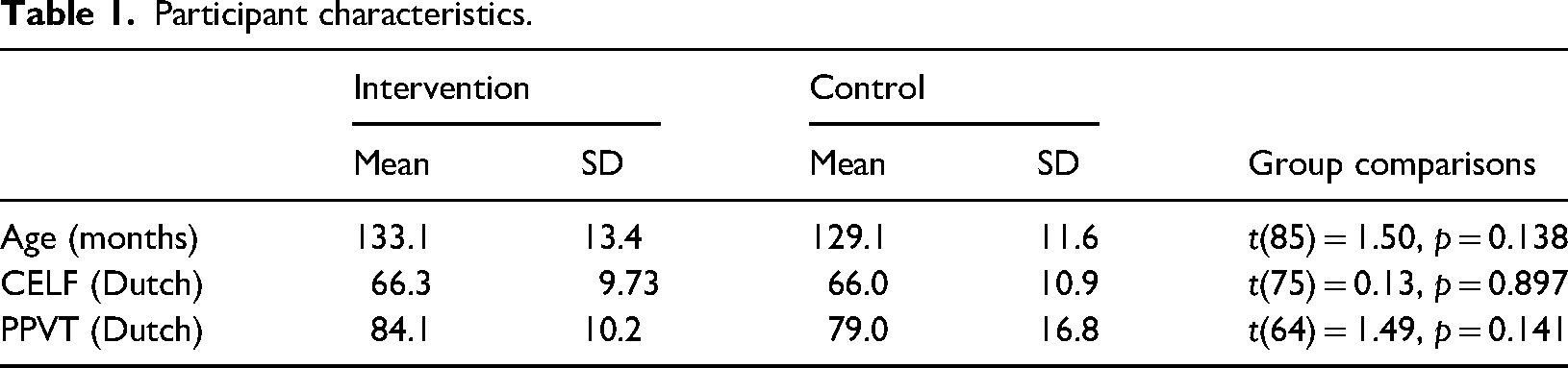
Participant characteristics.
The participants attended one of the three final grades of primary education (Grade 4–6, or groep 6–8 in Dutch). These grades were selected because the participating schools taught English from Grade 4 onwards. This means that a subset of the participants (4th graders) had not received any English lessons prior to this study, whereas 5th and 6th graders had received formal instruction in English for one and two years, respectively. The potential effect of Grade will be controlled for in the statistical analyses.
The participants of the intervention group came from three different classes 3 (one Grade 4, one Grade 5, and one Grade 6 class) in the same primary school (School 1). The participants of the control group came from five different classes recruited from two different schools (one Grade 4 class in School 1, two Grade 4 classes in School 2, one Grade 5, and one Grade 6 class in School 2). The random effects of School and Class will be controlled for in the statistical analyses.
All children in the intervention group and in the control group received 45 min of English lessons a week, starting in Grade 4. The intervention was administered during the English lessons to keep time-on-task comparable across the two groups. The intervention started at the beginning of the school year 2019–2020. This means that for the children in Grade 4, the intervention was already part of their very first English lesson. The cognate intervention was conducted at the beginning of each English lesson and took approximately 10 min. There were 12 intervention sessions in total taught over the span of 14 weeks (including one week of autumn break and one week of school trip). The intervention was taught by the third author (remedial teacher with expertise in DLD). The procedure had been previously piloted in three one-to-one sessions with similar-aged children with DLD, none of them participating in the present study.
In total, 52 words were treated in the intervention, 54% of these words were Dutch-English cognates and the remaining 46% were noncognates (the complete list can be found in the Supplemental materials). We determined the cognate status by using the Levenshtein distance, i.e. the minimal number of deletions, omissions, and substitutions needed to edit one string into another. For example, the Dutch kat and the English cat have a Levenshtein distance of 1 (c→k). Since Levenshtein distance is sensitive to word length (higher values are obtained for longer words), we also calculated a normalized orthographic similarity score using the algorithm developed by Schepens et al. (2012):
Since our intervention relied on both orthographic and phonological similarity, we also calculated the phonological Levenshtein distance and normalized similarity score, following the procedure described in Goriot (2019). The procedure was identical to the one described above for orthographical similarity but used phonological insertions, omissions and substitutions (distance), and the number of phonemes in the longest word (length). However, we reckoned this measure less reliable for determining the cognate status because even orthographically identical English–Dutch cognates almost never have 100% phonological overlap. For example, the Dutch–English pair man [man]—man [mæn] has an orthographic similarity score of 1 and a phonological similarity score of 0.67. Due to this asymmetry, orthographic similarity leads to stronger facilitation effects (Dijkstra et al., 1999) and has been shown to be a better predictor of English (EFL) receptive vocabulary skills of L1 Dutch pupils, even if tests are administered orally (Abad Perales, 2017). The mean normalized phonological similarity score for the cognates included in the intervention was 0.62 (range: 0.25–1); the mean similarity score for noncognates was 0.06 (range: 0–0.40). This difference was significant: (t(50) = 13.64, p < 0.001).
During the first intervention session, the children received an explicit explanation about cognates and learnt that some words in English and Dutch are siblings (broertjes in Dutch) and some are not siblings (niet-broertjes): The sibling words sound and look similar, and they have a similar meaning. After that new words were taught as a cognate game. Each word was spoken out loud in English by the teacher, and the pupils were asked to provide the Dutch translation. In order to help the learners guess the meaning of the new words, the pictures corresponding to all the words treated in the lesson were shown on a PowerPoint slide projected on the screen in front of the classroom. The teacher also had a printed version of each picture.
The children were asked to raise their hands and to give the Dutch translation if they knew the word or could guess its meaning based on cross-language similarity. If the correct Dutch counterpart was provided, the teacher slowly repeated the English and Dutch counterparts and the students were asked to decide whether the words were siblings or not and to motivate their choice. The teacher then wrote the English word and its Dutch counterpart on the whiteboard to help children by providing additional orthographic cues. The card with the corresponding picture was then put in one of the two boxes located on the teachers’ desk: a sibling box or a non-sibling box. This process was repeated until each illustration was treated. The remainder of the lesson in the intervention group was devoted to grammar exercises. On average, four new words were treated each week (range: 3–6). The words from a previous lesson were repeated a week later (including the cognate game). The pupils had no homework.
English lessons in the control group
Since the goal of this research is to compare the effectiveness of our new teaching approach to that of the approach currently used in (special) primary schools in the Netherlands, the control group received their regular English lessons that were matched to the lessons in the intervention group on duration (45 min) and intensity (once a week). The lessons were taught by the class's regular teacher 5 . As in the intervention group, there was no homework. The two participating schools used different coursebooks, but the general teaching approach (implicit and skill-based) was similar, as established through coursebook analysis and teacher interviews.
Most of the participants of the control group (74%) attended School 2. This school used a coursebook that teaches English based on pop-songs. The exercises focussed on vocabulary, grammar, reading, writing, and listening skills and were always linked to songs that were coupled to a specific theme. Examples of vocabulary exercises included describing pictures, crossword puzzles, song translation, and creating sentences with a set of given words. Importantly, most of these activities involve implicit vocabulary teaching/learning. Even though song translation exercises may support the development of cross-linguistic awareness, similarities and differences between Dutch and English words and the concept of cognates were never explicitly discussed in the lessons. The songs covered over the course of this research included six words that were also treated in the intervention group (3 cognates: man, old, shoes; 3 noncognates: girl, boy, catch). Three of these words were also included in the receptive vocabulary test that we administered to trace the participants’ progress (man, help, girl).
The remaining 12 participants (26%) of the control group, all 6th graders, attended School 1 and used a different coursebook, which had also been previously used in lessons taught to 5th and 6th graders of the intervention group. The key didactic idea of this approach is that children should acquire English in a natural way, as they acquired their first language(s). Therefore, vocabulary is not explicitly taught. The coursebook is written in English and no explicit Dutch translation is provided, except for the vocabulary sheets in the appendix. At the beginning of each unit, children listen to words and learn how to pronounce them. The words are not translated, but their meanings are illustrated by means of pictures. After that, children engage in writing and reading exercises. All vocabulary-related activities are implicit and include crossword puzzles and gap-fill exercises. The lessons covered over the period of this research included 12 words that were treated in our vocabulary intervention (6 cognates: year, man, hair, student, cat, short; 6 noncognates: woman, boy, girl, eyes, dress, dog). Five of these words were also included in the receptive vocabulary test (year, man, girl, cat, dog).
Test instruments and procedures
This study had a pre-test–post-test design. The pre-test was administered in September 2019 and the post-test in December 2019. To establish whether the intervention had a positive effect on the development of vocabulary skills in English, a receptive vocabulary test was administered twice: a week before the intervention started (pre-test) and a week after the intervention finished (post-test). A delayed post-test had also been envisaged but could not be implemented due to the Covid-19 lockdown. The participants of the control group took the test at the same time as the intervention group and followed their regular English lessons between the two measurements. As this research was part of a larger study, the vocabulary test was administered as part of a test battery that also included a grammaticality judgment task and a narrative task. The order of the tasks was counterbalanced across participants.
Receptive vocabulary test
The receptive vocabulary test was created specifically for the purposes of this study. The test contained 40 items (20 nouns and 20 verbs). Half of the words (n = 20) were Dutch–English cognates and the other half (n = 20) were noncognates. Half of the cognates (n = 10) and half of the noncognates (n = 10) were treated in the intervention lessons, and the remaining 50% of both word groups were words not covered in the intervention. By including both treated and non-treated words we could establish whether the intervention group only learned the words that were practised in the English lessons, or also developed a cognate strategy. In the latter case, their performance should improve on noncognates treated in the lessons and on both treated and non-treated cognates.
The cognates and the noncognates were matched on frequency and on word length in both English and Dutch. The word characteristics are summarized in Table 2. The frequency of the words was derived from the CELEX lexical database (http://celex.mpi.nl/). Word frequency was determined by requesting the occurrence of the lemma in one million words in the COBUILD database for the English words and the Institute for Dutch Lexicology database for the Dutch words. There were no significant differences between cognates and noncognates on word length in English (t(38) = −0.63, p = 0.530) and Dutch (t(38) = −0.42, p = 0.679), and on frequencies in English (t(24.2) = 1.28, p = 0.211) and Dutch (t(33.3) = 0.67, p = 0.508). The cognates differed from the noncognates on orthographic (t(38) = −11.51, p < 0.001) and phonological Levenshtein distance (t(38) = −8.53, p < 0.001), as well as on orthographic (t(38) = 14.15, p < 0.001) and phonological similarity (t(38) = 13.74, p < 0.001).
Word characteristics, means (SDs).
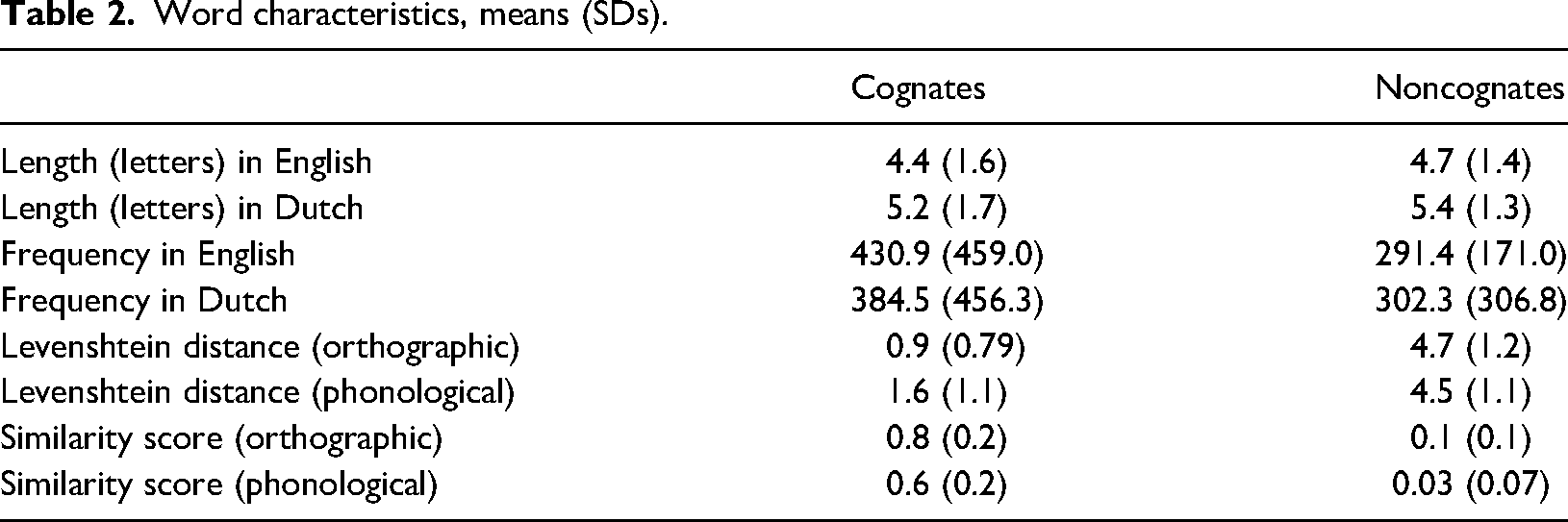
Word characteristics, means (SDs).
The test items were presented using PowerPoint. On each slide, the participants saw four pictures (one target picture and three foils) and heard a pre-recorded word pronounced with a British English accent. The pictures were black-and-white drawings created specifically for this test. The participants were asked to point to the picture (or indicate its number) corresponding to the word they heard. The position of the target picture was counterbalanced across trials. The test started with two practice trials: tree and ear. The participants were given feedback on the correctness of their responses on these two trials. After that, the main test started. The recordings were played only once, but the participants were allowed to take as long as necessary to provide an answer. The participants were tested individually in a quiet room at their school. The tests were administered by trained research assistants. On average, it took the participants 5–10 min to complete the test. Each correct answer was scored one point (with a maximum of 40 points).
Children in the Netherlands have ample exposure to English outside of the classroom, mainly through computer games, media, and streaming services (Unsworth et al., 2015). Since out-of-school exposure has been shown to be a strong predictor of EFL achievement (Leona et al., 2021), it is important to control for individual differences in informal exposure to English outside of the classroom. The existing questionnaires were too long and/or too complex for primary-school children with DLD, therefore we created our own questionnaire tailored to the (linguistic) capacities of the participants.
The questionnaire was administered by the researchers, at pre-test. For some of the children the questionnaire could be administered on the same day as the vocabulary test, and other children filled it in on a later day. The child and the researcher sat next to each other in a quiet room. The child received a questionnaire on paper. The researcher read the questions and the answer options out loud and provided examples and explanations if necessary. The participants were asked to indicate their answers on the response sheet.
The questionnaire contained eight questions: four questions about the frequency of engaging with a particular type of activity in English (e.g. listening to music, watching films/videos) and four questions about the duration of that particular activity. The maximum number of points for the frequency questions was 16 and for the duration questions 12 (maximum total exposure score = 28). The mean exposure score was 12.0 (SD = 5.7) in the intervention group and 11.6 (SD = 4.3) in the control group. This difference was not significant (t(81) = 0.37, p = 0.710).
Data analysis
Each response on the Receptive Vocabulary Test was scored as 1 (correct) or 0 (incorrect, no response). The data were analysed by means of generalized mixed-effects logistic regression using the glmer function in R (package LMe4; Bates et al., 2015). The random part included Item and Participant nested in Class and School (School:Class:Participant).
Results
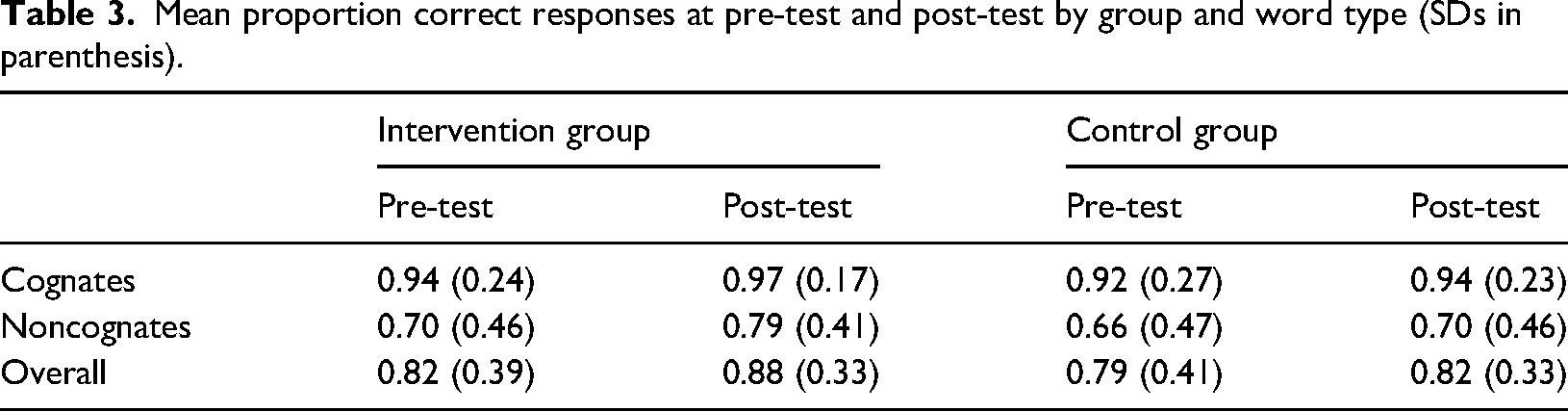
The mean scores of the two groups at pre-test and post-test are summarized in Table 3. It is noteworthy that the overall performance on the Receptive Vocabulary Test was quite good (around 80% correct already at pre-test). Figure 1 shows that even 4th graders who had not had any formal instruction prior to the pre-test performed well, particularly on cognates (M = 0.90), but their performance on noncognates (M = 0.57) was also well above chance (0.25).
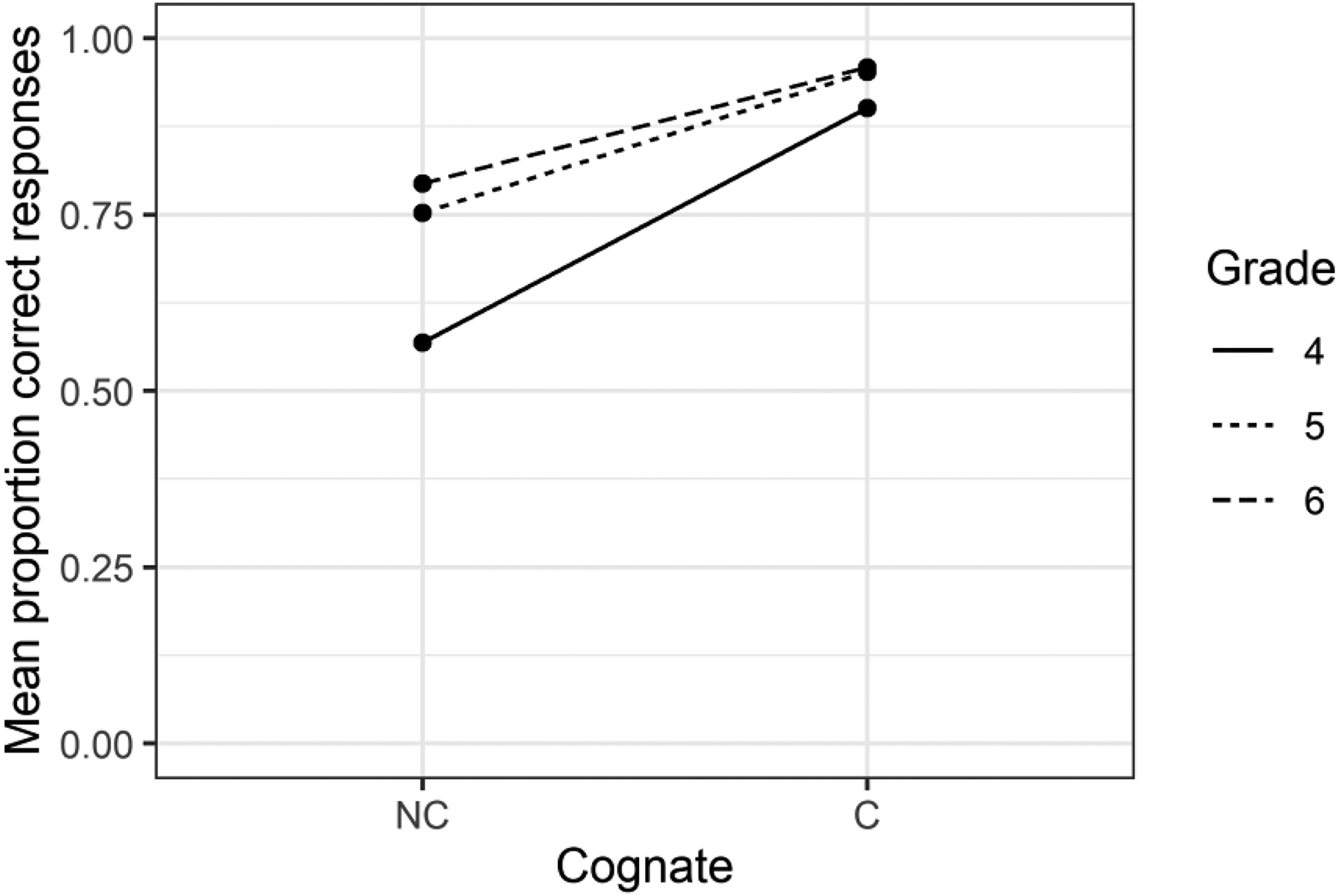
Mean scores on cognates (C) and noncognates (NC) at pre-test, by Grade.
Mean proportion correct responses at pre-test and post-test by group and word type (SDs in parenthesis).
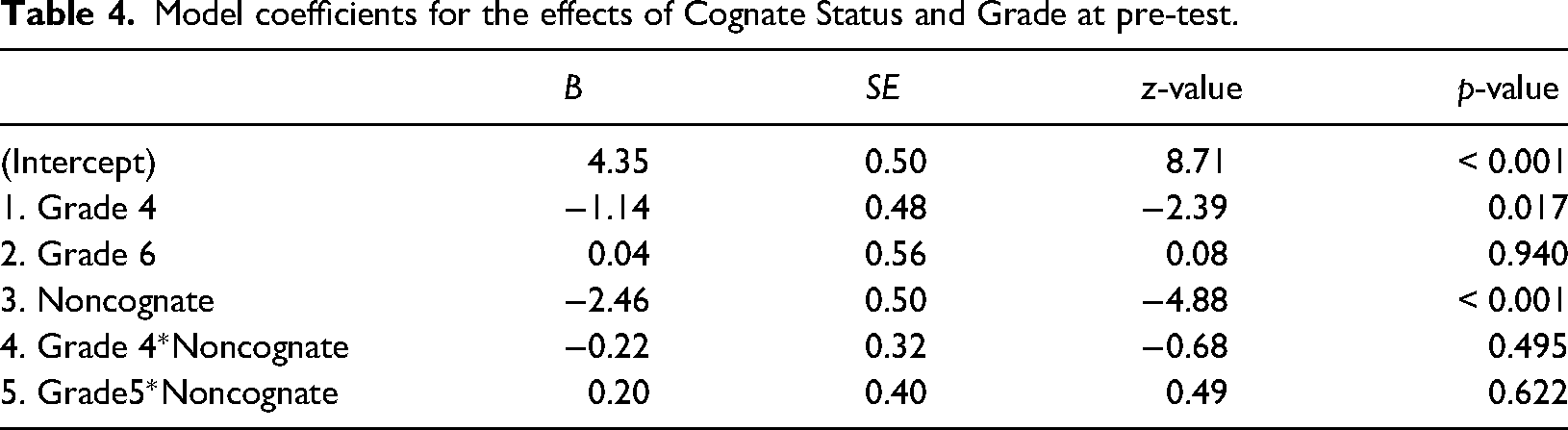
To answer our first research question and determine whether children with DLD benefit from English–Dutch cognates in recognizing English words at pre-test, we created a multilevel model with Cognate Status (Cognate; Noncognate), Grade (G4; G5; G6) and the interaction between the two as main effects. The data of both groups (Intervention and Control) was pooled together in this analysis. The performance of Grade 5 was taken as the baseline. The model coefficients in Table 4 suggest that children in Grade 4 performed significantly worse than children in Grade 5 (predictor 1), but there was no difference between the scores of 5th and 6th graders (predictor 2). Hence, pupils without any prior EFL instruction were outperformed by those with one or two years of experience with English at school. Children in Grade 5 performed significantly better on cognates than on noncognates (predictor 3). The same cognate advantage was found in Grade 4 and Grade 6, as evident from the non-significant interactions (predictors 4 and 5, respectively).
Model coefficients for the effects of Cognate Status and Grade at pre-test.
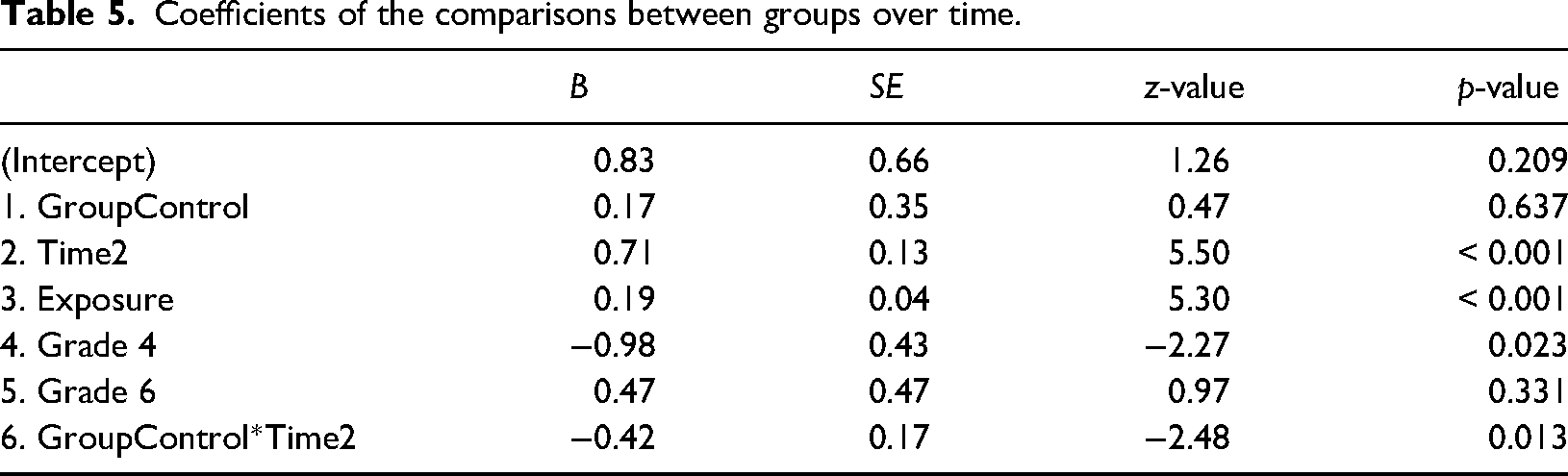
To answer our second research question and compare the development of the intervention group and the control group during the intervention period, we created a model with Group (Intervention; Control), Time (Time1; Time2) and the interaction between the two. To control for differences in the duration of EFL instruction and out-of-school exposure to English, Grade (G4; G5; G6) and Exposure were also included in the main part of the model. The performance of the intervention group at Time 1 was taken as the baseline. The model coefficients in Table 5 reveal that there was no difference between the intervention and the control group prior to the intervention (predictor 1). Amount of out-of-school exposure to English significantly predicted performance (predictor 3). Children in Grade 4 performed worse than children in Grade 5 (predictor 4), but there was no difference between the scores of 5th and 6th graders (predictor 5). The performance of the intervention group significantly improved during the course of the intervention (predictor 2) and this development was stronger than in the control group, as evidenced by the significant negative interaction between GroupControl and Time2 (predictor 6).
Coefficients of the comparisons between groups over time.
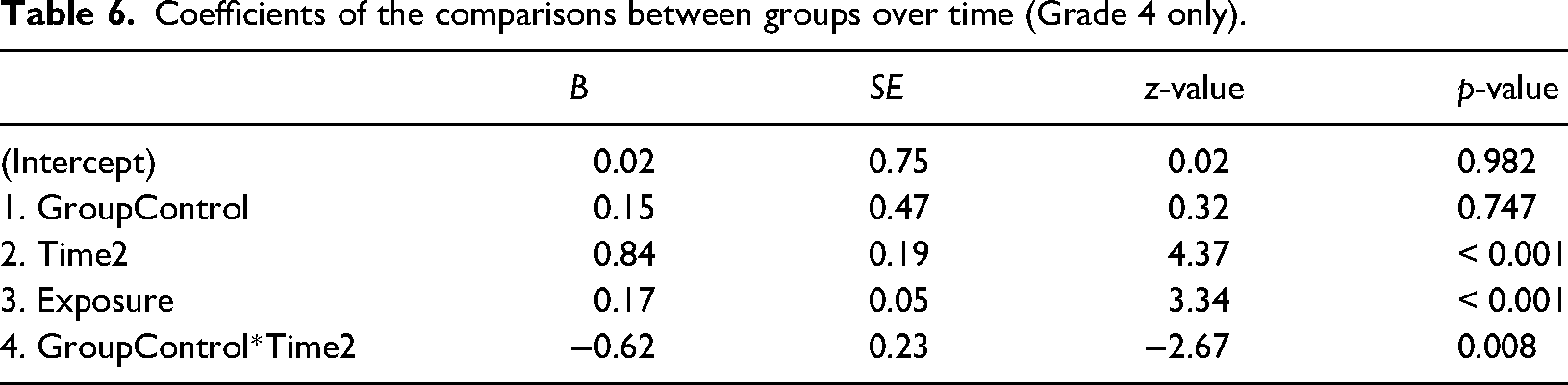
Since the oldest participants (5th and 6th graders) had high vocabulary scores already at pre-test, we ran a separate analysis for the youngest group (4th graders) that scored lower at pre-test. The results precisely mirror those of the whole sample (Table 6). There were no differences between the control group and the intervention group at pre-test (predictor 1). The intervention group made progress during the intervention (predictor 2), whereas the control group did not (predictor 4), which is also confirmed by an additional analysis with the control group as the baseline (B = 0.23, SE = 0.13, z = 1.77, p = 0.077).
Coefficients of the comparisons between groups over time (Grade 4 only).
In the following analyses we compare the development of four word categories (treated cognates; treated noncognates; non-treated cognates; non-treated noncognates) within each group separately. Recall that if children in the intervention group developed a cognate strategy, their performance should improve not only on cognates treated in the lessons but also on non-treated cognates. To compare the development of the words across the four categories we created two models (one per group) with Time (Time1; Time2), Category (treated cognates; treated noncognates; non-treated cognates; non-treated noncognates) and the Time*Category interaction. Item and Participant (nested in Class) were included in the random part of the models. The performance on treated noncognates at Time 1 was taken as the baseline.
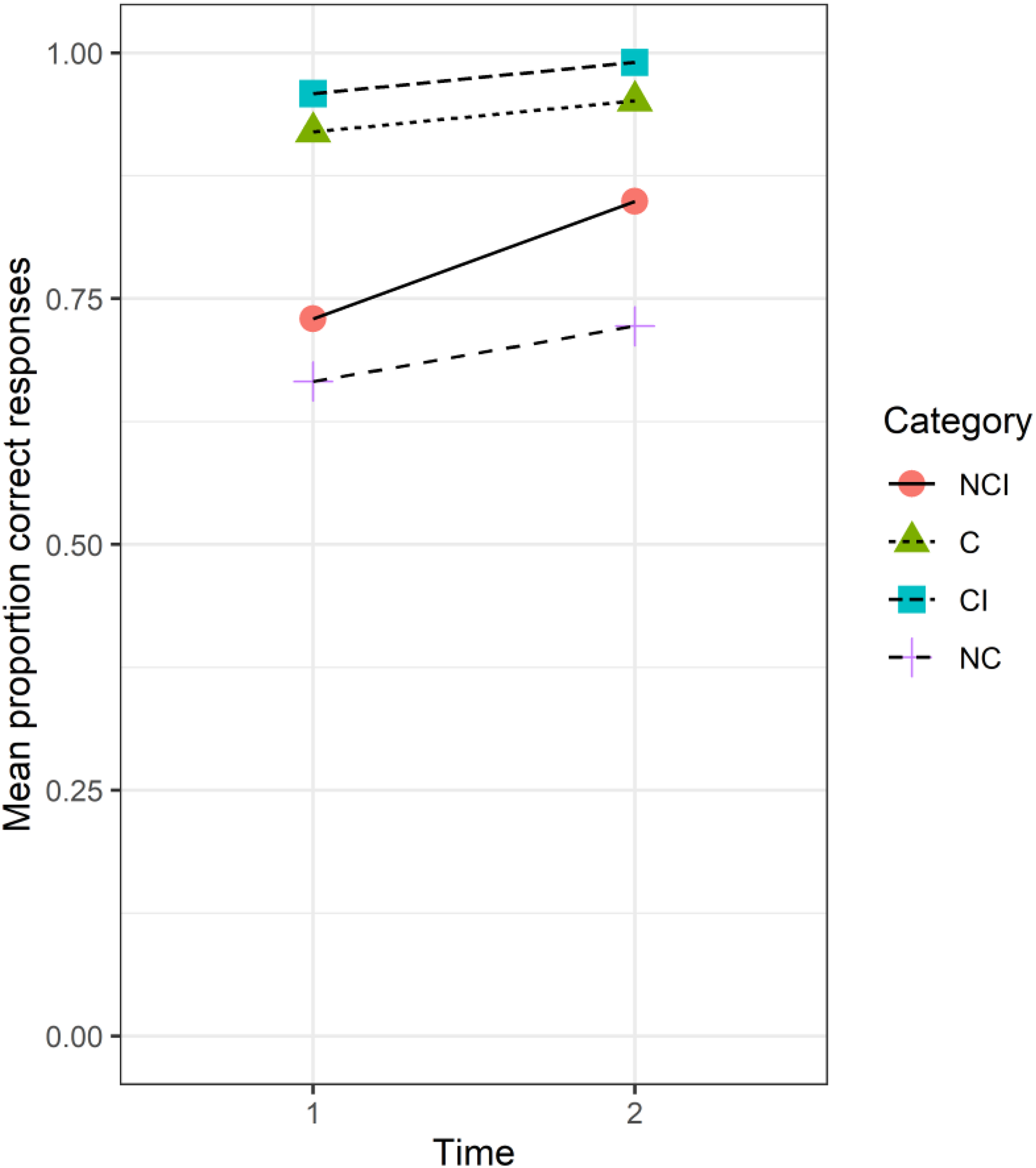
Figure 2 shows the development of the four-word categories in the control group. Notice that the distinction between treated and nontreated words is not relevant in this group; but we present the data in this way to establish the baseline for the performance of the intervention group. The model summary in Table 7 demonstrates that at Time 1 the children in the control group performed better on cognates than on noncognates (predictors 2 and 3). Their performance on noncognates that were treated in the intervention group did not improve over time (predictor 1). This lack of development was also evident in the other three word categories (predictors 5–7).
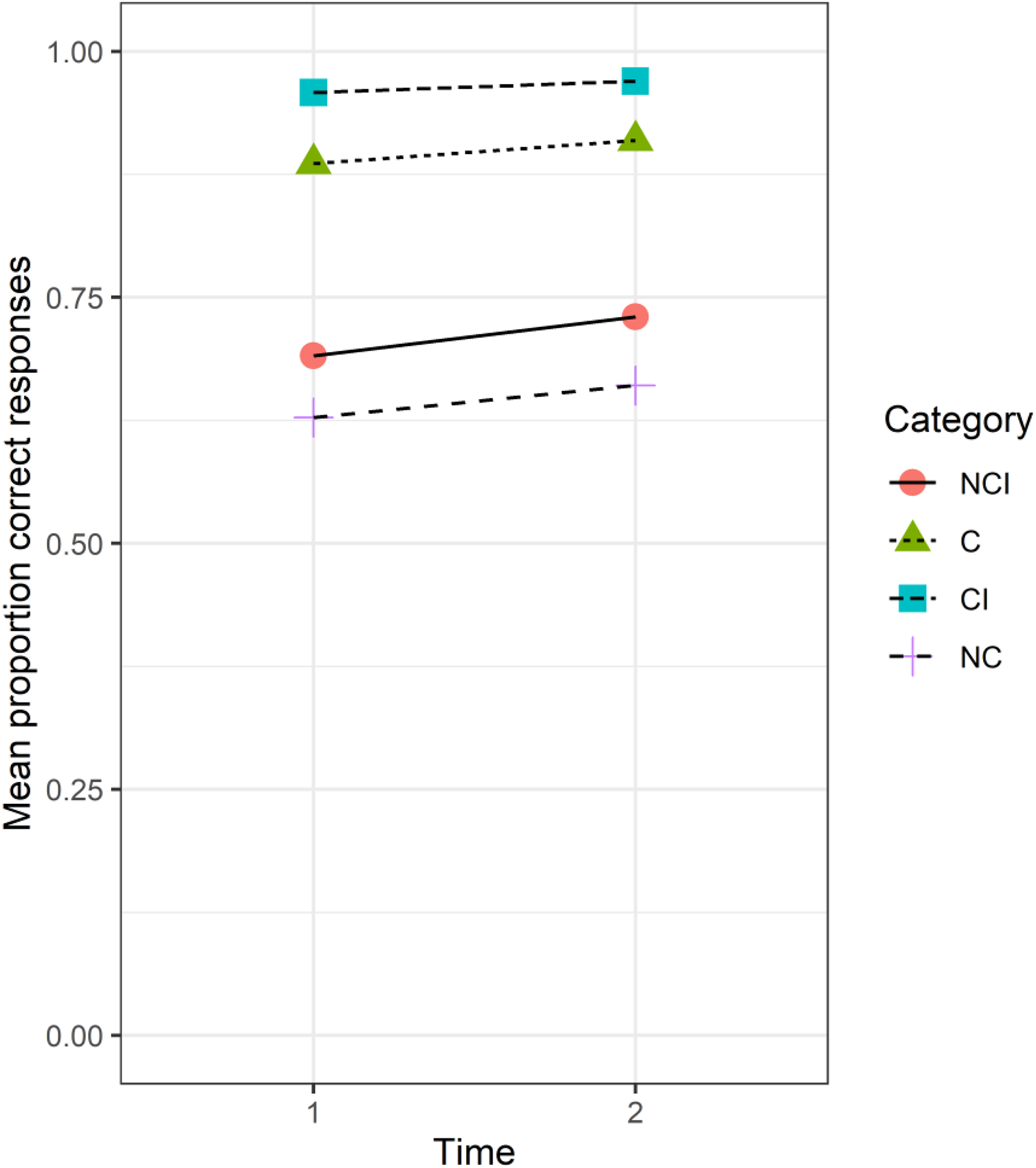
The performance of the control group at pre-test (Time 1) and post-test (Time 2), by word type (NCI: treated noncognates; C: non-treated cognates; CI: treated cognates; NC: non-treated noncognates).
Model coefficients for the development of the control group, by word category.
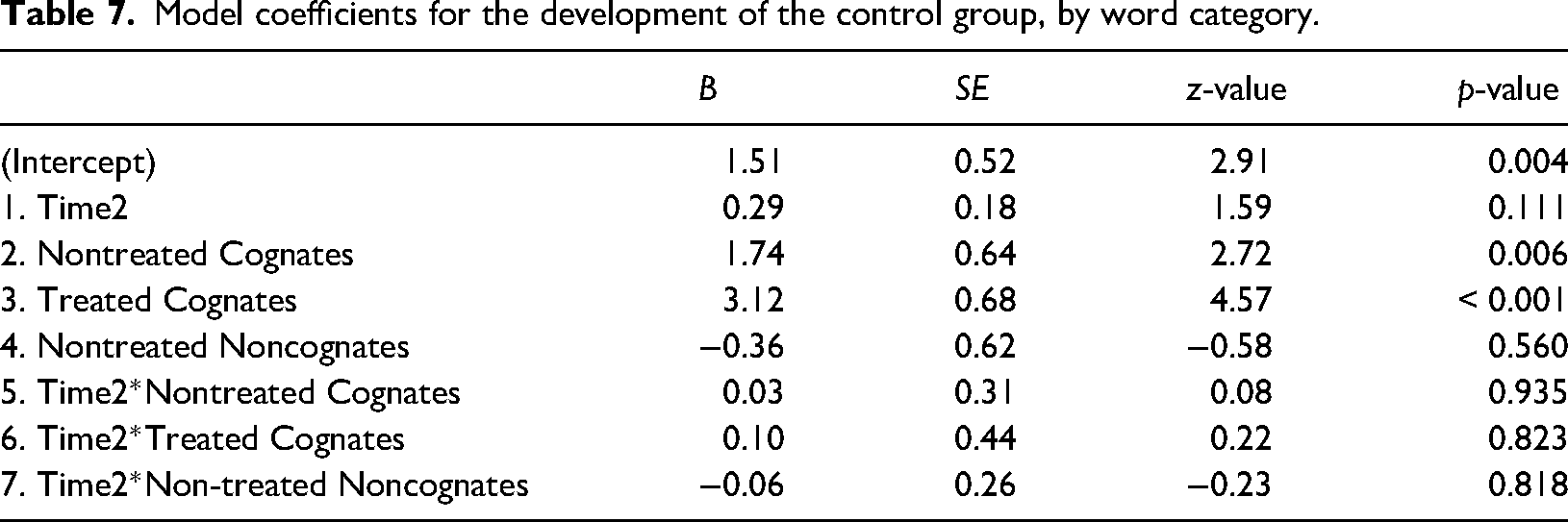
Figure 3 presents the development of performance of the intervention group, by word category. The model coefficients in Table 8 show that at Time 1 the intervention group performed better on cognates than on noncognates (predictors 2 and 3). Their performance on the noncognates treated in the intervention improved in the course of the intervention (predictor 1). Similar improvement was attested for treated cognates (predictor 6) and non-treated cognates (predictor 5), as evidenced by the non-significant interactions between Time2 and (Nontreated) Cognates. In contrast, there was no improvement on non-treated noncognates, as evidenced by the significant negative interaction between Time2 and Nontreated Cognates (predictor 7).
The performance of the intervention group at pre-test (Time 1) and post-test (Time 2), by word type (NCI: treated noncognates; C: non-treated cognates; CI: treated cognates; NC: non-treated noncognates).
Model coefficients for the development of the intervention group, by word category.
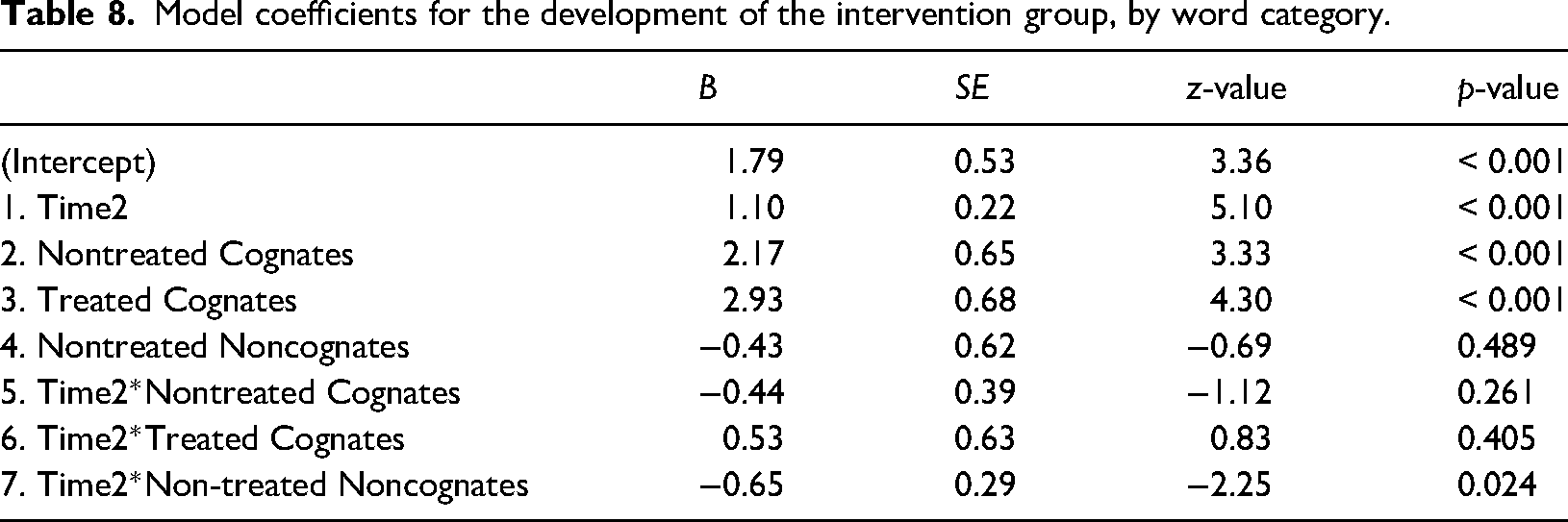
To summarize, children with DLD clearly benefitted from English–Dutch cognates, as their performance on cognates was better than their recognition of noncognates, already at pre-test and even in the group without prior EFL instruction (Grade 4). The performance of the control group did not improve over time. In the intervention group, there was no improvement for noncognates that had not been treated in the lessons. However, the performance of the intervention group significantly improved for words treated in the lessons (both cognates and noncognates) but also for cognates not treated in the intervention.
Prior research on dual language learning by children with DLD has largely focussed on naturalistic L2 acquisition with plenty of exposure, usually in the country where the target language is spoken. By comparison, very little is known about how children with DLD learn FLs in limited-input (classroom) settings. This paper is the first published report of a vocabulary intervention for EFL learners with DLD in a school setting.
The results of this study demonstrate that EFL learners with DLD are able to make use of positive L1 transfer in learning English words, without any prior instruction on cognates. The participants performed better on cognates than noncognates, and this relationship was the same for beginning learners (Grade 4) and learners with one or two years of prior experience with English lessons (Grades 5–6). These results are consonant with earlier findings revealing cognate facilitation effects in children with DLD (Grasso et al., 2018; Kohnert et al., 2004; Payesteh and Pham, 2022; Tribushinina et al., 2023). Our results do not support earlier proposals that cross-language transfer is not available to children with DLD (Blom and Paradis, 2015; Ebert et al., 2014). Notice, however, that studies suggesting that transfer might be impaired focussed on morphosyntax. It is possible that the disorder negatively affects the mechanisms of positive transfer in the most vulnerable (grammatical) domain, whereas transfer in the lexical domain, which is a relative strength in DLD, might be spared (Tribushinina et al., 2020). Future research will benefit from studies directly comparing the extent of positive transfer in vocabulary and morphosyntax in the same individuals.
Even though the participants of the present study were able to apply their L1 knowledge in recognizing EFL words, we recommend explicit cognate instruction in EFL lessons. As evidenced by the results of this intervention study, the participants of the intervention significantly improved their vocabulary skills, whereas no progress was found in the business-as-usual control group. More importantly, the children in the intervention group further strengthened their use of the cognate strategy: At post-test they performed better not only on the words treated in the lessons (cognates and noncognates) but also on cognates that had not been practised during the intervention. The only word category that showed no improvement were noncognates that had not been treated in the intervention. This finding supports the results of prior intervention studies with typically-developing bilinguals (Dressler et al., 2011; Garcia et al., 2020) and bilinguals with DLD (Dam et al., 2020), and demonstrates that cognate interventions present a promising approach to EFL teaching as well. The current results also reveal that such interventions can be easily implemented in the school curricula, as only 12 short sessions (about 10 min a week) administered to the whole classroom were sufficient to support word learning in EFL learners with DLD.
The languages investigated in this study were typologically close Germanic languages sharing many cognates. It is likely that the effect of explicit cognate instruction may be even stronger if the L1 of the participants is typologically more distant from English and the cognates are less easily identifiable. For one, it is more difficult to recognize cognates in languages that do not share an alphabetic script (Tribushinina et al., 2023). It will be a matter for further research to establish the role of typological proximity in moderating the effects of explicit cognate instruction.
This study has a number of limitations. Our main goal was to compare the efficacy of explicit vocabulary teaching to that of a teaching approach currently widely used in primary schools in the Netherlands (business-as-usual curriculum). This comparison has a high degree of ecological validity and practical relevance, but it also has intrinsic disadvantages associated with research in real classroom settings. First, we did not control for a possible teacher effect. As explained above, the English lessons in the control group were taught by the regular school teachers, whereas the intervention was taught by a remedial teacher who was not the regular teacher of the participating classes. It might be the case that the teacher quality also played a role in the steeper development of the intervention group. Second, this approach does not allow to compare the effectiveness of explicit and implicit vocabulary teaching directly because the intervention and the control condition differed on more than one dimension. Furthermore, it was not possible to avoid a slight overlap in the intervention targets and words that the control group encountered in their (mainly implicit) vocabulary activities. However, this does not appear problematic in light of the present results because the control group did not make any progress on either cognates or noncognates. This supports earlier observations that explicit approaches raising metalinguistic awareness are crucial to support language development of children with DLD.
Finally, our test was too easy for the older participants who had received one (5th graders) or two (6th graders) years of weekly English lessons. At pre-test, the 5th and 6th graders performed above 90% correct on cognates and above 70% correct on noncognates. Even children without prior EFL lessons (4th graders) performed above chance on noncognates and around 90% on cognates. Since there is almost no research on vocabulary learning by EFL learners with DLD in classroom settings and in view of the deficits associated with the disorder, we did not expect such high scores. The only comparable study available thus far (Tribushinina et al., 2023) reports much weaker performance of Russian-speaking EFL learners with DLD on a similar test after a larger amount of EFL instruction (4.5 years × 90 min a week). The unexpectedly high performance in the present study is probably due to the typological similarity between Dutch and English, and also due to the fact that children in the Netherlands have ample exposure to English outside of the classroom (recall that out-of-school exposure was a significant predictor of vocabulary scores). Our results support earlier research demonstrating that Dutch pupils start acquiring English through media even before formal EFL instruction at school (e.g. Leona et al., 2021) and extend these findings to pupils with DLD.
Even though the performance at pre-test was already very high, we reckon that our conclusions are not compromised because there was still enough room for improvement, as evidenced by the significant progress in the intervention group. Importantly, we found significant improvement both in the entire intervention group and in the subsample of the youngest participants who scored lower at pre-test. Lack of progress in the control group (despite similar performance at pre-test) shows that the significant improvement in the intervention group was due to the intervention. This being said, in order to make firm conclusions regarding the effectiveness of cognate interventions in EFL classes, future studies in countries with ample EFL exposure (Netherlands, Belgium, Iceland) should take the strong performance attested in the current study into account and use more complex vocabulary tests.
Conclusion
This study has confirmed that positive cross-language transfer in the lexical domain is available to children with DLD, which makes cognates suitable targets for vocabulary interventions. However, the use of cognate strategies by EFL learners with DLD can be further developed by using a teaching approach making crosslinguistic similarities and differences explicit and salient. Our findings support earlier research demonstrating that children with DLD are responsive to cognate interventions in speech and language therapy. The results of this study further reveal that a similar approach can be used in FL lessons in a regular classroom setting. In our intervention, short but systematic attention to cognate relationships significantly enhanced the ability of primary-school children with DLD to recognize English–Dutch cognates, above and beyond the words practised in the lessons.
Supplemental Material
sj-docx-1-clt-10.1177_02656590231202177 - Supplemental material for Explicit cognate instruction facilitates vocabulary learning by foreign language learners with developmental language disorder
Supplemental material, sj-docx-1-clt-10.1177_02656590231202177 for Explicit cognate instruction facilitates vocabulary learning by foreign language learners with developmental language disorder by Elena Tribushinina, Geke Niemann and Joyce Meuwissen in Child Language Teaching and Therapy
Footnotes
Acknowledgements
We are very grateful to the two anonymous reviewers for their valuable constructive feedback. We also would like to thank the participating schools, parents and children that made this investigation possible. We are grateful to Angelique Niemann-Jager for creating the intervention materials and the test materials. We also thank Megan Mackaaij, Gabriela Lahdo, Maaike Smit, Desiree Mastellone and Esther Paasman for their help with data collection and processing.
Declaration of conflicting interests
The authors declared no potential conflicts of interest with respect to the research, authorship, and/or publication of this article.
Funding
The authors disclosed receipt of the following financial support for the research, authorship, and/or publication of this article: This work was supported by the Netherlands Organization for Scientific Research (NWO) under Grant 015.015.061 to the first author.

Supplemental material
Supplemental material for this article is available online.
Notes
References
Supplementary Material
Please find the following supplemental material available below.
For Open Access articles published under a Creative Commons License, all supplemental material carries the same license as the article it is associated with.
For non-Open Access articles published, all supplemental material carries a non-exclusive license, and permission requests for re-use of supplemental material or any part of supplemental material shall be sent directly to the copyright owner as specified in the copyright notice associated with the article.
