




Abstract
Marriage is a fundamental right and personal choice for all people. However, societal attitudes present significant challenges for women with disabilities when contemplating marriage. This paper explores the experiences of Northern Vietnamese women with physical disabilities who faced opposition from their partners’ families regarding marriage. It draws on a qualitative study that explored the lived experiences of women with physical disabilities regarding pregnancy, childbirth, and maternal healthcare conducted in 2018. A two-staged in-depth interview was utilised. Initially, 29 women were interviewed, with 27 follow-up interviews conducted. Data was thematically analysed using Braun and Clarke’s approach (2013, 2019). Two key themes, with five subthemes, emerged: “marriage denied: gendered and ableist exclusion” and “marriage opposition: stigma and discrimination”. Findings underscore the pervasive influence of Vietnamese socio-cultural norms on the marital prospects of women with physical disabilities. Gender roles ascribed to wives, daughters-in-law, and mothers, coupled with ableist assumption and social stigma surrounding disability pose significant barriers to their marriages. These findings enhance understanding of the intersection of gender and disability, with implications for developing policies and programs that go beyond focusing solely on these factors, prioritise dismantling ableist and gender norms, and challenge negative perceptions of women with disabilities as “unworthy” of marriage.
Introduction
Marriage is a fundamental right and a personal choice for all individuals, regardless of ability or disability. Article 16 of the Universal Declaration of Human Rights asserts that all people at “full age” have the right to marriage (United Nations [UN], 1948). The United Nations Convention on the Rights of Persons with Disabilities (UNCRPD), particularly Article 23, emphasises the elimination of discrimination against people with disabilities in all matters relating to marriage, family, parenthood and relationships. It calls for States Parties to ensure that “The right of all persons with disabilities who are of marriageable age to marry and to found a family on the basis of free and full consent of the intending spouses is recognised” (UN, 2006, p. 15). Despite these international mandates, research indicates pertinent challenges, especially for women with disabilities, in pursuing marriage due to societal attitudes toward disability.
This paper draws on a qualitative study exploring the lived experiences of North Vietnamese women with physical disabilities in the context of pregnancy, childbirth, and maternal healthcare. It focuses specifically on the question: How do women with physical disabilities experience opposition to their marriage, particularly from their partners’ families? The aim is to examine how gender and disability intersect to shape experiences of marital exclusion and opposition. By highlighting the unique barriers faced by these women, the study seeks to contribute to a deeper understanding of gendered and ableist discrimination in intimate relationships and marriage. The findings have the potential to inform human rights-based policies and programs in Vietnam and other low- and middle-income countries.
Literature review and study justification
Globally, people with disabilities are generally more possible to remain unmarried compared to their non-disabled counterparts (Clarke & McKay, 2014; Sandström et al., 2021; Savage & McConnell, 2016). For instance, the 2009 Canadian Community Health Survey, which involved 41,650 women, of whom 9,450 had disabilities, found that women with disabilities were less likely to be married or in a cohabiting relationship compared to women without disabilities (Savage & McConnell, 2016). Within the subset of women with disabilities, those with early onset, cognitive impairment, physical impairment, and low education level are more likely to be unmarried (Savage & McConnell, 2016). Another study analysed 11,580 individuals participated in three waves of Survey of Living Conditions from 1993 to 2011 in Sweden showed the proportion of living alone among people with disabilities were double those among people without disabilities, implicating that people with disabilities are more challenging to find a partner (Sandström et al., 2021).
Research on challenges of marriage for women with disabilities has mostly been conducted in the Global North while there is a dearth of research regarding their experiences in the Global South where majority of people with disabilities live (Amin et al., 2020). The Global North literature found that disability status has negatively associated with the probability of forming marriage (Sandström et al., 2021). The challenges faced by the Global North women with disabilities in pursuing marriage predominantly derives from negative societal perceptions of disability (Sandström et al., 2021; Savage & McConnell, 2016). Traditionally, women with physical disabilities are not expected to have romantic or sexual relationships (Vikström et al., 2020; Wälivaara & Ljuslinder, 2020). Their marriage opportunities are impacted by the ableist beliefs that discriminates people with disabilities and makes them inferior to people without disabilities (Nguyen & Kane, 2024; Sandström et al., 2021; Savage & McConnell, 2016). They are often perceived as asexual, implying they have no sexual desire and no ability for conception, incapable, and dependent (Chambers, 2023; Peddigrew, 2023). These ableist myths lead to difficulties in marriage as they are not considered as potential partners (Chambers, 2023; Sandström et al., 2021; Savage & McConnell, 2016).
Similar to Global North, women with disabilities from the Global South encounter prejudice and doubts about their sexuality and parenting capabilities from the community (Apolot et al., 2019; Nguyen et al., 2019). Women with disabilities are considered as having no capacity or competency to be a good wife or a good mother (Tefera et al., 2017). Additionally, the community believe that disability can be inherited, leading to families’ fear to having a child with disabilities (Nguyen et al., 2021). Because of these, many women with disabilities are assumed to be “unfit” for marriage, especially with men without disabilities (Amin et al., 2020; Frohmader & Ortoleva, 2013; Zewude & Habtegiorgis, 2021). They may be excluded as marriage partners and rejected by partner’s family as prospective daughter-in-law (Amin et al., 2020).
As a consequence, the women themselves perceive that intimacy, love, and marriage are not possibilities for them. They internalised the ableist belief that they are not ideal or suitable partners in relationships, or they only suit to a partner with inferior quality (Yang, 2013). For instance, a study with 32 women with physical disabilities in Malaysia found that many expressed apprehension about establishing intimate relationships (Amin et al., 2020). This fear stemmed from their negative perceptions of the self and body, lack of confidence in fulfilling traditional gender roles, fear of rejection, and financial limitations (Amin et al., 2020; Badran et al., 2022). Internalised disablism has been associated with diminished self-efficacy, reduced optimism and decreased social support, leading them to perceived themselves as “having a spoiled identity not worthy of a partner” (Amin et al., 2020, p. 254). Furthermore, limited accessibility to social participation restricts opportunities for women with disabilities to meet potential partners (Amin et al., 2020).
While societal attitudes are significantly influence experiences of women with disabilities, but family attitudes are especially powerful. Families, both of the women and their partner, often play a decisive role in the acceptance or rejection of marriage (Elkhateeb & Peter, 2019). Globally, there is limited research on the attitudes of male partners’ family toward marriage of women with physical disabilities (Elkhateeb & Peter, 2019). There is limited literature but what exists demonstrates that attitudes are generally negative and more specifically, families disapprove and frankly prohibit the marriage of women with physical disabilities (Bdour & Shogirat, 2019; Elkhateeb & Peter, 2019).
Disability, gender, and marriage in Vietnam
According to the 2023 Vietnam Disability Survey, approximately 7.3% of the Vietnamese population aged 16 and over live with one or more disabilities; a prevalence of 8.3% for women and 6.3% for men (General Statistical Office, 2023). In Vietnamese culture, traditional beliefs often attribute disability to the sins or immorality of the individual or their ancestors, as a form of punishment (Gammeltoft, 2008; Hunt & Stone, 2005; Le et al., 2008). This belief stems from Buddhist principles of reincarnation, where one’s actions in a past life are believed to influence their current or future existence (Hunt & Stone, 2005). As a result, people with disabilities face stigma, often being seen as burdens on their families, overly reliant on others, and incapable of leading a “normal” life (Le et al., 2008). One of the few available national surveys revealed people with disabilities face significantly higher levels of stigma compared to those without disabilities, including at work, social participation, and health access (Institute for Social Development and Studies (ISDS), 2013).
In addition to these cultural beliefs, traditional gender roles in Vietnam further complicate the situation for women with disabilities. Vietnamese society upholds male superiority, with men typically regarded as the primary authority figures in the family; men are far less involved in household chores and child-rearing (Mestechkina et al., 2014). In contrast, women are expected to fulfil key roles as caregivers, taking responsibilities for child-rearing, housework, and caring for the elderly (Mestechkina et al., 2014). Gender expectations become even more challenging for women with disabilities, as society perceives them as less capable of fulfilling these roles. Adding to this, strong cultural expectations about lineage and the necessity of having children, especially sons, to support ageing parents are deeply rooted in Vietnam’s patrilineal kinship system (Becquet & Ngoc Luu, 2017; Guilmoto, 2012; Oosterhoff et al., 2008; UNFPA, 2011). Together, these entrenched gender norms and the cultural expectation of having children intensify the social challenges women with disabilities face in meeting marital and caregiving expectations.
Research on marriage among women with disabilities in Vietnam remains limited. The 2008 survey on people with disabilities is the only one specifically reporting on the marriage rate of people with disabilities. It indicated a lower marriage rate among women with disabilities compared to men with disabilities across all age ranges. Specifically, 70% of men with disabilities aged 15 and above were married, compared to only 20% of women with disabilities (Le et al., 2008). This difference highlights the unique barriers women with disabilities face in relation to marriage. While some existing studies in Vietnam have investigated the challenges of women with disabilities encounter in forming intimate relationships and marriage, they have not intensively focused on understanding the opposition of families and the intersection of gender and disability (Do, 2013; Do & Nguyen, 2006).
Intersectional lens
Intersectionality offers a framework for the analysis of the interplay between various social identities, for example, gender, disability, race, ethnicity, socio-economic status, and sexual orientation and how these intersecting identities shape the experiences of an individual (Collins & Bilge, 2016, 2020; Crenshaw, 1991). A fundamental principle of intersectionality is the focus on multiple intersecting identities rather than a single identity as the sole point of analysis (Crenshaw, 1991; Hancock, 2007; McCall, 2005). The African-American feminist legal scholar Kimberlé Crenshaw first articulated intersectionality in 1989, based on black feminism and critical race theory. With long-standing focus on the intersection of gender and race, intersectionality has broadened to encompass other socially constructed identities, including disability (Atewologun, 2018; Carbado et al., 2013; Collins & Bilge, 2016).
Central to intersectionality are the interrelated concepts of intersecting identities, power relations, and social context (Collins & Bilge, 2016, 2020). The concept of intersecting identities emphasises the relationality of multiple social identities, such as gender and disability, adopting a “both/and” approach rather than an “either/or” perspective. Power relations within intersectionality refer to the systems of dominance and subordination that shape social relationships, where different forms of power, such as sexism/genderism and disablism/ableism, overlap and reinforce each other (Collins, 2002; Collins & Bilge, 2016; Collins & Chepp, 2013). These power systems do not act independently but overlap and reinforce one another, producing particular forms of stigma and discrimination for individuals. In the context of this study, stigma and discrimination are not only interpersonal reactions to difference but are rooted in broader structural power relations that define who is considered valuable, capable, or marriageable. These forces operate through cultural norms related to gender and ability, affecting how women with physical disabilities are perceived and treated in intimate relationships and marriage. Finally, intersectionality underscores the significance of social context in which individuals experience these intersections. Intersectionality highlights the importance of the specific historical, socio-cultural, political, and economic environments in which people live that shape people’s experiences (Collins & Bilge, 2016, 2020).
The intersection of gender and disability subjects women with physical disabilities to a unique form of stigma and discrimination that are not simply additive but mutually reinforcing (Badran et al., 2022; Devkota et al., 2019; Nguyen et al., 2021). While both men and women with disabilities encounter discrimination and exclusion, women’s experiences are distinct and compounded disadvantage because of how gendered expectations interact with ableist norms (Akasreku et al., 2018; Badran et al., 2022). Stigma related to disability alone often involves assumptions of dependency, asexuality, or incompetence. However, when combined with entrenched gender norms that idealise women as caregivers, homemakers, and childbearers, stigma is intensified. In North Vietnam, where traditional gender roles remain strong, women are expected to fulfil duties as wives, daughters-in-law, and mothers; roles that women with physical disabilities are frequently perceived as unfit to perform (Nguyen et al., 2021). Marriage is often seen as central to a woman’s identity and social legitimacy, but societal beliefs often wrongly assume that women with disabilities are incapable of meeting these gendered expectations. The intersection of gender and disability thus shape how these women are viewed by families and communities, restricting their marriage prospects and reinforce their social exclusion (Amin et al., 2020).
By using an intersectional lens, this study reveals how stigma and discrimination are structured by the interplay of gender, disability, and socio-cultural norms. Rather than being parallel sources of disadvantage, gender and disability work together to produce unique, systemic barriers in the intimate and relational lives of women with physical disabilities.
Methods
The paper draws on a larger qualitative study exploring the lived experiences of pregnancy, childbirth, and maternal healthcare of women with physical disabilities in Northern Vietnam in 2018. This study was conducted in two provinces, Hanoi and Thaibinh. The available data indicated that in Hanoi, the proportion of people with disabilities aged 16 and over is 5.5%, while in Thai Binh, it is 11.2% (General Statistical Office, 2023).
A total of 29 women with physical disabilities participated. To be eligible, the women had to: (1) live with impairments leading to disability before their last pregnancy, (2) had given birth within the previous three years, and (3) had no co-existing form of disabilities such as sensory, intellectual or development disabilities. The women were recruited by the first author through purposive and snow-ball sampling with support from Hanoi and Thaibinh Associations of People with Disabilities.
Participants’ details.
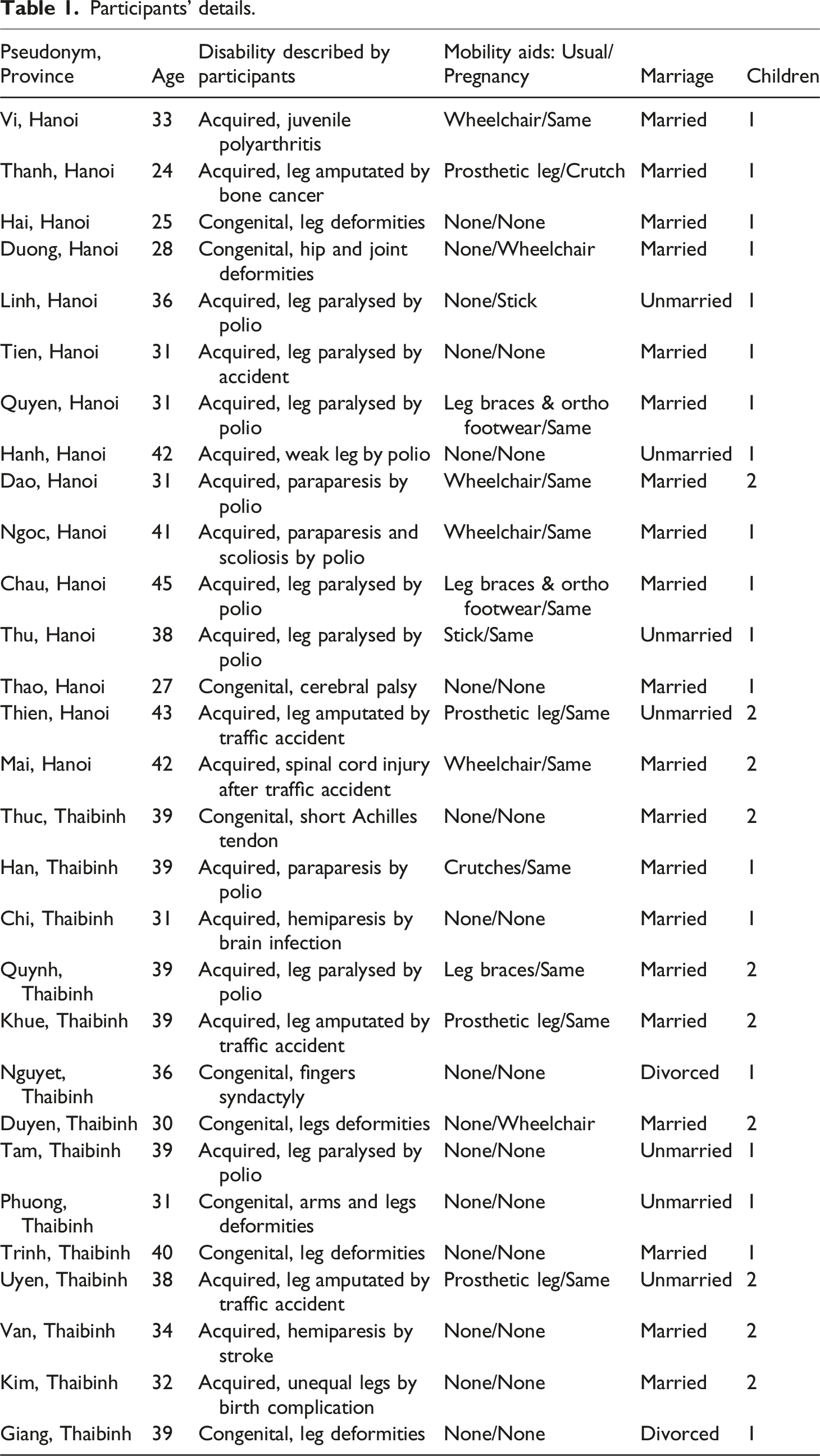
Two-stage in-depth interviews were employed to collect data from women with physical disabilities. Twenty-nine women were interviewed for the first time from April to August 2018. The follow-up interview was conducted with 27 out of the 29 women in December 2018. Follow-up interviews were particularly appropriate due to women with disabilities being considered as vulnerable and disadvantaged in Vietnam (Banks et al., 2018), using two interviews enabled the building of rapport with participants. Relationship development meant that participants were more likely to open and share sensitive information (Vincent, 2013). The first and follow-up interviews were conducted at least three months apart to give time to the women to recall and reflect on their feelings and experiences discussed in the first interview (Bui, 2020). This approach worked well and contributed to the rich and in-depth data collected.
In the first interview, the women were asked to share their socio-demographic information, disability status and their lived experiences in forming relationships and for marriage, pregnancy, childbirth, and maternal healthcare more broadly. A guide included probes that sought understanding, e.g. “Tell me about your relationships and marriage experiences?” was used in the first interview. The women shared their stories in their own way about their intimate relationships, the challenges they faced, and how they felt about those experiences. Data from the first interviews were then thematically analysed to produce preliminary themes. After the first round of data analysis, the thematic guide was revised to enable further exploration of the emergent themes. Additional question prompts included: “Tell me more about responses from your family and your partner/husband’s family to your relationship and marriage? If you experienced opposition from the families, what factors influenced their opposition? What did you and your partner/husband do to overcome/cope with the opposition?” Both interviews were indepth, semi-structure; the interviewer followed participants’ narratives flexibly, using the guide to ensure key topics were covered but allowing space to pursue relevant issues in greater depth.
All the interviews were conducted by the first author in Vietnamese; the language used by the participants. Each interview lasted one to 2 hours and was audio-recorded with informed consent from the participants. To create a comfortable and private environment for the participants, the interviews were held at places chosen by the women. Forty-six out of 56 interviews were conducted at participants’ houses, while the remaining were held at a workplace or café.
Data analysis
The interview audio-recordings were transcribed verbatim and typed into Microsoft Word 2010 in Vietnamese. They were transcribed by the first author and two experienced Vietnamese transcribers who were fluent in their local language and had background in public health. After the transcription, the name of the participants was replaced by pseudonyms to ensure anonymity and confidentiality of the participants. Transcripts were translated into English by the first author. All authors examined the coding and participated in data analysis.
Braun and Clarkes’ process of thematic analysis with six steps was conducted, with support of Nvivo version 11.0 for coding (Braun & Clarke, 2013, 2019). Firstly, all authors read the transcripts before coding, allowing patterns to emerge from the data. This initial reading allowed the authors to immerse themselves with the data and familiarise with the depth and breadth of the data (Braun & Clarke, 2013, 2019). Secondly, coding was conducted, using Nvivo that supported organising/coding the data, managing analytical thoughts created during the analysis, and facilitated the visualisation of the data (Flick, 2013). The coding was inductive, with codes generated from recurrent patterns and concepts in the data. There were eight codes and 15 sub-codes regarding relationship and marriage identified during coding. The authors discussed and negotiated discrepancies in coding to ensure consistency. A codebook was then created and updated, documenting definitions and changes.
In the third step, the list of codes was compared and mapped out to identify patterns across the data. A mind-map was used to produce a thematic map that visualised the patterns and connections between codes and between themes. The fourth step involved a refinement of candidate themes. During this phase, themes were reviewed and refined by reading the data extracts and the transcripts again to see if the themes produced a coherent pattern (Braun & Clarke, 2013). In the fifth steps, definitions and names were generated for each theme (Braun & Clarke, 2013). The last step is final analysis and producing report. Qualitative rigour was achieved through triangulation of data from both interviews. Data was peer reviewed and critically examined during regular discussions undertaken by the authors. All authors practiced critical reflexivity and engaged in careful consideration of their positionality.
Ethical considerations
This study obtained ethics approvals from the Human Research Ethics Committee at Queensland University of Technology (Approval number: 1700001033). Ethics was also approved by a local ethics committee - Hanoi University of Public Health (Approval number: 210/2018/YTCC-HD3). All participants provided written informed consent for interviews and audio-recordings before the interviews.
Results
Experiences of marriage opposition from male partner parents.
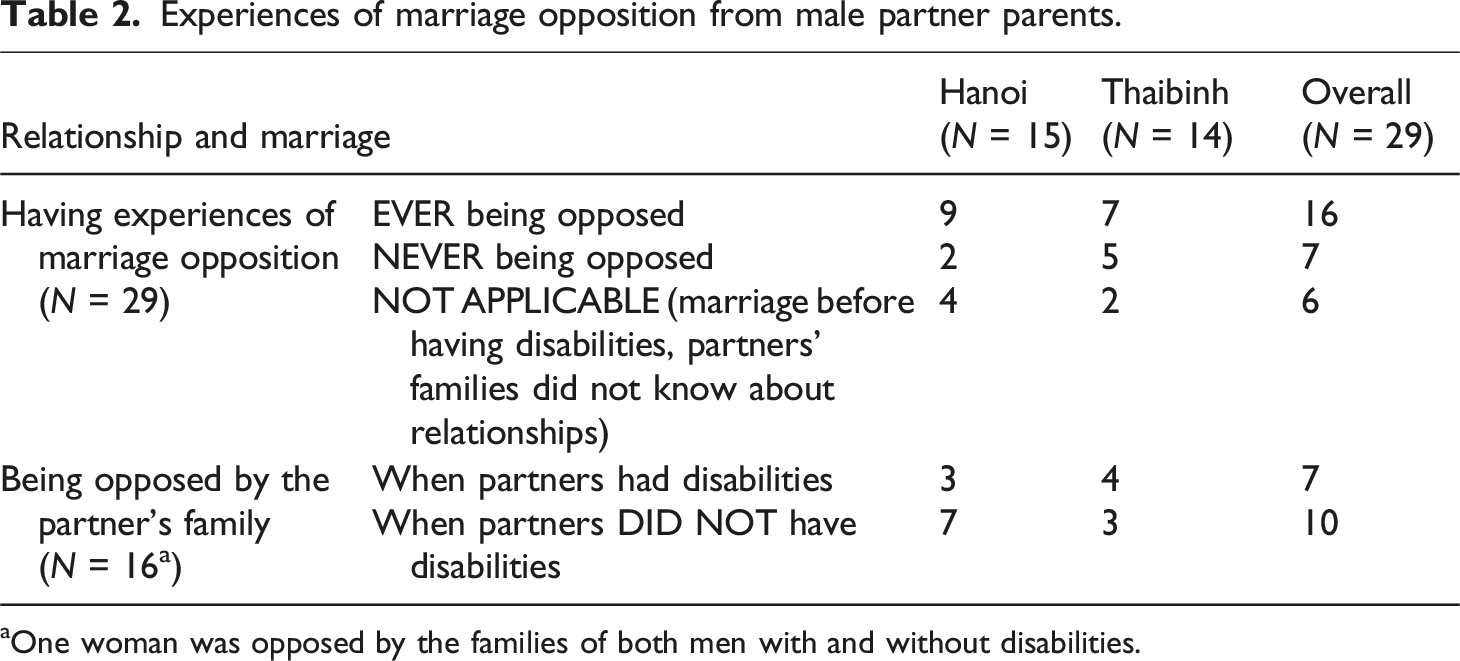
aOne woman was opposed by the families of both men with and without disabilities.
Themes and subthemes.
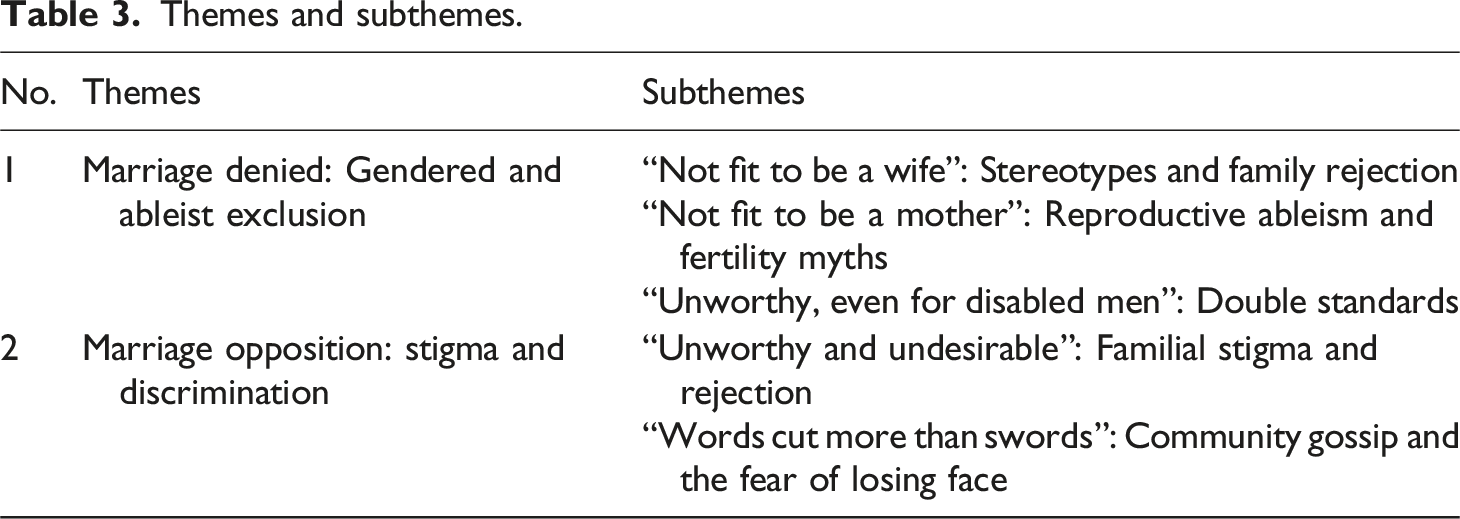
Marriage denied: Gendered and ableist exclusion
This theme illustrates the participants experienced the negative consequences of the intersection of gender and disability; they faced frank opposition and hostility to marriage. Both gender and disability are influenced by culturally ingrained norms, including gender expectations and ableist beliefs, which define their societal meanings (Bdour & Shogirat, 2019; Elkhateeb & Peter, 2019). These constructs are not merely reflections of objective realities but are shaped by their interaction with the environment, creating socially constructed barriers that limit the opportunities and potential of women with disabilities. From the intersectional perspective, the combined disadvantages of being a woman and having disabilities are greater than the sum of individual disadvantages tied to gender and disability (Santacreu-Vasut & Wu, 2025).
Marriage opposition is not just a personal rejection but is deeply embedded in socio-cultural norms that shape the intersection of womanhood and disability in Vietnamese society. Understanding the experiences of women with disabilities in relation to opposition to their marriage requires examining the local socio-cultural context, taking into account the intersecting and disadvantaged identities of gender and disability (King et al., 2023). In Vietnamese culture, the expected domestic roles of wife, daughter-in-law, and mother are deeply ingrained and valued (Nguyen et al., 2022). This study found that these roles, when combined with ableist beliefs, create significant obstacles for women with physical disabilities in their marriage prospects. Such stereotypical beliefs often hinder women from forming relationships, as they are perceived as unable to meet societal expectations of a “normal” Vietnamese woman. This perception not only impedes their ability to form relationships but also creates substantial difficulties in maintaining relationships and that culminate in marriage.
“Not fit to be a wife”: Stereotypes and family rejection
Women in Vietnam are predominantly viewed as childbearers and homemakers, with traditional gender roles expecting them to take primary responsibility for household labour and childcare (Nguyen et al., 2022). Despite their participation in the modern workforce, women are still expected to fulfil these domestic roles (Nguyen et al., 2022). In the current study, women with physical disabilities were initially opposed as prospective marriage partners by the male partner families as there was a social assumption that they were unable to reproduce nor carry out home duties such as housework. A daughter-in-law is typically expected to manage the responsibilities of home-making, childcare, and care for older people (Mestechkina et al., 2014). Many women reported that their partner’s families held erroneous stereotypes viewing women with disabilities as dependent on family support and incapable of fulfiling the role of a daughter-in-law. Thanh (Hanoi), who lived with a leg amputation, exemplified a typical viewpoint of partner’s parents regarding women with disabilities. When he introduced me to his family, his mum said that “I had to work hard to raise you. I expect you to get married to a woman who can assist me, but you want to get married to a woman who is unable to support me.” She thought I could do nothing because I had disabilities. She had a mindset that women with disabilities could not do as well as she did. (Thanh, Hanoi)
Thanh earned a university degree in Hanoi, a significant distance from her home province. She believed she had demonstrated her independence in all aspects of her life. However, when she first met her partner’s mother, the mother assumed Thanh “could do nothing” because she had an amputation. The physical impairment overshadowed her achievements and made her “disabled”, i.e., incapable of meeting the expectations of a daughter-in-law. Her physical impairment led to her being considered unsuitable for the role of a wife. At the time, Thanh was pregnant, and her partner insisted on marriage. His widowed mother initially doubted the pregnancy, suggesting that it might be a lie to gain her acceptance. However, the pregnancy and her partner’s commitment ultimately led to the mother’s acceptance of their relationship and marriage. Thanh’s story illustrates how the cultural construction of womanhood and disability can be a barrier to marriage as negative stereotypical perceptions about disability often fail to acknowledge abilities.
Similarly, Uyen (Thaibinh), faced opposition from her boyfriend’s parents, even after she became pregnant and gave birth to their son. His parents assumed that Uyen “could not do anything”, including housework and working in the rice fields. This opposition contributed to the demise of their relationship, as her boyfriend eventually married another woman without disabilities, yielding to his parents’ pressure. His parents wanted a “normal” daughter-in-law who could fulfil traditional domestic roles. These deeply held values made it impossible for Uyen’s relationship with her partner to survive. His parents opposed our relationship because I was a “disabled” woman while my partner was a normal man. His mother said that “my daughter-in-law must do a lot of work”. She meant that a woman with disabilities like me could not do anything. They banned us from getting married. (Uyen, Thaibinh)
The partners’ families, including extended families, had little understanding of the nature or impact of the impairment on the woman. This ableist assumptions led to concerns that women with physical disabilities would be dependent on their husbands and consequently become a burden on the in-laws. They did not want their sons burdened with caring for their wives, fearing it would lead to a difficult life for the entire family. As Vi from Hanoi recounted: “His family thought that there were many women without disabilities to get married. Why my husband married me to have a burden.” Her experience illustrates how ableist attitudes render women with disabilities as undesirable partners, not for who they are, but for the imagined burdens they represent.
“Not fit to be a mother”: Reproductive ableism and fertility myths
Beyond caregiving roles, women with disabilities also face widespread misconceptions that they were incapable of becoming pregnant or that, and if they did, they would transmit their disability to their child. These concerns are rooted in the false belief that people with disabilities are asexual or incapable of reproduction, a misconception commonly reported in the literature (Wołowicz-Ruszkowska, 2016). Consequently, partner’s families worried about whether a woman with physical disabilities could have a “healthy” child and care for them. For instance, Quyen (Hanoi) reported that her uncle-in-law demanded a medical examination to confirm her fertility before he would approve her marriage. He told her: “I don’t care whether you have registered for a marriage certificate or not. Now you must go for a check-up. We allow you to get married if you can give birth. You must end the relationship if you cannot give birth”.
Quyen, who had disabilities due to polio but could walk independently using leg braces and orthotic footwear, found such views to be grounded in myth rather than fact. These misconceptions about women with disabilities being unable to conceive or give birth, and the fear of genetic transmission of disability, prevented women from fulfiling their expectation of having “healthy” children.
“Unworthy, even for disabled men”: Double standards
Importantly, the opposition came not only from the families of men without disabilities but also from families of men with disabilities. Parents of men with disabilities disapproved, as they hoped their son would marry a woman without disabilities who could care for him. Women with physical disabilities were narrowly viewed as lacking abilities, unable to provide necessary care for men with disabilities, and therefore not alleviating the caring burden on his family. These beliefs did not apply to men with disabilities, as their role was not seen as caregivers but as ones who should be cared for by a woman. Consequently, women with disabilities were deemed as inappropriate or unsuited for marriage, regardless of whether they married a man with or without disabilities. As Thao (Hanoi) shared that: “My husband had disabilities. His family wanted him to marry a normal woman so that the woman could support him in later life.”
The opposition from partners’ parents led to internalised doubt and lowered the self-esteem of women with physical disabilities, hindering their ability to establish future relationships. Many women feared they would not be able to fulfil the duties expected from wives and daughters-in-law. Some women faced opposition in their relationships with both men with and without disabilities, which further affected their self-esteem and belief in their ability to marry. These expected gender roles also influenced Tam’s choice (Thaibinh) to remain unmarried. She feared negative treatment from her in-laws if she was unable to fulfil housework duties. She said: I am not confident. I think that I was like that, if I got married and could not do [housework], the in-law would insult (chửi) me. They would also insult my family. It would humiliate my family. Thus, I decided not to get married. (Tam, Thaibinh)
Tam’s decision was shaped not just by personal circumstances but by internalised cultural expectations that framed her as inherently inadequate. The repeated rejection experienced by other participants reinforced the belief that they were undeserving of marriage, a view shaped not by their abilities, but by their identities as women with disabilities in a society that values physical ability and gender conformity.
Marriage opposition: Stigma and discrimination
This theme captures how stigma and discrimination surrounding disability affect women with disabilities in the context of marriage, making them seem “unworthy” of marriage. Goffman (1963), a seminal writer, defined stigma as “an attribute that is deeply discrediting” (p. 2) and emphasised how it reduces an individual “from a whole and usual person to a tainted, discounted one” (p. 3). Link and Phelan (2001) expanded on this, describing stigma as a social process that “exists when elements of labelling, stereotyping, separating, status loss and discrimination co-occur in a power situation that allows these processes to unfold.” (p. 382). Stigma communication theory similarly suggests that stigma messages function to distinguish people, categorise them, associate them with responsibility and peril, and link them to physical and social peril, evoking strong emotional reactions which reinforce negative attitudes (Smith, 2007).
In Vietnam, stigma and discrimination against people with disabilities are pervasive, they are marked as misfortune, often attributed to “bad karma”, “pity”, or “fate”, and regarded as a source of shame for both the individual and their family (ISEE & UNDP, 2018). This stigma profoundly influenced how women with disabilities were perceived in the context of marriage and often resulted in direct opposition from their partner’s family, who saw them as inadequate or burdensome.
“Unworthy and undesirable”: Familial stigma and rejection
Stigma shaped family judgements about the value of women with disabilities, reducing them to their impairments and erasing their individuality, characteristics, capacities and abilities. Some women were considered to have no value. For example, Quyen (Hanoi) and Van (Thaibinh) reported that their partners’ families used derogatory labels and stereotypes, such as “không ra gì” (worthless/unworthy) or “người không ra người” (not like a human). Quyen felt that the opposition to her relationship was driven by stigma, as reflected in her comment below. Generally, they still had a stigmatised attitude, some concerned about if women with physical disabilities were able to give birth. Most people opposed it because they stigmatised people with disabilities…. My partner’s stepmother said that “I introduced you to many girls who are good, rich and pretty. Why don’t you get married to them? Now you want to get married to a worthless woman.” Quyen (Hanoi)
Chi (Thaibinh) also experienced rejection rooted in discriminatory assumptions. She recounted being considered unworthy and looked down upon by her ex-boyfriend’s family. His mother opposed their relationship, saying “a sow is no match for a goose” (đũa mốc đòi chòi mâm son). Chi considered this insult typical of the stigma and discrimination experienced by people with disabilities in Vietnam. Chi noted a “big gap” in social standing and associated status between men without disabilities and women with disabilities regarding marriage. Being both a woman and having disabilities made her feel unequal to her ex-boyfriend in the eyes of his mother and herself. Although Chi knew she had the right to love, she realised that “no parents want their healthy son to marry a woman with disabilities.” This realisation led her to end the four-year relationship, despite her boyfriend wishing to stay together. The sustained opposition from his family became too hurtful, and she could no longer bear it. She also lacked trust that her boyfriend could overcome the family’s opposition and negative public comments (dị nghị) in the future. Everything is “pink” [beautiful] when he loves, but there will be many problems when we live together. My health is not as good as him and other women. I worried that he could not overcome, and this made my children and me suffer. There would be many difficulties. I would stop our relationship at that time, rather than having a difficult life later. (Chi, Thaibinh)
“Words cut more than swords”: Community gossip and the fear of losing face
Beyond families, negative comments from the community regarding disability also impacted the families-in-law who feared losing face and status if their son married a woman with disabilities. Ngoc (Hanoi) explained that her partner’s family had been proud of him for his university degree and stable job with a good salary, which elevated him in the community. However, this status diminished when he married Ngoc, leading to a perceived loss of face for this family. The stigma surrounding disability caused Ngoc’s partner’s parents to sever their relationship with him over his choice to marry her. Despite this, Ngoc and her partner defied his parents and married without their attendance.
Chau (Hanoi) also described how her ex-boyfriend’s family was influenced by the community’s negative gossip, questioning why a “normal” man would marry a woman with physical disabilities and expressing doubts about her ability to have children. Chau attributed the failure of her marriage to these negative community comments.
Vi (Hanoi) echoed similar sentiments, noting that the hurtful gossip, which she described as “miệng lưỡi thế gian” (Words cut more than swords), was beyond her control but nonetheless had a significant impact. Even though the community did not directly intervene, their disapproval exerted significant pressure on families and couples, often resulting in broken engagements or strained relationships. Overall, stigma surrounding disability, compounded by deeply entrenched societal attitudes, played a key role in the discrimination faced by women with disabilities, particularly when it came to marriage. It devalued women with disabilities, undermined their relationship prospects, and influenced their life decisions. Whether through rejection from partners’ families or impact of public gossip, these women were routinely positioned as unworthy of love, partnership, and inclusion in marital life. Such attitudes not only diminished their perceived suitability for marriage prospects but also eroded their self-esteem, contributing to barriers to forming and sustaining intimate relationships.
Discussion
This paper explores the challenges faced by Vietnamese women with physical disabilities in marriage, particularly opposition from male partner families. Love and marriage are rights of people with disabilities that is articulated in the United Nation Convention of the Rights of Persons with Disabilities. Every woman should be empowered to make a self-determined and informed decision around marriage without facing stigma, discrimination, coercion or violence (Frohmader & Ortoleva, 2013; UN, 1979, 2006). However, the findings of this study reveal that Vietnamese women with physical disabilities encounter significant socio-cultural barriers to their relationship and marriage prospects. These women navigate socio-culturally constructed notions of what defines a “normal” woman is and who is deserving of marriage and motherhood. Their experiences are shaped by intersecting social identities, which create vulnerabilities within social-cultural context.
To overcome these entrenched notions of disability, women with physical disabilities must resist or “battle” against oppressive socio-cultural expectations that confine them to prescribed roles. They confront ambivalence and contradictions arising from the intersection of gender and disability, such as being expected to fulfil the roles of wife, mother, and caregiver, while simultaneously being perceived as incapable of doing so due to their disability. These tensions reflect ableist beliefs that cast them as dependent or a burden, and gender norms that define their worth through domestic performance and reproduction. A single gender lens falls short, as it does not fully account for the complexities of the relationship and marriage experiences of women with physical disabilities who are at the intersectional social locations.
The theoretical framework used in this study draws on an intersectional lens, which illuminates how gender and disability intersect to create unique and compounded challenges for women with physical disabilities in relation to marriage. This study demonstrates that the intertwining of gender-related beliefs and disability-related beliefs adversely affects how women with physical disabilities were perceived as potential partners, making marriage unattainable for many. For example, several participants described the opposition of their partners’ families on the assumption that they could not bear children or carry out domestic responsibilities - core expectations of women in Vietnamese marital culture. For example, one participant shared how her partner’s mother dismissed her capabilities solely based on her physical impairment, despite her educational and personal achievements. This highlights how the intersection of ableist and gendered expectations shapes women’s exclusion from marriage. The study further unpacks how societal expectations around women, combined with the perceived inability to fulfil traditional roles due to disability, place women with physical disabilities in social positions where they are seen as unworthy of marriage. These women face systematic oppression tied to both gender (gender inequality and gender power disparities) and disability (disablism: disability prejudice, stereotype or discrimination), resulting in not just social exclusion but also a reduction in self-esteem and diminished sense of agency in personal relationships. This study contributes to the existing literature by providing a nuanced understanding of how these intersecting forms of discrimination manifest in the specific cultural context of Vietnam, where deeply ingrained views on gender and disability continue to shape women’s lives.
Globally, people with disabilities are less likely to marry compared to those without disabilities (Clarke & McKay, 2014). This trend is also evident in Vietnam, where women with disabilities face greater challenges than men with disabilities (Le et al., 2008). A common perception is that “it was easier for men with disabilities to marry women without disabilities” (Van, Thaibinh). This is consistent with the findings from a survey with over 5,000 people with disabilities across three provinces in Vietnam, which found that men with disabilities had higher likelihood of marriage (70% in Thaibinh, 61% in Quang Nam-Da Nang, and 43.8% in Dong Nai) compared to women with disabilities (20%–22% in three provinces) (Le et al., 2008). Moreover, the intersection of gender and disability systems makes women with physical disabilities particularly vulnerable to employment and income inequalities, further compounding their challenges in marriage and motherhood (Simpson et al., 2013).
This study highlights how traditional socio-cultural beliefs in Vietnam create significant barriers to marriage for women with physical disabilities. In Vietnamese society where marriage is often seen as a prerequisite for pregnancy and childbearing, traditional gender roles and cultural expectations strongly shape perceptions of desirability and womanhood (de Loenzien, 2016). While many participants expressed a strong desire to marry and start a family, they faced persistent obstacles in finding suitable partners, limiting their opportunities for motherhood and intimate relationship.
What this study brings to light is not only the persistence of gendered expectations around marriage but how these expectations are further compounded by disability in North Vietnam. By applying an intersectional lens, the findings reveal an additional layer of the complexity of their marriage challenges. The findings show that women were often perceived as incapable of fulfilling expected roles as wives and mothers, faced direct rejection from potential in-laws, and were stigmatised as unworthy of marriage, experiences shaped by the overlapping effects of gender norms and ableist beliefs. This contributes new insight to the field of personal relationships by illustrating how ableism, when embedded in cultural ideals of marriage and motherhood, denies women with disabilities access to significant roles, such as partner and parent.
Interestingly, one third of the women in this study were single mothers. Only one woman did not seek marriage as she feared negative treatment from in-laws due to her disability. The others aspired to marry and have children within marriage. However, the intersecting cultural beliefs around gender expectations and stereotypes surrounding disability obstructed their marriage prospects. These intersecting beliefs rendered women with physical disabilities as “unsuited” or “unvalued” for marriage, even to men with disabilities. As a result, becoming a single mother emerged as a “choice” for these women, driven by their desire to have a child and the cultural constraints that limited their marriage opportunities. These women are not merely passive victims of discrimination but are actively making choices to create families outside the bounds of traditional marriage. This finding challenges the notion that marriage is the only legitimate path for women, especially within Vietnamese cultural norm of having children within marriage.
There are multiple policy and program implications. To address the barriers faced by women with disabilities, policies and programs must move beyond focusing solely on gender or disability. The findings suggest that interventions should prioritise raising public awareness and challenge stereotypes around sexuality, marriage, and motherhood of women with disabilities. These efforts can be carried out through media, schools, and public campaigns. Role models of women with disabilities should be made visible and widely promoted within the community. Women with physical disabilities could play an important role in public education and advocate for change by sharing their experiences and speaking out.
Moreover, efforts should focus on enhancing their socio-economic status, self-confidence, and essential social skills to improve their quality of life and intimate relationship (Ruiz et al., 2023). Ableism must be confronted to ensure women with disabilities are empowered to choose to marry without facing stigma or discrimination, with support systems in place that help them navigate and overcome cultural barriers imposed by gender and disability.
Future Vietnamese research could explore the evolving experiences of women with physical disabilities in marriage over time, particularly in relation to changing socio-cultural attitudes, and compare these experiences across settings and cultures. Additionally, examining the marriage experiences of men with disabilities could provide insights into gendered expectations and the intersectional challenges they face. This comparative approach could shed light on how societal expectations differ for men and women with disabilities, ultimately contributing to more effective strategies to address these challenges.
Limitations
The paper reports on the experiences of Vietnamese women with physical disabilities; findings may not be applicable to women living with other types of disabilities. All participants had children at the time of the study, which may limit applicability of the findings to women with physical disabilities who have not had children or who remain unmarried. Additionally, the analysis is based solely on the women’s narratives; the perspectives of their partners, families, or community members were not included, which may have provided a more comprehensive understanding of the relational and social dynamics surrounding marriage. There may be potential recall bias as the women with physical disabilities in this study had experienced familial opposition some years ago. However, this bias may have been mitigated by the study’s use of two time-point interviews with the same participants, which provided them the opportunity to reflect on their experience more comprehensively.
Conclusion
This paper explored the multifaceted challenges women with physical disabilities face in marriage and their strategies to navigate these barriers. The research found that these women encountered strong opposition from their male partners’ families, regardless the partners’ disability status. The intersectionality of gender and disability within Vietnamese socio-cultural norms proved to be strong and powerful influences, shaping perceptions of who is deemed worthy of marriage and creating significant challenges to the relationships and marriages of women with physical disabilities.
The findings underscore the importance of the right to marriage for all individuals, including women with disabilities, as enshrined in the UNCRPD (UN, 2006). However, this right is often denied to women with disabilities due to the erroneous views about disability intersecting with traditional gender roles of being a wife, a daughter-in-law, and a mother. Our study contributes to the growing body of research on gender and disability by demonstrating that the intersection of these factors exacerbates the marginalisation of women with disabilities. This underscores the urgent need for an intersectional approach in policies and intervention programs aimed at challenging traditional gender roles and addressing disability stereotypes. This study advocates for the future policies and programs that protect the rights of women with disabilities and ensure that they are not excluded from the possibility of marriage and family life due to cultural misconceptions, while promoting equality and inclusion for all.
Footnotes
Acknowledgements
The authors would like to thank women with physical disabilities for sharing their stories, and appreciate the support of the Hanoi and Thaibinh Associations of People with Disabilities in participant recruitment.
Declaration of conflicting interests
The authors declared no potential conflicts of interest with respect to the research, authorship, and/or publication of this article.
Funding
The authors disclosed receipt of the following financial support for the research, authorship, and/or publication of this article: The first author was supported by a PhD scholarship from Queensland University of Technology. No external funding was used for this study.
Open research statement
As part of IARR’s encouragement of open research practices, the author(s) have provided the following information: This research was not pre-registered. The data used in the research are not available. The data can be obtained by emailing:
