




Abstract
Understanding others’ thoughts and feelings (i.e., perspective-taking) has consistently been recognized as a crucial protective factor against intimate partner violence (IPV). However, previous research has predominantly focused on dispositional perspective-taking, assessed through self-report measures, and has often overlooked communicated perspective-taking, assessed through observational measures, even though it may play a critical role in preventing romantic conflicts from escalating into violence. The current study used a dyadic observational design to examine the associations between (1) self-reported dispositional and (2) observed communicated dyadic perspective-taking during an actual couple conflict discussion and psychological, physical and sexual IPV perpetration in an inclusive sample of young adult community couples (n = 178). Findings revealed distinct associations between dispositional and communicated perspective-taking across IPV forms. Both dispositional and communicated perspective-taking were negatively associated with the individual’s own and their partner’s psychological IPV perpetration. Dispositional perspective-taking was negatively associated with the individual’s own physical IPV perpetration, while communicated perspective-taking was negatively associated with the partner’s physical IPV perpetration. Dispositional perspective-taking was negatively associated with one’s own and their partner’s sexual IPV perpetration. Secondary analyses also showed significant interactions between partners’ perspective-taking in association with IPV. Our findings highlight the overlapping yet unique and inherently dyadic contributions of dispositional and communicated perspective-taking to IPV dynamics in young adult couples.
Keywords
Introduction
Perspective-taking, the ability to understand others’ thoughts and feelings, is a major prosocial skill in interpersonal relationships and has been identified as a protective factor for intimate partner violence (IPV) perpetration (e.g., Brassard et al., 2022; Lafontaine et al., 2018; Péloquin et al., 2011). The ability or willingness to adopt the perspective of one’s romantic partner (i.e., dyadic perspective-taking), especially during moments of potential confrontation, has been theorized to foster deeper comprehension and acceptance of the other’s point of view, reducing likelihood of committing hostile or aggressive behaviors towards them (Davis, 1996). However, previous studies that have explored the links between perspective-taking and IPV have primarily relied on self-report measures (Ulloa & Hammett, 2016), which often assess perspective-taking as a general, dispositional tendency, neglecting its observable manifestations during specific couple interactions. Yet, a general cognitive tendency to adopt another’s point of view does not necessarily translate into the ability to effectively demonstrate this understanding toward a partner during emotionally charged interactions, a crucial skill for preventing romantic conflicts from escalating into violence. While dyadic perspective-taking is valuable across all age groups, it may be particularly important for young adults aged 18 to 29 who struggle with conflict management and are more at risk of perpetrating IPV (Johnson et al., 2015; Lantagne & Furman, 2020). Employing a multimethod approach that combines self-reported and observed measures of dyadic perspective-taking would offer a more thorough evaluation of its various manifestations and their unique associations with IPV perpetration. Therefore, this study aims to examine the associations between dyadic perspective-taking and IPV perpetration among young adults, using both (1) global self-reported and (2) observed measures of dyadic perspective-taking during a couple conflict discussion.
Perspective-taking
Current conceptualization and operationalization of perspective-taking
Perspective-taking is complex and multidimensional, and has been conceptualized inconsistently. Researchers generally agree that perspective-taking encompasses understanding others’ thoughts, feelings, and viewpoints, and that this broader understanding enriches individuals’ perspectives, influencing their communication and how they perceive others’ communication (for reviews, see Davis & Love, 2017; Gasiorek & Ebesu Hubbard, 2017; Gehlbach, 2004). A recent review on perspective-taking’s definitions emphasizes that it can be conceptualized both as (1) a tendency or trait to spontaneously adopt others’ psychological viewpoint in everyday life and (2) a deliberate action or process that individuals engage in (Gasiorek & Ebesu Hubbard, 2017). Most research on perspective-taking has concentrated on the tendency/trait definition, often referred to as dispositional perspective-taking (Gasiorek & Ebesu Hubbard, 2017; Wolgast et al., 2020). However, while individuals with higher dispositional perspective-taking possess a strong inclination to perceive and comprehend another’s experience, they may vary in their ability to effectively demonstrate that understanding in a specific context (Gasiorek & Ebesu Hubbard, 2017). A promising, yet understudied research avenue in the action/process framework of perspective-taking is to explore how perspective-taking is communicated or constructed during interactions (Gasiorek & Ebesu Hubbard, 2017). Drawing from this framework, recent research has examined communicated perspective-taking, focusing on how interactional partners acknowledge, attend to, and confirm each other’s perspectives during interactions, and has demonstrated associations with various interpersonal relationship benefits (e.g., higher relational satisfaction; Kellas et al., 2017; Kellas et al., 2021). Being related, but ultimately different, dispositional perspective-taking, which involves more covert cognitive processes, and communicated perspective-taking, which involves more overt skills such as active listening and communicating understanding, are likely to be associated differently with relational outcomes. For instance, dispositional perspective-taking may foster a deeper empathetic understanding that may influence an individual’s prosocial behavior, whereas communicated perspective-taking could more directly shape how others perceive the quality of the interaction.
Perspective-taking has been operationalized in various ways, often misaligned with its conceptual definition (e.g., conceptualizing perspective-taking as a process, but measuring it as a trait; Gasiorek & Ebesu Hubbard, 2017). When defined as a tendency/trait, perspective-taking is considered stable and general, making retrospective self-report measures the best assessment method; as an action/process, it is seen as transient and context-dependent, thus making task-based measures (e.g., experimental manipulation, external ratings) more appropriate (Gasiorek & Ebesu Hubbard, 2017; Wolgast et al., 2020). For communicated perspective-taking specifically, the prevailing assessment approach involves using observational designs to rate verbal and nonverbal cues in interactions (Gasiorek & Ebesu Hubbard, 2017; Kellas et al., 2017). Combining self-reported and observational measures of perspective-taking allows for a comprehensive evaluation of its different aspects and their distinct associations with relational outcomes.
Perspective-taking in the context of romantic relationships
Several authors have emphasized the importance of context in assessing perspective-taking. Researchers have distinguished general perspective-taking, which involves understanding others’ viewpoints in broad social settings, and dyadic perspective-taking, which specifically involves understanding a romantic partner’s perspective (Long, 1990; Péloquin & Lafontaine, 2010). Given that romantic partners interact differently with each other than they do with strangers (Birchler et al., 1975), general and dyadic perspective-taking are viewed as distinct constructs with generally different associations with relationship outcomes (Long, 1990; Péloquin & Lafontaine, 2010). Specifically, dyadic perspective-taking is more strongly associated with relationship outcomes, such as relationship satisfaction, compared to general perspective-taking (Cahill et al., 2020). This highlights the necessity of focusing on dyadic perspective-taking specifically, and exercising caution when interpreting research on general perspective-taking abilities in the context of romantic relationships, as they may not be equivalent. In addition, within romantic relationships, perspective-taking skills can vary with the interaction’s context, often being more difficult to apply during conflicts due to personal emotional involvement in the situation (Kellas et al., 2017; Pistrang et al., 2002). Conflicts, being more threatening to the relationship, and inherently involving differing perspectives, may incentivize partners to minimize, disregard, or fail to understand each other’s viewpoints (Ickes et al., 2005). Since young adults are still developing dyadic perspective-taking skills and may lack experience in serious romantic relationships, conflicts characterized by intense emotions and unmet needs may represent the most challenging context for demonstrating these abilities (Feiring et al., 2018a, 2018b). This difficulty in adopting a romantic partner’s perspective during conflicts can hinder resolution and potentially increase the risk of escalation into aggressive behaviors for both partners. Therefore, investigating dyadic perspective-taking specifically, including its different components (i.e., dispositional and communicated), and their associations with IPV perpetration in young adults’ romantic relationships appears highly relevant.
Dyadic perspective-taking and intimate partner violence
IPV involves behaviors endangering a romantic partner’s physical, sexual, or psychological well-being, typically manifesting in three forms: physical (e.g., hitting, pushing), psychological (e.g., insulting, threatening), and sexual (e.g., insisting on having sexual activities; Breiding et al., 2015; Stewart et al., 2013). IPV is now widely recognized as a heterogeneous phenomenon, with typologies developed to address variations in reciprocity, motivation, and severity (e.g., Holtzworth-Munroe & Stuart, 1994; Kelly & Johnson, 2008). Kelly and Johnson’s (2008) typology differentiate between perpetrators whose IPV is driven by a desire for control (i.e., coercive controlling violence) and those resulting from emotional dysregulation or poor conflict management skills (i.e., situational couple violence). In couples from the general population, situational couple violence is the most common form of violence (Kelly & Johnson, 2008) and is often bidirectional (i.e., perpetrated by both partners), as it tends to occur in escalating conflicts marked by negative reciprocity between partners (Bartholomew et al., 2015; O’Leary & Slep, 2006). Young adults, who face the highest rates of IPV in romantic relationships (Cotter, 2021), experience situational and bidirectional IPV most prevalently (Paradis et al., 2017; Renner & Whitney, 2012), partly due to navigating their first serious romantic relationships and still developing conflict resolution skills (Johnson et al., 2015; Lantagne & Furman, 2020). The situational and interactional context in which IPV often emerges has led theorists to conceptualize it as a dyadic process (Bartholomew & Cobb, 2011), emphasizing the importance of studying IPV using data from both partners. Considering that ineffective conflict resolution is a widely recognized risk factor for IPV perpetration (Capaldi et al., 2012; Wilkinson & Hamerschlag, 2005), particularly among young adults, it is crucial to examine dyadic variables within the context of conflict that may act as protective factors against IPV perpetration.
General perspective-taking has been consistently identified as a protective factor against interpersonal aggression, as demonstrated by meta-analyses (e.g., Jolliffe & Farrington, 2004; Van Langen et al., 2014). Indeed, according to Davis’ (1996) theoretical organizational model of empathy, an individual’s ability or willingness to adopt the perspective of others inhibits violent behavior by allowing them to interpret situations differently and make more positive attributions about others’ actions. Fewer studies have focused specifically on dyadic perspective-taking and its associations with perpetration of different forms of IPV within romantic relationships, including some studies on psychological and physical IPV, but none on sexual IPV. Two studies conducted on individuals involved in a romantic relationship have shown negative associations between dyadic perspective-taking and psychological and physical IPV perpetration (Brassard et al., 2022; Lafontaine et al., 2018). However, the individual design of these studies limits our understanding to actor effects (i.e., between an individual’s dyadic perspective-taking and their own IPV perpetration) and overlooks potential partner effects (i.e., association between an individual’s perspective-taking and their partner’s IPV perpetration). When individuals consistently consider their partner’s perspective into account, the partner is more likely to feel understood and validated, which could diminish negative emotions, prevent conflict escalation, and ultimately reduce their IPV perpetration risk. Only two dyadic studies examined both actor and partner effects, focusing only on psychological IPV perpetration. They showed a negative association between the individual’s dyadic perspective-taking and their own perpetration of psychological IPV, but not their partner’s psychological IPV (Feiring et al., 2022; Péloquin et al., 2011). The lack of partner associations between dyadic perspective-taking and IPV perpetration in past studies might be due to their focus on dispositional perspective-taking (Péloquin et al., 2011) or external ratings of perspective-taking during a conflict narrative (Feiring et al., 2022), which may not fully capture communicated perspective-taking in actual conflict discussions. Communicated perspective-taking, which involves more overt communication skills, could prevent the partner’s IPV perpetration by enhancing understanding and facilitating conflict resolution before escalation. A multi-method assessment of dispositional and communicated dyadic perspective-taking would provide a more comprehensive evaluation of the different facets of perspective-taking and their distinct associations with IPV perpetration. Moreover, to our knowledge, no study examined the associations between dyadic perspective-taking and sexual IPV perpetration, even though perspective-taking deficits could impact perceptions and responses to sexual boundaries, potentially fostering coercive behaviors in sexual relationships.
The current study
The overall goal of this study was to examine, through a dyadic observational design, the associations between (1) self-reported global dispositional and (2) objectively observed communicated dyadic perspective-taking during an actual couple conflict discussion and the perpetration of different forms of IPV (psychological, physical, sexual) in an inclusive sample of young adult couples. More specifically, this study sought to examine how dispositional and communicated perspective-taking are uniquely associated with various forms of IPV.
Based on existing empirical and theoretical work, we hypothesized that both dispositional and communicated perspective-taking would be negatively related to an individual’s own psychological and physical IPV perpetration (i.e., actor effect), but only communicated perspective-taking would be linked to the partner’s psychological and physical IPV perpetration (i.e., partner effect). Given the lack of prior empirical research specifically examining the associations between dispositional and communicated perspective-taking and sexual IPV perpetration, these links were examined in an exploratory manner. The interaction between partners’ perspective-taking in association with each form of IPV was also examined as part of secondary exploratory analyses. In light of past studies showing that IPV tends to be more frequent and severe among long-term and cohabiting couples (e.g., Herrera et al., 2008; Sutton & Dawson, 2021), relationship length and cohabitation status with partners were considered as potential covariates. Finally, given that IPV perpetration tends to differ by gender (for a review, see Chan, 2011), gender identity was also considered as a potential covariate.
Method
Participants
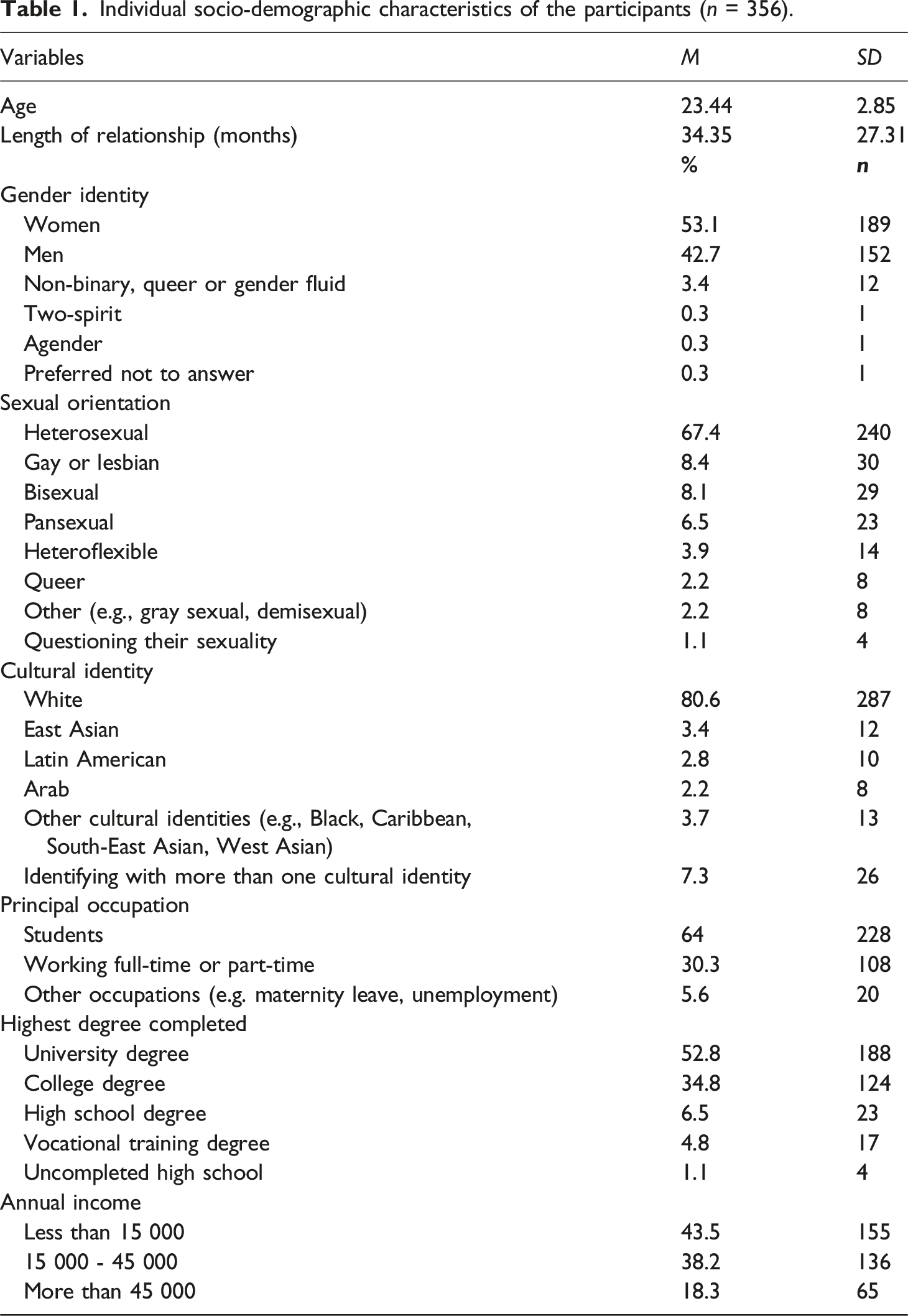
A community sample of 178 Canadian young adult couples was recruited through social media advertisements between July 2021 and August 2022. To be eligible for the study, both partners had to (1) be aged between 18 and 29, (2) be in a relationship for at least 2 months, (3) have access to a confidential common space with internet connection, (4) have access to a computer with webcam in order to participate in a virtual session, (5) have access to an electronic device to complete online questionnaires, and (6) be able to understand written and spoken French. Couples of all sexual orientations and exclusivity agreements (e.g., monogamous, open, monogamish, polyamory) could participate in this study. In the case of polyamorous couples, participants had to select one person among their partners to participate in all aspects of the study. Of the 404 couples who contacted us to participate in the study, 190 (47%) declined to participate and 21 (5.2%) were ineligible after screening. Of the 193 eligible couples who completed the questionnaires, 15 (7.8%) withdrew before participating in the virtual session. Thus, the final sample included 178 couples (356 participants).
Individual socio-demographic characteristics of the participants (n = 356).
Procedure
This study was part of a larger research project aimed at better understanding communication and conflict resolution within young adults’ romantic relationships. The recruitment materials emphasized that the study examined communication processes. This project has been adapted to take place entirely online and thus limit the risks associated with the COVID-19 pandemic. The procedure was approved by the ethical review board of the Université de Montréal. Participation in this study involved (1) completing online self-report questionnaires and (2) participating in a virtual session via Zoom. Each couple received a compensation of CAN $20 for completing the questionnaires and of CAN $60 for the virtual session.
One week before their appointment for the virtual session, each partner received a secure link to complete individually, without discussing their response with their partner, a series of self-report questionnaires on the online platform Qualtrics Research Suites. Completion of the questionnaires lasted approximatively 1 hour. Couples then participated in a virtual session conducted by two members of the research team, which lasted approximatively 2.5 hours. This session included completion of online questionnaires and participation in three discussions between partners, conducted in the following order: (1) date planning, (2) conflict discussion, and (3) sharing positive aspects of the relationship. Only the tasks associated with the conflict discussion are explained here. Before engaging in the conflict discussion, each partner was invited to individually identify, among a 27-item checklist of common conflictual themed adapted from the Adolescent Couples’ Issues Checklist (Welsh et al., 2001) and the Partner Issue Checklist (Capaldi et al., 1994), those generating the most disagreement within their relationship. Experimenters conducted short (5-min) individual priming interviews with each partner separately to clarify the nature of their conflicts, emotionally prepare them for the discussion, and identify the most conflicting themes. Partners engaged in individual interviews in separate rooms, one partner via Zoom and the other over phone. After consulting with each other, the experimenters proposed the three themes appearing the most conflictual for the couple. The proposed themes may have been reported as conflictual by one or both partners. Couples then engaged in a 10-min filmed discussion aimed at sharing their perspective on at least one of the disagreement themes proposed by the experimenters. During the discussion, experimenters turned off their microphone and webcam and recorded the interaction using screen recording. At the end of the virtual session, experimenters conducted individual debriefing interviews to assess distress and IPV risk and refer participants to appropriate resources if needed. In case of imminent harm, experimenters were prepared to intervene (e.g., contacting the police), although such situations did not arise in our study. Following the session, all participants received an email with a list of resources (e.g., hotlines, community organizations specializing in IPV).
Measures
Sociodemographic information and covariates
To describe our sample and measure potential covariates, the initial self-reported questionnaire included socio-demographic information (e.g., age, gender identity, cultural identity, sexual orientation, current occupation) and information on their romantic relationship (e.g., length of relationship, relationship status, romantic configuration). Given their documented associations with IPV, cohabitation status (0 = not living together, 1 = living together), length of the relationship (in months, continuous) and gender (0 = woman, 1 = man, 2 = gender diversity) were considered as potential covariates.
Intimate partner violence perpetration
IPV perpetration was assessed in the initial self-report questionnaire using the Revised Conflict Tactics Scale (CTS-2; Straus et al., 1996). This questionnaire is composed of 78 items assessing different forms of IPV perpetration and victimization in the current relationship within the last 12 months. In the current study, only the following subscales were used: psychological violence (8 items; e.g., “I yelled or shouted at my partner”), physical violence (12 items; e.g.,“I pushed or shoved my partner”), and sexual violence (7 items; e.g., “I insisted on having sex with my partner when he/she didn’t want to [but without using physical force]”). Each of these items were presented twice to assess both perpetration (e.g., “I insulted my partner or shouted at him/her.“) and victimization (e.g., “My partner did this to me.“). Partners reported how often they perpetrated and sustained each violent behavior on an eight-point Likert scale ranging from 0 (This never happened) to 6 (More than 20 times in the past year), with an option “not in the past year, but it happened before”. This last response category was recoded to 0 to specifically measure violence in the last year. For each item, the perpetration score was computed by using the highest score between (1) the perpetration reported by the individual and (2) the victimization reported by their partner. The maximum report method is commonly used in studies examining IPV perpetration (e.g., Cuenca et al., 2015; O’Leary & Williams, 2006) to account for possible underreporting of violence by participants. Global perpetration score for each subscale (psychological, physical, sexual violence) was obtained by summing the scores on its corresponding items. A higher score indicates greater IPV perpetration. Due to the low prevalence of physical and sexual violence in our sample, global scores on these two subscales were dichotomized (0 = never happened, 1 = at least one instance physical/sexual IPV). Psychological IPV was kept continuous in the analyses and this subscale showed acceptable internal consistency (α = .70).
Self-reported dispositional dyadic perspective-taking
Dispositional dyadic perspective-taking was assessed in the initial self-report questionnaire using the perspective-taking subscale of the Interpersonal Reactivity Index for Couples (IRIC; Péloquin & Lafontaine, 2010). The subscale is composed of 6 items (e.g., “When I’m angry at my partner, I usually try to “put myself in their shoes” for a while”). Items are answered on a five-point Likert scale ranging from 0 (does not describe me well) to 4 (describes me very well), and global perspective-taking score is obtained by summing the items. Higher scores are indicative of greater perspective-taking. In this study, the perspective-taking subscale showed good internal consistency (α = .81).
Observed communicated dyadic perspective-taking
The dyadic perspective-taking skills of each partner during the conflict discussion were evaluated by two trained coders using the Communicated Perspective-Taking Rating Scale (Kellas et al., 2017). This coding system evaluates romantic partner’s communicated perspective-taking verbal and nonverbal behaviors across multiple dimensions throughout the entire video recording of a conflict discussion. It includes five specific dimensions: (1) conversational attentiveness (e.g., nodding, asking interested question), (2) creating space for the partner to talk (e.g., encouraging the partner to talk about his or her point of view), (3) agreement and understanding (e.g., communicating an understanding of the partner’s comments), (4) affective tone (e.g., showing kindness, communicating love) and (5) validating partner’s identity (e.g., validating the other person’s actions, reflecting the partner’s feelings in a caring way). It also includes two global dimensions: (1) overall attentiveness to the partner’s perspective (e.g., including the partner’s perspectives in one’s own contribution to the conversation) and (2) overall confirmation of the partner’s perspective (e.g., statements affirming the validity of partner’s experiences). The coding manual provides definitions and examples of positive and negative verbal and nonverbal behaviors for each dimension (see Kellas et al., 2017 for further details). Coders were instructed to watch the conflict discussion three times: a first global viewing of the entire interaction without coding to gain an overall sense of the conversation, followed by individual viewings for each partner, focusing solely on one partner at a time. Each dimension was rated on a five-point scale ranging from 1 (low, strong lack of perspective-taking behaviors or strong demonstration of negative behaviors) to 5 (high, strong degree of perspective-taking behavior and no negative behaviors), with a single global rating for each dimension across the entire conversation. A score of 3 indicates either a mix of positive and negative behaviors or an indication that partners engage in neither positive nor negative behaviors associated with the coded dimension. All couples were evaluated by two coders. Scores on each of the seven dimensions were averaged across coders and then summed to obtain a global perspective-taking score for each partner. A subset of three discussions, selected to reflect a range of scores, was used for coder training. Coders practiced by rating each dimension and discussing the rationale for their scores until reaching a consensus. After official coding began, the coding team met weekly to discuss coding questions and avoid coding drift. The training videos were coded again at the end of the coding process. The coding system showed excellent interrater reliability for each dimension (ICC = 0.83–0.89) and the global score (ICC = 0.96). Only the global score was used in this study, consistent with the coding system’s original operationalization (Kellas et al., 2017).
Statistical analyses
Descriptive and correlational analyses were performed using SPSS 29. Main statistical analyses were performed using Mplus 8 (Muthén & Muthén, 2017). Associations between dyadic perspective-taking (i.e., dispositional and communicated) and different forms of IPV perpetration (i.e., psychological, physical, and sexual) were examined using path analysis based on the Actor-Partner Interdependence Model (APIM; Kenny et al., 2006). This model accounts for the non-independence of dyadic data and allows the examination of both actor and partner effects simultaneously. Because the sample included both same-gender and mixed-gender couples, dyads were treated as indistinguishable and each partner was randomly assigned to “partner 1” or “partner 2”. All actor and partner paths from independent to dependent variables were included in the model, along with the means and variances of each variable, and all possible covariances between independent variables and covariates and between the residual variance of all dependent variables. All parameters were constrained to be equal across partners. In addition, to explore the interplay of partners’ perspective taking abilities on IPV, we conducted secondary analyses including two interaction terms between partners’ perspective-taking: (1) dispositional perspective-taking P1 X dispositional perspective-taking P2, and (2) communicated perspective-taking P1 X communicated perspective-taking P2.
To determine which covariates would be included in our model, we first examined whether cohabitation status and relationship length were correlated with the outcomes, as well as any gender differences. If these variables were associated with the outcomes, they would be included as covariates in the final model. However, if they were not associated with the outcomes in the final model and did not affect the model’s results, they would be excluded for parsimony.
Given that the model included both continuous (i.e., psychological IPV perpetration) and categorical (i.e., physical and sexual IPV perpetration) outcomes, it was estimated with the robust Weighted Least Square estimator with Mean- and Variance-adjusted statistics (WLSMV) and the theta parameterization. All continuous variables were standardized to ease interpretation. Missing data were handled using algorithms implemented in Mplus for WLSMV estimation, which relies on pairwise present (Asparouhov & Muthén, 2010). There was no missing data for communicated perspective-taking, physical IPV, and cohabitation, whereas the proportion of missing data was 2.2% for dispositional perspective-taking, 0.3 % for psychological IPV and sexual IPV, and 0.6% for length of relationship. Online questionnaires included three attention-testing items. Data from participants who failed two or more attention-testing items (n = 7; 0.02%) were deemed invalid and recoded as missing. As their partner provided valid data, all couples were included and missing data from one partner were handled during the analyses. Commonly used fit indices (Schermelleh-Engel et al., 2003) were used to evaluate the model : comparative fit index (CFI; ≥ .90 acceptable; ≥ .95 good), Tucker-Lewis index (TLI; ≥ .90 acceptable; ≥ .95 good), root mean square error of approximation with its 90% confidence interval (RMSEA; ≤ .08 adequate; ≤ .06 good), and standardized root mean square residual (SRMR; ≤ .10 adequate; ≤ .08 good).
Results
Descriptive analyses
Descriptive statistics and pairwise correlations among the study variables.
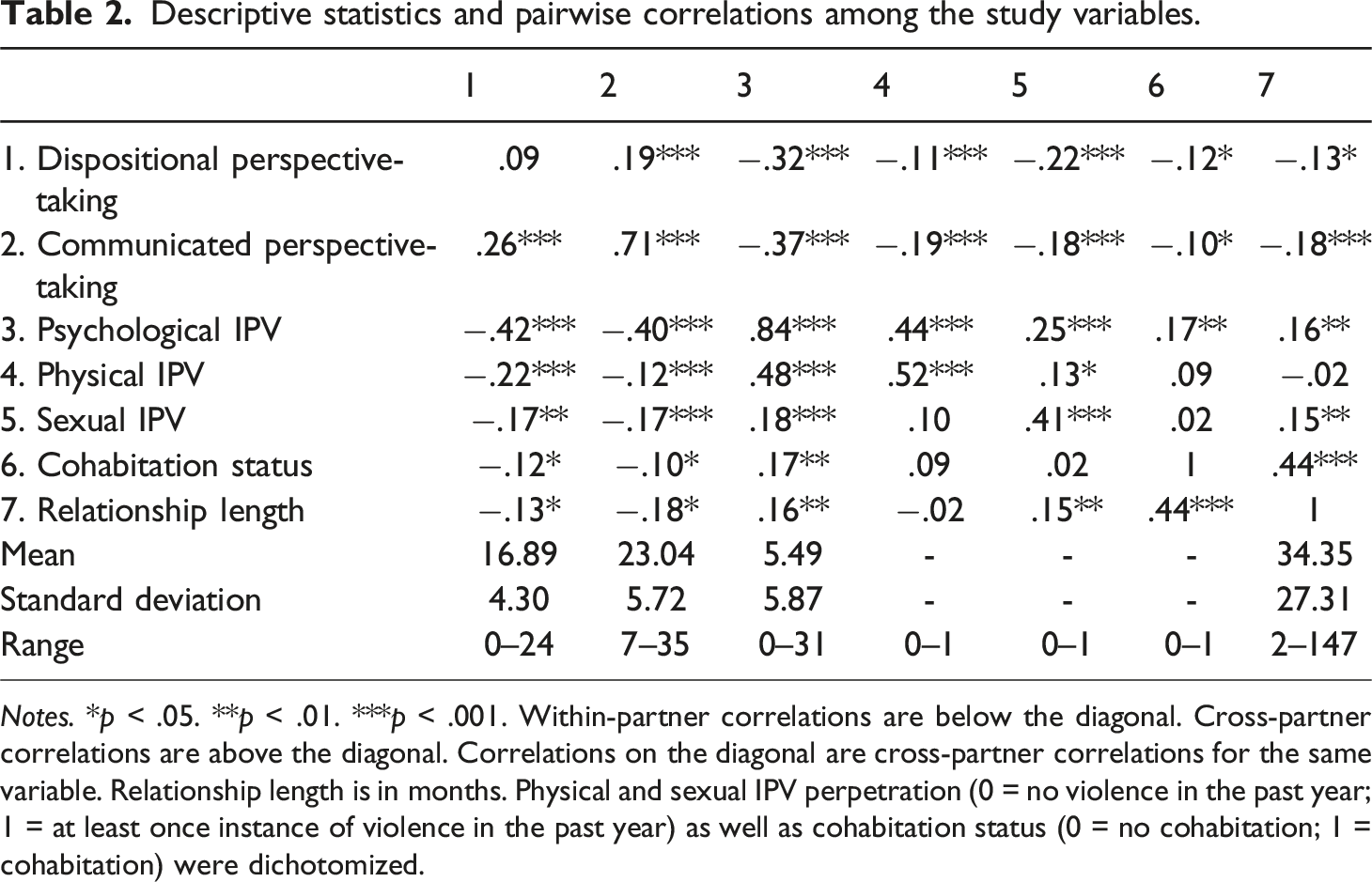
Notes. *p < .05. **p < .01. ***p < .001. Within-partner correlations are below the diagonal. Cross-partner correlations are above the diagonal. Correlations on the diagonal are cross-partner correlations for the same variable. Relationship length is in months. Physical and sexual IPV perpetration (0 = no violence in the past year; 1 = at least once instance of violence in the past year) as well as cohabitation status (0 = no cohabitation; 1 = cohabitation) were dichotomized.
As for the covariates, cohabitation status and relationship length were significantly and positively associated with psychological IPV perpetration and relationship length was significantly and positively associated with sexual IPV perpetration. Thus, cohabitation status and relationship length were included as covariates in the main analyses. Results of two-way (gender X partner) repeated measures ANOVA showed no significant main effect of gender identities on psychological IPV perpetration, F (2, 351) = 1.29, p = .277, but showed a significant interaction between gender and partner (i.e., actor and partner effect) on psychological IPV perpetration, F (2, 351) = 9.18, p < .001. Post-hoc pairwise comparisons indicated only one significant effect: partners of men (M = 6.13, SD = 0.47) were significantly more likely to perpetrate psychological IPV than partners of people who identified as gender diverse (M = 2.73, SD = 1.49; p = .031). Results of chi-square test of independence indicated there were no significant associations between gender identities and physical IPV perpetration, but showed a significant association between gender and the individual’s sexual IPV perpetration, X2 (2, 355) = 8.79, p = .012. More specifically, men were more likely to perpetrate sexual IPV than other genders and women were less likely to perpetrate sexual IPV than other genders. Results also showed a significant association between gender and the partner’s sexual IPV perpetration, X2 (2, 355) = 8.76, p = .013, more specifically that women were more likely to have a partner who perpetrates sexual IPV than other genders and men were less likely to have a partner who perpetrates sexual IPV than other genders. Gender was therefore included as a covariate in our model using two dummy variables with women as the reference group (0 = women or gender diversity and 1 = men for the first variable; 0 = women or men and 1 = gender diversity for the second variable).
Path analysis model of the associations between perspective-taking and IPV
We examined the associations between dispositional and communicated dyadic perspective-taking and psychological, physical, and sexual IPV perpetration, controlling for cohabitation status, relationship length and gender. Results are graphically depicted in Figure 1, while exact parameter estimates are reported in Table 3. Regarding covariates, relationship length was positively associated with sexual IPV perpetration. Cohabitation status was not significantly associated with any form of IPV perpetration, but its inclusion slightly influenced the results (i.e., the partner association between communicated perspective-taking and physical IPV perpetration went from marginally significant [p = .051] to significant [p = .048]). As gender was unrelated to all forms of IPV perpetration and its inclusion had no effect on the results, it was removed from the final model for parsimony. The model provided a good fit to the data, χ2 (36) = 34.82, p = .524; RMSEA = .00, 90% CI [.00, .05]; CFI = 1.00; TLI = 1.00; SRMR = .04, and explained a significant percentage of the variance in psychological (32.1%), physical (15.7%), and sexual (17.7%) IPV perpetration. Graphic depiction of the actor-partner interdependence model for the associations between dispositional and communicated perspective-taking and psychological, physical and sexual IPV perpetration. Notes. Only significant standardized coefficients are depicted. Given these are indistinguishable dyads, Partner 2’s associations are the same as Partner 1’s, and are depicted in light gray. Parameter estimates of the actor-partner interdependence model for the associations between dispositional and communicated perspective-taking and psychological, physical and sexual IPV perpetration. Notes. IPV = Intimate partner violence. Significant associations are in bold.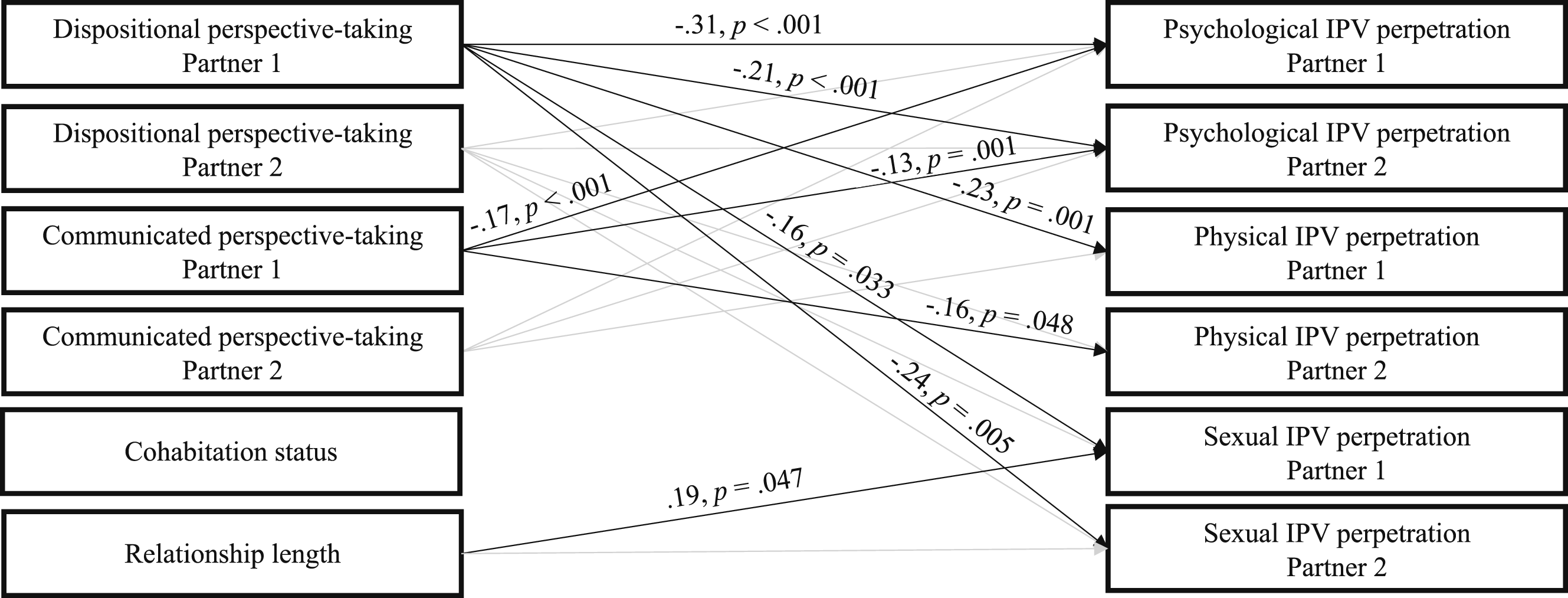
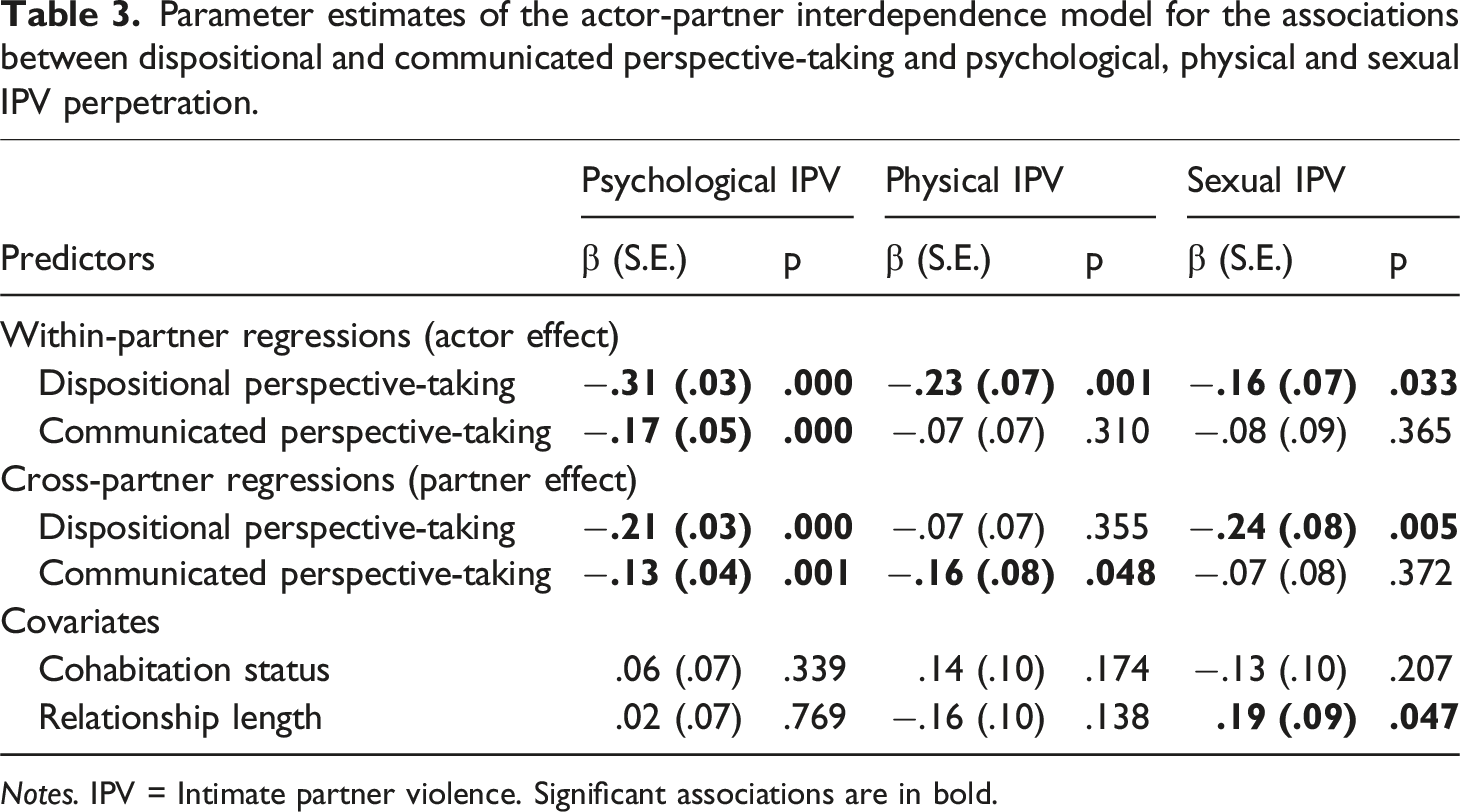
Results showed that an individual’s dispositional and communicated perspective-taking were negatively associated with their own and their partner’s psychological IPV perpetration. The results also showed that an individual’s dispositional perspective-taking was negatively associated with their own physical IPV perpetration, while an individual’s communicated perspective-taking was negatively associated with their partner’s physical IPV perpetration. Finally, the results showed that an individual’s dispositional perspective-taking was negatively associated with their own and their partner’s sexual IPV perpetration.
Exploratory analysis of the interaction between partners’ perspective-taking and IPV
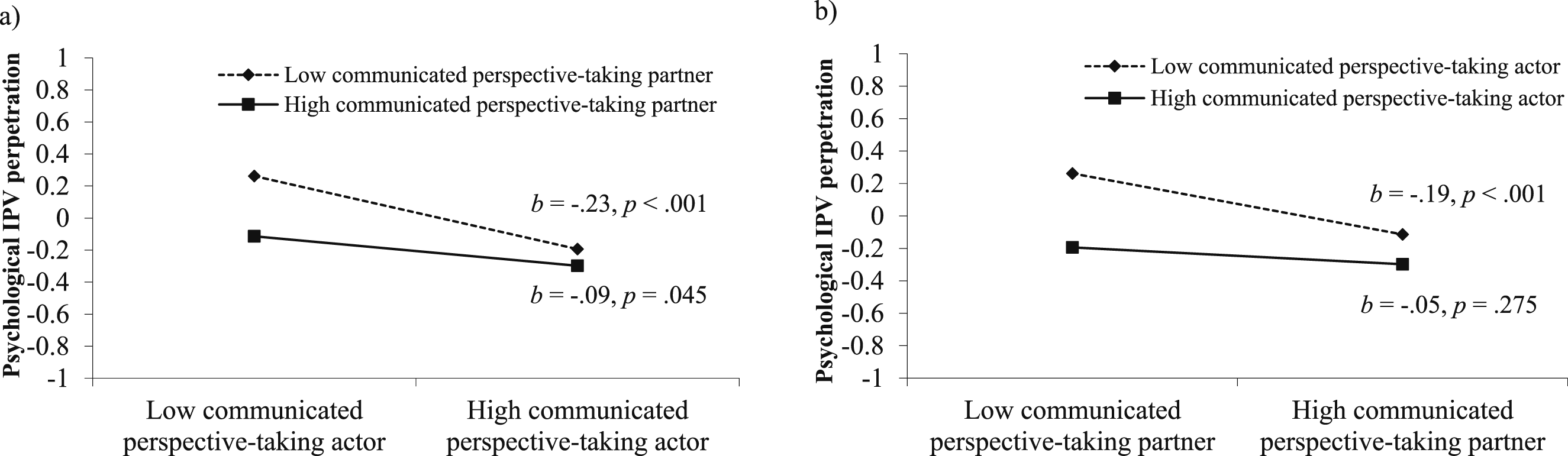
The original model was tested again, adding interaction terms between partners’ perspective-taking (dispositional P1 X P2; communicated P1 X P2) in association with each form of IPV. This model also provided a good fit: χ2 (46) = 50.95, p = .285; RMSEA = .03, 90% CI [.00, .06]; CFI = .99; TLI = .98; SRMR = .04. Significant interactions emerged for both types of perspective-taking. Specifically, partners’ dispositional perspective-taking interacted to predict psychological (β = −.08, p < .001) and sexual (β = −.20, p = .002), but not physical (β = .04, p = .463) IPV perpetration. In addition, partners’ communicated perspective-taking interacted to predict psychological (β = .09, p = .018), but not physical (β = .13, p = .09) and sexual (β = .09, p = .233) IPV perpetration. Significant interactions were decomposed by examining both actor and partner associations at high (+1 SD) and low (−1 SD) levels of the other partner’s perspective-taking. Simple slopes for dispositional perspective-taking are shown in Figure 2 (panels a–d), and those for communicated perspective-taking in Figure 3 (panels a–b). Specifically for dispositional perspective-taking, negative associations between an individual’s dispositional perspective-taking and both their own and their partner’s IPV perpetration were stronger (psychological IPV) or significant only (sexual IPV) when the other partner reported high dispositional perspective-taking. For communicated perspective-taking, negative associations between an individual’s communicated perspective-taking and both their own and their partner’s psychological IPV perpetration were stronger (actor effect) or significant only (partner effect) when the other partner’s communicated perspective-taking was low. Interaction between Partners’ Dispositional Perspective-Taking in Association with Psychological (Panels a-b) and Sexual (Panels c-d) IPV Perpetration. Notes. Low = 1 SD below the mean. High = 1 SD above the mean. Interaction Between Partners’ Communicated Perspective-Taking in Association with Psychological IPV Perpetration (Panels a-b). Notes. Low = 1 SD below the mean. High = 1 SD above the mean.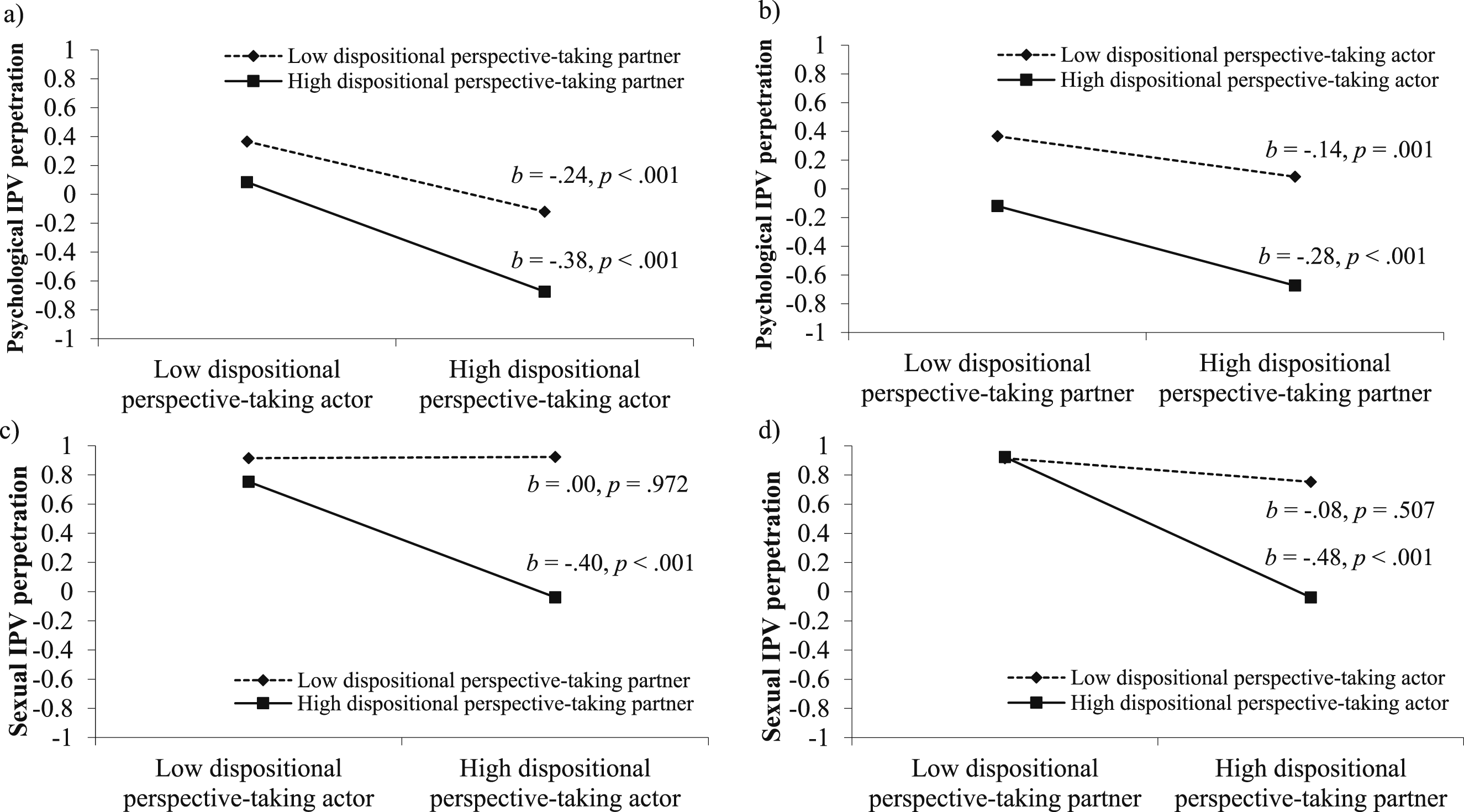
Discussion
Prior research has mainly investigated dyadic perspective-taking as a general tendency (i.e., dispositional perspective-taking) and has often neglected its observable manifestations in specific couple interactions (i.e., communicated perspective-taking), despite its possible implications in preventing the escalation of romantic conflicts into violence. With its dyadic observational design, our study allowed investigating the intra-individual and cross-partner associations between dispositional (i.e., self-reported) and communicated (i.e., observed) dyadic perspective-taking and various forms of IPV perpetration (psychological, physical, and sexual) in a diverse sample of young adult couples. Overall, the findings revealed negative associations between dyadic perspective-taking and IPV perpetration, with distinct patterns emerging between dispositional and communicated perspective-taking across forms of IPV and actor-partner effects, along with varying strength of associations depending on the other partner’s level of perspective-taking. By integrating both types of perspective-taking into a comprehensive model, our analysis captured their overlapping yet unique contributions to IPV dynamics in young adult romantic relationships.
Dispositional perspective-taking and IPV
As we hypothesized, our findings suggest that an individual’s higher dispositional perspective-taking is associated with their own lower levels of psychological and physical IPV perpetration. This is in line with findings from past studies on dispositional dyadic perspective-taking, which showed similar associations (Brassard et al., 2022; Lafontaine et al., 2018; Péloquin et al., 2011). According to Davis’ (1996) theoretical model, perspective-taking can lead to an attributional analysis that provides a broader understanding of the other’s behavior, thereby reducing blame and responsibility toward the other, and consequently decreasing the likelihood of committing violent behaviors against them. Our results also showed a negative association between an individual’s dispositional perspective-taking and their own sexual IPV perpetration. Although this is the first study to examine this association, the results align with studies on sexual offenders demonstrating deficits in perspective-taking compared to non-offenders (e.g., Hanson & Scott, 1995; Varker & Devilly, 2007). As theorized by Barnett and Mann (2013), deficits in perspective-taking can lead to a distorted view of the victim’s experience, in which harm is minimized. Thus, in the context of romantic relationships, partners with deficits in perspective-taking may struggle to perceive and respect their partner’s sexual boundaries, increasing the likelihood of perpetrating sexual IPV.
Our findings also showed a negative association between an individual’s dispositional dyadic perspective-taking and their partner’s psychological IPV perpetration. This contrasts with a study by Péloquin et al. (2011), which found no significant partner association between these constructs. The difference may be attributed to the previous study’s focus on long-term older cohabiting couples, who might be better equipped to handle a lack of perspective-taking from their partners, whereas younger couples, being less skilled in conflict resolution, may be more easily triggered by such issues. A negative association was also observed between an individual’s dispositional dyadic perspective-taking and their partner’s sexual IPV perpetration. Given that dispositional perspective-taking has been associated with greater dyadic concern and fewer dominance goals in relationships (Lundell et al., 2008), this ability may improve relational dynamics and satisfaction. As both are strong protective factors against IPV victimization (Bartholomew & Cobb, 2011; Capaldi et al., 2012), they could reduce the likelihood of a partner engaging in psychological and sexual IPV.
Our secondary analyses enrich these findings by demonstrating that the strength of some of these associations varied depending on the other partner’s level of dispositional perspective-taking. Specifically, the negative associations between an individual’s dispositional perspective-taking and both their own and their partner’s psychological IPV perpetration were stronger when the other partner reported high dispositional perspective-taking. This highlights a mutually reinforcing protective role of dispositional perspective-taking within the dyad with respect to psychological IPV perpetration, whereby each person’s capacity to adopt the other’s point of view enhances the beneficial impact of their partner’s perspective-taking.
A different pattern emerged for sexual IPV, as the negative associations between an individual’s dispositional perspective-taking and both their own and their partner’s sexual IPV perpetration were significant only when the other partner reported high dispositional perspective-taking. Rather than merely amplifying an existing effect, high dispositional perspective-taking in both partners appears to be a necessary condition for a protective effect to emerge with respect to sexual IPV perpetration, suggesting an interactive dynamic where low perspective-taking in either partner may undermine this protective influence.
Communicated perspective-taking and IPV
As expected, the findings revealed a significant negative association between an individual’s communicated perspective-taking during the conflict discussion and their own psychological IPV perpetration. Thus, the more an individual tends to acknowledge, attend to, and confirm their partner’s perspective during a conflict discussion, the less likely they are to perpetrate psychological IPV. Although this study is the first to examine the associations between communicated perspective-taking in a conflict discussion and IPV perpetration, the results align with a substantial body of research indicating that communication and conflict resolution skills serve as a protective factor against IPV perpetration (e.g., Capaldi et al., 2012; Love et al., 2020). Indeed, individuals who actively listen and validate their partner’s perspective may be better equipped to manage conflicts, as they are more likely to adopt a constructive rather than a defensive approach to conflict resolution, thereby reducing the risk that conflicts escalate into psychological violence.
Also in line with our hypothesis, findings showed that when an individual demonstrated greater communicated perspective-taking during the conflict discussion, their partner was less likely to perpetrate psychological and physical IPV. As perspective-taking in conflict discussions has been shown to attenuate negative reciprocity in hostile behaviors (Reid & Overall, 2024), communicated perspective-taking may represent a key communication skill for preventing the escalation of the partner’s negative behaviors into violence. When an individual shows genuine effort and interest in understanding and incorporating their partner’s perspective into their own view of the situation, it can help reduce tension and negative emotions in the partner, thereby decreasing the likelihood of the partner perpetrating psychological and physical IPV.
Furthermore, secondary analyses revealed that the negative associations between an individual’s communicated perspective-taking and both their own and their partner’s psychological IPV perpetration were stronger (actor association) or significant only (partner association) when the other partner’s communicated perspective-taking was low. These results suggest that communicated perspective-taking plays a more crucial role in reducing psychological IPV perpetration when one partner exhibits low levels of communicated perspective-taking, highlighting a compensatory dynamic in which one partner’s abilities can help offset the other’s lower perspective-taking.
Differential associations of dispositional and communicated perspective-taking with IPV
Our study, by examining dispositional and communicated perspective-taking within one comprehensive model, revealed both similar and distinct associations with IPV. With respect to similarities, both types of perspective-taking were negatively associated with the individual’s own and their partner’s psychological IPV perpetration (i.e., significant actor and partner effects). This suggests that both the dispositional-cognitive and situational-communicative components of perspective-taking are important protective factors for psychological IPV perpetration. Since both components were included in the model and were each significantly associated with psychological IPV, this suggests that they each explain unique variance in psychological IPV and may operate through different yet complementary mechanisms.
Different patterns of associations nevertheless emerged. First, an individual’s dispositional perspective-taking was negatively associated with their own, but not their partner’s, physical IPV perpetration (i.e., actor effect only), while an individual’s communicated perspective-taking was linked to the partner’s, but not their own, physical IPV perpetration (i.e., partner effect only). This pattern likely reflects inherent differences between the two types of perspective-taking. Dispositional perspective-taking, which involves covert cognitive processes, appears to be more closely linked to one’s own physical IPV due to enhanced empathic abilities that help inhibit harmful behavior. In contrast, communicated perspective-taking, involving overt communication skills, appears to be more strongly associated with the partner’s physical IPV, potentially due to its role in facilitating conflict resolution and de-escalation. As our study does not assess this directly, further research is needed to verify this assumption. Second, dispositional perspective-taking was negatively associated with both the individual’s and their partner’s sexual IPV perpetration, while communicated perspective-taking was unrelated to sexual IPV perpetration. Sexual IPV perpetration may be more strongly driven by factors related to power, control or entitlement, identified in research as central motivations (e.g., Brousseau et al., 2012; Toates et al., 2017), which may be more influenced by an individual’s cognitive ability to imagine their partner’s experience than by communication and conflict resolution skills. As a result, even if one partner engages in communicated perspective-taking during romantic conflict, it may not be associated with sexual IPV perpetration if the underlying motivations are not tied to conflict management dynamics.
Limitations and future directions
There are several limitations to this study that should be noted. First, the correlational design precludes us from causal interpretations. Given that IPV was assessed retrospectively over the past year and perspective-taking was evaluated in the present, it is possible that IPV perpetration influences perspective-taking rather than the other way around. Future research should use prospective longitudinal designs to clarify the directionality of these associations. Second, relying on a convenience sample of young adult couples may have introduced self-selection biases, particularly as couples experiencing more severe forms of IPV may avoid participating in communication studies, reducing the generalizability of the results to more severe cases of IPV. Moreover, as our recruitment focused mainly on student Facebook groups, most of our participants were students, limiting the generalizability of our findings to non-student young adult couples. Third, our self-reported measure of dispositional dyadic perspective-taking is susceptible to biases such as social desirability. Future studies should consider incorporating partner reports of perspective-taking skills for a more comprehensive assessment. Fourth, we assessed IPV perpetration in the past 12 months, which may be less reliable for couples who have been together for a shorter period. For these couples, lower scores may reflect relationship length rather than the actual frequency of IPV. However, having controlled for relationship length in our analyses is likely to reduce the impacts on the findings. Fifth, due to the low prevalence of physical and sexual violence in our sample, these variables were dichotomized, reducing the complexity of IPV to the presence or absence of such behaviors, rather than capturing variations in severity. Finally, as the first study examining the associations between communicated perspective-taking and IPV, our focus was on macro-level processes. While this provides a comprehensive view of how communicated perspective-taking contributes to IPV, it limits the exploration of moment-to-moment variations in perspective-taking and its subsequent impact on conflict de-escalation and IPV, which could be a promising avenue for future research.
Conclusion
Perspective-taking is a multidimensional construct that has been shown to act as a protective factor against IPV. This study provides valuable insights into the dispositional-cognitive and the situational-communicative components of perspective-taking and their distinct associations with various forms of IPV perpetration in young adults’ romantic relationships. Our results revealed differing patterns for dispositional and communicated perspective-taking, along with interaction effects between partners’ perspective-taking, indicating that these are separate constructs that uniquely operate within a relational dynamic and shape IPV perpetration. Consequently, IPV assessment and intervention should treat dispositional and communicated perspective-taking as distinct and inherently dyadic skill sets, given that proficiency in one does not necessarily extend to the other, and that the contribution of each partner’s abilities can only be fully understood within the dyadic context. This understanding could enable more tailored interventions that address the diverse relational dynamics underlying IPV, ultimately enhancing prevention and intervention strategies.
Footnotes
Acknowledgements
The authors would like to thank the couples who participated in the study.
Declaration of conflicting interests
The author(s) declared no potential conflicts of interest with respect to the research, authorship, and/or publication of this article.
Funding
The author(s) disclosed receipt of the following financial support for the research, authorship, and/or publication of this article: This work has been supported by the Fonds de Recherche du Québec – Société et Culture (FRQSC) [under Grant number 2020-NP-266284] and graduate scholarships from the Social Sciences and Humanities Research Council and FRQSC awarded to Marianne Emond.
Open research statement
As part of IARR’s encouragement of open research practices, the authors have provided the following information: This research was not pre-registered. The data used in the research are not available. The data can be obtained by emailing:
