




Abstract
Receiving emotional support can improve one’s emotional well-being, but findings have been mixed regarding whether providing emotional support to friends and family can also improve the provider’s emotional well-being. Providing emotional support could be impactful during the COVID-19 pandemic, when individuals may be particularly in need of emotional support and social connection. Therefore, the present study assessed whether providing emotional support was related to role fulfillment and enhanced emotional well-being on a day-to-day basis during the COVID-19 pandemic. Participants (N = 167; Mage = 20.42, SD = 2.30; 73.1% female; 40.1% Asian, 18. 6% Latinx, 16.8% white) completed up to eight daily checklists (Mchecklists = 6.54, SD = 2.10) in which they reported whether they provided emotional support to their friends and to their parents, their role fulfillment (i.e., the extent to which they felt like a good son/daughter and friend), and the degree of positive and negative emotion they were feeling. Participants reported higher positive emotion and lower negative emotion on days when they provided emotional support to friends, but not to parents, with potentially stronger associations in-person than virtually. Participants also reported higher role fulfillment as a good son/daughter and a good friend on days when they provided emotional support, and role fulfillment significantly mediated associations between providing emotional support and daily emotion. Taken together, results suggested that providing emotional support to friends—particularly in-person—was related to better emotional well-being by promoting a sense of role fulfillment as a good friend. Providing emotional support may provide one means for reinforcing social relationships and promoting emotional well-being during times of social isolation.
Introduction
Emotional support is a form of social support that involves emotionally connecting with another person and actively listening, reassuring, or providing advice (Armstrong-Carter et al., 2020a, 2020b). Individuals who receive emotional support tend to report lower stress and better health (Inagaki & Orehek, 2017), and researchers have suggested that emotional support may promote relationship satisfaction, social connection, and well-being to a greater extent than instrumental support, another form of social support that involves tangible acts such as helping (Mathieu et al., 2019). In addition to receiving emotional support, providing emotional support may also improve well-being. Completing prosocial acts such as providing support may benefit the provider in addition to the recipient by fulfilling psychological needs, in line with self-determination theory, including a sense of purpose (Deci & Ryan, 2012; Fuligni, 2019). Despite this theoretical benefit, prior studies of young adults have been mixed regarding whether providing emotional support is related to better emotional well-being (Armstrong-Carter et al., 2020a; Morelli et al., 2015).
It also remains unclear whether provision of emotional support is related to emotional well-being during times of intense distress and isolation, such as the COVID-19 pandemic. The pandemic and related containment measures (i.e., social distancing) greatly increased prevalence of depression and anxiety, particularly for young adults and college students (Cao et al., 2020). As a result, individuals’ friends and family may have needed emotional support during this time, and providing emotional support could be one means of improving daily emotional well-being during this distressing period. Still, providing support can be emotionally taxing and potentially deleterious in conjunction with hardships associated with the pandemic (Alvis et al., 2022). Furthermore, travel and social restrictions may have prompted individuals to provide remote rather than in-person emotional support. Yet, there is limited evidence regarding whether providing emotional support to other people and providing in-person versus remote emotional support can impact the well-being of the provider during highly distressing periods. Therefore, the present study utilized daily checklists to test whether providing emotional support to friends and parents was related to emotional well-being (i.e., greater positive emotion, lower negative emotion) for the provider, whether associations differed between in-person and remote support, and whether associations were explained by greater role fulfillment (i.e., feeling like a good friend or family member) among undergraduate students during the COVID-19 pandemic.
Providing emotional support and emotional well-being
Self-determination theory posits that prosocial behaviors such as social support and behaviors that satisfy psychological needs (e.g., relatedness, competence) can improve well-being by strengthening social relationships (Deci & Ryan, 2012). Recipients of social support often express gratitude, view the provider more positively, and reciprocate social support (Inagaki & Orehek, 2017). In turn, receiving gratitude causes people to feel socially valued, that their support provision is effective, and motivated to complete additional prosocial acts (Grant & Gino, 2010). Motivation to contribute to other people typically emerges during adolescence, when neurobiological changes prompt youth to become more concerned with the experiences and well-being of other people (Fuligni, 2019).
Although research suggests that providing social support can promote physical health, the effects of providing emotional support on the provider’s daily emotion have been mixed across studies. Like instrumental support, providing emotional support has been related to reduced stress physiology (Armstrong-Carter et al., 2020b; Armstrong-Carter & Telzer, 2021), and providing emotional support to a close friend was related to greater well-being in a sample of first-year college students (Morelli et al., 2015). However, providing emotional support often involves being emotionally invested in the problems of another person, which can itself be distressing. Among college students, providing instrumental support to friends was related to better well-being, but neither providing emotional support to friends nor to roommates was related to well-being (Armstrong-Carter & Telzer, 2021). Providing emotional support has even been related simultaneously to both greater positive emotion and greater negative emotion (Armstrong-Carter et al., 2020a). Given these discrepant findings, further research is needed to identify how provision of emotional support can affect the provider’s emotional well-being with respect to positive emotion and potentially negative emotion.
Providing emotional support and role fulfillment
Providing emotional support may fulfill basic psychological needs for relatedness by reinforcing social identities and a sense of purpose in one’s social relationships (Deci & Ryan, 2012). Role theory also posits that individuals tend to view themselves positively when they successfully identify and meet demands for their social roles (Turner, 2001). Individuals develop social identities that promote interpersonal connections, and fulfillment of these social identities has been related to a greater sense of purpose and better psychological adjustment (Kiang et al., 2006; Yip & Fuligni, 2002). For instance, being a friend and being a family member are two salient identities for young adults because they spend much of their time with peers and often rely on their parents for support (Brown & Larson, 2009). Provision of emotional support to friends and parents may promote a sense of contribution to these relationships (Fuligni, 2019), especially when support is reciprocated.
In empirical support of this pathway, adolescents report role fulfillment on days when they provide emotional support to parents (Tsai et al., 2016), and youth who on average provide social support to friends report high role fulfillment, with slightly stronger associations for emotional than instrumental support (Armstrong-Carter & Telzer, 2021). This role fulfillment may carryover to benefit well-being. Increased role fulfillment has been found to explain associations between daily instrumental and emotional support provision with attenuated stress physiology the next day (Armstrong-Carter et al., 2020b; Armstrong-Carter & Telzer, 2021). Furthermore, helping behavior was related to positive emotion for the provider only when individuals believed that this help had benefited the recipient (Monin et al., 2017), and prior studies have found that provision of instrumental support to friends and family in the forms of daily assistance and helping was indirectly related to daily positive emotion through greater role fulfillment among adolescents (Armstrong-Carter et al., 2020b; Fuligni et al., 2009). Yet, this mechanism has not been tested for effects of providing emotional support on daily emotion.
Providing emotional support during the COVID-19 pandemic
Providing emotional support may be particularly beneficial for emotional well-being during distressing periods, such as the COVID-19 pandemic. Social distancing limited in-person interaction, and college students experienced elevated loneliness and depression and less time with friends during this period (Cao et al., 2020; Frazier et al., 2021). As a result, individuals may need to provide emotional support to peers frequently during this time, and may be less able to provide instrumental support. Barriers related to social isolation likely limited individuals’ ability to fulfill their social roles (Turner, 2001), and providing emotional support may be one means of social connection and reinforcing one’s role as a supportive friend or family member.
Individuals may also reap greater emotional benefits from providing emotional support during the COVID-19 pandemic because providing emotional support can be especially beneficial for the provider’s emotional well-being when the provider and recipient have poorer mental health. In one study, spouses of service members and veterans reported higher positive emotion and lower negative emotion on days when they provided emotional support, with stronger associations when their partners had more severe mental health symptoms (Carter et al., 2019). In turn, providing instrumental assistance was related to better emotional well-being only among adolescents with more depressive symptoms (Schacter & Margolin, 2019). Together, these results suggest that people may have better well-being when providing emotional support to someone in greater need, potentially because they feel that they have helped someone or because the other person may be especially appreciative, and that individuals with poorer mental health may benefit more from prosocial acts such as providing emotional support. Because circumstances associated with the COVID-19 pandemic have worsened mental health for many (i.e., potentially both the provider and the recipient), providing emotional support to friends and family may effectively improve one’s own emotional well-being during this time.
Still, despite potentially improving the well-being of the recipient, providing emotional support can also be considered an emotional burden for the provider during distressing periods. That is, providing emotional support involves connecting with another person’s problems and can thereby worsen well-being (e.g., Armstrong-Carter et al., 2020a). The ongoing stressors associated with the pandemic can affect the provider while simultaneously causing friends and family to need more emotional support for potentially irreconcilable issues. For instance, provision of support during the COVID-19 pandemic has been related to greater anxiety and burdensomeness among youth (Alvis et al., 2022). However, this study did not disaggregate effects of emotional versus other forms of support. Therefore, it is unclear whether provision of emotional support may simultaneously improve positive emotion through role fulfillment and also increase distress due to emotional burden during distressing periods of social isolation.
Social distancing likely impacted how people provide emotional support. Although many people maintained social relationships through online social networks prior to the COVID-19 pandemic (Cole et al., 2017), the pandemic prompted an increased reliance on virtual communication. Prior studies have indicated that youth receiving emotional support from friends rated remote support equivalent to or better than in-person support, although ultimately in-person support more effectively increased positive emotion (Holtzman et al., 2017). Still, these studies assessed perceptions of the recipient but not the provider, and results may not carryover to the COVID-19 pandemic when individuals often needed to interact remotely rather than in-person.
Provision of emotional support to friends and parents
The implications of providing emotional support to friends versus parents may differ for college students because social needs and relationships change with age (Arnett, 2007). College attendance is considered a hallmark of emerging adulthood and a pathway to independence (Faas et al., 2020). Emerging adults are developing autonomy and highly invested in peer relationships, while often still reliant on their parents for support when encountering challenges (Arnett, 2007). Both support from friends and parents are tied to better well-being for college students (Fingerman et al., 2012; Pittman & Richmond, 2008). This period may mark a dynamic transition for one’s responsibilities as a family member, as they can better provide support to their parents.
Although emotional support provision could generally be an opportunity for contribution, providing emotional support to friends may be more fulfilling than to parents because it better aligns with one’s perceived role in a friendship than in a parent-child relationship in line with role theory (Turner, 2001). An overreliance on children for familial support, particularly in challenging circumstances, could be considered parentification, or the shift from one’s role as a child to as a parent (Jurkovic, 1997). Such responsibilities can be emotionally burdensome and contribute to poorer outcomes by distracting from academic or social needs (Godsall et al., 2004).
Social distancing limited in-person interactions with friends, especially for students; many college students lived at home with their families due to the transition to remote-learning (Frazier et al., 2021). Young adults may have felt responsibility to support family members, which could be burdensome in conjunction with ongoing academic and social stressors. They simultaneously had fewer contexts available for developing autonomy due to social distancing and consequently may have considered this familial responsibility unfulfilling. Alternatively, individuals could report better well-being when providing emotional support to friends because this support could reinforce their friendships. Although relationships with peers and parents are critical for development (Brown & Larson, 2009), few studies have examined provision of support to both. The present study therefore assessed the unique associations between provision of emotional support and daily emotional well-being for friends and parents.
Present study
The present study examined whether providing emotional support is related to daily well-being, with respect to positive emotion and negative emotion, among college students during a period of distress and social isolation. Participants completed one week of daily checklists, in which they reported whether they provided emotional support to friends and parents, their positive and negative emotion, and their role fulfillment (i.e., the extent to which they felt like a good friend or a good son/daughter) each evening. Provision of emotional support to friends and parents was of primary interest because the study was conducted in spring 2021 when social distancing guidelines related to the COVID-19 pandemic were strongly enforced, the majority of university classes were remote, and college students were likely to live off-campus with their parents, all of which likely limited provision of instrumental support. The daily design enabled us to assess provision of emotional support at the levels of days (i.e., whether individuals reported better emotional well-being on days when they provided emotional support) and people (i.e., whether individuals who provided emotional support more often reported better emotional well-being). We tested positive emotion and negative emotion as distinct outcomes to disentangle differential pathways involving provision of emotional support, as providing emotional support could be both a source of social connection and therefore pleasure (positive pathway) or an emotional burden (negative pathway).
Providing emotional support to friends and parents was hypothesized to relate to higher positive emotion by promoting a sense of role fulfillment, in line with role theory and prior evidence that providing support to others can improve one’s own well-being (Tsai et al., 2016; Turner, 2001). Therefore, models tested the degree to which role fulfillment explained associations between providing emotional support and emotion. All models were tested at the daily level (i.e., testing whether people feel higher role fulfillment and, in turn, higher positive emotion on days when emotional support is provided) and at the person level (i.e., testing whether people who provide more emotional support report higher role fulfillment, which results in higher positive emotion). We also hypothesized that provision of emotional support would simultaneously relate to higher negative emotion due to the increased burden of emotionally connecting with other people’s problems during a distressing period. Models then explored whether associations differed between in-person and remote (e.g., text, video call) emotional support provision because social distancing guidelines limited in-person communication.
Method
Participants and procedures
Undergraduate students currently enrolled at a university in Los Angeles (N = 167, Mage = 20.42, SD = 2.30; 73.1% female, 25.7% male, 1.2% different sex; 40.1% Asian, 18.6% Latinx, 16.8% white; 22.8% sexual minority; 52.9% whose parents averaged a four-year degree or higher) received course credit for completing a baseline survey and up to eight daily reports. They completed a survey in which they provided consent and reported age, gender, their family’s income bracket, and the highest level of education attained by each parent from varied options. Level of education was averaged across both parents when possible. About half of participants reported having a family income of over $100,000 (54.0%) and that their parents had averaged a four-year college degree or higher (52.9%).
Starting the following Monday, they received surveys at 8:00 pm nightly via email for eight consecutive days. This resulted in six weeks of data collection, and ANOVAs indicated that emotional support, role fulfillment, and daily emotion did not differ by study week, ps >.07. The 18 participants who did not complete five daily surveys received additional surveys during the final week of the quarter, which resulted in five participants contributing an additional 31 reports (M = 6.20, SD = 1.30 among the five participants). Of the 167 participants, 147 participants provided five or more daily surveys, seven participants provided 2-4 surveys, and 13 participants provided only one survey (overall Mchecklists = 6.54, SD = 2.10). The number of completed surveys was unrelated to participants’ average positive emotion, negative emotion, provision of emotional support, age, gender, income, parents’ education, or study week, all ps > .09. Study procedures were approved by the University of California, Los Angeles Institutional Review Board. The data, syntax, and materials are available at: https://osf.io/gbzpj.
Data were collected between March and May of 2021. During this period, most courses were remote with instructors encouraged to post lecture recordings online to accommodate students in other time zones, but a small number of courses—primarily laboratory-based courses—transitioned to in-person instruction. There was limited housing available on campus for students who were enrolled in such courses. Student facilities such as the library, dining halls, and athletic centers were reopened at lower capacity with mandated physical distancing and masking. On-campus individuals were required to complete symptom monitoring surveys before entering any facilities and to be tested twice per week. Research activities and all work were remote unless formally approved otherwise. Therefore the vast majority of students and employees were discouraged from coming to campus. Participants completed a screener of depressive symptoms, the Center for Epidemiologic Studies Depression Scale (CESD; Radloff, 1977), which indicated that over half of participants were above the clinical threshold for depression risk. Specifically, 29.7% of participants were at risk for moderate depressive symptoms (scored 16+ on a scale from 0–60) and 26.5% were at risk for severe depressive symptoms (scored 24+; M = 18.12, SD = 9.13).
Measures
Providing daily emotional support
Each evening, participants reported whether they provided emotional support to their friends and to their parents using two dichotomous items (0 = no, 1 = yes). These items have previously been used in daily studies, and higher rates of emotional support provision have been found when recipients experience distress and among adolescents who feel a greater obligation to their families (Bolger et al., 2000; Tsai et al., 2016). If participants reported providing emotional support to either friends or parents, they then answered follow-up questions regarding whether that support was provided in-person or remotely (i.e., zoom, phone call, texting, sending gifts). In an abundance of caution, we repeated analyses excluding gift giving because gifts could serve functional purposes and be considered a form of instrumental support, even if participants had reported providing emotional support. This resulted in an identical pattern of results, so all analyses are presented including all observations of self-reported provision of emotional support.
Receiving daily emotional support
Participants similarly reported whether they received emotional support from their friends and parents using dichotomous items (0 = no, 1 = yes). Because emotional support provision was of primary interest, these items were included as covariates to account for how people may experience the same stressors as their friends and parents (i.e., stress related to school, peers, family, the pandemic) and mutually receive and provide emotional support on the same day. Received emotional support was not of primary interest because daily associations between receiving emotional support and emotion are confounded by how receiving emotional support can downregulate negative emotion and high levels of negative emotion may cause individuals to seek or receive emotional support.
Daily emotion
Each evening, participants rated the extent to which they currently felt varied emotions (1 = None at all, 2 = A little, 3 = Moderately, 4 = Quite a bit, 5 = Extremely). Positive emotion items (i.e., cheerful, enthusiastic, joyful, interested, excited, attentive, calm, happy) were from the Positive and Negative Affect Schedule (PANAS; Watson et al., 1988), and negative emotion items (i.e., worried, on edge, uneasy, nervous, sad, hopeless, discouraged) were from the Profile of Mood States (POMS; McNair et al., 1971). These items have been used in prior intensive longitudinal studies of adolescents and young adults, and lower positive emotion and higher negative emotion have been related to greater rejection sensitivity and more daily conflict, interpersonal stress, stressful demands, and peer victimization (Espinoza et al., 2013; Fuligni et al., 2009; Kiang et al., 2006; Yip & Fuligni, 2002). Subscales showed moderate to high reliability across items each day (αs = .95, .93), and daily averages were calculated across items for each subscale.
Daily role fulfillment
Participants completed two items regarding the extent to which they feel like a good friend and like a good son/daughter (1 = Not at all; 7 = Extremely). Studies using these items have related higher role fulfillment to lower inflammation, as well as more family assistance behaviors and better well-being in daily assessments (Fuligni et al., 2009; Tsai et al., 2016).
Results
Descriptive statistics
Descriptive statistics and correlations between study variables.
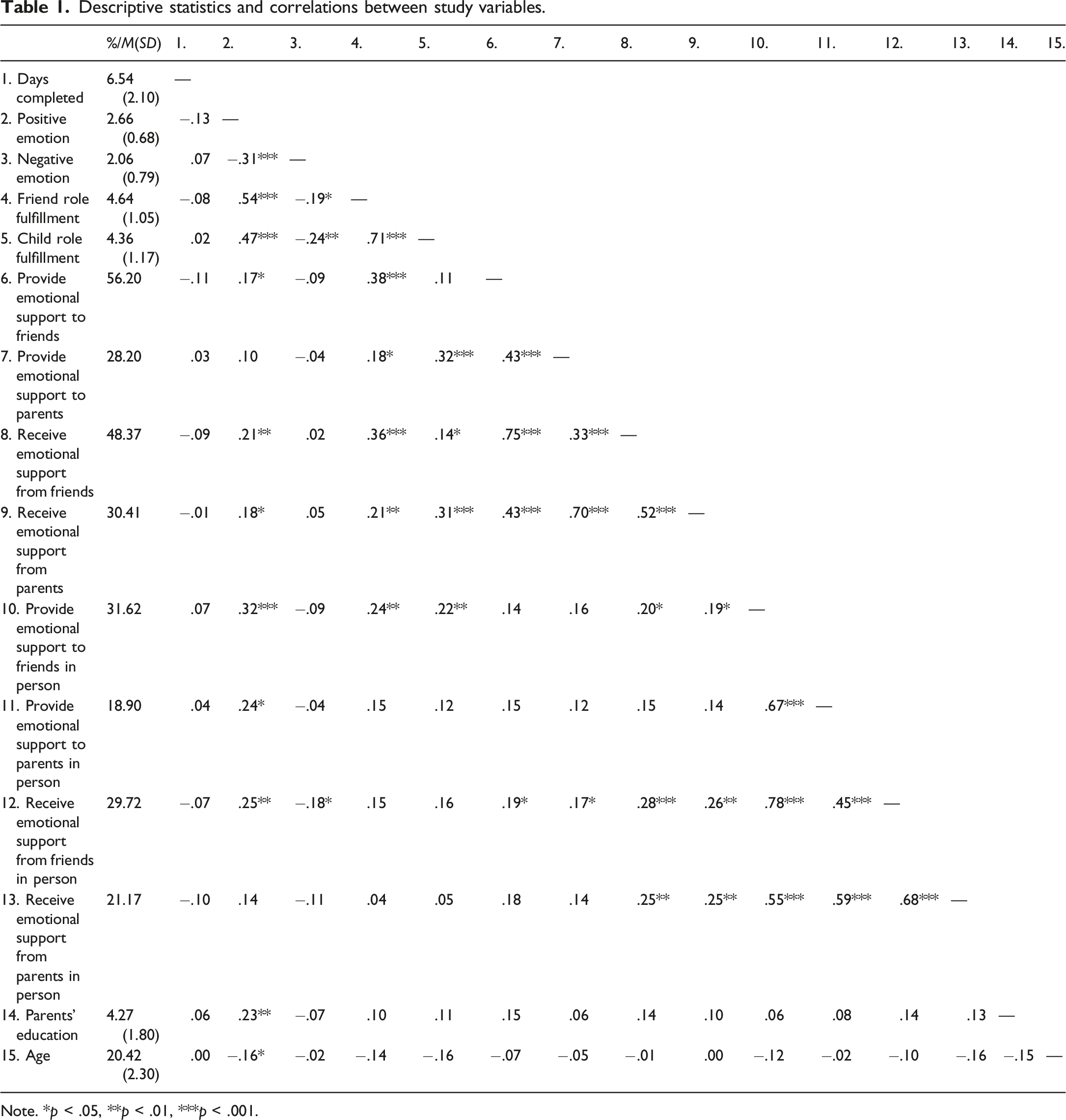
Note. *p < .05, **p < .01, ***p < .001.
Direct associations between providing emotional support and daily emotion
For all analyses, two-level multilevel models with days (Level 1) nested within participants (Level 2) were tested using Stata 16.1. To model associations between providing emotional support and emotion, analyses simultaneously tested associations between providing emotional support and outcomes at the levels of days (i.e., effects of providing emotional support on a given day on daily outcomes) and people (i.e., effects of overall frequency of providing emotional support on average level of outcomes across days). Person-level averages were calculated for emotional support provision, which indicated the proportion of days when participants provided emotional support to their friends and to their parents across days. Values for each day were centered at the participants’ mean, and both the average and the person-centered values were tested as predictors of daily emotion and role fulfillment. Importantly, for all models testing the effects of providing emotional support, we also controlled for whether participants received emotional support from a friend or parent at the daily level because participants may also be affected by the same issues as the recipient (e.g., providing emotional support to a parent for housing or financial problems that affect the family) during the COVID-19 pandemic. Follow-up models then tested whether associations were maintained after controlling for gender (0 = non-female, 1 = female majority group), family income, parents’ education, and age (centered at sample mean).
Models tested whether providing emotional support was related to daily positive emotion and negative emotion, with separate models for providing emotional support to friends and parents, as seen in equation (1).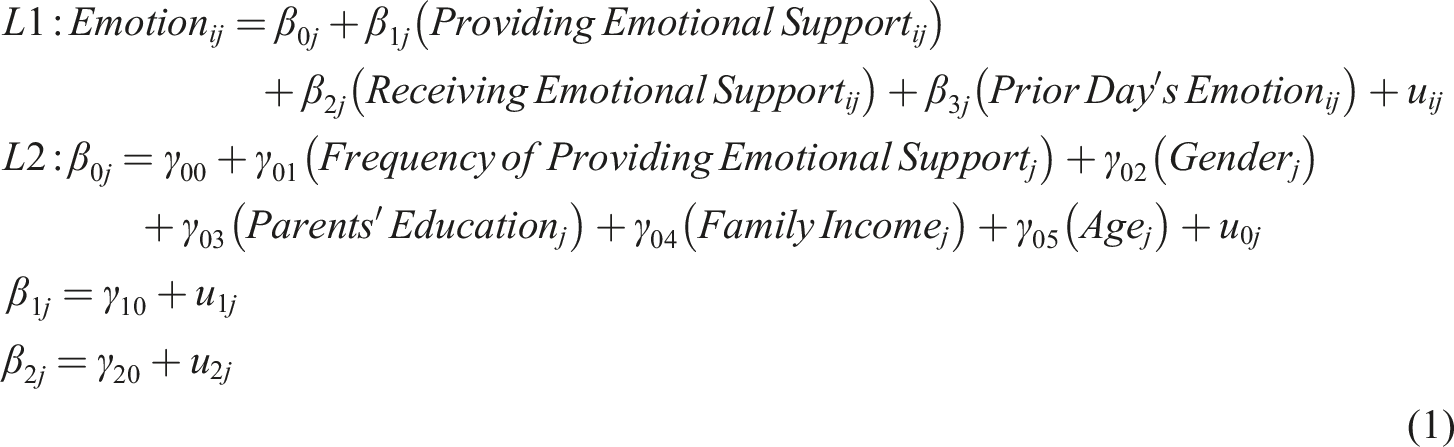
Multilevel models tested differences in emotion between days when individuals did and did not provide emotional support. Therefore, participants who completed only one survey (n = 13) and participants with no variability in provision of emotional support cannot contribute to daily associations. Across days, 19 participants reported never providing emotional support to friends and 63 reported never providing emotional support to their parents. Further, 34 reported providing support to friends daily, and 14 reported providing support to parents daily. All participants who provided at least two days of data (n = 154) were included in statistical analyses and contributed to between-person analyses, but 114 participants and 90 participants contributed to within-person associations between daily emotional support provision to friends and to parents, respectively, and emotion.
Emotion and role fulfillment as a function of providing emotional support to friends (left) and to parents (right).
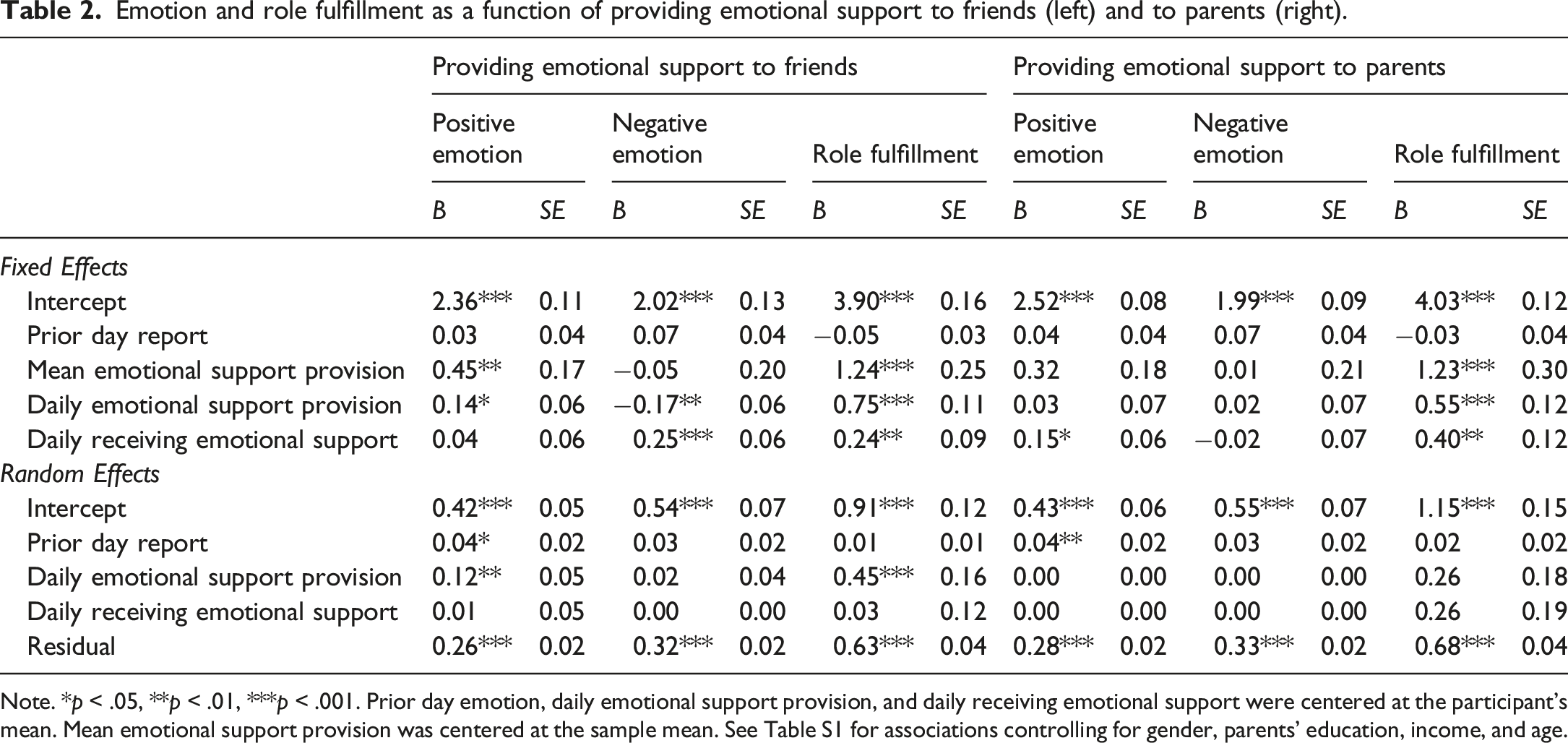
Note. *p < .05, **p < .01, ***p < .001. Prior day emotion, daily emotional support provision, and daily receiving emotional support were centered at the participant’s mean. Mean emotional support provision was centered at the sample mean. See Table S1 for associations controlling for gender, parents’ education, income, and age.
To account for the possibility that participants experience either low overall emotion (i.e., neither positive nor negative emotion) or simultaneously high overall emotion as a form of ambivalence, we calculated additional indices of emotion. We repeated analyses predicting overall emotional valence (measured as the difference between positive and negative emotion; Positive - Negative) and predicting overall emotion (measured as the sum of positive and negative emotion; Positive + Negative). Participants reported higher overall positive valence on days when they provided emotional support to friends when unadjusted (B = 0.31, SE = 0.11, p = .004, 95% CI [0.10, 0.52]) and adjusted for covariates (B = 0.32, SE = 0.11, p = .005, 95% CI [0.10, 0.54]). Daily provision of emotional support was not related to levels of summed emotion irrespective of valence (Table S3).
Models then explored differences between in-person and remote emotional support, limited to days when participants provided emotional support. Days were dummy-coded (0 = remote, 1 = in-person) and tested as a predictor of emotion. Within-person analyses were limited to friends because 69 participants had variability in whether they provided emotional support to friends in-person versus remotely, whereas only 27 participants had variability in whether they provided emotional support to parents in-person versus remotely. Between-person analyses were still tested for both provision of emotional support to friends and to parents. At the daily level, participants reported higher positive emotion on days when they provided emotional support to friends in-person compared to remotely (B = 0.21, SE = 0.09, p = .015, 95% CI [0.04, 0.38]). At the level of participants’ frequency across days, participants who more frequently provided emotional support to friends (B = 0.76, SE = 0.16, p < .001, 95% CI [0.44, 1.08]) and to parents (B = 0.52, SE = 0.20, p = .010, 95% CI [0.13, 0.91]) in person than remotely reported higher positive emotion on average. Frequency of provision of emotional support to friends and parents in person versus remotely was not related to average levels of negative emotion, ps > .6.
Associations between providing emotional support, role fulfillment, and emotion
We then tested associations between providing emotional support and role fulfillment by predicting role fulfillment from emotional support provision, in line with the framework shown in equation (1). At the daily level, participants reported feeling like a better friend and son/daughter on days when they provided emotional support to friends and parents, respectively. Likewise, at the person level, participants who provided emotional support to friends and parents more often consistently reported feeling like a better friend and son/daughter on average across all days, all ps < .03 (Table 2). All associations remained significant when adjusting for gender, parents’ education, income, and age (Table S1).
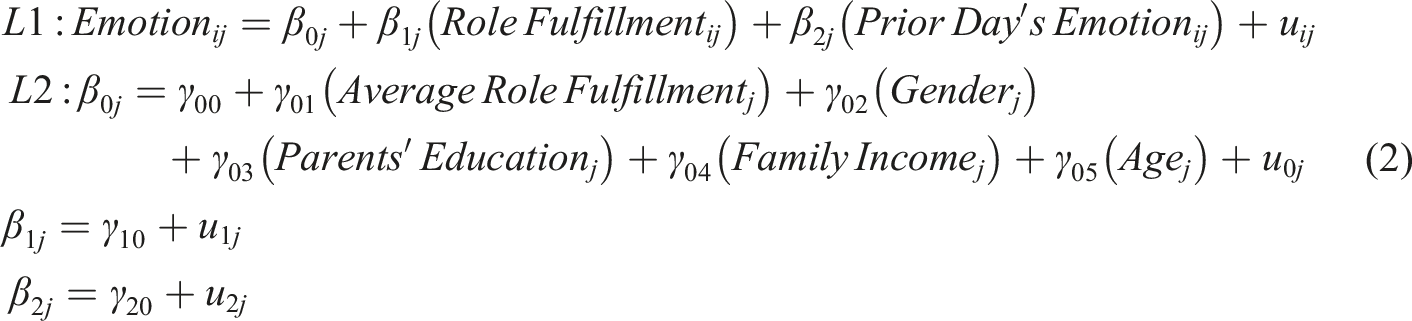
Positive and negative emotion as a function of role fulfillment as a good friend (left) and as a good son/daughter (right).
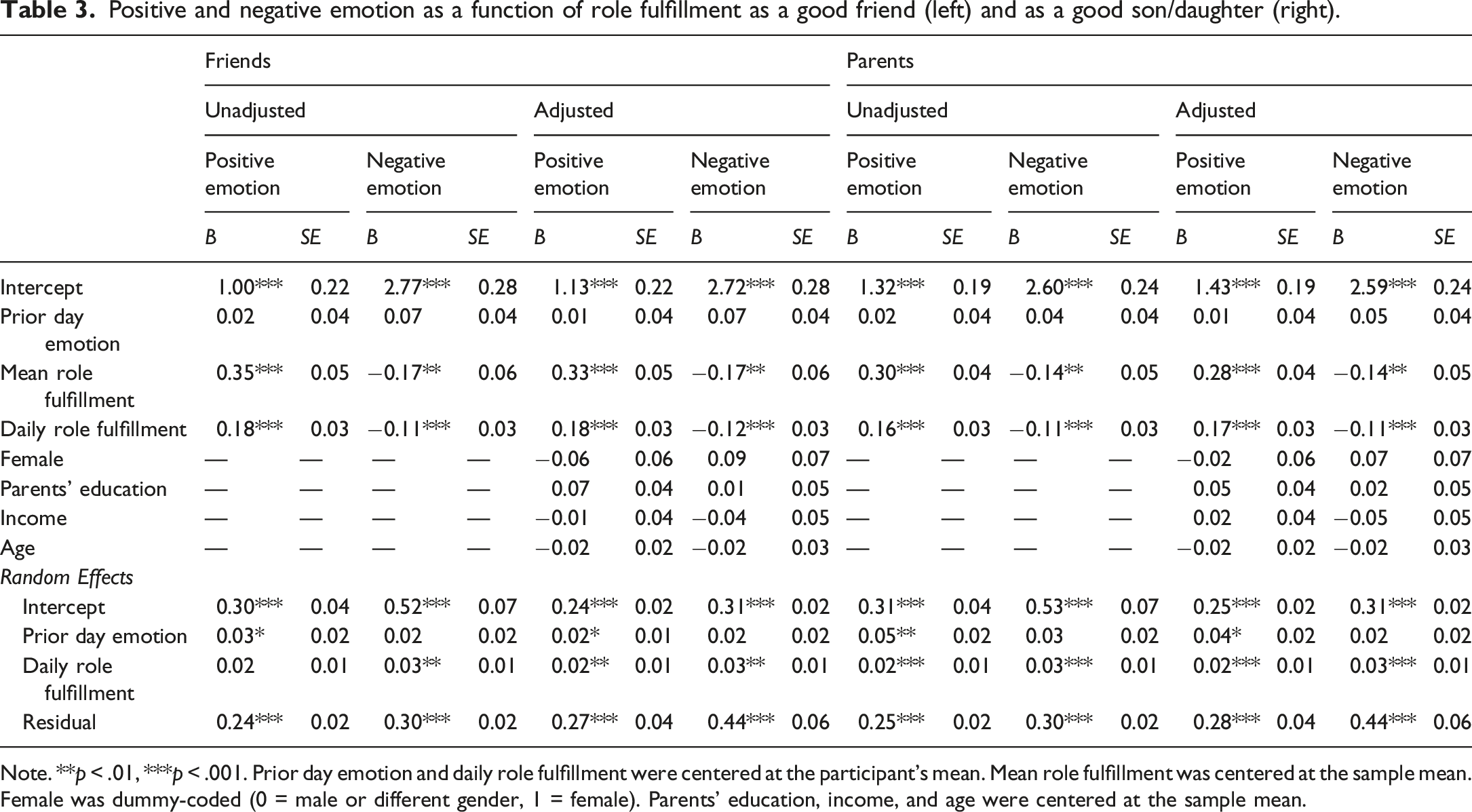
Note. **p < .01, ***p < .001. Prior day emotion and daily role fulfillment were centered at the participant’s mean. Mean role fulfillment was centered at the sample mean. Female was dummy-coded (0 = male or different gender, 1 = female). Parents’ education, income, and age were centered at the sample mean.
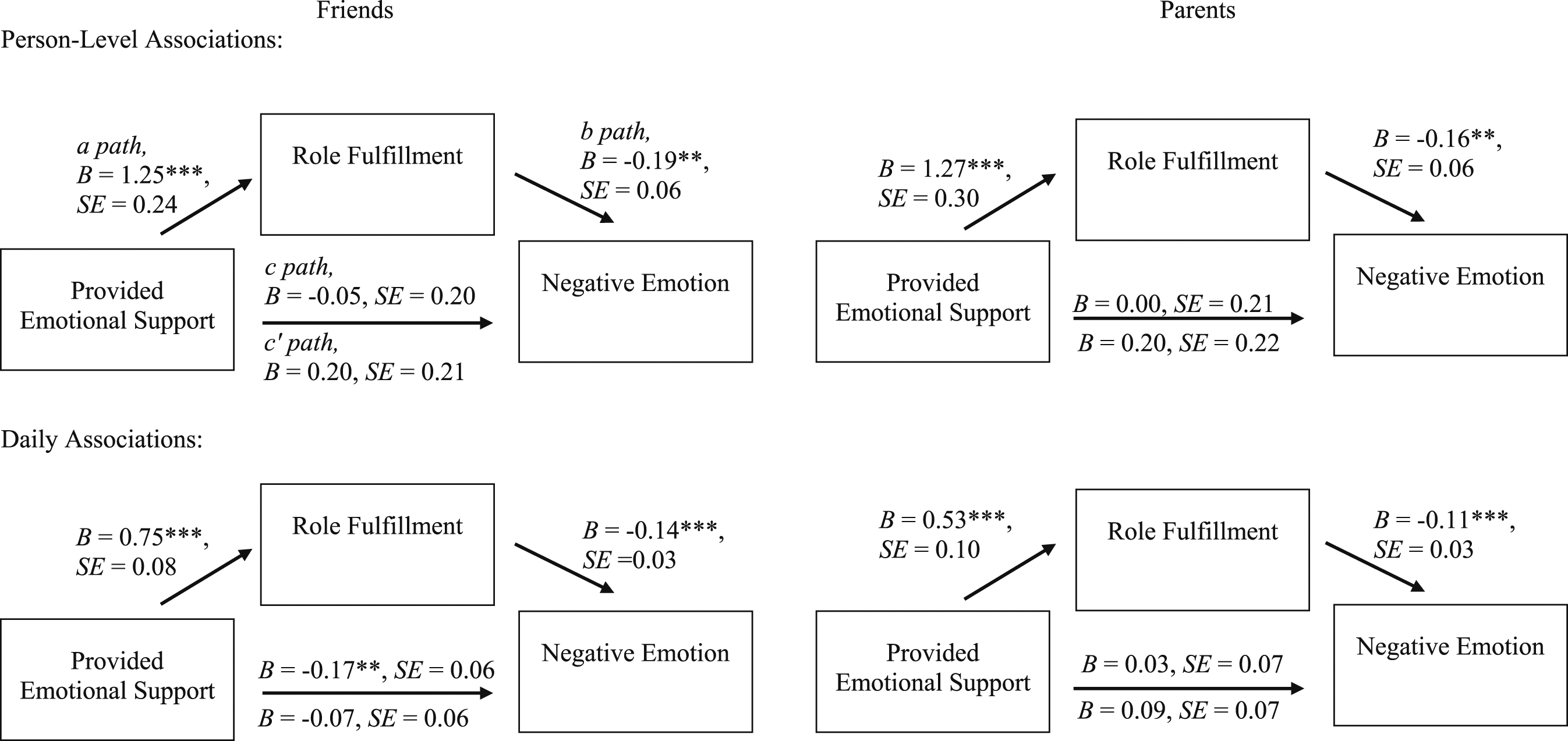
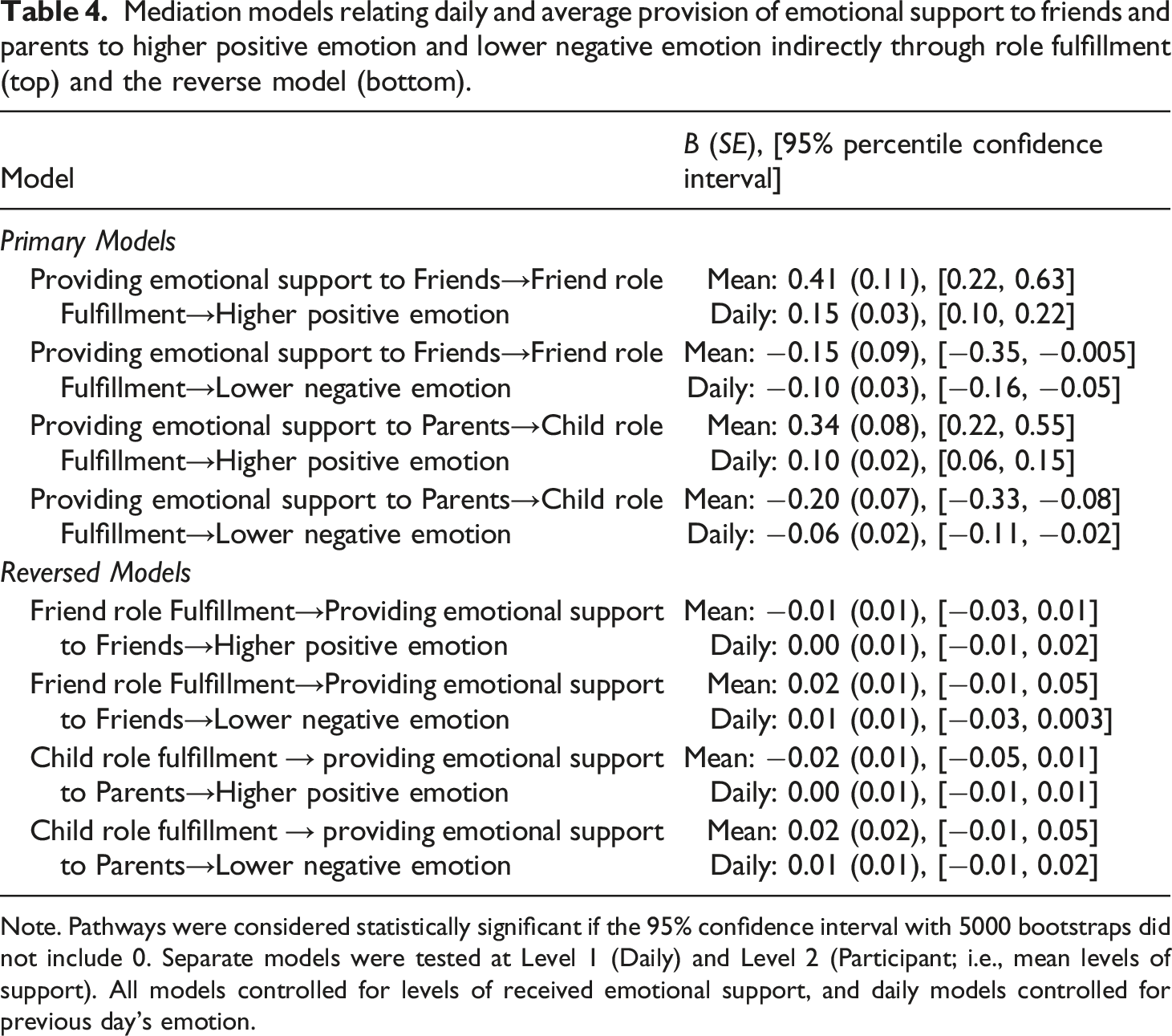
Finally, we formally tested mediation using a multilevel framework (Krull et al., 2016). Results indicated that role fulfillment as a good friend fully explained associations between daily provision of emotional support to friends and higher positive emotion and lower negative emotion at the daily level, as well as more frequently providing emotional support to friends and higher positive emotion and lower negative emotion across days (Figures 1 and 2; Table S6). Likewise, although emotional support to parents was not directly related to positive or negative emotion, role fulfillment as a good son/daughter significantly mediated associations. Providing emotional support to parents was indirectly related to greater positive emotion and lower negative emotion through greater role fulfillment as a good son/daughter on a daily basis, and providing emotional support to parents more frequently on average was indirectly related to greater positive emotion and lower negative emotion through greater role fulfillment on average across days (Table 4, Figures 1 and 2). Lastly, to better assess the temporal direction of this pathway, mediation models tested whether role fulfillment relates to emotion indirectly through provision of emotional support as an alternative pathway, and results were consistently nonsignificant (Table 4). Mediation models testing the indirect effects of providing emotional support to friends (left) and parents (right) on positive emotion indirectly through role fulfillment. Models are presented at the person level (Level 2, average levels across all days; top) and at the daily level (Level 1; bottom). Note. *p < .05, **p < .01, ***p < .001. Percentile confidence intervals are presented with 5000 bootstraps. Mediation models testing the indirect effects of providing emotional support to friends (left) and parents (right) on negative emotion indirectly through role fulfillment. Models are presented at the person (Level 2, average levels across all days; top) and at the daily level (Level 1; bottom). Note. *p < .05, **p < .01, ***p < .001. Percentile confidence intervals are presented with 5000 bootstraps. Mediation models relating daily and average provision of emotional support to friends and parents to higher positive emotion and lower negative emotion indirectly through role fulfillment (top) and the reverse model (bottom). Note. Pathways were considered statistically significant if the 95% confidence interval with 5000 bootstraps did not include 0. Separate models were tested at Level 1 (Daily) and Level 2 (Participant; i.e., mean levels of support). All models controlled for levels of received emotional support, and daily models controlled for previous day’s emotion.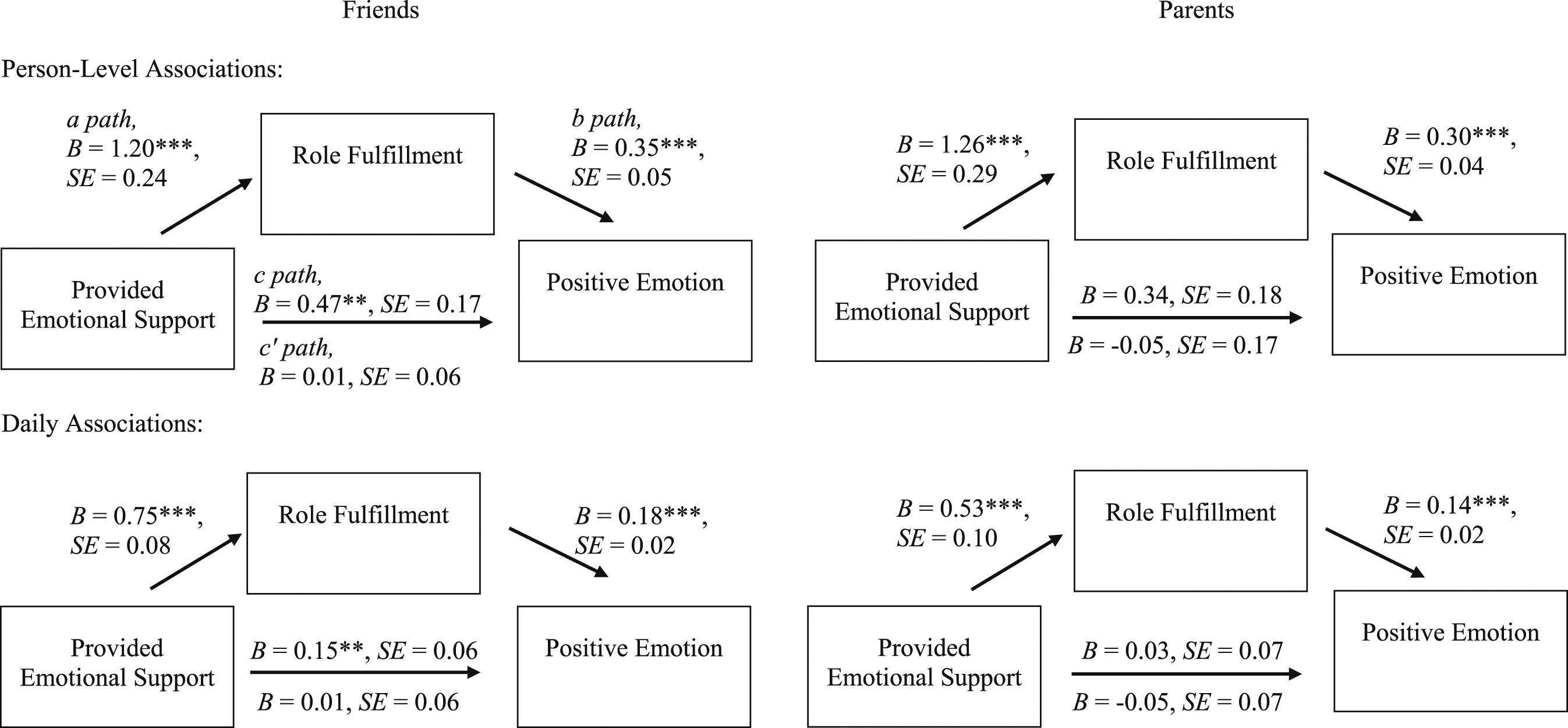
Discussion
The present study tested how provision of emotional support to friends and parents relates to emotional well-being for college students during the COVID-19 pandemic, when individuals experienced high distress related to social isolation. Emotional support provision was examined as an act that can benefit social connection during periods of social isolation, and we were motivated by role theory to test role fulfillment as one mechanism by which emotional support provision may benefit providers’ well-being. Participants who provided emotional support to friends more often tended to report higher positive emotion on average across all days, and participants reported better emotional well-being (i.e., higher positive emotion, lower negative emotion) on days when they provided emotional support to their friends, although there were no direct associations between either daily provision of emotional support or frequency of providing emotional support to parents and daily emotion. Consistent with role theory (Turner, 2001), both provision of emotional support to friends and to parents were associated with better emotional well-being indirectly through greater role fulfillment in both daily- and person-level analyses. Taken together, results suggested that providing emotional support to friends, and potentially to parents, may be one means of improving emotional well-being during emotionally taxing periods such as the COVID-19 pandemic.
Direct associations between providing emotional support and emotion
Participants reported better emotional well-being on days when they provided emotional support to friends, but not to parents. Our hypothesis regarding provision of emotional support to friends and higher positive emotion was supported at the daily and person level, in line with self-determination theory, whereas there was no support for our hypothesis regarding a potential increase in negative emotion due to emotional burden. Positive and negative emotion were measured separately to address the possibility that providing emotional support could promote positive emotion through role fulfillment and simultaneously promote negative emotion through feeling emotionally burdened. We did not find evidence for individuals feeling ambivalent or distressed by providing emotional support, although such associations could potentially emerge for individuals who are highly stressed. Future studies can examine the individual differences that distinguish for whom provision of emotional support might be distressing.
This finding aligns with previous research suggesting that provision of emotional support is related to better emotional well-being and attenuated stress physiology (Armstrong-Carter et al., 2020b; Morelli et al., 2015). Although results from studies have been mixed, associations may have emerged in the present study because data were collected during the COVID-19 pandemic, when many individuals were distressed. It is possible that provision of emotional support to friends was related to better emotional well-being because friends may have particularly needed and appreciated this support, in line with evidence that provision of emotional support is related to better emotional well-being when the recipient is in greater distress or has poorer mental health (Carter et al., 2019; Monin & Schulz, 2009).
Direct associations may have emerged for provision of emotional support to friends but not parents due to differences in social roles. During adolescence and young adulthood, youth become particularly invested in their peer relationships (Brown & Larson, 2009), and positive social interactions can promote emotional well-being for college students (Fiori & Consedine, 2013). In line with role theory, provision of emotional support to parents may also be appraised as a burdensome familial obligation or daily demand if it does not align with their expected social roles prior to the pandemic, and providing help due to obligation can cause distress (Godsall et al., 2004; Jurkovic, 1997). In contrast, provision of emotional support to friends may be positively appraised as a selfless act or a gratifying means of reinforcing relationships with peers. This finding highlights the importance of social context, as acts may differentially fulfill social needs based on an individual’s contextualized role within a relationship. Emotional support provision may better align with one’s expected social responsibilities in a friendship and therefore be viewed as a means of promoting autonomy and social connectedness in one’s friendships, in line with self-determination theory, but not in parent-child relationships.
Participants may have reported better emotional well-being on days when they provided emotional support to friends due to engaging with a friend (Fiori & Consedine, 2013), regardless of their friend’s emotional state. Individuals need to be socially interacting in some capacity to provide emotional support, which could be a confound that explains differences in direct associations between friends versus parents. However, research suggests that individuals’ emotions are sensitive to the emotions of others (e.g., Mercado et al., 2019). Individuals show greater physiological similarity when engaging in social support, suggesting that they could also be highly sensitive to the emotion of their peers (Zee & Bolger, 2023). Therefore research is needed to contrast social interactions that do versus do not involve provision of emotional support to determine whether providing emotional support acutely improves (or worsens) one’s well-being when already interacting with other people. Distinguishing whether individuals have a social interaction specifically for providing emotional support (e.g., calling to check in with a friend) versus one when this naturally occurs (e.g., learning of an issue during conversation and providing support) could be beneficial in determining the interactions that best promote the provider’s well-being.
Differences may have emerged because the vast majority of students had remote instruction and consequently missed the opportunity to live with peers during data collection. Participants may have been less responsive to provision of emotional support to parents because of their time together during this period, in line with a prior finding that first-year college students experience more negative emotion when providing instrumental support to their roommates (Armstrong-Carter et al., 2020a). The COVID-19 pandemic also imposed several stressors including financial challenges, cancellation of social experiences, and threats to health and safety, all of which can threaten the livelihood of the family generally (Rahal & Shaw, 2023). Thus, participants may have been simultaneously providing emotional support to parents while coping with the challenging circumstances themselves. This rationale seems particularly plausible because mediation models indicated that emotional support was related to well-being indirectly through role fulfillment for both friends and parents, despite direct associations emerging only for provision of emotional support to friends. Direct associations of providing emotional support to parents may have been obscured by daily or family stress, and future studies should measure daily stressful experiences to interrogate this mechanism.
Exploratory models indicated that daily in-person provision of emotional support to friends was more strongly related to higher positive emotion compared to remote provision, and that participants who provided emotional support to friends and parents more frequently in-person than remotely reported higher positive emotion. These findings suggest that in-person support tends to better promote the provider’s well-being, extending prior research that in-person support better promotes well-being for the recipient than remote support (Holtzman et al., 2017). In-person support may involve physical contact (e.g., hugs) that can better comfort recipients and consequently result in greater gratification relative to remote emotional support. For instance, providing help that cannot reduce the recipient’s distress can lower rather than enhance positive emotion for the provider (Monin & Schulz, 2009), and providing emotional support to a spouse was only related to fewer physical symptoms for the provider when the spouse was highly responsive and appreciative of the act (Monin et al., 2017). In-person interactions might fulfill more interpersonal needs in line with self-determination theory relative to virtual interactions.
Because data were collected during the COVID-19 pandemic, it is also possible that remote emotional support was less effective because participants were fatigued from remote instruction and were appreciative of in-person interaction. Participants who provided more frequent in-person emotional support may have reported higher positive emotion because of the emotional support itself or because these individuals were having more in-person contact generally. Findings regarding in-person provision to parents were limited to differences in overall frequency (between-person) rather than day-to-day associations because the majority of participants exclusively provided emotional support to parents either in-person or remotely. Given the lower variability in these associations, results should be interpreted with caution and replicated with longer daily protocols, when individuals may have more opportunities to engage in varied forms of support.
Data were collected during a unique period when individuals were encouraged to socially isolate, but associations likely generalize to present contexts. With COVID-19 cases and other illnesses seasonally spiking, individuals who need to temporarily socially isolate themselves from other individuals due to contagion risk may also benefit from virtually providing emotional support. The pandemic disrupted varied aspects of college students’ lives including access to resources, social connections, and trust in government sources (Rahal & Shaw, 2023; Sibley et al., 2020). Even with lockdown restrictions lifted, certain populations may experience restrictions (e.g., violent environments, politically imposed legislature, altered living conditions) that limit their in-person interactions with friends and family. Results could also extend to other periods when the provider and recipient experience intense, uncontrollable stress and potentially need emotional support, such as natural disasters, political trauma, and societal crises (e.g., Demertzis & Eyerman, 2020; Esterwood & Saeed, 2020). These findings could suggest that people should feel encouraged to request emotional support from other people, even when that person might be feeling socially isolated or stressed.
Indirect associations between providing emotional support, role fulfillment, and emotion
Mediation models indicated that provision of emotional support to both friends and parents was related to better emotional well-being indirectly through greater role fulfillment, with respect to both daily experiences and person-level frequency of emotional support provision. We applied role theory to daily experiences during a period when social relationships were strained, and applied self-determination theory to identify a daily act that can satisfy one’s psychological needs and thereby promote well-being (Deci & Ryan, 2012; Turner, 2001). Our findings suggest that providing emotional support can enhance well-being during a time when many felt socially isolated. Although individuals may be reluctant to seek emotional support during this distressing period of isolation, doing so may afford other people the opportunity for enhanced well-being and fulfillment and thereby benefit both the provider and the recipient.
Supporting this temporal mechanism, all analyses controlled for prior day’s emotion, and models testing effects of role fulfillment on emotion indirectly through providing emotional support were nonsignificant. Findings empirically support role theory and align with prior evidence that provision of emotional support is related to attenuated stress physiology indirectly through greater role fulfillment (Armstrong-Carter et al., 2020b; Tsai et al., 2016), and that greater role fulfillment is related to better emotional well-being (Fuligni et al., 2009). Acts that fulfill one’s social role may be one means of fulfilling other needs and promoting well-being. Similar pathways emerged for provision of emotional support to both friends and parents despite the differences in social context and the lack of direct effect of provision of emotional support to parents on emotion. This is potentially because provision of emotional support involves emotionally connecting with someone in distress and may therefore simultaneously reduce positive emotion through empathic concern and increase positive emotion through role fulfillment. Although the present study examined this mechanism, future studies can assess daily mechanisms by which emotional support may promote negative emotion, and for whom these pathways may occur.
Surprisingly, receiving emotional support was uniquely associated with role fulfillment over and above providing emotional support. Correlations indicated that participants who provided emotional support more frequently also received emotional support more frequently, suggesting that these experiences may be reciprocal (i.e., individuals providing emotional support to one another on the same days). Although we did not measure relationship quality, reports of receiving emotional support may be indexing other aspects of the relationship that more directly promote role fulfillment. Future research should explore the daily experiences that coincide with receiving emotional support, and the effects of reciprocally versus non-reciprocally providing emotional support to a friend or parent.
Limitations
The study was limited by aspects of the undergraduate sample. Because of developmental differences, providing emotional support to friends may enhance well-being for young adults, whereas provision of emotional support to family may be more important for older adults. The study also included a low number of male participants, precluding assessment of differences in associations by gender. We unfortunately did not assess whether participants had a disability that may have impacted their well-being or their ability to provide in-person emotional support (e.g., being immunocompromised). Such information is important for characterizing the study population. There were limitations in the administered items. Future studies can assess distinct forms of emotional support, other forms of support such as instrumental support, and whether similar associations emerge in provision of emotional support to other family members, such as siblings or extended family (Armstrong-Carter et al., 2020b). Additional information regarding relationships with recipients or the variability in the number of recipients could also inform identification of nuanced patterns of associations. Research can also assess whether simply providing emotional support is sufficient for a sense of fulfillment, or whether associations differ by perceived effectiveness, which may be particularly important when individuals experience circumstances beyond their control such as during the COVID-19 pandemic. Additional assessments throughout the day could be used to better measure changes in emotion between before and after providing emotional support.
We lacked measures of the degree to which participants were affected by the COVID-19 pandemic or were adhering to social distancing guidelines. Future studies should provide additional context for the stress and loneliness of samples during this time period, given that the pandemic disproportionately impacted certain regions and groups of individuals. The pandemic likely impacted living circumstances (i.e., with friends vs. family), which could affect individuals’ opportunities to provide emotional support in-person and modulate the impact of providing emotional support for emotional well-being. Because the majority of classes were remote, most participants could live off campus with family, although it is possible that participants enrolled in a laboratory course may have been living on or near campus away from their parents. Although all participants contributed to the between-person analyses, participants with no variability (i.e., who provided emotional support on all days or no days) could not be included in within-person analyses. Associations emerged with participants who provided emotional support on most (i.e., all but one day), but other methodologies are needed to establish whether these associations apply to participants who are potentially burdened by always providing daily emotional support to others.
The present study lacked contextual factors regarding the recipient (e.g., relationship quality and openness of communication, variability in the number of recipients) and the acts of emotional support provision (e.g., perceived effectiveness; support for academic, family, or COVID-19-related stress; time spent providing emotional support) that could inform identification of nuanced patterns of associations. More detailed contextual information would enable identification of circumstances when emotional support provision may be beneficial and which acts of emotional support are most beneficial for providers’ well-being. Research can also assess whether simply providing support is sufficient for fulfillment, or whether associations differ by provider’s perceived effectiveness, which may be particularly important when individuals experience circumstances beyond their control. Future assessment of the effectiveness of the provided support could help with disentangling differences in observed benefits of provision of emotional support to friends versus parents. It is possible that young adults are better able, or more confident in their ability, to provide emotional support to same-age peers than to their parents.
Conclusion
Provision of emotional support may be an interpersonal act that benefits not only the recipient but also the provider’s day-to-day well-being during distressing periods of social isolation such as the COVID-19 pandemic, in line with self-determination theory. This specific process appeared to be driven by role fulfillment, potentially because emotional support provision is an attainable and timely act for maintaining social connection during social isolation. Whereas prior studies suggested inconsistent associations between provision of emotional support and daily emotion, the present study found that young adults experience better emotional well-being on days when they provide emotional support to friends during the COVID-19 pandemic. Exploratory analyses suggested that in-person emotional support better improved the provider’s well-being relative to remote emotional support. Individuals also felt more fulfilled on days when they provided emotional support to friends and parents, and provision of emotional support to friends and parents daily is related to better emotional well-being indirectly through greater role fulfillment at both the daily and person level. Individuals may benefit from capitalizing on opportunities to provide emotional support to others and should consider seeking emotional support from others as a means of benefiting both themselves and the provider. Future research can identify why associations may differ between providing emotional support to friends versus parents and the specific forms of emotional support that relate to better well-being.
Supplemental Material
Supplemental Material - Providing emotional support and daily emotional well-being among undergraduate students during the COVID-19 pandemic
Supplemental Material for Providing emotional support and daily emotional well-being among undergraduate students during the COVID-19 pandemic by Danny Rahal and Armaan Singh in Journal of Social and Personal Relationships
Footnotes
Acknowledgements
The authors would like to thank the participants for their involvement in this study.
Author contributions
DR designed the study, analyzed the data, and wrote the manuscript. AS managed data collection and wrote the manuscript.
Declaration of conflicting interests
The author(s) declared no potential conflicts of interest with respect to the research, authorship, and/or publication of this article.
Funding
The author(s) disclosed receipt of the following financial support for the research, authorship, and/or publication of this article: Danny Rahal was supported by the National Institute on Drug Abuse of the National Institutes of Health under Award Number F31DA051181 and with support from the Prevention and Methodology Training program (T32 DA017629; MPIs S. Lanza and J. Maggs). The content is solely the responsibility of the authors and does not necessarily represent the official views of the National Institutes of Health.
Correction (March 2024):
Article updated to correct Danny Rahal’s affiliation.
Ethical statement
Open research statement
As part of IARR’s encouragement of open research practices, the authors have provided the following information: This research was not pre-registered. The data used in the research can be publicly posted. The materials used in the research can be publicly posted. The data, syntax, and materials can be obtained at:  or by emailing
Supplemental Material
Supplemental material for this article is available online.
References
Supplementary Material
Please find the following supplemental material available below.
For Open Access articles published under a Creative Commons License, all supplemental material carries the same license as the article it is associated with.
For non-Open Access articles published, all supplemental material carries a non-exclusive license, and permission requests for re-use of supplemental material or any part of supplemental material shall be sent directly to the copyright owner as specified in the copyright notice associated with the article.
