




Abstract
Exposure to adversity has been shown to amplify individuals’ sensitivity to stress, increasing the risk of developing mental health problems in adulthood. Romantic relationships can serve as a broad resource in mitigating the negative impacts of adversity and stress on mental health; however, less is known about how everyday moments of closeness with one’s romantic partner impact experiences of daily stress for people exposed to adversity. The present study uses ecological momentary assessment to examine moment-to-moment relationship closeness as a protective buffer against the effects of stress and adversity history (AH) on mood. Using a mobile app, 109 emerging adult couples (M age = 23.1) reported hourly feelings of stress, relationship closeness, and mood (i.e., happy, sad, nervous, angry) for one day. Results showed AH and relationship closeness each moderated the association between stress and negative mood. Specifically, greater AH was associated with increased same-hour links between stress and heightened nervousness and anger. Greater relationship closeness was associated with decreased drops in happiness and decreased rises in sadness and anger when stressed. A 3-way interaction between stress, AH, and relationship closeness indicated higher relationship closeness was a buffer against the impact of stress on happiness and anger. Specifically, high relationship closeness mitigated drops in happiness when stressed, especially for those with high AH; relationship closeness also mitigated rises in anger, but this effect was heightened for those with low AH. Exploratory gender moderation analyses showed complex links between stress, AH, closeness, and mood, with evidence indicating enhanced emotional intensity in women when stressed and enhanced protective benefits of relationship closeness in men, although this pattern was inconsistent. The discussion focuses on how experiences of AH can carry forward to shape emotional responses in adults and how relationship closeness may serve as a protective factor against the sensitizing effects of AH.
Introduction
Substantial evidence suggests that exposure to cumulative adversities, defined as a range of circumstances or events that pose a threat to physical and psychological wellbeing (e.g., childhood maltreatment, family dysfunction, economic and/or social hardships, and related environmental stressors; Manning & Bouchard, 2020), is predictive of poorer long-term social and health outcomes (e.g., Gershon et al., 2013; Nelson et al., 2020). Additionally, prior research suggests that a history of adversity (AH) amplifies individuals’ sensitivity to later stress (Bunea et al., 2017; Glaser et al., 2006; Stroud et al., 2018), thereby increasing the risk of developing mood disorders (Hammen et al., 2000; McLaughlin et al., 2010). Research on the benefits of romantic relationships shows that interpersonal closeness may act as a buffer against the negative effects of stress on mood and overall mental health (Cohen & Wills, 1985; Taylor, 2011). However, less is known about the impact of everyday stress on mood for those with AH or how interpersonal closeness in romantic relationships might reduce negative outcomes in people with AH following commonly occurring stress. The present study investigates if AH increases sensitivity to everyday experiences of stress and if feelings of closeness between romantic partners buffer the impact of daily stress on mood.
Adversity history, mood, and stress reactivity
Exposure to childhood adversity alters a range of biological systems (Soares et al., 2021), which can disrupt the development of stress responding (Bunea et al., 2017) and increase risk for stress-related mental and physical health problems in adulthood. The Stress Sensitization Model (Post & Weiss, 1998) provides one explanation for this increased stress sensitivity; specifically, AH heightens stress-related responses, causing individuals to become more vulnerable and sensitive to future stress they encounter in day-to-day life (Glaser et al., 2006; Hammen et al., 2000; McLaughlin et al., 2010). For example, Glaser and colleagues (2006) found that people reporting childhood adversities were more emotionally reactive to daily stress and reacted with stronger negative emotions to “small” stressors (i.e., commonplace minor disturbances, such as work conflict) compared to those not reporting a history of childhood adversities. Furthermore, it is well-documented that individuals with mood disorders experience more frequent, intense negative moods (Sauer-Zavala et al., 2012; Stangor & Walinga, 2019). Thus, AH may increase risk for developing mood disorders by modifying reactivity to later stress, contributing to mood dysregulation (Dvir et al., 2014). This theory is supported by research showing that compared to individuals without AH, people who have experienced AH are at higher risk of developing psychiatric symptoms in response to stressful events (Hammen et al., 2000; McLaughlin et al., 2010).
Relationship closeness as protective against stress reactivity
Interpersonal relationships, such as romantic relationships, are integral in the lives of many individuals and play a significant role in mental health and well-being. Extant research suggests positive romantic relationships can have a protective effect, such as alleviating distress, facilitating health behaviors, and improving subjective well-being, especially in men (Stronge et al., 2019). Relationship closeness, defined as how emotionally connected one feels to another person, is often indicative of romantic relationship quality and feelings of emotional intimacy (Frost & LeBlanc, 2022; Van Bel et al., 2009). Furthermore, romantic partner closeness is associated with greater relationship commitment and satisfaction (Hassebrauck & Fehr, 2002) and higher perceptions of relationship support (Chow & Glaman, 2013). Closeness in romantic relationships may be particularly beneficial during emerging adulthood when many adults begin forming romantic relationships and experience new life stressors as adults (Gómez-López et al., 2019). For individuals with AH, emotional closeness is linked to better physical and mental health outcomes (Panagou & MacBeth, 2022), whereas low emotional closeness is associated with negative outcomes, including decreased ability to cope in response to stress (Vranceanu et al., 2007). Further, research on couples shows that individuals who report low relationship closeness are more vulnerable to negative moods when stress increases despite generally having little stress (DeLongis et al., 1988).
Capturing real-life hourly stress, relationship closeness, and mood via ecological momentary assessment
Ecological momentary assessments (EMAs), a methodology where participants provide repeated sampling of their experiences in real-time and real-life settings, may be beneficial for understanding how everyday stress impacts mood. EMAs allow for a refined view of moment-to-moment feelings, improve ecological validity, reduce recall bias, and enable modeling within-person processes (Reis & Gable, 2000). Modeling how small-scale reactions to daily experiences of stress and relationship closeness unfold in real-time and everyday life could allow researchers to better capture intra-individual variation and target micro-level processes for mood states that are expected to change throughout the day. This could include stress reactivity and negative mood, which may underlie and contribute to large-scale negative outcomes, such as the development of mood disorders. Additionally, EMAs could provide important insights into the lifespan consequences of AH and how long-lasting changes in stress responses play out within the complexities of everyday life.
Various studies have used EMAs to show an association between increased emotional reactivity to stress and general psychopathology risk (e.g., Erwin et al., 2019; Goldschmidt et al., 2014). For example, Erwin and colleagues (2019) assessed associations between moment-to-moment PTSD symptoms and negative affect using daily diaries in a sample of smokers with PTSD and found PTSD predicted moment-to-moment negative affect after controlling for smoking and non-smoking readings. Additionally, Goldschmidt et al. (2014) used EMA to sequence bulimic episodes in women and found that binge eating and purging were nearly always preceded by negative moods resulting from interpersonal daily stress. Research linking AH to stress sensitivity has been conducted primarily in longitudinal and cross-sectional studies, with only one study examining the link between stress, mood, and adversity history using EMA. In a 14-day EMA study examining the impact of stress on affect in an undergraduate college sample, Tung et al. (2022) found that, compared to those reporting low family adversity, individuals reporting high family adversity felt more stressed and had greater negative mood while experiencing daily stress. However, this study did not examine the role of closeness in mitigating stress in romantic relationships. Understanding microprocesses that lead to enhanced sensitivity to daily stress, as well as everyday protective factors related to close relationships could provide important information about the etiology and maintenance of psychopathology and future prevention and intervention efforts.
Do those with adversity history benefit more from the protective effects of relationship closeness?
Few studies using EMAs have specifically examined the role of romantic partners as a protective source in regulating emotional reactivity to daily stress in people exposed to AH. In one study, Timmons and colleagues (2017) examined the effects of daily stress on couples using daily diary data and found that stress was associated with greater same-day marital conflict, an effect that was heightened in women exposed to greater family-of-origin aggression. However, this study focused on the spillover effect of stress on conflict rather than emotional reactivity to stress. Another study by Donnelly et al. (2018) using dyadic diary data found that childhood adversity exacerbated the impact of daily stress on marital strain. Further, the association between daily stress and relationship strain was stronger for men married to women compared to same-sex couples and women married to men. In a similar study with a community sample, Smyth et al. (2014) used EMA to examine the association between social support and stress on daily health and well-being and found that perceived social support was significantly related to lower negative mood. Modeling how stress unfolds in couples could clarify how everyday moments of romantic partner closeness might promote resiliency by mitigating the negative impacts of daily stress for people exposed to AH.
Current study
The current study is the first to examine daily EMA-based links between stress, mood, relationship closeness, and adversity in romantic couples (see Figure 1 for an overview of hypothesized links). First, based on literature showing stress sensitization among individuals with AH (e.g., Stroud et al., 2018), we hypothesize that high AH will heighten the association between stress and negative mood (HO1; Figure 1, Panel A). Furthermore, individuals with high AH will experience greater increases in sadness, nervousness, and anger and greater decreases in happiness when feeling stressed that hour. Second, consistent with past findings that relationship closeness is a protective factor (e.g., Panagou & MacBeth, 2022), we hypothesize relationship closeness will buffer the link between daily stress and negative mood (HO2; Figure 1, Panel B). Specifically, we hypothesize that increases in sadness, nervousness, and anger and decreases in happiness when stressed will be mitigated when participants feel close to their romantic partners. Finally, in line with literature showing individuals with high AH may have increased potential to benefit from resiliency factors, (e.g., Gartland et al., 2019), we hypothesize that the buffering effects of relationship closeness on emotional reactivity to daily stress (i.e., heightened sadness, anger, nervousness, and dampened happiness) will be heightened in individuals with greater exposure to AH (HO3; Figure 1, Panel C). Hypothesized associations between adversity history, hourly stress, relationship closeness, and positive and negative mood (i.e., happy, sad, nervous, angry).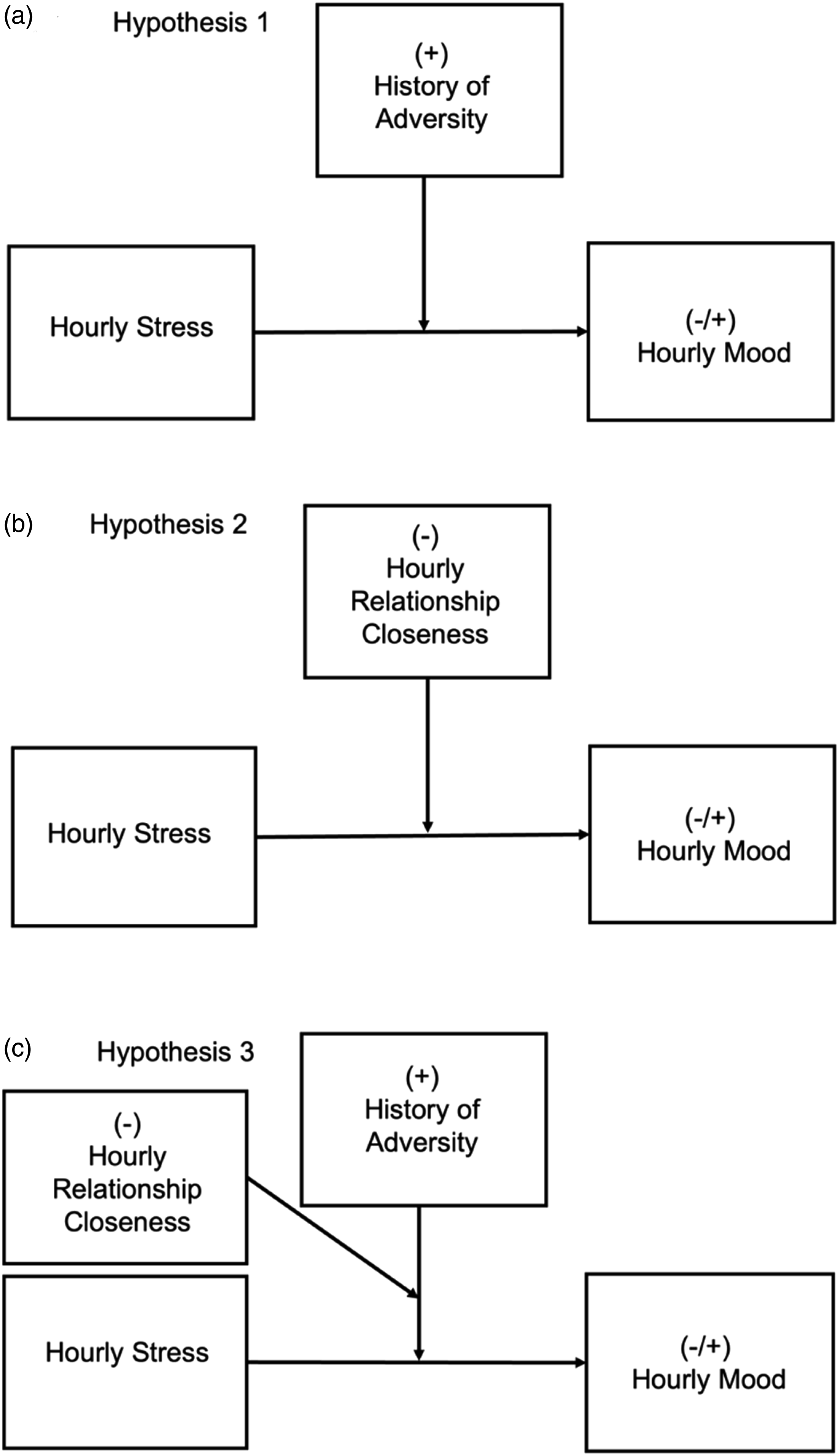
As a final step, we conduct analyses testing gender as a moderating variable of all hypothesized associations. Prior results of gender analyses examining stress reactivity and adversity history are complex, although extant research overall suggests that gender may play an important role in these processes. For example, research has shown gender differences in prevalence rates in types of AH exposure, with women experiencing more complex and varied AH compared to men (Haahr-Pedersen et al., 2020), as well as gender differences in stress responding, which is often characterized by “fight or flight” in men and “tend-and-befriend” in women (Taylor et al., 2000). Additionally, gender differences in relationship functioning show that women tend to prioritize communication, affection, and emotional closeness, whereas men tend to prioritize shared activities or joint leisure time (Constant et al., 2016). Given the literature findings to date, we examine if associations between stress, mood, and adversity history differ by gender as exploratory analyses.
Methods
Participants
Participants included 109 emerging adult couples (106 different-sex couples and 3 female same-sex couples) from the Los Angeles County region of the United States, whose ages range from 18 to 40 years old (M age = 22.6 years, Mdn = 23, SD = 2.7), are fluent in English, and in a relationship for at least two months (M relationship length = 32.2 months, SD = 26.8). In total, 44% of couples were cohabitating, 73.5% of participants were employed at least part-time, and 54.1% were part-time or full-time students. The sample was racially and ethnically diverse, with 27.5% of participants identifying as White/European American, 23.9% Latino/a/x or Spanish origin, 16.1% Black/African American, 12.8% Asian/Asian American, 0.5% Native Hawaiian/Pacific Islander, 15.6% Bi/Multi-Racial, and 3.6% other.
Procedures
Couples were recruited via referrals, and flyers posted online and throughout the community for a study examining relationship functioning (see Margolin et al., 2022 for details). After undergoing a phone-based eligibility screening and online survey, including consent and assessing past adverse experiences, couples participated in the initial laboratory visit, where they completed additional questionnaires and discussion tasks unrelated to the current study. Next, couples completed a second laboratory visit to prepare for the home data collection procedure, which was scheduled for a day when couples could spend at least 5 hours together. During home data collection, couples arrived at the laboratory at 10:00 am. Participants were lent smartphones that alerted them to independently complete short surveys at the beginning of every hour from 10:00 a.m. to 3:00 a.m. or until they went to bed. The following day, the couples returned to the laboratory for their final visit and debriefing, where they returned their devices and answered questions on how they engaged with their partner during each hour (e.g., whether they were together or interacting and activities completed). Data collected from the questionnaires and phone surveys were uploaded to an encrypted server. Each couple was compensated $200 for completing the home-based segment of the study, which also included physiological data collection and audio recordings reported elsewhere. The University IRB approved all study procedures.
Equipment
Smartphones
Each participant was loaned a Nexus 5 phone on which they used the mobile application Surveylytics to complete surveys. Hourly alarms were programmed on the phones to notify participants to complete the surveys. For security and privacy purposes, phone applications were password-protected to prevent participants from inputting personal information. Phones were wiped clean of all data between participants.
Measures
Adversity history
Adversity history was assessed via a 36-item questionnaire created for the study that assessed cumulative adversity from birth to present (refer to Supplemental Materials for questionnaire items). The adversity scale was adapted from Finkelhor and colleagues’ (2007) comprehensive work on the conceptualization and assessment of different kinds of victimization experiences (i.e., poly-victimization) among a nationally representative sample of children, as well as constructs from the original Adverse Child Experiences scale (Felitti et al., 1998). Additionally, items relevant to the developmental period of emerging adulthood, marked by increasing emphasis on peers and attendance at high school and college for many participants (Roisman et al., 2004), were added to create an expanded measure. These included the school environment (e.g., “Did someone ever steal something from you (or your locker) at school?”) and peer relationships (e.g., “Would you say that you had no good friends growing up?”). Items related to community violence and socioeconomic status were also added to provide a more comprehensive picture of contextual environments (e.g., “Was there ever a time your mother, father, or guardian lost a job or couldn’t find work?”) that relate to adversity experiences. Participants reported whether they experienced each event on a yes/no/skip scale. Final scores were created by summing the items, with higher values indicating greater AH. Possible total values ranged from 0 to 36 (Cronbach’s alpha = .87 for women and .98 for men). A complete list of items is included in the Supplementary Materials (SM) Table 1.
Hourly phone surveys
For each survey, participants rated in the past hour their stress; happiness, sadness, nervousness, and anger; feelings of relationship closeness towards their partner; and other relationship dimensions and situational factors not relevant to the current study (e.g., had conflict) on a scale of 0 (not at all) to 100 (extremely) via the mobile application Surveylytics. These values were rescaled to 0 to 10 to increase the interpretability of the fixed effect coefficients. The four primary mood categories were chosen based on previous literature supporting happiness, sadness, nervousness, and anger as discrete, basic emotions associated with mood disorders and links between these moods and relationship functioning (Barlow, 1991; Seider, 2011). Example items include “How stressed were you in the last hour?”, “In the last hour, how happy were you?” and “In the last hour, how close or connected did you feel toward your romantic partner?” Average survey completion time was 1 minute and 56 seconds. Interview data from the final visit were used to determine if participants were with their partners and interacting for each hour of the day.
Overview of analyses
Data were analyzed in IBM SPSS Version 27 (IBM Corp., 2020). Before presenting our main hypothesized models, we provide descriptive statistics and results of preliminary multilevel models testing direct associations between stress and mood. Hypothesized associations were tested via a three-level model with observations nested in individuals and individuals nested in couples. Additionally, analyses were repeated as separate models for each mood. Because the experience of stress, closeness, AH, and mood may differ across genders (Deng et al., 2016; Matud, 2004), we include exploratory analyses of gender as a dichotomous moderator of all hypothesized effects.
Hourly stress, relationship closeness, and mood were measured at level 1; AH was measured at level 2. Following recommendations for testing level-1 and cross-level interactions, all level-1 predictors were group-mean centered. The level-2 and -3 predictors were grand-mean centered (Enders & Tofighi, 2007; Hofmann & Gavin, 1998; Peugh, 2010). Intercepts and slopes were set as random, while all other effects were fixed for maximal parsimony and minimal convergence issues (Raudenbush & Bryk, 2002; Singer et al., 2003). Effect sizes were reported using the Snijders and Bosker percent variance explained (R2[S&B]; LaHuis et al., 2014; Snijders & Bosker, 1994). Time-varying, level-1 covariates included time and if the participants were together, interacting, and communicating by phone. Level 2 covariates included gender, age, racial/ethnic status, education level, and employment status. Level 3 covariates included relationship length and cohabitation status.
Covariates were chosen a priori based on their possible relationship to the main study variables, including mood (e.g., gender, age, time of day), closeness (e.g., together, interacting, phone communication, relationship length, cohabitation status), and adversity exposure (e.g., education level, employment status, racial/ethnic status). For example, time was chosen as a covariate because mood has a diurnal trajectory, which has implications for major mood disorders, such as bipolar disorder, depression, and sleep disturbances (e.g., Feneberg et al., 2022). All participant interactions (together, interacting, and communicating) were considered covariates, as those variables could impact closeness. Level 2 covariates racial/ethnic status, education level, and employment status were chosen because they relate to adversity exposure (e.g., Suglia et al., 2022). Additionally, age and gender relate to how emotion is understood and expressed (e.g., differences in the expression of anger in men versus women (e.g., Chaplin, 2015; Masumoto et al., 2016). Lastly, level 3 covariates relationship length and cohabitation were chosen because they may relate to relationship closeness.
All included covariates were significantly associated with at least one main variable (see Supplementary Materials [SM] Table 2). As follow-up analyses, we also conducted all hypothesized tests without covariates included. Overall, the significance, size, and direction of effects were the same in models with covariates included versus not included, with two exceptions: one significant effect (stress
To test if AH moderated the link between hourly stress and mood, we added AH as a level-2 moderator of the level-1 associations between hourly stress and hourly mood in separate models per mood, as shown below: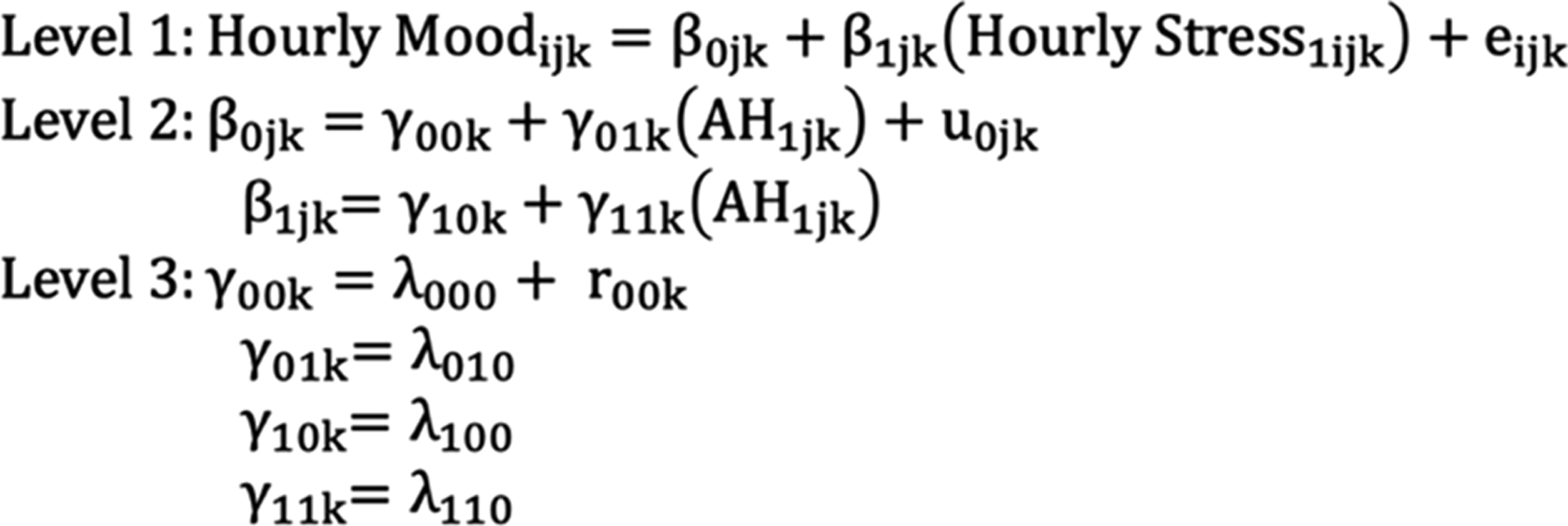
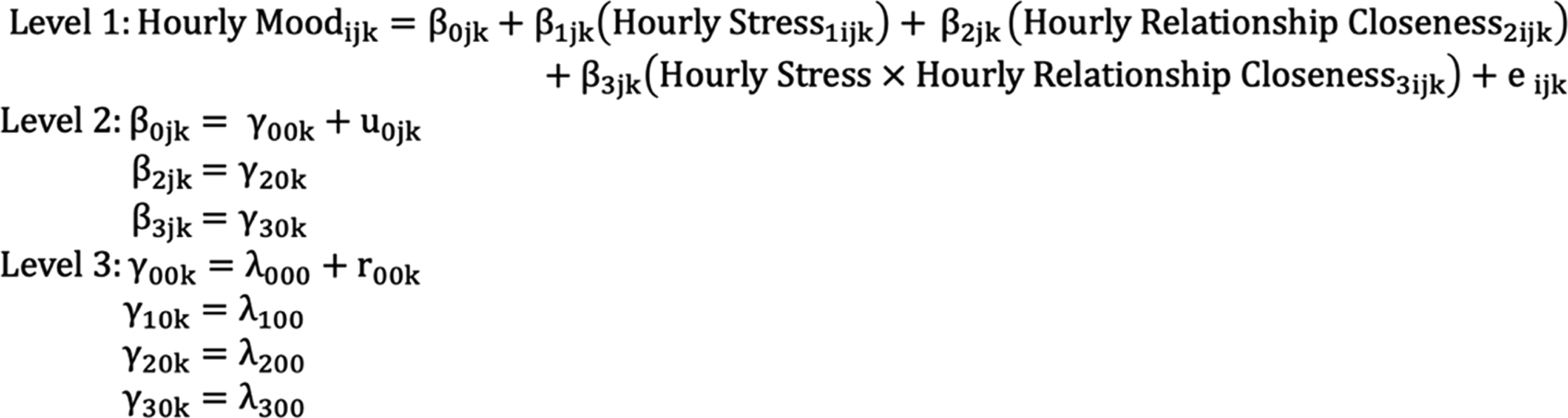
To test if relationship closeness moderated the link between hourly stress and hourly mood, we entered hourly relationship closeness as a level-1 moderator of the level-1 link between hourly stress and hourly mood in separate models per mood:
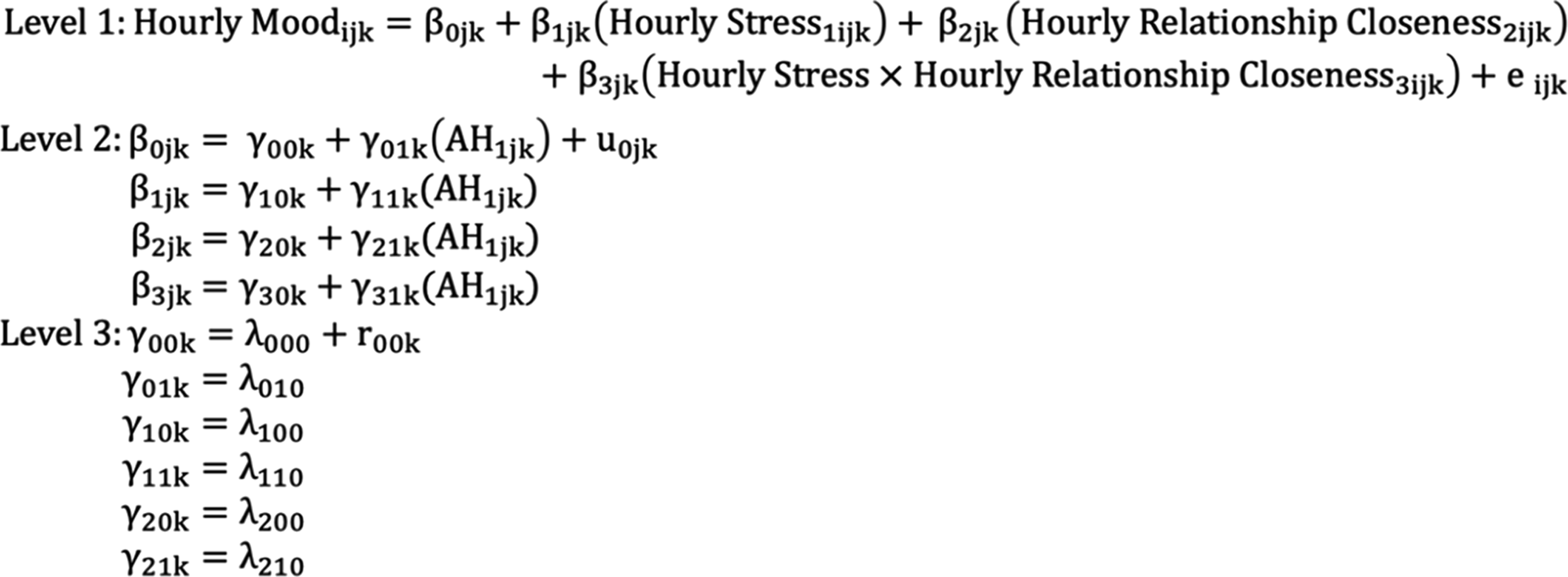
Our third hypothesis examined whether the association between stress, relationship closeness, and mood was heightened in individuals with AH. To test this hypothesis, we tested level-2 AH as a moderator of the level-1 interaction between hourly stress, relationship closeness, and mood. Models were run separately per mood.
Results
Descriptive statistics
Descriptive statistics for the main study variables.
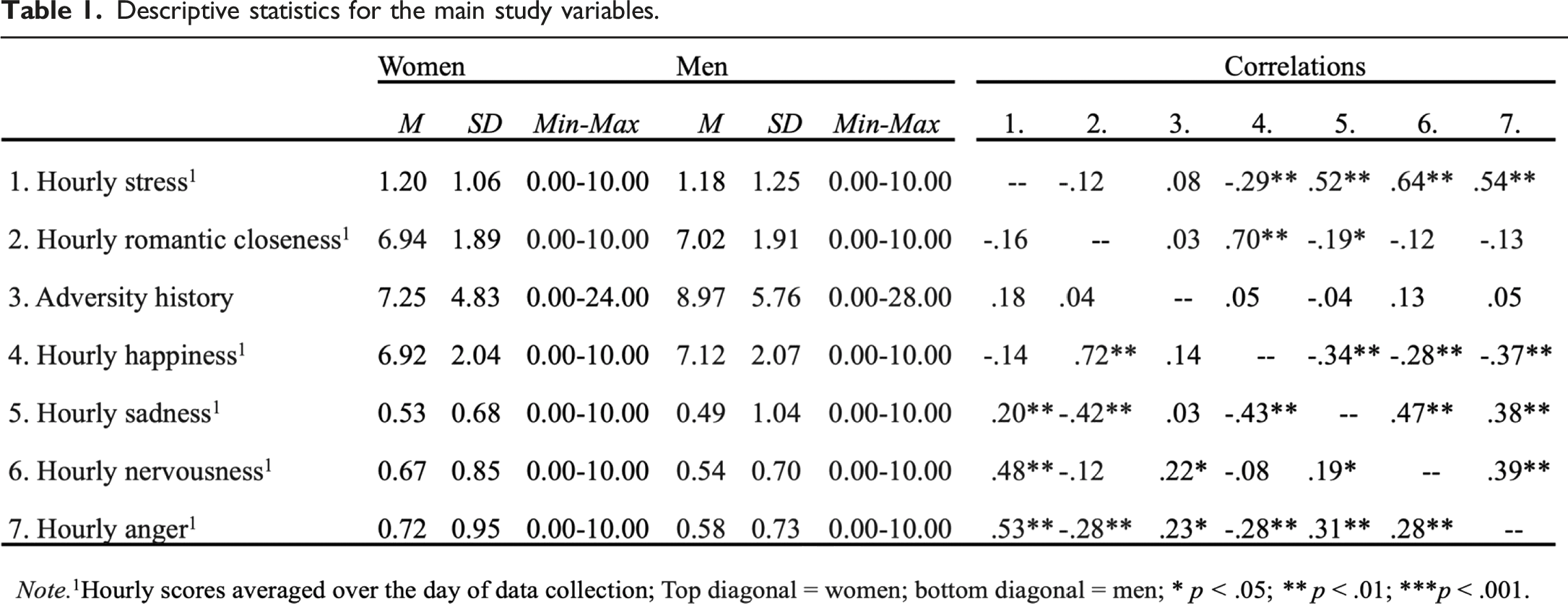
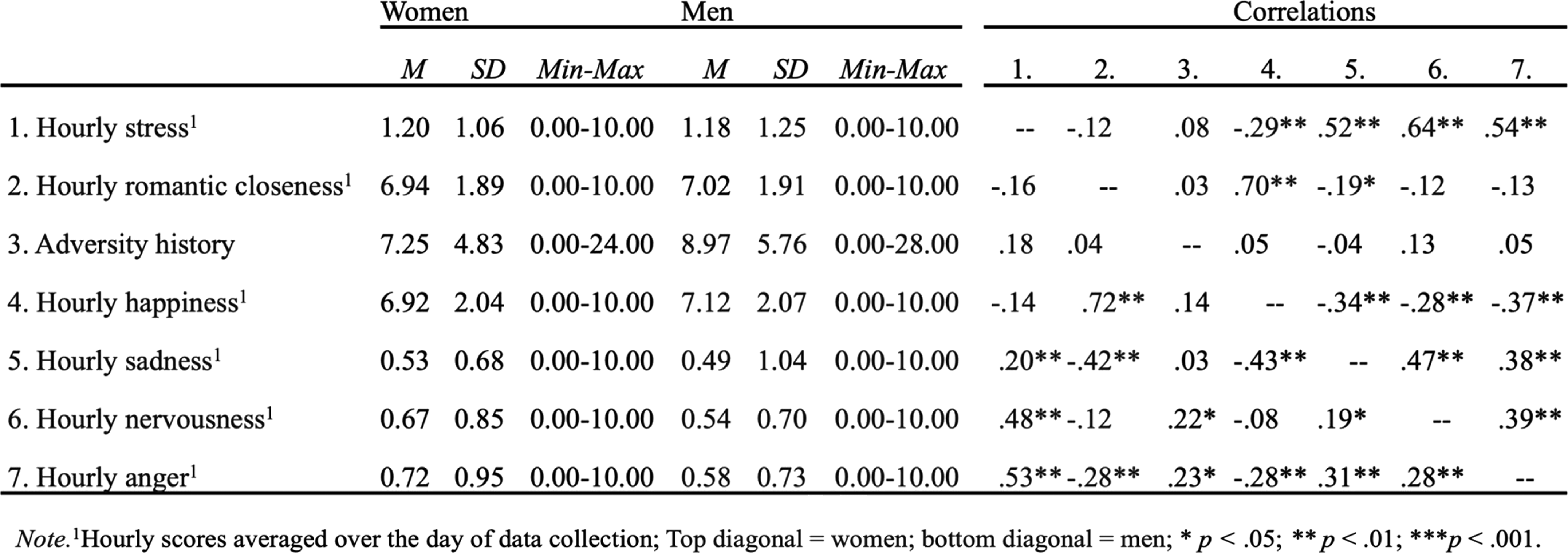
Paired sample t-tests tested gender differences in main study variables, with hourly-reported scores averaged over the day. The only gender difference that emerged is that men (M = 8.97, SD = 5.76) reported more AH than women (M = 7.25, SD = 4.83), t(91) = 3.29, p <. 001. Correlation analyses using averaged daily scores conducted separately for women and men showed several significant associations. For women, happiness was associated with lower stress and greater closeness to one’s romantic partner; sadness was linked to greater stress, lower closeness, and lower happiness; nervousness was linked to greater stress, lower happiness, and greater sadness; and anger was associated with greater stress, lower happiness, and greater sadness and nervousness. For men, stress was associated with greater sadness, nervousness, and anger; closeness was related to greater happiness and lower sadness and anger; AH was linked to greater nervousness and anger; happiness was associated with lower sadness and anger; sadness was associated with greater nervousness and anger, and nervousness was linked to greater anger.
Preliminary multilevel models showed that feeling stressed was associated with decreases in same-hour happiness (b = .44, p < .001) and increases in same-hour sadness (b = .32, p < .001), nervousness (b = .28, p < .001), and anger (b = .48, p < .001). Gender moderated the direct effect of hourly stress on sad mood (b = .09, p < .001), such that women (b = .35, p < .001) showed increased sadness when stressed compared to men (b = .27, p < .001).
HO1: Hourly stress and mood moderated by adversity history
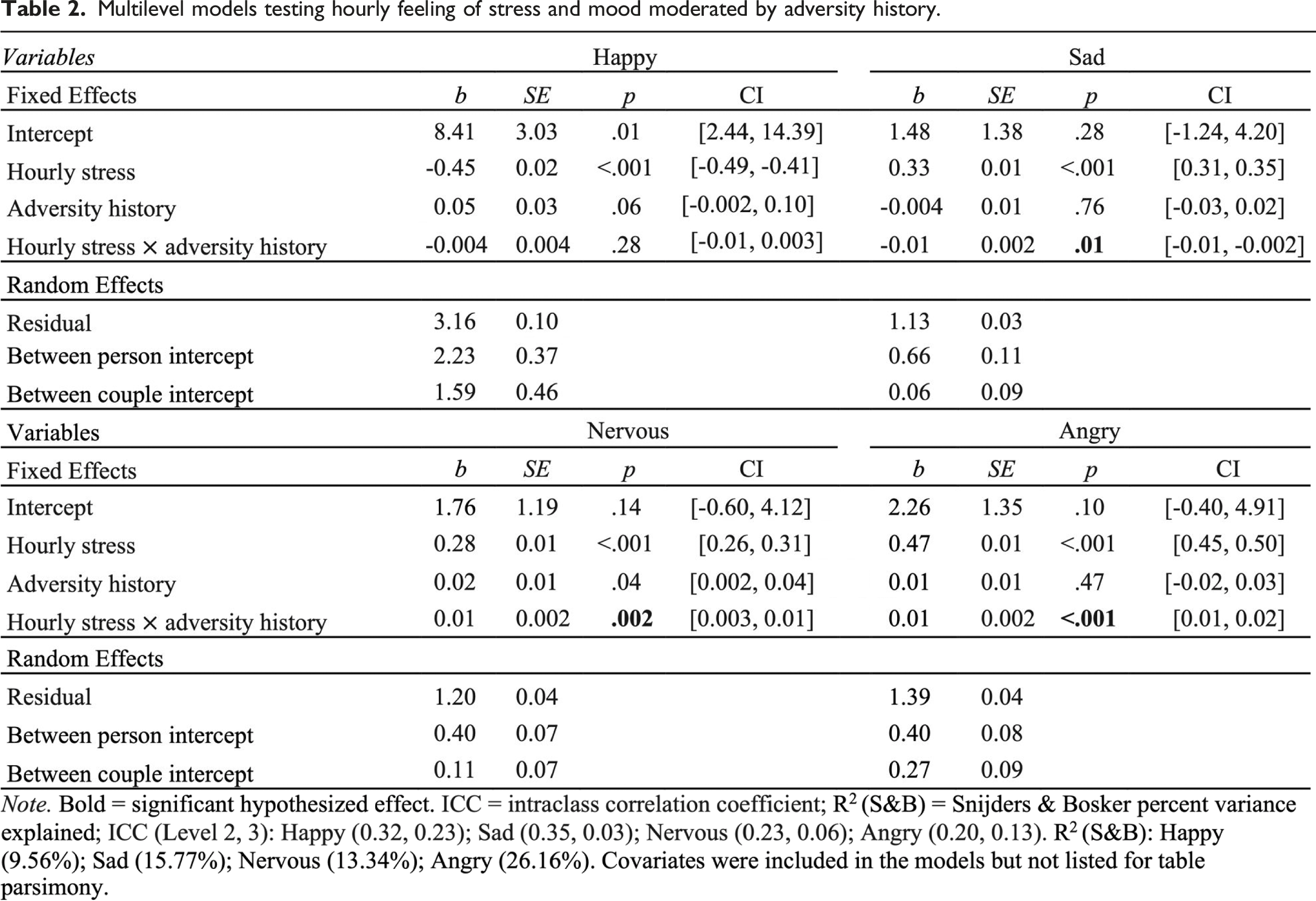
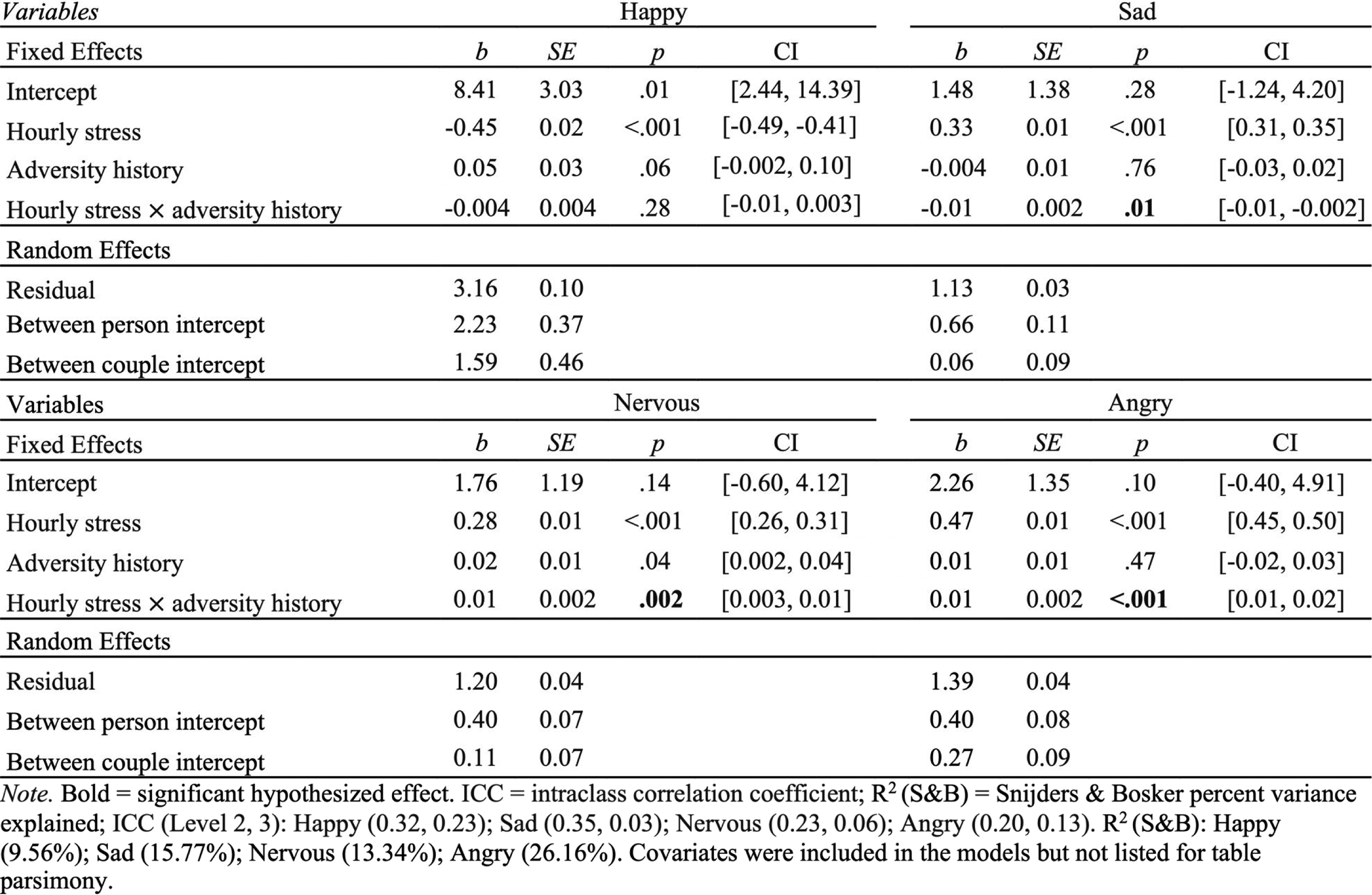
Multilevel models testing hourly feeling of stress and mood moderated by adversity history.
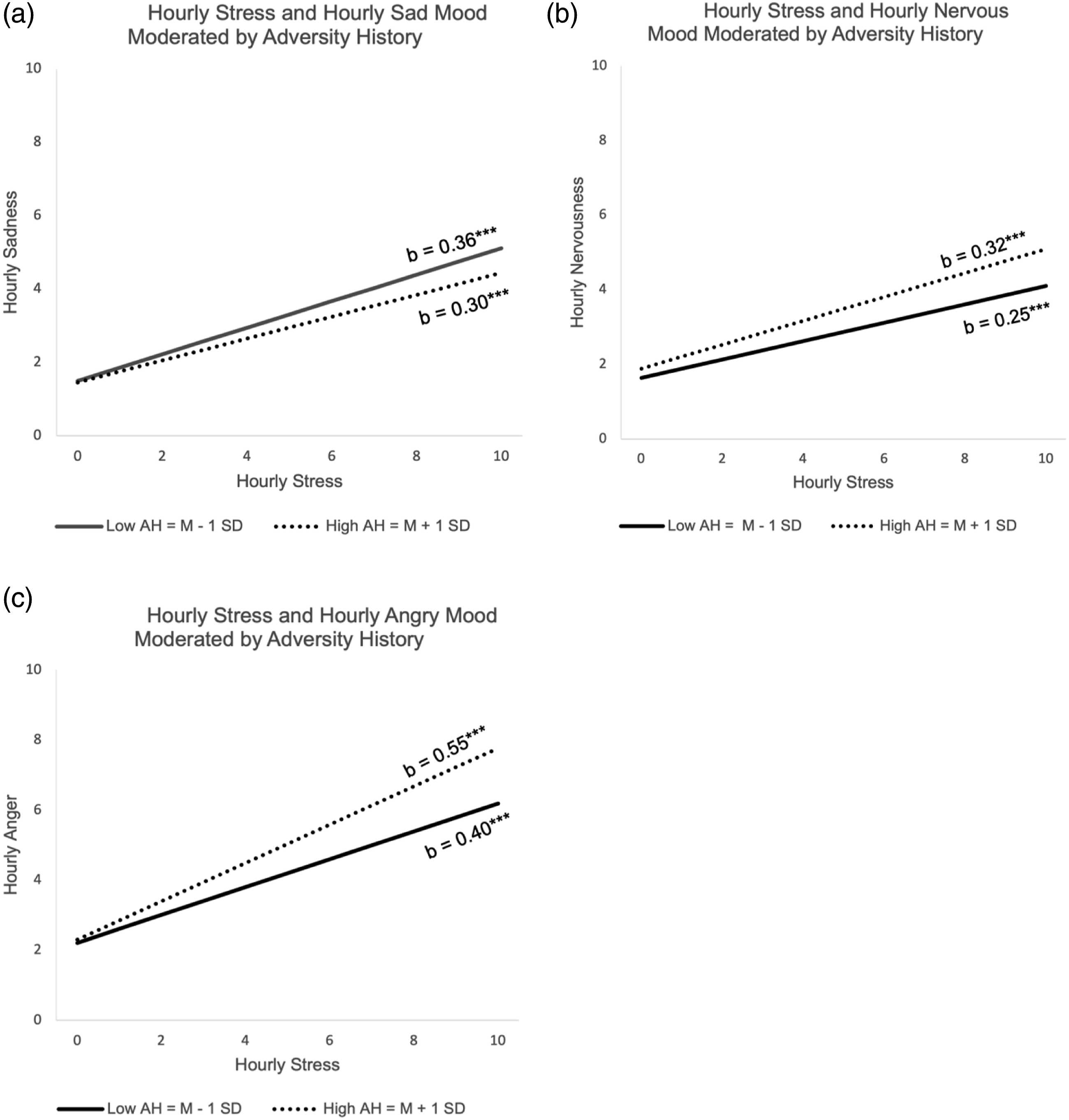
The association between hourly stress and hourly mood (Panel A-C: Sad, Nervous Angry) moderated by adversity history (HO1). Values are plotted at 1 standard deviation above/below the mean of adversity history. ***p < .001. AH = adversity history.
HO2: Hourly stress and mood moderated by hourly relationship closeness
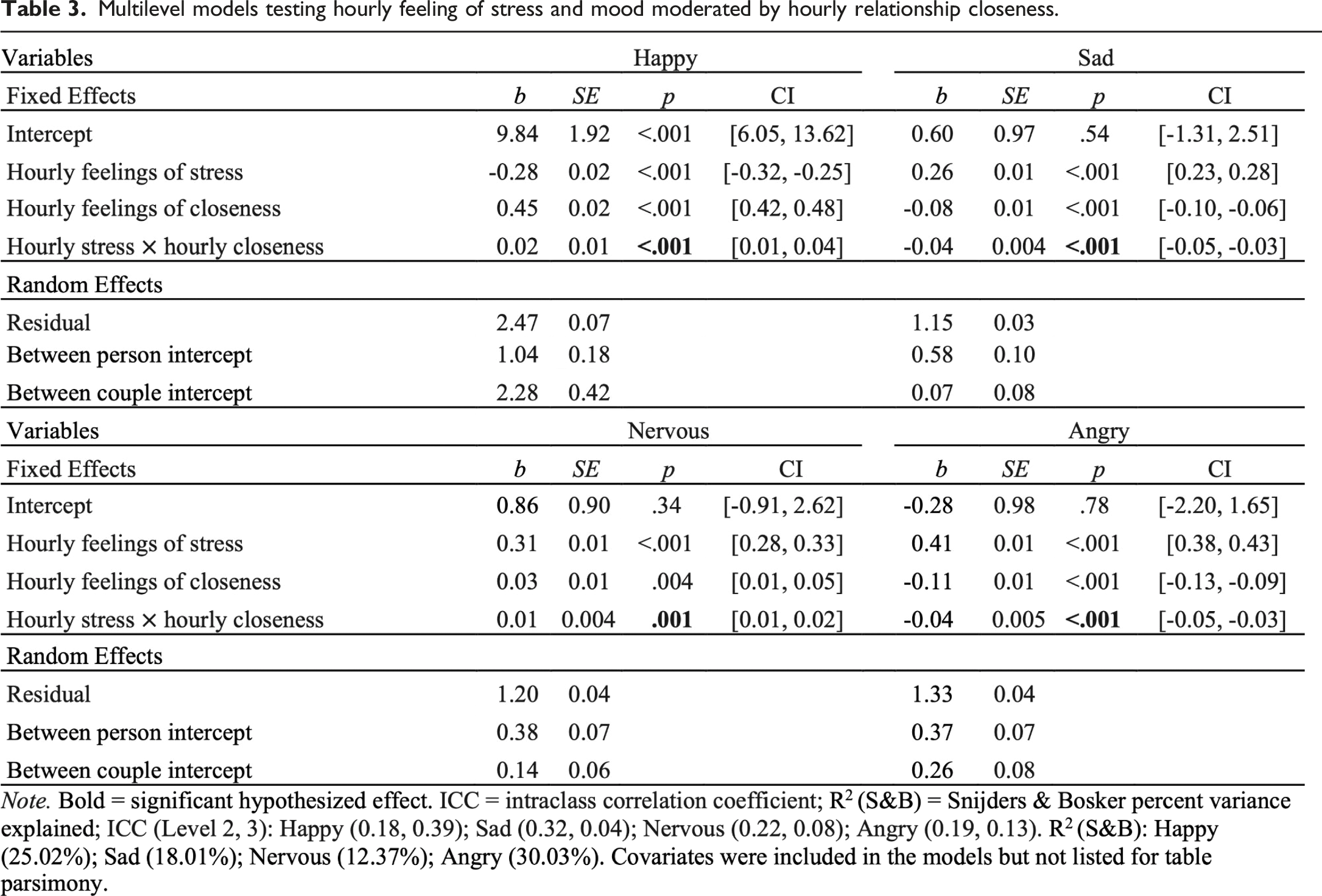
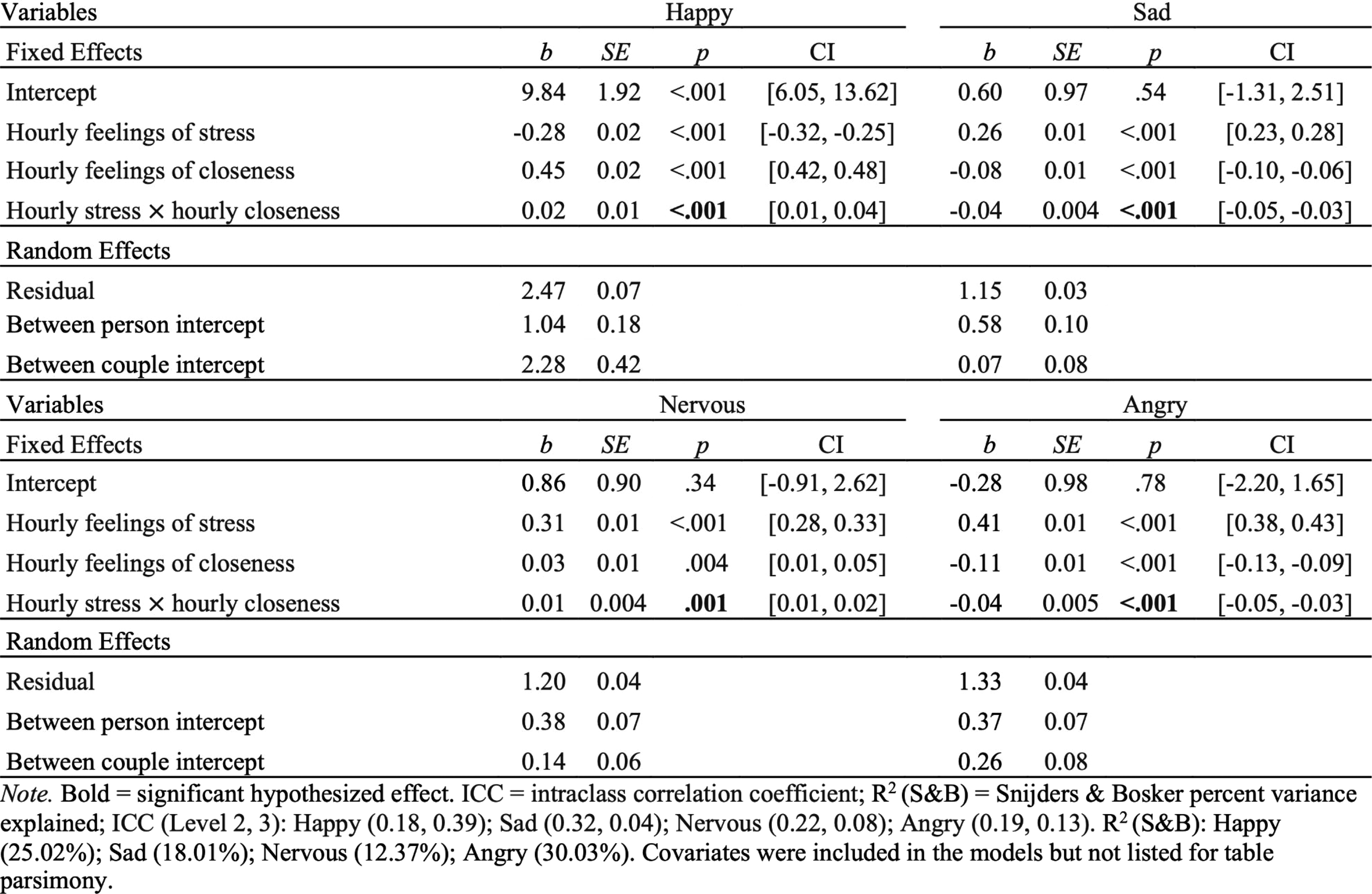
Multilevel models testing hourly feeling of stress and mood moderated by hourly relationship closeness.
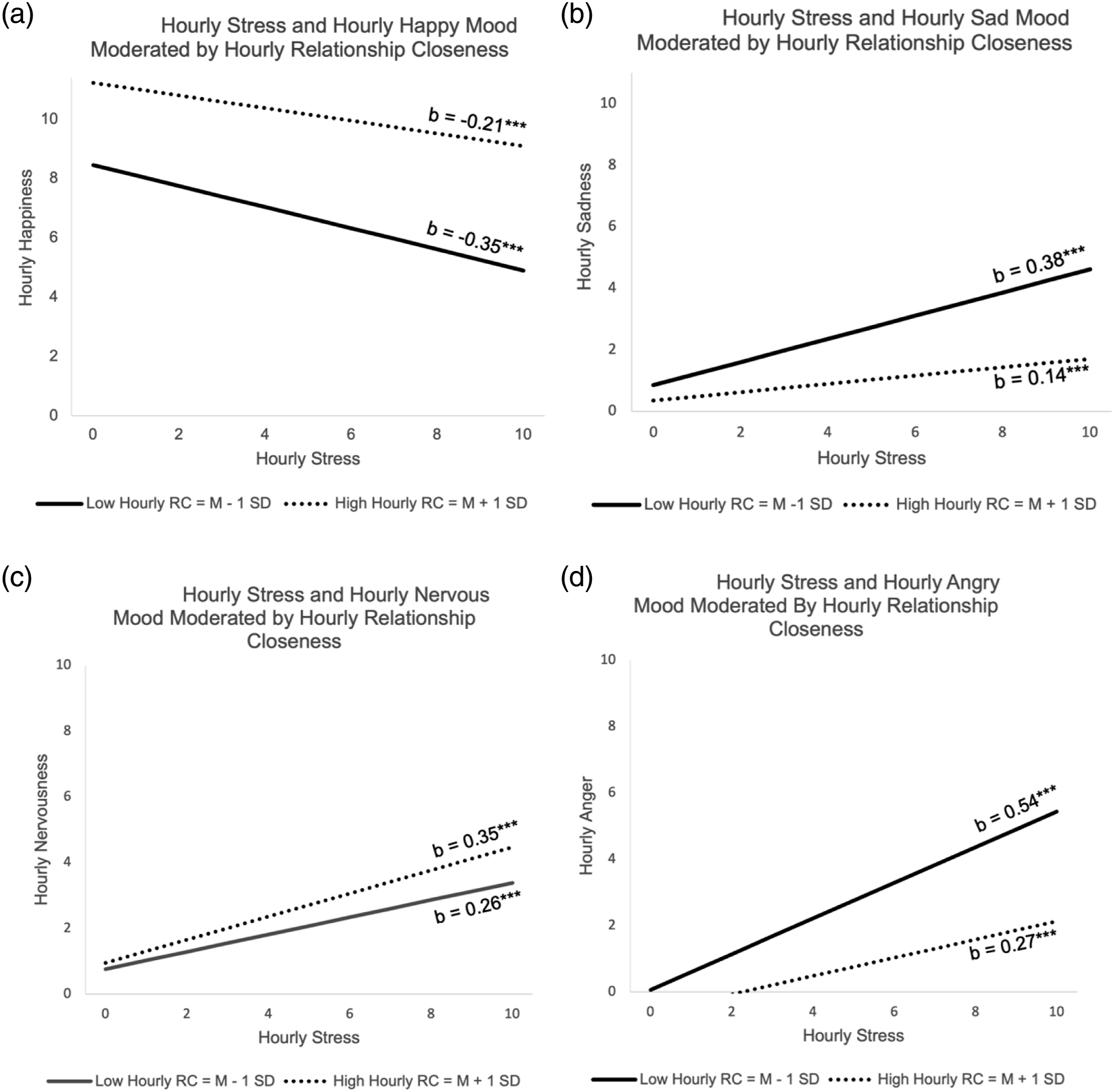
The association between hourly stress and hourly mood (Panel A-D: Happy, Sad, Nervous Angry) moderated by hourly relationship closeness to romantic partner (HO2). Values are plotted at 1 standard deviation above/below the mean of relationship closeness. ***p < .001. RC = relationship closeness.
HO3: Hourly stress and mood moderated by AH and hourly relationship closeness
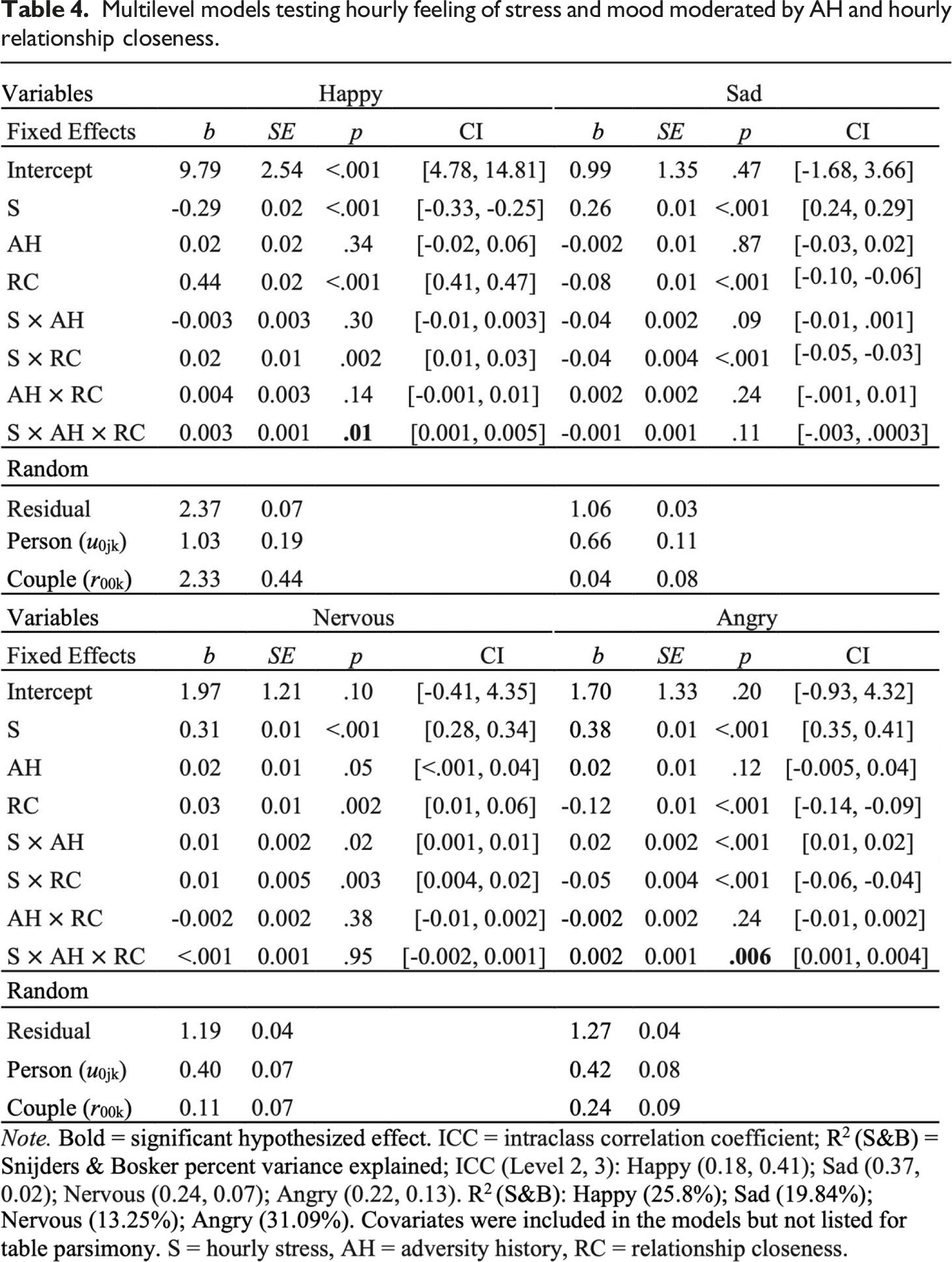
Multilevel models testing hourly feeling of stress and mood moderated by AH and hourly relationship closeness.
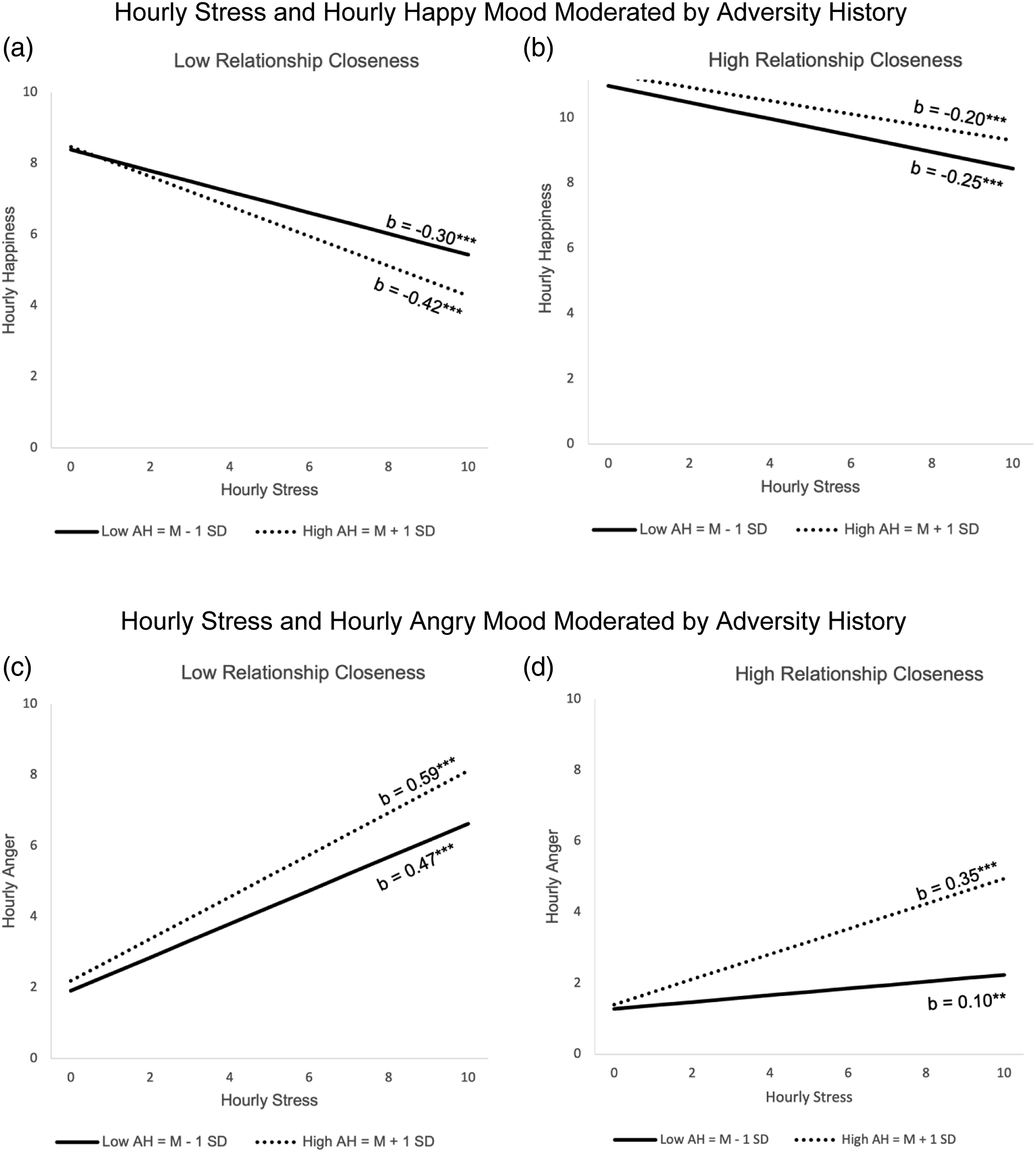
The association between adversity history, hourly stress, and hourly mood moderated by hourly relationship closeness to romantic partner (HO3). Panel A/B: Happy at low/high relationship closeness; Panel C/D: Angry at low/high relationship closeness. Values are plotted at 1 standard deviation above/below the mean of adversity history. **p < .01; ***p < .001. AH = adversity history.
Exploratory analyses: Gender as a moderator of Hypotheses 1-3
In a final set of exploratory analyses, we tested gender as a dichotomous moderator of all hypothesized effects (see SM for complete results). For HO1, the sensitizing effect of AH on the relationship between stress and same-hour mood significantly differed across genders for hourly sadness (b = −.04, p < .001) and nervousness (b = .02, p < .001; SM Table 6 and SM Figure 2). Hourly stress was associated with greater same-hour sadness for both genders. This association was amplified in men (AH M – 1 SD: b = .20, p < .001; AH M + 1 SD: b = .32, p < .001) and buffered in women (AH M – 1 SD: b = .49, p < .001; AH M + 1 SD: b = .22, p < .001) with greater AH. For nervousness, stress was linked to increased nervousness for both genders; this association was amplified in women (AH M – 1 SD: b = .20, p < .001; AH M + 1 SD: b = .41, p < .001) and buffered in men (AH M - 1 SD: b = .29, p < .001; AH M + 1 SD: b = .27, p < .001) with greater AH. For HO2, gender moderated the association between hourly stress, relationship closeness, and happiness (b = −.04, p = .001; SM Table 7 and SM Figure 3). Hourly stress was linked to decreased happiness; closeness buffered dips in happiness when stressed for both men and women. This effect was particularly strong in men compared to women (men closeness M – 1 SD: b = −.44, p < .001 and M + 1 SD: b = −.12, p < .05; women closeness M – 1 SD: b = −.30, p < .001 and M + 1 SD: b = −.26, p < .001).
For HO3, gender moderated the link between hourly stress, closeness, mood, and AH for nervousness (b = −.005, p < .001; SM Table 8 and SM Figure 4). Hourly stress was associated with increased same-hour nervous mood; in general, this effect was heightened in individuals with high AH, with one exception. During hours of low closeness, the link between stress and nervous mood was dampened in women with high AH (AH M
Discussion
The present study investigates the association between previous adversity history and relationship closeness on daily, naturally occurring stress and mood in emerging adult romantic couples. Preliminary analyses showed that daily feelings of stress were associated with lower levels of same-hour happiness and higher sadness, nervousness, and anger. Consistent with HO1, greater AH was associated with same-hour links between stress and increased nervousness and anger. Contrary to our hypothesis, greater AH was associated with same-hour links between stress and decreased sadness, while the effect for happiness was non-significant. In support of HO2, relationship closeness buffered the impact of stress on mood by reducing drops in happiness and mitigating increases in sadness and anger. However, higher relationship closeness was associated with same-hour links between stress and increased nervousness. Lastly, HO3 examining the interaction between stress, AH, and relationship closeness on mood received partial support. Higher relationship closeness buffered the impact of stress on mood by mitigating drops in happiness and increases in anger; for happiness, this buffering effect was heightened for those with high AH, and for anger, this buffering effect was heightened for those with low AH. Finally, exploratory gender analyses showed complex links between gender, stress, AH, closeness, and mood, with some evidence indicating enhanced emotional reactivity in women and enhanced protective benefits of relationship closeness for men, although this pattern was inconsistent.
HO1: Hourly feelings of stress and mood moderated by adversity history
Multilevel models showed that individuals with high AH reported greater nervousness and anger when feeling stressed than individuals with lower AH levels. These findings support existing research that implicates AH as a possible mechanism through which individuals become sensitized to future stress (Post & Weiss, 1998; Stroud et al., 2018), although the effect on happiness was nonsignificant. For sadness, the opposite effect emerged, with individuals reporting high AH evidencing lower levels of sadness when stressed compared to individuals with low AH. It is unclear why certain emotional states connected to stress might be amplified, whereas others might be dampened in individuals with high AH. Although the Stress Sensitization Model (Post & Weiss, 1998) posits that AH sensitizes to future stress and negative mood, the Stress Inoculation Theory (Meicheribaum & Novaco, 1985) suggests that individuals exposed to adversity develop resiliency through a “steeling effect” against the experience of stress (Dienstbier, 1989). The circumstances under which AH results in risk versus resiliency are not well understood, though a variety of complex factors, such as the timing, chronicity, type of adversity experienced, and the presence of other concurrent resiliency factors, have all been implicated (Sandler, 2001). Because we used a cumulative measure of adversity, we did not isolate specific qualities of the adversities reported that might differentiate resiliency versus risk.
Additionally, because different emotions are theorized to have different evolutionary purposes (e.g., to encourage engagement versus withdrawal; Lench et al., 2016; Moons et al., 2010), the impact of stress on mood might serve different evolutionary functions in individuals exposed to adversity. For example, sensitization of angry and nervous mood when stressed might increase the likelihood of survival if prior adversities indicate future environmental risk, which primes individuals to more readily activate the “fight or flight” response to contend with threat. Sad mood, in contrast, may be less directly related to immediate environmental threats or more specific to withdrawal or lack of reaction to future threats. Given that emerging adulthood is a critical period of life that entails many life transitions that can generate heightened instability and uncertainty (e.g., changes in relationships, education, housing, etc.; Wood et al., 2018), understanding how AH might impact stress and mood can aid healthcare professionals interested in improving the mental health of the emerging adult.
HO2: Hourly stress and mood moderated by hourly relationship closeness
Findings showed that romantic partner closeness was associated with greater same-hour happiness and lower sadness and anger when feeling stressed. This pattern is consistent with the previous literature that close and supportive relationships buffer the impact of stress on mood and negative outcomes (House et al., 1988; Rentscher et al., 2020). In contrast, closeness to one’s romantic partner was associated with increased same-hour nervousness when stressed. Although closeness with one’s partner may generally confer protective benefits, closeness to one’s romantic partner could possibly amplify some negative moods under specific conditions through processes such as emotional contagion and spillover (e.g., Mazzuca et al., 2019). Moreover, the Attachment Diathesis-Stress Model posits that different forms of relationship attachments are uniquely associated with varying patterns of emotion regulation in response to distressing situations (Simpson & Rholes, 2017). Interpersonal closeness, especially for anxiously attached individuals, may result in the increased emotional expression of nervousness, as amplifying nervous mood could be a method of communicating to one’s partner the need for reassurance and extra support. It is especially important for future research to understand how emotional expression unfolds in naturally occurring settings in young adults who are learning to navigate new relationships. Although we provide one possible explanation of this effect, additional research examining attachment style, AH, and stress responses is necessary to disentangle these associations.
HO3: Hourly stress and mood moderated by AH and hourly relationship closeness
Our final set of analyses investigated whether individuals with AH might experience increased benefits of romantic partner closeness during hours of stress. Results indicated that high relationship closeness protected against drops in happiness when feeling stressed and that the positive effect of closeness was especially protective for those with greater AH. In conjunction with previous research, these findings indicate that closeness is a significant contextual factor in mitigating the detrimental impact of AH. Individuals exposed to adversity significantly benefit from positive interpersonal relationships. Such results suggest that although adversity confers risk, such individuals, if they experience closeness in their daily lives, may also benefit more and exhibit substantial stress resilience.
Alternatively, anger demonstrated the opposite effect; high relationship closeness was linked to buffered anger when stressed, but this effect was dampened, in individuals exposed to high AH. Although our data cannot explain why AH results in increased versus decreased benefit from protective factors across the different mood states, it suggests that those with high AH may either benefit more or less from resiliency factors. Identifying factors that are especially protective for those with high AH could be one effective method for mitigating the impacts of adversity.
Exploratory analyses: Gender as a moderator of Hypotheses 1-3
Several intriguing effects emerged in our exploratory models testing gender as a moderator of HOs 1-3. Preliminary models showed that women evidenced greater sadness when stressed and greater happiness, less sadness, and less anger when close to their partners. The moderating effect of AH on mood when stressed (HO1) differed by gender for sadness and nervousness. Sadness when stressed was amplified in men compared to women with high AH, whereas nervousness when stressed was amplified in women compared to men with high AH. The moderating effect of closeness on mood when stressed (HO2) differed by gender for happiness, with men showing decreased drops in happiness when close to their partners. Lastly, the interaction between stress, closeness, AH, and mood (HO3) differed by gender for nervousness. Stress was linked to greater nervousness; both AH and closeness amplified this link, with one exception. During hours women reported low closeness to their partners, low AH was linked to greater nervousness when stressed.
Existing research suggests that women experience more intense emotional responses when stressed compared to men, particularly for negative emotions (Deng et al., 2016). This literature is consistent with our gender models, which showed greater sadness when stressed, along with our results for HO1, which showed increased nervousness when stressed in women with high AH. However, our finding of heightened sad mood when stressed in men with high AH contradicts this literature. Other work indicates that men may confer greater protective health benefits from marriage (House et al., 1988). This literature is generally consistent with our finding of an enhanced buffering effect of closeness when stressed in men. Finally, it is unclear why women with low AH and closeness showed increased nervousness when stressed. If nervousness is amplified via emotional contagion and dyadic coping, perhaps low closeness interrupts support-giving in those with low AH. Our gender analyses, though exploratory, show complex nuances in how each gender experiences emotion when stressed and how the effects of closeness differ across genders for people exposed to adversity. Given the complex links between interpersonal dynamics, emotional intensity when stressed, and psychological well-being (Monin & Clark, 2011), the role of gender in these processes is an important area of future research.
Strengths, limitations, and future directions
The current study has several strengths, including (1) the use of EMAs to investigate how hourly shifts in stress and relationship closeness concurrently relate to naturally-occurring shifts in mood, (2) the use of multilevel modeling to examine how trait-level AH relates to state-level dynamics of stress and mood, (3) a focus on emerging adulthood as a critical period when many adults first form stable relationships, (4) the promotion of resiliency in individuals exposed to high AH, and (5) the examination of specific emotions rather than positive and negative moods. However, the results should be interpreted considering several important limitations. First, because we assessed self-reported adversity retrospectively and dichotomously, we cannot investigate the impact of adversity timing, severity, frequency, or duration on stress reactivity. Prospective longitudinal designs in future studies that span early childhood through adulthood would reduce the issue of temporal precedence and bias in retrospective self-reporting. Additionally, our broad adversity measure contained a range of events that can impact functioning but did not distinguish traumatic events from more commonly experienced events; future research should examine the extent to which the effects are relevant to stressor severity. Second, we did not directly model the romantic partners’ reaction to the participants’ experience of stress, which could have a significant impact on how the individual experiences stress and its impact on functioning. Future work using dyadic modeling could be informative for understanding interpersonal effects. Third, participants provided next-day reports of when they were together and interacting with their partners, which were used as covariates in our models; thus, recollection of when during the previous day they were together and interacting may be inaccurate or an approximation.
Fourth, because all effects were modeled in the same hour, we cannot tell whether stress impacted mood or vice versa or if a third variable impacted both variables. Future research testing time-lagged effects will help confirm the direction of the hypothesized effects. Relatedly, because we were interested in participants’ subjective experiences of stress, which varies across individuals in response to the same stressor, we modeled the experience of stress rather than stressful events. Therefore, the results of our analysis cannot inform how people with high versus low AH might differentially experience the same stressor. Fifth, we examined negative mood states as a proxy for mood symptoms. A large body of research literature links daily mood and daily mood reactivity to mood disorders (e.g., Sauer-Zavala et al., 2012; Stangor & Walinga, 2019); still, because we did not directly measure clinical symptoms, we cannot infer that the transitory moods states modeled here are indicative of or predict mental health disorders. Additional research is needed to validate this link. Another limitation is our reliance on self-reported hourly stress, which may have resulted in shared method variance that inflated the observed associations. Future research should combine at-home survey reports with physiological metrics, such as heart rate and vocal measures, to determine how specific stressor events relate to multi-modal assessments of stress and mood. Lastly, participant information regarding their gender identity (e.g., cisgender, transgender, etc.), sexual orientation (e.g., bisexual people, queer, etc.), and disability information were not identified during data collection. Future studies should follow up-to-date guidelines when reporting demographic information to ensure diverse and inclusive sampling practices.
Conclusion
This is the first EMA study to examine the relationship between naturally occurring feelings of stress, concurrent feelings of interpersonal closeness and mood, and AH in emerging adult couples in everyday life. Results suggest that stress is linked with accompanying increases in negative mood and decreases in positive mood, which is heightened in individuals with high AH for angry and nervous moods. Additionally, feelings of closeness to one’s romantic partner in everyday life may interact to counteract the stress sensitization effects of AH for sad and angry moods. This study has important implications for understanding the impact of AH on reactivity to daily stress and relational factors that mitigate the effects of negative past experiences on functioning. Intimate relationships are a primary context in which adults express and manage personal distress and provide support. Even though we cannot prevent people from experiencing adversities, these findings can help us explore ways to reduce stress reactivity and highlight the importance of studying AH and stress within a relational framework rather than as individually experienced problems. Additionally, these findings suggest that fostering interpersonal closeness could be an effective target for reducing the negative impacts of adversity exposure.
Supplemental Material
Supplemental Material - Relationship closeness as a protective factor against the sensitizing effect of adversity history
Supplemental Material for Relationship closeness as a protective factor against the sensitizing effect of adversity history by Jacqueline B. Duong, Kayla Carta, Sierra Walters, Natalia Simo Fiallo, Dominique I. Benamu, Grace Jumonville, Sohyun C. Han, Yehsong Kim, Gayla Margolin, and Adela C. Timmons in Journal of Social and Personal Relationships
Footnotes
Declaration of conflicting interests
The author(s) declared no potential conflicts of interest with respect to the research, authorship, and/or publication of this article.
Funding
The author(s) disclosed receipt of the following financial support for the research, authorship, and/or publication of this article: This project is based on work supported by NSF Grant No. BCS-1627272 (Margolin, PI), SC CTSI (NIH/NCATS) through Grant No. UL1TR000130 (Margolin, PI), NIH-NICHD Grant No. R21HD072170-A1 (Margolin, PI), NSF GRFP Grant No. DGE-0937362 (Timmons, PI), an APA Dissertation Award (Timmons, PI), and NSF GRFP Grant No. DGE-0937362 (Han, PI). The contents of this paper are the authors' responsibility and do not represent the official views of NIH or NSF. Timmons owns intellectual property and stock in Colliga Apps Corporation and could benefit financially from the commercialization of related research.
Open research statement
As part of IARR’s encouragement of open research practices, the author(s) have provided the following information: This research was not pre-registered. The data used in the research are available. The data can be obtained at:  or by emailing:
Supplemental Material
Supplemental material for this article is available online.
References
Supplementary Material
Please find the following supplemental material available below.
For Open Access articles published under a Creative Commons License, all supplemental material carries the same license as the article it is associated with.
For non-Open Access articles published, all supplemental material carries a non-exclusive license, and permission requests for re-use of supplemental material or any part of supplemental material shall be sent directly to the copyright owner as specified in the copyright notice associated with the article.
