




Abstract
Although high school completion rates for Latinx adolescents have improved, rural Latinx youth experience more barriers to academic success than their urban counterparts. Using a culturally informed model, we tested prospective associations between adolescents’ Wave 1 familism values (cultural values emphasizing the importance of family relationships and connections) and Wave 2 academic competencies in a sample of predominantly rural Latinx adolescents (N = 123) in the U.S. Midwest. We also examined whether youth-reports of mother’s and father’s warm parenting at Wave 1 and 2 moderated these associations. Familism values predicted higher self-reported school attachment and academic aspirations and expectations. Neither maternal nor paternal warmth predicted school attachment, academic aspirations, or academic expectations. Maternal warmth at Wave 2, but not at Wave 1, moderated the positive associations between familism and academic aspirations and expectations. These associations were more pronounced under circumstances of low maternal warmth. Paternal warmth did not significantly moderate the proposed associations predicting academic aspirations and expectations. Paternal warmth at Wave 1, but not at Wave 2, moderated the positive association between familism and school attachment. This association was stronger in the context of low paternal warmth. Results emphasize the joint roles of culture and parenting context for fostering academic competence in Latinx youth living in primarily rural regions of the Midwest during a critical developmental stage.
Latinx youth represent about 26% of the population under 18 in the U.S. (U.S. Census Bureau, 2020). Although the majority live in the Southwest, economic demands have shaped the demographic landscape of Latinx who are increasingly living in new and primarily rural immigrant destinations in the Southeast and Midwest (Stein et al., 2016). Driven mainly by labor needs, the Latinx population in the U.S. Midwest has increased at least threefold since the 1980s, representing about 40% of the region’s population growth from 1980 to 2008 (Martinez, 2011). Many Latinx families in the rural Midwest, made up primarily of immigrant families working in manufacturing, service, and agri-food processing industry jobs, face significant economic and structural constraints (Carlo et al., 2016; Stein et al., 2016). Rural Latinx youth also often have lower educational attainment expectations than urban or suburban Latinx youth and experience isolation in school (Carlo et al., 2016; Raffaelli et al., 2016). They are increasingly more likely to live in counties with persistently high poverty. Compared to rural youth from other racial-ethnic backgrounds, rural Latinx youth experience low educational expectations from teachers and have less access to college preparation programs (Irvin et al., 2016).
Although they face significant barriers, rural Latinx youth value academic success for future economic opportunities to contribute to their families (Taylor et al., 2019) and Latinx parents highly value their children’s educational opportunities (Aceves et al., 2020; Irvin et al., 2016). Thus, examination of how family-based relationship processes contribute to youth academic success can help make positive changes in the academic trends of Latinx youth. The current study investigates parenting behaviors and youths’ familism cultural values as distinct promoters of academic competence for Latinx youth in the U.S. Midwest. Whereas youths’ familism cultural values pertain to attitudes and beliefs about respecting and honoring familial relationships, parenting behaviors and practices are also shaped by family acculturation patterns and vary among Latinx families (Bravo et al., 2021; Zapata Roblyer et al., 2015). Commonly studied parenting constructs include warmth, which includes parents’ expressed sensitive care and engagement with their child, demandingness or parental control over their child, and autonomy granting, which promotes child autonomy and expression (Domenech Rodríguez et al., 2009; Halgunseth, 2019). Some researchers have also focused on parent-child conflict as a construct related to Latinx parenting practices (Zapata Roblyer et al., 2015) and no-nonsense parenting, characterized by high levels of acceptance, harshness, consistent discipline, and monitoring (White et al., 2013), as a relevant Latinx parenting style. Given the importance of cariño, or demonstrating warmth and affection (Halgunseth, 2019), and parental support (Carlo et al., 2016) as prevalent parenting goals in Latinx families, in this study, we focus on parental warmth (Domenech Rodríguez et al., 2009; Hernández & Bámaca-Colbert, 2016). By studying mechanisms that support strong school connections among Latinx youth primarily living in the rural U.S. Midwest, we expand research on how family relationships and adapting cultural systems inform academic processes in understudied regional contexts.
Students’ school attachment, or connectedness to school and attachment to people in school (Allen & Kern, 2017), has been positively related to academic achievement (Hernández et al., 2016; Xia et al., 2016), college aspirations (Allen & Kern, 2017; Hernández et al., 2016), and lower absenteeism from middle childhood to adolescence (Allen & Kern, 2017). Academic aspirations and expectations also predict future educational attainment (May & Witherspoon, 2019). As the transition to middle school represents a significant milestone for youth (Eccles & Roeser, 2011), school achievement in early adolescence might be protective against challenges encountered in later adolescence, with implications for future educational and economic prospects in adulthood (Allen & Kern, 2017; May & Witherspoon, 2019).
Particularly important for the well-being and academic competence of Latinx youth (including rural Latinx youth, Taylor et al., 2020) is the value placed on family (Stein et al., 2014). Familism is a cultural value which encompasses attitudes and beliefs emphasizing the prioritization of family relationship interdependence and support (Hernández & Bámaca-Colbert, 2016). Familistic values have predicted Latinx youth developmental competencies across multiple domains (Stein et al., 2014) including academic outcomes (e.g., Berkel et al., 2010; Rivas-Drake & Marchand, 2016; Stein et al., 2015). However, developmental scholars have noted the need to consider family context, such as parenting behaviors, when studying adapting cultural systems (White et al., 2018), such as the role of familism in Latinx youth (Stein et al., 2014). Evidence of distinct mothers’ and fathers’ roles (White et al., 2018) also warrants considering the potential roles of mother’s and father’s parenting in how familism relates to youth outcomes.
Theoretical approach and empirical findings
García Coll’s integrative model situates the embedded role of culture in adolescent development and acknowledges the strengths that families foster in adolescents’ development (García Coll et al., 1996; White et al., 2018). As “a set of goals, values, and attitudes that differ from the dominant culture” (García Coll et al., 1996, p. 1896), adapting cultural systems are transactional with the developing child’s ecology. Familism is part of an adapting cultural system emphasizing family interdependence through beliefs, goals, and behaviors. For rural Latinx youth who are more likely than their urban counterparts to face barriers to school connectedness (Carlo et al., 2016), familism likely has implications for academic success because it promotes positive academic orientations (Stein et al., 2016), a sense of contribution to the family (Fuligni & Telzer, 2009), and a sense of meaning in life (Stein et al., 2020). That is, familism values guide youths’ academic and school-related behaviors through providing a source of support and purpose for such endeavors. Several empirical findings also support the link from familism to academic outcomes (Berkel et al., 2010; Esparza & Sánchez, 2008; Fuligni et al., 1999; Rivas-Drake & Marchand, 2016; Stein et al., 2015, 2020).
In their theorizing of the integrative model’s adaptive culture (García Coll et al., 1996), White and colleagues (2018) propose that how the potential promoting role of adapting cultural systems relates to developmental competencies could depend on environmental circumstances and family systems. Specifically, adapting cultural systems “may promote certain developmental competencies under certain sets of environmental affordances but not under others” (White et al., 2018, p. 729). Thus, the potential benefits afforded by familism (e.g., a direct effect on academic competencies) might rely on the quality of parenting behaviors (e.g., a moderating effect). That is, though several studies show that familism values predict academic outcomes, parental warmth might be a potential modifying factor in this association given the hypothesized role of the family environment in modifying benefits or costs of adapting cultural systems (White et al., 2018).
Because familism is an adapting cultural system central to Latinx families (Stein et al., 2019), we propose that warm parenting, characterized by expressions of care, acceptance, and encouragement toward the child (Domenech Rodríguez et al., 2009) and a component of the family environment (Feldman, 2012), could provide a buffer for low levels of familism given evidence that warm parenting protects against adverse family-related effects on Latinx youths’ well-being (Germán et al., 2013; Halgunseth, 2019). Thus, youth with high levels of parental warmth might maintain higher levels of academic outcomes regardless of their familism levels because the context of warm parenting provides an environmental affordance that promotes academic competencies. In contrast, familism might predict higher academic outcomes for those who experience lower levels of parental warmth given that the promotive role of familism might counteract low levels of parental warmth (Stein et al., 2020). The current study can expand our understanding of whether warm parenting functions as a moderating mechanism by which familism relates to academic success outcomes. Next, we review research on how familism relates to academic outcomes.
Familism and academic outcomes
Research on familism offers a basis for studying culturally-specific processes that relate to academic success among Latinx adolescents. Aligned with the integrative model, youth who endorse high levels of familism values are more likely to do well in school as this represents an avenue to help their families in the future through educational attainment (Stein et al., 2014, 2016). Endorsing familism values, a common socialization goal of Latinx families, might also orient youth toward doing well in school as a way to bring pride to the family (Stein et al., 2019).
Research to date, primarily based on cross-sectional studies testing main effects, has supported the proposal that familism cultural values promote academic success among Latinx youth (Berkel et al., 2010; Esparza & Sánchez, 2008; Fuligni et al., 1999; Rivas-Drake & Marchand, 2016; Stein et al., 2015, 2020). For instance, Rivas-Drake and Marchand (2016) found that familism predicted higher concurrent levels of academic engagement among Latinx adolescents in the U.S. Midwest. Relatedly, Mexican American cultural values, which included familism, were positively associated with concurrent levels of academic self-efficacy among Mexican origin youth in the U.S. Southwest, controlling for prior academic self-efficacy levels (Berkel et al., 2010). Stein and colleagues (2015; 2020) also found that familism concurrently predicted higher levels of school attachment and academic motivation among Latinx youth in the U.S. Southeast.
However, the promotive role of adapting cultural systems in youth’s development is proposed to be transactional and depend on youth’s environmental context (White et al., 2018), which includes parenting behaviors (Feldman, 2012) and parental education (Davis-Kean et al., 2019). This might be why some studies have not found positive associations between familism and academic outcomes. For example, Esparza and Sánchez (2008) did not find significant associations between familism and academic motivation or grade point average (GPA) among urban Latinx youth. Instead, the association between familism and GPA was only present at low maternal education levels. Updegraff et al. (2012) similarly found that youths’ familism values did not predict later levels of academic expectations among Mexican-origin adolescents. In another study of urban youth, the association between familism and GPA was curvilinear; adolescents with moderate familism had higher GPAs than adolescents with low or high familism (Fuligni et al., 1999). These studies indicate potential costs and benefits of adapting cultural systems, as referenced by White and colleagues (2018), and point to a need to test the role of family contextual factors as potential moderators in associations between familism and academic outcomes.
Parenting warmth as a predictor of academic competence and moderator of familism
Parents help shape and support their children’s academic adjustment and school belonging (Allen & Kern, 2017; Holt et al., 2018). Having familial support systems facilitate youths’ sense of belonging in school, positive school attitudes, and aspirations for higher education (Allen & Kern, 2017). Several studies have found significant positive associations between parenting warmth or authoritative parenting behaviors and academic-related achievement outcomes in adolescence (Lee et al., 2006; Pinquart, 2016), though only a few studies have investigated this question among Latinx youth. For Mexican American immigrant adolescents, maternal and paternal support was associated with higher educational aspirations (Plunkett & Bámaca-Gómez, 2003). Similarly, in another study of Mexican American adolescents, father and mother nurturant-involved parenting predicted higher levels of school attachment (Taylor et al., 2012). Together, these studies suggest that the parenting that youth experience has implications for their academic competence.
Parental warmth behaviors might also have implications for how youth familism might predict academic outcomes, but researchers have yet to examine the potential combined predictive contribution of parenting and youth familism on academic adjustment. Particularly relevant for the present study, youth experience and interpret family interactions and familism values in the context of their own developing needs, including their academics (Stein et al., 2014). Furthermore, some research suggests that parental warmth serves a buffering role against negative family-related processes as it pertains to Latinx youths’ well-being (Germán et al., 2013; Halgunseth, 2019). We propose that familism might promote academic adjustment under circumstances of high relative risk in the family system, such as low levels of parenting warmth (Plunkett & Bámaca-Gómez, 2003; Taylor et al., 2012). That is, parenting warmth would moderate how adolescents’ endorsement of familism relates to their academic success. Familism might be most strongly and positively associated with academic outcomes for youth experiencing lower levels of parenting warmth.
Finally, because the transition to early adolescence typically involves increased autonomy needs (Schwartz et al., 2013), parenting warmth might be more critical to later adolescence. For instance, some studies on parents’ sensitive attunement, which is how parents adapt to adolescents’ changing needs for autonomy, suggest that parents’ sensitive attunement with their adolescent children might be more critical as they enter adolescence (Kobak et al., 2017; Miller et al., 2018). Although a preliminary proposal, parents’ warmth toward their adolescent child might be a more salient protective factor of youth outcomes in later adolescence. Thus, including parenting warmth at both waves allows us to observe the potential protective role of warm parenting concurrently and across time.
Disaggregating mother and father warm parenting
The relations between parenting and youth developmental competencies might depend on distinct mother and father roles derived within adapting cultural systems (White et al., 2018). There has been inconclusive empirical evidence for mothers and fathers having differential roles on youths’ academic adjustment. For instance, in a study of Mexican American adolescents, both father and mother nurturant-involved parenting uniquely predicted higher levels of school attachment (Taylor et al., 2012), suggesting similar parenting roles on youth’s academic adjustment. Some theoretical advances and empirical studies suggest that, compared to fathers, mothers exert the most influence on their children’s education (Esparza & Sánchez, 2008; Parke & Buriel, 2006). A meta-analysis found that compared to paternal warmth, maternal warmth had stronger associations with academic achievement (Pinquart, 2016). Esparza and Sánchez (2008) also found that the association between Latinx youth familism and GPA was significant only when mothers’ (but not fathers’) educational levels were low.
Conversely, some research on familism has found that although youth-reported conflict with parents predicted youth-parent differences in familism, father-reported conflict predicted father-youth differences in familism values (Padilla et al., 2016). Based on the same study sample in late adolescence, fathers’, but not mothers’, familism values also predicted youths’ familism values (Zeiders et al., 2016). These studies suggest that fathers’ and mothers’ parenting similarly relates to academic outcomes (Taylor et al., 2012), that mothers might have a stronger direct or moderating role in promoting youth academic adjustment compared to fathers (Esparza & Sánchez, 2008; Pinquart, 2016), and that fathers might have a stronger role on youths’ familism or father-youth conflict (Padilla et al., 2016; Zeiders et al., 2016). Thus, there are mixed findings informing how mother and father parenting relate to academic outcomes in Latinx youth, pointing to a need for examining the processes by which parenting behaviors relate to adolescent academic outcomes. An examination of the potential moderating role of fathers’ and mothers’ warm parenting and familism on academic competencies has not yet been tested.
The present study
The present two-wave study extends prior research by examining prospective associations of familism with academic competence outcomes of Latinx youth in the Midwest and examining whether parenting warmth moderates these associations. Our first goal was to investigate familism and parenting warmth as predictors of academic outcomes for youth. Based on prior research with primarily Latinx samples in the U.S. (e.g., Esparza & Sánchez, 2008; Rivas-Drake & Marchand, 2016) we hypothesized that youth’s familism values as well as warm parenting behaviors would predict positive academic outcomes across time. The study’s second goal was to test whether the association between familism and academic outcomes depends on parenting warmth by mothers and fathers. Based on the integrative model (García Coll et al., 1996) and prior research (e.g., Germán et al., 2013; Stein et al., 2015), we hypothesized that the association between youth’s familism values and academic outcomes would be particularly strong when youth reported low levels of warm parenting because the promotive role of familism might counteract otherwise low levels of parental warmth. We analyzed potential unique mother and father effects to test whether mothers’ parenting warmth would have a stronger positive role in youth academic competence compared to fathers’ warm parenting. We also analyzed both mother and father warmth at Wave 1 and 2 and noted potential differences across time given prior research suggesting that parents’ sensitive attunement might be especially predictive of youths’ competence in later adolescence (Kobak et al., 2017; Miller et al., 2018). Given prior associations with academic outcomes (e.g., Hernández et al., 2016; May & Witherspoon, 2019; Raffaelli et al., 2016), we controlled for several background characteristics (child sex, grade, rurality, parental education, and two-parent household).
Method
Participants and procedures
Data are from the SALUD project, a two-wave study of largely rural Latinx youth and their families in the U.S. Midwest. Participants were Latinx 5th and 6th grade students (N = 123, Mage = 11.53 years, SD age = .68 years, Median age = 11.63 years, Min age = 10.07 years, Max age = 12.86 years, 56.9% female) and their parents. Families were largely two-parent (84.6%) and the majority (78.6%) lived in rural towns with populations of <20,000, with 21.4% living in a midsized city of about 70,000 people. Families’ mean reported yearly income was between $25–30,000. The most common parental occupations were manufacturing, construction, service, and agri-food processing industry jobs. Most parents had not completed high school (69% of mothers, 79% of fathers). Mothers (85%) were predominantly born outside of the U.S., with 97% of mothers from Mexico (3% from Central or South America). Eighty-one percent of fathers who participated at Wave 1 were born outside of the U.S. (95% of them in Mexico; 3% in Central America). Most children (96%) were born in the U.S. (4% born in Mexico). Mothers had lived in the U.S. on average 15.95 years (SD = 6.15); no data about the number of years living in the U.S. were collected about fathers.
Participants were recruited using community resources after receiving institutional review board approval from Purdue University. Inclusion criteria included: the child was in 5th or 6th grade, the child and biological mother lived together, both mother and child participated, and both self-identified as Latinx. Eligible families who consented to participate were visited twice in their homes by trained bilingual research assistants (RAs). Hard copies of the survey (in their choice of either Spanish or English) were left for participants to complete, and participants were instructed to complete the surveys on their own and then to seal them in a provided manila envelope to maintain privacy. Surveys were expected to take 90 minutes for mothers and 60 minutes for children to complete. RAs additionally collected biometric data and gave supplies and directions for self-collecting saliva samples (not utilized in the present study). During the second visit, RAs collected the surveys and saliva samples, and compensated the participants for their time. Mothers were paid $50 and children $40. A second wave of data, collected approximately 1 year later, followed the procedures previously described and also included testing participants on executive functioning tasks. Mothers were paid $60 and children $40.
Of 123 youth who began the study at Wave 1, 101 youth (82.1%) had some data for the study’s variables the following year (Wave 2). Youth who did not remain in the study (n = 23) did not differ from those who did based on independent samples t-tests comparing background covariates (e.g., grade, sex, parental education) and Wave 1 main study variables (e.g., familism, parenting warmth, aspirations, expectations, school attachment). Thus, there was no differential attrition as the data were considered to be missing completely at random (Li, 2013; Little, 1988).
Measures
Child surveys from Wave 1 (W1) and Wave 2 (W2) assessing main study variables and mother surveys from W1 assessing background covariates were used in the present study. The majority of children (98.3%) completed their surveys in English (2 completed theirs in Spanish), and 91.6% of mothers completed surveys in Spanish (9 mothers completed the survey in English). All study variables had validated Spanish versions and had been used in samples from diverse ethnic-racial backgrounds.
Academic aspirations and expectations. At W1 and W2 youth reported how far they would like to go in school (i.e., academic aspirations) and then how far they expected to go in school (i.e., academic expectations; 1 = 8th grade or less and 8 = Ph.D. or professional degree). These items were used as separate manifest variables at W1 and W2. On average, students aspired to attain between a 4-year college degree and a Master’s degree (M = 6.52, SD = 1.6 [Wave 1], M = 6.65, SD = 1.45 [Wave 2]) and expected to attain between a junior college degree and a 4-year college degree (M = 5.84, SD = 1.88 [Wave 1], M = 5.83, SD = 1.67 [Wave 2]).
Results
Preliminary analyses and analysis plan
Descriptive Statistics and Correlations among Study Variables.
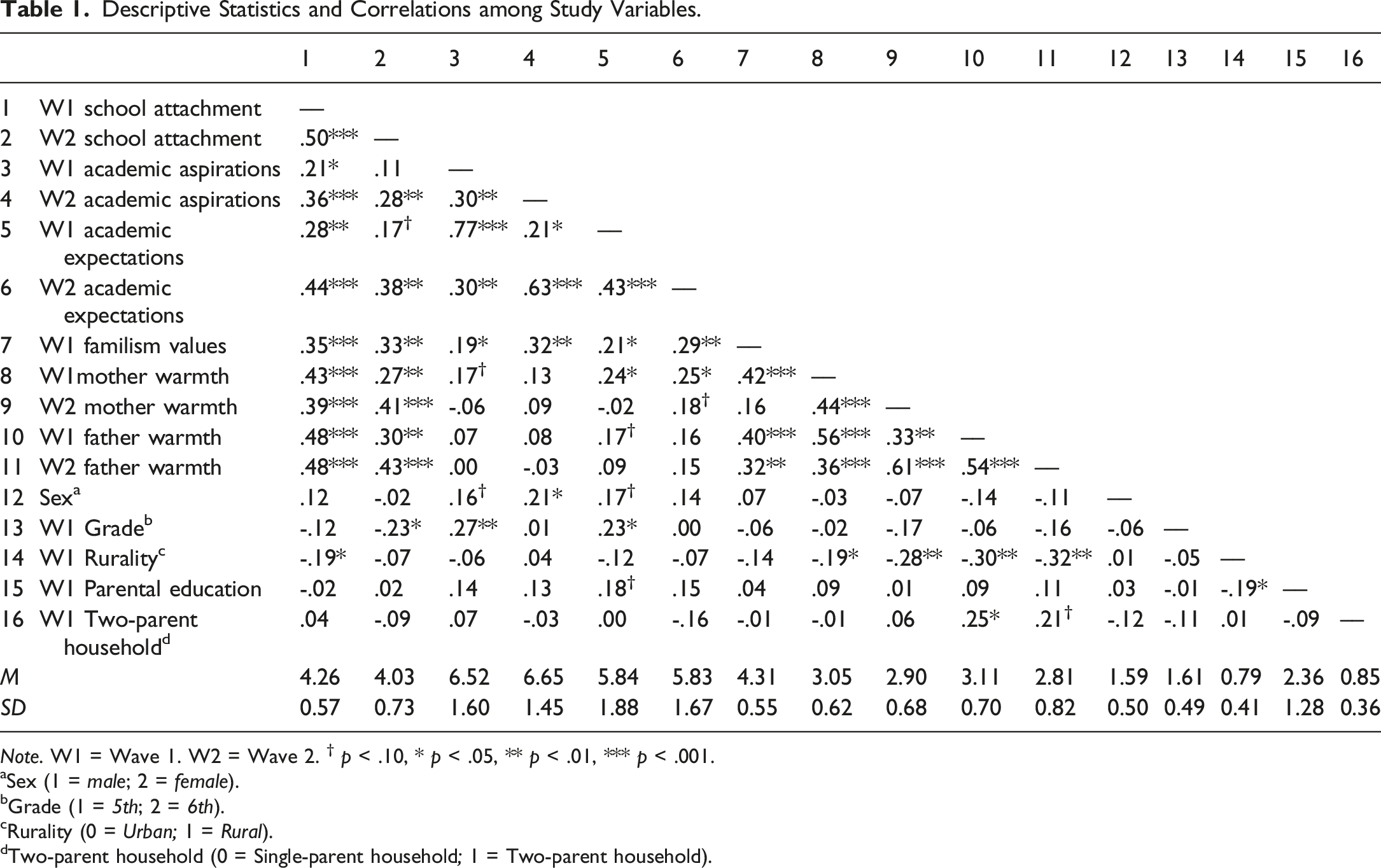
Note. W1 = Wave 1. W2 = Wave 2. † p < .10, * p < .05, ** p < .01, *** p < .001.
aSex (1 = male; 2 = female).
bGrade (1 = 5th; 2 = 6th).
cRurality (0 = Urban; 1 = Rural).
dTwo-parent household (0 = Single-parent household; 1 = Two-parent household).
We tested and found support for strict measurement invariance across time for the school attachment latent variables, which entails invariant factor loadings, measurement intercepts, and unique factor variances. We also found strict measurement invariance across time and between mothers and fathers for the warm parenting latent variables. The standardized loadings for the latent indicators were all significant (p < .001) for school attachment (.74–.90), familism (.75–.88), mother warm parenting (.75–.94), and father warm parenting (.74–.96). This measurement model demonstrated acceptable fit (CFI = .94, TLI = .93, RMSEA = .06).
Main effect models of youth familism values, mother warmth, and father warmth predicting youth academic outcomes.
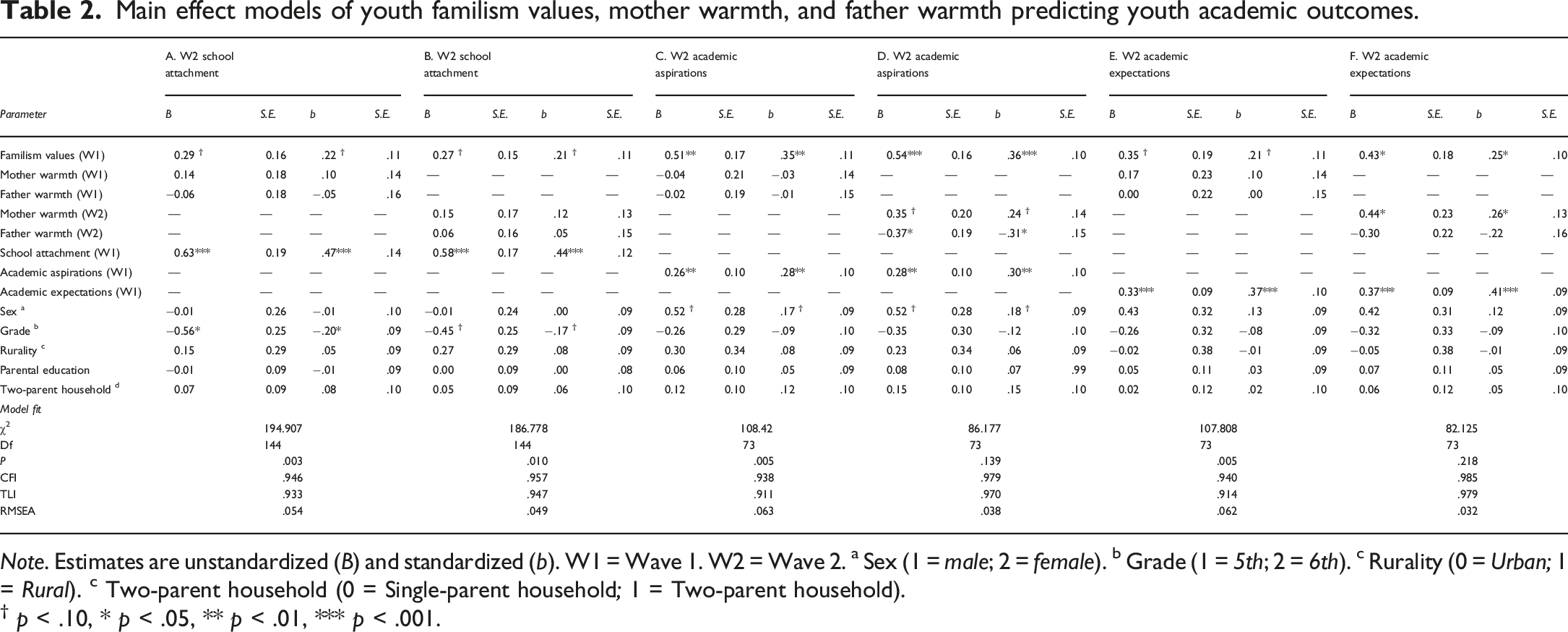
Note. Estimates are unstandardized (B) and standardized (b). W1 = Wave 1. W2 = Wave 2. a Sex (1 = male; 2 = female). b Grade (1 = 5th; 2 = 6th). c Rurality (0 = Urban; 1 = Rural). c Two-parent household (0 = Single-parent household; 1 = Two-parent household).
† p < .10, * p < .05, ** p < .01, *** p < .001.
Youth familism and warm parenting predicting academic competence
We tested the hypothesized main effects from adolescent familism and W1 warm parenting (mothers and fathers) predicting school attachment, academic aspirations, and academic expectations. Adolescent familism predicted higher levels of school attachment (at marginally significant level), academic aspirations (at a significant level), and academic expectations (at marginal and significant levels; Table 2). Neither mother or father warm parenting at W1 predicted school attachment, academic aspirations, or academic expectations at W2. Similarly, W2 mother or father warm parenting was not associated with W2 school attachment. W2 mother warm parenting was significantly associated with higher levels of W2 academic expectations, and marginally with academic aspirations. Father’s warm parenting at W2 was associated with lower W2 academic aspirations but did not predict academic expectations.
Interaction models of youth familism values, mother warmth, and father warmth predicting youth academic outcomes.
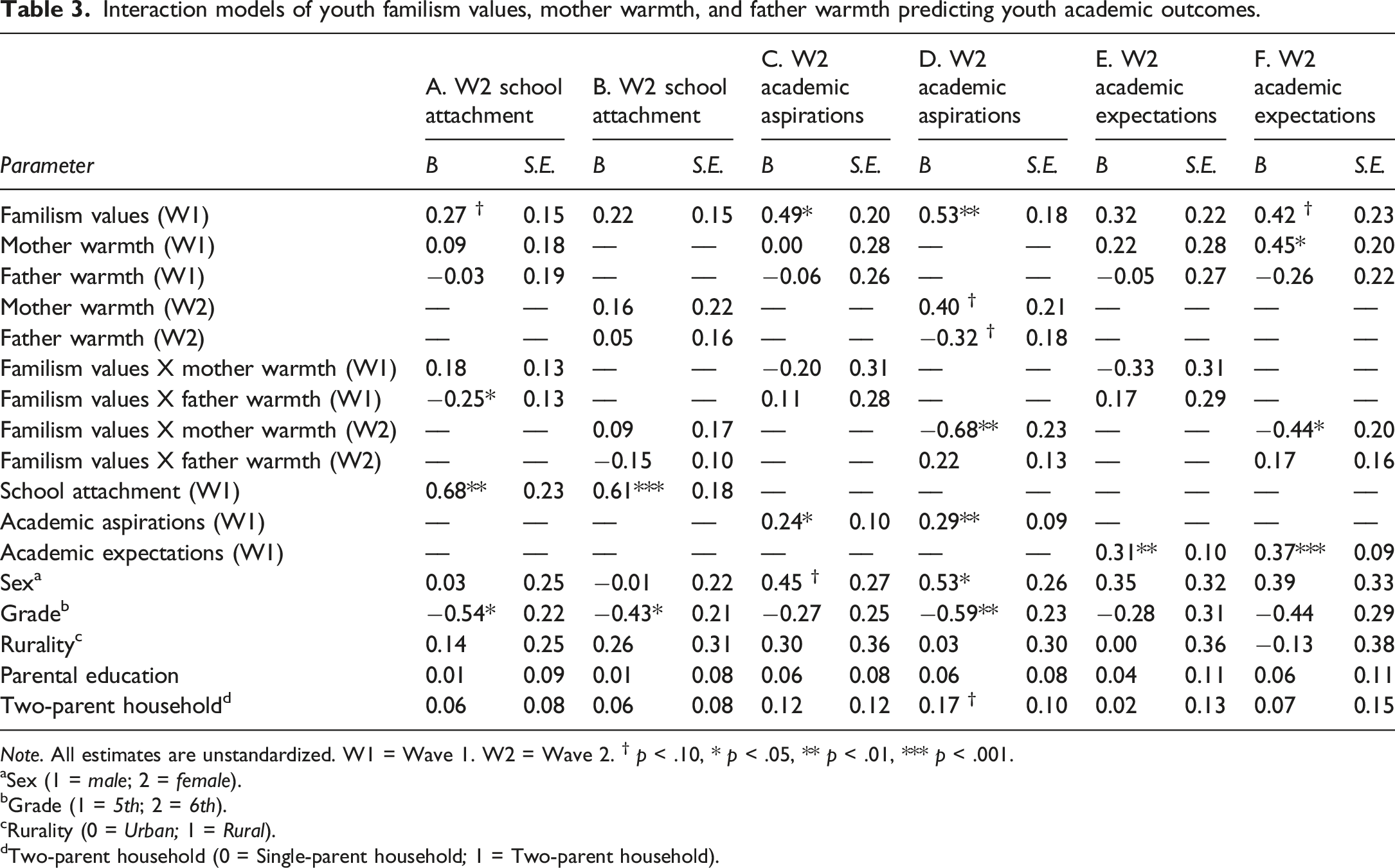
Note. All estimates are unstandardized. W1 = Wave 1. W2 = Wave 2. † p < .10, * p < .05, ** p < .01, *** p < .001.
aSex (1 = male; 2 = female).
bGrade (1 = 5th; 2 = 6th).
cRurality (0 = Urban; 1 = Rural).
dTwo-parent household (0 = Single-parent household; 1 = Two-parent household).
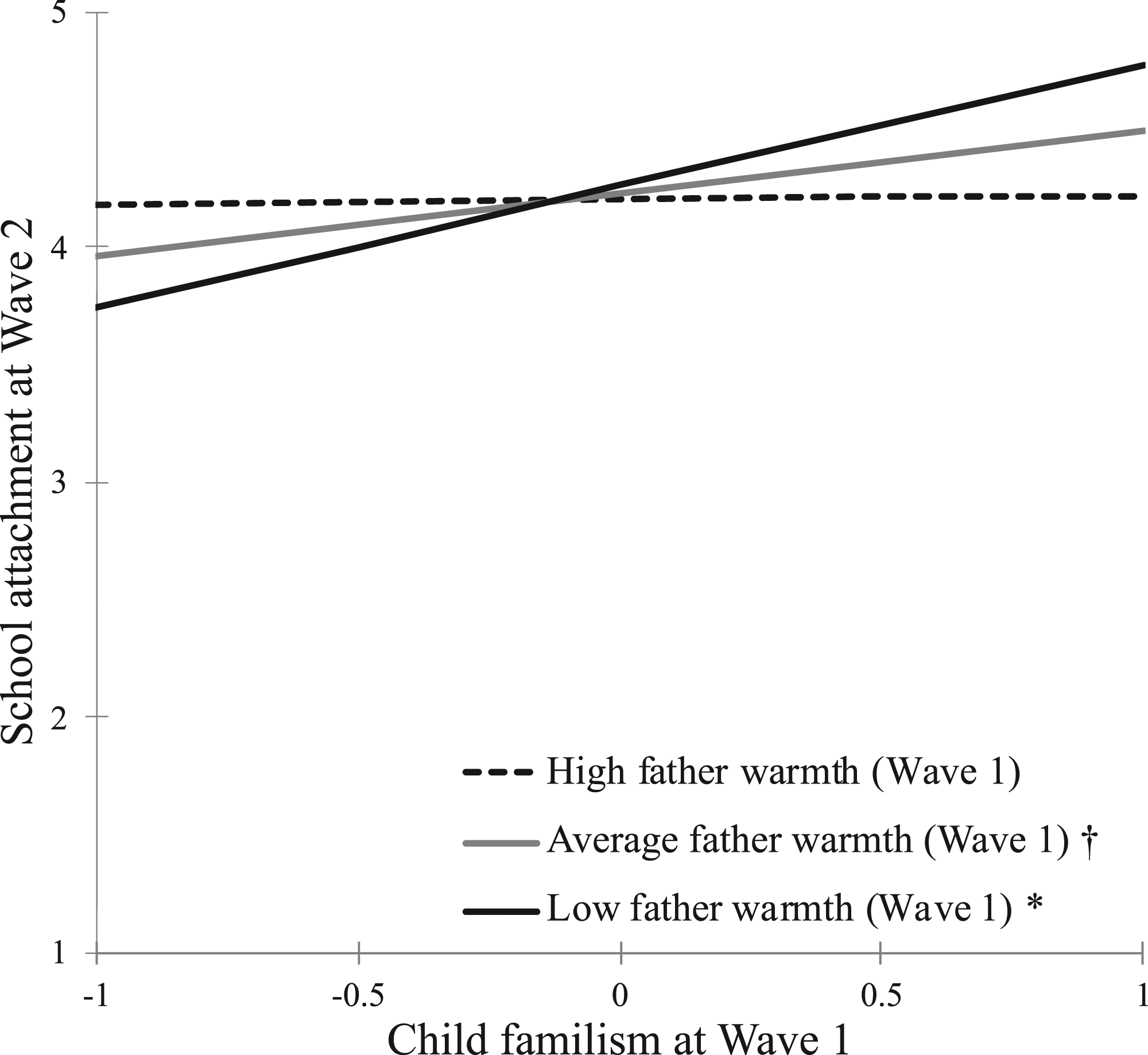
Association between adolescent familism values and school attachment at varying levels of paternal warmth. Dashed lines represent non-significant associations (p > .10). * p < .05. † p < .10.
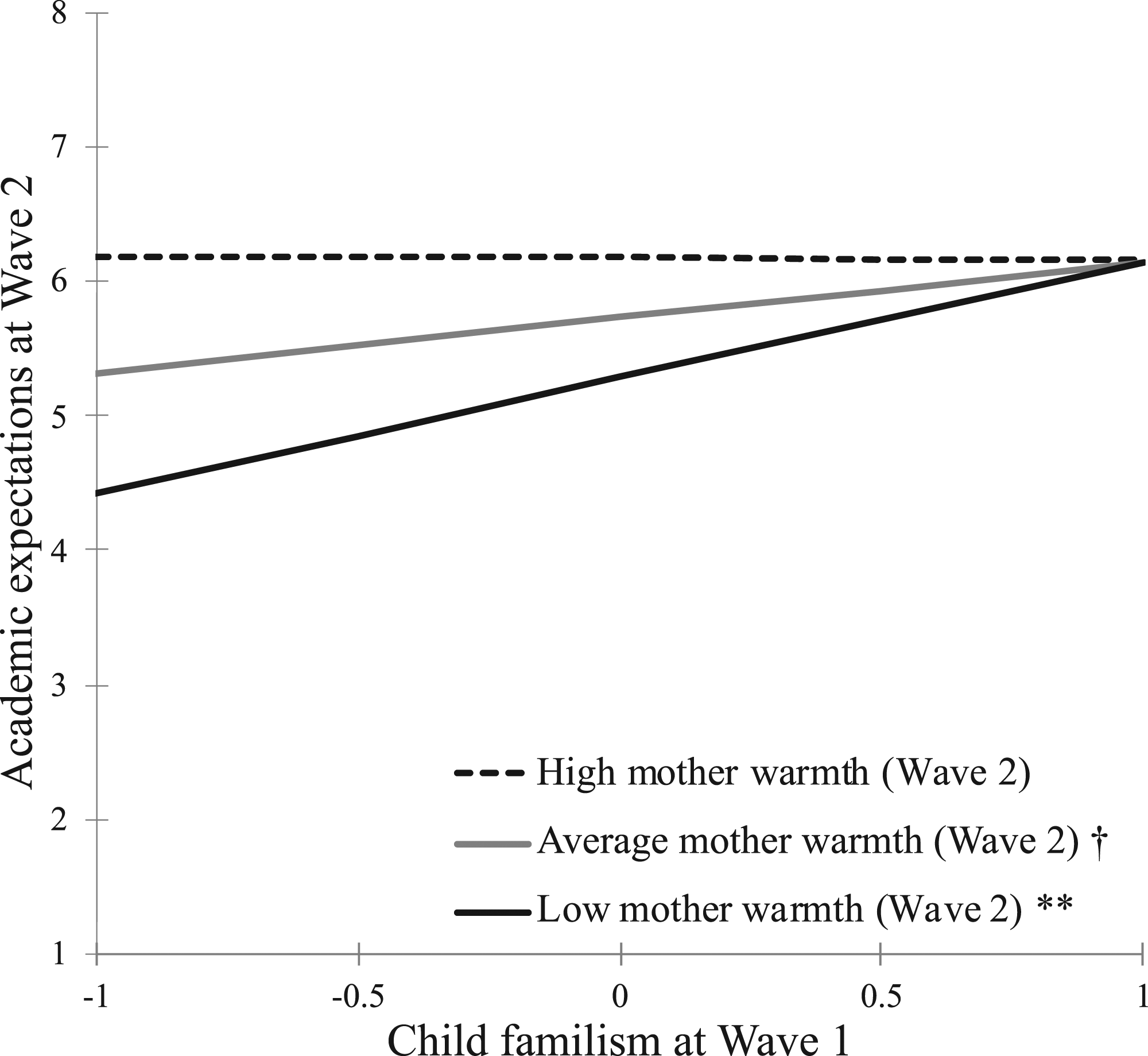
The interaction between W1 familism and W2 mother warm parenting significantly predicted W2 academic aspirations (B = −.68, p < .05) and expectations (B = −.44, p < .05), but not school attachment. Familism was related to higher academic aspirations for youth with low (B = 1.21, p < .001; Figure 2) and average (B = .53, p < .01), but not high, W2 mother warm parenting. A slightly similar pattern was detected with academic expectations: familism was related to higher academic attainment expectations for adolescents with low (B = .85, p < .01, Figure 3) and average (B = .42, p = .07), but not high, W2 mother warm parenting. Association between familism values and academic aspirations at varying levels of maternal warmth. Dashed lines represent non-significant associations (p > .10). *** p < .001. ** p < .01. Association between adolescent familism values and academic expectations at varying levels of maternal warmth. Dashed lines represent non-significant associations (p > .10). ** p < .01. † p < .10.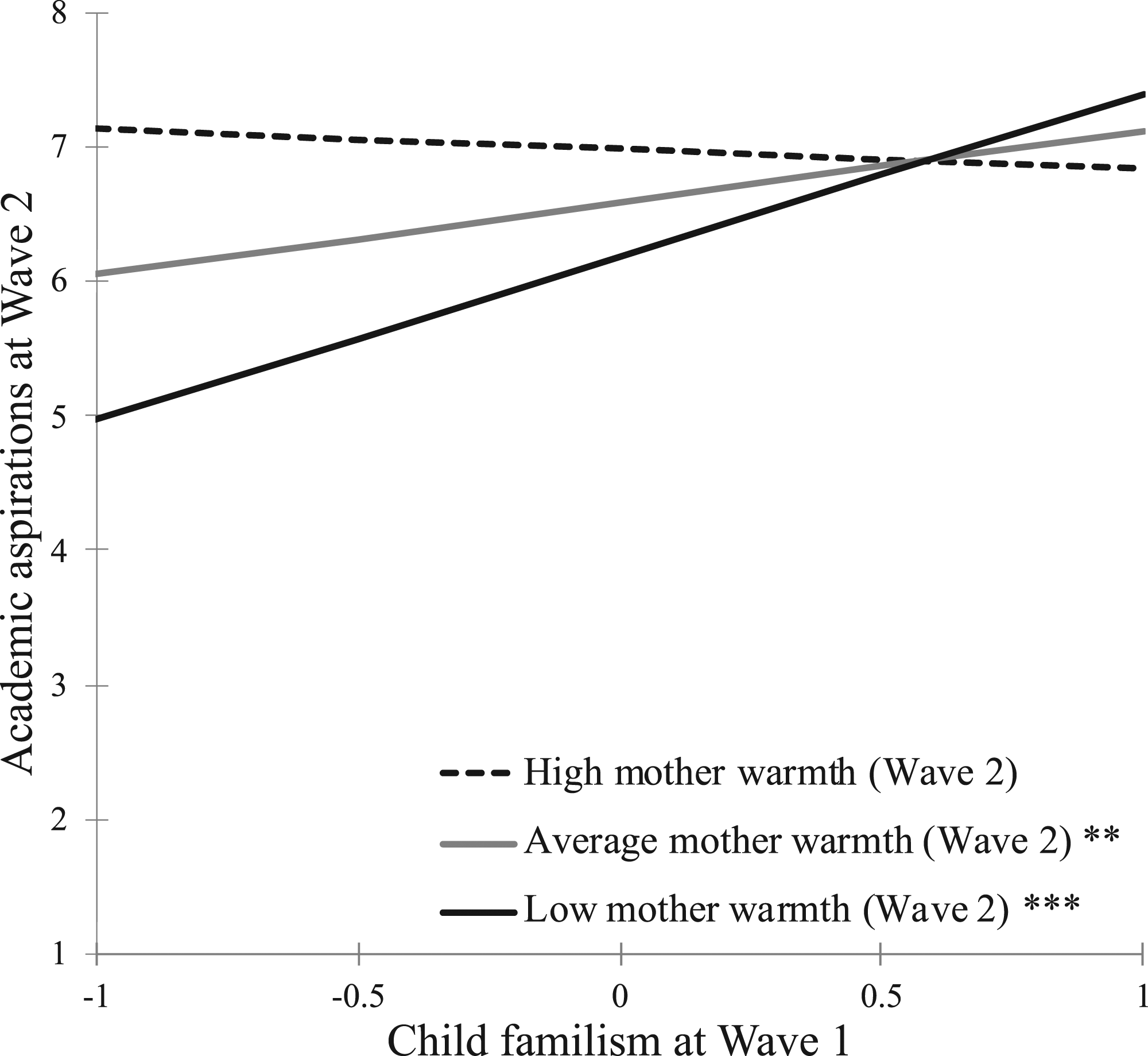
Discussion
Drawing from the integrative model (García Coll et al., 1996; White et al., 2018), we examined familism and warm parenting as potential joint predictors of Latinx students’ academic success in early adolescence – a developmentally critical time when contextual family changes (Granic et al., 2003) and increased needs for autonomy occur (Schwartz et al., 2013). This study contributes to existing culturally-informed developmental research on contributors to Latinx youth’s positive academic competencies. By understanding the potential dynamic processes of familism values and parenting behaviors, we extended prior cross-sectional research testing direct effects of familism values on Latinx adolescent’s academic outcomes, and move away from a deficit-focused assessment of school outcomes for Latinx youth. We also contributed to the body of research examining how youths’ perceptions of mothers’ and fathers’ parenting warmth differentially relate to adolescents’ academic outcomes and research with Latinx youth in rural regions of the U.S.
As hypothesized, familism predicted higher levels of academic competence accounting for prior levels. Consistent with previous cross-sectional studies (e.g., Berkel et al., 2010; Rivas-Drake & Marchand, 2016; Stein et al., 2015), these results underscore the relevance of familism for Latinx youths’ development and suggest that youth who endorse familism values might be motivated to bring pride to their family by doing well in school and aspiring for higher educational attainment. These findings support prior research emphasizing the value rural Latinx youth and families place on school connections (Carlo et al., 2016), despite facing significant barriers living in rural communities (Irvin et al., 2016; Raffaelli et al., 2016). Because we controlled for previous levels of academic measures, the findings also represent a rigorous test of prospective associations between familism and academic competence.
Prior research indicated the possibility that mothers might exert a stronger influence on children’s educational outcomes compared to fathers (Esparza & Sánchez, 2008; Pinquart, 2016). In this study, although mothers’ and fathers’ warm parenting were correlated with some academic measures, neither mothers’ nor fathers’ parenting at Wave 1 significantly predicted the academic outcomes in the regression models. Instead, W2 mothers’ warm parenting significantly predicted higher academic aspirations (at a marginal level) and expectations, but not school attachment. Although W2 fathers’ warm parenting did not predict school attachment and academic expectations, it unexpectedly predicted lower levels of academic aspirations. Some of these null findings contradict prior research showing positive associations between nurturant-involved or warm parenting and academic outcomes (Pinquart, 2016; Taylor et al., 2012). However, these results are also somewhat consistent with a prior study of Latinx youth, which found that although positive parent-child relationship quality and academic motivation were positively correlated, this path did not emerge in the final model (Stein et al., 2020). Taylor et al. (2012), however, found that both father and mother nurturant-involved parenting predicted higher levels of school attachment among Mexican origin youth living in urban and suburban regions. Correlations from the present study revealed that fathers’ warm parenting was lower for rural and older youth, perhaps because of the heightened economic and workplace stressors Latinx men face in the rural Midwest (Ramos et al., 2015) and gendered socialization (Taylor et al., 2020). Regional context and adolescent age did not fully explain fathering processes in this study and merit further investigation, potentially by investigating a moderating role of regional context, for instance. The unexpected finding that W2 fathers’ warm parenting predicted lower levels of academic aspirations is likely a suppression effect given all other estimates considering that zero-order correlations did not show a significant association. Nonetheless, future research should consider how fathers’ warm parenting relates to various academic outcomes in the context of accounting for mothers’ warm parenting.
One of the study’s main goals was to test the potential interactive role of warm parenting and cultural values as they relate to adolescent academic outcomes. As hypothesized, mothers’ warm parenting moderated the association between adolescents’ familism and both academic aspirations and expectations. However, this interaction was only significant at Wave 2 and it did not predict school attachment. Fathers’ warm parenting was not a significant moderator in the association between adolescent familism and academic aspirations or expectations, but fathers’ warm parenting at Wave 2 (not at Wave 1) significantly moderated the association between familism and school attachment. This mixed pattern of findings suggests that youth cultural values have implications for adolescent academic outcomes and that these associations also vary according to father and mother warm parenting levels. However, these conditional associations are potentially time- or role-bound. For instance, school attachment might be more relevant in early adolescence, and academic aspirations and expectations might be more relevant in later adolescence when youth are exploring future careers options more. By simultaneously assessing both fathers’ and mothers’ parenting behaviors in regard to adolescents’ academic outcomes, we found partial support for prior propositions that mothers might have a more significant impact on Latinx children’s educational socialization than fathers (Esparza & Sánchez, 2008; Parke & Buriel, 2006). Future research warrants further examination of distinct mother and father parenting behaviors.
Examining distinct mother and father roles is especially relevant given prior findings among Mexican-origin parents. For instance, father warmth might be especially predictive of youth outcomes under circumstances of environmental risk. Among Mexican-origin parents and their adolescent children, father warmth predicted lower levels of internalizing symptoms in the context of low neighborhood adversity levels, based on a measure that included poverty, unemployment, and household status (White et al., 2015). These findings suggest a moderating role of environmental adversity in fathering specifically. Because the present study’s sample had largely rural and low-income backgrounds, null father parenting findings may represent floor effects in neighborhood adversity or poverty, given the prevalence of economic and residential segregation and stressors that rural Latinx youth and families experience (Ramos et al., 2015; Stein et al., 2016).
The interaction between mothers’ warm parenting and adolescents’ familism was only present for mothers’ parenting warmth at Wave 2. These findings align with some research suggesting that parents’ sensitive attunement is most predictive of youths’ adjustment in later adolescence (Kobak et al., 2017; Miller et al., 2018). In addition, the interaction between fathers’ warmth and adolescents’ familism predicting school attachment was only present for fathers’ warm parenting at Wave 1, perhaps because parental sensitive attunement might be conditional to distinct fathering and mothering roles. Fathers’ warm parenting, for instance, was higher in two-parent households compared to single-parent households, perhaps modifying the role of father warmth on interactions with youth about academics. However, because of the two-wave design of the study, researchers could further investigate this question in a multiple wave and cohort design study. Overall, findings from this study suggest that programs designed to increase Latinx youth’s academic aspirations and expectations, as well as school attachment, could benefit from highlighting socialization processes of Latinx parents, such as the socialization of familism values (Tsai et al., 2015), which could especially benefit youth with low maternal or paternal warmth behaviors. This strength-based approach of involving parents aligns with prior findings demonstrating how rural migrant Latinx youth view their family as a source of resilience (Taylor et al., 2020).
Strengths and limitations
Strengths of this study includes the application of a culturally and developmentally informed model to understand what promotes academic success in early adolescence among primarily rural Latinx youth. Whereas previous studies have examined the main effects of familism, we tested whether warm parenting might moderate these associations, adding to the empirical evidence of how adapting cultural systems inform development. Studies examining associations between familism and academic adjustment have mostly used samples from urban metropolitan regions (e.g., Berkel et al., 2010; Esparza & Sánchez, 2008; Fuligni et al., 1999). Given calls to contextualize rural youth’s development (Conger et al., 2016; Stein et al., 2016), this study adds to research on school connections among Latinx rural youth living in new immigrant destinations with increasing Latinx population growth (Carlo et al., 2016).
A possible limitation of this study is the reliance on adolescent reports for the study measures, although the study’s constructs are inherently phenomenological. It is typical for youth to self-report their levels of school belonging, academic aspirations, and academic expectations (Fuligni et al., 1999; Hernández et al., 2017; Rivas-Drake & Marchand, 2016; Stein et al., 2015), their own beliefs about familism (Berkel et al., 2010; Stein et al., 2015), and, sometimes, their perceptions and experiences with parents (Schofield, Parke, et al., 2016). Nonetheless, replicating the study’s findings using ratings from teachers or peers on adolescent academic measures would inform potential nuanced associations between familism and academic outcomes. In the present study, parent self-reports of parenting behaviors were not assessed. Based on the intended design of the Behavioral Affect Rating Scale (Conger & Conger, 2002), fathers reported on mothers’ parenting and mothers reported on fathers’ parenting. However, the father response rate was relatively low (52% at Wave 2) which limited our ability to use parent reports of partner parenting in analyses. It is important to note that many of the fathers did not participate in the study because they often reported working long hours, reflecting the relative financial hardships the participating families often faced. Future research might analyze observed parent-child interactions versus adolescent perceptions of parental behaviors.
Our sample size was also relatively small and used a prospective design with two waves of data 1 year apart. Assessing the hypothesized associations with a larger longitudinal sample will clarify the relations between the constructs of interest across adolescence. Although significant associations did not emerge in the models, correlations indicated that females had higher academic aspirations at W2 compared to males. Due to sample size limitations, we controlled for but did not test for sex differences in the hypothesized associations. Because of potential distinctions in parenting based on traditional gender roles (Crockett & Russell, 2013) and gender differences in schooling experiences (e.g., Hernández et al., 2017), future research identifying gendered parenting and school processes will provide context for understanding familism and Latinx youth’s academic adjustment. Furthermore, we did not collect information about sexual orientation, gender identity, or disability, which might have implications for family dynamics, and thus could be considered in future research with intersectional perspectives.
The present study had predominately second-generation participants (i.e., born in the U.S. and at least one parent born abroad). Future studies with first- and third-generation rural Latinx youth will contribute to the current understanding of acculturative processes in Latinx youth from new immigrant destinations such as the Midwest (Conger et al., 2016). Generational status is also relevant when considering youths’ intersectional identities as economic and educational opportunities afforded to U.S. citizens often differ from those available to immigrants, presenting potential differences in power to pursue academic opportunities. Although most youth participants were born in the U.S., most of their parents were not and were from low-income backgrounds, potentially limiting the educational opportunities afforded for these youth (Irvin et al., 2016), especially in the context of anti-Latino and anti-immigrant policies (Alvarez Gutiérrez, 2013). In addition, most youth responded to surveys in English and most mothers responded to surveys in Spanish, representing potential language discrepancies between parents and their children. Some research suggests that language discrepancies have implications for parenting and family dynamics, such that a language proficiency match (in either Spanish or English) between Mexican origin mothers and their children promotes effective parenting (Schofield, Conger, et al., 2016). Thus, as a proxy for potential language proficiency discrepancies, the language differences in survey responses contextualize the findings of this study. Furthermore, participants in the study were mostly of Mexican origin, reflecting the majority of the Latinx population in the Midwest (Raffaelli et al., 2016). Future research might contextualize the unique experiences of Caribbean, Central, and South American Latinx youths in the Midwest.
Implications and future research directions
This study extends previous research by examining how early adolescent’s familism values might interact with warm parenting to predict primarily rural Latinx students’ academic success. The study findings highlight significant interactions between adolescent cultural values and mothers’ warm parenting behaviors. Based on our study, mothers’ parenting warmth in middle adolescence plays a role in how familism values relate to academic aspirations and expectations. As youth navigate school and their developmental needs are changing, adolescents’ perceptions of parenting warmth might be shaped by their mothers’ sensitivity and attunement to needs (Kobak et al., 2017). The finding that W2, but not W1, mothers’ warm parenting moderated the association between youth familism and academic expectations and aspirations suggests a need to examine further how youth perceive their mothers’ parenting behaviors across adolescence.
Future research might test why, based on this study’s findings, mothers might have a stronger or more consistent role in shaping how youth’s familism predicts their academic adjustment. For instance, prior research on Latinx migrant youth in the Midwest revealed that youth often rely on and revere the support they receive from their mothers (Taylor et al., 2020). These strong ties to mothers might help rural Latinx youth cope with school-related challenges to promote academic adjustment. It is also possible that other parenting characteristics specific to fathers relate to students’ academic competence. For instance, in a study of Mexican-origin parents and their adolescent children, White et al. (2013) identified a no-nonsense type of parenting that, based on youth reports of their fathers’ high levels of acceptance, harshness, consistent discipline, and monitoring, represented 12% of U.S. Mexican-origin fathers in the sample. This parenting style was associated with decreases in internalizing and externalizing across adolescence in the context of high neighborhood adversity (White et al., 2016). Because we focused on warm parenting, future research could also consider other aspects and correlates of Latinx parenting behaviors, including no-nonsense parenting (White et al., 2016), family cohesion (Bamaca-Colbert et al., 2018), and the socialization of respeto (i.e., respect for adults and family; Carlo et al., 2016; Stein et al., 2014) as closely linked to familism socialization goals and values, particularly among rural Latinx youth who often experience acculturative stressors (Carlo et al., 2016). Future research could further investigate the circumstances by which fathering and adapting cultural systems relate to rural and Latinx adolescents’ competence (White et al., 2015).
While the current study expands current understanding of familism and academic outcomes by also considering the moderating role of family factors such as parental warmth, some research points to familism obligations as having a particularly salient role in Latinx youths’ academic trajectories. For instance, in a qualitative study of 32 Latinx emerging adults, Sánchez et al. (2010) found that the transition from high school, including transitions to college or work, was experienced as stressful, especially for Latinx emerging adults with multiple family responsibilities, financial or otherwise. Other studies also suggest that familism obligations, including high levels of labor contributions (e.g., caregiving, work) or attitudes about obligations, can present liabilities for youth socio-emotional (East & Weisner, 2009; Telzer & Fuligni, 2009) and academic outcomes (Stein et al., 2014). Other research also suggests that distinct familism dimensions could have differential associations with youth outcomes. In a study of Latinx youth, familism support was more consistently associated with lower internalizing symptoms and higher ego-resiliency (Taylor & Jones, 2020). Thus, considering potential differential associations between distinct familism values or behaviors and Latinx youths’ academic outcomes is an important future research direction.
The present study adds to evidence suggesting that aspects of students’ adapting cultural and family systems improve students’ academic competencies. Although studies demonstrate that school attachment and academic aspirations and expectations predict educational attainment (Allen & Kern, 2017; May & Witherspoon, 2019), educational policies and community resources often restrict access to higher education among Latinx youth, particularly in rural areas (Stein et al., 2016). Limited resources or access to higher education often exacerbate the educational challenges faced by Latinx youth in rural communities (Taylor et al., 2019). Thus, policies implemented to foster academic success and expand access to education, guided by culturally responsive practices (McGovern et al., 2020), will continue to make a difference in the academic trajectories of Latinx youth so that Latinx youth fulfill their academic aspirations.
Footnotes
Acknowledgements
The authors wish to thank the youth and their families who participated in this study, as well as the research assistants who assisted in data collection and management.
Funding
The author(s) disclosed receipt of the following financial support for the research, authorship, and/or publication of this article: This work was supported by the USDA National Institute of Food and Agriculture, Hatch project [1013708]; as well as awards from the Purdue Research Foundation, the Center for Families at Purdue University, and the Ingestive Behavior Research Center at Purdue University.
Open research statement
As part of IARR’s encouragement of open research practices, the authors have provided the following information: This research was not pre-registered. The data used in the research are available and can be obtained by emailing:
