



Abstract
Receiving a request to change from a romantic partner can evoke intense emotional responses that hinder change progress and conflict resolution. As such, investigating how those being asked to change (i.e., change targets) regulate their emotions through key intrapersonal strategies (i.e., suppression and reappraisal) will lend crucial insight into promoting change success. Utilizing laboratory-interaction (Study 1; N = 111 couples) and experience-sampling methods (Study 2; N = 2178 weekly reports from an 8-week diary), we assessed targets’ regulation strategies, change progress, and the extent to which they met their partner’s ideals. Preregistered analyses demonstrated that targets’ use of suppression was not linked to better or worse change outcomes. However, targets’ use of reappraisal was linked to better change outcomes as rated by both partners. Additional analyses revealed that targets’ suppression was linked to targets meeting their partner’s ideals more in the short term but less over time, whereas targets’ reappraisal was linked to targets meeting their partner’s ideals more in both the short term and over time. These findings highlight reappraisal as a key strategy for promoting successful partner change.
Romantic partners inevitably experience conflicts of interest that can be emotionally distressing and difficult to resolve (Righetti et al., 2021), perhaps because the vast majority of these conflicts involve recurring disagreements (e.g., related to key issues like trust and intimacy) (Bradbury & Karney, 2004; Gottman & Silver, 1999). Given the potential for conflict to damage relationship quality (e.g., Caughlin & Vangelisti, 2006; Gordon & Chen, 2016) and the importance of relationships for well-being (Braithwaite & Holt-Lunstad, 2017; Diener & Seligman, 2002; Holt-Lunstad et al., 2010), it is crucial that couples learn to successfully resolve these recurring disagreements. One primary way in which romantic partners strive to resolve conflict and improve their relationships is by asking each other to change dissatisfying behaviors or characteristics (i.e., partner regulation) (Overall et al., 2006). Despite successful partner-requested changes having the potential to improve personal and relational outcomes, these changes are difficult to make and may instead threaten relationship quality (Overall et al., 2006). Thus, it is important to identify factors that contribute to more successful partner change.
Recent research has highlighted the benefits and costs of different styles of communication for resolving conflict and motivating efforts toward partner-requested changes (see Overall & McNulty, 2017 for a review). However, an overlooked yet key consequence of change requests is the intense negative emotions they elicit in the partner being asked to change (i.e., the change target), including anger, shame, and embarrassment (Le et al., 2020). Targets may feel inadequate for not living up to their partner’s (i.e., the agent’s) ideals and expectations (Overall et al., 2009). This may make targets reluctant to change and hinder their change progress, resulting in unresolved conflict. Thus, targets’ ability to manage their negative emotions may be a particularly effective tool for promoting successful change and moving closer toward meeting their partner’s ideals.
The current work sought to investigate how two frequently used strategies for regulating emotion, expressive suppression and cognitive reappraisal (Gross, 1998), shape targets’ change outcomes. Specifically, we examined the extent to which targets’ emotion regulation was associated with both partners’ reports of the targets’ change progress (i.e., motivation, effort, and success). Given that successful change should move targets closer to their partner’s ideal version of them, we also explored how targets’ emotion regulation was linked to the extent to which targets met their partner’s ideals. The results of this research contribute to our understanding of the effects of emotion regulation strategies on partner change and can help to promote successful change, conflict resolution, and relationship satisfaction.
Suppression in the Context of Partner Change
Prior research demonstrates that suppression—which involves concealing outward signs of inner emotional experiences (Gross, 1998; Mauss et al., 2007)—is linked to a host of negative outcomes, including depressed mood (Butler et al., 2003; Cameron & Overall, 2018), less effort invested toward personal goals (Low et al., 2017), less social support (Srivastava et al., 2009), and poorer relationship quality (English & John, 2013; Sasaki et al., 2021; Velotti et al., 2016). As such, suppression has generally been regarded as a maladaptive emotion regulation strategy. Indeed, suppression often backfires and can even amplify the negative emotion it is intended to manage (e.g., Low et al., 2017).
Although recent research has highlighted both intrapersonal (e.g., greater well-being) and interpersonal (e.g., greater relationship quality and attenuated detriments to partner outcomes) benefits of suppression (Girme et al., 2020; Le & Impett, 2013), these benefits tend to only occur for particular individuals (e.g., those high in attachment anxiety or interdependent self-construal). Given that these individuals may already be highly motivated to pursue their partner’s requested changes, suppression may not promote motivation or better change outcomes for these individuals. Further, suppression is linked to less effort and achievement toward personal goals (i.e., goals people set for themselves) (e.g., Benita et al., 2020; Low et al., 2017) and less conflict resolution (Low et al., 2019). Thus, we expected that these costs of suppression may extend to partner change, such that targets who suppress their negative emotions would be less successful at making their partner’s requested change. Given that change requests may be prompted by agents’ desire to bring their partner closer to their ideal and may lead targets to feel like they are not meeting their partner’s ideals (Overall et al., 2006, 2009), we also explored whether possible costs of suppression might also extend to how well targets meet their partner’s ideals.
Reappraisal in the Context of Partner Change
In contrast with suppression, reappraisal—defined as an attempt to reinterpret an emotion-eliciting situation in a way that alters its emotional meaning or impact (Gross & John, 2003)—has been linked to more positive and less negative emotion (e.g., Troy et al., 2018), less relationship aggression (Rodriguez et al., 2021), and more satisfying romantic relationships (Mazzuca et al., 2019). As such, reappraisal is generally regarded as a more beneficial regulation strategy than suppression, perhaps because it has been shown to reduce negative emotion (Troy et al., 2018) and upregulate desired emotions (Kalokerinos et al., 2015). Thus, reappraisal may help targets manage the emotional impact of requested changes and ultimately achieve greater success.
Although recent research has highlighted potential costs of reappraisal (e.g., for collective social action) (Ford & Troy, 2019), these costs are more likely to occur when regulating other people’s emotions (not one’s own) and have not been documented in the context of partner change. In fact, research on emotion regulation and conflict highlights benefits of reappraisal, such as buffering declines in marital quality over time by reducing distress about conflict (Finkel et al., 2013). Further, reappraisal can also be an effective tool for reducing unwanted behavior (e.g., alcohol consumption) (Rodriguez et al., 2019). Notably, these benefits are often demonstrated when people reappraise the conflict itself (e.g., Rodriguez et al., 2019). As such, targets may reappraise the change request as a signal that their partner is invested in the relationship and wants to improve it, rather than an indication that they are letting their partner down. Thus, we expected that targets who reappraise their negative emotions would more successfully make their partner’s requested change and we explored whether these benefits would extend to the extent to which targets meet their partner’s ideals.
Overview of the Current Studies and Hypotheses
We investigated partner change processes in the laboratory and in a follow-up survey 2 weeks later (Study 1), as well as over an 8-week period (Study 2). In Study 1 (N = 111 couples), couples engaged in recorded change discussions in the laboratory and reported the extent to which they had regulated their emotions using reappraisal and suppression. Targets also reported on their motivation to change. Two weeks later, agents and targets rated the extent to which targets had made progress toward their partner’s desired change. In Study 2 (N = 2178 weekly reports), partners completed eight consecutive weekly surveys. Each week, agents and targets reported the extent to which they employed reappraisal and suppression with regard to the requested change. They also completed items about their perceptions of the target’s change progress (i.e., motivation, effort, and success) and the extent to which targets met their partner’s (i.e., the agent’s) ideals. Overall, we expected that targets’ suppression would be linked to targets and agents reporting less target change progress. In contrast, we expected that targets’ reappraisal would be linked to targets and agents reporting greater target change progress. We also tested (in Study 2 only) if these respective costs and benefits might extend to both partner’s reports of how well the target was meeting the agent’s ideals.
Study 1 Method
Our study design, predictions, and analysis plan were preregistered prior to analyzing (but after collecting) the data. 1 These are available on the Open Science Framework, along with our data, materials, analysis code, and codebooks disclosing all collected variables for both studies at https://osf.io/u8fz2/.
Participants
We investigated data collected from 111 Canadian couples (N = 222) from the Greater Toronto Area as part of a larger project examining romantic partners’ interactions. All couples had been in a relationship for at least 1 year. The vast majority of these couples were recruited from the community and the rest of the couples were recruited through a Canadian university. This sample size was determined by available resources and other laboratory-based studies that examined associations between predictors and outcomes in couples (80 couples; Impett et al., 2010) or outcomes among partners requesting change (>60 couples; Overall et al., 2006, 2009) around the time of data collection (2015–2016). Our target sample size was 100 couples and we retained an additional 11 couples to compensate for any data that may be missing (e.g., due to incomplete surveys). This sample size exceeded some multilevel modeling recommendations for statistical power (30–50 level 2 observations; Maas & Hox, 2005). However, sensitivity analyses (conducted after hypothesis testing) using the simr R package (Green & McLeod, 2016) revealed that this sample size gave us 80% power to detect medium effect sizes (i.e., R2 = .30 at level 1, R2 = .31 at level 2 in the lab data; R2 = .32 at level 1, R2 = .37 at level 2 in the follow-up data). Thus, this sample was underpowered to detect small effect sizes. This study was approved by the University of Toronto ethics board (protocol reference: #31063).
Participants were between 18 and 57 years old (M = 26.76, Mdn = 25.00, SD = 7.17; 48.2% identified as women, 49.5% as men, and 1.5% as other. Couples had been together for an average of 4.13 years (SD = 2.67 years); 75.5% were in committed unmarried relationships, 23.2% were married, and 1.4% did not report their relationship status. Ethnic backgrounds varied widely (22.7% Western European, 16.8% South Asian, 7.3% Eastern European, 6.4% Caribbean, 5.0% South American, 2.3% African, 2.3% Middle Eastern, 2.3% Southeast Asian, 10.9% East Asian, 1.0% Native American, 16.4% bi- or multi-ethnic, and 5.5% other). Of the participants who listed two or more ethnicities, these ethnicities included other in seven cases. As such, we cannot confirm that they are bi- or multi-ethnic. Education also varied among participants (1.4% less than high school, 39.5% high school or some university, 5.5% associates, vocational, or 2-year degree, 40.0% bachelor’s degree, 10.0% master’s degree, 0.9% JD, MBA or other 2- to 3-year graduate program, 1.4% PhD or MD, 1.4% did not report). Participants were recruited through online advertisements and community outreach. They were compensated separately for the background ($15), in-lab ($30) and follow-up ($10) components.
Procedure
As part of a multi-part study, 2 couples completed a one-hour questionnaire assessing demographics (e.g., relationship length and relationship status) prior to arriving at the lab. They then completed an in-lab session and a follow-up survey.
Couples arrived at the lab session together and participated in a two-hour interaction. Using a procedure adapted from Fritz et al. (2003), romantic partners engaged in a series of 6-minute video-recorded discussions. 3 Two discussions were about aspects that partners hoped to change about one another. Participants were asked to “Please tell your partner about something you would like them to change, work on, or improve,” and given 1 minute to think of a topic. Agents (i.e., the partners requesting change) brought up the feature to targets (i.e., the partners being asked to change), and spoke about this topic for 1 minute while their partner listened. Targets were then given 1 minute to respond. Agents and targets each had another minute to speak before both partners spoke freely for 2 minutes. The first requesting member of each couple was randomly selected and partners took turns in the agent and target roles. Requested changes included changing personal characteristics (e.g., sensitivity and communication skills) and behaviors (e.g., exercise and phone use).
Immediately after each discussion, targets completed an item assessing their motivation to change. Two weeks later, both partners individually completed an online questionnaire with measures of targets’ change progress (i.e., effort and success). Due to a survey programming error, one-third of the participants did not receive or complete the change effort and success items in the follow-up survey. Because this data was missing at random, it did not systematically bias effects, although it reduced statistical power (accounted for in our power sensitivity analyses above).
Measures
Emotion regulation: Immediately following the change discussion, targets rated the extent to which they had regulated their emotions by engaging in suppression with the items “When I was feeling negative emotions, I made sure not to express them to my partner” and “I kept my negative emotions to myself.” These items were averaged to create a composite score of suppression (α = .88; M = 2.79, SD = 1.62). We assessed target reappraisal following the change discussion with the item “When I wanted to change my emotional experience, I changed the way I thought about the situation,” (M = 3.98, SD = 1.68). All items were rated on a 7-point scale (1 = strongly disagree to 7 = strongly agree) and were adapted from the Emotion Regulation Questionnaire (ERQ) (Gross & John, 2003).
Change outcomes: To assess targets’ change motivation in the laboratory, targets responded to the item “To what extent will you put in the effort to make this change for your partner?” on a 7-point scale (1 = not at all to 7 = very much so) (M = 5.62, SD = 1.25) (Overall et al., 2009). At the 2-week follow-up, both partners reported the progress (i.e., effort and success) they made toward their partner’s requested change. Participants responded to two mirrored items assessing change effort: “To what extent did you try to make the changes your partner requested in the initial lab conversation?” (M = 5.12, SD = 1.20) and “To what extent did your partner try to make the changes you requested in the initial lab conversation?” on a 7-point scale (1 = did not try to change at all to 7 = tried very hard to change) (M = 4.88, SD = 1.67). Participants also responded to mirrored versions of the item “To what extent do you feel that you were successful in making the changes your partner requested in the initial lab conversation?” on a 7-point scale (1 = not at all successful to 7 = extremely successful) to assess target-reported (M = 4.79, SD = 1.34) and agent-perceived (M = 4.68, SD = 1.62) change success. Given the high correlations between these items, r (127) = .75, p < .001 for target reports; r (128) = .83, p < .001 for agent reports), we deviated from our preregistration to assess change progress as a composite of effort and success.
Study 1 Results
Zero-Order Correlations Among Study 1 Variables.
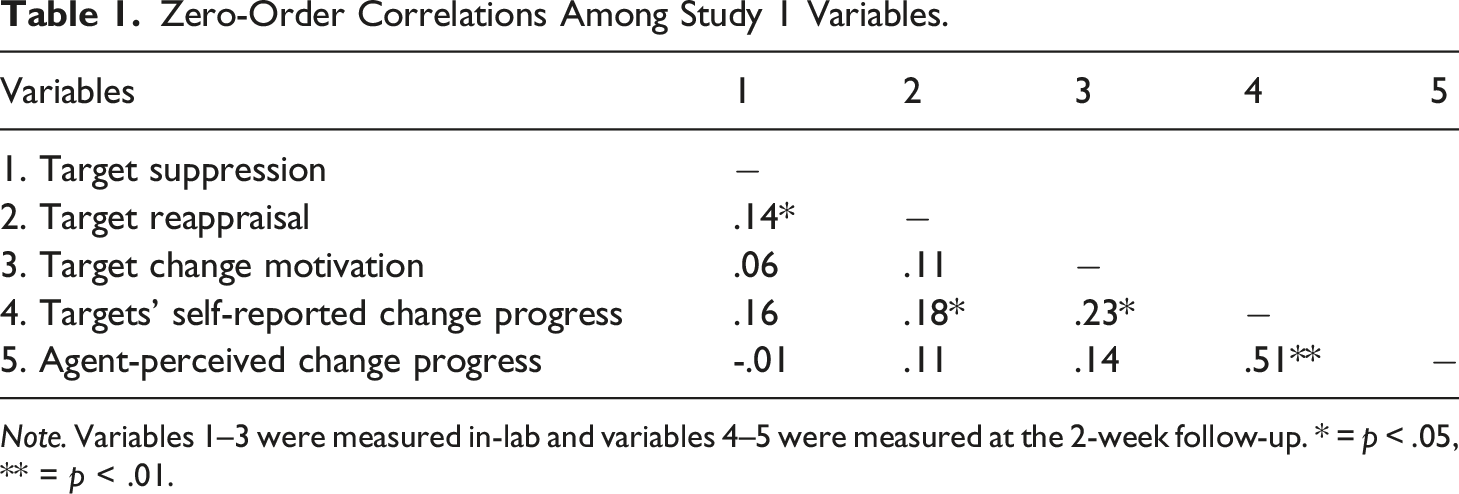
Note. Variables 1–3 were measured in-lab and variables 4–5 were measured at the 2-week follow-up. * = p < .05, ** = p < .01.
To test our main predictions, we examined how targets’ suppression and reappraisal was associated with targets’ change motivation and progress. Similar to previous work which found correlations among the use of multiple emotion regulation strategies (e.g., Côté & Morgan, 2002), target suppression and reappraisal were significantly positively correlated, r (202) = .14, p = .041. Thus, all models described below include both emotion regulation strategies to isolate their unique effects. Finally, we tested whether all models were moderated by either participant gender or relationship length (see supplemental materials). Gender and relationship length did not moderate any of the effects, so all the results that follow do not include moderators.
Models of Targets’ Emotion Regulation Strategies Predicting Outcome Variables.
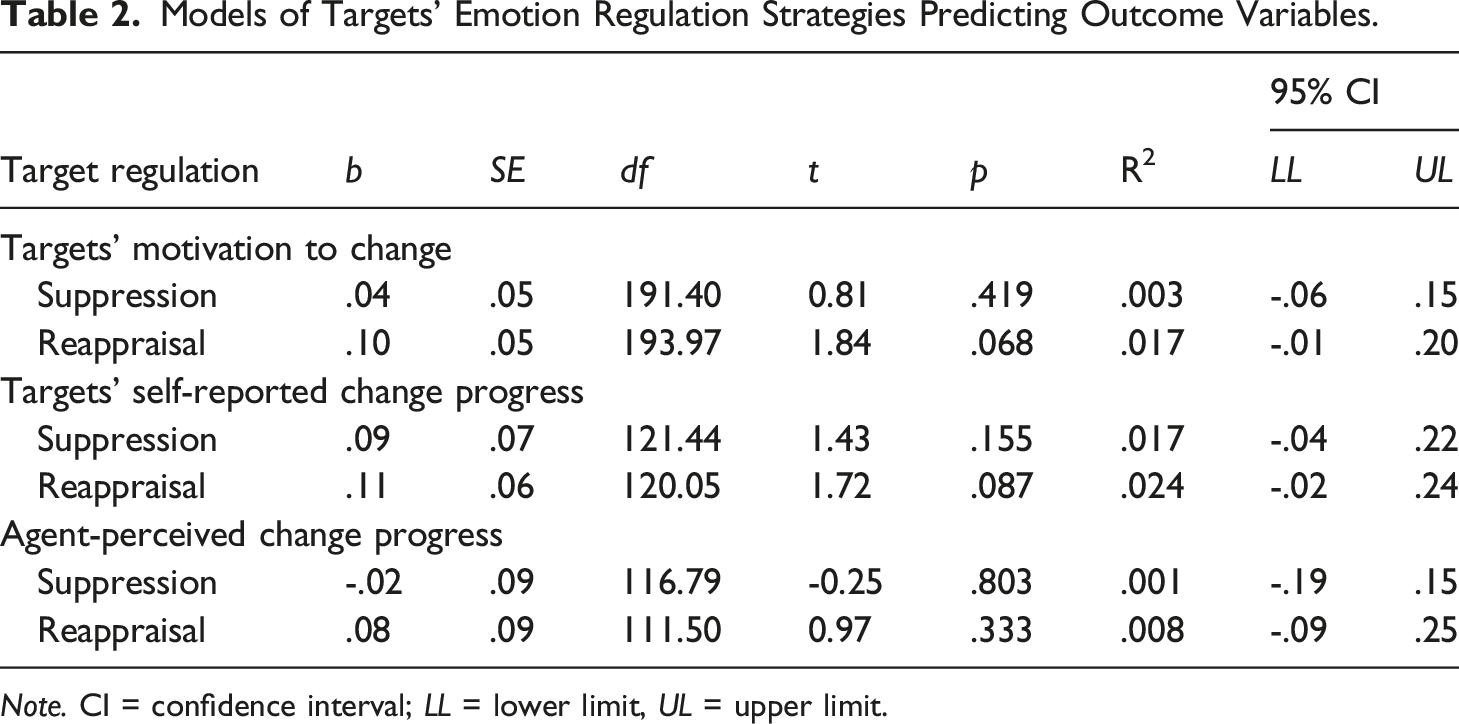
Note. CI = confidence interval; LL = lower limit, UL = upper limit.
Study 2 Method
Initial tests of our hypotheses revealed some limited evidence that target reappraisal may be linked to better target-reported change outcomes. However, this sample was underpowered to test these associations and only captured outcomes over a short period of time. As such, we aimed to address these limitations by recruiting a diary study sample with greater power to detect effects both immediately and over time. In this sample, we aimed to maximize statistical power by collecting repeated within-person assessments of key variables and to examine partner change processes over a longer period of time. Given that change requests may be prompted by the agent’s desire to move the target closer to their ideals and can make targets feel like they are failing to do so (Overall et al., 2009), we also explored the possibility that emotion regulation may shape the extent to which targets and agents feel as though targets are meeting the agent’s ideals. To do so, we recruited a larger sample of 151 community couples (N = 302) and followed them over the course of 8 weeks. This sample size was predetermined based on past studies that have examined associations between predictors and relationship outcomes in romantic couples using experience-sampling procedures (122 couples; Impett et al., 2019; 84 couples; Impett et al., 2008) and available resources. Sensitivity analyses using the simr R package (Green & McLeod, 2016) revealed that this sample size gave us 80% power to detect small to medium effect sizes (i.e., R2 = .08 at level 1, R2 = .17 at level 2). 4 This study was approved by the University of Toronto ethics board (protocol reference: #37757). No data were analyzed prior to the completion of baseline and weekly survey data collection. All couples who completed screening and baseline assessments are included in the reported analyses, except for one couple, who withdrew from the study.
Participants were between 18 and 57 years of age (M = 28.04, Mdn = 27.00, SD = 5.80; 50.7% identified as women, 47.0% as men, 2.3% as non-binary). Couples had been together for an average of 5.07 years (SD = 4.51 years); 59.3% were not engaged or married, 12.0% were engaged, and 28.7% were married. Approximately two thirds (68%) of couples resided in Canada and 32% resided in the United States. Sexual orientation varied widely (78.1% heterosexual, 10.3% bisexual, 3.3% asexual, 3.3% pansexual, 2.7% lesbian, 1.3% gay, 1% other [open-ended text response if desired]), as did ethnic backgrounds (26% Western European, 13.7% East Asian, 10.3% Eastern European, 9.0% South Asian, 4.7% Southeast Asian, 4.0% African, 2.7% Caribbean, 2.7% Middle Eastern, 2.0% South American, 1% Native American/Indigenous, 14.7% bi- or multi-ethnic, and 8.7% other). Of the participants who listed two or more ethnicities, these ethnicities included other in seven cases. As such, we cannot confirm that they are bi- or multi-ethnic. Education also varied among participants (0.7% less than high school, 4.3% high school/GED, 9.3% some college/technical school/university, 7.3% 2-year college/technical school/university degree/diploma (e.g., AA and AS), 40.0% 4-year college/university degree (e.g., BA and BS), 27.7% master’s degree (e.g., MA, MS, MEng, and MBA), 3.0% professional degree (e.g., MD and JD), 4.0% doctorate degree (e.g., PhD and EdD), 3.7% other. Participants were recruited through online advertisements (e.g., on Kijiji).
Procedure
As part of a multi-part study, 5 romantic couples completed an initial survey and screening phone call to determine their eligibility. Couples were considered eligible if they were at least 18 years old, living together in Canada or the United States, and had been in a relationship for at least 1 year. In this initial survey, we also asked participants to “Please list 3 aspects of your partner that you would like your partner to change” and to “Please list 3 aspects of yourself that you would like to change.” In order to ensure the change was partner-requested and not a mutual goal, the research team selected a partner-requested change for both members of each couple that the agent highly desired, but the target did not necessarily desire. Researchers informed the participants which requested changes they would be answering survey questions about for the duration of the study. Requested changes included changing personal characteristics (e.g., patience and organization) and behaviors (e.g., spending habits and chores).
Participants then completed a one-hour background questionnaire followed by eight consecutive weekly surveys. Both partners were emailed individual survey links each Saturday at 5:00 pm and were given until 11:59 pm on Monday to complete the survey. Each week, participants were reminded of each partner’s requested change and completed items assessing target change outcomes (i.e., change progress) and how well targets were meeting the agents’ ideals. There was little missingness in the weekly diary data, with a total of 91% of survey links opened and at least partially completed. Participants were entered into a draw for a $100 CAD gift card for completing screening and were compensated with $15 CAD for completing the background survey. After the 8-week diary, participants were compensated up to $40 CAD (prorated based on the number of surveys completed).
Measures
Targets’ and agents’ emotion regulation: With regard to the change their partner requested them to make, targets rated the extent to which they had engaged in suppression each week with the item “I made sure not to express negative emotions to my partner when I was feeling them,” M = 3.10, SD = 1.87, and reappraisal with the item “When I wanted to change my emotional experience, I changed the way I thought about the situation,” M = 4.19, SD = 1.76. With regard to the change they requested from their partner, agents also rated the extent to which they had regulated their emotions each week using suppression, M = 3.22, SD = 1.88, and reappraisal, M = 4.17, SD = 1.74. All items were rated on a 7-point scale (1 = not at all to 7 = a lot) and were adapted from the ERQ (Gross & John, 2003).
Targets’ change progress: Each week, targets and agents rated the extent to which they felt motivated to make the change requested by their partner (i.e., the agent). Specifically, targets completed the item “This week, I felt motivated to make this change” (M = 4.50, SD = 1.77) and agents completed the item, “This week, my partner was motivated to make this change” (M = 4.51, SD = 1.80). To assess target’s weekly change effort, targets responded to the item “This week, I have put effort into making this change” (M = 4.71, SD = 1.62) and agent perceptions of target weekly change effort were assessed with the item “This week, my partner has put effort into making this change” (M = 4.70, SD = 1.65). Targets also rated the extent to which they were successful at making the agent’s requested change with the item “I have made progress towards this change” (M = 4.48, SD = 1.67) and agents rated the extent to which they perceived targets to be successful at making their requested change with the item “This week, my partner has made progress towards this change” (M = 4.61, SD = 1.69). All items were rated on a 7-point scale (1 = not at all to 7 = a lot). Given that these items were highly correlated (within-person correlations ranged from .62–.77) we deviated from our preregistration to assess change progress as a composite of target motivation, effort, and success (see supplemental materials for analyses with individual items). Within-person reliability of these items (indicated by Rc; Bolger & Laurenceau, 2013) is .86 for targets’ self-reported change progress and .90 for agents’ perceptions of targets’ change progress.
Target actual/agent ideal overlap: Each week, targets also reported the extent to which they felt they met their partner’s (i.e., the agent’s) ideals. Participants were presented with a set of seven pairs of increasingly overlapped circles representing the overlap of their current self and the agent’s ideal romantic partner. They selected the pair of circles that best reflected this overlap (with 1 representing no overlap and seven representing almost complete overlap) (M = 5.41, SD = 1.16). Agents also reported the extent to which they felt that their partner (i.e., the target) met their (i.e., the agent’s) ideals (M = 5.67, SD = 1.12).
Study 2 Results
Within-Person Correlations Among Study 2 Variables.
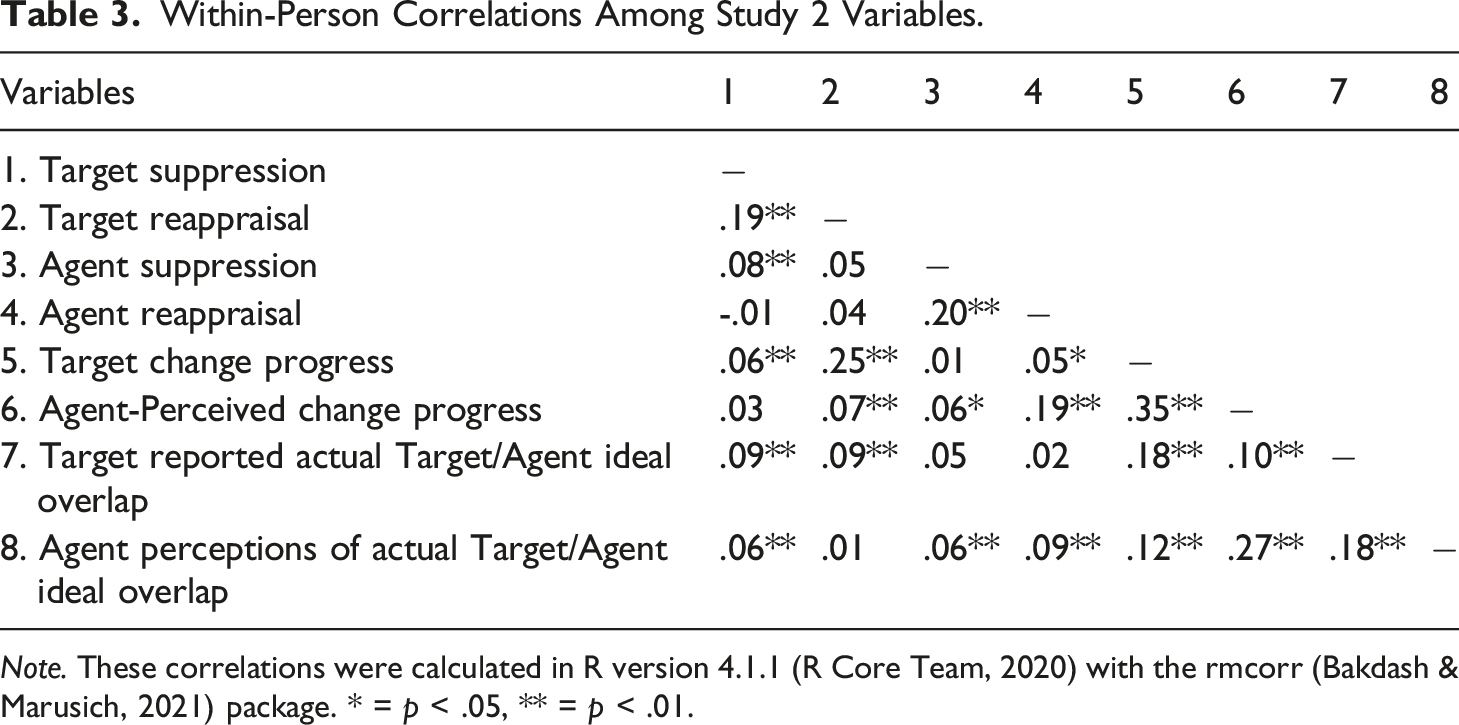
Note. These correlations were calculated in R version 4.1.1 (R Core Team, 2020) with the rmcorr (Bakdash & Marusich, 2021) package. * = p < .05, ** = p < .01.
We conducted two-level cross-classified models using SPSS version 26.0 testing our main effects. We used restricted maximum likelihood estimation in all models. We specified random intercepts for each partner within the couples and specified slopes as fixed. Models with slopes specified as random were largely comparable, and thus, we retained the more parsimonious fixed-slope models (see supplemental materials for random slope model results). Prior to analyses, we person-mean centered all predictors. We also created aggregate variables of level 1 (weekly) variables, which we grand mean centered prior to analyses. We entered both aggregated and within-person centered predictors (i.e., within- and between-person suppression and reappraisal) into the same model to allow us to examine unique within-person (i.e., driven by deviations from one’s own mean) and between-person (i.e., due to the effects of one’s own average) effects on outcomes. In accordance with the actor–partner interdependence model and given that we had greater power to detect effects in this sample, we simultaneously entered target and agent emotion regulation into these models to isolate the unique effects of target emotion regulation. We also tested whether all models were moderated by either participant gender or relationship length. Gender and relationship length generally did not moderate the effects (except for a few exceptions that did not form a theoretically meaningful pattern), so we present models without these moderators (see supplemental materials for moderation results at https://osf.io/u8fz2/).
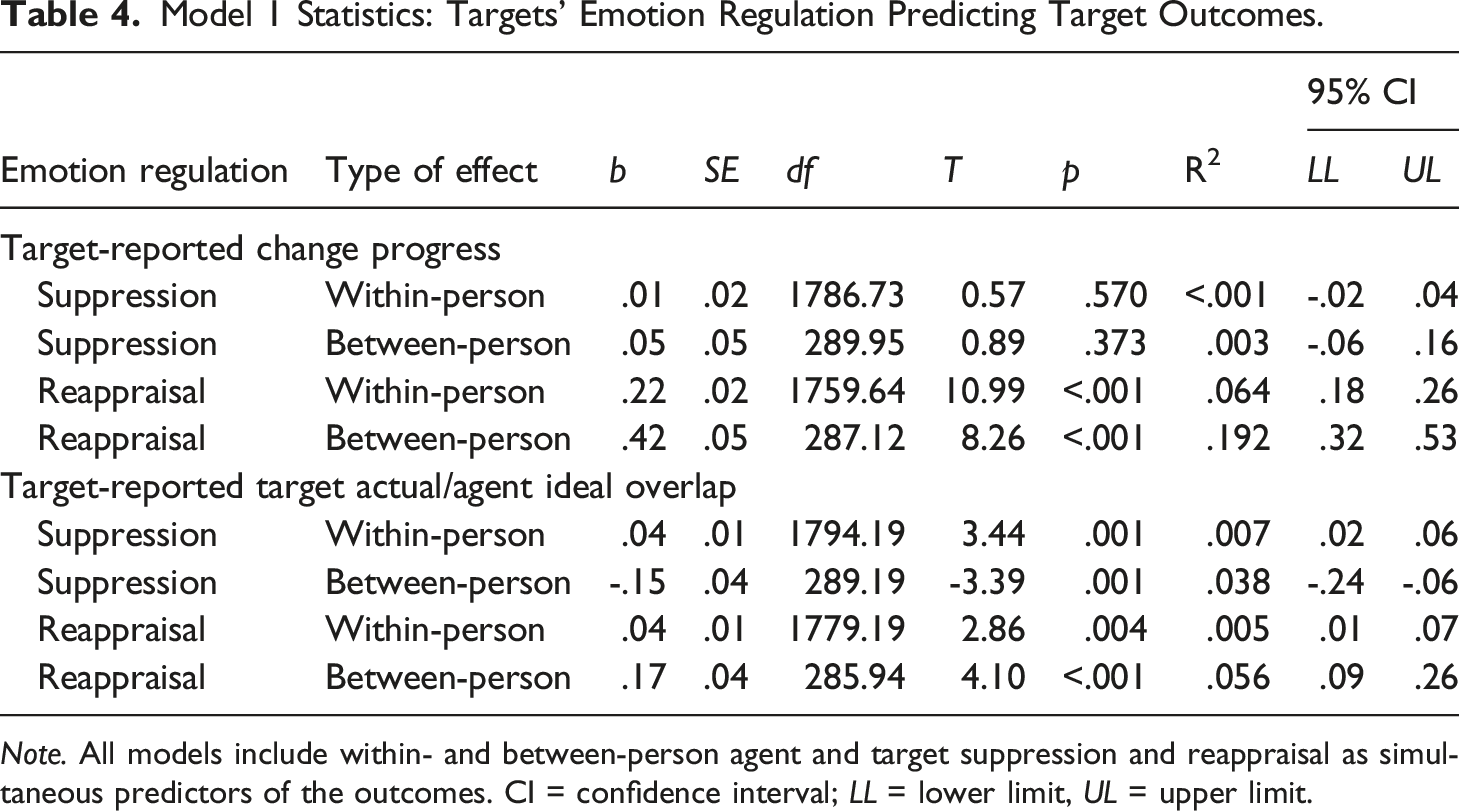
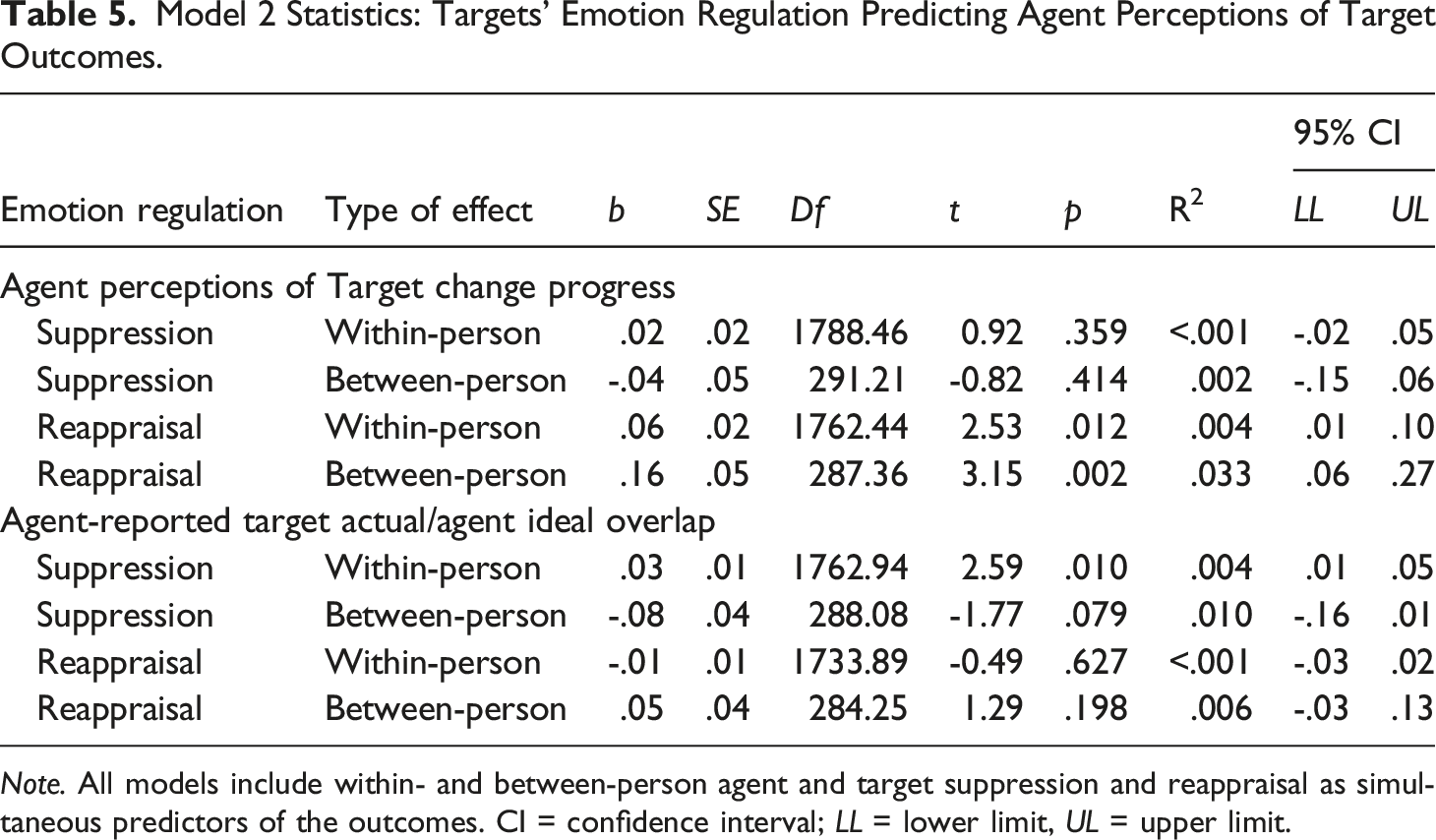
We first report the main effects from Model 1 (see Figure 1), in which within- and between-person target and agent emotion regulation were entered as predictors of target change progress and actual target/agent ideal overlap. This model examines how targets’ emotion regulation predicted their own change progress and ideal overlap, accounting for agent emotion regulation. We then report the main effects from Model 2 (see Figure 1) in which within- and between-person target emotion regulation were entered as predictors of agent perceptions of target change progress and ideal overlap. This model examines how target emotion regulation predicted agent perceptions of target change process and ideal overlap, accounting for agent emotion regulation (see supplemental materials for all agent emotion regulation results). Models Depicting Predicted Pathways Between Target Emotion Regulation (Accounting for Agent Emotion Regulation) and Change Progress and Target Actual/Agent Ideal Overlap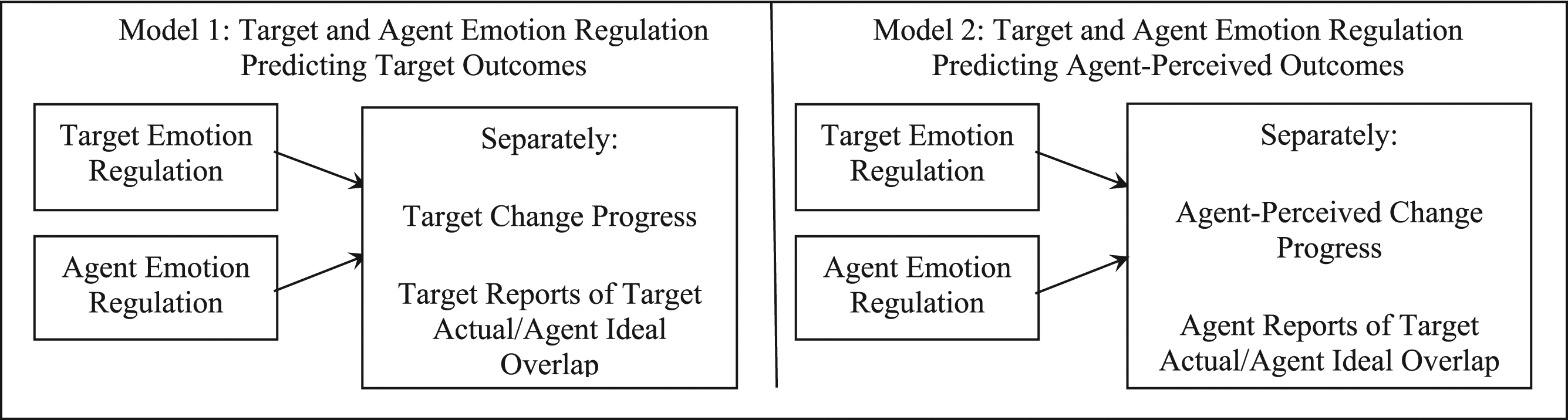
Model 1: Target Emotion Regulation Predicting Target Outcomes
Model 1 Statistics: Targets’ Emotion Regulation Predicting Target Outcomes.
Note. All models include within- and between-person agent and target suppression and reappraisal as simultaneous predictors of the outcomes. CI = confidence interval; LL = lower limit, UL = upper limit.
In sum, suppression was not linked to change progress. Whereas short-term target suppression was linked to targets being closer to their partner’s ideal, targets who suppressed more than others reported being further from their partner’s ideal. In contrast, target reappraisal was consistently linked to greater target-reported change progress and target actual/agent ideal overlap.
Model 2: Target Emotion Regulation Predicting Agent-Perceived Outcomes
Model 2 Statistics: Targets’ Emotion Regulation Predicting Agent Perceptions of Target Outcomes.
Note. All models include within- and between-person agent and target suppression and reappraisal as simultaneous predictors of the outcomes. CI = confidence interval; LL = lower limit, UL = upper limit.
In sum, suppression was not linked to agents’ perceptions of change outcomes. Whereas short-term target suppression was linked to agents feeling that targets were closer to their ideal, agents partnered with targets who suppressed more than others reported that their partners were further from their ideal. In contrast, target reappraisal was consistently linked to greater agent-perceived change progress.
Discussion
Across two studies, we examined the impact of suppression and reappraisal on target change progress and the extent to which targets overlapped with agents’ ideals. Investigating these processes in the context of a common yet emotionally evocative experience in romantic relationships can help us elucidate the effects of these emotion regulation strategies on the achievement of goals set by close others. Our results highlight a novel approach for promoting change success, which has potential real-world implications for couples working to resolve persistent conflicts.
In contrast with prior literature suggesting that suppression can negatively impact relational outcomes (Sasaki et al., 2021; Velotti et al., 2016), conflict resolution (Thomson et al., 2018), and personal goal achievement (e.g., regarding academics and self-improvement) (Low et al., 2017), target suppression was not significantly associated with change outcomes in either study. However, targets’ greater suppression on a given week was associated with targets and agents reporting that the target was closer to the agent’s ideal. Although previous work suggests that suppression does little to reduce inner feelings (e.g., Gross, 2002; Low et al., 2017; Peters & Jamieson, 2016), it is possible that—at least in the short term—concealing negative feelings evoked by being asked to change may reduce conflict or facilitate discussion about the agents’ desired change. Targets may feel that they are no longer failing to meet their partner’s ideals and agents may feel that the target is not upset about or struggling with being asked to change.
However, consistent with research demonstrating the interpersonal costs of suppression (e.g., Sasaki et al., 2021) targets’ greater suppression across the diary compared to others was associated with both partners reporting that the target was (significantly for target reports, marginally for agent perceptions) further from the agent’s ideal. Given that habitual suppression is linked to poor relationship outcomes for both partners through lower authenticity (English & John, 2013; Impett et al., 2012), targets who consistently concealed their negative emotions may have felt inauthentic, and as such, struggled to feel like they were living up to their partner’s ideals. Agents may have noticed this inauthenticity, perhaps explaining why they also felt that targets who suppressed more than others were further from their ideals. Given that suppression can even amplify negative emotion (e.g., Gross, 2002; Low et al., 2017; Peters & Jamieson, 2016), agents may have perceived targets to be upset about their request or unwilling to change, leading to negative perceptions of their partner’s overlap with their ideals.
In contrast with these costs of suppression, our results revealed that reappraisal was linked to greater change progress as reported by targets (marginally in Study 1 and significantly in Study 2) and as perceived by agents (in Study 2). Our results also suggest that reappraisal—both short term and over time—may contribute to targets feeling closer to their partner’s ideals. These findings are consistent with literature demonstrating both personal (e.g., reduction of unwanted behaviors) (Rodriguez et al., 2019) and interpersonal (e.g., reduced distress about conflict) (Finkel et al., 2013) benefits of cognitive reappraisal. Thus, this research highlights reappraisal as a potential novel approach to help couples better achieve partner-requested changes and reach each other’s ideals. For example, reframing requested changes as opportunities for growth or as a signal of their partner’s commitment may help targets to effectively manage their emotions in response to being asked to change and sustain change motivation and effort over time.
In sum, the current work extends the literature on partner change and adds to the growing body of research on emotion regulation by revealing that reappraisal may promote more successful partner change and more partner-ideal overlap both immediately and over time. The current findings highlight the promise of potential emotion regulation applications for resolving conflict and promoting satisfying relationships. More generally, these results may also guide future applications for personal and relational well-being by helping people more effectively manage their emotional experiences.
Limitations and Future Directions
Despite the strengths of our multi-method dyadic approach, the current research has several limitations that highlight avenues for future work. First, our findings are correlational and thus cannot address causality. As such, it is beyond the scope of these studies to identify whether employing reappraisal causes targets to make more change progress, for example. It is also possible that people who are more motivated to change may try harder to reframe their partner’s request. Thus, future work may focus on replicating these findings with experimental manipulations of emotion regulation.
Second, although our samples are relatively diverse with respect to age, ethnicity, education, and relationship length, the majority of our participants identified as cisgender and heterosexual and all participants resided in Canada or the United States. Sexual orientation was also not assessed in Study 1 and the disability status of participants was not assessed in either sample. Thus, future work should strive to reflect the experiences of more diverse people from varied cultural contexts. Participants in both studies also tended to be in relatively satisfying relationships. It is possible that emotion regulation may function differently in relationships in which one or both partners experience(s) low relationship quality. Thus, future research examining emotion regulation and partner change should include a more diverse range of couples.
Third, while our research demonstrates that reappraisal is linked to more change progress and ideal partner overlap, our data does not explore the content of participants’ reappraisals. Recent research demonstrates that different ways of cognitively reframing experiences can differentially impact emotion outcomes (McRae et al., 2012; Uusberg et al., 2021). For example, targets may attempt to reappraise the situation (e.g., view their partner’s request as an opportunity for growth) which may promote motivation to change and greater success over time. However, targets may instead attempt to reappraise their emotion itself (e.g., view their anxiety as excitement), which may increase short-term motivation but may not sustain change effort over time. Future research should aim to investigate which reappraisal tactics people tend to use in the context of partner change, and which tactics may be the most beneficial for reframing different requests.
Conclusion
Prior research has highlighted the difficulty and ubiquity of conflicts driven by romantic partners’ desires for each other to change. Our multi-method examination of partner change processes revealed that targets’ suppression was not linked to change progress but had mixed results for both partners’ assessments of how much the target overlapped with their partner’s ideals. On the other hand, target reappraisal was consistently linked to greater change progress and partner-ideal overlap. By examining how reappraisal and suppression differentially impact partner change outcomes, this study highlights when and for whom emotion regulation may promote more successful partner change and conflict resolution.
Supplemental Material
sj-pdf-1-spr-10.1177_02654075221078881 – Supplemental Material for When We’re Asked to Change: The Role of Suppression and Reappraisal in Partner Change Outcomes
Supplemental Material, sj-pdf-1-spr-10.1177_02654075221078881 for When We’re Asked to Change: The Role of Suppression and Reappraisal in Partner Change Outcomes by Natalie M. Sisson, Grace A. Wang, Bonnie M. Le, Jennifer Stellar and Emily A. Impett in Journal of Social and Personal Relationships
Footnotes
Funding
The authors disclosed receipt of the following financial support for the research, authorship, and/or publication of this article: This research was supported by a SSHRC Insight Grant awarded to Emily A. Impett.
Open research statement
As part of IARR’s encouragement of open research practices, the authors have provided the following information: This research was preregistered. The aspects of the research that were preregistered were the hypotheses and analysis plan (which were preregistered after collecting the data but before analyzing the data). These materials are available on the Open Science Framework at Open Science Framework at  . The data and materials used in the research are available and can be obtained at: https://osf.io/u8fz2/ or by emailing:
Supplemental material
Supplemental material for this article is available online.
Notes
References
Supplementary Material
Please find the following supplemental material available below.
For Open Access articles published under a Creative Commons License, all supplemental material carries the same license as the article it is associated with.
For non-Open Access articles published, all supplemental material carries a non-exclusive license, and permission requests for re-use of supplemental material or any part of supplemental material shall be sent directly to the copyright owner as specified in the copyright notice associated with the article.
