




Abstract
When people experience conflicts between their ideal standards and their partner’s actual state, they often resolve conflict through communication. Numerous observational studies suggest that direct regulation attempts (e.g., requesting one’s partner to change) are positively associated with the behavior change of the target partner. However, previous research using between-person and correlational designs has provided limited evidence. Moreover, the psychological components of partner regulation that affect targets’ intentions and behavior remain unclear. Therefore, we employed a within-person experimental paradigm to rigorously test targets’ psychological processes underlying interpersonal conflict resolution through communication. This focused on the discrepancy between targets’ actual states and requesters’ ideals. In the paradigm, we systematically manipulated targets’ perceived discrepancy. In our experiment (N = 78 couples), targets were asked to rate the actual frequency of 40–80 important actions, and requesters were asked to rate the ideal frequency of the targets’ actions. These actions were then randomly assigned to either the discrepancy feedback or no-feedback condition. Results showed that, in the feedback condition, discrepancies were positively associated with targets’ intentions to improve their behavior (but not with behavioral changes). These findings suggest that although people can facilitate their partners’ intention to change important actions by simply communicating their ideals, they must make additional efforts (e.g., suggesting a solution and promoting prospective memory) to get their partners to execute the intention. This study provides critical insight into the psychological process underlying conflict resolution in close relationships using a within-person experiment.
Keywords
Introduction
People often experience conflict between the way they want others to be and the way others actually are (Simpson et al., 2001). For example, someone who wants their romantic partner to cook dinner a few times a week would be dissatisfied if the partner did not cook often. Such discrepancies between one’s ideal standards and their partner’s actual states worsen relationship quality (Fletcher et al., 1999). Consequently, people often communicate with their partner to change their partner’s behavior (Overall et al., 2006). Previous studies have investigated the effectiveness of various types of communication from one person (requester) to the other (target). However, the psychological components of communication that contribute to target changes remain unclear. This study aims to rigorously test targets’ psychological processes underlying interpersonal conflict resolution through communication, focusing on the discrepancy between targets’ actual states and requesters’ ideals.
Interpersonal behaviors that resolve interpersonal conflict
Extensive research has been conducted to investigate interpersonal behaviors that resolve conflict in social interactions between romantic partners (Gottman, 1998; Heyman, 2001), friends (Salvas et al., 2014; Tamm et al., 2018), and parents and children (Branje et al., 2009; Feldman et al., 2010). In particular, much research on interpersonal conflict has focused on romantic relationships (Baker & McNulty, 2020) in which people tend to be highly interdependent and often experience conflict with their partners (Storaasli & Markman, 1990).
Previous studies on romantic relationships have focused on partner regulation, an attempt for people to change their partners’ intentions and behaviors (see reviews of Baker & McNulty, 2020; Overall & McNulty, 2017). Studies on partner regulation have argued that the key to resolving relationship conflict is the directness of partner regulation attempts (Overall & McNulty, 2017). Directness is whether people explicitly communicate problems, and direct regulation attempts include actions such as demanding change and proposing solutions. Although direct regulation attempts are likely to elicit a temporary defensive response from partners (Oriña et al., 2002) and are initially perceived as less effective by partners (Overall et al., 2009), they are positively associated with partners’ desired changes in the long run, and desired changes predict relationship improvement (McNulty & Russell, 2010; Overall et al., 2009). These studies suggest that direct regulation attempts make partners realize the seriousness of problems by clearly communicating the degree of change required and motivating partners to change their behavior (Overall et al., 2009).
Empirical studies of partner regulation demonstrate that direct regulation attempts (but not other types of regulation attempts) are positively associated with partner behavior change. For example, in a study conducted by Overall et al. (2009), couples came to a laboratory and discussed the behaviors they wanted each other to change. The researchers then coded the couples’ interactions into four types of regulation attempts: direct-opposing (e.g., demanding change and blaming), direct-cooperative (e.g., proposing solutions and reasoning), indirect-opposing (e.g., evoking guilt and expressing hurt), and indirect-cooperative attempts (e.g., using humor and pointing out the partner’s good qualities). In the following months, partners were asked to rate the extent to which they had changed the behaviors discussed. Results showed that direct regulation attempts, regardless of whether they were opposing or cooperative, were significantly associated with increased partner behavior change (standardized partial regression coefficients of direct-opposing attempts were .23, and standardized partial regression coefficients of direct-cooperative attempts were .26–.27), whereas indirect regulation attempts were not significantly associated with behavior change. Subsequent studies have found an association between direct regulation attempts and behavior change to the extent that relationship problems are important and changeable (Baker & McNulty, 2015; McNulty & Russell, 2010).
Discrepancy between actual states of self and ideal standards of a significant other
A major psychological factor in behavior change is cognitive inconsistency, which is theorized to play a wide range of roles in human social behavior (Festinger, 1957; Gawronski & Strack, 2012; Heider, 1958; Higgins, 1987; Simpson et al., 2001). Theories of cognitive inconsistency argue that people strongly desire consistency among their cognitions and that inconsistent cognitions lead to changes in behavior, cognition, and emotion. Specifically, self-discrepancy theory (Higgins, 1987) theorizes the role of discrepancy between a person’s actual state and an ideal state they believe their significant other wants them to attain. The theory proposes that a person with larger actual-ideal discrepancies will feel dejection-related emotions (e.g., shame, embarrassment, or feeling downcast) and will be concerned about losing the affection or esteem of their significant other because they tend to believe that their significant other is disappointed and dissatisfied with them. The theory argues that the actual-ideal discrepancy will motivate people to regulate themselves in ways that reduce the discrepancy (Higgins, 1987; Moretti & Higgins, 1999).
Empirical studies on romantic relationships focus on the discrepancy between a target’s actual state and a requester’s ideal standards (Campbell et al., 2001; Overall et al., 2006; Overall & Fletcher, 2010). For example, a cross-sectional study (Campbell et al., 2001) examined the association between actual-ideal discrepancy and target-reported relationship quality using the Actor-Partner Interdependence Model (Kashy & Kenny, 2000). The study found that a requester-reported discrepancy was significantly negatively associated with target-reported relationship quality (Campbell et al., 2001, Table 6), even when controlling for the flexibility of ideal standards, gender, and the interactions between the variables. This indicates that the larger discrepancy a requester reported between a target’s actual states and their ideal standards, the lower perceived relationship quality a target reported. The researchers suggest that a person who does not match their partner’s ideal standards may feel threatened and insecure about the relationship, which may motivate them to reduce the discrepancy by regulating themselves (Campbell et al., 2001).
Methodological gaps in previous research
Although previous studies have demonstrated the effectiveness of direct regulation attempts and the important role of actual-ideal discrepancy, they appear to have three important limitations. First, partner regulation studies aim to uncover the processes within an individual (e.g., if a target is directly regulated by their requesters, the target is more likely to change their behavior in the future). Thus, testing these predictions requires a within-person approach (e.g., measuring variables multiple times per person, and investigating within-person associations). However, to the best of our knowledge, all previous studies on partner regulation and behavior change have used a between-person approach (e.g., measuring variables once or twice per person, and investigating between-person associations). Although a study on partner regulation measured direct-opposing attempts multiple times within a person, it used a between-person approach for data analysis to examine the association between the variability of direct-opposing attempts and relationship satisfaction (Overall, 2020). Importantly, between-person analyses can only be generalized to the between-person level (“Does a target whose requester attempts to directly regulate tend to change their behavior?”), and findings from a between-person approach cannot be generalized to a within-person process (Molenaar & Campbell, 2009) unless some unrealistic assumptions (ergodicity) are met (Hamaker et al., 2005). Thus, a between-person approach provides limited evidence regarding a within-person process.
In fact, recent studies in relationship science (Johnson et al., 2022; Nguyen et al., 2020) have used a within-person approach and found different results from those of between-person studies. For example, in their Study 2, Johnson et al. (2022) examined the association between observed positive communication (e.g., constructive communication and caring) and relationship satisfaction. They analyzed five-wave longitudinal data using a statistical model for a within-person design. Although a between-person meta-analysis found a significant positive association between positive communication and relationship satisfaction (Cohen’s d = 0.55 for problem solving, d = 0.48 for intimacy behaviors) (Woodin, 2011), the within-person analysis showed a non-significant association between positive communication and relationship satisfaction across five waves (Johnson et al., 2022, Table 1).
Second, previous research on partner regulation (e.g., Baker & McNulty, 2015; McNulty & Russell, 2010; Overall et al., 2009) cannot completely rule out the possibility that confounding variables influenced both independent and dependent variables. These studies employed longitudinal designs and statistically controlled for several confounders, such as depressive symptoms, engagement, tendencies to blame (Baker & McNulty, 2015), sex (McNulty & Russell, 2010), relationship quality, stress, and problem severity (Overall et al., 2009). However, potential confounders remain, such as ability, personality, and nonverbal information in discussion (e.g., facial expressions and vocal tones). For example, couples who communicate directly about relationship problems might naturally possess better problem-solving skills, which could lead to improvements in their problems over time, even without direct communication. Thus, the previous studies cannot draw strong causal conclusions.
Third, the psychological component of partner regulation that affects targets’ intentions and behavior remains unclear. Previous research on partner regulation employed couples’ discussion paradigms where they freely discussed an aspect of their partner they wanted to change (e.g., Overall et al., 2009). These studies included various direct regulation strategies (e.g., requesting change, expressing anger, proposing a solution, and reasoning). In other words, the direct regulation strategies in previous studies can be viewed as mixtures of communication of a desire, emotional expression, support, and persuasion. Although it has high external validity, the paradigm is not suitable for testing the effect of a specific psychological component.
A longitudinal survey on partner regulation examined the role of the discrepancy between targets’ actual states and their inferred ideal standards of requesters (Overall & Fletcher, 2010). Although the study tested whether targets’ inferred discrepancy mediated the association between their perceived partner regulation and self-regulation (the extent to which a target tried to change their actual state), it found no evidence supporting the mediation process. However, the study only measured targets’ inferred discrepancy, leaving the causal role of the discrepancy unclear.
The present study
To identify a critical psychological component in interpersonal conflict resolution, we employed a within-person experimental paradigm and focused on a specific psychological component, namely the discrepancy between targets’ actual states and requesters’ ideals. In this paradigm, we systematically manipulated targets’ perceived discrepancies within a person and tested whether perceiving discrepancies would be sufficient to change their intentions and behavior.
To conduct a within-person analysis, we included multiple items representing actions related to requesters’ interest, such as “cook for your partner” and “listen to your partner’s fun stories with a smile.” In the experiment, we quantitatively measured discrepancies between the targets’ actual state and the ideal standards of requesters for various actions per couple. Next, we measured subsequent changes in the frequency of these actions. This procedure allowed us to conduct regression analysis using the action items as separate data points and examine the association between discrepancies and changes in the frequency of actions per person. This procedure was repeated for all couples, and we performed multilevel analyses to obtain estimates of the within-person association between the discrepancies and the changes in frequency of actions.
Furthermore, to make a strong causal inference, we manipulated the size of targets’ perceived discrepancy by assigning action items, rather than participants, to different conditions. We randomly assigned half of the actions to the feedback condition and the other half to the no-feedback condition for each participant. The actual and ideal frequency of action items were conveyed to a target in the feedback condition. In the no-feedback condition, the actual and ideal frequency of action items were not expressed. We then compared the association between the actual-ideal discrepancy size and changes in the actions under the feedback versus no-feedback conditions. This procedure allowed us to make a strong causal inference for the effect of perceiving the discrepancy on their (i.e., targets’) behavioral change.
To increase the ecological validity of this experimental paradigm, we optimized the action items for each couple. The importance of the behavior varied across couples (e.g., cleaning a room once a week is very important to a requester in one couple but unimportant to a requester in another). Important problems may be resolved when requesters directly regulate targets, but unimportant problems may not (McNulty & Russell, 2010). Therefore, we ensured that targets were provided with discrepancies between the actual and ideal frequency of important actions that requesters wanted their partners to change. We asked requesters to rate the importance of actions using our original list of action items. We then used only the important actions from the list.
Two main hypotheses were proposed.
Hypothesis 1: Perceiving the discrepancy between the actual and ideal frequency of an action will increase the intention to change its frequency. In other words, the less (more) frequent a desired (undesired) action in the feedback condition is in comparison with the requester’s ideal, the more a target will try to increase (decrease) its frequency.1
Hypothesis 2: Perceiving the discrepancy will cause changes in the frequency of an action. In other words, the interaction between discrepancy and condition (receiving feedback regarding the discrepancy or not) will affect both requester- and target-reported changes in the frequency of an action at follow-up. In the feedback condition, the less (more) frequent a desired (undesired) action is in comparison with the requester’s ideal, the more a target will later increase (decrease) the frequency of the desired (undesired) action. Although an association between the discrepancy and changes in the frequency of an action may be found in the no-feedback condition due to regression-to-the-mean, the association should be smaller than that in the feedback condition.
In addition, we explored some moderating effects for both Hypotheses 1 and 2 based on previous findings on close relationships. First, we confirmed whether targets accurately remembered the discrepancy in the follow-up session and explored whether memory accuracy moderated the interaction between discrepancy and condition. A previous study showed that the more accurately a target remembered a relationship problem that had been discussed, the more a requester perceived that the problem had been solved (Baker et al., 2020). This finding suggests that a target should accurately remember the discrepancy to change the action. Second, we explored whether relationship variables (relationship satisfaction and commitment) moderated the effect of the discrepancy.2 Couples with higher relationship satisfaction tend to report better conflict resolution (Sanford, 2014); thus, targets will experience greater intentions and be more likely to change their behavior, especially if they are satisfied with their relationship and committed to maintaining it. To ensure that the findings were not confounded by action-specific variables (actual frequency, prior intention to change the frequency, changeability, and importance of an action), we controlled for these variables in all analyses (Overall et al., 2009). We also checked the robustness of the results by analyzing the models without the control variables.
Method
We uploaded the materials, analysis code, data, and codebook to the Open Science Framework (OSF; https://osf.io/atrn7/). We reported all manipulations, measures, and exclusions in this study. Our preregistration included the study design, planned sample size, exclusion criteria, and planned analyses for the main hypotheses. This study was approved by the ethics committee of the first author’s institution.
Participants
We recruited 98 Japanese romantic couples through crowdsourcing services (Lancers) and marketing research services (Cross Marketing). We first contacted one member of each couple who had an account with the crowdsourcing/marketing research service and asked them to invite their partner who did not have an account. At the end of the experiment, each couple received a total of 4,000 Japanese yen for their participation. We excluded 20 couples according to a preregistered sampling plan: five couples did not complete the follow-up assessments, five couples failed the attention check tests, and among the remaining 10 excluded couples, requesters rated fewer than 40 actions as important (5 or higher on an 8-point Likert scale) or wanted a target to increase or decrease the frequency of fewer than 10 desired and/or undesired actions.
The final sample consisted of 78 couples. All couples were heterosexual. The average age of the participants was 30.22 years old (standard deviation (SD) = 3.73, median = 30, range = 23–46). The mean relationship duration was 5.81 years (SD = 3.54); 67 couples were married and 72 couples were cohabiting. For 47 couples, both partners were working; for 28 couples, only one partner was working while the other was not; for one couple, neither partner was working; and for two couples, both partners were students.
Before the recruitment, we estimated our sample size based on a previously reported effect size (Overall et al., 2006), which showed that targets’ perceived discrepancy between their actual and ideal characteristics was associated with intentions to change their characteristics. To assess the effect size, we obtained data from Overall et al. (2006) and conducted mixed-effects modeling. Based on the information provided by the model, we conducted a summary-statistics-based power analysis of mixed-effects modeling (Murayama et al., 2022) for the association between actual-ideal discrepancy and intention to change the frequency of an action. In our model, we set the alpha level at .05 and the target power at .80. The results of the power analysis showed that we needed to recruit 57 couples to obtain a significant effect (see the OSF for details; https://osf.io/atrn7/).
Materials
We developed a list of action items by conducting two pilot surveys. We recruited 50 participants for the first survey and 48 participants for the second, all of whom had a romantic partner. The final version of the list consisted of 90 desired (e.g., “smile when talking to you”) and 90 undesired (e.g., “lie to you”) action items. The procedure for creating the list of action items and a complete list of action items are shown in the Supplementary Information (SI). Data from the two pilot surveys were uploaded to the OSF.
Procedure
Experiment Procedure
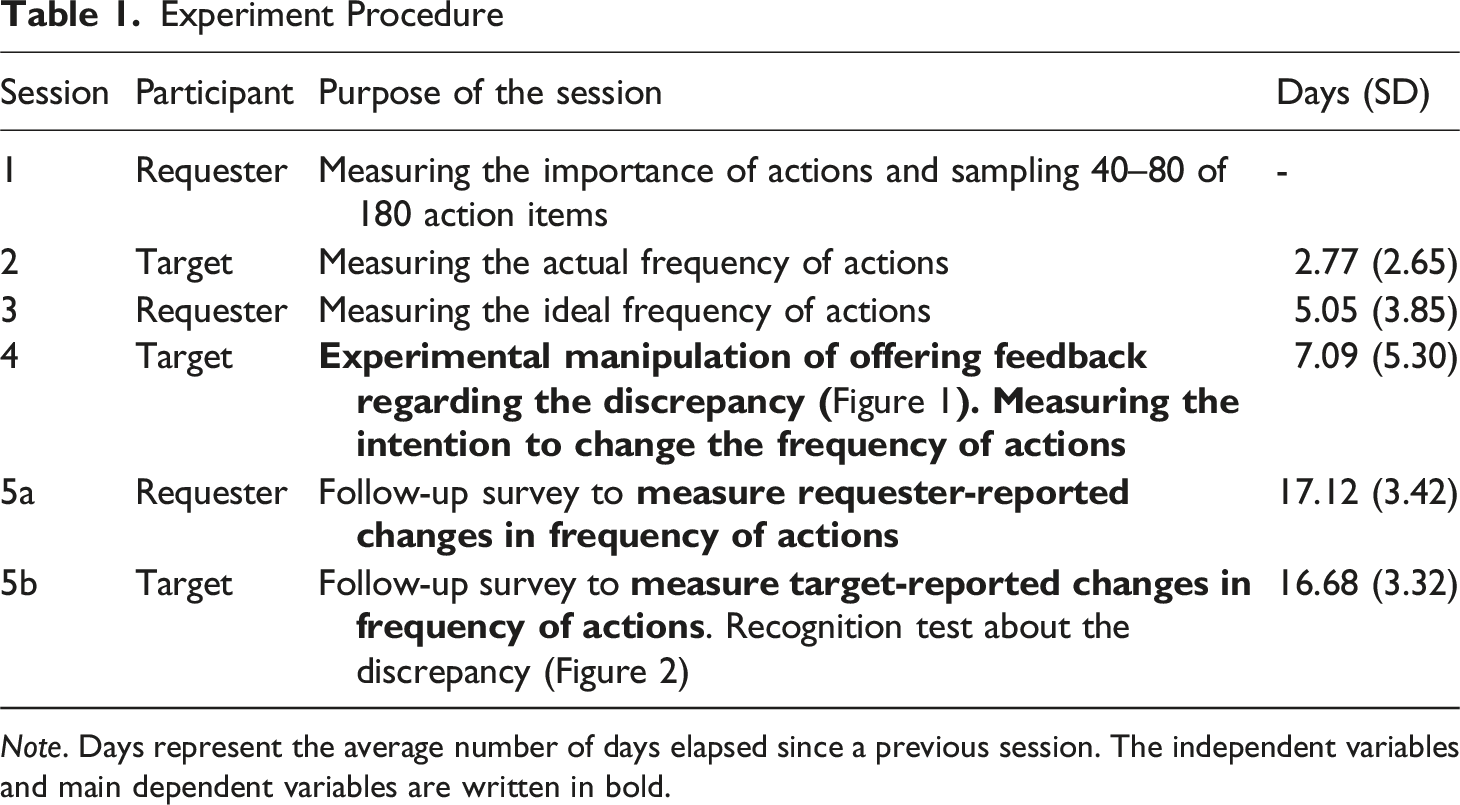
Note. Days represent the average number of days elapsed since a previous session. The independent variables and main dependent variables are written in bold.
Session 1 (requester): Measuring the importance of actions and sampling 40–80 of 180 action items
Requesters were asked to rate the importance of the 180 actions.3 Based on the requester’s response, we sampled a total of 40–80 action items for each couple to use in subsequent sessions by excluding the actions that were rated as unimportant (midpoint or less). Next, the experimenter checked that each requester had provided a sufficient number of action items to be used in subsequent sessions. If the number of important actions was fewer than 40, we asked the couple to swap the roles of requester and target, and Session 1 was repeated.4 Requesters were also asked to complete psychological scales of relationship satisfaction and commitment.
Session 2 (target): Measuring the actual frequency of actions
For each action item sampled in Session 1, targets were asked to rate their actual frequency of an action, their prior intention to change the frequency of an action, and the perceived changeability of an action. Targets were also asked to complete psychological scales of relationship satisfaction and commitment.
Session 3 (requester): Measuring the ideal frequency of actions
Requesters were told that their ideal ratings of action items would be presented to targets, although they were blind to the action items that would be presented. Next, for each sampled action item, requesters were shown the actual frequency of an action that their targets had rated in Session 2 and asked to rate their ideal frequency of the action. The reason for showing requesters the target-rated actual frequency was to align subjective rating criteria between requesters and targets.5 When requesters rated their ideal frequency, they were asked to select: (1) a number higher than the actual frequency if the requester wanted the target to increase the frequency of the action, (2) a number lower than the actual frequency if the requester wanted the target to decrease the frequency of the action, or (3) a number equal to the actual frequency if the requester did not want the target to change the frequency of the action.
Session 4 (target): Offering feedback regarding the discrepancy (experimental manipulation) and measuring the intention to change the frequency of actions
Prior to the session, sampled action items were assigned to either the feedback or no-feedback condition. We used a matching procedure to ensure that the action items in the feedback and no-feedback conditions were generally comparable in terms of the ratio of action type (desired or undesired), actual frequency, ideal frequency, prior intention to change action frequency, and action changeability (see the SI for details).
In this session, targets were provided with the actual frequency (as rated by targets themselves in Session 2) and their requester’s ideal frequency (as rated by requesters in Session 3) for action items in the feedback condition (Figure 1). Thus, during this session, each target perceived the size of the discrepancy between what they were or did and what their requester wanted them to be or do. Targets were asked to rate how much they intended to increase or decrease the frequency of each action. For action items in the no-feedback condition, targets were neither provided with their actual and their requester’s ideal frequency nor asked to rate their intention to change the frequency of each action. The Procedure of Session 4. Note. A target was provided with (1) the actual frequency and (2) the requester’s ideal frequency, and asked to rate (3) how much the target intended to change the frequency of the action.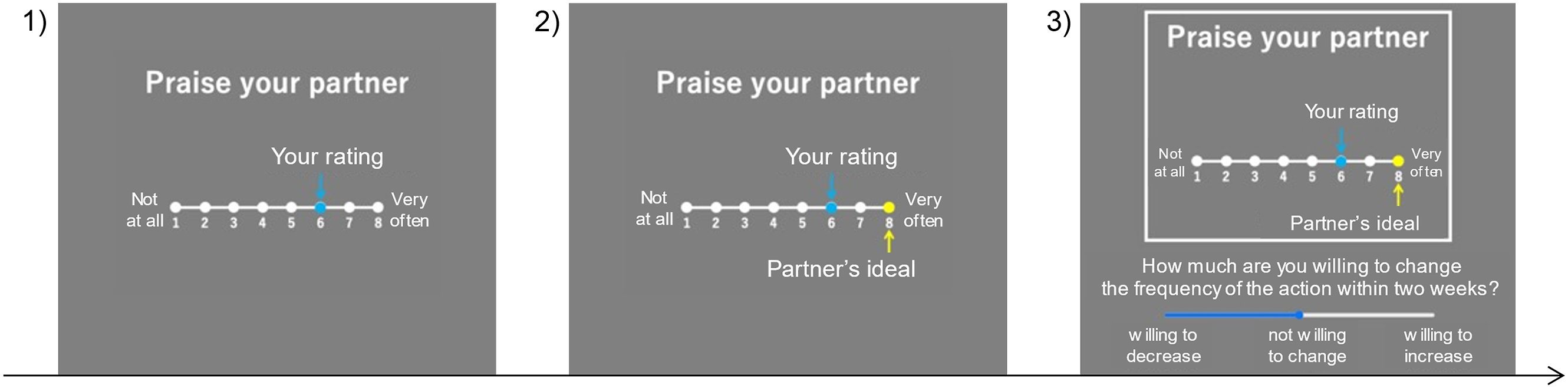
Session 5a (requester): Measuring requester-reported changes in frequency of actions
Two weeks after Session 4, requesters were asked to rate how much they perceived their target to have changed the frequency of each action for each sampled action item in both the feedback and no-feedback conditions. This two-week follow-up period was chosen because the frequency of actions in our item list can change within a week or two, and requesters may forget that targets changed the frequency of actions months later.
Session 5b (target): Measuring target-reported changes in frequency of actions and a recognition test of the discrepancy
As in Session 5a, targets were asked to rate the change in frequency for each action item. They were then asked to complete a recognition task that tested the accuracy of their memory of the discrepancy information provided in Session 4 (Figure 2). Each trial began with an action item appearing in the center of the screen. The first question asked whether the action item had been provided during Session 4. If the target clicked the “provided” button, a second question was presented and asked whether there was a discrepancy between their actual behavior and their requester’s ideal behavior. The task had no time limit, and all action items in both the feedback and no-feedback conditions were presented. Finally, targets were asked how much they attempted to regulate their requester’s ideal frequency. The Procedure of Session 5b. Note. An target was asked to answer (1) whether a requester’s ideal had been provided, and (2) whether the actual frequency had matched the requester’s ideal frequency.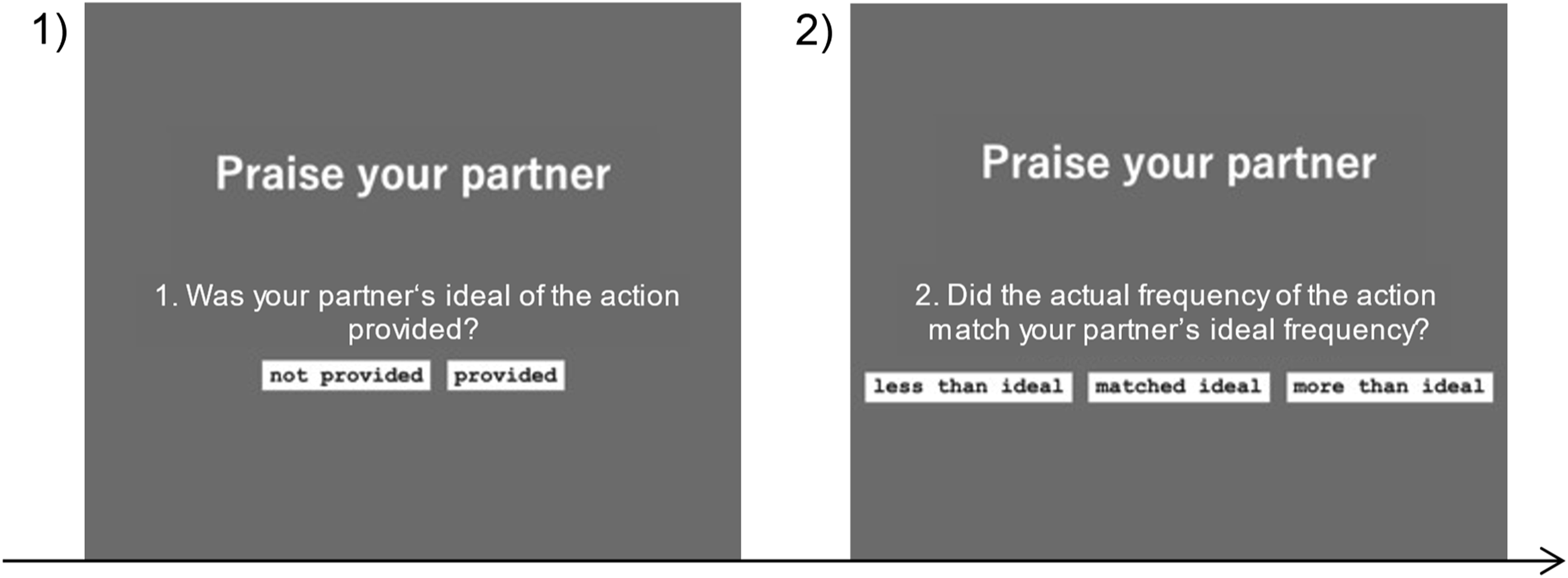
Measures
Actual and ideal frequency of an action
Targets were asked to rate how often they performed each action (1 = not at all, 8 = very often). Requesters were asked to rate how often they would ideally like their target to perform each action (1 = not at all, 8 = very often). The frequency of undesired actions was reverse-scored. Higher scores indicated that a desired action was performed more frequently or an undesired action was performed less frequently.6
Discrepancy between the actual and ideal frequency of an action
The discrepancy score was calculated by subtracting the actual frequency from the ideal frequency for desired actions and by subtracting the reverse-scored actual frequency from the reverse-scored ideal frequency for undesired actions, yielding a possible range of 0–7 (note that the discrepancy score was never negative because we defined desired and undesired actions based on participants’ ratings; see Footnote 6). Positive values indicated that a desired action was performed less frequently than the requester’s ideal or that an undesired action was performed more frequently than the requester’s ideal. A zero meant that the actual frequency of an action matched the requester’s ideal frequency.
Intention to change the frequency of an action
Targets were asked to rate how much they tried to change the frequency of each action using an 101-point slider scale (−50 = try to decrease, 0 = neither try to decrease nor increase, 50 = try to increase). The intention to change undesired actions was reverse-scored (intention to change an undesired action × −1). Positive values indicated that a target intended to increase the frequency of a desired action or decrease the frequency of an undesired action.
Change in the frequency of an action
Both targets and requesters were asked to rate how much the target changed the frequency of each action in the two weeks following Session 4 (−5 = decreased a lot, 0 = no change at all, 5 = increased a lot). Changes in the frequency of undesired actions were reverse-scored. Positive values meant that a requester and target perceived that the target had increased the frequency of a desired action or decreased the frequency of an undesired action during those two weeks.
Importance and changeability of an action
Requesters were asked to rate the importance of their target performing each of the 90 desired actions (1 = not at all, 8 = very important to perform) and not performing each of the 90 undesired actions (1 = not at all, 8 = very important to not perform). Targets were asked to rate how easily they could change the frequency for each action item (1 = difficult to increase, 8 = easy to increase for desired actions; 1 = difficult to decrease, 8 = easy to decrease for undesired actions).
Recognition accuracy of a requester’s ideal
Targets were asked to respond to the first question (whether the action item had been provided during Session 4) by selecting one of two options (not provided or provided) and the second question (whether there was a discrepancy between their actual behavior and their requester’s ideal behavior) by selecting one of three options (less than ideal, matched ideal, or more than ideal). We coded a correct response as 1 and an incorrect response as 0 for the first and second questions. The recognition accuracy of the first and second questions was calculated by averaging the responses (0 or 1) for each question. Recognition accuracy for the combined question was calculated by multiplying a response to the first question (0 or 1) by a response to the second question (0 or 1) and averaging the multiplied responses. We were unable to calculate the recognition accuracy of the second question for four participants because all of their responses to the first question were “not provided,” and they never proceeded to the second question.
Person-level scales
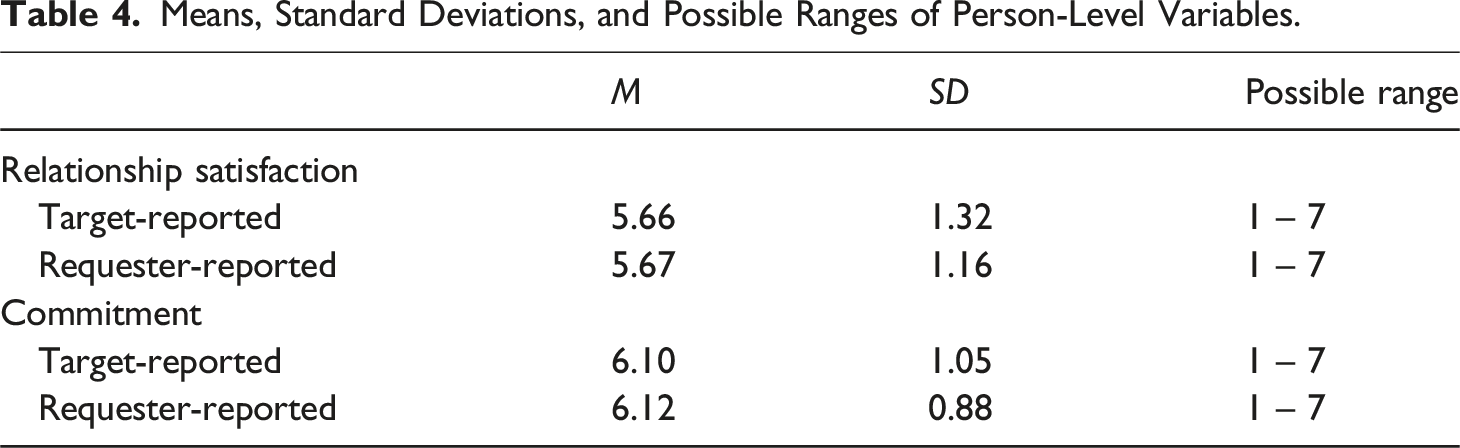
Relationship satisfaction was assessed using a five-item measure of the Investment Model Scale (Rusbult et al., 1998) (e.g., “I feel satisfied with our relationship”; 1 = strongly disagree, 7 = strongly agree). The commitment level in the romantic relationship was assessed using a seven-item measure of the Investment Model Scale (Rusbult et al., 1998) (e.g., “I want our relationship to last forever”; 1 = strongly disagree, 7 = strongly agree). The relationship satisfaction and commitment scales were translated into Japanese (Komura et al., 2013). Mean scores were calculated using the items for each relationship satisfaction and commitment scale (αs >.83). Targets’ attempts to regulate requesters’ ideals were assessed using a 7-point scale (1 = not at all, 7 = require a lot).
Data analysis
All preregistered analyses are reported in the manuscript and the SI. We clearly described any deviations from the preregistered analysis plan in the manuscript. Measures and analyses that were preregistered but not reported in the manuscript are reported in the Subsidiary measures and results section of the SI. All analyses were performed in the R programming environment using the following packages: correlation Version 0.8.4 (Makowski et al., 2020; Makowski et al., 2022), lme4 Version 1.1.31 (Bates et al., 2015), and lmerTest Version 3.1.3 (Kuznetsova et al., 2017).
For the main analysis, we used linear mixed models to examine the association between discrepancy and intention to change the frequency of an action in the feedback condition (Hypothesis 1), as well as the interaction effects between the discrepancy and condition (feedback vs. no-feedback) on target- and requester-reported changes in the frequency of an action (Hypothesis 2). We used the equations below. We coded the feedback condition as 0.5 and the no-feedback condition as −0.5 (Cohen et al., 2003). All action-level explanatory variables were centered within a person because we were primarily interested in action-level effects. The interaction term between discrepancy and condition was calculated by multiplying the mean-centered discrepancy and condition.
In the models, we controlled for prior intention to change frequency, actual frequency, changeability of an action, and importance of an action. Our choices were based on the criterion that a control variable should affect both predictors and outcomes but should not be affected by either (Rohrer, 2018). Considering a partner-regulation study (Overall et al., 2009) and our experimental paradigm, it was assumed that these control variables should affect discrepancy, intention, and behavior change but should not be affected by discrepancy, intention, and behavior change. We illustrated the causal assumptions among the variables using a directed acyclic graph (Rohrer, 2018; Figure S1 of the SI). As deviations from preregistration, we controlled for the importance of an action based on Overall et al. (2009) and did not control for the ideal frequency of an action because of its strong correlation with the actual frequency (see the Results section). All conclusions remained unchanged when we used the models without including the importance of an action, the models including the ideal frequency instead of the actual frequency, and the models including no control variable.











As an exploratory analysis, we also used linear mixed models to examine the moderating effects of recognition accuracy and relationship variables (relationship satisfaction and commitment). Three-way interaction terms were calculated by multiplying mean-centered discrepancy, condition, and mean-centered moderating variables. In all models, participants were specified as a random effect variable, and a random intercept and random slope were included in the models. Random effects of action items were not included in the models because the action items differed across the couples. We used the same control variables as those in the main analysis. The equations of the models are shown in the SI.
Results
Descriptive statistics
Means, Standard Deviations, and Possible Ranges of Action-Level Variables.
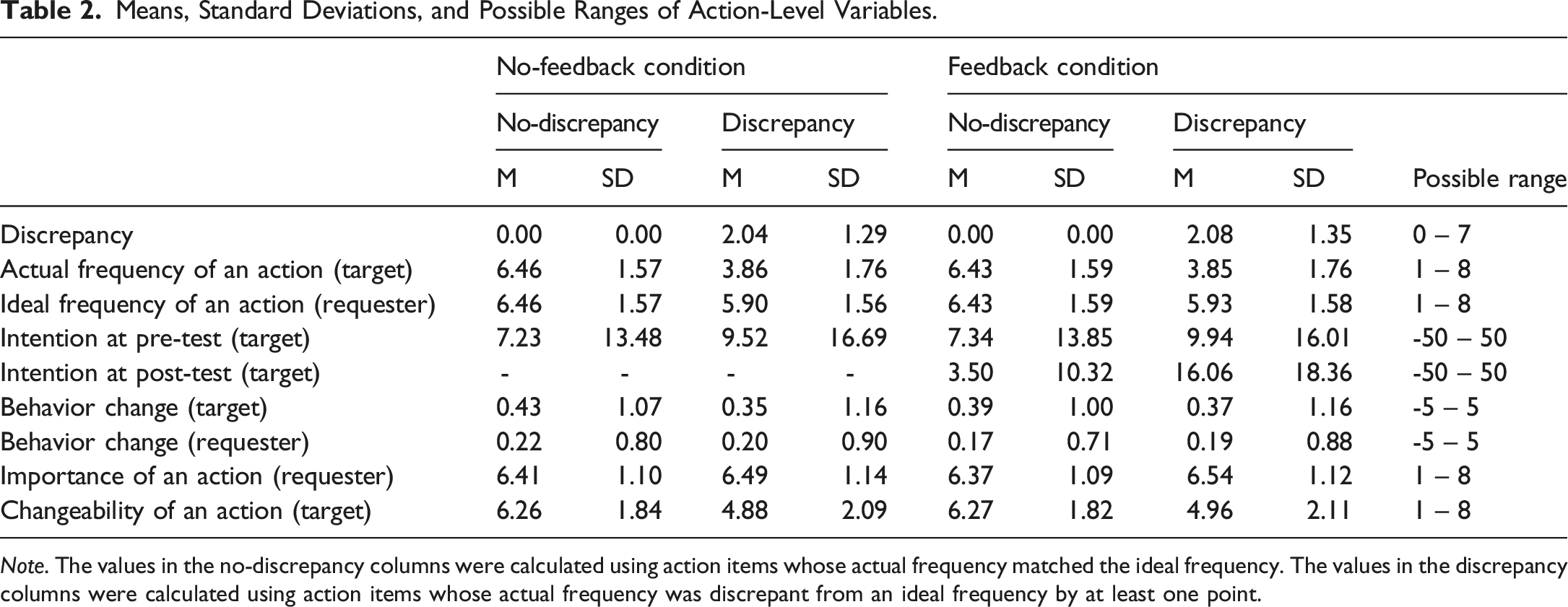
Note. The values in the no-discrepancy columns were calculated using action items whose actual frequency matched the ideal frequency. The values in the discrepancy columns were calculated using action items whose actual frequency was discrepant from an ideal frequency by at least one point.
Multilevel Within-Person Correlations Between Action-Level Variables.
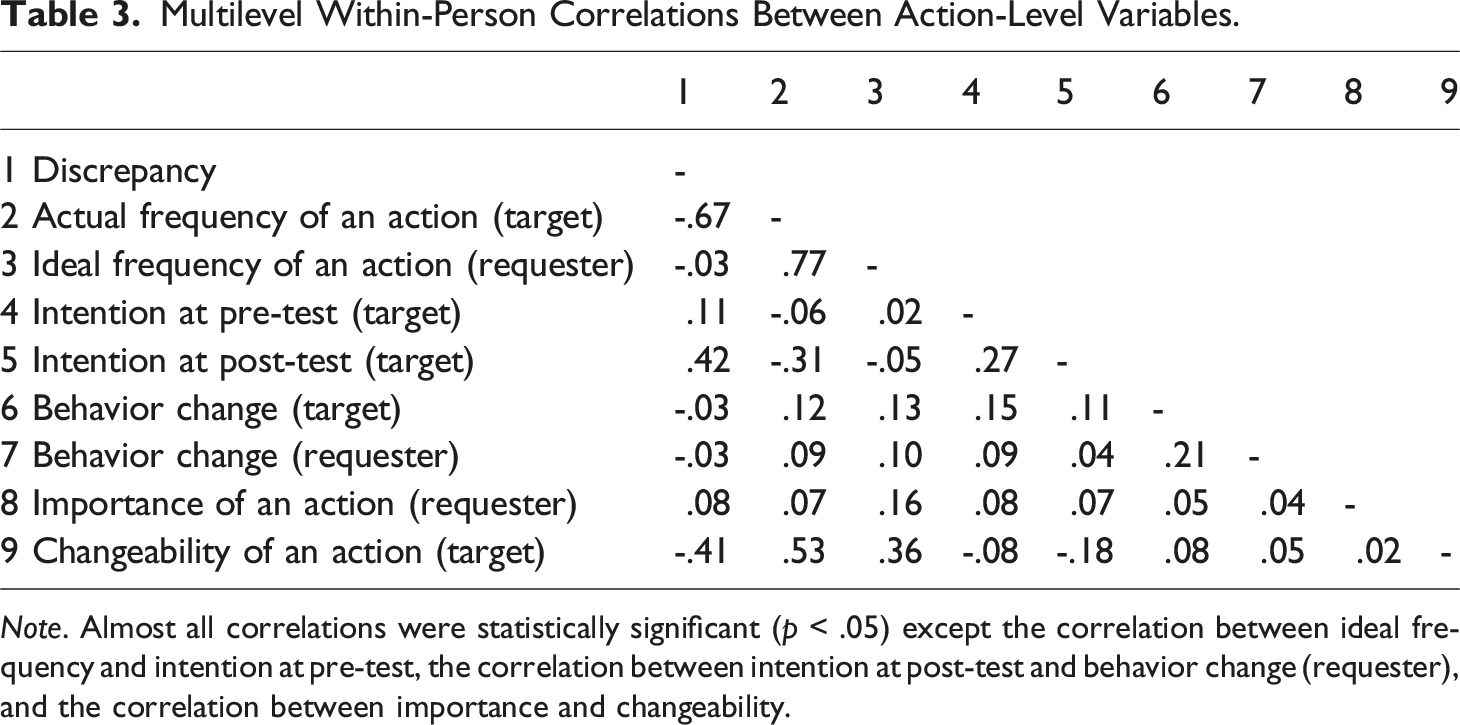
Note. Almost all correlations were statistically significant (p < .05) except the correlation between ideal frequency and intention at pre-test, the correlation between intention at post-test and behavior change (requester), and the correlation between importance and changeability.
Means, Standard Deviations, and Possible Ranges of Person-Level Variables.
Main results: effect of perceiving the discrepancy
Intention to change the frequency of an action
The Association Between the Discrepancy and Intention.
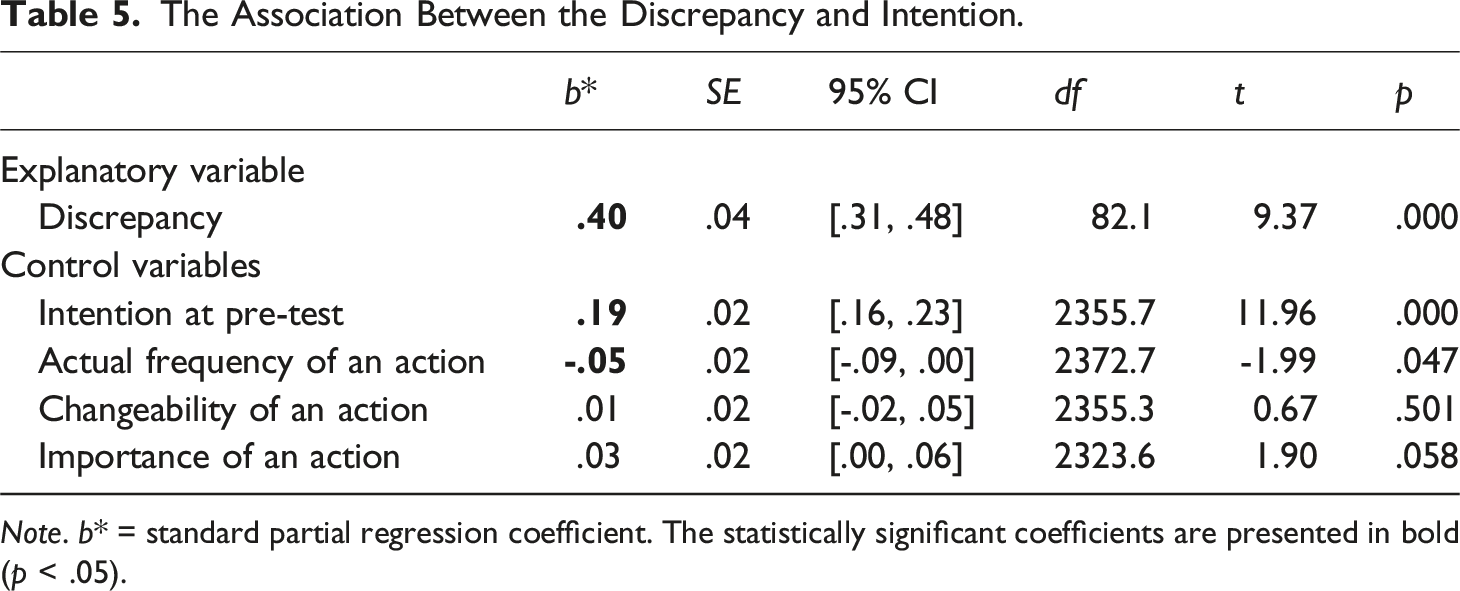
Note. b* = standard partial regression coefficient. The statistically significant coefficients are presented in bold (p < .05).
We conducted additional tests for the association between the discrepancy and intention (see details of the analysis in the SI; these analyses were not preregistered). First, we compared the regression coefficient of the discrepancy with that of the actual frequency and ideal frequencies. The results showed that the regression coefficient of the discrepancy was significantly higher than that of the actual frequency (p < .001) and ideal frequency (p < .001). Second, we examined whether the association between the discrepancy and intention was bounded by the actual and ideal frequencies. Although the interaction between the discrepancy and the actual frequency was significantly related to intention (b* = .223, p < .001; Table S2), simple slope tests showed that the association between the discrepancy and intention was significant, regardless of whether the actual frequency was –1SD (b* = .421, p < .001) or +1SD (b* = .867, p < .001) as illustrated in Figure S2 of the SI. The interaction between the discrepancy and the ideal frequency was not significantly related to intention (b* = .032, p = .282; Table S3). These results suggest that the effect of the discrepancy between actual and ideal states cannot be explained by self-perceptions or partners’ ideal standards. In other words, regardless of whether the actual or ideal frequency is low (e.g., 2 on an 8-point scale) or high (e.g., 6 on an 8-point scale), a target is likely to intend to change the frequency of an action if it does not meet the requester’s ideal. This supports Hypothesis 1, which posits that perceiving the discrepancy increases intention to change behavior. The variation in the effect size of the discrepancy-intention association depending on the actual frequency is discussed later.
Change in the frequency of an action
Interaction Efect Between Discrepancy and Condition on Behavior Change (Target-Reported).
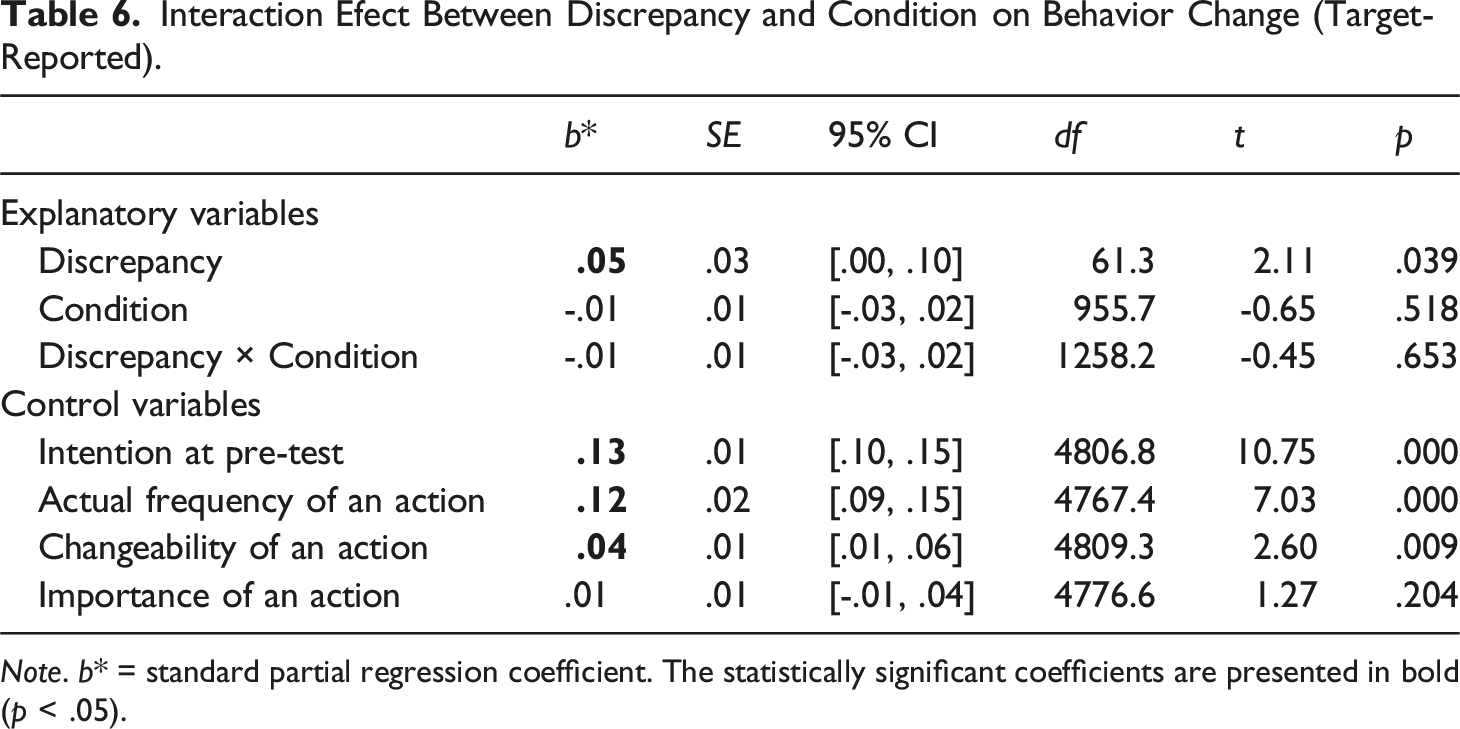
Note. b* = standard partial regression coefficient. The statistically significant coefficients are presented in bold (p < .05).
Interaction Efect Between Discrepancy and Condition on Behavior Change (Requester-Reported).
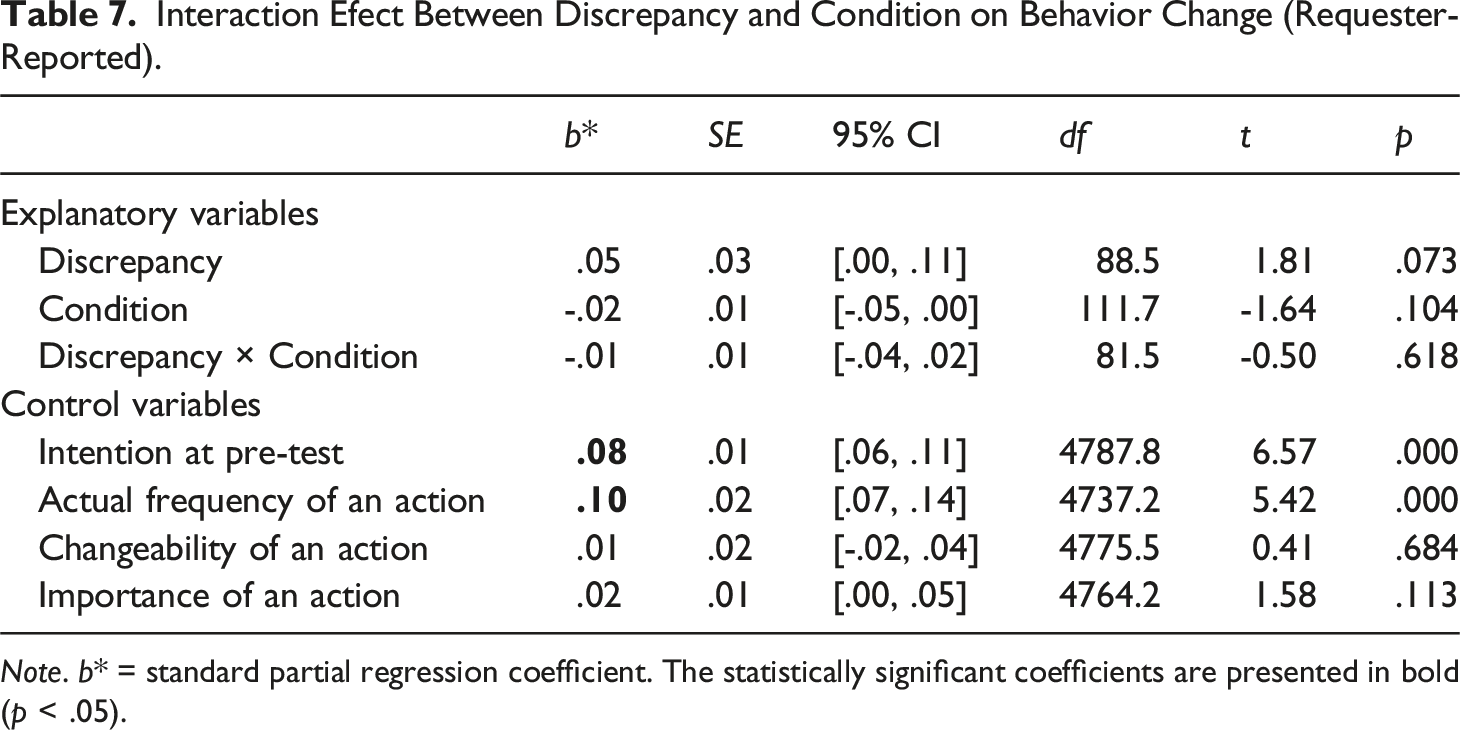
Note. b* = standard partial regression coefficient. The statistically significant coefficients are presented in bold (p < .05).
Exploratory results: moderating effects
Recognition accuracy
First, we examined how accurately a target recognized the discrepancy. For all questions, average recognition accuracy was significantly higher than chance level: the first question about whether the requester’s ideal of an action had been provided (M = 56.5%, SD = 7.7, chance level = 50.0, t(77) = 7.485, p < .001), the second question about whether the actual frequency of the action had matched the requester’s ideal frequency (M = 65.6%, SD = 16.4, chance level = 33.3, t(73) = 16.90, p < .001), and the combined questions (M = 45.1%, SD = 9.6, chance level = 25.0, t(77) = 18.51, p < .001). These results suggest that targets had some recognition memory for the discrepancy information provided to them in Session 4 but that it was far from perfect.
Second, we used linear mixed modeling to examine whether a target changed the frequency of an action only when they accurately recognized the discrepancy during the recognition task. The results are presented in Tables S4 and S5 of the SI. The three-way interaction was not significantly related to either target- or requester-reported changes in the frequency of an action (b* = −.01, p = .485; b* = −.01, p = .738). Thus, in conjunction with the results reported above, the discrepancy was not significantly related to a target’s behavior change, even when a target correctly recognized the discrepancy of action items.
Relationship variables
We examined the moderating effects of relationship variables (relationship satisfaction and commitment). As we were interested in individual differences for relationship satisfaction and commitment rather than the unique contributions controlling for each, we conducted a regression analysis separately. Although we did not preregister, we applied a Bonferroni correction and used an adjusted alpha level (padjusted = 0.05/2 = 0.025) for these two regression analyses (Mundfrom et al., 2006) because the purpose of identifying a moderator among the relationship variables was exploratory.
First, we explored whether the relationship variables moderated the association between discrepancy and intention to change the frequency of an action using linear mixed modeling. The results are presented in Tables S6 and S7 of the SI. The interaction term between discrepancy and commitment was significantly related to intention (b* = .10, p = .009), whereas the interaction terms between discrepancy and relationship satisfaction were not significantly related to intention (b* = .08, p = .038). We conducted simple slope tests for linear mixed modeling (Preacher et al., 2016) using Preacher et al.’s website (https://www.quantpsy.org/interact/hlm2.htm). As illustrated in Figure 3, the discrepancy was more strongly related to intention for targets with higher (+1SD) commitment (b* = .496, p < .001). Nevertheless, the discrepancy was also significantly positively related to intention for targets with relatively lower (–1SD) commitment (b* = .296, p < .001). Plots of the Interaction Effect. Note. Plots of the interaction effect between the discrepancy and commitment on intention to change the frequency of an action. Error bars represent 95% confidence intervals.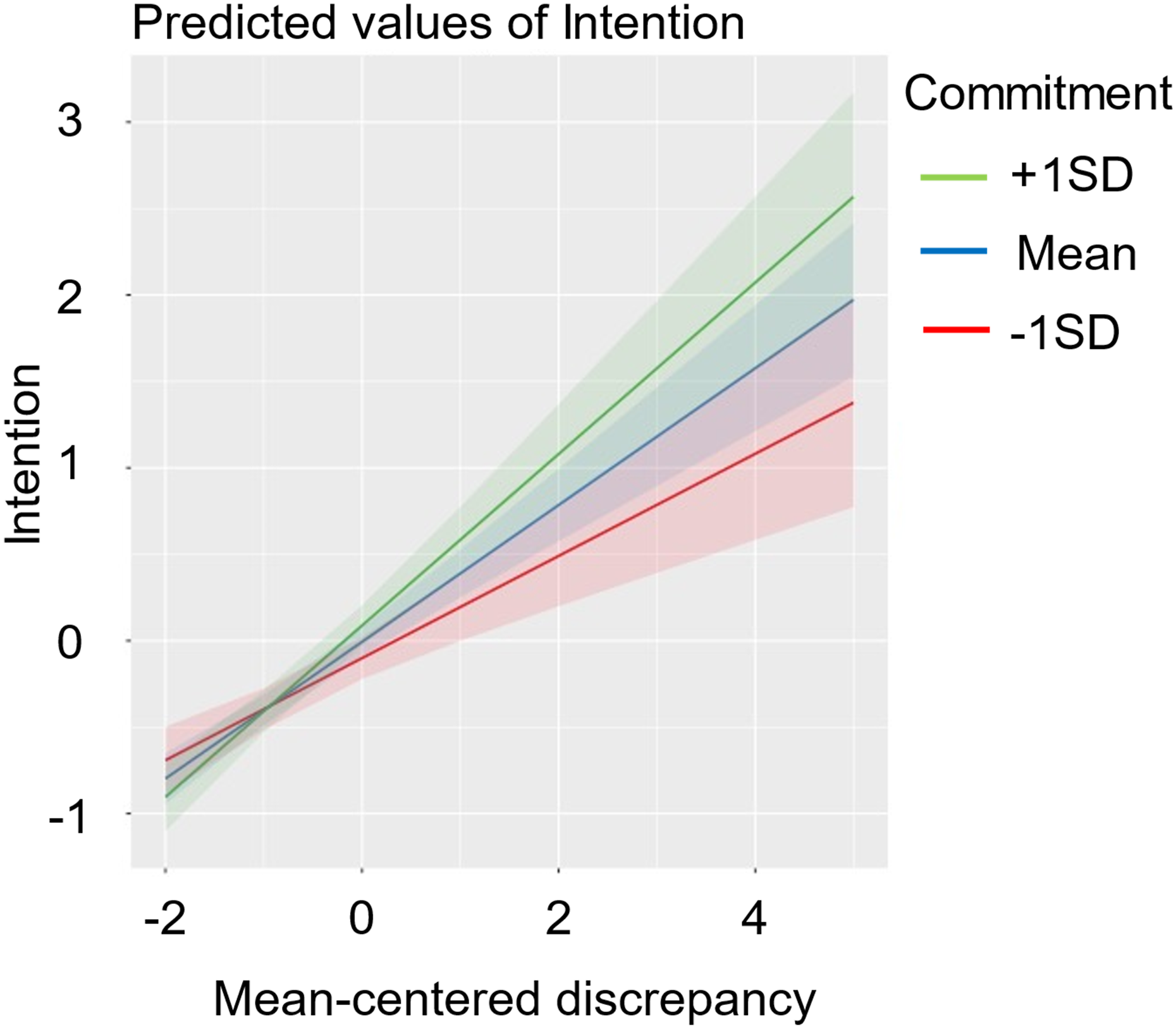
Second, we used linear mixed modeling to examine whether the relationship variables moderated the interaction effect between discrepancy and condition on behavior change. The results are presented in Tables S8–S11 of the SI. The three-way interaction terms were not significantly related to target- (b* = .00, p = .822; b* = .01, p = .524) and requester-reported changes in the frequency of an action (b* = −.03, p = .048; b* = −.02, p = .172). Thus, there is no evidence that the interaction effects between discrepancy and condition differ depending on the relationship variables.
Additional results
We explored the possible reasons why the interaction between the discrepancy and condition was not significantly associated with targets’ behavior (the frequency of actions reported by targets and requesters), while the discrepancy was significantly associated with targets’ intention in the feedback condition. We did not preregister the analyses in this section, except for the analysis of the three-way interaction among discrepancy, condition, and changeability of actions.
Because targets did not translate intention into action?
People often do not do things they intend to do (Sheeran & Webb, 2016); therefore, we examined whether intention at post-test was translated into actions two weeks later. We used a linear mixed model to examine the association between intention and behavior change. Although intention was significantly positively associated with target- (b* = .11, p < .001) and requester-reported changes (b* = .06, p = .023) (Tables S12 and S13, SI), these effect sizes were much smaller than those found in a previous study (Sheeran, 2002), which is discussed below.
Because targets used a different strategy to reduce the discrepancy?
When targets perceive discrepancies between their actual state and requesters’ ideal standards, they may also employ other strategies (e.g., changing an ideal standard) to restore consistency. Therefore, we examined the extent to which targets attempted to regulate requesters’ ideal frequencies rather than change their actual frequencies. The mean value of targets’ attempts to regulate requesters’ ideals was only 1.69 on a 7-point Likert scale (SD = 1.22), indicating that targets rarely required their requesters to change their ideals.
Because targets perceived that actions were difficult to change?
A study on conflict within romantic couples showed that the less confident a target was about resolving relationship problems, the less motivated they were to change their behavior (Baker & McNulty, 2015). Thus, we examined whether a target would change the frequency of an action only if they perceived that the frequency of the action could be easily changed. We created the three-way interaction terms by multiplying the mean-centered discrepancy, condition, and mean-centered changeability of actions and examined the three-way interaction effects using linear mixed modeling. The results are shown in Tables S16 and S17 of the SI. The three-way interaction was not significantly related to either target- (b* = .01, p = .251) or requester-reported changes in the frequency of an action (b* = .02, p = .118). Thus, we found no evidence supporting the prediction that the discrepancy affected a target’s behavior, even when it was relatively easy to do so.
Because days had elapsed between sessions?
Although we sent participants the URL for the next session a day after the previous session for Sessions 1–4, the actual date of participation varied from participant to participant. Thus, we examined whether the elapsed days from one session to the next moderated the interaction effect between the discrepancy and condition on target- and requester-reported behavior change. As moderators, we used the elapsed days from Sessions 1 to 5, 2 to 5, 3 to 5, and 4 to 5. We created the three-way interaction terms by multiplying the mean-centered discrepancy, condition, and mean-centered elapsed days and examined the three-way interaction effects using linear mixed modeling. As shown in Tables S18–S25 of the SI, the three-way interactions were not significantly related to either target- or requester-reported changes in the frequency of an action (ps > .14). Thus, we found no evidence supporting the prediction that the discrepancy affected a target’s behavior, even when the elapsed days were relatively few.
Discussion
We employed an experimental paradigm using a within-person approach and manipulated the discrepancy between targets’ actual states and requesters’ ideals. We found that the greater the discrepancy between the actual and ideal frequencies in the feedback condition, the greater the targets’ intention to change the frequency of the action. In addition, the association between the discrepancy and intention was significantly stronger than both the association between the actual frequency and intention and between the ideal frequency and intention. These results suggest that a person decides how much they are willing to change their behavior in a romantic relationship by comparing their actual state with their partner’s ideal standards, rather than considering just one or the other. This highlights that, particularly in couple communication, the key psychological component in resolving interpersonal conflict may be the perception of the discrepancy rather than either self-perception or partners’ ideal standards.
The association between the discrepancy and intention was significantly stronger when the actual frequency was higher (+1SD) than when it was lower (–1SD). This result cannot be explained by the changeability of an action, as the interaction between the discrepancy and actual frequency remained significant even when controlling for the interaction between the discrepancy and changeability (see details in the SI). A possible explanation for this finding is that a high actual frequency may reflect targets’ perceived importance of an action. According to research on motivation, the more important a person perceives an action to be, the more likely they are to engage in it (Ryan & Deci, 2017). Targets may perceive actions with a high actual frequency as more important and, consequently, have a stronger intention to change them when they perceive a discrepancy. In contrast, targets may be relatively less intent on changing actions with a low actual frequency because they may not fully understand why the actions are important, even when they perceive a discrepancy. Future research should measure not only requesters’ perceived importance but also targets’ perceived importance and examine whether targets’ perceived importance moderates the association between the discrepancy and intention.
In the exploratory results, the association between the discrepancy and intention was stronger among targets who were highly committed to their relationship (e.g., people who wanted their relationship to last forever). This finding aligns with the results of previous studies suggesting that people who fail to meet their partner’s ideal standards may feel threatened and insecure about the relationship (Campbell et al., 2001; Overall et al., 2006). When targets perceive a larger discrepancy, they may worry that their partner could become less committed and might potentially end the relationship. Consequently, targets may be motivated to reduce the discrepancy and intend to change their behavior.
We neither found any evidence of the interaction between discrepancy and condition on behavior change nor any moderating effects for the interaction. This null result suggests that the associations between intention and behavior change in this study were relatively weaker than those reported in a meta-analysis of the association between intention and behavior (r = .53) (Sheeran, 2002). The factors related to such an intention-behavior gap have been investigated in previous research (Sheeran & Webb, 2016). One of the factors is prospective memory, whereby a person must remember to perform an intended action at some point in the future (e.g., give a message to their partner when they come home) (McDaniel & Einstein, 2001; Zogg et al., 2012). A model of prospective memory proposes that an intention is recalled by perceiving cues (e.g., situation and time) and then executed (Zogg et al., 2012). The likelihood of perceiving cues tends to decrease when the cue is less salient or less related to the intention (McDaniel & Einstein, 2001). In our experiment, although targets were provided with the discrepancy (e.g., the actual frequency of praising the requester was less than the requester’s ideal frequency), they did not discuss the cue for executing the intention (e.g., when the target would praise the requester). Moreover, the number of action items used in this experiment may have been too many to keep track of. Thus, the targets may not have perceived the possible cue (e.g., when the target listened to the requester’s success story) and missed opportunities to take action in everyday life. Future research should use potential ways to facilitate prospective memory for intended actions such as if-then planning (Gollwitzer & Sheeran, 2006; Sheeran & Webb, 2016).
In the fields of relationship science, a vast body of research has investigated partner-regulation strategies in conflict interactions (Baker & McNulty, 2020; Gottman, 1998; Heyman, 2001; Overall & McNulty, 2017). In contrast to these studies which included various partner-regulation strategies, we manipulated exclusively the actual-ideal discrepancy as a common component of most (if not all) regulation strategies. Our results suggest that simply perceiving the discrepancy is sufficient for targets to increase their intentions but not to change their behavior. Therefore, when requesters desire to change targets’ important and changeable behaviors, strategies that facilitate the execution of intentions (e.g., proposing a solution, promoting prospective memory, as mentioned above) may be more effective than strategies that enhance intentions (e.g., reasoning).
With its within-person design, this study provides definitive evidence supporting the psychological process within a target. The between-person approach only suggests that a target perceiving larger discrepancies tends to be more intent to change behavior. In contrast, the within-person approach suggests that if a target perceives a larger discrepancy, they get more intent to change their action. In other words, addressing the methodological challenges allows us to interpret the results more directly, corresponding to the research question of whether perceiving the discrepancy affects intention and behavior.
Our experiment achieves higher internal validity than the couple discussion paradigm by combining a within-person approach, experimental control, and statistical control. A within-person approach eliminated the possibility that individual differences (e.g., personality and ability) confounded the relationship between the discrepancy and intention to change behavior (Rohrer & Murayama, 2023). By employing feedback regarding the discrepancy, we experimentally controlled both verbal and nonverbal information (e.g., choice of words, facial expressions, and vocal tone). Furthermore, our statistical models controlled for variables that could theoretically influence the discrepancy and intention. We reanalyzed the models without these control variables and confirmed the robustness of our results. These methodological contributions allow for better approximations of the causal relationship between the discrepancy and intention, even by analyzing the relationship only in the feedback condition (Bailey et al., 2024; Grosz et al., 2020; Rohrer, 2018).
Our experimental paradigm makes a methodological contribution as it can be applied to other fields of research on close relationships. For example, research in health psychology has investigated whether a partner’s persuasion facilitates health-related behavioral intentions and behavior change (Berzins et al., 2019; Lewis & Rook, 1999). Using our paradigm, researchers could manipulate social control by randomly assigning various health actions (e.g., running and eating healthy food) to either a persuasive-message condition or a no-message condition. In the field of social neuroscience, our paradigm can be easily integrated with neuroimaging methods such as functional magnetic resonance imaging to investigate neural mechanisms involved in perceiving actual-ideal discrepancies. As our paradigm incorporates multiple action items, researchers can measure a target’s brain activity for each action item while they are provided with the discrepancy. Subsequently, a target’s behavior change can be measured. This approach allows researchers to test whether discrepancies between an individual’s actual state and their partner’s ideal state are associated with increased activations in the posterior medial frontal cortex, a region found to respond to various types of cognitive inconsistencies (Izuma & Adolphs, 2013; Izuma et al., 2010; van Veen et al., 2009), such as cognitive dissonance.
Despite the valuable contributions of this study, several limitations suggest potential directions for future research. First, perceiving the discrepancy may have had a smaller effect on targets’ behavior change compared with couple discussions. For example, direct-opposing attempts observed in couple discussions (e.g., criticizing and expressing anger) evoke more negative emotions in targets (Baker et al., 2014) than simply conveying the discrepancy. Such more prominent affective factors may consolidate targets’ memory of receiving the attempts, and targets may be more likely to perform an intended action. Future research should explore the moderating role of affective messages for the effect of discrepancy on behavior change.
Second, demand characteristics may have amplified the association between the discrepancy and intention to change behavior. Specifically, when targets were shown the discrepancy, they might have tried to meet the experimenter’s expectations in addition to their partner’s expectations. As a result, they may have superficially reported inflated intentions. Compared with laboratory experiments, where participants communicate with and are observed by an experimenter in a face-to-face setting, the online nature of this study is likely to have mitigated the influence of demand characteristics (Reips, 2002) because participants were informed that their data would remain anonymous, and they rated their intentions in the absence of an experimenter. However, even in this online study, participants may have inferred an experimenter’s expectations and consequently modified their responses to align with them. Future research should address demand characteristics. For example, researchers could measure whether participants infer that the study examines the effect of the discrepancy between requesters’ ideals and targets’ actual states on intention and could use the data to explore the potential influence of the participants’ inference in the analysis.
Third, the sampling of real couples to examine the association between discrepancy and behavior change seems limited. A target in a short relationship may behave overly desirably to be liked by their partner, and the actual frequency of desired actions may be too high to improve. Furthermore, although every couple is likely to perceive a large discrepancy at some point (especially in the newly dating stage), in a long relationship, they might quickly communicate with each other and reconcile the actual and ideal states. In other words, the size of the discrepancy may have been reduced before the couple participated in this study. Future research could overcome this limitation by using speed dating (Finkel & Eastwick, 2008). For example, researchers ask participants to rate their actual state and the ideal standards for a potential partner. Next, all participants talk to each other and rate a preference for each person. Participants are then shown the discrepancy between their actual state and ideal standards of the preferable person. Such a discrepancy may be larger than that perceived by real couples, and thus, manipulating the discrepancy may be more likely to change the target’s behavior.
In conclusion, our findings showed that the actual-ideal discrepancy—often conveyed in partner regulation—was associated with changes in targets’ intention, which is the first step in changing behavior. When people experience conflict between their ideals and targets’ actual states, they may facilitate targets’ intentions by simply communicating their ideals, especially when targets are committed to the relationship. Requesters may then need to use other types of strategies to get targets to execute the intention. Future studies should reveal the types of strategies that contribute to this execution.
Supplemental Material
Supplemental Material - Actual-ideal discrepancy and intention to change behavior on communication about conflict in close relationships: A within-person experiment
Supplemental Material for Actual-ideal discrepancy and intention to change behavior on communication about conflict in close relationships: A within-person experiment by Kyosuke Kakinuma and Keise Izuma in Journal of Social and Personal Relationships
Footnotes
Acknowledgements
Declaration of conflicting interests
The authors declared no potential conflicts of interest with respect to the research, authorship, and/or publication of this article.
Funding
The authors disclosed receipt of the following financial support for the research, authorship, and/or publication of this article: This work was supported by the Japan Society for the Promotion of Science 23K12879, JP19K24680.
Transparency and Openness Statement
As part of IARR’s encouragement of open research practices, the authors have provided the following information: This research was pre-registered. The aspects of the research that were pre-registered were the study design, planned sample size, exclusion criteria, and planned analyses for the main hypotheses. The registration was submitted to OSF (https://osf.io/yju46). The data and materials used in the research can be publicly posted and can be obtained at the link ( ).
).
Supplemental Material
Supplemental material for this article is available online.
Notes
References
Supplementary Material
Please find the following supplemental material available below.
For Open Access articles published under a Creative Commons License, all supplemental material carries the same license as the article it is associated with.
For non-Open Access articles published, all supplemental material carries a non-exclusive license, and permission requests for re-use of supplemental material or any part of supplemental material shall be sent directly to the copyright owner as specified in the copyright notice associated with the article.
