




Abstract
The adolescent attachment questionnaire (AAQ) is designed to measure adolescent attachment patterns through three components: availability, goal-corrected partnership, and angry-distress. To date there has not been a confirmatory factor analysis conducted to determine the fit of data to this theoretical model on a UK sample. This study aimed to assess the construct validity of the AAQ through cognitive interviews and a confirmatory factor analysis. Participants were adolescents aged between 12 and 16. Results from the cognitive interviews indicated that participants could correctly interpret the items. Confirmatory factor analysis showed a good fit of data to a three-factor model. Therefore, it can be concluded that the AAQ is a valid measure for attachment patterns in adolescents, provided that attachment is approached as a three-factor concept.
Introduction
In the late 20th century, research in attachment boomed, with psychologists such as Bowlby (1973) and Ainsworth (1985) expanding the frontier of our knowledge on human attachments and relationships. However, attachment instruments designed in this period were not subject to the same statistical scrutiny and rigorous testing that modern questionnaires are. One such example of a measure that lacks reported construct validity was the Adolescent Attachment Questionnaire (AAQ [West et al., 1998]).
The AAQ was designed to measure attachment patterns in adolescents through three dimensions: angry-distress, availability, and goal-corrected partnership. These dimensions were based on earlier work by Bowlby (1973), Ainsworth (1985), Marvin (1977), and Weiss (1982), regarding attachment development and the prerequisites needed for an attachment pattern between parent and child. The measure was designed to be used in correspondence with the adult attachment interview (AAI [George et al., 1984–1996]). The interview was considered to be the “gold standard” measurement of attachment behavior in the latter end of the 20th century (Bakermans-Kranenburg & Van Ijzendoorn, 1993). However due to the lengthy and costly process needed to complete the AAI (20 open-ended questions with multiple prompts), a more cost effective and speedier method of measurement was needed which converged with the AAI, thus leading to the development of the AAQ.
In the three dimensions of the AAQ, angry-distress was defined as feelings of anger and distress that are directed at the attachment figure. Availability was defined as the perceived emotional availability of the attachment figure and their responsiveness to the needs of the adolescent (Bowlby, 1973). Finally, goal-corrected partnership was defined as the extent to which the adolescent feels empathy for and considers the needs of the attachment figure as a separate entity (Marvin, 1977).
The original research by West et al. (1998) demonstrated internal consistency (Cronbach’s α angry distress = .62, availability = .80, and goal-corrected partnership = .74), test-retest reliability across a 3 month period (angry-distress r = .68 availability r = .73 and goal-corrected partnership r = .72) and convergent validity with the AAI (secure classifications = availability: t = 2.21 p = .031, preoccupied classifications = angry distress: t = -2.61, p = .011 and dismissing classifications = goal-corrected partnership: t = -2.65 p = .01 [t scores were used to determine how different AAQ classifications were from AAI classifications]). However, despite the AAQ being used in many empirical studies (e.g., Cawnthorpe et al., 2004; Elgar et al., 2003; Schober et al., 2004), the factorial validity of the AAQ has not been established in a UK population.
From a search of the relevant literature, the AAQ has only been reviewed in one paper. This review by Wilson and Wilkinson (2012) stated that the measure has evidence of internal consistency (Cronbach’s; α = .59–.85) and convergent validity with the AAI from the original research paper by West et al. (1998). Since 2012, no further studies appear to have been conducted to establish the factorial validity of the AAQ (West et al., 1998) in a UK adolescent sample. Without ascertaining the construct validity through a confirmatory factor analysis of the scale, the measure lacks the form of validity which aligns the structure of the measure to the underlying theory (Garver & Mentzer, 1999).
Therefore, the aim of the present study was to conduct a construct validation study of the AAQ. The construct validation was carried out through a cognitive interview and confirmatory factor analysis. The cognitive interviewing technique determines participants understanding and interpretation of items in the metric. This contributes to the construct validity as it demonstrates on a qualitative level that the items are correctly understood by the participants and therefore offer some indication that the items are measuring the constructs they represent. For the confirmatory factor analysis, the hypothesized three-factor structure of the AAQ was tested competitively against one-factor, bifactor, and a higher order structure to determine which was the most appropriate structure for conceptualizing and measuring attachment behaviors. In addition to this, an additional item per dimension of the AAQ (West et al., 1998) was created by the researchers to broaden the item pool and to explore whether the additional items added offered more suitable alternatives to exploring the three factors in the metric than the original nine created by West et al. (1998).
Method
Sample
Participants were 303 adolescents (male n = 126, female n = 166, undisclosed n = 11, white ethnicity n = 291, Asian ethnicity n = 2, other n = 7, undisclosed n = 3) aged 12–16 years (M = 13.00, SD = 1.51) from one secondary school in England (free school meals was used a proxy for low income with n = 23 receiving them). The research project was approved by a research ethics committee (17-ELSBODF 06/06/2017). Written consent was provided from the head teacher of the participating school, the parents/guardians of the adolescents, and the adolescents themselves. There was 7.59% (23) of missing cases of data, which equated to 1.17% of missing values in the entire dataset. A Little’s test confirmed that the missing data was completely at random (χ2 = 122.953, p = .004). In order to manage the missing data, the FIML (full information maximum likelihood) estimator was employed in MPlus (Muthen & Muthen, 1998–2011) for the confirmatory factor analysis.
Instrument
Participants completed an adapted and expanded 12 item version of the AAQ. The original AAQ consisted of 9 items: 3 items per subscale (angry distress, goal-corrected partnership, and availability). One additional item per subscale was added to extend the item pool without compromising the short-form nature of the scale. The extension and adaptation of the AAQ will henceforth be referred to as the RAAQ (revised adolescent attachment questionnaire). For the cognitive interview, participants rated each statement on a five-point Likert scale from zero to four (0 = “disagree,” 1 = “somewhat disagree,” 2 = “neither agree or disagree,” 3 = “somewhat agree,” and 4 = “agree”).
Analyses
Cognitive interview
The cognitive interview aimed to check the participants understanding and interpretation of the original nine statements in the AAQ. Karabenick et al.’s (2007) cognitive validity procedure has four basic concepts to be explored, item interpretation, coherent elaboration, answer choice and overall validity.
Participants for the cognitive interview were approached by the participating school and asked to take part in the cognitive interviews and the completion of the questionnaire for the confirmatory factor analysis following this. During the cognitive interview, Karabenick et al.’s (2007) four suggested concepts were explored to determine understanding of the items by the participants. There were two raters coding separate responses from the cognitive interviews with ratings being made on a likert scale from 1–5 (incorrect/unsuitable–correct/suitable).
Correct interpretations of key words were decided through comparison of participants definitions with Oxford dictionary definitions, correct interpretations of statement were decided through rater judgment of key word interpretation and final interpretation. Coherent elaboration was decided through the justification participants gave for their interpretation. Their answer choice and justification provided greater insight into overall interpretation accuracy. Finally, overall validity was decided by the participants performance on the other three explored dimensions.
Confirmatory factor analysis
Confirmatory factor analyses were conducted to competitively test the hypothesized three-factor model of the original AAQ against one-factor, bifactor, and higher order models. The different factor structures test the 12 items of the RAAQ in different ways. The one-factor structure loads all 12 items of the RAAQ against a single attachment factor. The three-factor structure loads the 12 items against the hypothesized three-factor model of the original AAQ. The bifactor structure simultaneously tests the 12 items against a general attachment factor and three-factor structure. A final confirmatory analysis was conducted to test the three-factor model against the 9 original items in the AAQ (West et al., 1998) to determine if the three-factor model held.
To establish model fit, the root mean square error of approximation (RMSEA), standardized root mean square residual (SRMR), comparative fit index (CFI), tucker lewis index (TLI) and χ2 were consulted. Indices that represent a good fit between model and data were suggested by Hu and Bentler (1999) to be RMSEA < .06, SRMR < .08, CFI > .95 and TLI > .95. All models were tested using the Mplus v.8 software (Muthen & Muthen, 1998–2011) using maximum likelihood estimation with robust standard errors (MLR).
Results
Cognitive interview
Table 1 reports the mean scores for the participants’ interpretation of items, elaboration, answer choice and overall validity of their answers. Answers given that were rated four or above were considered to be correct interpretations, demonstrate suitable elaboration, be a suitable answer or be a valid overall interpretation. Agreement between raters was generally excellent.
Mean scores for interpretation, elaboration, answer choice and overall validity of answers given in participant interviews, with rater agreement per dimension.
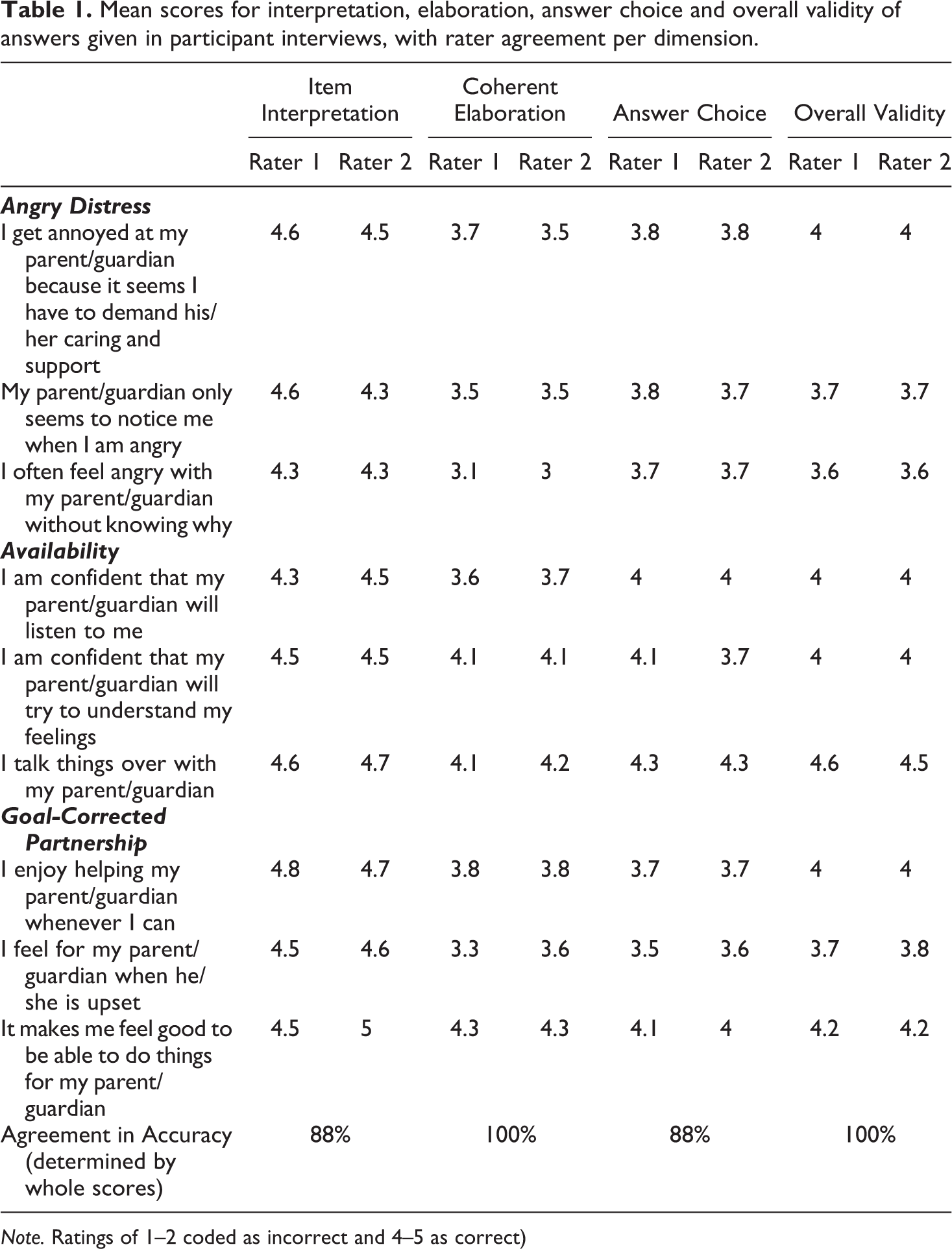
Note. Ratings of 1–2 coded as incorrect and 4–5 as correct)
Confirmatory factor analysis
Model fit indices are reported in Table 2. The three-factor model showed a good fit to the data that offered a substantial improvement on the one-factor, bifactor and higher order models, this held for the original 9 items also. Table 3 shows the factor loadings for each item onto each dimension they aim to measure and the internal consistency of the questionnaire. All reported factor loadings can be found in Table 3 with all loadings λ > .4. The low mean reported for anger-distress is expected as lower scores indicate less feelings of anger and distress which would be the case in the majority of the sample, without any attachment issues. Figures 1, 2, 3 and 4 report the structural equation models for the tested hypothesized models.
Confirmatory factor analysis results of one-factor, bifactor and three-factor models of attachment.
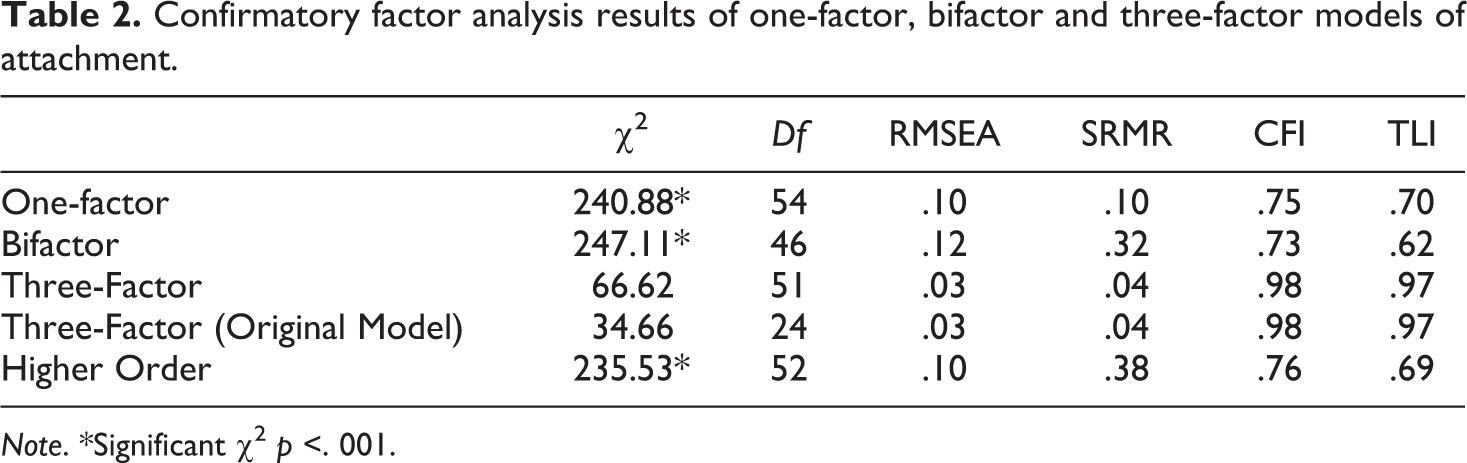
Note. *Significant χ2 p <. 001.
Standardized factor-loadings and correlations from the three-factor model of attachment and internal reliability for the three-factor model.
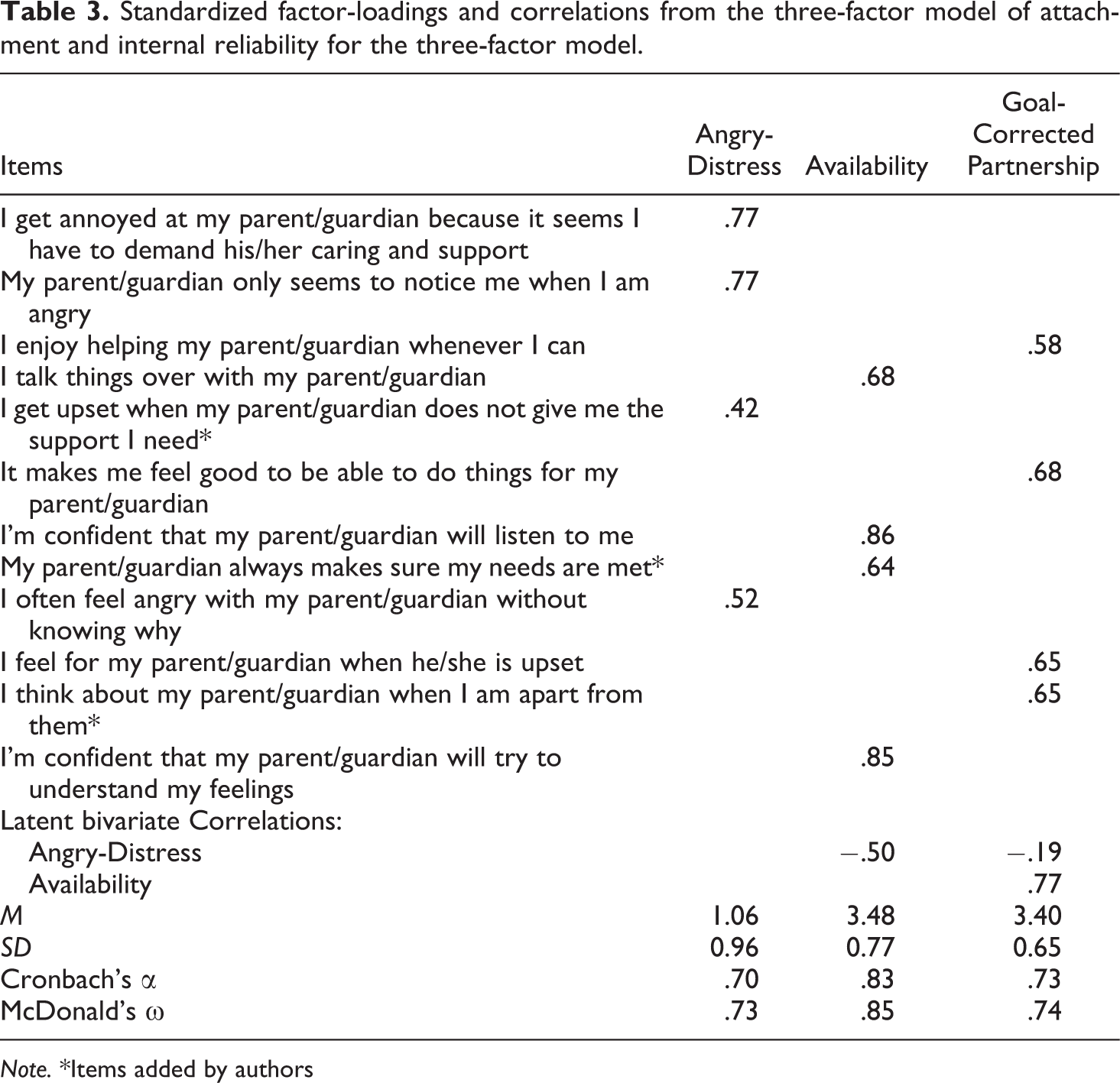
Note. *Items added by authors
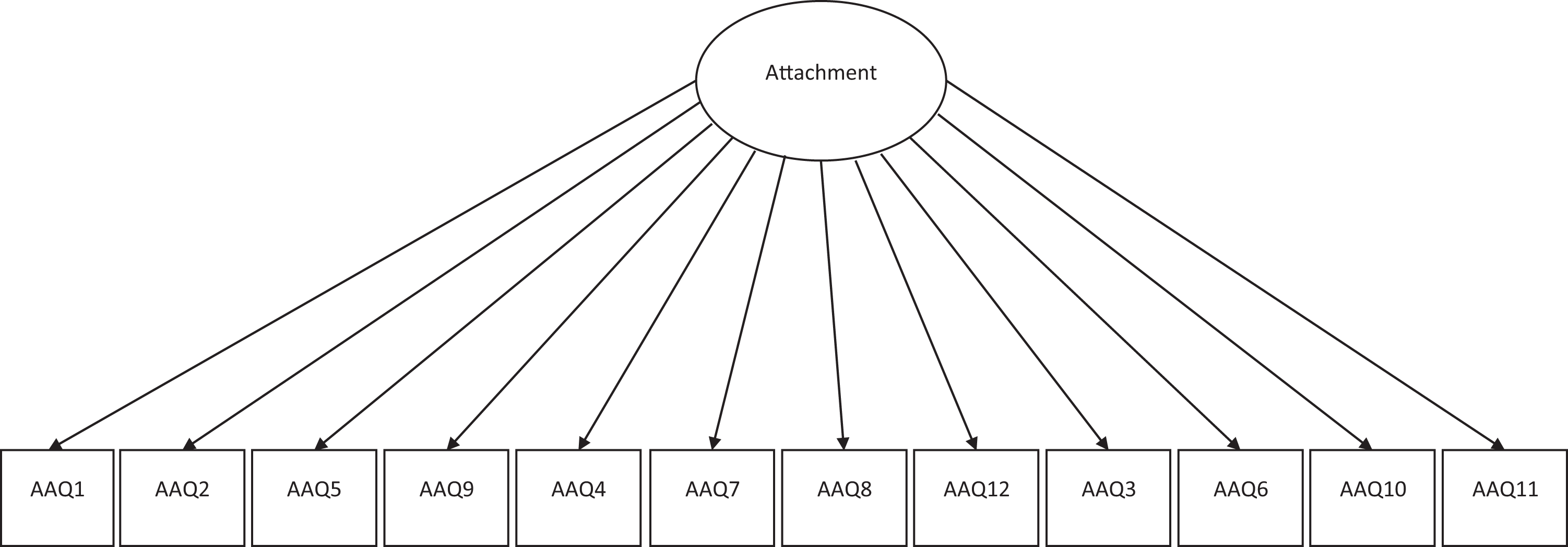
One-factor structural model of adolescent attachment behavior.
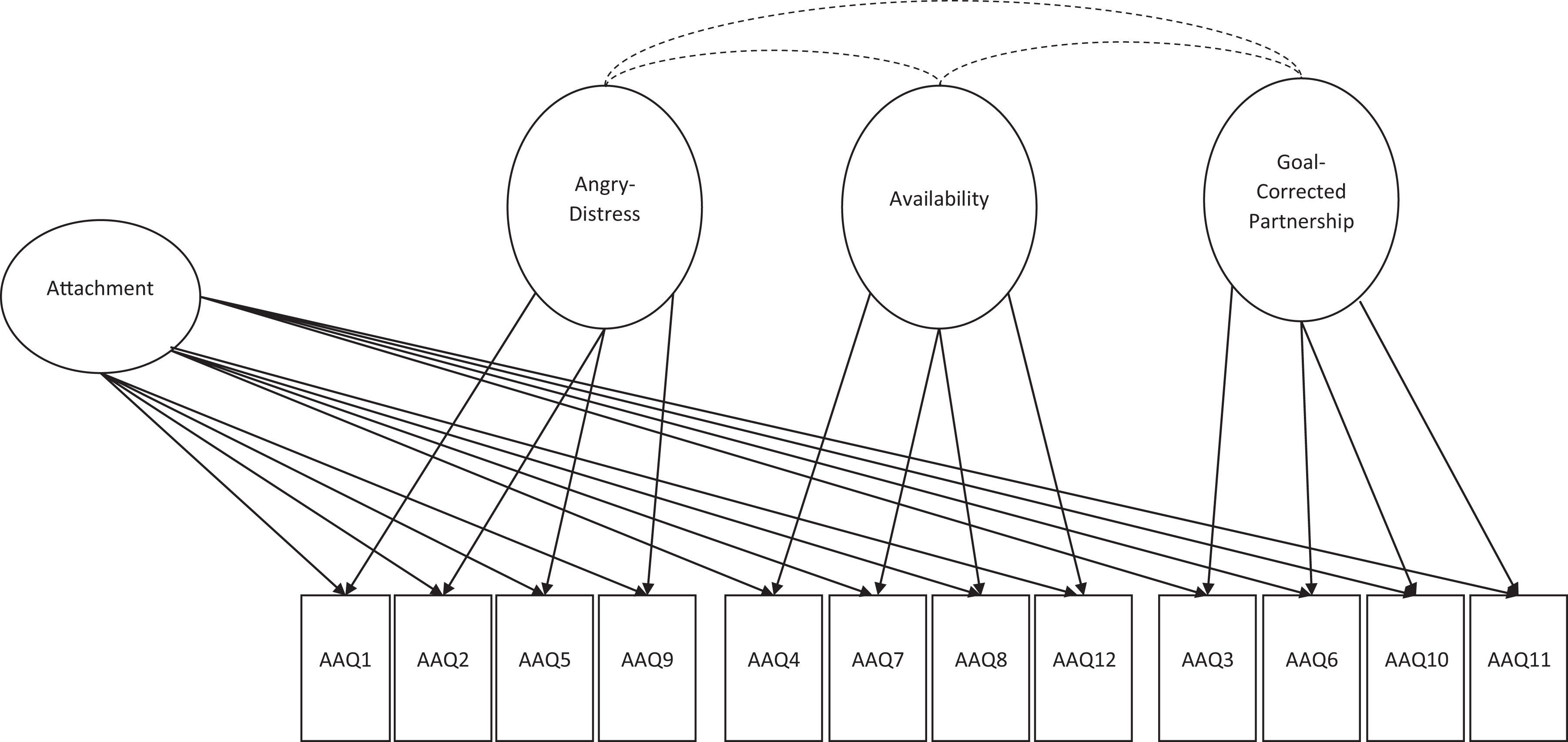
Bifactor structural model of adolescent attachment behavior.
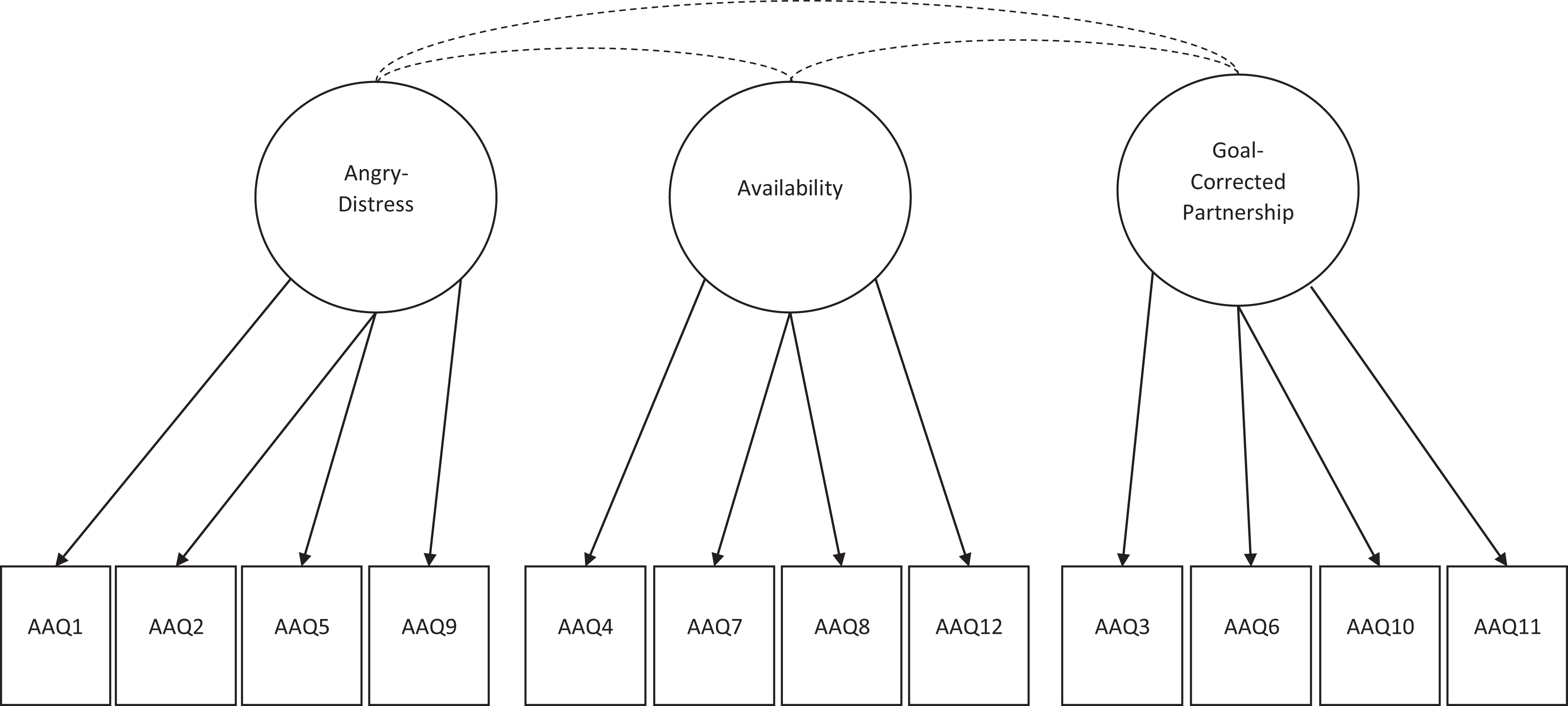
Three-factor structural model of adolescent attachment behavior.
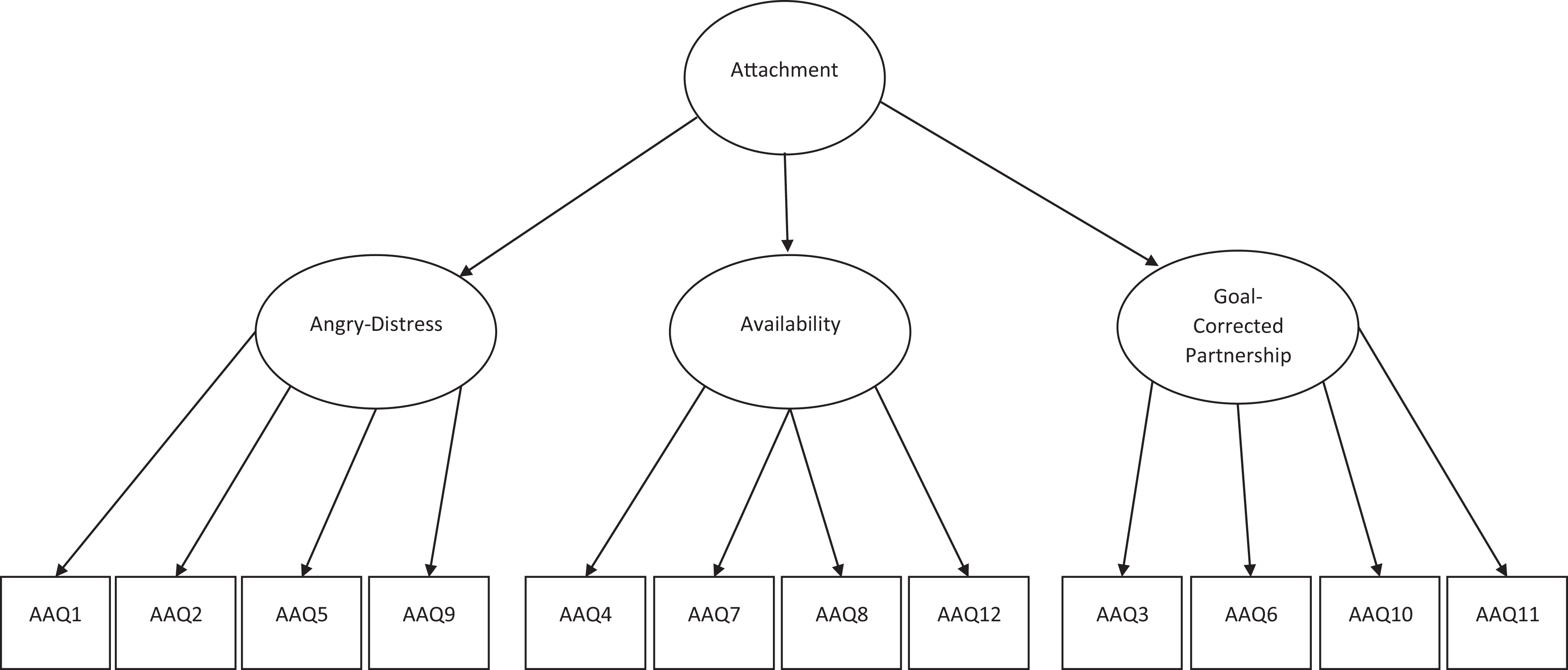
Higher order structural model of adolescent attachment behavior.
Discussion
The study conducted aimed to ascertain the construct validity of the AAQ (Wilson & Wilkinson, 2012). The suitability of West et al.’s (1998) theoretical model’s fit to data was never explored during its construction, but other forms of construct validity were explored such as convergent validity (Bakermans-Kranenburg & Van Ijzendoorn, 1993).
Mean scores in the cognitive interviews show good understanding by all participants across the dimensions rated. Therefore, it appears the AAQ (West et al., 1998) is suitable for use in an adolescent demographic. In addition to the cognitive interviews, the confirmatory factor analysis reported above shows that the three-factor structure shows the best fit to the data. This supports the original three-factor model used in the original AAQ (West et al., 1998). The implication of this is that in terms of using this questionnaire attachment should be considered as a three-dimensional concept. Two of the three latent correlations were high, however in line with numerous attachment theories (see Ainsworth, 1985; Bowlby, 1973) a high positive correlation between availability and goal-corrected partnership is indicative of a close relationship between the concepts and is logical given the nature of both constructs. In addition to this a high negative correlation between anger-distress and emotional availability means that as anger increases emotional availability decreases which is logical when referencing theory.
In conclusion, the RAAQ (West et al., 1998) is a suitable and internally consistent measure for the exploration of three different dimensions of attachment behaviors in adolescents.
Footnotes
Funding
The author(s) received no financial support for the research, authorship, and/or publication of this article.

Open research statement
As part of IARR’s encouragement of open research practices, the authors have provided the following information: This research was not pre-registered. The data used in the research are/are not available. The data can be obtained via email by emailing: