




Abstract
There is a significant disparity between the percentage employed, of the general population, and those registered with sight impairment. In the United Kingdom, it is illegal for companies to discriminate against employees who have disabilities, and reasonable adjustments must be made by employers to prevent this from happening. This study examines factors that affect employment and explores participants’ experiences in the workforce who have sight impairments that cannot be corrected by glasses. Participants who were unregistered with sight impairment, registered with partial sight impairment, or registered with severe sight impairment completed a pre-tested online questionnaire. The aim of the questionnaire was to delve into participants experiences with employment. Results were analysed quantitatively, using descriptive statistics and correlation tests, and qualitatively, using thematic analysis. Eighty-eight participants were included, 53 of whom had severe sight impairments. The following factors were found to be associated with employment: a higher level of qualification (correlation coefficient 0.410, 95% confidence interval [CI: 0.213, 0.574]) and the ability to travel independently (correlation coefficient 0.321, 95% CI [0.113, 0.502]). Two types of support for employees were found: (1) adjustments in the workplace and (2) empathy from employers. Two types of barriers were found for unemployed individuals who are seeking employment: (1) employer discrimination and (2) a lack of self-confidence. This study highlights the factors influencing employment outcomes for individuals with sight impairment. In addition seen is the broadly positive impact that the perception of supportive employers has on people with sight impairment and supports solutions that require reducing employment-related barriers.
Introduction
Sight impairment is a type of disability. In the United Kingdom, around 276,690 people are registered with sight impairment or registered blind as of March 2020 (NHS Digital, 2021). Around 21,000 of these were new registrations in 2019–2020 (NHS Digital, 2021). Being registered with sight impairment means being on the local social services’ register of people who are either sight impaired, also known as partially sighted, or severely sight impaired, also known as blind. Registration is a voluntary process that is completely confidential. Sight impairment registration can only be conducted by a consultant ophthalmologist, who will complete a Certificate of Vision Impairment following an assessment of visual acuity and visual field (Slade et al., 2020).
There is a substantial gap between the proportion of the general population that is employed and the proportion of registered partially sighted or blind people in the United Kingdom, with 27% of registered blind or partially sighted people in employment, compared to 76% of the general population (Slade et al., 2020). This itself causes an indirect cost to the UK economy of an estimated £2.43 billion (Pezzullo et al., 2018). Employment is highly important, not only financially but also for its impact on mental health, due to the importance and value of employment as perceived by people with sight impairment (Batic-Mujanovic et al., 2017; Elsman et al., 2017; Pelzer et al., 2014).
The difficulty of people with sight impairments in gaining or retaining employment has been cited globally. As per the study by Harrabi et al. (2014), higher odds of not being employed were found in those with severe visual difficulties. Similar evidence has been found more specifically in Norway (Brunes & Heir, 2022), the United States (Houtenville, 2002), and Canada (Gupta et al., 2021), with lower proportions of people with sight impairment in employment in comparison to the general population. It is also known that poor sight is associated with lower job satisfaction and productivity, as per the Mojon-Azzi et al. (2010) study based in 11 European countries. Most people with sight impairment feel they have not been able to reach their potential at work (Slade et al., 2020).
There may be certain factors that increase the likelihood of unemployment for those with sight impairment, including other chronic health conditions and having no qualifications (Crudden et al., 2022; Slade et al., 2020). Research by Pavey et al. (2008) found that individuals with higher qualifications are more likely to be employed, whereas those with less education are more likely to identify as ‘long-term sick and disabled’ or ‘unemployed’. In addition, Pavey et al. (2008) discovered that individuals who received specialised educational guidance from a young age were more likely to attain higher qualifications and secure employment in the future compared to those over 50 who became visually impaired later in life. Several topics from the expanded core curriculum, including career education, mobility and orientation services, assistive technology use, social interaction or engagement, and Braille instruction, were found to be significantly correlated with each other as well as with outcomes related to employment and postsecondary training, according to Wolffe and Kelly (2011).
Discrimination in the workplace against those with sight impairments has also been cited. In Canada, it was evident that at least a quarter of participants experienced discrimination or inadequate accommodation (Gupta et al., 2021). According to the UK’s Equality Act 2010, it is illegal for companies to discriminate against employees who have disabilities, and they must provide reasonable adjustments to prevent this from happening (GOV UK, 2024b). For employees with sight impairments, adjustments could include special aids or equipment, time off work, or flexible working hours (Slade et al., 2020). Access to Work is a government scheme in the United Kingdom that helps with practical support for employees with disabilities, including adaptations at work and supporting worker funding (GOV UK, 2024a). Slade et al. (2020) has shown that 75% of people in the United Kingdom with sight loss who are employed appear to be satisfied with the support and adjustments from their current employers. Nevertheless, it has been demonstrated in the United Kingdom that unemployed people with sight impairments have faced poor employer attitudes and support or inaccessible recruitment processes, preventing them from attaining jobs (Slade et al., 2020).
Individuals with sight impairments are at a disadvantage in gaining employment, retaining employment, and having a satisfactory and fair employment experience. Therefore, it is important to assess factors that affect employability to target interventions appropriately for those further at risk of unemployment. It is also important to analyse the experiences of people with sight impairment, with or without registration, in the United Kingdom in relation to employment, to further strengthen the scarce evidence base in the United Kingdom on barriers felt and ways to overcome these barriers. Therefore, a study was conducted to investigate the following research questions (RQs):
RQ1: What factors predict employment status of people with sight impairment in the United Kingdom?
RQ2: How satisfied are people with sight impairment in their employment and how can employers improve job satisfaction?
RQ3: What are the barriers felt by people with sight impairment in gaining employment?
Materials and methods
Study design
This was a mixed-methods study consisting of thematic analysis and correlational analysis. The advantage of the qualitative component is that it enables researchers to consider each participant’s responses without limiting research (Collis & Hussey, 2014). To investigate the factors that predict the employment status of people with sight impairment and if employees feel well supported at work, quantitative analysis was conducted. To investigate how employees can be supported and the barriers experienced by unemployed people, qualitative methods were used.
Ethical consideration
The online survey, participant information, and consent forms were approved by the London South Bank University ethics committee (ETH2122-0218).
Participants
Participants who deemed themselves to have a sight impairment that cannot be corrected by glasses were included in the study. The following participants were excluded: participants with sight impairments that can be corrected by glasses, participants under the age of 18 years, and participants who live outside of the United Kingdom. Invitations to take part in the online survey were sent by email to several leading sight impairment charities in the United Kingdom, asking their members with sight impairments to take part in the survey voluntarily. Permission was sought from charities to post the survey link on their social media. Volunteers for the survey were also sought by asking people to forward the survey to people they know with sight impairment. Written informed consent was obtained from all participants completing the survey. The online survey link was available to access and complete for 3 months, covering the period from September to November 2022.
Data collection
The questionnaire was designed online on Google Forms by the authors and pre-tested by three people with sight impairments, which led to minor changes in wording for clarity and layout. The questionnaire was split into three sections. The first section used multiple choice options to inquire about the participant’s age bracket, sex, area of residence, ethnicity, and highest qualification. These were asked to see if other characteristics along with sight impairment played a part in influencing their experiences of employment. The second section enquired about details of sight impairment, using multiple choice options, including level of registration, cause of sight impairment, age of onset, and if support is required for travel and type of support. The third section sought to find out if the participant was employed, their income, if they were satisfied with their employment via Likert-type scale rating, and open questions on how they can be supported by employers, types of visual aids they find helpful, and barriers to employment. In total, there were 27 questions, four of which were open questions. No identifiable information was requested in the survey, preserving anonymity.
Approach to data analysis
Google Forms was used to collect the primary data. The quantitative data were cleaned manually by the authors to confirm the analysis carried out by Google Forms and carry out further quantitative data analysis using the statistical software package IBM SPSS Statistics. Analysis involves descriptive statistics and Spearman correlation tests, with a p value of .05 considered statistically significant. The data are presented with 95% confidence intervals (CIs). For the qualitative data, an inductive thematic approach was used (Braun & Clarke, 2006). This entailed all open-ended responses being copied into Microsoft Word. First, the corresponding author familiarised themselves with the responses. Then each response was coded provisionally. These codes were then discussed by both authors, revised and all responses were coded. These codes were then grouped into themes by both authors. As described by Braun and Clarke, this thematic analysis of the survey responses facilitates identification and appreciation of the prominent collective experiences of the participants with sight impairment (Braun & Clarke, 2006).
Results
The online survey had 90 voluntary participants, two of whom did not qualify because they had a sight impairment that could be corrected with glasses.
Data analysis – participants’ characteristics
Table 1 shows that this study had more, but not exceedingly so, female participants 60% (n = 52), compared to male 40% (n = 35), and one participant opted not to disclose. The dominant age groups were 55–64 and 25–34, respectively, which are employable ages. Scotland and London had the highest response rates. Most participants were of white British ethnicity, so the findings will not reflect any influence due to participants’ ethnicity. In terms of education, more than half of the participants held a first degree. This is summarised in Table 1.
Summary of participant’s characteristics.
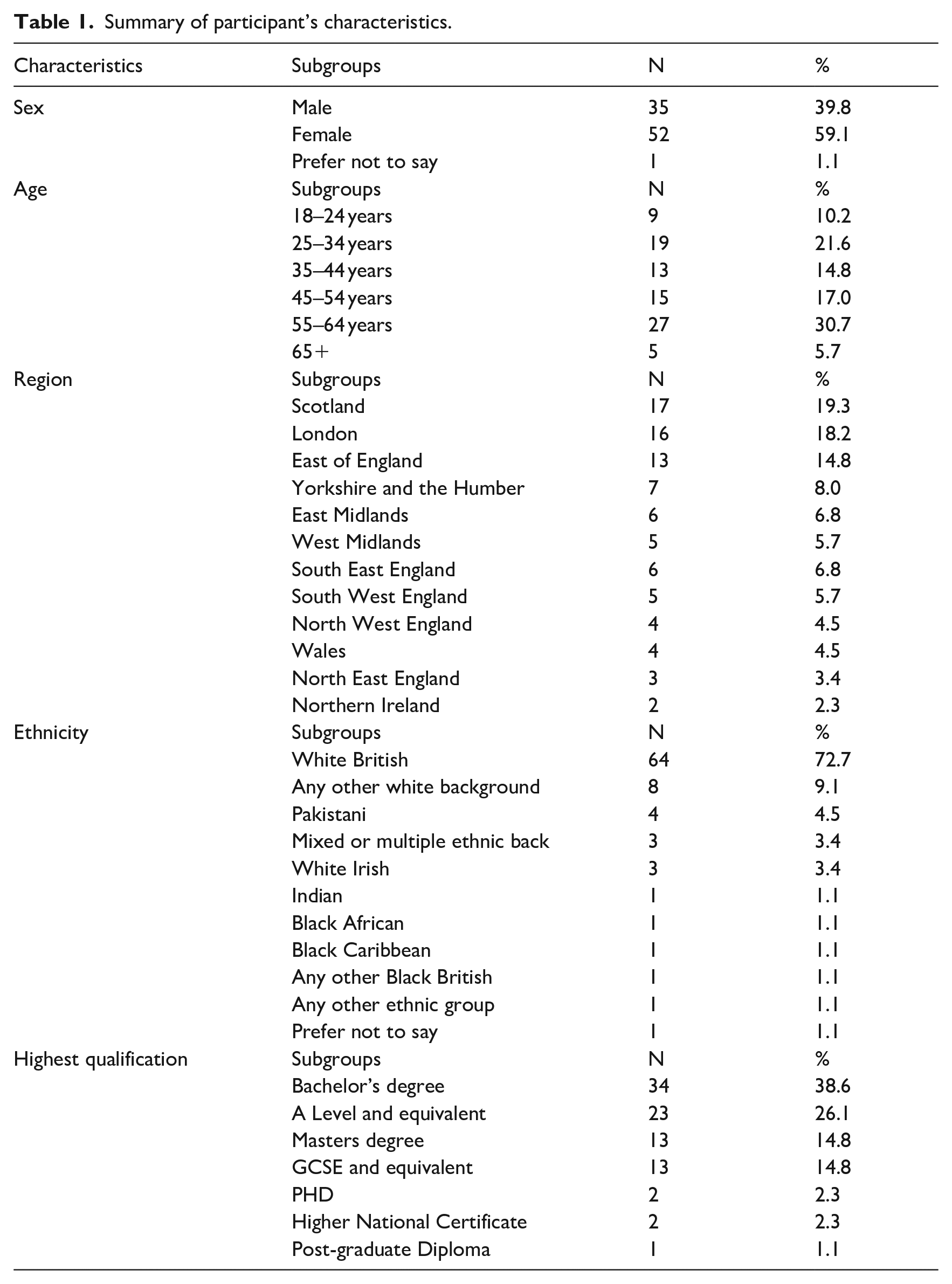
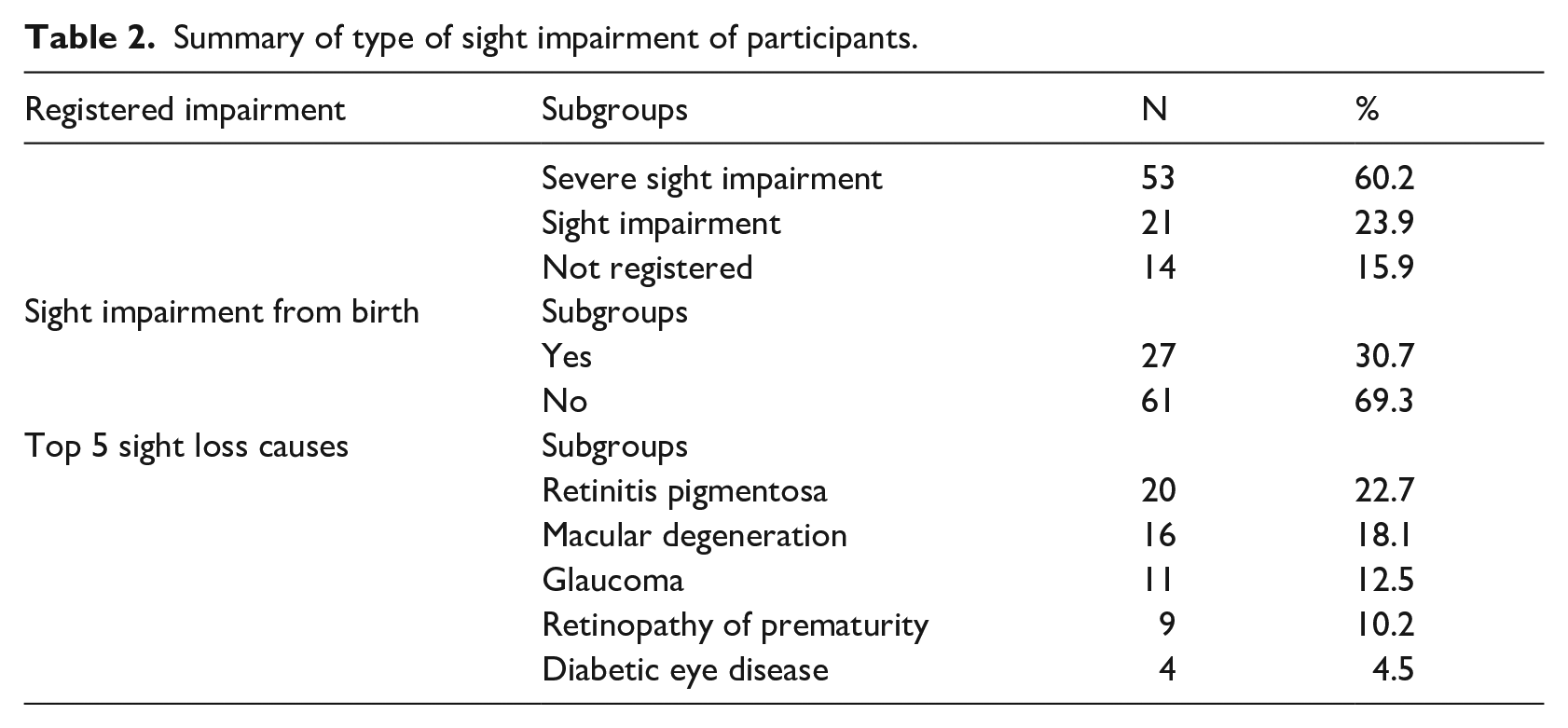
Table 2 shows that 60% (n = 53) of the participants were registered with severe sight impairment, 24% (n = 21) with sight impairment, and 16% (n = 14) were not registered. Retinitis pigmentosa, macular degeneration, and glaucoma were the top three common causes of sight loss.
Summary of type of sight impairment of participants.
Data analysis – sight impairment and employment
Quantitative analysis
In our survey, 72% (n = 63) of the participants are employed. Of these, 63 participants, 29% (n = 18) worked part-time. About 33% (n = 21) of the employed participants have reported that they have never experienced unemployment; 68% (n = 43) have stated they were unemployed at some point in their career journey, 24 of which were unemployed for longer than a year. Table 3 shows the following were found to be associated with being employed: having a higher qualification and being able to travel independently. Travelling independently was also associated with higher qualifications. Five participants opted not to disclose their yearly income.
Correlation between factors and employment status of participants with sight impairment.
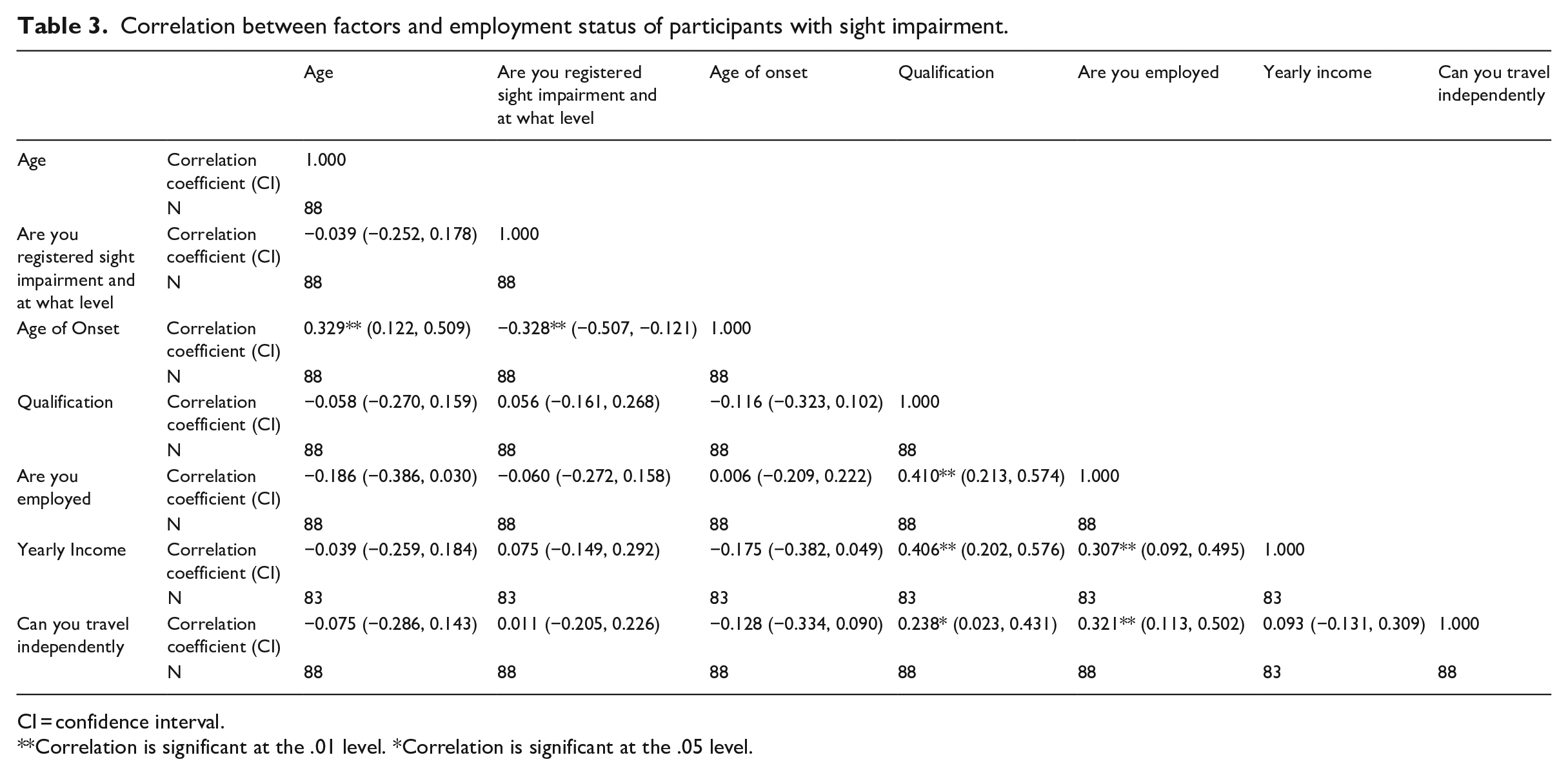
CI = confidence interval.
Correlation is significant at the .01 level. *Correlation is significant at the .05 level.
The results show there was no association found between age, sex, region of residence, type of sight loss, and ethnicity with employment in our study.
For those who are employed, analysis revealed that there was a correlation between level of registration and length of unemployment for more than a year (correlation coefficient 0.295, CI [0.044, 0.511], p = .019). It was also found that those with an earlier age of onset of sight loss who were employed were more likely to think that their job did not reflect their qualifications (correlation coefficient of −0.281, CI [−0.500, −0.028], p = .026). No associations were found when analysing those who are unemployed.
In response to our second RQ, we asked the 63 employed participants to rate, using a 5-point Likert-type scale, whether they agreed with the following statements:
Your employer is supportive.
You are treated equally among your peers.
Your job reflects your qualifications.
An answer of 1 would indicate that they strongly disagree with the statement, and an answer of 5 would indicate they strongly agree with the statement. It was more positive when asked about employer support (median = 4) and equality (median = 4). Participants’ opinions were mixed when asked if their job reflected their qualifications (median = 3).
Thematic analysis
All 88 participants were asked to share how they felt employers could support people with sight impairments while in employment. The two overall themes identified were ‘adjustments’ and ‘empathy’.
Empathy
The importance of empathy from colleagues and employers was demonstrated by more than half of the participants. Of the 88 participants, 72% (n = 63) suggested being respectful and approachable was important, and 76% (n = 67) recommended colleagues undergo disability awareness training. Specific positive points mentioned by participants were when employers took the time in ‘understanding and acknowledging the needs of my disabilities’. Being ‘understood’ and ‘listened’ to, and then taking ‘action to make things accessible’ such as ‘offered to sighted guide, used team building activities, be humankind sessions’, were highly valued. Action cannot be taken without listening and understanding, showing the importance of empathy.
Adjustments
Most of the participants quote how adjustments in the workplace have helped them in their employment, with the majority having more than one type of adjustment. Types of common adjustments that were selected by many participants included flexible working hours (51%, n = 45), providing information in accessible formats (60%, n = 53), workload adjustments (66%, n = 58), and visual aids (66%, n = 58). The Access to Work scheme was specifically referenced as being used by 17 participants in the survey to help with implementing adjustments such as ‘providing technical equipment and initial training’ in the workplace. Specific scenarios quoted by participants where workplace adjustments have been beneficial include:
Some flexibility over allocating tasks among the team so that tasks I would struggle with are dealt with by colleagues while I take on more accessible tasks that colleagues dislike.
With equipment identified in my access to work assessment, this allows me to choose the most appropriate desk to make the most of light while providing information in accessible formats.
I have a reduced caseload compared to my non-disabled colleagues. I am also sometimes given extended deadlines. My managers also provide support and guidance for particular processes that may be difficult for me to complete due to my disability.
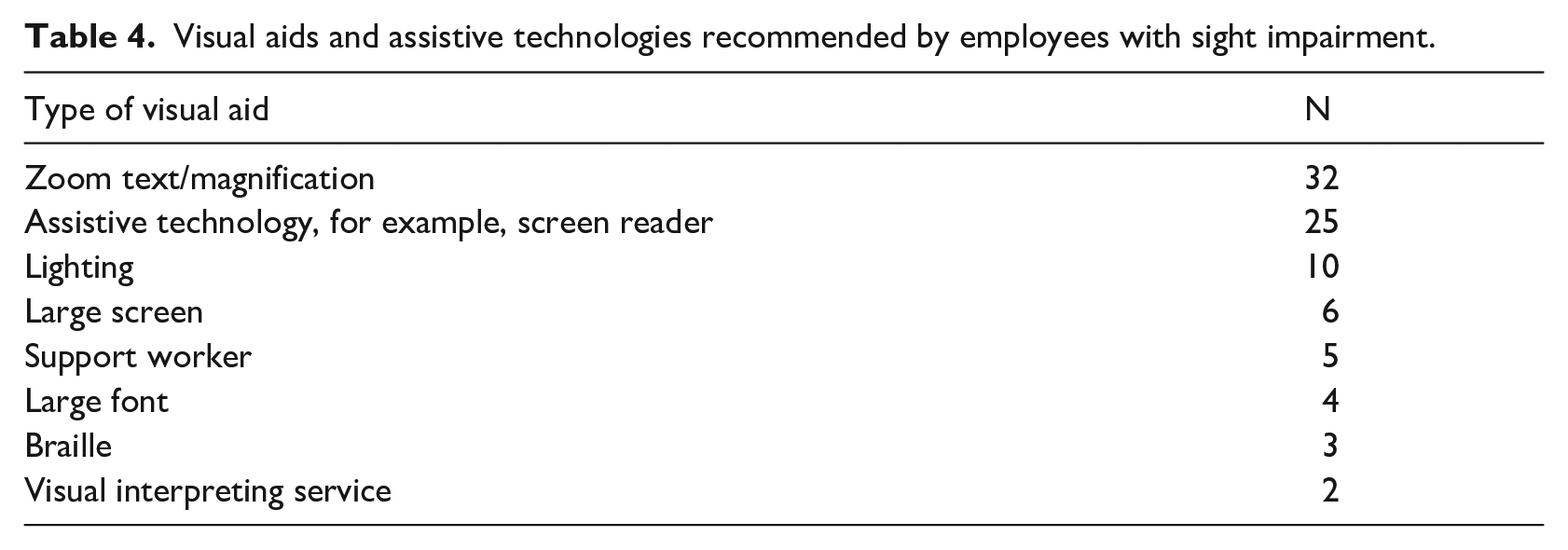
Moreover, to build on the theme of adjustments, we asked all 88 participants what accessible visual aids and assistive technologies they have used to help perform their duties at work. The most prominent types were ‘magnification’, ‘screen readers’, and ‘lighting’. Table 4 is a summary of this.
Visual aids and assistive technologies recommended by employees with sight impairment.
Negative employee experience
Our survey revealed that there were 12 participants who said they were not supported by their employers at some point. One participant stated: ‘I have had very little support; I have had to push to get offered support and have only gained so much due to my own efforts with Access to Work’. Participants also demonstrated experiencing a lack of opportunities: ‘there were employers who wouldn’t give me a chance because of my sight impairment’, a lack of understanding from the employer: “some employers do not understand that it takes time to learn new devices’, being offered a lower-paid part-time position ‘I felt forced to take a much lesser-paid part-time role, and it affected my mental health so badly that I am still recovering’, and being dismissed: ‘I was told I could no longer do my job’, ‘There was no support. I was told to leave because I couldn’t do my job anymore’.
Data analysis – sight impairment and unemployment
Thematic analysis
In response to RQ three, in our survey, 25 participants stated that they were unemployed at the time of filling out the survey, with 20 participants feeling that their sight loss was the cause of their job loss. The reasons given for their causes of unemployment fell into two themes: employer discrimination and lack of self-confidence.
Employer ignorance and discrimination
The UK Equality Act 2010 states that employers have a legal duty to make reasonable adjustments for disabled employees. Despite this, our survey found unemployed participants faced employers who did not understand how sight impairment can impact employment and discrimination, as exemplified by the following comments: ‘disability not being fully understood by employers’; ‘employers ignorance’; ‘need for extra equipment therefore extra expense’; ‘insurance risks because of my vision loss’; ‘lack of support’; ‘unsympathetic management’; ‘working became intolerable and impossible’; ‘unfair dismissal’; ‘the prospective employer unjustly makes a decision in their own mind that it would be too much hassle to employ a blind person even though I still have usable sight’, and ‘People are afraid they will have to spend money on extra equipment’.
Lack of self confidence
According to the Royal National Institute of the Blind (RNIB, 2024a), reactions to being diagnosed with sight loss tend to be like bereavement: experiencing feelings of denial, anger, helplessness, fear, anxiety, sadness, depression, and loss of identity. Lack of self-confidence (‘I believe that by coming into employment, I will be more of a cause of difficulty than of help’) and not feeling internally able to work (‘I was self-employed, but now I would find it difficult to find and keep clients as I can’t travel or see well enough’) are key reasons why participants were unemployed.
Discussion
Based on the sample of 88 participants, the majority of whom were registered with severe sight impairment, it was found that those with higher qualifications are more likely to be employed. This is consistent with the current evidence base (Brunes & Heir, 2022; Gupta et al., 2021). It is known that participants who have sight impairments are less likely to do well academically (Alvarez-Peregrina et al., 2020). Our research emphasises the importance of supporting individuals through education to improve their outcomes when applying for employment. It was also found that those who were able to travel independently were more likely to be employed. Travelling independently is not only vital for employment directly but also indirectly in the form of travelling to ophthalmology appointments and procedures, support groups and rehabilitation services, which are important in maintaining ability to perform at work. Access to work can support travel to work, including funding a support worker or taxi for travel (GOV UK, 2024a). Drawing from experiences of people living with sight loss, many types of vision rehabilitation services are available, ranging from Braille training to employment and job training, assistive technology (such as screen readers and mobile applications), improved lighting and reading stands, magnifiers, emotional support, and flexible work options, including working from home. In addition, social services offer mobility cane training and home adaptations to support independent living. Raising awareness of such initiatives is highly important, as they can positively support employment. According to the RNIB (2024b), people with sight loss excel in a wide range of occupations across nearly all fields. As with anything else, success depends on having the right education, experience, and skills. In addition, having the proper tools for the job is just as essential as it is for any other worker.
Our research found that 72% of our participants were employed. In our study of employed participants, mixed opinions were found on whether employees felt their job was reflective of their qualifications. This is in line with the previous study by Slade et al. (2020), in the United Kingdom, who found many employees felt they had missed their full potential due to their sight impairment. Remarkably, for those employed, the majority were satisfied with their employment and with the support they received. This contradicts previous work by Mojon-Azzi et al. (2010), who found that individuals with perceived sight impairment were significantly less satisfied with their employment. This may be due to improvements in the two themes we found to be linked to better support: (1) empathy and (2) workplace adaptations, in the United Kingdom.
The first theme, lack of empathy, is in line with current evidence (Jonsdottir & Kristinsson, 2020). Disability training and awareness for colleagues may help improve employer empathy by addressing employer misconceptions (Phillips et al., 2016). Most survey participants agreed that this was a method that typical employers might use to support them at work, which serves as further evidence. Equality and diversity training has become mandatory in certain fields in the United Kingdom, for example, in the National Health Service, showing movement in the right direction (NHS Employers, 2021). To support the second theme, workplace adaptations, types of reasonable adjustment were well quoted, from modification of activities to flexible working hours (Gupta et al., 2021). This feeds into the social model of disability, where people with sight impairment can be effective members of a team, removing barriers preventing them from flourishing (Goering, 2015). Nevertheless, negative repercussions from a lack of support and understanding from employers have been evidenced in our study, leading to unemployment and a negative impact on mental health. This cannot be negated by the overall positive statements and shows there is still room for improvement.
Among those who were already unemployed, the majority felt this was due to external reasons of discrimination. This was specifically due to potential employers either not taking the time to understand the sight impairment and worrying about expenses the involved or not supporting the employee in the workplace, leading to barriers in the workplace and unfair dismissal. Discrimination against people with sight impairment is evidenced, with employers showing more negative or neutral reactions to employing individuals with sight impairment (Chan et al., 2005; Jackson et al., 2019; Papakonstantinou & Papadopoulos, 2020). Specifically, it has been shown that employers’ lack of understanding and ignorance is a key barrier to employment, supporting our study (Papakonstantinou & Papadopoulos, 2020). This is a key area that should be targeted for improving employment outcomes. The other reason for unemployment was an internal lack of confidence in employment due to sight impairment. It has been demonstrated that people with sight impairments can have lower self-esteem compared to sighted individuals (Papadopoulos et al., 2013). Unemployment can lower people’s self-esteem further, leading to a self-perpetuating cycle (Álvaro et al., 2019). Unemployed people with sight impairment looking for jobs may need further support in building their confidence.
The strengths of our study include the qualitative and quantitative nature of the study, which allowed different aspects of the impact of sight impairment on employment to be explored. Another strength is that the point of view of both employed and unemployed individuals with sight impairment was analysed. The sample involved any individual from the United Kingdom, broadening the sample. The questionnaire was anonymous, allowing for the expression of opinions. Our data have several limitations. First, it was limited by including only individuals with access to social media and links to charities, as this is where the information was mainly shared. There may also be response bias from certain individuals being more inclined to fill out the survey compared to others. Participants were those who could read and understand the English language. In addition, we included participants with self-reported sight impairment but did not objectively confirm if all participants had sight impairment. Furthermore, we had a relatively small sample size, which reduced the power of the study and the associations found during quantitative analysis.
Implications
Our study findings indicate that significant work is needed before individuals with sight impairment can fully engage in society on an equal basis with their sighted peers. We recommend providing education and training to people with sight impairment to enhance their employment opportunities. The findings emphasise the importance of supporting those who commute to work, offering rehabilitation services, and removing workplace obstacles through appropriate adjustments. We also advise raising employers’ awareness of the effects of sight impairment on employees and how to support them in the workplace.
Conclusion
Overall, our research underlines the utmost importance of supporting individuals with sight impairment in their education and travel to improve employment outcomes. In addition, seen are the generally favourable effects employees with sight impairment have when they see their employers as helpful. This information might be used by employers to better comprehend the challenges faced by people with sight impairment and to identify obstacles that can be removed by offering adaptations and emotional support while also promoting equality in the hiring process and at work. It has been established how crucial it is to understand employers’ perspectives when it comes to assisting workers with disabilities (Jansen et al., 2022). Therefore, further research is recommended to explore different initiatives to raise awareness of the impact of sight impairment on employers’ and assess their effectiveness.
Footnotes
Declaration of conflicting interests
The author(s) declared no potential conflicts of interest with respect to the research, authorship, and/or publication of this article.
Funding
The author(s) received no financial support for the research, authorship, and/or publication of this article.

Data availability
The data that support the findings of this study are available from the corresponding author upon reasonable request.