




Abstract
This study aimed to develop and evaluate the effectiveness of an alcohol intervention program for adults on probation with alcohol-related problems. Conducted within the probation system with 115 participants (58 intervention, 57 control), the six-session program significantly reduced alcohol use, related problems and increased motivation to change. As the first alcohol-specific intervention developed within Turkey's probation system, the study highlights the need for tailored approaches in criminal justice settings and offers a practical model for future programs.
Keywords
Introduction
Alcohol has been a part of human culture since the beginning of recorded history. In nearly all societies where alcohol is consumed, alcohol-related health problems and social issues have been observed. The industrialization of alcohol production and the globalization of marketing and promotion have increased both global consumption levels and the associated harms (Rehm et al., 2009). The public health impact of alcohol use extends far beyond individuals who consume alcohol or meet the criteria for alcohol use disorder (AUD). Alcohol use is associated with increased risk of accidents, reduced workplace productivity, increased healthcare costs and higher rates of crime and violence (WHO, 2018).
AUD is defined as a chronic, relapsing disorder characterized by compulsive alcohol use, loss of control over consumption and the emergence of a negative emotional state when not drinking (Yang et al., 2022). According to the World Health Statistics 2023 report, global per capita alcohol consumption (age 15 and over) has declined since 2015, following a general increase between 2005 and 2010 and stabilization between 2010 and 2015. However, trends differ across World Health Organization (WHO) regions. Despite the decline, men and women in the European Region still have the highest levels of alcohol consumption. Globally, men consume nearly four times more alcohol per capita than women (WHO, 2023).
Multiple factors contribute to the development and persistence of alcohol-related problems. Cognitive and emotional mechanisms—such as alcohol outcome expectancies, impulsivity, emotion regulation, and stress coping—play a critical role in this process. People may consume alcohol due to expectations of social or emotional benefit (Goldman et al., 1999) or as a way to relieve distressing emotional states (Conger, 1956; Cooper et al., 1995). Impulsivity and difficulties in emotion regulation are strongly associated with AUD (Jakubczyk et al., 2018). Acute and chronic stressful life events are also well-known risk factors for problematic alcohol use (Boden et al., 2014).
Various psychosocial interventions have been developed to mitigate the harms of alcohol use on individuals and society. Effective approaches include motivational interviewing (MI), brief interventions, cognitive behavioral therapy (CBT) and mindfulness-based strategies (Knox et al., 2019). MI seeks to enhance intrinsic motivation for change; brief interventions are structured conversations that aim to raise awareness about alcohol-related harms and promote behavior change (Kaner et al., 2018; Miller and Rollnick, 2012). CBT targets maladaptive thoughts and behaviors associated with alcohol use and teaches coping skills (Ryu et al., 2018). Mindfulness-based interventions support individuals in managing stress, craving and emotional triggers, with the aim of transforming habitual drinking behaviors (Cavicchioli et al., 2018).
Many individuals with AUD also present with other substance use disorders at some point in their lives (Arias and Kranzler, 2008). A synthesis of studies conducted across various populations and time periods demonstrates that individuals with substance use disorders are significantly more likely to also meet criteria for AUD compared to those without such disorders (Agosti et al., 2002; Burns and Teesson, 2002; Degenhardt et al., 2001; Grant and Pickering, 1996). In this context, the comorbidity of substance use disorders and AUD underscores the importance of conducting research within probation settings, particularly among individuals on probation for substance use–related offenses.
In addition to the comorbidity of substance and alcohol use disorders, the relationship between alcohol use and criminal behavior is another key factor influencing intervention strategies in the criminal justice system. Risky alcohol use is more prevalent in this setting compared to the general population. Addiction rates among offenders have been shown to be up to 10 times higher than among the general population (Newbury-Birch et al., 2016). Although the relationship is complex, strong evidence indicates a dynamic interaction between alcohol use and criminal behavior that involves drinking quantity, patterns of use and various individual and contextual factors. Given this association, various stages of the criminal justice process offer valuable opportunities for implementing alcohol screening and brief interventions (Graham et al., 2012).
The probation system in Turkey was formally established in 2005 and is administered by the Ministry of Justice through the Probation Directorate. It provides a legal framework for the supervision, support, and reintegration of individuals under judicial control (Yavuz, 2012). As of 2025, approximately 465,000 individuals are under community supervision nationwide. This total covers different types of judicial measures. Among them, approximately 295,000 probationers are referred to psychosocial support or intervention programs according to their assessed needs (Directorate General of Prisons and Detention Houses, 2025). Probationers are placed under supervision by court decision, either as an alternative to imprisonment or as part of conditional release. Existing research shows that, in terms of offence classification, crimes against persons rank first, followed by property crimes, and that these offences are frequently accompanied by alcohol or substance use problems. In addition, a considerable proportion of probationers are subject to community supervision under Article 191 of the Turkish Penal Code for drug use or possession offences (Porsuk, 2022). To support behavioral change and social reintegration, probation directorates deliver structured intervention programs. Psychosocial intervention programs are primarily delivered under two judicial measures: (1) execution of sentences through probation and (2) probation for individuals with substance use (Ministry of Justice, 2024).
Intervening to reduce alcohol consumption has been shown to be cost-effective, yielding both short- and long-term benefits (UKATT Research Team, 2005). Accordingly, interventions conducted within the criminal justice system can be seen as strategic opportunities to promote behavioral change. Individuals may be encouraged to reflect on their alcohol use within the context of their criminal behavior and its consequences (Newbury-Birch et al., 2018). Despite this potential, structured interventions specifically targeting alcohol use are still uncommon (Newbury-Birch et al., 2016). Similarly, Turkey lacks dedicated alcohol-specific intervention programs for individuals under probation. This gap results in the neglect of distinct alcohol-related risk patterns.
Within this context, individuals under probation due to illegal substance use in Turkey exhibit higher levels of alcohol consumption compared to the general population (Zorlu et al., 2011). One of the main reasons for this is that, as supervised individuals are expected to refrain from using illegal substances, alcohol is often preferred due to its legal status and the perception that it provides symptomatic relief (Eğilmez et al., 2019). Nonetheless, this situation may increase both the risk of developing an AUD and the likelihood of relapse into primary (illegal) substance use (Altın and Yararbaş, 2021). Besides, studies have consistently shown that alcohol use is positively associated with a range of risky behaviors, including high-risk sexual activity, violent and criminal acts, self-harm, and fatal injuries such as motor vehicle accidents (Korlakunta and Reddy, 2019; Taylor and Leonard, 1983; Welte and Miller, 1987). However, interventions within the criminal justice system—both in Turkey and internationally—have predominantly targeted drug use. In a systematic review of international studies aimed at determining levels of alcohol use in criminal justice institutions and evaluating the effectiveness of brief alcohol intervention programs implemented in these settings, it was stated that there is a limited number of studies in this field, that interventions addressing risky drinking have not been sufficiently developed, and that the studies in question employ different measurements and outcomes—thus highlighting the need for further research (Newbury-Birch et al., 2022). Similarly, McMurran (2006) emphasized the importance of developing intervention programs targeting alcohol use problems in prison and probation services.
Against this background, the aim of the current study is to develop a structured alcohol intervention program specifically tailored for adults under probation in Turkey and to evaluate the effects of this program on reducing alcohol consumption, mitigating related problems, and enhancing motivation for change. This study represents the first structured alcohol-focused intervention initiative developed within the Turkish probation system and addresses a significant structural gap in this field.
Materials and methods
Study design
This study was a single-blind, pretest–posttest, control-group randomized controlled trial conducted between June and November 2023, following ethical approval from a local institutional ethics committee and implementation permission from the relevant criminal justice authority. Participants referred to probation under Article 191 of the Turkish Criminal Procedure Law due to substance use were screened using a researcher-developed Baseline Assessment Form, which included items on age, literacy, substance-use history, alcohol-related legal issues, and psychiatric diagnoses. Those meeting inclusion criteria and providing informed consent were then randomly assigned via a computer-generated list to either the intervention group (IG) or the control group (CG). All participants completed baseline measures (Baseline Assessment Form, alcohol use disorders identification test (AUDIT), Michigan alcoholism screening test (MAST), and stages of change readiness and treatment eagerness scale (SOCRATES)) prior to the intervention. The IG received the six-session Alcohol Intervention Program over 12 weeks, while the CG continued standard probation supervision without additional psychosocial components. Posttest assessments using the same instruments were administered immediately after Week 12. The intervention was delivered by the same researcher who also conducted the pre- and posttest assessments. Participants were not informed about their group allocation until the start of the intervention. Seven participants (four intervention, three control) were withdrawn from the study due to positive surprise drug tests or case closure by the probation authority for noncompliance with obligations. As their probation files were closed before completing the intervention, they could not continue the program, and therefore posttest data could not be collected, resulting in their exclusion from the analyses. This represented the attrition in the study and yielded a final analytic sample of 115 (58 intervention, 57 control).
Sample size
Due to the limited number of comparable studies in the criminal justice system and the absence of known effect size values, the sample size was calculated based on the standards proposed by Cohen (1992) rather than a reference study. Accordingly, an a priori power analysis was conducted using G*Power software (t-test for differences between two independent means—two groups). The calculation assumed an effect size of 0.40, a power of 80%, a significance level of .05 and a one-tailed test, resulting in a required sample size of 78 participants per group (total N = 156).
During the study, a post hoc power analysis was conducted using the collected data. Means and standard deviations of both groups (IG: n = 58, CG: n = 57) were analyzed based on posttest results. Using a one-tailed hypothesis with α = .05, the following results were obtained:
AUDIT: effect size = 0.81, power = 99% MAST: effect size = 0.51, power = 85% SOCRATES: effect size = 0.54, power = 89%
These values confirmed that the study achieved sufficient statistical power across all outcome measures. The final sample included 115 participants: 58 in the IG and 57 in the CG.
Randomization
Participants were screened using a researcher-developed Baseline Assessment Form to determine eligibility for the study. Following the evaluation interviews, participants who met the inclusion criteria and voluntarily agreed to take part in the study were allocated to groups using a simple randomization procedure. Assignments to the intervention and CGs were based on a pregenerated randomization list created within the computer system. Participants were not informed of their group allocation until the study began. Once the intervention commenced, they were notified of their group assignment and received detailed information regarding their participation.
Measures
Baseline assessment form
Developed by the researchers, this form collects sociodemographic and case-related data, including age, marital status, education, occupation, family structure, legal issues related to alcohol, alcohol-related criminal involvement, use of other substances, health status, and psychiatric diagnoses.
Alcohol use disorders identification test
Originally developed by the WHO and later revised by Babor et al. (2001), AUDIT is a 10-item screening tool measuring alcohol consumption, dependence symptoms, and alcohol-related harm. The scale has a maximum score of 40, with a recommended cutoff between 8 and 9. Items 1–3 assess hazardous use, 4–6 dependency symptoms and 7–10 harmful use. The Turkish adaptation by Saatçioğlu et al. (2002) reported test–retest reliability of .90 and internal consistency ranging from .59 to .65 across interviewers.
Michigan alcoholism screening test
Developed by Gibbs (1983), MAST is a self-report instrument to screen for alcohol-related problems. Items are answered dichotomously (“yes”/“no”) with varied scoring weights. Higher scores reflect greater alcohol-related impairment. The optimal cutoff ranges between 5 and 9. The Turkish version, validated by Coşkunol et al. (1995), has demonstrated acceptable psychometric properties.
Stages of change readiness and treatment eagerness scale
SOCRATES, developed by Miller and Tonigan (1997), is a 19-item scale measuring motivation for change in individuals with alcohol problems. It includes three subscales: Awareness, Ambivalence and Taking Steps. The Turkish version, validated by Evren et al. (2008), retained 16 items with a Cronbach's alpha of .85.
Statistical analysis
Descriptive statistics, including frequency, percentage, mean and standard deviation, were used to summarize the data. The normality of the data distribution was assessed by examining skewness and kurtosis values, which fell within the acceptable range of −1.5 to +1.5, indicating a normal distribution. Accordingly, parametric tests were applied in the analysis. Chi-square tests were used to compare categorical variables between the intervention and CGs, while independent samples t-tests were applied for continuous variables. To assess whether posttest scores differed significantly across relevant variables, both independent samples t-tests and one-way ANOVA were conducted. Variables that were found to be statistically significant were further analyzed using multiple linear regression to explore their predictive relationships. A significance level of p < .05 (95% confidence interval) was adopted. All analyses were performed using SPSS version 27.
Design and structure of the alcohol intervention program
The number of sessions, duration and content of the program were determined by the researcher. Although there is considerable variation in the frequency and duration of alcohol brief intervention programs in the current literature, most studies report interventions ranging from a single session to four sessions, with durations between 5 and 60 min (Newbury-Birch et al., 2022). In determining the content, number, duration, frequency of sessions and the theoretical basis of the Alcohol Intervention Program developed in this study, the needs of the probation population, applicability within the probation system and findings from existing research were taken into account. The intervention was implemented as a group-based program
Content of alcohol intervention program sessions.
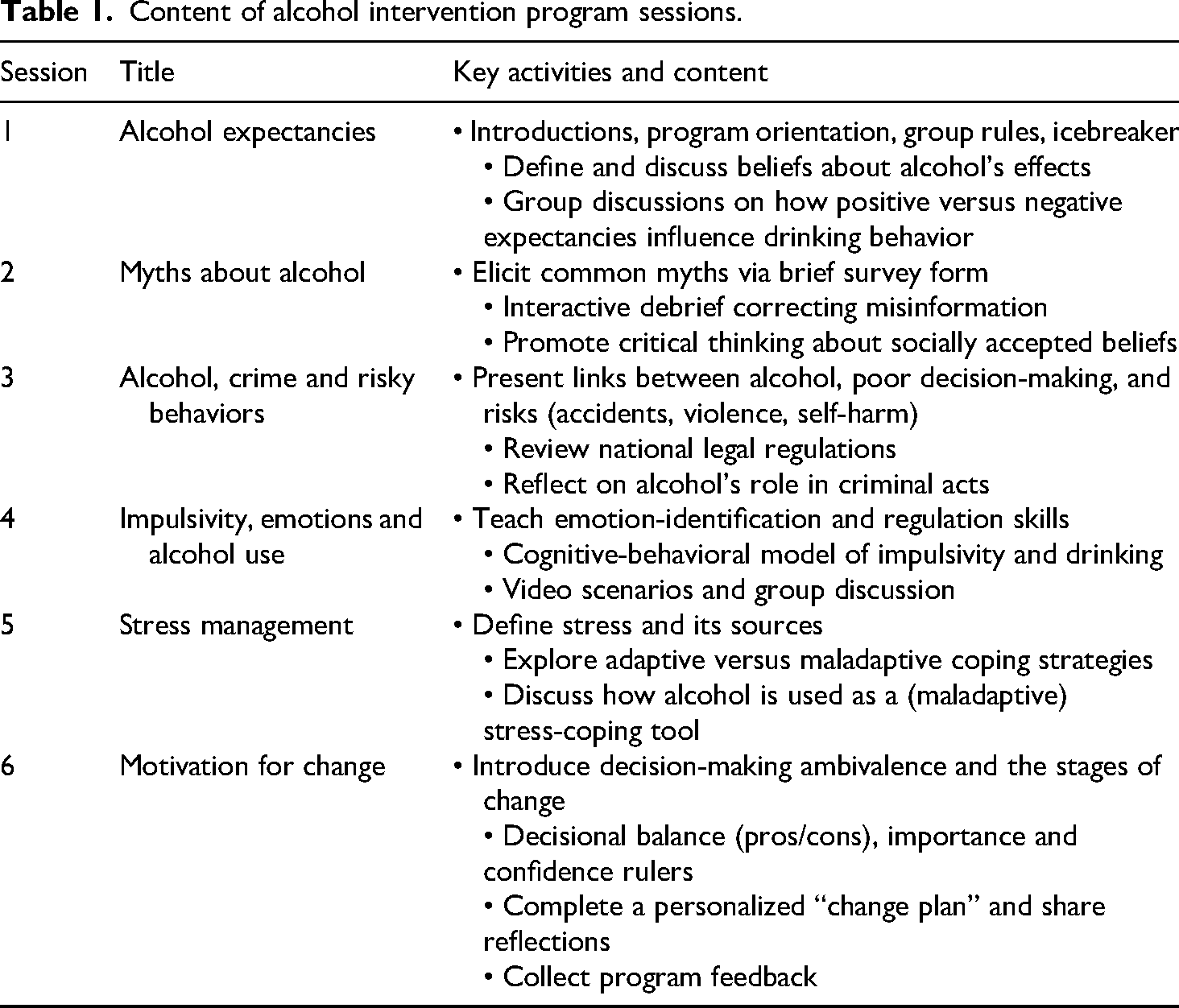
Content of the intervention sessions
The six sessions of the Alcohol Intervention Program focused on distinct but interrelated topics:
To promote continuity and reinforce learning, each session from the second onward began with a brief review of the previous session, during which participants were encouraged to recall and share key points.
Results
Baseline sociodemographic characteristics
The study sample consisted of 115 participants under probation, with 57 assigned to the IG and 58 to the CG. The mean age was 30.8 ± 8.23 in the CG and 32.7 ± 7.40 in the IG. In both groups, the majority of participants were between the ages of 25 and 34. The vast majority of participants were male. Most participants were middle or high school graduates, single, employed and had an income above the minimum wage. Over half of the participants reported that their parents were married and living together. The groups were compared in terms of age group, gender, marital status, education level, employment status, income level, and parental marital status using Chi-square (x2) tests. No statistically significant differences were found between the intervention and CGs on any of these sociodemographic variables (p > .05), indicating baseline equivalence (see Table 2).
Baseline sociodemographic characteristics and group comparisons.
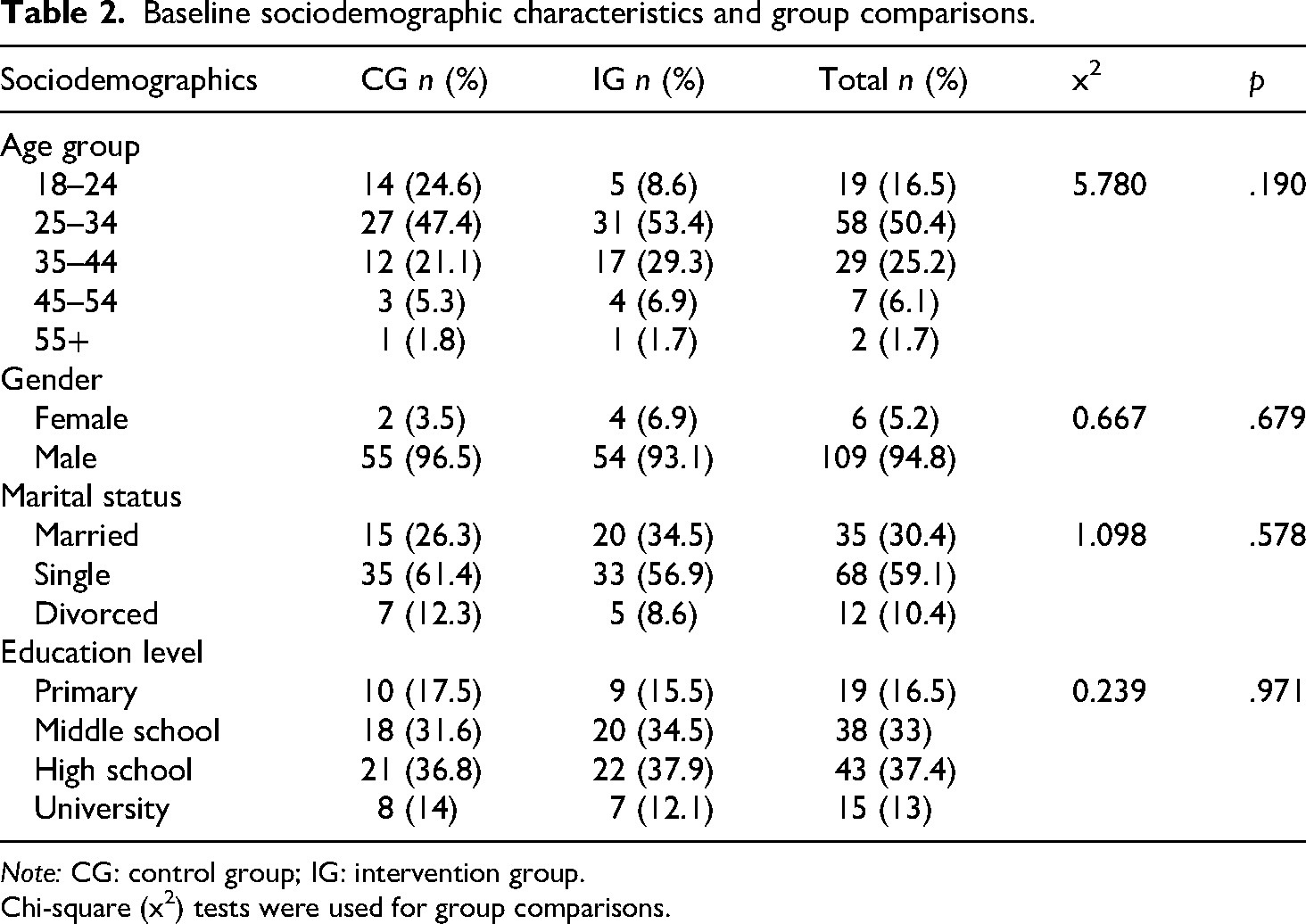
Note: CG: control group; IG: intervention group.
Chi-square (x2) tests were used for group comparisons.
According to the flow of participants throughout the study (see Figure 1), a total of 156 individuals were assessed for eligibility. Of these, 34 were excluded (22 did not meet the inclusion criteria and 12 declined to participate). The remaining 122 individuals were randomized into the intervention (n = 62) and control (n = 60) groups. Due to probation-related case closures following unexpected drug test results, four participants from the IG and three from the CG were withdrawn from the study. Thus, data from 115 participants (58 in the IG and 57 in the CG) were included in the final analysis.
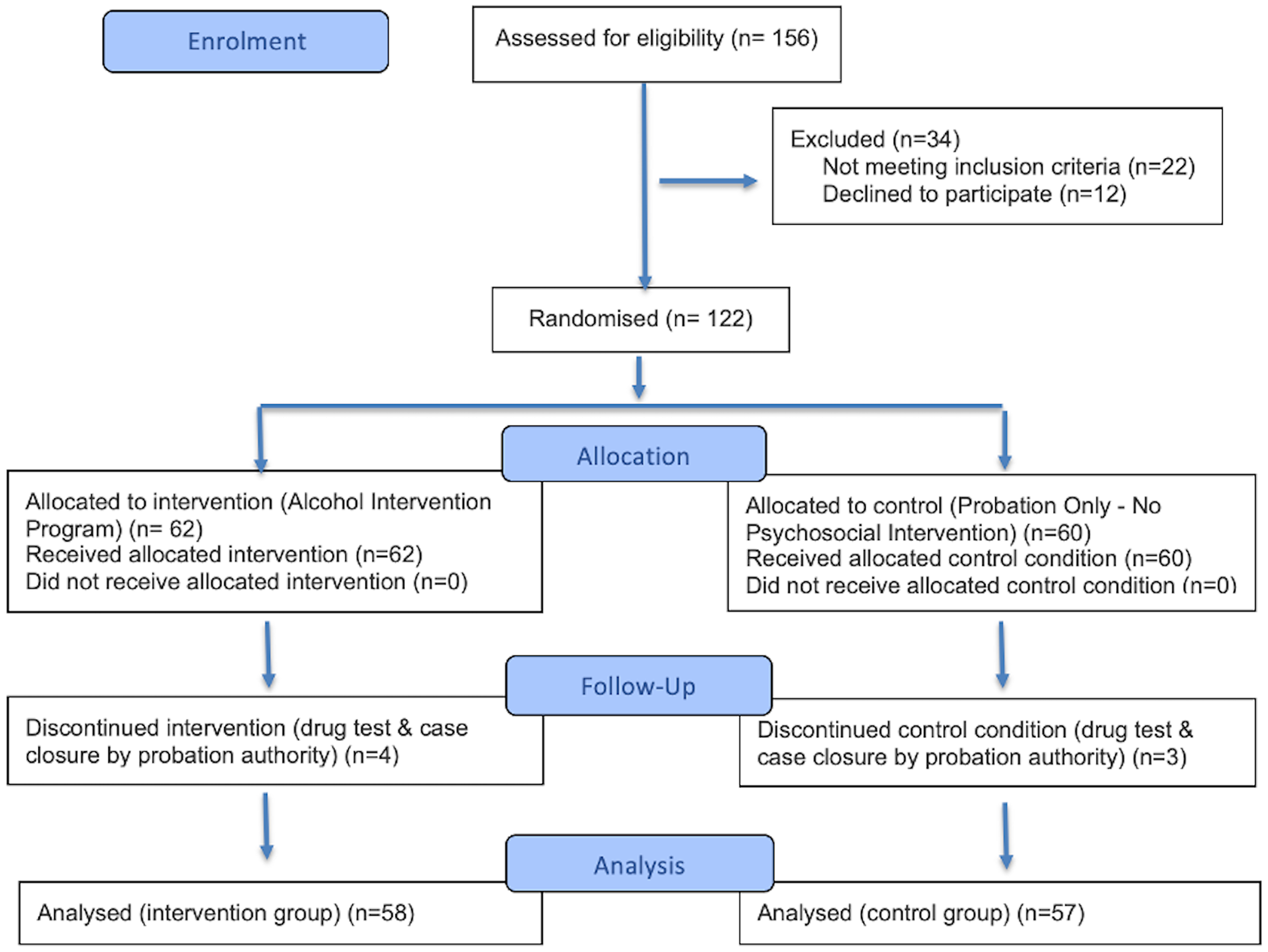
CONSORT 2025 flow diagram.
Criminal and alcohol-related characteristics of the participants
According to the total scores on AUDIT, 25.2% of the participants were classified as low-risk users (0–7 points), 67% as hazardous users (8–15 points) and 7.8% as harmful users (16–19 points).
Table 3 presents descriptive information on the participants’ criminal and alcohol-related background. Frequencies and percentages are provided for criminal records beyond the probation order, legal action due to driving under the influence of alcohol and offenses committed under the influence. The table also includes the distribution of offense types among those with a criminal record.
Criminal and alcohol-related background of the participants.
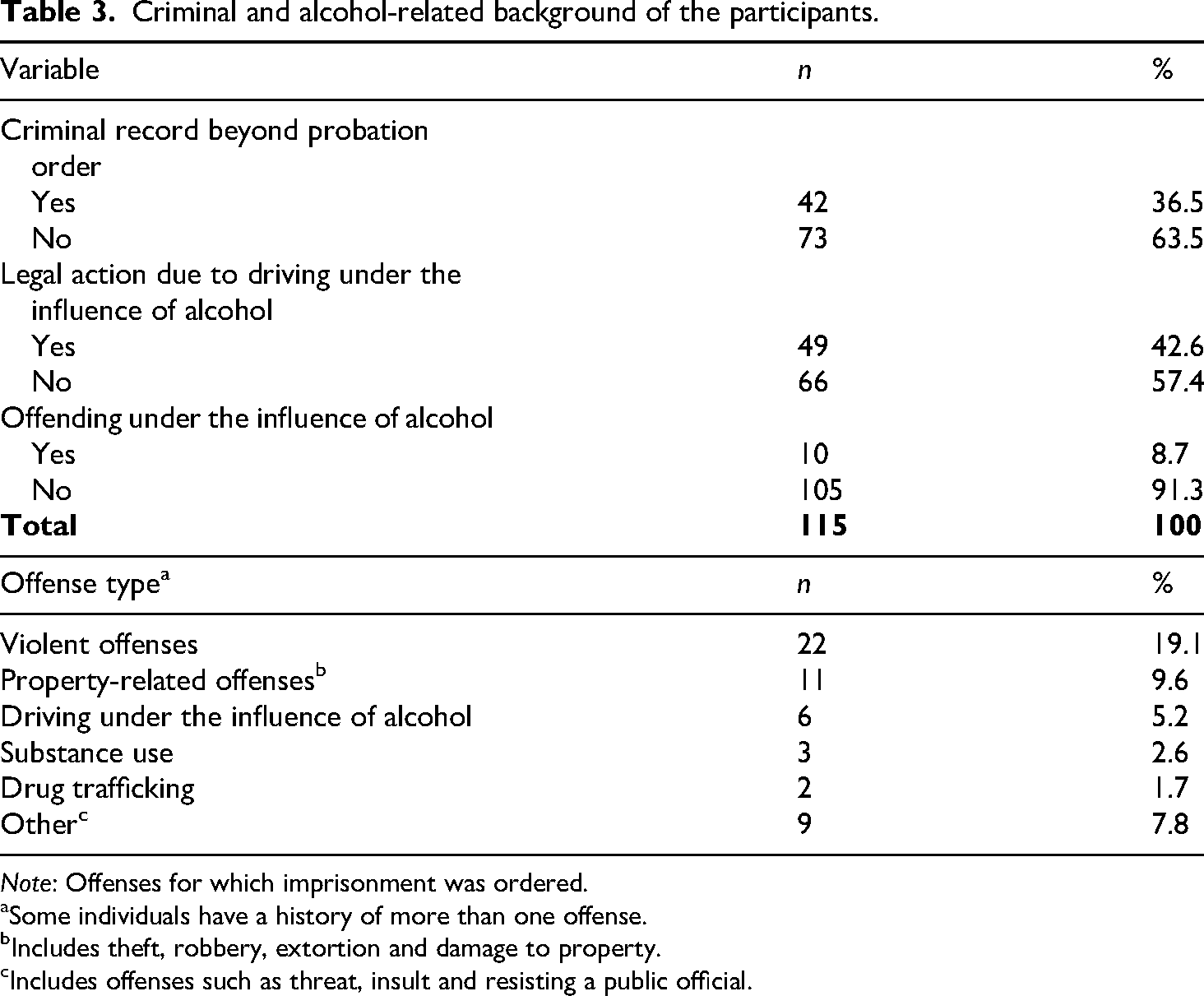
Note: Offenses for which imprisonment was ordered.
aSome individuals have a history of more than one offense.
bIncludes theft, robbery, extortion and damage to property.
cIncludes offenses such as threat, insult and resisting a public official.
Descriptive statistics and group comparisons of pretest and posttest scores
Descriptive statistics for mean pretest and posttest scores on the AUDIT, MAST and SOCRATES scales are presented below for both the intervention and CGs.
AUDIT scores in the IG decreased from pretest (8.52) to posttest (6.76), while in the CG, scores slightly decreased from (9.60) to (9.14). MAST scores in the IG decreased from (5.81) to (3.98), whereas the CG remained relatively stable (5.63 to 5.86). SOCRATES scores in the IG increased from (29.19) to (35.05), while the CG slightly decreased from (30.51) to (28.81).
Independent samples t-tests were conducted to examine whether there were significant differences between the intervention and CGs in pretest and posttest scores on the AUDIT, MAST, and SOCRATES scales. At pretest, no statistically significant differences were found between the groups: AUDIT (p = .086), MAST (p = .811) and SOCRATES (p = .512). In contrast, posttest comparisons revealed significant differences across all three measures. The IG scored significantly lower than the CG on AUDIT (p < .001) and MAST (p = .007), while scoring significantly higher on SOCRATES (p = .004), indicating greater readiness for change.
Univariate analyses of posttest scores by participant characteristics
Independent samples t-tests and one-way ANOVA were used to examine whether posttest scores on the AUDIT, MAST, and SOCRATES scales differed significantly according to variables such as gender, age, education, marital status, employment, prior attempts to quit or reduce alcohol use and criminal history.
For AUDIT posttest scores, no significant differences were found based on gender, age, marital status, employment status, criminal history, or prior attempts to reduce alcohol use. However, a statistically significant difference was found according to educational level (p = .013). This suggests a potential link between lower educational attainment and higher levels of alcohol consumption.
The results for MAST posttest scores indicated that gender, age, marital status, employment status, and education level did not show significant differences in posttest scores. However, significant differences were found for criminal history (p = .001) and prior attempts to quit or reduce alcohol use (p < .001). Participants with a criminal history or a previous attempt to reduce alcohol use had significantly higher MAST scores.
For SOCRATES posttest scores, statistically significant differences were found by gender (p = .017), criminal history (p = .032), age group (p = .026) and education level (p = .049). No significant differences were observed based on employment status (p = .701), prior attempts to quit or reduce alcohol use (p = .067) or marital status (p = .084).
Multivariate regression analysis of posttest scores
A multiple linear regression analysis was conducted including variables that were statistically significant in the univariate analyses of the posttest scores obtained from the AUDIT, MAST, and SOCRATES scales (see Table 4).
Predictors of posttest alcohol use disorders identification test (AUDIT), Michigan alcoholism screening test (MAST) and stages of change readiness and treatment eagerness scale (SOCRATES) scores: A multiple linear regression analysis.
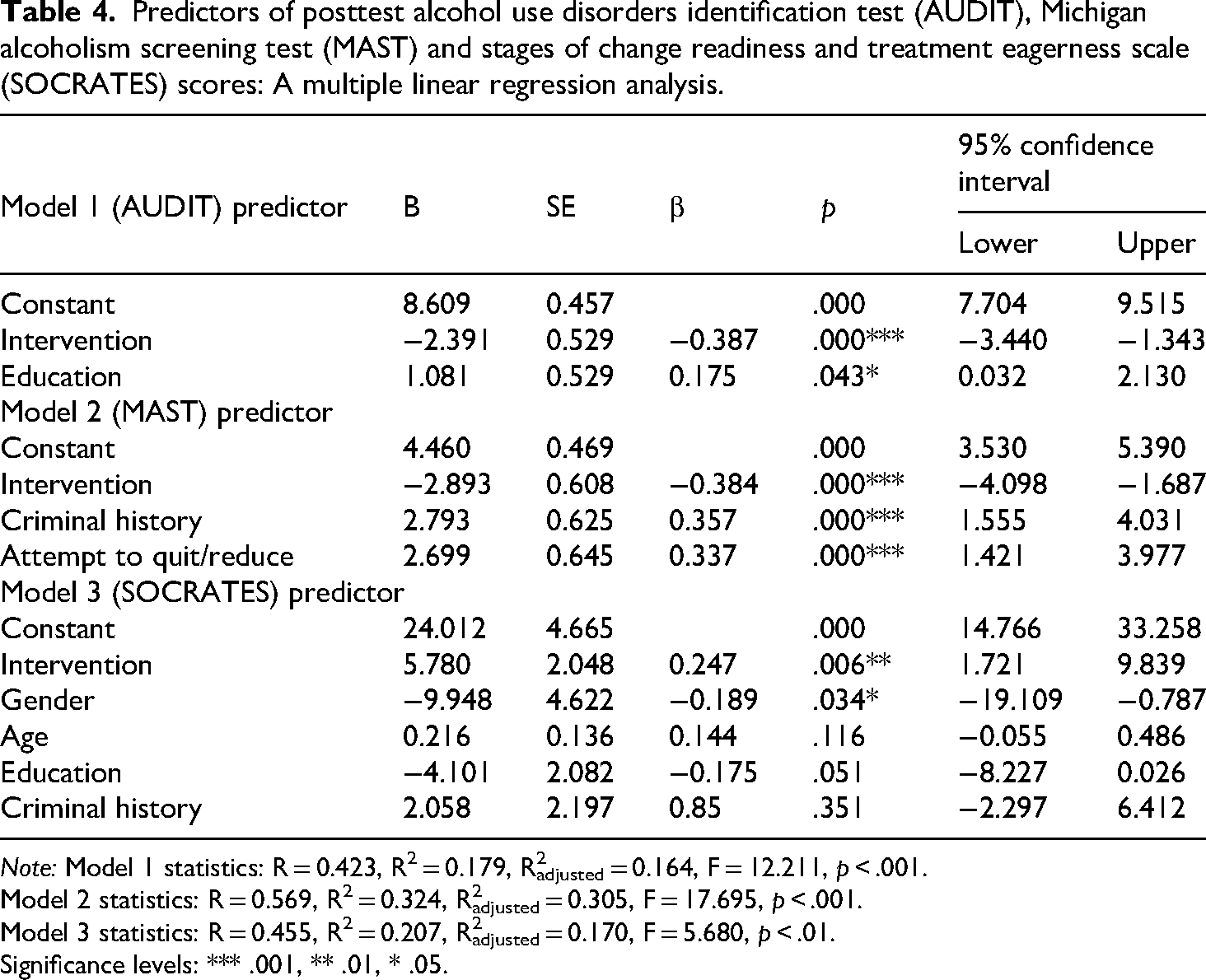
Note: Model 1 statistics: R = 0.423, R2 = 0.179, R2adjusted = 0.164, F = 12.211, p < .001.
Model 2 statistics: R = 0.569, R2 = 0.324, R2adjusted = 0.305, F = 17.695, p < .001.
Model 3 statistics: R = 0.455, R2 = 0.207, R2adjusted = 0.170, F = 5.680, p < .01.
Significance levels: *** .001, ** .01, * .05.
For AUDIT, the intervention significantly predicted lower scores, while lower education levels were associated with higher scores. The overall model was significant, explaining approximately 16.4% of the variance.
The model predicting MAST scores was used to examine the predictive value of the intervention, criminal history, and prior attempts to quit or reduce alcohol use. The overall model was statistically significant, explaining approximately 30.5% of the variance in MAST scores. The intervention was a significant negative predictor. Both criminal history and previous attempts to quit/reduce alcohol use were significant positive predictors of higher MAST scores.
For SOCRATES, the model included intervention, gender, age, education, and criminal history. The model was statistically significant, explaining 17.0% of the variance. Intervention was a significant positive predictor, indicating that participants in the IG had higher readiness for change. Gender also significantly predicted SOCRATES scores, with male participants reporting greater motivation for change. Education showed a marginally significant negative association, suggesting that participants with lower education levels had slightly higher motivation. Age and criminal history were not significant predictors. After controlling for gender, age, education and criminal history, the intervention significantly predicted higher SOCRATES scores.
Discussion
This study aimed to evaluate the effectiveness of a structured alcohol intervention program implemented within a probation setting. The findings demonstrate that, compared to the CG, participants in the IG exhibited significantly greater reductions in alcohol consumption and alcohol-related problems, alongside enhanced motivation to change. These results support the utility of psychosocial interventions for addressing problematic alcohol use among individuals under probation and emphasize the importance of integrating such programs into criminal justice contexts.
The sociodemographic profile of the study sample revealed an average participant age of 31.8 years (range: 19–55), with comparable mean ages in the intervention (32.7) and control (30.8) groups. Most participants were male, single and between the ages of 25 and 34. In terms of education, high school (37.4%) and middle school (33%) graduates constituted the largest subgroups. The majority were employed and 39.1% reported an income above the minimum wage. More than half indicated that their parents were married and living together. Crucially, no statistically significant differences emerged between the intervention and CGs across sociodemographic variables, indicating strong baseline equivalence. This comparability reinforces the internal validity of the findings and supports the effectiveness of the randomization process.
The descriptive characteristics of the current sample align with national findings on probation populations in Turkey. Previous studies consistently report that most probation clients are male, aged between 25 and 34, single and educated at the middle or high school level (Bahadır and Karaca, 2021; Polat et al., 2021; Zorlu et al., 2011). International literature also highlights the underrepresentation of women in such samples and the limited availability of gender-specific data (Newbury-Birch et al., 2018).
Regarding alcohol-related legal issues, although 42.6% of the participants in the present study had faced legal action for driving under the influence of alcohol, only 5.2% had a criminal record resulting in incarceration. This gap reflects the Turkish legal context, where such offenses often result in administrative penalties unless aggravated by repeated incidents or accidents. Thus, legal sanctions may not always indicate a criminal conviction. Similar patterns have been observed in other studies linking alcohol use with various forms of criminal behavior, including theft, violence and traffic offenses (Asan et al., 2015; Brace et al., 2009; Modestin et al., 1996), supporting the need to address legal and behavioral consequences of alcohol use within probation settings.
The finding that the majority of participants scored between 8 and 15 on the AUDIT is noteworthy, as it indicates a pattern of hazardous drinking rather than dependence. According to Babor et al. (2001), individuals in this range typically benefit most from brief advice interventions aimed at reducing consumption. This aligns with the rationale behind implementing a structured, psychosocial alcohol intervention in this study. It also highlights the opportunity for early preventive strategies within the probation setting, where individuals may not yet meet the criteria for alcohol dependence but still engage in risky drinking behaviors that warrant targeted attention. The high proportion of participants falling into this moderate-risk category suggests that structured but nonintensive interventions could be particularly effective in criminal justice contexts, where access to long-term treatment is often limited.
When determining the inclusion criteria for the study, the focus was not on a formal diagnosis of AUD but rather on whether the individual was experiencing alcohol-related problems. This is because it is well known that risky alcohol use, even in the absence of a diagnosis of dependence, can cause health problems as well as social and legal issues. Moreover, considering the probation population, there is a view that individuals who experience problems related to substance use during the probation process are at increased risk of alcohol use. Studies support this perspective. Mancini-Michell (2006) emphasized that alcohol use may be associated with challenges in maintaining compliance with probation conditions. Similarly, a study conducted in Turkey found high rates of AUD among the probation population. Furthermore, it was emphasized that individuals experiencing problems with substance use during probation might be achieving symptomatic relief through alcohol use (Eğilmez et al., 2019).
However, it has been noted that the needs of individuals engaging in hazardous and harmful alcohol consumption often go unmet, as they typically fail to attract the attention of specialists, yet awareness can be raised through appropriately designed intervention programs (Barton, 2011). A study conducted in 2018 emphasized that interventions addressing risky alcohol use among offenders have not been adequately developed or researched. Additionally, it was also shown that conducting research in this setting is challenging, mainly due to the difficulty of collecting follow-up data based on self-reporting (Newbury-Birch et al., 2018).
In light of these observations, implementing intervention studies within the probation system becomes particularly important. Individuals with hazardous and harmful drinking patterns—who may not yet meet the clinical threshold for alcohol dependence—represent a critical target for early psychosocial support. Given the legal and social vulnerabilities of probationers, structured intervention programs can serve not only to raise awareness but also to promote meaningful behavioral change. The following analyses evaluate the extent to which the implemented intervention contributed to reducing alcohol-related problems and enhancing readiness for change among this population.
When comparing the measurements of the intervention and CGs in terms of alcohol consumption and related problems, it was observed that the AUDIT and MAST scores, which were initially similar in both groups, significantly decreased in the IG following the intervention. A comparison regarding readiness to reduce alcohol consumption and motivation for change revealed that, while SOCRATES scores were initially similar in both groups, they increased significantly in the IG after the intervention. These findings indicate that the intervention program was effective in raising awareness about reducing alcohol consumption and its negative consequences and in enhancing motivation for change. In addition to the between-group comparisons, within-group analyses provided further evidence of the program's effectiveness. Although the study was designed as a pretest–posttest CG experimental design, an additional analysis was conducted within the IG to examine changes from pre- to postintervention. The analysis of SOCRATES total scores and its subscales (ambivalence, recognition and taking steps) revealed a significant increase following the intervention, reflecting improved motivation to change. Similarly, a significant decrease was observed in mean AUDIT and MAST scores within the IG, indicating a reduction in alcohol consumption and associated problems.
Although there are numerous studies in the field of healthcare demonstrating the effectiveness of brief interventions to reduce problematic alcohol use, there are very few studies concerning alcohol intervention programs within the criminal justice system. While brief interventions attract more attention, the aims of interventions are also seen to vary. This is thought to be due not only to the health-related effects of alcohol but also to its relationship with criminal behavior. When outcome measures in the studies are examined, it is observed that the parameters focus on behavioral changes among drivers under the influence of alcohol, reduction of alcohol consumption, prevention of alcohol-related violent crimes and increasing motivation for change related to problematic alcohol use. On the other hand, it is noteworthy that methodological differences exist among studies, randomized controlled trials are limited in number and access to follow-up data is challenging.
In the analysis of posttest AUDIT scores, education level emerged as a significant variable; participants with lower levels of education reported higher levels of alcohol consumption. This finding aligns with international literature, which shows that lower educational attainment is associated with an increased likelihood of alcohol-related problems and diagnoses of alcohol dependence (Greenfield et al., 2003; Grittner et al., 2012; Xiang et al., 2009). In the regression model, both the intervention and education level were identified as significant predictors. Given that alcohol consumption tends to increase as education level decreases, this group appears to be particularly at risk. Notably, the intervention remained effective even after controlling for education level, suggesting that the program was impactful across different educational backgrounds. This supports the conclusion that the intervention was appropriately designed for the needs of the target population and was implemented effectively.
Attempts to quit or reduce alcohol use and a history of criminal offenses were significantly associated with higher MAST scores in the posttest. These findings are consistent with existing literature indicating that individuals with chronic or more severe patterns of alcohol use—particularly those who have faced legal consequences—tend to report greater alcohol-related problems (Nochajski et al., 1993; Swett, 1984; Tucker et al., 2020). For example, studies conducted in forensic and correctional settings have shown that individuals with criminal records or a history of violent offenses tend to score higher on the MAST (Swett, 1984) and respond less favorably to interventions (Nochajski et al., 1993). Higher MAST scores among participants who had previously attempted to quit may reflect the relapsing nature of AUD. In the current study, while criminal history and prior quit attempts were identified as significant predictors in univariate analysis, the intervention remained an independent and significant predictor of reduced MAST scores in the regression model. Overall, these findings highlight the importance of providing structured psychosocial interventions to individuals in probation settings who experience recurring alcohol-related problems.
Posttest SOCRATES scores, which reflect participants’ readiness to change and treatment motivation, varied significantly based on sociodemographic and behavioral characteristics such as gender, age, education level and criminal history. Participants with lower levels of education and a criminal history generally demonstrated higher SOCRATES scores, likely reflecting more severe alcohol use patterns. This finding is consistent with previous research showing that individuals with lower educational attainment tend to report higher treatment-seeking behavior (Cohen et al., 2007; Zemore et al., 2009) and that elevated risk correlates with increased readiness to change (Williams et al., 2006). Age also appeared to influence motivation: older participants reported greater readiness to change, aligning with prior findings indicating higher treatment engagement among individuals over 25 or in the 35–54 age group (Proudfoot and Teesson, 2002; Weisner et al., 2002). Although some studies suggest that women may demonstrate greater motivation to change (Barnett et al., 2006; DiClemente et al., 2009), others have reported no significant gender differences (Blume et al., 2006; Demmel et al., 2004; McGee et al., 2010; Rumpf et al., 1999; Shealy et al., 2007) or noted that women are less likely to seek help due to societal stigma (Zemore et al., 2009). In the present study, female participants had lower motivation scores, which may be attributed to their lower levels of alcohol consumption compared to male participants. In the regression model, only gender and the intervention emerged as significant predictors, with the intervention showing a robust positive effect on motivation even after controlling for related variables. The inconsistency in gender-related findings across studies may be attributed to differences in population characteristics, research methodologies, or intervention designs.
Taken together, these findings highlight the effectiveness of the intervention across different outcome measures and participant subgroups. Although participants volunteered to participate, their inclusion was conditioned by legal obligations within the probation system. This institutional context may have influenced both their engagement with the program and their response patterns. Interventions implemented in judicial settings introduce unique dynamics not present in community-based programs, such as mandated attendance, legal pressures, and differing levels of intrinsic motivation. These factors must be considered when evaluating program outcomes. Furthermore, the scarcity of rigorous, randomized studies within probation settings—and the variation in methodologies—highlight the need for more context-sensitive evaluations of alcohol intervention programs in the criminal justice system.
Limitations
The most significant limitation of this study, compared to similar intervention studies in the literature, is the absence of a follow-up phase after the intervention. This limitation stems from the current operational procedures of the probation system in Turkey. To maintain the methodological integrity of the study, participants should not be involved in any other psychosocial programs during the follow-up period; however, in practice, it is not possible to prevent such referrals. Participants may be included in other seminars or educational programs as part of their probation process, which makes it difficult to evaluate the specific effect of the intervention developed for the study and also threatens the validity of follow-up data. Therefore, monitoring postintervention effects in a controlled manner would only be possible through a nationally coordinated study under the authority of the Ministry of Justice. Given the institutional limitations, conducting a long-term follow-up at the local level was not feasible within the scope of this research.
Additionally, in this study, the researcher who delivered the intervention also conducted the pre- and posttest assessments. This approach ensured consistency during implementation and reduced variation between sessions. However, assuming both implementer and evaluator roles may pose a risk of bias. To minimize this risk, outcome measures were assessed using well-established and validated self-report instruments (AUDIT, MAST, and SOCRATES). Furthermore, participants were not informed about their group allocation until the start of the intervention, which helped minimize expectation bias. Nonetheless, to further reduce potential evaluator effects, future studies may benefit from assigning separate personnel for intervention delivery and outcome evaluation.
Conclusion
In this study, a structured alcohol-specific intervention program was developed and evaluated for adult individuals under probation due to illegal substance use who experience alcohol-related problems. The research was conducted as a single-center, single-blind, randomized controlled trial. Participants, determined according to inclusion and exclusion criteria, were assigned to intervention and CGs through simple randomization and both groups completed pre- and posttest assessments. Results indicated a significant reduction in alcohol consumption and related problems among participants in the IG compared to the CG. Moreover, an increase in motivation to reduce alcohol use was observed, demonstrating the effectiveness of the implemented intervention.
This study is noteworthy as the first structured intervention program in Turkey's probation system that focuses exclusively on alcohol use. Considering that most interventions conducted within the criminal justice system—both in Turkey and internationally—primarily target substance use, often overlooking alcohol-related problems, the present study has the potential to contribute to the development of more targeted responses within the system.
Future studies are recommended to include broader samples encompassing individuals under probation for substance use as well as those convicted of other offenses. Additionally, this study relied on self-reported data. Future research incorporating follow-up data and objective measures such as recidivism rates is expected to contribute to the development of national standards for the probation system.
Footnotes
Acknowledgments
The authors gratefully acknowledge the collaboration of the Izmir Probation Directorate in the implementation of this study and sincerely thank all participants for their voluntary involvement. This study was conducted as part of the first author's doctoral research at the Institute on Drug Abuse, Toxicology and Pharmaceutical Science, affiliated with the Graduate School of Health Sciences at Ege University.

Ethical considerations
This study was approved by the Ege University Medical Research Ethics Committee (Approval No. 22-10.1 T/32). The research involved human participants and was conducted in accordance with institutional and national ethical standards. This study was retrospectively registered at ClinicalTrials.gov (Identifier: NCT06966180). The trial was conducted as part of a doctoral dissertation at Ege University and received ethical approval from the Ege University Medical Research Ethics Committee before participant enrollment. Trial registration was not required by the institution at the time of study initiation. The retrospective registration was completed in alignment with current transparency and reporting guidelines.
Consent to participate
Written informed consent was obtained from all participants prior to data collection.
Consent for publication
Not applicable. The manuscript does not include any individual-level identifiable data, images, or videos.
Author contributions
Mine Pazarcıkcı designed the study, collected and analyzed the data and prepared the manuscript and Ender Şenol supervised the research design and methodology and provided critical revision of the manuscript.
Funding
The authors received no financial support for the research, authorship, and/or publication of this article.
Data availability
The data that support the findings of this study are available from the corresponding author upon reasonable request.