




Abstract
In order to investigate the noise impacts of wind turbines with a high single-machine capacity (2 MW) on the residents living around, a face-to-face questionnaire survey was conducted. The moderating factors of noise annoyance, noise exposure–response relationships as well as noise impacts on sleep and self-reported health were investigated. Results showed that noise sensitivity, attitude towards wind turbines’ visual impact on the landscape, general opinion on wind turbines and noise intensity had statistically significant impacts on annoyance due to wind turbine noise. Compared with wind turbines with lower single-machine capacity in relevant studies, those with higher single-machine capacity in this study induced higher annoyance at the same Lden, which was relative to the visibility of wind turbines, background noise levels of wind farm area, etc. Noise sensitivity, noise annoyance and noise intensity, which had no significant correlation with self-reported health effects, were statistically significantly correlated with sleep disturbance on respondents.
Introduction
While wind turbines generate clean energy, annoyance and health effects caused by wind turbine noise have drawn much attention of the public.1–4 Lots of previous studies5–11 in European countries have investigated the moderating factors of noise annoyance, noise exposure–response relationships as well as noise impacts on sleep and health. However, the single-machine capacity of the wind turbines in those studies is mostly less than 1 MW. In recent years, with the increase in demand for clean energy, the number of wind turbines has increased dramatically worldwide and so has the single-machine capacity of these wind turbines. The average single-machine capacity of onshore wind turbines has increased from 100 kW in the 1990s to 2 MW and higher in 2011.12,13 Compared to lower single-machine capacity, wind turbines with higher single-machine capacity have higher sound power levels and they are bigger in appearance, and their noise impacts on residents living around may be different. Thus, it is necessary to investigate the noise impacts of these wind turbines with higher single-machine capacity.
By means of a community survey, this study investigated the moderating factors of annoyance as well as exposure–response relationships of 2 MW wind turbine noise and its impact on sleep and self-reported health. The results were compared with those of relevant studies.
Methods
Study area
The recently constructed wind farm selected for this study is located in Taohuashan Village, Yueyang City, Hunan Province, China. The wind farm has an area of 20.9 km2, and there are 25 wind turbines with a 2 MW single-machine capacity. The landscape of the wind farm is hilly terrain. All the wind turbines are built on hill-tops with the altitude of 280–376 m (mean ± standard deviation: 321 ± 35 m). The wind farm is located in remote rural area, where there are no factories, busy roads or railroads around. Most of the residents live in privately owned detached houses. According to the topographical map provided by the wind farm operator, a large number of houses are located within a horizontal distance of 1.2 km from each wind turbine tower, which can be partly seen in Figure 1.
Relative position of part of houses and two wind turbines (altitude: left 356 m; right 367 m) in Taohuashan wind farm.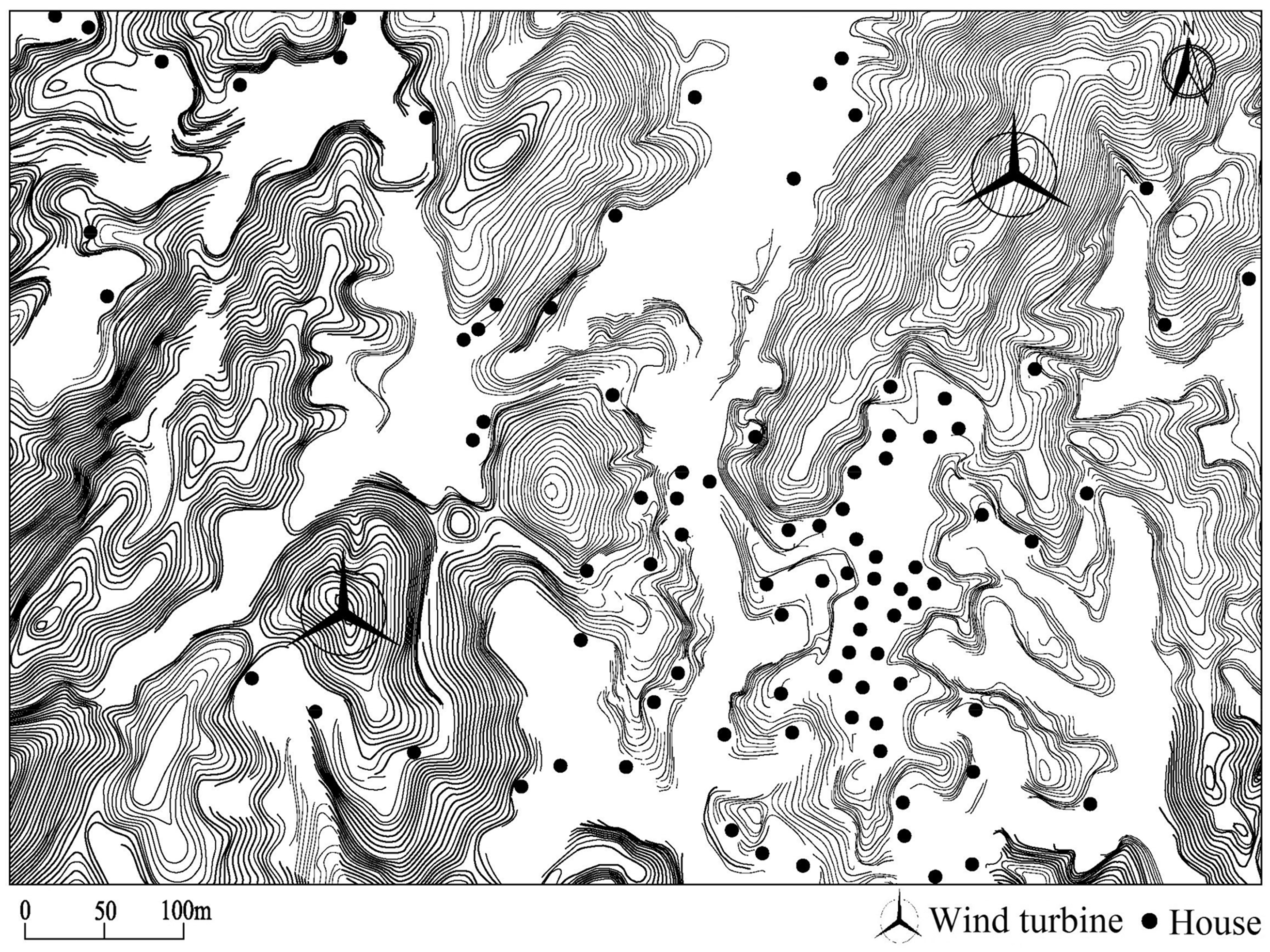
Community survey
Questionnaire design
The questionnaire was designed based on the one that was previously used by Pedersen et al. in Swedish studies.5,6 The response of most of the questions was rated on five-point verbal rating scales. The validation of the questionnaire was tested by means of calculating Cronbach’s alpha. The resulting value of Cronbach’s alpha was 0.86, which ensured the high internal consistency of the questionnaire.
The questionnaire was divided into four sections. The first section comprised questions regarding basic information of the respondents, such as gender, age, occupation, education level, residence time, etc. The second section of the questionnaire comprised questions about acoustical environment of the wind farm, such as the main sound source in the surroundings, whether wind turbines could be seen from the residential places, the number of visible wind turbines, and so on. The visibility of the wind turbine from the residential places was assessed by the question: “Can you see a wind turbine from your dwelling?” To which, the response “Yes” or “No” was possible. The third section of the questionnaire was concerned with the respondents’ subjective attitudes towards some related issues of the acoustical environment, including outdoor noise annoyance, noise sensitivity, attitude towards wind turbines’ visual impact on the landscape and general opinion on wind turbines. Annoyance due to noise was measured by the following question: “To what extent are you annoyed by ambient noise when you are outdoors?” The response was registered on a five-point verbal rating scale: “Do not notice,” “Notice but not annoyed,” “Slightly annoyed,” “Rather annoyed” and “Very annoyed.” To assess the noise sensitivity, the questionnaire posed the question “How would you describe your sensitivity to ambient noise?” To which, the answers “Not sensitive at all,” “Hardly sensitive,” “Slightly sensitive,” “Rather sensitive” and “Very sensitive” could be chosen. Besides, attitude towards wind turbines’ visual impact on the landscape and general opinion on wind turbines were all assessed along with a five-point verbal rating scale, ranging from “Very positive” to “Very negative.” The last section consisted of questions on sleep disturbance and self-reported health effects. In terms of sleep disturbance, it was measured by a question dealing with the frequency of sleep disturbance by ambient noise, “When at home, how often is your sleep disturbed by ambient noise?” Answers could be chosen from a five-point verbal rating scale: “Almost never,” “At least once a year,” “At least once a month,” “At least once a week” and “Almost daily.” As for self-reported health effects, it was assessed by the question: “In general, how would you evaluate your health?” To which, the answers “Excellent,” “Very good,” “Good,” “Fair” and “Poor” could be chosen. In detail, specific illnesses (e.g. hearing impairment, neurological or mental illness, cardiovascular disease, etc.) were also investigated by means of a multiple-choice question: “Which disease do you have?”
Survey procedure
This survey was carried out in May 2015, and the duration was about 10 days. Since the wind farm is located in a rural area where most of the houses are sparsely located, almost all the houses in the area were visited. If the residents were at home and consented for the face-to-face interview, each question would be read to them, while the questionnaire was showed to them. The answers were written by the interviewers, and no exclusion criteria were applied.
Calculation and measurement of noise intensity
There are two main types of noise sources from a wind turbine: mechanical noise and aerodynamic noise. Mechanical noise is mainly generated by the gearbox and the generator. Aerodynamic noise originates mainly from the flow of air around the blades. In terms of modern wind turbines, aerodynamic noise is dominant. 14 When the horizontal distance between receiver and wind turbine tower is greater than the rotor blade diameter, the geometrical divergent attenuation of aerodynamic noise from the flow of air around the blades accords basically with the point sound source model. 15 According to the data provided by manufacturer, the A-weighted sound power level of wind turbine was 104 dBA at a wind speed of 8 m/s at the height of 10 m in neutral atmosphere. With each wind turbine being treated as a point sound source with sound power level of 104 dBA, the A-weighted SPLs (LAeq) outside each house (1 m from the facade and 1.5 m higher above the ground) of respondents were calculated by using the DataKustik CadnaA 3.2 software. CadnaA applies the ISO 9613-2: 1996 model, which has been proved to be an accurate model for the prediction of wind turbine noise to calculate the attenuation of sound during propagation outdoors.16–19
Before the survey, both background noise of the wind farm and noise outside houses (1 m from the facade) around wind turbines were measured with an AIHUA type AWA6291 sound level meter. For the measurement of background noise, 10 measuring points in quiet areas within the wind farm were chosen, and wind speed at the hub height was below the cut-in wind speed (3 m/s) of wind turbines during the measurement. As for the noise outside houses (1 m from the facade) around wind turbines, it was randomly measured when the wind turbines were under normal operation. The underlying surfaces of the areas between these measuring points and the nearest wind turbines were mostly grass, without barriers such as buildings, high forest, etc.
These measurements were carried out during daytime in five successive days. All the noise measuring points were 1.5 m higher above the ground and the measuring time was 15 min. Apart from the A-weighted SPLs (LAeq), frequency analysis in 1/3-octave bands from 10 Hz to 20 kHz was carried out. Special attention was paid to avoid including masking noises such as traffic noise, dogs barking, water flowing, etc. The real-time meteorological parameters (i.e. wind speed and direction at the hub height, air temperature, air humidity, barometric pressure) could be retrieved from the wind farm operator.
Analysis methods
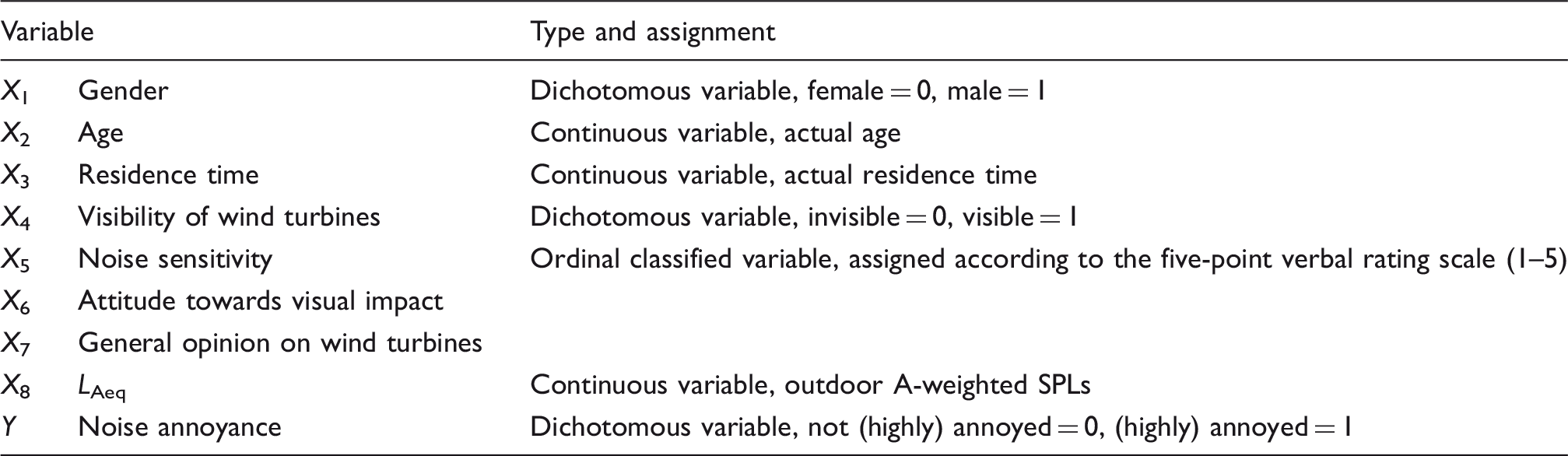
In the analysis of noise annoyance, respondents who chose the item “Rather annoyed” or “Very annoyed” from the five-point verbal rating scale were classified into the annoyed group, while those who chose “Very annoyed” were classified into the highly annoyed group; in the analysis of noise sensitivity, respondents who chose “Rather sensitive” or “Very sensitive” were classified into sensitive group; in the analysis of attitude towards wind turbines’ visual impact on the landscape and general opinion on wind turbines, respondents choosing “Negative” or “Very negative” were classified into negative group. In the analysis of the visibility of wind turbines, seeing at least one wind turbine around the residential places indicated that the wind turbine was visible. In the analysis of noise impacts on sleep and self-reported health, when the frequency of sleep disturbance was equal to or higher than “At least once a month,” the noise was considered to be influential on sleep; when respondents reported that they suffered from “neurological or mental illness such as anxiety, nervousness, headache, nausea, etc.,” “cardiovascular illness including hypertension, coronary disease, ischemic heart disease and so on” or “other illness,” they were regarded as the respondents suffering from illness.
Assignments of variables in logistic regression.
Results
Basic information
Noise measurement results showed that A-weighted SPL of background noise of the wind farm was 32.5 ± 1.5 dBA; A-weighted SPLs of noise outside 65 houses horizontally 70 m to 339 m away from the nearest wind turbines ranged from 44.1 dBA to 56.7 dBA (47.6 ± 2.8 dBA), while wind speed at the hub height varied from 9.8 m/s to 15.7 m/s in neutral atmosphere.
Percentage of respondents living in different distance to the nearest wind turbines.

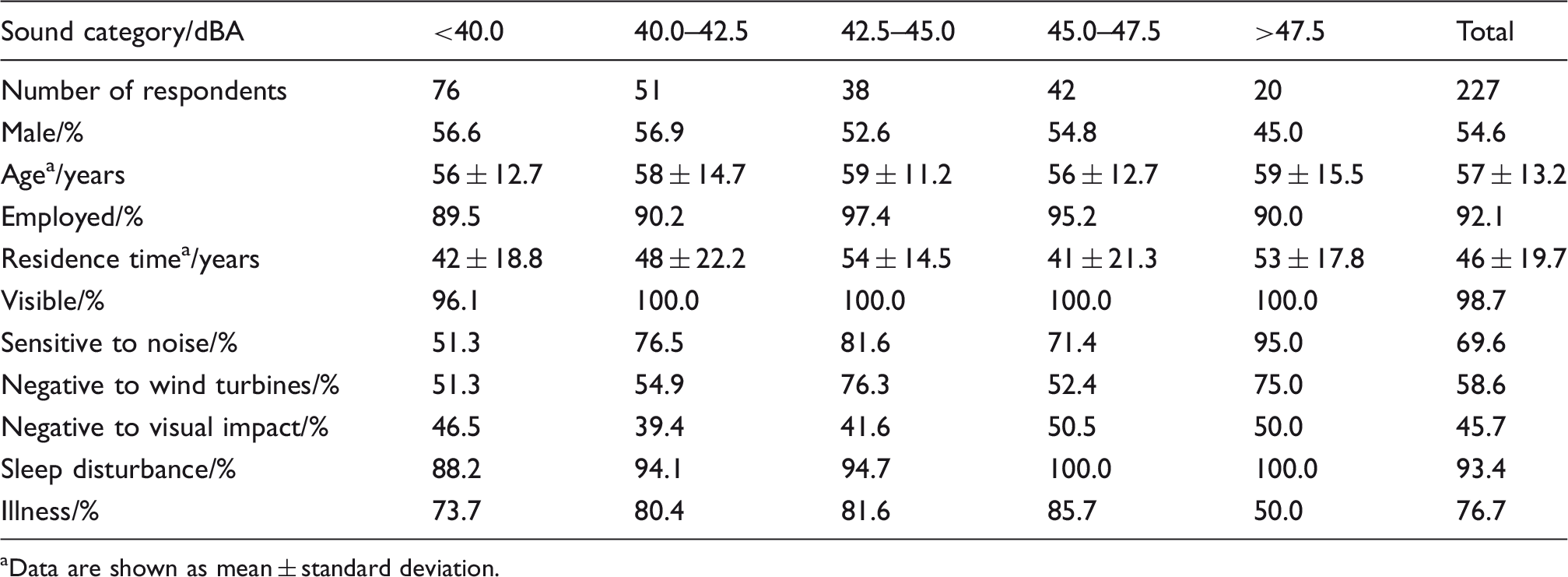
Basic information of respondents in different sound categories.
Data are shown as mean ± standard deviation.
The average age of all respondents was 57 ± 13.2 years; 54.6% were men and 45.4% were women. Male to female ratio was 1.2:1. Most of the respondents were employed (92.1%) and could see at least one wind turbines around their residences (98.7%). None of them benefited economically from wind turbines and all of them had long lived there (average residence time: 46 ± 19.7 years) before operation of the wind farm. Among the 227 respondents, 69.6% were classified as sensitive to noise, 58.6% and 45.7% declared negative attitude towards wind turbines in general and their visual impact on the landscape, respectively.
Noise annoyance and moderating factors
As can be seen in Figure 2, 81.5% (95% CI: 75.8–86.3%) of the respondents reported that they were annoyed with wind turbine noise, while 51.5% (95% CI: 44.8–58.2%) of them were highly annoyed. With the increase of sound levels, %A increased from 69.7% (95% CI: 58.1–79.8%) to 95.0% (95% CI: 75.1–99.9%) and %HA increased from 39.5% (95% CI: 28.4–51.4%) to 75.0% (95% CI: 50.9–91.3%). Both %A and %HA were statistically significantly correlated with sound categories. %A in sound category < 40.0 dBA was statistically significantly different from these in sound categories 42.5–45.0 dBA, 45.0–47.5 dBA and > 47.5 dBA. Meanwhile, %HA in sound category <40.0 dBA was statistically significantly different from that in sound categories 45.0–47.5 dBA and >47.5 dBA. Such a statistically significant difference of %HA was also found between sound categories 40.0–42.5 dBA and >47.5 dBA. In addition, no statistically significant differences of %A or %HA were found between other sound categories.
%A (a) and %HA (b) (with 95% CIs) in different sound categories. Significant differences (p < 0.005 is required to avoid the risk of mass significance) of %A and %HA between sound categories are marked “*.”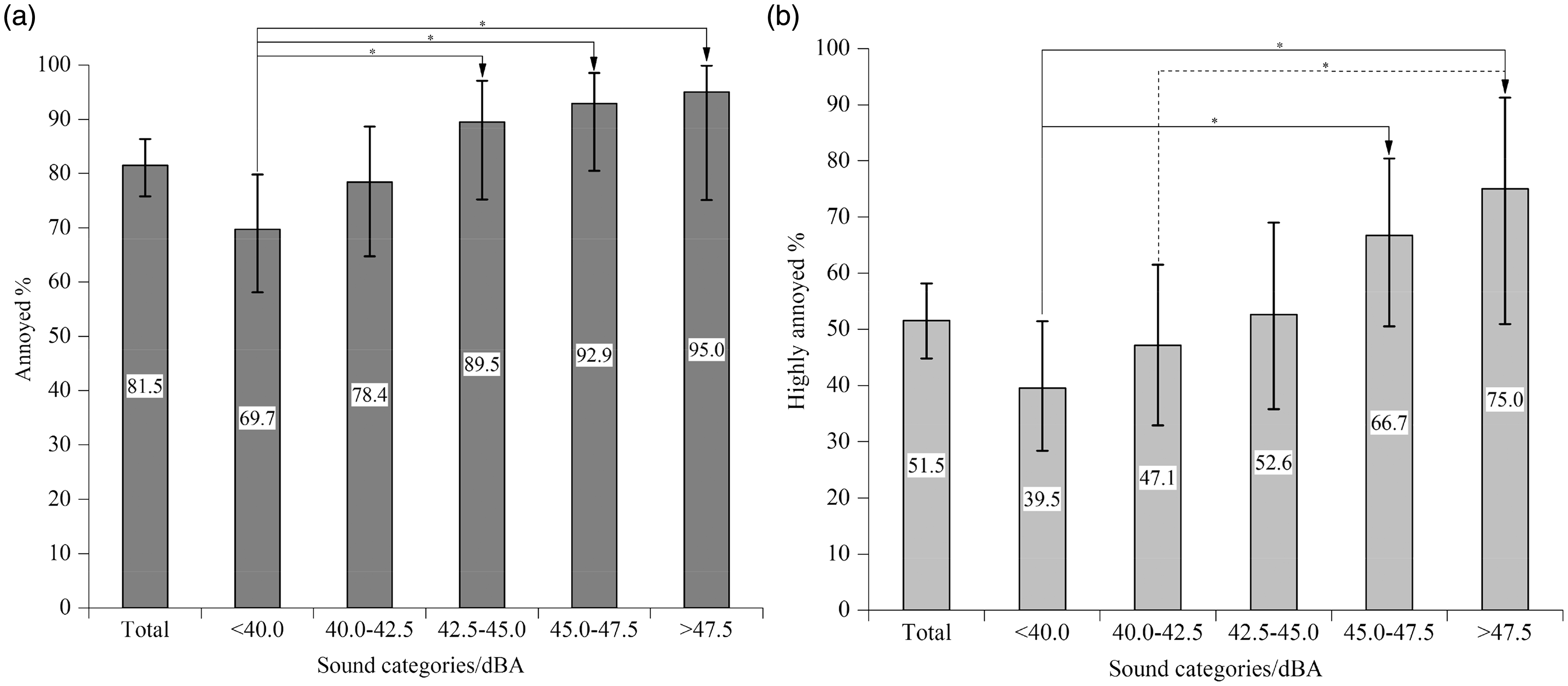
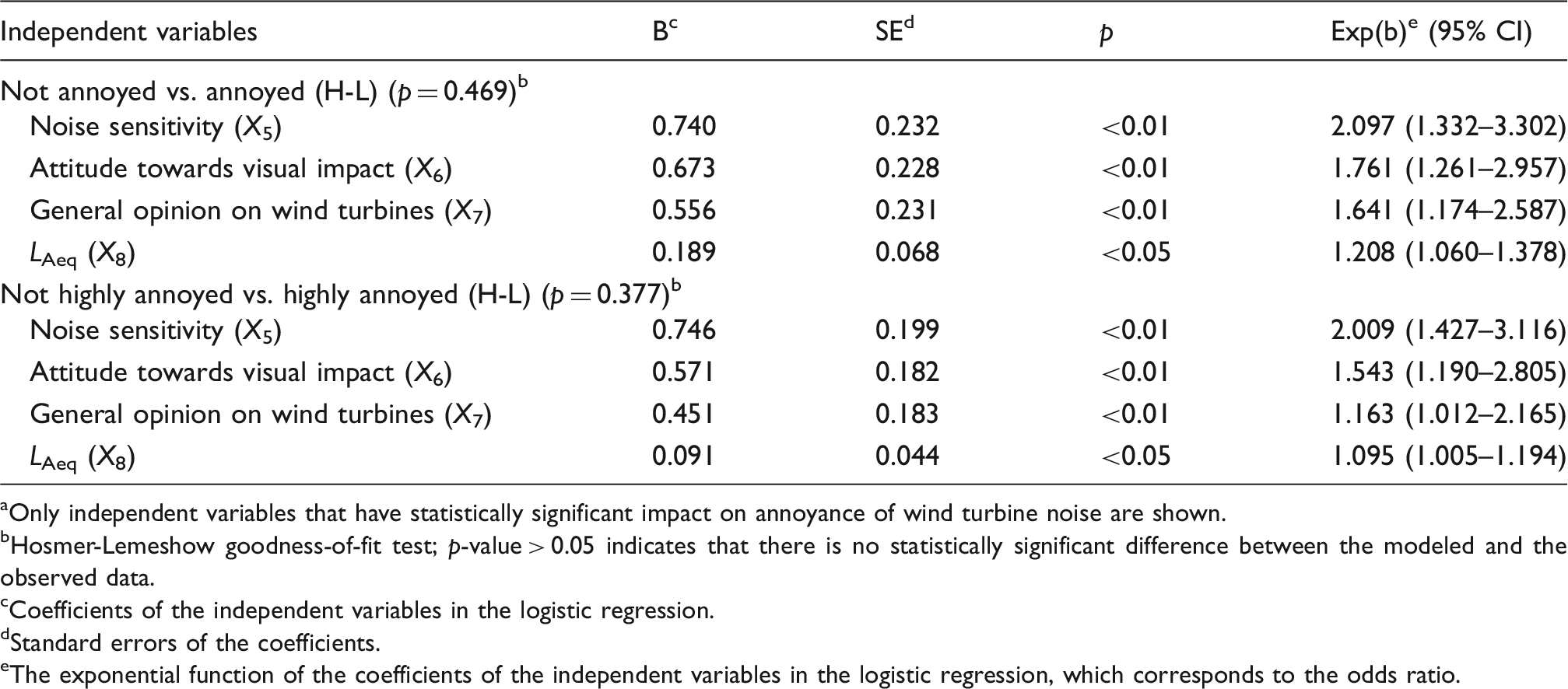
Only independent variables that have statistically significant impact on annoyance of wind turbine noise are shown.
Hosmer-Lemeshow goodness-of-fit test; p-value > 0.05 indicates that there is no statistically significant difference between the modeled and the observed data.
Coefficients of the independent variables in the logistic regression.
Standard errors of the coefficients.
The exponential function of the coefficients of the independent variables in the logistic regression, which corresponds to the odds ratio.
Sleep disturbance and self-reported health effects
Correlation of various factors with sleep disturbance and self-reported health effects. a
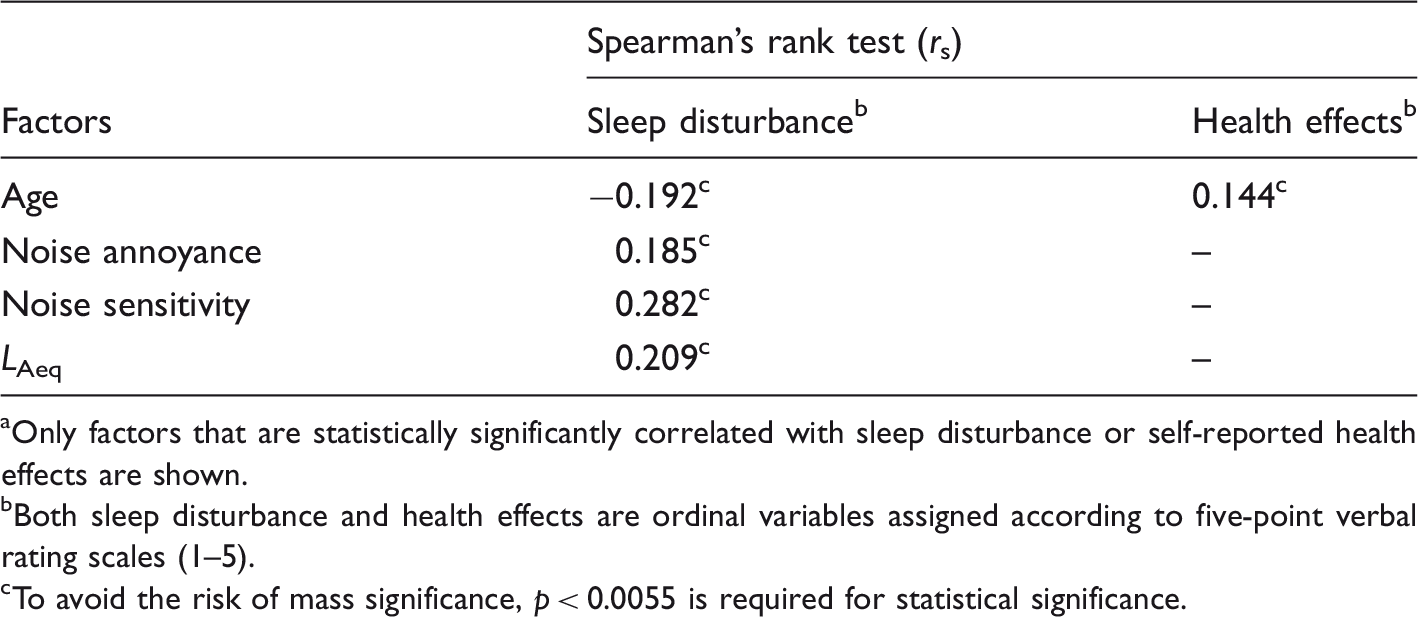
Only factors that are statistically significantly correlated with sleep disturbance or self-reported health effects are shown.
Both sleep disturbance and health effects are ordinal variables assigned according to five-point verbal rating scales (1–5).
To avoid the risk of mass significance, p < 0.0055 is required for statistical significance.
Exposure–response relationship
To establish exposure–response relationship for wind turbine noise and allow the comparison with those from relevant studies, the outdoor A-weighted SPLs (LAeq) which was used as the metric of noise intensity in this study should be converted into day–evening–night A-weighted equivalent noise level (Lden) which was the common noise intensity metric defined in accordance with EU environmental noise guidelines. For each respondent, LAeq was calculated based on the A-weighted sound power level of wind turbine at the wind speed of 8 m/s at the height of 10 m in neutral atmosphere by using CadnaA. To these data, Lden could be obtained by adding a correction of +4.7 dBA, which was the calculated mean difference between Lden and LAeq. 20
In addition, a standardized transformation 21 of the proportion of annoyed respondents measured at different scales was applied to convert the five-point scale used to measure noise annoyance in this study into a four-point scale, which had also been adopted in relevant studies.7,9,22 The five-point scale was converted into a four-point scale by combining categories “Do not notice” and “Notice but not annoyed” into a new category, which was “Not annoyed.” Subsequently, the noise annoyance categories could be converted into scales ranging from 0 (No annoyance at all) to 100 (Very annoyed). This conversion was based on the assumption that a set of categories divided the range from 0 to 100 into equally spaced intervals. The general rule that gave the position of an inner category boundary on the scale from 0 to 100 was: scoreboundary i = 100 i/m, where i was the rank number of the category boundary, starting from 1 for the upper boundary of the lowest category and m was the number of categories. The percentage of responses exceeding a certain cut-off point on the scale might be reported. Conventionally, if the cut-off was 72 on the 0–100 scale, the result was called the percentage of “Highly annoyed” respondents (%HA). Likewise, a cut-off of 50 indicated the percentage of “Annoyed” respondents (%A). In this way, the values of %A were equal before and after changing the five-point scale to the four-point scale, while the values of %HA were different.
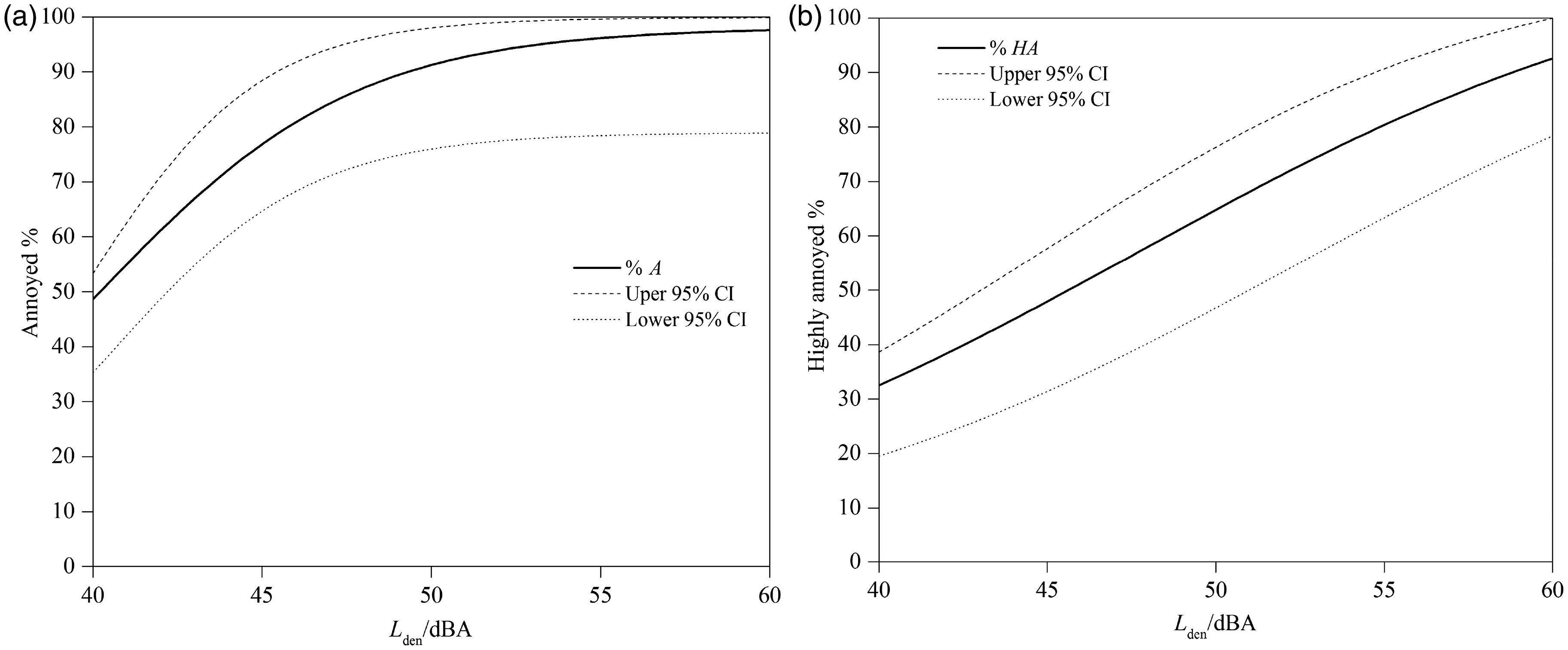
After the conversions of noise intensity metric and noise annoyance rating scale, exposure–response relationships between Lden and %A as well as %HA were established. The fitted logistic curves describing the exposure–response relationships are shown in Figure 3, and relevant logistic functions are given by equations (1) and (2)
The exposure–response relationships (with 95% CIs) between Lden and %A (a) as well as %HA (b).

Discussion
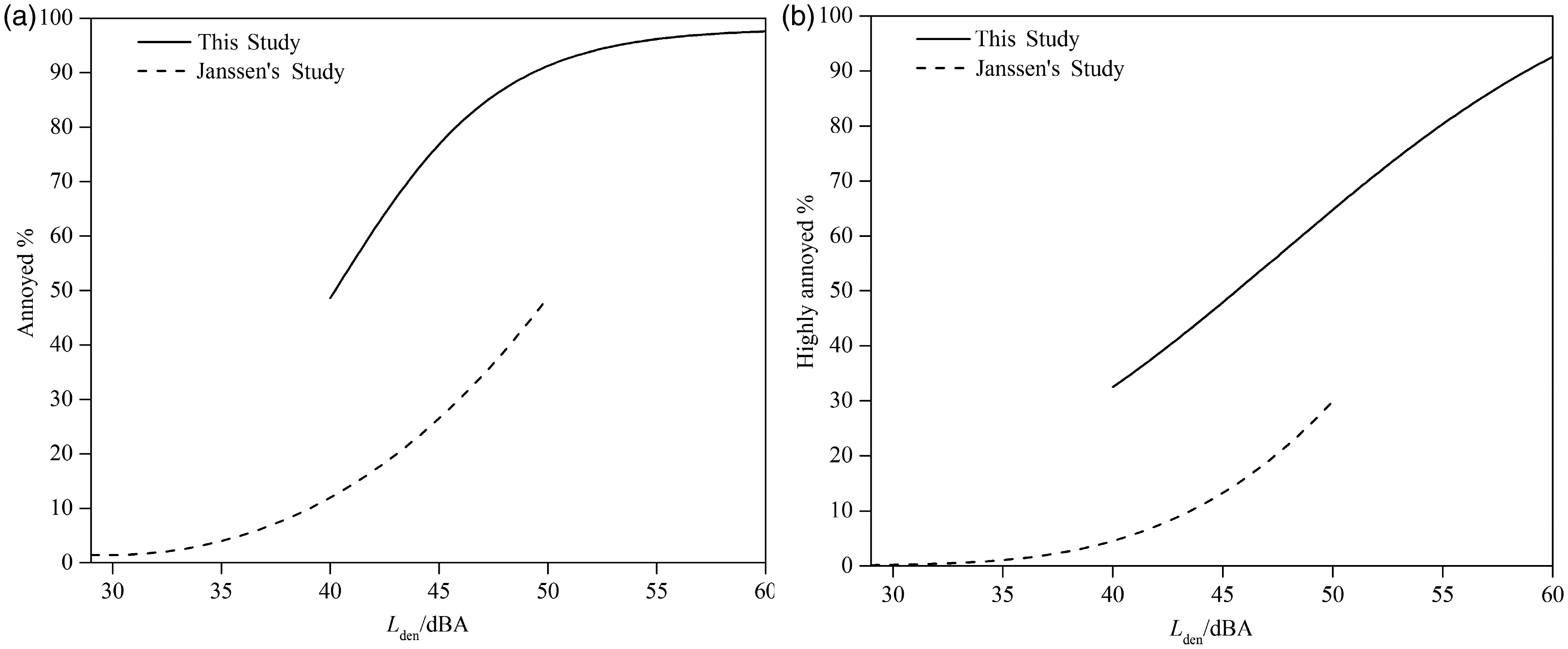
Pedersen et al.5–7,22 successively carried out three cross-sectional surveys about wind turbine noise annoyance in Sweden (2000, 2005) and Netherlands (2007). Based on the data collected from these three surveys, Janssen et al.
9
established exposure–response relationships between Lden and annoyance due to wind turbine noise (Figure 4).
Comparison of outdoor exposure–response relationships between Lden and %A (a) as well as %HA (b) derived from this study and Janssen’s study.
9
Distance to the nearest wind turbines.
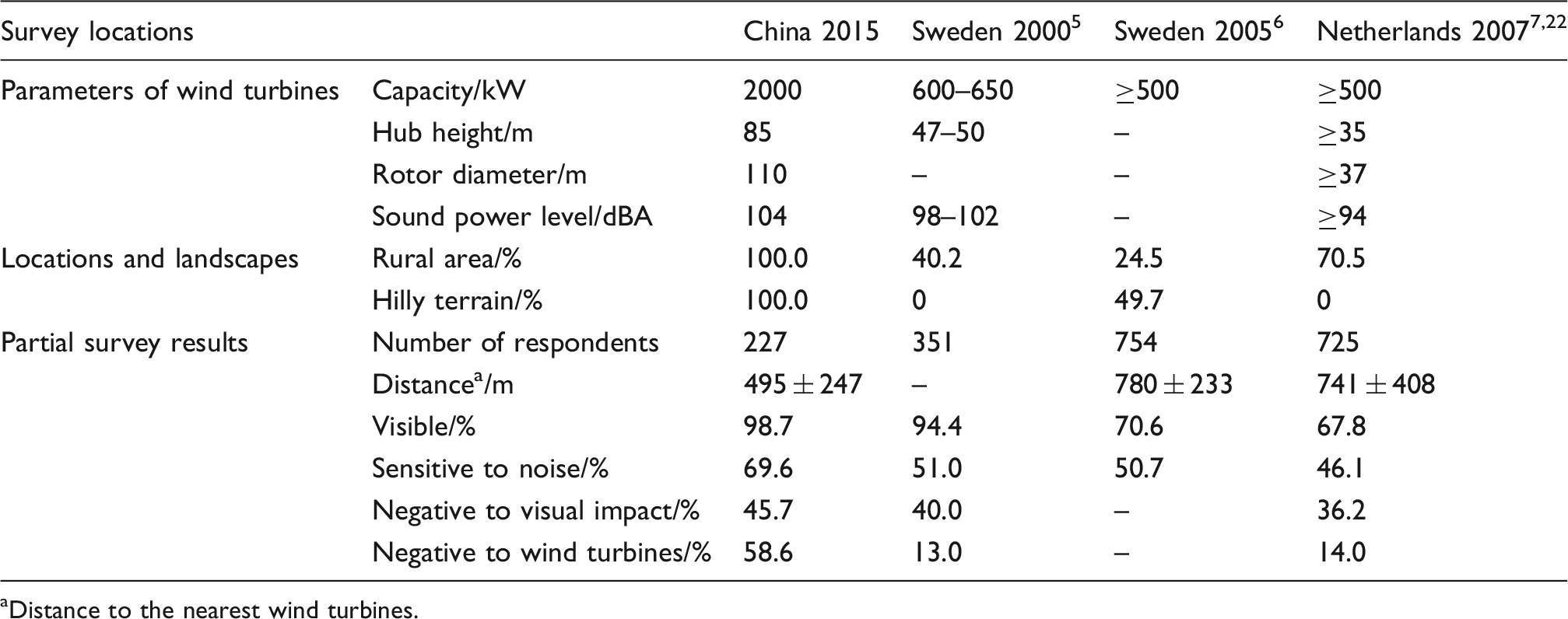
First of all, the visibility of sound source (wind turbine) was analyzed. Compared with landscapes of wind farms in Pedersen’s surveys5–7,22 which were mainly flat terrain, landscape of the wind farm in this survey was hilly terrain (Table 6). All the wind turbines in this survey were built on high-altitude hill-tops. In addition, 2 MW wind turbine was bigger in appearance (hub height: 85 m, rotor diameter: 110 m). Therefore, the visibility of wind turbines in this survey (98.7%) was significantly higher than those in Pedersen’s surveys5–7,22 (94.4%, 70.6%, 67.8%). It is shown in a field study that the same level of traffic noise generates a higher degree of noise annoyance when the source of noise (moving road traffic) can be seen. 23 This might be one of the reasons why this study got higher %A and %HA than Janssen’s study 9 at a same Lden. Actually, relevant studies find that the visibility of wind turbines has statistically significant impact on annoyance of wind turbine noise. In this study, there were too few respondents (1.3%) who could not see wind turbines around residence to further confirm the impact of the visibility of wind turbines on wind turbine noise annoyance by means of statistical analysis.
Secondly, background noise levels of wind farm areas were analyzed. Recent social studies24,25 on community response to aircraft noise strongly indicate that annoyance responses in low background noise regions are much higher than those in high background noise regions, even though noise levels are the same. Wind farm in this survey was located in remote rural area with lower background noise levels, while those in Pedersen’s surveys5–7,22 were located partly in rural areas and partly in suburban areas with higher background noise levels. Therefore, it was easy to understand that the lower background noise level of wind farm area in this survey might be another reason why this study got higher %A and %HA than Janssen’s study 9 at a same Lden.
Finally, respondents’ subjective attitudes towards some related issues of the acoustical environment (noise sensitivity, attitude towards wind turbines’ visual impact on the landscape and general opinion on wind turbines) were analyzed. It is found that noise sensitivity has a large impact on noise annoyance, the difference in noise annoyance between low and high noise sensitive persons is equal to the difference caused by an 11-dB change of the noise exposure. 26 In several peer-reviewed studies,5–7,27,28 wind turbine noise annoyance is statistically associated with noise intensity, but it is found likely to be more strongly related to noise sensitivity, general opinion on wind turbines and attitude towards wind turbines’ visual impact on the landscape. In this survey, the proportion of respondents who were sensitive to noise (69.6%), negative towards wind turbines in general (58.6%) and negative towards their visual impact on the landscape (45.7%) were significantly higher than those in Pedersen’s surveys5–7,22 (46.1–51.0%, 13.0–14.0%, 36.2–40.0%). Hence, the respondents in this study were more sensitive to noise, more against wind turbines and their visual impact on the landscape, which might also be a reason why %A and %HA derived from this study were higher.
In addition, as the single-machine capacity of wind turbines gets higher, worries have emerged that the noise emitted by wind turbines would consequently move down in frequency and that the content of infrasonic and low-frequency noise would increase, which would in turn cause more annoyance for the neighbours.
29
In this study, frequency analyses in 1/3-octave bands from 10 Hz to 20 kHz of wind turbine noise outside respondents’ houses which were horizontally 70 m to 339 m away from the nearest wind turbines were carried out before the survey. However, due to the lack of those data in Janssen’s study,
9
the spectra of wind turbine noise outside respondents’ houses could not be compared between the two studies. Pawlaczyk-Łuszczyńska et al.
27
evaluated annoyance due to the noise from wind turbines whose single-machine capacity was mostly less than 1.5 MW in Poland and found similar results with Janssen’s study.
9
They also carried out frequency analyses of wind turbine noise outside respondents’ houses which were 235 m to 2470 m away from the nearest wind turbines, and the results were compared with those of this study together with hearing threshold levels30,31 (Figure 5).
Comparison of 1/3-octave band spectra of wind turbine noise measured outside the respondents’ houses in this study and Pawlaczyk-Łuszczyńska’s study
27
together with hearing threshold levels30,31 (“50/90th percentile” is the sound pressure level exceeded during 50/90% of the regarded time period of noise measurement).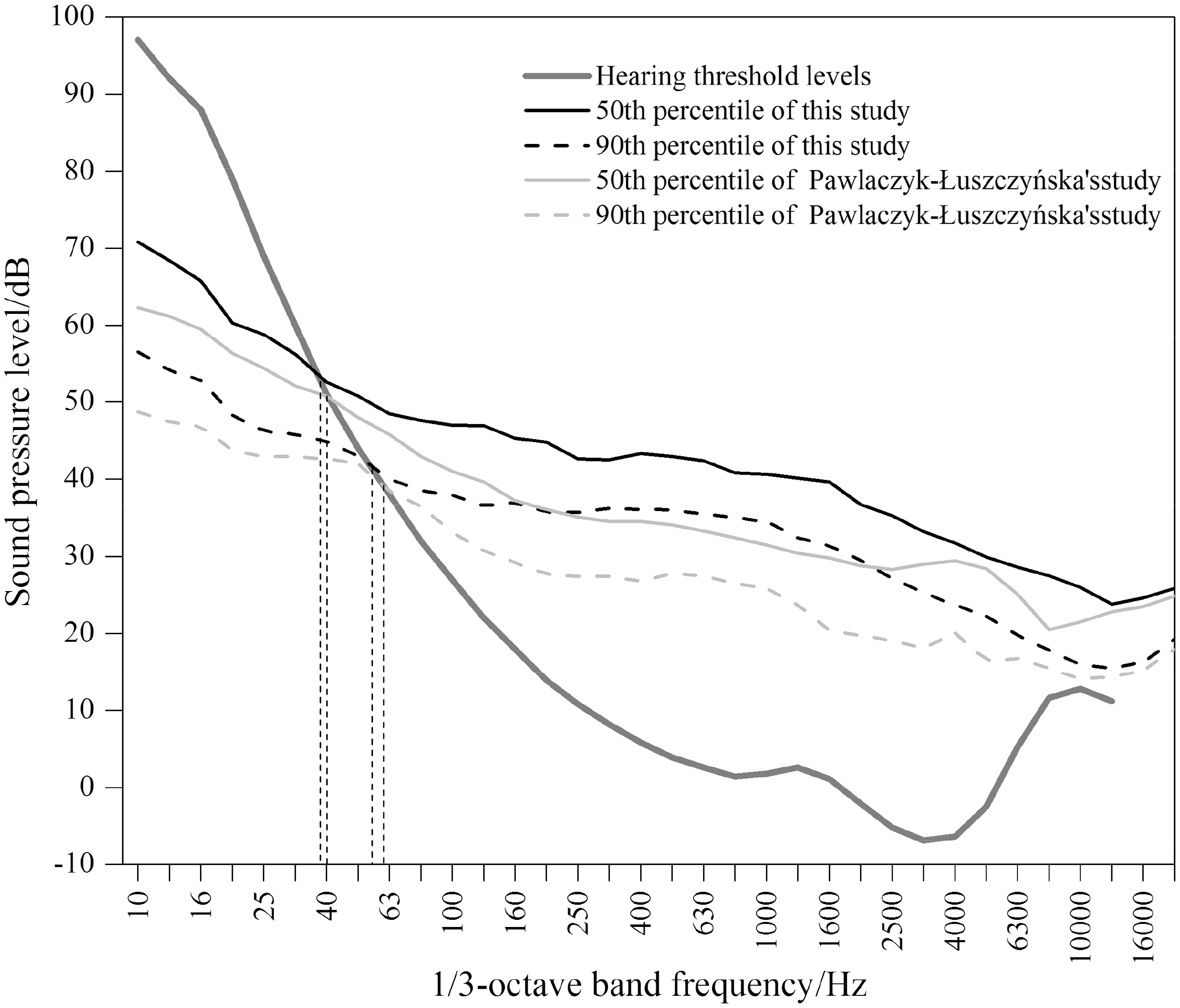
As shown in Figure 5, the measured sound pressure level of each 1/3-octave band of wind turbine noise in this study was higher than that in Pawlaczyk-Łuszczyńska’s study 27 due to the larger single-machine capacity of wind turbines as well as the shorter distance between measuring points and the nearest wind turbines. Nevertheless, the range of audible frequencies of wind turbine noise in this study and Pawlaczyk-Łuszczyńska’s study 27 was almost same, and infrasonic components were all at levels lower than the relevant hearing threshold levels. Moreover, within the range of audible frequencies, the variation trends of sound pressure levels of wind turbine noise with 1/3-octave band frequency were also very similar in the two studies, which indicated that the proportion of each 1/3-octave band sound energy in the total sound energy of this study was close to that in Pawlaczyk-Łuszczyńska’s study. 27 Therefore, the reason why this study got higher %A and %HA at a same Lden could not be explained from the perspective of frequencies or spectra of wind turbine noise.
Research results show that residents living near wind turbines tend to suffer from anxiety, headaches, sleep disorders, cardiovascular illness, and so on. 32 Noise annoyance, noise sensitivity and noise intensity are statistically significantly correlated with sleep disturbance,11,33,34 whereas there is no direct causal link between these factors and health effects yet. 35 In this study, the statistically significant correlation between factors above and sleep disturbance was further confirmed, and there was no evidence for their statistically significant correlation between factors above and self-reported health effects.
This study aimed to compare the exposure–response relationships of noise from 2 MW wind turbines in China with those of noise from lower single-machine capacity wind turbines in European countries.5–11 To enable such comparisons, Lden was used as the noise intensity metric and a four-point rating scale which was converted from a five-point rating scale ranging from “Do not notice” to “Very annoyed” was used as the noise annoyance rating scale. Meanwhile, it was also very meaningful to compare exposure–response relationships of wind turbine noise in this survey with those of other noise sources (e.g. road traffic noise, railway noise, aircraft noise, etc.) in other community surveys in China. However, literature search indicated that such community surveys were very few in China. In these few community surveys, Ldn was used as the noise intensity metric, and the five-point or 11-point scale in ISO/TS 15666: 2003 was used as the noise annoyance rating scale,36–38 which were all different from those used in this survey. Thus, comparisons of exposure–response relationships between this survey and these few community surveys in China could not be carried out. In order to compare exposure–response relationships of various noise sources from different community surveys, noise intensity metric, noise annoyance rating scale and modelling method all should be unified: day–evening–night A-weighted equivalent noise level (Lden) which was the common noise intensity metric defined in accordance with EU environmental noise guidelines should be used as the unified noise intensity metric, the five-point rating scale in ISO/TS 15666: 2003 38 which was widely used in community surveys across the world should be used as the unified noise annoyance rating scale and logistic curve fitting39,40 should be used as the unified modeling method.
Conclusion
This study investigated moderating factors as well as exposure–response relationships of 2 MW wind turbine noise and its impacts on sleep and self-reported health. The study results were compared with those of relevant studies with lower single-machine capacity wind turbines. In this way, the understanding of noise impacts of wind turbines with different single-machine capacity was deepened. The study confirmed that noise sensitivity, attitude towards wind turbines’ visual impact on the landscape, general opinion on wind turbines and noise intensity had statistically significant impact on annoyance of wind turbine noise. Compared with wind turbines with lower single-machine capacity in relevant studies, those with higher single-machine capacity in this study induced higher %A and %HA at a same Lden. Reasons of these differences could be analyzed from perspectives of the visibility of wind turbines, background noise levels of wind farm area and respondents’ subjective attitudes towards some related issues of the acoustical environment (noise sensitivity, attitude towards wind turbines’ visual impact on the landscape, general opinion on wind turbines). The study also showed that noise sensitivity, noise annoyance and noise intensity were statistically significantly correlated with sleep disturbance on respondents, and there was no evidence for their statistically significant correlation with self-reported health effects.
In addition, to compare exposure–response relationships of various noise sources from different community surveys, it was suggested that noise intensity metric, noise annoyance rating scale and modelling method all should be unified.
Footnotes
Declaration of conflicting interests
The author(s) declared no potential conflicts of interest with respect to the research, authorship, and/or publication of this article.
Funding
The author(s) received no financial support for the research, authorship, and/or publication of this article.