



Abstract
This research examines the paradoxical effects of nonnative speakers’ language fluency on how they are perceived by native speakers, focusing on likability and competence. Although poor fluency has been shown to shield nonnative speakers from negative evaluations of culturally inappropriate behavior, our findings indicate that this effect is confined to likability and does not extend to competence. Specifically, our results show that Russian professionals with lower English fluency were rated as more likable (Studies 1 and 2) but less competent (Study 2). Mediation analyses (Study 2) revealed that perception of effort and felt sympathy, rather than lack of cultural knowledge or intentional rudeness, mediated likability ratings, demonstrating the “effort-sympathy heuristic,” where poor fluency enhances likability by triggering greater sympathy and perceived effort. Overall, these findings highlight the dual-edged nature of language fluency in professional and social contexts, providing insights into how perceptions of nonnative speakers shape interpersonal and professional evaluations.
Keywords
In an ideal world, foreign sojourners, scholars, students, and professionals would effortlessly navigate the complexities of cultural differences while working, traveling, and studying abroad. Yet, reality often proves more challenging. Unfamiliar with the nuances of foreign cultural norms, individuals can inadvertently commit cultural missteps, resulting in behaviors that are perceived as inappropriate. These missteps, in turn, can prompt negative evaluations from others, compromising their ability to reach their personal and professional goals. For example, students can struggle building friendships; foreign professionals can fail to build meaningful professional contacts; and job seekers can struggle making a positive impression during interviews.
Compounding the challenge for cultural crossers is the fact that in addition to learning a new culture, individuals are also often working to develop fluency in a new language. By fluency, we mean both the speaker's capacity to produce smooth, effortless, and accurate speech, and the listener's cognitive processing and evaluative responses to these speech characteristics (Lennon, 1990), with more fluent speech typically requiring less cognitive effort to process and consequently receiving more favorable evaluations. Previous research has long established that high levels of language fluency can positively influence how people perceive nonnative speakers (Giles & Pierson, 1988; White & Li, 1991; Wible & Hui, 1985). More recent studies also demonstrate that a lack of fluency can negatively affect perceptions, as foreign-accented speech is more challenging for listeners to process than native-accented speech, which can lead to more negative attitudes toward those with lower fluency (Dragojevic, 2019; Dragojevic & Giles, 2016; Dragojevic et al., 2017). Moreover, the impact of limited language fluency extends to employment outcomes. Immigrants with lower proficiency in the host language experience lower employment rates and reduced wages compared to their higher-fluency counterparts, often securing lower-paying, lower-skilled positions, even when controlling for education and skills (Bloemen, 2023; Dustmann & Fabbri, 2003; Pieroni et al., 2019). Thus, navigating a new cultural environment demands mastery of both language and cultural norms. While each of these challenges can hinder success individually, their combined impact may pose an especially daunting obstacle for newcomers.
In this research, however, we explore an alternative perspective. Specifically, we examine how poor language fluency may mitigate, rather than exacerbate, negative perceptions when a nonnative individual commits a cultural faux pas. Our reasoning is grounded in Communication Accommodation Theory (Gallois et al., 1995), which posits that people tend to judge rule violations less harshly when the individual is perceived to have “low” rather than “high” choice in their behavior. Building on this work, we reason that low language fluency in nonnative speakers who violate cultural norms may serve as a cue for “minimal choice,” signaling to perceivers that they are making an effort to adapt to new cultural rules. This perception of effort may, in turn, “shield” nonnative speakers from being judged as unlikable or rude when they commit cultural faux pas. In other words, we argue that a feature of communication that typically results in negative impressions—poor language fluency—may actually, in this case, create a more positive or less negative personal impression when committing a cultural faux pas. However, we also reasoned that although poor language fluency may protect nonnative individuals from negative social judgment when making cultural mistakes, it may simultaneously damage professional evaluations by reducing perceived competence.
Research on person perception reveals that individuals are evaluated along two distinct dimensions: competence and warmth, meaning that a person or group can be perceived as likable yet incompetent or vice versa (Fiske et al., 2002a). This framework is particularly relevant when considering the evaluation of a nonnative individual committing a cultural faux pas, as Communication Accommodation Theory suggests that perceived speech adaptations and accommodative behaviors directly influence these warmth/likability and competence judgments that form the foundation of social evaluation (Gallois et al., 1995).
It has been observed in previous work that when violating cultural norms, poor language fluency led to less unfavorable interpersonal evaluations (Molinsky, 2005; Molinsky & Perunovic, 2008) but resulted in more negative assessments of professional competence (Molinsky, 2005). In the job market, it is often the evaluation of competence, rather than warmth, that influences hiring and promotion decisions (Cuddy et al., 2004). Thus, we propose that poor language fluency may indeed act as a double-edged sword for nonnatives trying to adapt to a new culture: while it might have a shielding effect of protecting them from harsh interpersonal judgments when they make cultural mistakes, it also risks reinforcing negative perceptions of their professional competence.
The Current Research
The current research investigated the effects of poor language fluency on the perceived likability and competence of a Russian job candidate presented in a video, as well as the mechanisms underlying these evaluations. We chose to focus on a Russian job candidate for two reasons: (a) the Russian accent has distinct phonological features that differ from English, making it easily identifiable by native English speakers (Bondarko, 2009) and (b) previous research has shown that the Russian accent is often perceived as strong, providing a salient nonnative accent for our study (Thompson, 1991). We used video recordings to maintain ecological validity, as job interviews typically involve face-to-face interaction. To control for potential nonverbal variations, we used a highly trained actor and maintained consistent facial expressions and body language across all conditions. In Study 1, we examined how the language fluency of a job candidate from Russia, who exhibited inappropriate behavior during a mock job interview in the United States, impacted assessments of his likability and productivity.
We hypothesized that poor language fluency would shield him from negative likability evaluations but not perceptions of his productivity. Study 2 aimed to replicate and extend these findings by incorporating a larger and more diverse sample, as well as additional measures of likability and competence. It also examined the potential mechanisms behind these effects. Specifically, we propose that nonnative speakers’ low language fluency, rather than always being a liability, might be interpreted as evidence of effortful accommodation attempts, consistent with inferred motivational attributions in Communication Accommodation Theory (Giles & Gasiorek, 2013). This perception of active effort to adapt linguistically may positively influence likability evaluations, even as it potentially impacts competence judgments differently.
In Study 2, we also tested for additional mediators and controlled for the “Russian stereotype” to ensure that participants’ evaluations were based on the nonnative individual's behavior, rather than stereotypes of Russian people as a group. Moreover, both studies varied the severity of the nonnative individual's inappropriate behavior to examine whether language fluency would have a stronger effect on perceptions under more extreme conditions.
Study 1
In this study, we used video clips of a job candidate from Russia participating in mock job interviews, and experimentally manipulated his English language fluency (poor vs. good fluency) and behavioral appropriateness (somewhat vs. highly inappropriate) to assess how participants evaluated his likability and productivity. We hypothesized that, in line with the proposed shielding effect, participants would rate the less fluent interviewee as more likable than the more fluent one (H1). However, due to the potential for poor fluency to mitigate or mask the negative effects of highly inappropriate behavior, we hypothesized that the fluency effect would be more pronounced in the highly inappropriate condition (H2). Lastly, we hypothesized that the shielding effect of poor fluency would be restricted to likability ratings and would not extend to productivity assessments (H3).
Method
Participants
Sixty-four (45 female and 19 male) undergraduate students from a large Canadian university participated in the study in exchange for either partial course credit toward their Introductory Psychology course or a small gift (e.g., candy bar, pen). All self-identified as native speakers of English and were born in Canada. Mean age was 19.41 (ranging from 18 to 34 years; SD = 2.81).
Procedure
Participants arrived individually at the laboratory for a “Video Clip Evaluation Study.” They were told that they would watch a short video clip involving a Russian man being interviewed for a job in North America, after which they would answer a few simple questions regarding their opinions of the man they saw in the clip. Each participant was randomly assigned to view one of the four video clips. In all video clips, a man, who said that his name was Sergei, was being interviewed for a job as a document specialist. He dressed in business attire, sat opposite the interviewer. His face and upper body were visible; the interviewer was not visible. In all clips, the same actor was hired to portray Sergei. He was a Caucasian male professional with extensive acting experience. Though a native English speaker, he had a Russian cultural background and could produce an authentic Russian accent. The actor spoke English with a noticeable Russian accent and was carefully trained to behave in a consistent manner across all conditions, with the exception of varying language fluency and behavioral appropriateness depending on the experimental condition.
To manipulate fluency, in two clips, Sergei exhibited good language fluency, and in the other two, poor fluency. Good fluency was operationalized as speech characterized by smoothness, fluency, and lack of hesitation, with poor fluency being the opposite (Molinsky & Perunovic, 2008). Specifically, in the poor fluency condition, the speech contained more pauses, stumbling, and repetitions. For example, in the poor fluency condition, a response would be “I … I … I like Boston ver … very much.” In the good fluency condition, the same response would be “I like Boston very much.” The accent strength remained constant across conditions to isolate the effects of fluency. To vary appropriateness, in half of each of the fluency conditions, Sergei behaved in a highly inappropriate manner: His facial expression was stoic, his behavior appeared cold, and his responses were overly short and negative (e.g., when asked “Sergei, any trouble with our directions to the office today?” Sergei responded with a simple “Yes”; when asked “How do you like living in Boston so far?” he responded with “I don’t like.”). In the other half of each fluency condition, Sergei's behavior was only somewhat inappropriate: although he did not smile and his behavior appeared cold, his responses were more positive (e.g., when asked “Sergei, any trouble with our directions to the office today?” Sergei responded, “No, no problem. Your directions were good”; when asked “How do you like living in Boston so far?” he responded, “I like Boston very much.”). In both conditions, the speaker maintained a neutral facial expression and body language. The primary difference was in the content and length of responses. The transcripts and the duration of the interview videos are shown in the Appendix.
After watching the video clip, participants filled out a questionnaire with manipulation checks, measures of likability and productivity, and indicated their age, sex, country of birth, and first language.
Materials
Manipulation Checks
To assess ratings of fluency, participants were asked to select a number on a 7-point Likert scale (1 = not at all fluent, 7 = very fluent) in response to “the man's speech was ….” To assess ratings of appropriateness, participants responded to “please evaluate the answers that the foreign man gives to the North American interviewer in terms of their cultural appropriateness” and “how appropriate or inappropriate are these answers according to cultural norms for acceptable and appropriate behavior during an employment interview in our culture?” on a 7-point Likert scale (1 = not at all appropriate, 7 = very appropriate). To assess whether participants noticed that Sergei was from Russia, they were asked, “According to the tape you just watched, where (what country) is the foreign interview candidate from? If not sure, please give your best guess.”
Likability
To assess ratings of likability, participants were asked to rate “how likable is this person?” on a 7-point Likert scale (1 = not at all, 7 = very much).
Productivity
To assess productivity, participants were told that “local copy shops report that the average number per hour is somewhere between 1000 and 1500 copies” and responded to the question “Assuming proper training, approximately how many copies per hour would you estimate that Sergei could do after a few weeks on the job?.”
Results and Discussion
A 2 (poor fluency vs. good fluency)×2 (somewhat inappropriate vs. highly inappropriate) ANOVA was performed on all measures. 1
Manipulation Checks
The main effect of fluency on ratings of fluency indicates that participants rated the man in the good fluency condition (M = 5.44, SD = 1.34) as significantly more fluent than the man in the poor fluency condition (M = 2.28, SD = 1.37), F(1, 60) = 84.14, p < .001, η² = .58. The main effect of appropriateness on ratings of appropriateness indicates that participants rated the behavior of the man in the highly inappropriate condition (M = 3.63, SD = 1.36) as significantly more culturally inappropriate than that of the man in the somewhat inappropriate condition (M = 5.16, SD = 1.46), F(1, 60) = 18.19, p < .001, η² = .23. No other effects were significant, all Fs < 1. Hence, our manipulations of fluency and appropriateness were successful. In addition, all participants correctly indicated that the interview candidate was from Russia.
Likability
As predicted, the main effect of fluency on likability indicates that the man in the poor fluency condition (M = 4.06, SD = 1.54) was rated as significantly more likable than the man in the good fluency condition (M = 3.44, SD = 1.34), F(1, 60) = 5.21, p < .05, η² = .08, hence, supporting H1. Also, the main effect of appropriateness on ratings of likability indicates that the man in the somewhat inappropriate condition (M = 3.03, SD = 1.26) was rated as more likable than the man in the highly inappropriate condition (M = 4.47, SD = 1.32), F(1, 60) = 22.2, p < .001, η² = .27. We had predicted that the fluency effect would be more pronounced in the highly inappropriate condition, however, this hypothesis (H2) was not supported, as our results indicate that the fluency by appropriateness interaction was not significant, F < 1 (see Figure 1). Hence, although being more inappropriate reduced the perceived likability of the Russian interviewee, being poor in language fluency led him to be judged as more likable than when his speech showed good fluency, regardless of whether he behaved highly inappropriately or somewhat inappropriately.
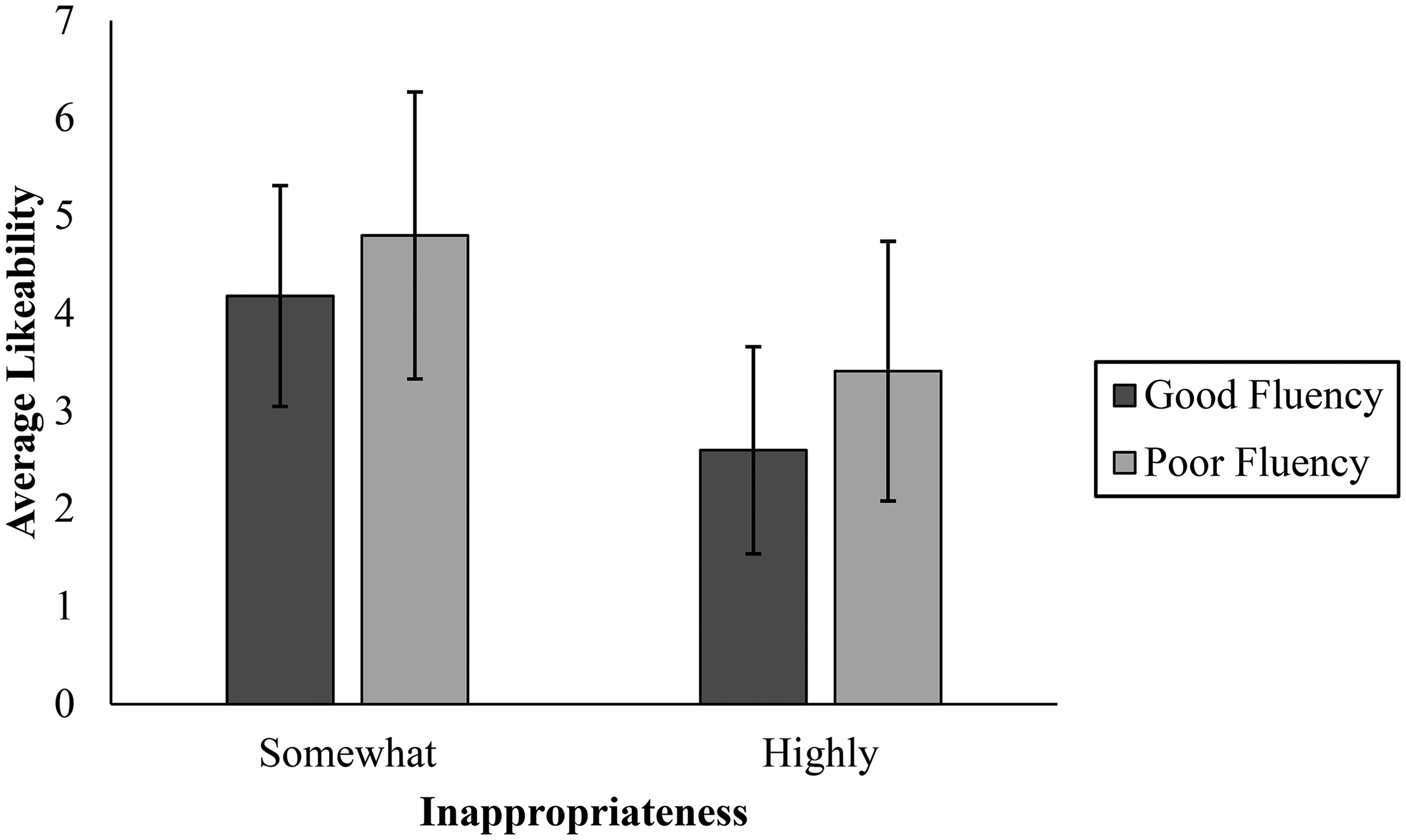
Average Likability Rating as a Function of Fluency and Appropriateness.
Productivity
Participants estimated that the man in the poor fluency condition (M = 1314.17, SD = 449.89) would make fewer copies than the man in the good fluency condition (M = 1520.00, SD = 393.44), although this main effect of fluency was not significant, F(1,51) = 3.30, p = .075, η² = .06. The main effects of appropriateness and the fluency by appropriateness interaction were also not significant, Fs < 1 (see Figure 2). Hence, our hypothesis (H3) that the shielding effect of poor fluency would not extend to productivity assessments was supported.
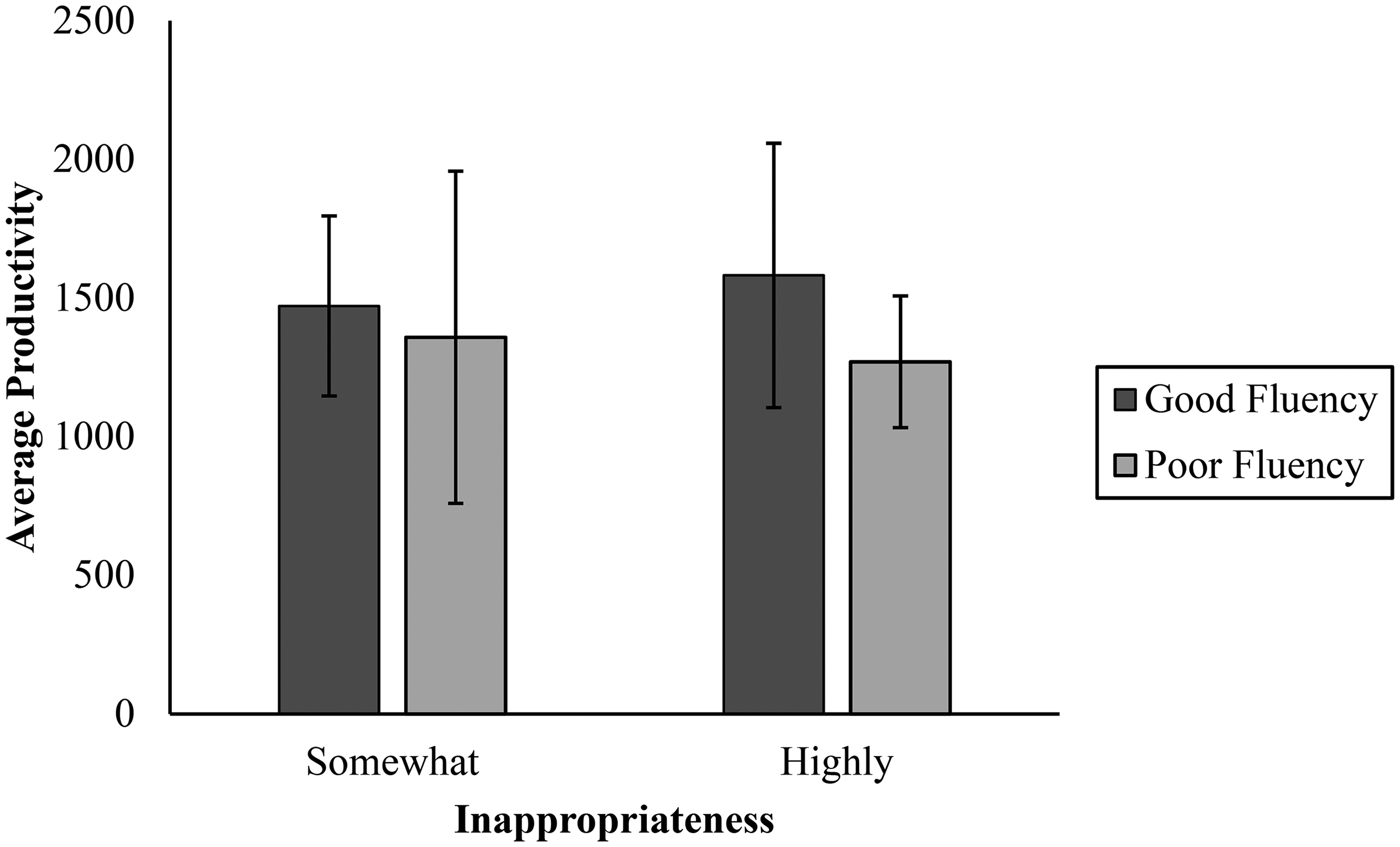
Average Productivity Rating as a Function of Fluency and Appropriateness.
In summary, Study 1 results supported our hypothesized shielding effect of poor language fluency and that it would be limited to ratings of likability and not extended to ratings of productivity. The less fluent Russian interviewee, albeit judged as more likable, was not judged as also more productive, and if anything, was perceived as somewhat less productive. However, the hypothesis that the fluency effect would be more pronounced in the highly inappropriate condition was not supported, as evidenced by a lack of fluency by appropriateness interaction. Additionally, although behaving highly inappropriately led to lower ratings of likability compared to behaving somewhat inappropriately, it did not affect ratings of productivity.
Study 2
The shielding effect of poor language fluency on likability evaluation was demonstrated in Study 1, but the mechanisms underlying this effect have yet to be explored. Additionally, Study 1 had a limited sample size, and both likability and competence were assessed using single-item measures, warranting the need for a replication to verify the reliability of the findings. In Study 2, we extended the first study in several ways. A larger sample size was used, and we incorporated additional multi-item measures to assess likability and competence. Additionally, we examined potential mediating social perception processes. Furthermore, to eliminate the possibility that participants’ evaluations of the interviewee from Russia were influenced solely by stereotypes about Russians as a group, we measured and controlled for stereotype scores in the assessment of the interviewee. We hypothesized again that participants would rate the less fluent interviewee as more likable than the more fluent one (H1) and that the shielding effect of poor fluency would be restricted to likability ratings and would not extend to competence evaluation (H2).
Method
Participants
Participants were 272 individuals who self-identified as native English speakers (58.1% women; 41.2% men). The majority (77.2%) were recruited via Amazon's Mechanical Turk (MTurk; 56.2% women, 42.9% men, and 1% unspecified; age: 20–76; M = 39.80; SD = 11.80). MTurk is a crowdsourcing website that allows individuals to selectively complete online tasks for monetary compensation (Paolacci et al., 2010). Data collected from MTurk have been found to be reliable and have demonstrated strong one-week test-retest reliability (Shapiro et al., 2013). The remaining participants (22.8%) were recruited from an Introductory Psychology class (64.5% women and 35.5% men; age: 17–29; M = 19.32; SD = 2.32) at a large Canadian university. In both cases, all participants self-identified as being from either the USA or Canada, speaking English fluently as their first language. The mean age of the entire sample was 35.21 (ranging from 17 to 76 years; SD = 13.41).
Materials
Video Clips
The video clips were the same as those used in Study 1, featuring an actor portraying Sergei, a nonnative English speaker from Russia, interviewed for a document specialist position.
Social Perceptions
Participants were asked to indicate their thoughts while watching the video by responding to a 7-point Likert scale (1 = not at all, 7 = very much so) to the prompt “While I was watching the video, I was thinking that …” followed by a list of 25 statements. Items addressed various topics, including participants’ perception of how much effort Sergei appeared to be putting into the interview (e.g., “This person is working his hardest to act appropriately”; “This person is making an effort to behave properly”), how much Sergei appeared to know about North American culture (e.g., “This person doesn’t know the rules for appropriate behavior in our culture”; “This person is culturally unaware”), how intentionally rude was Sergei (e.g., “I feel like this person is being intentionally rude”; “This person is not trying very hard to act appropriately”), and how sympathetic participants felt for Sergei (e.g., “I feel bad for this person”; “I feel pity for this person”). Items were grouped into meaningful categories of social perception through principal component analysis.
Reysen Likability Scale (RLS)
Participants were asked to rate their impression of the interview candidate using the 11-item Reysen Likability Scale (RLS; Reysen, 2005) by indicating their agreement with each item (e.g., “This person is friendly”; “This person is similar to me”) on a 7-point Likert scale, ranging from very strongly disagree (1) to very strongly agree (7). This scale had strong internal consistency (α = .95). The 11 items were summed to create a total score, with higher scores indicating greater likability.
Single-Item Likability Scale
The single-item measure of likability used in Study 1 was used once again.
Warmth-Competency Scale
Participants rated how well 33 different adjectives from the Warmth-Competency Scale (WCS) described the interview candidate using a 5-point Likert scale (1 = not at all, 5 = extremely; Cuddy et al., 2008; Fiske et al., 2002b). This scale was broken down into its subscales of warmth (11 items; e.g., “friendly,” “nice,” “warm”) and competency (10 items; e.g., “able,” “competent,” “capable”). Both subscales demonstrated strong internal reliability (warmth: α = .95; competency: α = .90). The items within each subscale were summed to create overall warmth and competency ratings, with higher scores indicating greater likability or competence.
Perceived Productivity
To assess participants’ perceptions of the interview candidate's productivity, as in Study 1, participants were asked to report how many copies they thought he would be able to make in an hour.
Perceived Competence Posttraining Scale
Participants were asked to rate how well the interviewee would be able to complete 15 different tasks after training. The tasks included were intended not to require English fluency (e.g., “Working a machine in a factory” or “Writing binary code”). Participants rated each item using a 5-point Likert scale (1 = not well at all, 5 = extremely well). This measure had high internal consistency (α = .95). The scores on the 15 items were summed to create another overall rating of perceived competence, with higher values indicating greater competence.
Stereotypes of Russians
The National Character Survey (Terracciano et al., 2005) was used to assess and participants’ stereotypes of Russians’ likability and competency in general. This 30-item semantic differential scale asked participants to rate the characteristics of a typical Russian on a 5-point Likert bipolar scale with two or three adjectives or phrases at each pole of the item. Two items from this scale were used for this study: likability (“Cold, aloof, reserved”/“Friendly, warm, affectionate”) and competency (“Inept, unprepared”/“Capable, efficient, competent”). Higher values indicate higher likability and competence stereotypes, respectively.
Manipulation Check and Demographics
Two items were used to assess the success of the experimental manipulations. For the fluency manipulation check, participants were asked to rate how fluently the interview candidate spoke English on a 7-point Likert scale (1 = not fluently at all, 7 = very fluently). For the cultural appropriateness manipulation check, participants rated how appropriate the interviewee's behavior would have been if he had been North American on a 7-point Likert scale (1 = not appropriate at all, 7 = very appropriate). For demographics, participants provided their age in years. Gender was assessed through a multiple-choice question with the following options: “man,” “woman,” “transgender man,” “transgender woman,” “agender,” “gender fluid,” and “other,” with an open-ended prompt to specify if “Other” was selected. Participants also indicated the country in which they were born and their native (first) language in open-text response.
Procedure
In the case of MTurk users, a recruitment post was shared on Amazon's MTurk inviting people to participate in a video evaluation study, and individuals were able to choose whether they wanted to participate in this study. Interested MTurk users completed a short screening questionnaire to ensure they were from the USA or Canada and were fluent English speakers. In the case of Introductory Psychology students, participants arrived at the laboratory for a “Video Clip Evaluation Study” individually. After providing consent, all participants were randomly assigned to watch a particular video clip based on a randomization schedule. The same video clips from Study 1 were used in Study 2. After watching the video clip, participants filled out a questionnaire with an array of items pertaining to the social perceptions they may have made about the interview candidate and completed scales addressing his likability and competence, as well as demographic information. Participants were then informed of the purpose of the study and fully debriefed.
Data Analysis
After removing invalid responses (e.g., spam bot responses, individuals not from North America, individuals for whom English was not their first language), there were 275 completed questionnaires by North American native English speakers. 2 We followed the data cleaning procedure outlined by Tabachnick and Fidell (2013). As there were few missing data (0.5%), mean substitution was used for missing values. Preliminary tests were conducted to assess normality, linearity, univariate and multivariate outliers, homogeneity of variance, and multicollinearity. Univariate outliers were adjusted to normality (z ≤ |3.5|), and multivariate outliers (n = 3) were removed. 3 The final sample retained for the analysis included 272 participants.
A principal component analysis (PCA) was conducted to find the different clusters of social perceptions participants may have made about the target. Kaiser's criterion, Horn's parallel analysis, and Cattell's scree test were used to determine the number of factors to retain. Regression-derived composite scores for each of the retained factors were generated so they could be tested as possible mechanisms for the effect of poor fluency.
To assess the success of our manipulations, a multivariate analysis of variance (MANOVA) was conducted. The first dependent variable assessed participants’ perceptions of the target's fluency; the second dependent variable was participants’ ratings of the cultural appropriateness of the target's behavior. Four additional MANOVAs were conducted to test for group differences on stereotypes of Russians (i.e., likability and competence), likability (i.e., one-item likability, RLS, and WCS's warmth subscale), competency (i.e., WCS's competency subscale, perceived competence posttraining, and perceived productivity), and social perceptions (i.e., the factors derived from the PCA). 4 In the likability multivariate analysis of covariance (MANCOVA), participants’ stereotypes about Russians’ likability were used as a control variable, and in the competency MANCOVA, participants’ stereotypes about Russians’ competence were used as a control variable.
To better understand the mechanisms involved in the poor fluency's shielding effect on likability when behaving inappropriately, Hayes's PROCESS macro extension for SPSS was used to test if the derived social perception factors mediated the relationship between the independent variables (fluency and behavior) and the dependent variables (likability and competence). These associations were assessed via mediation (PROCESS Model 4 using 5,000 bootstrap iterations). Hayes's PROCESS was chosen, as research shows that the bootstrapping method used in PROCESS is powerful and accurate in estimating indirect effects (Hayes, 2022). The relevant stereotypes were used as control variables for each of the mediation analyses.
Results and Discussion
Social Perceptions Factor Analysis
Prior to removing multivariate outliers, a PCA was conducted to assess the data-driven groupings of the social perceptions participants may have made. Kaiser's criterion, the scree plot assessment, and the parallel analysis all suggested a four-factor solution; therefore, a four-factor solution was used. Multiple rotations were assessed, and the Equamax rotation produced the most interpretable factor loadings (see Tables 1 and 2). One item did not load well on any of the factors (i.e., “This person most likely interacts frequently with fluent English speakers”), so it was removed from the PCA. The four factors were interpreted as Still Acculturating, Intentional Rudeness, Perceived Effort, and Sympathy. The factor loadings were used to create the regression-derived scores for each factor. After these variables were created, multivariate outliers were assessed.
Factor Loadings from Principal Component Analysis of Social Perceptions.
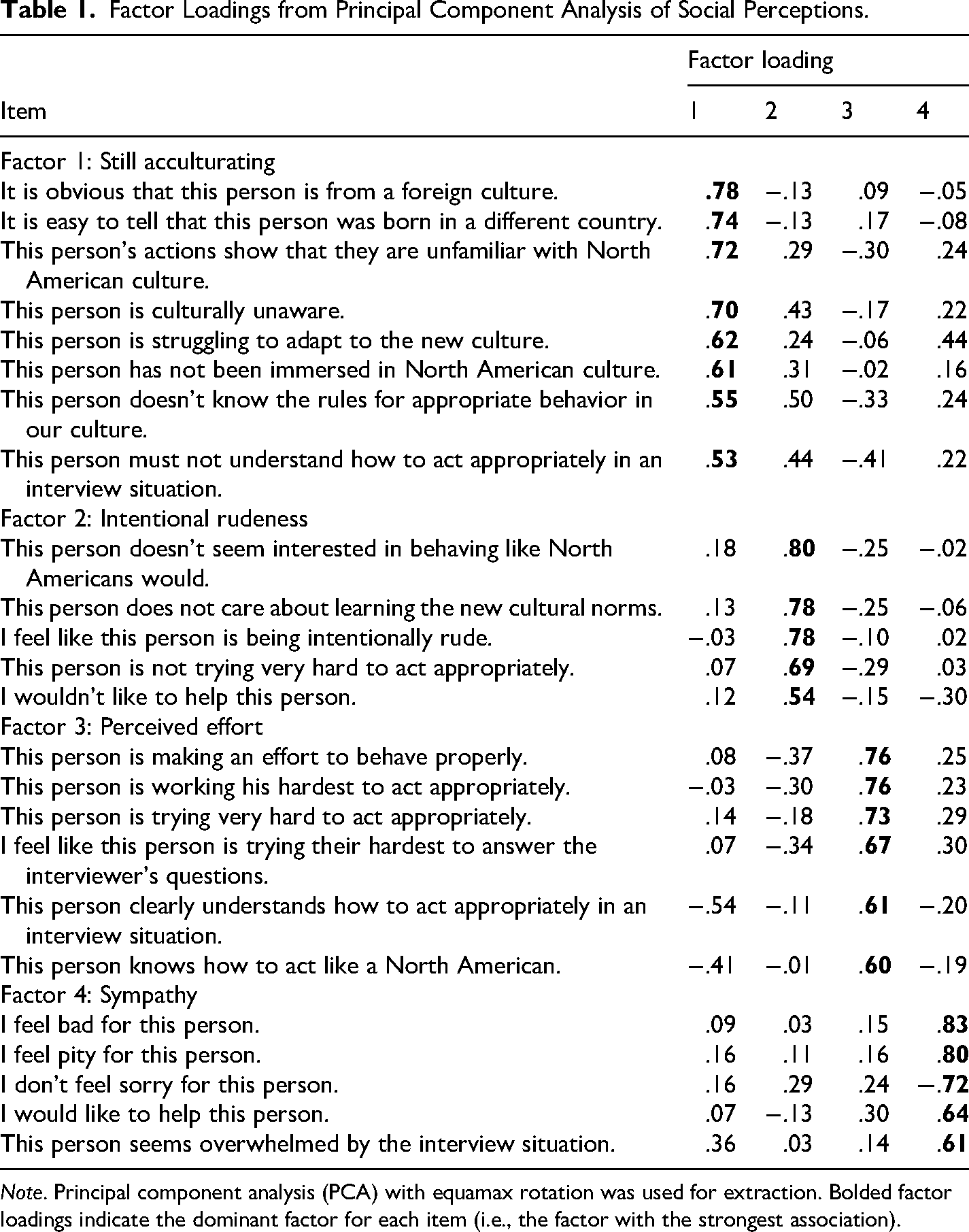
Note. Principal component analysis (PCA) with equamax rotation was used for extraction. Bolded factor loadings indicate the dominant factor for each item (i.e., the factor with the strongest association).
Eigenvalues for the Factor Analysis and Parallel Analysis.
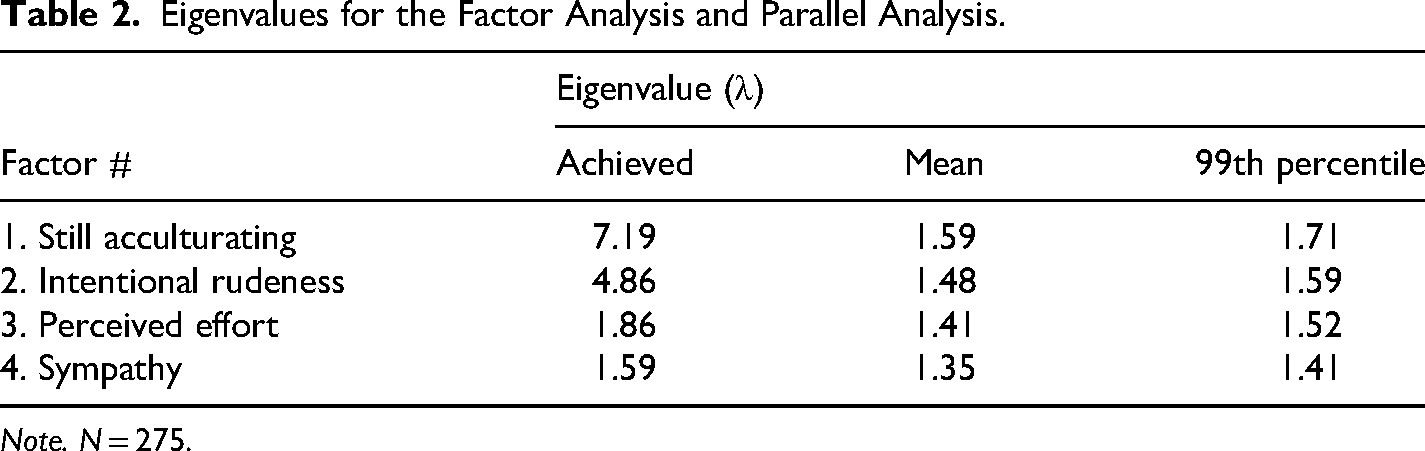
Note. N = 275.
Manipulation Check
MANOVA revealed a significant multivariate effect of fluency [Pillai's trace = .31, F(2, 267) = 58.76, p < .001] and behavioral appropriateness [Pillai's trace = .21, F(2, 267) = 36.14, p < .001] for the manipulation check variables. No multivariate interaction was found, Pillai's trace = .00, F(2, 267) = .18, p = .839. The univariate Fs revealed that the multivariate effect for fluency was due to differences on the fluency manipulation check (p < .001) but not the behavioral appropriateness manipulation check (p = .727). Participants in the good fluency condition (M = 4.50; SD = 1.56) rated the target's fluency as significantly better than those in the poor fluency condition (M = 2.61; SD = 1.56). As for the cultural appropriateness of the behavior, the univariate Fs revealed that the multivariate effect was due to differences on both the fluency manipulation check and the behavioral appropriateness manipulation check (both ps < .001). Individuals in the highly inappropriate condition (M = 2.27; SD = 1.52) rated the behavior as significantly less appropriate compared to individuals in the somewhat inappropriate condition (M = 3.79; SD = 1.95). In addition, participants in the highly inappropriate condition (M = 3.01; SD = 1.68) rated the target's fluency as significantly worse than those in the somewhat inappropriate condition (M = 4.07; SD = 1.81), possibly a reflection that they are interpreting the lack of appropriate behavior as low fluency. This latter result is curious and may suggest that perhaps highly inappropriate behavior biased the participants to judge other aspects, such as language fluency, of the target more negatively.
Factorial MANOVAs
Stereotypes
Before assessing participants’ ratings of the Russian target's likability and competence, participants’ stereotypes about Russians’ likability and competence were assessed via a MANOVA. A multivariate effect was found for both fluency [Pillai's trace = .02, F(2, 267) = 3.21, p = .042] and behavioral appropriateness [Pillai's trace = .03, F(2, 267) = 3.75, p = .025]. No multivariate interaction was found, Pillai's trace = .00, F(2, 267) = .45, p = .637. The univariate ANOVAs revealed that the significant effect for fluency was due to differences in stereotypes of Russians’ likability (p = .014) but not competence (p = .365). Participants in the poor fluency condition (M = 2.59; SD = 1.10) rated Russian stereotype as significantly more likable than did the participants in the good fluency condition (M = 2.27; SD = 1.00), suggesting that the shielding effect extended to the likability of judgement of Russians as a group. In terms of the multivariate effect of behavioral appropriateness, the univariate ANOVAs revealed that the effect was due to significant differences in stereotypes of Russians’ competence (p = .039) but not likability (p = .128). Participants in the highly inappropriate behavior condition (M = 3.61; SD = .90) rated Russians as significantly less competent than did the participants in the somewhat inappropriate behavior condition (M = 3.83; SD = .92), suggesting that the inappropriate behavior of one man affected the impressions of the competence of Russians as a group.
Stereotypes about Russians likability and competence significantly correlated with corresponding views about the target's likability (rs: .27–.34, all ps < .001) and competence (rs: .14–.33, all ps < .03). To ensure that our findings reflected the effects of our manipulation on views of the target in the video specifically, these stereotypes were used as covariates in all other analyses to control for the variance in views that may be a byproduct of these more general stereotypes.
Likability
Likability was measured using three different scales to better triangulate on the concept (i.e., one-item likability, RLS, and WCS's warmth subscale). These scales were largely correlated (rs: .80–.85), suggesting they were tapping into a similar underlying concept. We maintained all three for further analysis to ensure any difference in how likability was not a byproduct of that specific measure.
To assess likability of the Russian interviewee in the video clip, controlling for stereotypes of Russians’ likability, a 2 fluency by 2 appropriateness MANCOVA with stereotypes of Russians’ likability entered as a covariate was conducted. Significant multivariate main effects were found for both fluency [Pillai's Trace = .04, F(3, 265) = 3.64, p = .013,
Estimated Marginal Means and Standard Errors.
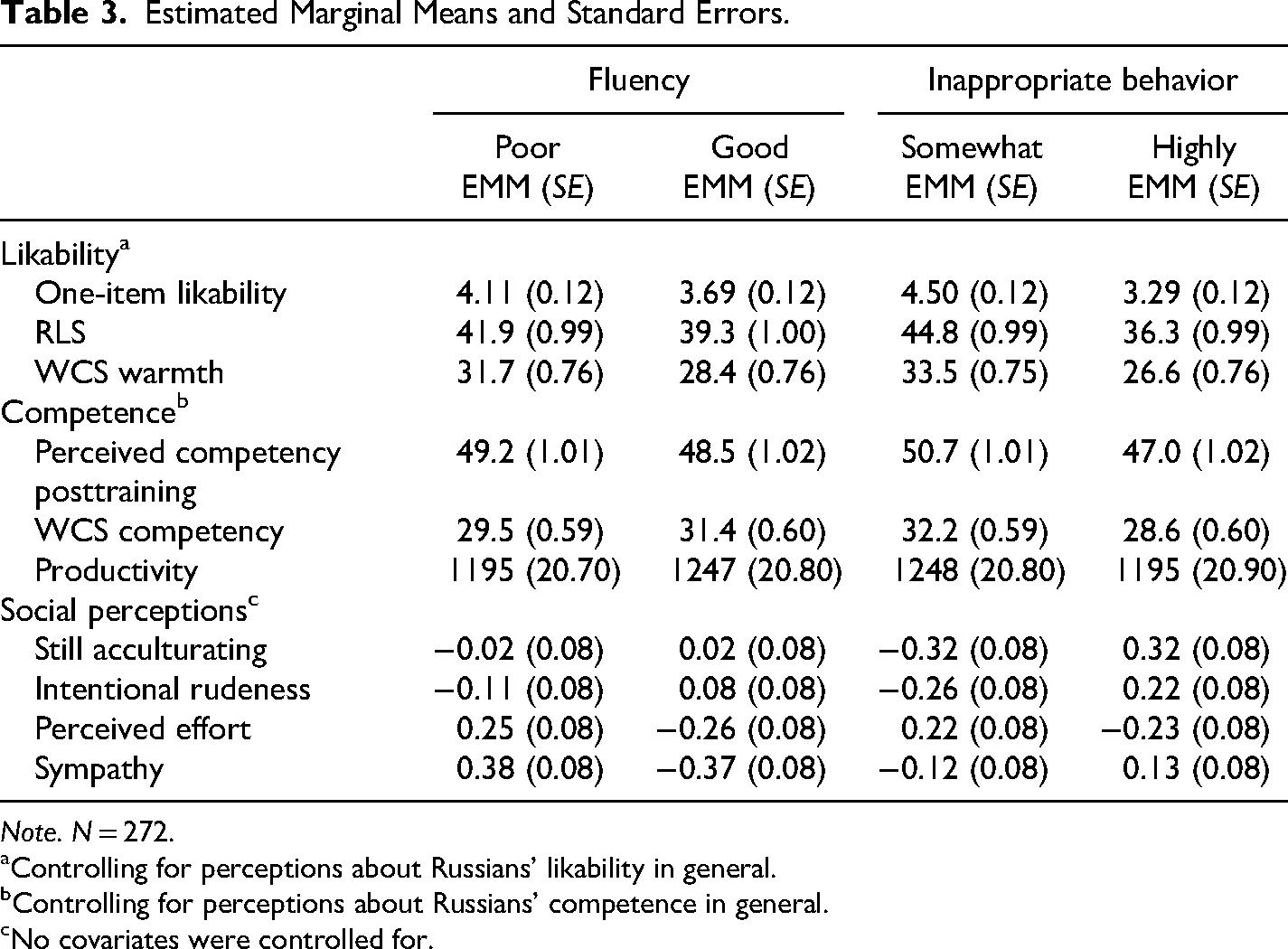
Note. N = 272.
Controlling for perceptions about Russians’ likability in general.
Controlling for perceptions about Russians’ competence in general.
No covariates were controlled for.
Competence
Competence was also measured using three different scales to better triangulate on the concept (i.e., perceived competency posttraining scale, WCS's competency subscale, and perceived productivity). These scales were moderately correlated (rs: .28–.49), suggesting they were tapping into different aspects of the same underlying concept. We maintained all three for further analysis to ensure any difference in competence was not a byproduct of that specific measure.
Similar to the likability MANCOVA, the competency MANCOVA assessed the effects of fluency and behavior on measures of competence while entering participants’ stereotypes of Russians’ competence as a covariate. Significant multivariate main effects were found for both fluency [Pillai's Trace = .04, F(3, 265) = 3.47, p = .017,
Social Perceptions
In regard to social perceptions (i.e., still acculturating, intentional rudeness, perceived effort, and sympathy), the MANOVA revealed significant main effects for fluency [Pillai's Trace = .23, F (4, 265) = 19.41, p < .001,
Mediation Models for the Effect of Fluency
Six mediation models were tested for indirect effects of the fluency condition on likability and competence through the possible mechanisms (PROCESS Model 4 using 5,000 bootstrap iterations). Each model controlled for the relevant Russian stereotype (i.e., likability or competency).
Likability
Hayes's PROCESS macro extension for SPSS tested whether the effects of fluency on the three likability measures were mediated by any of the four social perceptions (for beta weights, see Figure 3).
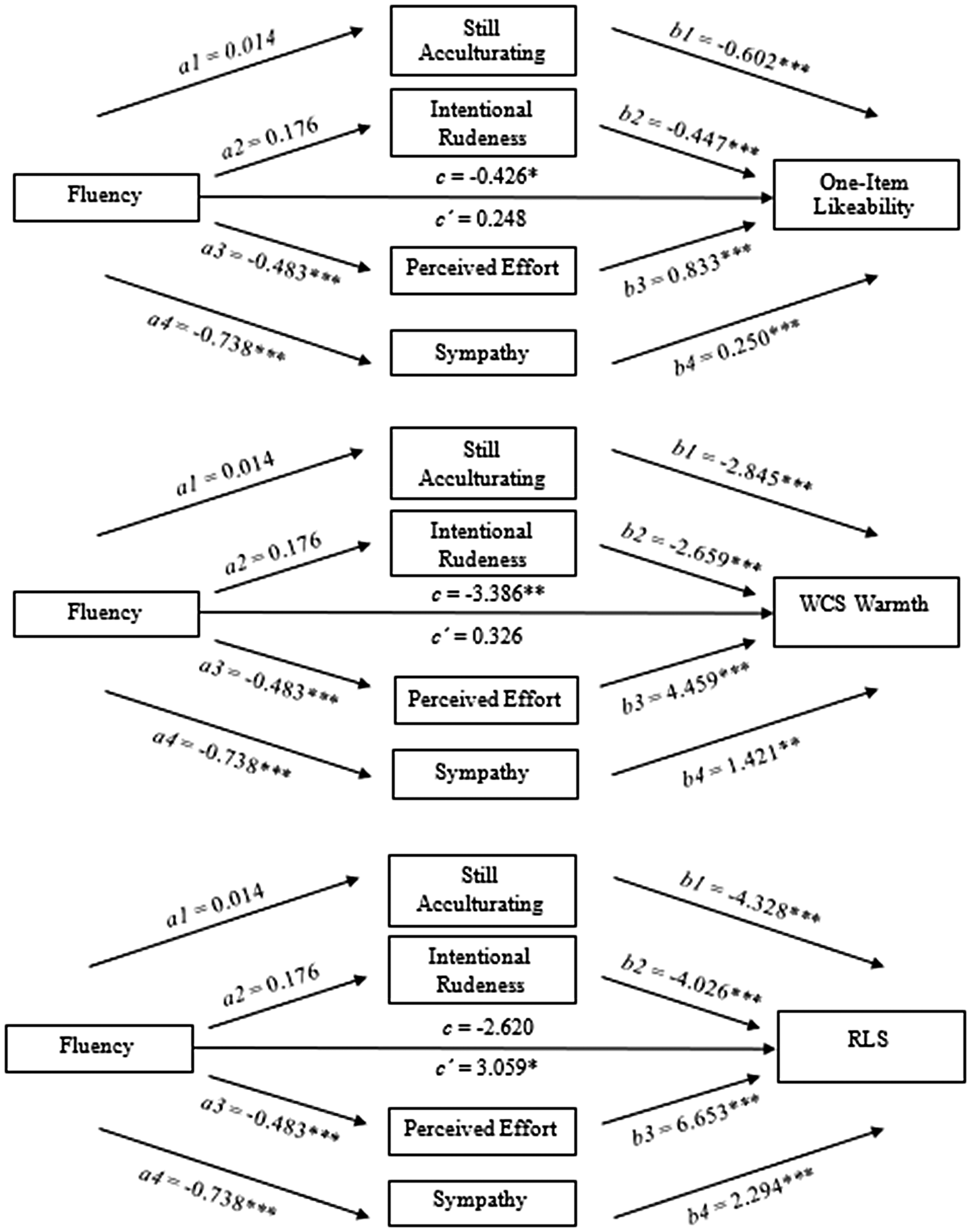
Mediation Models Tested for the Effect of Fluency on Likability.
The direct effect of fluency on the ratings of warmth on the WCS subscale (p = .002) and the one-item measure of likability (p = .021) was significant, such that poor fluency was associated with being seen as more likable. However, the direct effect of fluency did not reach significance for likability ratings on the RLS (p = .066).
The target being less fluent in English was perceived as putting forth more effort (p < .001) and elicited higher levels of sympathy from participants (p < .001); fluency was unrelated to perception of still acculturation (p = .909) and intentional rudeness (p = .137).
Greater perceived effort and more sympathy for the target were associated with greater likability on all measures of likability: the one-item likability measure (both ps < .001), RLS ratings (p < .001 and p = .001, respectively), and ratings on the WCS's warmth subscale (p < .001 and p = .006).
The bootstrap 95% confidence intervals using 5,000 bootstrap samples for the indirect effects of fluency (ab) on both measures of likability were entirely below zero for perceived effort (single item: −.603 to −.209; RLS: −4.850 to −1.728; warmth: −3.272 to −1.142) and sympathy (single item: −.320 to −.060; RLS: −2.818 to −.695; warmth: −1.944 to −.221), indicating that there was evidence of indirect effect of fluency on likability through perceived effort and sympathy: target's poor language fluency led to greater perception of effort in the target and higher level of sympathy for the target, which in turn predicted higher levels of liking for the target.
Competence
PROCESS was used next to test whether the effects of fluency on the ratings of competency were mediated by any of the four social perceptions (for beta weights, see Figure 4).
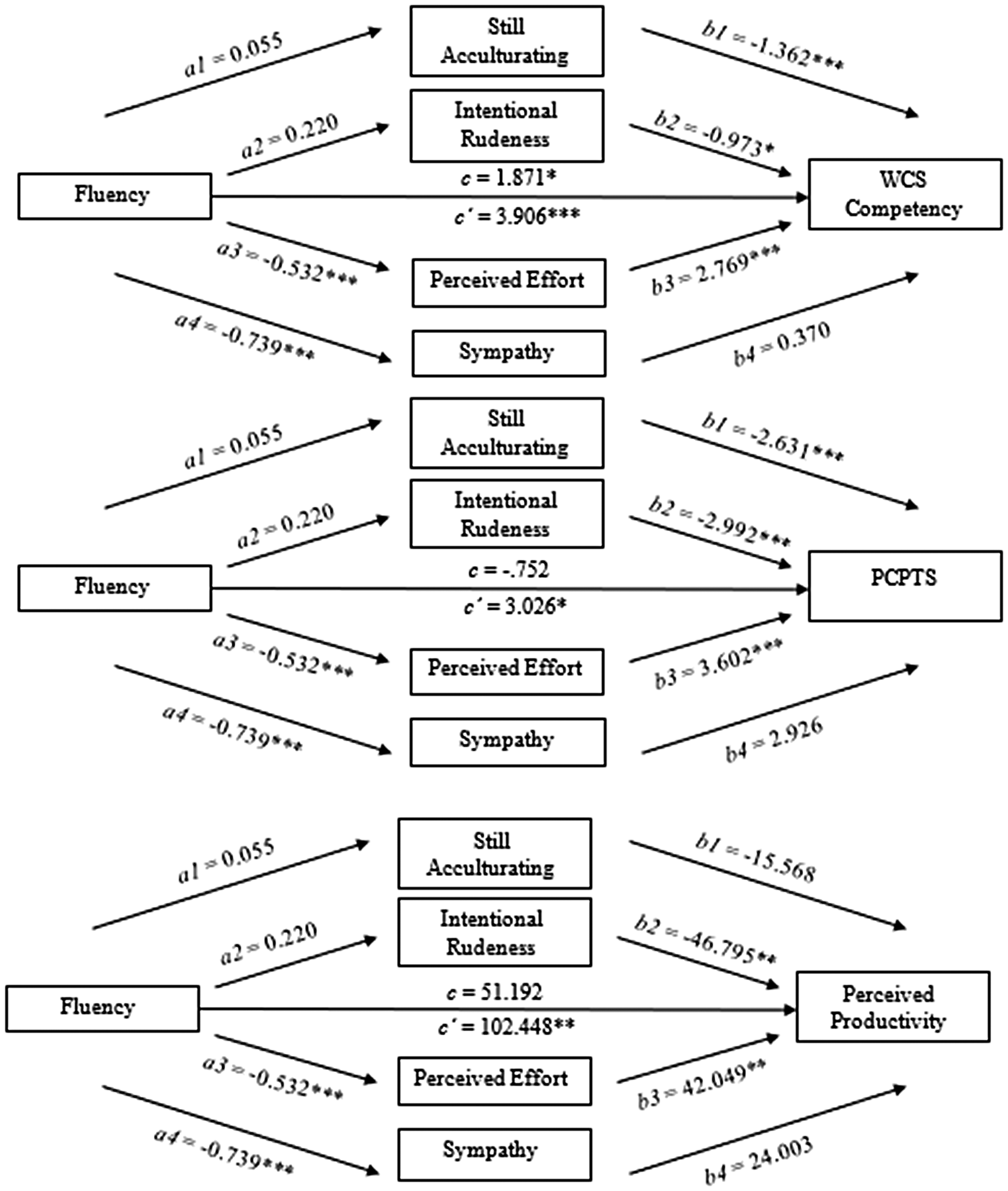
Mediation Models Tested for the Effect of Fluency on Competence.
The direct effect of fluency was significant for the competency ratings on the WCS subscale (p = .032) such that poor fluency was associated with being seen as less competent, but the direct effect of fluency was not significant for perceived competency posttraining (p = .640) or perceived productivity (p = .077).
Just as in the previous analyses, poor fluency predicted greater perceived effort and sympathy (both ps < .001) but was unrelated to perception of still acculturation (p = .651) and intentional rudeness (p = .052).
Greater perceived effort was associated with greater competency ratings across all three measures (WCS's competency: p < .001; perceived competency posttraining: p < .001; perceived productivity: p = .009). Sympathy was unrelated to all three scales (all ps > .051).
The bootstrap 95% confidence intervals for the indirect effects of fluency through perceived effort (ab) on the measures of competency were entirely below zero (WCS's competency: −2.323 to −.742; perceived competency posttraining: −3.186 to −.851; perceived productivity: −43.663 to −4.880). All other confidence intervals included zero, indicating that there was only evidence of indirect associations of fluency on competency through perceived effort: poor language fluency led to a greater perception of effort, which was associated with higher levels of competency rating. However, recall that the direct effect of poor fluency on competency ratings was that poor fluency was associated with being seen as less, not more, competent. Therefore, poor fluency negatively affects competence ratings, not because the person is perceived as exerting more effort, but despite this perception, which would typically enhance competence ratings.
General Discussion
The findings of the current research provide insights into the dynamics of language fluency, cultural appropriateness, and social perceptions. Although previous work by Molinsky (2005) and Molinsky and Perunovic (2008) has shown that poor language fluency can shield nonnative speakers from negative evaluations resulting from cultural faux pas, the current research advances this understanding by investigating the social perception mechanisms underlying this effect. Previous research has also shown that high levels of language fluency can have a positive effect on how people perceive nonnative speakers (e.g., White & Li, 1991) possibility because fluency makes it easier for listeners to process the speech (e.g., Dragojevic, 2019). Our findings demonstrate that low fluency can also enhance likability by prompting perceivers to attribute greater effort and deservingness of sympathy to the speaker when cultural missteps occur. In this case, the speaker's lack of fluency serves as a cue for “minimal choice,” as described by the Communication Accommodation Theory (Gallois et al., 1995). In essence, our findings reveal an “effort-sympathy heuristic,” where poor language fluency triggers increased perceptions of effort and sympathy, which, in turn, enhances interpersonal liking when social faux pas are observed. This heuristic offers new insight into how perceived linguistic limitations can paradoxically improve interpersonal evaluations, challenging traditional views on the relationship between language proficiency and social perception.
Is Poor Fluency a Double-Edged Sword?
In Study 1, we found that although participants rated the nonnative interview candidate who exhibited inappropriate behavior as less likable overall, he was judged as more likable when his English fluency was poorer. However, the protective effect of poor fluency did not extend to competence evaluations. Study 2 replicated the likability findings, even after controlling for stereotypes about Russian likability and using multiple measures of perceived likability, and identified social perception mechanisms underlying the effect of poor fluence on enhanced likability. Additionally, Study 2 showed that lower fluency resulted in lower ratings of professional competence, even when controlling for stereotypes about Russian competence. But this time, the foreign man whose behavior was more inappropriate was also rated as less competence. Together, these findings suggest that culturally inappropriate behavior by nonnative individuals can significantly diminish perceptions of their likability and competence, but also underscore the nuanced role of poor language fluency, which can simultaneously serve as both a buffer and a barrier. On the one hand, poor fluency can soften negative interpersonal judgment, fostering sympathy and reducing the harshness of social evaluation. On the other hand, this same linguistic limitation reinforces doubts about the individual's competence, exposing the inherent trade-offs in how fluency shapes social perception. In essence, poor language fluency acts as a double-edged sword—protecting nonnative speakers from social rejection, yet constraining how capable and professional they are perceived to be.
We had suspected that there may be an interaction between fluency and our manipulation of appropriateness, such that the effect of fluency might be stronger in the highly inappropriate condition. Indeed, Molinsky and Perunovic (2008) observed that the effect of language fluency was moderated by the level of appropriateness, present only in the relatively “less appropriate” condition. However, in the current research, we found no significant fluency by appropriateness interaction. In hindsight, this lack of interaction is not surprising. In Molinsky and Perunovic (2008), the level of appropriateness was manipulated with a culturally appropriate vs. culturally inappropriate behavior. In contrast, in the current research, both conditions were culturally inappropriate, only varying in the degree of inappropriateness. It may be the case that if we had included a culturally appropriate condition, then the effect of poor fluency would have been eliminated in that condition. Future research should create more variability in the manipulation of cultural appropriateness and other factors to assess under what circumstances would the effect of language fluency enhance, diminish, or disappear.
What Are the Mechanisms Underlying the Effects of Poor Language Fluency?
Likability
Findings from our mediation analyses in Study 2 suggest that people perceived the nonnative interview candidate who was less fluent as putting forth more effort and more deserving of sympathy. These findings are consistent with our reasoning grounded in Communication Accommodation Theory (Gallois et al., 1995), that nonnative speakers’ low language fluency can lead to the perception that this person has to work hard to adapt to cultural rules during the communication process and that this perception should then, in turn, shield the speaker from negative judgment when they engage in cultural faux pas. What we found additionally was that poor language fluency also led to greater sympathy. Indeed, results of mediation analyses demonstrated that perception of putting forth more effort and deserving of sympathy mediated the effect of poor language fluency on likability evaluation, such that poor language fluency led to a greater perception of effort in the interview candidate from Russia and a higher level of sympathy for him, which in turn predicted higher levels of liking. It also seemed possible that when behaving culturally inappropriately, poor language fluency can make it salient to the perceiver that the nonnative person is unfamiliar with the cultural rules rather than being intentionally rude, leading the perceiver to be more forgiving when evaluating this person's likability. However, our findings showed that fluency was unrelated to the perception of still acculturation and intentional rudeness. Hence, it appears that when a nonnative individual who behaves culturally inappropriately speaks with poor language fluency rather than good fluency, he is disliked less, not because people perceive him as still adjusting to the culture or viewing him as less disrespectful, but because people view him as putting forth more effort and feel sympathy for him.
Competence
We also observed in Study 2 that perceived effort was a mediator in the relationship between fluency and competency ratings, showing that the nonnative interview candidate's poor language fluency led to the perception that he was putting forth effort, and this perception was associated with higher levels of competency rating. However, this observed mediating process is in contradiction with our finding that perceived competence is actually lower with poorer fluency. These observations together indicate the presence of suppression. Suppression exists when the association between an independent variable (language fluency in our study) and the dependent variable (competence in our study) is increased when variance associated with a third variable (perceived effort in our study) is statistically removed or when the direct effect and the mediating effects of an independent variable show opposite signs in a mediation model (MacKinnon et al., 2000; Tzelgov & Henik, 1991). Hence, poor fluency harms competence rating, not because, but despite judging the person as putting in more effort. Therefore, our data does not capture the mechanism underlying the harmful effect of poor fluency on competence rating.
It is worth noting, however, that greater perceived effort was associated with greater competency ratings across all three measures of competence in Study 2, which suggests increasing perceived effort by an acculturating person may lead individuals to judge the person as more competent. Additionally, the finding that the direct effect of fluency was significant for the adjective ratings of competence (on the WCS subscale) but not on ratings of competence posttraining suggests that the negative effect of poor fluency on professional competence may be limited to the evaluation of the nonnative individuals’ present competence and does not diminish the evaluation of the individual's potential for improved competence after training. Additionally, people perceived the nonnative who behaved more culturally inappropriately as still acculturating to North American culture, more intentionally rude, more deserving of sympathy, and putting forth less effort than the nonnative who behaved somewhat inappropriately, suggesting that observers may attribute greater intent and cultural incompetence to those who exhibit more extreme cultural faux pas.
Limitations and Future Directions
The current research highlights how perceived effort and sympathy can act as a buffer against negative evaluations in situations where cultural faux pas occur, allowing nonnative speakers to navigate social interactions with reduced stigma and greater compassion from their peers. Our findings also align with Molinsky's (2005) observation that poor language fluency can lead to less unfavorable interpersonal evaluations, but also indicate that this shielding effect does not extend to evaluations of professional competence. Therefore, consistent with previous research showing that poor language fluency correlates with reduced earnings and employment opportunities (Pieroni et al., 2019), the “minimal choice” perceived in acculturating individuals may signal greater effort, but this does not translate into confidence in their professional capabilities. Since we were not able to fully identify the mechanism underlying the harmful effect of poor fluency on competence ratings, future research should investigate this aspect further by exploring other factors, such as preconceived notions about language proficiency and situational variables that may influence the outcome (e.g., the setting of the interaction).
Additionally, future research could investigate long-term outcomes in professional contexts to examine how perceptions change over time as nonnative speakers gain greater fluency. By deepening our understanding of how these interactions work, we can develop more effective strategies to support nonnative speakers in the workplace, thereby fostering a more inclusive environment for everyone. Furthermore, this research highlights the importance of distinguishing between perceptions of competency and likability in the context of intercultural interactions, offering new insights into how individuals are judged during cross-cultural encounters. Future research could build on this distinction, refining models of intercultural communication and deepening our understanding of the complexities of social dynamics within diverse cultural contexts.
It is also important to note that our study focused on a single Russian-accented speaker, which limits the generalizability of our findings. While we expect that the protective shielding effect of low language fluency may extend to other nonnative accents, further research is needed to confirm this. Different accents may have varying degrees of perceived “foreignness” or cultural associations that could influence perceivers’ judgments. Additionally, using a single speaker has inherent limitations. The observed effects may be specific to the particular characteristics of our speaker rather than representative of all Russian-accented speakers. Future studies may include multiple speakers with the same accent to account for individual variations in speech patterns and to strengthen the generalizability of the findings. This approach would help determine whether the results are specific to Russian-accented speech or if they apply more broadly to nonnative accents in general.
Furthermore, although our study focused on culturally inappropriate behavior, the question arises whether nonnative speakers’ low language fluency acts as a protective buffer more broadly. It's possible that this effect extends to culturally appropriate behaviors or other social contexts, potentially eliciting increased patience or empathy from native speakers. However, as our research specifically examined cultural faux pas situations, generalizing these findings to other contexts should be done cautiously. Future research could explore the impact of low language fluency on perceptions of nonnative speakers across various social scenarios, both culturally appropriate and inappropriate, to determine the full scope of this phenomenon.
In addition to that, future research on nonnative speakers’ fluency perceptions should also consider incorporating racial-linguistic perspectives by examining how visual racial/ethnic cues interact with auditory language markers to shape evaluations of competence and likability. Experimental designs could systematically manipulate both accent features and racial presentations (through photographs or videos) to determine whether identical speech patterns are evaluated differently based on the speaker's perceived racial background (Kang & Rubin, 2009). Such studies could reveal whether processing fluency effects are applied uniformly or if certain racial groups face steeper social penalties for identical linguistic features, potentially explaining the differential treatment of various nonnative speaker populations despite similar linguistic proficiencies.
Footnotes
Acknowledgments
We thank Mallory Murphy and Naomi Levins for their assistance in preparing the manuscript, the anonymous reviewers and the editor for their insightful comments on earlier versions, and all the participants for contributing to the research. We also acknowledge that the writing of this article was assisted with GenAI tools, including ChatGPT, Perplexity.AI, and Grammarly, to improve readability and organization of information. The data analysis and interpretation, as well as editing, were fully performed by the human authors. All writing procedures were conducted in accordance with the maintenance of research integrity and alignment with evolving ethical standards in academic publishing (Government of Canada, 2020).

Ethical Approval and Informed Consent
This research was conducted in accordance with ethical guidelines and approved by the Research Ethics Boards at the University of New Brunswick. Informed consent was obtained from all participants, who were fully informed of the study's purpose, procedures, and their right to withdraw.
Funding
The authors disclosed receipt of the following financial support for the research, authorship, and/or publication of this article: The authors disclosed receipt of financial support from Brandeis University’s International Business School for the research.
Declaration of Conflicting Interests
The authors declared no potential conflicts of interest with respect to the research, authorship, and/or publication of this article.
Data Availability
The data of this research are available from the corresponding author.
Notes
Author Biographies
Appendix: Video Transcript and Duration
I = Interviewer
S = Sergei (the job candidate)