



Abstract
Speakers with standard accents are typically judged more favorably than non-standard speakers, but this may shift in response to perceived intergroup conflict with ethnolinguistic outgroups. Three studies were conducted to examine how large-scale social movements may impact language attitudes in Hong Kong. Attitudes toward standard-accented and non-standard-accented Cantonese and Mandarin were collected across four instances in 2013 and 2015 (pre- and post-Umbrella Movement), 2018 and 2019 (pre- and post-Anti-Extradition Bill Movement), respectively. Compared to Study 1 (2013), Hong Kong participants judged standard speakers of Cantonese (the ingroup variety), and ingroup, non-standard speakers of Mandarin (the outgroup variety) significantly more favorably in Study 2 (2015). Study 3 showed that the retrospective endorsement of the Umbrella Movement moderated preferences for standard Cantonese and Mandarin speakers. Comparison of 2018 and 2019 data partially replicated the findings in Studies 1 and 2, though the current endorsement of the Anti-Extradition Bill Movement did not moderate preferences for standard speakers.
Language attitudes refer to evaluative responses toward both macro (e.g., dialects and accents) or micro (e.g., lexicon and grammar) language behaviors (Cargile, 2017; Garrett, 2010). Importantly, language attitudes are determined by social convention (Edwards, 1982) and often reflect the stereotypical views of ethnolinguistic groups (Preston, 2013). A large body of research has documented systematic differences in the evaluation of speakers of different language varieties, such as regional and national accents (e.g., Ladegaard, 1998), dialects (e.g., Luhman, 1990), and languages (e.g., Lai, 2007).
Language attitudes can be measured directly with explicit questions about languages themselves but are more often measured indirectly by asking people to evaluate speakers (Dragojevic et al., 2021; Garrett, 2010). The matched-guise technique is the most commonly used speaker-evaluation method. In a pioneering study, Lambert et al. (1960) had participants listen to recordings differing only in the language spoken (English vs. French) and rate the “different” speakers (or guises) on various traits. Importantly, recordings in both languages were actually made by the same set of speakers, thus controlling for speaker characteristics across languages and ensuring that differences in evaluation could be attributed to the language spoken (Giles & Billings, 2004). The verbal guise technique is a less stringent variant of the matched-guise technique that utilizes different speakers to represent each speech style. It is useful (Garrett, 2010) when there are concerns about the authenticity of “mimicked” styles (e.g., a native speaker producing a “non-native” accent).
In addition to comparing evaluations of different languages that vary in status in a given context, such as Lambert and colleague's comparison of French and English speakers in Canada, language attitude research often focuses on the distinction between “standard” and “non-standard” accents. Standard accents attain status through the process of standardization—institutional imposition of uniformity (Milroy, 2001). They are codified (e.g., in language books and the media) as the correct way to speak, are further supported by laypeople's perceptions that they possess qualities of “correctness” and formality (Smakman, 2012), enjoying a high level of social prestige (Grondelaers et al., 2011). In contrast, non-standard accents deviate from institutionally imposed norms (Dragojevic, 2018) and are often considered less “proper” and “correct” (Luhman, 1990). Thus, speakers with non-standard accents are not only evaluated less favorably on the dimensions of status than speakers with standard accents, including evaluations of intellectual ability, socio-economic standing, but also on the dimension of solidarity, including sociability and integrity (Fuertes et al., 2012).
Despite the relatively consistent preference for standard over non-standard language varieties, language attitudes vary across time and situations, changing in response to government policies (Genesee & Holobow, 1989), long-term language immersion (Ianos et al., 2017), and short-term interventions (Kang et al., 2015). Furthermore, at a single time point, language attitudes are influenced by social context (Creber & Giles, 1983) and social identity salience (Abrams & Hogg, 1987). In fact, speakers with non-standard accents are occasionally evaluated more positively than those with standard accents by their ethnolinguistic ingroup (Bourhis et al., 1973) as a result of ingroup loyalty (Dragojevic, 2018). In other words, language attitudes are not static, and an intergroup perspective may be key to understanding differences in language attitudes across time, contexts, and individuals.
Focusing on evolving intergroup relations in Hong Kong, the current paper examines the impact of exposure to political conflict on language attitudes. Across three studies, we investigate the influence of large-scale social movements in 2014 and 2019 on attitudes toward accented varieties of Cantonese and Mandarin among Hong Kong young adults.
Brief Overview of Cantonese and Mandarin in Hong Kong
Hong Kong was a British colony for 156 years before its handover to the People's Republic of China in 1997. Prior to the return, English and Cantonese were the official languages (Lai, 2007). Following the return, English and the “Chinese language” were granted official status in Article 9 of the Basic Law (1997). Despite the widespread usage of Cantonese in both official and informal settings, Cantonese is not explicitly mentioned in the Basic Law, leaving it vulnerable to replacement by Mandarin, the official language in the rest of China (Yau, 1992). Furthermore, expanding business opportunities in mainland China and the Hong Kong government's “biliteracy and trilingualism” policy promoting the inclusion of Mandarin in school curricula (Li, 2009) have increased pressure to learn Mandarin. Census data (Census and Statistics Department [C&SD], 2001, 2017) indicate that the proportion of Hong Kong residents who speak Cantonese as their “usual language” (C&SD, 2017, p. 46) has held steady (88.7% in 1991 and 88.9% in 2016) as has the percentage for Mandarin (1.1% in 1991 and 1.9% in 2016), but the proportion of people who speak Mandarin as “another language/dialect” (p.46) has increased dramatically (16.9% in 1991 to 46.7% in 2016).
Despite the widespread use of Cantonese in Hong Kong, its status as a language or a dialect is controversial. Some consider it a dialect since its written form (書面粵語) has not been formally standardized (Cheng & Tang, 2014) and is neither taught in schools, nor used in government and official communications (Bauer, 2018). Nevertheless, some argue that Cantonese is more than a dialect due to its important role in Hong Kong and strong ties to the Hongkonger identity (Groves, 2010). The debate over its status as a language or dialect has been increasingly politicized (Poon, 2010) and is tied to Hong Kong–Mainland relations (Shao, 2016) and concerns about Beijing's interference in local affairs (Fong, 2017).
In contrast, Mandarin enjoys official language status in China, with extensive effort devoted to its standardization (Chen, 1999). After the handover in 1997, Mandarin was made a compulsory subject in most Hong Kong schools, accompanied by a strong push for Mandarin to become the medium of instruction (MOI) for teaching Chinese language (普教中; Bolton & Lee, 2020). By 2018, the majority of primary schools (71.7%) and more than a third of secondary schools (36.9%) taught the Chinese language subject at least partially in Mandarin (Yeung, 2018). However, there has also been resistance against Mandarin, and the government's attempts to promote Mandarin as the MOI in schools have been described as another strategy by Beijing to further exert control in Hong Kong (Shao, 2016).
Clearly, there is debate about the status of both Cantonese and Mandarin in Hong Kong. For the purpose of this paper, we will refer to Cantonese and Mandarin as “varieties of Chinese,” a relatively neutral term that does not diminish the status of either variety.
Intergroup Relations in Hong Kong
Despite the increasing importance of Mandarin, the general sentiment among Hongkongers toward Mainlanders remained negative (Cuddy et al., 2009). Amongst 1,024 Hongkongers surveyed, 53% believed that Mainland immigrants enjoyed more welfare benefits than they made contributions while only 2.9% believed the opposite (The Education University of Hong Kong, 2012). By 2012, Hongkongers generally saw Mainlanders as competitors, which led to discrimination and prejudice against immigrants from Mainland China (Ng, 2015).
Since 2014, Hong Kong has experienced two large-scale social movements. The 2014 Umbrella Movement (UM) was a 79-day pro-democratic occupation of the city center spearheaded by student organizations (Ortmann, 2015). It began as a civil disobedience campaign seeking universal suffrage but escalated rapidly when police use of teargas and pepper spray against protestors triggered massive protests, sit-ins, and strikes (Hui & Lau, 2015). While the movement was ultimately unsuccessful, it sparked the rise of localism (Kaeding, 2017) and paved the way for future collective action.
Anti-Mainland sentiments reached a second boiling point in 2019 when the Hong Kong government proposed the Extradition Law Amendment Bill (ELAB), which would allow people accused of crimes in Hong Kong to be transferred to mainland China without a formal extradition process (Pang, 2020). This triggered massive protests. Public opposition grew when the Chief Executive refused to withdraw the Bill and the Police Chief characterized the protests as riots (Ku, 2020), and the protests evolved into a large-scale citizen movement against police brutality and authoritarianism (Lo, 2020). However, in 2020, the movement ended abruptly, due to the COVID-19 outbreak and the passing of the National Security Law.
Both movements strengthened the Hong Kong identity among Hongkongers. Those identifying as a Hongkonger increased from 34.8% in 2013 to 42.3% in 2014 and from 40.0% in 2018 to 52.9% in 2019. In the same periods, identification as Chinese dropped from 21.8% to 17.8% and from 15.1% to 10.8% (HKU Public Opinion Program, 2019). This rise in Hongkonger identity and rejection of pan-Chinese ethnicity contributed to the othering and “racialization” of Mainlanders (Lowe & Tsang, 2017). Perception of Mainlanders as a threat grew, especially among the youth (Lowe & Tsang, 2018), as clashes occurred between pro-establishment “blue ribbon” residents and “yellow ribbon” activists (Chen & Szeto, 2015).
Language Attitudes in Hong Kong
Attitudes toward English and Cantonese have been studied extensively both pre- and post-1997 (e.g., Lyczak et al., 1976), with most results pointing to Cantonese as the language of solidarity and English the language of status (Pennington, 1998). Few studies conducted prior to 1997 examined Mandarin, but what research there is suggests that Hongkongers’ attitudes toward Mandarin were quite positive (Gao et al., 2000). However, in 2001, shortly after the handover, a study showed a shift with students favoring Cantonese over Mandarin on both solidarity and status (Lai, 2007). A follow-up in 2009 showed that, while Cantonese speakers were still rated higher than Mandarin speakers on status, solidarity ratings were somewhat comparable for speakers of the two varieties. The author interpreted this as evidence that the younger generation had begun accepting Mandarin (Lai, 2011).
Given that Cantonese is strongly associated with a Hongkonger identity (Lai, 2011), it is unsurprising that the growing acceptance of Mandarin was clearly reversed in the wake of the UM, with Hongkongers rallying fiercely to defend their ingroup language variety. Attempts to undermine Cantonese's status as a language (Tam & Lau, 2014) or as the mother tongue in Hong Kong were met with immediate criticism and backlash (Su, 2018). In a 2017 study, participants who identified as Hongkongers reported that the current political situation affected their attitudes toward Mandarin and Cantonese. They became more resistant to Mandarin and more protective of Cantonese and were more likely to perceive Cantonese as threatened by Mandarin (Hansen Edwards, 2021).
Thus far, we have focused on the two Chinese varieties, but it may be crucial to also consider accent. While Cantonese and Mandarin are both Chinese varieties, generally they are not mutually intelligible (Bauer & Benedict, 1997), and many native Cantonese speakers speak Mandarin with a noticeable accent (Ho, 1999) and vice versa (Gu, 2011). To our knowledge, only one study has examined attitudes toward Cantonese-accented Mandarin. Gao et al. (2000) found that, compared to Mainland Chinese participants, Hong Kong participants responded more favorably toward Cantonese-accented Mandarin, which the authors attributed to a need to maintain distinctiveness as “Hong Kong-Chinese.”
Language Attitudes and Large-Scale Political Protest
The dramatic shift in intergroup relations during the two movements may have produced significant change in language attitudes, both in terms of preference for the ingroup variety Cantonese, and for non-standard, Cantonese-accented Mandarin. Ethnolinguistic Identity Theory (Giles & Johnson, 1987), which describes the importance of language as both an ingroup identity marker and a dimension of intergroup comparison, offers a valuable framework for understanding these changes. According to the model, comparisons between the ingroup and outgroups that are unfavorable for the ingroup (e.g., often the case for minority linguistic groups) motivate group members to re-establish positive distinctiveness. The perceived ethnolinguistic vitality of the group will determine the nature of the response (Giles et al., 1977). Those perceiving low vitality should assimilate by adopting or favoring the majority language, while those perceiving high vitality should favor their minority language. However, tests of this hypothesis have produced mixed results (e.g., Ehala & Zabrodskaja, 2014), leading researchers to also consider the role of emotional attachment.
Ehala (2011) proposed that groups can operate in one of two modes: a cold mode, in which emotional attachment to the ingroup is low, and members are motivated more by personal self-interest; and a hot mode, where emotional attachment is high, and members actively resist the dominant group even at high personal cost. Under “hot” mode, linguistic differences are accentuated, preference for and adherence to the ingroup language grows (Vaes & Wicklund, 2002), and adopting the dominant language variety is seen as “treasonous” (Dorjee et al., 2011). Thus, groups in hot mode will engage in active resistance against assimilation despite (and maybe due to) low perceived ingroup vitality. Crucially, the shift from cold to hot mode occurs when the group faces a threat (Ehala, 2011). Prior research shows exposure to political conflict heightened perceived intergroup threat (Schmid et al., 2008). In the current context, the large-scale protests could have shifted Hongkongers into hot mode through increased outgroup threat. Thus, despite the precarious position of the ingroup language variety, and likely, concerns about the ingroup's ethnolinguistic vitality, these events may have strengthened pro-ingroup and anti-outgroup language attitudes.
Ethnolinguistic Identity Theory (Giles & Johnson, 1987) also considers the impact of ingroup identification on language attitudes and behavior, predicting that as identification with a language group (e.g., Cantonese-speaking Hongkongers) strengthens so too should pro-ingroup language attitudes. For example, the perceived legitimacy and use of Hong Kong English, a local variety of English native to Hong Kong speakers, increased significantly following the UM, especially among those who identified as Hongkongers (Hansen Edwards, 2016). Some English language learners also viewed retaining the local accent (as opposed to a “standard” accent) as an expression of local identity (Sung, 2016). Given the significant shift toward the Hongkonger identity following the major social movements, it is possible that Cantonese-accented Mandarin may also have become a stronger marker of identity and thus would be seen as preferable over standard Mandarin.
The Current Research
Three studies examined the effects of large-scale social movements on language attitudes in Hong Kong. The attitudes of native Cantonese-speaking Hongkongers toward standard and non-standard accented speakers of Cantonese and Mandarin were collected using the verbal-guise technique at four time points—2013, 2015, 2018, and 2019. Standard-accented Cantonese was operationalized as Cantonese spoken by native Hong Kong-Cantonese speakers; standard-accented Mandarin was operationalized as Mandarin spoken by native Mandarin speakers from Mainland China; non-standard accented Cantonese was operationalized as Cantonese spoken by native Mandarin speakers with a noticeable non-native accent; and non-standard accented Mandarin was operationalized as Mandarin spoken by native Hong Kong–Cantonese speakers with a noticeable non-native accent.
Study 1 was conducted in 2013. Study 2, initially planned as a conceptual replication using different speech recordings and measures to test the generalizability of findings from Study 1, was conducted in 2015. However, given the timing of Study 1 and 2 (pre- and post-UM), our focus changed. Results from the two studies were compared post hoc to identify changes in language attitudes following the UM. Given numerous changes in study design, however, it was impossible to attribute differences in language attitudes solely to the Movement. To address this, Study 3, initiated in 2018, included measures of retrospective UM endorsement to test its impact on language attitudes. However, shortly after data collection was completed, the Anti-ELAB protests erupted. In response, we collected a final round of data in 2019 with measures of participants’ current endorsement of the Anti-ELAB Movement.
Traditionally, language attitude studies focus on evaluation of the dimensions of status and solidarity. We instead use the Stereotype Content Model (Fiske et al., 2002) dimensions of competence and warmth. While less common in language attitude research, they are mainstays in the social psychological literature, and perform in much the same way as status and solidarity (Sumantry & Choma, 2021). Importantly, while labels differ, status/solidarity and competence/warmth capture two fundamental dimensions of social perception (“Big Two”): ability/agency, and other-directed intent/connection (Martin & Slepian, 2017).
Study 1 (2013)
In Study 1, Accent (standard vs. non-standard) and Variety (Cantonese vs. Mandarin) were manipulated within participants in a 2 × 2 factorial design.
Method
To reduce the effect of variables other than accentedness, non-native speakers of each variety listened to a recording made by a standard speaker and were coached by the first author (who is a Cantonese/Mandarin bilingual) in a practice session. They were asked to closely parallel the prosody and speech rate of standard speakers, ensuring consistency in fluency, pace, cadence, rhythm, and intelligibility across speakers.
Thirty-three native Cantonese-speaking (n = 18) and Mandarin-speaking (n = 15) undergraduates, who did not participate in other parts of the study, rated the 20 tracks on 3-item fluency and 3-item intelligibility scales, (e.g., How easy it was to understand the speech?), using 7-point scales. Four similarly fluent and intelligible tracks featuring four different speakers, one in each of Standard Cantonese (SC), Standard Mandarin (SM), Non-standard (Mandarin-accented) Cantonese (NC), and Non-standard (Cantonese-accented) Mandarin (NM), were chosen as the final stimuli. Speech rates on these four tracks were similar, as the recording lengths were 19, 21, 21, and 20 s, respectively. The 33 judges also rated each track on accent “standardness.” The two tracks featuring standard guises were rated significantly higher than the two tracks featuring non-standard guises (SC > NC, t(32) = 10.17, p < .001, Cohen's d = 2.36; SM > NM, t(32) = 9.05, p < .001, Cohen's d = 1.89).
Results
Two linear mixed-effects analyses were conducted to examine the effects of Accent and Variety on competence and warmth. Linear mixed-effects models allow more flexibility in accounting for correlations between repeated responses from each participant and are less affected by missing data than repeated-measures ANOVA (Gueorguieva & Krystal, 2004).
Accent (standard vs. non-standard), Variety (Cantonese vs. Mandarin), and their interaction were entered into the model as fixed effects while intercepts for subjects and by-subject random slopes for the effects of Accent and Variety were entered as random effects.
Discussion
The findings were consistent with previous studies on the effects of accent (Fuertes et al., 2012): standard accents elicited higher ratings of status (competence). However, there was also evidence of ingroup bias: the preferential evaluation of standard over non-standard speakers was greater for Cantonese (the ingroup variety) than it was for Mandarin (the outgroup variety). Thus, while SC speakers were seen as considerably more competent than Mandarin-accented Cantonese speakers, SM speakers were seen as only somewhat more competent than Cantonese-accented Mandarin speakers.
The results for warmth provide stronger evidence of ingroup bias. Participants show the expected preferential evaluation for standard over non-SC speakers. Thus, the standard (ingroup) speaker is seen as much warmer than the non-standard (outgroup) speaker. However, for Mandarin speakers, the expected preferential evaluation of standard over non-standard speaker disappears. Now, the non-standard (ingroup) speaker is seen as just as warm as the standard (outgroup) speaker.
However, ingroup biases remain muted, as participants show outgroup preference on evaluations of competence for Mandarin speakers. Even for warmth, ingroup and outgroup members are seen only as equal when speaking Mandarin. Thus, ingroup bias does not overwhelm the typical preferential evaluation of standard over non-standard speakers.
Study 2 (2015)
Study 2 was initially planned as a conceptual replication to test the generalizability of the results of Study 1 using different speakers, modified stimuli, and new measurement of competence and warmth. However, in light of the 2014 UM and profound changes in Hong Kong–Mainland relations that followed, it made sense to directly compare results from Study 1 and 2. Thus, despite changes in methodology that limit the comparability of the two datasets, we also analyzed Study 1 and 2 data together as an initial test of the influence of the movement on language attitudes.
Three significant methodological changes were made in Study 2. First, to reduce noise created by using different speakers across Chinese varieties, speakers were recorded speaking in both Cantonese and Mandarin, creating matched pairs of recordings across varieties. Accent was still manipulated across speakers. To avoid arousing suspicion, we had participants listen to speech in one variety only. Second, as identity primes may influence language attitudes (Lam et al., 2006), the passage from Study 1 was modified to exclude mentions of “Hong Kong” to avoid priming a Hongkonger identity. Finally, different items that captured the same dimensions were used to measure competence and warmth.
Method
Results
Data from Study 2 were first analyzed independently: linear mixed-effects analyses were conducted with Accent (standard vs. non-standard), Variety (Cantonese vs. Mandarin), and their interaction entered as fixed effects and intercepts for participants as random effects.
Second, to compare Study 1 and Study 2, standardized competence and warmth scores from both studies were analyzed. Accent (standard vs. non-standard), Variety (Mandarin vs. Cantonese), and Dataset (Study 1 vs. Study 2), and all two- and three-way interactions were entered as fixed effects. Intercepts for participants and Dataset was entered as random effects.
The analysis comparing the pattern of effects across the two studies yielded a significant three-way interaction (Variety × Accent × Dataset), F(1,491.37) = 69.04, p < .0001, indicating that the pattern of competence evaluations differed across the two studies (see Figure 1). Specifically, the Accent × Dataset interaction for each variety showed that the effect of Accent on competence evaluations did not change between Study 1 and Study 2 for Cantonese, F(1,291) = 1.71, p = .19, but reversed for Mandarin, F(1,271) = 98.10, p < .0001.
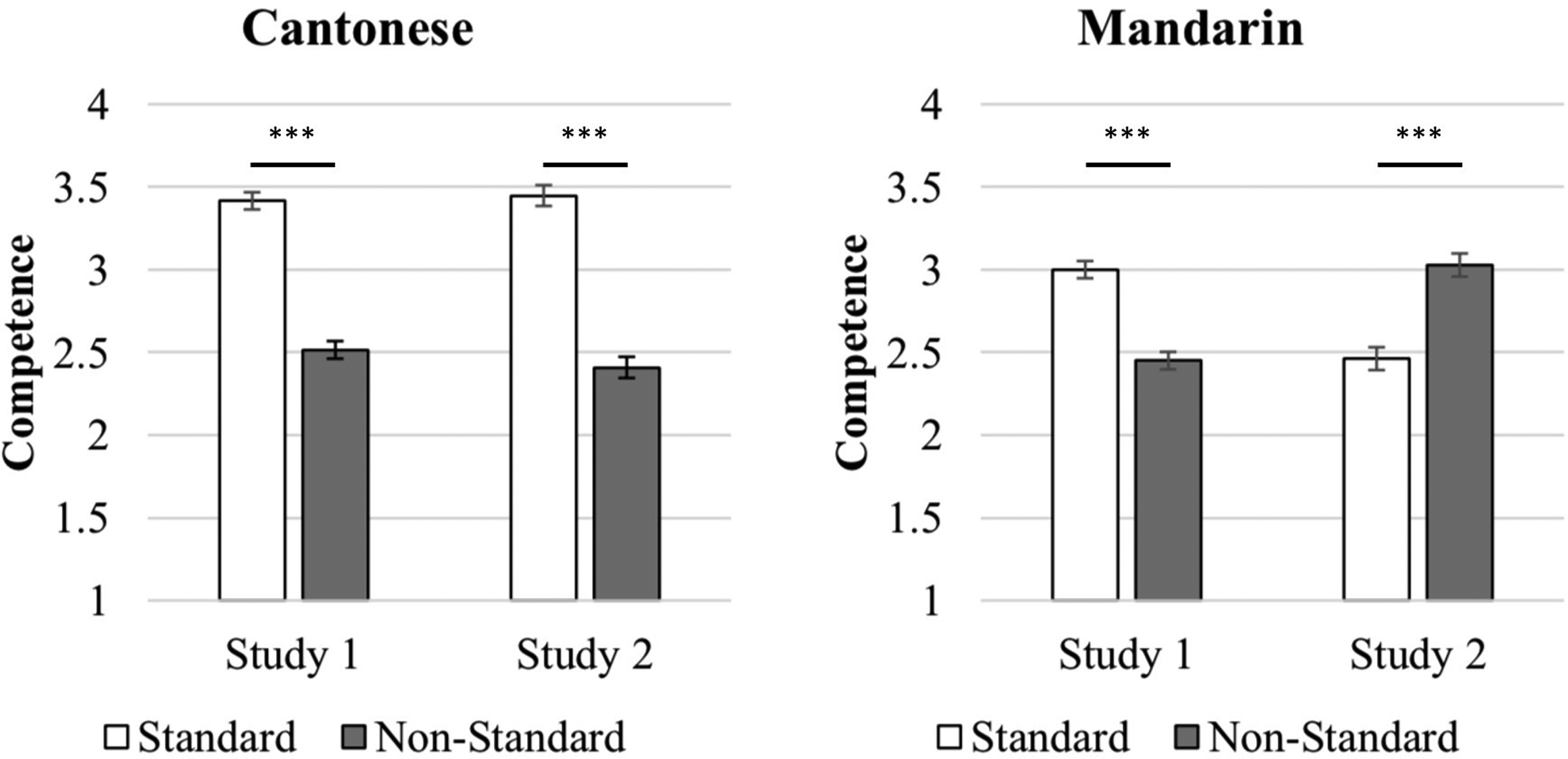
Standardized competence scores of standard and non-standard speakers of Cantonese and Mandarin for studies 1 and 2.
The analysis comparing patterns across the two studies yielded a significant three-way interaction (Variety × Accent × Dataset), F(1,451.32) = 46.46, p < .0001, indicating that warmth evaluations differed significantly across the two studies (see Figure 2). The Accent × Dataset interactions for each variety showed that the effect of Accent on warmth evaluations changed significantly between Studies 1 and 2 for both Cantonese, F(1,291) = 12.06, p = .001, and Mandarin, F(1,271) = 38.09, p < .0001. For Cantonese, the preference for the standard (ingroup) speaker over the non-standard (outgroup) speaker was stronger in Study 2 than Study 1. For Mandarin, the equal evaluation of standard and non-standard speakers found in Study 1 was replaced by a preferential evaluation of the non-standard (ingroup) speaker.
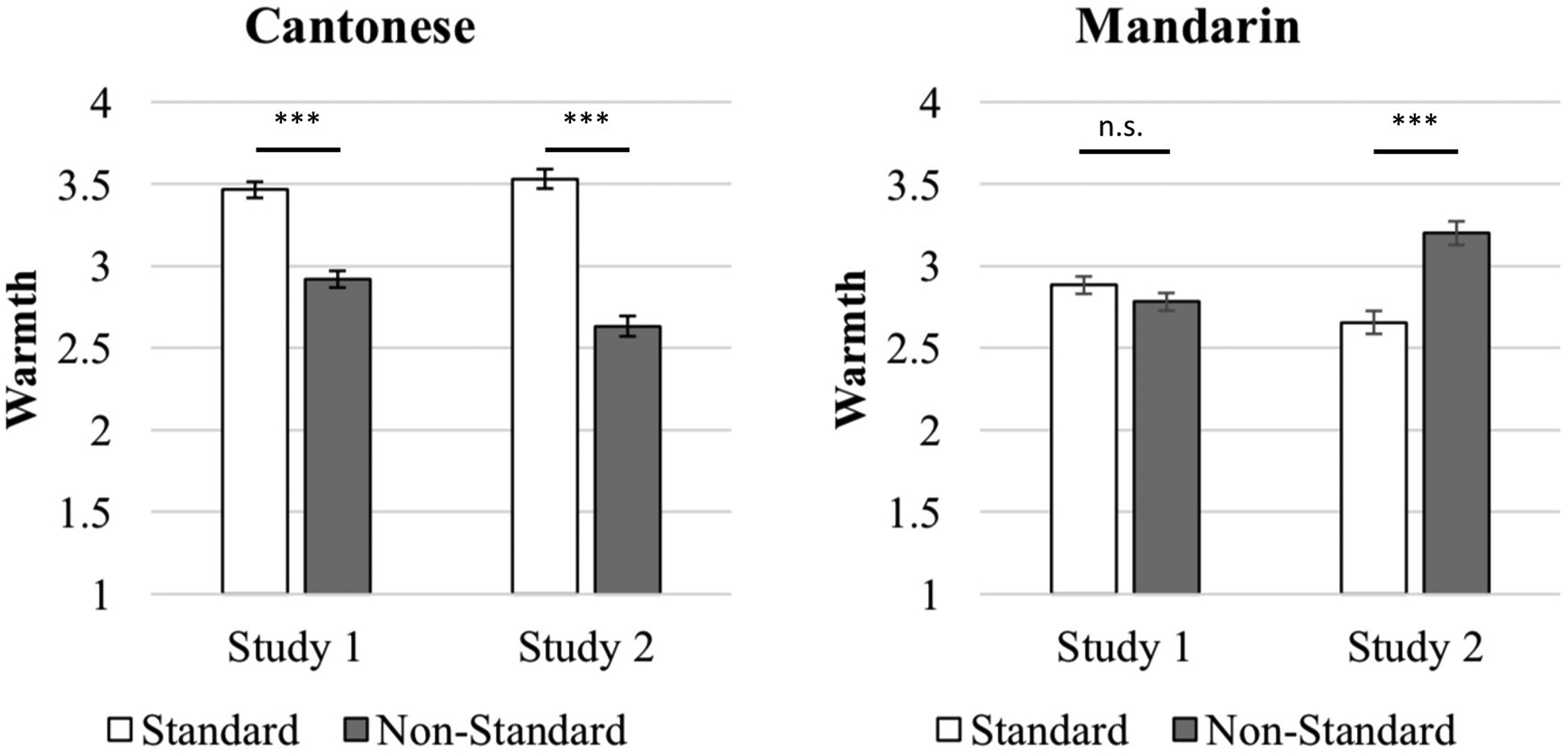
Standardized competence scores of standard and non-standard speakers of Cantonese and Mandarin for studies 1 and 2.
Discussion
In summary, the pattern of evaluation of speakers differed significantly across the two studies. The preference for standard speakers over non-standard speakers of Cantonese on both competence and warmth was found in both studies. However, the pattern for Mandarin speakers was very different across studies. The higher ratings of competence for the standard (outgroup) speaker over the non-standard (ingroup) speaker found in Study 1 were replaced with a preferential evaluation of the non-standard (ingroup) speaker in Study 2. In addition, the equal evaluation of ingroup and outgroup Mandarin speakers on warmth found in Study 1 was replaced with a preferential evaluation of the non-standard (ingroup) speaker in Study 2.
One possible explanation for these differences is the UM that occurred in the 21 months between Study 1 (2013) and 2 (2015). This dramatic event may have catalyzed the deterioration of intergroup relations between Mainlanders and Hongkongers and driven changes in language attitudes across these studies. While attitudes toward Mainlanders were somewhat negative prior to the UM (Ladegaard & Cheng, 2014), our data shows that anti-Mainlander sentiment may have grown further. In further support of this, we also collected additional data from a sample of Hong Kong undergraduates measuring general attitudes toward Mainlanders and Hongkongers in 2015 (N = 202) and contrasted this to a comparable sample collected in 2013 (N = 174). The results showed that students in the 2015 sample showed significantly greater ingroup bias toward Hongkongers on measures of competence, F(1,374) = 3.928, p = .048, and perceived significantly greater competition with Mainlanders, F(1,374) = 18.75, p < .001.
However, several important factors limit the certainty of this interpretation. First, Study 2 was not designed to test a priori predictions about language attitude change—the initial intention was to replicate Study 1. Second, Studies 1 and 2 differ in important ways, including major modifications to the dependent variables, new speakers, and a between-participant design, changes that likely contributed to differences in findings. Furthermore, the passage read out by speakers were edited to leave out mentions of Hong Kong, which could have reduced the salience of the ingroup identity compared to Study 1, thus weakening biases toward ingroup varieties. However, the pattern of results is inconsistent with this prediction as ingroup bias was stronger in Study 2. Finally, other history effects in addition to the UM might have influenced language attitudes.
Study 3 (2018 and 2019)
The goal of Study 3 was to more directly examine the role of the UM in predicting language attitudes. Since creating a pre-UM condition was not possible, a correlational design was used to test whether retrospective endorsement of the UM would moderate the effects of accent and variety on language attitudes. Thus, low versus high UM endorsement served as a proxy for pre- and post-UM. Based on the findings of Studies 1 and 2, we predicted that higher UM endorsement would be associated with stronger preferential evaluations of the standard (over non-standard) speaker of Cantonese, but with a stronger preference of the non-standard (over standard) speaker of Mandarin.
However, after we completed data collection for Study 3 in late 2018, another major social movement started gaining traction in Hong Kong—The Anti-ELAB Movement. Since this offered an ideal additional test for our hypotheses, another round of data collection was conducted in 2019, mid-way through this movement. If large-scale social movements influence language attitudes, changes in the patterns of language attitudes similar to those observed between 2013 (Study 1) and 2015 (Study 2) should appear between the 2018 and 2019 datasets. Specifically, we expected to see a reversal in the effect of accent for Mandarin speakers such that a non-standard speaker would be rated higher in both competence and warmth than a standard speaker. At the same time, the preference for a standard over a NC speaker should increase on ratings of both competence and warmth.
Method
Results
The three-way Accent by Variety by UM endorsement interaction was significant (B = 0.064, SE = 0.022, t = 2.90, p = .004, 95%CI [0.021, 0.11]). Further examination (see Figure 3) showed a significant two-way interaction between Accent and UM endorsement for both Cantonese (B = −0.112, SE = 0.034, t = −3.32, p = .001, 95%CI [−0.18, −0.05]), and Mandarin (B = 0.083, SE = 0.027, t = 3.10, p = .002, 95%CI [0.030, 0.14]).
The three-way Accent by Variety by UM endorsement interaction was significant (B = 0.054, SE = 0.022, t = 2.52, p = .012, 95% CI [0.012, 0.097]). Further examination (see Figure 4) showed no significant interaction between Accent and UM endorsement for Cantonese (B = −.054, SE = .029, t = −1.86, p = .064, 95% CI [−.11, .0031]), but a significant two-way interaction for Mandarin (B = 0.096, SE = 0.029, t = 3.32, p = .001, 95% CI [0.039, 0.15]).
In summary, compared to those who endorsed the UM less, those who more strongly endorsed the movement showed a stronger preference for the standard over the NC speaker on both competence and warmth. In addition, high UM endorsers rated the NM speaker higher in warmth than the SM speaker, while low UM endorsers did not show this significant ingroup preference. While all participants rated the SM speaker higher than the non-standard speaker in terms of competence, this elevation of the SM speaker was weaker for high UM endorsers compared to low UM endorsers.
The differences observed between the 2018 and 2019 datasets strongly resemble those found between high and low UM endorsers. Compared to 2018 participants, 2019 participants showed a stronger preference for the standard (ingroup) over the non-standard (outgroup) Cantonese speaker on both warmth and competence. The 2019 participants also showed a stronger preference for the non-standard (ingroup) over the standard (outgroup) Mandarin speaker on warmth and showed a weaker preference for the standard (outgroup) over the non-standard (ingroup) Mandarin speaker on competence.
In summary, the expected differences between the 2018 (Pre-Anti-ELAB Movement) and 2019 (during Anti-ELAB Movement) datasets were observed. However, in 2019, endorsement of the Anti-ELAB Movement did not significantly moderate language attitudes. This may be due to the high levels of endorsement in this sample (single item: M = 4.28/5, 83.9% above midpoint; 10-item: M = 4.94/7, 78.3% above midpoint), which meant that the “low” endorsers in the sample may not be “true” low endorsers of the movement.
Discussion
These findings provide evidence that endorsement of the UM moderated attitudes toward accented Cantonese and Mandarin, but not exactly as predicted. Based on Studies 1 and 2's findings, we expected that, compared to low-endorsers, high-endorsers would show a stronger preference for the standard over NC speaker, and for the non-standard over SM speaker. The results partially fit these predictions: high UM endorsers showed a stronger preference for the SC speaker in terms of competence but not warmth, and a significant preference for the NM speaker in terms of warmth. Contrary to expectation, both high and low UM endorsers rated the SM speaker as more competent than the non-standard speaker, although this preference was weaker for high UM endorsers.
Comparisons between the pre- and during Anti-ELAB Movement datasets showed largely similar patterns. Compared to 2018 participants, 2019 participants showed greater preference for the standard over the NC speaker on both warmth and competence, greater preference for the non-standard over the SM speaker on warmth, and less preference for the standard over the NM speaker in terms of competence. However, Anti-ELAB Movement endorsement did not significantly moderate language attitudes (although patterns were similar to those for UM endorsement).
General Discussion
The current studies offer initial evidence that large-scale social movements can influence language attitudes (see Table 1). Studies 1 and 2 show that the pattern of attitudes toward standard and non-standard Cantonese and Mandarin were different pre-and-post UM. The largest difference was that the commonly found preference for standard speakers remained for Cantonese but was replaced by a preference for the non-standard (ingroup) speaker over the standard (outgroup) speaker of Mandarin post-UM. Study 3 provided additional evidence that the differences between Study 1 and 2 may be connected to the UM as language attitudes were moderated by participants’ retrospective endorsement of the movement. Finally, comparisons between data collected before and during the Anti-ELAB Movement provided similar evidence that large-scale movements can shift language attitudes toward a preference for ingroup speakers.
Effect Sizes (Cohen's d) of Preferences for the Standard (vs. Non-Standard) Speaker of Cantonese and Mandarin in 2013, 2015, 2018, and 2019, Respectively.
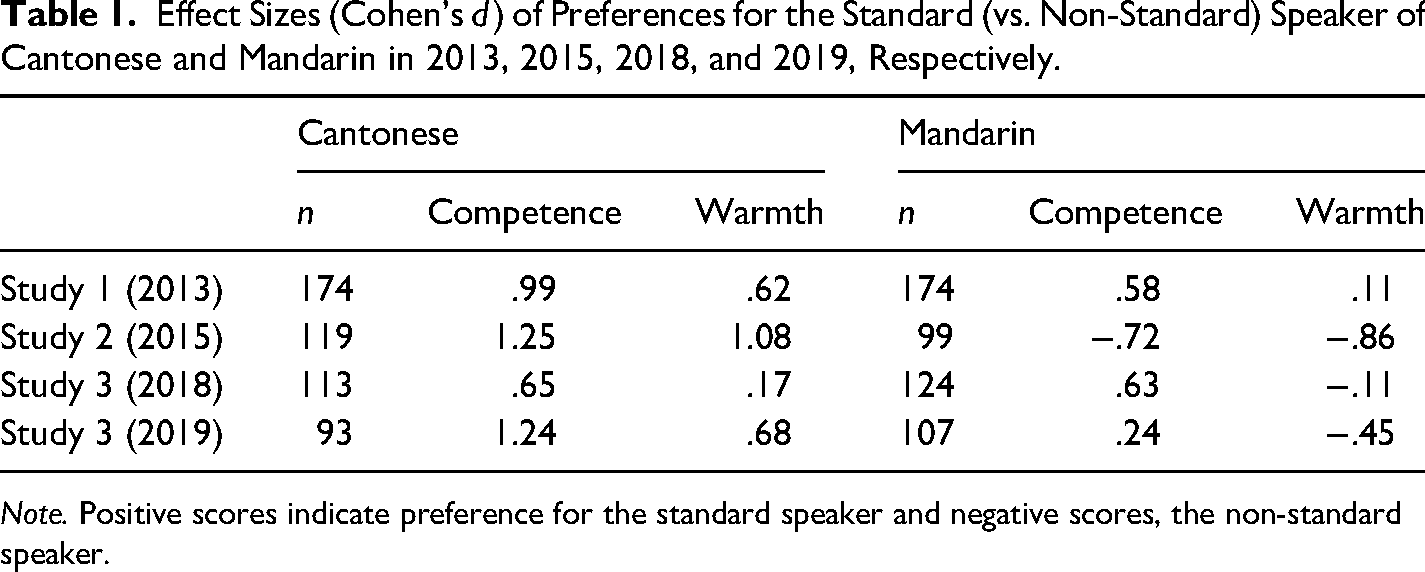
Note. Positive scores indicate preference for the standard speaker and negative scores, the non-standard speaker.
That being said, the current findings provide only limited insight into the underlying processes that produced these changes in language attitudes. While the impact of UM endorsement provides some indirect evidence that identification with a protest group may play a role, further research is needed to test potential psychological mechanisms. Ethnolinguistic Identity Theory (Giles & Johnson, 1987) outlines conditions under which people are likely to act in ethnic solidarity and maintain ingroup speech, including (a) strong ingroup identification and centrality of language in identity; (b) low identification with other groups; (c) impermeable group boundaries; (d) high subjective group vitality; and (e) unfavorable (but malleable) social comparisons with the outgroup. In the current context, ingroup (Hongkongers) identification increased significantly after both the Umbrella and Anti-ELAB Movements and identification with the superordinate group (Chinese) dropped after each movement (HKU Public Opinion Program, 2019). Intergroup boundaries became more rigid following the rise of “localist” ideologies focusing on protecting the interests, culture, values, and identity of Hong Kong (Kaeding, 2017) and the othering of Mainland-Chinese (Lowe & Tsang, 2017). However, the unsuccessful outcomes of both movements may have hardened recognition of the ingroup's low status. Indeed, in the aftermath of the UM, Hongkongers appear to be framed as an oppressed minority (McKeown & Ladegaard, 2020), which may undermine perceptions of alternatives to the status quo.
Despite low ingroup vitality, consistent with Ehala's (2011) concept of “hot” mode, participants in these studies show patterns of ingroup language maintenance after each social movement. The perception of Mainland China and Mandarin as a threat to Hong Kong's autonomy and language increased post-UM (Lowe & Tsang, 2018), triggering a “hot” mode which motivated Hongkongers to elevate speakers of the ingroup accent and Chinese variety, despite low ingroup vitality and slim chances of changing the status quo. This pattern is especially obvious in Study 2, where the non-standard (ingroup) Mandarin speaker was favored on both warmth and competence.
Prior qualitative and mixed-methods studies conducted in Hong Kong have highlighted the link between social identities, stereotypes of and perceived threat from Mainlanders, and perceptions of linguistic threat from Mandarin, and language use and language attitudes (e.g., Hansen Edwards, 2021; Lai, 2011; McKeown & Ladegaard, 2020). While our data provides insight into how large-scale social movements influence evaluations of Cantonese and Mandarin speakers, future studies might examine the roles of these potential mediators.
Limitations and Further Studies
The current studies do not track longitudinal changes within individuals before and after the large-scale social movements in Hong Kong. Therefore, while these results provide evidence of change in language attitudes on an aggregate level, they do not necessarily reflect within-person change. Further, given the differences in study design and measurement across studies, conclusions drawn from direct comparisons of these datasets remain tentative.
Second, by design, all speakers read the same written passage out loud. Though repetition effects were reduced across conditions by randomizing presentation order, participants might have been less attentive to the speakers due to the repeated speech. Moreover, the matched-guise (and verbal guise) technique has been criticized for increasing the salience of linguistic variation due to repetition (Lee, 1971). Overall formality of the speech was also increased since speakers were reading out a written passage, which may be evaluated differently than spontaneous speech styles (Garrett, 2010). To improve ecological validity, future studies could use less scripted conversations (e.g., excerpts from the radio).
Third, the current sample includes undergraduates at a university with many students from Mainland China. Frequent contact with highly competent Mainland-Chinese students and scholars may result in more favorable attitudes toward Mainlanders than are held by the general public. Conversely, Hong Kong university students are highly politicized and generally support the Umbrella and Anti-ELAB protests (Centre for Communication and Public Opinion Survey, 2019) and may not reflect the range of sentiments held by the wider Hong Kong public. It would be valuable to replicate this work with a community sample.
Conclusion
Language serves as an important indicator of ethnic identity, especially in contexts like Hong Kong, where other salient cues to group membership (e.g., physical traits) are less available. The current paper demonstrates the influence of large-scale social movements on a subtle but important change in intergroup attitudes—changes in the evaluation of speakers of relevant language varieties. These three studies employ a novel cross-temporal approach that shows fluctuations in language attitudes in response to two large-scale social movements, providing a nuanced analysis of evaluations of both language varieties and accent.
While these findings are specific to Hong Kong, they may help guide research in other contexts by drawing attention to the oft-overlooked role of language in intergroup relations. Some examples include Catalan protests (2019–2020) and attitudes toward Catalan and Spanish; Quebec separatist movements and attitudes toward French and English in Canada; and Black Lives Matter protests following George Floyd's murder (2020) and attitudes toward African American Vernacular English (AAVE) and Standard American English.
Finally, the current study may be of interest beyond sociolinguistics, by offering an alternative subtle means of examining intergroup attitudes. People often do not see criticism of language features as problematic, often describing minority language varieties and accents in negative ways, and even endorsing ideologies that posit the superiority of uni-lingualism (Wright & Bougie, 2007). In these cases, language attitudes may be a useful addition to conventional tools used by social psychologists to study intergroup relations.
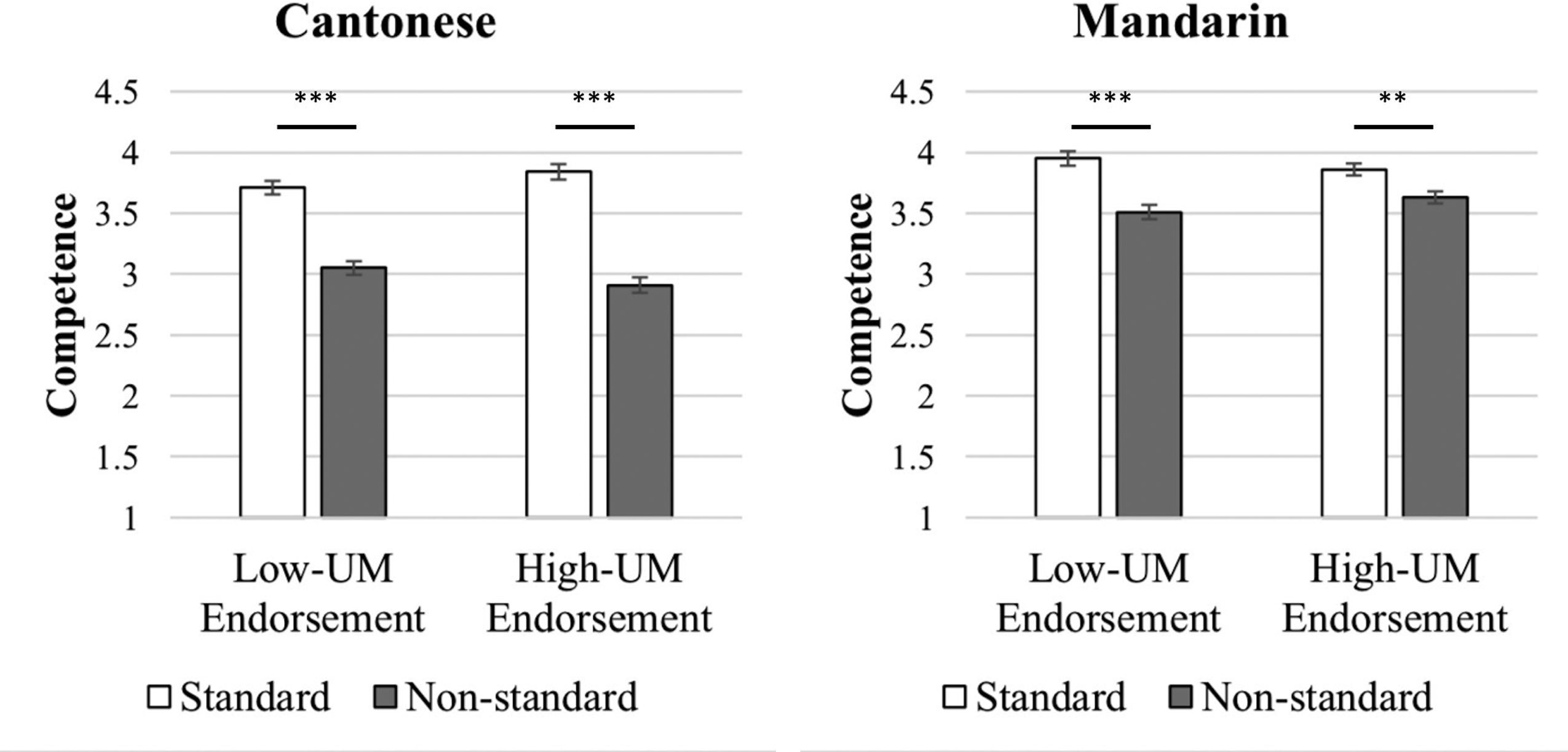
Competence scores of standard and non-standard speakers of Cantonese and Mandarin at low (−1 SD) vs. high (+1 SD) Umbrella Movement Endorsement.
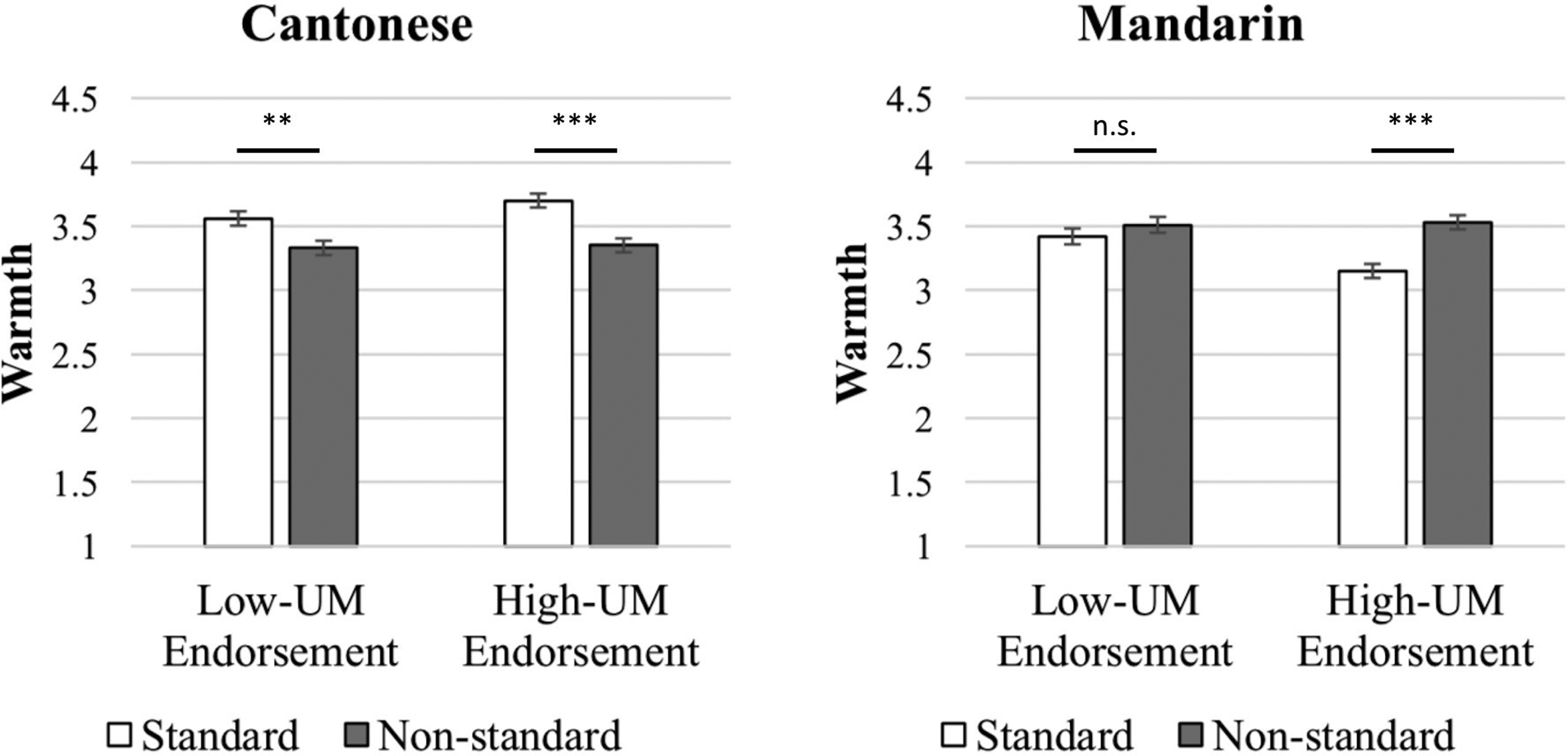
Warmth scores of standard and non-standard speakers of Cantonese and Mandarin at low (−1 SD) vs. high (+1 SD) Umbrella Movement Endorsement.
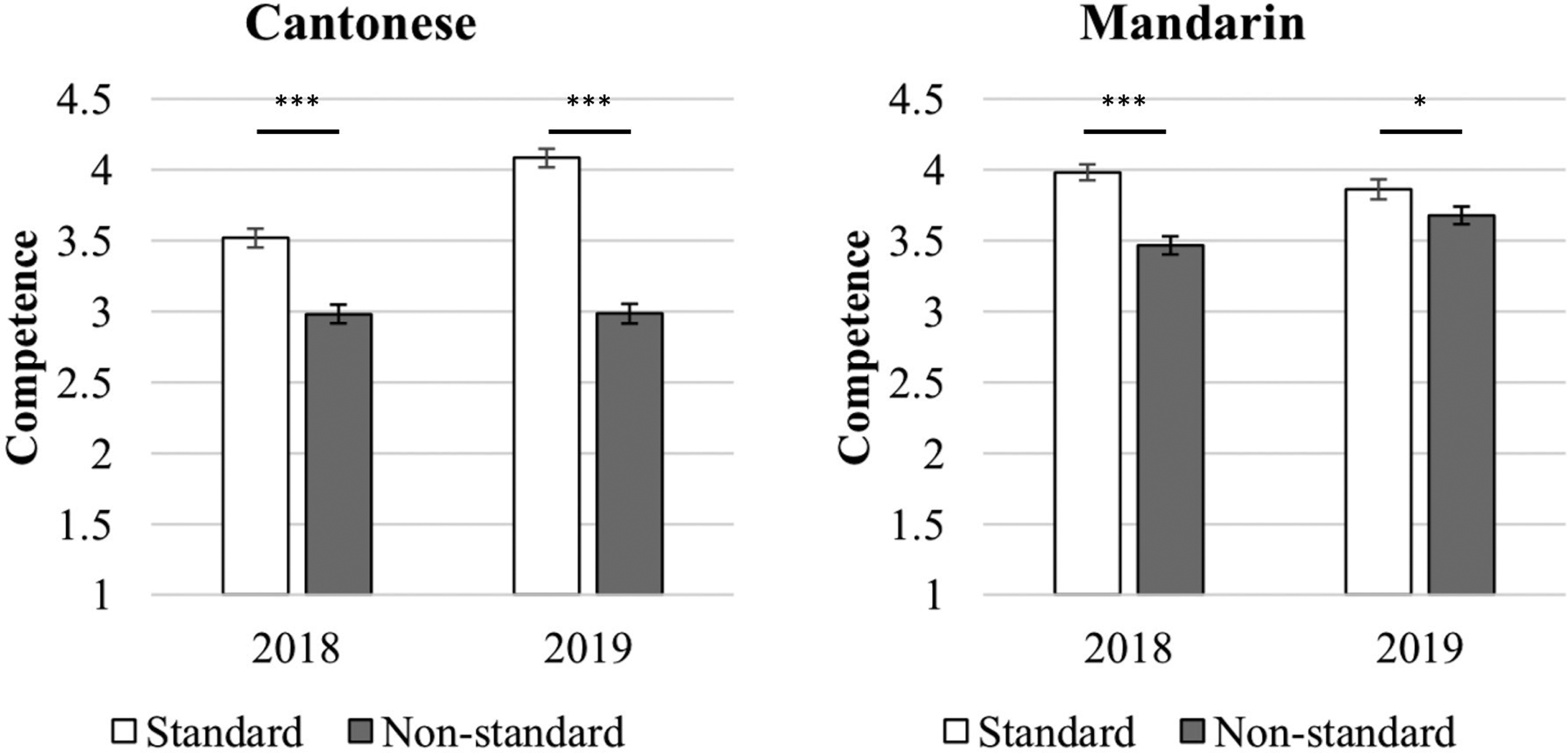
Competence scores of standard and non-standard speakers of Cantonese and Mandarin in 2018 (before the Anti-ELAB Movement) and 2019 (during the Anti-ELAB Movement).
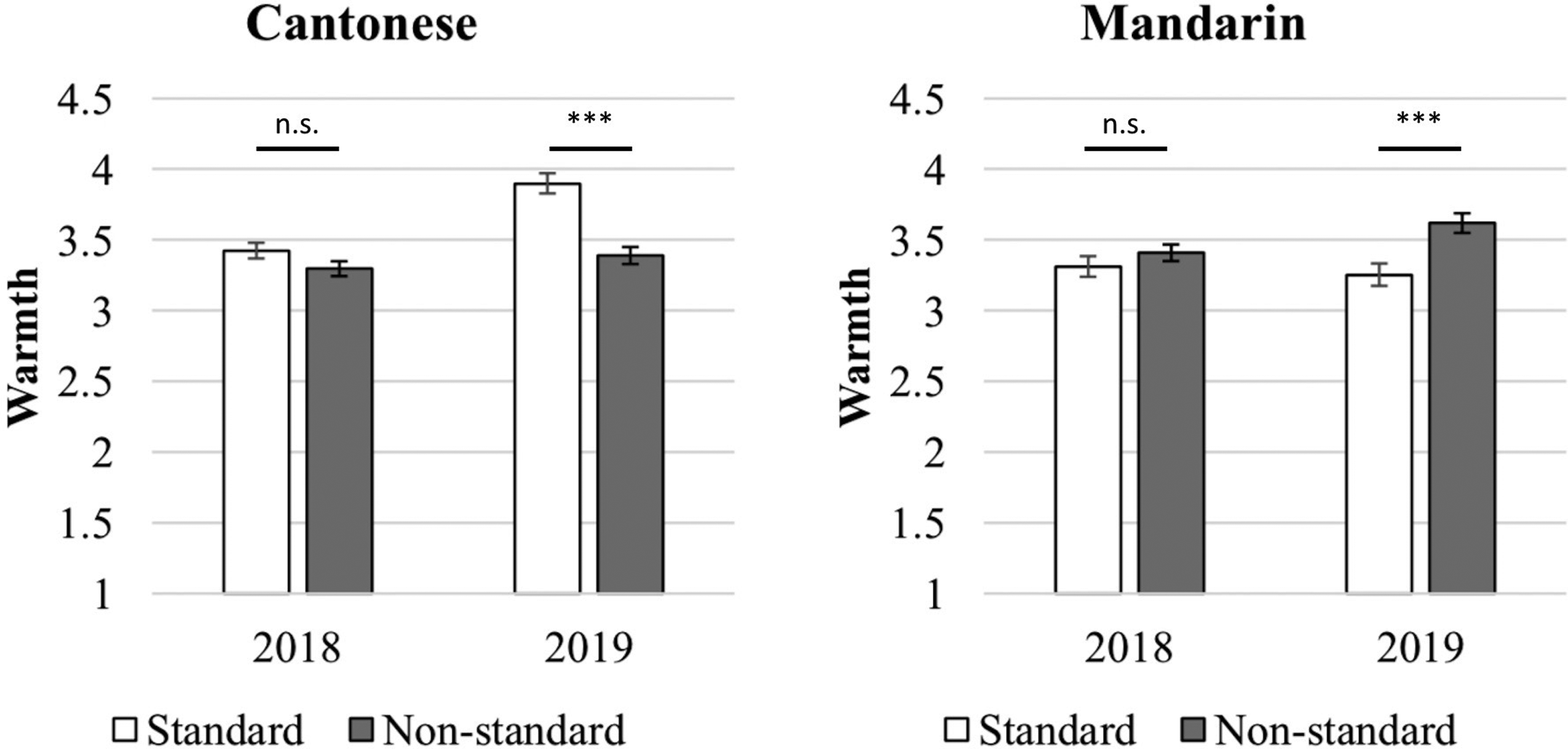
Warmth scores of standard and non-standard speakers of Cantonese and Mandarin in 2018 (before the Anti-ELAB Movement) and 2019 (during the Anti-ELAB Movement).
Footnotes
Acknowledgments
We thank the three anonymous reviewers and Dr. Howard Giles (University of California, Santa Barbara) for their generous feedback and comments. We also thank Heidi Chan (Chinese University of Hong Kong) for her assistance in data collection.
Declaration of Conflicting Interests
The author(s) declared no potential conflicts of interest with respect to the research, authorship, and/or publication of this article.
Funding
The author(s) received no financial support for the research, authorship, and/or publication of this article.
