




Abstract
Already in the 1980s, Black feminists contributed to political debates on the Dutch welfare state. Their intersectional analyses of social citizenship were directly based on the lived experiences of Black women in the Netherlands. However, then and now, these contributions have been largely overlooked in both Dutch politics and welfare state research, leading to social policies that do not correspond with the lived experiences of all women. Through archive research, and using the analytical framework of political claims-making, this article sheds light on the social rights claims of the Surinamese-Dutch feminist organization Ashanti that was active between 1980 and 1987. Their Black feminist perspectives provide important insights into the underlying mechanisms of in- and exclusion of the Dutch welfare state, from the standpoints of Dutch citizens and families that did not necessarily fit the picture of the “imagined citizens” for whom the Dutch welfare state was built.
Introduction
From 1980 to 1987, a group of Surinamese-Dutch feminists issued the magazine Ashanti, in which they discussed the daily experiences and problems of themselves and other women of Surinamese background in the Netherlands. Suriname – a country on the north coast of South America – had just become independent (1975) after more than three centuries of colonization by the Dutch. Decolonization went hand in hand with large-scale migration to the Netherlands. The members of Ashanti reported various, often interrelated, obstacles that Surinamese-Dutch women faced in accessing the Dutch welfare state: employment, housing, welfare assistance, education and childcare. In their writings, they consistently brought up the workings of gender, race and class in explaining what they called their “triply disadvantaged position” in Dutch society. Asked to look back on their activism in the 1980s, one of the founders of Ashanti said they were intersectional feminists before the term intersectionality even existed. 1 Throughout the years, they made numerous political claims that were directly informed by the lived experience of Black women's (social) citizenship in the Netherlands.
However, intersectional perspectives barely show up in research on the Dutch welfare state, or continental European welfare states more generally (see Ciccia and Sainsbury, 2018). Scholars have paid extensive attention to gendered dimensions of social citizenship (Bussemaker, 1993, 1998; Kremer, 2007; Lister, 1997, 2012) and to the social rights of immigrants (Sainsbury, 2012). Important work has been done on the role of migrant women in care provision (Lutz, 2008; Parreñas, 2001) – yet their own social citizenship remains understudied. Apart from the notable work of a few pioneers (Ciccia and Sainsbury, 2018; Van Hooren, 2018; Williams, 1995; 2021), studies that explore how gender and ethnicity/race and class shape people's enjoyment of social rights in European welfare states are virtually non-existent.
And yet, intersectional analyses are key to examine the differentiated effects of social policies on various groups of citizens and non-citizens. Analysing gender, race, class and family structures together is important to understand the needs of, for instance, Black single mothers and many others who do not necessarily fit the picture of the “imagined citizen” or the family model on which the Dutch welfare state was originally built. A strong male-breadwinner/female caretaker model dominated Dutch policies until well in the 1980s (Bussemaker, 1998: 72).
This article calls for more intersectional analyses to improve our understanding of social citizenship. It proposes to start with the existing (historical) contributions of Black intersectional feminists in the Netherlands, who have extensively written about their encounters with the Dutch welfare state in the 1980s. Ashanti gave voice to Surinamese-Dutch women and their daily, lived experiences of social citizenship in the aftermath of decolonization: a time when many Black families from Suriname settled in the Netherlands. The 1980s were also marked by economic recession and the beginning of a major neoliberal restructuring of the welfare state (Van Oorschot, 2006), both of which hit Surinamese-Dutch citizens particularly hard (Van Niekerk, 2000: 21–2). This article sheds light on Ashanti's Black feminist perspectives on the welfare state in that crucial period. Specifically, it asks: what do Ashanti's intersectional political claims on social citizenship reveal about the underlying mechanisms of in- and exclusion of the Dutch welfare state? The analysis focuses on claims regarding childcare and welfare assistance: two aspects of social citizenship that Ashanti wrote most extensively about.
The analysis of political claims allows for a bottom-up exploration of citizenship. It puts the focus on citizenship in practice, as an embodied experience in people's daily lives, more so than a legal status of membership in the nation-state (Isin, 2008: 17). Through the use of Black feminist archives, this article was able to collect intersectional perspectives on the welfare state that are indispensable for an adequate understanding of social citizenship in the Netherlands. Race, class and family norms help explain why some Black women refused to or could not afford to be stay-at-home moms in the 1980s, and claimed public childcare facilities long before that was the norm. Intersecting oppressions through racism, classism and taken-for-granted family models also informed their claims regarding welfare benefits: these were seen as insufficient for single Black mothers and as reinforcing women's dependence on both the State and male partners.
Bordering practices in the welfare state: theoretical perspectives
Critical welfare state research has shown that boundary-making practices go beyond questions of access to territory but also operate from within, as they are “measures taken by state institutions (…) which demarcate categories of people so as to incorporate some and exclude others, in a specific social order” (Guentner et al., 2016: 392). Social rights – defined as legal access to social benefits – are thus stratified in different ways for different categories of citizens and non-citizens (Sainsbury, 2012). The welfare state literature addressing these underlying mechanisms of in- and exclusion has largely focused on either gender or migration.
Feminist scholars have extensively shown how gendered norms around domestic and care work shape women's access to social citizenship (Dwyer, 2000; Lister, 1997; Sainsbury, 1994). They challenged core concepts in welfare state research, for instance by stressing how “women may need to struggle to become commodified in the first place and any subsequent freedom through decommodification will be modified by their existing domestic commitments” (Williams, 1995: 131). Moreover, they foregrounded the concepts of care (Knijn and Kremer, 1997; Kremer, 2007) and the family (Daly and Lewis, 2000; Orloff, 1993) in welfare state research, as well as de-familialisation: the extent to which women can live independently from familial care duties (Lister, 1997).
Another strand of literature has explored how people's migration status affects their social citizenship (Sainsbury, 2012). In a comparative study of six European welfare states, Sainsbury found that a major gap exists between immigrants’ substantive social rights (the receipt of benefits) and those of native citizens. The latter “were more likely to enjoy a socially acceptable standard of living; (…) were more likely to receive benefits in relation to their needs, and when they received benefits, they were more likely to be lifted above the poverty line” (Sainsbury, 2012: 281). Studies that explicitly address race and racism in European welfare states are less common, but they convincingly show how labour exploitation, unemployment, discourses around “welfare thieves”, and the allocation of welfare benefits, all structurally and disproportionally affect racialized citizens and migrants (for an overview see Perocco, 2022).
These two strands in the welfare state literature have both led to important insights into the exclusionary power of European welfare states. However, most studies have focused on either gender or migrant's status. This has started to change, with an increasing number of intersectional studies examining the role of female migrant workers in care provision (e.g. Anderson, 2007; Lutz, 2008; Parreñas, 2001; Williams, 2017). These analyses point out that care is not only gendered and devalued labour, but also disproportionately carried out by Black and migrant women. Still, with some notable exceptions (see Williams, 2021), they have focused more on the gendered and racialized aspects of care work, rather than on the social rights and care needs of racialized women in Europe more broadly. In contrast, in the US, intersectional analyses of welfare politics and welfare recipients are more common. They have been crucial in identifying, for instance, the so-called “welfare queen” discourse that heavily stigmatized single Black women on welfare and was used to justify American welfare reforms (Nadasen, 2007).
Moreover, Bhambra and Holmwood (2018) argue that scholars must look at the entanglements of European welfare state development and European colonialism. They explain that racialized Othering is integral to the development of European welfare states and is central to understanding them nowadays as well: "The welfare arrangements of colonial powers are characterised by hierarchical arrangements of inclusion and exclusion, where rights developed in the metropole are not extended to the colonial possessions and, indeed, those possessions are understood to serve the prosperity of the metropole and its ‘local’ hierarchies" (Bhambra and Holmwood, 2018: 574).
They criticize the fact that welfare state research long studied social divisions as a result of “exogenous” factors such as immigration flows, rather than as integral aspect of a profoundly racialized welfare state. Studying the welfare state thus also requires attention to racialised social divisions, and the ways in which they are rooted in the colonial past. Race and racism are also relevant to understand non-white or non-majority ways of “doing family” (Strasser et al., 2009) – e.g. the prevalence of single parenthood or large multigenerational families in some communities – and the particular welfare claims that these families may have (Sarkisian and Gerstel, 2012). However, most scholars who researched how different kinds of families (e.g. single-parent families) are treated in the Dutch welfare system have largely overlooked the role of race/ethnicity, or do not discuss the implications (Bussemaker et al., 1997; Knijn et al., 2007; Knijn and Van Wel, 2016). 2
This article calls for more intersectional analyses to explore “blind spots’’ and “missing pieces’’ (Lykke, 2010) in studies of social citizenship in Europe. Intersectional research is well-suited to reveal the various, complex and interrelated exclusions that people from different social locations experiences in the welfare system (Bryant and Raphael, 2018). It can provide a more adequate framework to study how people's social location – shaped by gender, race, ethnicity, class, nationality, age etc. – results in differentiated access to the economic and social resources that the welfare state distributes. It is strongly concerned with structures of power and inequality, and can show how these play out in people's daily, lived experiences. I propose that a good way to launch an “intersectional turn” in European welfare state research is to explore what has long been there but has been largely overlooked: the claims-making of the early intersectional feminists in the 1980s.
Intersectional feminists and the Dutch welfare state in the 1980s
From the mid-1970s on, women involved in the Black, Migrant and Refugee women's movement in the Netherlands (in Dutch: zmv-vrouwenbeweging) challenged what they called “the inadequacy of mainstream explanations for women's disadvantaged status (…)” (Wekker and Lutz, 2001: 25). Instead, they developed – both inside and outside universities – a theoretical framework by which all women's lives could be understood. Their main critique was that mainstream feminist analyses failed to see the “crossroads” of gender with race, ethnicity and other categories, and thus overlooked the experiences of non-white women who faced both sexism and racism, and other forms of oppression. As such, zmv-vrouwen were the pioneers of intersectional thinking and activism in the Netherlands. The movement used the word Black not to refer to skin colour as such, but “as a political category referring to the struggle of non-white people against racism” (Wekker and Lutz, 2001: 18). Similar early intersectional movements existed in other countries. For example, in the UK, the Organisation of Women of Asian and African Descent (OWAAD) played a crucial role in changing the liberation agenda to also include the experiences of Black and Asian women (BLAM UK, 2019). In the US, the Black feminist Combahee River Collective summarised their struggle as follows: "(…) We are actively committed to struggling against racial, sexual, heterosexual, and class oppression, and see as our particular task the development of integrated analysis and practice based upon the fact that the major systems of oppression are interlocking. The synthesis of these oppressions creates the conditions of our lives." (Combahee River Collective, 1977)
This article zooms in on the activism of one collective in the Dutch Black feminist movement: the Surinamese-Dutch group Ashanti (1980–1987). Ashanti was strongly embedded in the broader Black feminist movement, while also addressing the specific issues that Surinamese-Dutch women faced as post-colonial migrants. Surrounding Suriname's independence, around 130.000 people settled in the Netherlands (Jones, 2014: 315). Their arrival in the former metropole was often challenging. Scholars have called it a tragic coincidence that the peak moments of post-colonial migration from Suriname (1974–1975 and 1979–80) coincided with the global oil crises (1973 and 1979) and related recession of the Dutch economy. The related sharp increase of unemployment in the country hit recent immigrants from Suriname extra hard. Compared to the total Dutch working population, the unemployment rates among Surinamese were approximately five times higher in 1979 and remained high throughout the 1980s (Van Niekerk, 2000: 21).
Ashanti expressed their claims at a turning point in Dutch welfare politics. The recession marked the beginning of incremental but systematic reforms to the welfare system (Van Oorschot, 2006: 57). Decades of welfare state expansion had led to a system comprising very generous employment insurance benefits for male breadwinners, a universal public old-age pensions scheme and a fairly generous means-tested social assistance benefit. By the 1980s this system was deemed to have become too expensive, while fostering welfare dependency. Hence, in 1982 the main priority of a new Christian-Liberal government was to cut down the costs of social security (Starke et al., 2013: 82). The effects of retrenchment measures were initially somewhat moderated compared to other countries (Sainsbury, 1996: 215). More fundamental reforms would take place in the 1990s, which would cause some observers to conclude that the guiding principles of the Dutch welfare state had shifted from “inclusive solidarity towards exclusive selectivity, [and] from collective responsibility towards individual responsibility” (Van Oorschot, 2006: 72).
It can be questioned, however, how generous and inclusive the Dutch welfare state was even before the reforms. Childcare facilities were close to absent: only 2% of children up to the age of two attended formal childcare facilities in 1988 (Van Hooren and Becker, 2012: 99). For lone parents, this meant that staying at home to care for children was often the only option available. While Dutch policies were strongly supportive of the de-commodification of single parents (predominantly women), they did not do much for their de-familialisation. Single parents could receive welfare assistance without having to apply for jobs (Knijn et al., 2007), which together with the near absence of childcare facilities, reflects a policy assumption that single mothers are best off at home, taking care of children. Indeed, the dominant idea in Dutch society was that childcare was “an antiphon to a modern welfare state: in a decent welfare state, families should be able to afford to have their children at home” (Kremer, 2007: 168). The heavy moral stigma that professional childcare was bad for children and that only self-interested mothers or ‘abnormal’ families would prefer it over staying at home, only lost its grip in the early 1990s (Bussemaker, 1993, 1998). It is this model – the nuclear family with traditional gender relations separating the male breadwinner and the female caregiver – that informed virtually all social policy-making in post-WWII Netherlands (Bussemaker, 1998: 72). It resulted in generous social benefits, especially for male breadwinners. Together with rising income levels, most (white) nuclear families were indeed rich enough to afford to have one stay-at-home parent – in practice almost exclusively women (Plantenga, 1993; Van Hooren and Becker, 2012: 89). However, as the next section will show, this system did not cater to all women in the Netherlands.
Research design: political claims-making in the magazines of Ashanti (1980–1987)
It is against this background of major changes to the welfare state and the aftermath of decolonization that a group of Surinamese-Dutch feminists set up Ashanti. Their goal was to give all Surinamese women in the Netherlands a voice and a stage, and to make them more visible in the women's movement. 3 Ashanti functioned like a grassroot solidarity group which centred around the publishing of magazines, but the women also took to take part in demonstrations together and organized discussion and training days. A core group of around five women wrote the magazines between September 1980 and September 1987, together with many changing contributors over the years. Ashanti was “a small women's organization with a national outreach, due to a strategic way of working, namely the publishing of a magazine” (Deekman and Hermans, 2001: 95).
Ashanti had a socialist political orientation, but this was not always made explicit. They did not receive any external funding: they insisted on remaining financially independent and instead relied on the subscriptions and loose sales of the magazine. Many of Ashanti's writers were active in social work, and “they were fuelled by (…) the words, the stories of women, and translated those stories to the magazine.” 4 The magazines were explicitly meant to give voice to all Surinamese women, cutting through ethnic and religious differences that existed (and still exist) in the highly diverse Surinamese community. 5 That was not self-evident, for most Surinamese-Dutch organizations at the time were organized along ethnic lines (Vermeulen, 2006: 133–4). Although most of the women involved in Ashanti were born as Dutch citizens, they never referred to themselves as such. Rather, they self-identified as Surinamese, Black and migrant women in the Netherlands. It is on that basis that they claimed their place in Dutch society and navigated the welfare system. In this article, I use Ashanti's terms of self-identification.
Ashanti operated in a much broader organisational field, among other feminist initiatives as well as various Surinamese civil society organisations (Vermeulen, 2006). Ashanti was certainly not representative for all Surinamese-Dutch citizens’ perspectives in the 1980s as it represented a particular Black socialist feminist perspective. I chose to focus on Ashanti's claims, because their specific critical perspectives shed light on long-standing “blind spots” (Lykke, 2010) in welfare state research by paying attention to intersections of gender with race and class.
Analytical approach
This article employs claims-making as an analytical approach. This allows for a bottom-up analysis of citizenship: political claims can be read as publicly expressed political statements (Lindekilde, 2013) but also as acts of citizenship (Isin, 2008). Through claims-making, people can reformulate the meaning or “normative content” of citizenship (Bloemraad, 2018). So, the Ashanti magazines can be read not only as a collection of political statements over time, but also as a series of interventions in the ongoing process of contestation over what citizenship means. The core contributors of Ashanti explicitly saw the magazines as instruments of political claims-making: "If you want to improve your position, you have to influence politics, and yes how do you do that? How do you influence politics to improve the position of Black women? So (…) we actually used the newspapers (…) to start raising that awareness." 6
I was only able to collect and interpret these voices from the past because they were preserved in the archive of Atria, Amsterdam, and freely accessible. 7 This feminist archive is an important and rare place where Black women's lived experiences have been documented and can be examined. I entered the archive, not as a blank interpreter, but with the goal of learning about the contributions of past activists to present-day political debates. I see activists as co-creators of knowledge, whose perspectives I aim to take up and amplify so they can teach us something about the “blind spots” in social policy-making and research.
To contextualize the archive data, I also attended an online panel discussion among former Ashanti members where they reflected on their activism in the 1980s (on Facebook, 1 June 2021) and held one interview with a former member (via Zoom, 2 August 2021). I collected all Ashanti's magazines (33 magazines published between 1980–87, 568 pages in total) in Atlas.ti, and did an initial coding round from which the main social citizenship themes emerged: welfare benefits, childcare, employment, education, housing, healthcare, with racism and the family coming up in each of these themes. I then decided to focus on welfare benefits and childcare, in order to investigate Ashanti's contributions to these two themes that are central to the feminist welfare state literature.
Ashanti's intersectional claims to social citizenship
In this section, I describe what claims to social citizenship Ashanti made in the political context of the 1980s and put them into dialogue with existing scientific analyses. The section is structured around three main findings: 1) challenging dominant Dutch family norms, 2) claiming public childcare facilities and 3) claiming more generous and inclusive welfare assistance.
Challenging dominant Dutch family norms
A first important finding was the emphasis Ashanti placed on the diverse family forms that existed in the (Dutch-)Surinamese community. This foregrounding of “different” families and their needs, directly stems from Ashanti's intersectional take on social citizenship. In their writings, they emphasized the diversity of family structures that existed among Surinamese people:
- Concubinaat: unmarried coupledom, which Ashanti linked to the impossibility of enslaved people to marry during slavery; - The joint family, which they described as a large intergenerational family that was common among former indentured labourers from India living in rural areas; - The matrifocal family, defined as female-headed families that they traced back to colonialism: “Children were raised together on the plantations, usually by older enslaved women who could no longer perform heavy physical labour. Fathers and mothers were not always able or allowed to live together and, of course, both had to work."
8
While emphasizing the existence of different family norms, Ashanti also stressed that the Western model of the nuclear family, with father and mother in legal marriage, had become the dominant norm among Surinamese people. It was added, however, that this family ideal was not attainable for everyone.9 This is where Ashanti brought in class: for the working class the costs of marriage were often too high. Moreover, both in Suriname and the Netherlands, the model of the stay-at-home mum was not possible for women of lower socio-economic backgrounds: “among poorer people, the woman is forced to help out financially. She will try to earn some money in all kinds of ways.”
10
This critical analysis of family forms – and the diversity in interpretations of “the family” among Surinamese women – shows up in Ashanti's claims-making regarding both childcare and welfare assistance in the Netherlands.
Childcare
Throughout the years, Ashanti claimed that professional childcare facilities must be available, affordable to Surinamese women, and inclusive for Black children. Ashanti presented the problem as follows: there were long waiting lists and childcare was too expensive for many Surinamese women, whom, they said, were in low-paid jobs or lived on welfare assistance. This political claiming of professional childcare clearly had a feminist character. Ashanti reported about a high number of Surinamese women being unemployed against their will, isolated inside the home doing unpaid domestic work, or in low-paid and temporary jobs.
In some cases, unemployment among Surinamese women is very high. Special jobs must be created for our women. Everyone has the right to work outside the home.
11
Indeed, Ashanti saw the lack of adequate childcare not as a stand-alone issue, but as a key factor causing multiple interrelated barriers to the welfare state. They reported that when women could not place their child(ren) in kindergarten, they were unable to work, or to attend education and thus access better-paid jobs, which reinforced their dependence on welfare.
12
Claiming childcare was thus an integral part of Ashanti's broader political claims-making in what they called the crisis time of the 1980s:
These battle points must be political demands, with which we can change both our own social and economic position and the ideas associated with it in this society. (…). For it is precisely in this time of crisis that existing services are being cut back. Childcare centres are being phased out or the costs are rising so alarmingly that women can no longer afford them. Especially Surinamese and other foreign women, who tend to have the least qualified jobs and therefore the lowest wages.
13
The quotation shows how intersectionality is central to Ashanti's claims-making. They point out how the general economic crisis affects women of colour in particular through the rising costs of childcare, thus pointing at a form of indirect racism. The phrasing also makes the intersection with class visible: it is because they have the lowest wages that they cannot afford childcare. The claim to have accessible public childcare, so that women can do paid work outside the home, was not self-evident in the Dutch context at the time. I see this as a result of Black women's specific positioning: the care system did not cater to single mothers, or any mother who wanted to work and be economically independent from both the State and their families.
Ashanti's claims resonate with other scholars’ findings that solo mothers of Surinamese and Antillean descent put a stronger claim on entering paid employment than white Dutch single mothers (Knijn and Van Berkel, 2003: 100). The following citation, for instance, shows that women insisted on doing paid work and that some managed to bring their children to a childcare centre – while still facing particular obstacles: “Many Surinamese women are single mothers. If her child, who is at the kindergarten, falls ill, she must stay at home. If this happens more often, the woman is fired.”
14
While scholars and policymakers have paid attention to single mothers on welfare benefits, their need for public childcare provision has remained largely invisible. In that sense, Ashanti raises it long before it becomes part of political debates in the country. 15 Their intersectional perspective shows how e.g. single mothers cannot share financial costs and care responsibilities with a spouse or exclusive partner, but to say that “lone mothers (…) have no one with whom to share care duties” (Kremer, 2007: 248) would be “rather ethnocentric” (Ypeij, 2010: 142) because many Surinamese women share parenting and childcare with their female kin.
Still, in none of Ashanti's accounts, self-organized or family-organized childcare was seen as an alternative to professional childcare provided by the Dutch government. Rather, it was presented as a logical and necessary response to inadequate social policymaking by the State. The class dimension is again highlighted here: in the absence of public childcare provisions, single mothers on a low income became dependent on their informal networks to look after their children. For instance, Ashanti wrote about a group of Surinamese and Dutch women in The Hague who organised free childcare amongst themselves, because they could not access or afford professional facilities: “We figured that more people in the neighbourhood were facing the problem of childcare. If you want to go to the doctor, of if you want to go to the city centre without constantly having children around you. In that sense you’re so dependent on your family or neighbours. They gladly help you, but you can’t continuously bother them.”
16
So rather than presenting these initiatives as a female kinship and care ideal, Ashanti wrote about them as a form of protest by women whom the State let down. Ashanti's claim to professional childcare was central to their feminist activism, that viewed the welfare system as the place that could and should emancipate women from their families (de-familialisation), by at least giving them the choice to depend on their families or not. In that sense, they challenged the longstanding care ideal of full-time motherhood (Kremer, 2007: 245) in Dutch society. “It is high time that they put an end to the long waiting lists at childcare centres. The fact that we cannot place our children in kindergarten because of the overcrowded centres, means we are even more disadvantaged in this society. (e.g. we cannot attend education). Moreover, the available centres are mostly unaffordable. Especially if you have to live on a welfare income and raise more than one child.”
17
The feminists of Ashanti issued a clear call for professional childcare at a time in which that was not self-evident. The magazines tell the stories of Surinamese women, who were – quite against dominant Dutch norms – often breadwinners themselves. Ashanti's intersectional perspectives sheds light on how different social positionings can lead to different social rights-claims. They pointed at the need for tailored social protection for women who are “even more disadvantaged in this society,” as the next section shows as well.
Welfare benefits
Ashanti's goal was to give voice to all Surinamese women in the Netherlands, particularly those in the “worst socio-economic position, women who are financially dependent on unemployment or welfare benefits, or the income of their husband.” 18 Thus, it is not surprising that many social citizenship claims in the magazines referred to welfare benefits (in Dutch: bijstand). The primary claim was that the allowance rates should be increased, rather than decreased by the Dutch government. Ashanti explained that women struggled to make ends meet due to the budget cuts coupled with rising prices for energy, water and public transport. 19 In both the Netherlands and Suriname, Ashanti saw single mothers as the women who struggle most to get by. 20 This claim gets confirmed by academic research showing that poverty among lone-parent families has historically been higher than among two-parent families and that “female-headed lone-parent families are the poorest lone families, in particular when the mother is divorced or never married and when she has a lower educational level” (Hooghiemstra and Knijn, as cited in Knijn and Van Berkel, 2003: 89).
Their claims came at a time in which Dutch politicians were keen on reducing welfare expenditure. Until the early 1980s, single mothers’ reliance on welfare benefits was seen as fully legitimate. More so, they were not expected nor supported to do paid work. According to the model of the male breadwinner – which these women did not have – welfare assistance by the State was seen as self-evident. As of the mid-1980s, the Dutch government became increasingly concerned about the number of people on benefits and potential fraud. Single motherhood was increasingly seen as self-chosen, and no “longer an argument for not participating in the labour market” (Knijn et al., 2007: 240). The changing narratives eventually led to welfare reforms in 1996: single parents with children above the age of 5 years were now required to apply for paid jobs (Knijn et al., 2007). Still, a major blind spot in these reforms was that adequate public childcare is a precondition for many women to enter paid employment, which Ashanti already signalled in the 1980s. Ashanti also challenged the narrative that raising children was always a choice
21
or that single mothers would be “emancipated” enough to live without social protection:
Seemingly, the woman who raises her children alone and does not have a strong relationship with a man is extraordinarily emancipated. However, the reality is different, as financially she remains dependent on the man, he can put pressure on her (…) since “women's work” is still paid less than “men's work”. Women struggle to work if there are insufficient free childcare centres. The few social facilities do not offer a solution to matrifocal families. Moreover, the general unemployment (also among men!) is high.
22
Another critique concerned the gender and family norms inscribed in welfare assistance policies, and the way these were monitored. For instance, Ashanti raised the intrusiveness of the implementation of social policies (Figure 1): “The social services carry out a strict control on welfare mothers [bijstandsmoeders]. They regularly check whether you really live alone, without a partner. This is the so-called toothbrush check.”
23
In one of the magazines, a woman also protested the Dutch policy of cutting a person's welfare assistance when they enter a relationship. For her, there was no direct relation between having a boyfriend and forming a financial unit: “If you have a boyfriend, you must report that. Then Social Affairs stops your welfare benefits. They see it directly as an economic unit. They try to make a whore out of you. Because having a boyfriend means that you must ask that man for money.”
25
She challenged the assumption underlying Dutch policies, that there should always be financial interdependence in relationships. In Surinamese family structures, the partners in a couple are not necessarily financially dependent on or responsible for each other, nor do they necessarily live together in the same house (Ahmad Ali, 1979). These are two criteria that define a “normal” family in the Dutch context and are reflected in social policy. Ashanti contested that, even when family norms opened up in the Netherlands, the fact that Surinamese people had long lived in different family forms, was not part of the expanded imaginary of the “modern” Dutch family. 26
Ashanti stood in solidarity with all women in the Netherlands who depended on welfare and struggled to get by. Yet they brought up the additional, specific obstacles that Black women faced due to racism (e.g. on the labour market) and unfamiliarity with the Dutch welfare system. To make these issues visible, Ashanti stressed the importance of Surinamese women's representation. This showed in an interview with a Surinamese woman who joined a demonstration for women on welfare, to spread the message that women on welfare “cannot make any more sacrifices and want a dignified existence.”
27
Here, we see an explicit reference to “Surinamese” women, who faced similar issues as single mothers, and with whom she identified: “There were also Surinamese women and I liked that so much (…) We also asked for 400 more guilders [Dutch currency]. I am a bijstandsvrouw myself and know from my own experience how difficult it is to make ends meet (…). I know a lot of other Surinamese women who are raising their children alone.”
28
The writers of Ashanti consistently brought up racism as a major factor impacting their daily lives, e.g. in access to employment (and thus the ability to no longer depend on welfare benefits), in the workspace, but also regarding access to housing and their children's education. In Ashanti's writings, racism adds to the problems that women experience, since they face discrimination because they are women, and because they are Black. This reflects an early intersectional perspective that saw categories of difference as additive, rather than mutually constitutive, as later feminists would argue (Ken and Helmuth, 2021). Ashanti demanded that all forms of racism be tackled, in Dutch society as well as within Surinamese-Dutch communities. Ashanti did not mention a racialized and gendered stereotyping of Surinamese welfare recipients, such as the welfare queen discourse in the US (Nadasen, 2007: 53). Yet it can be questioned whether the increasing suspicion by Dutch authorities over “fraudulent” cohabitation, can be partly explained by racial stigmas around single motherhood. Statistics show that the number of lone-parent families in the Netherlands nearly doubled between 1971 and 1985, largely as a result of migration flows from Suriname and the Dutch Antilles (Bussemaker et al., 1997: 100–1). The policy target group of single mothers was seen as less deserving of social protection than widows or divorced women (Bussemaker et al., 1997: 97). So, while Ashanti's claims concerning welfare assistance included all mothers living on welfare, they can be read as an intersectional claim, for it disproportionally affected Black women, who were overrepresented in the total number of single parents in the country.
Ashanti's claims-making showed the complex differences among Dutch women in how they navigated the welfare state, based on their social location, family forms, and care ideals. The magazines literally rendered visible the increasing presence of Black families in the Dutch welfare state, some of which were “non-normative” and had differing social rights claims. Putting that diversity central, helps to challenge the “whitened logic” that has persisted in European welfare state scholarship, in the sense that central concepts such as care and family “are based upon white, hetero-normative experiences which are then generalised to the universal” (Phillips and Williams, 2022: 29).
Conclusion and discussion
Ashanti's intersectional claims shed new light on the complex mechanisms of in- and exclusion of the Dutch welfare state in the 1980s. They come from the standpoints of Surinamese-Dutch citizens and families that did not necessarily fit the picture of the “imagined citizens” for whom the Dutch welfare state was built. These voices and knowledges, preserved and recovered in the archives, form a crucial contribution to existing scholarship on social citizenship.
At a time when demanding professional childcare was rare – the conservative male-breadwinner family model was still dominant – Black feminists already claimed that it was key to women's emancipation. A core demand of Ashanti was that the Dutch State provide for professional childcare, to give women a choice to work outside the home or not. In doing so, they challenged social policies that were narrowly aimed at decommodification and called for de-familialisation instead.
In contemporary debates on the Dutch welfare state, these demands are again highly relevant. While policy-makers no longer depart from the male breadwinner family model, but one with two working parents instead, this did not remove many of the intersecting welfare issues signalled by Ashanti. Professional childcare is widely available but also very expensive. Families can apply for income-dependent childcare benefits to cover a significant part of those costs, but only when all parents do paid work. While this is meant as an incentive for women to be financially independent and work outside the home, it effectively excludes parents who are unemployed or who live on welfare from accessing childcare. Much like Ashanti did, present-day advocacy groups warn that this has a particular impact on single mothers (Brussaard and Meulenbelt, 2021). They report how the lack of access to childcare contributes to a poverty trap: due to the care work at home, which they cannot share with a partner, single mothers often have insufficient time and money for professional development. As a result, they struggle to reach higher income levels: they have low-paid, part-time jobs or live on welfare benefits that activists claim are too low to sustain family life over a longer period of time. Indeed, statistics show that poverty rates in single-parent families, most of which are female-headed, remain high: 43% for those with three or more minor children (Hoff and Van Hulst, 2019).
So while Dutch policy goals are more in line with Ashanti's demands for de-familialisation now, in practice they are not met for all women and family forms. The childcare system works best for families with two working parents with middle to high incomes. Moreover, the procedure of applying for childcare benefits is accompanied by an extensive fraud monitoring system, which resulted in one of the most dramatic policy failures in Dutch recent history. Between 2005 and 2019, around 26,000 citizens were wrongfully accused of fraud with childcare benefits, resulting in crippling debts of tens of thousands of euros for the families involved (Konaté and Pali, 2023). This political scandal disproportionally affected single-parent families and families with a migration background, because of institutional discrimination and racist algorithms (Konaté and Pali, 2023). It is not unthinkable that mistakes could have been prevented if Black feminist claims had been taken seriously by policy-makers and scholars.
The findings in this article, in short, call for more research that is truly intersectional. When deconstructing the imagined citizen and the family ideals that underpin social policies, scholars also need to ask how race and class come in and question the blind spots that emerge from the dominance of a white middle-class perspective. Studying the perspectives of Black feminists, as co-creators of knowledge in the past and present, can be a way to do such research.
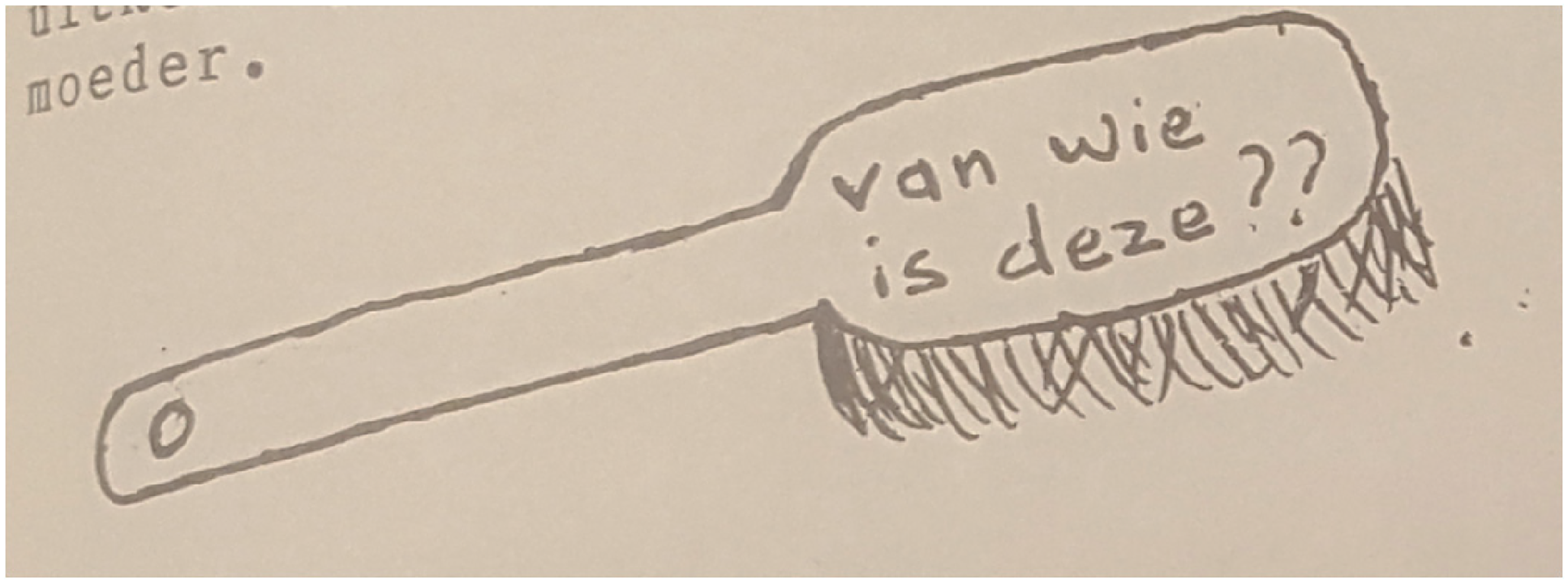
A drawing of a toothbrush with the text ‘whose is this??’. 24
Footnotes
Acknowledgements
I am grateful to the members of Ashanti for documenting their activism and generously sharing their knowledge through the archive. I thank Saskia Bonjour, Franca van Hooren, Floris Vermeulen and the three anonymous reviewers for their constructive feedback on earlier versions of this article. I also thank Dewi van Leeuwen for transcribing the video of the panel discussion.
Declaration of Conflict of interest
The author declare no conflict of interest.
Funding
This publication is part of the project ‘Strange(r) Families’ (with project number VI.Vidi.195.013) of the NWO Talent Programme which is financed by the Dutch Research Council (NWO).
Notes
Author biography
