




Abstract
Using intersectionality theory as a theoretical framework, this qualitative study uncovered the protective factors present among black and Hispanic adolescent girls living in an urban, underresourced neighborhood in the Northeastern United States. The sample used in this study includes eight focus groups that consisted of adolescent females only (N = 57). Female participants were sampled through six youth-serving summer programs throughout the target city. The female participants were between 11 and 17 years of age, with 73% self-identifying as black (n = 45) and 26% (n = 12) as Hispanic. Thematic analysis using an intersectional approach was used to analyze the narratives of participants in the study. Three main themes arose: environmental context, parent–child communication about drug use, and parental modeling. Participants were critically aware of their environmental context which normalized drug use. However, participants identified protective factors such as parents communicating about drug use and parental modeling to girls in the sample as the most salient factors against substance use in their community. Findings provide insight for researchers, social workers, and interventionists to create and implement family-centered, strengths-based substance-abuse prevention programs that are racial, ethnic, and gender specific for black and Hispanic adolescent girls.
Substance-abuse research often overlooks the resiliency of urban girls of color who are not using drugs. The diverse and intersecting realities of girls of color have been largely understudied in substance-abuse research and can contribute to the continued marginalization of girls of color. The hegemony of mainstream prevention programming and empirical literature minimizes the experiences of girls of color and often combines their experiences with young boys of color, ignoring gender-unique risk and protective factors (M. L. Collins, Baiardi, Tate, & Rouen, 2015; Guthrie & Flinchbaugh, 2001). This tenuous position diminishes the importance of nuanced experiences and voices of girls of color. Studies that have examined substance use among girls of color often highlight risk factors present in their communities, while missing the vertical intersections that bombard the lives of girls of color and create an unremitting loop of oppression and marginalization.
This study focuses on the protective factors that aid girls of color living in an urban neighborhood in their decision to not use or abuse drugs. The term “girls of color” refers to girls who belong to racial and ethnic groups that are minoritized and oppressed in today’s U.S. society (i.e., black and Hispanic). While the conceptual model and implications we propose in this study can potentially apply to all adolescent girls, we argue the importance of highlighting the strengths and resiliency of girls, specifically among black and Hispanic girls, which are consistently perceived by society as “less than” or inferior. All of the girls who participated in this study identified as either being black only or Non-white Hispanic only. Although we discuss black and Hispanic girls through a binary lens, we acknowledge that girls can identify as multicultural, which offers more varied and complex experiences.
We utilize an intersectionality framework that integrates the lived experiences of black and Hispanic girls living in a segregated, underresourced community, while acknowledging the reality of their intersecting social identities (see Figure 1). This framework considers the cultural and historical context of black and Hispanic girls that influences their susceptibility and exposure to drug use, as well as highlights the significance of systemic racism and classism within the United States as contributing factors to their exposure. Furthermore, we provide a culturally relevant perspective that includes the voices of black and Hispanic girls, allowing them to redefine themselves in a positive way, promote protective factors that they themselves perceive as beneficial in their lives, and celebrate their families that nurture their ability to be resilient.
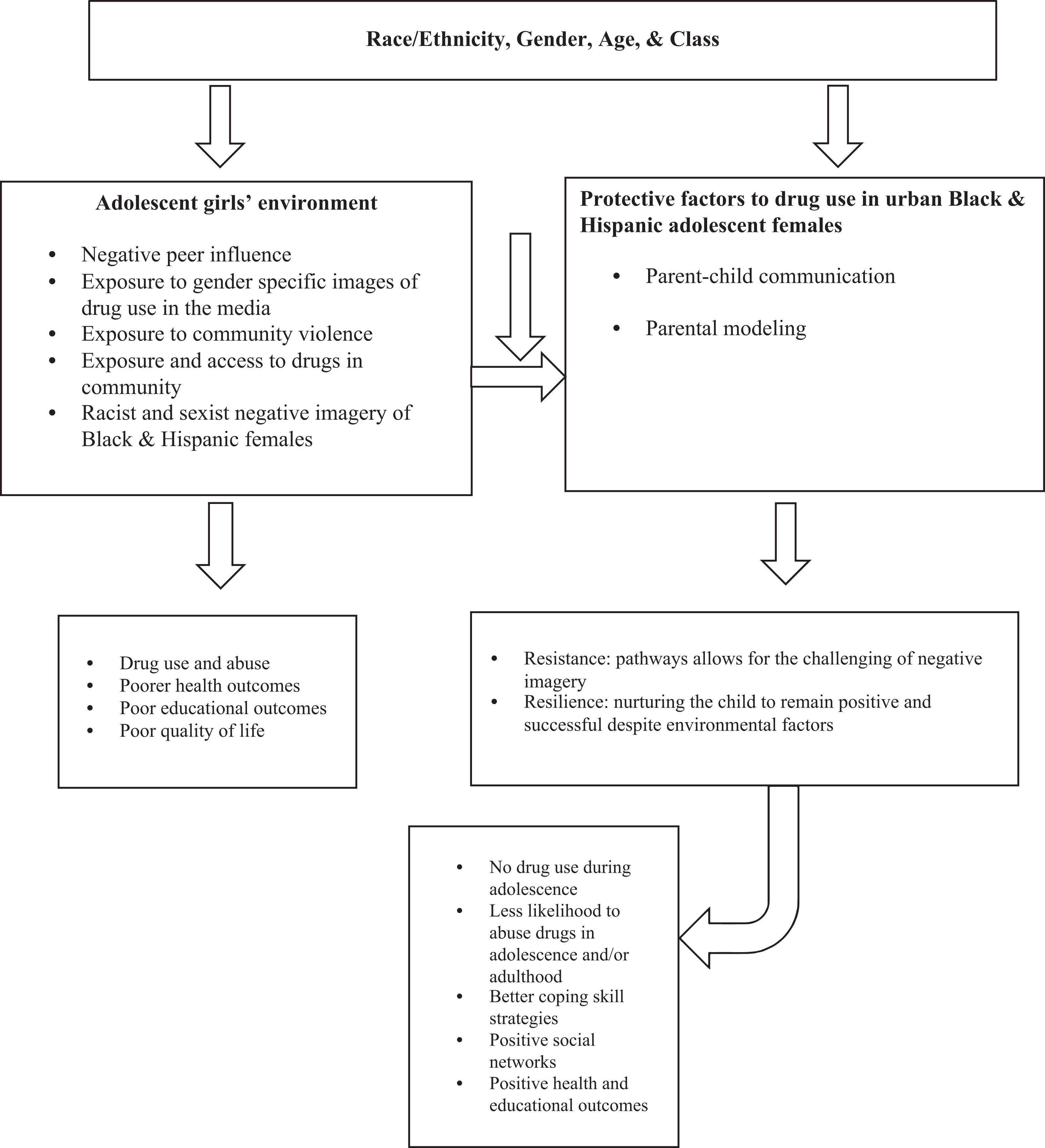
A conceptual model of risk and protective factors in drug use among urban black and Hispanic girls through an intersectional lens.
It is important to note that this study does not attempt to portray the experiences of girls of color as falling under a homogeneous umbrella but rather to acknowledge the commonality of risk factors that contribute to their marginalization in the United States. Examples of factors include increased access to illicit and licit drugs and exposure to drug use in their underresourced, segregated communities. While variations of experiences within racial and ethnic groups of girls may exist, the focus of this study highlights the strengths of girls of color and their families within such communities.
Literature Review and Conceptual Framework
Intersectionality theory highlights that girls of color occupy multiple and diverse identities and social locations (Andersen & Collins, 2014; Crenshaw, 1991). Identities intersect in these social sites and narratives, contributing to the oppression, subordination, and perceptions of girls of color in the United States. The historical and sociocultural context of U.S. society shapes the view of adolescent girls and women, raising the probability of poor health outcomes and encouraging risky behaviors in adolescent girls of color. Such occurrences are a resulting outcome of the ongoing marginalization of these girls and their families (Banks & Stephens, 2018). Previous substance-abuse policy research neglects the role of context as a causal component to the phenomena (Maxwell, 2004). Explanations of drug use and access to substances fail to consider why girls of color are forced to reside in environments that continually place them at risk of engaging in risky behaviors. Intersectionality undergirds critical analysis of social locations, context, identity, and historical time—highlighting marginalization and promoting empowerment for individuals and groups (P. H. Collins, 1991).
Intersectionality and the Lives of Black and Hispanic Girls
The lives of young girls of color are bounded with the lives of young boys of color and are further entangled with the lives of their nonminority female counterparts. It is imperative that their structural contexts be made visible in order to have a clearer understanding of the circumstances that can both place them at risk and protect them. The bifocals used to examine such contexts highlight the role of structural circumstances and neighborhood context, as the intersections imbedded within the environment can work toward defining resources that can protect girls of color. As noted by Haight (2018), within every context, youth tend to respond to and ultimately embrace, reject, or elaborate upon the social patterns to which they are exposed.
Neighborhood context is highly informative in examining outcome behaviors among adolescents of color. Adolescents of color often have limited geographical mobility and are socially isolated from neighborhoods that lack sufficient resources. Due to this form of neighborhood segregation, social and structural factors can have a greater impact on the lives of girls of color residing in urban communities (Floyd & Brown, 2013). The racialized and classist U.S. system amplifies urban black and Hispanic adolescent girls’ exposure to risk factors, increasing their vulnerability to drug use, and impacting their experiences and the expectations that society places on them.
The experiences of diverse racial groups situated in certain contexts can affect the developmental trajectories of adolescent girls of color and family processes. To date, scholarship has failed to document the conceptual role of intersectionality on girls of color, in relation to drug-use prevention. By virtue of where they reside, urban, low-income black and Hispanic adolescent girls are more likely, than nonminority adolescent girls, to be exposed to community violence and drug usage (Richards et al., 2015; Saxe et al., 2001), which can be linked to substance use and abuse (Jackson, Denny, & Ameratunga, 2014; Zimmerman & Farrell, 2017). Prevention efforts currently lack gender-specific approaches, particularly those that consider the vertical intersections of girls of color (Schinke, Fang, Cole, & Cohen-Cutler, 2011).
Anderson and Scott (2012) examined the causal impact that contextual factors can have on individuals through an intersectional lens. Although the term “causal” can be controversial especially in qualitative research, understanding how such factors affect girls of color is crucial so that macro-level factors do not become invisible and ignored; thus, further oppressing this group. Applying intersectionality theory as a theoretical framework sheds light on (a) reasons why a majority of black and Hispanic adolescent girls and their families reside in underresourced neighborhoods, (b) self-awareness to what adolescents’ girls face in their environment, (c) why girls are exposed to frequent imagery of drug usage and violence, and (d) the lack of vital resources necessary for survival and success. Researchers must consider how young girls of color evolve in their immediate environments and how the interaction of systems within the larger environment can affect their developmental outcomes (Demo, 2007; Opara, 2018; Walton & Oyewuwo-Gassikia, 2017).
Families Role in Drug-Use Prevention
For black and Hispanic adolescent girls, the mother–daughter relationship typically aligns with behavioral outcomes (Barman-Adhikari, Cederbaum, Sathoff, & Toro, 2014; Hutchinson & Montgomery, 2007; Schinke et al., 2011). Lack of mother–daughter closeness has been shown in the literature to predict drug usage among adolescent girls (Schinke, Di Noia, Schwinn, & Cole, 2006). Literature supports the role of protective factors such as parent–child communication which can buffer risky behaviors among both black and Hispanic adolescent girls (Schinke et al., 2011; Schwinn, Schinke, Hopkins, & Thom, 2016; Shillington et al., 2005). High religiosity, parental control, and greater peer disapproval of substance use have been shown to be more influential for black adolescent girls (Schinke et al., 2006). While for Hispanic adolescent girls, strong family connectedness, “familismo,” and strong ties to culture have been found to be an important to deterrent to drug use (Garcia-Reid, Lardier, Reid, & Opara, 2018; Guilamo-Ramos, Bouris, Jaccard, Lesesne, & Ballan, 2009; Lardier, Barrios, Garcia-Reid, & Reid, 2018; Schinke, Schwinn, Hopkins, & Wahlstrom., 2016).
Understanding how resiliency is fostered among black and Hispanic girls is crucial as research is limited in this area. Intersectionality theory emphasizes that adolescent girls of color will experience adversity (e.g., challenges related to racism, classism, sexism, and ethnic discrimination) and must develop attitudes and behaviors that prevent them from internalizing these experiences (Walton & Oyewuwo-Gassikia, 2017). Experiences of adversity may cause adolescent girls to use drugs and develop mental health symptoms, due to stress and community trauma. However, increasing the presence of protective factors can moderate the relationship between environmental stressors by fostering resilience among youth (see Figure 1; Hardaway, Sterrett-Hong, Larkby, & Cornelius, 2016; Jain & Cohen, 2013).
Research Questions
The few studies that have addressed protective factors against drug abuse among both groups have done so using quantitative methodology (e.g., Schinke et al., 2006, 2011; Schwinn et al., 2006; Telzer, Gonzales, & Fuligni, 2014). Through their shared historical experiences of gendered racism and discrimination, black and Hispanic adolescent girls’ voices are unheard and ignored—profoundly impacting how they are viewed as a group in research (P. H. Collins, 1991; Davis, 1981). This qualitative study highlights these unheard voices and examines the gap in literature, focusing on protective factors against drug use. This study sought to answer two research questions: What are the protective factors of drug use identified by black and Hispanic adolescent girls? What do black and Hispanic adolescent girls perceive to be the challenges to drug-use prevention in their neighborhoods?
Their narratives may encourage researchers and practitioners to listen to the voices of marginalized youth as they provide content to develop racial, cultural, and gender-specific targeted prevention programming
Method
Research Setting
This study was conducted in a densely populated, underresourced, urban community, in the Northeastern United States. More than 90% of residents identify as either African American/black (35%) or Hispanic/Latina(o) (57.6%) and 33% of residents born outside of the United States. In addition, the average household income in this community is US$33,964 with over 30% of residents living below poverty line (U.S. Census Bureau, 2015).
Researcher’s Positionality
The research team consisted of two graduate students (i.e., a master’s and doctoral-level research assistant) and one program staff who conducted all of the focus groups. Two of the focus group facilitators identified as Hispanic females, while the third facilitator identified as a non-Hispanic white male and is the second author. The first author was not involved in the data collection and identifies as a black female. Taking an objective stance, the first author comes forward with an unbiased view of the data collected though largely identifies with a majority of the participant’s due to their racial background and gender.
As part of a larger federal substance-abuse prevention grant initiative, we engaged with many participants as educators, mentors, and/or advocates for their needs in substance-abuse prevention. In addition, we have working relationships with local youth-serving community organizations where participants were recruited. In establishing credibility, we needed to obtain trust and develop rapport with the communities we serve through prolonged engagement (Lincoln & Guba, 1985). We acknowledge that we come from privileged social locations even though some of us identify with race, ethnicity, and gender. We also recognize that we are not experts on the daily issues and lived realities of the adolescent girls in this community that were a part study.
Research Sample
This qualitative study was conducted as part of a larger Drug Free Communities Grant initiative among urban adolescents of color (N = 85). Youth in the study were asked to be a part of formative focus groups in order to understand the social context of substance use in their community. The sample used in this study includes eight focus groups that consisted of adolescent females only (N = 57). Participants were sampled through six youth-serving summer programs throughout the target city. The female participants were between 11 and 17 years of age, with 73% self-identifying as black (n = 45) and 26% (n = 12) as Hispanic. All female participants received free or reduced lunch in school, a proxy for low socioeconomic status (Harwell & LeBeau, 2010).
Data Gathering and Analysis
Youth participants were assigned to focus groups that were stratified by gender to promote an intimate environment in sharing sensitive information and developing rapport (Patton, 2001). Focus group methodology provided insight and understanding of the phenomena by allowing the researcher to examine interactions among participants (Kevern & Webb, 2001). Through an intersectional lens, focus groups can empower vulnerable adolescents, specifically girls of color, allowing them to develop rapport in a group setting (Kelly, Bobo, Avery, & McLachlan, 2004).
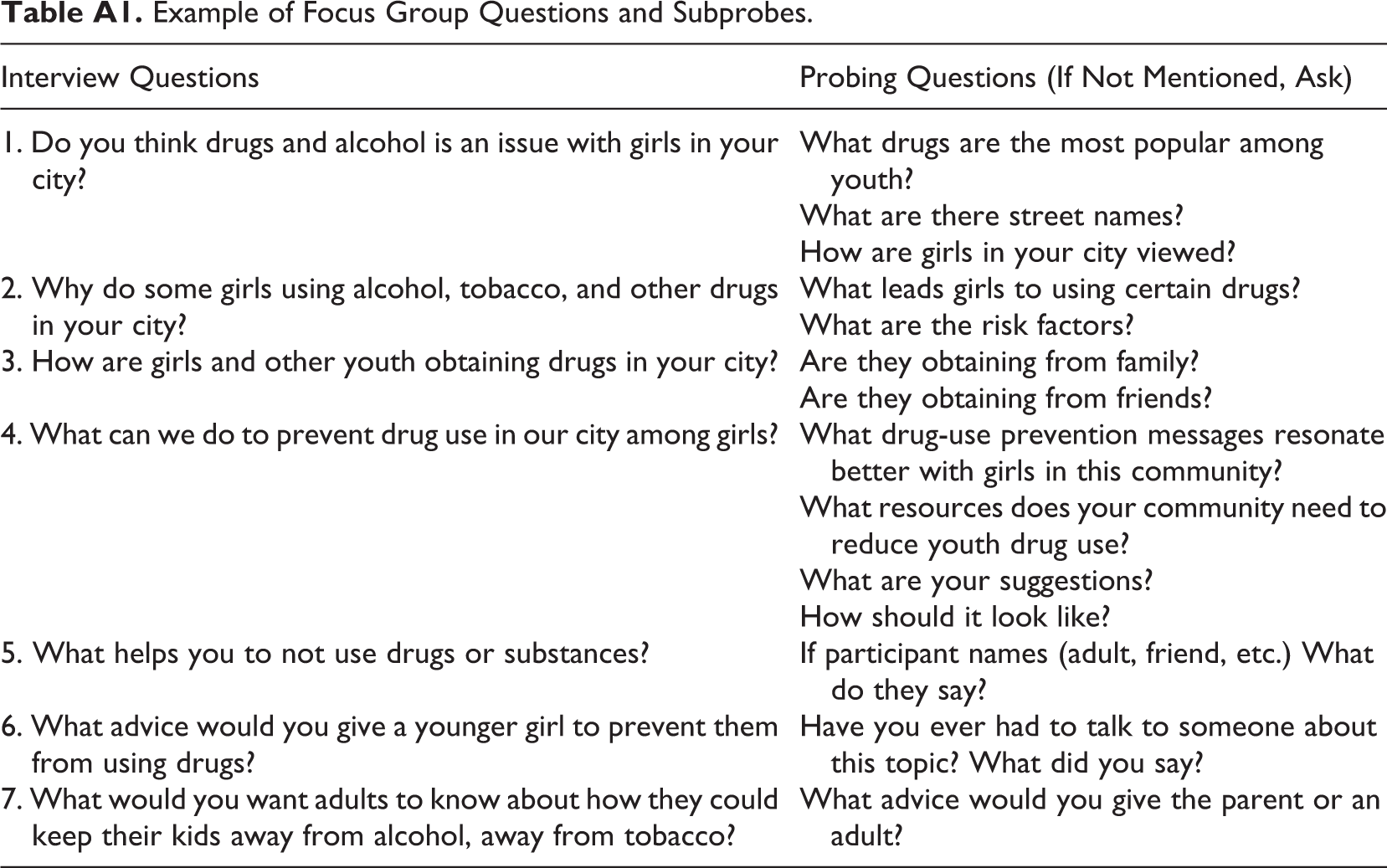
Institutional review board approval was secured prior to the investigation, which ensured eligibility to participate in the study. As part of this review process, both youth assent and parent/guardian consent was obtained for each of the study participants. Each focus group comprised of six to eight girls. Typically, three to four focus groups yield saturation; eight focus groups ensured rigor (Patton, 2001). To establish trust and comfort, facilitators provided detailed information on the purpose of conducting the groups. The goal was to ensure participant responses would be used to promote and tailor substance-abuse prevention programs for youth in their community. Using a phenomenological framework (Patton, 2001) and semistructured interviews, the team sought to understand the lives and stressors of female adolescents living in an impoverished, urban environment. The focus was on (a) individual experiences and meanings, (b) shared experiences, and (c) protective factors that nurtured resiliency. Each focus group session started with an open-ended interview question. Modeled after Stake (1995), our overarching interview questions were focused on allowing participants to describe issues in their community and then interviewers probed with subquestions (see Table A1). Probing occurred during the interview process and provided a more in depth understanding of participants’ responses (Agee, 2009). The interview guide consisted of questions such as “Do you think drugs and alcohol is an issue with girls in your city?” (see Table A1). Facilitators probed for risk factors that stimulate substance abuse in their community and encouraged girls to think critically about their role and the community’s role in prevention efforts. Focus groups lasted approximately 60 min and were conducted in private rooms in the youth-serving community organizations. Interviews were audio recorded and transcribed verbatim. Field notes were taken during this time.
In a confirmability audit, the first and second authors coded all transcripts. Using two coders provided insight to finding consistency between themes and potential researcher bias (Lincoln & Guba, 1985). Coding and thematic analysis were inductive, allowing patterns, themes, and categories to emerge naturally (Boyatzis, 1998). The final stage of inductive analysis entailed categorizing major themes by concept, which was guided by intersectionality theory using an intersectional approach. An intersectional approach recognizes the significance of highlighting multiple identities and understanding how power dynamics in society contribute to context (Bowleg, Teti, Malebranche, & Tschann, 2013; Hancock, 2007). First, using an intersectional approach allowed authors to differentiate the relationship between the categories of investigation from one that is determined a priori to one of empirical investigation (Hancock, 2007). Second, in this study, an intersectional approach posits an intertwined and multiplicative relationship among oppressive categories and the way in which race/ethnicity, gender, age, and class contribute to the shaping of relationships between participants, their environment, and their families role in buffering risk exposures due to structural factors (Bowleg et al., 2013). We triangulated notes and memoranda of analyses and reached 95% substantive agreement.
Findings
Participants provided detailed narratives of their experiences in the target community and were astute navigators of their social environment. Youth had a collective understanding of the issues (e.g., violence, substance abuse, and poverty) present in their social environment. Participants in each focus group mutually agreed that their parents possessed an important role in reducing their risk of using drugs. Two broad themes regarding protective factors emerged from the findings: (1) parents communicating with their daughters and (2) parents being a role model to their daughters. These themes were all identified as processes in combating risky behaviors, as well as nurturing resilience. We will begin by introducing a description of the immediate environment that were identified by girls in the study to provide context and framing of the findings.
Environmental Context
Participants were aware of the heightened risk factors that were present in their neighborhoods. The girls understood that their environments contributed to drug use among adolescents in their community. This was a reasoned response to their environment. The girls saw their environment as beyond their control, and as constraining their mobility, as well as exposing them to negative environmental circumstances, which they also saw as influencing adolescents’ decisions to engage in risky behaviors. One youth participant specifically discussed her attempts to navigate her environment by providing her daily unique encounters: When walking outside you could see needles and stuff…One time when I was with my little cousin who is 4 years old, we saw one and she asked about it…so I tried to distract her…That makes it difficult for kids to see growing up.
Communicating With Their Daughters
Participants were critically aware of the challenges and barriers in their community that resulted in high drug use among adolescents. The participants frequently described witnessing adults using drugs in their presence which they felt influenced youth drug use. While this created a barrier to developing trusting relationships with adults in the community and solidified their beliefs about what the community had to offer them, the girls in the study were able to identify the important connections, safety, and protections that their parents were able to practice. This protective stance offered by parents worked toward reducing the girls likelihood of using drugs and alcohol and fostered a sense of resilience among girls in this community.
Nurturing resilience
Resilience through an intersectionality theoretical lens or intersectional approach acknowledges that risk factors tend to co-occur and are often embedded in the presence of adversity. Resilience can be nurtured through the presence of protective factors or processes that moderate the relationship between stress and risk (Smith & Carlson, 1997). Resilience is a dynamic concept because people’s lives depend on multiple intersecting systems in their environment that can contribute positively and negatively to developmental outcomes (Clonan-Roy, Jacobs, & Nakkula, 2016; Lardier, 2019). For instance, one participant noted that while her mom was aware of the risks embedded in their physical environment, she mentioned her mom’s messaging that urged her to challenge the norms: My mom tells me all the time to not do what everyone else in the town does. People use drugs in front of our house, alcohol, weed, we see it everywhere and she knows that, but she tells me that I don’t have to end up like them, and wants me and my friends to know that there is more out there than doing drugs and sleeping around. When she meets them, she asks them, “What is your five-year goal? How old are you? What school do you go to? What do your grades look like? What are you into? What type of sports do you play?” She asks a lot of questions. My friends will answer them…she just wants to make sure who my friends are and what they are about. My mom sits me and my friends down and says…what are ya’ll out there doing? Don’t end up like those people on the street smoking crack and weed. It will mess up your brain. There are other ways to have fun.
Resistance and productive dialogue about drug use
Participants collectively acknowledged that having conversations about substance abuse with their parents motivated them to not use drugs. Most participants felt their parents were doing a great job in keeping them away from substances. “My mom tells me that doing drugs are bad for you and that you shouldn’t be doing them because then you’ll die early. I don’t want to die early.” Another participant acknowledged that she does not use drugs and acknowledges her fathers’ role in her decision: Every time I’m in the car with my dad…he’ll be like, “You see that? They sit on the corner…All you have to do is go to college and do what you have to do. Make a name for yourself. Do that. All that stuff.” He’ll just sit there talking to me for a while. I just be in the car like, “Dad, you have to give me this lecture every time we get in the car?”
Girls in the study naturally discussed the stereotypes that are placed on them due to their race, gender, and geographic location. Interviewers did not include explicit questions about race, gender, and class at the time as researchers were interested in observing whether participants would acknowledge the primary role of their marginalized identities through unstructured and unprovoked discussion of their environment. As discussion of self and stereotypes arose, interviewers encouraged girls through probing to discuss how they believe they are viewed in relation to society. One participants in the study stated, “People think we are kind of gang-banging thugs who do not have families that care about us and [they think] we don’t care about the place we live.” Another girl added, People outside our city are afraid to even walk around here and talk to a person because they are Black or Brown, because they know they are from our city, they think we are all drug dealers or dating a drug dealer so they are automatically scared of us. My mom made me proud to be from this town, I want to prove to the world that not everyone is ghetto or a drug dealer. We go to college, we can get good grades in school…She told me to always prove people wrong so people can learn not to judge a book by its cover.
Although peer pressure is a common risk factor for all youth, participants believed that having their parents communicate with them about drugs and the influence of negative peers serves as a buffer against negative peer pressure. Facilitators probed participants to discuss the difficulty in resisting drug use from their peers who are using drugs. Participants in the study across all groups were confident in their ability to resist using drugs despite peer pressure and exposure to drugs in their immediate environments. A participant responded, It’s not really hard to say no cause your friends are doing something. My dad says if your friend is doing something bad, just scream “get away from me” because that’s not a real friend. Cause real friends don’t put you and other people in danger…Because they’re doing different drugs… She didn’t want to give me this whole speech about drugs because she knows that I don’t listen to long speeches like that cause then I get bored…So there’s this show, “Beyond Scared Straight,” and it’s about all these teenagers and how they can actually go to a jail and my mom had me sit there and watch like a whole season of it and I sat there and I cried the whole time cause I was like, I don’t want that to happen to me.
Being a Role Model
Interviewers asked participants directly, “why do girls in their community use drugs?” Overwhelmingly, participants in all groups responded to the adult use of drugs among parents and family members as the primary reason. Participants wished other adults, especially parents of other girls, would pay attention to their actions and words more carefully when they are around children. “It all starts with the parents. That’s our first teacher. The way you live, in that environment, you see what they are doing.” As another girl stated: You visualize stuff. You pick up at a young age and you see this—oh, my uncle’s doing this. My uncle’s drinking alcohol. He’s smoking pot. He’s doing this. You see it. You say, “Okay. It’s good.” …it depends on whether or not their parents are using drugs too…they either copy them or not…they need to be aware of what they do around them.
Probing further, interviewers encouraged participants to think critically about the reasons that drug use among young girls occurs in their community and the challenges that families living in urban communities face. Respondents frequently referred to phrases that insinuated the reasons why drug use occurred through highlighting the links between the intersection of multiple social identities and structural factors such as neighborhood segregation, poverty, and mental health…One participated stated, “they’re doing it to feel better about themselves or to feel good because some people have household problems. I guess they feel people don’t understand them, so they turn to the liquor bottles.” Other participants in the groups attributed drug use directly to poverty, “people have household issues with their family, especially if you are poor and don’t have any money, everyone around you is poor…its normal…how do you deal with that on your own?”
More pertinent among the girls who identified as black in the study was the discussion of the susceptibility to drug use among young females in their community because of a lack of positive role models in the household, If you don’t have a positive male or female figure in your house that is going to help persuade you to do better with your life, to be better, to be successful, to be better than them…then you’re going fall into every Black stereotype there is. My friend told her teacher that she was going to do drugs and her teacher said nothing about it…like even though she wasn’t going to actually do it…She was pretending to see if the teacher would say anything but the teacher just said “yea.”
While overwhelmingly critical of the lack of adult support, there were some instances wherein the girls saw teachers as a supportive as noted by one of the participants, “I am taught in my school to not use drugs, it helps that people that are supporting you, are trying to push you towards your future.” This participant acknowledged the role that her school took in educating students about drug use and the importance of this role. Compared the other girls in the study, this example seemed to be an anomaly, which provides the critical need for more educators and adult allies in this community to be more involved in drug-use prevention.
The quotes display that parental modeling alone may not be enough to prevent substance abuse, but the positive modeling of all adults in a girl’s ecosystem can be crucial. This is especially crucial in a community where positive role modeling is rarely present for girls of color. Due to the normalizing of risky behaviors and the formation of cultural values that stem from racist and sexist ideologies, girls of color are left to idolize negative behavior that may further put their health and well-being at risk (Opara, 2018; Wallace et al., 2011). This may be more of the case in underresourced communities where lack of social support and investment in the lives of children of color are limited by adults in their community. Highlighting the role of an entire community, including parents and adult leaders, and their ability to nurture resilience and be dedicated to the well-being of girls is crucial as adult allies play a key role in inspiring the next generation.
Families who live in underresourced communities are often forced to work multiple jobs and reside in stressful environments that make it difficult to supervise their children. Girls in this study were aware of such conflicts and highlighted them as barriers to preventing drug use among urban adolescent girls. One participant acknowledged the difficulty urban parents face in balancing their work schedules and being unable to monitor or communicate such messages with their children: “There’s probably a lot of parents who don’t show their daughters attention…like ‘I gotta go to work but I have something or I can’t make it’…they are just never really there.”
Participants also described their own views of parents being strict, yet, the importance of an appropriate balance, “Some kids rebel just because of the strictness…my mom lets me invite friends over, play video games or watch a movie, she knows what I am doing most of the time.”
Hence, having a trusting and open relationship where parents are willing to acknowledge their daughters’ friends and their families appeared to have a crucial impact among participants across all focus groups.
Discussion
This qualitative study contributes to an examination of protective factors against substance use among black and Hispanic girls that can provide a potential wealth of information for enhancing gender- and racial-specific drug-use prevention efforts. Using an intersectional theoretical lens helped identify contextual factors that provide understanding of patterns of illicit and licit drug use and highlight the vulnerability and unique circumstances of urban black and Hispanic adolescent girls. Although girls in the study acknowledged the stressors and difficulties they experienced in their neighborhoods due to drug use, girls were still able to succeed and thrive under perilous conditions. Intersectionality, grounded in critical race theory and black feminist theories, emphasizes the importance of providing girls and women of color a safe space to discuss structural issues, which allow girls to challenge the norms through the presence of protective factors (Clonan-Roy et al., 2016).
The lived experiences of black and Hispanic adolescent girls residing in an urban locale revealed that participants were aware of social and structural determinants that left their community impoverished and disorganized. We contend that racism and classism operate through policies that result in racial and class isolation in urban neighborhoods (Anderson & Scott, 2012). Such a disservice results in extreme access to drugs, multiple instances of crime and violence, and income inequality—all risk factors for drug use and abuse among urban youth. Consistent with prior research (e.g., Floyd & Brown, 2013; Reboussin et al., 2015; Schinke et al., 2006), participants were aware of the impact of contextual factors that contribute to drug use. Using an intersectionality theoretical lens or an intersectional approach (Hancock, 2007) helped identify environmental factors and highlight the unique circumstances of urban black and Hispanic adolescent girls. In addition, the framework, which emphasized on centering the experiences of girls and women, allowed for a critical understanding in the role that parents forced to engage in due to protect their daughters from the negative influences that emerge within their neighborhoods. While youth of color are disproportionately affected by inequalities resulting in underresourced urban communities, girls of color are forced to additionally challenge racially sexist ideologies that are embedded within society (Collins, 1991, Collins, 1991), which can contribute to the engagement of risky behaviors such as drug use.
Girls in this study emphasized the importance of parents being involved in the form of communicating as a key determinant in resisting drug usage. The promotion of protective factors in this instance can serve to negate the pressure of having to thrive in an oppressive environment such as the segregation into underresourced neighborhoods and nurture resilience among girls through the buffering of detrimental effects. This study emphasizes that by concentrating solely on the etiology of use, researchers may be missing an opportunity to learn from young girls in underresourced neighborhoods who abstain from using drugs during the adolescence.
Consistent with the existing literature, themes that emerged in all eight focus groups were parents’ communicating with their daughters about drug use and parents’ being role models to their daughters (Hayakawa, Giovanelli, Englund, & Reynolds, 2016). Socializing positive behaviors such as resisting drug use among girls of color by adult allies including teachers and community leaders can also be key in promoting and nurturing resilience among young women and girls in underresourced neighborhoods. Furthermore, through communicating with daughters also involved having parents become aware of their daughters’ friends as an important protective factor in drug use that emerged in the study.
Peer influence is well-documented as a key motivator in the exposure to substance abuse in adolescents due to their social networks (Voisin, Hotton, Tan, & DiClemente, 2013). Adolescents often attend the same schools as their friends, date locally, and spend more time with friends than family; such relationships can dramatically impact adolescent behaviors (Floyd & Brown, 2013). Although participants acknowledged that some of their peers use drugs, having parents who educated them on the negative effects of drugs and being aware of negative peers, empowered female participants in the study to refuse to use drugs. As girls in the study live in neighborhoods where exposure to drug use is evident, being able to resist the norm of using drugs in their environment was a crucial strategy that emerged naturally through communication with parents and their involvement. Such important conversations about drug-use prevention from a parent can provide important socializing experiences that may lead to positive behavioral outcomes among girls (Choukas-Bradley, Gilette, Cohen, & Prinstein, 2015).
While the historical context of black and Hispanic girls diverges, the social reality of living in disenfranchised and underresourced communities is shared. Exposure to discrimination, engagement in underresourced schools, and the internalization of negative stereotypes and gendered roles permeates between, and among, both black and Hispanic girls. Hence, examining these young girls’ voices within the context of their social world and in relation to their perceptions of parenting practices did not necessitate separate examinations, as racial–ethnic nuances were not unpacked during focus group interviews that would point toward varying experiences.
Implications for Social Work Practice
Strengths-based and culturally competent frameworks are the foundation of social work practice. Historically marginalized families should feel valued and applauded for their work in challenging negative narratives and stereotypical beliefs about their groups. As families are forced to live in communities that are often segregated, drug infested, and riddled with violence, the ability for parents to continue to teach their daughters’ drug resistance strategies should be highly regarded. The use of intersectionality theory highlights how diverse families respond to historical and social inequalities through resilience and resourcefulness, providing a protective instrument for adolescent girls of color. The incorporation of this lens in prevention research would allow for more targeted substance-abuse prevention programs.
This study supported the importance of family programming as a key determinant to reducing substance-abuse probability. The National Association of Social Workers Code of Ethics (2017) preamble calls for social workers to be “…sensitive to cultural and ethnic diversity and strive to end discrimination oppression, poverty and other forms of social injustice.” As such, social workers and clinicians must employ a culturally appropriate and relevant approach to addressing drug use and abuse among adolescent girls of color. To begin this challenge, understanding how black and Hispanic girls’ social identities intersect and operate in their lives and environments, and their strengths as young women is crucial. Interventions that address drug use and abuse in black and Hispanic girls should specifically address community stressors such as family cohesion, anxiety, trauma, and school stress. Such stressors may contribute to high rates of drug use among urban youth.
In addition, the formation of strengths-based adolescent girls of color groups is crucial. Providing safe spaces for girls of color whose backgrounds have been (and continue to be) minoritized can be empowering and nurturing to their ability to thrive in impoverished urban environments. Because society often values white, middle-class cultural capital, groups comprising of girls (and women) of color can serve as funds of knowledge and culture, promoting understanding of the social contexts in which they develop and examine the specific forms of oppression they experience (Clonan-Roy et al., 2016). Such groups can encourage creativity and promote activism of girls of color. By framing adolescent girls’ group spaces with an intersectional approach, such groups encourage the development of critical consciousness and understanding of girls’ the ecological context. Thus, it is essential to permit black and Hispanic adolescent girls to provide, from their perspective, specific protective factors that reduce their chances of using drugs and engaging in other risky behaviors.
Themes of family communication provided implications for programming with this population especially in understanding the specific content that is used with daughters in resisting drug use. Using family-based interventions in community work is essential, honoring the special relationship of black and Hispanic adolescent girls with their families, particularly maternal figures, who are a primary part of their microsystem (Bronfenbrenner, 1979). In drug-use prevention, the importance of parental relationships is evident among black and Hispanic girls (Guilamo-Ramos et al., 2009; Voisin, Harty, Kim, Elsasser, & Takahashi, 2017). The mother–daughter relationship is a well-documented protective factor; findings revealed the presence of father figures as an important protective factor in reducing substance abuse, which is often left out of literature in black and Hispanic families.
Limitations
The study findings enhance the literature on protective factors for black and Hispanic female adolescents. Yet findings should be considered in light of several limitations. First, the examination of black and Hispanic girls together as opposed to separate is a limitation, given their diverging historical and lived experiences within communities throughout the United States. Moreover, the experiences of black and Hispanic adolescent girls are not homogeneous; however, intersections of race, ethnicity, gender, and class provide similarities in the disparities that impact urban girls of color. Gender, racial, and culturally specific approaches to substance-abuse prevention among black and Hispanic adolescent girls are needed to reduce risk and promote protective factors. Future research should examine subgroups of black and Hispanic adolescent girls, describing unique within-group differences among adolescent girls of the same race/ethnicity. Within future work, a need to have a more nuanced inquiry that focuses on building upon findings from this study in relation to gender and race/ethnic-based social circumstances and parenting would be beneficial to the field.
Second, participants were a nonrandomized sample. Self-selection bias may be present due to the willingness of participants to agree to participate. Also, generalizability is limited, as the goal was to allow the specific target population of urban female adolescents of color to provide valuable input regarding protective factors for drug-abuse prevention, as their voices are often not heard. It was important to use a qualitative approach to capture participants shared and unique lived experiences. Such insight allows researchers to fortify successful protective factors to shape prevention efforts for black and Hispanic girls and their families.
Conclusion
Valuing the positive influences and strengths within families whose racial and ethnic backgrounds have been historically marginalized is critical, as families of color are often not celebrated. Findings call attention to the need to apply a family- and community-based approach to prevention work for girls of color. Bridging research with practice is crucial when working with marginalized groups, as their voices are often left out of policy and intervention formation which then can create more disparities.
We chose to use adolescent reports of their views of processes that impact drug use rather than triangulating reports from parents. We believe that the voices of youth and their perceptions of what they identified as protective factors are more accurate and crucial to prevention work. Research has indicated that one’s perception of messaging, not merely the message, can influence behaviors (Spencer, 1999). We acknowledge that due to inequities in underresourced communities, parents are often overwhelmed with having to survive in such traumatic environments and raise children with little support from society. Structural factors embedded in such systems may make it difficult for parents to navigate these spaces to protect their daughters from the effects of community trauma and overexposure to drugs and violence that can increase risks of poor outcomes. Such embedded inequities require substance-abuse prevention programs to be aware of those risk factors. This study highlights the strengths of parents who can nurture their daughters’ resilience, despite structural barriers. To change the deficit narrative often presented in literature, this study promotes the stories of families of color to encourage prevention programs to tap into their strengths rather than ignoring families’ role in prevention programming.
Footnotes
Appendix A
Example of Focus Group Questions and Subprobes.
| Interview Questions | Probing Questions (If Not Mentioned, Ask) |
|---|---|
| 1. Do you think drugs and alcohol is an issue with girls in your city? | What drugs are the most popular among youth? |
| What are there street names? | |
| How are girls in your city viewed? | |
| 2. Why do some girls using alcohol, tobacco, and other drugs in your city? | What leads girls to using certain drugs? |
| What are the risk factors? | |
| 3. How are girls and other youth obtaining drugs in your city? | Are they obtaining from family? |
| Are they obtaining from friends? | |
| 4. What can we do to prevent drug use in our city among girls? | What drug-use prevention messages resonate better with girls in this community? |
| What resources does your community need to reduce youth drug use? | |
| What are your suggestions? | |
| How should it look like? | |
| 5. What helps you to not use drugs or substances? | If participant names (adult, friend, etc.) What do they say? |
| 6. What advice would you give a younger girl to prevent them from using drugs? | Have you ever had to talk to someone about this topic? What did you say? |
| 7. What would you want adults to know about how they could keep their kids away from alcohol, away from tobacco? | What advice would you give the parent or an adult? |
Authors’ Note
Points of view, opinions, and conclusions in this article do not necessarily represent the official position of the U.S. Government.
Declaration of Conflicting Interests
The author(s) declared no potential conflicts of interest with respect to the research, authorship, and/or publication of this article.
Funding
The author(s) disclosed receipt of the following financial support for the research, authorship, and/or publication of this article: This study was supported by the Drug Free Communities Grant Initiative (Grant #SP022-19-01), funded through the Substance Abuse and Mental Health Services Administration (SAMHSA). The first author was supported as a predoctoral fellow in the Behavioral Sciences Training in Drug Abuse Research program with funding from the National Institute on Drug Abuse T 32 Training Grant (5T32 DA07233).