




Abstract
Introduction
Stunting and wasting are highly prevalent across low- and lower middle-income countries and among populations experiencing poverty and living in resource-constrained areas (Victora et al., 2021). Stunting is defined as children being short for their age and having inadequate linear growth, while wasting is defined as children who have a low weight for their height (World Health Organisation, 2020). Stunting and wasting in childhood have significant implications for the long-term health outcomes and economic productivity of individuals and communities. Stunting is correlated with poor cognitive development, higher risk for chronic disease in adulthood, reduced educational attainment, and lower infant birthweight among women (Victora et al., 2008). Children who experience severe wasting are at a higher risk of mortality and are also at increased risk of infectious disease (Pasricha and Biggs, 2010; Wright et al., 2021).
Stunting and wasting have historically been understood as separate conditions. The approaches to addressing stunting and wasting are traditionally siloed. Preventive approaches, such as increasing the availability of and access to maternal health services, as well as improving the social determinants of health among populations experiencing poverty, are the primary methods of reducing the incidence and prevalence of stunting (Milman et al., 2005). Conversely, wasting is primarily treated through clinical approaches, including the provision of ready-to-use therapeutic foods and ready-to-use supplementary foods through acute malnutrition management programs (Bhutta et al., 2013; Rogers et al., 2015).
Despite these siloed approaches, there have been calls to use a holistic lens to further understand the interplay between stunting and wasting (Angood et al., 2016; Briend et al., 2015; Sadler et al., 2022; Thurstans et al., 2022; Wells et al., 2019). Previous research has noted the overlap in the physiological process through which stunting and wasting develop through the influence of infectious diseases and the loss of fat mass (Briend et al., 2015). Longitudinal studies have also shown that wasting may lead to stunting, as linear growth may slow during periods when children have a sustained drop in weight to compensate for the loss of lean and fat mass (Isanaka et al., 2019; Thurstans et al., 2022). Moreover, stunting and wasting share similar social and economic determinants that drive the incidence and prevalence of these conditions among children, including poor maternal health and nutrition, low education, food insecurity, environmental factors, and seasonality (Angood et al., 2016; Gaupholm et al., 2023; Thurstans et al., 2022). Further, evidence shows that children who experience concurrent stunting and wasting have an elevated risk of mortality (McDonald et al., 2013). As such, concurrent stunting and wasting in children requires greater attention, as the children who experience these conditions, in addition to their caregivers and households, may require distinct support and treatment.
In the Philippines, the prevalence of stunting and wasting among children has decreased slightly over the past decade. In 2018, the National Nutrition Survey implemented by the Food and Nutrition Research Institute (2018) recorded a stunting prevalence of 30.3%, lower than the 2015 prevalence of 33.4% among children under 5 years. Moreover, the prevalence of wasting in 2018 was 5.6%, which was lower than the 2015 prevalence of 7.1% (DOST-FNRI, 2020). Among children between 60 and 120 months of age, the prevalence of stunting in 2018 was 24.5%, and wasting was 7.6%, respectively (DOST-FNRI, 2020). However, stunting and wasting prevalence in the Philippines is disproportionately experienced among populations in poorer groups, with a greater burden of disease among informal workers and children in rural areas (Capanzana et al., 2018; DOST-FNRI, 2020; Ieiri et al., 2020; Mbuya et al., 2021). Despite evidence that child undernutrition is most prevalent among low-income populations, there is limited research to understand the factors that are correlated with child undernutrition within populations experiencing poverty. Further, there is limited previous research examining the concurrence of stunting and wasting among children in the Philippines, and more broadly in Southeast Asia (Mutunga et al., 2020).
To address these research gaps, the objectives of this study are (a) to determine the prevalence of stunting, wasting, and concurrent stunting and wasting among a sample of children in the Philippines, and (b) to examine the sociodemographic characteristics associated with experiencing stunting, wasting, and concurrent wasting and stunting among a sample of children in the Philippines.
Methods
Study context, design, and data collection
This study drew from cross-sectional household survey data collected between May 2018 and April 2019 by International Care Ministries (ICM). ICM is a non-governmental organization in the Philippines that provides poverty alleviation and health education programming to households experiencing extreme poverty, operationally defined as households earning less than half of the poverty threshold in the Philippines. Households are assessed using several household asset-based indicators and are included in ICM programming if they meet a minimum poverty threshold. At the time of data collection, ICM was working in 10 regional areas across the Visayas and Mindanao regions within resource-constrained communities in both urban and rural settings.
Data for this study were collected as part of child malnutrition screening programs implemented by ICM (Lau et al., 2020). To collect data, trained surveyors interviewed a representative of the household about the demographic and socioeconomic characteristics of the household. Informed verbal consent was acquired from respondents prior to survey administration. As part of ICM's nutritional screening program, anthropometric measures of children between 6 months and 12 years of age were collected by health trainers. This study was approved by the University of Waterloo Office of Research Ethics (ORE #43368).
Variables of interest
Nutritional indicators
Stunting status, wasting status, and concurrent stunting and wasting were the main nutritional indicators of interest in this study. Health trainers measured children's weight using a weighing scale, and children's length/height were measured using an Allen stick (Gordoncillo et al., 2019; Talavera et al., 2021). Recumbent length was measured among children under 2 years of age, and standing height was measured among children 2 years and over.
Children experiencing stunting were defined as children with a height-for-age z-score (HAZ) < −2. Moderate stunting was defined as children with a HAZ between −2 and −3, while children with severe stunting were defined as having a HAZ as equal to or less than −3. Children experiencing wasting was defined as children with a weight-for-height z-score (WHZ) and BMI-for-age z-score (BAZ) < −2 for children 6–59 months and 60–144 months, respectively. Moderate wasting was defined as children with a WHZ and BAZ between −2 and −3, while children with severe wasting was defined as having a WHZ and BAZ as equal to or less than −3. The calculation of WHZ, BAZ, and HAZ was based on the World Health Organization Reference Growth Standards for children using the zscorer package in R (Myatt and Guevarra, 2019; World Health Organization, 2006).
Sociodemographic variables
The selection of variables to include in the analysis was informed by the UNICEF Framework of Child Malnutrition (UNICEF, 2013). The sex and age of children were included to assess the potential correlation of individual-level and biological factors associated with stunting and wasting (Takele et al., 2019). Self-reported measures of the education of the household head, the age of the household head, and the number of household members were included to understand the correlation of the household sociodemographic characteristics with the nutritional outcomes of children. More years of education among caregivers and guardians are associated with greater knowledge of child nutrition (Shahid et al., 2022). Similarly, the age of caregivers and guardians may be correlated with greater experience and knowledge surrounding caretaking practices (Khan et al., 2019). Additionally, the number of household members may also be associated with the nutrition status of children, as more members within the household may limit the availability of resources for children (Ieiri et al., 2020; Javier et al., 2015). Geography type was also considered in the analysis as the distribution of stunting and wasting in the Philippines varies across areas with a higher prevalence of these conditions previously identified in rural areas (Capanzana et al., 2018; DOST-FNRI, 2015; Siy Van et al., 2021).
Enrolment of households in two social protection programs in the Philippines was considered in the analyses as these programs are intended to support the nutrition status of children by facilitating maternal and child healthcare access, improving food security, and delivering health promotion initiatives (Bustos et al., 2023; Cho et al., 2020; Ulep, 2021). First, the Pantawid Pamilyang Pilipino Program (4Ps) is a national conditional cash transfer program in the Philippines which provides households experiencing poverty with cash transfers upon completion of health and education-related conditionalities (Acosta and Velarde, 2015; Dodd et al., 2022). Additionally, the PhilHealth program is the national health insurance plan in the Philippines, which is intended to subsidize health services for populations experiencing poverty (Chakraborty, 2013; Dodd et al., 2021; Luu et al., 2022; Obermann et al., 2018). 4Ps and PhilHealth target eligible households using a poverty targeting system managed by the Department of Social Welfare and Development. As such, populations targeted by these social protection programs are similar to populations targeted by ICM. Enrolment in these programs was captured in the ICM survey as self-reported variables, wherein the head of the household answered ‘Yes’, ‘No’, or ‘I don’t know’ when asked whether they were enrolled or not enrolled in either of 4Ps and PhilHealth. Participants who indicated ‘I don’t know’ were categorized as not having 4Ps or PhilHealth.
Additional measures
Two additional measures were developed to assess the correlation between stunting and wasting with experiences of food insecurity and hunger and household wealth (Martorell and Young, 2012; Siy Van et al., 2021). Experiences of food insecurity and hunger were measured using the Household Hunger Scale. Using three questions related to food insecurity and hunger in the ICM survey, children were categorized as having little to no hunger in the household (0–1); moderate hunger in the household (2–3); or severe hunger in the household (4–6) (Ballard et al., 2011) (see Appendix A in the Supplemental Materials). Moreover, the wealth of the household was measured using a Wealth Index. The Wealth Index was calculated using principal component analysis and was informed by the methods outlined in the Demographic Health Survey (Rutstein and Johnson, 2004; Vyas and Kumaranayake, 2006) (see Appendix B in the Supplemental Materials). Children were grouped into wealth index quintiles (first wealth quintile to fifth wealth quintile, ranging from lowest wealth quintile to highest wealth quintile) to facilitate the interpretation of results (Vyas and Kumaranayake, 2006).
Statistical analysis
Descriptive statistics
Descriptive statistics were first calculated to describe the sociodemographic characteristics of the study sample stratified by children ages 6–59 months and 60–144 months. Second, the distribution of stunting, wasting, and concurrent wasting and stunting was assessed by calculating the frequency and prevalence of these outcomes among children stratified by age groups. Descriptive statistics were also used to describe differences in the sociodemographic characteristics of children experiencing stunting, wasting, or concurrent wasting and stunting. Frequencies and proportions were calculated for categorical variables, while means and standard deviations were calculated for continuous variables.
Regression modelling
Multilevel logistic regression modelling was used to explore and compare the sociodemographic factors that were correlated with each of stunting and wasting while accounting for clustering by geography (Raudenbush and Bryk, 2002). Four separate multilevel logistic regression models were conducted to model the association between sociodemographic variables with each of stunting (ref: not stunted) and wasting (ref: not wasted) while stratifying according to the age groups of children (6–59 months and 60–144 months). Models were fitted using maximum-likelihood estimation and analyses were conducted using the lme4 package (Bates et al., 2015) in R Version 4.1.0 (R Core Team, 2021).
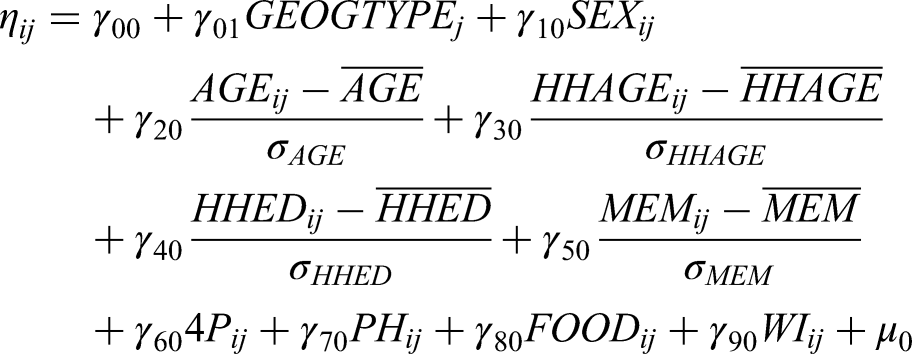
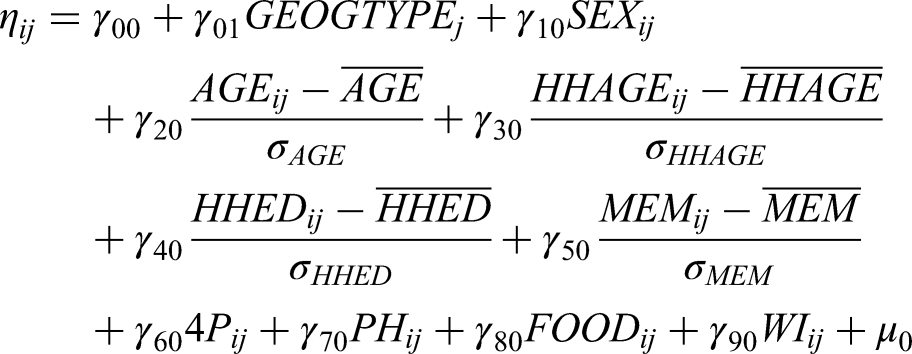
In the regression models, children formed level 1, while specific ICM regional areas formed level 2. First, a random intercept model was used to calculate the intraclass correlation coefficient to determine the variation in stunting and wasting that was attributable to the differences between regional areas (see Appendix C in the Supplemental Materials). Second, a multilevel logistic regression grouped by regional areas was conducted where all variables of interest were included based on the UNICEF Framework of Child Malnutrition (UNICEF, 2013). Continuous variables were standardized by subtracting the mean and dividing by the standard deviation for each observation as this improved model fit and convergence. Model selection was informed by both the theoretical underpinnings of stunting and wasting as well as selecting the model with lowest deviance. Subsequently, the Akaike information criterion (AIC) of the models was reviewed to confirm selection of the model with the smallest AIC value (see Appendix C in the Supplemental Materials).
Statistical significance was determined using a p-value of 0.05, and 95% confidence intervals for the adjusted log-odds of the model were calculated. No adjustments were made for multiple testing. Log-odds estimates were converted to non-standardized estimates before exponentiating to odds ratio estimates to facilitate the interpretation of results.
Results
Data from 3401 children were available for this study. Informed by ICM's nutritional screening program guidelines, children who were under 6 months and over 12 years of age (n = 204), had incomplete sociodemographic information (n = 89), or had extreme outliers (weight-for-height, BMI-for-age, and height-for-age z-scores > 6 or < −6) (n = 123) were excluded from the final dataset. The analytic sample consisted of 3005 children across 10 regions in the Visayas and Mindanao where ICM operated at the time of data collection.
Slight differences were observed between the sociodemographic characteristics of children ages 6–59 months and 60–144 months (see Table 1). Among children ages 6–59 months, there were slightly more male children (n = 902; 54.7%), while there were slightly more females (n = 688; 50.8%) among older children. Additionally, the mean age of household heads was 36.3 years (SD = 11.0) among younger children, while the mean age of household heads among older children was 40.0 (SD = 10.1). Moreover, the mean years of education among household heads were also higher among younger children (8.3 years; SD = 3.6) compared to older children (7.9 years; SD = 3.7). Across age groups, similar patterns were observed in the number of household members, enrolment in social protection programs (4Ps and PhilHealth), levels of food insecurity and wealth, and geography type of residence. There were slight differences in the regional areas where children lived, with the majority of younger children living in Dipolog (n = 280; 17.0%), Koronadal (n = 240; 14.6%), and Bohol (n = 211; 12.8%), and the majority of older children living in Dipolog (n = 239; 17.7%), Palawan (n = 223; 16.5%), and General Santos (n = 180; 13.3%).
Sociodemographic characteristics of children experiencing extreme poverty in the Philippines by age group (n = 3005).
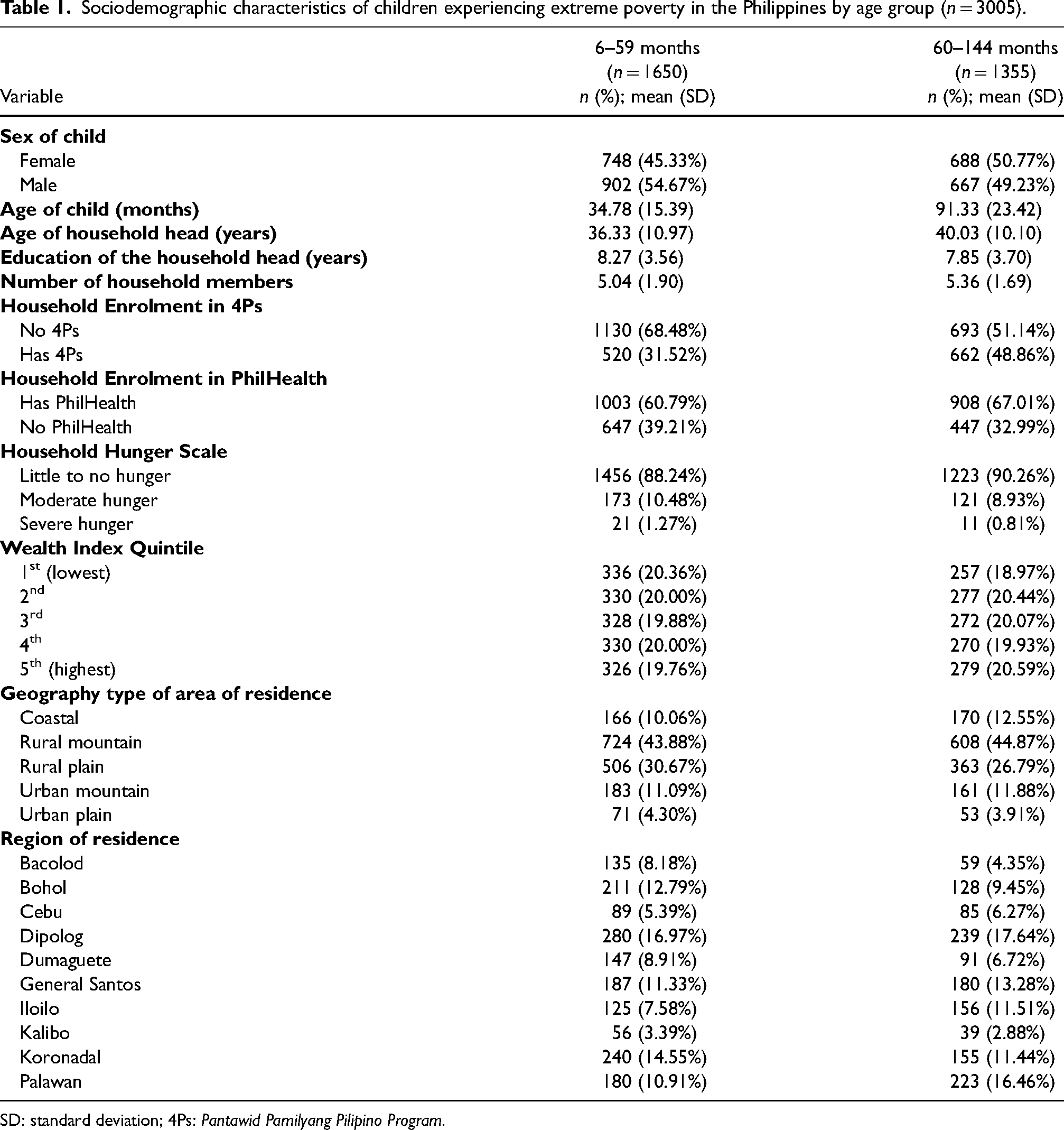
SD: standard deviation; 4Ps: Pantawid Pamilyang Pilipino Program.
Overall, there were 1500 (49.9%) children experiencing stunting in the sample and 280 (9.3%) children experiencing wasting (see Table 2). A total of 137 (4.6%) children were experiencing both wasting and stunting concurrently.
Distribution of nutrition indicators among children experiencing extreme poverty in the Philippines by age group (n = 3005).
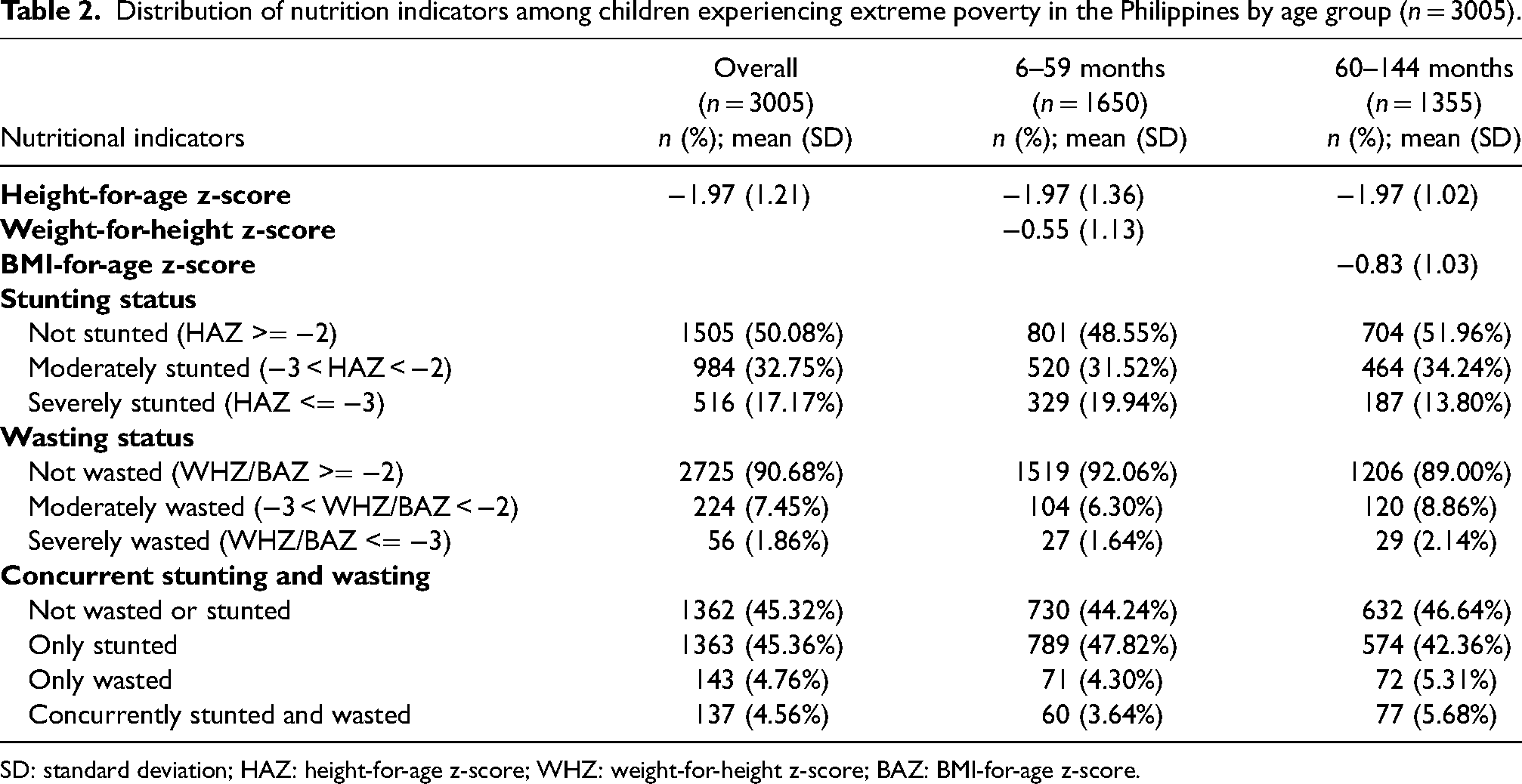
SD: standard deviation; HAZ: height-for-age z-score; WHZ: weight-for-height z-score; BAZ: BMI-for-age z-score.
The mean HAZ in both age groups was −1.97 with a larger standard deviation among younger children (SD = 1.4). The mean WHZ among children 6–59 months was −0.55 (SD = 1.1) and the mean BAZ among children 60–144 months was −0.83 (SD = 1.0). In terms of the severity of wasting and stunting, the proportion of children experiencing severe stunting was higher among younger children (n = 329; 19.9%), and the proportion of children experiencing moderate and severe wasting was higher among older children (n = 100; 7.4%, n = 33; 2.4%). The proportion of children with concurrent stunting and wasting was also higher among older children (n = 77; 5.7%) compared to younger children (n = 60; 3.6%).
Differences were observed in the sociodemographic characteristics of children with different stunting and/or wasting status (see Table 3). Children who were concurrently stunted and wasted had household heads with fewer years of education (7.57; SD = 3.4) compared to children who were not stunted or wasted (8.5 years; SD = 3.6). Moreover, the proportion of children from households who were enrolled in 4Ps (n = 66; 48.2%) and PhilHealth (n = 96; 70.1%) was highest among children concurrently experiencing concurrent stunting and wasting. Similarly, the proportion of children from households experiencing severe food insecurity (n = 6; 4.9%) was highest among children concurrently experiencing stunting and wasting. Children who were undernourished also had a higher proportion of children from households who were in the first wealth quintile (n = 34; 24.8%) (lowest level of wealth within the sample) compared to children who were in the first wealth quintile (n = 217; 15.9%) and were not stunted or wasted. Additionally, children who were undernourished had lower proportions of children from households in the fifth wealth quintile (n = 27; 19.7%) (highest level of wealth within the sample) compared to children who were not stunted or wasted (n = 330; 24.2%).
Sociodemographic characteristics of children experiencing extreme poverty in the Philippines according to wasting and stunting status (n = 3005).
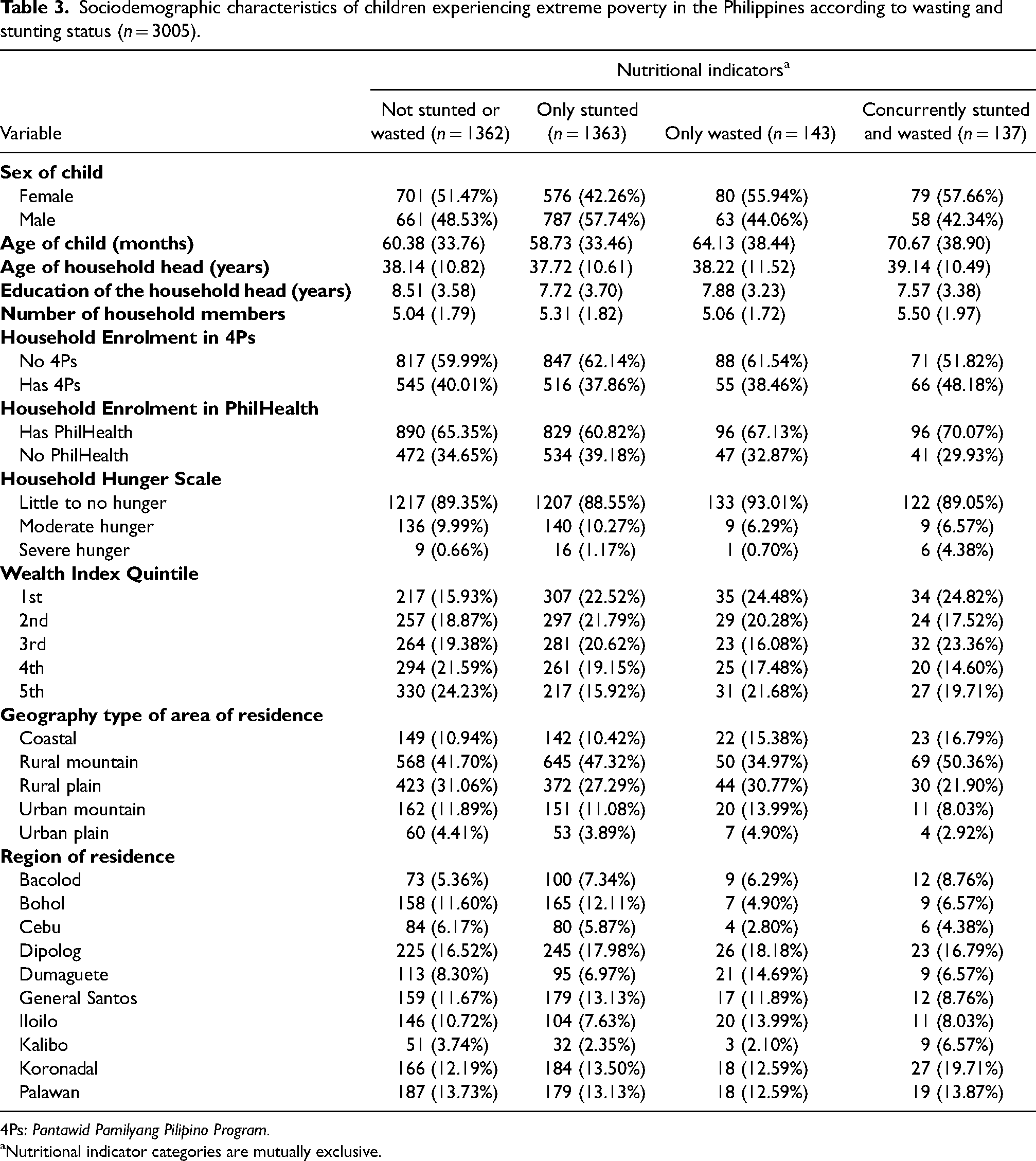
4Ps: Pantawid Pamilyang Pilipino Program.
Nutritional indicator categories are mutually exclusive.
Findings from the multilevel logistic regression models suggest that several sociodemographic characteristics were associated with stunting and wasting across different age groups (see Table 4). Among children ages 6–59 months, the odds of stunting were higher (aOR = 1.51; 95% CI = 1.23, 1.84) among male children compared to female children. The odds of stunting were lower (aOR = 0.95; 95% CI = 0.92–0.98) among children with household heads that had more years of education. Conversely, children in households with more members had higher odds of stunting (aOR = 1.12; 95% CI = 1.06, 1.19). Belonging in the first (aOR = 1.83; 95% CI = 1.30, 2.56), second (aOR = 1.51; 95% CI = 1.08, 2.10), and third (aOR = 1.43; 95% CI = 1.03, 1.98) wealth quintile also had higher odds of stunting compared to children from households in the fifth wealth quintile. Moreover, the odds of stunting were lower (aOR = 0.65; 95% CI = 0.45, 0.93) among children living in rural plains compared to children in coastal areas.
Odds ratios estimates from standardized multilevel logistic regression model of sociodemographic correlates of stunting and wasting among children experiencing poverty in the Philippines by age group.
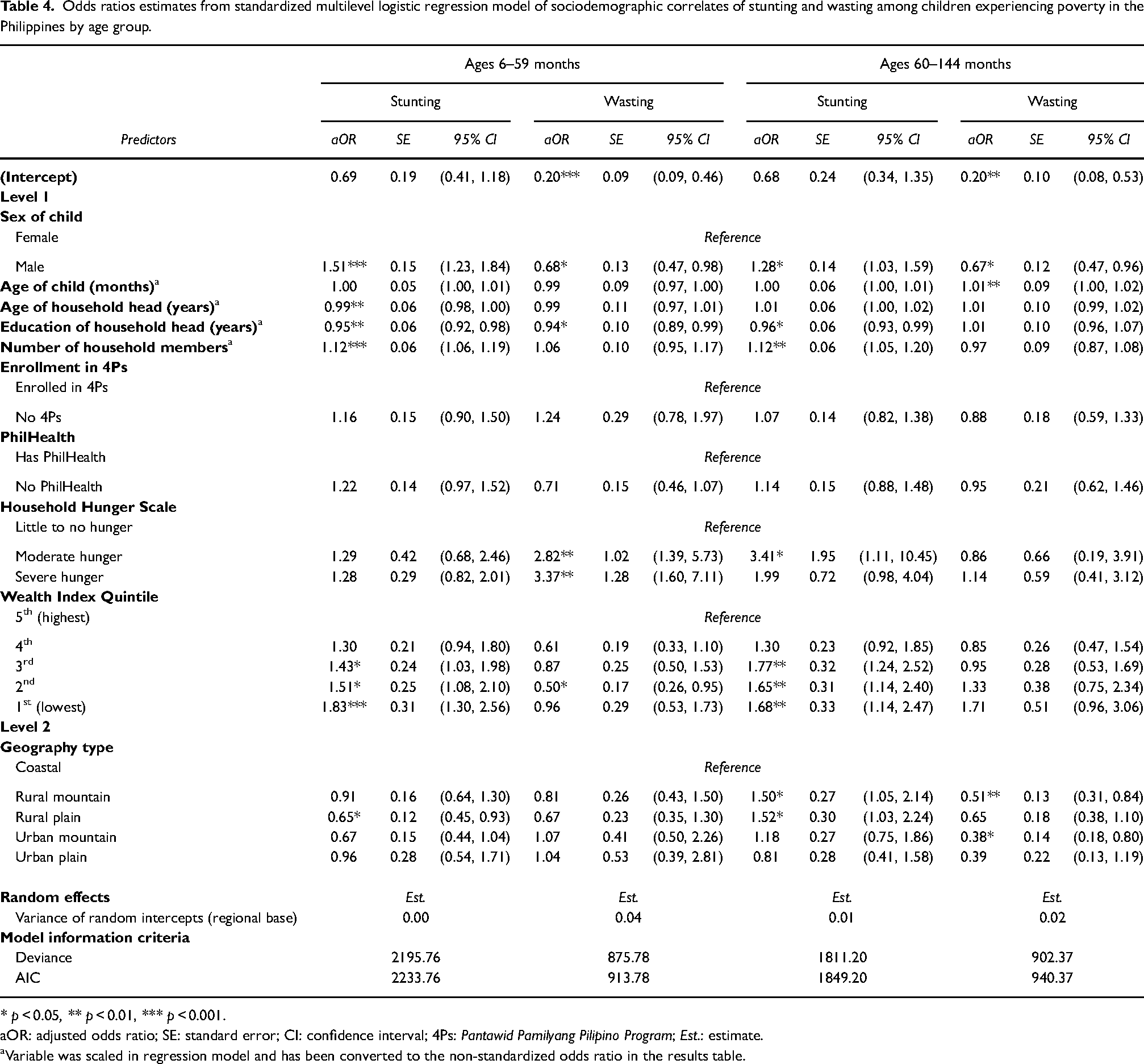
* p < 0.05, ** p < 0.01, *** p < 0.001.
aOR: adjusted odds ratio; SE: standard error; CI: confidence interval; 4Ps: Pantawid Pamilyang Pilipino Program; Est.: estimate.
Variable was scaled in regression model and has been converted to the non-standardized odds ratio in the results table.
Among children ages 60–144 months, the multivariate analysis suggested that the odds of stunting among children were lower (aOR = 0.96; 95% CI = 0.93,0.99) for every unit increase in the education of the household head and were higher (aOR = 1.12; 95% CI = 1.05, 1.20) for every unit increase in the number of household members. The odds of stunting were also higher for children in households experiencing moderate food insecurity (aOR = 3.41; 95% CI = 1.11, 10.45) compared to children from households experiencing little to no food insecurity. Additionally, the odds of stunting were consistently higher for children from households belonging in the first (aOR = 1.68; 95% CI = 1.14, 2.47), second (aOR = 1.65; 95% CI = 1.14, 2.40), and third (aOR = 1.77; 95% CI = 1.24, 2.52) wealth quintiles compared to children belonging in the fifth quintile. Sociodemographic variables correlated with stunting included being geographically situated in rural plains (aOR = 1.52; 95% CI = 1.03, 2.24) and rural mountains (aOR = 1.50; 95% CI = 1.05, 2.14).
In comparison, the odds of wasting for children ages 6–59 months were lower (aOR = 0.68; 95% CI = 0.47, 0.98) among male children compared to female children. Moreover, the odds of wasting were lower (aOR = 0.94; 95% CI = 0.89, 0.99) for every unit increase in the education of the household head. Among younger children, the odds of wasting were higher for children from households experiencing moderate (aOR = 2.82; 95% CI = 1.39, 5.73) and severe (aOR = 3.37; 95% CI = 1.60, 7.11) food insecurity compared to children who were experiencing little to no food insecurity. The odds of wasting in children from households who were in the second wealth quintile were also less (aOR = 0.50; 95% CI = 0.26, 0.95) than the odds of wasting among children from households in the fifth wealth quintile.
Additionally, the odds of wasting for children ages 60–144 months were lower (aOR = 0.67; 95% CI = 0.47, 0.96) for male children compared to female children in this sample. Moreover, the odds of wasting were lower for children living in urban mountains (aOR = 0.38; 95% CI = 0.18–0.80) and lower for children living in rural mountains (aOR = 0.51; 95% CI = 0.31, 0.84) compared to children from households living in coastal areas.
Discussion
This study presents the prevalence and sociodemographic correlates of stunting, wasting, and concurrent stunting and wasting among a sample of children experiencing poverty in the Philippines. Results from the analysis suggest that children who are concurrently stunted and wasted in this sample were more likely to have household heads with fewer years of education, experience severe food insecurity, and belong in lower wealth index quintiles. Moreover, these children were more likely to be in households that were enrolled in 4Ps and PhilHealth. When adjusting for multiple sociodemographic factors, the multilevel logistic regression models suggest that several sociodemographic factors were correlated with stunting and wasting in this sample. Overall, this study contributes to the existing child nutrition literature in the Philippines and Southeast Asia by identifying the coexistence of stunting and wasting and by highlighting the factors that are correlated with undernutrition among a population that is often underrepresented in national and population-level surveillance data (Thomson et al., 2021).
The prevalence of stunting (51.5%) and wasting (7.9%) among children 6–59 months in this sample was higher than the estimated national prevalence of stunting (30.3%) and wasting (5.6%) among children under 5 years identified through the National Nutrition Survey in the Philippines (DOST-FNRI, 2020). Similar patterns were observed for older children; the prevalence of stunting (48.0%) and wasting (11.0%) in this sample was higher than the national estimates of stunting (24.5%) and wasting (7.6%) for children 60–120 months (DOST-FNRI, 2020). At an aggregate level, the prevalence of stunting and wasting has decreased in the Philippines between 2015 and 2018 (DOST-FNRI, 2020). However, this study indicates that children experiencing poverty in the country still have high levels of undernutrition, highlighting the need for strong nutrition interventions for children living in extreme poverty and resource-constrained areas.
This study also estimated that the overall prevalence of concurrent stunting and wasting in this sample was 4.6%. When stratified by age, the prevalence of concurrent stunting and wasting was 3.6% and 5.7% among children 6–59 months and children 60–144 months, respectively. These estimates are higher than national-level estimates of concurrent stunting and wasting in Vietnam (1.05%), Thailand (1.10%), and Cambodia (3.27%) among children 0–59 months (Mutunga et al., 2020). Results from the present study also suggest that children with lower socioeconomic status within the sample were more likely to be concurrently stunted and wasted. These findings align with previous research that identified wealth, food insecurity, and maternal education to be correlated with concurrent stunting and wasting (Angood et al., 2016; Martorell and Young, 2012), emphasizing the increased likelihood of undernutrition among children with low socioeconomic status and limited health and social resources.
Various sociodemographic factors were correlated with stunting and wasting status in this study. Across age groups, stunting was correlated with the sex of the child, the education of the household head, the number of household members, and the wealth index quintile. These findings align with previous cross-sectional studies in Indonesia, Nepal, Ethiopia, and the Philippines, where household wealth, household composition, and maternal education were associated with the odds of stunting among children 0–59 months (Ieiri et al., 2020; Takele et al., 2019; Tiwari et al., 2014; Torlesse et al., 2016). In contrast, the education of the household head and food security were only correlated with wasting status among children 6–59 months. Studies from Ethiopia, Iran, and India have also observed significant correlations between food security and wasting status (Motbainor et al., 2015; Pathak et al., 2020; Shahraki et al., 2016). Our findings suggest that even among children experiencing poverty, there is still a pronounced correlation between more extreme levels of poverty with stunting and wasting status.
The findings from this study highlight the importance of recognizing the presence of concurrent stunting and wasting among children in the Philippines and Southeast Asia. Despite the growing evidence on the overlap between these conditions (Angood et al., 2016; Briend et al., 2015; Sadler et al., 2022; Schoenbuchner et al., 2019; Thurstans et al., 2022), there is limited research exploring the distribution and correlates of concurrent stunting and wasting (Mutunga et al., 2020). Existing child nutrition surveillance and research in Southeast Asia may overlook the combined burden of stunting and wasting, as the prevalence in this region is lower compared to other contexts such as South Asia and West Africa (Khara et al., 2018; Mutunga et al., 2020). Moreover, traditional approaches and interventions to address wasting and stunting tend to be implemented separately from each other, contributing to a lack of integrated monitoring and programming for undernutrition conditions (Angood et al., 2016; Bergeron and Castleman, 2012). In the Philippines and elsewhere, longitudinal data is needed to understand the influence of different factors such as seasonality, maternal nutrition, and food security on the relationship and concurrence of stunting and wasting. This information could further inform preventive and clinical initiatives that can address both stunting and wasting in line with calls for action through the United Nations’ Sustainable Development Goals. Overall, recognizing the coexistence of stunting and wasting in children could lead to the strengthening of monitoring and surveillance systems and leveraging opportunities for linking interventions to reduce the risks and consequences associated with child undernutrition.
This study has several limitations. First, the cross-sectional nature of the data means that we could only measure the point prevalence of stunting, wasting, and concurrent wasting and stunting in this sample. The nature of these data may lead to an inaccurate estimate of the values presented in this analysis, especially given the influence of seasonality and acute emergencies on wasting. Moreover, no causal inference between the sociodemographic factors and nutritional indicators is possible in this study. Longitudinal studies are required to better estimate the prevalence and burden of undernutrition in this population, to gain a more accurate understanding of the factors influencing stunting and wasting, and to understand how stunting and wasting interact with each other. Second, the study sample was not randomly selected and is not representative of all low-income households in the Philippines. However, the study sample is a population often excluded and underrepresented in national and population-level surveys and provides important insight towards the distribution and correlates of undernutrition among children.
Conclusion
This study aimed to determine the prevalence and examine the sociodemographic correlates of stunting, wasting, and concurrent stunting and wasting among a sample of children experiencing extreme poverty in the Philippines. Results from this study highlight the need to disaggregate population-level surveillance data to further understand the factors that contribute to undernutrition among children who are underrepresented in national surveys and assessments. Moreover, longitudinal studies are needed to assess the interplay and connections between stunting and wasting. Importantly, child nutrition programs should recognize the presence of concurrent stunting and wasting among children in the Philippines and Southeast Asia. Moving forward, a more unified understanding of stunting and wasting in children could foster opportunities to integrate both conditions into existing nutrition monitoring, prevention, and treatment interventions.
Supplemental Material
sj-docx-1-nah-10.1177_02601060231203422 - Supplemental material for Sociodemographic factors associated with concurrent stunting and wasting among children experiencing extreme poverty in the Philippines: A cross-sectional study
Supplemental material, sj-docx-1-nah-10.1177_02601060231203422 for Sociodemographic factors associated with concurrent stunting and wasting among children experiencing extreme poverty in the Philippines: A cross-sectional study by Monica Bustos, Lincoln Lau, Helena Manguerra and Warren Dodd in Nutrition and Health
Supplemental Material
sj-docx-2-nah-10.1177_02601060231203422 - Supplemental material for Sociodemographic factors associated with concurrent stunting and wasting among children experiencing extreme poverty in the Philippines: A cross-sectional study
Supplemental material, sj-docx-2-nah-10.1177_02601060231203422 for Sociodemographic factors associated with concurrent stunting and wasting among children experiencing extreme poverty in the Philippines: A cross-sectional study by Monica Bustos, Lincoln Lau, Helena Manguerra and Warren Dodd in Nutrition and Health
Footnotes
Acknowledgements
We are grateful to International Care Ministries (ICM) for providing institutional support for this study. We are also grateful to Kendall Wilson, Mia Choi, Joy Kimmel, and Daryn Go for their support in information management and data access. We would also like to acknowledge Nikki Abrera and Jesce dela Cruz for their insight on the ICM nutrition program. Lastly, we are grateful for the participation of the children and their household members who provided information for this study.
Authors’ contributions
MB and WD led project conceptualization, methodology development, formal analysis, and original draft writing. MB led project administration with guidance from WD and HM. LL and HM provided editorial support for manuscript review, editing, and submission.
Availability of data and materials
A Supplementary Information file is included for this study. Data is available upon request.
Consent for publication
Verbal informed consent was obtained from all participants. Verbal consent was witnessed and formally recorded.
Declaration of conflicting interests
The authors declared the following potential conflicts of interest with respect to the research, authorship, and/or publication of this article: Authors (LL and HM) receive remuneration from International Care Ministries (ICM). The authors have been provided academic freedom by ICM to publish both negative and positive results.
Ethical statement
This study was approved by the University of Waterloo Office of Research Ethics (ORE #43368).
Funding
The authors received no financial support for the research, authorship, and/or publication of this article.

Supplemental material
Supplemental material for this article is available online.
References
Supplementary Material
Please find the following supplemental material available below.
For Open Access articles published under a Creative Commons License, all supplemental material carries the same license as the article it is associated with.
For non-Open Access articles published, all supplemental material carries a non-exclusive license, and permission requests for re-use of supplemental material or any part of supplemental material shall be sent directly to the copyright owner as specified in the copyright notice associated with the article.
