




Abstract
This research examines the adoption of Industry 4.0 standards in Indian companies’ recruitment processes, focusing on IT, legal, finance and higher education sectors in Tier 1 cities. We surveyed 126 companies to determine their readiness for an AI-based system capable of autonomously classifying resumes based on Fourth Industrial Revolution competencies. Our research aims to understand the recruitment dynamics within these sectors and the relationship between company size, industry sector and willingness to adopt AI in recruitment. This study contributes to the broader discussion on integrating AI technology in recruitment practices.
Executive Summary
The current research explores the recruitment process in the context of Industry 4.0 competencies and its impact on the workforce. It pertains to the recruitment procedures within the Industry 4.0 landscape. To investigate the feasibility and usefulness of the AI-driven automated system, an industrial survey was conducted in Tier 1 cities of India. The Tier 1 cities included in the survey are Mumbai, Delhi, Kolkata, Chennai, Bangalore, Hyderabad, Pune and Ahmedabad. These cities are India’s economic and commercial centres and have a significant presence of industries across different sectors (Khomiakova, 2007).
Keywords
The survey features 126 companies divided across four sectors: IT, higher education, legal and finance. These specific industries were targeted as they are among India’s most dynamic and evolving sectors and are early adopters of Industry 4.0 concepts. There is a strong correlation between the adoption of Industry 4.0 in sectors through the value chain, and IT and finance are no exception (Lee et al., 2022), with ICT service and finance industries playing a pivotal role in adopting cloud and big data technologies.
Likewise, the higher education industry is radically transforming for Industry 4.0. This approach emphasizes fiscal planning, human resources and technology, as discussed by Mian et al. (2020). These transformations are crucial for implementing sustainability education and futuristic, Industry 4.0-aligned curricula in universities. These industries embrace cutting-edge solutions and are often at the forefront of technological advancements, making them especially relevant to this survey.
The survey was designed to gather information on the current recruitment process in these industries and to explore the possibility that AI assistance might be useful in the screening process (Castagnoli et al., 2022).
The data collection process included various aspects related to recruitment, such as the methods used for screening resumes, the competencies sought by employers, the challenges faced by recruiters and the interest in adopting AI-based systems for resume screening. Data were also gathered about company size, industry sector and the level of adoption of Industry 4.0 technologies.
Deciding, initiating action and leading, supervising, working with people, persuading, influencing, applying expertise and technology, analysing, creating and innovating, learning and researching, planning and organizing, adapting and responding to change, entrepreneurial and commercial thinking, possessing and applying job-related skills/competencies, and demonstrating and applying language-specific skills/competencies are included in the context of the ‘big eleven’ competencies (Chaka, 2020). These competencies have been categorized into different skill/competency dimensions: leading and deciding, supporting, cooperating, creating, conceptualizing, organizing and executing, adapting, coping, displaying and demonstrating job-related skills/competencies, and mastering and displaying language-specific skills/competencies (Reiman et al., 2021). Although we would like to incorporate these competencies, AI-based methods play a crucial role in Industry 4.0. Enabling autonomous tasks and reducing downtime are the key factors, while augmenting the efficiency and effectiveness of recruitment processes (Ahmed et al., 2022).
Based on the survey findings, the study provides insights into the recruitment process across various sectors, approaches to screening resumes and automation in recruitment.
REVIEW OF LITERATURE
The literature in the area describes how Industry 4.0 standards and systems are accepted and rendered. Veile et al. (2020) demonstrate the need for having ‘the correct suitable expertise’, ‘sufficient financial resources’, ‘employee engagement’, ‘a flexible corporate culture’ and ‘collaboration with external partners’ to bring Industry 4.0 into practice successfully. The study of the drivers of Industry 4.0 adoption and consequences for strategy, operations, environment and society and challenges in competitiveness and organizational fit has been done by Müller et al. (2018). Some 10 factors were identified as critical for Industry 4.0 based on Sony and Naik (2020), providing the value to develop a road map for a sustainable implementation of Industry 4.0, which also sets the way for future research on this stream.
INDUSTRY 4.0 ‘BIG-ELEVEN’ COMPETENCIES
This set of basic competencies is called ‘Big Eleven in Recruitment’ in the framework of Industry 4.0 integration (Chaka, 2020). Each of these competencies was developed from an extensive study, where the focus was on the capabilities and skills needed to survive in an industrial context with growing technological implementations. The most prominent/framework on necessary competencies is introduced by Kipper et al. (2021), who reported key attributes as key skills in successfully adopting Industry 4.0, for example, leadership, strategic vision, problem-solving and adaptability.
A systematic literature review was conducted by Sapper et al. (2021). To this end, clarifying such pertinent competencies as willingness and interdisciplinarity by introducing a systematic approach to assessing key qualifiers was presented. In this respect, Kwiotkowska et al. (2021) have derived leadership competencies. These competencies are later identified as 14 managerial competencies pertinent to Industry 4.0 through qualitative coding through qualitative comparative analysis fuzzy-set qualitative comparative analysis by Shet and Pereira (2021). In this research space, Dzwigol et al. (2020) proposed an algorithmic model utilizing fuzzy logic for measuring managerial competencies. These studies provide evidence of the importance of managerial competencies. These need to be complemented by intellectual and socio-emotional competencies.
Managerial competencies are relevant in Industry 4.0, because they correspond to the demands of this era. As per Firmansyah et al. (2022), the identification and adjustment of competencies must keep pace with technological, ecological and socio-economic concerns within Industry 4.0. Hafeez et al. (2002) previously presented the use of the analytical hierarchy process to identify key capabilities, considering both quantitative and qualitative measures. Competencies 4.0 has garnered substantial scientific interest across multiple levels, as emphasized in a bibliometric review by Poszytek (2021), particularly in the context of the Fourth Industrial Revolution. Industry 4.0, defined by the integration of digital technologies and automation into operational processes, has attracted significant focus for its transformative potential in reshaping industries (Schwab, 2017).
The Technology Acceptance Model
The technology acceptance model (TAM) is utilized in studying issues related to users accepting new technologies. According to TAM theory, ‘usefulness’ and ‘ease of use’ significantly influence a user’s intention to adopt technology (Davis, 1989). As illustrated through various studies of TAM in field research, the factors—perceived usefulness and perceived ease of use—have grown as key elements shaping user intentions regarding the adoption of various technologies and their use-cases. Results from Alalwan et al. (2017) show that usefulness and ease of use, evaluated in connection with different company scales, provide an overview of company-wide acceptance levels.
Various identified factors influencing the technology adoption in Industry 4.0 are not part of the TAM. According to Gimeno-Arias et al. (2021), organizational factors determine the process of adoption, with top management support, organizational readiness and technological infrastructure being among the most consequential. Besides this, external factors such as government policies, industry standards and the availability of skilled employees are important in shaping companies’ decision-making and adoption (Zhang et al., 2022).
Evaluating Industry 4.0’s Benefits for Operational Excellence
Advantages of Industry 4.0 implementation include enhanced operational effectiveness, cost-cutting, assured product quality and increased innovations, among others (Reiman et al., 2021). AI-powered technologies roam vast pools of real-time data sets and can generate insights to aid decision-making or any form of optimization, as previously noted (Prieto & Talukder, 2023). Such innovations turn conventional modes into connected and intelligent systems, generating significant productivity and competitiveness along value chains.
Influence of Company Size on Industry 4.0 Adoption
According to Dora et al. (2022), one of the more frequently explained points was around business size and its impact on technology adoption. Bigger firms are often more poised to assimilate and deploy the novel technologies with relative ease owing to their better resources, finance and infrastructures (Dora et al., 2022). Small companies, by contrast, are generally more flexible and are more prone to adopting technology due to their non-hierarchical organization and low bureaucracy (Haseeb et al., 2019).
On the other hand, the impact of company size on technology adoption is also contingent upon several industry-related characteristics, market conditions, as well as the availability of external assistance and resources (Atif et al., 2021). Hence, Dora et al. (2022) survey many characteristics of companies to understand more about the acceptance of the proposed system.
Traditional vs. Modern Recruitment Process
Traditional recruitment processes have primarily been manual and involved direct human interaction. These methods include posting job advertisements in newspapers or on job boards, collecting hard copy resumes and conducting personal interviews. The process is linear, often involving step-by-step procedures, which extend hiring cycles and limit outreach.
According to Dyrla-Mularczyk et al. (2019), traditional recruitment methods consist of driving leads through internship programmes and job portal advertisements, whereas modern recruitment is driven more by AI and Industry 4.0 technologies. This has transformed recruitment by automating and enhancing different aspects of the hiring process. AI algorithms sift through huge volumes of resumes, searching for appropriate candidates based on intricate criteria. Oswal et al. (2021) talk about how AI enhances recruitment accuracy and productivity, which in turn streamlines the candidate experience and revolutionizes the recruitment process. Further, Hemalatha et al. (2021) highlight that AI contributes to time and cost savings, improves accuracy, eliminates biases and enhances recruitment efficiency.
The recent recruitment trends extensively utilize e-recruitment or online recruitment tools. According to Kaur (2015), ‘E-recruitment is a cost effective and time saving tool that changed the traditional art of recruitment’. Technology allows businesses to target wider audiences, broaden the talent pool and bring speed and efficiency into the hiring process. This transition from traditional to modern recruitment processes is a major transformation guided by AI, Industry 4.0 competencies and technologies in an organization’s talent attraction, assessment and hiring. How has the digital era paved the way for efficiency, informed decisions and constantly evolving recruitment strategies?
Industry 4.0’s Transformative Effect on the Recruitment Industry
Industry 4.0 and recruitment have been a topic of wide-reaching inquiries, with research noting the way(s) in which these developments are reframing hiring and personnel management in the corporate environment. In the context of Industry 4.0, AI usage in recruitment has led to better accuracy and productivity as well as personalization in the experiences of both the candidates and employees (Oswal et al., 2021). Researchers have described the interest in adopting autonomous as well as data-informed approaches to hiring, which support recruiters in the tedious processes of selection and interviewing (Bondielli & Marcelloni, 2019). Sima et al. (2020) explored implications of Industry 4.0 on emerging personnel, including human capital development, technology, education, competency development, workplace automation and e-recruitment processes.
This scoping review highlights the upheaval introduced by Industry 4.0 across industries and determines the capabilities and resources necessary for successful implementation (Chaka, 2020). It showcases Industry 4.0’s role in driving higher operational efficiency, innovation and AI-driven decision-making. Our study also investigates whether the size of a firm impacts its technology adoption. In the era of Industry 4.0, hiring practices have evolved, with AI and data analytics taking centre stage to enhance the efficiency and accuracy of recruitment processes. This research article adds to the field by offering a comprehensive survey and introducing hypotheses focused on specific aspects of Industry 4.0’s impact on recruitment—topics that have been underexplored in the current body of literature.
METHODOLOGY
A survey using the mixed-method approach to gather data from selected companies in the four pre-determined sectors in the Tier 1 cities in India was conducted. Companies were identified based on their market leadership and active operations within these sectors. The quantitative data were obtained using a questionnaire, while the qualitative information was obtained through comprehensive one-on-one interactions. The strategy helped in gathering structured and unstructured information to ascertain the recruitment trends in the various sectors. The questionnaire aimed to examine general Industry 4.0 standards and indicate disputed interests in AI-based assistive systems, whereas face-to-face interviews allowed to obtain thorough knowledge about the organizations’ recruitment processes, outlining possible advantages and some constraints of the suggested system. These two approaches were used together to triangulate data, increasing the validity and reliability of the results.
Questionnaire
The questionnaire is divided into three main segments: (a) general information about the company, (b) the recruitment process and use of Industry 4.0 standards and (c) company views on the proposed system. A list of the survey questions is provided in the Appendix for readers interested in exploring the specific items used in the study.
Insights from the Survey
The survey was conducted from October 2022 to December 2022, utilizing a combination of online questionnaires and in-person interviews to elicit feedback from a diverse group of respondents. The online questionnaires were designed to be easily accessible and user-friendly, allowing participants to complete them at their convenience, while the personal interviews provided an opportunity for a more in-depth exploration of key themes and issues identified during the survey. By employing a mixed-methods approach to data collection, this survey sought to capture a broad range of perspectives and experiences related to the recruitment process in the context of Industry 4.0, thereby enabling the generation of rich and nuanced insights.
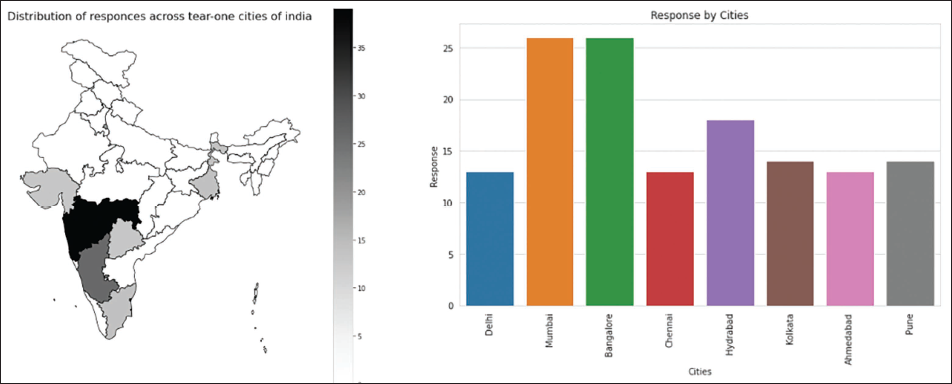
The distribution of the responses is represented in Figure 1. As observed in Figure 1, Maharashtra shows the highest responses since Mumbai and Pune fall under it. The frequency of responses from individual cities is represented in the bar chart. The data points in this plot do not have any outliers, so we do not have any bias in the demographic data.
Cartogram for State-wise Distribution and Bar Plot for City-wise Distribution.
Industry Sector Distribution
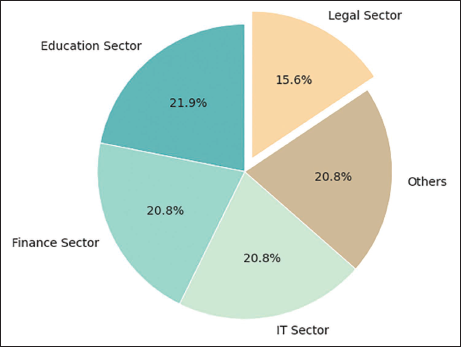
We received an average of 19.98% response from each sector that we considered for the survey (refer Figure 2). Therefore, according to the pattern, the data are not biased with regard to sectors (median for the same is 20.8—thus, there are no outliers in the data, which can affect the mean). Here the ‘Other’ sector includes pharma, consultancy, import–export, manufacturing, etc.
Sector-wise Distribution of the Responses.
Feedback from Survey Responders
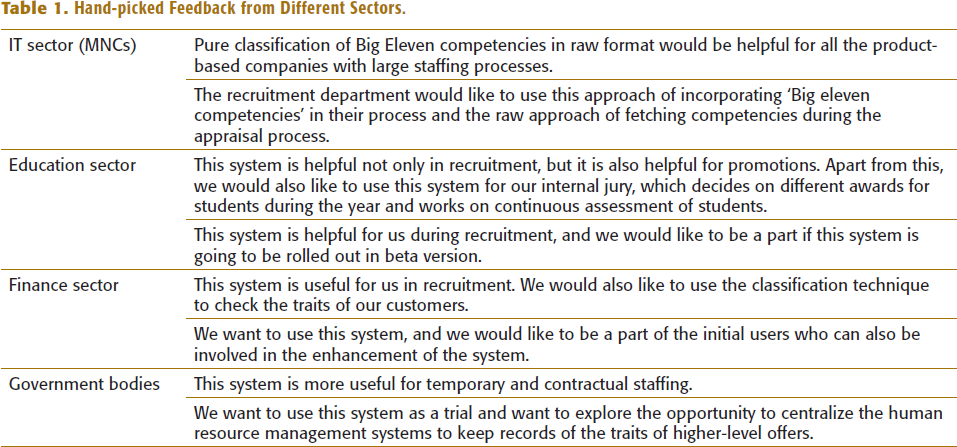
We received responses from many well-known names from each sector. Table 1 shows some hand-picked responses and suggestions given during the conversation for the survey collection.
Hand-picked Feedback from Different Sectors.
ANALYSIS
Recruitment Pattern
These data were collected according to each sector to check the recruitment pattern of the organizations. Figure 3 shows the distribution of attempts of a number of recruitments in the organization according to the sector.
Sector-wise Recruitment Patterns.
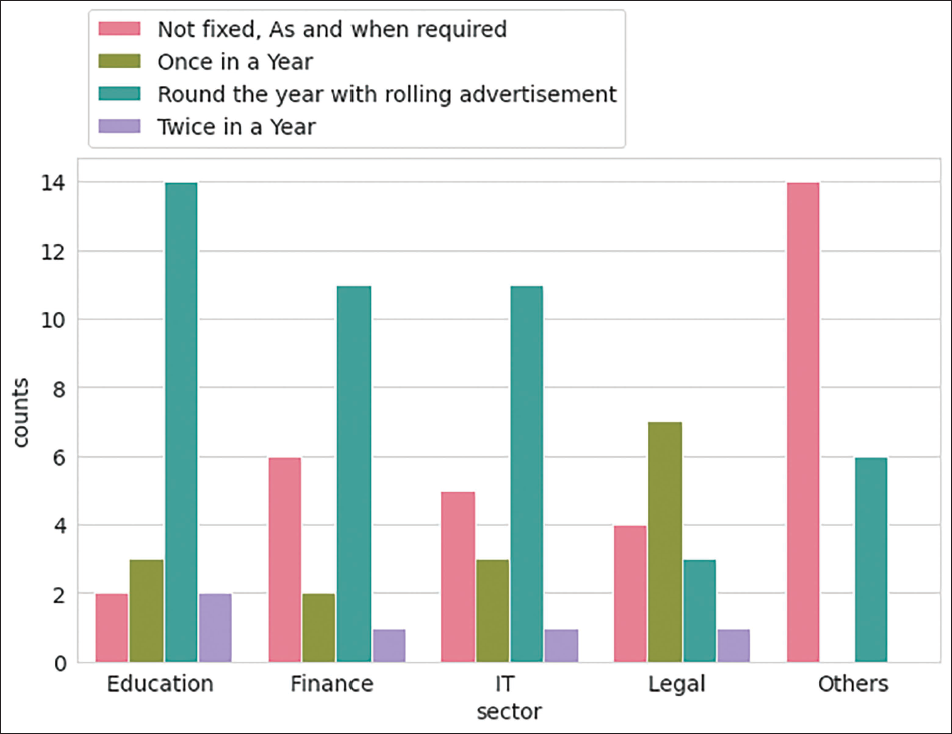
It is clearly observed that the education, finance and IT sectors recruit round the year. For the legal sector, once-a-year recruitment seems enough, and in other sectors, it is based on requirements. Thus, most organizations are now flexible with recruitment timings. As such, there is no season for recruitment.
Recruitment Process
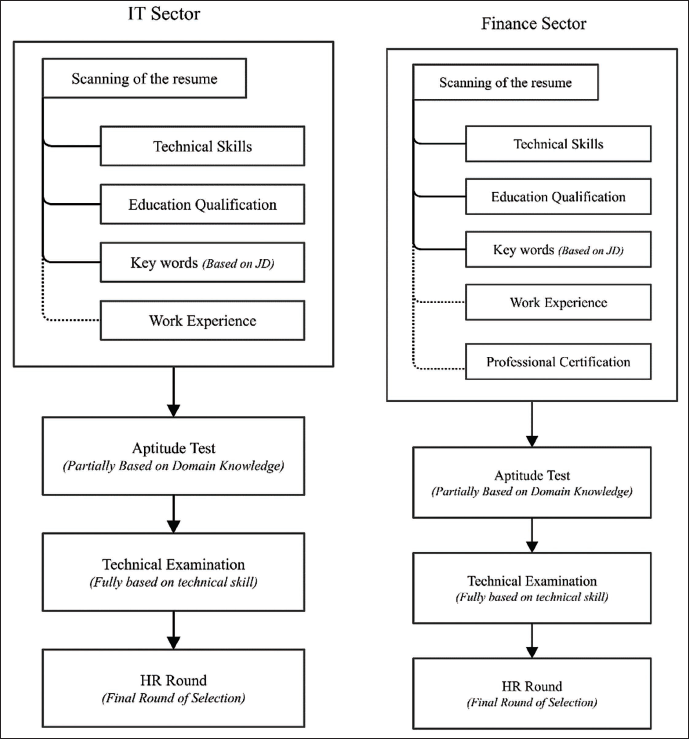
There is little difference in the recruitment process in the sectors, and currently, there is no specific scanning process that checks the candidate’s competency. Thus, this shows the clear market requirement of the system, which can accurately identify the competencies from the resumes—which can be plugged into this already defined system.
As can be observed in Figure 4, in the IT and finance sectors, the recruitment process is quite similar. The primary difference is that in the finance sector, there is an optional scanning to consider professional certification of candidates.
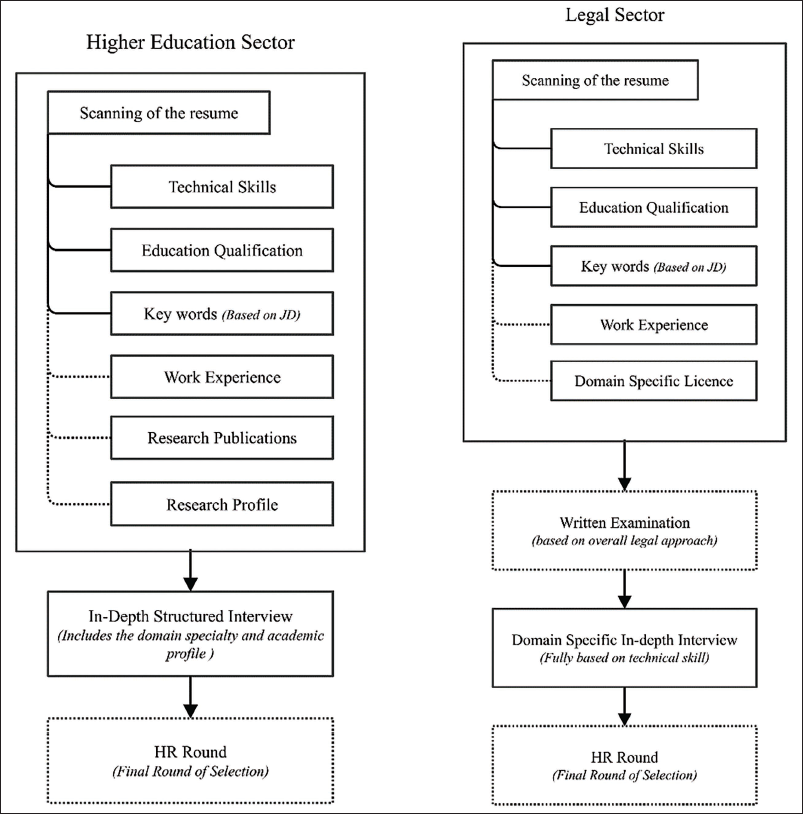
As observed from Figure 5, the higher education and legal sectors have more options in scanning, but after that, both sectors are more focused on in-depth interviews. The rest of the steps are optional or not adopted by many organizations.
Flow Diagram for Recruitment Process (IT Sector and Finance Sector).
Flow Diagram for Recruitment Process (Education Sector and Legal Sector).
Top Criteria to Scan the Resumes
During the recruitment process, the criteria for scanning the resume are essential and a base step in the whole process. The following are the criteria picked by most companies during the survey:
Analyse the qualities and traits of top-performing employees currently in the role.
Define the criteria for the minimum education qualification based on the job description.
Define the criteria for a minimum technical skill set based on the job description.
Define the criteria for additional technical skill sets based on the job description.
Analyse the previous work experience from the resume.
Apart from these general criteria companies pick from all the sectors, some specific criteria according to the sector requirements and priorities are listed below:
Finance sector: Candidate’s background with the previous company and the background of the higher education college (like, are the candidates from IIMs and IITs?).
Legal sector: Individual practice records, goodwill in the market and licences, if any.
Education: Research published by the candidates.
Identification of Keywords in the Organizations
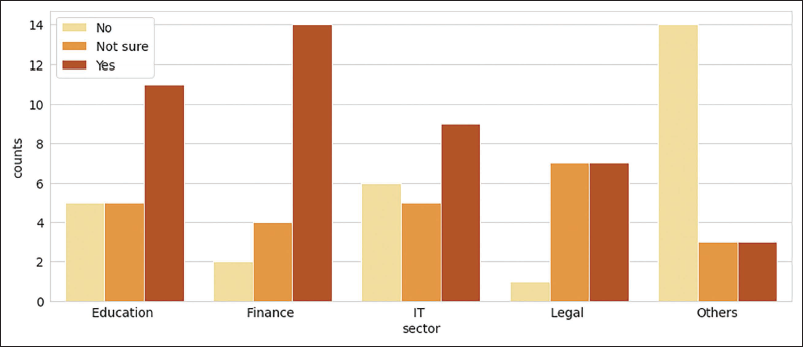
As shown in Figure 6, the education, finance and IT sectors try to pre-decide keywords before rolling out any job position. Only companies belonging to the other category show a response that they are not sensitive about fixing keywords before starting the recruitment process.
Sector-wise Insights of Keyword Identification Practice During the Recruitment Process.
Do Companies Follow the 4IR/Industry 4.0 Standards?
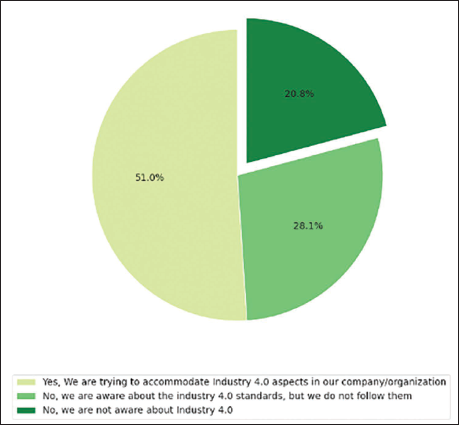
As shown in Figure 7, 51% of the companies are trying to accommodate 4IR/Industry 4.0 competencies, and 28.1% of the companies are aware of it but currently not following the standards. About 28% of the companies are potentially looking forward to solutions that can help them to step into 4IR standards. And 51% of the companies are looking forward to solutions that can help them adapt smoothly from our sample. Thus, most companies follow 4IR standards and are willing to use systems that accommodate the 4IR/Industry 4.0 approach.
Acceptance of 4IR/Industry 4.0 Standards in Organizations.
AI Recruitment Process and Cultural Integration
According to Niranjan (2020), the Indian epic Mahabharata has practical management lessons which can guide corporates in the current scenario for building effective strategies. Supporting this study (Rajoura & Rajoura, 2022) carried out a comprehensive literature review demonstrating the relevance of ancient Indian knowledge in the contemporary corporate world. Their study highlighted that the Mahabharata reflects essential corporate traits such as logical thinking, scientific rationality, diversity and openness.
Building on this foundation, and in line with our survey findings, we proposed a novel feature in the AI-recruitment system. This feature suggests candidate traits in terms of competencies and fact-based analysis, and additionally maps them to a relevant Mahabharata character. For example, a candidate who demonstrates strong focus and logical reasoning might be compared to Arjuna, while one who exhibits leadership and diplomacy could be associated with Krishna. This parallel is intended to provide recruiters with an enhanced understanding of a candidate’s personality, beyond technical skills and conventional competencies.
To evaluate the acceptance of this idea, we asked organizations during the survey: ‘Would you like to compare the major competencies and traits of candidates with characters from the Mahabharata?’. The responses indicated that while organizations were not entirely sure how useful such a candidate profile would be for them, many expressed interest in trying this aspect of the system.
Market Response for the Proposed System
As shown in Figure 8, 50% of the companies are positive and sure that the proposed system is useful for them.
Representation of the Responses from the Companies for the Proposed System.
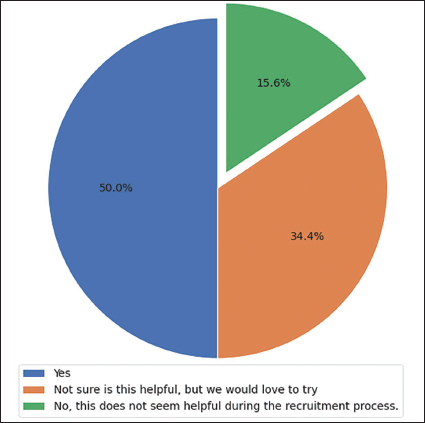
About 34% of the companies are positive about the system, but they are not sure about the utility of the system. They would like to use the proposed system and experience the process. About 15% of the companies believe that this system is not helpful for them.
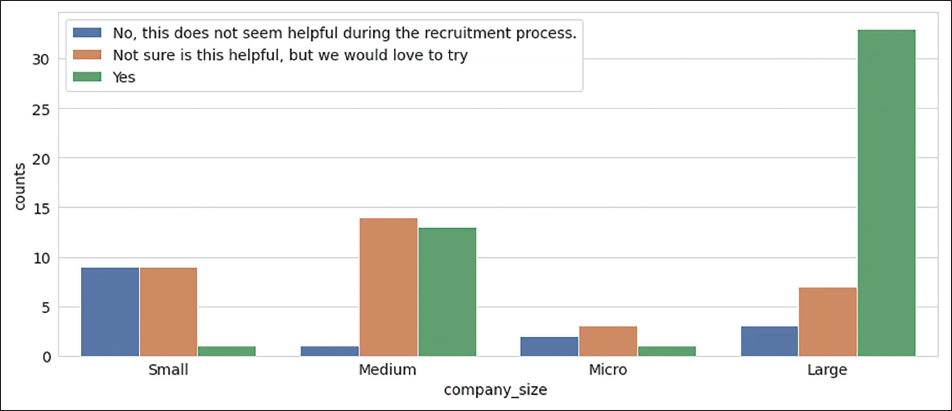
As illustrated in Figure 9, micro-sized companies do not find this system useful. So, the target users of our system are small-sized, medium-sized and large-sized companies.
Target Consumers of the System Based on the Size of the Company.
HYPOTHESIS TESTING: CASE I. COMPANY SIZE VS. FINAL INDUSTRY RESPONSE
A χ2 test is a statistical method commonly used to determine whether a significant association exists between two categorical variables. In this case, company size and final response from the industry are the two variables under analysis. The test involves calculating the difference between the expected and observed frequencies in the contingency table and assessing whether the difference is significant enough to reject the null hypothesis of no association between the variables. If the p value of the test is less than a pre-determined significance level, such as .05, the null hypothesis is rejected, and it is concluded that a significant association exists between the variables.
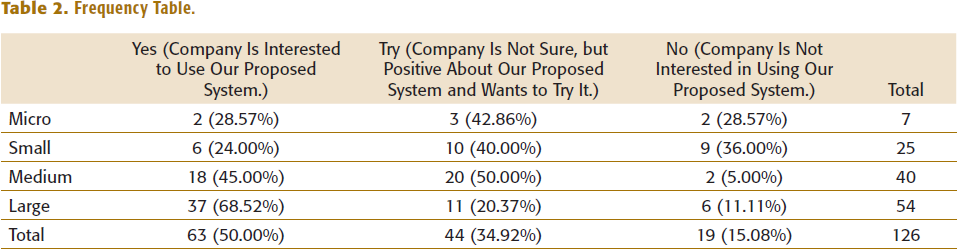
Table 2 presents the responses from companies of varying sizes regarding their interest in adopting the proposed system.
Frequency Table.
Null Hypothesis and Alternative Hypothesis
H0: There is no relationship between company size and response.
H1: There is a relationship between company size and response.
Selecting Alpha
The significant level | value of α = 0.05
Computing the Degree of Freedom
Degrees of freedom refer to the number of values or choices available within a problem. It defines the quantity of information in a dataset that can be used for statistical inference or estimation. In hypothesis testing and regression analysis, degrees of freedom determine the test statistic, typically a t-statistic or χ2 statistic. The critical values of these test statistics are obtained from tables using the computed degrees of freedom. Degrees of freedom (df) are calculated as the number of observations minus the number of parameters to be estimated in a given problem. For example, in a χ2 test, the df equals the number of categories in a contingency table minus one.

Compute the Expected Frequency Table
The expected frequency in a contingency table is the number of observations that would be expected in each cell if the variables being analysed are independent. The expected frequency can be calculated as follows:
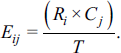
Here,
Computing the 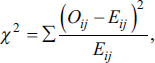
where
Using the above equation, we computed the value of 
Now we have
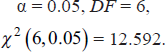
When we perform a
Outcome
The
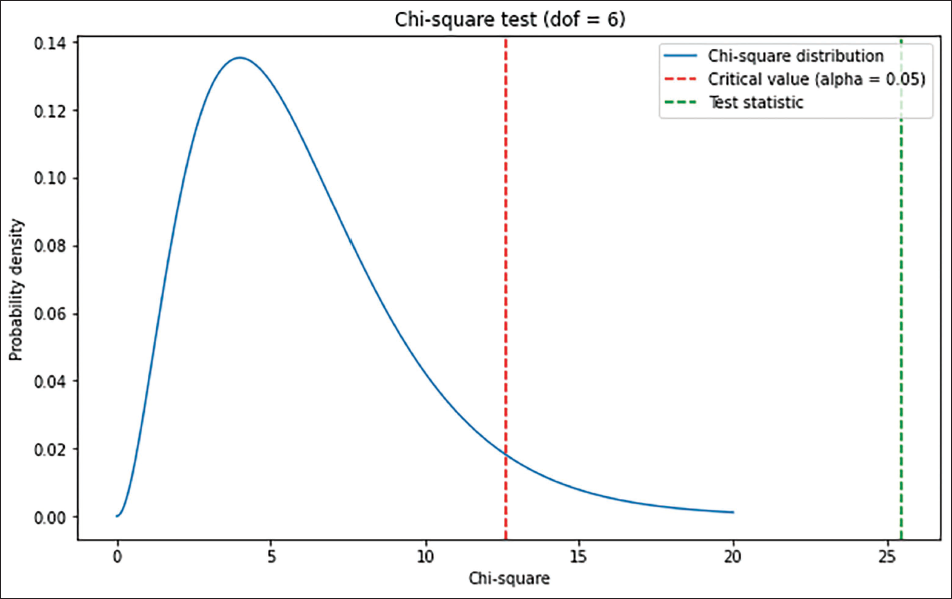
As shown in Figure 10, the calculated
Chi-square Statistics for Case I.
HYPOTHESIS TESTING CASE II: SECTOR OF THE COMPANY VS. FINAL INDUSTRY RESPONSE
A
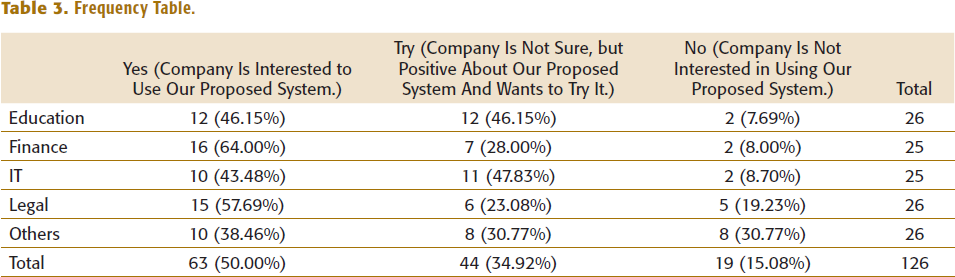
Table 3 presents the level of interest shown by companies from different sectors in adopting our proposed system, categorized into ‘yes’, ‘try’ and ‘no’ responses.
Frequency Table.
Null Hypothesis and Alternative Hypothesis
H0: There is no relationship between the industry sector and response.
H1: There is a relationship between industry sector and response.
Selecting Alpha
The significant level | value of α = 0.05
Computing the Degree of Freedom

Using the 
Now we have
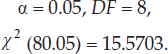
Outcome
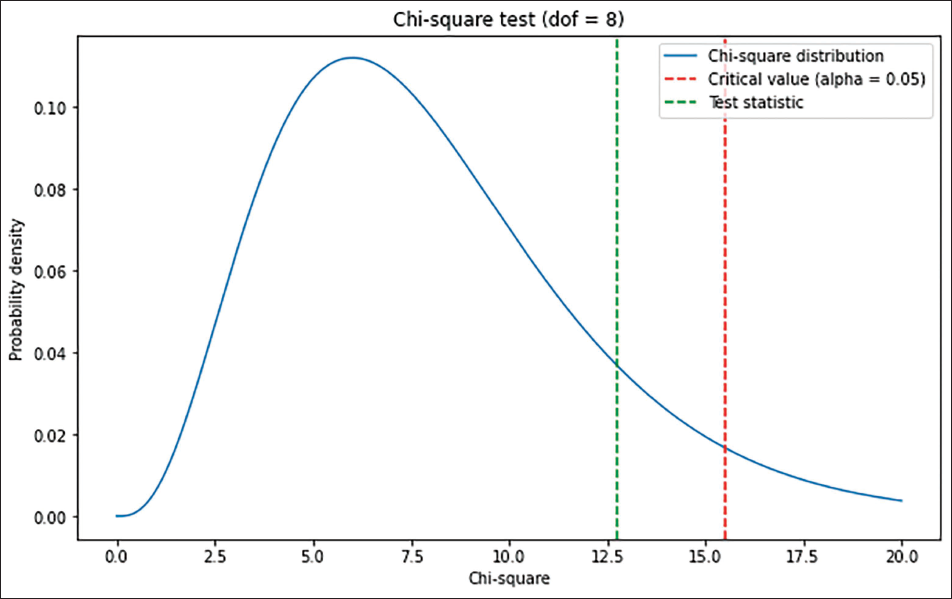
As shown in Figure 11, a
Statistics for Case II.
RESULTS
A survey was conducted to gather data about the acceptance of Industry 4.0 standards and the proposed system among companies of different sizes. The questions included the size of the company, acceptance of Industry 4.0 standards and the company’s response to the proposed system, among others. The proposed system involves analysing resumes at the screening stage using Industry 4.0’s big-eleven competency standards, assisting recruiters by providing insights into candidates not only on the basis of technical skills but also on broader competencies.
The survey showed interest from the companies, ranging in size from small and medium-sized to large, in utilizing the proposed system. Out of 126 companies participating in the questionnaire, 63 were interested, 44 wanted to try or give the system a chance, while only 19 showed no interest in the service. Furthermore, the survey revealed that only micro-sized business entities found this system to be not beneficial.
The survey revealed a considerable association between company size and the final response from the industry. To test this, a
The target segment of the proposed system includes small, medium-sized and large companies, as these are the groups that found it useful based on the survey results. The survey indicates a high potential for acceptance and implementation of the proposed system among companies of varying sizes.
The survey also revealed the relationship between the sector/domain of the company and the final response. The test result shows the
The implementation of the methodology and hypothesis testing is openly accessible on a dedicated GitHub repository, facilitating transparency, reproducibility and collaboration within the scientific community (Gadesha, 2023).
CONCLUSION
This research exclusively investigates the adoption of Industry 4.0 standards and AI-based recruitment systems among companies of various sizes and from diverse sectors. The study combined a review of relevant literature with a survey of 126 companies. The literature review highlighted key factors influencing technology adoption and the benefits associated with Industry 4.0 implementation. The results of the survey indicated that, irrespective of sector, the majority of the companies were interested in the AI-based recruitment system, which means the AI-based recruitment system will be accepted in the present market. Sector vs. responses and company size vs. responses also showed significant relationships. The findings align with the TAM, emphasizing the importance of perceived usefulness and ease of use in driving technology adoption. This research contributes to the existing literature by providing empirical evidence and results of hypothesis testing for organizations. By leveraging Industry 4.0 technologies and addressing adoption concerns, companies can enhance their competitiveness and innovation capabilities.
Footnotes
DECLARATION OF CONFLICTING INTERESTS
The authors declared no potential conflicts of interest with respect to the research, authorship and/or publication of this article.
FUNDING
The authors received no financial support for the research, authorship and/or publication of this article.

APPENDIX
Here is the list of survey questions:
Q.1 What is the size of the company? (micro-sized, small-sized, medium-sized and large-sized)
Q.2 How frequently is recruitment done in the company?
Q.3 What are the basic criteria considered while shortlisting the candidates?
Q.4 What are the steps/rounds included in the recruitment process?
Q.5 Do companies pre-decide the keywords before the shortlisting process?
Q.6 Do companies follow 4IR/Industry 4.0 standards while recruiting?
Q.7 What are the most likely competencies for the companies?
Q.8 Do companies like to use the system which we proposed?
Note: This survey is designed with the help of large-sized companies’ HR departments.
e-mail:
e-mail: