




Abstract
COVID-19 pandemic has turned the lives of people upside down across all walks of life. The COVID-19 driven partial/full lockdowns across the globe confined millions behind the walls restricting their movement. The confinement of people has led to various disruptions in their social, economic and psychological well-being. The fear of catching the virus coupled with financial strain and social distancing has proliferated the anxiety and stress among the masses. COVID-19 has adversely impacted the progression of women’s empowerment. It is reported that a greater number of women compared to male counterparts have lost their jobs during the pandemic, especially those working in the industrial mix. Women since long have been facing the brunt of inequalities across different spheres and sectors. They have always assumed the role of primary caregivers, be it in the present context or the various outbreaks in the past. Theoretical background establishes the conspicuous impact of various outbreaks in the past leading to economic and social disruptions. Further, few have addressed the psychological aspects of such outbreaks or crises on the people, and the invidious impact on women-specific studies is limited, especially in the Indian context. Therefore, the present study explains the major changes and issues women face during COVID-19, especially during the lockdown phase. The study highlights the significant roles assumed by women during the lockdown period and throws light on the precarious situation wherein they have faced intimate partner violence. The exploratory study delves deeper into the primary subjects using interpretative phenomenological analysis.
The advent of novel virus in November 2019 in the Hubei province of China had became the epicenter of news through out the world. The virus proliferated at a large scale impacting great number of people at different parts of the world. In light of the same, The World Health Organization declared the SARS-CoV-2 (also referred to as coronavirus) a pandemic on 11 March 2020. The pandemic hit the globe severely confining a large populace behind the walls as lockdowns were imposed by countries restricting travel and physical contact with others. Although people from all walks of life faced anguish and anxiety, the virus seems to have a starkly different impact on men and women. While not in terms of one contracting the virus but the gap it generates for long-term health and economic prospects (Henriques, 2020).
The virus is perceived as indiscriminatory impacting men and women equally. However, delving deeper highlights the differences in psycho-social vulnerability to the disease. It has a far-reaching impact on women as compared to their male counterparts. The pandemic is expected to exacerbate the existing inequalities by disrupting the economic, social and psychological well-being of women (Alon et al., 2020; Bhatia, 2020; Burki, 2020; Chauhan, 2020; Durant, 2020; Madgavkar et al., 2020; UN Women, 2020a).
As the pandemic scuttles through the economies, a massive wave of layoffs is expected among the temporary workers, most of whom are women (Durant, 2020). The brunt of unemployment is unequal across the board. Since women are majorly involved in temporary or time work, it has impacted them severely. Emerging evidence suggests that industries that are majorly hit due to the pandemic are disproportionately staffed by women (Alon et al., 2020; Berkhout et al., 2021). The global economic fallout resulting from COVID-19 will have a regressive effect on gender equality (Berkhout et al., 2021; Madgavkar et al., 2020). Significant setbacks are expected to impact women earning less, engaged in self-employed business, having insecure jobs with no provision of health insurance or paid sick and maternity leaves and having meagre savings at their dispense with lack of social security provisions (UN Women, 2020a).
Further, the restrictions on staying at home have brought along a shadow impact highlighting the persisting psycho-social issues whereby some 243 million women globally have experienced sexual or physical abuse over the past 12 months (Alon et al., 2020; Burki, 2020). Some studies document rise in violence against women as the pandemic has shut off the avenues of escape, elevating depression and stress directly contributing to women’s mental health (Alon et al., 2020). The compounded impact of the virus will be felt in terms of rising unpaid care work, intimate partner violence, the burden of care of the elderly and a rise in domestic chores. In a policy brief by the UN Secretary-General, it is apprehended that the limited gains made by women during the past few decades might roll back due to the gaping cracks caused by the virus (UN Women, 2020a).
Therefore to understand the gendered impact of the virus, the present study was conducted in India with the help of semi-structured personal interviews. Women in India comprise 20% of the total workforce across the three sectors (Primary, Secondary and Tertiary), and it is speculated that they have lost 23% of the jobs from the industry segment alone amidst the pandemic (Madgavkar et al., 2020). They work within the socio-cultural milieu of patriarchy (Rawat, 2014), and the polarization of toxic masculinity has already led to a skewed sex ratio owing to meta son preferences (Kaur & Kumar, 2020). Therefore imposition of the lockdown will add new complexities to violence against women (Alon et al., 2020). As per emerging evidence, there is a two-fold increase in the number of gender-based violence incidents reported during the lockdown, with a majority of the cases erupting in UP, Bihar, Haryana and Punjab (National Commission for Women, 2020). Economic crises have directly triggered social and psychological concerns as the imperative to stay at home does not equate with being safe at home.
The present study intends to derive the thoughtful answers to:
RQ1: What are the major changes that women have experienced during the lockdown?
RQ2: What are the major roles assumed by the women during the lockdown?
RQ3: Have women experienced intimate partner violence during the lockdown?
RQ4: What are the key problems faced by women during the lockdown?
THEORETICAL BACKGROUND
This section throws light on the challenges faced by women over the years to break the conservative stereotypes and gain a foothold in the mainstream. It also discusses how various outbreaks in the past and present have exacerbated the gender inequalities in different parts of the world. Finally, the impact of gender inequalities on economic development has been reviewed.
Women and the Journey So Far
Women across the globe have witnessed inequitable access to economic, health and social resources, especially during the pandemic (Alon et al., 2020). For ages, they have been restricted to agricultural and informal sectors where the investments are drawn towards their reproductive roles rather than the productive ones (Hisrich, 1986; Mehra, 1997). It has been documented in the past that abject poverty, along with a need to contribute to the family income, has pushed women out of their conventional setting and motivated many of them to become petty entrepreneurs utilizing their skills in a flexible way (Epstein, 2017; Kaur & Hayden, 2017). The ease of selecting when to work and corresponding financial independence boosted women’s confidence to enter the self-employment zone where a large section was attracted to small scale cloth manufacturing units. Here, the low cost of start-up allows them to draw on their existing social contacts (Hakim, 1989; Kaur & Hayden, 2017).
The circumference of these petty entrepreneurs was surrounded by occupational stereotypes. Affinity between their previous work or domestic skills and self-employment were the major reasons for breaking the shackles of challenging socio-cultural norms (Carter & Cannon, 1988; Hakim, 1989; Kaur & Hayden, 2017). For them, starting and operating a business involves a higher amount of risk and effort. Friends and other members of the family are the only options for seeking advice and procuring finance. Therefore, networking influences the decision of women entrepreneurs (Hampton et al., 2009; Hisrich, 1986). New ventures often get hindered by a lack of business information, advice and suitable business support systems (Allen & Truman, 1993). Under-representation in upper-level management, occupational segregation, access to networks, socio-cultural status and restricted access to capital imposes additional constraints on the radius within which women operate (Aldrich, 1989).
Changes in the socio-cultural and political environment in terms of postponement of child-rearing, increased single-parent families, increased divorces, right to decision-making, representation in the polity and a rise in education-level motivated women to gain a foothold in the market (Hisrich, 1986). They have started assuming greater roles and raised their voices against their abusers, but COVID-19 has created gaps in progress made so far. Even before the pandemic, progress towards gender equality was uneven, however, the virus coupled with lockdown restrictions has further exacerbated the situation (Alon et al., 2020; Madgavkar et al., 2020; UN Women, 2020a). It has deepened the inequalities wherein women’s jobs are 1.8 times more vulnerable to the crisis than men’s (Madgavkar et al., 2020).
Women’s jobs are 19% more at risk than men’s as they are disproportionately staffed in food services, retail and the entertainment sector (Madgavkar et al., 2020). Emerging studies fear that COVID-19 will contribute to the widening of gender poverty gaps. It is forecasted that 221 million men will be living in poverty in 2030 compared to 232 million women (UN Women, 2020b). The cited literature builds on how unequal gender norms have been prevailing for long, restraining women’s economic, social, spiritual and political strength.
Lessons of the Past
From the observations in the past, we learn that situations of outbreaks and crises illuminate gaps in the workplace and social support for women (Alon et al., 2020). During the outbreak of Ebola Haemorrhage Fever (EHF) in Congo in 2003, the pattern of patriarchal masculinities was clearly observed. The men avoided contracting the EHF by putting women in the frontline to care for the sick and diseased, thus protecting themselves from being affected by the spread of the virus (World Health Organization, 2007). Evidence from the Ebola outbreak in West Africa in 2014–2015 confirms higher sexual abuse and domestic violence rates experienced by women (United Nations Development Programme, 2015). The outbreak of Ebola in Guinea, Liberia and Sierra Leone highlighted a 75% increase in the maternal mortality rates across the three nations (Davies & Bennett, 2016), depicting that the indirect effects of the crisis are as important as the direct mortality effects, but the same remained invisible during the period of crisis as the resources allotted for reproductive and sexual health were diverted towards the emergency needs (Sochas et al., 2017).
In Liberia, prevention measures taken for subsidising the impact of the Ebola outbreak impacted the past gains achieved by women. They were restricted to travel; therefore, it hampered women’s economic prospects, leading to economic insecurity, which took longer to reinstate when compared to men (United Nations, 2020). Women pursuing their roles as caregivers have contracted the infection at higher rates (Menéndez et al., 2015). Women have been predominantly working as caregivers both within the family and on the frontline. Therefore, they are more likely to be impacted by the virus (Ebola during 2014–2016 in West African Nations). A similar trend was observed at the time of the outbreak of Zika Virus, showing less attention paid to structural gender inequalities (Davies & Bennett, 2016). Their gendered roles as caregivers in the healthcare system in West Africa have been conspicuously invisible, and their needs remain unmet due to a lack of autonomy at their disposal during the outbreak (Harman, 2016). During the Zika and Ebola outbreaks, women were not even supposed to make decisions regarding their sexual and reproductive choices, which was further heightened by the lack of access to adequate healthcare facilities and financial resources to travel to clinics and hospitals for routine check-ups of their children (Wenham et al., 2020).
The disruptions during outbreaks have compounded the existing social and economic vulnerabilities (Davies & Bennett, 2016). Ebola outbreak fuelled the delays in the care of women experiencing pregnancy complications, leading to adverse outcomes such as spontaneous abortions and haemorrhages (Chattu & Yaya, 2020). Gender biases are not limited to the adults, as evident in a follow-up observational study from Kolkata, India, where the boys were given preferential treatment compared to girls during the outbreak of diarrhoea in the region. Boys were more likely to receive the treatment in the form of oral rehydration fluids. Further, they were taken to a qualified health professional when compared to girls for better treatment (World Health Organization, 2007). These studies represent the economic and social disruptions caused by various outbreaks in the past and their impact on women and indicate the need for a proactive approach in the future.
Impact of Gender Inequalities on Economic Growth
Various studies have advocated for gender parity and women empowerment (Duflo, 2011; Mehra, 1997; Sen, 1990). Several studies confirm the positive correlation between economic growth and corresponding factors such as greater access of women to secondary education, access to the labour market, active political participation and a low fertility rate (Cabeza-García et al., 2018). Gender gaps in the education and health sectors can reduce economic growth (Ahang, 2014; Kaur & Kumar, 2020; Klasen, 2018). Whereas gender parity will promote higher investment which, in turn, will leverage the labour force growth, thus accelerating the economic growth (Klasen, 2018). Industries with women on the board or those which are managed by women, grow faster as compared to those which are gender-neutral (Bertay et al., 2020; Shahzad et al., 2019). In the short run, gender equality at the level of political and economic participation would lead to a decrease in economic growth, but in the long run, this position is advantageous (Ahang, 2014).
It is apprehended that in a gender regressive scenario wherein no action is taken to counter the economic and social impact of COVID-19 on the women, global GDP growth could be $1 trillion lower in 2030, and correspondingly there will be a filter down effect as around 33 million fewer women will find an opportunity to work (Madgavkar et al., 2020). Taking action to advance gender equality is speculated to contribute an additional $13 trillion to global GDP in 2030 by creating 230 million jobs for women (Madgavkar et al., 2020). Hence, including women in the mainstream and a welfare-oriented approach is crucial for economic prospects.
The literature highlights the impact made by the past outbreaks in the form of economic, socio-cultural and health disruptions on the women in the regions afflicted. But there is a paucity of information concerning the gendered impact of COVID-19 amid lockdown restrictions in India. India, owing to its sheer size and the presence of socio-cultural patriarchy, provides immense opportunity to explore the conspicuously invisible impact of the COVID-19. The present study attempts to highlight the changes, challenges and key roles faced by women during the pandemic coupled with the lockdown restrictions.
IMPACT OF COVID-19
The International Monetary Fund (IMF) projected a contraction of the global economy by 3% in 2020 due to the pandemic, making it the worst recession since the Great Depression and much more severe than the global financial crisis (International Monetary Fund, 2020). COVID-19 has caused a great imbalance in the global supplies leading to the suspension of production capacities, especially in the manufacturing and automotive sector. Barclays has estimated that the nationwide lockdown imposed in India will cost around $120 billion, indicating a bumpy road ahead. The IMF has projected a growth rate of 1.90% for India from 2021 to 2022, signalling the adverse economic situation as the pandemic rolls through the economy. The asymmetric growth calls for proactive steps to withstand the disruptions from a financial and operational standpoint. It is imperative to tighten the seat belt in the post-COVID-19 era to mitigate the potential risks as the economy will probably run in a cash strapped state. Not only the health system but also the depreciating currency rates, deepening of non-performing assets (NPAs), widening pay gaps, plunging production rate, jolting real estate and slump in tourism and hospitality would further exacerbate the stagnant growth picture. The farmers dealing in perishables such as fruits, vegetables and flowers paint a bleak picture of losses. Small retailers and small-scale entrepreneurs have to face the brunt of heavy losses during the period that demands heavy stimulus packages for the revival.
The International Labour Organization (ILO) estimates have raised the brows of the entire globe as there will be a significant rise in unemployment with a parallel rise in underemployment. It is estimated that in a bad scenario, around 5.30 million, mid-scenario 13 million and in a high-scenario 24.70 million will lose their jobs to the crisis. The imposition of the lockdown in various nations will affect 2.70 billion workers globally, representing around 81% of the world’s workforce, wherein around 37.50% are employed in high-risk sectors such as accommodation and food services, rental, manufacturing, real estate, business and administrative activities (International Labour Organization, 2020). The nationwide lockdown has triggered layoffs across various sectors in India, turning hundreds of thousands of migrant workers in limbo. Upend policies and strategies are required to turn around the economy as the crisis is expected to have a cascading and rippling effect in the long run.
Economic Impact of COVID-19 in Context of Women
Around 58.60% of the working women are predominantly working in the services sector as compared to a 45.40% share of men (International Labour Organization, 2020). In particular, 80% of the South Asian women are in informal employment compared to Sub-Saharan Africa and Latin America and the Caribbean where the percentage rate is 74% and 54%, respectively (Durant, 2020). Women comprise less than 40% of the total employment but correspondingly make up 57% of those working on a part-time basis. They occupy a dominant share in the services sector which is expected to face the harshest effect of the preventive measure of full and partial lockdown across the globe (Alon et al., 2020; Madgavkar et al., 2020). As per the Gender pay gap informal sector report given for the period 2006-2013, India has a gender pay gap of 24.81% whereas insights from Monster Salary Index 2018 highlight men in India earn around ₹242 per hour as compared to women who earn ₹196 per hour for similar set of activities.
As per PayScale Research, 2020, women make 81 cents for every dollar given to men. For single mothers, meeting both ends is going to be much more difficult because of the existing gender pay gaps which are going to further exacerbate during the period of COVID-19. Even the Health and Social Sector, with almost 70% of women’s participation remained untouched by the gendered gaps as it reflects an average pay gap of around 28% (The Organisation for Economic Co-operation and Development, 2020). It is expected that the existing set of inequalities would widen further amidst the pandemic.
Social Impact of COVID-19 in Context of Women
Economic impact being the direct consequence of the pandemic is reviewed by each government, but the impact of the virus on the socio-cultural framework goes unnoticed. The virus has frozen women’s autonomy due to restricted movements and blocked social contacts (Alon et al., 2020). The burden of unpaid care responsibilities and domestic chores lies on the shoulders of women because of the stigma of classifying the job roles based on gender (Chauhan, 2020; Rawat, 2014). Care of the elderly with no division of domestic work adds strain to her conspicuously invisible roles. As per UNESCO, around 1.52 billion students were at home after schools’ closure, leading to an excess load of care and home-schooling (United Nations, 2020). There was a rise in the number of gender-based violence incidents during the lockdown with 30% increase reported in France, 33% in Singapore, 30% in Cyprus, 25% in Argentina, 18% in Spain and a similar increase was observed in Canada, Germany, UK and US (UN Women, 2020a). The statistics represent only the highlighted cases or the reported incidents where the women managed to report the abuses.
The crisis adversely impacted the sexual and reproductive health of the women as the limited resources were diverted towards the urgent needs. Lack of access to essential health services, vaccinations and contraceptives, especially in the rural hinterland and marginalized areas compounded with restrictive social norms and gender stereotypes led to a rise in maternal mortality and morbidity cases, teenage pregnancy and sexually transmitted diseases (United Nations, 2020). About $1.5 trillion was estimated as the global socio-economic cost of violence against women and girls (UN Women, 2020a).
RESEARCH METHODOLOGY
The present study aims to understand the participant’s experiences, challenges faced amidst the lockdown restrictions during COVID-19 times. Therefore qualitative research approach was utilized to gain insights into socially constructive meanings that otherwise are not feasible using numerical analysis (Briggs, 2010; Kaur & Kumar, 2021). The lack of previous research supporting the investigating topic makes it crucial to adopt the qualitative approach (Morrow, 2007). Interpretative Phenomenological Approach (IPA) is considered the most effective qualitative research approach to describe participant’s perceptions and experiences rather than drawing generalized conclusions; therefore, the same has been adopted in the present study (Dipboye & Bigazzi Foster, 2002; Smith & Osborn, 2003). Semi-structured personal interview method was followed as it is a flexible data collection method to collect the individual’s subjective report for an IPA study (Kaur & Kumar, 2021; Smith, 1996). Subject experts, academicians and scholars have also been consulted to ensure content validity and selection of samples.
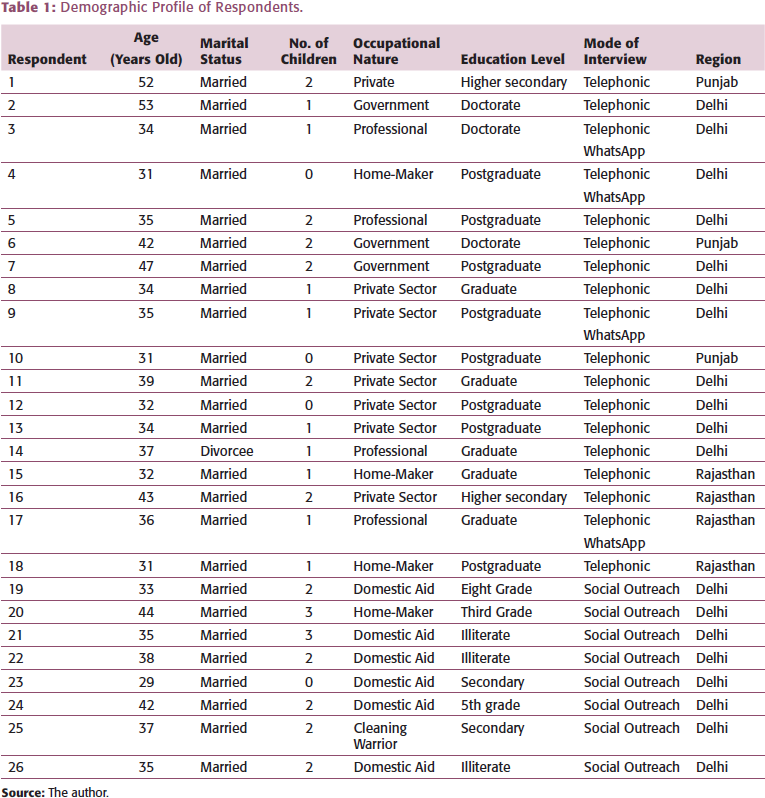
In the pilot study, few men were contacted, but due to the biasedness in the responses, information was directly obtained from married women’s as they tend to have multifaceted roles as compared to singles. Therefore using a purposive sampling strategy, a sample of 26 married women was considered practical and feasible to capture sufficiently rich and detailed information to establish connections with the actual instances (Boyatzis, 1998; Smith & Osborn, 2008).
The responses were gathered during 2020 (April - June) through telephonic conversations, Whats App and social outreach programmes. A thorough review of literature helped derive key elements concerning the subject matter. Therefore a theoretical thematic analysis was followed to derive a detailed analysis of the study (Braun & Clarke, 2006). Table 1 represents the demographic profile of the respondents.
Demographic Profile of Respondents.
DATA ANALYSIS
The study has used a qualitative thematic content analysis methodology to investigate the etched impression produced by the virus by understanding people’s experiences related to the event (Merriam, 1998). Thematic content analysis is useful in analysing the large amount of data obtained from multiple participants by synthesising it into a meaningful theme (Boyatzis, 1998). It is used in identifying, analysing and reporting patterns emerging within the data (Braun & Clarke, 2006). A bottom-up or inductive thematic analysis approach was applied to derive the participant’s experience rather than seeking a view based on assumption and bias from the pre-existing coding frame or researcher’s pre-existing analytic beliefs (Braun & Clarke, 2006). Open and focussed coding using the traditional approach of paper, colour markers and visual mapping was done to ensure constant interaction and immersion in the data (Maher et al., 2018; Suddaby, 2006). The rigour of the study is established based on the criterion of trustworthiness which rests on the parameters of credibility, transferability, dependability and confirmability (Maher et al., 2018).
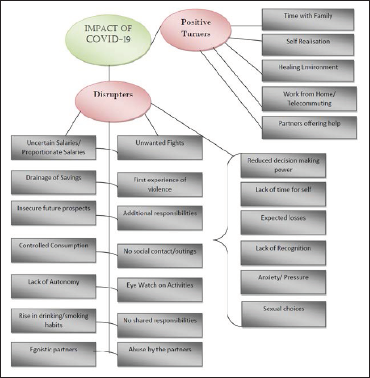
The guidelines provided by Braun and Clarke (2006) were adopted to develop the thematic maps. Thematic analysis is iterative and reflexive. It involves constant shifting (forward and back) between six defined phases leading to scrutiny of information to obtain a refined set of data (Braun & Clarke, 2006; Nowell et al., 2017). With the help of a six-phased thematic content analysis approach, initial themes were generated to understand the findings (Figure 1). These themes were generated by following a sequential approach. In the first phase, the initial ideas and thoughts were noted down and were read repeatedly to develop interpretative insights for the consistency and accuracy of the data (Braun & Clarke, 2006; Nowell et al., 2017). Data segments were categorized with the short names or codes in the second phase. Later these codes were designated as the key themes in the third phase. The fourth phase involved clear demarcation of themes to establish how well they fit with each other and also ensure that no codes were missed. In the fifth phase, broader and major themes were defined. Each theme was accompanied by a detailed analysis, and an overall structure was built to establish how the main and sub-themes are related to the subject. Finally, in the sixth phase, after numerous iterations reporting of the various key elements analysed was done (Braun & Clarke, 2006; Nowell et al., 2017).
The main aim of the study was to gather insights into the disruptions faced by the women during the nationwide lockdown due to the pandemic. As the subject is evocative and calls for building trust and confidentiality while participants share their experiences, initial intimacy was established with the respondents via preliminary screening phase. The interview started with a few questions regarding the general perspective about the lockdown. Then qualitative questions about the changes that the lockdown introduced in their lives were asked. In particular, few questions that were posed were ‘How do you manage your expenses during this time of pandemic?’, ‘What are the additional sets of responsibilities that you are performing during this lockdown?’, ‘Did you feel any change in your personal life?’, and ‘Does your partner helps you with newer roles?’, ‘How often do you take out time for yourself?’, ‘Do you feel any sort of pressure?’ and various other questions were asked to probe further through.
The sequence of questions was not rigid and in a few instances where abuse was observed, various other questions related to it were asked. Calls were recorded in a few cases with the respondents’ permission on the assurance of maintaining confidentiality. Conversations were conducted in multi-lingual dialects (English, Hindi and Punjabi). Using note-taking techniques, the responses were recorded in the case book. The data was translated into English. The duration of the interview ranged between 18:00 minutes and 44:00 minutes approximately.
FINDINGS
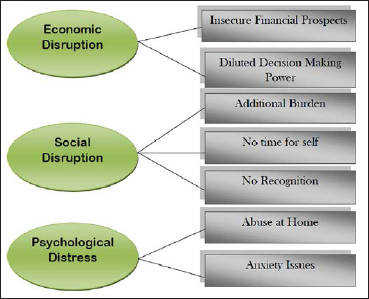
The information gleaned from the respondents was represented in the form of themes and sub-themes. Each main theme reflects the experiences faced by women during the phase of lockdown. Data was meticulously analysed to reflect the emotions of participants in a succinct manner, ensuring credibility and trustworthiness of the data. The elicited information results in three broader themes: Economic Disruption, Social Disruption and Psychological Distress. The three themes were found to be intertwined with each other. It is found that economic and social disruptions impact the mental peace of women causing psychological distress. The final developed thematic map with three main themes is represented in Figure 2.
Economic Disruption
Women in our society are conceptualized as the minor contributor to household decisions, especially those related to finance (Alon et al., 2020; Kaur & Hayden, 2017; UN Women, 2020b). Based on the interview with the women, including those from marginalized sections, the analysis is divided into two sub-themes mentioning the disruption on the economic front.
Insecure Financial Prospects
The lockdown has undoubtedly tweaked the savings and income of the populace, but in particular, women have been impacted a lot. There were instances where the respondents expressed their fear of revival, particularly those women serving as domestic help for households or as helpers in small shops as the lockdown has taken away their jobs without any certainty about regaining them in the immediate future.
Our jobs have been taken away by the corona and for the next few months, there are hardly any chances of getting them back. We don’t possess any other skills apart from being a domestic help as it’s been years, we are doing the same. This is our ‘Rozi-Roti (phrase been preserved in original dialect)’. (Respondent 24, Delhi)
This fear has been witnessed among those working in the private sector. As one respondent aged 34 years mentioned
My boss has told us that it will be difficult for him to bear the expenses so he indicated that we (few women) should search for some other alternatives as I work in a sales company so they are only keeping few male staff so that post lockdown they can be sent to other places for field work for speedy recovery of made losses. (Respondent 8, Delhi)
Our owner has given the salary of March but he has indicated that no further monetary compensation will be given in case the lockdown extends. He might lay off some staff after the lockdown as the owner himself has to bear the shop rent during the lockdown so he will keep only selected ones. (Respondent 16, Rajasthan)
It took long for the women to break the rigid structure and enter the self-employment sector (Kaur & Hayden, 2017). Many women strive for opportunities where they can utilize their existing skills and also earn from them. COVID-19 has affected the prospects of the women who were in the infancy stage of their businesses.
I have somehow arranged the amount by saving some amount from home tuition for starting a boutique. It’s hardly been two months and the things were slowly getting on pace as I have started getting orders but this lockdown, it has brought me back to the square one as with no order in hand and due rent of shop for two months and salary of labour, other miscellaneous expenses had made the things uncertain. Even after the lockdown, I can sense the losses as it will be very difficult to obtain the customers thereon. (Respondent 1, Punjab)
Respondents with government jobs have not discussed concerns about future income since their job is permanent.
Diluted Decision-making Power
The women across the three regions have shared their experiences about changes in the decision-making power. Especially those related to finance, with majority of the men handling financial decisions as they believed that they can handle the resources better during crisis. Women have mentioned drained savings that they have compounded over time. The situation is precarious in cases where the husbands have lost their jobs due to the nature of employment. The savings made by the women are being used to meet the cost of living.
He (husband) has no income source apart from his job so whatever small I have saved over the years will now be useful. Though as such there is no surety about my job but till time whatever meagre I have earned is now becoming useful. He is taking every decision about the finances and my FDR has also been liquidated by my husband. I don’t know how the next few months will pass. (Respondent 5, Delhi)
Men consider themselves as decision-makers due to the socially structured gender inequalities, especially in the marginalized segments, because the women hardly have a say in the decisions, and even the women’s work-related decisions are dependent upon the ratification by the husband or in-laws (Rawat, 2014). A few respondents, especially from the marginalized segments shared instances where basic decisions regarding their purchase were solely dependent upon her income and deprived of the same, they seem to be vulnerable.
Earlier with whatever small I had, I took care of my expenses and the needs of my children but due to this coronavirus I have to ask my husband for every basic thing and he does not entrust the much cash in my hands. Though the government is offering the food supplies but there are various other needs that are to be looked upon. (Respondent 26, Delhi)
He (Husband) has asked for all my savings which were there in the bank account as not even me but he is also unemployed from past few weeks owing to the virus but he has withdrawn my savings to meet his expenses (Smoking, Alcohol, etc.). (Respondent 21, Delhi)
The impact is not limited to the uneducated but also the educated women though the husband does not use coercion for such decisions. However, it is somehow implied in the socially defined gender roles that men are bestowed to take the major decisions as elaborated through the views of a government employee.
My husband is a businessman and deals in certain goods and due to this coronavirus, he has incurred heavy losses therefore now my funds are being used to cover those losses. (Respondent 2, Delhi)
Social Disruption
Economic stressors are not the sole factor to ponder when it comes to women. Social factors play a predominant role in fuelling the pressure of lockdown. Perpetuated gender roles and socially defined structures make it necessary for women to balance work and family. Three sub-themes have been defined based on the responses obtained from the respondents across different segments, sectors and regions.
Additional Responsibilities
Family responsibilities and work-life balance majorly influence the entrepreneurial activities of the women, especially when they have dependent children (European Institute for Gender Equality, 2015). In the past few decades, it has been observed that women are the sole bearers of strenuous responsibilities of the household. According to UNESCO, around 1.52 billion students are at home after schools’ closure, leading to excess load of care and home-schooling (United Nations, 2020). Women are overburdened with the domestic chores, care of the elderly, cooking, home-schooling of children and child-rearing with mostly no division of work at home. In addition, egoistic partners make the situation much more vulnerable for the women.
I have to do the entire task of cooking, cleaning and further my children they are at home now, so they expect me to cook something new every day further their classes they are running via virtual modes so I have to arrange the things for them … my husband is least interested in the activities of the kids. He is all occupied on his phone. (Respondent 6, Punjab)
Another respondent from the Bikaner district of Rajasthan who is a homemaker stated,
Everybody has new set of expectations from me and my in-laws they are never ever satisfied and my husband now due to this lockdown he is at home … he expects me to do everything … be it kitchen or taking care of my daughter…. Since morning 6 am till midnight I am on my feet running up for one thing to another. (Respondent 18, Rajasthan)
The results highlight that women, whether working or not, belong to upper-class families or the middle-class, have to bear the brunt of household duties. A professor aged 53 years old shares
I have to manage my class, my son and my husband. They are not even aware of what is being cooked in the kitchen and forget about division of work. With no aid due to restricted movements, the things have become difficult to manage. (Respondent 2, Delhi)
Whereas newly wedded have their own set of responsibilities,
My in-laws expect me to take their special care, my husband on the contrary sometimes tries to help me out with household chores but that too secretly as my in-laws don’t like this. I have to manage my office calls and work simultaneously and the main thing is that they consider me as ‘genie’ who will serve multiple things at their service…. I am literally wishing this lockdown to get over as soon as possible. (Respondent 12, Delhi)
No Time for Self
Amid the strenuous burden of household and office work, women find it difficult to find time for themselves. With restricted movements, no social outings and reduced leisure time, respondents admitted that they had lost their me time. The respondents in the study have shared their emotions, quoting
Earlier at least there were fixed timings of each and everything but during the lockdown everything has just messed up. I hardly get time for myself as apart from the office work, I have been loaded with domestic chores, cooking activities, taking care of my 3-year-old son and my husband he is busy with his calls. I don’t know when the things will get normal. (Respondent 17, Rajasthan)
I feel like I am caged at home and work from home is an additional issue as there are limited devices. I miss my regular office time as at home the whole day you are there in the kitchen because of the odd timings of every member in the house. I miss my social outings a lot. (Respondent 3, Delhi)
Another respondent reinforced same set of experiences
Honestly I am waiting for the lockdown to end soon. I get so exhausted doing one thing to another…. In a way, you are there with your family but still, there is a time when you feel like what am I doing for myself. I like the normal scheduled routine work but now everything has been turnaround. (Respondent 6, Punjab)
The results also present that lockdown is considered as ‘free-time’ for women whereby they are now supposed to take extra care of their family.
Now everyone thinks that I am totally free and available now so they feel like I should make them feel something special every day. (Respondent 13, Delhi)
Women belonging to middle or upper-class families feel that the lockdown has restricted them to home and added an array of responsibilities. On the other hand, majority of those representing the marginalized segment feels as if they are locked with their abusers.
He never asks for my will nor is the culture of this family. During this lockdown, with no access to liquor, he is mostly irritated. Otherwise in the normal scenario, he is well occupied with his friends. Due to lockdown, I am restrained to domestic chores and every day there are fights due to one or another reason…. I try not to indulge in any fights with him otherwise he abuses badly. (Respondent 19, Delhi)
No Recognition
It runs deep in our culture that women are supposed to run a household. It is expected that a women perform her household chores or take care of the children or make sure that a balance is maintained between work and home. The results show a lack of appreciation at all levels, be it a working woman or a homemaker. Men are impervious to the efforts engaged by their counterparts.
My husband has never ever done any help in domestic chores and I am afraid to ask him so. He will say ‘bas yehi baccha hai karne ko’ though my children are helpful and they help me out in routine activities. ‘Hamari tareef kyu karega woh usko lagta hai yeh toh kaam hai mera; shukar hai gaali nahi deta’ [Original dialects have been intentionally preserved in this case]. (Respondent 25, Delhi)
Nobody asks you whether you are tired or not, whether you need time for rest and the irony is that no one takes your things seriously. It is considered as part of my job only. (Respondent 15, Rajasthan)
If my husband takes care of my daughter during the time, I am on office calls then even it is considered as if he has done a herculean task. Nobody understands, be it office or home. At workplace, domestic chores are considered as a part of routine and similarly at home it is considered as a daily practice. (Respondent 9, Delhi)
I am waiting for the lockdown to end sooner so that we can all resume our work. At home, you do a number of things and still, it is considered as nothing special. At least in the workplace, you get appraised for the targets achieved by you. (Respondent 10, Punjab)
Women have been defined in specific roles, and the lockdown has further deepened those inequalities. Men are helpful in certain selective cases, but most of them consider that the onus of household duties lies on the shoulder of women.
Psychological Distress
The two macro factors discussed above have indicated that lockdown has created both economic and social disruptions in the life of the women. The results show that the lockdown directly impacts the psychological well-being of women. The time they used to spend with their peers, neighbours, friends and relatives is lost due to the virus. Now they are constrained within the four walls with a watch on their activities and in few cases, they are confined with their abusers that causes anxiety among them. The uncertain salaries with the constant fear of layoffs have made the situation worse. Few respondents mentioned a rise in fights with their partners whereas newly wedded ones shared their first experience of violence with their partners. The results have been identified under two sub-themes: Abuse At Home And Anxiety Issues.
Abuse at Home
The results identify various cases where abuse by the partners is considered normal until or unless it leads to severe violence. Women, especially newly married, have shared their experiences as it is the first time they have experienced such abuse, and they believe it is due to lockdown that their partners are frustrated.
I have never seen this side of him. He yells at me for no reason and which leads to unwanted fights between the two of us. He knows this well that right now I have no place to escape so. (Respondent 4, Delhi)
The lockdown has clearly spiked the differences between the two of us as he expects me to perform multiple roles and I am never used to such things so he uses such derogatory words and tries to overpower me at times. It hardly matters to him what all am I feeling. (Respondent 10, Punjab)
Respondents from the slum areas mentioned that they have to spend the lockdown with their partners 24×7 at home. The unmet demand for liquor due to the lockdown and police being deployed at places leading to restricted movements has led to frustration and annoyance.
Earlier even it was usual for him to abuse but due to lockdown he is not able to find his medicine of relief (Alcohol) so he abuses at petty issues now. (Respondent 21, Delhi)
He keeps a watch on what all I do and cribs about every small thing; it has become very difficult to spend these days of lockdown with him. (Respondent 26, Delhi)
The study has not encountered any domestic violence cases, but there has been a rise in abuse, especially among those living in slums or where the partners are egoistic.
Anxiety Issues
Socio-economic factors play a predominant role in the empowerment of women across the globe. A number of studies in the past validate the positive relationship between socioeconomic factors and women empowerment. This study highlights that socio-economic factors have a drastic impact on the anxiety issues faced by women.
Lockdown has brought a number of changes in my life. I am worried about my daughter as being a single parent has additional challenges in itself. For these past few 0000weeks, there have been no clients and I don’t see a welcoming future ahead. (Respondent 14, Delhi)
I am hoping that the government should give certain relaxations with respect to the lockdown as it will be difficult to spend such a long time at home with him. I feel like I have lost my autonomy as he is always surrounded. (Respondent 10, Punjab)
I pray that things get normal and I should resume my work so that I can take better care of my children and get rid of his bickering. (Respondent 22, Delhi)
The study observed that women cannot take care of their hygiene due to the fear of catching the virus in the hospitals and clinics. Newly wedded respondents expressed their traumatic experiences of being locked with in-laws as due to restricted movements, they cannot meet their parents and friends. The findings establish that anxiety is a by-product of socio-economic disruptions. The rise in abuse and anxiety has accentuated the psychological distress among the respondents. It shows that women who have certainty about their salaries, helpful partners and live in nuclear families find the lockdown an opportunity to spend with their family.
DISCUSSION
The present study corroborates the findings of previous studies (Epstein, 2017) that the child-care role—whether it is child-rearing or home-schooling—is to be managed by the mothers only. The study also supports Kim and Ling’s (2001) research that the rise in abuse was reported by those representing the marginalized segments. The study also builds on the premise that the newly wedded respondents find it more challenging to meet the expectation to perform every activity. The findings summarized under three main themes elicited the information from the women belonging to different socioeconomic backgrounds. Due to the financial fallout because of the pandemic, those working in domestic households, small private sectors or running their businesses find it difficult to revive their financial position post-COVID-19. The findings highlight that despite a woman’s educational status, she is expected to perform all household tasks apart from financial decision-making.
The present study extends the work of (Davies & Bennett, 2016; Kim & Ling, 2001; Wenham et al., 2020) and indicates that the 24×7 confinements with the partner have tensed the relationships. Women with egoistic partners have shown higher signs of anxiety and stress leading to unwanted fights. The ones living with such men who have an insatiable drive to drink find it difficult to manage the household. Additionally, she is expected to abide by the decisions of the partners, especially financial and reproductive ones. Despite the abuse by the partner or in-laws, women refrain from reporting such incidents to protect the relationships. The unpaid roles performed by the women with no time for self and sans recognition directly contribute to the psychological distress among the women. The present study highlights the conspicuously invisible gendered impact of the virus-driven shutdown.
POLICY IMPLICATIONS AND FUTURE DIRECTIONS
As the present study highlights the gendered impact of the crisis that remained conspicuously invisible during the pandemic therefore it will be a great insight for the policies framework at macro and micro levels. The government stressed upon providing various stimulus packages to different sectors for the revitalization in the post-outbreak period. However, no concerted efforts were made towards the discriminatory impact, the present study addresses the importance of mental well-being and ill effects of partial/full lockdown in the states. The study suggests that special dedicated channels should be devised for redressing the psychological depression faced by women. The study will be of great use for channelling effective policies for combating mental health and well-being.
There are limited studies for the Indian context that throw light on the impact of crises in the past. The present study did not encounter any specific study concerning the impact of viruses on women in an Indian context. The research is limited to a few participants due to time constraints and a lack of resources. Therefore, the study can be extended to other parts of India for cross-comparisons. Women belonging to different sectors can be considered for wider generalizability.
CONCLUSION
The role of women has been constrained to household chores and childcare roles. Over time, she evolved from remaining behind the walls to leading the roundtables. In the present era, women have assumed more significant roles be it in the financial, social, political or spiritual spheres. Still, it is feared that the compounded impact of the COVID-19 may block this growth spree. There were partial or full lockdowns across the globe The present study tries to examine the economic, social and psychological impact of the virus-driven lockdown on women. It is found that the lockdown has exacerbated the existing inequalities. There is a rise in the level of abuse during the period of lockdown. A majority of the women in the study are burdened with additional responsibilities with no division of work by the partners. Concerted efforts are required both on the part of individuals and the government otherwise, the progress attained by women over the past few decades will fade away.
Footnotes
DECLARATION OF CONFLICTING INTERESTS
The author declared no potential conflicts of interest with respect to the research, authorship and/or publication of this article.
FUNDING
The author received no financial support for the research, authorship and/or publication of this article.