




Abstract
Micro-, small-, and medium-sized enterprises (MSMEs) are pivotal to economic growth yet remain susceptible to crises due to resource constraints and market volatility. Building on the resource-based view (RBV) and dynamic capabilities (DC), we investigate how MSMEs cultivate resilience through innovation, strategic agility, and resource adaptability. Employing an interpretative phenomenological analysis (IPA) via semi-structured interviews with MSME owners and managers across various industries, we delve into the resilience strategies of MSMEs. Our findings highlight four essential resilience mechanisms—adaptive capacity, resource reconfiguration, learning integration, and strategic flexibility—that empower MSMEs to optimize resources, embrace digital transformation, and maintain operations. Furthermore, we identify the crucial role of service, process, marketing, and organizational innovation in enhancing adaptability and competitiveness. Additionally, we offer practical insights for policymakers, managers, and business leaders, emphasizing the necessity for targeted interventions to fortify MSMEs resilience in volatile environments.
Keywords
Introduction
Micro-, small-, and medium-sized enterprises (MSMEs) play a crucial role in global economic development, contributing to 70% of total employment and up to 50% of GDP worldwide (ILO, 2023). However, despite their significance, MSMEs are particularly vulnerable to external shocks, such as economic downturns, supply chain disruptions, technological shifts, and global crises, including the COVID-19 pandemic (Eggers, 2020; Kuckertz et al., 2020). Unlike large corporations, which benefit from extensive financial resources and institutional support, MSMEs frequently struggle with resource constraints, market volatility, and limited access to strategic capabilities (Hollenstein, 2005; Thukral, 2021). Their survival often depends on their ability to innovate, adapt, and reconfigure resources effectively, yet how MSMEs achieve resilience remains an ongoing challenge in business and management research.
Organizational resilience, the ability to anticipate, respond to, and recover from crises, has been widely examined in management research (Ortiz-de-Mandojana and Bansal, 2016; Williams et al., 2017). Existing literature highlights the role of dynamic capabilities (DC) (Teece, 2007; Wang and Ahmed, 2007; Hafeez et al., 2025), entrepreneurial agility (Duchek, 2020), and strategic resource reconfiguration (Iborra et al., 2020) as critical factors in firm survival. Studies suggest that large corporations leverage these mechanisms to withstand shocks, but MSMEs often lack the structural flexibility and financial buffers required to implement similar strategies (Mudalige et al., 2019; Rowden, 2001). While some research acknowledges the role of innovation (Hernández et al., 2022; Ferreira et al., 2023), such as service, process, marketing, and organizational innovation in resilience-building (Borodako et al., 2023; Swoboda and Olejnik, 2016), it remains unclear how MSMEs systematically integrate innovation into their long-term adaptability strategies.
Despite the growing recognition of innovation as a resilience-building mechanism, research has yet to articulate how MSMEs develop resilience in practice. Existing studies often treat resilience as a reactive process (“bouncing back”) rather than a proactive transformation strategy (“bouncing forward”) (Burnard and Bhamra, 2011). Furthermore, there is a lack of empirical clarity on how MSMEs leverage different types of innovation (service, process, marketing, and organizational) to mitigate crises, reconfigure resources, and maintain competitiveness (Eriksson et al., 2022; Fernandes et al., 2019). Addressing this knowledge gap is essential, as MSMEs face heightened economic and technological uncertainties, requiring practical frameworks for resilience-building.
Against this backdrop of theoretical ambiguity, this study addresses the following research question: How do MSMEs develop resilience in times of crisis, and what mechanisms enable them to sustain competitiveness despite resource limitations? To explore this question, the study examines how MSMEs integrate various forms of innovation into their resilience strategies, drawing on the Resource-Based View (RBV) and Dynamic Capabilities (DCs) theory to explain how firms navigate environmental turbulence through adaptive mechanisms (Teece, 2007; Zahra and Hayton, 2008).
Using a qualitative approach, we employ Interpretative Phenomenological Analysis (IPA) (Smith et al., 2009) to examine real-world resilience strategies among MSMEs. Our findings reveal four key resilience-building mechanisms—adaptive capacity, resource reconfiguration, learning integration, and strategic flexibility enabling MSMEs to sustain operations, integrate digital transformation, and strategically evolve in volatile environments. This study fundamentally advances scholars’ understanding by positioning resilience as an ongoing, innovation-driven process rather than a reactive capability.
The remainder of this article is structured as follows: Section “Literature review” presents the theoretical foundation and literature review, integrating insights from RBV, DCs, and innovation research. Section “Methods” outlines the methodology and research design, detailing the qualitative approach and data collection process. Section “Findings” presents the key findings, identifying the four resilience-building mechanisms that drive MSME adaptability. Section “Discussion” discusses the theoretical and managerial implications, highlighting practical strategies for MSME leaders and policymakers. Finally, Section “Conclusion, limitations, and future research avenues” provides conclusions, limitations, and directions for future research.
Literature review
Theoretical foundation
The RBV posits that a firm's competitive advantage arises from resources that are valuable, rare, inimitable, and non-substitutable (VRIN). Later, this concept evolved into Valuable, Rare, Inimitable, and Organized (VRIO) to emphasize the role of organizational structure in effectively leveraging resources (Barney, 1991, 1995). However, traditional RBV assumes a static resource base, making it insufficient for explaining how firms navigate uncertain and rapidly changing conditions (Teece et al., 1997). For MSMEs which often operate with limited financial, technological, and human resources, relying solely on VRIN resources is inadequate for resilience (Kevill et al., 2017). Instead, these firms must continuously reconfigure resources to adapt to market shocks and institutional constraints.
To address this limitation, DCs extend RBV by emphasizing that firms must sense opportunities, seize them, and dynamically transform their resource base to sustain resilience and market positioning (Grigoriou and Rothaermel, 2017; Scheuer and Thaler, 2023; Teece, 2007, 2018; Zhang and Wu, 2017). Unlike RBV, which primarily focuses on possessing strategic resources, DCs underscore the importance of agility and reconfiguration in response to environmental disruptions. This distinction is particularly relevant for MSMEs, which lack resource buffers and must rely on dynamic adaptability for survival (Acosta et al., 2018; Pilav-Velic et al., 2024; Zahra and Hayton, 2008).
While RBV emphasizes the importance of owning and protecting valuable, rare, inimitable, and organized resources (Barney, 1991; Barney, 1995), it offers limited guidance on how these resources are mobilized in the face of dynamic, turbulent environments (Eisenhardt and Martin, 2017; Teece et al., 1997). DC theory extends the RBV by focusing on the firm's ability to sense opportunities and threats, seize opportunities, and reconfigure resources to meet evolving challenges (Teece, 2007; Helfat et al., 2009). In this framework, DCs can be seen as the “orchestration” mechanism that operationalizes the potential of strategic resources identified by the RBV (Wang and Ahmed, 2007). During crises, MSMEs with limited buffers must not only possess key resources (RBV) but also demonstrate dynamic capabilities to redeploy and reconfigure those resources rapidly—such as shifting digital infrastructure, re-skilling employees, or pivoting service offerings (Zahra and George, 2002; Ambrosini and Bowman, 2009). This integrative perspective thus underpins our conceptual model: firms deploy VRIN resources through DC, enabling ongoing innovation as a mechanism for organizational resilience in volatile contexts.
A key dimension of DC is strategic agility, which allows firms to balance exploration (pursuing new opportunities) and exploitation (leveraging existing resources) (Claus et al., 2021). MSMEs facing crises must rapidly pivot business models, integrate digital technologies, and develop new service delivery mechanisms to remain viable (Kraus et al., 2021). Research highlights that firms with strong DC not only recover (“bouncing back”) but also proactively transform (“bouncing forward”) by fostering innovation-driven adaptation (Chadwick and Raver, 2020; Block and Block, 1980; Block and Kremen, 1996; Burnard and Bhamra, 2011).
The intersection of RBV and DC suggests that resilience is not merely about possessing valuable resources but about continuously reconfiguring them in response to changing environments (Teece et al., 1997). MSMEs must convert static resource advantages into DC, ensuring continuous learning, digital transformation, and strategic agility (Wang and Ahmad, 2007). By integrating these theoretical perspectives, this study investigates how innovation enables MSMEs to sustain resilience, focusing on the mechanisms that drive their ability to adapt and thrive in crisis conditions.
Organizational resilience as a dynamic process
Although the concept of resilience has various interpretations, the most accepted definition describes it as a system's ability to withstand disturbances while maintaining core function, structure, and identity (Walker et al., 2004). Organizational resilience is increasingly recognized as a dynamic, evolving capability rather than a static trait, shaped by continuous adaptation to environmental challenges (Williams et al., 2017; Linnenluecke, 2017). Norris et al. (2008) conceptualize resilience as an ongoing process that links adaptive capacities to positive outcomes following disruptions. This process-oriented view aligns with entrepreneurial research, where resilience is the interaction of cognitive and emotional abilities that develop through experience (Van der Vegt et al., 2015; Vasi et al., 2024). Key entrepreneurial behaviors—including comfort with uncertainty, proactivity, and improvization—are particularly relevant to MSMEs facing resource constraints (Baker and Nelson, 2005; Hedner et al., 2011).
While individual resilience enables entrepreneurs to make adaptive decisions, organizational resilience emerges when firms integrate strategic flexibility, continuous learning, and innovation-based transformation into their business models. Empirical studies demonstrate that resilient entrepreneurs develop enhanced psychological and strategic adaptability after navigating crises, strengthening their ability to anticipate and manage future disruptions (Corner et al., 2017; Duchek, 2020; Zighan and Ruel, 2023; Branicki et al., 2017; Iborra et al., 2020).
At the organizational level, resilience extends beyond mere recovery (“bouncing back”) to include proactive transformation (“bouncing forward”), where firms leverage new opportunities and capability enhancement to strengthen long-term sustainability (Burnard and Bhamra, 2011; Vargo and Seville, 2011). Traditional views of resilience emphasize stability after a crisis, whereas contemporary perspectives highlight resilience as a process of reinvention, allowing firms to evolve beyond their pre-crisis states (Hillmann and Guenther, 2021). Chadwick and Raver (2020) emphasize that resilience broadens cognitive resources, increasing both individual and organizational adaptability in volatile environments.
Recent research highlights that small firms can enhance resilience by aligning their DC with operational processes, particularly during crises (Linnenluecke, 2017; Skouloudis et al., 2020). Service innovation, for instance, enables MSMEs to co-create value with customers, integrate digital solutions, and sustain competitive advantage despite external shocks (da Silva and Marques Cardoso, 2024; Heinonen and Strandvik, 2021; McDermott and Prajogo, 2012). MSMEs can develop long-term adaptability in unpredictable environments by embedding service, process, marketing, and organizational innovation into their resilience strategies.
Resilience-building mechanisms
Extant literature shows that the relationship between innovation and organizational resilience is shaped by four key resilience-building mechanisms: adaptive capacity, resource reconfiguration, learning integration, and strategic flexibility (Eriksson et al., 2022; Fernandes et al., 2017; Pilav-Velic et al., 2024). These mechanisms enable firms to leverage innovation for crisis adaptation and long-term sustainability, particularly in resource-constrained environments (Pilav-Velic et al., 2024). MSMEs that effectively integrate these mechanisms demonstrate greater crisis endurance by continuously evolving their operational strategies and optimizing existing resources.
Adaptive capacity refers to an organization's ability to anticipate, recognize, and respond effectively to environmental disruptions (Mayr et al., 2017). Firms with strong adaptive capacity modify business models, operational strategies, and product offerings to align with shifting market conditions (Williams et al., 2017). Research highlights that MSMEs with high adaptive capacity are better positioned to navigate uncertainty, as they can identify emerging opportunities and threats while recalibrating their strategies accordingly (Pilav-Velic et al., 2024). Additionally, the ability to balance exploration (radical innovation) and exploitation (incremental innovation) has been identified as critical for resilience, particularly in small emerging economies (Conz et al., 2017).
Resource reconfiguration involves redeploying and optimizing financial, human, and technological resources to enhance survival and growth prospects in volatile environments (Karim and Capron, 2016; Teece, 2007). MSMEs benefit from repurposing existing resources, which enables them to adapt to market fluctuations by utilizing internal capabilities (Kraus et al., 2021). Research on business model innovation suggests that technology and digital transformation allow firms to develop new revenue streams and improve operational efficiency, which is especially important during crises (Heikkilä et al., 2017). Managing constrained resources effectively has been identified as a key factor in MSME resilience (Conz et al., 2017).
Learning integration involves acquiring, processing, and applying knowledge to strengthen resilience. Organizations with strong absorptive capacity internalize external knowledge, learn from past crises, and refine decision-making processes (Zahra and George, 2002). Knowledge transfer through inter-organizational collaborations, digital learning platforms, and industry networks further strengthens resilience by minimizing the impact of market shocks (Teixeira et al., 2019 ). Research suggests that SMEs embedded in collaborative clusters experience higher resilience, as shared learning enhances crisis adaptation and innovation adoption (Conz et al., 2017). Firms that leverage external knowledge sources and innovation networks develop superior adaptive capacity, strategic flexibility, and learning integration (Nave et al., 2024).
Strategic flexibility allows firms to modify business models, operational structures, and strategic priorities in response to changing environments (Sanchez, 1995). Research shows that integrating radical and incremental innovations significantly contributes to SMEs’ survival and competitive advantage (Clauss et al., 2021). Studies indicate that organizations that incorporate open innovation, digital transformation, and collaboration within their ecosystems are more resilient in volatile conditions (Mulyono and Syamsuri, 2023).
These four resilience-building mechanisms—adaptive capacity, resource reconfiguration, learning integration, and strategic flexibility create the foundation for MSMEs to adopt and sustain innovation-driven strategies. By leveraging these capabilities, firms can proactively develop solutions that enable survival and long-term growth in crisis-prone environments. Research indicates that external crises, such as the COVID-19 pandemic, have increased the pressure on firms to adapt with limited resources, creating an urgent need for innovation-driven solutions (Sharma et al., 2024; Sullivan-Taylor and Branicki, 2011; Wenzel et al., 2021; Wilhelm et al., 2015). This necessity has led businesses to rethink their strategies, using constraints as opportunities for problem-solving and new business model development (Baker and Nelson, 2005; Gibbert et al., 2007).
Innovation as a resilience-building mechanism
Innovation is a fundamental driver of resilience, equipping organizations with the tools to navigate environmental turbulence, adapt to uncertainty, and sustain operations (Duchek, 2020; Hernández et al., 2022). Within the context of MSMEs, innovation enables firms to restructure business models, introduce novel services, and integrate digital solutions to mitigate the adverse effects of crises (Alberti et al., 2018). Previous studies suggest that firms adopting an innovative or proactive stance independently or in combination enhance adaptability, optimize resources, and improve crisis management outcomes (Cioppi et al., 2014; Vargo and Seville, 2011). However, innovation in MSMEs often faces financial constraints, presenting what Eggers (2020) describes as the “strategy/funding chicken-and-egg problem” firms require financial investment to implement resilience-focused innovation strategies, yet they struggle to secure funding during crises due to investor uncertainty. This paradox underscores the importance of low-cost, resource-efficient innovations that enable firms to adapt and sustain operations despite financial constraints.
Innovation serves as a resilience-building mechanism by enhancing adaptive capacity (service innovation), resource reconfiguration (process innovation), learning integration (marketing innovation), and strategic flexibility (organizational innovation). These forms of innovation enable MSMEs to remain competitive despite external shocks.
Service innovation focuses on changing what is delivered to customers—the actual service content, features, or delivery processes (Gao and Yu, 2023). By leveraging technological advancements and alternative delivery models, firms can redefine value propositions and maintain service delivery under disruptive conditions (Carlborg et al., 2014). Service innovation is critical in enhancing customer engagement and sustaining market presence during crises (Heinonen and Strandvik, 2021). Adopting online service platforms and subscription-based models has proven instrumental in customer retention and revenue continuity, particularly during economic downturns (McDermott and Prajogo, 2012). Additionally, service innovation enables firms to foster value co-creation and strengthen customer relationships despite external shocks (Lusch and Nambisan, 2015).
Marketing innovation refers to the introduction of new marketing methods, including significant changes in promotion, pricing, product design, or distribution channels, that enhance a firm's ability to engage with customers and compete in the marketplace (Babu and Kasilingam, 2015; Gupta et al., 2016). The development of novel branding, communication, and market positioning strategies enables SMEs to build unique identities and strengthen their market positions (Kjellberg et al., 2015). The adoption of digital technologies especially those related to Industry 4.0 has been found to significantly drive marketing innovation outcomes in SMEs by enabling advanced customer analytics, digital platforms, and new value propositions (Valdez-Juárez et al., 2025). Networks and inter-organizational collaboration also play a vital role in facilitating marketing innovation by supporting knowledge sharing and resource pooling (Purchase and Volery, 2020). For resource-constrained SMEs, leveraging e-commerce and digital marketing platforms is a key strategy for overcoming limitations and reaching broader audiences (Daniel et al., 2002). In developing economies, the ability to locally adapt marketing approaches, such as through creative pricing or distribution tailored to local consumer behavior, can yield significant advantages (Quaye and Mensah, 2019). Maintaining a clear distinction between service innovation which involves what is delivered to customers and marketing innovation—which concerns how offerings are promoted and positioned ensures analytical clarity and avoids conceptual redundancy in innovation research (O'dwyer et al., 2009).
Process innovation focuses on transforming internal operations to enhance efficiency, agility, and responsiveness during crises. This involves implementing new elements into production or service operations, such as advanced digitalization, automation, and artificial intelligence, which streamline workflows and enable rapid adaptation (Kariv et al., 2024; Reichstein and Salter, 2006; Damanpour et al., 2009). For MSMEs, especially those operating in resource-constrained environments, process innovation is particularly vital for reducing costs, improving productivity, and bolstering resilience (Aliasghar et al., 2023). Process innovation capabilities can be strengthened through collaborative innovation networks and absorptive capacity, which facilitate knowledge sharing and integration of new technologies (Najafi-Tavani et al., 2018). Recent research also emphasizes that a lack of process innovation may substantially impede a business's ability to thrive in the long term, highlighting its essential role in sustaining competitiveness (Piening and Salge, 2015; Kariv et al., 2024). Additionally, developing robust process innovation indicators and evaluation mechanisms can support firms in monitoring and enhancing their innovation performance (Dziallas and Blind, 2019).
Organizational innovation enhances firms’ adaptive capacity by restructuring internal processes, decision-making structures, and communication flows. Flexible organizational frameworks, decentralized management, and remote work capabilities allow firms to respond dynamically to crises and environmental changes (Crossan and Apaydin, 2010; Ding and Lee, 2024; Williams et al., 2017). Such innovation fosters resilience by enabling rapid decision-making, empowering employees, and supporting real-time operational adjustments (Azar and Ciabuschi, 2017; Donbesuur et al., 2020; Anzola-Román et al., 2018). Studies show that organizations that promote cross-functional collaboration, participative leadership, and agile structures are better positioned to align strategies with emerging challenges and to capitalize on new opportunities (Asghar et al., 2025). Organizational innovation also facilitates the integration of new technologies and the development of a learning-oriented culture, further strengthening the firm's ability to adapt and sustain performance during disruptive events (Damanpour and Aravind, 2012). By redesigning organizational boundaries and reconfiguring internal routines, MSMEs can increase their resilience and competitive advantage, especially in uncertain or crisis-prone environments.
These four forms of innovation—service, process, marketing, and organizational innovation serve as essential enablers of MSME resilience (Schumpeter, 1934; Karlsson and Tavassoli, 2016; Dambiski et al., 2021). By embedding innovation into their strategic frameworks, firms can proactively mitigate external shocks, maintain competitive advantage, and ensure long-term sustainability in uncertain environments (Coviello and Joseph, 2012; Ferreira et al., 2023).
Methods
Research design
This study adopted a qualitative research methodology to gain a deep, holistic understanding of the phenomenon and its context, incorporating various data sources to capture the complexity of participants’ experiences (Yin, 2009). Qualitative research is particularly suited to uncovering and interpreting the meanings behind individuals’ beliefs and behaviors (see Shahzad et al., 2025b) based on the assumption that social reality is fundamentally shaped by human interactions and perceptions (Denzin and Lincoln, 2011; Lincoln and Guba, 1985; Creswell and Poth, 2016).
The methodological framework guiding this research is Interpretative Phenomenological Analysis (IPA), developed by Jonathan Smith, which provides a structured yet flexible approach to exploring participants lived experiences (Smith et al., 1999). Unlike grounded theory or ethnography, which focuses on theory-building or cultural immersion, IPA allows for an in-depth exploration of subjective experiences, making it particularly suited for this study (Alase, 2017).
Additionally, a case study approach was integrated to enhance IPA's interpretative rigor (Yin, 1994). The combination of IPA and case study methodology enabled both within-case and cross-case analyses, providing a comprehensive understanding of resilience-building mechanisms in Finnish MSMEs.
Data collection
A purposive sampling technique was used to select cases (Finnish MSMEs) that best fit the research objectives, leveraging expert judgment to identify cases that provide rich, relevant insights (Greening et al., 1996; Mousa et al., 2024; Shahzad et al., 2025a). Participants were selected based on their roles as founders, CEOs, or managing directors, who possessed intimate knowledge of strategic decisions and innovation responses during crises. These categories align with the purposive sampling strategy, as these individuals are best positioned to reflect on organizational-level resilience mechanisms and the strategic use of innovation, consistent with our IPA focus on subjective, lived experiences.
Purposive sampling is particularly effective in qualitative case study research, as it ensures the selection of deeply informative cases, especially within small sample sizes (Neuman, 2005). This approach allowed us to retain the contextual depth needed for theoretical insights while ensuring each case contributed uniquely to the study's objectives (Osborn and Smith, 2008).
In line with IPA methodological guidelines, a small sample size was chosen to allow for deep, idiographic exploration of individual lived experiences (Cope, 2005; Smith et al., 2009). Data were collected from March to October 2024 via semi-structured interviews conducted on Zoom and Microsoft Teams Interviews, lasting approximately 60–90 min each, were conducted in English, recorded, and transcribed. Adhering to ethical guidelines, all data were anonymized, and pseudonyms were used to protect participant confidentiality.
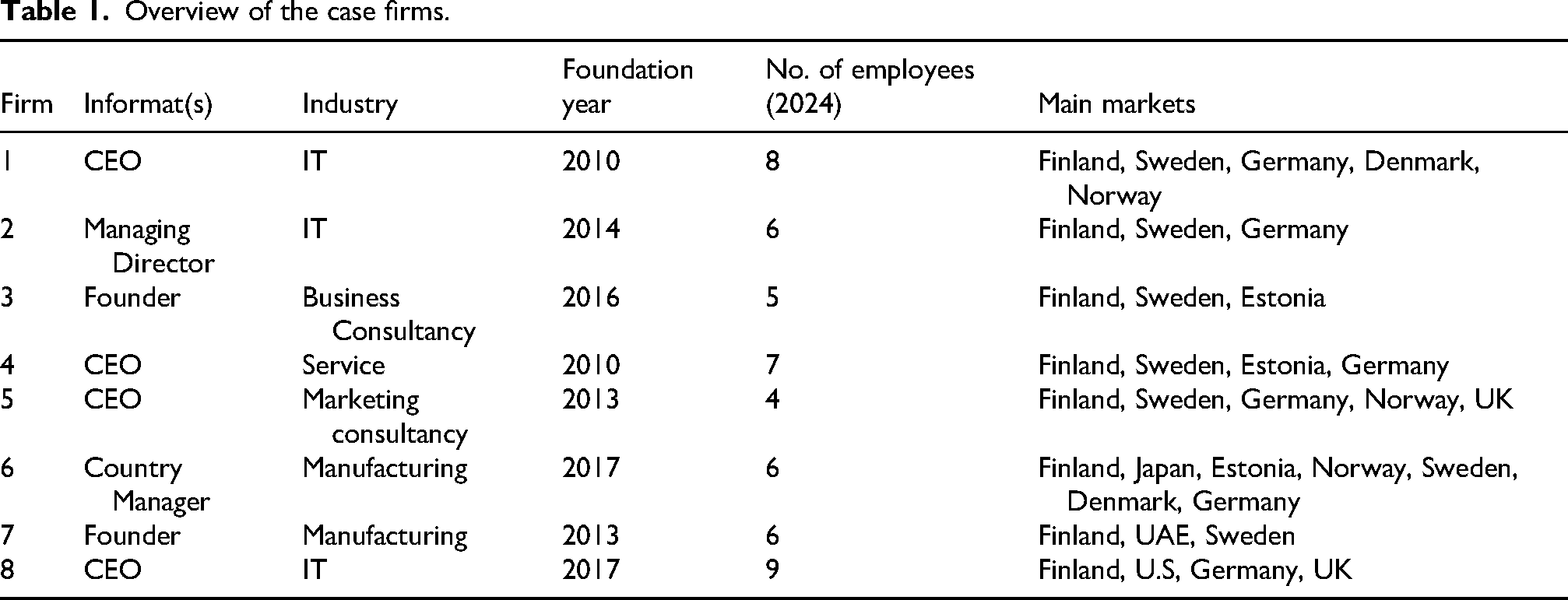
An overview of the case firms is provided in Table 1, detailing their industry focus, founding dates, employee counts, and main markets, highlighting the diversity of the sample within the MSME context.
Overview of the case firms.
Data analysis
This study followed a six-step Interpretative Phenomenological Analysis (IPA) process, recognized for its participant-centered approach and interpretative depth, enabling a detailed exploration of participants’ lived experiences (Alase, 2017; Pietkiewicz and Smith, 2014; Smith et al., 2009). IPA employs a double hermeneutic approach, where researchers interpret participants’ own interpretations of their experiences (see Shahzad et al., 2025c). This aligns closely with the study's objective: to understand how managers of MSMEs perceive and construct resilience within their business practices (Moustakas, 1994; Osborn and Smith, 2008).
Incorporating the event-based human time view of processes (Halinen et al., 2012), this study adopted an inductive and social constructionist approach. This perspective allowed the analysis to focus on the meanings participants assigned to key events in their personal and business histories, considering their narratives not just in isolation, but as part of a broader temporal and social context. The study captures how resilience-building strategies evolve by integrating past, present, and anticipated future experiences (Cunliffe, 2008).
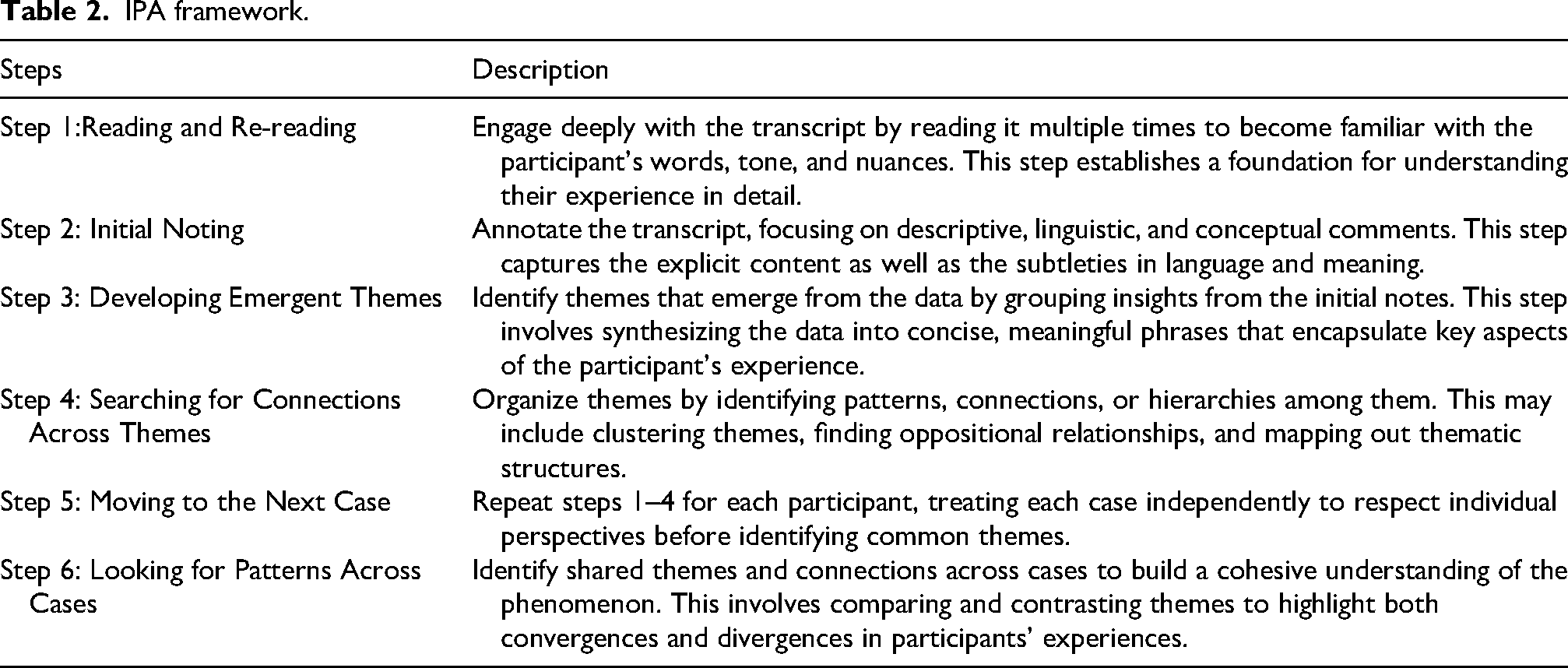
Following Yin's (2003) guidelines for case study research, the data analysis included both within-case and cross-case analysis to uncover individual insights and identify patterns across participants. This combined approach, advocated by Eisenhardt and Graebner (2007), ensured that each case was first analyzed as a standalone entity, before drawing comparative insights across cases. Table 2 provides an overview of the six-step IPA framework applied in the study.
IPA framework.
To enhance transparency and trustworthiness, we maintained reflexive notes throughout data collection and analysis, documenting assumptions and potential biases (Moustakas, 1994; Smith et al., 2009). Acknowledging our backgrounds in innovation management and entrepreneurship, we regularly reflected on how our perspectives might influence interpretation. Discussions among co-authors were used to challenge interpretations and reduce subjectivity. Additionally, we conducted member checks by sharing preliminary findings with participants, ensuring that our interpretations accurately reflected their experiences (Creswell and Poth, 2016). This reflexive approach helped ground our analysis in participants’ voices rather than researcher expectations.
Findings
This section presents the key findings from the study, structured into seven aggregate dimensions that emerged from iterative data coding and thematic analysis. Thematic analysis was conducted following a three-stage coding process to ensure a rigorous and systematic approach to data interpretation. First-order coding identified key descriptive patterns in participants’ narratives, capturing explicit statements and experiences.
Second-order themes were then developed by grouping related first-order codes into broader conceptual categories, reflecting underlying relationships and theoretical insights.
Aggregate dimensions were finally derived by synthesizing second-order themes, forming overarching constructs that define MSME resilience strategies (Braun and Clarke, 2006; Strauss and Corbin, 1998).
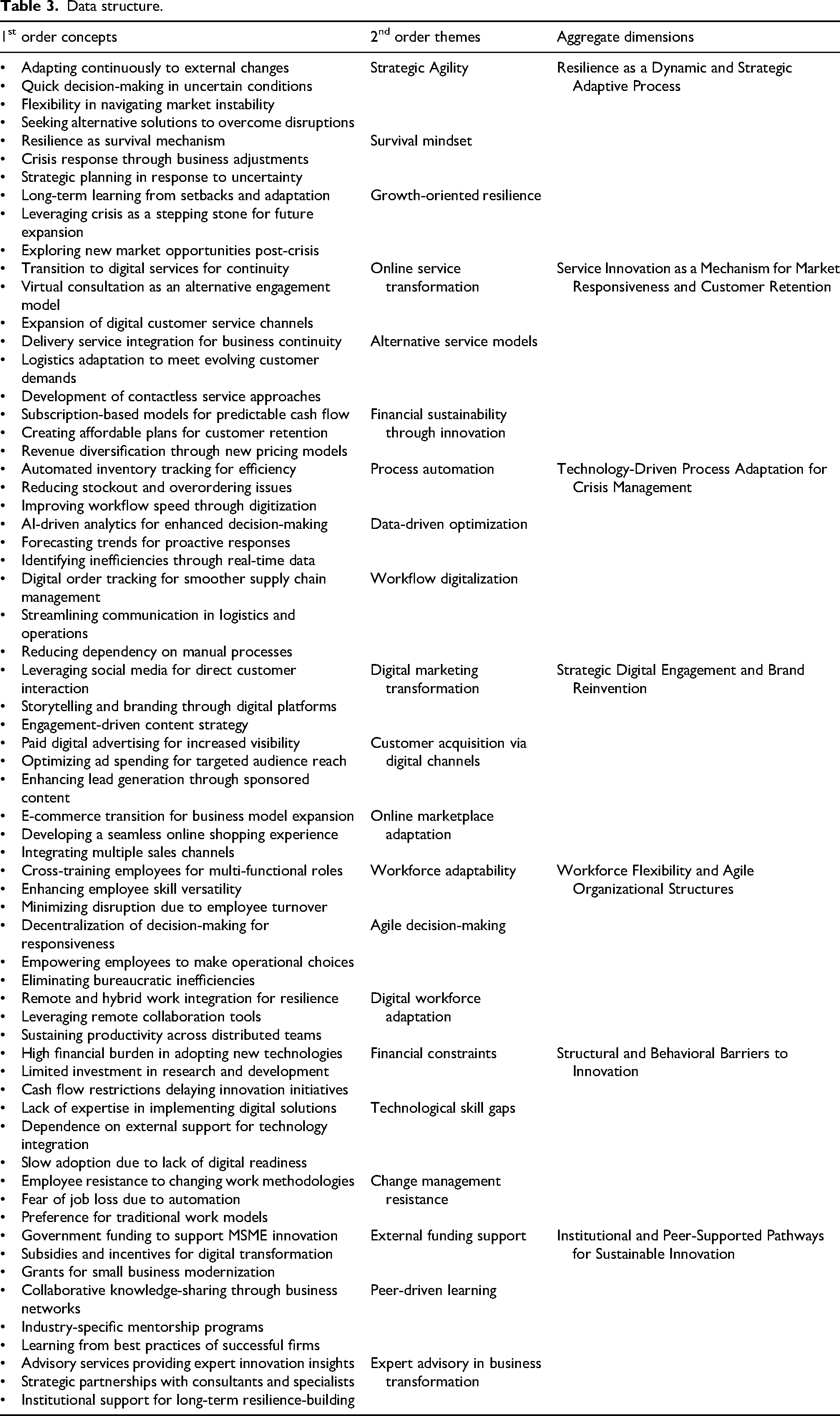
This structured approach enabled a comprehensive and theory-driven interpretation of MSME resilience. Table 3 illustrates the data structure, mapping the transition from first-order codes to second-order themes and final aggregate dimensions.
Data structure.
Resilience as a dynamic and strategic adaptive process
MSMEs did not perceive resilience as merely “bouncing back” from crises, but rather as “bouncing forward” a continuous process of adaptation, experimentation, and strategic transformation. This perspective reflects an active and iterative approach to resilience, where firms engage in rapid decision-making, resource reallocation, and strategic pivots, demonstrating the role of DC in turbulent environments (Teece, 2007). One respondent described resilience as strategic problem-solving rather than endurance, emphasizing the need for agility and proactive adjustments: We had to make quick decisions—what to cut, what to change, and how to stay relevant. It wasn’t just about survival; we needed to evolve, or we wouldn’t have a future. (Respondent 2)
For some firms, resilience meant leveraging crises as an opportunity to innovate, rather than simply withstanding pressure. As one respondent highlighted: We saw businesses fail because they waited too long. We realized early that we had to change, experiment, and take risks. (Respondent 7)
Beyond survival, some MSMEs actively transformed their business models, turning crises into opportunities for growth, learning from setbacks, and exploring new markets: Instead of just surviving, we found ways to improve—now, we are stronger and better positioned for the future. (Respondent 8)
These findings align with the Resource-Based View (RBV), which emphasizes that firms achieving sustained competitive advantage do so by leveraging and reconfiguring internal capabilities (Barney, 1991). Rather than viewing resilience as passive endurance, MSMEs that embraced it as a continuous, opportunity-driven process were more likely to remain competitive. These findings strongly support the dynamic capabilities (DC) perspective (Teece, 2007), illustrating that MSME resilience is not static but an ongoing, strategic process of sensing, seizing, and reconfiguring resources. This challenges the traditional “bounce-back” view and aligns with recent literature framing resilience as continuous organizational transformation.
Service innovation as a mechanism for market responsiveness and customer retention
Service innovation emerged as a critical resilience strategy, enabling MSMEs to retain customers, sustain revenue, and rapidly adapt to market conditions. Firms integrated digital services, alternative delivery models, and subscription-based revenue streams, leveraging innovation for crisis survival and long-term competitiveness. Many businesses introduced alternative service models to maintain customer engagement and operational continuity.
For example, digital consultations and delivery services became a permanent part of business strategies: “We moved services online, and surprisingly, many customers preferred it. Now, it's a permanent part of our business” (Respondent 5).
Additionally, subscription-based models provided financial stability by generating predictable revenue streams, helping MSMEs manage economic uncertainty: “Customers were hesitant to spend, so we introduced small monthly payment plans. It helped us stay afloat” (Respondent 3).
These findings suggest that service innovation was not merely a short-term crisis response but a fundamental shift in business strategy. By integrating customer-centric service models, MSMEs enhanced their adaptability, expanded market reach, and strengthened long-term resilience. By embedding service innovation into their core strategy, MSMEs operationalize both the resource-based view (RBV) (Barney, 1991) and dynamic capabilities frameworks, leveraging internal capabilities to rapidly reconfigure offerings in response to environmental shifts. This reinforces the theoretical argument that customer-centric innovation directly enhances organizational agility and resilience.
Technology-Driven process adaptation for crisis management
To sustain operations and enhance resilience, MSMEs actively embraced technology-driven process innovations, leveraging automation, AI-driven analytics, and digital tracking systems to streamline workflows, reduce inefficiencies, and improve decision-making. These advancements significantly increased operational agility, enabling firms to respond proactively to market fluctuations and supply chain challenges. One of the most impactful process innovations was automated inventory management, which reduced stock shortages and minimized operational delays: “We used to overstock or run out of products frequently. Automation helped us balance demand and supply” (Respondent 3).
Additionally, AI-driven analytics empowered businesses with data-driven decision-making, allowing firms to predict trends, optimize pricing strategies, and manage resource allocation effectively: With AI-based insights, we could predict trends and adjust pricing strategies ahead of time. (Respondent 8)
These findings highlight that technology-driven process adaptation was not merely a reaction to crisis conditions, but a strategic enabler of long-term competitiveness. By integrating digital solutions, MSMEs increased efficiency, reduced operational risks, and strengthened their ability to navigate financial constraints.
Strategic digital engagement and brand reinvention
To maintain customer engagement and brand visibility, MSMEs shifted away from traditional marketing approaches and embraced digital platforms, interactive content, and targeted advertising. These strategies allowed firms to strengthen brand trust, sustain customer interaction, and drive sales growth even in crisis conditions.
A key aspect of this transition was social media engagement, which enabled businesses to foster direct relationships with customers and enhance brand loyalty: We started posting behind-the-scenes content and customer testimonials—this helped us stay connected. (Respondent 1)
Additionally, some MSMEs leveraged influencer marketing and live streaming to increase credibility and expand their customer base:
“We partnered with influencers, and sales grew instantly. It built trust and expanded our reach” (Respondent 7). These findings suggest that marketing innovation extended beyond mere brand visibility—it became a strategic tool for brand reinvention and customer engagement. By utilizing digital platforms effectively, MSMEs transformed their market positioning, strengthened consumer trust, and sustained competitive advantage in an evolving business environment. This theme exemplifies the intersection of marketing innovation and digital transformation literature, showing how new digital engagement tools and content strategies drive resilience by strengthening market positioning and customer trust. Here, MSMEs display strategic flexibility by reinventing brand identity in response to disruption.
Workforce flexibility and Agile organizational structures
MSMEs that successfully navigated crises often restructured their organizations, streamlined decision-making processes, and prioritized workforce flexibility. By adopting agile operational models, these firms enhanced their ability to adapt to disruptions and sustain productivity. One critical adaptation was cross-training employees, which allowed businesses to mitigate workforce shortages and ensure operational continuity:
“We trained our team to handle multiple roles. This made us more resilient when we faced staff shortages” (Respondent 4). Additionally, the adoption of remote and hybrid work models provided greater flexibility and efficiency: “We realized we didn’t need everyone in the office all the time—hybrid work improved productivity” (Respondent 2).
These findings emphasize that organizational innovation was a fundamental enabler of resilience. By implementing flexible workforce strategies and optimizing organizational structures, MSMEs enhanced their crisis preparedness, maintained operational efficiency, and strengthened long-term adaptability. The development of agile structures and workforce flexibility reflects the organizational innovation dimension of the DC framework, directly linking to concepts of strategic flexibility and adaptive capacity in resilience research. These structural changes enable MSMEs to better sense and respond to changing conditions.
Structural and behavioral barriers to innovation
Despite their proactive efforts to innovate, MSMEs faced significant financial, technological, and organizational barriers that hindered the full implementation of innovation strategies. These constraints limit their ability to adopt digital solutions, optimize operational processes, and sustain long-term competitiveness.
One of the primary challenges was the high cost of digital transformation, which made investments in automation and advanced technologies financially unfeasible for many small businesses: “We wanted to invest in automation, but it was too expensive. We had to be very strategic with spending” (Respondent 2).
Additionally, many MSMEs lacked the technical expertise required to integrate new technologies effectively, making digital adoption a complex and overwhelming process: “Implementing new technology seemed simple in theory, but without the right knowledge, it was overwhelming” (Respondent 6).
These findings highlight that financial and technical constraints remain major obstacles to the adoption of innovation. Targeted financial support programs, training initiatives, and knowledge-sharing platforms are essential to embrace technological advancements and process improvements fully. These barriers highlight the boundary conditions of dynamic capabilities and RBV, supporting arguments that firm-level resilience is constrained by both internal (resources, skills) and external (cost, technological complexity) factors. Addressing these challenges is essential for fully realizing the benefits of innovation-driven resilience.
Institutional and peer-supported pathways for sustainable innovation
To overcome structural and behavioral barriers to innovation, many MSMEs relied on external support systems, including government funding, mentorship programs, and industry networks. These resources provided financial assistance, knowledge-sharing opportunities, and strategic guidance, enabling firms to navigate digital transformation and sustain long-term innovation efforts.
Government-led initiatives played a crucial role in facilitating access to funding and training programs, allowing MSMEs to adopt new technologies and enhance their business models: Without government grants, we wouldn’t have been able to afford the technology upgrades we needed. (Respondent 3)
Additionally, industry networking and peer collaboration served as valuable platforms for knowledge exchange and shared learning, helping MSMEs refine their innovation strategies: Talking to other business owners helped us learn from their experiences and avoid costly mistakes. (Respondent 5)
These findings highlight that financial assistance, peer collaboration, and expert mentorship are critical enablers of MSME resilience. By leveraging institutional support and engaging in industry networks, businesses enhanced their capacity to adopt innovation, improve decision-making, and sustain long-term growth in an evolving market environment. Reliance on government, institutional, and peer support aligns with the networked view of resilience and extends the dynamic capabilities perspective to include external resource orchestration. These external supports act as catalysts for capability development, especially for digitally lagging MSMEs.
Appendix 1. supports our findings on the resilience building mechanism with additional statements from different respondents. The data structure is visualized in Table 3.
Discussion
Our findings demonstrate that MSMEs actively engaging in innovation are distinctly better positioned to navigate crises and achieve long-term growth, reinforcing previous research on resilient agility, dynamic capabilities (DC), and strategic adaptability (Hadjielias et al., 2021; Bergami et al., 2022). Notably, MSMEs that pursued multidimensional innovation strategies encompassing service, process, marketing, and organizational innovations exhibited superior adaptability and sustainability during crises. This synergy supports the Resource-Based View (RBV) and Dynamic Capabilities frameworks, emphasizing resilience through continuous renewal and strategic reconfiguration of internal resources (Teece, 2007; Ferreira et al., 2023).
Building on these foundations, this study introduces a disaggregated innovation–resilience framework (see figure 1) where each innovation domain maps onto a specific resilience mechanism: service innovation supports adaptive capacity, process innovation enhances operational resilience, marketing innovation enables market continuity, and organizational innovation fosters strategic agility (Damanpour and Aravind, 2012; Kariv et al., 2024; Apasrawirote and Yawised, 2024). In contrast to prior literature that treats innovation as a monolithic or reactive response, our study reveals how distinct innovation types proactively contribute to resilience-building. Research Proposition 1 (RP-1): Service innovation enhances MSMEs’ adaptive capacity and customer retention, enabling firms to sustain operations and responsiveness during crises.
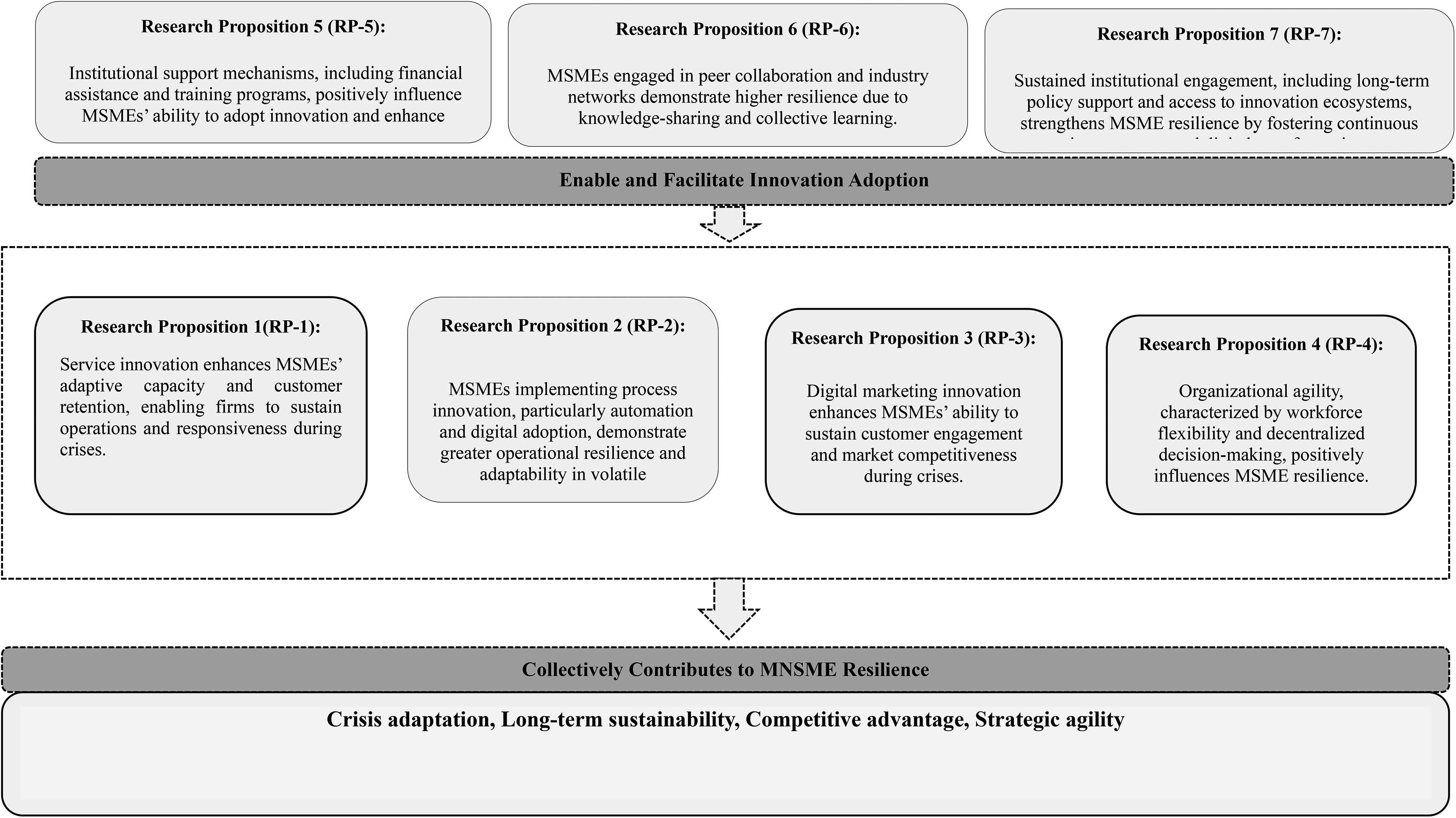
Disaggregated innovation-resilience framework.
Service innovation emerged as a foundational driver of MSME resilience, enabling firms to sustain operations, deliver value, and adapt quickly to crisis-induced disruption. Several firms reconfigured their service delivery models, adopting digital consultations, subscription-based offerings, and remote onboarding to maintain continuity and deepen customer relationships during uncertainty. These strategic shifts enhanced their adaptive capacity, a key dimension of resilience.
This finding aligns with research positioning service innovation as a core capability that fosters organizational responsiveness and customer-centric adaptation (Carlborg et al., 2014; Damanpour and Aravind, 2012). Service innovation also facilitates the creation of dynamic ecosystems, strengthening agility and value co-creation through digital integration (Lusch and Nambisan, 2015; Ferreira et al., 2023). As Kariv et al. (2024) suggest, these digitally enabled transformations are especially critical for entrepreneurial resilience in crisis contexts. Research Proposition 1 (RP-1): Service innovation enhances MSMEs’ adaptive capacity and customer retention, enabling firms to sustain operations and responsiveness during crises.
Process innovation emerged as a key enabler of operational resilience, allowing MSMEs to streamline workflows, optimize resource allocation, and enhance agility. Firms investing in AI-driven decision-making, business intelligence tools, and predictive analytics were better positioned to anticipate demand fluctuations, mitigate supply chain disruptions, and improve real-time decision-making. These findings support Apasrawirote and Yawised (2024) and Lopez et al. (2024) on the role of data-driven insights in business sustainability. Furthermore, digitalization was critical for enhancing supply chain resilience, reducing dependency on manual processes, and minimizing inefficiencies. Damanpour et al. (2009) highlight that firms incorporating automation and data-driven technologies achieve greater adaptability and sustainability during crises by improving operational efficiency and responsiveness. Research Proposition 2 (RP-2): MSMEs implementing process innovation, particularly automation and digital adoption, demonstrate greater operational resilience and adaptability in volatile environments.
Our findings emphasize that MSMEs leveraging digital platforms, influencer collaborations, and interactive content marketing outperformed firms relying solely on traditional advertising. Digital marketing innovation not only enhanced brand visibility and customer loyalty but also reinforced the service-dominant logic of customer engagement (Vargo and Lusch, 2008). Integrating social media, e-commerce, and AI-powered customer engagement tools ensured continuous interaction with customers, validating prior research on digital adaptability in uncertain market conditions (Heinonen and Strandvik, 2021). Additionally, digital knowledge-sharing platforms and technology-driven collaborations further strengthen marketing innovation strategies Ferreira et al., (2024). By strategically employing digital marketing tactics, MSMEs enhanced customer retention and sustained revenue during crises. Research Proposition 3 (RP-3): Digital marketing innovation enhances MSMEs’ ability to sustain customer engagement and market competitiveness during crises.
Organizational agility was a critical determinant of MSME resilience, enabling firms to rapidly adjust to crises by restructuring workforce models, decentralizing decision-making, and increasing operational flexibility. Businesses that cross-trained employees, adopted remote work models, and decentralized authority structures displayed greater adaptability in uncertainty. These findings align with prior research suggesting that agile organizations pivot more efficiently during crises (Den Hertog et al., 2010; Hadjielias et al., 2021). Moreover, our research highlights that firms that empowered employees to make real-time operational decisions were better able to respond to sudden disruptions and maintain business continuity. Research Proposition 4 (RP-4): Organizational agility, characterized by workforce flexibility and decentralized decision-making, positively influences MSME resilience.
While innovation is a key driver of resilience, our findings indicate that MSMEs frequently struggle with financial constraints, skill gaps, and limited access to digital infrastructure. These challenges hinder their ability to adopt transformative technologies and sustain innovation initiatives. External support mechanisms—including government subsidies, technology adoption programs, and public-private partnerships—are crucial in helping MSMEs overcome these barriers. This underscores the importance of institutional engagement in fostering long-term innovation adoption. To ensure widespread digital inclusion and resilience, policymakers must prioritize investment in SME innovation, targeted financial interventions, and capacity-building programs (Djardin et al., 2023). Research Proposition 5 (RP-5): Institutional support mechanisms, including financial assistance and training programs, positively influence MSMEs’ ability to adopt innovation and enhance resilience.
Our findings highlight that business clusters, industry mentorship programs, and open innovation ecosystems significantly enhance MSME resilience by enhancing knowledge-sharing and collective learning. Firms actively participating in peer networks and industry collaborations were better positioned to adopt best practices, share resources, and develop strategic partnerships (Teixeira et al., 2018). These results reinforce prior research by Osano (2021), which suggests that network-based learning enables MSMEs to build resilience and improve long-term performance. Specifically, Conz et al. (2017) demonstrate that SMEs in mature clusters develop adaptive resilience strategies by leveraging shared expertise and cooperative networks. Similarly, Mulyono and Syamsuri (2023) emphasize that open innovation ecosystems increase agility and knowledge diffusion, ensuring long-term competitive advantages for MSMEs. Additionally, Do et al. (2022) highlight how mentorship programs and organizational learning initiatives enhance SMEs’ innovation-driven resilience, reinforcing the importance of structured external support mechanisms. Research Proposition 6 (RP-6): MSMEs engaged in peer collaboration and industry networks demonstrate higher resilience due to knowledge-sharing and collective learning.
Our research underscores that short-term government relief programs are insufficient for ensuring long-term MSME resilience. Instead, firms benefit from sustained policy engagement, including tax incentives for innovation, digital reskilling investments, and public-private RandD partnerships. By integrating MSMEs into national innovation ecosystems, policymakers can enhance their competitiveness, accelerate digital adoption, and foster sustainable growth. Long-term policy measures should focus on digital transformation strategies that equip MSMEs with the necessary tools to thrive in volatile business environments. Research Proposition 7 (RP-7): Sustained institutional engagement, including long-term policy support and access to innovation ecosystems, strengthens MSME resilience by fostering continuous improvement and digital transformation.
Figure 1 illustrates the Disaggregated Innovation-Resilience Framework, which conceptualizes how various forms of innovation: service, process, and digital marketing interact with organizational agility and ecosystem support to build MSME resilience during crises. The model integrates firm-level adaptive capacities with institutional and peer-based enablers, offering a multi-level explanation for how innovation adoption contributes to crisis adaptation, long-term sustainability, and strategic agility.
Theoretical contribution
This study advances the literature on MSME resilience and innovation by illustrating how MSMEs develop resilience through a multidimensional innovation framework. While prior research has examined resilience through entrepreneurial orientation and strategic adaptability (Eggers, 2020; Gölgeci et al., 2019), our study highlights innovation as an integrated resilience mechanism.
We make three key theoretical contributions. First, this study demonstrates that service, process, marketing, and organizational innovation collectively enhance resilience, rather than functioning as isolated strategies. Firms adopting a combinatorial innovation approach—integrating multiple innovation types—exhibit greater adaptive capacity, agility, and sustainability, extending DC theory (Teece, 2007). Second, we identify institutional and resource-based constraints that hinder MSME innovation, emphasizing the role of peer collaborations, government support, and digital ecosystems in overcoming these challenges. This extends the Resource-Based View (RBV) (Barney, 1991) by showing that MSME resilience is strengthened through external networks and knowledge spillovers (Fernandes et al., 2025; Ferreira et al., 2023). Third, we highlighted how digital transformation, strategic agility, and ecosystem collaboration shape crisis adaptation, we refine the understanding of resilience as a continuous, innovation-driven process rather than a reactive capability (Duchek, 2020; Eriksson et al., 2022).
This finding contrasts with the literature that conceptualizes innovation primarily as a reactive mechanism for post-crisis recovery (e.g., Sharma et al., 2024; Wenzel et al., 2021). Instead, we position innovation as an ongoing, dynamic process embedded within MSME strategy and culture, thus contributing to a more nuanced theoretical understanding of resilience. While existing models often treat innovation as a single dimension or as a reactive tool for recovery, our framework explicitly disaggregates innovation into service, process, marketing, and organizational dimensions, demonstrating how each interacts with resilience-building mechanisms (adaptive capacity, resource reconfiguration, learning integration, and strategic flexibility) (see Damanpour and Aravind, 2012; Fernandes et al., 2025; Kariv et al., 2024; Apasrawirote and Yawised, 2024; Pilav-Velic et al., 2024; Ferreira et al., 2023).
Unlike previous studies that emphasize resilience as either “bouncing back” or “bouncing forward,” we show that ongoing, multidimensional innovation is essential for MSMEs to both withstand and proactively transform during crises. This conceptual model advances the field by mapping how different forms of innovation operationalize the dynamic capabilities that underlie resilience, especially in resource-constrained MSME settings.
Managerial and policy implications
For MSME managers, embedding innovation into resilience strategies is crucial. Firms must adopt a holistic approach, integrating service, process, marketing, and organizational innovation to navigate crises effectively (Ferreira et al., 2023; Dambiski et al., 2021). Prioritizing digital transformation, automation, and agile decision-making will enhance operational efficiency and adaptability (Hafeez et al., 2025; Kraus et al., 2021; Sabahi and Parast, 2020). Additionally, promoting a culture of innovation through cross-functional collaboration and digital upskilling will strengthen long-term resilience (Duchek, 2020).
For policymakers, targeted interventions such as financial support, training programs, and industry collaborations are essential for strengthening MSME resilience. Policies that support digital infrastructure, technology adoption, and open innovation ecosystems will help small firms adapt to evolving market conditions (Eggers, 2020). Public-private partnerships should be leveraged to provide mentorship, funding, and capacity-building initiatives for MSMEs facing resource constraints (Vargo and Seville, 2011). By aligning managerial strategies with policy-driven support, MSMEs can enhance competitiveness and sustainability during uncertainties and crisis.
Moreover, industry associations and business networks play a vital role in facilitating peer learning, mentorship, and knowledge-sharing platforms that spread best practices for innovation and resilience. Technology providers can support MSMEs by offering affordable, accessible solutions and technical assistance, which are particularly valuable in digitally less mature sectors. These implications are especially relevant for MSMEs, where limitations in digital infrastructure and resources make ecosystem and policy support even more crucial. Adapting these strategies to local market conditions and resource realities will maximize their practical impact and help ensure that resilience and innovation are achievable for a wider range of small businesses.
Conclusion, limitations and future research avenues
This article focused on examining how innovation-driven strategies contribute to MSME resilience, particularly in volatile market conditions. By integrating insights from RBV and DC, this study explored the role of service, process, marketing, and organizational innovation in enhancing MSMEs’ ability to adapt, survive, and thrive during crises.
Clear evidence was found demonstrating that firms adopting a multidimensional innovation approach rather than relying on a single innovation type exhibit greater resilience, strategic agility, and long-term sustainability. Additionally, institutional support mechanisms, peer collaborations, and digital transformation emerged as critical enablers of innovation adoption, helping firms overcome resource limitations and uncertainty. Thus, this article makes important contributions to the literature in terms of bridging MSME resilience research with innovation management. It extends existing frameworks by positioning resilience as an ongoing, innovation-driven process rather than a reactive capability. Furthermore, it identifies key barriers to innovation adoption and provides a conceptual foundation for institutional interventions that strengthen MSME resilience.
Firstly, it proposed that service, process, marketing, and organizational innovation collectively enhance resilience, reinforcing the importance of strategic adaptability and proactive transformation. Secondly, it identified financial and technical constraints as primary barriers to innovation, emphasizing the role of public–private collaborations and digital ecosystems in overcoming these challenges. Thirdly, it introduced seven propositions that expand resilience frameworks, incorporating innovation as a core mechanism for long-term MSME sustainability.
This study has certain limitations that offer directions for future research. First, while focusing on MSMEs across industries, the findings may not fully apply to large firms or different economic contexts. Future studies could explore resilience strategies in larger enterprises and diverse markets. Second, our research captures MSME perspectives, but external stakeholders also shape resilience. Future research should incorporate government, investors, and industry associations to provide a broader view. Third, our qualitative approach offers deep insights but lacks generalizability. Future studies could use quantitative or mixed methods to test these findings across larger datasets. Finally, a longitudinal approach could track how MSMEs sustain innovation over time and transition from crisis survival to long-term resilience. Despite these limitations, this study provides a strong foundation for further research on MSME resilience, strategic innovation, and adaptability in volatile markets.
Supplemental Material
sj-docx-1-iei-10.1177_14657503261421099 - Supplemental material for Innovation as a resilience-building strategy in micro-, small-, and medium-sized enterprises: An interpretative phenomenological analysis
Supplemental material, sj-docx-1-iei-10.1177_14657503261421099 for Innovation as a resilience-building strategy in micro-, small-, and medium-sized enterprises: An interpretative phenomenological analysis by Faisal Shahzad, Dinesh Poudel and João J. Ferreira in The International Journal of Entrepreneurship and Innovation
Footnotes

Funding
The authors received no financial support for the research, authorship, and/or publication of this article.
Declaration of conflicting interests
The authors declared no potential conflicts of interest with respect to the research, authorship, and/or publication of this article.
Supplemental material
Supplemental material for this article is available online.
References
Supplementary Material
Please find the following supplemental material available below.
For Open Access articles published under a Creative Commons License, all supplemental material carries the same license as the article it is associated with.
For non-Open Access articles published, all supplemental material carries a non-exclusive license, and permission requests for re-use of supplemental material or any part of supplemental material shall be sent directly to the copyright owner as specified in the copyright notice associated with the article.
