




Abstract
The value of music to society has been researched in terms of social good and change, positive economic contribution, and the successful educational impact on young people’s cognitive development. Despite this, the government exhibits variable support for music education. An open and closed question survey resulting in 186 mostly Australian musically educated adults pursuing non-music professions enriches the current instrumental music education value discourse. Irrespective of attained music standard, participants identified their instrumental music education developed the foundational transferable skills used and scaffolded within their non-music professions. Through sustained, active, formal and structured learning of complex instruments their transferable music skills cultivated confident, productive, highly focused, team-oriented professional employees representing excellent role models for their peers. Such transferable skills align with current, and future employment skills requirements as recognised by the World Economic Forum. Methods for data interpretation included using the Global Skills Taxonomy revealing there is scope for revision of many international skills frameworks to accurately represent music skill value. Through the lens of transferable music skills, it is possible to communicate the relevance of instrumental music education, contributing to a future-proofed capable workforce building a stronger economy. This study is the largest of its kind and offers a robust foundation for future international studies that may capture the cultural and historical contexts surrounding skill classifications.
Introduction
The value of music to society has been researched in terms of social good and change (Hesmondhalgh, 2013; Kertz-Welzel, 2022), economic contribution (Wikström, 2020; Williams, 2022), and the educational impact on overall pre-tertiary education (Sala & Gobet, 2020; Váradi, 2022) particularly within the domain of childhood (Welch et al., 2020) and brain development (Collins, 2013, 2020; Curtis & Fallin, 2014). In Australia, classroom and instrumental music education (pre-tertiary and tertiary) is met with variable levels of government support where for many states, curricula are increasingly absorbed within the broader arts, scaled down or disappearing altogether further impacting tertiary primary school 1 teacher education (Hocking, 2023; NAAE, 2024). The National Advocates for Arts Education (Australia) recently released data regarding decreasing enrolment in secondary music subjects since the introduction of Australian Tertiary Admission Rank (ATAR 2 ) system where scaling 3 of music subjects negatively impacts one’s final ATAR rank compared to mathematics and science subjects. For example in 2023, gaining a 100% raw grade for a grade 12 (Senior) music subject was scaled down to 90.38, whereas an Advanced Mathematics subject was scaled from raw grade 95% up to 98, and Physics – 80% up to 84.89 (NAAE, 2024). Accordingly, despite students’ prior interest in music, they are less inclined to continue a subject that will risk their acceptance into their preferred university (White, 2019). Students are also more likely to withdraw from instrumental music education during their secondary schooling years, with evidenced enrolment decline between the years 2017 and 2022 (Australian Bureau of Statistics, 2023). The government initiative to raise Arts and lower STEM 4 degree fees has likewise influenced school leavers’ decision-making at the expense of the arts (Cassidy, 2023). Music educators find many of these educational trends concerning and argue this has ramifications on pre-tertiary curriculum priorities (Collins et al., 2019). Consequences include pre-tertiary education providers risk graduating students devoid of the foundational skills that support students’ higher education and future non-music professions (Tolmie, 2024). To further understand the impact of instrumental music education within an Australian employability context, this study sought to inquire “What are the transferable skills of the musically educated within their non-music employment?”
Skill, Transferable Skill and Its Training Conundrum
Oxford Languages define the term “skill” as a noun, “the ability to do something well” or “a particular ability” and as a verb, “train (a worker) to do a particular task” with its etymology in the Old Norse word “knowledge” (“Skill,” Oxford Languages, 2025). Stanley and Williamson’s (2017) philosophical interpretation further acknowledge that “knowledge depends on skill” and problematise that skill is not just “know-how (technical)” but include the parameters of “know when,” “know where,” and “know who” (p. 713) indicating that one’s level of skill is dependent on social contexts and previous experiences.
Conversely, the term “transferable skill” appears yet to be as well-defined. Bridges (1993) classed knowledge transfer as simply “transferable skills” or “core skills,” claiming they can be “deployed with little or no adaptation in a variety of social settings . . . One can simply use the same skills in each context” (p. 50). Whereas he offered a less-used term “transferring skills” defined as meta-competencies enabling one to “select, adapt, adjust and apply one’s other skills to different situations, across different social contexts and perhaps similarly across different cognitive domains” (Bridges, 1993, p. 50). Nevertheless, he conceded the term “transferable skills” was generally a more preferred representation. Hilton and Pellegrino (2012) further state “transfer is the defining characteristic of deeper learning” (p. 158) suggesting the development of knowledge and skills should be centred on the cognitive, intrapersonal, and interpersonal learning domains, thus departing somewhat from Bloom’s widely adopted cognitive, affective, and psychomotor categories (Anderson & Krathwohl, 2001). Laker and Powell (2011) indicate intra- and interpersonal skills would be classed as “soft skills” or “interpersonal skills such as how to handle one’s interactions with others” (p. 112) compared to “hard” or technical skills considered discipline-specific.
They also assert that technical skills alone will only achieve some career success, but proficiency in “soft skills” such as leadership, self-management, communication, and so on will more likely advance one’s employability (Laker & Powell, 2011). However, they also argue “soft skill” training in many higher or vocation educational contexts tends to be ignored as prior learning or experience is assumed or considered challenging to authentically assimilate. Consequently, there is an ongoing robust discussion regarding whether higher education knowledge transfer is effective in creating career readiness, with many graduates and employers questioning its purpose (Fajaryati et al., 2020; Hall, 2019; Marginson, 1994; Scandurra et al., 2023). Thus, the “skills for employability” discourse is a dynamic topic, largely because it concerns what is required in the current and everchanging future workforce dependent on macroenvironmental trends and the socio-cultural context within which they reside (Van Laar et al., 2017).
Skills Frameworks
Skills are often defined and categorised within a framework, some following a proficiency level approach such as “novice” through to “expert” (e.g., The Dreyfus Skill Model, as described in Dreyfus & Dreyfus, 1988). Prioritised skills largely depend on the framework agenda. For example, The Australian Core Skills Framework (2020) identified the basic core skills “essential for individuals to participate in our society” (p. 10) as learning, reading, writing, oral communication and numeracy. It justified learning citing “the critical importance of adopting strategies that help us adapt to changing circumstances and new challenges throughout our lives” (Australian Core Skills Framework, 2020, p. 10). Whereas, the employability-focussed Core Skills for Work Developmental Framework (2018), describes 10 skill areas grouped in the three clusters of 1) navigate the world of work 2) interact with others and 3) get the work done. While recognising the development and demonstration of such skills is context-dependent, it highlights the value of the “soft skills” of self-belief and resilience, stating those with such: are more likely to look forward to, and be successful in work performance, and this in turn contributes to increased self-belief and resilience, and the desire to take on new challenges and improve skills further. [It] also affects an individual’s empathy and sensitivity to others, ability to cope under pressure and deal with work-related politics. (Core Skills for Work Developmental Framework, 2018, p. 12)
The recently decommissioned Australian Skills Classification (Jobs and Skills Australia, 2024a) is to be replaced by the National Skills Taxonomy (Jobs and Skills Australia, 2024b). Industry and community feedback voiced their concerns about the above and other frameworks such as DISCO, 5 O*NET, 6 and the Singapore Skills Taxonomy suggesting they were “difficult to understand” (p. 11), possessed outdated content, embedded bias, and inconsistently represented (i.e., some professions more accurately portrayed than others) (Jobs and Skills Australia, 2024b). Criticism included “current systems also fail to provide an equitable understanding of skills” such as interpersonal skills undervalued in feminised workplaces (Jobs and Skills Australia, 2024b, p. 12). Praise was given to ESCO 7 for its inclusion of transferable skills, but likewise acknowledged its European context was not necessarily applicable to Australia. Their proposed way forward indicates something similar to the Global Skills Taxonomy.
The Global Skills Taxonomy (GST)
Developed by the World Economic Forum and industry partners, the GST mitigates the previously outlined functional weaknesses claiming “a universal language for skills. It synthesizes and builds on existing taxonomies by integrating definitions and categorisations of skills that we know to be of growing relevance in a fast-changing labour market” (WEF, 2024a). Its design drew on the “the perspectives of 803 companies – collectively more than 11.3 million workers – across 27 industry clusters and 45 economies from all world regions” (WEF, 2023, p. 4). The data, culminated in the World Economic Forum (WEF) Future of Jobs Report 2023, identified the future jobs and related skills required.
The GST classifies 93 distinct skills into broad categories 1) Skills, Knowledges and Abilities –commonly used by several taxonomies, and uniquely 2) Attitudes, defined by the GST as “learned behaviours, emotional intelligence traits and beliefs that individuals exhibit that influence their approach to ideas, persons and situations” (WEF, 2025, p. 5). This distinctive inclusion of Attitudes represents the WEF argument for a skills-first (as opposed to credentials) approach to workforce development (WEF, 2025b) where employers can “view each role as a combination of skills, proficiencies, experiences, values, attitudes and mindsets” (WEF, 2025, p. 11). The value of contributing attitudes has been previously identified within Van Laar et al.’s (2017) systematic review of digital skills research concluding technical expertise alone was not enough, “how someone thinks, solves problems, and learns, has a greater impact on a person’s ability to function in a technologically rich society than just being knowledgeable about specific software” (p. 587). This is highly relevant given the WEF Future of Jobs Report 2023 confirmed AI and related technologies will predominantly impact the employability landscape. The report further suggested while “analytical thinking and creative thinking remain the most important skills for workers in 2023” and beyond (WEF, 2023, p. 6), the future will additionally see the need for diverse skills, knowledge, and abilities such as technological literacy, systems thinking, AI and big data, talent management, service orientation and customer service, and much more (p. 39). Also identified were developed attitudes such as curiosity and lifelong learning, resilience, flexibility, and agility, motivation and self-awareness, leadership and social influence, empathy and active listening, and dependability and attention to detail (WEF, 2023, p. 39).
In short, it seemed logical to adopt the GST as an interpretive tool of this study’s participants’ transferable music skill data, rather than risk the potentially biased and outdated content of other existing frameworks. As the transferable skills of instrumental music education and experience at any level of proficiency is an under researched topic, a broad and inclusive taxonomy was ideally required.
Transferable Music Skills – An Under Researched Topic
Currently, related studies represent small sample size of pre- or recently graduated professional musicians and the “soft skills” gained through their education applicable to their current music work (Dockwray & Moore, 2008; Ghazali & Bennett, 2017; Weston, 2020). A systematic literature review by Hallam (2010) endorsed pre-tertiary instrumental and classroom music education’s impact on “the intellectual, social and personal development of children and young people” suggesting established and improved “language development, literacy, numeracy, measures of intelligence, general attainment [self-efficacy], creativity, fine motor co-ordination, concentration, self-confidence, emotional sensitivity, social skills, team work, self-discipline, and relaxation” (p. 283) occurred particularly if the music education experience was enjoyable. She also recommended the necessity to know what type of music engagement was most effective in developing which skill-type. In response, Bassett’s (2013) UK (London and Sheffield) study interviewed nine musically active adult non-music professionals and gained 37 survey respondents who retrospectively considered their school-aged instrumental music education. He sought to evidence the “non-music outcomes” and whether they were “unique to music or acquired equally or better through other activities” (p. 12). Participants were asked to consider transferable skills in their broader contexts as adults, rather than their specific careers or employment. The top six identified skills were Discipline, Listening, Own part in bigger, Concentration, Perseverance, and Thoroughness. Bassett also concluded their (largely classical) instrumental and vocal lessons enabled self-management, and group work and public performance fostered self-efficacy. While sport also developed work-related transferrable skills, music education was found to be the stronger enabler. These causative effects of instrumental music education were further explored by others.
A systematic review of education, neuroscience, and psychology research plus 21 Australian industry expert interviews by Collins et al. (2019) determined the “benefits of a quality, sequential and ongoing music education” (p. 5) impacting one’s overall school education. Hallam’s (2010) and Bassett’s (2013) findings, these included:
Practical effects (physical development/practical skills): Understanding space and time; helping attitudes, behaviours, and teamwork.
Cognitive effects (learning development): Processing sound; assigning sound to symbols; logic processing; memory.
Non-cognitive effects (human development): Understanding of self; regulation of self; health development; and social cohesion. (Collins et al., 2019, pp. 5–6).
However they further recommended to achieve this, ideally music education should: begin in pre-school; not just be for the “talented”; ensure complex strings, wind, brass and percussion instruments that require effort and mastery are taught; encourage students to learn over a long period of time (3–7 years), that is, attain beyond beginner standard; and include teaching pedagogy that is “active, formal and structured” (Collins et al., 2019, p. 7). The, albeit nominal, research into transferable skills has thus indicated the causative effects of instrumental music education on broader adolescent education and adult life experiences. Its impact on one’s employment has yet to be determined.
Methodology
Process
Following ethical clearance (Ref no: 2019/1022), a survey titled Toward 2050: An analysis of musicians’ transferable skills containing 32 open, closed, Likert and rating questions was deployed via Survey Monkey on online social media platforms between March 18th and May 6th 2024. In addition to Australian law and medical associations, music groups such as community brass bands, orchestras and choirs, were invited to participate. Participants were screened for those who identified as musically educated but never pursued a music profession. Only the relevant open and closed questions were considered for this publication.
Quantitative data was interpreted using descriptive statistics such as range and percentage of scores, plus mean and median results. Percentages were rounded to the nearest whole number, and average years stated to two decimal points. Open-ended question responses were scrutinised for themes using inductive coding (Braun & Clarke, 2006). Participants’ self-identified transferable skills of instrumental music education to their current employment were coded according to the Levels 1 to 4 Global Skills Taxonomy 8 (WEF, 2024c).
Survey Participants
The age range of the 186 survey respondents (18–84 years) produced an average age of 42.76 years. The majority (82%) were aged between 18 and 55 years (see Table 1 for participant age distribution).
Participant Age Distribution and Gender Representation.
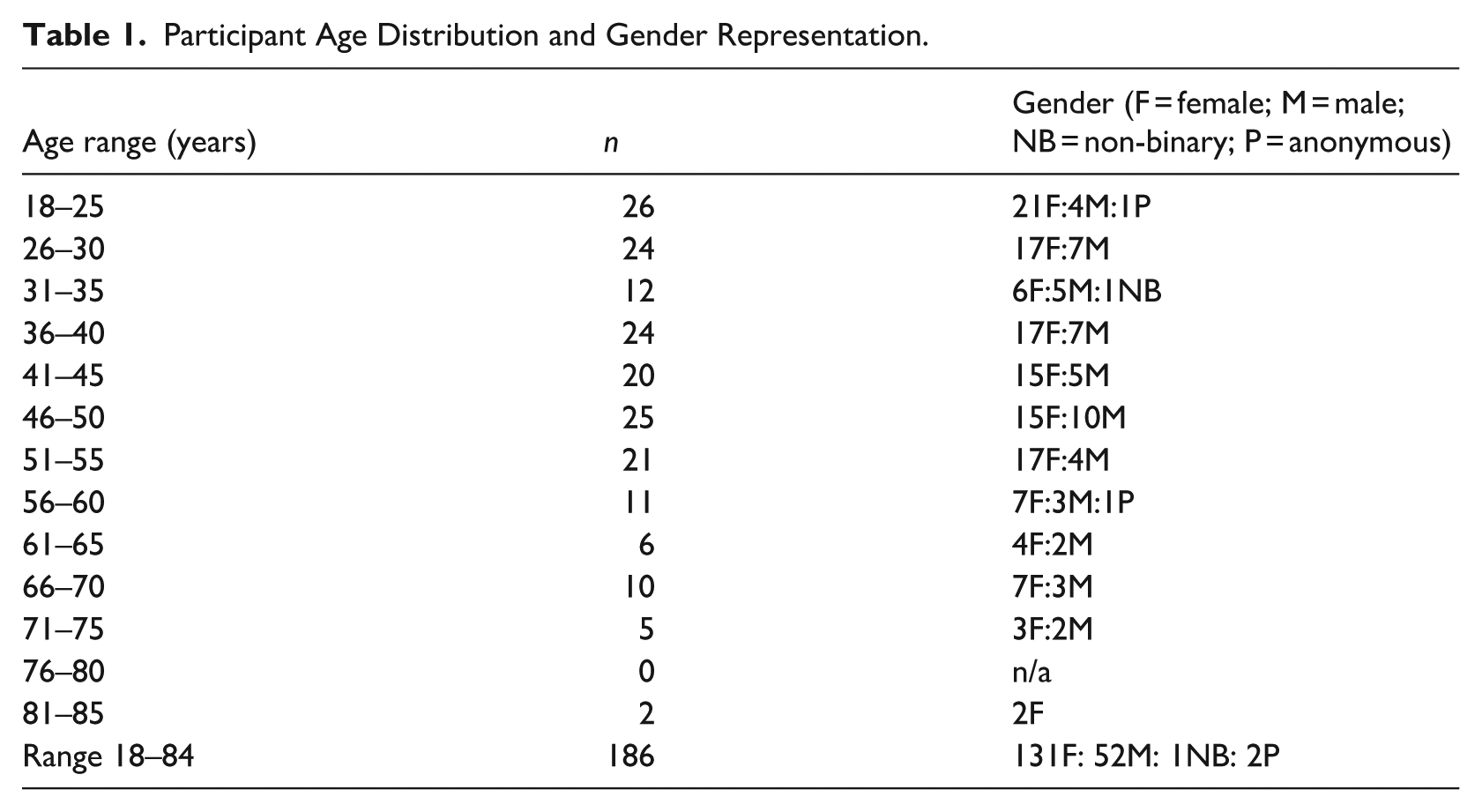
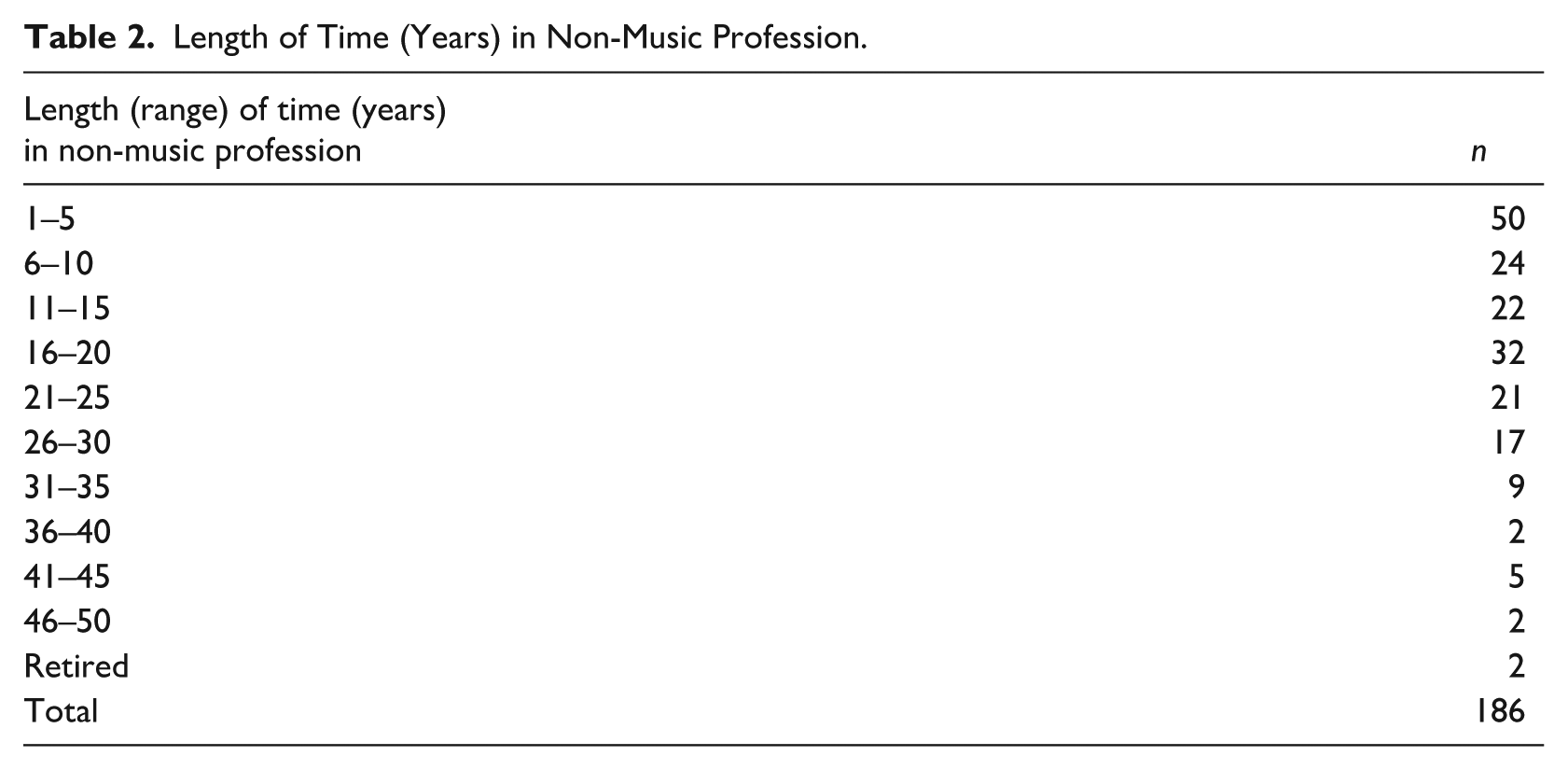
It is possible potential participants who were retired chose not to participate in the survey thinking they were ineligible, as all but two were currently employed. Participants had worked within their non-music profession between 1 and 50 years with an average time of 15.9 years. Most (89%) had worked for 30 years or less (see Table 2).
Length of Time (Years) in Non-Music Profession.
Participants’ gender represented female (n = 131; 70%), male (n = 52; 28%), non-binary (n = 1; <1%) and two undisclosed (1%) (see Table 1). Over three quarters (77%) were in a relationship of some kind, 22% single and 1% did not comment on their relationship status. Those who indicated their place of residence (n = 185) represented metropolitan (n = 150), regional (n = 22), rural (n = 1), and international (n = 12; USA, Germany, UK, Holland, and Poland) locations. Those residing overseas were mostly Australian emigrants. Overall, the participants hailed from all eight Australian states and territories. The most popular response by Australian state included Queensland (n = 73), Western Australia (n = 30), and Australian Capital Territory (n = 22). Queensland’s government subsidised instrumental music programme in public schools 9 has been operating for over 50 years and would explain the state’s higher response rate. In 2020, Queensland was the last state to adopt the ATAR ranking system. 10
Skills Classifications
Open and closed ended questions concerned participants’ music and non-music education, the types of music genres experienced, skills used within non-music current employment and self-identified work colleagues’ perceptions of their workplace attitudes and capabilities. Participant occupations and skill levels (non-skilled, 11 semi-skilled, 12 skilled, 13 and professional 14 ) were classified according to the Australian and New Zealand Standard Industrial Classifications (ANZIC, 2006). Skills and attitude classifications were adapted from the Global Skills Taxonomy (WEF, 2024c) and informed by the coded results of a previous qualitative study on the transferable skills of 12 dual-career musicians by the author. To support consistency of interpretation, short skill definitions inspired by the Global Skills Taxonomy (GST) were provided to participants.
Results
Education and Music Engagement
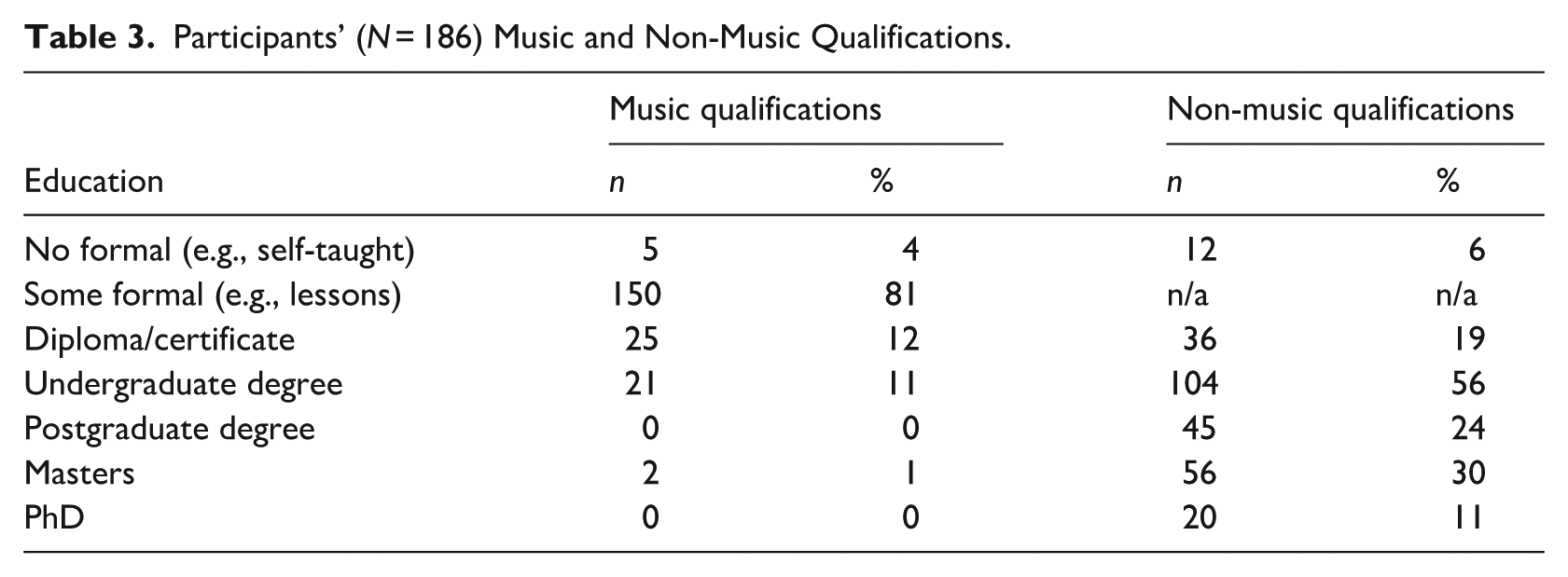
The participants were highly qualified for their non-music professions possessing undergraduate (56%), postgraduate (24%), masters (30%), or doctoral degrees (11%) (see Table 3). Only 12 (6%) had no formal or accredited training. The majority (81%) experienced significant formal music training in the form of instrumental lessons with 12% awarded a diploma or certificate, 11% an undergraduate music degree, and two participants (1%) a Masters.
Participants’ (N = 186) Music and Non-Music Qualifications.
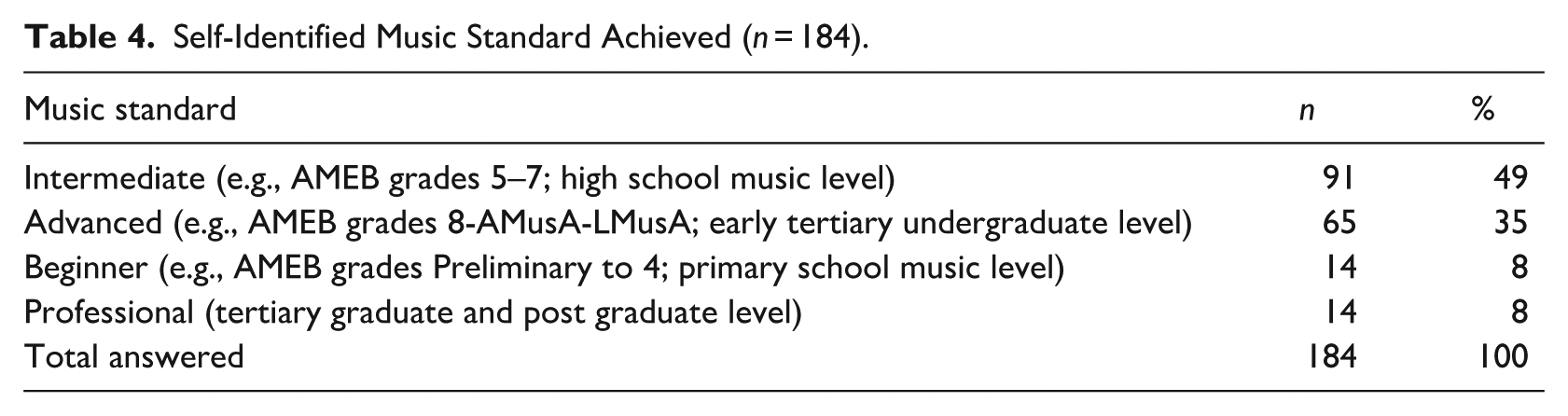
Just under half (49%) of the participants believed themselves to have achieved Intermediate music standard, and more than a third (35%) considered themselves Advanced (see Table 4). A small number of participants considered themselves Beginner (8%) or Professional (8%) standard. Thus, most participants (92%) had invested significant time and effort into their instrumental music education and interest. When asked whether they still engaged with their music (e.g., as a hobby) 83% said “yes,” 7% said “no,” and 10% said “no – but now considering getting back into it.” Overall, their past and ongoing music experience positioned them to reliably respond to the survey questions. Music standard achieved was communicated in terms of school and Australian Music Examination Board (AMEB) levels commonly understood within Australian instrumental music education.
Self-Identified Music Standard Achieved (n = 184).
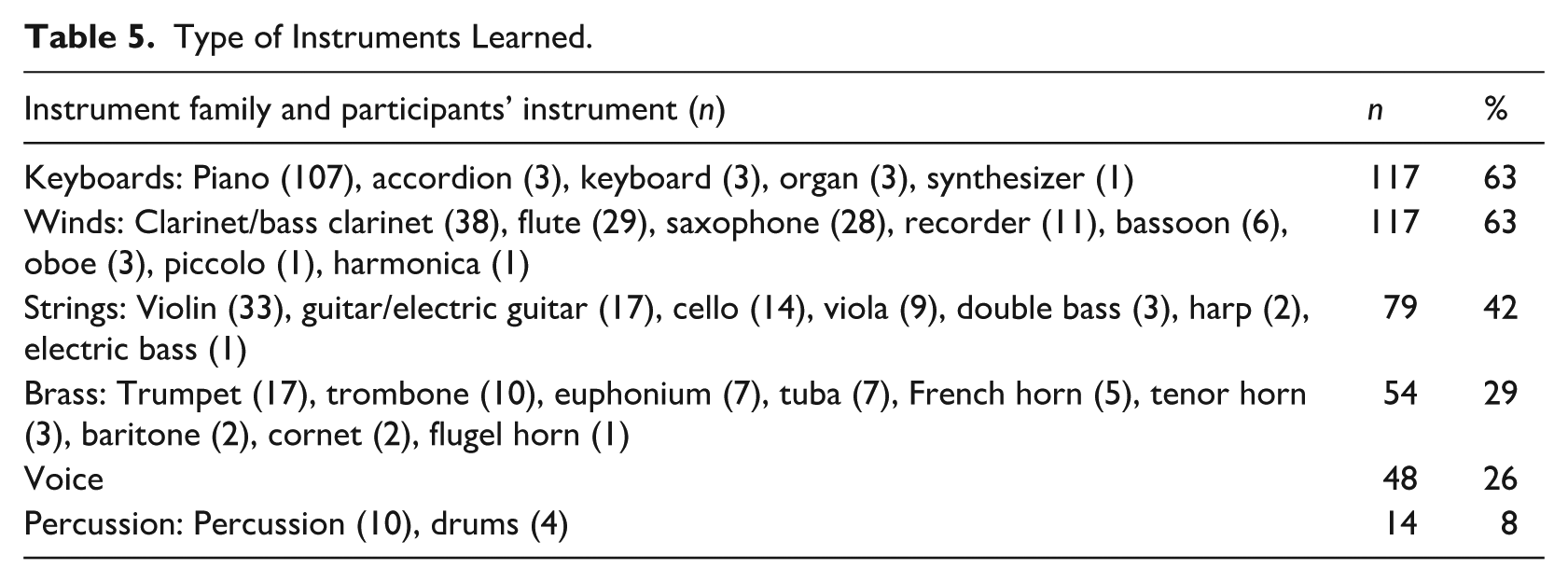
Participants had learned between one and eight instruments with Keyboards (63%), Winds (63%), and Strings (42%) most popular (see Table 5). The average number of instruments per person was 2.32 and the most common, two. Within the keyboard family, the piano was the prevailing instrument (n = 107) and the clarinet (n = 38), saxophone (n = 28), and flute (n = 29) in the winds. The violin (n = 33) was the most common stringed instrument. Over a quarter of the participants had learned brass (29%) or singing and/or participated in choirs (26%) with percussion the least mentioned (8%). The participants collectively learned 34 different types of music instruments.
Type of Instruments Learned.
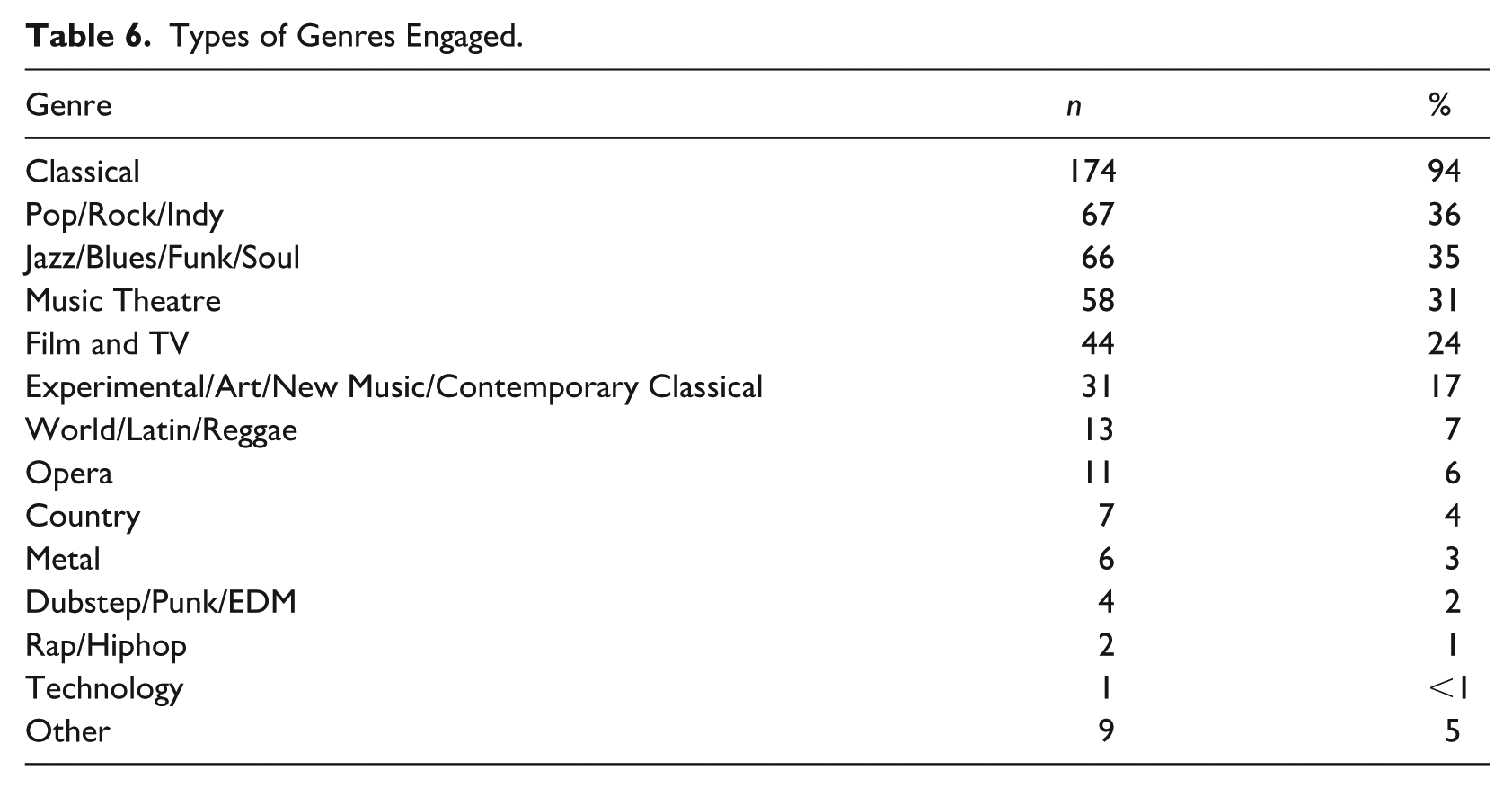
Participants engaged in a variety of genres (see Table 6): Classical (94%), Pop/Rock/Indy (36%), Jazz (35%), and Music Theatre (31%) the most prevalent. Participants also claimed to engage between one to nine genres; the average being 2.6 (implying two to three). Focusing on one genre was the most common (n = 70, 38%) with Classical more likely (n = 65). Classical (n = 30) was the most likely for those engaging with two genres (n = 32, 17%), whereas Classical (n = 30) in addition to Jazz (n = 21) were likely inclusions for those experienced in three genres (n = 33; 18%).
Types of Genres Engaged.
Employment
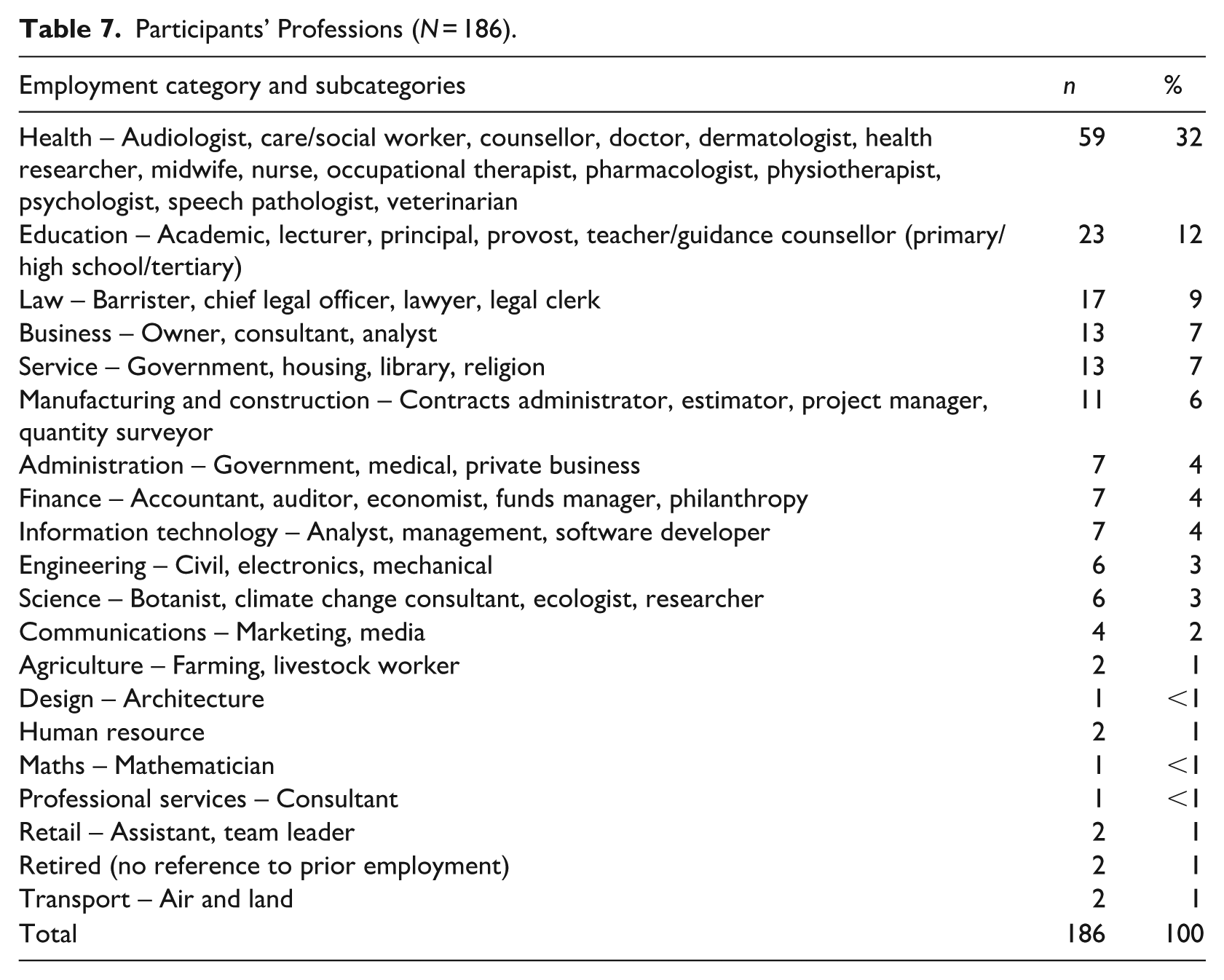
The participants’ non-music professions spanned 19 standard industrial classifications (see Table 7). Just under a third (32%) identified as health workers, 12% worked in education and 9% in law.
Participants’ Professions (N = 186).
Skill classifications were determined as non-skilled (2%), semi-skilled (13%), skilled (17%), professional (67%), and retired (1%). Discipline-specific skills for their non-music profession was acquired through formal (85%), on-the-job training (77%), work experience (53%), and informal (45% i.e., self-directed, YouTube videos) means.
Transferable Skills and Attitudes
Participants were asked to select the relevant skills and attitudes gained through their instrumental music education and, in a separate question, those used within their non-music profession (see Table 8). These skills have been ranked in order of frequency, and a comparison from music skills to current required non-music employment skills have been included in the table. This sought to further understand the participants’ current workplace skill requirements, and whether they emulated the current trends as previously described by the reviewed literature; and to further determine whether participants’ initial instrumental music education had afforded foundational skills in support of their current employment.
Self-Identified Skills Gained From Music Engagement Compared to Current Skills Used in Non-Music Employment.
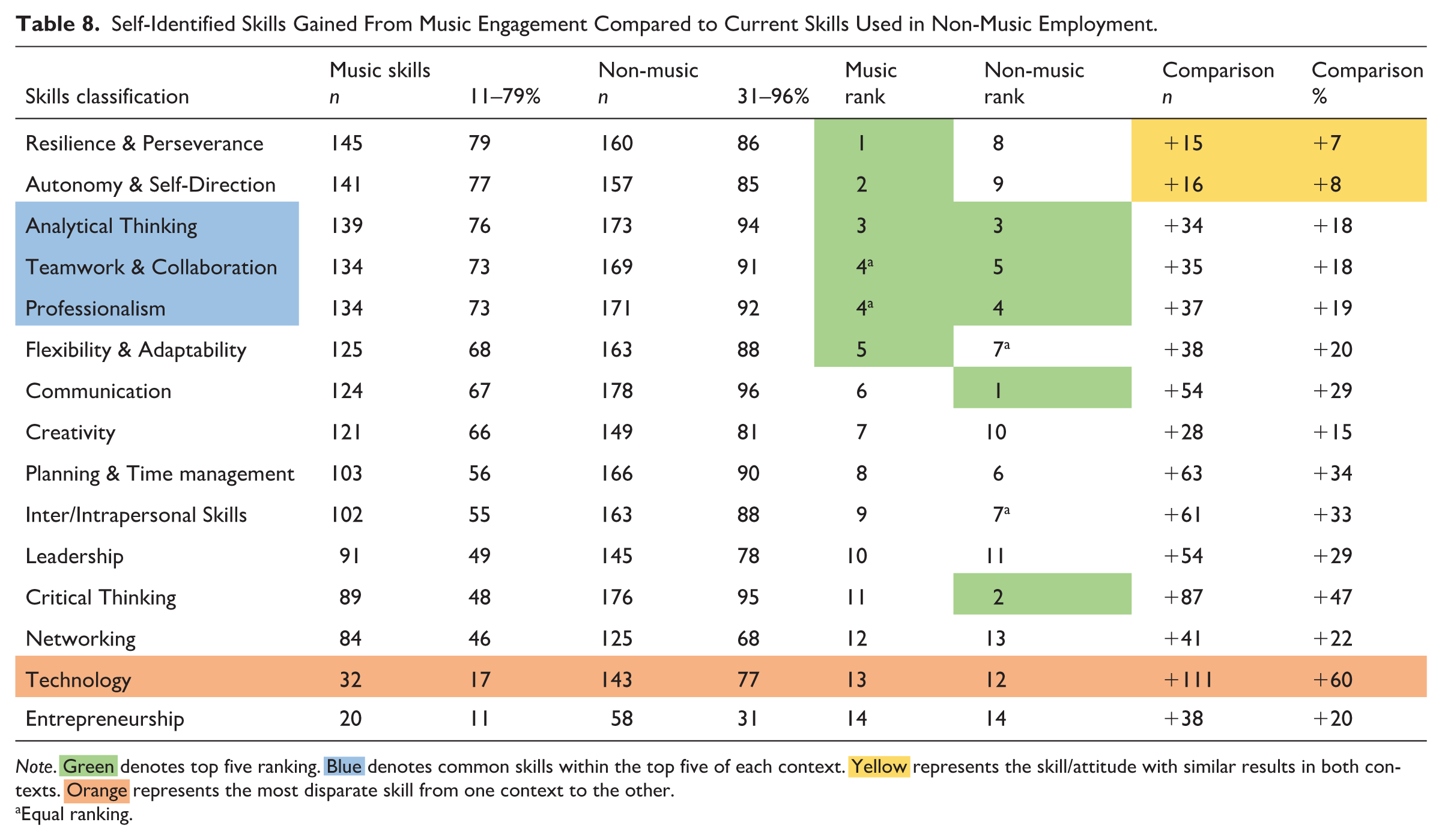
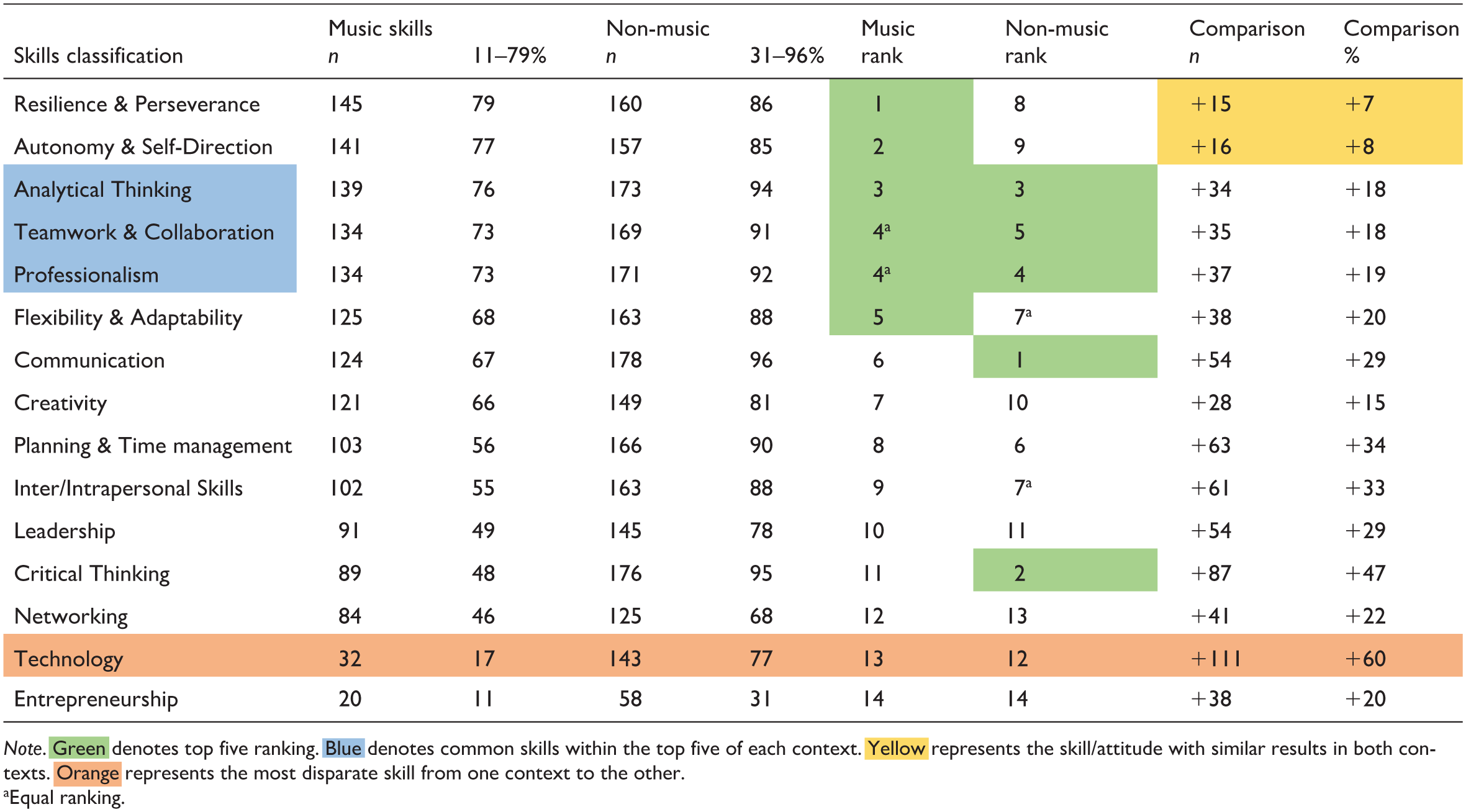
The top five ranked skills and attitudes identified as gained through music education were Resilience & Perseverance, Autonomy & Self-direction, Analytical Thinking, equally Teamwork & Collaboration and Professionalism, and Flexibility & Adaptability. The top five ranked skills and attitudes utilised within their current non-music employment were Communication, Critical Thinking, Analytical Thinking, Professionalism, and Teamwork & Collaboration. The latter three skills were present within the top five ranked skills gained from instrumental music education and used in their current employment. Of interest, Resilience & Perseverance and Autonomy & Self-direction were skills and attitudes possessing similar results within both contexts, suggesting those perceived skills from music are highly transferable to their current employment.
Participant percentages of skills perceived to be gained through instrumental music education ranged from 11 to 79%, with 10 skills classifications over 50%. Percentages of skills perceived used within non-music employment ranged from 31 to 96%, with 14 skills classifications over 50%. It would appear collectively the participants have not used less of any skill from one context to the next. Except for Technology, arguably a discipline-specific skill, the data thus far revealed that the skills and attitudes gained through instrumental music education could be described as potentially transferable.
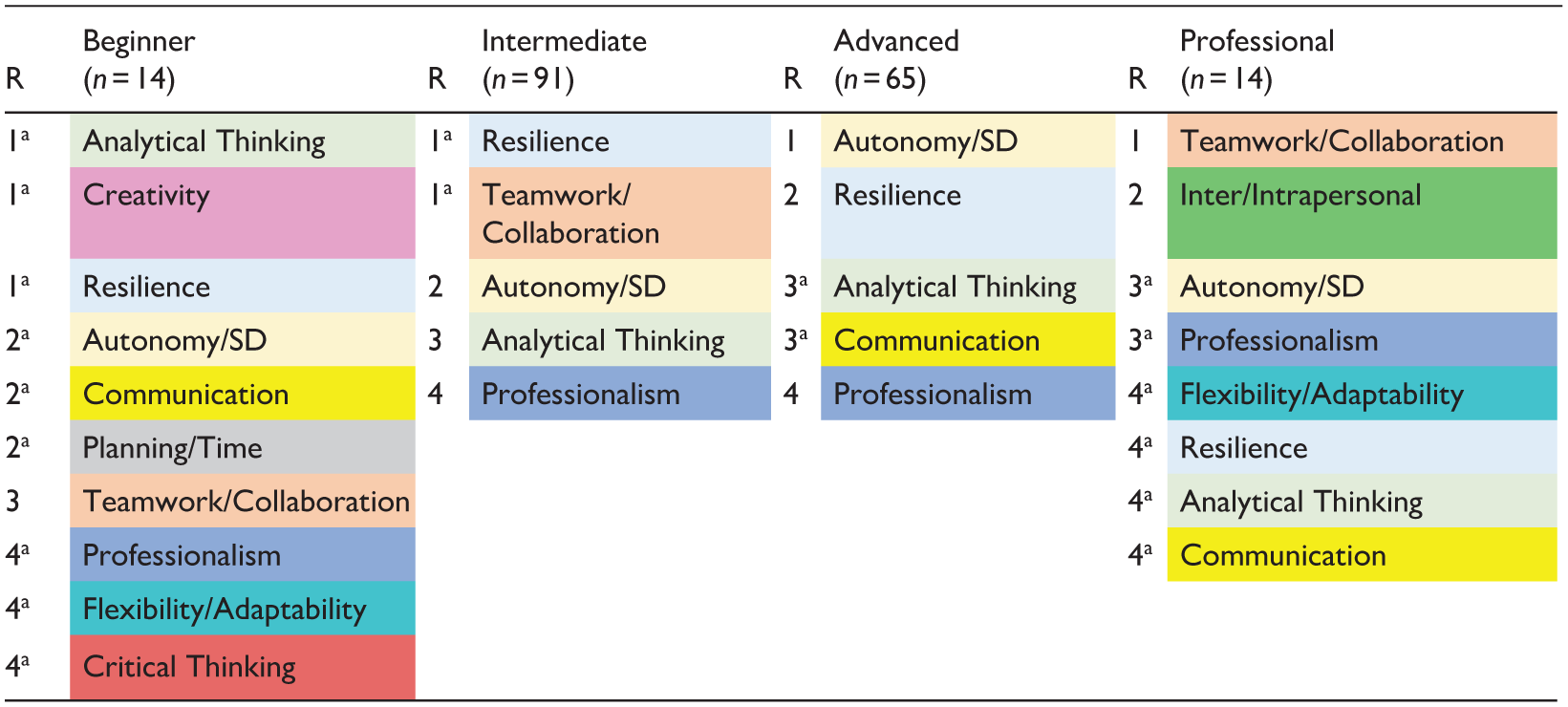
To determine whether one’s self-identified music standard affected the perception of skills gained through instrumental music education, a comparison of beginner, intermediate, advanced and professional music standard classification responses was made (see Table 9). In the top three ranked skills, common across all music standard classifications was Autonomy & Self-direction. In the top four ranked skills, Autonomy & Self-direction, Analytical Thinking, Resilience & Perseverance, and Professionalism appear across all music standard classifications. Creativity, Critical Thinking, and Planning & Time Management only appear in Beginner, and Inter/intrapersonal skills solely appears in the Professional standard classification. One must acknowledge that the Beginner and Professional participant populations are much smaller than those of Intermediate and Advanced, thus their data is likely less reliable.
Top Four Music Education Skills Acquired: A Comparison of Beginner Versus Intermediate Versus Advanced Versus Professional Self-Identified Music Standard.
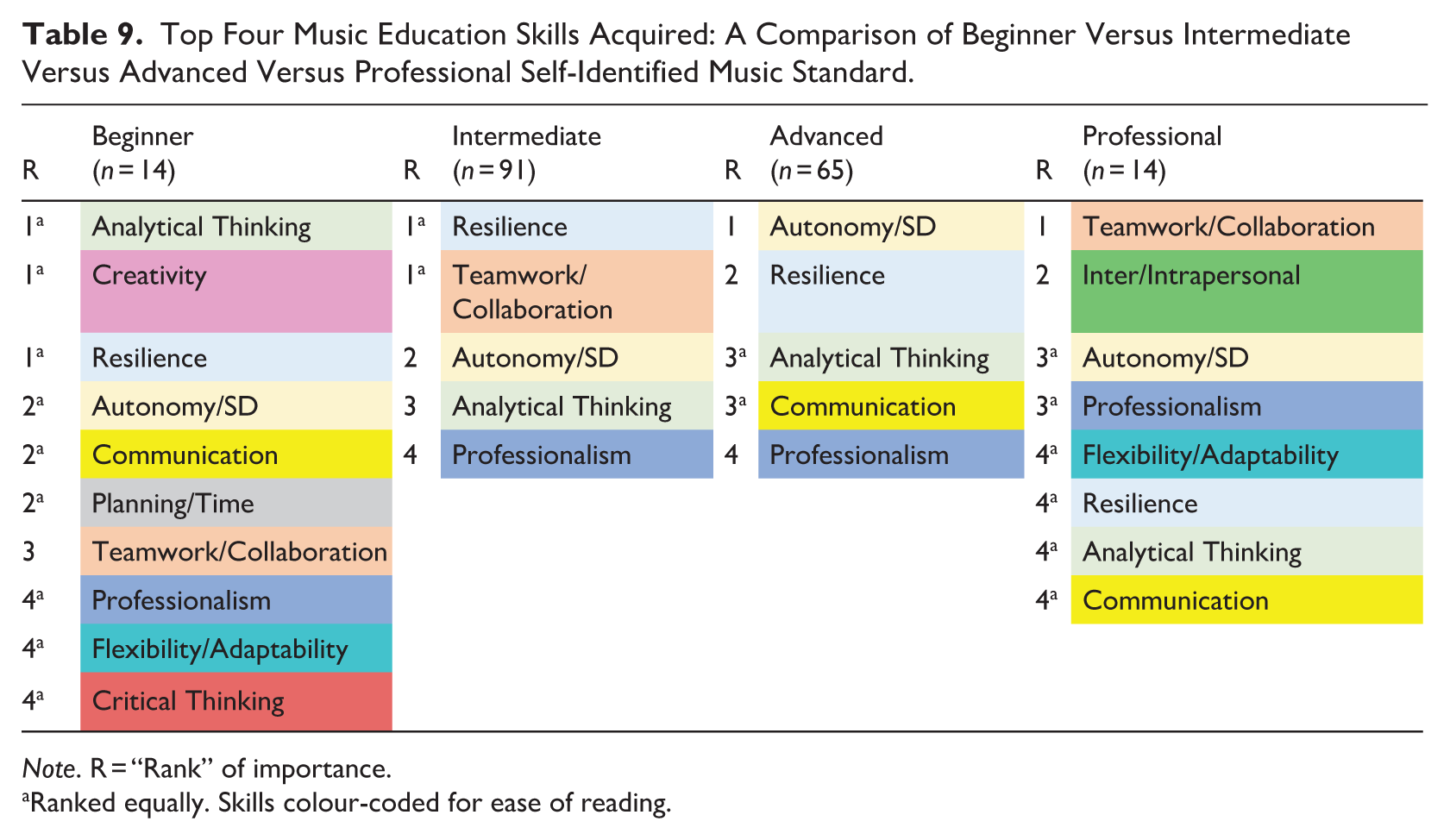
Note. R = “Rank” of importance.
Ranked equally. Skills colour-coded for ease of reading.
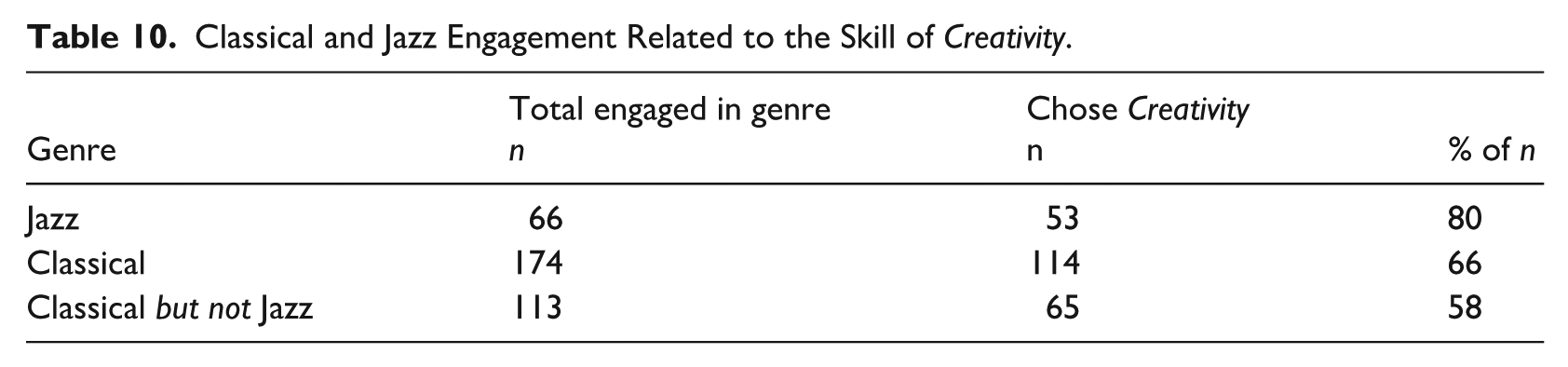
When considering the overall results through the lens of genre, of the 66 participants that engaged with Jazz, 53 (80%) chose Creativity as a skill gained from instrumental music education. Of the 174 that engaged with classical music, 114 (66%) also chose Creativity. Of the 113 that engage with Classical but not Jazz, 65 (58%) chose Creativity. Thus, while Jazz training is more likely perceived to attain Creativity, for over half, classical instrumental music education was also identified to develop one’s creative skills (see Table 10).
Classical and Jazz Engagement Related to the Skill of Creativity.
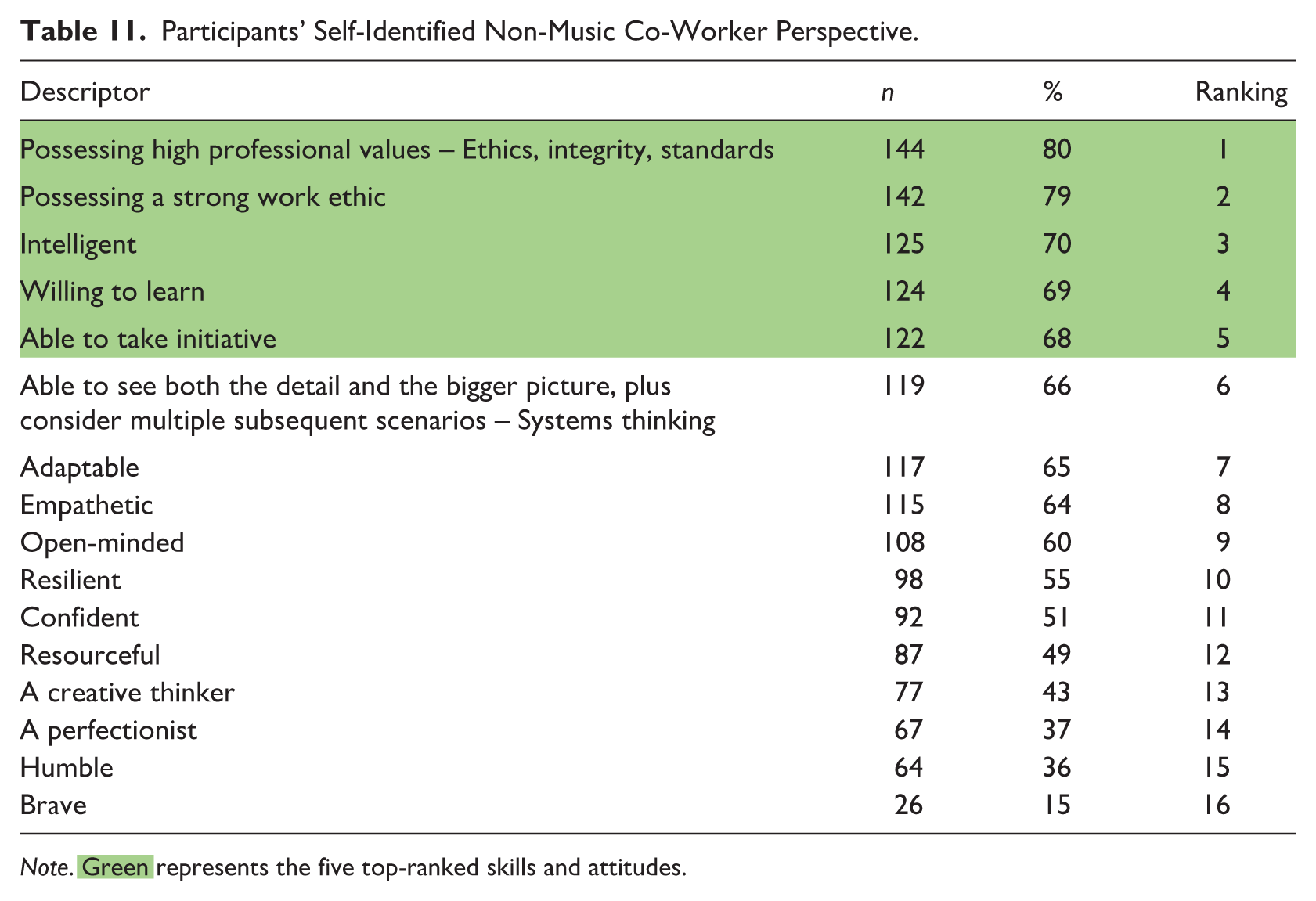
To gain further insight to participants’ current work skills and attitudes, participants were invited to reflect on the question, “How would your work colleagues/clients describe you?” (see Table 11). Participants (n = 179 responses) commonly suggested their co-worker feedback described them as Possessing high professional values – ethics, integrity, standards (80%), Possessing a strong work ethic (79%), Intelligent (70%), Willing to learn (69%), Able to take the initiative (68%), and Able to see both the detail and the bigger picture, plus consider multiple subsequent scenarios (66%), otherwise known as systems thinking. 15 Over half suggested their colleagues would describe them as Confident (51%). Overall, 11 skills and attitudes achieved over 50% response rate. It was interesting that A creative thinker (43%) was selected less than Systems thinking (66%) when a creative thought process is often required for both (Ramos, 2020). Of interest, these top five ranked skills and attitudes are comparable to the top five ranked instrumental music education skills in Table 8 (excluding Resilience & Perseverance).
Participants’ Self-Identified Non-Music Co-Worker Perspective.
Participants’ qualitative responses to “In what way were the skills gained from your music education distinctly transferable to your non-music career?” were very detailed. One participant voiced their criticism regarding causation versus correlation, potentially unaware of the more recent research into the developmental benefits of instrumental music education on young people (Román-Caballero et al., 2022). Meanwhile, another reasoned had they been made more aware of instrumental music education’s skill transferability during their youth, “causation” would be more apparent.
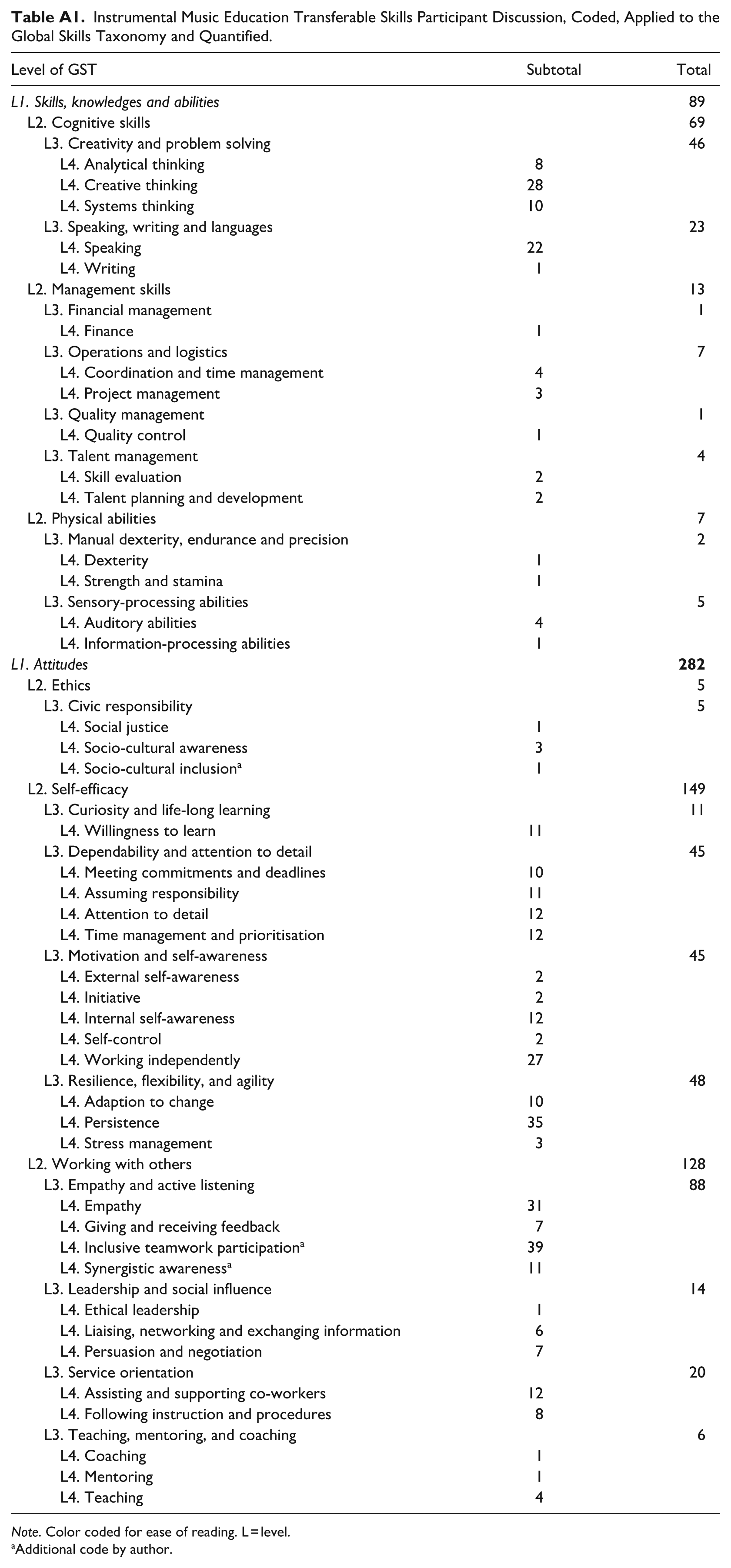
Their 163 responses were coded and themed using the Levels 1 to 4 Global Skills Taxonomy (GST) of skills, knowledges, abilities, and attitudes (see Table A1). The most significant response was the attitudinal skill of self-efficacy (n = 149) described by the GST as “controlling one’s thoughts, feelings and actions” (WEF, 2024c) where the participants suggested their music education enabled curiosity and life-long learning (n = 11), dependability and attention to detail (n = 45), motivation and self-awareness (n = 45), plus resilience, flexibility, and agility (n = 48). An example response coded as curiosity and lifelong learning included “Learning music and being quite good at it gave me confidence to learn and try other new things as an adult [. . .] That confidence has extended into professional life where I have tried totally new projects and skills even though I may be feeling very unsure” (ME114, Federal Public Servant). This participant’s response identified with resilience, flexibility, and agility: I'm a surgeon. There is so much that is transferable [. . .] Playing in orchestras and bands taught me about coping when things don’t go to plan, concentration, staying in time is more important than playing every note perfectly. Eisteddfods
16
taught me that no matter how beautifully you think you played, (or how hard I worked during my surgery training), not everyone is going to give you top marks and sometimes you can identify ways to improve and sometimes you just have to make peace with the fact that when something is subjective, you might not be able to change the other person’s perspective, so decide whether it’s worth fighting or changing or just move on. (ME16, Surgeon)
Also prevalent was the attitudinal skill of working with others (n = 128) defined as “emotionally intelligent behaviours which help a team to complete tasks effectively by promoting cooperation, communication, respect and mutual upbuilding” (WEF, 2024c). Participants indicated their music education enabled empathy and active listening (n = 88), leadership and social influence (n = 14), service orientation (n = 20), plus opportunities for teaching, mentoring, and coaching (n = 6). This participant’s response was coded as inclusive teamwork participation (n = 39) within the subcategory of empathy and active listening: A lot of my work is autonomous, but I also have to work as part of a tight knit team. I feel that being part of a musical ensemble taught me so much about communicating, listening, observing, deliberate practice (which is often not enjoyable but has to be done), a mentality to improve my performance are all essential and thanks to musical education. (ME54, Forensic Police Officer)
Cognitive skills (n = 69) such as creativity and problem solving (n = 46), plus speaking, writing, and languages (n = 23) were also identified in the participants’ responses, albeit comparatively less significantly. The GST defines cognitive functioning as “refer[ring] to multiple mental abilities, including learning, thinking, reasoning, remembering, problem solving, decision making, and attention” (WEF, 2024c). Some participants attributed their cognitive ability to their jazz skills. For example: “My experience in a small jazz combo has improved my ability to think on the fly and adapt to unexpected circumstances” (ME19, Science researcher). The transferable skill of instrumental performance to public speaking was mentioned by many: My biggest skill from music I apply constantly is being able to present to others. Many people in the corporate world are terrified of standing up in front of a crowd. Music taught me that “the show must go on” – how to prepare and that you can sometimes fake it till [sic] you make it. I don’t think I would be as successful in this area . . . without having done so much music. (ME101, Rehabilitation counsellor, consultant)
During the analysis of the participants’ responses, it became less convincing that the GST was fit for purpose within the context of this study’s methodology. For example, there are some Level 4 skills such as auditory abilities mentioned in the GST as “abilities relating to distinguishing and isolating sounds, interpreting speech and speaking clearly” that would be clearly transferable, but the participants did not mention this; likewise with dexterity described as “the ability to steadily, precisely and responsively grasp, manipulate, and assemble objects or adjust the controls of a machine” (WEF, 2024c). For the GST to be utilised more effectively, innate skills would be more successfully observed than self-identified. However, the GST is the only skills model that, to date, incorporates attitudes and thus useful. Furthermore, it has the potential to be adopted to create a music-specific taxonomy of transferable skills. For example, I included three more Level 4 skills socio-cultural inclusion, inclusive teamwork participation, and synergistic awareness as these themes continually arose during the analysis. While they did not seem to immediately fit other Level 4 classifications, they were relevant to Level 2 working with others and Level 3 empathy and active listening (see Table A1).
Many other resultant themes would not align directly with any taxonomy, but were no less relevant. Participants often commented how their music training enabled confidence which then led to either public speaking, learning/trying new things, or in general being empowered more socially in the workplace. Others also discussed the ability to focus for long periods of time (a cognition skill), and that their high standards attained and sustained in their music making was an expectation they brought into their work environment. Skills such as pattern recognition within sight reading, non-verbal communication, mindfulness and joy experienced with music were all skills and attitudes they perceived transferable to their workplace with some even using their musical skill to creatively achieve non-music outcomes.
Asked what they loved about music, 26% of the 175 respondents commented they used music for health management and work resilience: “I can have a stressful day at work and come home and play the piano until I've unwound” (ME16, Medical professional) and “I also love that it uses my whole brain in a different way to my day job and going to rehearsal means I have to focus on the music and stop thinking about everything else that’s going on which can be a fantastic reset and good for mental health balance” (ME147, Lawyer). This could be seen as a form of self-management and care, vital to workplace health and productivity (Irtelli & Gabrielli, 2023).
Discussion
To ascertain what impact instrumental music education has on non-music employment, this research sought to investigate Australian participants’ self-identified transferable music skills and co-worker perspectives, their attained music standard and genre experiences, and align their qualitative data with the Global Skills Taxonomy. Limitations of this methodology do exist.
The survey title potentially prompted the more enthusiastic music advocate towards bias. There was also no inquiry into the reciprocal influence one’s non-music employment had on their ongoing music experiences. Furthermore, there were no cultural or historical identifiers; however, using the GST as an applied tool ameliorated this oversight somewhat.
Overall, the participants represent a highly educated, experienced, largely skilled, and professional population. Irrespective of their attained music standard they identified their instrumental music education and experiences developed the foundational transferable music skills used and scaffolded within their non-music professions. Such skills represent current, and future employment skills requirements (WEF, 2023). While technological skill was deficient in instrumental music education, the skills needed to adapt and use technology such as Analytical thinking (Van Laar et al., 2017) were identified with participants evidencing attitudes of confidence and Willing to learn within their employment. This study also identified transferable music “soft skills” and attitudes potentially substitute those missing within their higher education (Fajaryati et al., 2020; Hall, 2019; Laker & Powell, 2011; Marginson, 1994; Scandurra et al., 2023). This is pertinent as 85% of participants had engaged in formal learning related to their employment.
This research builds on Hallam’s (2010) study of the impact of music education on young people and Bassett’s (2013) study on the transferable music skills applicable to adult lives. While this Australian study deliberately chose not to distinguish other influences on skill development, such as sport, there was evidence that classical-based, and more so jazz-based, instrumental music education contributes to the skills of Creativity, identified as one of the top two skills required for current and future employment (WEF, 2023). This leads to the identified concern of causation versus correlation. Causation is likely for many reasons. Firstly, studies have proven the impact of music experiences influencing neuronal connections and increasing grey matter density in turn improving learning ability (Altenmüller et al., 2000; Kraus & White-Schwoch, 2020). Secondly, such sustained, active, formal, and structured learning of complex instruments as experienced by the participants through a variety of genres (predominantly classical) validates best practice instrumental music education recommendations for pre-tertiary cognitive development by Collins et al. (2019). Finally, considering participants’ attained music standard, versus average length of non-music employment, it is more than safe to assume that for most, instrumental music education occurred prior to employment. This is further confirmed as many participants resided in Queensland, a state possessing one of the oldest school instrumental music education programmes in Australia. Correlation could only be determined if a study investigated and compared three parameters: 1) a control group of employed participants who have experienced no instrumental music education, 2) an instrumental musically educated group working in non-music roles (similar to this study), and 3) a group of participants working in diverse employment sectors introduced to instrumental music education and observed over a period of time.
Participants’ self-identified personal and co-worker perspectives suggest their transferable music skills cultivate confident, productive, highly focused, team-oriented professional employees representing excellent role models for their peers. Furthermore, the application of the GST highlighted their transferable music “soft skills” of self-efficacy were most prevalent, thus contributing to their self-belief and resilience (Core Skills for Work Developmental Framework, 2018). Most of their professions represented Healthcare and Social Assistance; Professional, Scientific and Technology Services; and Education and Training – all predicted to contribute 50.4% of the growth and employment demand over the next decade (Jobs and Skills Australia, 2024a). This and the strong response from Queensland, leads one to question, yet again, government initiatives discouraging music education opportunities and variable support of instrumental music education. There is an opportunity to increase music education within pre-service teacher training, embed compulsory instrumental music education in all state schools, reassess ATAR scaling, and lower arts degree costs. Doing so will stimulate economic growth via the work quality of professionals, some of whom mitigate their work-stress through music-making thus creating a more capable and cost-effective workforce.
Conclusion and Implications
This research represents the largest study on transferable music skills gained from instrumental music education, and its positive impact on adults’ non-music employment. In adopting the Global Skills Taxonomy, this study has extended the skills discussion to include attitudes. Such findings are more broadly relevant as on-the-job inhouse talent redevelopment (WEF, 2023) and a skills-first approach (WEF, 2024) are trending recruitment practices. Furthermore, an opportunity exists for the impending Australian National Skills Taxonomy to rigorously understand and include the transferable skills and attitudes of the musically trained. More significantly, in utilising the GST, a transferable language between instrumental music education and non-music workplace skill has been formally identified which can be used alongside delivering instrumental music education further articulating its relevant value. Such explicit understanding has further implications for music professionals justifying the relevance of their music experience to potential employers when seeking additional non-music work within their portfolio of income (Throsby & Petetskaya, 2024).
Further studies involving participants from diverse countries would capture the nuance of the cultural and historical context of transferable music skills. As a method, transferable skills self-identification relies on participants’ self-awareness and reflective capabilities. Thus, future studies could include an ethnographic approach plus co-worker interviews to gain more robust data. Questions could include: is there a difference between the transferable music skills of those sustaining their music engagement versus those who have discontinued versus those who never experienced instrumental music education? A study of a single industry, for example, IT, may garner more significant data.
It is unsurprising, given the “analogue” nature of represented instrumental music education, that Technology skills were not strongly identified, but more so used in the participants’ employment as a discipline-specific skill. To maintain music education’s relevance, it would be tempting for policy makers to prioritise technology within music education curricula to additionally support future employment requirements. However, this study offers an alternate rhetoric and enriches the discourse regarding instrumental music education benefits to cognitive development, society, and economy. Through the lens of transferable music skills, music educators can advocate how current instrumental music education practice creates a future-proofed capable workforce, in turn creating a stronger economy.
Footnotes
Appendix
Instrumental Music Education Transferable Skills Participant Discussion, Coded, Applied to the Global Skills Taxonomy and Quantified.
| Level of GST | Subtotal | Total |
|---|---|---|
| L1. Skills, knowledges and abilities | 89 | |
| L2. Cognitive skills | 69 | |
| L3. Creativity and problem solving | 46 | |
| L4. Analytical thinking | 8 | |
| L4. Creative thinking | 28 | |
| L4. Systems thinking | 10 | |
| L3. Speaking, writing and languages | 23 | |
| L4. Speaking | 22 | |
| L4. Writing | 1 | |
| L2. Management skills | 13 | |
| L3. Financial management | 1 | |
| L4. Finance | 1 | |
| L3. Operations and logistics | 7 | |
| L4. Coordination and time management | 4 | |
| L4. Project management | 3 | |
| L3. Quality management | 1 | |
| L4. Quality control | 1 | |
| L3. Talent management | 4 | |
| L4. Skill evaluation | 2 | |
| L4. Talent planning and development | 2 | |
| L2. Physical abilities | 7 | |
| L3. Manual dexterity, endurance and precision | 2 | |
| L4. Dexterity | 1 | |
| L4. Strength and stamina | 1 | |
| L3. Sensory-processing abilities | 5 | |
| L4. Auditory abilities | 4 | |
| L4. Information-processing abilities | 1 | |
| L1. Attitudes |
|
|
| L2. Ethics | 5 | |
| L3. Civic responsibility | 5 | |
| L4. Social justice | 1 | |
| L4. Socio-cultural awareness | 3 | |
| L4. Socio-cultural inclusion a | 1 | |
| L2. Self-efficacy | 149 | |
| L3. Curiosity and life-long learning | 11 | |
| L4. Willingness to learn | 11 | |
| L3. Dependability and attention to detail | 45 | |
| L4. Meeting commitments and deadlines | 10 | |
| L4. Assuming responsibility | 11 | |
| L4. Attention to detail | 12 | |
| L4. Time management and prioritisation | 12 | |
| L3. Motivation and self-awareness | 45 | |
| L4. External self-awareness | 2 | |
| L4. Initiative | 2 | |
| L4. Internal self-awareness | 12 | |
| L4. Self-control | 2 | |
| L4. Working independently | 27 | |
| L3. Resilience, flexibility, and agility | 48 | |
| L4. Adaption to change | 10 | |
| L4. Persistence | 35 | |
| L4. Stress management | 3 | |
| L2. Working with others | 128 | |
| L3. Empathy and active listening | 88 | |
| L4. Empathy | 31 | |
| L4. Giving and receiving feedback | 7 | |
| L4. Inclusive teamwork participation a | 39 | |
| L4. Synergistic awareness a | 11 | |
| L3. Leadership and social influence | 14 | |
| L4. Ethical leadership | 1 | |
| L4. Liaising, networking and exchanging information | 6 | |
| L4. Persuasion and negotiation | 7 | |
| L3. Service orientation | 20 | |
| L4. Assisting and supporting co-workers | 12 | |
| L4. Following instruction and procedures | 8 | |
| L3. Teaching, mentoring, and coaching | 6 | |
| L4. Coaching | 1 | |
| L4. Mentoring | 1 | |
| L4. Teaching | 4 |
Note. Color coded for ease of reading. L = level.
Additional code by author.

Ethical Considerations
GU 2019/1022
Author Contributions
Funding
The author disclosed receipt of the following financial support for the research, authorship, and/or publication of this article: This research has been funded by the Office of Research, Griffith University.
Declaration of Conflicting Interests
The author declared no potential conflicts of interest with respect to the research, authorship, and/or publication of this article.