



Abstract
The purpose of this study was to investigate secondary instrumental music education in rural Mississippi. This descriptive study investigated the experiences, attitudes, beliefs, and perceptions that rural instrumental music educators (N = 58) held about their schools, students, and communities. Furthermore, we examined how participants defined success for their programs, what challenges and rewards they experienced in their positions, and what skills they considered most important for rural music educators. Results indicated that while rural music educators find the musical aspects of their positions rewarding, such as fostering a love of music in their students, they believe that non-musical skills related to teaching were more important than their own musical skills. The three greatest challenges named by participants were limited funding, lack of resources, and little support. Conversely, the most frequently reported reward was student personal growth. Implications for music teacher education are discussed.
Keywords
Introduction
Teaching instrumental music in a rural setting presents its own set of challenges as compared with teaching in a suburban or urban setting. For example, music teachers in suburban and urban schools sometimes teach a more diverse population and because of their geographic location, they have access to resources such as symphony orchestras to help provide sectionals or in-schools performances (Reed, 2019). Approximately 30% of American students are enrolled in rural schools (National Center for Education Statistics [NCES], 2013), yet much research in education has been conducted in urban and suburban environments. Although Causby’s (2019) study surveyed rural instrumental music educators in North Carolina regarding their rural and urban teaching experiences, the present study focused on participants’ rural teaching experiences in Mississippi so that a potential comparison could be made between rural music teaching in different states. To add to the growing body of literature in this area, we investigated what skills and characteristics music educators find necessary for rural teaching, how they define success, the challenges they face, and what they find most rewarding.
Related Literature
Rural Music Teaching: Challenges
Some noted challenges of rural teaching include serving student populations typically of a low socioeconomic status, limited resources within the school system, and lower standardized test scores than suburban students (Logan & Burdick-Will, 2017). Other challenges rural instrumental music programs face included limited access to instruments, geographic isolation, low enrollment (which created instrumentation, repertoire, and scheduling problems), community expectations, and inadequate rehearsal and/or performance space (Buckner, 2010; Hunt, 2009; Isbell, 2005). These challenges can be compounded in instances where rural music teachers teach at multiple levels (middle and high school) and/or travel between school sites (Hunt, 2009; Isbell, 2005). Related to geographic isolation, Hunt (2009) noted that a lack of music stores and access to private instructors was also a challenge for rural music teachers.
In addition, Gardner (2010) found that many teachers left their positions because they were dissatisfied with workplace conditions. Rural schools have also faced issues with “teacher recruitment and retention, professional and geographic location, and professional credentialing of teachers” (Burton et al., 2013, p. 1). Teachers in a rural setting have often realized that much of the curriculum is not based on their sense of place but on an urban setting with urban policies in place (Barter, 2008). Barter (2008) deduced that because research in rural education was lacking in comparison to that of suburban or urban, current curriculum trends and policies were based on experiences from an urban setting that may be difficult to apply to a rural setting. Hunt (2009) reported that a separate challenge facing music educators in a rural setting was being active in the community while maintaining a sense of privacy.
Rural Music Teaching: Rewards
Although much of the existing literature focuses on the challenges of teaching music in a rural setting, several researchers have reported that relationships with stakeholders and a strong sense of community were considered rewards (Isbell, 2005; Prendergrast, 2017, 2018; VanDeusen, 2016). “Schools are often connected to their communities and are often deeply cherished in rural communities. School music programs hold the potential to influence a small community’s identity” (VanDeusen, 2016, p. 56). Teachers reported to Hunt (2009) that they felt it was rewarding to have contact with students over a longer period (i.e., elementary school through high school) because it allowed the educator to influence and witness the growth of their students. Starrett et al. (2021) indicated that the ability to build authentic relationships with students was considered rewarding in the rural context. These relationships and a greater sense of community can lead to a more personal experience for rural educators (Starrett et al., 2021). Despite the challenges of the rural setting, many music educators have considered their positions rewarding.
Rural Music Teaching: Strategies
Community support can be crucial to the success of a rural band program, so educators need to understand the community in which they teach (Hunt, 2009; VanDeusen, 2016). Isbell (2005) also noted the value of community support because of its role in developing the rural music program as school and community activities are often intertwined, making the band very visible. The ability to establish oneself within the community can also build relationships with students, parents, and community members and help rural teachers develop a sense of belonging (Bates, 2011; Corbett, 2009).
Albert (2006) offered strategies for recruiting and retaining band students in low socioeconomic areas, which could also be applied to most rural areas, by suggesting that providing access to instruments, exposure to band, and culturally relevant ensembles helped recruit and retain students (Parker et al., 2018; Strange, 2011). Wilcox (2005) indicated that the success of a program promoted more success which assisted in recruiting students into the band program. In addition, VanDeusen (2016) and (Causby & Foster, 2022) found that teachers who purposefully built relationships with students and fostered a sense of family within the ensemble successfully recruited and retained students. According to Wilcox (2005), it takes investing in the relationships with students truly to see the musical rewards.
Music Teacher Education
Because of these challenges in rural music education, teachers new to this setting must be adequately prepared and trained to teach in such a situation (Azano & Stewart, 2015), and the measure of success in rural music education may not be the same measures used in an urban or suburban area (Bates, 2011). In addition, music educators must also be able to advocate for their programs to maintain their viability (Hunt, 2009).
The personality traits of the music educator also play a large role in the program’s success. The ability to be flexible, take charge, have a sense of humor, and be marketable are all necessary qualities for rural music educators (Hicks, 2010). Although non-musical, these qualities have been viewed as more important and vital to the program’s success than individual musicianship, thus warranting preparation in music education programs (Causby, 2019; Diesler, 2011).
Need for Study
Education in a rural setting is quite common in Mississippi, as 51.2% of the population lives in a rural area, considered the fourth-highest rural population in the United States (World Population Review, 2021). All eight public universities in the state of Mississippi prepare pre-service teachers, yet the state has a history of a teacher shortage (Ratliff, 2008) which continues today (James, 2021). Although each school in Mississippi faces its own set of challenges, there is a strong band tradition within the state (Washington, 2007). In the current study, we further investigated the challenges and rewards of rural music teaching but narrowed its focus to one specific state and presented its findings using descriptive statistics.
Theoretical Framework
Just as in Causby (2019), the model for the current study, the intent to examine the unique phenomenon of instrumental music education in a rural setting is of the sociocultural perspective. Howard (2014) also used this perspective to investigate teacher experiences in a specific cultural setting, specifically the beliefs teachers hold about their students, the skills needed for success, and the rewards and challenges that come from teaching in a rural setting. As in Schulman (1987) and Grossman (1990), the teachers’ knowledge of their contexts and students were also central to the study. This social and contextual knowledge is important in describing and understanding the experiences of rural instrumental music educators in Mississippi.
Purpose and Research Questions
The purpose of this study was to describe the setting and experiences of secondary instrumental music educators in rural Mississippi and investigate their attitudes and beliefs about their schools, students, and communities. Furthermore, we examined how these music educators defined success for their programs, what challenges and rewards they experienced in their positions, and what skills they considered most important in their classrooms from a predetermined list (Fitzpatrick, 2008). The four research questions were as follows:
Research Question 1 (RQ1): What contextual knowledge do rural instrumental music teachers hold about the students they teach and the communities in which they teach?
Research Question 2 (RQ2): What is the relative importance of music teaching skills as they relate to teaching in a rural setting?
Research Question 3 (RQ3): What attitudes and beliefs do teachers hold toward teaching instrumental music in rural schools?
Research Question 4 (RQ4): What challenges and rewards do instrumental music teachers perceive from teaching instrumental music in a rural environment?
Method
We used a survey to collect descriptive data from secondary instrumental music educators in rural Mississippi. Descriptive research “is a basic research method that examines the situation, as it exists in its current state . . . identify[ing] attributes of a particular phenomenon” (Williams, 2007, p. 66). Given the research questions, a survey was considered appropriate because survey research “focuses on people, the vital facts of people, and their beliefs, opinions, attitudes, motivations, and behavior” (Mathiyazhagan & Nandan, 2010, p. 34) while allowing for a larger sample size than many qualitative methods and the use of descriptive statistics (Williams, 2007). The survey used for the current study was a modification of the instrument used by Causby (2019), which was an adaptation of Fitzpatrick’s (2008) survey. Steps taken to establish reliability and validity included the use of a focus group of rural instrumental music educators to modify Fitzpatrick’s (2008) survey for use in a rural context, use of a pilot group of rural instrumental music educators to complete the survey and give feedback, and further modification based on pilot group feedback. A Cronbach’s Alpha measure of internal consistency was calculated to establish reliability of the survey instrument. A raw alpha score of .88 and a standardized alpha score of .90 were found, indicating a high level of internal consistency. Because the current survey tool is a replication of Causby’s (2019) tool, it is also considered valid and reliable.
In this study, we asked music educators to rate skills and teaching strategies according to their experiences in the rural educational setting. Distribution and administration of the survey were approved by the institutional review board of the University of Southern Mississippi, after which data were collected, descriptive statistics and content analysis were conducted as applicable, and the data were explained and discussed (Mathiyazhagan & Nandan, 2010). Email addresses for instrumental music educators were gathered from school websites and state organization listservs. School administrative assistants were contacted for assistance if a specific instrumental contact was not found on the website. An email was sent to all potential participants, which included the purpose of the study, the research questions, the promise of anonymity, and the link to the survey. Once participants accessed the survey, consent was obtained.
The survey consisted of 101 questions, including 20 multiple-choice, 75 Likert-type, and six open-ended questions. We used multiple-choice questions to collect participants’ descriptive data such as courses taught, reasons for accepting their current position, and community, school, program, and teacher demographics. We used Likert-type questions to explore participants’ challenges such as funding, support, and access to equipment; their preparedness after leaving their undergraduate program; what they consider important for their students to learn; and how they define success, and the extent to which their programs have been successful according to their definition. The scale for these questions ranged from 1 to 5, with 1 = to the maximum extent, 3 = somewhat, and 5 = not at all; then, the mean and standard deviation were recorded. In addition, we asked participants to rate the importance of 15 teaching skills (four musical and 11 non-musical) in rural music educators on a scale of 1 = extremely important to 5 = not important at all. Some of these skills included having a strong work ethic and a deep knowledge base of the fundamentals of playing an instrument.
Participants reported the approximate amount of funding their programs receive and fundraise annually, three challenges they face in their position, and three items they find most rewarding about their position. We applied content analysis to the responses to these questions to identify emergent themes (Drisko & Maschi, 2015). According to Drisko and Maschi (2015), “researchers can use content analysis to identify and document the attitudes, views, and interests of individuals, small groups, or large and diverse cultural groups” (p. 3). Keywords repeated by participants emerged as themes. After themes were established, reviewing all responses to identify the number of responses that fit into each theme was repeated three times to ensure reliability among the results (Drisko & Maschi, 2015).
Of Mississippi’s 82 counties, the U.S. Census Bureau considers 65 to be rural, meaning that the county has an average population density of 250 people or less per square mile (Ratcliffe et al., 2016). We established a list of the school districts and their respective middle and high schools found within each rural county in Mississippi. We then searched faculty lists on school websites to determine the name and contact information for the band director(s). In the event no director was listed, we attempted to contact the school via email and/or telephone. The survey was distributed to 155 instrumental music educators within rural counties in Mississippi, and there were 58 participants (n = 58), signifying a 37.42% response rate. Although this may indicate a lower-than-normal response rate, there is no assurance that potential participants received every survey because of outdated websites and technology. In addition, some participants chose not to respond to every question, but if they completed the survey’s demographic portion, their responses were included in the total number.
Results
Participants
The participants (N = 58) consisted of more men (n = 42; 72.4%) than women (n = 16; 27.6%). Most participants identified as White (n = 47; 81.0%), while 19% identified as Black (n = 10), and 1% identified as Hispanic (n = 1). Years of teaching experience varied among participants (1–31+ years), as did years of teaching experience in a rural school, with the majority indicating that they had been teaching for 1–5 years (n = 19; 32.8%). When reporting the courses they taught, the majority taught middle or high school band (n = 55); only three participants indicated they taught middle or high school orchestra. In addition, participants listed the following courses as part of their teaching responsibilities: General Music (n = 26; 44.8%); Guitar (n = 20; 34.5%); Music Technology (n = 2; 3.4%), Music Theory (n = 2; 3.4%), Choir (3.4%), and Dual Credit Music Appreciation (n = 2; 3.4%). Only two participants (1.7%) reported teaching a non-music class: Resource Management (n = 1; 0.02%) and ACT Prep (n = 1; 0.02%).
RQ1: Contextual Knowledge
Approximately 57% (n = 33) of participants indicated that they were the same race as the majority of their students. Almost 77% of participants (n = 45) responded that more than half of the students in their school were eligible for reduced-price lunches. Approximately 53% (n = 31) of participants indicated that they live in the community where they teach, but 75% (n = 36) of participants responded that they were at most moderately familiar with the history of the community in which they teach. Most participants (n = 43; 74%) reported that they mostly feel safe in their school and its community. Most participants (n = 30; 63%) indicated that their school was a clean, orderly, safe space. We also asked about the proximity to colleges and universities to give a better depiction of geographic location. Most participants (n = 35; 60%) reported that their school was more than 25 miles away from the nearest college or university that offers a music degree.
RQ2: Specialized Skills
Participants rated the importance of music teaching skills (Causby, 2019; Fitzpatrick, 2008) as they related to teaching in a rural setting. Responses were averaged and were ordered from lowest to highest mean scores (Table 1). The most important skill was found to be a strong work ethic (M = 1.l5, SD = 0.35), and the least important skills was found to be spending personal funds to help your students (M = 2.67, SD = 1.18).
Means and Standard Deviations of Skill/Characteristic, Percentage of Respondents.
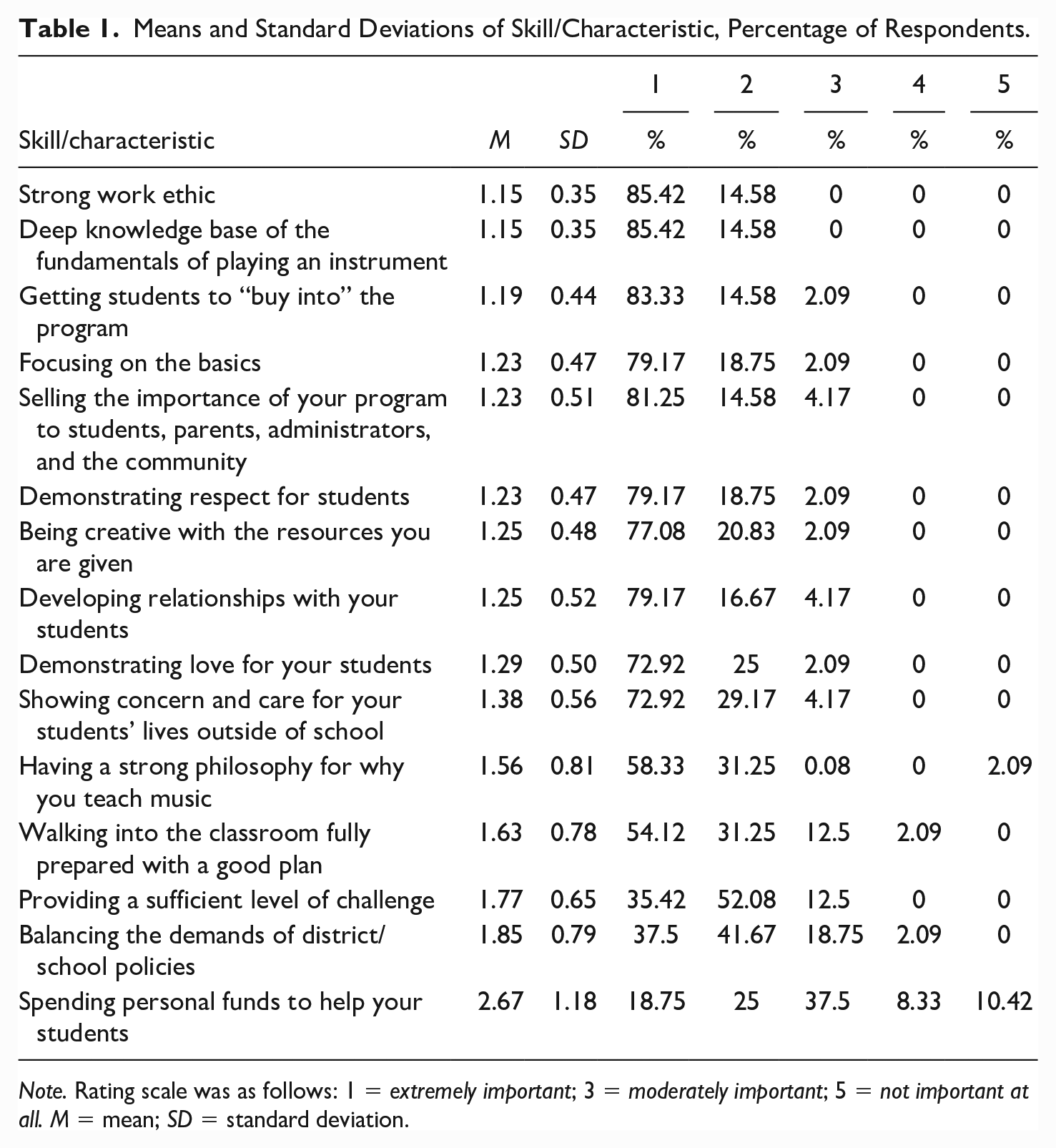
Note. Rating scale was as follows: 1 = extremely important; 3 = moderately important; 5 = not important at all. M = mean; SD = standard deviation.
RQ3: Attitudes and Beliefs
When asked why they accepted their current rural teaching position, 25.8% of participants (n = 15) reported it was because they did not receive a job in a different setting, 24.1% (n = 14) of participants responded that they wanted to help people, but 36.2% (n = 21) of participants indicated other reasons. These reasons included, but were not limited to, the opportunity to take over a well-established program, higher salary, location to their home, and the desire to teach in a smaller school regardless of rural, suburban, or urban setting. When asked to select from the following choices: a great deal (1), a lot (2), a moderate amount (3), a little (4), or none at all (5), at least 74% (n = 43) of participants indicated that they felt they had been at least moderately successful teaching music in a rural context. In addition, they believe that their students were highly academically achieving (M = 1.75, SD = .75), dedicated to the band program (M = 2.02, SD = .66), and reported moderately high levels of job satisfaction (M = 2.58, SD = 1.08).
Participants felt moderately supported by the administration (M = 2.77, SD = 1.12), by other teachers in their school (M = 2.65, SD = .90), and by the parents of their students (M = 2.77, SD = 1.03). However, most participants (n = 33; 56.8%) indicated that less than 30% of parents were regularly involved in their music program. When asked to select from a list of possible reasons for low parental involvement, “they are taking care of several other children” was the most commonly selected (n = 40; 68.9%). This was followed closely by “they work several jobs” (n = 38; 65.5%), “they are experiencing personal difficulties” (n = 28; 48.3%), “they do not understand or value the music program” (n = 36; 44.8%), and “they do not speak English” (n = 10; 17.2%). Five participants selected “other” as a response and included specific reasons such as laziness or they (parents) took advantage of time away from their children.
Participants indicated the need for better pre-service teacher preparation at the undergraduate level. When asked, “To what degree did your undergraduate teacher education program prepare you to teach in a rural area?” the mean response was 3.23 (SD = 1.10). Although 62% of participants (n = 36) indicated a positive relationship with local university professors, most participants suggested that university professors do not understand the challenges rural music educators face (M = 2.96, SD = 1.10).
Approximately 70% of participants (n = 41) indicated that they believed their program was at least moderately successful (M = 2.71, SD = .91), which was similar to the personal success experienced that was previously reported. Directors mainly reported non-musical elements as indicators of success (Table 2).
Means and Standard Deviations of Indicators of Success, Percentage of Respondents.
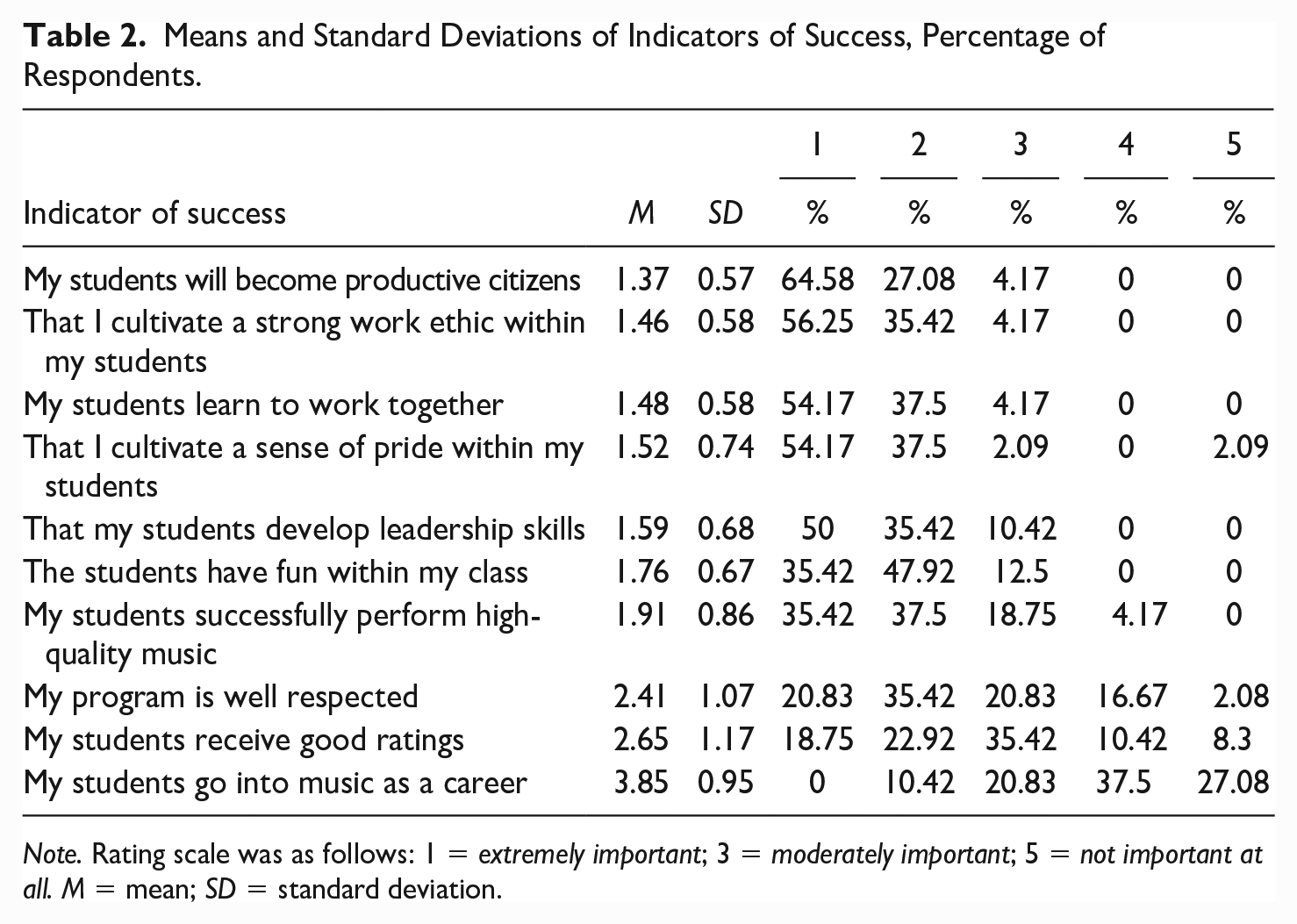
Note. Rating scale was as follows: 1 = extremely important; 3 = moderately important; 5 = not important at all. M = mean; SD = standard deviation.
RQ4: Challenges and Rewards
Although school and district funding ranged from US$0 to US$60,000, the mean was found to be US$7,785.52 (SD = US$13,651.33, median = US$1400). However, some programs reported experiencing great success with fundraising (US$0–US$50,000, M = US$7,692.22, SD = US$10,145.42, median = US$5000). The relatively low means indicate that the US$60,000 and US$50,000 at the top ranges are unique outliers in both instances. Thirty-eight participants reported charging a participation fee ranging from US$10 to US$350 (M = US$109.61, SD = US$71.51).
Participants were asked to identify the three biggest challenges they face as rural instrumental music educators. Content analysis was used to find the following emergent themes from the 131 total responses: funding, resources, administrative support, scheduling, positive behaviors and engagement, parent support, general/unspecified support, community support, and increased participation (Table 3).
Frequencies and Percentages of Perceived Challenges.
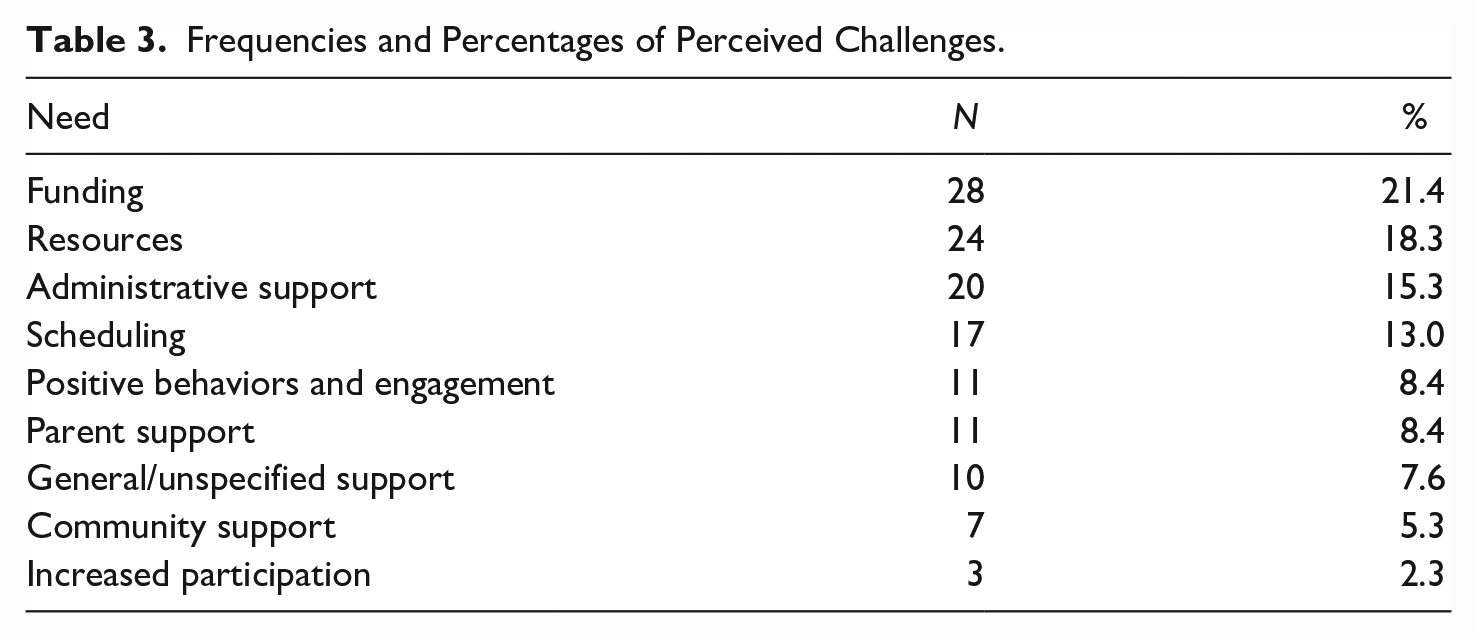
Thirty-seven percent of responses indicated a need for support, whether in general or from administrators, parents, and the community. Although most responses were concise in the type of support needed (i.e., community support, administrative support), one respondent indicated “administrators who understand music’s value in developing well-rounded students.” The second most commonly reported need was funding (21.4%), followed by resources (18.3%). Here, resources included instruments, equipment, music, technology, better facilities, more training, and/or additional staff. The need for better scheduling was reported in 13.0% of responses. Some responses indicated a need for more rehearsal time, while others indicated that school scheduling could create conflicts for students that prohibit their participation in band/orchestra. The responses associated with positive behaviors and engagement were related to student interest, buy-in, commitment, motivation, and work ethic. Finally, 2.3% of responses identified enrollment as a need, which could be linked to the reported need for better scheduling or better recruiting strategies.
Similarly, participants were also asked to list the three things they found most rewarding about their position. Again, content analysis was used to find emergent themes from the 131 responses (Table 4).
Frequencies and Percentages of Perceived Rewards.
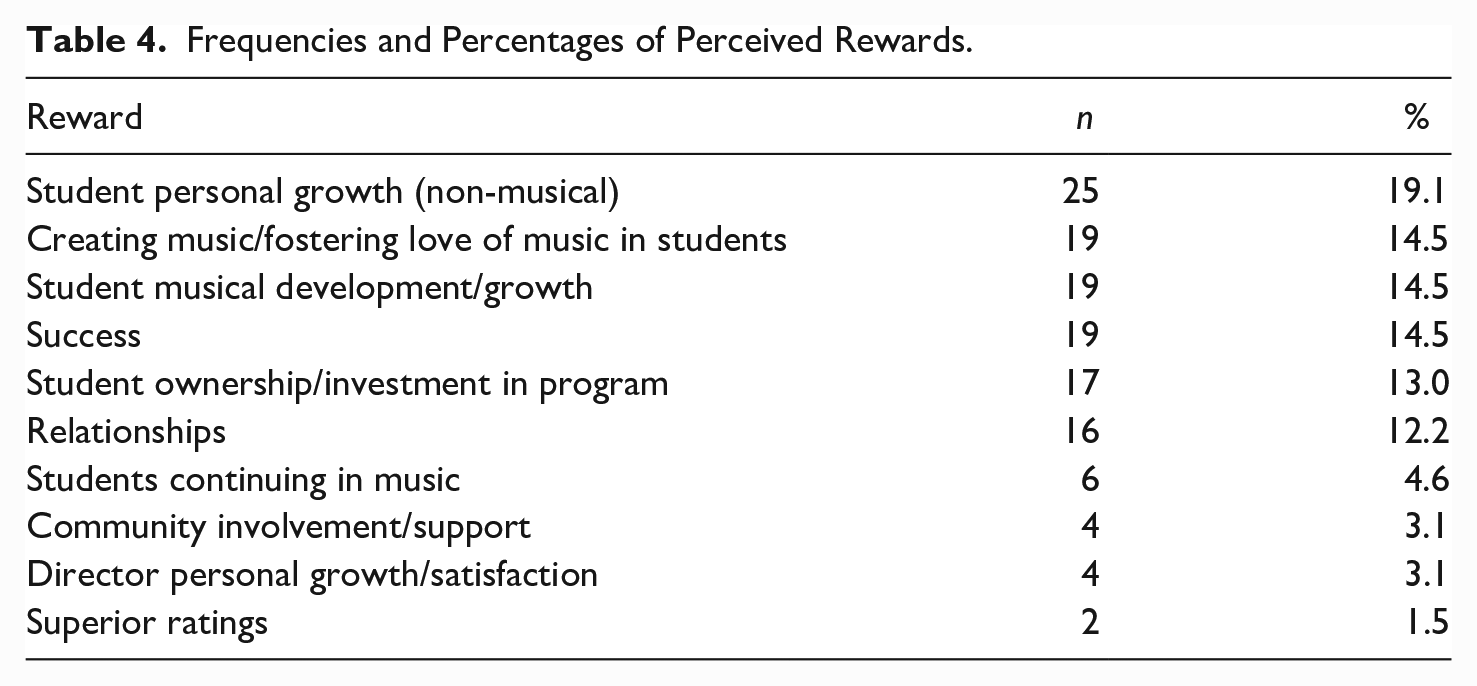
The most reported responses were related to student growth in non-musical ways (19.1%), such as “watching students mature,” “watching leaders develop,” “seeing bad kids change,” “students develop[ing] skills to be productive citizens,” and “seeing students grow through the years.” The next three most common themes were all related to music, and each represented 14.5% of responses: creating music/fostering a love of music in students, student musical development/growth, and success. Creating music/fostering a love of music in students included responses such as “creating music,” “children having a love of music,” “seeing my students make music,” and witnessing “students enjoy[ing] making music as a group.” Responses related to student musical development/growth were statements such as “development of musician,” “hearing the improvements,” “seeing my students improve,” and “student progress.” Examples of items related to the theme of success were “success,” “student success,” “success of a group,” “achieving goals,” and “watching my students succeed.” The fifth most present theme (13.0%) was student ownership and investment in the program, represented by statements such as “band unity,” having the “kids excited about what we are doing,” “student retention,” and “student ownership of the program.” Relationships were also a common theme (12.2%), related to both director-to-student relationships and student-to-student relationships. Responses such as “bonds,” “being a mentor,” “having alumni come back to visit,” “daily interactions with my students,” “students making relationships,” and “seeing students be proud of themselves and each other” were included here.
Other themes representing 5% or less of responses related to rewarding aspects of teaching in a rural setting were students continuing in music (4.6%), community involvement and support (3.1%), director personal growth and satisfaction (3.1%), and superior ratings (1.5%).
Discussion
RQ1: Contextual Knowledge
The number of students in participants’ schools eligible for reduced-price lunches was high, consistent with research revealing higher poverty rates in rural areas than in urban and suburban areas (Parker et al., 2018; Strange, 2011). Participants reported that the socioeconomic level of their students greatly mirrored not only the school in which they taught but also the community. The lower socioeconomic level could potentially have an impact on resources as well as access to music programs. Contrary to Gardner (2010), most participants indicated that they were satisfied with their workplace conditions. Although Hunt (2009) and VanDeusen (2016) insisted that it is important for educators to understand the community in which they teach, most participants reported knowing nothing at all to a moderate amount about the community.
RQ2: Specialized Skills
When examining the order of the means of the importance of skills related to rural instrumental music teaching (Table 1), the eight skills deemed most important for rural music educators by participants were all non-musical, except for having a deep knowledge of the fundamentals of playing instruments and focusing on the basics. This contradicts Causby’s (2019) findings, where the top skills were all non-musical. When examining the findings, two of the top eight were related to advocating for one’s program: (a) Getting students to “buy into” the program; and (b) Selling the importance of your program to students, parents, administrators, and the community. Although these skills may be difficult to teach, it is important that pre-service teachers have opportunities to practice these skills. Another option for exposure to these skills would be rich and diverse field experience placements. Through field experience observations and teaching opportunities, pre-service teachers witness these specialized skills modeled.
Two other skills found in the top eight were demonstrating respect for students and developing relationships with your students. This further supports the findings of Causby and Foster (2022) and VanDeusen (2016) that educators believe building relationships is important for success as a rural music educator. Like the other non-musical skills in this set, relationship building can be difficult to teach, but music teacher educators can model it.
RQ3: Attitudes and Beliefs
Most participants accepted their jobs because it was the only one available to them or because they wanted to help people. Still, even though it may not have been their first choice, they indicated moderate levels of job satisfaction. Similar to other findings, they mostly agreed that their students were well-behaved and felt safe in their setting (Albert, 2006; Causby & Foster, 2022). However, they reported needing more support from their stakeholders: administrators, other teachers, and parents of their students. Although participants reported a moderate amount of parental support, the assumption was made by many participants that there was a lack of parental involvement because they were tasked with taking care of several other children, which may be related to the socioeconomic levels of rural areas.
Similar to findings in the literature (Causby & Foster, 2022; Fitzpatrick, 2008; Prendergrast, 2017, 2018), participants felt that their undergraduate programs did not fully prepare them for rural music teaching. The indication that non-musical skills are of great importance in the music classroom supports the need for music teacher educators to incorporate more general aspects of teaching in addition to musical ones. This also supports the idea of varied field experience placements, especially those in a rural setting (Emmanuel, 2003; Robison & Russell, 2021).
Although most participants reported positive relationships with local colleges and universities, they indicated that they felt that professors did not understand the challenges of rural music teaching. Thirteen participants (22.4%) reported that the nearest college or university was within 25 miles of their location. The rest reported that the nearest college or university was more than 25 miles away, sometimes over 75 miles away. The distance could also affect communication and the ability to build relationships with faculty in higher education. This is consistent with findings that rural teachers were largely isolated due to their remote location and had limited access to professional development, resources, and colleagues (Burton et al., 2013).
In addition, participants were asked how they define success for their students and programs. Like Causby and Foster’s (2022) findings, participants considered the six non-musical student traits to be more important indicators of success than the four musical markers of student ability or program success (Table 2). This is also important for music teacher educators, as they should emphasize to pre-service teachers the focus on the development of the whole student, not just the musician.
RQ4: Challenges and Rewards
Funding
The reported figures for school system funding and program fundraising indicated that many of these programs were operating on limited budgets. With such low operating funds, it would be difficult to make larger instrument purchases, thus impacting the students who rely on school-owned instruments for participation. The reality that most rural music programs have limited budgets is based on the fact that schools are funded through property and sales taxes (Buckner, 2010), and these rural areas are comprised of many from low socioeconomic backgrounds (Logan & Burdick-Will, 2017 ; Showalter et al., 2017). However, it should be noted that lack of funding is also reported in urban and suburban music education settings (Elpus & Grise, 2019; Fermanich, 2011). When relating these issues to teacher preparation programs, it could be helpful to take pre-service teachers through the grant writing, budgeting, and fundraising process. A working knowledge of instrument repair could also assist educators in saving on repairs and upkeep.
Challenges
Although funding (21.2%) was the highest priority for the majority of participants, resources (18.2%) and support (15.2%) quickly followed. This differs from findings from another rural state (Causby, 2019), where support was the top response. These issues are reported in urban music programs and music education in general but rarely are they specifically reported in suburban music programs (Fitzpatrick-Harnish, 2015; Madsen & Hancock, 2002; Martignetti et al., 2013; Myles, 2022; Robinson, 2012). One of the more highly related skills reported by the participants was being creative with what you have been given, perhaps because of the lack of funding and resources. Although Buckner (2010) and Isbell (2005) noted low enrollment as a challenge, it was only indicated in 2.3% of the responses. It should also be noted that support was mentioned in various ways (i.e., administrative support, parent support, general support, and community support). It is conceivable that the relationship building could move beyond developing relationships with students to developing and sustaining relationships with the previously mentioned stakeholders. This is another non-musical skill that should be emphasized in music teacher preparation programs. The challenges indicated by participants were mostly non-musical, and those that were musical were primarily resources (i.e., sheet music, a band trailer).
Most Rewarding
Although the skills needed and the success indicators were primarily non-musical, half of the top four rewards were musical. Creating and fostering a love of music in students and witnessing musical development and growth in students were two of the most highly rated rewards. When examining Table 4, the top theme was student non-musical personal growth (19.0%), followed by the music-related rewards listed above (both at 14.5%). Although the need for support was listed as one of the highest challenges, participants indicated that receiving support was not really considered a reward (3.0%). It should also be noted that receiving superior ratings was the lowest percentage related to rewards (1.5%). This aligns with findings from success indicators that low importance is placed upon receiving superior ratings in this context. Although participants reported music-related rewards, the rewards were not tangible, like awards for ratings. They were intangible experiences such as witnessing musical growth in students and creating and fostering a love for music in students. Although success in music performance is sometimes considered vital in undergraduate music programs, that does not seem to be the emphasis in the public school setting. Multiple studies indicated that a strong sense of community and a connection with the community were considered rewards, but this only accounted for 3.1% of the responses (Isbell, 2005; Prendergrast, 2017, 2018; VanDeusen, 2016).
Conclusion and Implications
The contextual knowledge gained from this study is important in creating a sociocultural description of rural instrumental music education as well as understanding teachers’ attitudes, beliefs, and experiences within the rural context. Having a knowledge of and a sense of place is highly important in this type of teaching situation because a rural school can be vastly different from those in suburban and urban settings. Although location and travel may be prohibitive in including more rural placements in the undergraduate music education coursework, it is suggested that virtual experiences be considered an option. If nothing else, conversations should occur regarding the differences among geographic teaching locations, including the difference in skills needed and the potential challenges.
It is ultimately the responsibility of Music Teacher Educators to prepare pre-service teachers for a career in music education, no matter the location (Hunt, 2009). It is apparent that attention should be paid to the challenges and rewards of teaching in a rural setting. An honest reporting of the hardships faced by rural music educators, such as limited funding, less support, and fewer resources (Isbell, 2005), should be communicated to pre-service teachers. However, the benefits should not be overlooked. The opportunity to build sustained relationships with students and stakeholders (Causby & Foster, 2022; Isbell, 2005; Prendergrast, 2017, 2018; VanDeusen, 2016) as well as sharing and fostering a love of music should be presented as opportunities for reward and growth.
In addition to music teacher preparation, it is imperative that music educators in rural schools feel supported. Geographic isolation and loneliness have the potential to play a large role in the consistency within rural band programs as educators choose to either invest time (multiple years) in the program or make the decision to pursue a teaching position in a more populated area. Strong mentoring relationships and organizations within the state should be sought out and could aid in supporting music teachers in rural settings. It is important for teachers in rural areas to value the importance of non-musical skills, such as building relationships with students and community stakeholders, and considering that success may look different than they perceived in their own non-rural experiences. This information can assist pre-service teacher educators in making curricular decisions for teacher preparation programs (Fitzpatrick, 2008; Prendergrast, 2017, 2018)
In summary, more research is needed in this area to inform current teaching practices at the secondary and postsecondary levels. Using a case study approach could provide additional insights into how directors can overcome the challenges of teaching in a rural setting and experience success with their individual programs. This research could then inform postsecondary teaching pedagogy when preparing pre-service teachers for careers in music education. The obstacles present in rural instrumental music education need to be studied to better inform teaching practices and music teacher education programs.
Supplemental Material
sj-docx-1-jmt-10.1177_10570837231182401 – Supplemental material for Instrumental Music Education in Rural Mississippi: A Descriptive Study
Supplemental material, sj-docx-1-jmt-10.1177_10570837231182401 for Instrumental Music Education in Rural Mississippi: A Descriptive Study by Catheryn Shaw Foster and Melody Causby in Journal of Music Teacher Education
Footnotes
Declaration of Conflicting Interests
The author(s) declared no potential conflicts of interest with respect to the research, authorship, and/or publication of this article.
Funding
The author(s) received no financial support for the research, authorship, and/or publication of this article.

Supplemental Material
Supplemental material for this article is available online.
References
Supplementary Material
Please find the following supplemental material available below.
For Open Access articles published under a Creative Commons License, all supplemental material carries the same license as the article it is associated with.
For non-Open Access articles published, all supplemental material carries a non-exclusive license, and permission requests for re-use of supplemental material or any part of supplemental material shall be sent directly to the copyright owner as specified in the copyright notice associated with the article.
