




Abstract
Music educators are uniquely positioned to promote student playing-related health, yet little is known about their current approach to student wellness. This article aimed to identify barriers and solutions to musician health promotion and to document studio music instructors’ approaches to wellness topics with students. Using a qualitative description approach, in-depth interviews with 10 oboe teachers (7 male, 3 female, 5 with personal history of injury) documented perceptions and practices surrounding playing-related injury (PRI). Participants identified several barriers to help-seeking behaviors among musicians, including shame, stigma, discrimination, heavy course loads, and abuse. Proposed solutions for these barriers included self-care, accessible resources, vulnerability, empathy, positive framing, and institutional support for wellness initiatives. Participants’ teaching practices emphasized adaptable lesson plans, cultivating independence and efficiency, and positive framing. With injured students, they described referring to medical professionals, encouraging physical activity, emphasizing posture and alignment, recommending instrument modifications and supports, making sure that reeds and instrument are functioning well, and incorporating rest into lesson and practice plans. Participants demonstrated a nuanced understanding of how best to approach musicians’ wellness topics with students (e.g. positive framing, vulnerability, empathy, emphasizing efficiency). Educational wellness initiatives could achieve greater efficacy through direct consultation and collaboration with teachers.
Keywords
Introduction
Background
When discussing their relationship to their craft, musicians often describe their vocation as an integral part of their identity (Edwards, 2022; Guptill, 2011; Schoeb & Zosso, 2012). For many, not being able to play music anymore is unthinkable. Sadly, a vast majority of musicians encounter playing-related injuries (PRI), which affect their ability to play their instrument (Kok et al., 2016; Rotter et al., 2020; Silva et al., 2015; Zaza, 1998). The experience of playing-related injury (PRI) can have a profound impact on artistic fulfillment, social relationships, and more (Guptill, 2011).
Prevention is key. PRI are common among student musicians (Ballenberger et al., 2018, 2023; Cruder et al., 2020; Ranelli et al., 2011), and educational interventions are potentially promising in reducing rates of injury. In the past decade, PRI educational interventions have become more common in university music programs and conservatoires across the globe (Árnason et al., 2018; Matei & Ginsborg, 2022; Roos et al., 2021; Wolff, 2021), aiming to foster healthy outcomes in music students. Unfortunately, these programs are far from universal, and injury rates have by and large stayed the same (Kok et al., 2016; Rotter et al., 2020). Musicians underreport injuries and often don’t seek help (Raymond et al., 2012). Reasons for keeping PRI secret are diverse and include stigma, self-blame, guilt, concern for career prospects, and lack of awareness of where to seek help (Ackermann, 2017; Perkins et al., 2017; D. L. Rickert et al., 2014a). Perhaps because they don’t know where else to seek help, student musicians most often turn to their studio music instructors if they are encountering PRI (Stanek et al., 2017), despite a widespread perception among students and teachers themselves that they are not adequately trained to support student health (D. L. L. Rickert et al., 2015; Wijsman & Ackermann, 2019). With their day-to-day interactions with students, the intimate nature of the student-teacher relationship, the lack of universal musician health education programs, and their personal experiences in the professional music world, studio music instructors are therefore uniquely positioned to offer a nuanced perspective on the challenges of achieving healthy outcomes in both student and professional musicians. Prior work has focused on the perspectives of K-12 educators (Salas-Ruiz et al., 2023), university-aged students (Araújo et al., 2017; Bragge et al., 2006; Edwards, 2022; Perkins et al., 2017), professional orchestral musicians (Guptill, 2011), and administrators (D. L. Rickert et al., 2013, 2014a, 2014b), but there is a lack of documentation of studio music instructors’ current approaches to health and injury topics with their students.
Study aims
This paper is the second in a two-part series examining oboe teachers’ perspectives on PRI. The quantity of detailed qualitative data obtained in this study necessitated splitting the paper into two sections. Part I of this study documented oboe teachers’ lived experience and perceptions on the causes and remedies of PRI (Macdonald & Guptill, 2024). The current paper (Part II) documents participants’ perceived barriers and solutions to health promotion among students and professionals, as well as current approaches to prevention and remediation in their teaching practices. For optimal comparability of results, we focus on a single group of musicians vulnerable to PRI: oboists, who experience relatively high rates of PRI compared to other instrument groups (Banzhoff et al., 2017; Macdonald et al., 2022; Stanek et al., 2017; Thrasher & Chesky, 2001). This paper aims to document oboe teachers’ (1) perceived barriers and solutions to optimal health outcomes faced by students and professionals, and (2) their current teaching practices and how they approach health promotion with their students.
Methods
Below is a brief summary of the methods used in this study. The methods have been described in greater detail in Part I of this study. For greater detail on the methods, participants, interview process, and analysis, please see Part I (Macdonald & Guptill, 2024).
IRB approval
This project obtained ethics approval from the University of Toronto Research Ethics Board (Protocol #42197).
Participants
Participants were 10 professional oboists and educators (3 female, 5 with personal history of injury) from English-speaking countries in North America and Oceania whose primary income source was performing and teaching on the oboe and/or English horn. Eight were currently employed by professional orchestras, one was recently retired from a professional orchestra, and one freelanced with major symphony orchestras. Four taught primarily out of their private studios, five taught primarily as faculty at a university or conservatory music program, and one was recently retired from a university teaching position. Five self-identified as having a history of playing-related injury as defined by Zaza and Farewell (1997): “any pain, weakness, numbness, tingling, or other symptoms that interfere with your ability to play your instrument at the level you are accustomed to.” For further detail on the characteristics of the sample, as well as inclusion and exclusion criteria, please refer to Part I of this study (Macdonald & Guptill, 2024).
Interview questions and process
Semi-structured interviews (30–75 min in length) consisted of open-ended questions about participants’ (1) lived experience with or without injury, (2) perception of musicians’ injuries and the culture surrounding musicians’ health, and (3) teaching or mentoring philosophy as it relates to musicians’ health. The Zoom interview recordings were transcribed verbatim using the transcription software Whisper and edited for accuracy and anonymized (each participant was assigned a pseudonym) by the first author. Further information on the interview process, including the full interview guide, can be found in Part I of this study (Macdonald & Guptill, 2024).
Analysis
Using a qualitative description approach, as described by Sandelowski (2000, 2010) and Neergaard (2009), data was analyzed with a combination of deductive and inductive coding. Larger categories, arising deductively from the questionnaire and research questions, are indicated in the text below in Results and Discussion section subheadings. Sub-themes, which arose inductively from the initial sorting of data as patterns emerged, are indicated in the body of the text in boldface.
Results
Perceptions: Barriers and solutions
Participants were asked whether they perceived any barriers that prevented injured musicians from speaking up and/or finding the help that they need. Based on their lived experience as professional musicians and educators, participants identified several problem areas, and many proposed possible solutions. Participants differentiated between challenges faced by professional musicians and those faced by students.
Barriers for professional musicians
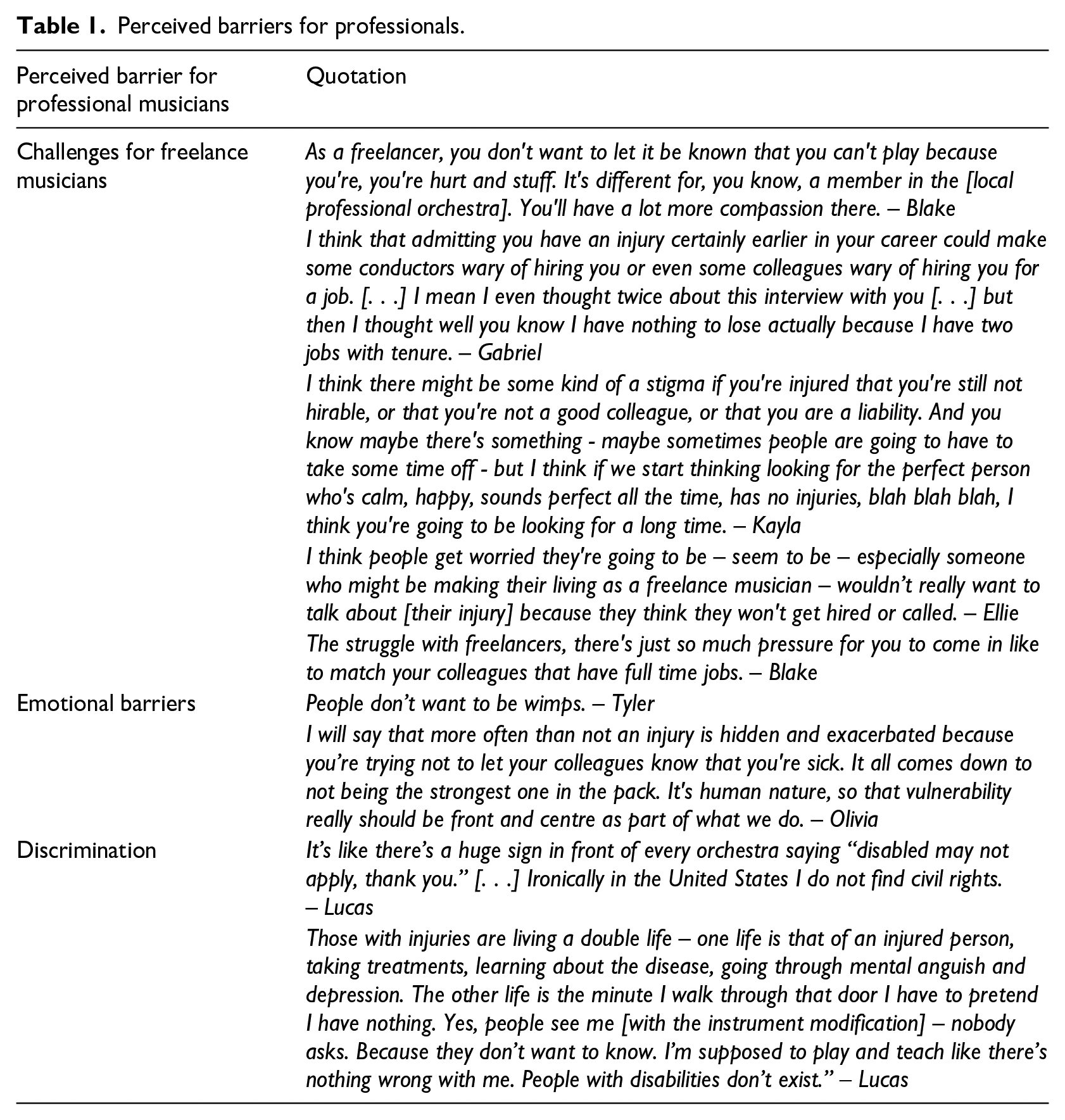
Several participants talked about the challenges for freelance musicians discussing their injuries (see Table 1). For example, Blake described the pressure on freelancers to come in and match the level of their full-time colleagues who have the comfort of financial security, better resources and equipment, and being able to play in the same hall and with the same musicians every week. Other interviewees commented on potential damage to one’s career if one’s injury is known. One participant (Matthew) didn’t perceive barriers to injured musicians speaking up about their injury. However, he described a “culture” surrounding musicians’ injuries, saying, “it’s almost like a little secret within the music community.” Others discussed emotional reasons why people might not speak up about their injury, including not wanting to seem weak. Lucas discussed the issue of discrimination in the orchestral workplace, saying that people don’t speak up about their injuries because of discrimination, and as a result those with disabilities are not represented in orchestras.
Perceived barriers for professionals.
Barriers for students
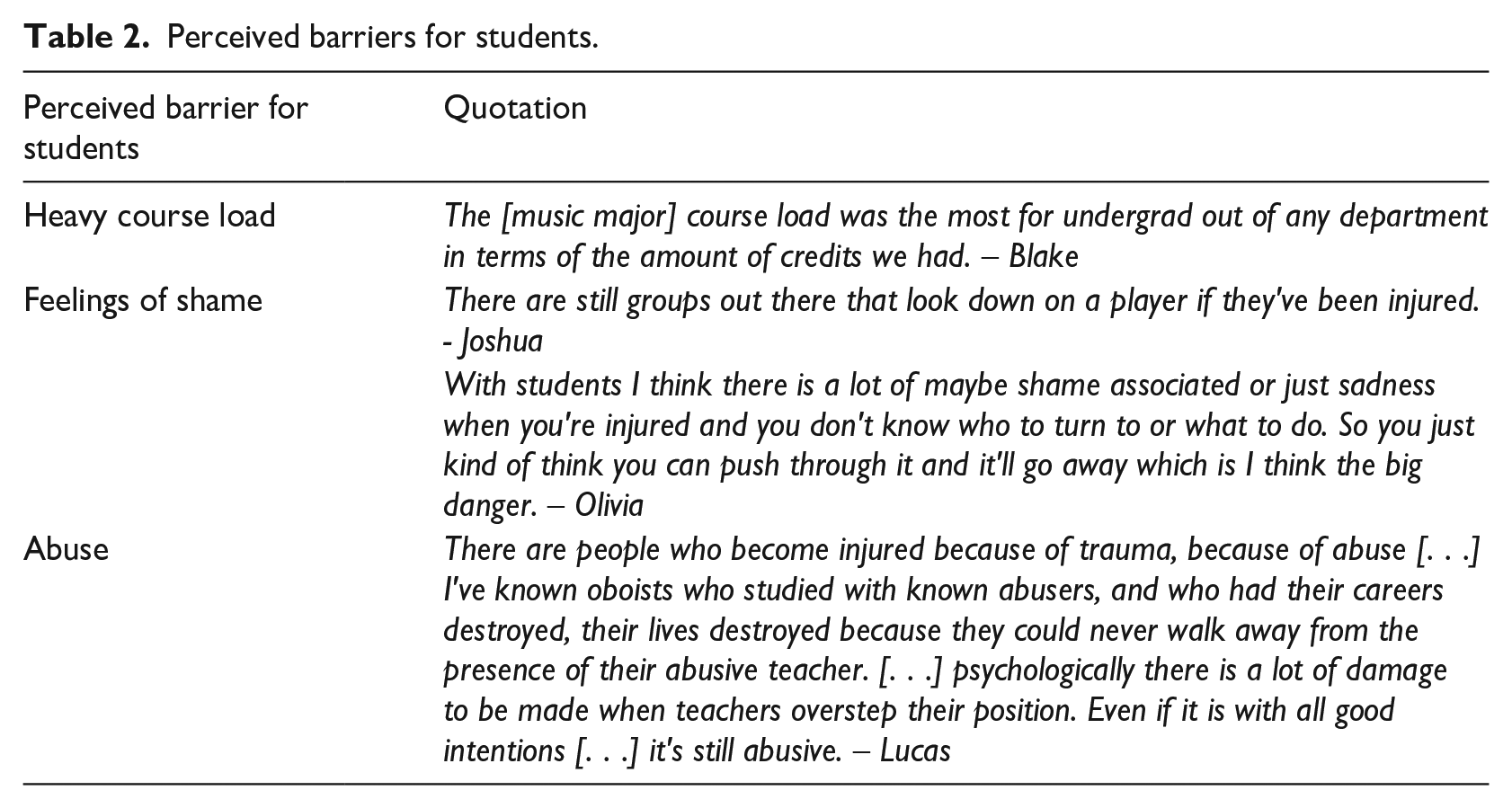
See Table 2 for quotations describing participants’ perceptions of barriers faced by their students, based on participants’ personal experience as teachers. In Blake’s experience, the course load for music majors was much heavier than for any other university major, and most of his colleagues in his undergraduate class had to attend summer school to keep up and still have time to practice. He expressed concern that educational institutions prioritize making money over their students’ wellbeing. Some participants discussed feelings of shame associated with injury in students. Joshua said, “there are still groups out there that look down on a player if they’ve been injured,” but noted that in his experience teaching, younger generations are less ashamed to speak up about physical issues related to playing and performance anxiety. Olivia said there is still a lot of shame associated with being injured as a student. Additionally, she said, students need access to wellness education such as sports psychology and injury prevention much earlier on in their career, since by the time they are attending a university or summer program that provides these services, they have likely already developed problems and bad habits that could lead to injury. One participant (Lucas) discussed abuse as a potential barrier for students.
Perceived barriers for students.
Solutions for professional musicians
Several participants suggested possible solutions and factors that could help professional musicians overcome barriers to seeking help for their injuries (see Figure 1). Some suggested actions injured musicians can take. Blake recommended meditation and mindfulness practices to help deal with pressure, saying being fully present can help remind one that pain is transient. Kayla recommended free resources that could benefit those facing financial struggles, including online meditation classes, home yoga practices, and other self-care practices.
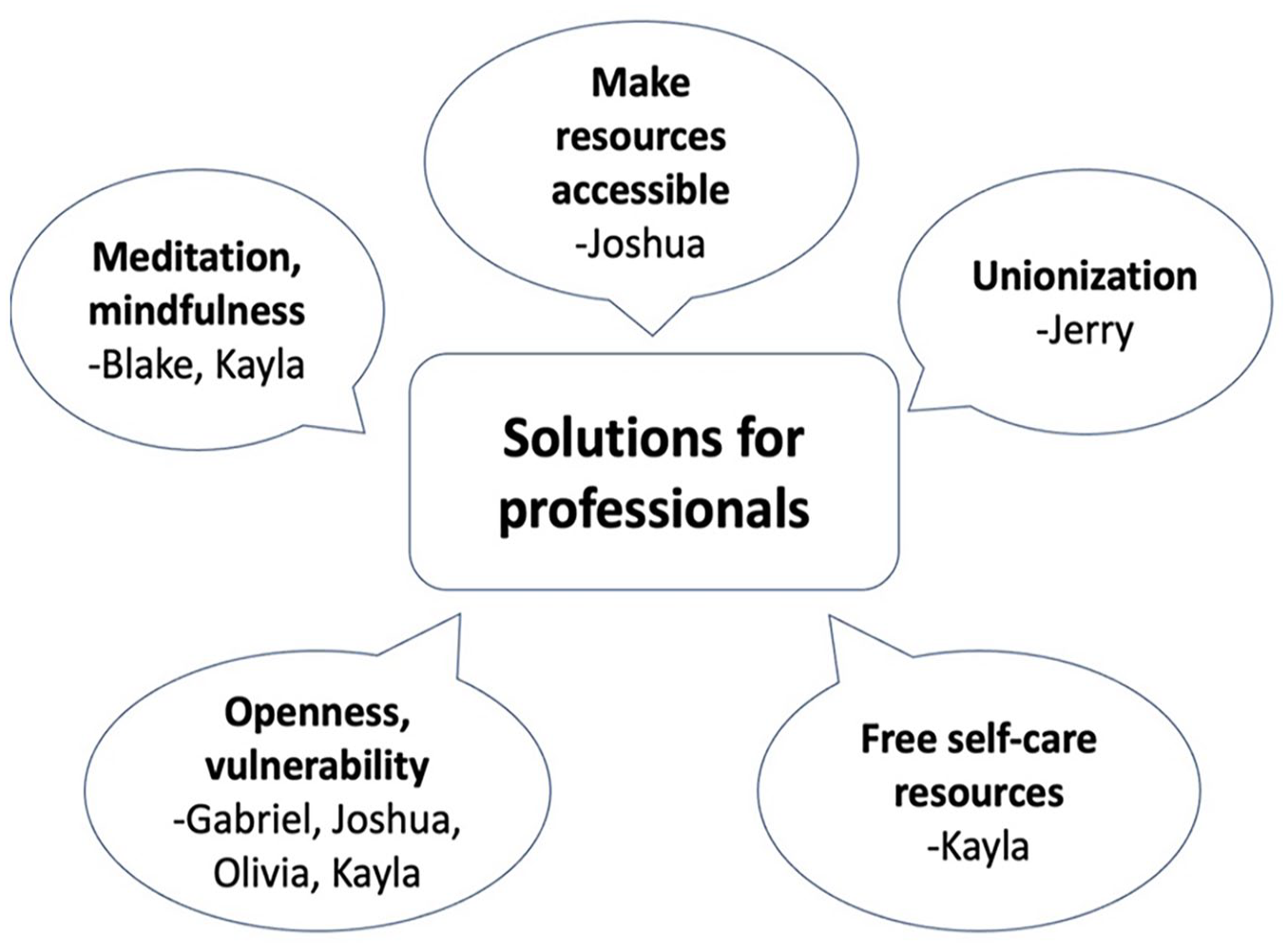
Perceived solutions for professional musicians.
Others discussed institutional actions to overcome barriers. Joshua discussed the importance of creating resources in an accessible format and language for the general musician audience. Jerry described himself as a “big believer in unions,” which can help give power to the powerless, however he acknowledged that although unionization can help, it doesn’t necessarily solve the issue of freelancers feeling obliged to work through injury to make ends meet. Kayla similarly said she didn’t have an answer for freelancers who can’t take time off for financial reasons, saying that this is a problem with the industry.
Several interviewees discussed the power of being open about experiences with injuries to shift the culture and make it easier for others to speak up. Gabriel suggested being more open about struggles could open the door for colleagues and conductors being more accepting. Joshua has observed a noticeable shift in the culture that he believes is a direct result of musicians talking and writing about musicians’ health more openly. Olivia and Kayla both mentioned vulnerability:
Vulnerability really should be front and center in what we do. – Olivia
Being vulnerable is a superpower! – Kayla
They added caveats to this idea of vulnerability. Kayla suggested it might not be wise to advertise struggles to literally everyone, although she said there needs to be a normalizing of talking about injuries, and of taking time off to recover when needed. Tyler suggested there is a balance to be found between finding help, being kind to yourself when you’re not doing well, and just getting on with it. Lucas had words of caution for those who might be dealing with focal dystonia, as treatment for this condition is still very much experimental:
Every patient with focal dystonia needs to have a foot back and not give 100% reliability to doctors until doctors can give 100% reliability on what is going on.”
Solutions for students
Many interviewees had suggestions of what teachers could do to empower students to speak up about injuries and find help (see Figure 2). Ellie thinks establishing intimacy and honesty in the teacher/student relationship can create a safe space in which students are able to trust and be open about their struggles.
The more talk, the better. It’s just something that needs to be discussed. – Ellie
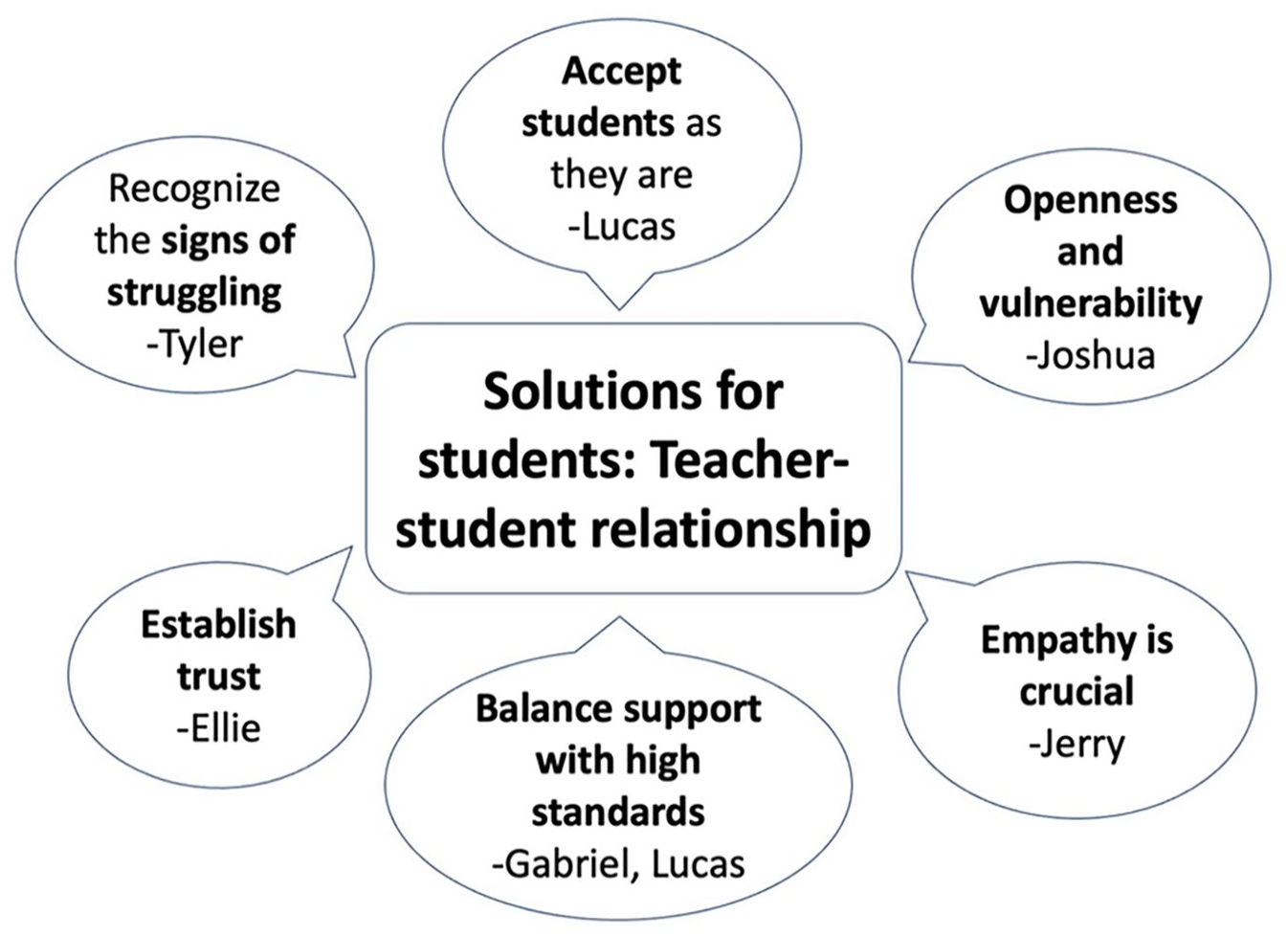
Perceived solutions for students: Teacher-student relationship.
Similarly, Jerry suggested to create a more supportive environment for students, empathy is crucial. Teachers should be flexible with their expectations toward students, for example by being open to making up lessons at a later date if the student needs time off to recover, and should be able to direct their students toward preventive practices (e.g. Alexander Technique, yoga, massage). Tyler stressed the importance of teachers being able to recognize the signs their student is struggling. Lucas said teachers should accept students as they are even if you don’t know whether they will “pan out” and have a career in music:
Our job is to teach. Our job is not to get them perfect. – Lucas
Joshua pointed out that increasingly, music teachers are required to fill many different roles—psychologist, life coach, teaching business skills—and that ideally teachers’ training would reflect that reality. In the meantime, approaching teaching from a place of openness and vulnerability could contribute to change for the better. Like Joshua, Tyler mentioned the importance of teachers being open with students about challenges they have come up against but warned against “dwelling on the problems and peeling back the layers of how we got here” getting in the way of simply figuring out a solution.
Gabriel and Lucas both touched on the challenge of striking a balance between supporting your student and pushing them to succeed. Overall, Gabriel tries to be as supportive of his students as possible, as he personally hated being berated by “old school, angry” teachers. Lucas advocates for demanding the highest standards from students without crossing the line into abuse (i.e. When comments are belittling or attack the person instead of critiquing the music). If students perceive verbal, emotional, or physical abuse, Lucas suggests that students should immediately report it.
Some participants suggested larger-scale solutions, either from a societal or institutional perspective (see Figure 3). For example, Matthew thinks a societal emphasis on physical fitness from a young age could help prevent PRI, as children with an active lifestyle are more likely to stay active and healthy throughout their lives. Some participants (Kayla, Olivia) suggested wellness should be normalized as a core part of the curriculum in music schools to normalize help seeking behaviors and increase understanding of the struggles students might be going through. Kayla suggested ways teachers could build musicians’ health concepts into their class plans, such as incorporating a moment of mindfulness before picking up instruments, stretch breaks, wrist warm ups, or shoulder opening. She stressed that it was important to approach these topics with positive framing, emphasizing ideas of longevity, sustainability, wellness, and joy, and to not scare students by saying “you might get injured!” Tyler similarly pointed out the importance of solutions-oriented teaching and not dwelling too long on problems. Joshua pointed out that convincing universities to adopt wellness initiatives can be difficult. He said when the National Association of Schools of Music began requiring schools to address musicians’ health for accreditation, suddenly his university found room in their curricula for wellness, which he had been trying to convince them to do for years. Tyler expressed hope that there now seems to be money in orchestra and school budgets and some awareness to help musicians deal with these problems, but it’s only just beginning.
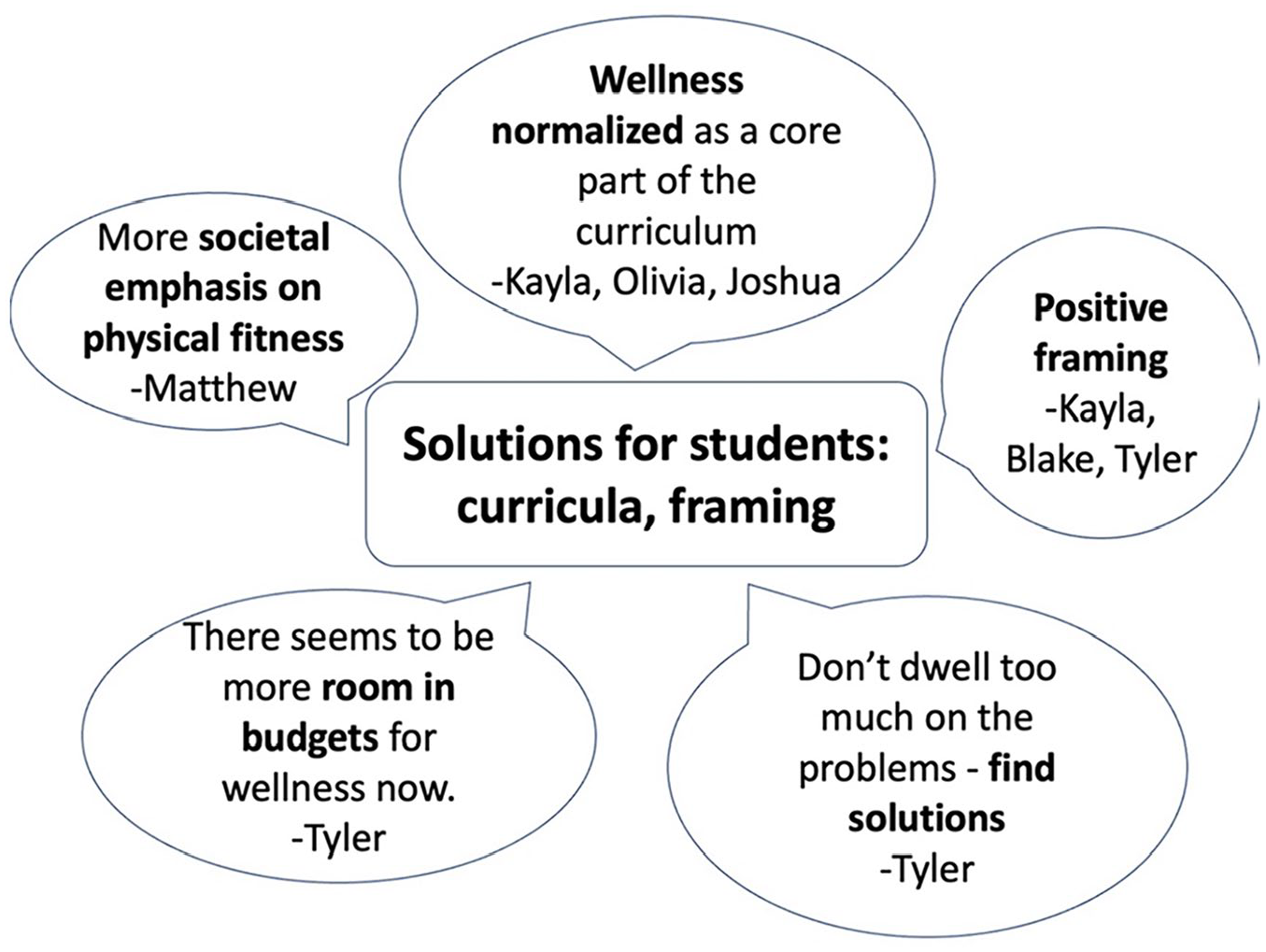
Solutions for students: curricula, framing.
Participants’ teaching practices
Participants described their philosophies and approaches to teaching and helping their students prevent and recover from injury (Figure 4).
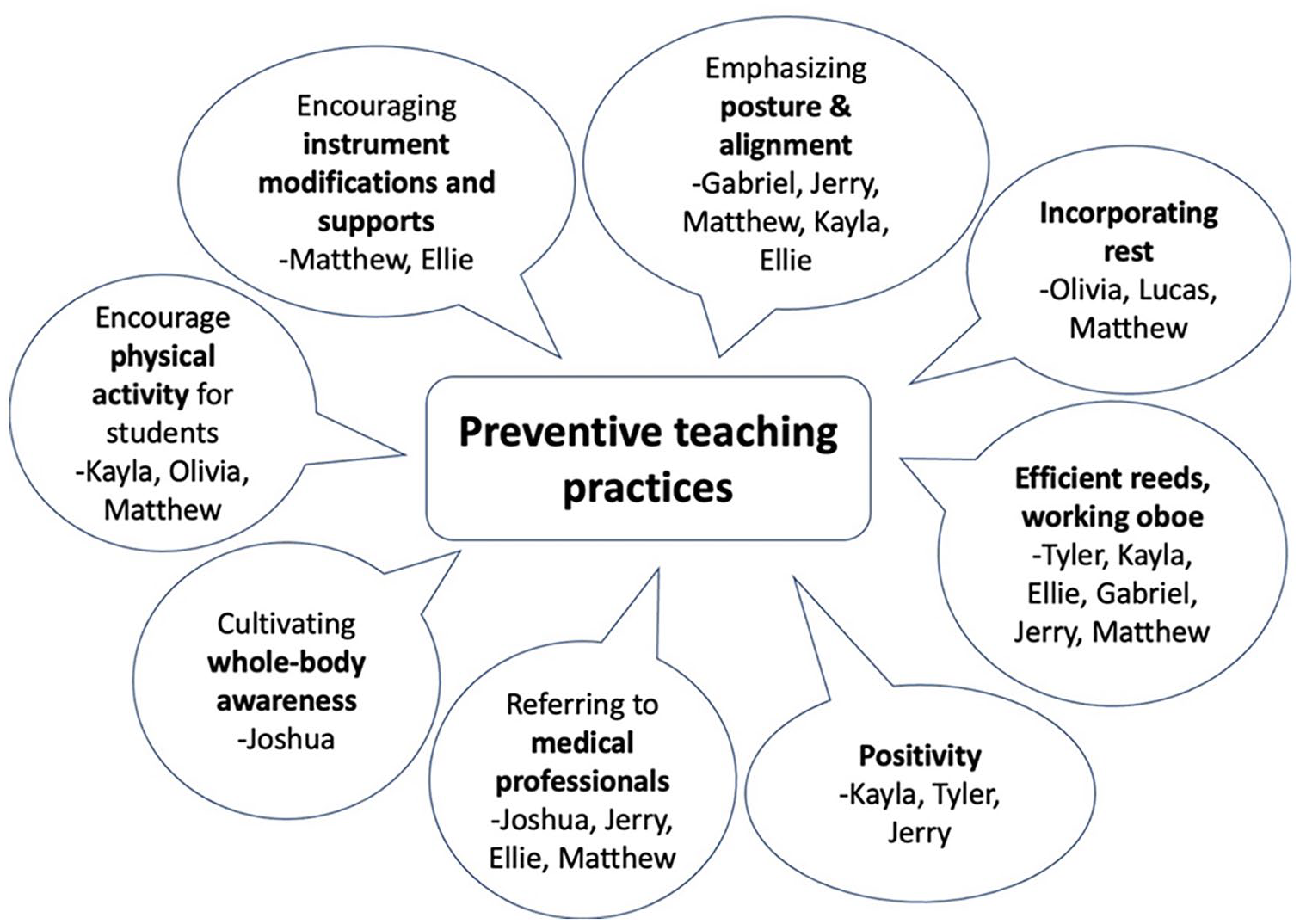
Preventive teaching practices.
Efficiency was a priority in several participants’ teaching philosophies. Tyler, aiming to start his students off well, focuses on efficient and easy tone production, saying music “flows really naturally” once tone production is in place. He said half of the battle in promoting efficiency is providing students with great reeds with stable intonation and easy response. With great reeds, students can develop sustainable embouchure habits: the lips “frame the reed really beautifully like the frame of a painting – enough, but not too much, and not covering the painting.” Tyler’s desire to increase efficiency came from observations of his teachers, colleagues, and oboists of the “Philadelphia school” in particular: he was inspired by Richard Woodhams’ easeful playing. Jerry aims to teach his students to use their body more efficiently, saying “inefficiency leads to a musical rigidity,” which can in turn lead to injury. Jerry discussed how excess tension combined with repetitive motion leads to injury. He finds excess tension can be caused when manipulating a bad reed into working, or when pushing down on the keys of an out of adjustment oboe to close them. To Jerry, another common cause of tension is the idea of “support” often emphasized by woodwind teachers. He says when students hear their teachers say the word “support,” they tend to tense their abdominal muscles indiscriminately, potentially leading to a lack of control over dynamic range and intonation. Instead of tensing all the muscles, Jerry maintains that the abdominal muscles should be soft but athletically ready, so the subconscious brain can assign the exact correct muscles to achieve our musical goals. Ellie aims to get her students to play the oboe in the easiest way possible, which comes from basic skills such as a solid technique, the ability to start notes softly in the low register, and maintaining a beautiful even sound across all registers. Blake’s teaching philosophy also emphasizes ease of playing “so I’m not going to bust a gasket while I’m playing, or while they [the students] are playing.” Gabriel’s teacher played on very hard reeds, and encouraged his students to also play on heavy reeds. When he started his career as a professional, however, Gabriel found that playing on heavy reeds was not sustainable given the amount of playing he was now required to do, so he worked with another mentor to make his reeds efficient and easy without sacrificing tone quality. Because of this experience, he emphasizes efficiency with his students.
Many musicians incorporated positivity in their teaching approach. Tyler, while demanding high standards of his students, tries not to venture into negativity. He encourages students to get better without putting them down or focusing on their shortcomings. Jerry similarly talked about the importance of holding yourself to high standards without beating yourself up. He encourages students to use solutions-oriented positive thinking, not attaching self-worth to how they just played a musical passage. It is important, says Jerry, that this positive thinking is grounded in realism, in which the student observes things as they are without extrapolating or judging. He noted that negative thinking is often encouraged by abusive student/teacher relationships. Kayla’s philosophy involves finding what is good in a student’s playing and helping them make it better rather than knocking them down. Her primary teachers helped build on her natural abilities without trying to change her artistic voice, so she tries to do the same for her students.
People learn best when they’re treated nicely. – Kayla
Kayla’s experience with yoga has influenced her approach: yoga has given her tools to quiet the inner critical voice telling her she’s not good enough, allowing her to practice self-compassion. She encourages her students to reframe “failure” as a learning opportunity, borrowing from the idea of “growth mindset.” Blake had a related philosophy regarding positivity, saying it is important to get students to simply play beautiful music without getting stuck in their heads. Unlike Kayla, however, Blake’s teachers did not teach this way: when starting as a professional, Blake found many of his colleagues seemed more mentally well-adjusted than he felt, so he now consciously tries not to teach how he was taught, instead focusing more on the positive than the negative. Blake cited having come from an immigrant family background as added pressure: in his family, the mindset was that you had to be very hard on yourself to improve. Later in life, he found the importance of not letting the inner critic be the loudest voice.
Participants emphasized the importance of seeking help from medical professionals for injuries, and outlined specific recommendations they make to their students to prevent and recover from injury. For example, Joshua requires his students to take a musicians’ health course offered at the institution where he teaches in the early stages of their degree so they have tools to deal with physical issues that might arise. Jerry recommends physical therapy to students dealing with an injury, though he emphasized that physical therapy is generally used remedially rather than preventively, and he builds preventive concepts into his everyday teaching. Ellie and Matthew both insist students see a doctor when dealing with an injury, and Matthew additionally recommends that his injured students seek help at the local sports injury center from a massage therapist or physiotherapist. Jerry said the best medical advice he could give is “I think you should see a doctor.”
Some participants described encouraging students to be physically active (Olivia, Kayla). Olivia discussed how physical exercise teaches proper alignment and breath support, and once students have achieved these in physical activities, they can transfer these skills to their oboe practice. She emphasized the importance of developing strength in the core and larger muscles of the body, as greater strength in these areas can help avoid strain on tendons and joints. She also recommends her students explore alignment-based practices such as Alexander technique or yoga, which can be useful in recovery in case of an injury both in terms of rehabilitating the body and the mind. Kayla recommends strength training, particularly exercises that open the front of the body and strengthen the muscles of the back, to counteract the front-heavy work we do as musicians.
Several participants mentioned emphasizing posture, alignment, and playing position in lessons, particularly with beginners. For example, Gabriel spends time ensuring beginners have what he describes as the correct embouchure and hand position—reminding them to “bring the oboe to you, don’t put your head forward to the oboe.” Jerry quotes the same phrase to his students about “bringing the oboe to you,” also talking about minimizing tension and maximizing efficiency. Additional postural cues Jerry uses include ensuring the elbows are not crammed into the sides of the body, as he finds that that is typically a warning sign of excess tension, and ensuring the fingers are gently curved and not “locked.” Matthew described working extensively on hand position with his students, ensuring the hand and arm are in a straight line (no awkward angle at the wrist). Ellie tells students to make sure their shoulders are down, holding the instrument in a very relaxed way that will not lead to injury, with curved fingers in a similar hand position to how piano finger curvature is taught. With beginners, Ellie is very specific about what is needed to feel and look relaxed while playing. Joshua aims to incorporate a whole-body awareness into students’ oboe playing, describing an inclusive awareness of the space around, above, and behind the player. Olivia discussed constantly reminding beginner students about their alignment so they can “just play” without getting bogged down by more advanced fundamental concepts. To start students off without bad habits, Kayla constantly gives postural cues: “Shoulders right over hips, relax the hands.” She finds it important to build a foundation of ease and body-awareness so that students always feel good in their bodies.
Sometimes those lessons that you think are going to be focusing on the Mozart [oboe concerto] exposition are actually going to be talking about posture. [. . .] I’ve had lessons actually with students where we put the oboe down and I’ll show them some ways to correct the posture [. . .] then once that is in place try to implement that into something like the Mozart concerto, but which might take a little time because [. . .] it might not happen immediately. – Kayla
Some participants encourage use of instrument modifications and supports to alleviate strain on muscles and tendons. Ellie recommends her students use a neckstrap while playing English horn if it is comfortable for them, and advocates giving the hands a break by putting the instrument on a stand when not playing. Matthew recommends his students have an adjustable thumb rest installed on their oboe if there is not one already, as in many cases he finds the ideal location of the thumb rest is quite a bit lower than the default position. He has had some students use a FHRED instrument support (a peg that hooks onto the thumb rest to take the weight of the oboe). Matthew commented on how the weight of oboes varies between different makes, models, and materials of oboe, noting that certain brands (such as Yamaha) make lighter oboes, and certain materials (e.g. kingwood, violet wood) can be lighter than the conventional grenadilla wood. Interestingly, he has observed many oboe brands make oboes increasingly heavy in recent years, with manufacturers leaving more wood on the bell of the instrument.
Responsive and well-balanced reeds and a well-adjusted instrument are important factors in injury prevention according to many participants. Tyler noted that students’ reeds should speak incredibly easily with very stable intonation, and their oboes should be in excellent repair, with a good scale, and play very easily. Kayla similarly discussed making sure students’ reeds are really working and their oboes are in adjustment. Ellie noted that providing students with excellent, stable, responsive reeds has the added benefit of teaching students to be discerning with their reeds, which can serve them well if and when they eventually begin making their own reeds and will keep the teacher honest about the quality of the reeds they provide to students. Gabriel described a situation in which a student was dealing with a tremor in his hands due to performance anxiety, which Gabriel approached with empathy and by providing the student with even more highly efficient reeds so that the student would have fewer things to worry about.
Several interviewees talked about incorporating rest as a preventive or remedial technique. When Olivia works with injured students, she eliminates the stressors of repertoire and instead focuses on fundamentals such as basic breath support, note connection, and body alignment. Lucas’s first strategy when working with injured students is to get them to rest, stopping playing for a few weeks to let the inflammation of the injury to go down. Next, he returns little by little to basics, approaching the oboe like a beginner and encouraging introspection and an investigative approach in which students figure out the root from which their pain arises, helping them deliberately choose not to take the actions that lead to injury:
Through that process we start listening to our body. What is it that comes before tendonitis? Well there is a shooting pain. OK, what comes before the shooting pain? Well there is a generalized tension on the arm. OK what comes before the generalized tension in the arm? Well there is a an unease that we feel when we play. So we go back several steps so we understand when is it that we get on the path towards tendonitis and we don’t take that road. - Lucas
When one of Matthew’s students is dealing with injury, he changes his lesson plan to focus on reed making to give them a break from playing if they’re hurting. Kayla advocates rest as part of prevention, encouraging students to practice smart rather than long and hard and dividing practice time into smaller chunks, taking breaks in between each practice block.
Participants had other comments about preventing and dealing with injury that didn’t fit into the categories above. In terms of prevention, Olivia encourages her students to revisit fundamentals in their daily practice, to engage in stress management techniques such as nutrition, sleep, and exercise, and to keep a practice journal to make connections between how things feel and what they did differently throughout the day. Jerry encourages students to avoid “emotional tension” by practicing calmly and building a foundation of confidence so that they are more likely to play calmly and accurately rather than frantically under pressure. Tyler described his approach to helping his students who are dealing with an injury as a lot of understanding and positivity mixed with a tiny bit of tough love (his definition of tough love involved holding students to a high standard). Kayla noted when a student is dealing with an injury, “you can see tension throughout the body, you’re going to hear that tension in the playing. You know it’s really going to affect the tone, it’s going to affect the ease, it’s going to affect the technique.” Blake talked about not usually wanting to bring up his history of injury with students because he doesn’t want to “plant a seed” with them – in his experience, telling students “you could get hurt” can in some cases lead to injuries. Lucas noted that in his experience, physical injuries are relatively straightforward to deal with, whereas psychological issues, particularly those stemming from abuse, are harder to deal with and often lead to the student quitting music. When describing her approach to young and early-career students dealing with injury, Kayla said she “can tell from a mile away that they’re hurting” but maintained that the student needs to be open to receiving feedback. If the student simply wants to push through the pain, they may not be receptive to their teacher’s suggestions, but if they approach the teacher asking for help, that is when discussion and exploration can happen.
Discussion
Perceptions: Barriers and solutions
Several perceived barriers for help-seeking were identified by participants. For professional musicians, barriers included finances, social stigma (e.g. not wanting to be perceived as “weak”), and ableism in orchestral hiring practices. For students, barriers included heavy course loads, institutions prioritizing money over health, feelings of shame, and experiences of abuse. Similarly, prior studies have also found feelings of shame and guilt, lack of resources, fear of missing out on gigs, a “no pain no gain” mentality, high demands on students, and a culture of criticism to be barriers to help-seeking (Edwards, 2022; Guptill, 2011; Perkins et al., 2017; D. L. Rickert et al., 2014b, 2014a; Roos et al., 2021). A study of student and professional cellists also found students to have negative attitudes about injury and poor health behaviors when compared to professionals (D. L. L. Rickert et al., 2015). The present study did not examine the perspectives of students directly; however, some participants described an elevated awareness of musicians’ health issues and a greater openness on the part of their students, which might indicate a positive shift in the culture surrounding musicians’ health in the past decade or so since Rickert et al.’s study. Issues such as the heavy demands placed on music students and the institutional prioritization of money over health still could be addressed.
Participants also identified potential solutions for the above-mentioned barriers. For professional musicians, these included free self-care and mindfulness resources that musicians can access without needing to worry about finances, ensuring that resources use an accessible language and format, unionization to help protect workers who need to take time off, and shifting the culture around PRI by being vulnerable. The latter point about shifting the culture supports Guptill’s (2011) findings that lived social relations could be a barrier or a source of support depending on the situation. The findings of the present study point toward the power that those involved in the performance community have to consciously create a supportive culture around PRI. To help support students, participants suggested that teachers could be open and empathetic, help students find a sustainable setup, and balance support with pushing students to succeed. They also suggested that institutions could incorporate wellness initiatives in curricula, emphasize physical fitness, and frame wellness issues in a positive light. Others have talked about incorporating wellness initiatives into music school curricula (Ajidahun et al., 2019; Evans et al., 2024; D. L. L. Rickert et al., 2015; Roos et al., 2021), and the sense of community/support network that colleagues and teachers can provide for injured musicians and students (e.g. Perkins et al., 2017). What is less commonly discussed is the importance of positive framing to avoid scaring students away from playing music—those setting out to introduce health topics to students should keep in mind the potential impact that negativity could have on students’ willingness to continue in music.
Participants’ teaching practices
Participants’ self-described teaching practices incorporated an emphasis on efficiency and a positive approach. The idea of efficiency in particular is similar to the concept of “smart practicing” mentioned in Guptill and Zaza’s recommendations for what music teachers can do to promote healthy behaviors in students (Guptill and Zaza, 2010). To help prevent injury and support injured students in their recovery, interviewees described their efforts to focus on alignment in lessons, encourage physical fitness, encourage use of instrument modifications and supports when appropriate, check in regularly on the functionality of students’ oboe and reeds, incorporate restful productivity (e.g. teaching reedmaking or other subjects when a physical break is needed from playing; using visualization techniques), and recommend that their students see a medical professional when appropriate. Several of these efforts are in line with Guptill and Zaza’s (2010) recommendations (e.g. alignment, rest, referring to medical professionals when appropriate), and demonstrate a good understanding of music teachers’ role in helping students achieve health-promoting behaviors. Worth noting, however, is that most music teachers are not specifically trained on how to teach proper alignment to their students, and that there is a potential risk of incorrect or outdated information being passed down due to this lack of expertise. Fortunately, several of the teachers interviewed for this project who were not trained in a postural technique such as yoga or other somatic techniques demonstrated a willingness to refer their students to someone with training in these areas (e.g. Alexander technique, body mapping, Feldenkrais, yoga, physical therapy, massage) when appropriate. It is worth noting that although participants directly mentioned allied health professions such as physical therapy and massage, occupational therapy was not mentioned, which likely reflects a general lack of knowledge about the profession and its potential benefits for musicians. Among the general public, knowledge about occupational therapy as a profession is limited (Rahja & Laver, 2019), though occupational therapists have much to offer to support musicians’ health (Guptill, 2014). While many participants talked about the benefits of rest as a remedial technique, fewer mentioned rest when talking about prevention. Encouraging students to incorporate rest and restful productivity into their daily practice routine could go further to help some students build practice habits that contribute to longevity in their musical careers. In general, participants demonstrated a high level of awareness of their own scope and limitations as educators, and a willingness to seek external help when something was beyond their purview as a teacher.
Scope, limitations
This is the first study to document oboe instructors’ perspectives and teaching practices surrounding PRI. The scope of the present study was limited to perspectives and practices surrounding physical injuries, and did not include psychological issues that may arise due to playing musical instruments. Future studies could examine educators’ perspectives on music-related psychological challenges. Due to the long form interview format and the resulting rich dataset, we were able to document participants’ perspectives with nuance and detail, providing deep insight into their approaches to injury prevention in the studio. As with all qualitative studies, the perspectives documented in this study are not necessarily representative of the perspectives of all oboe teachers, as the small sample size and potential selection bias (i.e. those who agreed to participate in the interview may have been those who were more interested in the topic of musicians’ health in the first place) make generalization to the larger population impossible. We attempted to mitigate this potential for bias by including participants both with and without a personal history of PRI, to ensure a diverse range of lived experience and perspectives.
Applications/future directions
Participants had a variety of suggestions of solutions for barriers that injured musicians face, and in particular had insight into what works to get through to students (e.g. positive framing, not losing sight of greater musical goals, not letting fear of injury get in the way of making music). When implementing injury prevention initiatives, we should not lose sight of this primary goal, and frame injury prevention as a tool to make playing music as efficient, sustainable, and joyful as possible. Educational wellness initiatives might achieve greater efficacy at reaching students through direct consultation and collaboration with teachers.
Footnotes
Authors’ note
Prior presentation: Results from this study have previously been presented at the following conferences: the Performing Arts Medicine Association, the Music and Health Research Collaboratory, the International Society for Performance Science, and the University of Toronto Music Graduate Student Conference.
Author contribution(s)
Declaration of conflicting interests
The author(s) declared no potential conflicts of interest with respect to the research, authorship, and/or publication of this article.
Funding
The author(s) received no financial support for the research, authorship, and/or publication of this article.
