




Abstract
Background:
Divorce has become a common contemporary phenomenon in India. In this context, the child is pulled into the vortex of parental disputes over the child’s custody. The spiteful and protracted nature of these legal cases adversely affects the child’s mental health. Despite the growing research in the Western context, the understanding of this phenomenon and its psychosocial impact on children in India is still in its infancy. In this background, this study aimed to explore key child mental health and related psychosocial issues in the context of child custody cases in urban India.
Method:
The study explored the psychosocial complexities of child custody cases by interviewing 24 key informants using a semi-structured interview guide. The key informants comprised seven mental health professionals and seven legal professionals working in the area of child custody and access. It also included 10 parents who were contesting parties in child custody cases. They were selected using a purposive sampling method over a period of 6 months.
Results:
Seven themes identified using thematic analysis were: (a) parent–child relationship and interaction; (b) parenting dynamics; (c) parental mental health issues; (d) malicious acts by parents; (e) child’s adjustment to changes in life; (f) issues in the school context; and (g) child mental health issues.
Conclusion:
This study highlighted the potential risk factors in the familial context that adversely affect the child’s well-being and mental health in custody disputes. Therefore, interventions at the family level in the legal setting are crucial in the mitigation of these risks. In child custody cases, the coordination and liaison of child mental health professionals with the judicial system is crucial for child mental health promotion and safeguarding the best interests of the child.
This study highlights the potential psychosocial factors that adversely impact the child’s mental health in custody disputes. The findings reinforce the need for child-centric standardized guidelines in custody cases to ensure child’s participation and mental health sensitization in the legal process. It is hence vital for the judicial system to liaison with mental health professionals to assess and address this to ensure, safeguard and promote the child’s best interests.Key Messages:
Over the years, statistics have repeatedly given evidence of an increasing rate of divorce and parental separation worldwide. In the wake of global scale development, the evolution in India’s socioeconomic and societal constructs has redefined gender roles. This resulted in the enculturation of the marital value system in the context of globalization, migration, nuclear households, and increased financial autonomy.1–3 These have contributed to the increased propensity for marital breakdown over the past decade. As per the 2011 census of India, rates of marital separation and divorce in that decade increased from 0.07% to 0.8 %, particularly in urban areas. 4
Divorce or marital separation is undoubtedly one of the most stressful life events in a family unit, and its Latin derivative means “splitting of a unit,” resulting in the separation of two spouses permanently.5,6 Here, divorce does not end with the act of physical separation of parents; instead, it launches an acrimonious legal battle for the child’s custody. 7 The protracted nature of these custody cases and the lack of cooperation between the separating parents have been seen to impact the child’s mental health detrimentally. In recent times, this phenomenon has also been observed in clinical practice. 8 The changes in the child’s life post-parental separation can be looked at from the socioecological perspective, wherein the dimensions of change include the absence of a parent, change of residence and neighborhood, change in school and peer group, as well as change in routine due to commutation hours and visitation schedules. 9 These changes result in internalizing issues such as self-blame and sadness due to the absence of a noncustodial parent or externalizing issues such as anger and avoidance of a noncustodial parent.10,11 The absence or lack of involvement of noncustodial parents deeply most certainly impacts the child’s mental health. 12 These children also experience mental health issues, subsequently leading to interrelationship issues with peers.13,14 The children blame themselves for parental separation, resulting in emotional problems such as depression, low self-esteem, and academic difficulties. 15
Over the past several decades, research studies have established that high-conflict custody disputes are unfavorable to the child’s development, causing lasting emotional tumult, financial adversity, academic issues, and a higher risk of depression, substance abuse, and other psychiatric disorders. 16 Thus, parental conflict and animosity over child custody post-separation have a detrimental impact on the mental health and well-being of the child. 17 The studies in the Western context have focused on custody case-specific influence on child mental health that gave evidence to the importance of mutual support, nurturance, and consistent family rituals to reduce maladjustment in these children. In this context, studies have found that the quality rather than quantity of parenting time spent, parent–child relationship, and involvement in the child’s activities are beneficial for the child’s mental health and that interparental conflict over child custody increases mental health issues in these children.18–20 The studies have also substantiated that a child’s adjustment and well-being in parental divorce or separation can be enhanced through parental cooperation and nurturant family environmental factors. 21 Therefore, it is vital for separating parents to cooperate with the custody decisions and display consistent parenting.22,23
The literature from India has mainly discussed the psychological influence of divorce on children.2,24 However, there are no studies done to understand children’s mental health issues in the nuanced context of child custody cases. Hence, with the rise in divorce rates and subsequent child custody disputes, it is essential to explore the psychosocial issues in these children. Across the world, the key stakeholders involved in child custody proceedings primarily comprise parents and legal and mental health professionals (MHP). Therefore, in this article, we aimed to qualitatively explore the critical perspectives of these stakeholders to understand the mental health and related psychosocial issues of children involved in custody disputes in the urban Indian context.
Methods
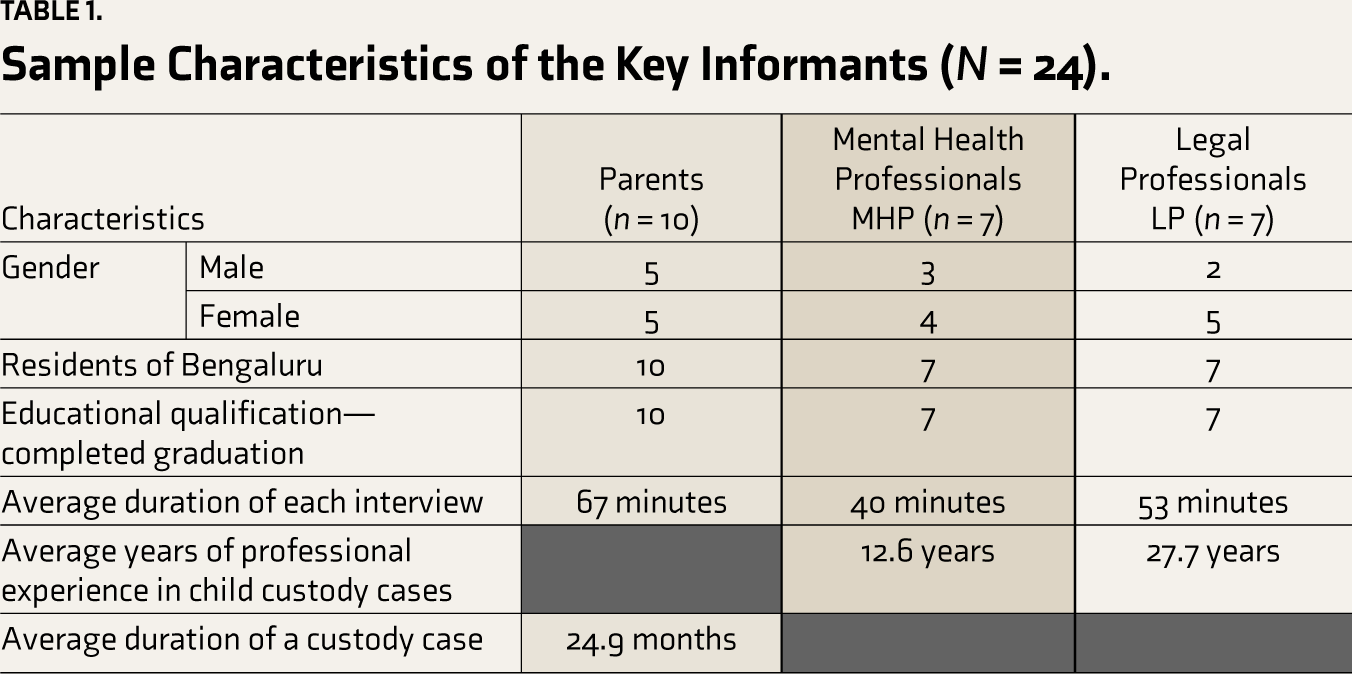
Participants
The qualitative data were collected from 24 key informants comprised of MHP (n = 7) and legal professionals (LP) (n = 7) working in child custody and access. It also includes parents (n = 10) contesting parties in child custody cases. All the key informants had completed graduation and were residing in Bengaluru. The average duration of the custody case in the court of the parents interviewed was around 2 years. The average years of work experience in child custody cases of MHP was 12.6 years, and that of LP was 27.7 years. The sample characteristics of the key informants are presented in Table 1. The inclusion criteria of the critical informants included consenting MHP, LP, and parents. The MHP with a minimum of 10 years of experience included psychiatric social workers, family therapists, and child psychiatrists who routinely see cases about child custody disputes. The LP with a minimum of 10 years of experience included lawyers and mediators who deal with legal disputes regarding child custody and access. The parents constituted those who specifically petitioned for child custody in the Bangalore Urban Family Court under the Guardian and Wards Act, 1890 (G&WC). The objective was to understand the child’s mental health issues, familial factors, and legal processes involved in the child custody cases from the key informants’ perspectives to formulate child-centric recommendations for the legal system. Hence, a purposive sampling technique was used to select participants whose characteristics are defined for a purpose relevant to the study. These key informants were selected using a purposive sampling method within six months (February 2019–July 2019). Twenty-six participants were obtained during this period. However, two parents were not included as they later withdrew their consent due to unavailability. Hence, only 24 participants (7 LP, 7 MHP, and 10 parents) who fulfilled the criteria and consented to participate in the study were included. The sample size determination for each subgroup was based on the Braun and Clarke guidelines 25 for analysis of small projects, wherein 6–10 participants are recommended for interviews. Based on this, the doctoral candidate determined the range of 6–10 for each category and approved it by the supervisors. Even though theoretical data saturation (when no further codes are found) was attained with less than five interviews in each category of key informants, the range was applied for the six months of data collection.
Sample Characteristics of the Key Informants (N = 24).
Procedure
The study was initiated after receiving written approval from the Institute Ethics Committee (Ref: NIMH/DO/IEC(BEH.Sc.DIV)/2018). Subsequently, the researcher sought permission for data collection from the authorities at the Bangalore Mediation Centre (Family Court, Bengaluru Urban), the Department of Child and Adolescent Psychiatry of a tertiary care psychiatric hospital in Bengaluru, India, and parents’ rights nongovernmental organizations (NGOs). The first author individually approached each participant to explain the particulars of the study using a participant information sheet. Those participants who provided written consent for the audio-recorded interviews were included in the study. They were informed that their participation in the study was voluntary and could withdraw from the study at any time.
For the data collection, the first author developed an interview guide from key informants to explore psychosocial issues and processes related to child custody cases. The sample questions from the interview guide are attached in Appendix A. The same interview guide is used for face-to-face qualitative interviews of legal and MHP and parents involved in custody cases. It was used to explore the mental health and familial concerns of children in child custody cases. The process of developing the interview guide comprised of identifying themes in literature, followed by its content validation by three MHP as well as three legal experts working in the area of child custody with over 10 years of experience, wherein they reviewed this list of open-ended questions for repetition, content validity, sequential order, objectivity, appropriate phrasing, and comprehensiveness. This semi-structured interview tool provided a focused yet flexible framework of questions that facilitated the key informants toward reflective thinking, free and open discussion, and development of ideas. 26 All the questions in the interview guide questions were asked in the listed order, and the probes were mentioned in brackets to elaborate further on the discussion during the open-ended interviews. In cases where the interviewees gave summarized responses, the probes were used to elaborate the information further and add to the richness of the data. Example: A question was “Can you describe your professional experience about the referred child custody cases?” The probes were “Indications for referral, frequency, the mental health of child and parents, type of parenting, interventions are given, session duration.”
Data Analysis
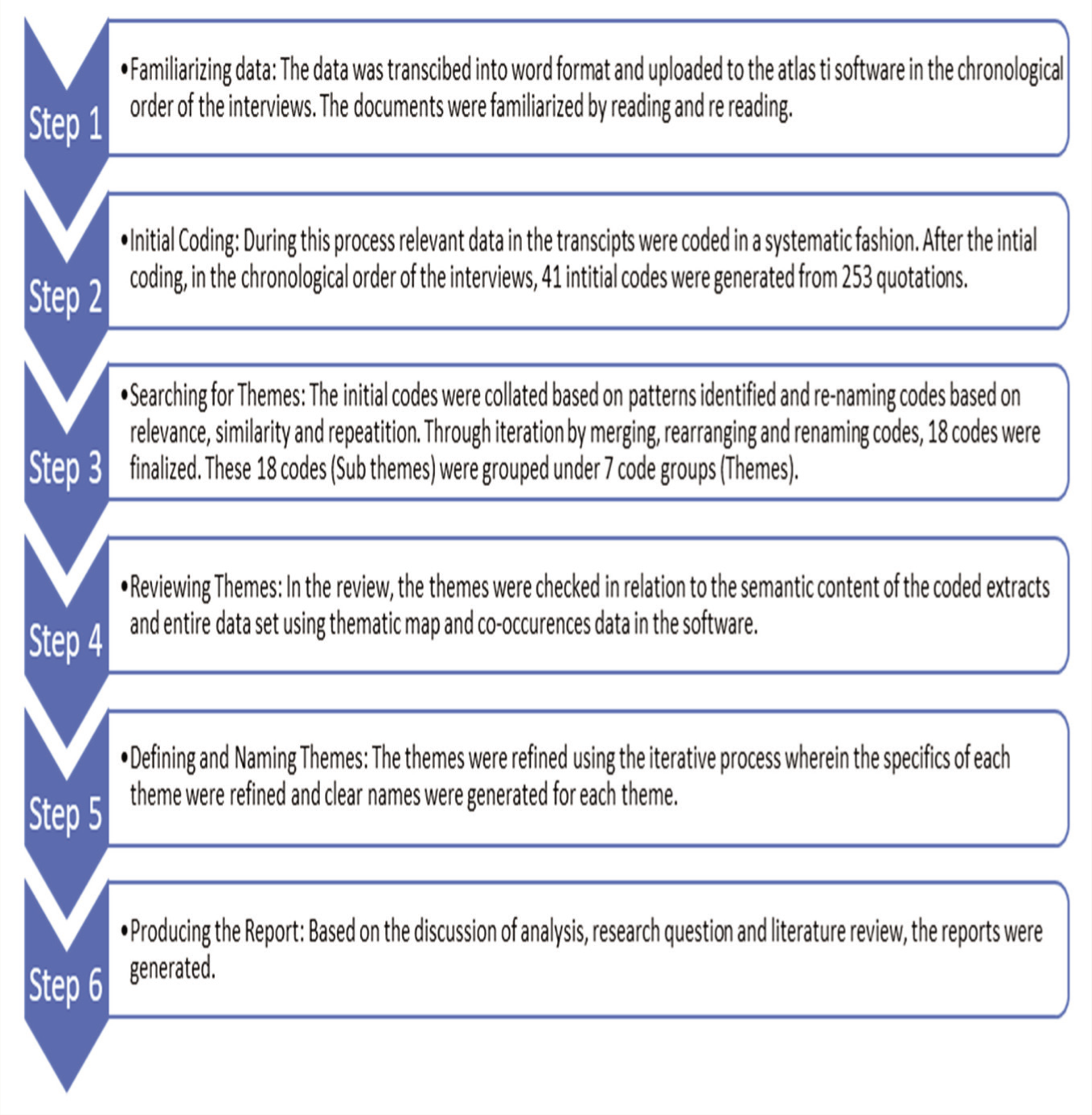
Each participant’s interview session lasted an average of 40 minutes and was audiotaped with their consent. All interviews were transcribed in Word with a simple transcription method by familiarizing the data. The transcribed texts of the data were thematically analysed using ATLAS.ti 8 software. The analysis steps were streamlined with the use of the analysis software. The thematic analysis was done using the six-step method by Braun and Clarke of familiarizing data, generating codes, searching for themes, reviewing, defining, and reporting themes with a primary focus on the semantic content of the transcripts. The iterative process in the analysis is described in Figure 1. The researcher did the coding, and following which, the two doctoral supervisors, in a reflexive manner, made sense-check ideas and explored and discussed multiple assumptions or interpretations of the data. The authors, with their professional clinical experience in child mental health, were able to reflect on the findings and related family dynamics in child custody cases. They could imagine how the children felt in situations described and experienced by participants and looked for insights, similarities, and differences in the data. It was a collaborative and reflexive exercise between the doctoral researcher and supervisors aiming to achieve more decadent interpretations of meaning rather than attempting to achieve consensus of meaning in the context of child custody. The study used an inductive approach to analyse the transcripts wherein codes and themes were derived from the data content and guided by the literature review and the researcher’s clinical experiences and knowledge from working with child custody cases. 27
Flowchart of the Steps in Thematic Analysis Based on the Six-step Method by Braun and Clarke (2006).
Results
The final seven themes identified using thematic analysis were: (a) parent–child relationship and interaction; (b) parenting dynamics; (c) parental mental health issues; (d) malicious acts by parents; (e) child’s adjustment to changes in life; (f) issues in the school context; and (g) child mental health issues. Table 2 provides the coding structure with the themes, subthemes, description, and selected relevant quotations. The number of key informants reporting a specific theme has also been depicted alongside each theme. We used numerical in place of the participants’ names to ensure anonymity. The numbers are assigned in the order of the data collected. The numeric codes are separate for the parents, MHP, and LP, and these abbreviations are mentioned before each numeric to indicate the participant type.
Coding Structure with Themes, Sub-themes and Selected Quotations.
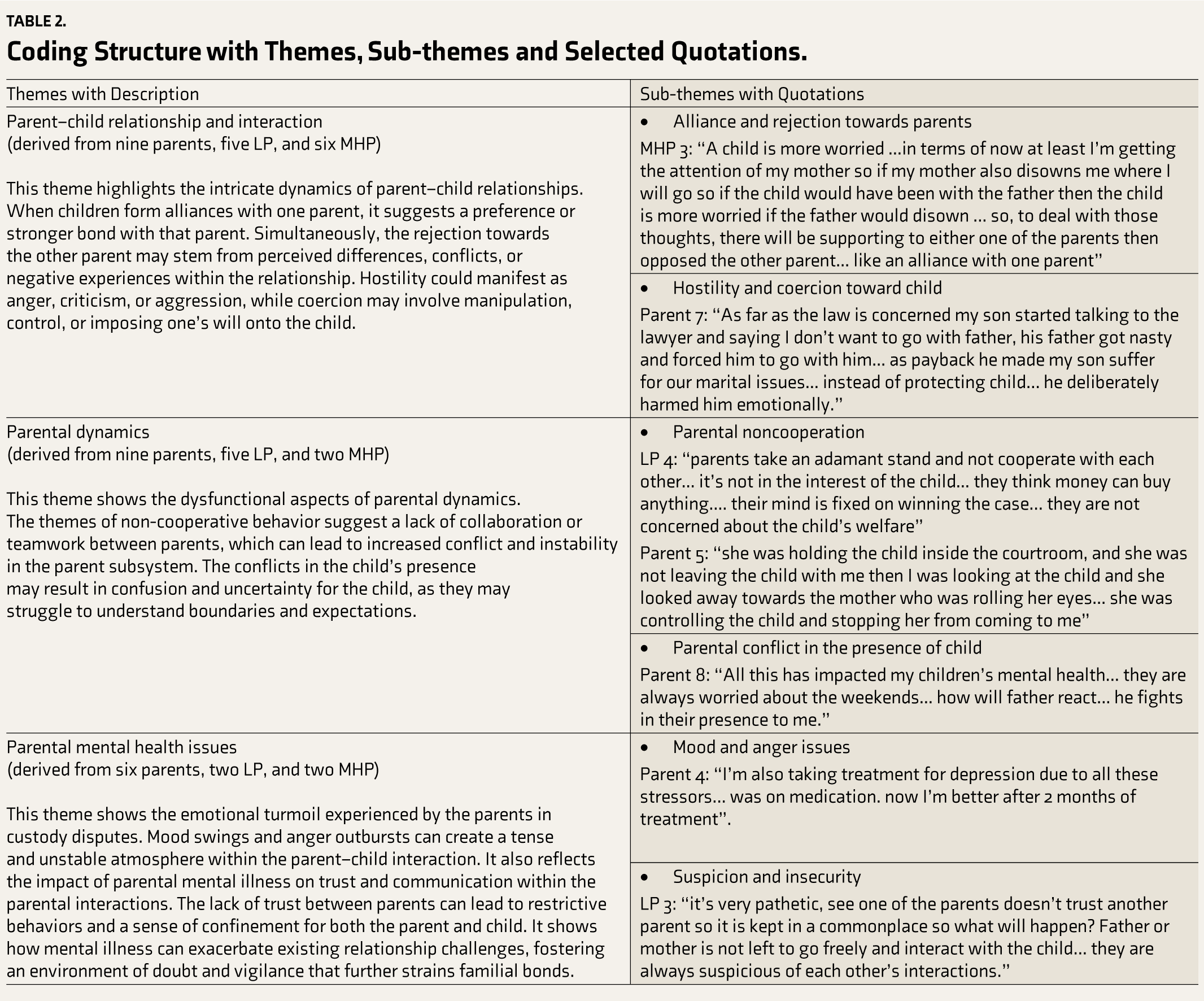
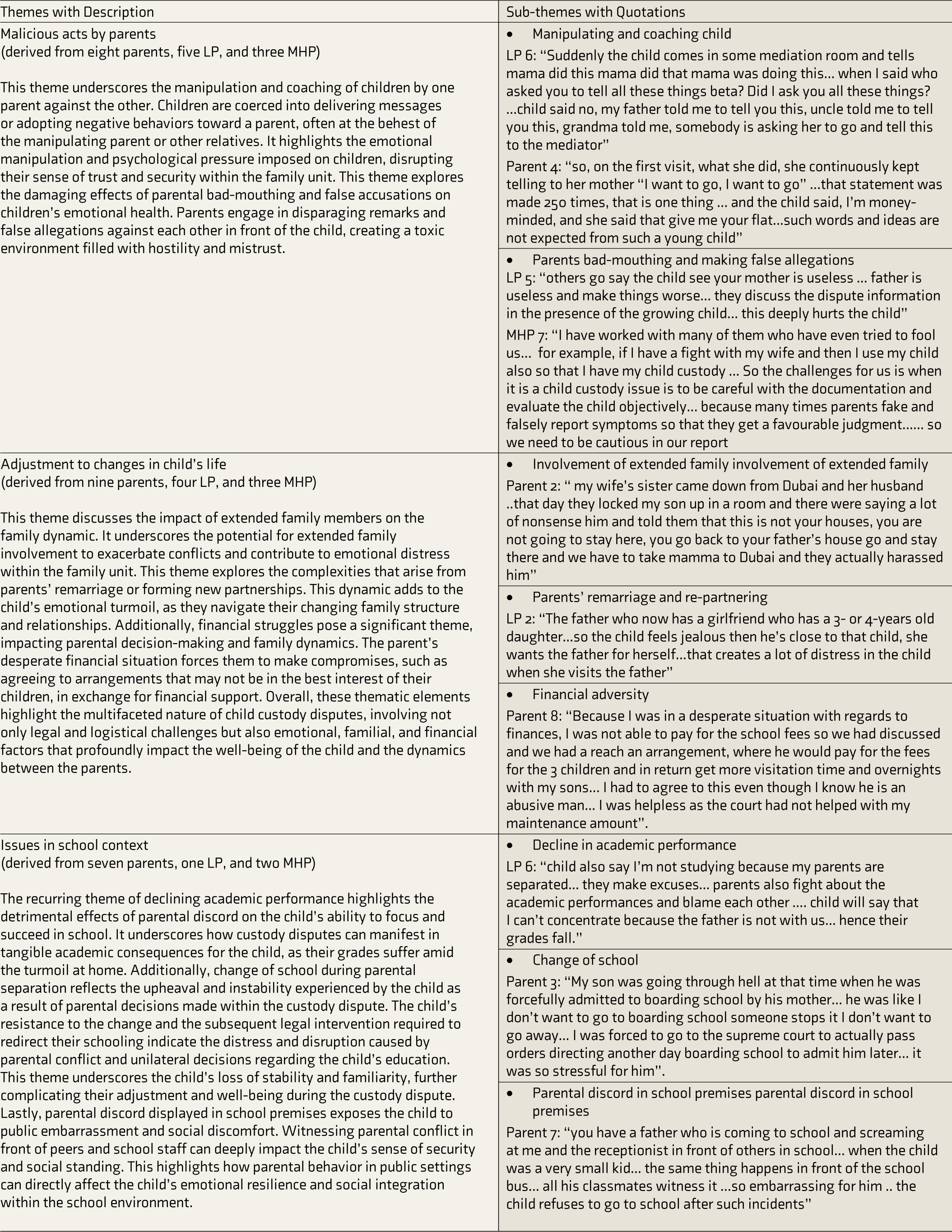
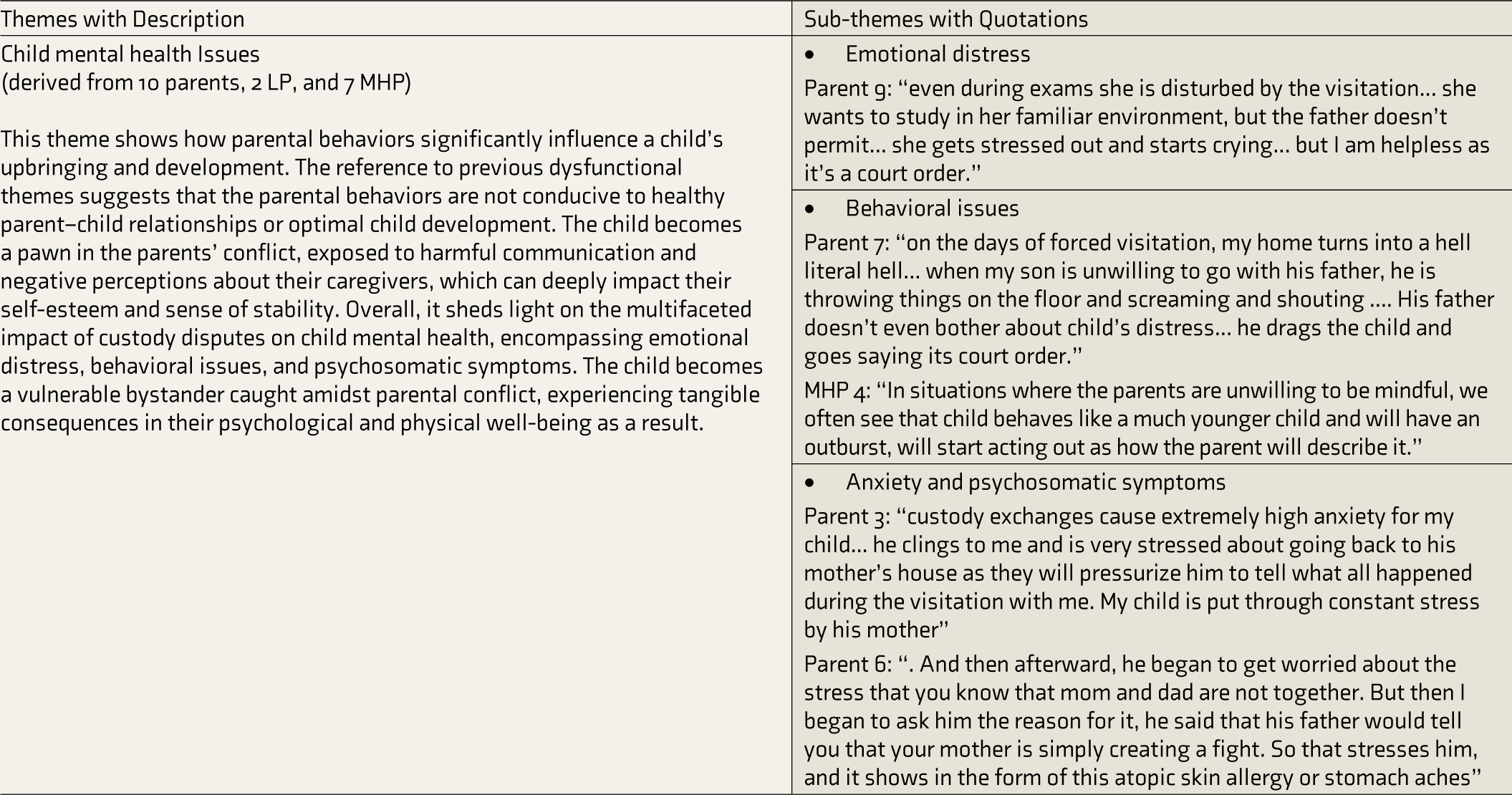
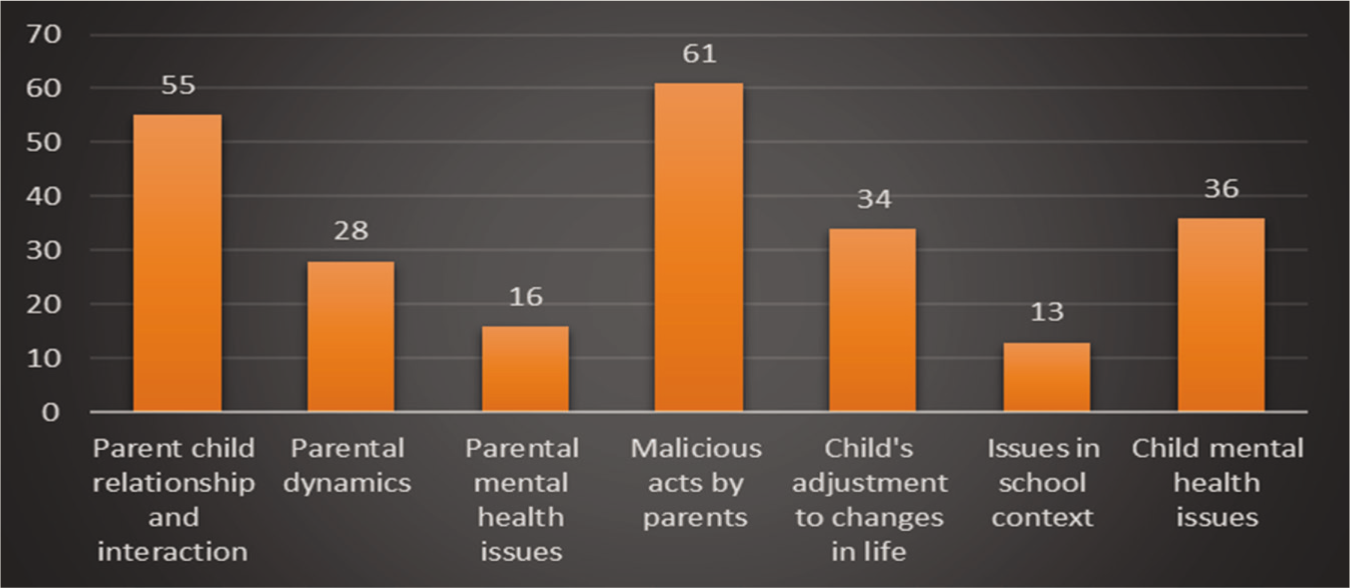
The first theme of “parent–child relationship and interaction” revealed how the children are made to alienate and align and thereby triangulated between the parental feud over the child’s custody and coerced to choose between the two parents, creating loyalty conflict in them. The second theme of “Parental dynamics” depicted the noncooperative, inconsistent, controlling, and overindulgent parenting practices adopted by the parents during custody disputes. The most discussed theme was that of “Malicious act by the parents” where they engage in fabrication, false allegation, coaching child, and other malpractices along with blatant flouting of court orders. The theme of “Parental Mental Health issues” in terms of mood dysregulation and suspicion also contributes to the themes mentioned above. Apart from these, the theme of “Child’s adjustment to changes in life” discussed the issue of dealing with parents’ remarriage, getting separated from a sibling, financial issues, and involvement of other family members in the custody issue. In the social context, the “Issues in School context” theme illustrated issues of change in school, academic decline, and parental disputes on the school premises. All of these themes have thereby directly or indirectly influenced the last theme of “child mental health issues.” Figure 2 depicts the frequency of quotations on familial and other psychosocial issues in child custody cases. It depicts that the theme of malicious acts by parents had the highest frequency, followed by the theme of issues in parent–child relationships and interactions.
Frequency of Quotations Mentioning the Themes of Familial and Other Psychosocial Issues in Child Custody Cases.
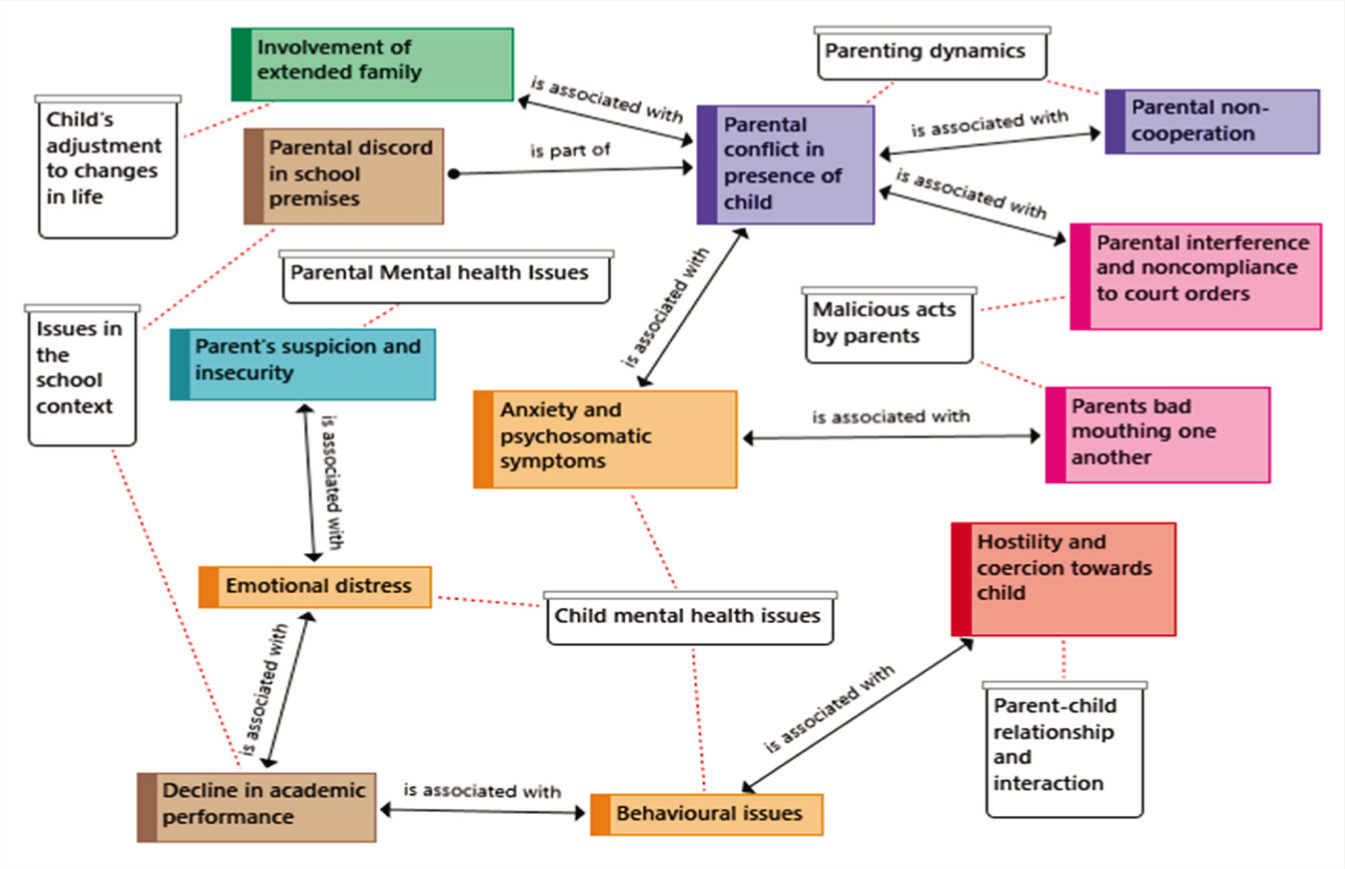
The results of the semantic linkages of child mental health issues with psychosocial issues based on co-occurring themes (Figure 3) depict the following:
The child’s behavioral issues were associated with a decline in academic performance and hostility and coercion toward the child. The child’s emotional distress was associated with a decline in academics and parental suspicion and insecurity. It also depicted that the child’s anxiety and psychosomatic symptoms were associated with parents badmouthing each other and parental conflicts in the presence of the child. The subthemes associated with parental conflict in the child’s presence showed further association with parental noncooperation, noncompliance, interference with court orders, and the involvement of extended family members. Parental discord on school premises could also be a part of this subtheme. Therefore, the “child mental health issues” theme has a direct semantic linkage with all the other themes.
Semantic Linkages of Child Mental Health Issues With Psychosocial Issues Based on Co-occurring Themes.
Discussion
Regarding the family dynamics and parent–child relationships, the findings show hostile and skewed patterns of interaction. The theme of malicious acts by parents had the highest reported frequency of quotations in the transcript, followed by issues in parent–child relationships and interactions. It comprised of codes such as allegations, manipulation of the child, badmouthing the other parent, interference with the court orders, parental alliance and alienation, parental control, parental indulgence, parental noncooperation, and parental conflict in the presence of a child. These study findings have shown negative parent–child interaction patterns and controlling and overindulgent parenting practices. It also showed parental noncooperation, discord, and limited access to noncustodial parents, which could have contributed to the alliance and preference of custodial parents and hostility towards noncustodial parents. The intensity and severity of these parental disagreements are key contributing factors to the child’s maladjustment in this context. 23 The findings in the thematic map regarding how the skewed family interactions and relationship dynamics were associated with the child’s emotional symptoms are similar to those in the Western literature.28–30 Studies have consistently discussed the heightened risk of emotional issues in children following a conflicted parental separation and legal disputes.21–24,31 A study by Lebow and Newcomb in 2007 found that the triangulation of the child in a parental dispute is a pathological circumstance arising from child custody disputes. They are unnecessarily exposed to the pressures and complexities of the legal system.16,32 The parental interpersonal relationship issues escalate from verbal to physical violence, resulting in four times more likelihood of psychological issues compared to those in non-conflict settings. 33 The results showed that the custodian parents’ excessive control over the child was a predictor of childhood mental health issues. The literature also accounts for parents being overprotective and controlling their children in high-conflict custody disputes. 23 A study found that intrusiveness and enmeshment in parent–child boundaries emotionally traumatized children.34,35 In the subthemes, many reported skewed and distorted family communication patterns, compromising the child’s sense of security, stability, and coping.16,36 A lack of cooperation, respect, and trust characterizes the parent–child relationship in child custody disputes. 37 Therefore, a secure and positive parent–child relationship is crucial for the mental well-being of children. 23
The “Adjustment to changes in child’s life” theme comprises relevant subthemes such as parents’ remarriage and re-partnering, extended family involvement, and financial adversity. It showed that children’s difficulties in adjusting to changes in their lives post- parental separation were associated with parental remarriage, change in living arrangements including extended family, relocation, and financial adversities. It also discussed issues relating to the change of school and subsequent difficulties in adjustment. Regarding the findings of academic impact on children, studies expansively discussed the detrimental impact of change in school due to relocation, wherein the child has difficulty making new friends, academic difficulties, and subsequent adjustment issues.31,38–40 The issue of monetary adversities post-parental separation and divorce is common. Besides the psychological stress associated with familial breakdown, the need to sustain the family on a single parental income, particularly in maternal custodianship, results in increased work hours and a decrease in positive parent–child quality time and interactions. This sudden dip in economic status significantly impacts a child’s adjustment and well-being. 23 Additionally, the research showed that one of the important determinants of custody decisions and visitation in court was parents’ income, wherein monetary issues were associated with a decreased chance of gaining a child’s custody. 41 Studies on relocation found that long-distance separation from one parent in childhood was associated with serious behavioral issues, relational disturbances with the parents, anxiety, and depression plan.42,43 Therefore, the relocation should be contingent on the court’s assessment and evaluation of the need and relevance of the move, given the child’s best interest and provision from continued access to the noncustodial parent through a revised custody arrangement plan. It also highlights the need for the courts to consider the child’s wishes and concerns about the decision to relocate.16,42 Additionally, the early transitions like re-partnering or remarriage of parents can be stressful for the child and detrimentally impact the child’s adjustment compared to those who experience this transition in the later years of parental separation. This challenges the parent–child relationships and family adjustment and adaptation. Therefore, psychotherapy is recommended for parents and children to deal with these unavoidable transitions effectively. 44 However, in some cases of the non-cooperative biological father, it was also observed that the stepfather was more involved and engaged in the child’s activities and thereby performed effective co- parenting roles. This shows the positive approach to incorporating step-parents into the lives of children within the existing custody arrangement. 45
One of the major impediments in the child custody evaluation process is the parents’ misuse of legal provisions and false allegations of intimate partner violence, child victimization, and child sexual abuse. Due to this, evaluators need to wade through this web of lies and seek objective and unbiased information regarding the allegations. Hence, in case of such legal issues, interviews with the child, liaison with forensic experts in the concerned areas, and corroborating with collateral information and forensic reports will help resolve the matter. If the allegations made by the parent are proven false, it is an indicator of parental misfit. However, in case it is proven true, it is obligatory on the part of the evaluator to ensure the child’s protection and safeguard from the abusive parent using restricted or supervised or even termination of access.46,47
All of these above-stated psychosocial issues adversely impact the mental health of those involved, particularly the children. The results of this study revealed mental health issues in parents, such as mood disorders, anger issues, insecurity, and suspicion that influenced interparental interactions. The cooccurrence of themes also showed that child mental health was associated with academic issues, parental mental health, parental conflicts, and noncooperation. The study showed consistent findings of mental health issues in both the child and the parents. This is like other studies in this area wherein they reported that children in custody cases predominantly show signs of loneliness, guilt, powerlessness, rejection, anxiety, overgeneralizing, and other cognitive errors, as well as fear of abandonment. 47 Literature shows that parents with mental illness subject their children to neglect and abuse. This could be in the form of authoritarian parenting, punitive parenting styles, along with emotional abuse in the form of isolation, abandonment, insults, yelling, and frightening.36, 49,50 This impacts the child’s mental health, and vicariously, the child learns and begins to show behavioral and conduct issues. 51 Hence, in cases of abuse, restricting parental access protects the child’s mental health. Therefore, it is vital in custody cases to refer both the child and parents for mental health evaluation and interventions. Studies in the Western context emphasize parental mental health as a key determinant of parental capacities and custody decisions.41,52–54 This also highlights the imperative role of child MHP as child custody evaluators to enable child-centric custody decisions. 55
The study is part of the first author’s doctoral research conducted in urban Bengaluru to understand the psychosocial issues in the context of child custody disputes filed in the Bangalore Urban Family Court under the G&WC. The credibility of the study’s findings is depicted in Figure 1, which gives attention to methodological transparency and rigor, such as the detailed descriptions regarding data collection and analysis procedures. Also, confirmability, which pertains to the neutrality and objectivity of the research findings, is discussed in the iterative data analysis process.
A limitation of the study is that since it is conducted in urban settings, the sociocultural background of rural and urban areas will differ. This will impact the transferability, which concerns the applicability of the findings to other contexts or populations. Also, the authors faced significant challenges in the data collection process of authorization from competent legal authorities. Due to this, there was a significant delay in sanctioning the permission for data collection. Additionally, due to the ongoing litigation, the parents were apprehensive about the impact of their participation in their case proceedings, which made it exceedingly difficult to recruit study participants, causing further delay. Another limitation regarding methodological rigor is that the study protocol was designed to interview stakeholders (parents, LP, and MHP) in child custody disputes and analyse this data as derived from a single source of stakeholders using individual interviews. The use of triangulation in qualitative research helps to strengthen credibility, reliability, and greater scientific accuracy. One of the study’s limitations is that it did not do data triangulation, which could have minimized bias resulting from a single analytical perspective. Another area for improvement of the study is that due to the sub-judice nature of the topic, the dependability of data is hindered by the absence of systematic approaches to data verification. These limitations underscore the need for future research endeavors to prioritize qualitative rigor through meticulous attention to these methodological procedures.
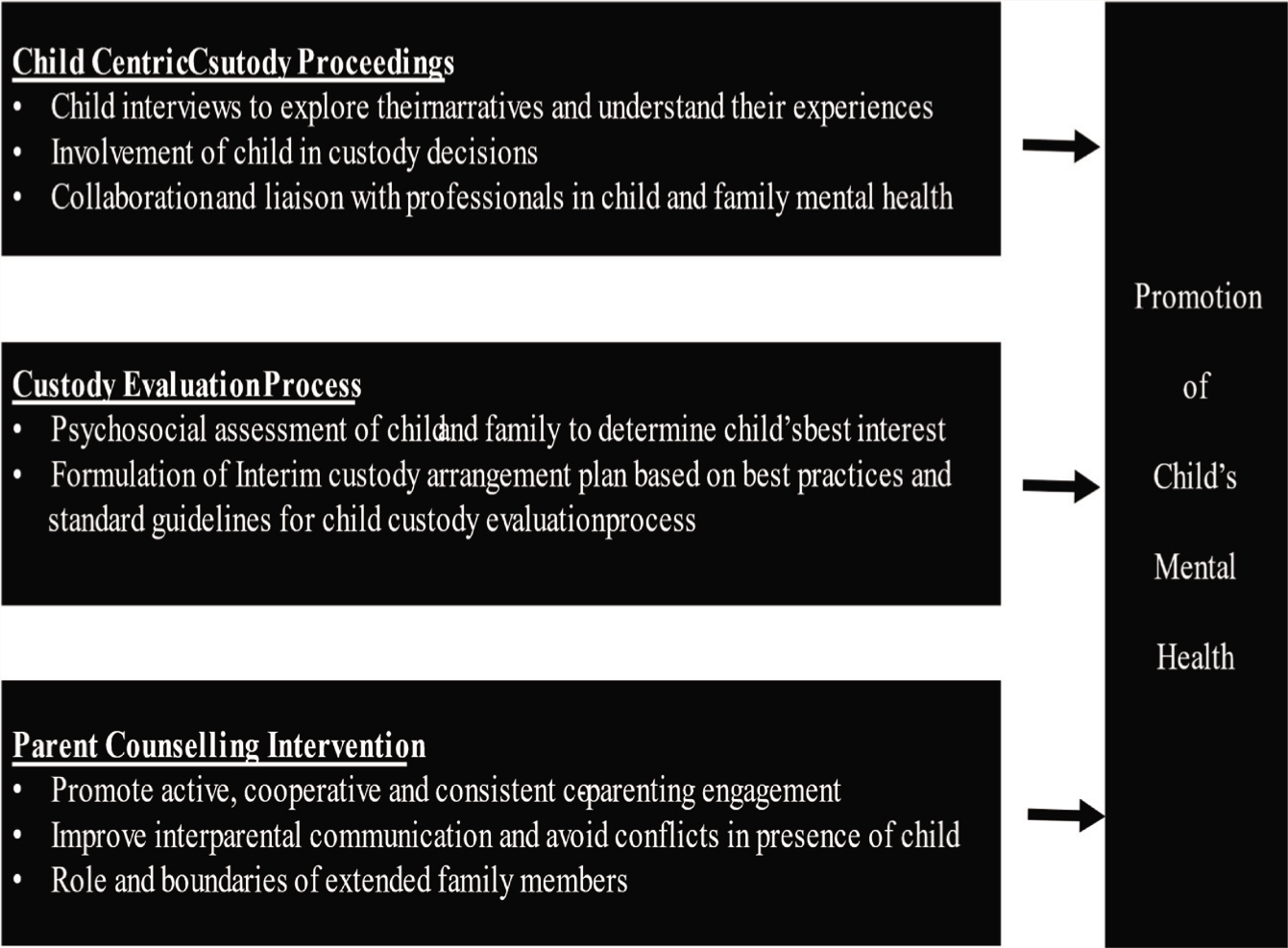
Based on empirical research published over the past two decades, this is the first Indian study in the context of child custody disputes in which the views of multiple stakeholders were studied. These findings have, therefore, reinforced the need for establishing guidelines in child custody proceedings to protect the child’s best interest and thereby promote the child’s mental health. Hence, there is a need to integrate child-centric court processes, custody evaluation, and parental counseling interventions to protect and promote child mental health in custody cases. This is depicted in the conceptual framework (Figure 4).
Conceptual Framework for Child Mental Health Promotion in Custody Dispute Cases.
Conclusion
This study highlighted the potential risk factors in the familial context that adversely influence the child’s well-being and mental health in custody disputes. Therefore, interventions at the family level in the legal setting are crucial in mitigating these risks. In child custody cases, the coordination and liaison of child MHP with the judicial system is crucial for child mental health promotion and safeguarding the child’s best interests. This study, therefore, reinforces the need for child-centric recommendations to the legal system to enhance child participation, mental health awareness, and sensitivity in the legal system.
Footnotes
Acknowledgements
The authors express gratitude to the stakeholders who participated in the study.
Declaration of Conflicting Interests
The authors declared no potential conflicts of interest with respect to the research, authorship, and/or publication of this article.
Declaration Regarding the Use of Generative AI
None used.
Ethical Approval
Approval was obtained from the Institutional Ethics Committee, NIMHANS, Bangalore [Ref: NIMH/DO/ IEC(BEH.Sc.DIV)/2018]. Written informed consent was obtained from the participants.
Funding
The authors disclosed receipt of the following financial support for the research, authorship, and/or publication of this article: This study is a part of the first author’s doctoral research approved by the Institutional Ethics Committee (Ref:NIMH/DO/IEC(BEH.Sc.DIV)/2018)and funded by the University Grants Commission (Ref: 1299/JUNE 2015).