




Abstract
Background:
Cyberbullying can be a traumatic experience for adolescents. It can affect their psychosocial functioning, development, and mental well-being in the long term. Though mental health support is needed to help adolescents, parents, and schools, they do not seek appropriate support. This article describes the viewpoint of mental health and cyber experts on the barriers to seeking mental health support among adolescents, parents, and school administrators and identifies approaches to intervention.
Methods:
The qualitative research study was conducted in Bengaluru Urban, India. Ten specialists were interviewed, including mental health professionals and cyber experts who work with children and adolescents. The data were analyzed using thematic analysis.
Results:
Seven major themes emerged from the study as follows: (a) knowledge of cyberbullying, (b) negative impact of cyberbullying, (c) attributed factors for cyberbullying, (d) barriers for help-seeking, (e) child-centric intervention, (f) parental intervention, and (g) whole-school approach to cyberbullying.
Conclusion:
Several factors would affect help-seeking by adolescents, parents, and schools in the context of cyberbullying. These factors need to be considered in developing a comprehensive, school-based intervention on cyberbullying for adolescents.
The study found seven major themes as follows: knowledge of cyberbullying, negative impact of cyberbullying, attributed factors for cyberbullying, barriers for help-seeking, child-centric intervention, parental intervention, and whole-school approach to cyberbullying. The results of the study findings have significance for mental health practitioners, policymakers, and school administrators to reduce the occurrence of cyberbullying and improve the mental health and well-being of teenagers.Key Messages:
Cyberbullying has significantly increased in frequency across the globe in recent years.1,2 It is a form of bullying that occurs through electronic communication, such as social media, texting, or e-mails. It can take many forms, including sending threatening messages, posting humiliating or derogatory comments, spreading rumors or lies, and sharing embarrassing photos or videos. Further, cyberbullying is defined as “willful and repeated harm inflicted through the use of the computer, cell phone and other electronic devices.” 3
The internet is a two-edged sword with benefits and risks. Adolescents reportedly use the internet positively and learn many new things from it. However, some of them use it as a tool to commit offenses or indulge in unsafe and unhealthy activities.4,5 One such negative fallout is using the internet for bullying. Cyberbullying does not have the constraints of time and space and has added anonymity; therefore, it can influence a larger number of individuals than traditional types of bullying can.
Numerous studies have demonstrated that cyberbullying aggressors show greater signs of depression, conduct issues, drug use, a negative attitude toward authority, and more violent and criminal behavior, and some of these issues may continue into adulthood.6,7 Similarly, the victims of cyberbullying can have adverse, long-lasting consequences. In either case, a healthy way of addressing these issues is asking for help. Adolescents may find it challenging to express their need for assistance because, despite concerns, they might not see the need for it. According to a Norwegian study, adolescents who are bullied in person seek assistance more frequently than those who are cyberbullied. 8 Numerous studies have found that adolescents are hesitant to seek professional mental health care due to various reasons, including a negative attitude toward asking for help or a bad experience in the past, having suicidal thoughts or depressive symptoms, and believing they can handle their mental health problems on their own. 9
There has been a substantial increase in the academic literature on the prevalence and pattern of cyberbullying, including extensive surveys on its characteristics and impact.1-3 Additionally, much literature has been written about how parents, teachers, and adolescents view cyberbullying. However, there are not many studies on cyber specialists or mental health professionals dealing with children and adolescents.17,18 In this article, we contribute to the growing body of research by examining the viewpoints of specialists dealing with children and adolescents in a tertiary care mental health institution and cyber experts to provide in-depth views on preventing cyberbullying. Further, the specialists’ suggestions would be beneficial in creating a comprehensive cyberbullying intervention program. The qualitative approach offers a research strategy that might reveal crucial discussions about cyberbullying that may be absent in other studies, as well as the opinions of experts across every discipline.
Method
The qualitative research design used key-informant interviews to collect the data through purposive sampling from specialists working with children and adolescent mental health and cyber experts. The research was carried out in Bengaluru Urban district over two months (August and September 2022). The study aims to describe the viewpoint of mental health and cyber experts on the barriers to seeking mental health support among adolescents, parents, and school administrators and identify approaches to intervention. Ethical clearance was obtained from the Institute Ethical Committee. Written consent was obtained from the participants.
The first author created an interview guide, which was validated by the other authors with qualitative research experience. The interview guide consists of open-ended questions and prompts that cover topics such as the typical consul- tation rate for cyberbullying-related cases, their understanding of cyberbullying generally, the cause of cyberbullying, adolescents’ reactions to cyberbullying, how children can cope with cyberbullying, what parents and teachers can do to prevent cyberbullying, obstacles to seeking mental health care service, and strategies for improving help-seeking behavior.
Study Participants
The study was conducted with 10 specialists from three different institutions in Bengaluru (NIMHANS, St. Johns Medical College & Hospital and Cyber Technology). The participants were three child and adolescent psychiatrists, two clinical psychologists, three psychiatric social workers, and two cyber security experts. Three specialists were professors, two additional professors, two associate professors, two assistant professors (one among them was from a forensic science background), and one cyber analyst. Their average number of years in professional life was 14.5 years. However, only 10 of the 15 specialists who were contacted agreed to take part in the study.
Data Collection
Participants were made aware beforehand that their needs may modify the interview length. Written informed consent was obtained from all the participants. The researcher assigned each participant a unique ID depending on their discipline to maintain confidentiality [for example, Exp1_ CAP (child and adolescent psychiatrist); Exp2_ PSW (psychiatric social worker); Exp3_CE (cyber expert); Exp6_CP (clinical psychologist)]. All the interviews were audio recorded, and the researcher transcribed them after listening to them repeatedly. The average duration of each interview was 27 minutes. The themes in the literature were identified as part of the process of developing the key informant interview (KII) guides, and the research supervisors then examined the themes for content, repetition, sequential order, objectivity, appropriateness, and comprehensiveness. The researcher used a simple transcription technique to become familiar with all the interviews. Throughout the research process, the team upheld reflexivity by consistently engaging in reflexive discussions, conducting peer debriefing sessions, and meticulously documenting the reflections, enabling the team to proactively address potential biases that could influence the study’s outcomes.
Data Analysis
The researcher used thematic analysis (TA), as described by Braun and Clarke, 10 to generate themes from the data. To find meaningful text units pertinent to the topic, the data was carefully read numerous times to familiarize ourselves with it. Further, we used Atlas.ti 22 software for coding the transcribed data. The researcher used an open coding method to find the semantic content of the participants’ verbatims, and the latent meaning was identified to understand the in-depth meaning of the data. There were 226 initial codes used to generate sub-themes and themes. To prevent the researcher from overlooking or missing key data content, peer debriefing of the coding was done throughout the coding process. The research team (guide and co-guide) also looked into any coding discrepancies. Themes and sub-themes were also finalized and discussed several times.
Results
Themes Identified
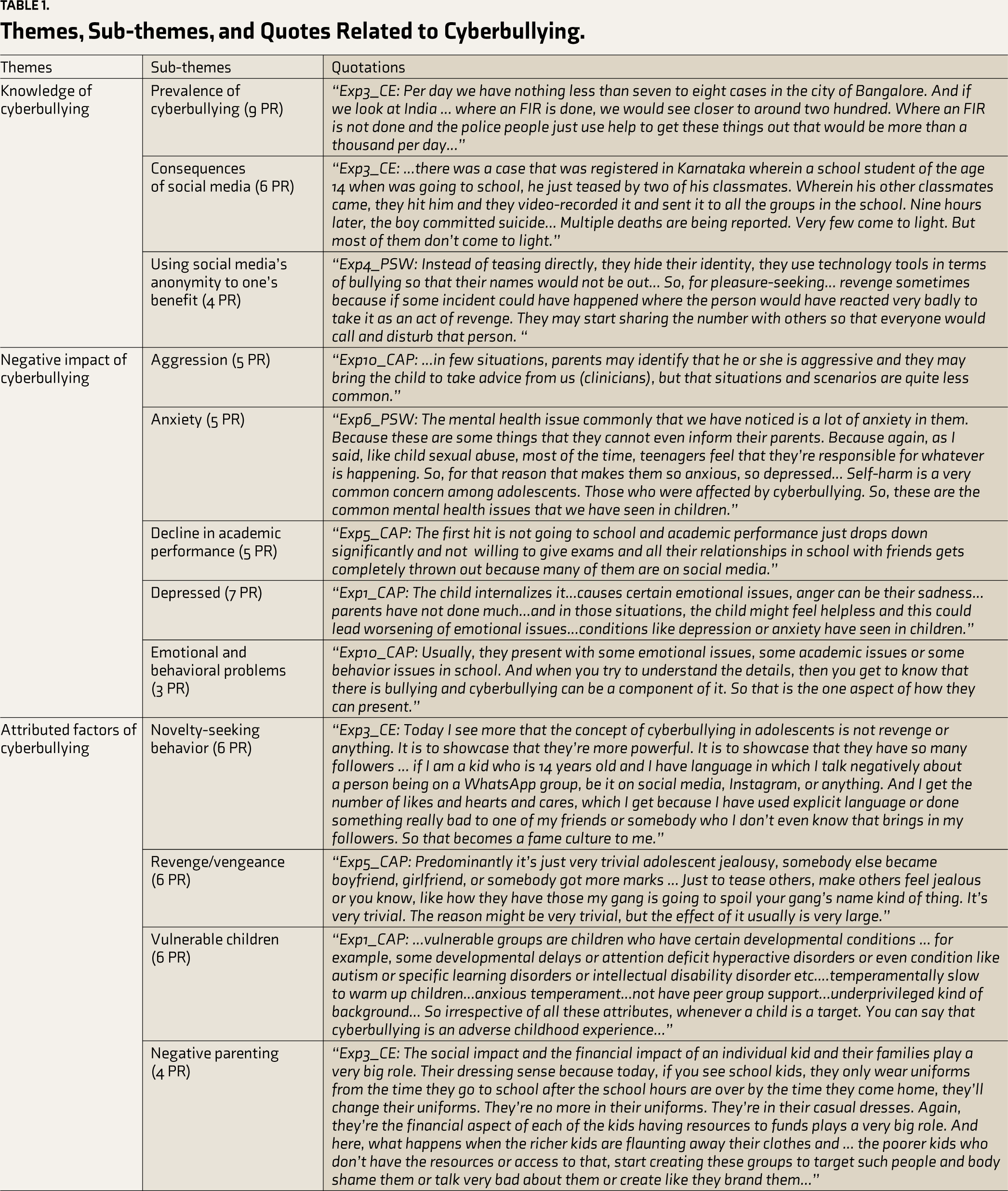
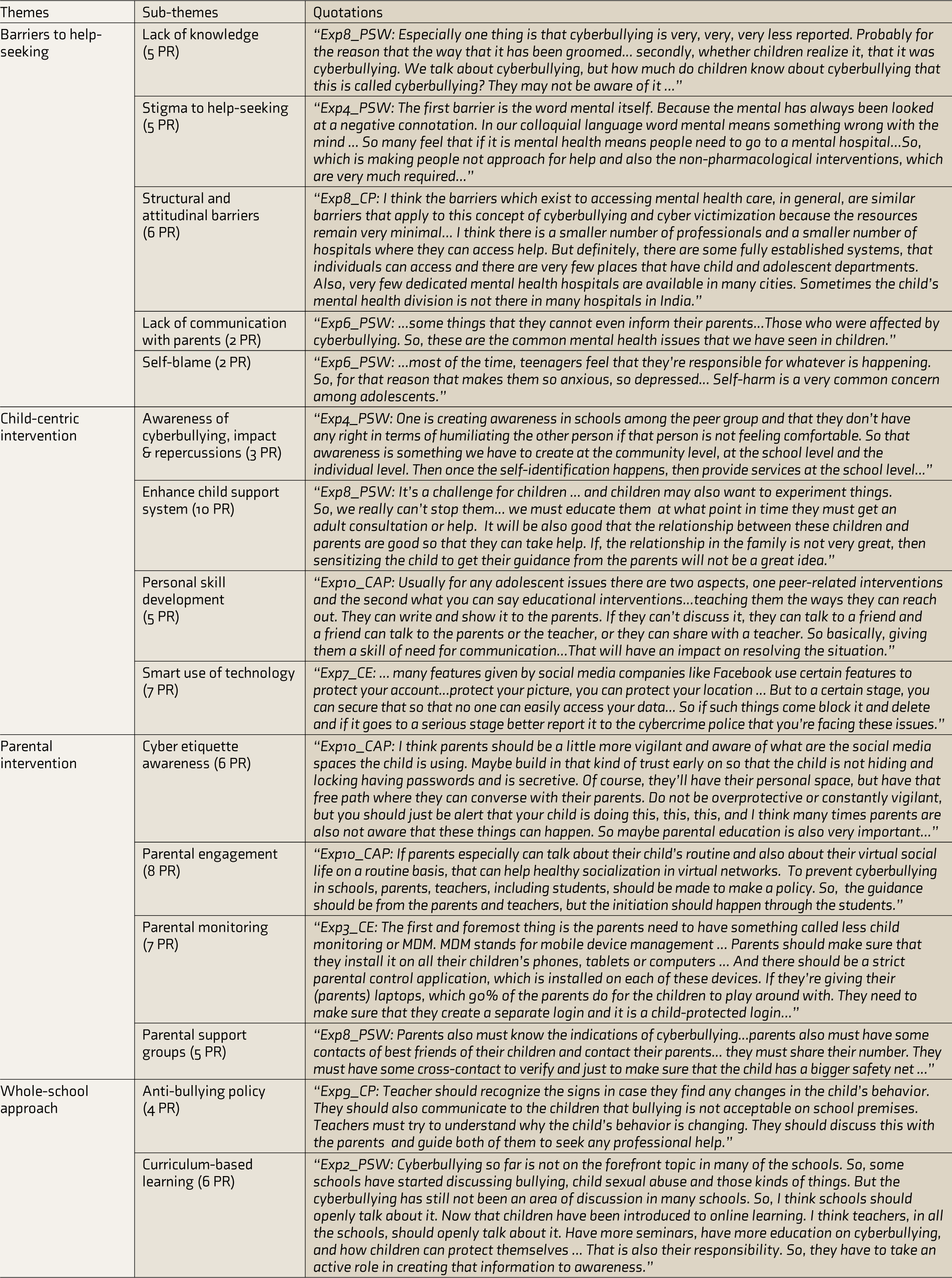
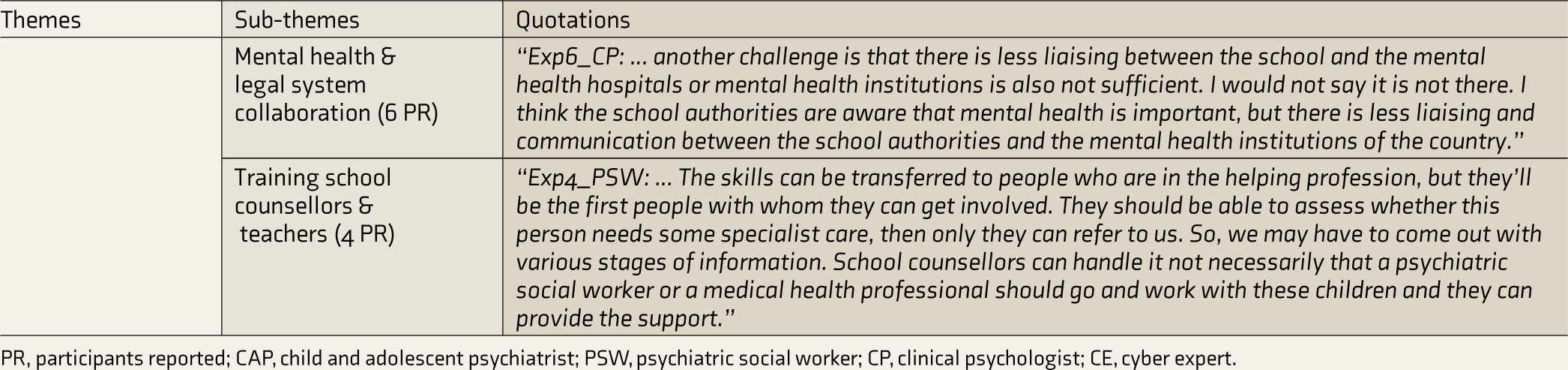
A total of seven themes emerged from the key informant interviews: (a) knowledge of cyberbullying, (b) negative impact of cyberbullying, (c) attributed factors for cyberbullying, (d) barriers to help- seeking, (e) child-centric intervention, (f) parental intervention, and (g) whole-school approach to cyberbullying. The themes, subthemes, and quotations have been provided in Table 1.
Themes, Sub-themes, and Quotes Related to Cyberbullying.
PR, participants reported; CAP, child and adolescent psychiatrist; PSW, psychiatric social worker; CP, clinical psychologist; CE, cyber expert.
Theme 1: Knowledge of Cyberbullying
The experts have spoken about their personal experience with cyberbullying and how the anonymity of social media can affect someone.
Prevalence of Cyberbullying
Although cyberbullying is less common than conventional bullying, its effects on victims are no less severe. Numerous and continually evolving technologies are used to harass people online. Students are now being emotionally and physically assaulted outside of school as well, making the victim’s life a never-ending nightmare. Only serious instances are revealed, and most of them go unnoticed because of various factors.
Consequences of Social Media
The use of social media generally has both good and negative effects. Social media platforms frequently use implied behaviors such as sexism and body shaming to engage in cyberbullying. Adolescents are placed in a stressful situation due to the visibility of social media. Many times, when cyberbullying reaches an extreme level and results in severe mental health issues, post-bullying trauma relapses along with the fear of tackling their friends and society. These victims may make heart-breaking decisions like trying to commit suicide, which harms their family and social network as well.
Using Social Media’s Anonymity to One’s Benefit
These findings demonstrated how teenagers have been abused on social media while benefiting from their privacy. Adolescents may even abuse other children using the profiles of other family members and other accounts, such as Facebook and Instagram, to conceal their identities. Most experts claim that known people who hide their identities and seek retribution for previous events are the ones who cyberbully children the most. Some adolescents fall victim to unknown perpetrators who are after secret motives like financial gain. Internet anonymity offers teenagers a false sense of security. They think they can stay hidden and publish something covertly. Adolescents who engage in cyberbullying find it quite simple to say and do things they would not normally do because they frequently are unaware of the victim’s upsetting reactions.
Theme 2: Negative Impact of Cyberbullying
Experts described the long-lasting impacts of cyberbullying, which will be covered in the section that follows.
Aggression
The results showed that adolescents are least concerned about the effects of social media. They indulge in aggressive behavior in their home and outside environment and attempt to imitate others. Parents must influence their children’s behavior and serve as positive role models for them.
Anxiety
According to the experts, some of the immediate reactions that teenagers can experience when they are cyberbullied include fear, becoming silent, and not knowing what to do. They will become more anxious due to this shame and guilt. Youngsters experience anxiety. They cannot disclose and seek help from their parents because they use social media and mobile devices without parents’ knowledge. Additionally, some adolescents might believe their parents will take away their devices if they tell them about this.
Decline in Academic Performance
Experts described that children who experience cyberbullying may struggle academically and may even cease taking exams and attending school altogether. This has an impact on their interactions with their parents and peers. Many need problem-solving abilities. In addition, strict guidelines have to be introduced at schools to stop cyberbullying.
Depression
Internalization of problems leads to mental distress in children when they do not get adequate support from their schools and homes. Suicidal thoughts and attempts may occur in some individuals who are predisposed due to genetic vulnerability and other risk factors.
Emotional and Behavioral Problems
The victims of cyberbullying may suffer severe emotional repercussions. Constant threats, humiliation, and harassment through online platforms can cause anxiety, sadness, and low self-esteem. These emotional problems might appear as behavioral problems in real life and online.
Theme 3: Attributed Factors for Cyberbullying
This current theme focuses on the numerous causes of cyberbullying as they are understood by experts who work with teenagers. Concerning this theme, the following sub-themes evolved.
Novelty-seeking Behavior
Many young people engage in cyberbullying of others for entertainment or enjoyment. Adolescents will sporadically behave negatively on social media to attract attention, liking negative online posts or making derogatory comments about others. In the meantime, they gain a follower for the disparaging things they share on social media. Some teenagers find it enjoyable to harass people online through cyberbullying or other means. Novelty seekers are people who actively search for arousal.
Revenge of Vengeance
Children who have been mistreated frequently seek revenge rather than coming up with more positive ways to handle the situation. Some adolescents victimize others for trivial reasons, such as jealousy of others for something they lack. When children are harassed in person, some use technology to bully other kids. Experts also noted that some teenagers who bully others feel satisfied with their actions and are right in experiencing the same emotions.
Vulnerable Children
Children with certain obvious or invisible health conditions, such as those that affect their mobility, speech, hearing, or vision, are particularly vulnerable groups of children (e.g., intellectually disability-specific learning disability, autism, etc.). The second category consists of adolescents who are naturally shy or anxious and fall into a vulnerable age group. They do not engage in peer groups or build peer relationships well. Additionally, young people from disadvantaged backgrounds, such as those with a particular ethnicity and neighborhood disputes, can occasionally become targets. In addition, issues in the children’s households may be related to vulnerabilities. Finally, a teenager might become a victim of cyberbullying during the grooming process.
Negative Parenting
Families significantly influence how children are raised, which affects how they interact with others. Parents should monitor their children’s online activities and direct them correctly. The way they dress is a common source of cyberbullying and branding of children. Parents should also support victims as well as their bullies. They can impart the proper manners for using the internet instead of penalizing them. Additionally, children who receive encouragement from their parents and teachers may recover quickly.
Theme 4: Barriers to Help-seeking
According to specialists, there are structural, attitudinal, and information gaps that prevent teenagers from obtaining mental health care.
Lack of Knowledge
The main obstacle to seeking assistance, in the opinion of experts, is a lack of knowledge about the services offered. Some parents treat cyberbullying as a medical condition and demand prescribed drugs or other quick fixes. Due to the generational gap, most parents are unaware of contemporary challenges associated with technology. In some instances, especially young children may not understand that they are being cyber bullied because the offenders are much older than them and ‘groom’ them to believe that it is normal.
Stigma to Help-seeking
The term “mental” itself carries a negative connotation with the general public, and many people worry about how to maintain privacy if someone finds out that their child is receiving treatment at a mental hospital. Some illnesses need long-term therapy as a form of treatment, but parents are reluctant to enroll their children in counseling services. Additionally, many instructors and parents blame the children for the situation rather than seeking advice from the school counselor. Therefore, there is much opportunity for mental health experts to educate the school community generally about school mental health to lessen stigma.
Structural and Attitudinal Barriers
One of the barriers to seeking help from mental health professionals is the attitude of the community toward mental health. Parents depend solely on their convictions and fail to seek the advice of qualified professionals. Regarding structural barriers, many hospitals lack specialized clinics, inadequate infrastructure, trained mental health workers, and funding.
Lack of Communication with Parents
Children might not get the emotional help they need to deal with cyberbullying if they are uncomfortable talking to their parents about what they have experienced. In the absence of transparent communication, parents can only be made aware of instances of cyberbullying once they have drastically aggravated. Postponing intervention may cause the bullying to continue longer and have a more determinantal effect on the child’s emotional health.
Self-blame
Cyberbullying victims may internalize the harmful words and start to feel as though they are deserving of the abuse. Adolescents may feel helpless to stop the harassment or defend themselves online when they hold themselves responsible for becoming the targets of cyberbullying. Self-blame can make adolescent think they are to blame for the circumstance and should handle it on their own, which could discourage them from asking for assistance or support from others.
Theme 5: Child-centric Intervention
This theme focuses on child-specific intervention, such as protecting adolescents from cyberbullying, raising awareness of its effects and consequences, improving the child support system, and fostering individual growth.
Awareness of Cyberbullying, Impact, and Repercussion
Students better understand cyberbullying by being made aware of it through interactive methods such as short films, animated movies, poster competitions, drawing contests, anti-bullying marathons, and collage-making. Further, we must redefine bullying and cyberbullying to mean that it is only bullying and cyberbullying when a person is uncomfortable with the mocking from their peers. Children should also be taught that humiliating others is against their rights.
Enhance the Child Support System
Children who use technology to explore the internet may later engage in cyberbullying. Many experts have agreed that we must partially deprive youngsters from the use of this technology. In terms of permitting their children to use technology safely, parents must support their children. Additionally, forming a support network within the student body will aid in reducing the impact of cyberbullying. The school should develop a hierarchy of approaches to improve cyberbullying management.
Personal Skill Development
Children should acquire the knowledge and skills necessary to control their internal pressure. They should be aware of their strengths and learn coping and problem-solving, communication, and assertiveness skills to deal with problems.
Smart Use of Technology
The victims of cyberbullying may use technologically specialized methods of coping in addition to more traditional ones (for example, block the cyberbully account, report abuse to the website company administrator, and remain offline for some time). Additionally, everyone should take a virtual tour of the social media possibilities accessible to them to learn how to use them and protect themselves from hazards. Teenagers should only have limited access to the internet, and it should only be used under adult supervision. Teenagers should learn about online etiquette.
Theme 6: Parental Intervention
This theme focuses on parental intervention, which includes teaching children good online behavior, engaging with them, monitoring them, and organizing parent support groups.
Cyber Etiquette Awareness
Many experts have advised parents to recognize the reality of cyberbullying and to teach their children how to protect themselves online. Parents should let their children use the internet instead of being too cautious and restricting their usage. If adults talk to educate children about the numerous cybercrimes, possible repercussions, and other difficulties, children will become more aware and cautious. Most parents in the modern era are immigrants to the digital world. Because of how quickly and dramatically things are changing, parents are responsible for continually reaffirming, updating, and establishing strategies to protect their children in this area. Parents must be aware of the signs and be able to tell whether their child has been bullied by their behavior and reactions. Even if their children have been the victims of cyberbullying, parents should be informed of the various solutions available to them rather than simply ignoring the situation until it becomes severe.
Parental Engagement
Parents must ensure that their adolescent children use internet services responsibly and safely. This involvement starts the moment a child uses technology for the first time. In the Indian context, there is no privacy between children and parents. Parents can also regularly educate their children about virtual social life to promote healthy socialization in the virtual world.
Parental Monitoring
In particular, when their children are just beginning to explore the internet, parents must watch what they are doing online. Children can be watched informally and formally (using readily available software) by active participation of parents in their child’s internet experience. In addition, parents should provide their children with separate login credentials to use the internet.
Parental Support Groups
Parents must stay in touch with the teachers regularly rather than attending parent-teacher meetings once a year. They should interact with teachers frequently and, whenever possible, discuss their children’s development. Parents must discuss their general well-being and not just the intellectual well-being. Parents must also communicate with parents of their child’s friends and offer mutual support for any potential problems.
Theme 7: Whole-school Approach
Experts discussed the school-level res- ponse to cyberbullying, which invol- ves developing an anti-bullying policy, incorporating it into the curriculum, working with mental health professionals, and providing school counselors with the necessary training to manage the concerns.
Anti-bullying Policy
Everybody must be treated with kindness, which schools must foster. Teachers should recognize the warning signs of bullying and victimization and take preventive measures. Schools must offer the children emotional assistance and advice to prevent them from becoming victims again. Schools should have an anti-cyberbullying policy to deal with the problem of cyberbullying. To lessen the damage, anti-cyberbullying policies should be developed in conjunction with law enforcement organizations.
Curriculum-based Learning
Teachers can take some time during their class to explain to the class and create awareness about cyberbullying, how it occurs, its impact, and how to manage it.
Mental Health and Legal System Collaboration
Schools must also engage closely with counselors, mental health specialists, and non-profit organizations that support children and families.
Training School Counselors and Teachers
Children are more technologically savvy than teachers. To effectively tackle the situation, teachers and school counselors must update their expertise in digital technologies. It is necessary to train school counselors, in particular, on how to deal with the mild psychological effects of cyberbullying.
Discussion
This study offers a descriptive account of a professional’s viewpoint on the barriers to seeking mental health support among adolescents, parents, and school administrators and identifies approaches to intervention. According to the findings of the current study, the majority of specialists detailed that they had only sometimes encountered children with cyberbullying experience, who were brought to tertiary care hospitals by their parents for secondary issues such as emotional and behavioral disorders. These findings were in contrast to a survey on teenagers at a children’s hospital in the northeastern United States, which revealed that 46.7% of teenagers engaged in either cyber victimization or cyberbullying. 11 This may be because only serious incidents are reported, and the majority of them are ignored due to a lack of knowledge and the trivialization of cyberbullying. The present study also reveals how teenagers bully others online anonymously. These findings are in line with past studies that found that the anonymity of cyberbullying was a powerful predictor of cyberbullying.12,13
Experts have noted that adolescents can experience unpleasant emotions, including worry, sadness, and wrath. These feelings can be powerful and enduring, significantly affecting an adolescent’s overall well-being. Students who experience cyberbullying may feel excluded, which can result in feelings of loneliness and isolation. Additionally, it may be a significant cause of stress and distraction for students who may find it difficult to focus in class or finish the task, resulting in lower performance and a loss of academic confidence. These findings are consistent with other studies that have shown that adolescents may experience a range of psychosocial issues, including substance abuse, depressive symptoms, behavioral issues, low school commitment, emotional distress, feelings of anxiety, fear, nervousness, irritability, somatizations, sleep disorder, and difficulty concentrating.1,14-16 Therefore, it is crucial to deal with cyberbullying and inform adolescents about the harm it may do. Cyberbullying can be avoided by fostering empathy, encouraging respectful communication, and developing a caring and inclusive society.
A wide range of circumstances can cause cyberbullying, and it frequently results from a complex interaction of social, psychological, and technological elements. According to experts, novelty seeking or the desire to gain attention on social media, the desire to exact revenge when people are envious of others for having something they do not, the children who are vulnerable (such as those with intellectual disabilities, learning disabilities, autism, ethnic background, and difficult families, etc.), and households with inadequate oversight of their children’s internet behavior are some of the common causes of cyberbullying. These findings are consistent with prior research on children’s and teachers’ perceptions of reasons for cyberbullying, except for poor parenting.17,18
Unfortunately, seeking mental health care can be a challenging process, and several barriers can prevent individuals from getting the help they need. The barriers are lack of knowledge, lack of communication with parents, self-blame, stigma toward mental health professionals, and structural and attitudinal barriers. There is a dearth of research on the specific barriers to mental health services for cyberbullying, and fewer studies specifically look at the general hurdles to mental health care. Therefore, future research can concentrate on obstacles to getting mental health assistance for cyberbullying. The results of the current study are in line with those of other general studies that found that adolescents believed the issue might go away, parents might blame them for the issues, structural barriers, barriers related to perceptions about mental health problems, and barriers related to perceptions of mental health services, which are some of the common barriers to seeking mental health care.19,20
Results of the child-centric intervention theme pointed to the importance of increasing knowledge about the legal repercussions and impact of cyberbullying, enhancing the child support system, acquiring coping mechanisms for dealing with cyberbullying, and becoming familiar with technological tools for self-defense. Our results are consistent with the literature, which state that strategies should include educating students about cyberbullying and the potential legal repercussions of cyberbullying perpetration, providing youth with digital citizenship programming, and teaching them social skills such as empathy, respect, and conflict resolution. 21 The results of the current study point to the need for parental intervention in combating cyberbullying and providing support for adolescents who may be bullied online. Parents can protect their children from the detrimental effects of cyberbullying by increasing parental awareness of cyber etiquette, parental engagement with children while using technology, supervising or monitoring the child’s online and offline activities, and strengthening the parental support network. The current findings align with a study that recommended increasing awareness, limiting or monitoring children’s internet use, parental involvement with children, and starting children’s training at a young age. 22
A whole-school strategy to combat cyberbullying entails all members of the school community—students, staff, parents, and administrators—working together to stop and solve the problem. This method acknowledges that cyberbullying is a complicated issue that calls for a comprehensive and well-coordinated intervention. The current study’s findings indicate the significance of creating anti-bullying policies in schools, including lessons on cyberbullying in the curriculum, collaborating with mental health professionals, and giving school counselors the necessary training to handle the issues under the theme of whole-school approaches. The results are consistent with the other studies on designing anti-bullying programs, educating the school counselors to handle the scenario, and collaborating with the legal system.23-25 However, future studies can concentrate on working with the mental health team and including teachings on cyberbullying in the curriculum.
Our results give detailed, first-hand descriptions of the opinions of professionals on how to avoid cyberbullying and overcome obstacles to receiving mental health care in the cultural setting of India. It has several ramifications for decision-makers and specialists in education and mental health services. A holistic approach against cyberbullying is required to raise awareness among many stakeholders. This draws attention to the need for anti-cyberbullying regulations to be established in India by policymakers. Further, this study has several implications for mental health practitioners, including how to assess every child for potential cyberbullying victimization in a mental health setting and how to offer the proper intervention. Additionally, these results highlight the significance of school authorities engaging with the mental health care team legal system to combat cyberbullying effectively.
Limitations
One limitation of the study was assessing only the experts’ perception of cyberbullying prevention. The findings of the study apply to the Indian setting. With data saturation, the sample size is bigger, and there is qualitative rigor.
Conclusion
Internet usage is inevitable among teenagers in the current scenario. At the same time, it is required to safeguard and set a secure cyberspace for adolescents. The well-being of children and adolescents is impacted by many obstacles such as lack of knowledge, stigma, self-blame, lack of communication with parents, and structural and attitudinal barriers that prevent teenagers, parents, and school administrators from seeking mental health care. To prevent cyberbullying, both parents and children are required to know the legal repercussions and impact of cyberbullying. Additionally, parental involvement is necessary to build a child’s support system and educate children on coping skills for handling cyberbullying issues. Cyberbullying will be less common if parents supervise their children’s behavior both online and offline. However, teachers, supporting staff, parents, and school administrators can collaborate to reduce cyberbullying. These findings have significance for mental health practitioners, policymakers, and school administrators to reduce the occurrence of cyberbullying and improve the mental health and well-being of teenagers.
Footnotes
Acknowledgements
The authors are grateful to all the experts who contributed to the research.
Declaration of Conflicting Interests
The authors declared no potential conflicts of interest with respect to the research, authorship, and/or publication of this article.
Declaration Regarding the Use of Generative AI
None used.
Ethical Approval
Ethical clearance was obtained from Institute Ethical Committee (NIMH/DO/BEH. Sc. Div./2020-2021; Dated 11-03-2020).
Funding
The authors disclosed receipt of the following financial support for the research, authorship, and/or publication of this article: This is part of a PhD research of the first author funded by ICSSR (RFD/2021-22/GEN/SW/206).