




Abstract
Background:
People who use psychoactive substances that are illicit have increased chances of coming into contact with the law enforcement and criminal justice systems for different reasons. The problem statement in terms of the need for healthcare services for such people is yet to be defined and quantified in India.
Methods:
We used the data collected by the National Crimes Record Bureau for the years 1986 to 2021. We assessed the profile of offences registered under the Narcotic Drugs and Psychotropic Substances Act (NDPS), 1985 over the successive years in India. We also made comparisons between the offences for possession for personal use/consumption and for trafficking of narcotic drugs and psychotropic substances at the national level and at the level of states and union territories in the country.
Results:
The percentage of these arrests, charge sheets and convictions as part of total Special and Local Laws (SLL) has increased over the years, showing a positive monotonic trend. A large percentage of those arrested were males. A higher percentage of females were arrested and charge-sheeted for trafficking than for personal use or consumption. The percentage of total persons arrested, charge-sheeted and convicted for possession of drugs for personal use/consumption was greater than that of those arrested for possession of drugs for trafficking for all years from 2017 to 2021. There were significant associations between gender and the types of offense. The highest rates of offences were reported from some north-western states, north-eastern states and Kerala.
Conclusion:
The findings help us make a strong argument in favour of strengthening the health sector response for people who use psychoactive substances and are in contact with the law enforcement and criminal justice systems in the country.
The percentage of these arrests, charge sheets and convictions under the NDPS Act as part of total SLL has increased over the years, showing a positive monotonic trend. A large percentage of those arrested were males. A higher percentage of females were arrested and charge-sheeted for trafficking than for personal use or consumption. The percentage of total persons arrested, charge-sheeted and convicted for possession of drugs for personal use/ consumption was greater than that of those arrested for possession of drugs for trafficking for all years from 2017 to 2021. There were significant associations between gender and the types of offence.Key Messages
People who use psychoactive substances that are illicit have increased chances of coming into contact with the law enforcement and criminal justice systems for different reasons. 1 Arrests made and subsequent convictions for possession of these substances are one of the main reasons. It has been cited that the criminalisation of the consumption of psychoactive substances has negative health, security and human rights consequences.2,3 The arrests made for possession of psychoactive substances for personal use are an impediment to access to health services that these people are in need of. Lack of appropriate, evidence-based interventions in prison settings translate into poor or no interventions for the underlying substance use disorders, which may be at the core of substance use. For those who are ‘using’ substances and have not yet developed a substance use disorder, the arrests and subsequent incarceration can be argued as an even more disproportionate and inappropriate response, as this adversely impacts their chances for education and employment and may lead to social alienation. 4
The problem statement in terms of the need for healthcare services for people who use psychoactive substances and are in contact with the law enforcement and criminal justice systems is yet to be defined and quantified in India. A study done in the Tihar Prison, New Delhi (the largest prison in India with more than 11,000 inmates), found that 8% of the new admissions to the prisons were substance dependent, with a majority (76%–82%) reporting heroin as the primary drug of use during the years 1997–2000. 5 Another report based on a study among 466 inmates in Delhi, Mumbai and Punjab found that 63% of those included in the study had used illicit drugs at least once in their lifetime. 6 According to media reports, nearly 47% of inmates in 25 jails of Punjab were found to be ‘addicted to drugs’ in a special drive aimed at ‘screening of the prisoners for drug use’ in the year 2022. 7 We have also previously reported a high rate of engagement with the criminal justice system among people with opioid use disorders seeking treatment. 8
Despite the availability of the records of the offences in the context of the possession of illicit substances in the country, the potential health implications of the same have not been presented in academic literature systematically. It is important to do the same, as it has policy implications. Such an exercise shall not only offer an understanding of the current state of affairs but also help identify the key themes to focus on. This shall help generate a discussion that is based on facts and bring a scientific approach to the process.
The offences with regard to the possession, transport, inter-state import, inter-state export, warehousing, sale, purchase, consumption and use of narcotics and psychotropic substances are under the purview of the Narcotic Drugs and Psychotropic Substances Act (NDPS) of 1985 (with its subsequent amendments). 9 The 2001 amendment to the law made a differentiation between those who possess a ‘small quantity’ of the drug and those found storing it in ‘commercial quantities’. While the penalties for these offences are distinct, both continue to remain punishable offences according to the Act.
We used the data collected by the National Crimes Record Bureau (NCRB) over the successive years. 10 The annual report published by the NCRB is the most comprehensive databank on the subject. The report contains comprehensive information on cases registered and their disposal, and people arrested and their disposal under the major heads of Indian Penal Codes (IPC) and Special and Local Laws (SLL). The cognizable crimes are categorised either under the IPC or under SLL in India. The SLL identify criminal activities that the state government frames for specific issues. We aimed to assess the profile of offences registered under the NDPS Act over the successive years in India. We also aimed to make comparisons between the offences for possession for personal use/consumption and for trafficking of narcotic drugs and psychotropic substances at the national level and at the level of the states and union territories in the country.
Methodology
We extracted the data from the annual report ‘Crime in India’, published by the NCRB (
The data for the following variable was extracted for the whole country for the years 1986–2021: crime rate per 1,00,000 of the population under the NDPS Act. The data for the following variables was available from 2001 to 2021: percentage of arrests, chargesheets filed and convictions under the NDPS Act (the denominator being the total for all SLL crimes). In addition, the data for possession for personal use/consumption and for trafficking of narcotic drugs and psychotropic substances were available separately for the period 2017–2021. The data on the following variables were extracted for this period: conviction and pendency rates, percentage of arrests, charge sheets filed, convictions, discharges and acquittals. Since we used publicly available summary data freely available on the National Crimes Record Bureau website, an ethics approval was not deemed necessary.
Statistical Approach
The arrests, charge sheets filed and convictions under the NDPS Act as a percentage of total SLL offences were calculated for the total cases, including males and females. Additionally, data for the number of cases for possession of drugs for personal use/consumption, trafficking, total cases under the NDPS Act, and crime rate per lakh population under the NDPS Act were extracted for all states and union territories for the period 2017–2021. These data were entered into an Excel chart.
Autocorrelations between data points in the time series were assessed using autocorrelation and partial autocorrelation plots and then verified by the auto-ARIMA model using the R Project for Statistical Computing software. The Mann-Kendall test was used to identify the presence of monotonic trends in crime rate per 1,00,000 population under the NDPS Act between 1986 and 2021 and the percentage of arrests, charge sheets filed and convictions under the NDPS Act of the total SLL offences between 2001 and 2021. The chi square test (and Fisher’s exact test, wherever applicable) was used to calculate the association between sex and type of offence (possession of drugs for personal use/consumption and trafficking) for the years 2017–2021 for the number of arrests, charge sheets filed, convictions, discharges and acquittals.
To identify whether states and union territories had higher cases of possession of drugs for personal consumption/use or trafficking, the ratio of the number of cases for arrests for possession of drugs for personal use/consumption to possession of drugs for trafficking was calculated. In addition, the crime rate per 1,00,000 population under the NDPS Act for each state and union territory was tabulated. A p value of less than .05 was considered statistically significant for all the inferential tests.
Results
The total number of persons arrested, charge-sheeted and convicted for possession of narcotic drugs and psychotropic substances for the years 2001–2021 and the respective percentage as part of the total SLL crimes are given in Table 1. The percentage of these arrests, charge sheets and convictions as part of the total SLL has increased over the years. The data points for crime rate per 1,00,000 population under the NDPS Act from 1986 to 2021 were serially correlated. Hence, modified Mann-Kendall test was used for serially correlated data using the Hamed and Rao (1998) variance correction approach. The Kendall tau value for the series was 0.67 at a significance level of < .001. It indicated the presence of a positive monotonic trend.
Arrests, Charge Sheets and Convictions Under the NDPS Act in Relation to the Total SLL.
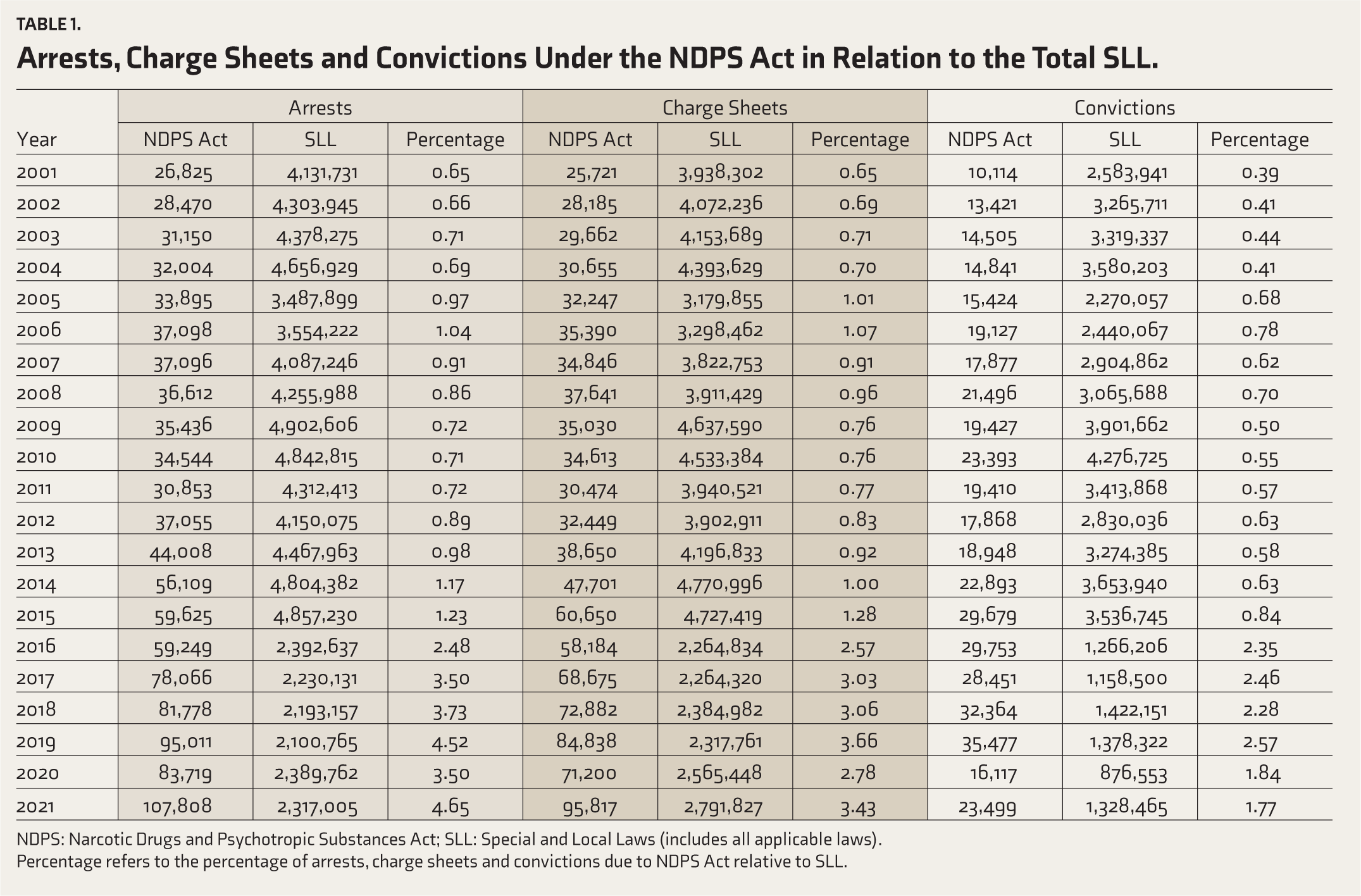
NDPS: Narcotic Drugs and Psychotropic Substances Act; SLL: Special and Local Laws (includes all applicable laws).
Percentage refers to the percentage of arrests, charge sheets and convictions due to NDPS Act relative to SLL.
No autocorrelations between data points in the time series were observed using autocorrelation and partial autocorrelation plots and then verified by the auto-ARIMA model for the percentage of arrests, charge sheets filed and convictions under the NDPS Act to the total SLL crimes. Therefore, the Mann-Kendall test was used to identify the presence of a monotonic trend. It revealed the presence of an increasing monotonic trend in the percentage of arrests (tau = 0.752, p < .0001), charge sheets filed (tau = 0.714, p < .0001) and convictions (tau = 0.629, p < .0001), under the NDPS Act to the total SLL crimes (Figure 1).
Table 2 shows the distribution of those arrested, charge-sheeted, convicted, discharged and acquitted among men and women, from 2017 to 2021. A large percentage (~97%) of those arrested were males across all years. Seemingly, a higher percentage of females were arrested and charge-sheeted for trafficking than for personal use or consumption. A marginally higher percentage of men were arrested and charge-sheeted for personal use or consumption rather than trafficking. The percentage of persons arrested, charge-sheeted, convicted, discharged and acquitted for possession of drugs for personal use/consumption and possession of drugs for trafficking is presented in Supplementary Table 1. For the years 2017–2021, 56.3% of persons arrested were those for possession of drugs for personal use or consumption. The percentage of total persons arrested, charge-sheeted, convicted and discharged for possession of drugs for personal use/consumption was greater than that of those arrested for possession of drugs for trafficking for all years from 2017 to 2021 (with the exception of persons discharged for the year 2020). There were significant associations between gender and the types of offences (possession of drugs for personal use/consumption and possession of drugs for trafficking) for individuals arrested, charge-sheeted, convicted and discharged (all p values < .001), except for those convicted and discharged for the year 2020 (Supplementary Table 1). The association between gender and the types of offences (possession of drugs for personal use/consumption and possession of drugs for trafficking) for acquittal was significant only for the years 2019 and 2018.
The rates of offences under the NDPS Act (per 100,000 population) across different states and union territories of the country for the years 2017–2021 have been presented in Supplementary Table 2. The offences per 100,000 population were consistently less than 1 for Dadra and Nagar Haveli and Daman and Diu. The highest rates of offences were found for states of Punjab, Kerala and Himachal Pradesh. States-wise, whether offences under NDPS were primarily for personal use or consumption or for trafficking is presented in Table 3. Considering the all-India data, a majority of the offences were for personal use or consumption rather than trafficking.
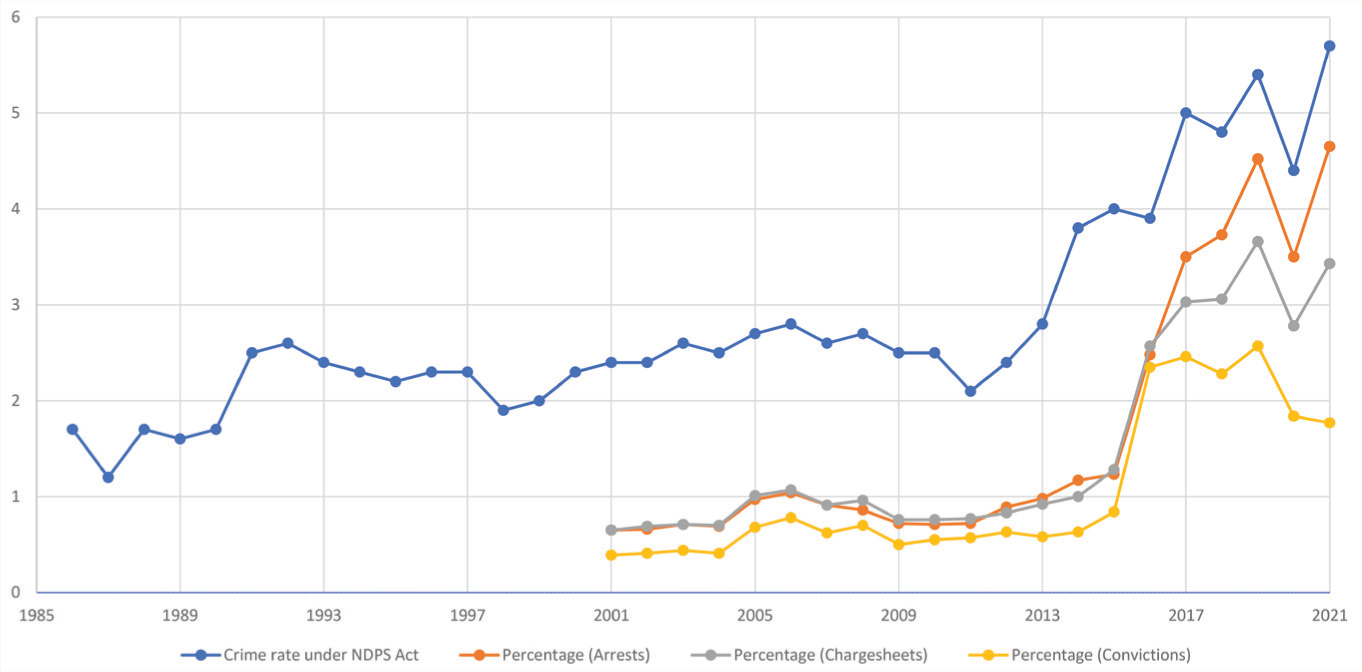
NDPS: Narcotic Drugs and Psychotropic Substances Act; SLL: Special and Local Laws (includes all applicable laws).
Distribution of Arrests, Charge Sheets, Convictions, Discharges and Acquittals Under the NDPS Act According to Gender.
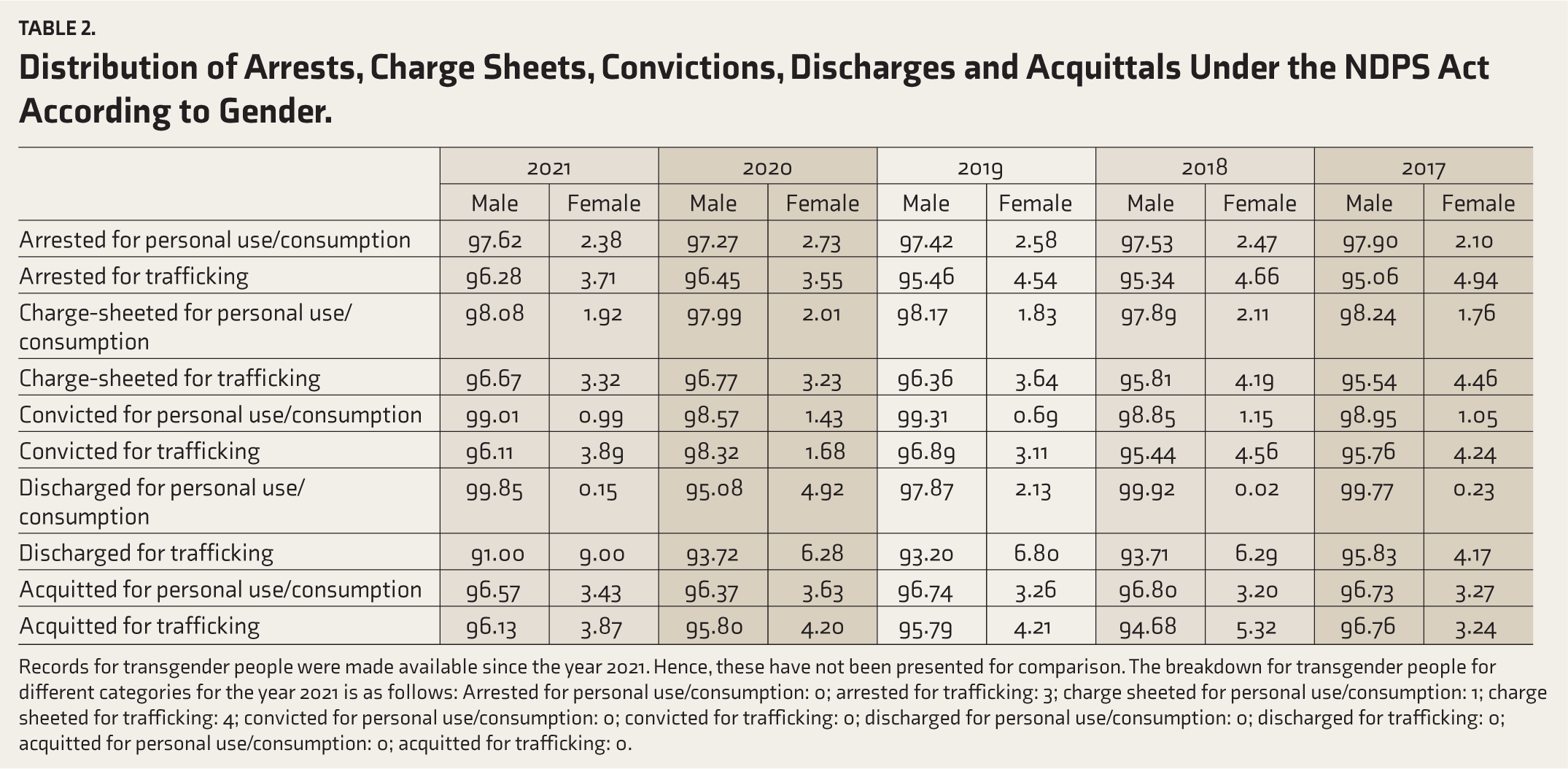
Records for transgender people were made available since the year 2021. Hence, these have not been presented for comparison. The breakdown for transgender people for different categories for the year 2021 is as follows: Arrested for personal use/consumption: 0; arrested for trafficking: 3; charge sheeted for personal use/consumption: 1; charge sheeted for trafficking: 4; convicted for personal use/consumption: 0; convicted for trafficking: 0; discharged for personal use/consumption: 0; discharged for trafficking: 0; acquitted for personal use/consumption: 0; acquitted for trafficking: 0.
State-wise Predominance of Arrests Made Under the NDPS Act for Possession of Narcotic Drugs and Psychotropic Substances for Personal Consumption Versus Trafficking for the Years 2017–2021.
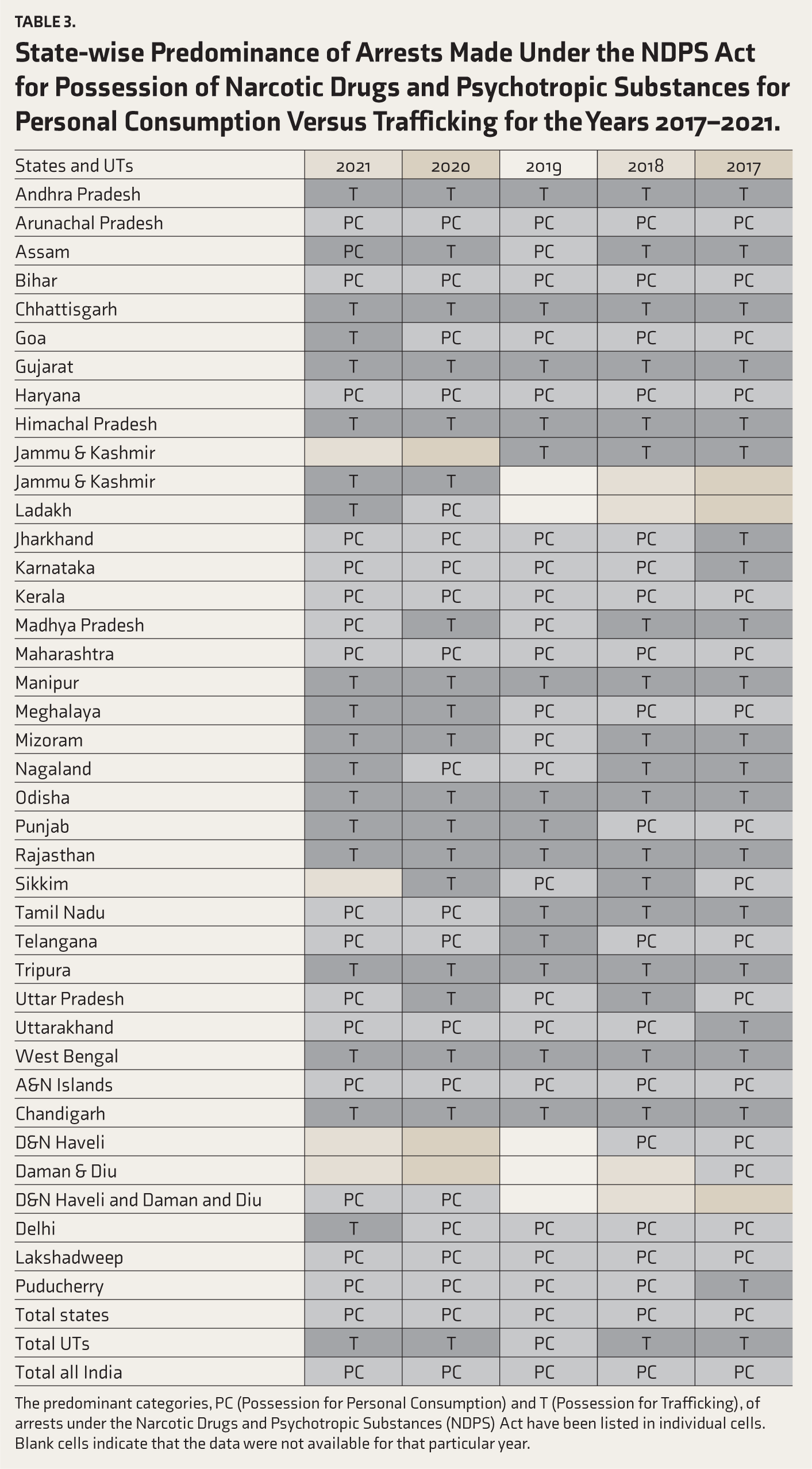
The predominant categories, PC (Possession for Personal Consumption) and T (Possession for Trafficking), of arrests under the Narcotic Drugs and Psychotropic Substances (NDPS) Act have been listed in individual cells. Blank cells indicate that the data were not available for that particular year.
Discussion
In the current study, there has been an increasing trend in the crime rate per 1,00,000 population under the NDPS Act over the years. The arrests related to possession of narcotic drugs and psychotropic substances (under the NDPS Act) constituted a relatively smaller percentage of the total SLL (from a low of 0.65% in 2001 to a high of 4.65% in 2021). However, given the large base population of the country, the crime rates under the NDPS Act translate into large absolute numbers. It has been estimated that 2.2 million people worldwide are in prison for drug offences, of which 22% have been imprisoned for drug possession for personal use. 12 Drug offences remain the leading cause of arrest in certain countries, like the USA, with personal possession-related offences being the most common of these. 13 In Australia, about 13.6% of the prison population is incarcerated due to illicit drug-related offences, 14 while in the UK, about 17% of the prison population is sentenced due to drug-related offences. 15 In China, drug-related crimes account for about 8% of all criminal cases. 16
Though the low rates of NDPS-related offences comprise a minor percentage of all arrests, there is an increasing trend. The reasons for this increase can be several, varying from an increasing trend in the use of narcotic drugs and psychotropic substances to increased policing. It may be a reflection of better reporting of cases related to narcotic drugs. The actual causes may be difficult to discern, and multiple factors may be playing a role. Moreover, a lack of relevant data at different time points precluded the attribution of these observations to one or more factors. Despite the arrests, charge sheets and convictions under the NDPS Act being a relatively smaller percentage of all SLL crimes in India, according to the Prison Statistics India, 2021 report published by the NCRB, among the convicts under the SLL crimes, 57.3% (7253) were convicted under liquor and narcotic drugs-related Acts. Similarly, among the under-trial prisoners under the SLL crimes, 65.2% (66,881) were under trial under the liquor and narcotic-drugs-related Acts. 17
In India, the percentage of total persons arrested, charge-sheeted, convicted and discharged for possession of drugs for personal use/consumption was greater than that of those arrested for possession of drugs for trafficking for all years from 2017 to 2021 (with the exception of persons discharged for the year 2020). In addition, the percentage of persons acquitted for possession of drugs for personal use/consumption was lesser than that of those arrested for possession of drugs for trafficking for all years from 2017 to 2021. Arrests and further convictions for the use of psychoactive substances have many health implications. 18 First, it may take those who need intervention for their substance use (disorders) away from the appropriate care providers. This delay in intervention can lead to a poorer outcome among these persons. The treatment services for substance use disorders in prisons remain limited in most regions of India. While a large proportion of persons in prisons have substance use disorders, only a small proportion of them receive the appropriate treatment. 19 It has also been hypothesised that the criminalisation of drug use also impacts other social determinants of health, including employment, housing, education, public benefits and family regulation. 13 Second, incarceration in itself is not a deterrent against future use of substances. A significant proportion of persons continue to use drugs while in prison, as suggested by the data available from some countries. 18 In fact, the use of drugs prior to arrest is one of the strongest predictors of in-prison drug use. 1 Moreover, those with untreated substance use disorders are very likely to return to substance use after their release from the prison. Relapse and recidivism have been cited as ‘norms’ following release from prison. 20 Third, there may be a risk of overdose-related deaths, especially after release from prisons. 19 Fourth, arrest for possession of drugs for personal use puts those with substance use disorders in the same group as those who are arrested for trafficking of these substances. Finally, fear of incarceration further adds to the stigma associated with substance use disorders, which in itself is a significant barrier to help seek and access services in the future. These implications tilt the balance of harmful consequences more towards incarceration as compared to substance use for those who do not use these substances regularly.
Another important observation of the current study was that among females, the percentage of those arrested, charge-sheeted, convicted, discharged and acquitted for possession of drugs for personal use/consumption was lower than that of those arrested for possession of drugs for trafficking for all years from 2017 to 2021 (with the exception of those convicted in the year 2020). The evidence from around the world suggests that a higher percentage of women in prison and pretrial detention are detained because of drug infractions than is the case for men. 19 Hence, while females constituted a relatively smaller percentage of the arrests under the NDPS Act, the reason for their arrests warrants a specific response in the context of their engagement in the trafficking of narcotic drugs and psychotropic substances. Engagement of women in the trade of narcotic drugs and psychotropic substances including street-level trade has been documented from different countries. Fleetwood and Leban have presented a detailed report on the reasons behind these engagements, and the same needs to be studied in an Indian context to understand the phenomenon and find effective solutions to it. 21
We also found a wide variation in the rate of offences under the NDPS Act (per lakh population). This ranged from a low of 0.7 in Gujarat to a high of 32.8 in Punjab in the year 2021. In addition, the rate of offences for possession of narcotic drugs and psychotropic substances for personal consumption and trafficking varies widely across different states in the country. While in some states (Arunachal Pradesh, Bihar, Haryana, Kerala, Maharashtra, Andaman and Nicobar Islands and Lakshadweep), the percentage of offences for possession for personal consumption has remained higher across the years, in some others (Andhra Pradesh, Chhattisgarh, Himachal Pradesh, Jammu and Kashmir, Manipur, Odisha, Rajasthan, Tripura, West Bengal and Chandigarh), the reverse holds true. There are some states where the relative proportion of the arrests made under these categories has shifted across the years. While it is difficult to make definitive conclusions based on this single data set, it seems that the states that are on the trafficking route of opioids from the northwest and the eastern international border of India tend to have a greater proportion of arrests for possession for trafficking. 22 However, this is not applicable to all the states. The differences in the rates of offences across the different states are a likely reflection of the state of response of the law enforcement system, among other possible reasons. Irrespective of the reasons behind these observations, the states and union territories where the proportion of those arrested and convicted for possession of narcotic drugs and psychotropic substances for personal use/consumption is higher need to invest proportionately more in the health-oriented services for these persons.
These observations warrant strengthening of the health sector response for those in contact with the law enforcement and criminal justice systems in the country. In addition, a wide array of services that are targeted at persons with different patterns of use may be made available. This can include prevention, screening, brief interventions, treatment (short term and long term) and rehabilitation-oriented services. Currently, such services are limited in terms of the type, coverage and availability. The national policy on narcotic drugs and psychotropic substances states that ‘all addicts within the prison shall be registered and compulsorily sent for drug de-addiction, and every new entrant into the prison will be tested for addiction and will be de-addicted if he is found to be addicted’. However, this policy does not support the availability of opioid substitution therapy (OST) services in prison settings. 23 The National AIDS Control Organisation (NACO) also specifies that the State AIDS Control Society (SACS) can establish OST centres/satellite OST facilities in prison settings to ensure service for both convicts and undertrials. 24 More recently, the Implementation Framework for the National Action Plan for Drug Demand Reduction by the Ministry of Social Justice and Empowerment mentions that establishing and assisting de-addiction centres in prisons has been identified as an area to invest in. 25 Currently, there is no centralised record of how many prisons in the country offer interventions for substance use and SUD. The data is available for some states. A project for OST and setting up detoxification-oriented services was carried out in the Tihar Prison (the largest prison in the country).26,27 A report published in 2022 found that 9 out of the 24 prisons in the state of Punjab (the state with the highest crime rate for NDPS Act–related offences) had provision for outpatient opioid-assisted treatment (OOAT) and de-addiction centres. 28 In addition, a significant shortage of medical staff (up to 84% in one of the states) was reported across the prisons in the country. 17
Another line of discussion that stems from the observations of the current study is about the need to consider the option of depenalisation and decriminalisation of possession of psychoactive substances for personal use/consumption. The health impact of the criminalisation of possession and consumption of psychoactive substances makes a case for consideration of alternatives to the current approach. The diversion of offenders with psychoactive substance use-related problems to service providers has been reported as an effective alternative to coercive sanctions. 29 The NDPS Act of India, in fact, has provisions that border on depenalisation. The Act makes provision that those who are arrested for possession of narcotic drugs and psychotropic substances for personal use can be released for undergoing medical treatment for detoxification or de-addiction, with consent, instead of being sentenced to any imprisonment at once. 30 However, the low rate of such referrals raises concerns. 31 Also, there is a need to make provision for a wider array of evidence-based interventions besides ‘detoxification’ or ‘de-addiction’ as suggested previously. Decriminalisation of the use of psychoactive substances continues to be debated in the academic research and political circles globally. The gains made from and the demerits of (de)criminalisation of the use of psychoactive substances have been presented and contrasted. Although the decriminalisation of possession for personal use/consumption of psychoactive substances has been carried out in different countries, its impact has not been studied systematically. The decriminalisation carried out in Portugal remains the most widely reported and cited example. While decriminalisation of possession and consumption of psychoactive substances for personal use by removing the criminal penalties has been proposed to have multiple potential benefits, the approach has been reported to be both a ‘resounding success’ and a ‘disastrous failure’ by its supporters and critics, respectively. 32 The health sector response may be the key element of the discussions on the depenalisation or decriminalisation of possession of psychoactive substances for personal use/consumption. Not only does it offer a viable alternative to the current approach cantered around punitive measures, but any attempt at decriminalisation shall also fail to achieve the desired outcome without adequate scaling up of treatment and harm reduction interventions and treatment services. Thus, we re-emphasise that health science should be an important guide besides social science and policy analysis in the process of policy reform.
The current study has certain limitations. The nature of the data precludes the possibility of analysing the outcome of the arrests made under the NDPS Act during a given year. We cannot comment on what proportion of those who get arrested under the NDPS Act in a given year eventually get charge-sheeted, convicted, acquitted and discharged. The data from the different states is presented as cumulated data, and we cannot comment if there were differences between the percentage of offences for possession for personal consumption and trafficking in the districts that border the neighbouring countries as compared to the other areas of the respective states. Also, the data does not offer details on the type of psychoactive substances for which the offences were registered. Finally, we need to interpret the findings of the current study in light of the limitations cited by the NCRB. The NCRB advises against the comparisons between the states and union territories on the basis of the published data. We have, hence, deliberately avoided making such comparisons and have presented the data to highlight the variation across the country. Also, NCRB cautions against equating ‘rise in crime’ with ‘increase in registration of crime by police’. Hence, an increase in the crime rate cannot be attributed to a rise in crime based on the data analysed in the current study.
Despite these limitations, this study offers the first ever insights into the offences under the NDPS Act of India over the course of the past few years. We think that this can serve as an important resource for advocacy for reforms in the national policy and legislative framework in the context of narcotic drugs and psychoactive substances. The fact that the Government of India has introduced a proposal to amend the Indian Penal Code, 1860, and the Criminal Procedure Code, 1898, makes this even more timely.
To conclude, the existing data from the NCRB offers an important understanding of the reasons for arrests and convictions for possession of narcotic drugs and psychotropic substances in the country. The findings help us make a strong argument in favour of strengthening the health sector response for persons who use psychoactive substances and are in contact with the law enforcement and criminal justice systems in the country. This can be an effective complement to the efficient and just application of law enforcement and supply reduction measures for preventing access to illicit drugs in the general population.
Supplemental Material
Supplemental material for this article is available online.
Footnotes
Declaration of Conflicting Interests
The authors declared no potential conflicts of interest with respect to the research, authorship and/or publication of this article.
Declaration Regarding the Use of Generative AI
None used.
Funding
The authors received no financial support for the research, authorship and/or publication of this article.