




Abstract
Background:
Family members, peers, and significant others are part of a college student’s social network. This cross-sectional study aimed to
Assess substance use prevalence and patterns among college students, Compare the social network characteristics of substance users (SUs) and non-users (NUs), and Explore the association of social factors with substance use.
Methods:
The study involved 902 students from 11 Government and aided private degree colleges. Demographic and clinical data sheet, ASSIST, and Social Network Questionnaire were used to collect the data.
Results:
Prevalence of substance use was 26.9% and higher among males (21.5%). Alcohol (20%) and tobacco (15.5%) were the commonly used substances. SUs’ network was composed of unmarried persons (p<0.002), male members (p<0.001), and friends (p<0.001) with substance use. In contrast, the NUs’ network comprised parents (p<0.016) and siblings (p<0.001). NUs had a higher number of influential members in the network, whereas SUs had more closeness with members and received higher financial support (p<0.001). Participant’s age (OR 1.27), family history of substance use (OR 2.46), parents’ occupation (Business: OR 1.79, being employee in the government or industry: OR 1.76),and having three substance-using members in the network (OR .211) were found to be risk factors.
Conclusion:
Social network has an association with substance use among college students. Social-network-based interventions may benefit them.
Among college students, 26.9% used substances. Alcohol (20%) and tobacco (15.5%) were the commonly used substances. Social network of substance users comprised more males, unmarried members, and friends who use substances. In contrast, the non-users’ network comprised parents, siblings, and significant others. Social network provide a new dimension to understanding the substance use problem among college students.Key Messages:
The period of transition from adolescence to young adulthood, known as emerging adulthood, is distinct in demography and identity exploration. In addition to physical and psychological developments, this stage also offers opportunities to explore the world in newer ways and through bolder experiences. Hence, this stage is also associated with risk-taking behaviour, including substance use (SU). 1 SU behaviour generally begins in adolescence and increases in young adulthood.2,3 Peer influence, curiosity, and a sense of growing are significant reasons attributed to its initiation, and feeling good and socialization, to its perpetuation. 4 Two factors consistently associated with SU initiation and maintenance are a lack of awareness of ill effects and peer influence. Other factors include enjoyment, reduced academic-related stress, love relationship, and parental and family problems.5,6 Thus, family, friends, and other people in a close circle play a vital role in college-going young adults’ SU behaviour.
In India, the college years are between 18 and 25 years. During this period, the students like to be self-reliant as they encounter individual decision-making situations such as obtaining a job, selecting romantic partners, deciding on higher education, securing financial independence, and developing support systems, and such decisions are considerably influenced by peers. 4 Students show certain necessary behaviours to obtain power, status, peer acceptance, and recognition within their networks. 7 If the students get to choose members of their networks or get selected by friends who are likely to engage in similar behaviours, these reinforce their affiliation. 8 Factors influencing SU are complex because that occurs in various social network (SN) contexts, such as meeting friends, family members, and others. 9 Thus, exploring SN to understand the students’ SU problem is critical, and previous literature has also reported the necessity of this. 10
Social Network Approach
As they generate and disseminate social influence, SN help study the social context of SU behaviour. A SN consists of an index individual and others with whom they are connected by interaction and behaviour of interest.
11
Such a SN has three components:
SN Integration, which includes relationship quality, frequency of contact, trust, and closeness among members, Network Structure, which refers to the relationship between index individuals and members, and Relationship Content, which is described in support domains such as emotional, financial, and instrumental support and social roles like friend, classmate, romantic partner, parent, spouse, and significant others.12,13 The current study attempts to understand and compare the SN characteristics of substance users and non-users.
Materials and Methods
Design
This cross-sectional study aimed to
Assess substance use prevalence and patterns among college students, Compare the SN characteristics of substance users (SUs) and non-users (NUs), and Explore the social factors’ association with substance use.
Sampling and Participants
A two-stage sample technique was deployed. In the first stage, a total of 22 colleges situated in the Bangalore south zone were stratified as Government First Grade Degree Colleges (GFGC, n=4) and Government Aided Private Degree Colleges (GAPDC, n=18). 50% in each stratum (nine GAPDC and two GFGC) gave permission and were part of this study. In the second stage, cluster sampling was used. All students from the classes allotted to the researcher were included in the study. Previous studies reported a SU prevalence of 15-30%14–16 among college students. Considering that and anticipating 25% of the study population to be using any substance, for a 95% confidence level and precision of ± 4%, the minimum sample size was observed to be 450. Considering a design effect of 2, the final sample size was calculated to be 900. Accordingly, 740 students (aged 18 to 25) from GAPDC and 160 (of the same age group) from GFGC were included. The study was conducted during the post-COVID-19 period (December 2020 to August 2021), and many colleges were busy completing their pending academic targets. Therefore, college authorities allotted entire classrooms to the researcher, and all students from those classrooms were part of the study (N=902). The cluster size ranged from 35 to 45, and a minimum of two clusters were allotted from each college.
Data Collection Procedure
The researcher explained the study to the college principal and students and obtained written consent for participation. Subsequently, proper seating arrangements were made to ensure privacy for students to fill in responses. A self-administered instrument kit was distributed to all students, the responding procedure was explained, and doubts were clarified. The Department of Collegiate Education, the Government of Karnataka, and the Institutional Ethics Committee permitted and approved the study.
Tools Used
Socio-Demographic and Clinical Data Sheet: This was used to collect data related to age, sex, education, monthly income of the family, part-time job status, residential status, parents’ occupation, and family history of SU.
The Alcohol Smoking and Substance Involvement Screening Test Version 3.1 (ASSIST): It consists of eight main items and 70 sub-items. It assesses the past three months’ intake of tobacco products, alcohol, cannabis, cocaine, amphetamine-type stimulants (ATS), sedatives and sleeping pills (benzodiazepines), hallucinogens, inhalants, opioids, and other drugs. It determines a severity score for each substance. The score obtained for each substance falls into lower, moderate, or high severity categories. This tool was developed for the World Health Organisation by an international group of researchers and clinicians.
Social Network Questionnaire (SNQ): The SNQ was developed from published studies to capture ego-centric social network (ESN) information.13,17–19 ESN considers the index subject’s (IS) direct linkages with their network. 20 SNQ covers questions on network size and structure, relationship, closeness, influence on IS, social network members’ (SNMs) substance use details, and perceived support from SNMs. SNQ was face and content validated by six experts: two psychiatrists, two psychiatric social workers, one clinical psychologist, and a person from a non-governmental organization with experience in addiction medicine. Subsequently, the questionnaire was pilot tested on 160 students, and further modification was conducted by simplifying the questions.
SNQ consists of the following questions: First, the IS is asked to identify people they knew very well. Subsequently, the IS is asked to name five people (SNMs) they were in contact within the last three months through face-to-face, telephone, or on social media platforms. The SNMs demographic characteristics and relationship duration are collected. The level of closeness and influence is measured through responses as 1) not close/influential, 2) little, 3) moderate, and 4) very close/influential.
Additional questions probed whether the SNMs are SUs (Yes/No), whether the IS spend time with them during their use (Yes/No), number of times IS used substances in a week, whether the IS share or disclose important personal matters with the SNMs, whether the IS receive financial support from the SNMs, whether the IS receive emotional support from the SNMs in times of misery and sadness, and whether the IS get general health advice from the SNMs.
Statistical Analysis
Data was tabulated in Microsoft Excel and then analysed in IBM SPSS Statistics for Windows, version 28.0 (IBM Corp., Armonk, N.Y., USA). Descriptive statistics and χ 2 tests were used to describe the participants’ socio-demographic characteristics and the difference between SUs and NUs groups, respectively. As the SN characteristic variables were not normally distributed, the Mann-Whitney U test was performed to see the differences in SN characteristics between SUs and NUs. Multiple logistic regression was used to find the predictors of SU among college students. For all analyses, p<0.05 was considered significant.
Results
Of the 902 participants, 26.9% (n=243) reported using substances. Most SUs were male, slightly older, and had higher monthly family incomes than NUs. Most SUs and NUs were single, were from nuclear families, stayed with their families, and were not doing part-time jobs; so marital status, family type, residential status, or employment status did not differ between them. Most SUs hailed from urban areas. Most of the SUs’ parents’ occupation was business, whereas most of the NUs’ parents were daily wage workers. In both groups, the father was the main person who used substances, and alcoholic beverages and tobacco were the common substances used by family members (Table 1).
Difference in demographic characteristics of substance users and non-users.
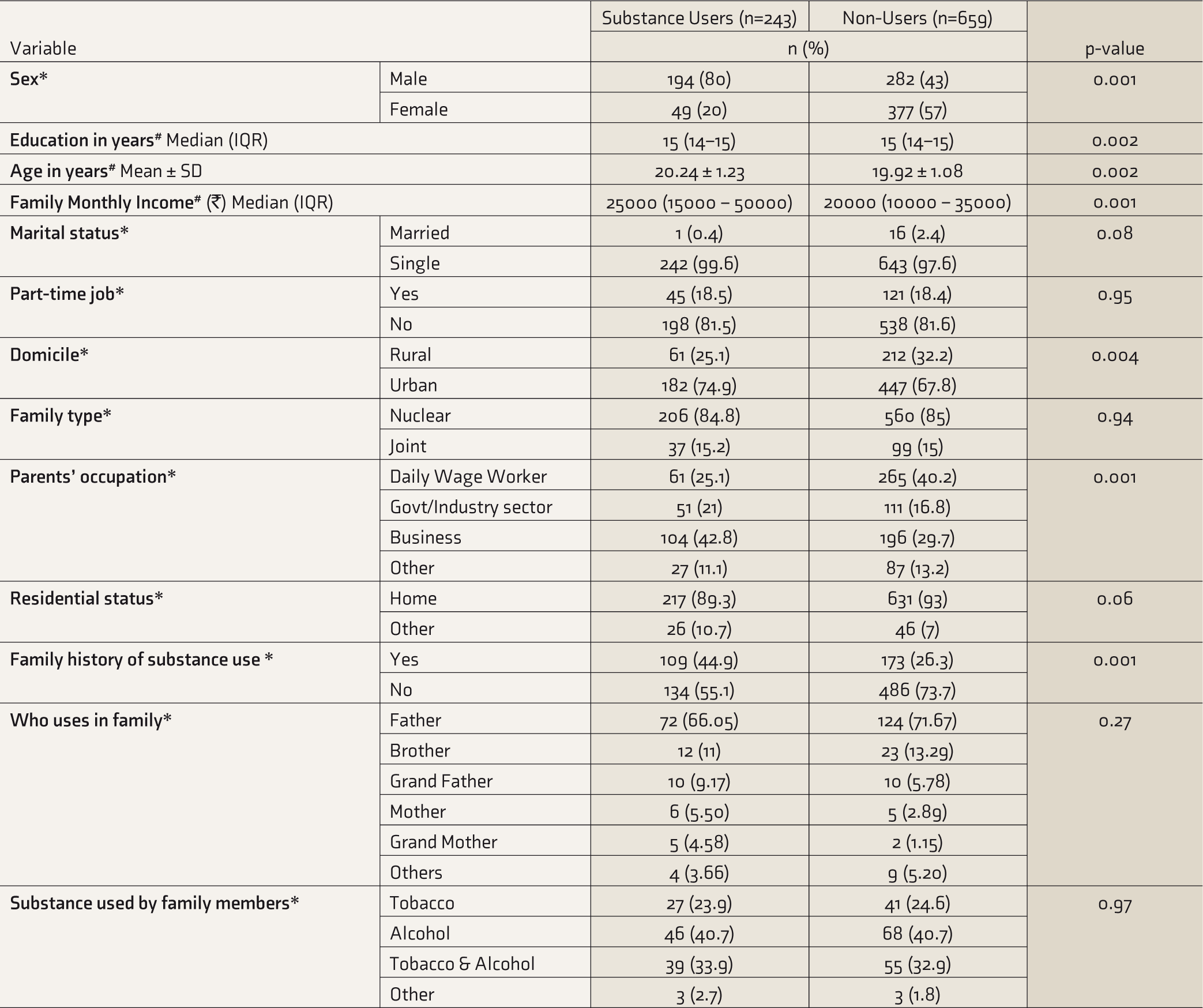
#: Mann Whitney U Test, *: Chi-Square test. p<0.05 is significant, IQR: Interquartile range.
Among the 243 SUs, 194 (21.5%) were male and 49 (5.4%) were female. More than half of the SUs used ≥2 substances. Alcohol and tobacco were the commonly used substances, followed by inhalants and illicit drugs. Most participants’ alcohol and tobacco use severity was at a moderate level. Those who used inhalants had moderate to high severity of use, while most of those who used other substances (cannabis, sleeping pills, hallucinogens, and cocaine) had low and moderate severity of use (Table 2).
Substance use profile of the substance-using group.
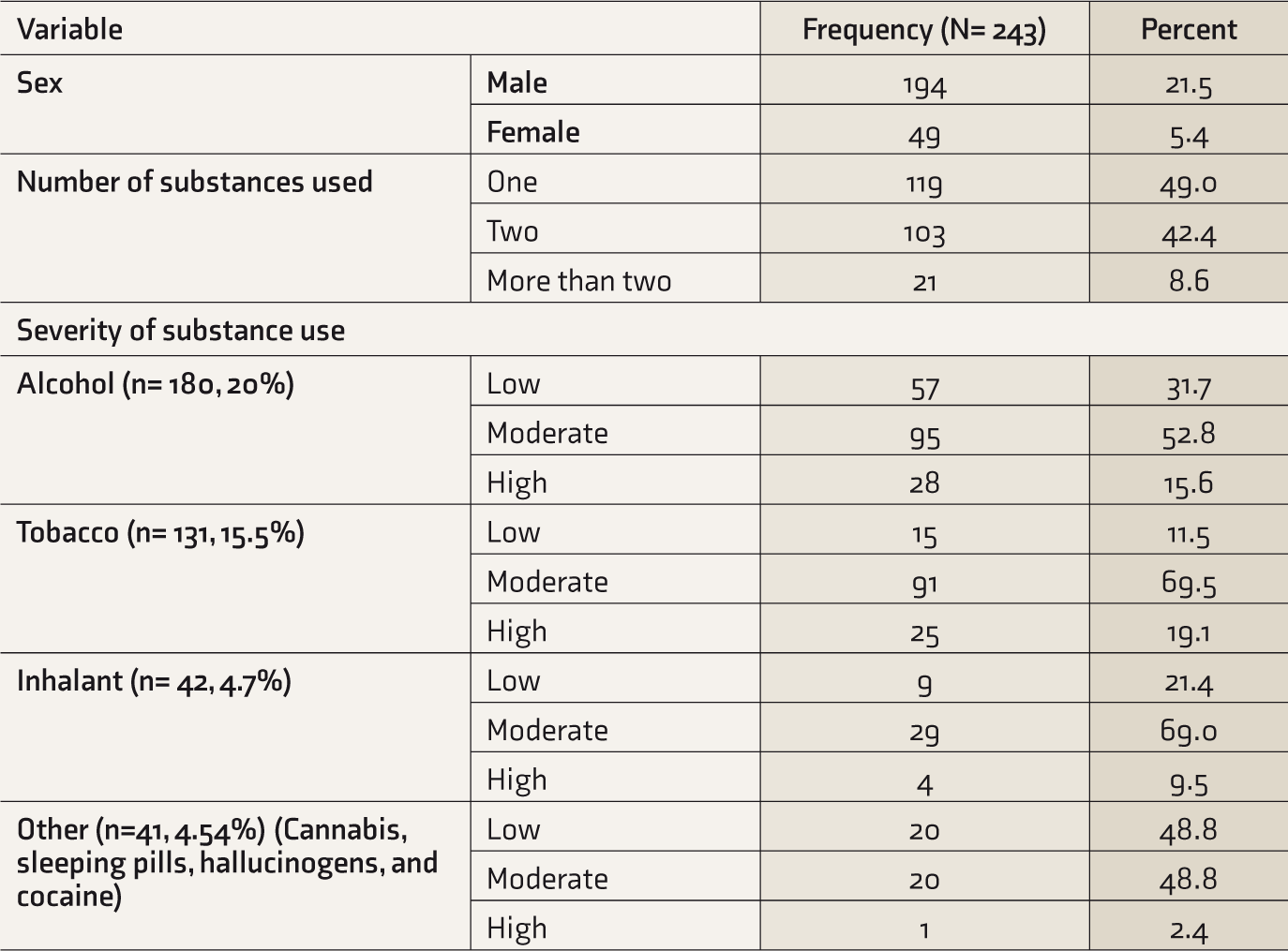
Table 3 explains the SN characteristics in four domains: 1) network structure, 2) closeness and influence, 3) substance use profile of SNMs, and 4) types of perceived support.
Social network characteristics of substance users and non-users.
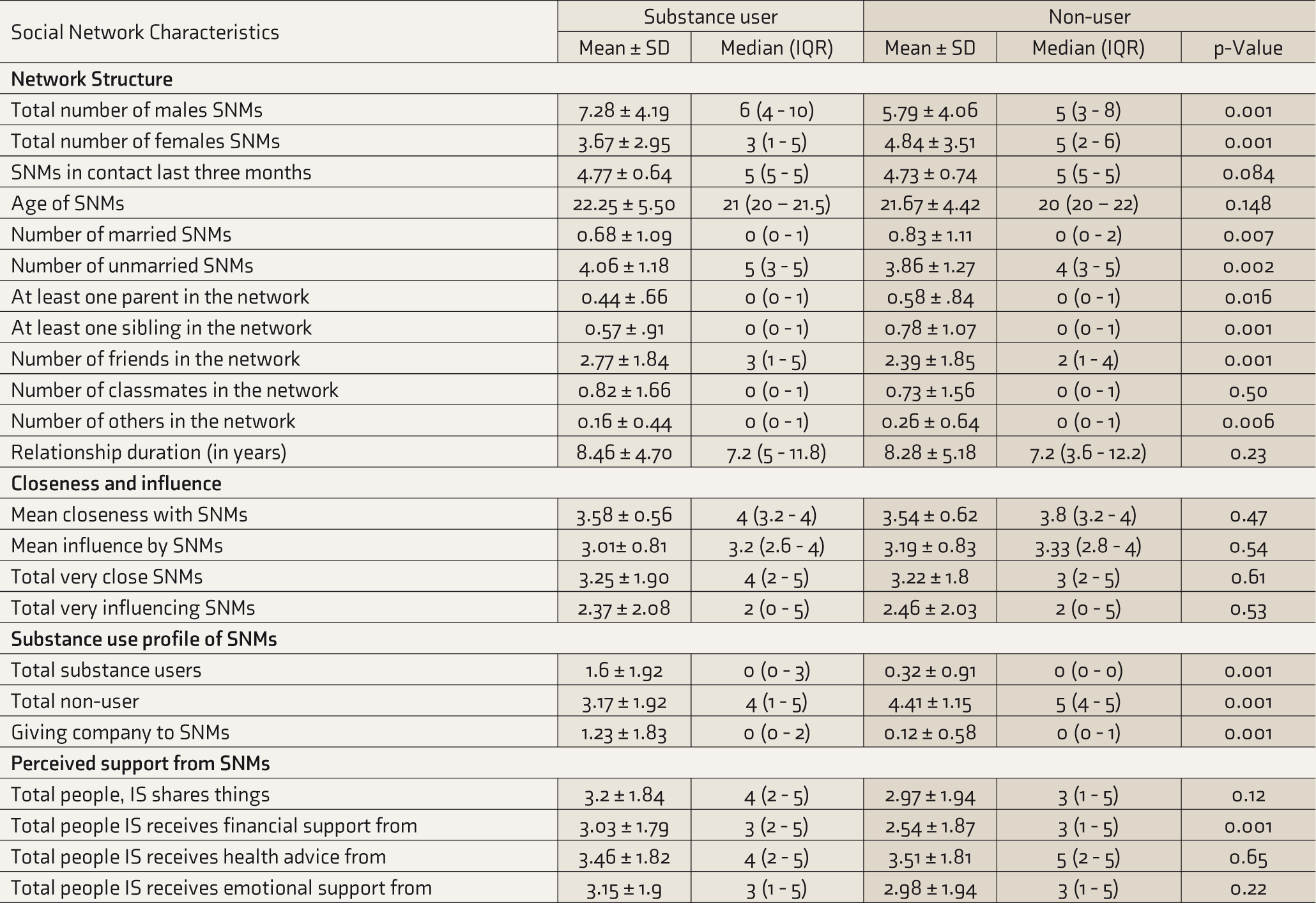
IS: Index Subject. SNMs: social network members, p<0.05 is significant. The Mann-Whitney U test has been used for the above variable to measure differences in social network characteristics between SUs and NUs.
Network Structure
The SUs’ network comprised more male members of a higher age than NUs’. The number of females, married SNMs, at least one parent, siblings, and significant other people in the close circle were higher in the NUs’ network. In contrast, the number of unmarried SNMs, friends, and classmates were higher in the SUs’ network. Further, the relationship duration between the IS and their SNMs was slightly longer among SUs than NUs.
Closeness and Influence
The closeness of the IS with SNMs and their influence on them were similar in both groups. However, SUs had a slightly higher closeness with SNMs, while in the case of NUs, the SNMs exerted a slightly greater influence on the IS.
Substance Use Profile of SNMs
Both groups had substance-using SNMs. However, in the SUs group, the number of substance users in the network and IS giving company or spending time with SNMs was higher.
Perceived Types of Support
The SUs reported receiving higher financial and emotional support from and sharing things with SNMs. However, the NUs obtained more health advice from their network (Table 3 and Figure S1).
The variables considered for regression analysis were age, family type, parents’ occupation, residential background, family history of SU, number of close SNMs, and company to SNMs. The result showed that the risk of SU among students was higher if they were older in age or had a family history of SU or if the parents had business as occupation or were employees in government or industry. Further, the IS social networking with >3 substance-using members and engaging weekly once in substance use with SNMs predicted a significant risk for substance use (Table 4).
Multiple logistic regression outcomes predicting substance use.
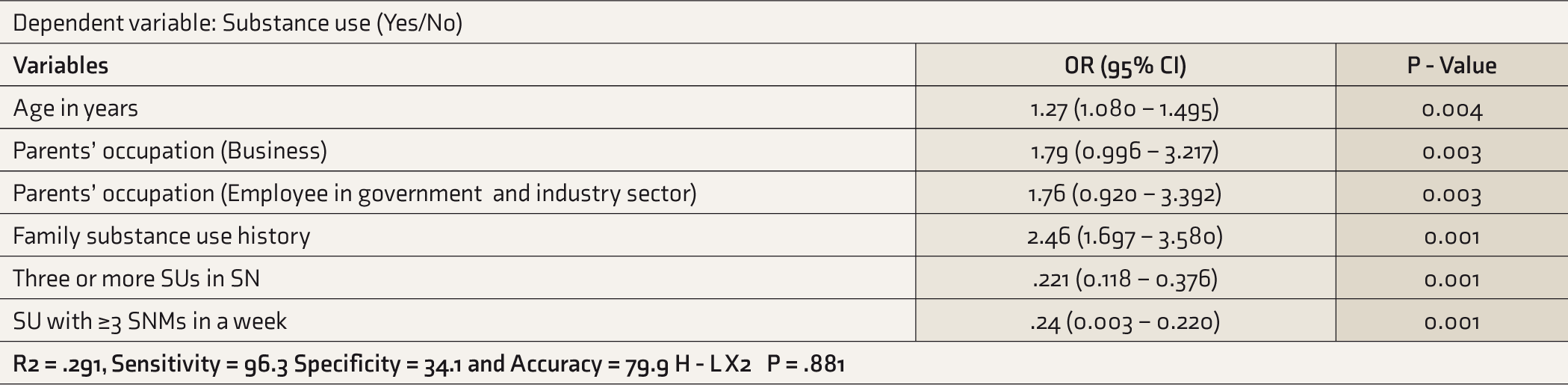
OR: Odds ratio, CI: Class interval, SUs: Substance users, SU: substance use, SN: Social network, SNMs: Social network members, p < 0.05 considered significant.
Discussion
Our study focused on young adults’ substance use in association with their SN and found the prevalence of SU to be 26.9%. Studies from Kerala and Dehradun on college students had reported a prevalence of 31.8% and 31.3% for SU, while a study in Chandigarh among only male students reported 57.2%.21–23 Studies from Kerala and Dehradun that measured lifetime and one-month SU prevalence had findings similar to ours. Our results indicate that magnitude of SU among college students is substantial. Studies in developing countries like Nepal (42.8%), 24 Ethiopia (73.7%), 25 Sudan (31%), 26 and Kenya (25%) 27 had reported a slightly higher prevalence compared to the current study. We observed that alcohol (20%) and tobacco (15.5%) were the most used substances. A similar observation was also made by a Kerala-based study on alcohol (21.4%) 14 and tobacco (15.1%) 28 use among college students.
We compared SUs’ and NUs’ SN characteristics. SUs’ network comprised a higher number of substance-using male SNMs and slightly older friends, with longer relationship duration, and fewer parents and siblings. They also received more financial support from SNMs. It could be because a higher number of male SNMs with substance use background, longer duration of relationships, intimate friendships, and similar interests among members possibly leading to frequent contact, sharing of emotions, and helping financially or instrumentally increased their ties and influence relating to SU. In addition, the IS and members within the network were generally involved in group activities for peer and social recognition. SU could be one of the means for college students to make more friends and become leaders in group activities. 29
Our study observed that parents and siblings were higher in the NUs’ network. A study on family relationships and adolescent health attitudes reported that family relationships are an important predictor of adolescent/young adults’ behaviour and health attitudes. 30 Authoritative parenting, demandingness, and closeness between parents and young adults increase connectedness and bonding.31,32 Also, siblings’ influence plays a significant role in individual attitudes and behaviour. Relationship quality, such as closeness and warmth between siblings, improves understanding and affection. In contrast, rivalry leads to delinquency, depression, and SU. 33 Therefore, quality relationships with siblings and parents lead to better social support, self-confidence, and self-regulation and appear to protect against stressors such as poor peer relationships, academic difficulties, family conflict, and substance use.34,35 A few studies among students from the US and Hong Kong on the relationship of peer influence and SN characteristics with alcohol and alcohol-related consequences and other addictive behaviours reported a significant effect of peer relationships, intimacy, and relationship duration on the students’ SU.36–38
Age of the IS, a family history of SU, parent’s occupation (business, employee in government and industry sector) having >3 substance-using SNMs, and engaging weekly once in SU with SNMs significantly emerged as a predictor of regular SU. The reason could be that as age increases, the students’ social world widens and they could see themselves as adults. Using tobacco and alcohol could be considered symbolic of adulthood. In addition, early exposure and initiation, curiosity, peer influence and pressure, the industry’s advertisement and promotional strategies to target youth,39,40 easy availability, and SU within the household may provide an impetus for students to use substances. 41
Further, students’ parents’ occupations and income were seen to be associated with SU. Business and information-technology-related professions demand more human presence and involvement. Therefore, parents may not spend quality time with their children. Parents from higher socioeconomic backgrounds also seem to show greater tolerance towards substances than parents of lower socioeconomic strata. 42 Children of affluent families are at a greater risk of anxiety and depression due to pressure from parents to achieve higher in academics. Poor emotional attachment, permissible and pampering parenting, and easy availability of money might also increase the risk of SU 43 among college students.
Strengths and Limitations
This study describes the SN characteristics and risk factors for SU among college students. Understanding students’ SN is essential as it can possibly steer SN based interventions to reduce SU risk in colleges. Limitations of this study are:
This was a cross-sectional survey based on self-reported data and SNMs were restricted to only five people per IS, which might have led to social desirability and recall biases. Despite all assurances of confidentiality, under-reporting related to SU may have occurred. No biochemical validation was undertaken of self-reported SU over the three-month span for which responses were sought.
Conclusion
Among college students, SN has an association with SU. Peer networks, quality of peer relationships, closeness with peers, perceived support from peers and parental pressure are associated with SU in them. Future studies should assess the effectiveness of social-network-based intervention studies in this population.
Supplemental Material
Supplemental material for this article is available online.
Footnotes
Acknowledgements
We thank the Department of collegiate education, Government of Karnataka and Principals of the colleges who have supported us to conduct this study.
Declaration of Conflicting Interests
The authors declared no potential conflicts of interest with respect to the research, authorship, and/or publication of this article.
Funding
The authors received no financial support for the research, authorship, and/or publication of this article.
References
Supplementary Material
Please find the following supplemental material available below.
For Open Access articles published under a Creative Commons License, all supplemental material carries the same license as the article it is associated with.
For non-Open Access articles published, all supplemental material carries a non-exclusive license, and permission requests for re-use of supplemental material or any part of supplemental material shall be sent directly to the copyright owner as specified in the copyright notice associated with the article.
