




Abstract
To the Editor,
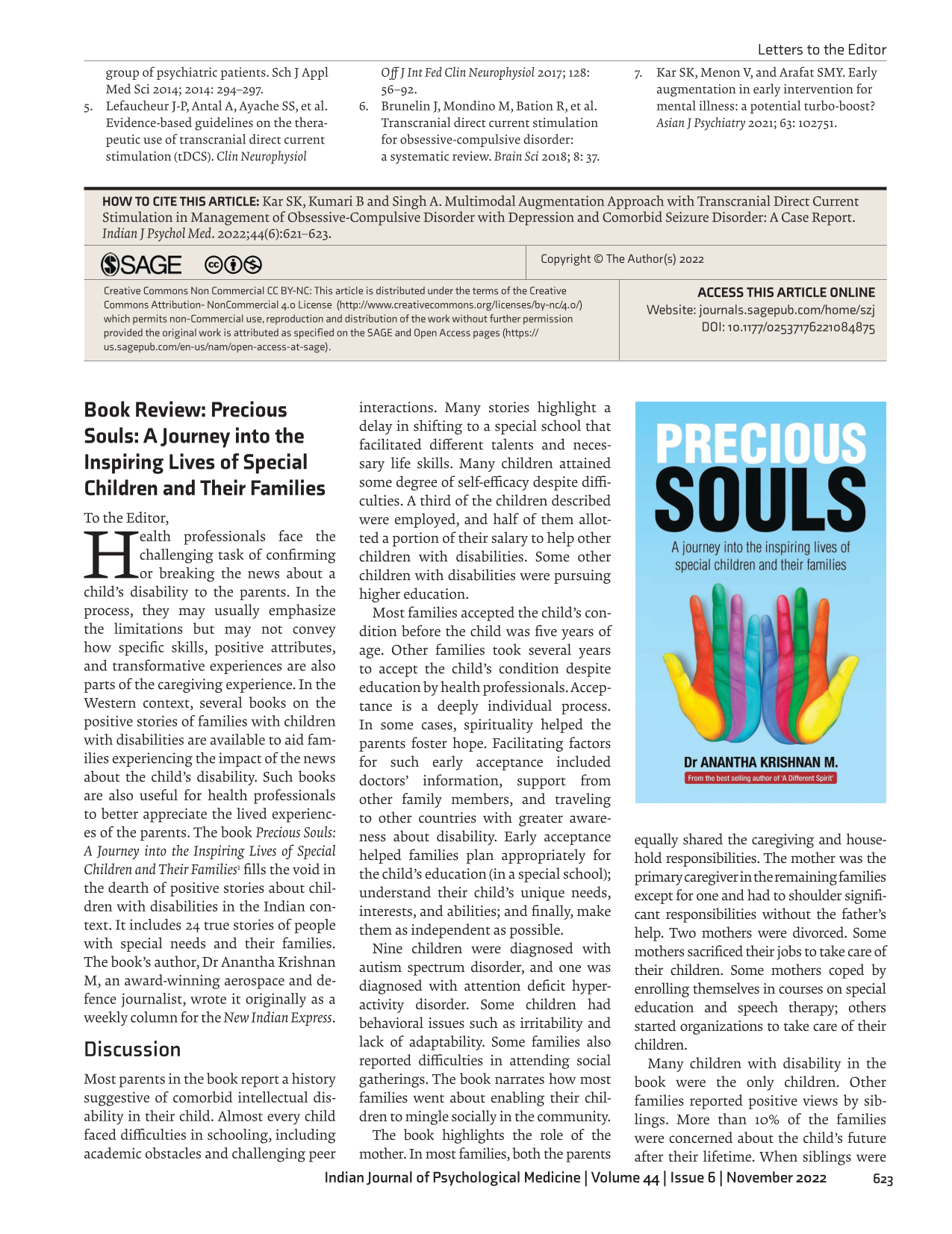
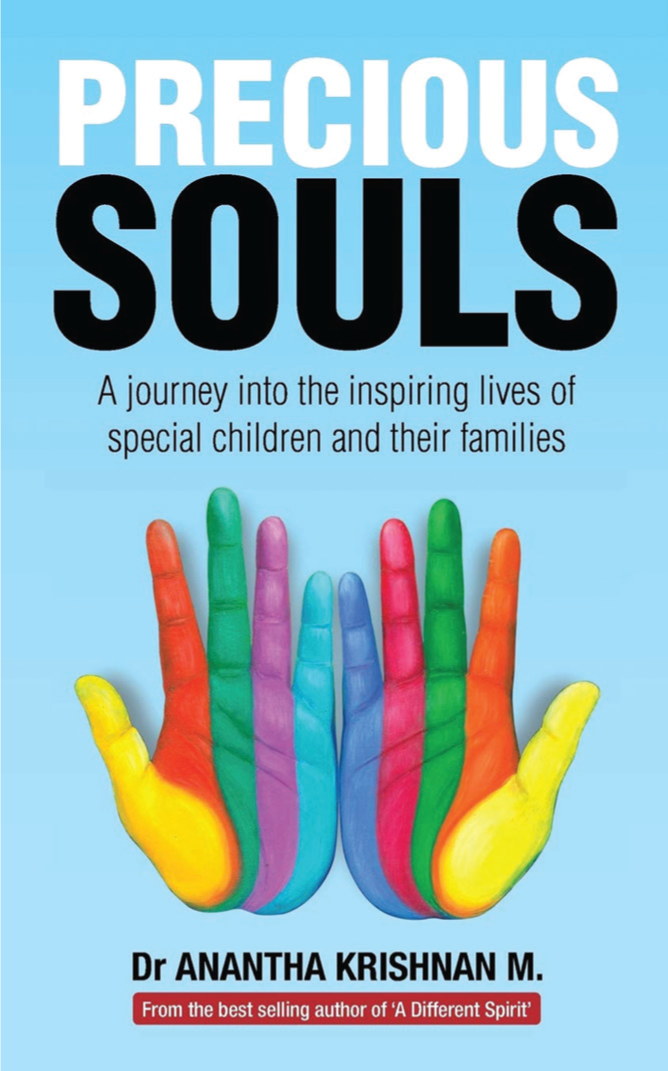
Health professionals face the challenging task of confirming or breaking the news about a child’s disability to the parents. In the process, they may usually emphasize the limitations but may not convey how specific skills, positive attributes, and transformative experiences are also parts of the caregiving experience. In the Western context, several books on the positive stories of families with children with disabilities are available to aid families experiencing the impact of the news about the child’s disability. Such books are also useful for health professionals to better appreciate the lived experiences of the parents. The book Precious Souls: A Journey into the Inspiring Lives of Special Children and Their Families 1 fills the void in the dearth of positive stories about children with disabilities in the Indian context. It includes 24 true stories of people with special needs and their families. The book’s author, Dr Anantha Krishnan M, an award-winning aerospace and defence journalist, wrote it originally as a weekly column for the New Indian Express.
Discussion
Most parents in the book report a history suggestive of comorbid intellectual disability in their child. Almost every child faced difficulties in schooling, including academic obstacles and challenging peer interactions. Many stories highlight a delay in shifting to a special school that facilitated different talents and necessary life skills. Many children attained some degree of self-efficacy despite difficulties. A third of the children described were employed, and half of them allotted a portion of their salary to help other children with disabilities. Some other children with disabilities were pursuing higher education.
Most families accepted the child’s condition before the child was five years of age. Other families took several years to accept the child’s condition despite education by health professionals. Acceptance is a deeply individual process. In some cases, spirituality helped the parents foster hope. Facilitating factors for such early acceptance included doctors’ information, support from other family members, and traveling to other countries with greater awareness about disability. Early acceptance helped families plan appropriately for the child’s education (in a special school); understand their child’s unique needs, interests, and abilities; and finally, make them as independent as possible.
Nine children were diagnosed with autism spectrum disorder, and one was diagnosed with attention deficit hyperactivity disorder. Some children had behavioral issues such as irritability and lack of adaptability. Some families also reported difficulties in attending social gatherings. The book narrates how most families went about enabling their children to mingle socially in the community.
The book highlights the role of the mother. In most families, both the parents equally shared the caregiving and household responsibilities. The mother was the primary caregiver in the remaining families except for one and had to shoulder significant responsibilities without the father’s help. Two mothers were divorced. Some mothers sacrificed their jobs to take care of their children. Some mothers coped by enrolling themselves in courses on special education and speech therapy; others started organizations to take care of their children.
Many children with disability in the book were the only children. Other families reported positive views by siblings. More than 10% of the families were concerned about the child’s future after their lifetime. When siblings were present, parents expected them to take up the responsibility but had not discussed it with them.
Critique
The book is mostly about well-off families with access to resources that enable better opportunities and outcomes. Thus, the included families do not represent most Indian families. The book does not dwell much on the negative experiences the families faced, such as blame from family members, parental discord, domestic violence, parental isolation from society, and marital breakup.
Nevertheless, the author has successfully portrayed how adequate resources, a supportive environment, and rehabilitation inputs can help children with disabilities lead meaningful and fulfilling lives. There are some valuable take-home messages for health professionals. Some families had grievances with health professionals about misdiagnosis and inappropriate treatment. In most cases, parents were guided to relevant resources for the child after consultations in tertiary care settings. Health professionals need to be sensitive to the needs of parents of children with disabilities, help them identify their children’s strengths, and explore ways to improve their quality of living.
What Can Mental Health Professionals Do?
Mental health professionals (MHPs) working in resource-constrained settings may not have access to adequate infrastructural rehabilitation resources to offer parents. Yet, all MHPs should know and educate families about the process of disability certification and the National Trust Act 1999 schemes.2–4 A disability certificate/unique disability identification card is the key to access various welfare schemes, including a health insurance scheme for children with disabilities.
MHPs can advise parents to visit the National Trust website. The link,
Going further, MHPs need to liaise with the organization in the locality, which can help families of children with disabilities. Parents’ acceptance of the child’s condition is likely to increase by networking with other parents who have faced similar situations. Parents can be encouraged to be part of “Parivaar” (
Footnotes
Declaration of Conflicting Interests
The authors declared no potential conflicts of interest with respect to the research, authorship, and/or publication of this article.
Funding
The authors received no financial support for the research, authorship, and/or publication of this article.