



Abstract
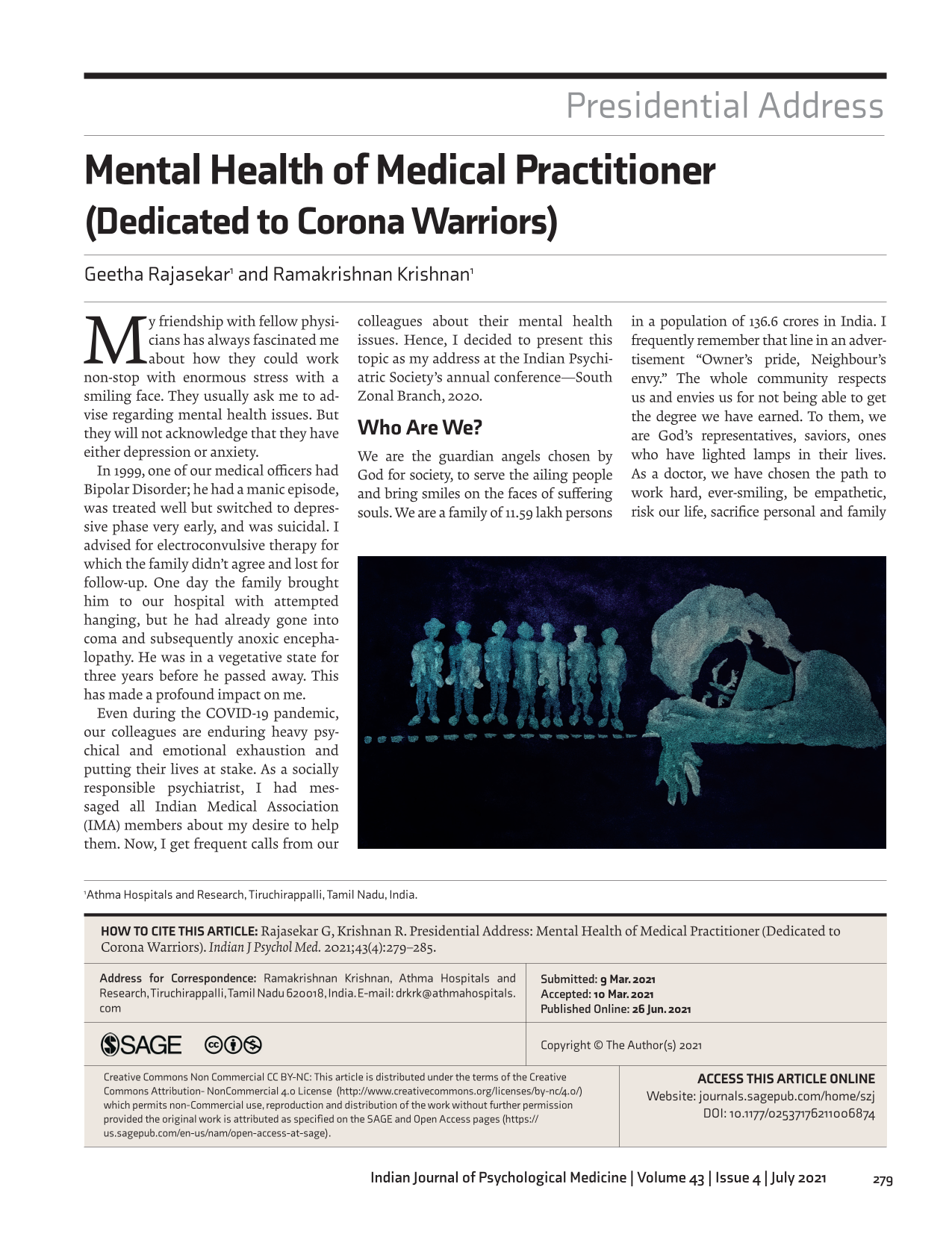
My friendship with fellow physicians has always fascinated me about how they could work non-stop with enormous stress with a smiling face. They usually ask me to advise regarding mental health issues. But they will not acknowledge that they have either depression or anxiety.
In 1999, one of our medical officers had Bipolar Disorder; he had a manic episode, was treated well but switched to depressive phase very early, and was suicidal. I advised for electroconvulsive therapy for which the family didn’t agree and lost for follow-up. One day the family brought him to our hospital with attempted hanging, but he had already gone into coma and subsequently anoxic encephalopathy. He was in a vegetative state for three years before he passed away. This has made a profound impact on me.
Even during the COVID-19 pandemic, our colleagues are enduring heavy psychical and emotional exhaustion and putting their lives at stake. As a socially responsible psychiatrist, I had messaged all Indian Medical Association (IMA) members about my desire to help them. Now, I get frequent calls from our colleagues about their mental health issues. Hence, I decided to present this topic as my address at the Indian Psychiatric Society’s annual conference—South Zonal Branch, 2020.
Who Are We?
We are the guardian angels chosen by God for society, to serve the ailing people and bring smiles on the faces of suffering souls. We are a family of 11.59 lakh persons in a population of 136.6 crores in India. I frequently remember that line in an advertisement “Owner’s pride, Neighbour’s envy.” The whole community respects us and envies us for not being able to get the degree we have earned. To them, we are God’s representatives, saviors, ones who have lighted lamps in their lives. As a doctor, we have chosen the path to work hard, ever-smiling, be empathetic, risk our life, sacrifice personal and family happiness, and never let our emotions affect our service. But these attributes put pressure on us directly or indirectly.
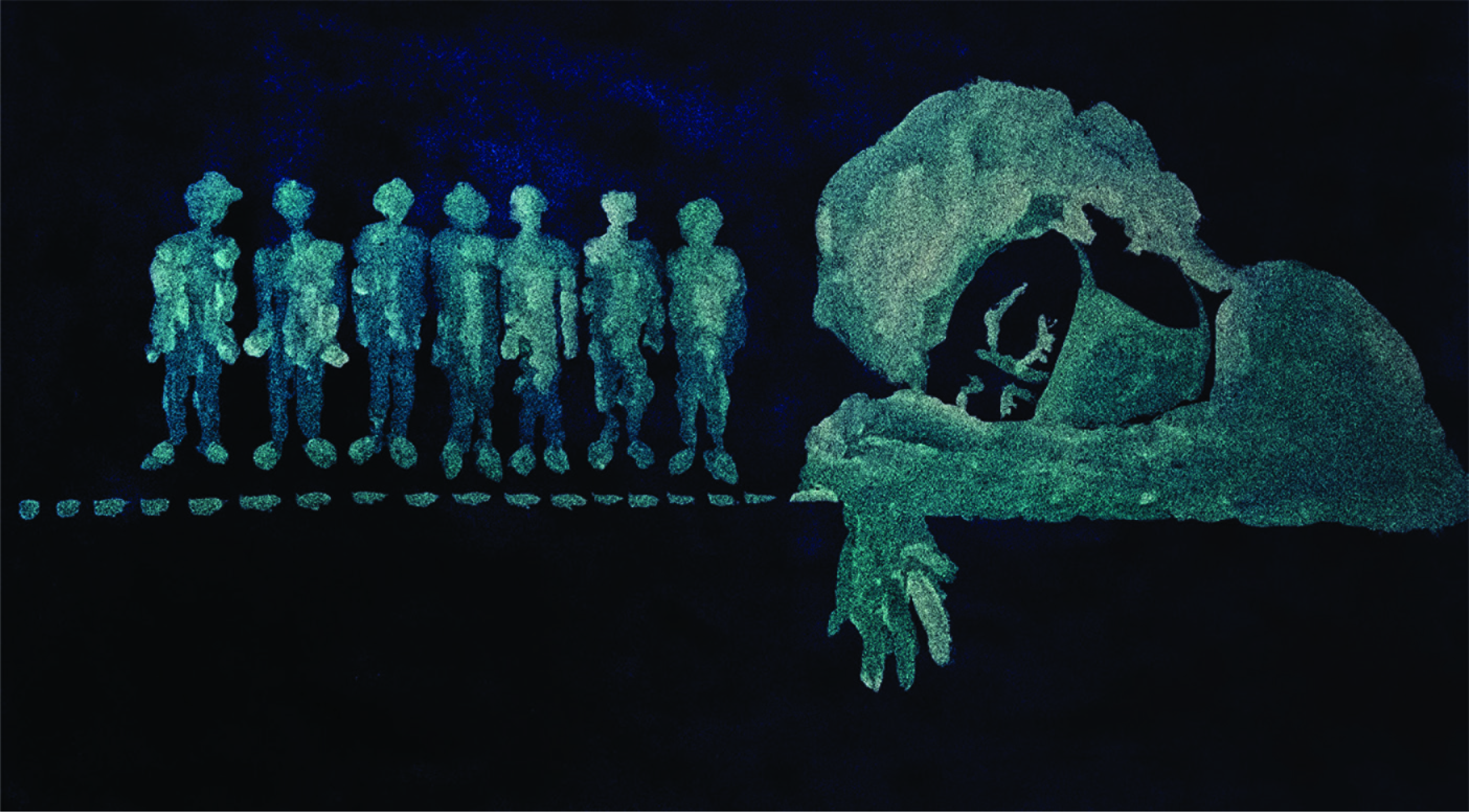
While ever-growing research and discoveries save millions of people, there is also an ongoing change in our professional life.
The concept of family doctors has changed to consultants. Along with service, commercialization has crept in—people’s attitude towards us is also changing. Now we are consumers and answerable to even unavoidable human errors while delivering treatment. We can be punished by law, with heavy penalties, and the license to practice can be suspended. Majority of doctors are clustered in the urban area leading to unhealthy competition. We are under the service of nonmedical persons as we have come to corporate hospitals. Though medical practitioners (MPs) could increase the nation’s life expectancy, our quality of life has not improved. On the other hand, we doctors face enormous trauma, public orchestration, violence, and consistent push to shift to political systems. Now it’s time to unite together, save ourselves, and help our fellow physicians. IMA, Indian Psychiatric Society, and other specialty associations strive to empower us and protect us. But, a lot has to happen in safeguarding the mental health of MPs.
Epidemiology of Mental Ill Health in Practitioners
Research from all over the world suggests that MPs have high rates of mental health problems ranging from depression, anxiety, substance abuse, misuse of prescription drugs, emotional exhaustion, and suicidal attempts. In the United Kingdom, 10% to 20% of doctors become depressed at some point in their career and have a higher risk of suicide than the general population. 1
In Canada, a study using an objective measure of emotional exhaustion revealed that 80% of physicians were suffering from burnout. 2 In the United States, studies have found high suicide rates in doctors and high rates of prescription drug use, particularly opiates and benzodiazepines.3,4 In New Zealand, it has been suggested that mental health problems are nearly three times as prevalent in general practitioners and surgeons than in the general population. 5
A study from a tertiary care hospital in North India found that 30.1% of resident doctors were found to have depression, 16.7% had suicidal ideations, and up to 90% reported some burnout level. 6
The suicide rate for doctors has been variably estimated between two and five times the general population rate. 7 In a systematic review, Lindeman et al. estimated physicians’ relative suicide risk at 1.1–3.4 for men and 2.5–5.7 for women compared with those for the general population. 8
In an American study on surgeons, only 26.0% of the surgeons with suicidal thoughts had sought help, while the rest were reluctant to seek help because of concern that it could affect their medical license. 9
In an Australian survey, thoughts of suicide are significantly higher in doctors (24.8%) compared with the general population (13.3%) and other professionals (12.8%). Psychiatrists and nonpatient specialties (where doctors do not come in direct contact with patients) had higher rates than other specialties.
Risk Factors
Age
There appear to be high rates of mental ill-health among young doctors and interns.
A prospective study from England found a significant increase in depressive symptoms during a medical internship with over a quarter of the participants meeting the criteria for depression during training compared to just 3.9% before the internship. 10
These future practitioners are at high risk of recurrence of depressive disorders and prone to substance abuse.
Gender
Most studies report that female doctors are significantly more affected than men with depression, anxiety, and burnout, while the latter is more into substance use and prescription drug abuse. Lady physicians have been successful in their carrier when they are independent.
The specialty
Each specialty has a unique level of stress, for example, a physician or a surgeon has long working hours, unpredictable night shifts, have to face crisis in casualty, often have to handle things themselves when their junior staff are not in time, face agitated caregivers in ER, and break bad news.
Burnout is found mainly in emergency medicine, trauma, physical medicine, and family medicine.
Specialists who travel to neighboring districts for services return late, neglecting sleep and family.
These add to early exhaustion, less time to update, feeling of monotony, and less time for recreational activities. Often they indulge in substance use or prescription drugs abuse to get adequate sleep to get the next day’s job done.
Psychosocial environment
The psychosocial work environment is another risk factor for MPs developing a psychological illness—increased workload, long working hours, unpredictable shifts, problematic relationships and conflicts with seniors, colleagues, and junior staff, workplace bullying, and lack of cohesive teamwork. 11
Substance abuse
Medical professionals are also prone to abuse of various substances and developing substance-use disorders. Studies have shown a high prevalence of nicotine dependence and other substances such as alcohol, cannabis, benzodiazepines, and opioids. 12
Prescription drug abuse
Easy availability and knowledge about the potential effects, drug action mechanism, and way to use these are the reasons for prescription drug abuse. Over a while, they may see consequences of substance use, for example, cognitive slowing with prolonged use of benzodiazepines, which they are little aware of.
Alcohol abuse
Alcohol use, alcohol abuse, and dependence pattern among medical professionals are equal to that of the general population, while the treatment compliance and psychological approach differ.
There are no consistent data of alcohol dependence among physicians, while hazardous drinking among the medical student population is 46.5% with it being three times more among men than women. 13
Stress of breaking bad
Many stressors involved in the profession are unique to MPs such as they are routinely faced with breaking bad news, frequent contact with illness, anxiety, suffering, and death. 14 They have to face the patient’s emotional reaction, caregiver’s anxiety, listen to their distress, emotional let-out, and take time to soothe them. 15
Workplace violence
Together with high expectations, doctors showered unrealistic pressure on doctors and when failed verbal or even physical aggression. Thus a doctor–patient–caregiver relationship was found to be a key predictor of depression in MPs. 16 A nationwide cross-sectional study conducted from November 2019 to April 2020 across India found that 77.3% of doctors faced workplace violence and common reasons were no improvement in or deterioration of patient’s condition or the perception that unfair treatment was given to the patient. The victims (doctors) reported “loss of self-esteem,” “feeling of shame,” and “stress/depression/anxiety/ideas of persecution” after the incident; this resulted in a decrease in management by surgical interventions, handling emergency, or completed cases. 17
Personality traits
Certain personality traits of the MPs such as being increasingly self-critical, perfectionist, desire to please everyone, excessive sense of responsibility, guilt for things outside of one’s control, self-doubt, and obsessive-compulsive traits were found to push the individual into guilt and depression. The combination of individual personality traits, workplace stressors, and individual vulnerability creates an array of psychological symptoms.
Risk to the Public Due to Mental Health Disorders of Practitioners
Prescription error or error in inpatient care.
Delay in diagnosis.
Poor judgment in critical care and surgery.
Losing temper with caregivers.
Losing clients.
Burnout
This is defined as a pathological syndrome from an extended period of occupational stress. This is neither anxiety nor depression. The three main characteristics are emotional exhaustion, depersonalization, and resentment of professional satisfaction. These dimensions progress sequentially. In this, the emotional exhaustion develops first, depersonalization then arises in an attempt to deal with exhaustion, and ultimately, the capacity to face work demand decreases and reduces personal satisfaction sentiments.
Women physician suffers more than a male physician. But fortunately, satisfaction with choosing a medical career increased over the years.
Empathy is a practice with a direct impact on emotional condition. This tires the physicians due to high demand and may be responsible for the onset of fatigue. 18 This is seen more among psychiatry, trauma care, and oncology MPs.
The exceptional stress for a physician is comparable to being a PTSD victim with trauma stacked on trauma. It puts medical professionals at tremendous risk of suicide and burnout. – (J. Bradley Harssal M.D.)
It wears you down quite a bit, not getting enough food into you, not enough water, not enough sleep at night and back there again. And you just have to keep going. There is no, Oh! Not feeling too good today. I might not go, because you first think God, the work is going to be double, when I get back there the next day. (Lizy, General MP)
Which Physicians Are Most Burned Out?
Wounded Healers—Depression
As reported in various studies, a high prevalence of depression even as high as 30.1% and 16.1% had suicidal ideation. 19 Though most of the doctors are aware of their mental capacity change, they refuse to seek advice. 20 In depression, somatic symptoms and insomnia appear early. A physician unable to identify his depression feels incompetent. Seeking to recommend to another colleague is to admit failure when their problems are played down by the treating physician, reinforcing his belief of wordlessness and helplessness and self-depreciation. 20 I have seen physicians with lots of guilt, the delusion of sin, etc. Other social manifestations of depression are social isolation, not fulfilling the social obligation, excusing oneself due to workload, and inability to relate to family members.
Suicide
Although physicians have lower mortality from cancer and heart diseases than the general population, they have a significantly higher risk of dying from suicide, which is the end stage of treatable disorders such as depression. The estimate of suicide range from 1.4 to 2.3 times that of the average population, more among males than females. 20 Burnout, breakdown, and marital and relationship issues are the precipitating factors. The common psychiatric diagnosis is depression, bipolar disorder, alcoholism, and substance abuse. The other important factor that leads to suicide is litigation. Some have committed suicide upon the receipt of malpractice notice, consumer case, and income tax raids.
COVID-19 and Mental Illness
COVID-19 posed a new challenge to the working physicians and all other specialists, that of not just personal care, but the anticipation of getting oneself into illness and the quarantine after that, the physical or psychological exhaustion, and the doctors’ mortality figures prevent many not to consult or admit COVID patients.
Many had closed down clinics for months and now have restarted with a very safe distancing, or digitally; the doctor–patient relationship is now weak, compensated to some extent by telemedicine.
Since the beginning of the COVID-19 pandemic, those who boldly started clinics or inpatient services either contracted the illness or continued to work under caution.
The situations are worse among the doctors working in government and private hospitals exclusively treating COVID-19 patients.
The rise in inpatient admissions, the length of stay, the clinical worsening, and the mortality all add to the pressure on the treating physicians. There are many incidents across the country where the COVID-19-treating doctor was victimized by physical violence and some were made to vacate their residence.
Not just the long working hours, the uncertainty of the illness, the caution of being infected, the gruesome in the wearing the PPE for long hours, the plastic mold around them worsens dehydration, together with a less regular diet, or time to hydrate.
The quarantine, stigma, and guilt that they couldn’t touch their kids further worsens the psychological distress, burnout, depression, and chances of suicide.
In India, out of a total of 152 study participants, 34.9% were depressed, and 39.5% and 32.9% were having anxiety and stress, respectively. Significant predictors for psychiatric morbidities were experience in the health sector, duty hours, use of protective measures, and altruistic coping. Multivariable logistic regression showed most of the factors associated with depression, anxiety, and stress level. 19
Alcohol and Substance Use
No separate study has been done so far among MPs. One study highlights 72.4% making weekly use of alcohol and 30% with an abusive pattern. Another study gives the highest rate of alcohol abuse due to burning out. 19 In another study, 23% were moderate drinkers and 7.3% were hazardous drinkers. The metamorphosis of regular alcohol dependence happens in the medical profession also. From social drinking, many turn to dependence patterns to overcome exhaustion and boredom. The most worrying situation is lonely drinking. With a previous experience of analgesia when they had received Inj. Pentazosin during any medical procedures, many turn to opioid addiction. Over the years, they deteriorate and fall down the ladder both professionally and socially. I have seen physicians undergoing multiple plastic surgeries. It is very difficult to rehabilitate them; some end up committing suicide. The other substance abuses are self-prescription drugs like alprazolam, lorazepam, and they choose these medicines so that abuse cannot be identified easily. Nowadays, medical students indulge more in cannabis than alcohol, which is agonizing.
Bipolar Disorder (BPAD)
There are no systemic studies regarding bipolar disorders among MPs. However, we frequently encounter such a situation in our practice. As in the general population, the BPAD of a physician is very difficult to treat mainly because of noncompliance and irregular reviews. Many times they visit only after the episodes of depression or mania peaks. We are forced only to pray for their welfare.
Schizophrenia
No major studies about schizophrenia among physicians were done. However, some physicians had given individual experiences. “In my experience of being a doctor with psychosis,” Ms Kathreine Fox narrates her experience. 18 She describes how she was initially diagnosed with depression and how she experienced psychotic symptoms and delayed treatment. In the article “Recovery and service of being a physician with mental illness,” Mark Vonnegut, MD, described his experience and also narrated how he could fight with the disorder through the medications. 21 Dr Jacob L. Freedman, Psychiatrist, describes the difficulty of treating a physician with a psychiatric disorder, the associated medicolegal, ethical, confidentiality issues, and the certification process. 22 We have many practitioners with psychosis under our care. The main difficulty is drug compliance, their domination on spouses and, caregiver distress about handling them. Frequent relapses are also seen.
Physical Health and Stress
Compared to the general population, the mortality due to major illnesses like cancer, CVA is less among the physicians due to knowledge of self-care and high possibilities of an early diagnosis. But the frequent stressful situation, sleep deficit, dysregulation of circadian rhythm, altered catecholamine secretion leads to higher cardiovascular disorders. Occupational stress leads to dyslipidemia obesity, musculoskeletal symptoms, disc prolapse, vitamin D3 deficiency, etc. 23
Divorce
Divorce among physicians is less than in the general population, including other health professionals, lawyers, etc. 24 Female physicians are approximately one and a half times more prone to divorce, which could be because they find it difficult to attain work-life balance. Another interesting observation is that physicians are too busy to think about divorce. In my observation, the probability of divorce is more when the partner has a different profession or is a female physician earning more than their husband. Moreover, less confiding time, taking work stress to home, sharing the responsibility of upbringing of children, and relationship issues in the hospital are key factors contributing towards the probability of divorce. The mental health of couple physicians is not systematically studied. If like-minded professionals marry, they cope up with stress in life, if not lots of marital conflicts might occur. Relationship issues inside the hospital lead to emotional detachments. Divorce is not infrequent.
Mental Health of the MP’s Families
We, as physicians, risk wishes in our life, energy time to suffering people. We cherish the success and smile on the face of others and get upset if we lose a patient. Most of our time is spent on duty and have less time to spend with family. I have heard many times that leading a life with a doctor is very difficult. This is not untrue. The worse situation is when both the partners are doctors, still worse if the wife is a gynecologist and husband a surgeon, where both might have emergency surgeries and unpredictable time schedule. This might lead to less time to spend with kids, postponement of pleasure trips, not being able to pay attention to their studies, sometimes not even being able to attend their memorable school performances or events. We have seen some children idolize doctor parents and wish to be a doctor. Others just hate the word “medicine.” Since we give a good lifestyle by meeting their economic expectations and do not have time to follow up with their activities, many children during the adolescent period deviate from the mainstream, develop a personality disorder, fall to substance abuse, and are affected by psychological trauma, and remain as an embarrassment to parents. At that stage, we feel guilty and helpless pushed by the thought that we were true to our profession but could not pay much attention to family.
Barriers in Treatment
Suffering in silence, self-medication
Depression is seen as a weakness; there is always pressure upon doctors to appear healthy, neatly dressed, and smiling. They do not want role reversal; a doctor does not want to be a patient. Hence, doctors tend to deny that they are depressed, and use medications promoted by pharma industries. Often, alcohol and other substances are abused as a means to overcome anxiety and depression. Most of the time, the family does not even know about their self-medication.
Stigma
The single most factor that acts as a barrier to reach for help is stigma. We talk about the stigma of mental illness in the general population, but I am convinced the stigma is maximum among fellow physicians than the public. In a study, half the physicians believe that mental health is a taboo. Two-thirds would not consider meeting with a mental health professional at once. If a physician’s mental illness is disclosed, the physician might face discrimination, may not be allowed to see patients or do procedures, and friends, families, and children may desert them. Many attempted and completed suicides happened because of discrimination and desertion.
License and insurance
Most physicians fear that any state agency, insurance agency, or treating physician will share confidential information about their psychological issues to the licensing authorities and institution heads, and they may be terminated. It is also true that references from colleagues will stop. Discrimination in obtaining insurance is a common problem for physicians with mental illness. In India still insurance companies have not opened up for persons with mental illness and expenses coverage, although the government has announced the inclusion of insurance for mental illness.
VIP syndrome
Reluctance to recognize depression in a colleague is imposed by other physicians. 20 Even if a physician notices change in their colleague or friend’s mood and behavior, they hesitate to inquire about it. They fear of rebuttal of one’s suffering colleague even if they enquire with all sincerity. You are aware of the unwritten law that the more the VIP, the more difficult it is to treat. It is a great stress to the treating physician also. They are treated inadequately, in a play-safe mode, being too concerned about the side effect of medicines. 20 Many times effective and life-saving treatments like Electro Convulsive Therapy had been denied to physicians.
Burnout among Psychiatrists
Psychiatrists are vulnerable too in experiencing burnout, more than other physicians and surgeons. Their risk varies from 25% to 57% at any given time. Burnout due to personal, work, and patient care are all interlinked. The reasons are limited resources, changing culture, high work demand, and dealing with violent and suicidal patients. 25 Burnout can be seen more among psychiatrists having hospital-based practice and general hospitals than outpatient clinics.
A psychiatrist has to deal with a breakdown in relationships, caregiver distress, long hours of counseling, and difficulty to make the family and clients understand the unique situation in psychiatry. In addition to this, psychiatrists have to face stigma both in the community and even among medical professionals. The recent implementation of the Mental Health Care Act 2017, licensing hospitals, an inspection of non-medical persons has increased pressure on the psychiatrists. Because of many impracticable responsibilities, in India like nominated representatives, advanced directives, involuntary admission, and long-stay procedures make psychiatrists restrict outpatient-based treatment to providing optimal care and hospital-based services. Psychiatrists are pitiably torn between ignorance of the public and restrictions of the law. Taking away psychiatrists’ rights to certify for SLD, neurodevelopment disorders, dementia, and putting too many norms sideline us. Unless the government takes the suggestions of the Indian Psychiatric Society and brings amendments to the act, mentally ill patients for whose benefit the law is enacted will suffer. It is the right time that we think about ourselves seriously. We have to take preventive measures to protect our mental health individually and collectively through local and zonal branches.
Prevention and Intervention Strategies
An ounce of prevention is worth a pound of cure.
Promoting better mental health understanding and practices among professionals will help them avoid burnout, deal with stress and address their health concerns. But the question is where to start? Training during undergraduate and postgraduate level, soft skills, life skills, personality development, awareness about how to deal with a patient in various situations will prepare them to face the future. Attending CMEs and conferences will help one keep updated. Upskilling and reskilling are essential in life.
Advocacy
IMA, specialty associations, and our psychiatric association should form a special joint task force to address this issue of MPs’ mental health.
We should evolve a feasible strategy to implement the same. Or else we will keep losing our brothers and sisters. Telepsychiatry may be the path breather.
Good things are happening in terms of destigmatizing mental illness in recent days, thanks to social and mass media. Leading Bollywood actress Ms Deepika Padukone is a great proponent of awareness. She had come out in public how she had suffered from depression and only with the help of family and psychiatrist she won the battle. She had an advocacy NGO Live Love Laugh Foundation. Likewise, our medical colleagues who had won the battle should be bold enough to reach out to our associations and make other silent sufferers seek treatment. We do not hesitate to tell fellows and even patients that we have diabetes or heart problems. Then why can we not say openly that we had anxiety or depression. Everyone will understand.
Dr Andrew Bryant committed suicide, and her wife had given a public statement, “I don’t want it to be a secret that Andrew committed suicide. His Four children and I are not ashamed of how he died.” 23
In socks4docs campaign, cardiac surgeon Dr Geff Toogood is one of the most prominent voices and shares his experience with severe depression.
Ms Katharina fox who had undergone treatment for schizophrenic advocates “Having been through depression and psychosis, I feel I will have more of an understanding of mental illness as a doctor—when I comfort it—because I was the patient for so long.” 20
Another physician, Dr Mark Vonnegut advocates for destigmatizing mental illness in the medical profession. He had braved three schizophrenic episodes and is on regular medicines.
“Most of my patients don’t care that I have a mental illness. They are appropriately much more concerned with the symptoms and problem they have and hope that I can help them with.”
I request who had braved depression and burnout to start awareness campaigns. This is not a weakness or your fault. It is a state, which too will pass.
I am happy that the IPS Karnataka chapter has aligned with NIMHAS and IMA Karnataka Branch to launch this unique service “Vaidya Mano Vani” in line with this address. I request other state branches to initiate similar services.
Interventions
At Hospital Level
Working in a team is associated with less stress and burnout.
Create a working environment; the “team leader” should be one who empathizes with colleagues and juniors, listens to their calls, and identifies the at-risk individual and acts promptly. He should facilitate effective communication and allow ventilation.
Hospital should provide a safe environment, with no risk to physicians.
Protect doctors from litigation.
Provide adequate professional and individual risk coverage.
Ensure staff rotation from jobs of higher stress to lower stress.
Mix and match juniors with limited work experience with their senior colleagues.
Schedule duty hours, shift breaks, holidays to be arranged within the team members.
Ensure good quality communication with accurate information updates.
Conduct regular team meetings to discuss the common problems they face in their working environment, address the issues that arise, and notify the progress and change.
Give duty hours @ 40 hours/week.
Allow vacation.
Have frequent family get-together parties.
Discuss common mental health problems.
Allow to “debrief” in events of unfortunate outcomes.
Early identification of mental health issues, referring to confidential and specialized intervention.
At Individual Level
Balance work and leisure.
Do not lose your peace to earn more. Life is more important.
Maintain regular contact with friends and family.
Maintain professional boundaries.
Carry out activities and hobbies unrelated to work.
Ensure breaks and adequate sleep.
Discourage self-medications for insomnia, alcohol, and nicotine use.
Practice relaxation exercises like yoga, jogging, meditation, and mindful activities.
Involve in religious or spiritual activities.
Finally, understand that “you are the only friend of you”; ultimately we decide to face whatever we have to undergo. Be selfish for your health and mind. Do not say YES when you want to say NO.
Understand your mind’s language. If you feel a subtle change itself, talk to your friends or family. Let them know you are suffering. Do not get the stigma on you. Ask for professional help. All the psychiatrists are your colleagues. When you take treatment or therapy, be only a client, not a doctor. Follow instructions without asking too many questions about medicines. After all, they care for you, and they have are responsible for your health. Cooperate with therapy and learn to enhance your resilience.
Conclusion
Health, especially mental health, is our right.
We have the right to live in dignity.
Express yourself.
Tune yourself to changes.
WHO’s definition of health is a state of complete physical, mental, and social well-being and not merely the absence of disease or infirmity. Let us practice this before talking to others.
World mental health theme of the year 2020:
Mental health to all.
Greater investment, greater access.
Everyone everywhere….
Let us invest in the mental health of the MP.
Let us create access to reach mental health professionals.
Let every one of us talk about mental health.
Let us spread the message everywhere.
I guess it is a cultural thing within medicine that you cannot let your guard down and if you come out and say “Oh! I don’t think I’m coping well” you are worried that people will judge you for being incompetent.
I have come to realize that the most important thing about being a doctor is to be a healthy person. You cannot function to look after others if you do not know where to take care of yourself. (Fenny, a depression warrior,
Athma Hospitals, Members of the Indian Psychiatric Society, and I are always open for you.
Knock our door, and we are ready.
98947 22221, 98 42 42 21 21 (Hotline)
Asato ma Sadgamaya.
TamasomaJyotirgamaya.
MrithyamaAmirthamGamaya.
From ignorance, lead me to truth;
From darkness, lead me to light;
From death, lead me to immortality.
Om peace, peace, peace.]
Footnotes
Declaration of Conflicting Interests
The authors declared no potential conflicts of interest with respect to the research, authorship, and/or publication of this article.
Funding
The authors received no financial support for the research, authorship, and/or publication of this article.