




Abstract
Background:
Health care workers (HCWs) constitute a vulnerable group in terms of physical, mental, and emotional health setbacks during an epidemic. An in-depth understanding of the effects of epidemics on HCWs is of utmost importance, in order to put in place measures for their well-being. The purpose of the review was to compile, compare, and contrast the available information so as to produce a lucid picture of how HCWs are impacted during an epidemic, and the factors that affect their mental health.
Methods:
A literature search of MEDLINE and Google Scholar databases was conducted to uncover research pertaining to four major epidemic outbreaks over the last two decades. The search was carried out at three levels using pertinent key words. The records thus identified were narrowed down at three further levels, that is, by screening of the title, abstract, and full text, to obtain articles most relevant to the subject matter. Data extraction was done using a spreadsheet to compile the relevant data. Data synthesis was done by studying those factors found to affect psychological well-being of HCWs and separating them into suitable sub-groups. Recommendations to mitigate the psychological impact were proposed.
Results:
Thirteen factors were identified, which were grouped under the broad categories of socio-demographic variables, individual characteristics, social characteristics, and psychological constructs.
Conclusion:
Epidemics have a profound impact on psychological well-being of HCWs. There is a pressing need to address the issue of the psychological health of this vulnerable group.
The factors affecting the psychological well-being of HCWs during an epidemic outbreak are primarily poor social support, stressful work environments, greater patient contact, inadequate training, quarantine, history of physical or mental health issues, poor coping mechanisms, high perceived risk, stigma, social isolation, and a lack of resilience. Mental health professionals have an important role to play in mitigating the impact of these factors by extending the necessary support and professional expertise to HCW in need.Key Messages:
A large study conducted in a tertiary care hospital during the severe acute respiratory syndrome (SARS) epidemic and published in the British Journal of Psychiatry estimated that over 75% of HCWs suffered some form of psychiatric morbidity. 2 Studies have also determined that these psychological effects often continue long after the epidemic has been brought under control, persisting for as long as three years after the outbreak. 3 These facts are a reminder of the severity of the issue of the adverse mental health consequences of epidemics on frontline medical professionals.
The psychological impact on HCWs may comprise anxiety, mood disorders, or symptoms of post-traumatic stress. Similar to the varied effects on mental health, the contributory factors to poor mental health outcomes are also several. A systematic review that studied this during the SARS outbreak delineated some of the factors that affected mental health of HCWs; however, the search was limited to social and occupational variables. The mental health impact was found to be different depending upon the socio-demographic variables, specialty grade, work responsibilities, or even the time during the evolution of the epidemic when the study was undertaken. 4 It is important to identify and address such factors, in order to mitigate the adverse effects on health care personnel.
To this end, several studies have been conducted on related topics over the years. However, these have been carried out in different geographic areas, using varying methodologies, and at times producing differing results. We carried out an in-depth literature search of all published studies over the past two decades concerning the psychological fallout of epidemics on HCWs. Our search covered research pertaining to four major epidemic outbreaks, that is, coronavirus disease 2019 (COVID-19), Ebola, Middle Eastern respiratory syndrome coronavirus (MERS-CoV) and SARS. The objective was to compile, compare, and contrast the available information so as to produce a lucid picture of how HCWs are impacted during an epidemic, and the factors that affect their mental health. This, in turn, lays the groundwork for recommendations to protect the psychological well-being of this vulnerable group.
Materials and Methods
A literature search was done on MEDLINE and Google Scholar to obtain articles fulfilling the following criteria:
Published in English journals Published in peer-reviewed journals Dealing with the designated subject matter
Searching and Screening
The search was done at three levels to narrow down the results and obtain the most relevant articles. At the first level, terms related to mental health outcomes were used to carry out the search, such as “anxiety,” “depression,” and “post-traumatic stress.” At the second level, terms related to the prevailing health emergency were utilized, such as “epidemic,” “pandemic,” “SARS,” “MERS,” “Ebola,” “COVID-19,” etc. At the third level, the search was carried out using terms specific to the group of interest, such as “doctor,” “nurse,” “HCW,” “health care professional,” etc. The search was carried out independently by two authors, and the results were combined. The citations thus identified were listed and duplicated articles were sieved out. Articles that were selected for further reading were of several designs, including but not limited to original articles, systematic reviews, narrative reviews, commentaries and letters, as well as qualitative surveys.5, 6
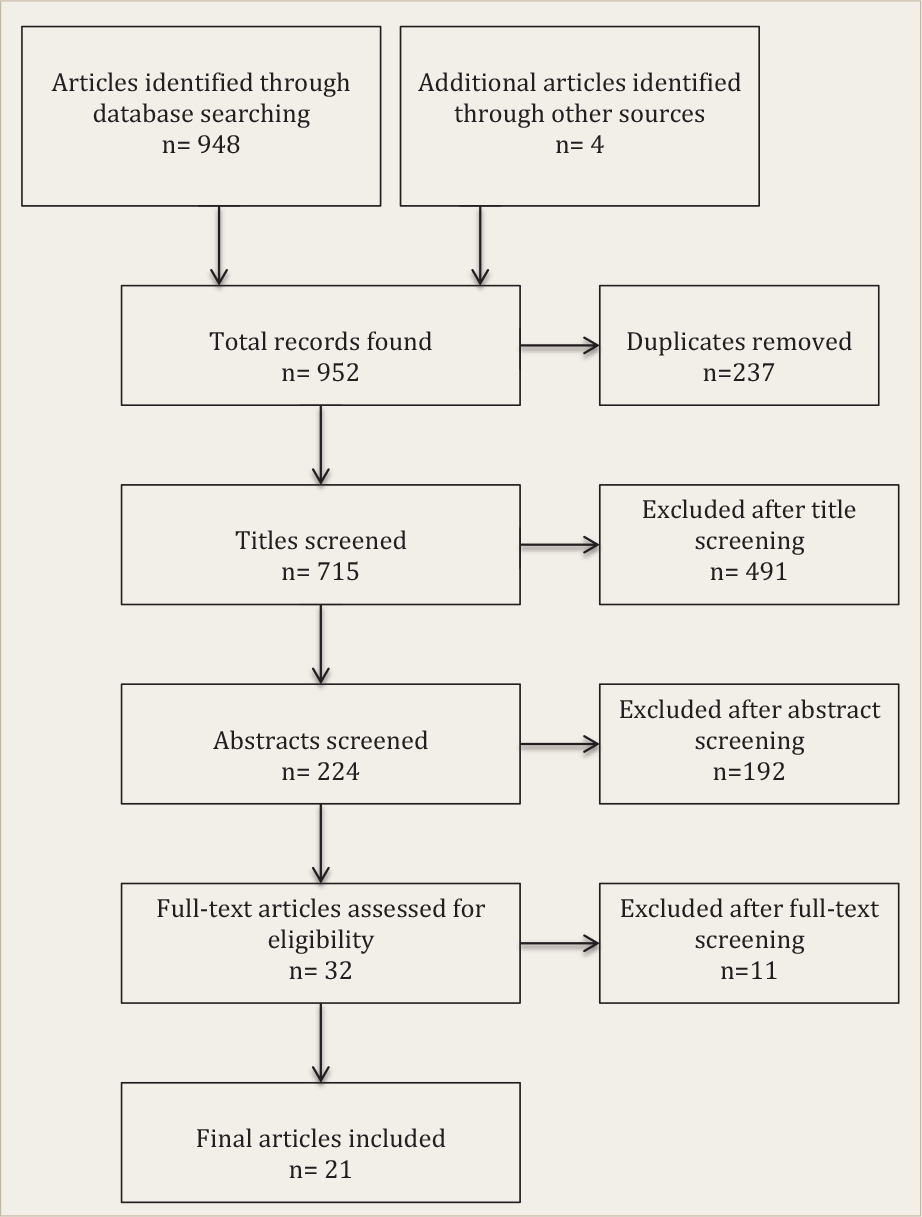
The titles of the articles were screened to remove those that were irrelevant to the subject matter. The abstracts of the remaining articles were scanned for narrowing the pool further to maintain relevance. Finally, the full texts of the articles that were remaining were screened to ensure adherence to inclusion criteria. The flowchart pertaining to the methodology of screening and selection of articles is elaborated in Figure 1.
Data Extraction
A spreadsheet was created to enter the data pertaining to each article in a systematic manner for obtaining a “bird’s eye view” of the literature. The information entered included the disease involved, year and country of study, type of study, nature of study sample, number of participants, factors affecting mental health that were studied, conclusions, and limitations of the study.
Data Synthesis
A separate list was synthesized of all factors that were found to affect mental health of HCWs during an epidemic. These factors were then clubbed into sub-groups based on common themes. If a factor was found to produce differing effects on the study population, the reasons for the same were discussed. Factors that were statistically significant and common to two or more studies, as well as recommendations put forward by authors to mitigate the negative impacts of epidemics were noted.
Results
The initial search using the terms elaborated in the methodology, in varying permutations and combinations, yielded over 900 results. These were pared down to exclude studies that did not consider factors responsible for adverse mental health outcomes in health care professionals, the above being the area of interest of our review. Studies that did not meet the inclusion criteria were also removed. Finally, the most relevant articles were selected for the purpose of review. The information extracted from the pertinent original research articles has been laid out in Table 1.
Based on a detailed and critical evaluation, we were able to classify the factors affecting the mental health of HCWs during an epidemic into several themes.
Age: Two studies found an association between age and psychological distress. One study done in China following the COVID-19 pandemic found that middle-aged staff tended to have a higher risk of mental health problems, owing to greater family burden, while another study conducted after SARS concluded that younger age was associated with greater depressive symptomatology.7, 8 Overall, older HCWs suffered fewer psychological setbacks during an epidemic outbreak. Gender: There is a lack of consensus about the association of psychiatric morbidity with gender, with some studies reporting it to be more common in females and others stating the contrary. Two studies done during the SARS epidemic and two others carried out during the COVID-19 pandemic have shown that psychiatric morbidity is higher among female HCWs.2, 9–11 One study undertaken during the Ebola pandemic suggested higher psychiatric morbidity among men.
12
Additionally, this study noted that male medical staff were prone to encounter greater stigmatization from the community at large. Marital status: Two studies conducted after SARS documented greater levels of anxiety among married hospital staff.9, 13 On the other hand, two other studies determined that persons who were unmarried had a higher risk of depressive symptoms, thereby pointing to the possible role of spouses in guarding against depression, by being a source of social support.7, 8 Hence, it was shown that family ties contributed to anxiety symptoms but protected against depressive symptoms. Educational level: A study conducted during the Ebola crisis concluded that greater educational attainment was associated with a lesser quantum of psychological suffering.
14
Lacunae in knowledge concerning Ebola in medical personnel was found to be associated with lower scores on scales measuring health-related quality of life.
15
Educational level was hence a predictor of how people respond in stressful situations like an epidemic outbreak, with less education contributing to greater psychological effects. Occupational role: Studies have found that workers on the frontlines of an epidemic are more prone to psychological problems.2, 7–9, 11, 14, 16 One study determined that the number of hours spent treating symptomatic patients at close quarters was a predictor of psychological distress in staff.
17
Medical personnel caring for colleagues who were unwell were also concerned and anxious about their level of expertise.
18
Whereas some studies observed that nurses were more prone to post-traumatic stress, others noted that physicians were at higher risk.3, 7, 19, 20 Depressive symptoms were more common than anxious symptoms among doctors and nurses.
7
Having an intermediate professional designation was associated with greater distress.
11
One study found that the psychological distress experienced by general physicians was significantly higher than that of the Traditional Chinese Medicine practitioners.
21
The level of work experience was also significant to mental distress. Newly inducted staff with work experience less than two years had significantly higher scores on mental health questionnaires.
7
Non-essential staff and technicians reported feeling isolated and disconcerted that they were unable to contribute substantially to relief efforts. The term “non-essential” may have added to this sentiment.7, 18 Compared to staff in tertiary hospitals, those in secondary hospitals reported higher scores on scales measuring symptoms of depression, anxiety, and insomnia.7, 11 Samples from general hospitals of western medicine were more likely to report psychological distress and anxious symptoms, while those who worked at infectious disease hospitals reported more depressive symptoms.
7
Hence, health care professionals with less experience, as well as greater and more prolonged patient contact, were at greater risk of psychological distress. Past medical history: A recent survey found that among health personnel, having an underlying medical condition was a risk factor for depression, anxiety, insomnia, somatization, and obsessive-compulsive symptoms.
10
A history of traumatic events was also significantly associated with greater depressive symptomatology.
8
Another study published in Lancet observed that persons with pre-existing mental health issues received less support compared to their counterparts with no such past history.
7
One study on HCWs treating MERS patients pointed out that they were prone to develop symptoms similar to post-traumatic stress disorder (PTSD) even after one month had elapsed.
16
Studies have also established that a neurotic personality often sets the stage for mental health issues following stressors such as an epidemic.3, 16 Hence, a history of past medical or psychiatric disorders was noted to make health workers more vulnerable to psychological disturbances during an epidemic. Affliction of family and friends: The occurrence of the epidemic disease in close family and friends predictably has a negative influence on the psychological status and morale of health care personnel. This was documented in two studies on SARS frontline workers.8, 9 A separate study conducted in emergency department personnel concluded that the overall distress level was highly and significantly correlated with the health of family and significant others.
19
This is, therefore, an important factor that needs to be addressed. Attachment and coping styles: One study conducted during SARS found that a majority of aid workers deployed in the disaster suffered a stress reaction, yet this was guided by both neuroticism and prior levels of maternal attachment. A greater level of maternal over-protection predicted worse mental health following the disaster, and these findings persisted in a three-year follow-up period.3, 20 A separate study concluded that certain coping strategies such as denial and substance use were found to be positively correlated to the level of emotional distress.
19
These findings make clear that faulty attachment and coping styles are related to psychological issues in adult HCWs during stressful situations like an epidemic. Effect of quarantine: Nearly 30% of quarantined individuals in the general population develop psychological symptoms, with longer durations of quarantine associated with greater distress.
22
HCWs have been reported to experience fear, frustration, and stigma both during and after mandated quarantines.
23
They had worries regarding their personal safety, passing on the infection to significant others as well as concerns about being stigmatized in society.
18
One study found that the vitality and psychological well-being of SARS HCWs one month after quarantine remained worse than those in a control group.
17
Studies conducted three years after the SARS outbreak also determined that respondents who had been quarantined were two to three times more likely to have high levels of post-traumatic stress, as well as an increased prevalence of depressive symptoms.8, 9 Similar results were obtained following the MERS epidemic.
16
These findings highlight the fact that persons with mental health setbacks take longer to recuperate and bring to attention the adverse mental health effects of quarantine on HCWs. Perception and altruistic acceptance of risk: A study published in the Canadian Journal of Psychiatry highlighted the important proposition that post-traumatic symptom levels following an epidemic may be related to peoples’ perceptions of the stress and the risks involved. In the above study, a positive correlation was established between the two.
9
The authors also noted that the negative mental health effects could be partially offset by an altruistic acceptance of risk; in this case, a negative correlation was established. Stigma: Studies have noted that frontline workers are at an exceptionally high risk of contracting the epidemic disease, as well as being stigmatized, ostracized, and even attacked.24–29 In one qualitative study, HCWs described feeling stigmatized by those with whom they had earlier shared close relations, and the overall effect on their mental state was described as distressing.
5
Psychosocial support extended to field workers by mental health personnel as part of another study was found to be useful in mitigating the effects of stigma.
6
Therefore, stigma is a significant factor that has been found to affect work morale and productivity in HCWs during epidemics. Social isolation: While the lack of social contact can have a detrimental effect on the mental health of the general population, these are multiplied in HCWs. A study of distancing measures in a tertiary hospital following SARS noted that employees were advised not to interact with colleagues outside of work hours, at a time when people longed for understanding from like-minded individuals. Meals had to be taken alone as eating would necessitate removing one’s mask. E-mail was used extensively as a substitute for personal interaction and communication. It was concluded that these measures put into place, while being scientifically sound, led to staff feeling lonely and “cut-off,” which in turn affected their psychological health.
17
These findings have also been noted in observations made during subsequent epidemic outbreaks.11, 14, 17, 30 Resilience: Resilience is broadly understood as the ability to bounce back from setbacks. Only one study included in the review evaluated the role of resilience as a protective factor in HCWs during an epidemic. In this qualitative study, field workers, during the course of interviews, reported that in spite of a lack of adequate infrastructure, they were able to overcome challenges in order to carry out their professional responsibilities. This was interpreted by the authors as an indicator of considerable reserves of resilience in the study population.
6
Flowchart of Screening and Inclusion/Exclusion of Studies
Studies Included in the Review
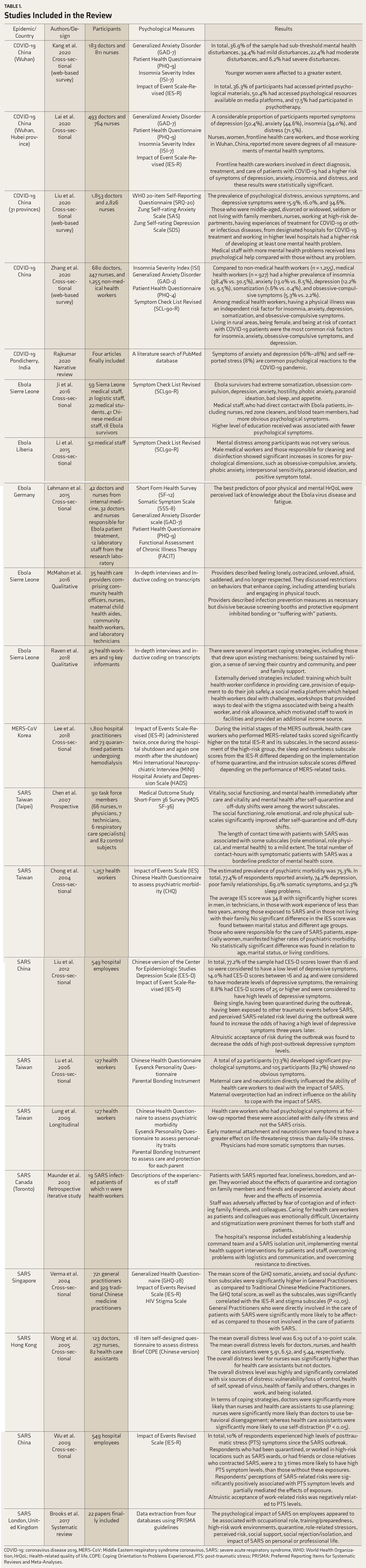
COVID-19: coronavirus disease 2019, MERS-CoV: Middle Eastern respiratory syndrome coronavirus, SARS: severe acute respiratory syndrome, WHO: World Health Organization, HrQoL: Health-related quality of life, COPE: Coping Orientation to Problems Experienced, PTS: post-traumatic stress; PRISMA: Preferred Reporting Items for Systematic Reviews and Meta-Analyses.
Discussion
The literature search was exhaustive as it spanned four epidemics over 20 years, in addition to being specific to the vulnerable group in question, that is, HCWs. A number of factors were determined to be noteworthy in contributing to mental health effects. The factors that we studied have been divided under the broad categories of socio-demographic variables, individual characteristics, professional characteristics, social characteristics, and psychological constructs.
First, we evaluated socio-demographic variables to characterize their impact on mental health. While these variables obviously cannot be altered, literature does point to certain sub-groups who would benefit from added psychosocial support. 31 An evaluation of the differential psychological effects based on age revealed that middle-aged doctors and health care staff were more likely to suffer psychological consequences during outbreaks. The additional responsibilities associated with this age bracket was deemed responsible for mental health setbacks. 7 With regard to gender, there were varying conclusions reached on variations in mental health outcomes. Whereas some studies found that women were more predisposed owing to their psychological constitution, others reported that men suffered greater owing to the nature of their work, bringing them in closer contact with suspected cases. Marriage and having a supportive partner were found to protect against post-traumatic stress symptoms when working in unfavorable environments during an epidemic.7, 8 Studies have documented that greater social support leads to better psychological outcomes.32, 33 Better organizational support has also been found to allay fears in medical staff. 34 We found that educational attainment and awareness was associated with less psychological distress, possibly due to better coping strategies and better access to social support systems.
With respect to individual characteristics, a past history of mental health problems was found to make HCWs more vulnerable to depression and anxiety following the stress of an epidemic. 10 Such individuals were also found to access psychological services less and hence were less benefitted by such available interventions. 7 Co-existing medical problems added to the probability of a new-onset psychological issue. These findings remind us that future psychological intervention providers should pay more attention to medical staff with mental health problems. Supportive measures could be provided for those staff with such high-risk characteristics on a priority basis. HCWs who had close relations who fell prey to the illness were two to three times more likely to suffer psychological consequences. 9 These findings suggest that persons fitting a certain socio-demographic profile, specifically middle-aged persons with greater family responsibilities, fewer social contacts, less educational attainment, and a past history of medical and psychiatric illness are more prone to psychological distress. Such individuals in a health team need to be promptly identified and provided the necessary support, by way of interventions like delineation of work responsibilities and provision of psychological counseling services.
Next, the significance of professional characteristics and variables were noted. Different studies came to different conclusions as to whether doctors, nurses, or auxiliary staff had greater psychological consequences. However, a systematic review conducted after SARS determined that nurses were more likely to be affected on the occupational spectrum. 4 Doctors and nurses on the frontlines, with closer and more prolonged patient contact, had greater mental health problems. The stress placed on HCWs functioning in these so-called “high-risk” environments have been elucidated in several studies, and there is a need to identify such psychological problems at an early stage.9, 35, 36
A lack of adequate work experience and having to treat colleagues suffering from the illness were found to worsen existing stress, precipitating anxiety and depression. Studies have recorded that a sense of expertise that comes with training facilitates a more robust psychological response to an epidemic. In this way, training is found to be a protective factor in preventing psychological breakdown.37–39 Workers who had to undergo mandatory quarantines secondary to exposures were found to have worse psychological outcomes, especially with regard to sleep and post-traumatic stress symptoms, when compared to controls. Quarantine periods have been found to amplify post-traumatic stress symptoms of frontline workers in several studies.9, 36, 40 Such issues were found to take a long time to recover, sometimes persisting as long as three years after the outbreak. The length of quarantine has also been previously associated with negative outcomes, such as anger and avoidance. 34 Hence, a review of literature surrounding the professional characteristics contributing to psychological distress reveals that nursing staff, those with fewer years of experience, staff working in designated isolation wards, and persons who have had to undergo quarantines are at greater risk. Such personnel need to be provided the requisite training for medical management of afflicted patients. Supply of adequate personal protective equipment, working in shorter shifts, provision of psychological support services, and telephonic check-ins during quarantine can help mitigate psychological setbacks.
On the social front, the stigma faced by HCWs in the community has been adequately described in qualitative studies. The effects of this, in terms of work satisfaction, motivation, and psychosocial setbacks, have also been illustrated in several journal communications. Stigma was found to lead to social isolation and ostracism of health care personnel in their communities. These, in turn, had far-reaching consequences on their mental health.13, 32, 41, 42 The stigma surrounding HCWs may be alleviated by tackling misinformation regarding disease spread. Public education campaigns to rebuild trust within the community and promoting public acts to show appreciation to health workers can also play a role in reducing stigma. 6
On evaluating the role of psychological constructs, we noted that a low level of maternal attachment and greater over-protectiveness were associated with increased morbidity. 20 Maternal attachment and personality characteristics of neuroticism were found to have a more profound impact on life-threatening stressful events than daily-life stresses. 3 Certain coping styles like anticipation and planning were found to be more protective than others. Doctors were more likely to use planning as a coping strategy, whereas nurses utilized behavioral disengagement. 19 Modalities of accessing information surrounding the epidemic and the perception of risk to self were also important in predicting psychological problems. The concept of “perceived risk” was studied, wherein we noted that greater perceived risk led to increased levels of post-traumatic stress. This has been noted in other hospital-based studies as well, which has established a similar correlation with PTSD symptoms.9, 13, 43 A sense of altruism concerning one’s work was protective and helped allay fears of contracting the disease oneself or transmitting it to loved ones. 9 These findings have ramifications, as mature coping mechanisms and a positive perception of one’s role in the epidemic response are found to be protective. Conducting workshops on these aspects for health workers can produce positive outcomes in this regard.
Recommendations
Several studies and journal correspondences from frontline workers during epidemic crises have suggested interventions and guidelines to mitigate the psychological aftermath on HCWs. Whereas some suggestions were region-based and limited by available area-specific resources, others were broader and easily generalizable to a larger pool of health care personnel.
We enlist below a list of suggestions to safeguard the mental health of medical personnel during an epidemic, based on the current review of literature:
Managers and senior staff must be able to identify personnel at greater risk of developing psychological issues and provide support promptly where necessary. Less critical roles must be identified for those more vulnerable to crises.37, 44 Frontline staff must be identified and suitably upskilled with psychological first aid training and knowledge on coping strategies in order to be able to support co-workers showing early signs of distress.14, 44–46 A forum must be made available for medical personnel to voice their concerns surrounding the challenges of patient care. Peer support programs must be made available and accessible.
7
Guidelines must be put in place to ensure greater physical distancing and better personal hygiene at the workplace. Conducting meetings on online platforms should be encouraged as a step in the right direction.
11
Quarantine must be promoted only when deemed appropriate, that is, when there is significant disease transmission even when the person does not show symptoms, and if this asymptomatic period is neither too long nor too short.47, 48 Whenever planning is underway to execute measures to safeguard the psychological well-being of medical workers and hospital employees, discussions should involve all involved disciplines. There must be adequate representation from the departments of psychology, psychiatry, chaplaincy, social work, nursing and hospital administration. This will ensure that multiple viewpoints are considered to put forward the most effective plans.46, 49 Psychological assistance hotline teams must be set up, comprised of volunteers who have received the relevant psychological training. Team members will be able to provide telephonic guidance to personnel to help effectively tackle mental health problems.
30
For instance, clinical psychologists based at the National Health Service (NHS) Trust at King’s College, London have set up a volunteer service that provides assistance for medical personnel through various platforms like e-mail and video conferencing.
14
The National Institute for Health and Care Excellence (NICE) recommends “active monitoring” to make sure that staff who fall sick are identified early and supported with high-quality care.
50
Leaders, both at the grassroots and higher levels of the federal government, must offer clear and authoritative instructions and set out appropriate guidelines regarding protective measures, which in turn can allay excessive fear and apprehension.14, 51
Role of Mental Health Professionals
Psychiatrists and clinical psychologists need to assume leadership roles in order to safeguard the mental health of treating teams during an epidemic. Their expertise can be invaluable in the early identification and treatment of psychological issues that arise in their clinical colleagues. Medication, as well as psychological interventions like cognitive behavior therapy, can be offered to help those who come forward to seek support. Workshops may be conducted for medical staff to prepare them for the psychological challenges associated with being on the frontlines of the epidemic. Psychiatrists can screen personnel for psychological vulnerabilities before being deployed to especially stressful work environments. They can work with team leaders to allay stigma and encourage help-seeking. Team leaders can be encouraged to foster stronger social bonds between team members and strengthen social support systems at the workplace. Under the guidance of a psychiatrist, clinical supervisors can be supported to engage in “active monitoring” of their colleagues. 50 Mental health professionals can thus play a prominent role in sustaining the psychological well-being of HCWs during an epidemic. 52
Limitations
Despite the included studies being of several designs, the largest proportion was cross-sectional in nature. Prospective and longitudinal studies, which provide more robust evidence, were fewer in number. Some of the studies were conducted during the peak of the epidemic outbreak when governments had passed advisories on staying indoors. Information was hence collected through web-based surveys. Questionnaires were also mailed to laypersons who acted as a control group in some studies. Without personal interaction with a clinical professional who, under normal circumstances, generally administers such psychological tools, this group may have had unanswered queries about some items on the scale. This may have produced some inconsistency in the test results in a small proportion of subjects. Finally, the response rates were low in a few studies and less than 50% in two of the evaluated works.19, 21
Conclusion
Our study highlights those factors that play an important role in determining the psychological impact of epidemics on HCWs. A better understanding of the subject can go a long way toward putting in place measures to mitigate this, thereby ensuring a healthy and sustainable medical workforce.
Footnotes
Declaration of Conflicting Interests
The authors declared no potential conflicts of interest with respect to the research, authorship, and/or publication of this article.
Funding
The authors received no financial support for the research, authorship, and/or publication of this article.