




Abstract
Previous work has found that adult children of international migrants in Western Europe have lower internal migration rates than individuals of native origin. This gap is important for differences in well-being, educational opportunities, and labor market outcomes. So far, however, little is known about the reasons for the greater geographical stability of migrant children. Theories suggest that structural differences such as economic resources as well as preferences for living near family may explain their lower internal migration rates. The current study tests these explanations by examining unique longitudinal register data from the Netherlands in which we follow the internal migration trajectories of people aged 18–50 in an observation window of 16 years between 2006 and 2022. We compare individuals of native origin with children of immigrants from Turkey and Morocco, two of the largest migrant populations in the country. Event history models confirmed that once socio-demographic characteristics were controlled for, children of migrants were less likely to migrate internally than individuals of native origin. Mediation analysis showed that economic resources did not explain the negative association; instead, the lower migration rates observed among children of migrants were mediated by geographical proximity to kin. Because migrant family networks are more geographically concentrated, children of migrants are more often discouraged from moving away. These findings highlight the pivotal role of family networks in explaining migrant-native differences in migration decision-making.
Introduction
Internal migration refers to when individuals move to a different location in their country of residence, that involves changes in their daily routine (Mulder and Hooimeijer 1999). In Western European countries, about one in 10 individuals migrate every year (Bell et al. 2015). Internal migration allows people to achieve their goals and fulfil their needs by customizing their housing, neighborhood, and location preferences (Mulder and Hooimeijer 1999) and matching their skills with their economic and professional expectations (Borjas, Bronars and Trejo 1992). Therefore, the ability to move to different geographical locations reinforces individuals’ well-being (Nowok et al. 2013; Switek 2016).
Recent literature on internal migration reveals differences in the migration propensities between international migration communities and the native population (Finney and Catney 2012; Finney and Simpson 2008; Zorlu 2009). A common finding is that first-generation migrants tend to move more often than natives (Finney 2011; Schündeln 2014; Vidal and Windzio 2016), particularly during the initial stages of settling down (Reher and Silvestre 2009; Vidal and Windzio 2016). However, while there is much evidence of ethnic internal migration, and internal migration patterns of migrants have been extensively explored, there is limited understanding of the internal migration behavior of the second generation. This lack of research is surprising because it is more suitable to compare individuals of native origin with children of migrants than with first-generation migrants, since migrants possess distinct motivations for internal migration (Finney and Catney 2012). For example, migrants may move more often to find the best place to settle down upon arrival, and less often for education or family formation. This is because migrants are less likely to encounter these life transitions in the host country than individuals born in that country.
A limited number of studies have indicated that after accounting for differences in population composition, children of migrants were less likely to migrate than individuals of native origin (for Germany, Vidal and Windzio (2016); for Turkish and Moroccans in the Netherlands, Zorlu (2009); for the 1.5 generation in the United States, Ellis and Goodwin-White (2006)). Various explanations for this decreased mobility have been proposed: structural differences such as economic resources; preferences for living near family; and institutional discrimination in accessing education, employment, and housing. Empirically, less is known why children of migrants display lower migration rates.
The lower internal migration rates of second-generation migrants entail several significant implications. Foremost, they may represent differences in location preferences and access (or barriers) to migration. Moreover, they could offer valuable insights into future expectations regarding the distribution of the population across geographical areas and the overall extent of population movement within countries. Therefore, the overarching aim of the present study is to further advance our understanding of the underlying reasons for group differences in internal migration between adult children of international migrants and individuals with native descent. Specifically, it addresses the economic versus social debate regarding the potential explanations for differences in migration behavior between these two groups.
In the context of this study, internal migration is defined as a residential change across municipality borders covering a minimum distance of 15 km. This definition encompasses relocations that require additional financial investment and potentially have a more pronounced impact on social networks than short-distance moves (Mulder and Hooimeijer 1999).
The study focuses on the Netherlands, comparing Dutch-born children of natives and Dutch-born children of migrants from Turkey and Morocco. This choice of context is interesting for several reasons. First, the Netherlands is an example of a Western European country that has witnessed a significant increase in diversity, with a growing proportion of migrants and their descendants over the past few decades. The Dutch population currently includes approximately 2 million Dutch-born children of migrants, accounting for about 12% of the total population (Statistics Netherlands 2023). Among this group, nearly a quarter are offspring of post-WWII so-called “guestworker” migrant communities from Turkey and Morocco, many of whom have reached adulthood in recent decades. Second, children of Turkish and Moroccan migrants in particular may exhibit distinct preferences regarding living close to family members (Kalmijn 2022) and may have fewer economic resources to accommodate their housing and location preferences (Arends-Tóth and Van de Vijver 2008).
Previous studies have often been constrained by a sample size that was too small to allow analyses to be broken down by migrant generations and origin or cross-sectional data sources. To overcome these limitations, we use longitudinal population register data and follow the internal migration trajectories of adults aged 18–50 in the studied population over a 16-year observation period (from 2006 to 2022). Taking a long-term longitudinal approach, we view migration as an event intrinsically intertwined with other life-course domains, including prior relocation decisions. Distinguishing between children of Turkish and Moroccan migrants and individuals of Dutch origin, we estimate the difference in internal migration probability over the life course. Finally, we disentangle the relative contribution of economic resources and family ties in explaining these group differences.
Theoretical Background and Hypotheses
Migration involves making multiple relocation decisions (Mulder and Hooimeijer 1999). One central consideration in migration decision-making is the geographical distance of a potential move. Unlike long-distance migrations, short-distance moves may not necessarily imply changes in daily routines. Therefore, people are usually hesitant to relocate over a longer distance unless the benefits of the new location outweigh the costs of leaving a familiar environment (Sjaastad 1962).
Whether, where, and how far people migrate depends on individual differences in location preferences (Mulder and Hooimeijer 1999). Such preferences are determined by specific features of a particular area, such as the availability of green spaces or its proximity to important life domains, like work or family. While it may be challenging to replicate social and familial ties in a new location, other desirable location characteristics may be found elsewhere. Therefore, individuals prioritizing living close to their relatives may need to compromise on other preferences.
Nonetheless, achieving one's desired location through migration is not always accessible to everyone due to the financial demands it entails. The relocation process can be expensive, involving unavoidable expenses like transfer taxes, hiring real estate agents and lawyers, and setting up the new residence. Consequently, individuals with greater financial means are more likely to translate their relocation aspirations into action (Coulter and Van Ham 2013), thus converting location preferences into actual migration behavior.
Following these theoretical lines, we can try to explain migration differences between children of migrants and individuals of native origin. We argue that cultural differences in preferences concerning living in proximity to family ties and differences in economic resources are two main potential explanations for group differences in migration behavior. In the following, we formulate hypotheses justifying these arguments.
Economic Resources and Migration
The economic incorporation of children of migrants has been of particular concern to scholars in Western Europe because equal economic opportunities imply a successful integration of migrant communities. However, despite being born in the country and having local education and language, children of non-European migrants are disadvantaged in the labor market (Algan et al. 2010; Gracia, Vázquez-Quesada and Van de Werfhorst 2016; Langevin et al. 2013; Lefranc 2010; Piton and Rycx 2021; Rooth and Ekberg 2003; Timmerman, Vanderwaeren, and Crul 2003; Van Ours and Veenman 2004). Compared to individuals of native origin, people with non-European backgrounds exhibit a significantly lower likelihood of obtaining higher education, being employed, or holding professional and managerial occupations.
One reason for these disparities is socioeconomic background. In part, parental education, employment, and occupation explain ethnic inequalities in labor market outcomes (Gracia, Vázquez-Quesada, and Van de Werfhorst 2015; Langevin et al. 2013; Van Ours and Veenman 2004). Another reason is discrimination in the labor market. Experimental studies show that having a non-European name, especially a Muslim, is a drawback in job applications (Ahmad 2020; Carlsson and Rooth 2007). As a result, ethnic minorities accumulate disadvantages through longer spells of unemployment, leading to future lower wages and fewer labor market possibilities (Birkelund, Heggebø, and Rogstad 2017).
Internal migration is closely related to an individual's economic conditions (Mulder and Hooimeijer 1999). On the one hand, with more resources, people can better adjust their housing and location preferences. Moreover, resourceful households are more likely to be able to realize moving intentions as they can mitigate some of the perceived non-monetary costs of migration using additional funds to receive external help. Conversely, people with more resources are also better positioned to secure satisfactory housing and may be less inclined to leave their current residences. In addition, low-income households migrate in respond to different push and pull factors than affluent households, such as leaving deprived areas, which further motivate them in moving (Nord 1998).
Several studies have highlighted the association between economic resources and housing trajectories. Overall, people in poverty move as often as the non-poor (Nord 1998). However, with increased wealth, individuals tend to migrate more frequently, and those in the upper-income quintile are the most likely to follow through on migration plans (De Groot, Mulder, and Manting 2011). Therefore, the relationship between wealth and internal migration is not linear. Moreover, it is contingent on housing tenure (Ioannides 1987). Wealthier households are more likely to move between rental properties as well as move into an owner-occupied home. The transition to homeownership may require an additional move into a new property, but it may also mark the end of a housing career. Homeowners, in general, are less mobile than renters, and higher wealth may even lead to lower mobility. This may be because homeownership typically involves financial and non-financial commitments that tie people to their homes (Saunders 1990). Among homeowners, wealthier households can make more modifications to their homes to meet their preferences, further increasing their attachment to their properties.
The role of economic resources in internal migration differentials between children of migrants and individuals of native origin has not been tested yet, though it is potentially highly relevant. Ethnic minorities may have a stronger desire to leave given their often-poorer neighborhood and housing quality but lower expectations (Coulter, Van Ham, and Feijten 2011), suggesting they feel less capable of achieving their housing preferences than natives. In the Netherlands and the United States, ethnic minorities are less likely to move to better-off neighborhoods than Dutch (Bolt and Van Kempen 2003) and white (Tran 2020) natives. The unfavorable economic position of children of migrants may underlie this mismatch between desires and expectations and imply lower migration rates among that group. Furthermore, in the Netherlands, social housing is available only to individuals below a certain income threshold and given their income levels, children of migrants may be more likely to qualify for such benefits than individuals of Dutch origin. Since tenants in more regulated housing face more constraints in relocating, such as waiting lists, this could further explain the lower expectation and realization of moving among children of migrants, a contextual matter we will revisit in the Discussion section.
On the other hand, with fewer economic resources, children of migrants may have less access to homeownership. Indeed, in the Netherlands, among individuals aged 30–45 years, 69% of Dutch origin are homeowners, while this figure is 47% for children of Turkish and 15% for Moroccan migrants (Statistics Netherlands 2022). These differences suggest longer renting trajectories among children of migrants but also imply that individuals of Moroccan origin may have more financial constraints than those of Turkish origin or hold different preferences concerning their housing careers.
Family Ties and Migration
People rely on social ties to provide support, comfort, and a sense of belonging. However, the significance of social ties is believed to vary by culture (Triandis 1989, 1995). Some cultures prioritize collectivism and community welfare, while others highly value individualism and self-reliance. These cultural values shape people's beliefs and behaviors towards kinship and the community. In collectivist societies, individuals are expected to be loyal to and responsible for other ingroup members, more so than in individualistic cultures. While North-Western European mainstream cultures are characterized by individualism, where individuals rely less on the community and the family as a support system, non-European migrant groups often originate from more family-oriented and collectivist societies (Hofstede 2001; Reher 1998).
Several studies have documented the differences in attitudes toward kin. In Europe, immigrants and their children emphasize family solidarity and familial responsibility more than people of native origin (Arends-Tóth and Van de Vijver 2008; Schans and Komter 2010). In practice, they more often live near their parents (Chan and Ermisch 2015; Kalmijn 2022) and are more involved in intergenerational instrumental support, such as grandparental childcare and filial care for older parents (Bordone and de Valk 2016). Besides the immediate family, migrants and children of migrants are more oriented toward their community (Kalmijn 2022) and are more likely to leverage their social networks for job-seeking and economic advancement (Battu, Seaman, and Zenou 2011) than people of native origin.
Family ties play a significant role in migration decision-making. People generally prefer residing close to their relatives to maintain face-to-face contact, share resources, and exchange emotional and practical support (Mulder 2007). On the one hand, distant non-resident family members act as an attraction factor in motivating migration, either by paving the way to a new location or pulling back from a migration destination to the place of origin. On the other hand, living near family members may discourage migration because potential movers may prioritize preserving their family networks over pursuing better economic or employment prospects elsewhere. DaVanzo (1981) coined the term location-specific capital to emphasize the importance of local ties in keeping people rooted in a specific place. It includes assets like family, property, and local knowledge that are hard to replace elsewhere. This attachment to a place can make it challenging for individuals to leave, even in the face of economic or job-related difficulties (David, Janiak and Wasmer 2010).
Numerous empirical studies have demonstrated the importance of living in proximity to kin for (re)location decisions (Clark, Duque-Calvache, and Palomares-Linares 2017; Mulder and Malmberg 2014; Mulder, Lundholm and Malmberg 2020a, 2020b; Michielin, Mulder, and Zorlu 2008; Pettersson and Malmberg 2009; Thomas and Dommermuth 2020; Thomassen 2021). They show that family roots constitute motives for staying when migration is considered. In turn, people who live far away from their parents and siblings are more likely to relocate closer to them. Moving towards familial locations is especially pronounced when parents and siblings are co-located, with increasing distance, and with life events that often necessitate support, such as childbirth or divorce. Many of these moves toward family, however, are a return to the place of origin and, thus, may also be motivated by community ties or other location preferences. Nevertheless, people with siblings living in a new location tend to migrate to that location instead of other areas in the country, implying that family ties may promote migration even to unfamiliar places.
Cultural differences in attachment to nuclear and extended family members may explain discrepancies in migration propensity between children of migrants and individuals of Dutch origin. Since Turkish and Moroccan cultures emphasize familialism, local family ties can significantly deter migration for children of migrants compared to individuals of Dutch origin. Zorlu (2009) has demonstrated that especially for Turkish and Moroccan migrants in Amsterdam, the presence of parents and siblings in the city discouraged moving elsewhere. Moreover, ethnic minorities usually report greater levels of neighborhood social cohesion and place attachment than people of native origin (Dekker and Bolt 2005; Finney and Jivraj 2013), which may be in part explained by concentrations of familial ties. Alternatively, children of migrants who live far apart from their families may be more likely than individuals of Dutch origin to be “pulled back” by their family ties (Thomas and Dommermuth 2020). However, it is expected that children of migrants are less likely to leave their place of origin in the first place. Thus, the motivating effect of distant family ties may not level off the deterring effect of living near family.
This Study
This study explores the association between international migration background and internal migration behavior. Given the above theoretical framework, economic resources and family ties are two competing factors expected to mediate—and in some cases suppress—an observed negative association.
Figure 1 illustrates the conceptual model under consideration. First, since children of Turkish and Moroccan migrants are less likely to acquire a home, and homeownership is negatively associated with internal migration, we expect that housing tenure will suppress an observed negative association. Second, we argue that the link between neighborhood disadvantage and internal migration exhibits a non-linear (inverted U-shaped) relationship with a low turning point. Leaving the most advantaged neighborhood is unlikely due to the privileges and amenities it provides. In contrast, higher levels of neighborhood disadvantage led to increased social renting, thus reducing the likelihood of people moving out, particularly over longer distances (Biesenbeek 2022). Given that children of Turkish and Moroccan migrants are more likely to reside in disadvantaged neighborhoods, we expect that neighborhood disadvantage will mediate an observed negative association. Third, owing to the lower income of children of migrants compared to individuals of native origin and considering the likely non-linear (U-shaped with a low turning point) nature of the remaining income effect, we anticipate income to mediate an observed negative association. Fourth, given the comparatively lower parental economic resources among children of migrants and the expected role of parental resources in facilitating internal migration, we expect that parents’ income will mediate an observed negative association. Overall, since the economic conditions of the Moroccan-origin group are worse compared with the Turkish-origin group, we expect the effect of economic resources in mediating an observed negative association is more pronounced among children of Moroccan than for children of Turkish migrants.
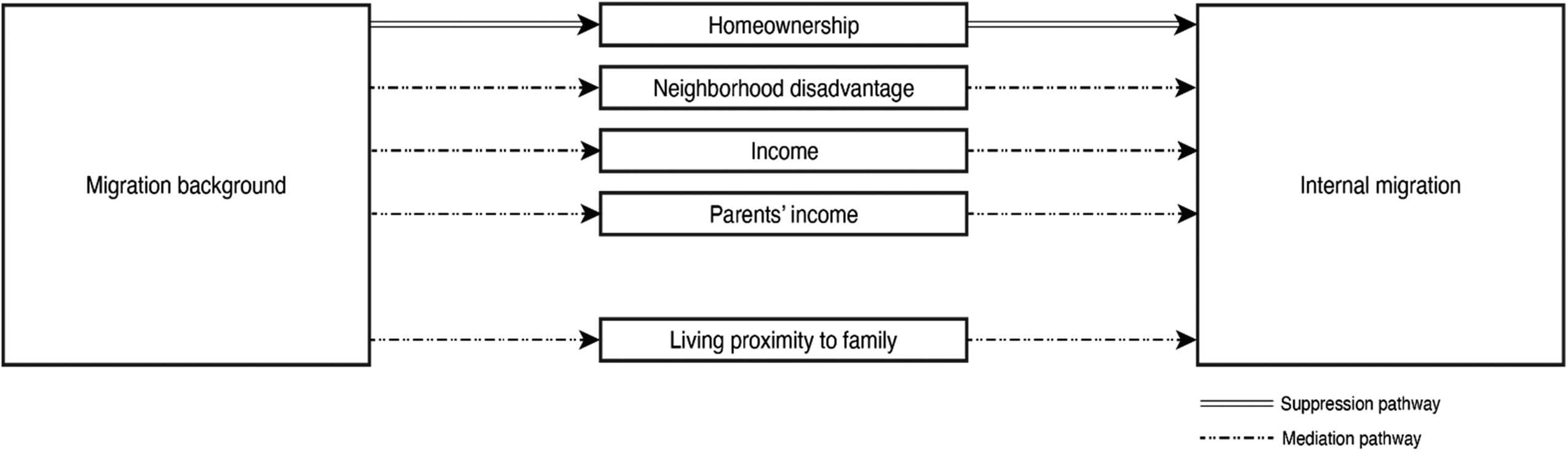
Conceptual Model for the link between Migration Background and Internal Migration.
Regarding family ties, we expect that compared with individuals of native origin, children of migrants are more likely to live in proximity to their family members after leaving home. Since living close to family members deters moving away, we expect family ties to mediate an observed negative association between migration background and internal migration.
Data and Methods
Data and Analytical Sample
For this study we used individual-level, full population data from the System of Social Statistical Datasets (SSD) provided by Statistics Netherlands, covering the period from 2006 to 2022. The SSD contain details on individuals possessing a Dutch social security number, which is assigned to every citizen at birth and to anyone else with legal residence in the Netherlands. These data combine information from different administrative registers, including municipal registers of addresses, education registers, tax authorities, and social insurance bank (Bakker, Van Rooijen, and Van Toor 2014).
Our study population includes three origin groups of individuals born in the Netherlands: (a) to two Dutch-born parents, (b) to at least one parent born in Turkey, and (c) to at least one parent born in Morocco. Ages ranged from 18 to 50 during the years spanning from 2006 to 2022. From this population, we randomly selected 5% of the Dutch-origin group and kept all children of migrants. The upper age limit was restricted primarily due to the relatively lower number of individuals in the category of children of Moroccan migrants who exceeded this threshold. Besides the lower age limit representing adulthood initiation, we further restricted the population to individuals who had already left the parental home to ensure we capture independent migration decisions. Furthermore, we omitted observations of individuals living with their parents after having left home to address “boomerang mobility,” where individuals temporarily return home and resume dependent living, often occurring among those who have not yet achieved economic independence (Olofsson et al. 2020). Next, we restricted our population to individuals observed in at least two consecutive time points. Finally, we removed all observations with missing income or housing tenure information. The entire procedure resulted in a study population of 530,371 individuals (Dutch origin = 350,394; Turkish origin = 95,775; Moroccan origin = 84,202). We followed them over a period ranging from 1 to 16 years (11.6 years on average), resulting in 4,902,180 person-year observations.
Measures
Our dependent variable of internal migration was measured using the addresses file. This longitudinal file contains the registered date of residences, and for every address, it identifies the exact XY coordinates using a unique address identifier. We restricted the file to match a person-year structure, such that for every individual, we capture annually the exact address on January 1. The file disregards multiple changes of addresses within one calendar year, and thus, our measure of migration may slightly underestimate the overall number of moves. Internal migration was measured as the annual change of address to a different municipality, with a minimum distance of 15 km, calculated as the Euclidean distance between the coordinates of the two addresses. The 15-km threshold was set to filter out short-distance moves across administrative boundaries. To ensure the robustness of our findings, we replicated the analyses using 20-km, 25-km, and 30-km thresholds, resulting in consistent outcomes and conclusions across all alternative distance criteria. The reference group comprises individuals who either relocated over distances shorter than 15 km or did not move at all.
International migration background was measured as a categorical variable distinguishing between people (a) of Dutch origin (reference group), (b) of Turkish origin, and (c) of Moroccan origin.
Economic Measures
Income decile was measured as the combined yearly total of labor earnings, business income, investment income, and social benefits for all household members, accounting for taxes and transfers, expressed in euros. Adjustments were made based on household composition using a Netherlands-specific equivalence scale. Adults were given a weight of 1, children under 18 a weight of 0.8, and income was divided accordingly after scaling (Siermann, Van Teeffelen, and Urlings 2004). Based on the standardized-equivalized household income, private households were divided by Statistics Netherlands into 100 groups of equal sizes, from which income deciles were computed. Parents’ income decile was measured as the average standardized household income decile of parents rounded to integers. In the case where no parents lived in the Netherlands, we used single imputation method, applying “last observation carried forward” and “regression imputation” when no such last observation was recorded. While acknowledging that single imputation does not consider stochasticity, we opted for this method over multiple imputation due to its computational efficiency. Additionally, our choice was influenced by the use of population data and thus the relatively lower importance of standard errors in presenting our results. Housing tenure was measured as a binary indicator of rented (0) versus owned (1) property assigned to the household unique identifier. Neighborhood disadvantage was measured as a standardized scale at the neighborhood-year level, using four dimensions of neighborhood stratification (Sampson, Raudenbush, and Earls 1997): the proportion of single-parent households, households in the bottom two income deciles, owner occupied household, and first-generation immigrants (Cronbach's alpha acceptable level = 0.66–0.77).
Family Measures
To measure the motivating and deterring effect of living proximity to family members we used the addresses file, child-parent file, and the family network file. The parent-child file links individuals with their living and registered parents. The family network file, an extension of the child-parent file, links individuals to nuclear and extended family members, such as siblings, uncles, and aunts, and this information is available since 2009. Changes in the family network file between successive years occur due to events like births, deaths, emigrations, or immigrations of family members. For computational energy efficiency, we use the network file to identify adult siblings, uncles, and aunts only in three time points, 2009, 2015, and 2020. Matching the family network file with the addresses file, we measured geographical proximity to parents, siblings, and uncles/aunts in two different ways.
The first approach involved three scales that summed up the number of family members (a) in the neighborhood, (b) in a different neighborhood within the same municipality, or (c) in a different municipality. Based on kin obligation ratings obtained from the work of Rossi and Rossi (2018), we adjusted the weighting of these scales, attributing a weight of 8.3 to parents, 6.9 to siblings, and 4 to uncles/aunts. By using the scaled approach, we could measure the impact of family network size on relocation decisions. The second method entailed utilizing a series of nine binary variables to signify whether individuals had (a) a parent, (b) a sibling, (c) an uncle/aunt residing (a) in their immediate neighborhood, (b) in a different neighborhood within the same municipality, or (c) in a different municipality. By employing this more complete but less parsimonious approach, we were able to infer the relative importance of different kin to migration behavior.
Control Variables
All models accounted for a set of control variables associated with internal migration to mitigate potential compositional differences in these indicators between the origin groups. Sex was measured as a time-constant binary indicator of (0) male versus (1) female. Age was measured in years. Year was measured as a categorical variable from 2006 (ref.) to 2021. One immigrant parent was measured as a time-constant binary indicator of (0) no or two immigrant parents versus (1) one immigrant parent. Level of education was measured as a categorical indicator, distinguishing between people who obtained (1) non-university education (ref. group), (2) a university degree, or (3) missing. Occupation was measured as a categorical indicator, distinguishing between people who are (1) out of workforce (ref. group), (2) employed, (3) unemployed, or (4) enrolled in education. Partnership/parental status was measured as a categorical indicator, distinguishing between people who are (1) single (reference group), (2) partnered without children, (3) partnered with children, and (4) single parent. Municipality population density was measured as a categorical variable of the number households per km² in the municipality, ranging from (1) less than 500 to (5) more than 2500. Municipality unemployment rate was measured as a continuous indicator to capture macro-level outmigration conditions (Gärtner 2016). Big four cities indicates whether a person lives in one of the four largest cities in the Netherlands, namely Amsterdam, Rotterdam, Utrecht, and The Hague.
Analytical Strategy
We used discrete-time recurrent event history analysis with logit regression and standard errors clustered at the individual level to model the annual rate of internal migration, comparing children of migrants and people of Dutch origin. We employed a stepwise model specification strategy to empirically investigate the role of economic resources and proximity to family members in explaining group differences in migration behavior. Our approach was delineated into three models of increasing complexity: In Model 1, we adjusted for migration background and the control variables. In Model 2, we expanded our adjustments to include economic resources (i.e., income, parents’ income, housing tenure, and neighborhood disadvantage). In Models 3a and 3b, we accounted for living proximity to family members using the scaled approach (a) and the binary approach (b) to assess the explanatory role of family ties. To determine the combined impact of each set of explanatory variables, we provide results for migration background in Average Marginal Effects (AME), ensuring comparability across nested models within the logistic regression framework (Mood 2010). In a final step, we estimated the relative contribution of each economic and family component to group differences in migration behavior, by decomposing the effect change using the KHB method for a variable-specific mediation analysis (Karlson, Holm, and Breen 2012).
Results
Descriptive Results
Figure 2 displays internal migration hazard rates by age and origin group. The figure highlights group differences in the probability of internal migration over the life course. In early adulthood, children of migrants, primarily those of Turkish origin, exhibit lower migration rates than individuals of Dutch descent. However, these differences converge with age. For individuals of Turkish origin, the convergence takes place around the age of 39, while for those of Moroccan origin, it occurs around the age of 25. The probability of migration for individuals of Moroccan origin even surpasses that of those of Dutch origin after age 35.
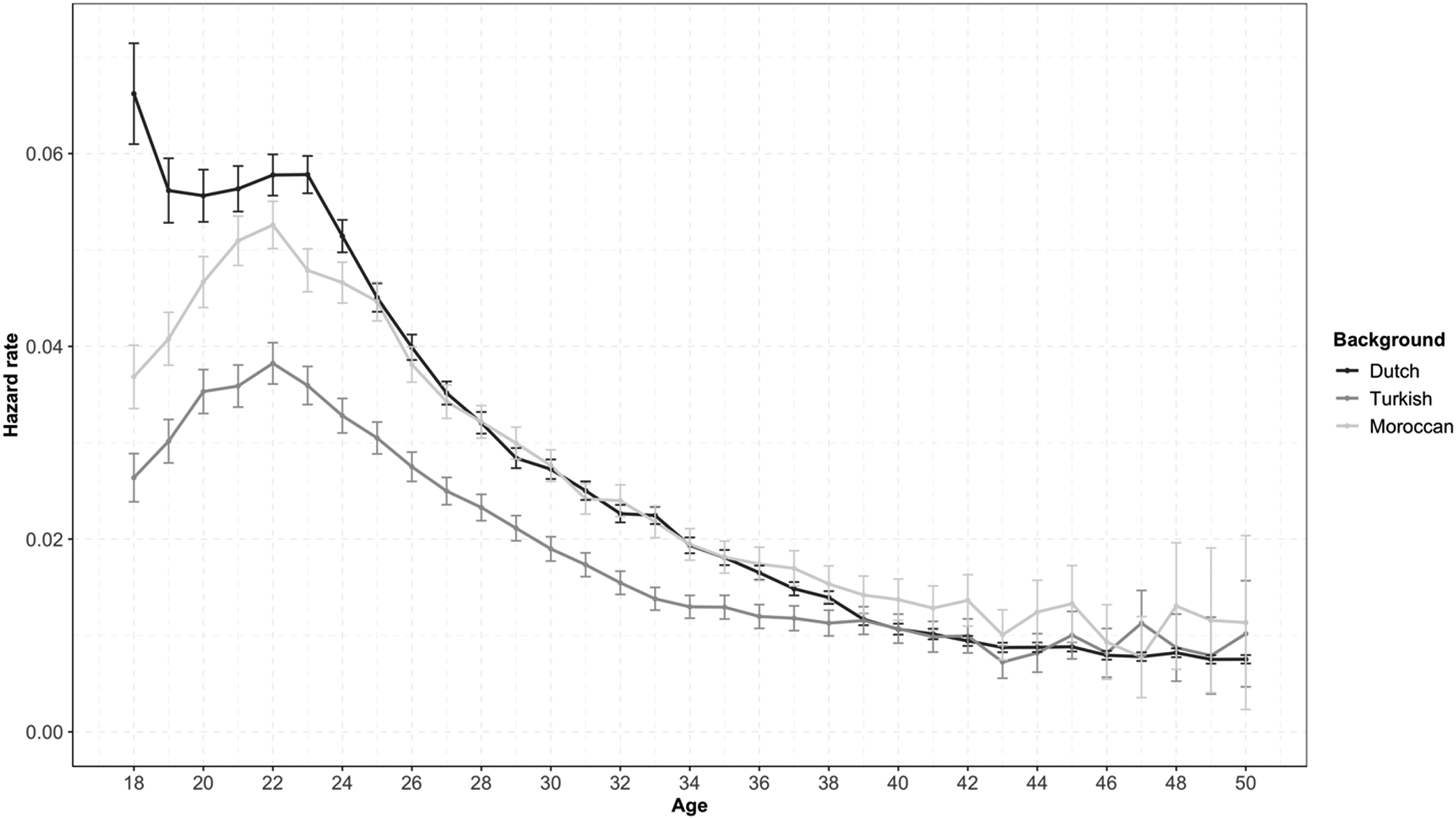
Age-Specific Hazard Rates of Internal Migration by Origin Group.
Further survival estimates showed that 54% of individuals of Dutch origin migrated at least once by age 50. In contrast, this figure was 39% for children of Turkish migrants and 49% for children of Moroccan migrants. All in all, considering only age compositions, the Turkish-origin group demonstrates significantly lower migration rates than the Dutch-origin group, whereas this difference between the Dutch and Moroccan groups is relatively small. Even though the disparity between the Moroccan and Dutch origin groups is slight, other compositional differences may uncover additional nuances in internal migration behavior.
Table 1 presents descriptive statistics of the potential mediators by origin group. The table highlights substantial group differences in economic circumstances and family ties. Not surprisingly, individuals of Dutch origin had higher income and parental income, a much higher prevalence of homeownership, and a lower score in neighborhood disadvantage. Whereas children of migrants were positioned on average at the fourth income decile and their parents at the third, children of Dutch were at the sixth and their parents at the upper end of the fifth. Even more remarkably, 51% of children of Turkish origin and 22% of Moroccan origin owned homes, in contrast to the 70% homeownership rate among individuals of Dutch origin. The median neighborhood disadvantage score for the entire population stood at 0.3, with 90% falling within the range of −0.55 to 2.27 (not shown). The average neighborhood disadvantage scores for the origin groups were 1.1 for the Turkish group, 1.2 for the Moroccan group, and 0.22 for their Dutch counterparts.
Descriptive Statistics of Mediators by Origin Group.
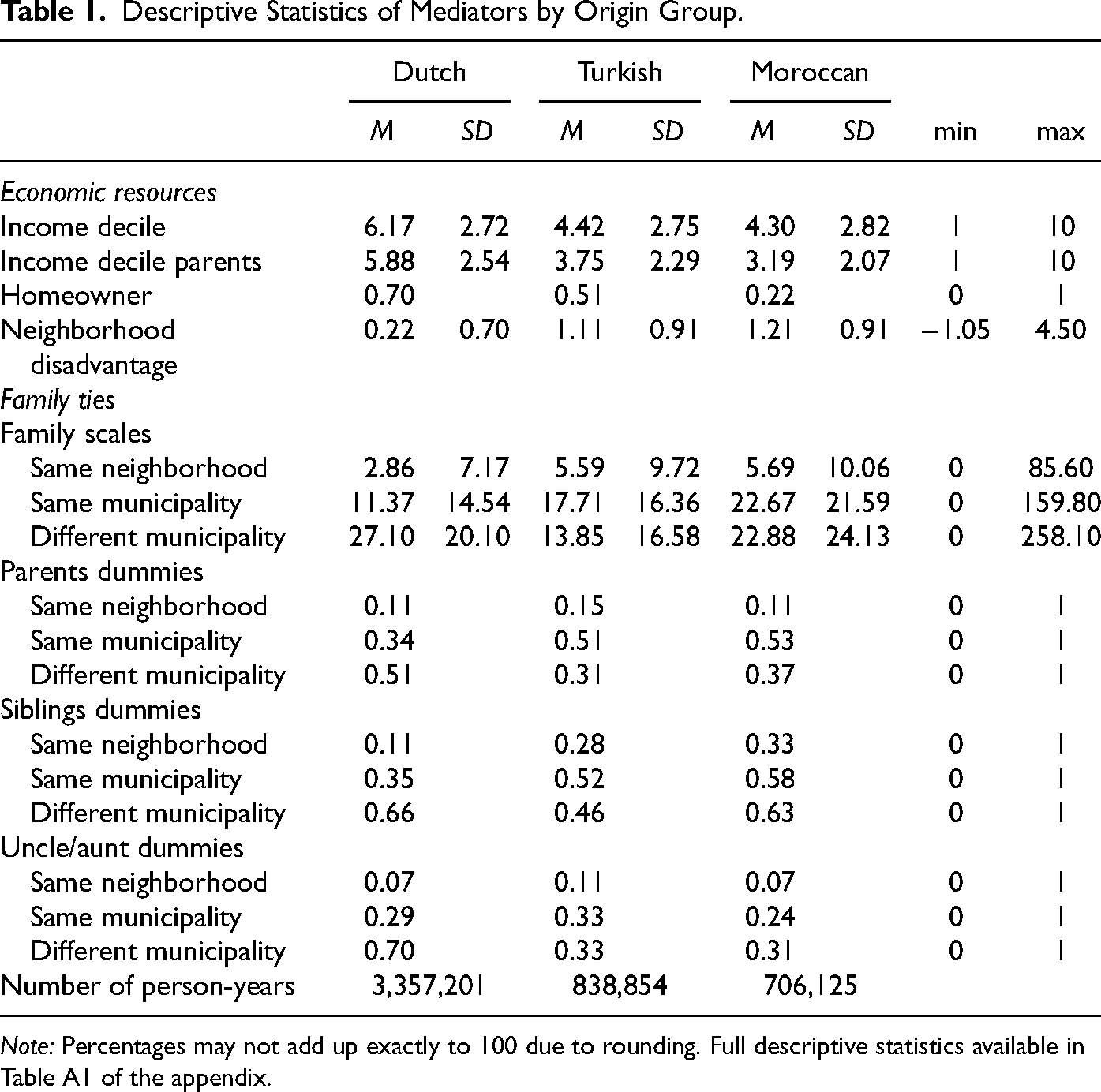
Note: Percentages may not add up exactly to 100 due to rounding. Full descriptive statistics available in Table A1 of the appendix.
Table 1 further illustrates group differences concerning proximity to family members. On average, children of migrants scored higher than individuals of Dutch descent on the family density scale within the same neighborhood and the same municipality. Examination of the respective family dummies reveals that these differences stem from the fact that over 50% of children from migrant backgrounds had at least one parent and sibling residing in the same municipality, as opposed to 34% of individuals of Dutch origin.
Furthermore, approximately 30% of children of migrants had at least one sibling living in the same neighborhood. In contrast, this figure was only 11% among individuals of Dutch origin.
Conversely, people of Dutch origin had a more extensive distant family network. About 51% had at least one parent, 66% had one sibling, and 70% had one uncle or aunt living in another municipality. In comparison, these figures were 31%, 46%, and 33% for the Turkish-origin group and 37%, 63%, and 31% for the Moroccan-origin group, respectively.
Mediators’ Effect on Internal Migration
In the next step of our analysis, we assessed each mediating variable's effect on the migration event. Table 2 presents the stepwise event history models. Zooming in on the effect of economic resources, we see that income had a non-linear (U-shaped) relationship with migration, with a low turning point at the second decile. Conversely, parental income displayed a negative effect on migration. As expected, homeowners were less likely to migrate than renters, while neighborhood disadvantage demonstrated a non-linear inverted U-shaped association with migration. Migration was the least common both the most disadvantaged and most advantaged neighborhoods, implying restricted mobility for those in worse circumstances and lower desire for relocation among those living in affluent locations.
Event History Models of Internal Migration.
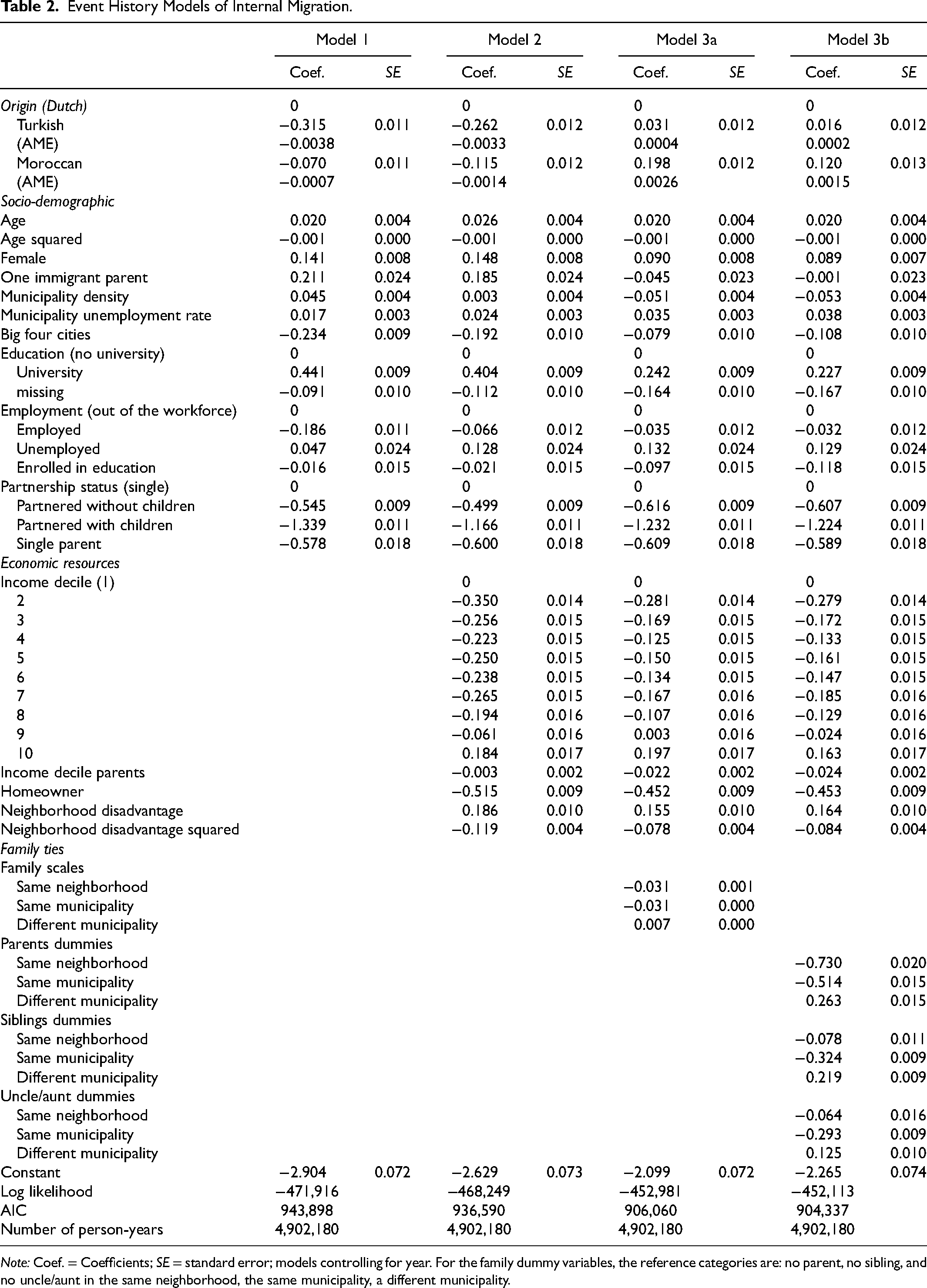
Note: Coef. = Coefficients; SE = standard error; models controlling for year. For the family dummy variables, the reference categories are: no parent, no sibling, and no uncle/aunt in the same neighborhood, the same municipality, a different municipality.
Zooming in on the effect of family ties confirms both the motivating and deterring effects on migration behavior of living in proximity to relatives. As illustrated in Model 3a (Table 2), the larger the family network in the neighborhood or the municipality, the lower the probability of moving to a different municipality. In turn, the greater the family network living outside the municipality, the higher the probability of migrating elsewhere. Data on the family dummies in Model 3b, also underscore the reliability of our family scales, with parents exerting the most significant impact on migration behavior, followed by siblings, and lastly by uncles or aunts.
A closer examination of the effect of the potential mediators, separately for each origin group, showed that almost all indicators had the same expected coefficient sign (see Table A2 of the Appendix). However, two exceptions appeared among children of Moroccans. The deterring effect of having an uncle or aunt in the same neighborhood was insignificant. Moreover, homeownership was positively associated with internal migration, a finding we will return to in the discussion section.
Group Differences in Internal Migration
We continue our analysis by exploring the effect of migration background on internal migration in a multivariate framework. Figure 3 shows the marginal effects from the stepwise event history models, specifically, the difference in the probability of annual internal migration for children of Turkish (left) and Moroccan (right) migrants versus individuals of Dutch origin, by model specification. First, the figure confirms that once socio-demographic variables are held constant, the probability of migration is lower for children of migrants, primarily for those of Turkish descent, compared with individuals of Dutch origin (see Model 1). The annual migration probability for the Dutch group was 1.4% (baseline risk—not shown). In contrast, it was 0.38 percentage points (pp) lower for children of Turkish migrants and 0.09 pp lower for children of Moroccan migrants.
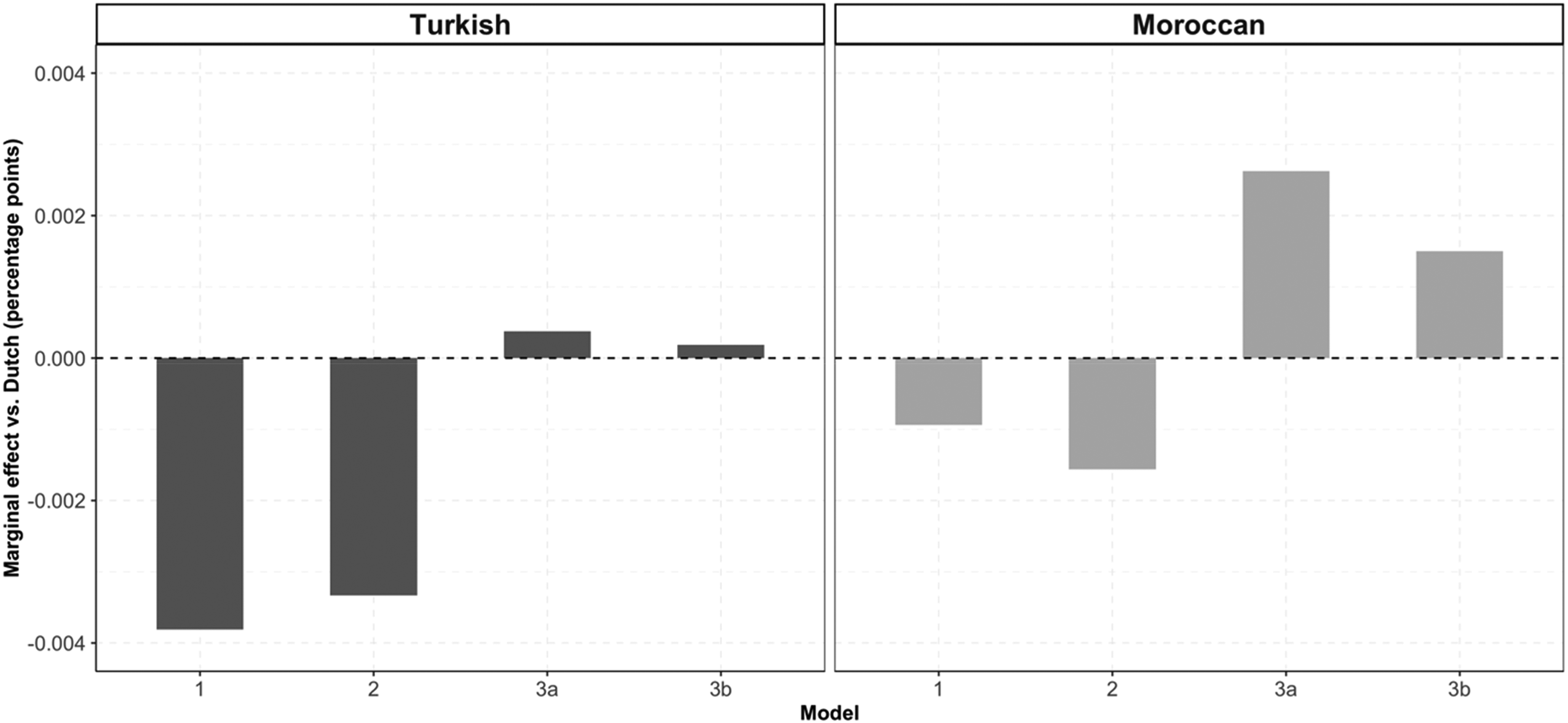
Marginal Effects of Internal Migration by Model Specification and Origin Group.
Next, the figure does not support the hypothesis that economic resources mediate lower migration rates among children of migrants. When economic resources are accounted for in Model 2, the probability gap with the Dutch-origin group only reduced slightly to 0.33 pp for individuals of Turkish origin and even increased to 0.16 pp for those of Moroccan origin.
The figure reveals that family ties explain the lower migration probability among children of migrants. This is illustrated by Models 3a and 3b, showing that when family ties are introduced in the models, either by using the scaled approach or the binary approach, the annual probability of migration was higher by 0.02–0.04 pp for individuals of Turkish origin and by 0.15–0.26 pp for those of Moroccan origin compared to individuals of Dutch origin. Overall, after accounting for proximity to family members, the probability difference between children of Turkish and Dutch descent completely disappeared, while children of Moroccan descent appeared even more mobile than the other origin groups. Moreover, the greater mediating power of the scaled approach, compared to the binary one, underscores the importance of looking at kinship network size when explaining relocation decisions.
Explaining the Differences
In the final step of our analysis, we examine the relative contribution of each mediating variable in explaining the overall group differences in migration probabilities across the nested models. Table 3 shows the decomposition results from the mediation analysis for the Turkish- (left) and Moroccan- (right) origin groups. Concerning the role of economic resources, the upper panel of the table reveals that for both groups, income and neighborhood disadvantage mediated the negative effect of migration background on internal migration. Specifically, children of migrants have lower income and tend to live in more disadvantaged neighborhoods, which are associated with a lower likelihood of migration. This economic disadvantage partially explains why children of migrants are less mobile compared to individuals of native origin. Conversely, housing tenure had a counteracting (suppressing) effect. As children of migrants are more likely to be renters, and renters are more likely to migrate than homeowners, this factor makes children of migrants more mobile than their native-origin counterparts. These findings align with our expectations, except for the relatively minor suppression effect of parents’ income in both groups.
Mediation of Group Differences in Internal Migration.
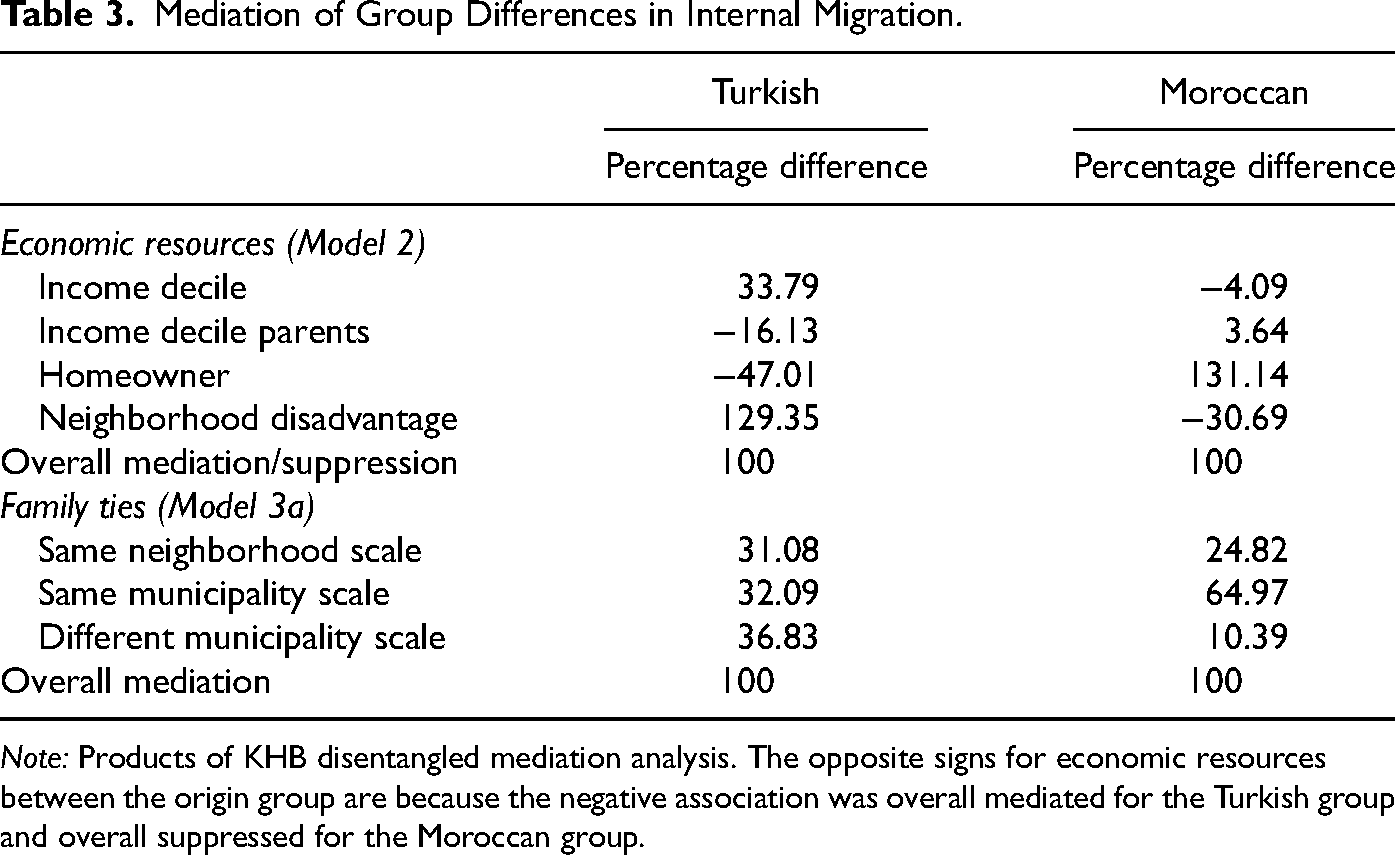
Note: Products of KHB disentangled mediation analysis. The opposite signs for economic resources between the origin group are because the negative association was overall mediated for the Turkish group and overall suppressed for the Moroccan group.
At the same time, the table also reveals group differences concerning the magnitude of the effect of each economic indicator. For the Turkish-origin group, income is accountable for 34% and neighborhood disadvantage 129% of the difference between model 1 and model 2 (Figure 3) whereas homeownership had the opposite role, accountable for 47%. In contrast, income and neighborhood disadvantage played a less mediating role at 4% and 31% for the Moroccan-origin group. The overall suppression was driven by housing tenure, which increased the difference with the Dutch-origin group by 131%. These findings support our expectation that homeownership will play a larger suppressing role for the Moroccan-origin group than for the Turkish-origin group.
The role of family ties is important and less complex. The lower panel of Table 3 affirms our expectations that the deterring effect of nearby family members on migration explains why children of migrants are less mobile than individuals of native descent. Of the difference between Models 2 and 3a, 63% was attributed to the size of the family network in the neighborhood and the municipality for the Turkish-origin group and a substantial 90% for the Moroccan-origin group. The remaining 37% for the Turkish-origin group and 10% for the Moroccan-origin group was attributable to the motivating effect of family members living elsewhere. The mediating, rather than suppressing, role of distant family members in explaining the negative association between migration background and internal migration is because the native-origin group has more widely spread family networks. Despite having ‘weaker’ family ties, individuals of Dutch origin have more potential destinations across the country and, therefore, higher internal migration rates. Family networks account for the higher migration rates among the Dutch-origin group by playing a dual role: smaller local networks, and therefore weaker place attachment, serve as push factors, while more extensive networks elsewhere act as pull factors in motivating migration.
Robustness Checks
We conducted two tests to explore the robustness of our findings. The first test addressed geographical sorting. Because migrant communities tend to live in urban areas and more often in the western part of the Netherlands, the “starting” positions of the two groups we compare are different. One implication, for example, could be that migrants are less mobile because they perceive fewer municipalities where they can live, assuming a preference to live near other migrants. Therefore, we repeated the principal analysis using time-varying region (NUTS-3) fixed effects to control for geographical selectivity (Figure A1 of the Appendix). Overall, this analysis validated our findings.
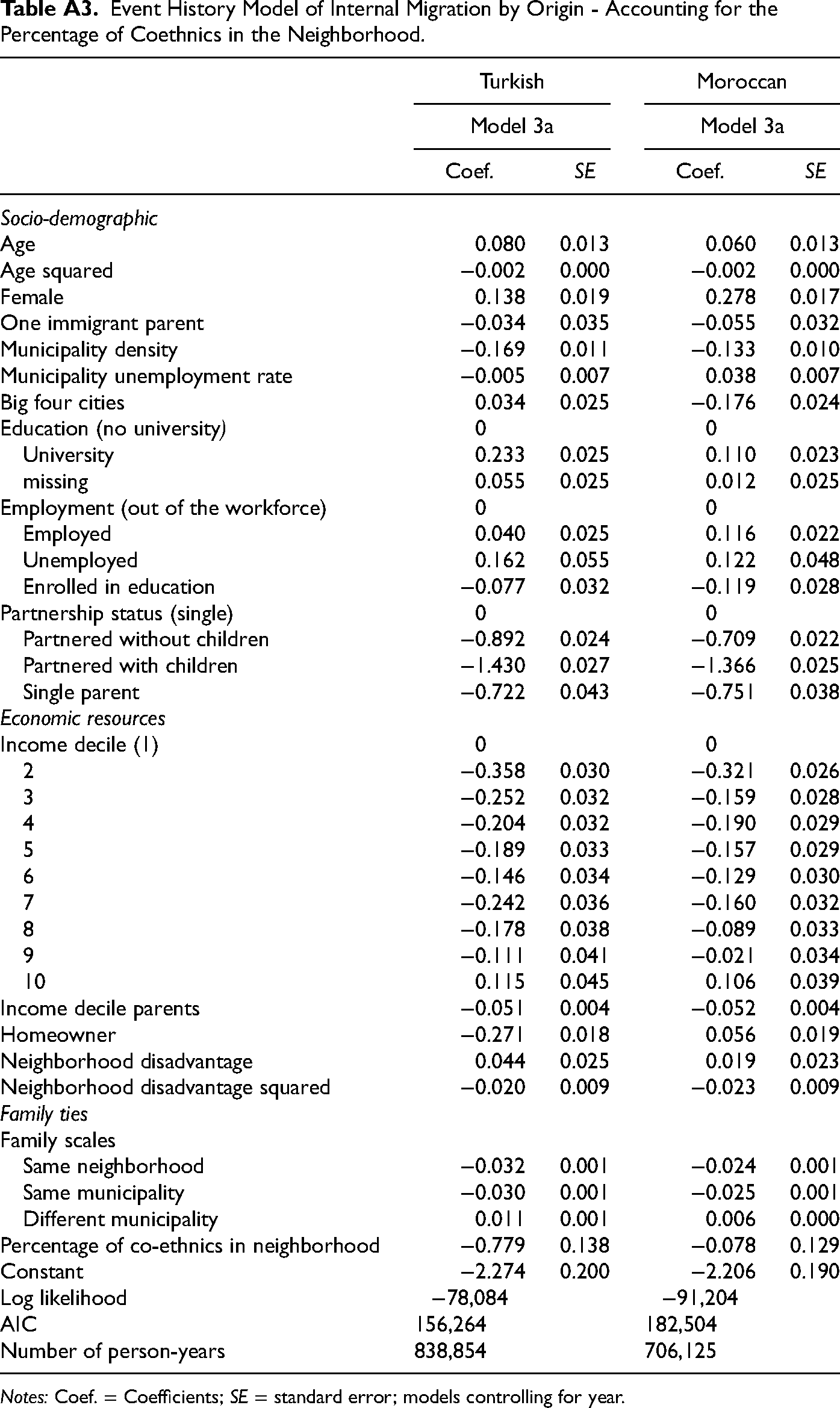
The second test concerned the role of co-ethnic networks in the neighborhood. Children of migrants exhibit greater neighborhood attachment because, beyond their families, they are more oriented toward their communities (Dekker and Bolt 2005; Kohlbacher, Reeger, and Schnell 2015; Finney and Jivraj 2013). A higher concentration of families in the neighborhood naturally enhances the overall community network in that locality. Consequently, a larger family network can represent a more extensive co-ethnic network, by either directly increasing the number of network members or by broadening the potential for non-familial contacts (Kalmijn 2022). To gain a more comprehensive understanding, we investigated whether the impact of family network size on internal migration is influenced by the level of ethnic homogeneity within the neighborhood (Table A3 of the Appendix). The analysis revealed that neighborhood co-ethnic density serves as a deterrent to internal migration for both the Turkish- and Moroccan-origin groups. However, the coefficients remain unchanged when comparing the effects of family scales without accounting for neighborhood composition (Table A2 of the Appendix). These findings demonstrate that the deterring effect of a local family network size's is robust, independently and on top of the neighborhood's co-ethnic density.
Discussion
In Western European societies, internal migration rates differ between natives and migrant populations (Finney and Catney 2012; Finney and Simpson 2008; Zorlu 2009). Recent evidence has shown that adult children of international migrants are less mobile than individuals of native origin (Thomas and Dommermuth 2020; Vidal and Windzio 2016; Zorlu 2009). It has been suggested that the reduced migration rates among the second generation may be attributed to their limited economic resources or their stronger cultural preferences for residing close to family and co-ethnics.
Our findings are partly different and partly similar for the two ethnic groups that we analyzed. Children of Turkish migrants were overall less mobile over their life course, in line with expectations and with the few prior studies on this topic. Our main contribution here is that we could explain this difference entirely by the geographical proximity to family members and the intensity of nearby kin networks, supporting the family ties argument. This finding, however, does not necessarily imply that children of migrants hold a stronger preference for living near family than individuals of native origin. The conclusion is that migrant family networks are more geographically concentrated, so the Turkish second generation is more discouraged from moving away and has a more limited choice of attractive destinations to relocate to. Whether living close to kin is a matter of preference or constraint requires a different type of study.
These results take on the most widespread meaning when viewed from the life course perspective. The lower migration rates among children of Turkish migrants were especially pronounced at younger ages (Figure 2). This early difference potentially initiated a “snowball” deterring effect of family ties on lifetime internal migration. After leaving home, children of Turkish migrants were more likely to stay near their families in the municipality they grew up in. Further analysis indicated that this early disparity in migration rates disappeared when accounting for family ties (not reported). With age, the gap with the Dutch-origin group gradually converged. The steeper decline in age-specific rates among the Dutch-origin group, which contributes to this convergence, is attributed to differences in the prevalence of homeownership. These observations suggest that children of migrants and individuals of native origin respond to distinct inhibiting forces. For children of migrants, family exerts an early anchoring influence, keeping them in place. At the same time, for individuals of native origin, later in the life course, homeownership ties them to their chosen locality, whether it is near family or not.
The analyses portray a different story for children of Moroccan migrants. First and foremost, the early adulthood gap with individuals of Dutch origin in migration rates was less evident among the Moroccan group. The direction of the difference was similar to what it was for the Turkish-origin group, but the magnitude was trivial. Moreover, while the convergence in migration rates for individuals of Turkish origin was observed only in their late 30’s, for those of Moroccan origin, it had already occurred by their mid-20’s. Finally, our study revealed that after family ties were accounted for, the Moroccan-origin group had a significantly higher probability of migration than those of Dutch and Turkish origin. The effects of family ties were the same, but given the initial null effect, they worked as a suppressor, not as a mediator.
We could only speculate why, ceteris paribus, children of Moroccan migrants were more likely to migrate. This higher migration rate may reflect a search for stability. One driving element could be instability in the labor market. Over time, the lack of occupational stability within a specific group may become an aspect of group identity and shared behavioral patterns. This could be exemplified by our analysis showing that, unlike individuals of native origin, for children of migrants, especially those of Moroccan origin, being employed was positively associated with migration, implying a sense of unsettledness even when employed. Another reason could be differences in the meaning of rootedness. We know from previous studies that observed characteristics do not explain the lower homeownership rates among Moroccans compared to the Dutch (Zorlu, Mulder, and Van Gaalen 2014). Coupled with our findings, the higher instability among individuals of Moroccan origin may imply that they have a different orientation toward settling, with their sense of rootedness predominantly tied to proximity to family. Moreover, our results indicate that homeowners in the Moroccan-origin group were more likely to migrate than renters, emphasizing that rootedness for some migrant communities may not be tied to a specific home or place in the “host” country.
Our findings have important social implications. The lower geographical mobility among children of migrants and the role of family networks in explaining this gap imply that the native-immigrant spatial segregation in Western Europe (Lichter, Parisi, and Ambinakudige 2020) also extends to the second generation and is likely to persist in the foreseeable future. Spatial segregation has obvious consequences for inter-group contact and implies limited access to educational institutions and occupational opportunities (Massey and Denton 1985). Therefore, the notable migration gap between children of migrants and individuals of native origin, particularly in young adulthood, is not only a sign for the lack of social and socio-economic integration of the second generation but is also likely a contributing factor.
Certainly, our focus on children of Turkish and Moroccan migrants does not capture the experiences of all migrant groups. Although these groups are among the largest migrant populations across Western Europe (the Turkish are the largest) and therefore our findings can be extended to other country-contexts, our conclusions concerning the role of family ties may not be generalized for the entire second generation in the country (Zorlu 2009). Nevertheless, regardless of cultural differences between migrant groups in the emphasis on family solidarity, the migration process itself increases the interdependency between migrant generations (Baykara-Krumme and Fokkema 2019), suggesting that intergenerational living distance is of particular importance among migrant populations.
The housing sector was one factor we could not incorporate in our analysis due to incomplete data. This is an important contextual factor since about 75% of rental properties in the Netherlands are owned by social housing associations that provide subsidies based on income criteria. Individuals receiving these benefits are restricted to the municipality they registered for social housing, making renters in the social sector less prone to relocation than private renters (Biesenbeek 2022). An additional analysis, incorporating housing sector data since 2011, validated our findings overall (not reported). However, it showed that social renting reduced the suppressing effect of homeownership, particularly for the Moroccan-origin group.
This study focused on long-distance internal migrations, classifying short-distance moves as immobility. This approach overlooks the potential that internal migration and shorter-distance relocations could be competing decisions. We tested this assumption by questioning whether, instead of moving to distant locations, children of migrants favor shorter-distance moves. Additional analysis revealed that the Turkish and Moroccan-origin groups were less likely to relocate to a different neighborhood within a 15 km range (not reported), contradicting the idea of competing decisions. Moreover, it underscores the stronger neighborhood integration among migrant communities (Kalmijn 2022; Kohlbacher, Reeger, and Schnell 2015). A research design incorporating measures of location preferences could provide a more complete panorama of moving strategies of the second generation.
Internal migration is important for individuals’ well-being (Nowok et al. 2013; Switek 2016). In this study, we asked why children of migrants are less mobile and concluded that it is because they are more attached to their families. The question that arises, however, is whether this attachment is rooted in personal preferences or familial expectations. To put it differently, do children of international migrants prioritize living near family over, for instance, relocating to more affluent neighborhoods.? Or are other factors, such as anticipated filial responsibilities from parents (de Valk and Schans 2008), hindering them from moving away.? If preferences dictate their choices, it may suggest that, for the children of migrants, internal migration might not necessarily be perceived as a means to enhance individual welfare. On the other hand, if a sense of obligation is the driving force, it could partly explain the mismatch between the desire and expectation to move among ethnic communities (Coulter, Van Ham, and Feijten 2011). Interestingly, if the family acts as a barrier to migration, this dynamic originates from a generation of individuals who underwent (international) migration. Investigating whether it is possible to distinguish between these two forces and whether these reasons also extend to the third generation is an important avenue for future research.
Footnotes
Appendices
Event History Model of Internal Migration by Origin - Accounting for the Percentage of Coethnics in the Neighborhood.
| Turkish | Moroccan | |||
|---|---|---|---|---|
| Model 3a | Model 3a | |||
| Coef. | SE | Coef. | SE | |
| Socio-demographic | ||||
| Age | 0.080 | 0.013 | 0.060 | 0.013 |
| Age squared | −0.002 | 0.000 | −0.002 | 0.000 |
| Female | 0.138 | 0.019 | 0.278 | 0.017 |
| One immigrant parent | −0.034 | 0.035 | −0.055 | 0.032 |
| Municipality density | −0.169 | 0.011 | −0.133 | 0.010 |
| Municipality unemployment rate | −0.005 | 0.007 | 0.038 | 0.007 |
| Big four cities | 0.034 | 0.025 | −0.176 | 0.024 |
| Education (no university) | 0 | 0 | ||
| University | 0.233 | 0.025 | 0.110 | 0.023 |
| missing | 0.055 | 0.025 | 0.012 | 0.025 |
| Employment (out of the workforce) | 0 | 0 | ||
| Employed | 0.040 | 0.025 | 0.116 | 0.022 |
| Unemployed | 0.162 | 0.055 | 0.122 | 0.048 |
| Enrolled in education | −0.077 | 0.032 | −0.119 | 0.028 |
| Partnership status (single) | 0 | 0 | ||
| Partnered without children | −0.892 | 0.024 | −0.709 | 0.022 |
| Partnered with children | −1.430 | 0.027 | −1.366 | 0.025 |
| Single parent | −0.722 | 0.043 | −0.751 | 0.038 |
| Economic resources | ||||
| Income decile (1) | 0 | 0 | ||
| 2 | −0.358 | 0.030 | −0.321 | 0.026 |
| 3 | −0.252 | 0.032 | −0.159 | 0.028 |
| 4 | −0.204 | 0.032 | −0.190 | 0.029 |
| 5 | −0.189 | 0.033 | −0.157 | 0.029 |
| 6 | −0.146 | 0.034 | −0.129 | 0.030 |
| 7 | −0.242 | 0.036 | −0.160 | 0.032 |
| 8 | −0.178 | 0.038 | −0.089 | 0.033 |
| 9 | −0.111 | 0.041 | −0.021 | 0.034 |
| 10 | 0.115 | 0.045 | 0.106 | 0.039 |
| Income decile parents | −0.051 | 0.004 | −0.052 | 0.004 |
| Homeowner | −0.271 | 0.018 | 0.056 | 0.019 |
| Neighborhood disadvantage | 0.044 | 0.025 | 0.019 | 0.023 |
| Neighborhood disadvantage squared | −0.020 | 0.009 | −0.023 | 0.009 |
| Family ties | ||||
| Family scales | ||||
| Same neighborhood | −0.032 | 0.001 | −0.024 | 0.001 |
| Same municipality | −0.030 | 0.001 | −0.025 | 0.001 |
| Different municipality | 0.011 | 0.001 | 0.006 | 0.000 |
| Percentage of co-ethnics in neighborhood | −0.779 | 0.138 | −0.078 | 0.129 |
| Constant | −2.274 | 0.200 | −2.206 | 0.190 |
| Log likelihood | −78,084 | −91,204 | ||
| AIC | 156,264 | 182,504 | ||
| Number of person-years | 838,854 | 706,125 | ||
Notes: Coef. = Coefficients; SE = standard error; models controlling for year.
Acknowledgments
The authors thank the IMR Editor, Associate Editor, and three anonymous peer reviewers for their constructive and useful suggestions.
Data Availability Statement
The data that support the findings of this study are available from Statistics Netherlands. Restrictions apply to the availability of these data, which were used under license for this study.
Declaration of Conflicting Interests
The authors declared no potential conflicts of interest with respect to the research, authorship, and/or publication of this article.
Funding
The authors disclosed receipt of the following financial support for the research, authorship, and/or publication of this article: This work was supported by the European Research Council (ERC) under the European Union's Horizon 2020 research and innovation program under Grant No. 819298, PI: Helga A.G. de Valk.
