




Abstract
This article offers a new perspective on a body of literature that has been growing since the modern concept of “statelessness” became a pressing concern of diplomats and the displaced alike more than a century ago: it studies the “voices” of the stateless as captured in the archival documents of the organizations designed to deal with refugees through the lens of family and kinship care. This will help us to gain an understanding of how stateless refugees and the officials, administrators and humanitarians who assisted them navigated and negotiated the kinds of care requested, needed, withheld, or provided, and that have been captured in the documents coming out of these processes. By positioning care as relational and embedded within historical documents, this contribution offers glimpses of the physical remnants of the processes that took shape between the various actors. From these explorations, it follows that the distinction between anonymous care, as provided by humanitarian or state organizations, and personal care may not have been so clear-cut: sometimes helpers and those being helped turn out both to be Nansen passport holders. The focus on family and kin moreover allows to move beyond the institutional focus on individuals and to understand statelessness and displacement as an experience of families and communities instead.
To the representative of the Nansen Committee in China
Russian emigrant Yulian Ivanovich Shumilevich, who lives in Harbin, Mukdenskaya No. 2
REQUEST
Having an advanced age, born on August 23, 1856, and having lost my ability to work, I am dependent on my daughter, Maria Yulianovna, and her husband, Schroeder, who live in the city of Zagreb, Yugoslavia.
Living separately from each other, and moreover, in different countries increases the cost of my maintenance, at least a number of times more than if we lived together instead.
In order to reduce this expense, I need to move to my daughter in the city of Zagreb, but this requires no small funds, which, at the present time, are not available, and therefore I humbly ask you to help obtaining the necessary amount as an advance from the Committee. 1
A 76-year-old stateless Russian refugee sent this letter on February 25, 1933, more than 10 years after the Russian Civil War. Desperate to reunite with his daughter who lived in Yugoslavia, he turned to the representative of the League of Nations’ Nansen Office in China. The folder related to this case contains an extensive exchange of letters between the daughter, the father, and various officials, both within the League of Nations, and throughout China, Yugoslavia, Switzerland, and beyond. Although the correspondence abruptly ends in 1937 and Shumilevich's fate remains unknown, this case file and the many others like it serve to refine our understanding of the processes and trajectories of stateless families, especially those rendered stateless by the Russian Civil War and the First World War more generally, and the care required to sustain them after their displacement.
The care between members of (extended) families and how this care can be reconstructed from archival sources, and in particular sources from the League of Nations and Arolsen Archives, is the point of departure of this article. Both of these archives are replete with information on stateless refugees, displaced persons (DPs), and the bureaucracies that processed them. While usually a chronological approach is taken to study these archives, in this article I experiment with tracing expressions of kinship care backwards, starting with highly structured archival files from the Arolsen Archives to more diffuse collections of letters in the archives of the League of Nations. The guiding question is what these extensive collections can reveal about family experiences of statelessness, and how care networks of people within the so-called Nansen passport framework—which coalesced after the First World War—supported families as well as individuals. This article explores how to read the wide range of historical sources—from impersonal standard forms to emotional handwritten letters—in order to understand how people within this particular stateless community of Nansen passport holders tried to take care of themselves and their kin.
My contribution offers a new perspective on a body of literature that has been growing since the modern concept of “statelessness” became a pressing concern of diplomats and the displaced alike more than a century ago. Academics from various disciplines, people personally involved in humanitarian or supra-national organizations, and those who at some point were stateless refugees themselves have written about this topic. Indeed, at times, these identities overlapped as, for example, in the case of the political philosopher Hannah Arendt (Arendt 2007a, 2017b; Gündoğdu 2015). Louise Holborn, who left Germany after Hitler's rise to power for England and later the United States tackled statelessness as a scholar, social worker, and research analyst, also merged categories (Holborn 1938, 1939, 1956). Scholars of statelessness often pose questions with regard to the mid-twentieth-century refugee crises in Europe, or more specifically linked to the displacement that grew out of the persecution of the Jews and the Holocaust, and the link between statelessness and ideas about “otherness”—or, to borrow from Michael Marrus, “unwanted”-ness (Marrus 1985). Within this still growing body of literature on refugees and migration, statelessness is usually understood as a specific kind of legal attribute that renders refugees particularly vulnerable.
This legal history perspective comes to the fore, for example, in Mira Siegelberg's Statelessness: A Modern History, in which she explores a community of international lawyers—many of whom were themselves stateless Jewish and Russian refugees—in the 1920s–1940s in order to shed light on how their legal thinking (and action) with regard to citizenship and statelessness developed (Siegelberg 2019). Closely linked to the legal history approach are publications that place statelessness in the broader context of international collaboration and humanitarianism. For example, Bruno Cabanes’ The Great War and the Origins of Humanitarianism, 1918–1924, explores humanitarian organizations and initiatives that grew out of the First World War (Cabanes 2013). Cabanes, Siegelberg, and Marrus all dedicate extensive space to initiatives by the League of Nations, including the establishment of the so-called Nansen passport, which was first issued in 1922 under the auspices of the new High Commissioner for Refugees, Fridtjof Nansen. 2 Beyond those with an expertise in the origins and impact of the Nansen passport framework, scholars in migration studies and migration history more generally have explored “refugee regimes” from the vantage point of statelessness (Skran 1995; Skran and Easton-Calabria 2020). The proliferation of studies about statelessness and the Nansen passport framework does not, however, necessarily equate to a greater awareness of who attained this status and how this impacted them and their families—biological or otherwise. Following Peter Gatrell's call (Gatrell 2013, 2020, 2021), I prioritize the inclusion of refugee “voices” more broadly. The particular voices I examine in this article are those who, as soloists and members of a family chorus in need of care, left traces of agency in the archival documents.
However, what such “care” entails is difficult to define. Gelsthorpe, Mody, and Sloan suggest that [i]n its enactment, care is both necessary to the fabric of biological and social existence and notorious for the problems that it raises when it is defined, legislated, measured, and evaluated. What care looks and feels like is both context-specific and perspective-dependent. (Gelsthorpe, Mody, and Sloan 2020)
For this article, I draw upon Fabienne Brugère, who foregrounds the fundamental interconnectedness and interdependency of human-beings in the study of care: No human being is self-sufficient. Individuals are fundamentally vulnerable and interdependent beings: most of them, at least at some point in their lives, rely on relationships that provide protection, help them develop, or allow them to cope with their dependency. (Brugère 2019)
This emphasis on interdependency will help us to gain an understanding of how stateless refugees and the officials, administrators, and humanitarians who assisted them (and often created the documents that now remain) navigated and negotiated the kinds of care requested, needed, withheld, or provided, and that have been captured in the documents coming out of these processes. Of one thing we can be sure: care is not necessarily “good” or “nice.” Rather, care comes with all kinds of ambiguities and fluidities, and can definitely have a dark side. Care is, by its very nature, a form of social reproduction and therefore also possibly reproduces inequalities and violence. Simultaneously, care also contains creative and potentially disruptive aspects. (Gelsthorpe, Mody, and Sloan) For refugees or displaced people alike, care constitutes an important element in meaning-making of place and the (re-)establishing of communities of care: DP camps, refugee shelters, transport vessels, and the first places of residence after resettlement all become imbued with meaning connected with (the absence of) practices of care and the sense of (not) belonging thus fostered within and between groups and individuals.
In this respect, it is important to consider the differences between personal or private care on the one hand, and what is understood as “anonymous care” on the other. Humanitarian organizations or state bodies usually operate from an understanding of care as principally anonymous: care should not be dependent on the identity of an individual or the personal relations between the helper and the helped, but is understood instead as a specific kind of biopolitical care, namely directed toward the goal of keeping people (a population rather than an individual) alive and with a focus on cooperation between the helpers and the helped in order to foster this “project of staying alive” (Stevenson 2014; Desai 2018). Refugee files such as those in the post-Second World War International Refugee Organization (IRO) collections in the Arolsen Archives could therefore be understood as examples of the exercise of anonymous care: focused on establishing “the truth” with regard to certain presubscribed identity categories (nationality, cause of displacement, etc.) and basing help in the form of food, shelter, and resettlement on the outcomes of this process.
In this way, the files that serve as the foundation of this article on kin and care are problematic. The details within the archive often reveal a simplified trajectory, tailored to the bureaucratic process, obscuring the ambiguity and fluidity of daily decision making in the context of mass violence and displacement. In some ways, it is not enough to simply locate the “voice of the refugees,” to push Gatrell's call a step further, if we really seek to understand the network of care around them. By positioning care as relational and embedded within historical documents, the pages that follow offer glimpses of the physical remnants of the processes that took shape between the various actors. 3
Through the lens of kinship care processes of navigating and negotiating “nationality”—a key category on the forms—become imbued with meanings that extend beyond mere descriptions of displacement, resettlement, and violence and point us toward the (im)possibilities to move through the bureaucratic process. New communities of care took shape around Nansen passport holders, such as the Arschinoff and the Borisow families, and those who belonged to the persecuted Kalmyk community, as we will see below and whose nationality was defined as “Nansen”—linking them to no state but to a pre-war legal framework. For this categorization they depended on another important group: the (local) officials who helped the Nansen passport holders during the inter- and post-war period. Indeed, the boundaries between families who needed help and those who helped them blurred in unexpected ways and this blurring between parties impacted how the Nansen system played out. The lens of care helps us both see these mechanisms more clearly, and appreciate how fluid categories of nationality remained while “senses of ethnicity,” to borrow an idea from Sarah Cramsey, hardened in an increasingly “ethnic” way (Cramsey 2023).
Below, I will first provide a brief explanation of the Nansen passport framework. Subsequently, I trace kinship care in a sample of the Arolsen Archives’ Care and Maintenance files (CM/1 files) of people claiming to be Nansen passport holders, other collections of the Arolsen Archives, and in the correspondence of the Nansen Delegate in Belgrade, which now forms part of the League of Nations archives’ Nansen Fonds. 4 Many of the documents themselves will be reproduced here to facilitate my analysis and show how, with an attentive gaze, traces of care can be found. This article concludes with a reflection upon the potential of these archival collections for understanding practices of care among stateless individuals and communities in other geographic and chronological contexts.
The Nansen Passport Framework
In the years following the November 1918 armistice on the Western front in Europe, statelessness became a mass phenomenon. Most visible were the Russian refugees and the remnants of the armies defeated in the Russian Civil War. They numbered over one million people, seeking refuge in a broad zone along the new borders of the Soviet Union—from Finland to China. A second group consisted of the scattered remains of Armenian, Assyrian, and various other (Christian) communities that had lived in the Ottoman Empire. These refugees could not return to their homes without fear of persecution or were simply not allowed to cross the border. The new Soviet Union did not automatically grant nationality and citizenship to former citizens and subjects of the old Tsarist Empire. 5 By the end of 1921, the Bolshevik regime declared those outside its borders no longer part of the political community unless they registered at a Soviet consulate as Soviet citizens. The rulers of the new Turkish republic similarly excluded groups who were no longer wanted and were deemed a threat to the nation. In this context, people identified as Greeks were swapped with those on Greek territory who were defined as Muslims as part of the Lausanne Treaty of 1923. In the course of the 1920s, Armenians, Assyrians, and various small groups with ties to the Allied powers turned out unable to claim their own state or action claims to perceived ancestral lands.
For all of these groups, a new, provisional legal framework was created. This framework is best known for the so-called “Nansen passport”—an identity and travel document named after Fridtjof Nansen (1861–1930), the scientist, polar expeditioner, diplomat, and organizer of various relocation programs for prisoners of war (POWs) and refugees (Fosse and Fox 2016). In 1921, Nansen became the first High Commissioner for Refugees under the auspices of the League of Nations. The legal framework for stateless refugees that bore Nansen's name enabled some specific groups of stateless people—the Russian refugees in 1922, the Armenians in 1924, followed in the second half of the 1920s by smaller groups like Assyrians and Assyro-Chaldeans—to obtain a certificate that stated their identity and was recognized by a substantial number of states as a travel document necessary, for instance, to apply for visas. 6 The document was not equal to a “normal” passport, which indicated citizenship and thus protection by a state. However, the expectation was that these former subjects of the Tsar and the Sultan only needed the ability to travel and find their way to a place to rebuild an existence, and ultimately assimilate and acquire citizenship. The officials in the newly established League of Nations expected that the problem of the stateless refugees was primarily logistical and temporary (Gatrell 2013; Steiner 2019).
However, reality unfolded rather differently as the rise of fascism in Europe caused numbers of people to become refugees and stateless. With the exception of the Saar refugees 7 , these new groups—with the persecuted Jews from Germany and Austria as the most visible and pressing—were not included in the Nansen passport framework. This severely limited their opportunities to find refuge. The shock of the Holocaust led to attempts to banish statelessness once and for all via the 1948 Universal Declaration on Human Rights, of which article 14 states the right to asylum and article 15 the right to nationality, and the 1954 Convention relating to the Status of Stateless Persons adopted by the United Nations in 1961. 8 Taking away or not granting nationality and citizenship nevertheless have remained central features of nation-state sovereignty and the UNHCR claims millions of people remain stateless to this day. 9
Securing Care Through Negotiating Nationality: The Arolsen Archives’ CM/1 Files
I will use the highly structured forms from the so-called Care and Maintenance files (CM/1 files) from the Arolsen Archives as a starting point to explore how people claiming “Nansen status” reappeared from the Second World War in search of help. In the early years after the Second World War, the IRO used these CM/1 files to register individuals and families requesting assistance. Thus, the IRO assembled information on identity and whereabouts. This information was subsequently cross-checked to filter out those outside the IRO mandate—such as German refugees or Nazi collaborators—and to facilitate the process of repatriation or resettlement. The IRO was concerned with European DPs only, especially those who emerged from the ruins of the Nazi empire, where they had been forcibly displaced to or had ended up fleeing the violence of the front, the Red Army, or local violence following the collapse of the Third Reich. 10 Being categorized as “Nansen stateless” had lasting consequences for the displaced captured in these files created after 1945. Two examples from the CM/1 case files discussed below exemplify these consequences. However, it is first necessary to share more about the characteristics of the CM/1 files and the sample used.
A CM/1 case file can consist of only one or a great many documents, and may include the name, place, and date of birth of a single person or a number of people forming a household. 11 For a previous project, I worked with various large samples of CM/1 files, one of which consisted of 15,000 CM/1 files of stateless people, of whom a large part had been within the Nansen passport framework: on 4,900 files nationality was registered as “Nansen” or “Nansenist.” 12 Compared to the other samples taken in that project, the group of Nansen passport holders had some peculiar demographics: they were relatively old and many of them were women. These characteristics impacted their chances for resettlement and thus their abilities to take care of themselves and their families, since many receiving states preferably selected young people with an occupation deemed useful for economic development. 13 Many Nansen DPs in this sample failed in their attempts to resettle overseas and were stuck in Germany, becoming part of the group of so-called heimatlose Ausländer that the Federal Republic of Germany had to tolerate and accommodate.
At this point, it is important to draw attention to a clear limitation of case files like the CM/1 files when it comes to questions of care. The record of forms and procedures created by the IRO to determine whether or not an applicant was within its mandate and therefore eligible for assistance must be understood as designed to facilitate this very bureaucratic process. It was not primarily about facilitating DPs so that they might be able to take care of themselves and their families. The IRO's objective was to provide anonymous care to create a workflow that would ensure “the right people” were recognized, fed, clothed, and redistributed to a place where they could become self-sufficient again. The process of resettlement meant that after deciding on eligibility, negotiations began with a whole range of organizations and people, including the applicants themselves, in order to find a host state that was both suitable and willing to receive. In effect, this rendered the process more akin to a harsh labor market in which individuals and families were judged on age, gender, profession, health, and (a little less overtly) race, religion, and ethnicity. People that were of the “wrong” age, gender, race, or (perceived) capabilities could be harshly rejected, thus severely limiting their options. In extreme cases, families were asked to split up, with the young and healthy granted resettlement while the more elderly and less abled had to remain behind.
The importance of becoming categorized in a preferred way could mean that DPs tried to bend the rigid categories that made up the IRO CM/1 form. They could at least partially control the specific information that was given or withheld—the manner in which certain aspects were either stressed or unstressed. Certain words or phrases, as becomes clear after immersing oneself in these documents, functioned to smooth the way, while others could easily derail an application. Claiming Nansen status in the IRO procedure, for instance, was an important way for Russians, Ukrainians, and many others from the region to avoid repatriation to the Soviet Union, as was stressing language skills or emphasizing newly acquired skills, such as being a mechanic, while simultaneously downplaying now obsolete academic accomplishments like a university degree in law. Like the others processed by the IRO, Nansen DPs navigated and negotiated the IRO procedures, trying to best take care of themselves and their families or kin. 14
Although the IRO issued impressive manuals and guidelines for its staff, the eligibility officers, some of whom had formerly been stateless themselves, had a certain amount of space in which to maneuver. Occasionally, officers disagreed about how to register or categorize someone. Sometimes cases were influenced by decisions from superiors in the organization or by the behavior and mandates of recruitment officers from potential receiving countries. Official IRO guidelines therefore do not necessarily tell us what actually happened on the ground. Eligibility officers had space to bend the rules or help people “recategorize” themselves, especially when this was also pushed from other directions, like vocal diaspora groups. 15 Of course, they could also exclude individuals and their families who failed to convince them of their eligibility for assistance.
These CM/1 files, to speak to their advantages, are particularly illuminating because of their highly structured format which makes it possible to discern interactions between the administrators and the DPs. Focusing on how nationality was negotiated, traces of care become visible in the attempts at securing what the applicant understood to be the most favorable nationality category, giving access to food and shelter, and a safe place. Nationality status was fundamental when it came to access to care: when accepted as “Nansen,” stateless people had a relatively protected status; when not accepted, they became known to the system as “ambiguous” and could fall through the system of IRO care, sometimes taking the rest of their households with them.
A tight focus on the documents themselves clearly demonstrates the above. Looking closely at two examples of IRO forms presented below reveals the complex relationships that connected individuals, their shifting household compositions, and the struggles of the stateless refugees in securing care from the IRO.
The IRO form presented in Figure 1 below is part of the file of Fedor Borisow. Although the file is structured around him as the (male) head of the household, the content of the file focuses more on his wife, Efrosinia Borisowa, born Mordowa. Efrosinia had been previously married to a man called Trautman, with whom she had a son in 1923. Efrosinia herself was born in Kiev in 1900, but her nationality defies clear categorization. “Nansen,” was filled in and then crossed out, being replaced instead with “Ukrainian.” The withdrawal of Nansen status may be a result of the information in other documents in the file, which indicate that she had lived in the Soviet Union before the war and had held Russian nationality when in 1943, living in German occupied territory, she had applied for German nationality. This was rejected by the German authorities, although it was suggested to her to try again “after resettlement.” She was then moved to Germany although it is unclear whether this was meant with “resettlement,” nor is it clear whether her first husband had perhaps been of German nationality or ethnicity. The last documents added to her file stem from the Allied offices overseeing former Nazi archives in Berlin, informing the IRO officials about her wartime application for German nationality. This information may have made her ineligible: whereas her husband Borisow's Nansen status had initially been extended to her and her son, now her application for German nationality disqualified her and maybe even the whole family unit from resettlement assistance. 16 This example indicates how various layers of information are captured in a CM/1 file and some identities or categorizations could push others to the background: indications of collaboration, for instance, could seriously undermine the protection of Nansen status for an individual or whole household and exclude them from access to care.
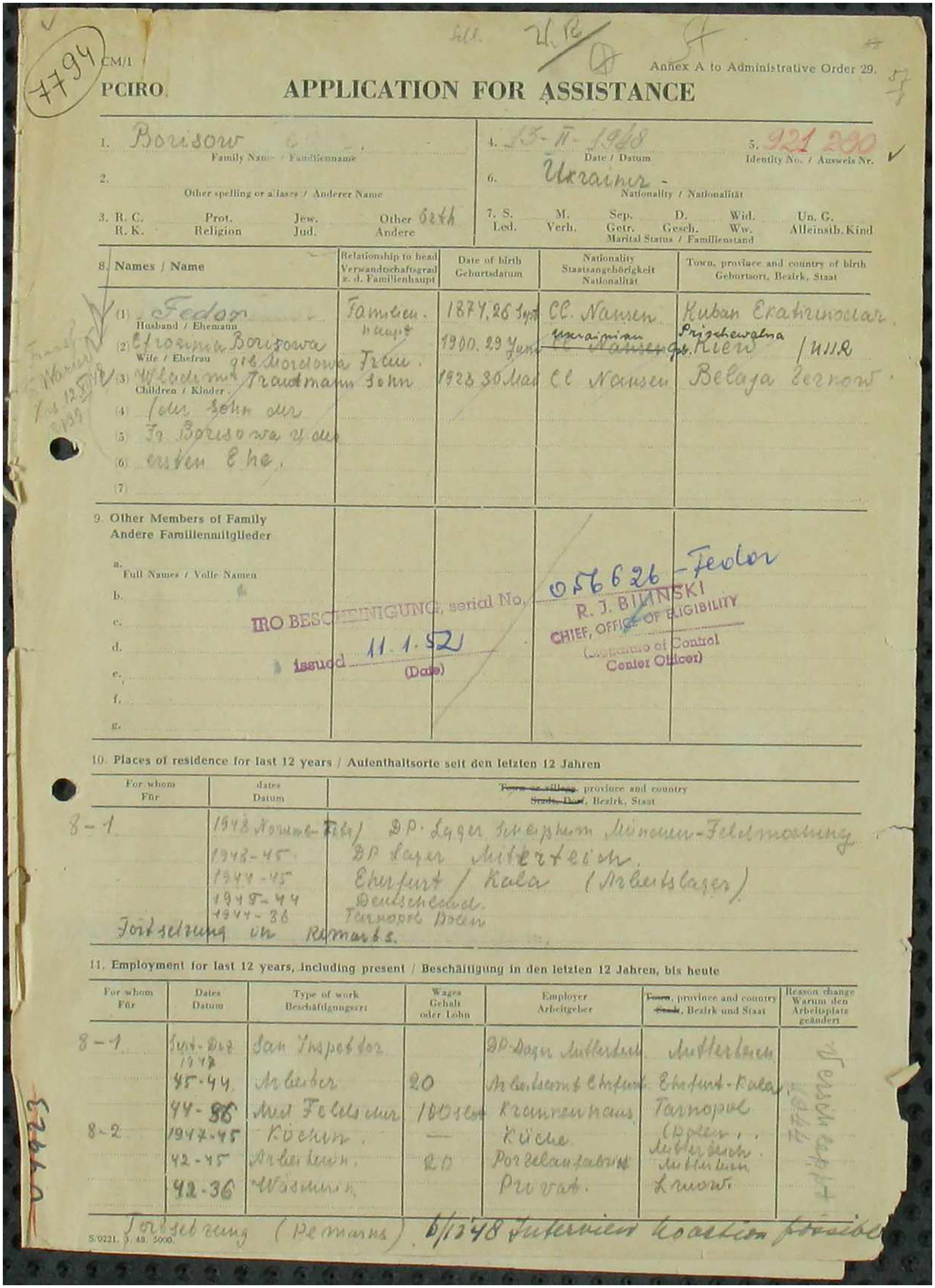
CM/1 File Efrosinia and Fedor Borisow, Arolsen Archives (https://collections.arolsen-archives.org/de/document/78956802).
A second example from the Arolsen archives illustrates how negotiating nationality could work out to the advantage of the Nansen DP (Figure 2). Viktor Arschinoff, born in the Russian empire in 1890, became a POW in 1915. From 1917 onwards, he resided in Germany and later obtained Nansen status. He worked as a farmer and married a German woman, who thus according to German nationality law also became stateless and eligible to a Nansen passport. On his IRO form created in 1947, it is easy to see how nationality was a matter of negotiation. Written primarily in French, the document offers various possible nuances with regard to nationality: claimed nationality, nationality based on ethnic group, nationality at birth, place of residence before the war, and, finally, previous nationality. For Arschinoff, “claimed nationality” was initially filled in with “Russe,” but then changed to “Nansen.” For his wife, her claimed nationality “Allemand” is crossed out. They are both finally registered as “Apatride—Nansen.” The negotiation of nationality is thus structured and scripted by this IRO form beforehand, but also during the process of filling it in with the IRO official and amending it—sometimes multiple times in the course of the procedure.
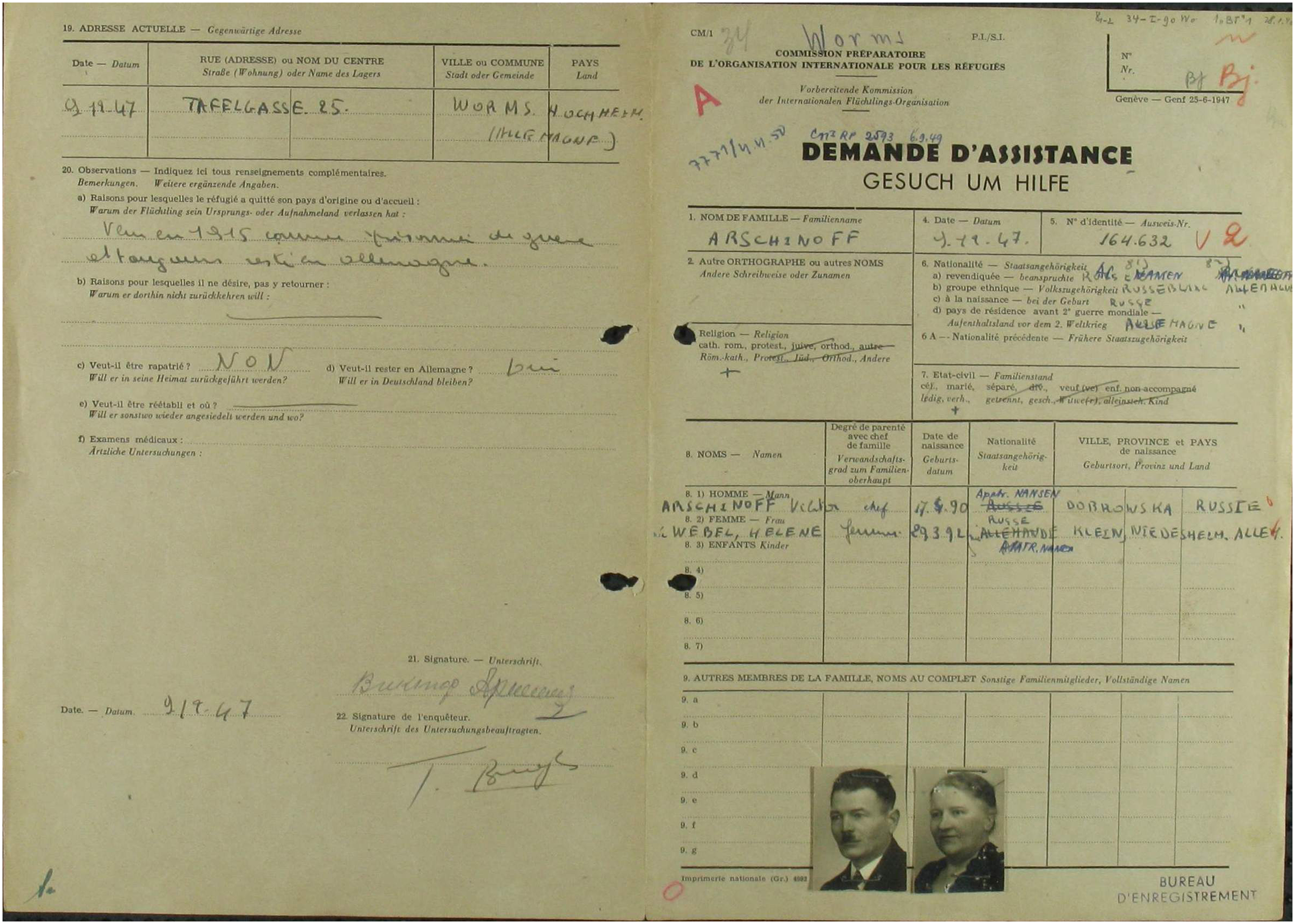
Cm/1 File Victor Arschinoff, Arolsen Archives (https://collections.arolsen-archives.org/de/document/78885776).
Reconstituting Communities of Care From the Arolsen Archives
Securing support from the IRO through the acquisition of Nansen status on a CM/1 file is only one way of exploring how care was negotiated. Other documents in the Arolsen Archives can provide insights into how stateless families navigated the process of acquiring IRO support and credentials in the 1940s to reconstitute family and community connections and resettle to a new destination together. The examples below, pertaining to two Nansen-DP families from the same Kalmyk community, outline how combining various collections in the Arolsen Archives provides insight into how family, religious, and ethnic connections—the building blocks of communities of care—were forged and rebuilt in the initial period following the Second World War.
Nikolai Dakinow's DP registration card (Figure 3), for instance, shows his “Claimed Nationality” as stateless, and added more to the center of the card, “Cl. N,” which is short for “Claimed Nansen.” Dakinow was born into a Buddhist family that had escaped the violence of the Russian Civil War and lived in Belgrade before the Second World War. In December 1945, he stated that he wished to go to China or Mongolia. This, however, never happened. From his files, we see that in 1948, he married Mathilde 17 Weber, a local German woman, and that their daughter was born in Munich in 1950. 18
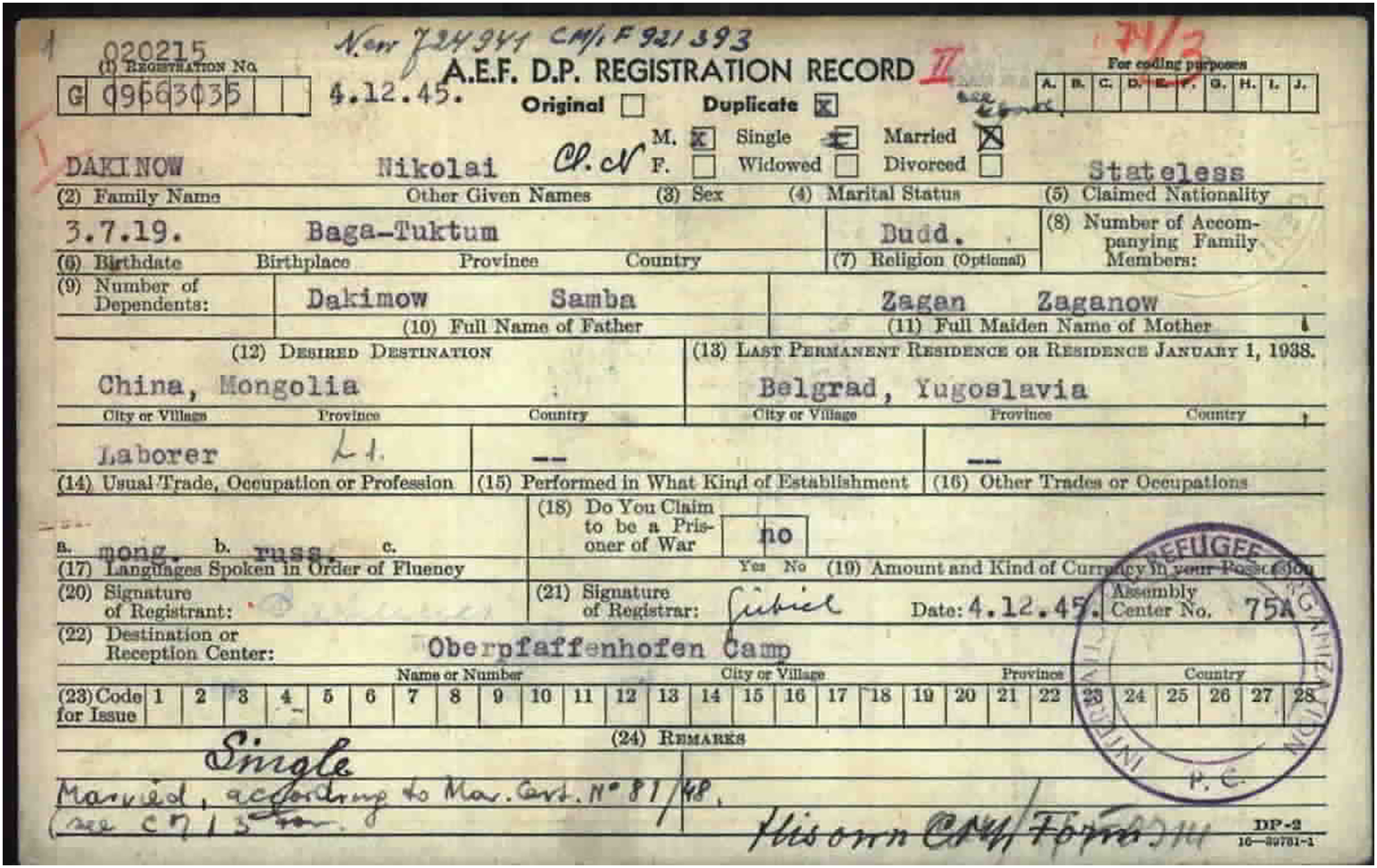
Nikolai Dakinow Registration Card, Arolsen Archives (https://collections.arolsen-archives.org/de/document/66836761).
Despite Mathilde's local background, the family did not want to settle down in Germany, nor did her German origin pose a problem for resettlement. On the 1951 list above, all three family members are mentioned as part of a group resettlement to the United States (Figure 4). Nikolai (Nikolaj) is labeled as “Nansen.” Mathilde, however, is still attributed German nationality: marrying a Nansenist either no longer automatically made German women stateless, or it was deemed more relevant to the resettlement process to describe her ethnic heritage than her legal status. Their daughter, however, was identified as stateless and is referred to as “Nansen” on this list.
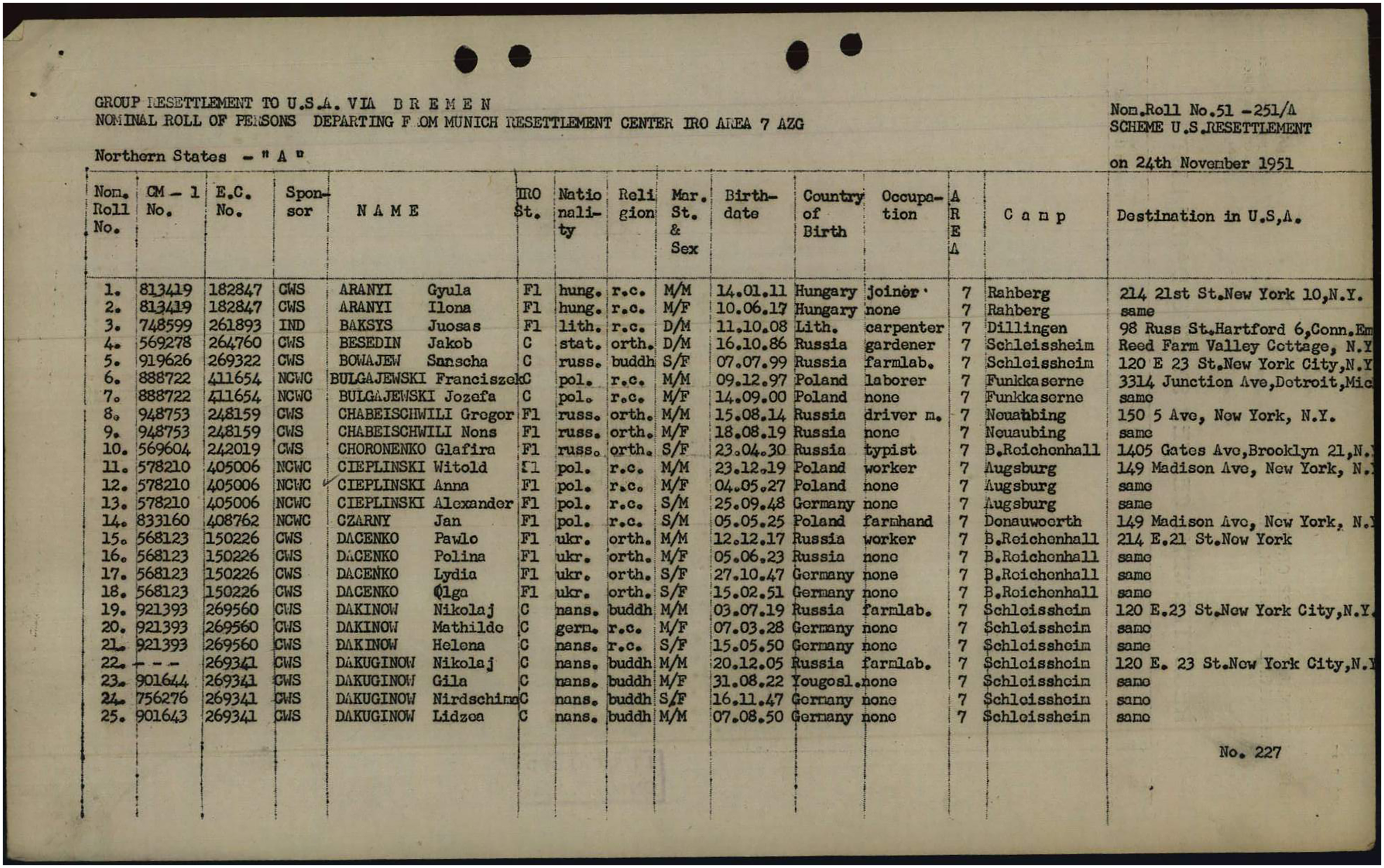
List of DPs Shipped From Bremen to United States, Arolsen Archives (https://collections.arolsen-archives.org/de/document/81754699).
The shipping list reveals more to us. Below the Daginow family we see another, apparently very similar family listed: the Dakuginows. They were also Nansen DPs, also Buddhist, and a husband and wife partnership of similar age with two young children. Both of these families have the same address in New York noted down as their destination. This may indicate that these two families had linked up to form a more extended family for extra mutual care and support.
Where had these two strangely similar families met? Could their stories afford us a glimpse into that time of violently uprooted family lives of stateless people, and how they maintained and rebuilt structures of care? Other documents from the Arolsen Archives help fill in the story. Nikolaj Dakuginow stated on his registration card that he was “Kalmuk” (Kalmyk), had lived in France before the Second World War, and wished to be taken to the American occupation zone of Germany. 19 This was granted, and Dakuginow received a DP identity card with a photograph and his nationality clearly identified as Nansen in DP Camp Pfaffenhofen, where Daginow was also staying (Figure 5).
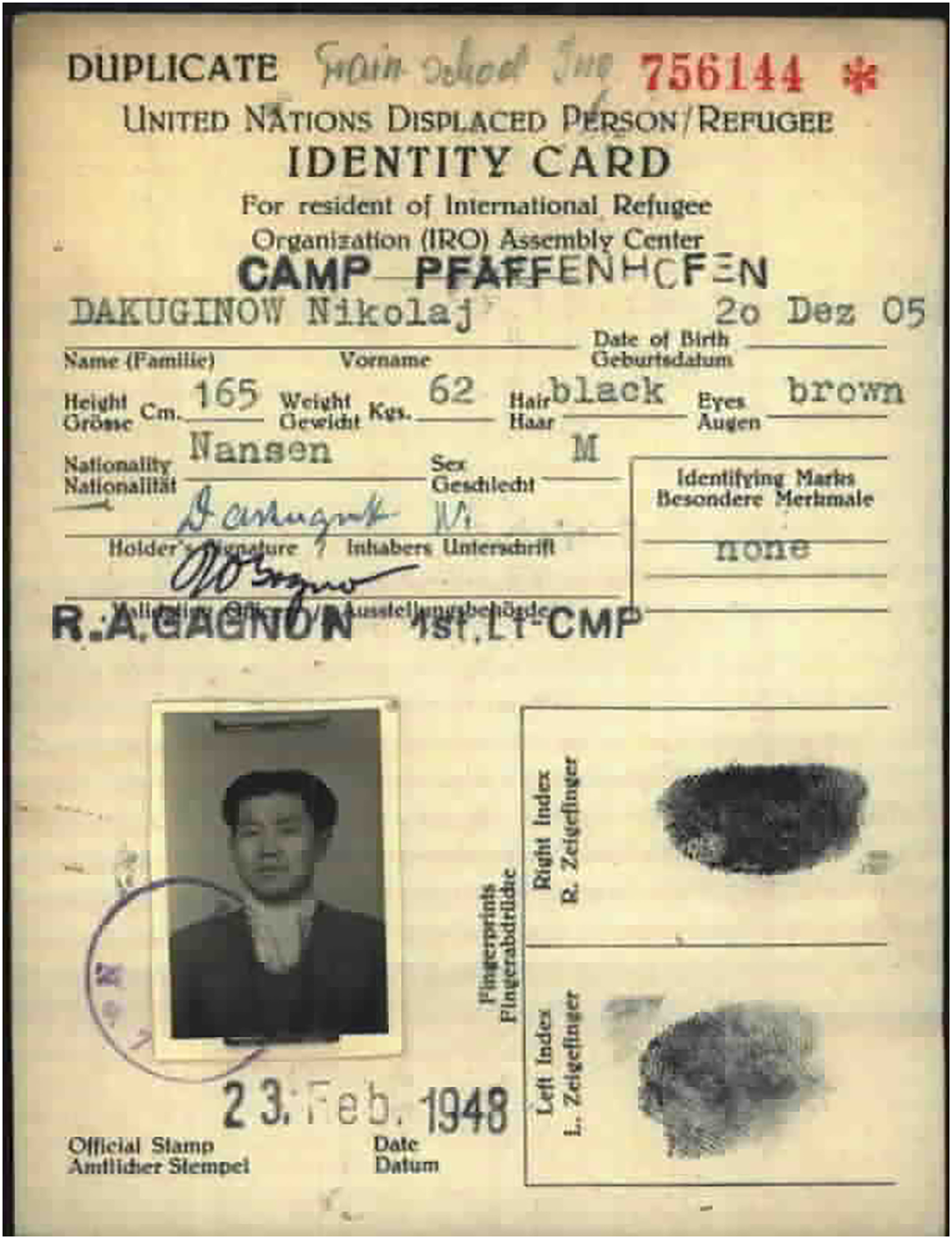
Identity Card issued to Nikolaj Dakuginow, Arolsen Archives (https://collections.arolsen-archives.org/de/search/person/66836902?s=66836902&t=222908&p=0).
In 1950, Dakuginow, now a textile worker in a DP camp in Ingolstadt, married Gila Pereborowa, who worked as a tailor and who had been born to Nansen-stateless parents in Yugoslavia in 1922. Due to lack of written evidence, Dakuginow had to swear to the authorities that despite having lived together with a woman earlier, he was not yet married. Gila brought with her a two-year-old daughter from a previous marriage. In 1950, the new family grew with the birth of a son. Every member of this complex family was registered as Nansenist in the CM/1 file. 20
Before the war Dakuginow had worked in France, eventually ending up in Berlin in 1943 or 1944. In a 1946 Russian language form issued by the US occupation authority, Dakuginow explained that he had fled Russia as a boy in 1920. He had made his way to Bulgaria, before migrating to France in 1928. 21 In his 1948 CM/1 file, he answers the question “Do you wish to return to your country of former residence?” with “No” 22 and the following question “If not, why?” with a clear statement about the importance of his family networks: “I have found my relatives from Yugoslavia and Bulgaria in Germany, and I would like to emigrate with them across the ocean.” 23
Dakuginow indicated he wanted to go to Canada “because the political regime of Canada appeals to me.” 24 Second and third on his list were the United States and Argentina. It remains unclear whether he was related to Dakinow or that they only met in the DP camp. The IRO did make lists of stateless Kalmyks and this register could have helped people reunite with their families and communities. 25 On another shipping list from the same period, however, and with again the same New York address mentioned, we do find Dakuginow's brother Toka with his wife Alexandra and their six children. From the documents it becomes clear that Toka was a few years younger than Nikolaj, born in the same town in Russia, and lived in Belgrade before the Second World War. Toka and his family were also registered as Nansen DPs (and Buddhists). 26 The final proof of their family relationship as brothers can be found on the registration cards in the form of their parents’ names. Thus, the traveling community we unearthed from the documents has grown to 15 persons sailing across the ocean to the same destination in New York.
Searching the Arolsen Archives for more people with the family name Dakuginow extends this story still further, and at least two possible cousins and an uncle can be found. The example of the complex Daginow and Dakuginow families—in part newly created after the Second World War, in part reconstituted—indicates how the various files in the Arolsen Archives can show us how people who had been refugees, forced laborers, DPs, stateless, and Nansen passport holders navigated bureaucracies and tried to rebuild kinship networks across these decades. Sometimes these families were “unified” many years after the end of the Second World War. On a different register, these archives tell us frustratingly little about the shape of families and communities before the Second World War. The documents I have showcased here contain information that was registered for the process of IRO care and resettlement. Another archival collection may help us reconstruct the shape of these two families in an earlier period. The frequent references to Belgrade as a place of residence may indicate that these specific Nansen families could be traced backwards in the archives of the League of Nations.
Tracing Communities of Care in the League of Nations Archives
Instead of following the Nansenists to their post-Second World War destinations, we can also trace families such as the Dakunigows back in time in order to explore how they navigated their situation as part of stateless communities coming out of the First World War. The League of Nations Archives hold extensive collections on the activities of the various offices and delegates concerned with helping stateless refugees within the Nansen legal framework of identity certificates and consular services. 27 Nansen delegates held office in many European capitals and beyond—even as far away as China and Latin America. Moreover, the documents make clear how people perceiving themselves within the framework approached Nansen or his delegates directly to apply for help. They sent letters asking for loans or help to find relatives, or were assisted with forms necessary to obtain identity certificates and work permits. The Nansen passports, for example, were usually issued by the local police, but needed documents with information provided by the stateless refugees themselves and verified by Nansen delegates. 28
Sometimes Nansen's local delegates were Nansenists themselves: Belgrade's delegate Serge Yourieff, born in St. Petersburg in 1881 and a civil servant under the Tsar, was at the same time himself a stateless refugee. Between 1929 and 1934 he acted as Nansen's delegate, corresponding on behalf of the refugees with Geneva, various humanitarian organizations, and—especially—with his compatriots in Yugoslavia. He negotiated for groups of Nansen refugees (mostly men) to go on work contracts to Belgium, France, or even Uruguay, Argentina, and Syria, but he also helped individuals and families who contacted him for support. 29
During the Second World War, Yourieff and his wife Olga were displaced again and ended up in a German DP camp. Yourieff became a “Legal Adviser” to the Munich Office of the High Commissioner (the later UNHCR) and assisted Russian DPs who did not want to be repatriated to the Soviet Union. 30 People like him played crucial roles in these early post-war years: not only did Nansen status protect them from forced repatriation to the Soviet Union, they also provided a wealth of experience in organizing refugee communities and addressing their needs from within. This kind of help and care extended beyond anonymous modes of care into the realm of community, culture, and belonging. Yourieff even played a role in securing cultural artifacts that Russian refugees had brought with them when they fled in the wake of the revolution and civil war. He made sure that a major collection of icons, paintings, coins, porcelain, and other treasures was handed back “to a group of Kuban Cossacks in Germany who had been involved in the Vlasov partisan movement,” instead of being handed over by the Western Allies to the Soviets. 31 Serge and Olga eventually emigrated to the United States and would ultimately acquire citizenship there in the 1950s.
Yourieff exemplifies how stateless people were not only the recipients of help and care via the legal framework of the Nansen passports, but also providers of assistance and care for individuals, families, and communities. In other words, we should be careful not to separate the experiences of those navigating the Nansen framework from the experiences of people within the organizations and networks constituting that framework. The Nansen passport framework created the possibility for people like Yourieff, not only to provide help and care to stateless refugees, but also to take care for his own household and to support wider communities of former compatriots to whom he felt connected. 32 This observation challenges the idea of humanitarian organizations providing purely anonymous care and urges us to rethink where and how to locate the “voices” of the refugees.
While the Dakunigow and Dakinow families do not appear in Yourieff's correspondence as Nansen's delegate in Belgrade, the Kalmyk community to which they belonged, does. The correspondence to and from Yourieff regarding the request by representatives of the Kalmyk community in Belgrade for a loan to complete the construction of a Buddhist temple will complete the sample of historical documents I present in this article. This case indicates that the Kalmyk community had a strong internal organization that extended beyond the family or household level and distinguishes them as a unique group of stateless people within the broader pool of Nansen-eligible refugees who fled Russia in the wake of the Russian Revolution and Civil War.
In the summer of 1929, the teacher of the “Russian Cossack Kalmyk Colony” asked Yourieff whether he, as Nansen's delegate, could provide them with a loan to finish the building of a Buddhist temple in Belgrade. 33 The wealthy Serbian industrialist Miloš Jaćimović, owner of a factory that employed many Kalmyk men, had donated a plot of land and subsequently a long list of benefactors had also helped with money, bricks, and other in-kind support. 34 However, there was still 10–12,000 Dinars needed to finish the interior of the temple so it could house a school for Kalmyk children, lodgings for the monks, and serve as “a Kalmyk house in a foreign land that will serve us as a center for our national-spirituality and culture.” 35
This request for a loan initiated an extensive correspondence between Yourieff in Belgrade and the Nansen Office in Geneva. The Kalmyk community needed to specify as precisely as possible how exactly they would spend the money, how many children would be able to follow school at the temple (30 in total), how the loan would be repaid (by renting out several small houses built on the plot of land around the temple), and many other details. In his letters to Geneva, Yourieff gave strong support for their request by stressing the “hard work” and “loyalty” of this group of refugees. He referenced employers in France who had been very content with the Kalmyk men who worked there on labor contracts. He also mentioned that their former army commander, colonel Abusha Alekseyev (1886–1938), was still overseeing this community. 36 In other words, Yourieff wanted to make it clear that they were not a random group of penniless refugees, but a close-knit community with a shared culture, religion, military past and even some standing and recognition in their new home, and worthy of a loan from Geneva.
This small community of Kalmyk people included the Dakunigow and Dakinow families. The Kalmyk were an ethnic minority in the Russian Empire who in the Tsarist army usually served as horsemen, in keeping with their nomadic heritage and expertise as horse breeders Dragica Jovanovic (2013). During the Civil War many of them served with the White Armies and when these suffered great defeats against the Red Army in 1920, about 150,000 people (made up of soldiers and their families) fled across the Black Sea to Constantinople (present-day Istanbul), prompting a refugee crisis and thus adding to the already alarming situation in the crumbling Ottoman Empire. The Allied armies and relief organizations present in the region tried to organize basic help and Nansen's office was also sent in to organize food, medical care, and evacuations. Thousands of former White Army soldiers and their families were resettled to the new kingdom of Yugoslavia. Among them were roughly 500 refugees of Kalmyk origin who stayed, like the Dakunigow family, in Belgrade. In 1923 some of the Kalmyk opted for repatriation to the Soviet Union, where consequently many were persecuted and killed. During the Stalinist era and the Second World War, the remnants of the Kalmyk communities within the Soviet Union faced still more persecution.
The Kalmyk refugees who arrived in Belgrade included several Buddhist monks who soon improvised temple services for their community in the rooms where they lived. They managed to establish good relationships with the Yugoslav authorities and other Belgrade communities, and even the then US ambassador John Prince became a familiar guest. 37 Thus, asking for help via the Nansen delegate for the remaining funds for the temple may indicate that it was, in fact, somewhat of a last resort for a community that was usually very skilled in organizing and sustaining itself and building relationships with surrounding communities. This may explain why Kalmyk families are hard to find in the League of Nations archives when it comes to individual or family requests: they had other ways of taking care of their needs. Present in the League's archives, however, is one of their senior religious leaders, Manchuda Borinov (1872–1928). In 1927, the Nansen delegation in Belgrade organized travel documents and helped him with visas to visit France and the Kalmyk spiritual leadership and community there. 38 The services the Nansen delegate afforded the Kamyk community primarily seem to have consisted of facilitating the paper trail to allow small groups of Kalmyk men to travel to France to work on specific assignments and contracts. The loan for the temple was something special and, following extensive correspondence with Geneva, it was granted (Figure 6).
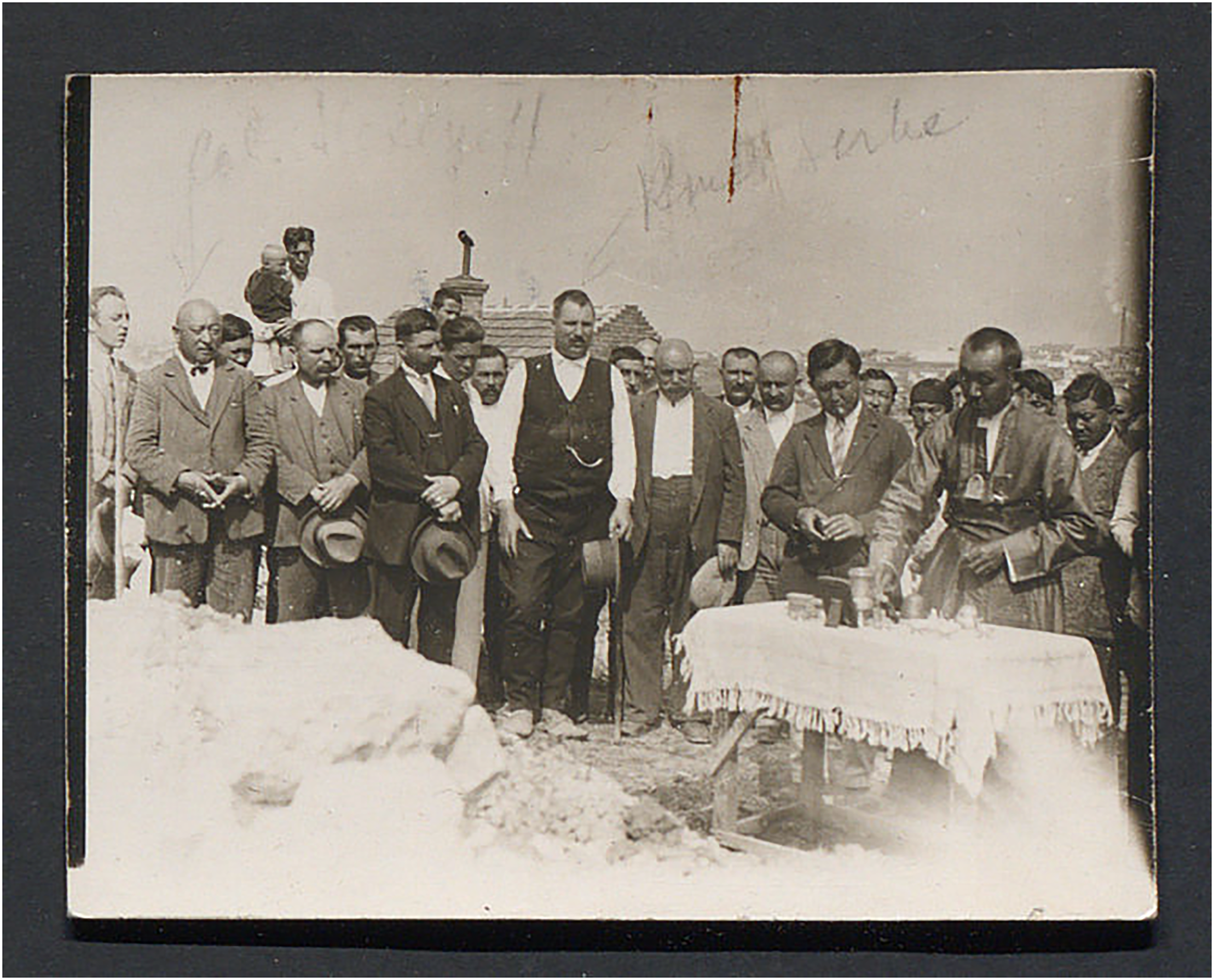
Laying of the First Stone of the Buddhist Temple of Belgrade, July 29, 1929.
The presence of Buddhist monks and priests within the group—most notably the above mentioned Manchuda Borinov and his successor Sandyi Umaljdinov (1882–1946)—may also have contributed to the skillful community organization. The Buddhist monks played an important role in the daily lives of the Kalmyk community, especially when it came to rituals surrounding birth, death, and the naming of children. Since cremation was prohibited in Yugoslavia, for instance, the community needed to find new religiously sanctioned rituals to take care of the deceased Dragica Jovanovic (2013). Or, in other words, the monks provided care and guidance in finding answers to the problems stateless refugees encountered—answers that were grounded in cultural and religious traditions and addressed problems that were near impossible to solve on a legal level for stateless refugees. Having their own temple, school, and lodgings strengthened this sense of community — one that clearly extended beyond biological family ties.
Recently, both the history of the Kalmyk refugees in Belgrade and, as one of the first in Europe, their Buddhist temple, have received some scholarly attention Dragica Jovanovic (2013). 39 For our purposes, it is significant that representatives of the Kalmyk community seem not to have left many written sources themselves that made it into the League of Nations archives or were published as books or pamphlets. 40 In 1944 the Kalmyk community was displaced again when most of them fled to Germany, fleeing the Red Army and Yugoslav Partisans. Consequently, the temple in Belgrade was demolished. Part of the sacred relics, however, were preserved and eventually made it to the United States—one of the prime destinations for Kalmyk Nansen DPs. 41
The example of the Kalmyk community, who were considered “stateless Russian refugees” under the umbrella of Nansen's legal framework, points to the fact that in this case—and probably in many similar cases—care at both the individual and family level was crucially interconnected with various other spheres of belonging: perceptions of kinship and communities of care were crucial to the wellbeing of Nansen stateless people, and these spheres are not necessarily obvious on registration and resettlement forms. However, the close readings presented here, moving across archival folders and back and forth through historical time, have revealed ways of accessing these collective or communal aspects of the twentieth-century stateless experience.
Concluding Remarks
This article has revealed traces of care giving and care receiving within the group of stateless people covered by the Nansen framework. Beyond this, we have witnessed processes of form completion, the contingency of nationality and statelessness across many decades, and the persistence of a “Nansen” status for many years after 1945, even though the Nansen passport framework, with its delegates and issuing of documents, did not survive the Second World War. Revealing the stories in the Kalmyk community pushes us to expand our notions of kinship beyond biology or legal arrangements and to recognize that caregivers within the Nansen universe often had their own histories of displacement. By combining documents from the Arolsen Archives and League of Nations archives, this contribution has moved forward and backward across time and places of displacement to make broader statements about care and the networks that sustained it than only focusing on the individual.
From these explorations, it follows that the distinction between anonymous care, as provided by humanitarian or state organizations, and personal care may not have been so clear-cut. While much more investigation into the—often anonymous—IRO officers needs to be undertaken it already seems important to keep in mind that people from the refugee communities themselves regularly had various roles within international and humanitarian organizations. Former Tsarist civil servant Serge Yourieff, one of the displaced featured above, was active as Nansen's delegate in Yugoslavia and later in advisory and organizing roles in the DP camps in Germany. He both provided and received care. This may invite further research into whether the Nansen framework should perhaps be seen as a kind of crucible in which an albeit fragile legal identity was forged, rather than as a legal framework opposite or at a distance from the stateless people themselves.
Using care as a lens we can better understand how Nansen passport holders such as the Yourieffs, Dakunigows, Dakinows, Borisows, and Arschinoffs, and the (non-stateless) officials they came into contact with in the 1920s to 1950s, navigated questions of nationality, eligibility, and responsibility for themselves, their families, and their communities. This opens the way for future research to unearth the experiences of people caught up in the first wave of mass statelessness: it may facilitate a better understanding of what a “legal solution” such as the Nansen framework meant for those it was envisioned to help, and thus provide access to necessary alternative voices to those of legal scholars and other elite publishers reflecting on statelessness and its consequences.
Footnotes
Author's Note
Ismee Tames is also affiliated with Utrecht University, Utrecht, The Netherlands; ARQ National Psychotrauma Centre, Diemen, The Netherlands.
Declaration of Conflicting Interests
The author declared no potential conflicts of interest with respect to the research, authorship, and/or publication of this article.
Funding
The author received no financial support for the research, authorship, and/or publication of this article.
