




Abstract
Over the past decade, third-party labor recruiters who facilitate employment for migrant workers across low- and middle-income countries have often been considered by the counter-trafficking community as one of the main entry points into human trafficking. In response, anti-trafficking prevention programs have increasingly focused on addressing exploitative recruitment in migrants’ origin countries. Such programs may advocate for increased regulation of migration, greater enforcement actions against unlicensed recruiters, stricter ethical codes of conduct for recruiters and employers, and more pre-departure information about recruitment for migrants. Yet, there remains limited research about the relationship between prospective migrants, recruiters, and human trafficking, and the relative importance of third-party recruitment in the trafficking process. This Research Note draws on the world's largest database of individual victims of trafficking cases, the International Organization for Migration's (IOM) Global Victim of Trafficking Database (VoTD), to examine the role and characteristics of recruitment of trafficked victims. The VoTD contains information on nearly 50,000 trafficking victims who were registered for assistance from 2002 to June 2018. Our analysis shows that 94 percent of trafficked victims were recruited, in a broad sense (i.e., not only by third-party intermediaries). Additionally, the data presented here suggest that the relationship between recruitment and trafficking is complex and that forced labor is embedded within the wider structural issues around low-wage labor migration that lead to exploitative work conditions. Interventions to address human trafficking will benefit from strategies that target systemic issues constraining or harming low-wage labor. Further, these findings highlight the value of large-scale administrative datasets in migration research.
Introduction
The Global Compact for Safe, Orderly and Regular Migration and the Sustainable Development Goal 8.7 commit states to taking immediate and effective measures to eradicate forced labor and to end modern slavery and human trafficking. 1 Estimates from 2021 put the global number of victims of forced labor at 27.6 million in commercial sectors including domestic work, construction, fishing, agriculture, and sex work (ILO, Walk Free, IOM 2022). Women and girls account for almost all of those identified as trafficked for commercial sexual exploitation and for 70 percent of those trafficked overall (UNODC 2018; IOM 2019a).
Over the past decade, numerous international organizations and donors have turned their attention to activities related to the prevention of forced labor, modern slavery, and human trafficking, in addition to providing services to victims (UNODC 2018). Increasingly, exploitative recruitment of migrants has been the target of global prevention initiatives, led especially by the International Labour Organization (ILO), the International Organization for Migration (IOM), and the United Nations Office on Drugs and Crime (UNODC) (ILO 2015; IOM 2022; UNODC 2015). Many such initiatives promote multi-stakeholder engagement as key to creating an enabling environment. For example, IOM's IRIS is a global multi-stakeholder initiative that supports recruiters, but also governments, civil society, and the private sector to establish ethical recruitment as a norm (IOM 2022). The goal of IRIS is to make international recruitment fair for everyone involved: migrant workers, employers, recruiters, and countries of origin and destination. Third-party recruitment intermediaries in low- and middle-income countries are generally viewed by the counter-trafficking community as the first point of contact for migrants seeking jobs and, therefore, the potential first stage in a trafficking process (Zimmerman, Hossain and Watts 2011). This attention to recruitment has also emerged in response to the UN definition of human trafficking, published in the UN Protocol to Prevent, Suppress, and Punish Trafficking in Persons, especially Women and Children (UNODC 2000), which specifically mentions recruitment as one of the possible “acts” of trafficking (alongside transportation, transfer, harboring or receipt of persons) and notes that in trafficking cases, these acts occur “by means of threat or use of force or other forms of coercion, of abduction, of fraud, of deception, of the abuse of power or of a position of vulnerability or of the giving or receiving of payments or benefits to achieve the consent of a person having control over another person, for the purpose of exploitation.” (UNODC 2000).
The authors of this UN Protocol initially conceived of this definition primarily in terms of recruiting individuals for sexual exploitation (Gallagher 2001). However, international and human rights organizations, as well as the media in both high and low- and middle-income countries, have increasingly depicted third-party labor recruiters as significant entry points into human trafficking and forced labor in low-wage sectors such as domestic work, agriculture, manufacturing, and fishing (Verite 2014; Human Rights Watch 2018; Amnesty International 2017). What is more, international organizations also frequently consider the pre-departure fees charged to migrants by labor recruiters to be a significant driver of the debt bondage which occurs when a person is forced to work to pay off a debt, with most or all earnings allocated to service their loan, which is a form of trafficking and forced labor (ILO 2017a; IOM 2020).
In response to human trafficking, ILO (2017a), IOM (2019b), as well as private companies and consultancies such as the Institute for Human Rights and Business (IHRB 2017), have contributed to a growing number of codes of conduct on “ethical recruitment” and accompanying training programs for prospective migrants. With the assistance of international organizations, such as ILO, governments in migrants’ origin countries have also sought to improve the recruitment industry's regulation (ILO 2015), including through greater enforcement actions against unlicensed recruiters (Manila Bulletin 2020). Increasingly, migrants in popular sending countries have been provided with pre-departure information under the hypothesis that this guidance will enable them to make informed choices about which recruiter to select for their migration processes (Zimmerman et al. 2021).
Nevertheless, and even though there is plenty of anecdotal evidence, the role of third-party recruiters in the trafficking process generally has not yet been backed by large-scale, quantitative research (Zimmerman and Kiss 2017). This IMR Research Note investigates the role of third party as well as other types of recruitment in human trafficking through an analysis of IOM's Global Victim of Trafficking Database (VoTD), the world's largest database of trafficking victims. The findings presented here offer the first evidence on recruitment experiences, as reported by trafficking survivors globally, and, thus, provide an international perspective on the prevalence of reported recruitment among trafficking survivors. In doing so, this Research Note responds to several research questions. First, what are the recruitment patterns (e.g., who are the recruiters) across a global sample of trafficking survivors? In addressing this question, we aim to understand recruiters’ relationships with migrants and to identify the most prevalent ways through which recruiters initiate contact with prospective migrants. Second, how do recruitment relationships vary by the sector in which the trafficked victim's exploitation occurs, and how do migrants’ experiences of violence differ across sectors? In addressing these two questions, we aim to understand how prevention programs might use a labor sector approach. Third, and finally, how can large administrative datasets be used to supplement existing research approaches? With this last question, we aim to illustrate the strengths and challenges of using new data sources to conduct large-scale quantitative analyses.
To develop these ideas, this IMR Research Note is structured in four sections. First, we situate the data analysis within the current literature on recruitment of migrants and human trafficking victims. Second, we describe our data sources and analytical approach. Third, we present the findings of our analyses. The final sections contextualize these findings, describe the policy and programming implications of our findings, and map out potential avenues for future research.
Recruitment, Human Trafficking, and Forced Labor
Third-party labor recruiters broker employment for a fee (Jones 2021). When recruiting workers from one country for employment placement in another, they also facilitate the logistics of migration, organizing travel, training, medical checks, entry visas, work permits, as well as employment contracts (Jones, Visser and Simic 2019). Over the past three decades, formalized global recruitment industries have become gatekeepers to temporary employment in low-wage occupations for millions of migrant workers, especially in Asia (Xiang and Lindquist 2018).
Labor recruiters may operate as legally registered businesses, while others are significantly less formal and embedded within, and at times barely indistinguishable from, transnational family and community networks, often referred to as migration “brokerage” (Deshingkar 2019; Lindquist 2017). For millions of workers, labor recruiters enable them to access better-paid, overseas employment opportunities that otherwise would not be available (Cranston, Schapendonk and Spaan 2018). For employers in sectors such as fishing, agriculture, manufacturing, and domestic work, recruiters provide access to workers, often thousands of miles away, who are willing to work for low pay and for often poor employment conditions (Jones 2021).
Over the past decade, research, mostly conducted in Asia, has increasingly documented recruiters’ contribution to coercive labor control practices (ILO 2009, 2015; UNODC 2015; Jones, Ksaifi and Clark 2022). For example, a recent Bayesian network analysis of data from female Nepali migrant workers returning from the Gulf States found that being recruited was one of the most influential risk factors associated with the probability of experiencing human trafficking, in great part because the recruiter generally determines the labor sector and location for the migrant (Kiss et al. 2021). In particular, UNODC and ILO have linked recruiters to trafficking through their practice of charging migrants recruitment fees, a financial arrangement that can lead to “debt bondage” and make it difficult for workers to leave abusive employment (UNODC 2015).
However, recent scholarship on migration brokerage has argued that third-party labor recruitment is given undue emphasis by policy makers, since it is a small, often geographically concentrated, subset of a much larger and varied group of migration intermediaries, which also include social networks, smugglers, travel agents, and even state agents (Cranston, Schapendonk and Spaan 2018; Zhang, Sanchez and Achilli 2018). These studies emphasize that migrants, far from being coerced by labor recruiters into low-wage jobs with poor conditions, make their own decisions about whether to migrate, where to migrate, and how to migrate, as well as whether to pay recruitment fees (Deshingkar, Awumbila and Kofi Teye 2019; Lindquist 2017). The focus on third-party recruitment has led to this wider group of migration intermediaries not receiving the attention (research and policy response) that they would warrant. Such a focus could be explained by the fact that the labor recruitment industry is often more formalized than the activities of this more varied group of migration intermediaries. Labor recruitment also more obviously functions as part of an international labor market — even if parts of it are less regulated, or even informal — and there are therefore more obvious and easier entry points for regulation.
Interventions to address abusive migrant recruitment practices are frequently based on assumptions that recruiters knowingly contribute to human trafficking and/or forced labor, especially by charging recruitment fees (UNODC 2015). Thereby, these interventions often assume that it is possible to distinguish between recruiters with legitimate, altruistic intentions and those with exploitative intentions (ILO 2015). Yet in reality, delineating singular recruiter motives and responsibility in the trafficking process is difficult, if not impossible (Spener 2016; Schapendonk 2018). Increasingly, academic experts contend that who is defined as a “human trafficker” is driven, or produced, by the contentious politics of migration, suggesting that changes in laws and regulations, particularly regarding border crossings, can redefine whether someone will be considered a broker or human trafficker (Brachet 2018; O’Connell Davidson 2015). Moreover, critical political economy scholars emphasize that forced labor and human trafficking are, in fact, a routine, systemic feature of modern-day capitalism in which vulnerability to trafficking is generated by state practices and immigration controls, rather than an aberrant exceptional behavior exhibited by a few “criminal recruiters” in migrants’ origin countries (LeBaron 2020; Jones, Ksaifi and Clark 2022). This emerging evidence implies that prevention efforts should also direct anti-trafficking prevention efforts toward employers, as well as recruiters.
As this literature review has revealed, important gaps remain in knowledge regarding recruitment into human trafficking, in terms of who recruits prospective migrants into human trafficking and whether recruitment practices are likely to be more or less abusive dependent on the sector. The remainder of this article seeks to fill these gaps by utilizing the largest available global dataset on human trafficking.
Methods
Data Source
This IMR Research Note is based on an analysis of IOM's Global VoTD, 2 which IOM uses to monitor their assistance to trafficking victims. VoTD is the largest database on human trafficking globally. Between 2002 and mid-2018, 49,032 trafficking victims were registered in VoTD, representing more than 144 nationalities and trafficking to more than 170 destination countries. Nearly complete records exist for approximately 30,000 individuals, and 26,067 records provide information on whether individuals reported being exploited. Exploitation other than sexual and labor exploitation, such as organ trafficking or forced marriage, accounts for less than 5 percent of the overall dataset.
The VoTD is a standardized anti-trafficking case management tool available to and actively used across IOM missions. IOM provides support to victims at different stages of their trafficking experience, from when a victim is identified to their reintegration into society in their home, host, or a third country (IOM 2019a). For instance, in certain contexts, IOM identifies victims at transit centers or following their escape, while in others, it provides immediate assistance following identification and referral by another organization (IOM 2019a). As an international organization, IOM commonly provides return assistance to people who have been trafficked internationally and then long-term reintegration assistance in their home, host, or a third country, often over several years (IOM 2019a). In some cases, IOM is in direct contact with the victim throughout this entire process, while in others, it only coordinates the work of other organizations providing services to trafficked victims (IOM 2019a). Throughout the process, caseworkers collect information on trafficking victims, including on their trafficking experiences (IOM 2019a). The collected information is entered into the IOM's case management system, from which the VoTD dataset is generated. Importantly, by definition, the population covered in the VoTD, and therefore in our analytical sample, includes only clients of IOM's post-trafficking services. This implies that victims of trafficking who are still in trafficking situations, who never accessed services, or who received services that are not related to IOM will not have been captured.
The dataset analyzed here contains information on numerous aspects of victims’ trafficking experiences: socioeconomic characteristics; past employment; entry into the trafficking process; involvement of a recruiter at entry; relationship with recruiters; experiences of abuse and violence; and activities or work at destination. Recruitment in the VoTD is defined as a positive answer, noted by the caseworker on the registration form, to the question: “Did entry into the process involve recruitment?.” If a positive response is noted to this question (Coded Yes or No), information can also be entered about how the recruiter initiated contact, what relationship migrants had with their recruiter, and whether the recruiter was paid and how much. The guidance to caseworkers is that when a payment to the recruiter is noted (Coded Yes or No), it is a payment from or on behalf of the victim. No information is recorded on whether the recruiter was responsible or directly linked to the victim's human trafficking experience, but IOM caseworkers are trained to include data on recruitment when recruitment is present at entry into the migration route, as per the Palermo Protocol (UNODC 2000). We acknowledge that this single variable on whether entry into the trafficking process involved recruitment cannot capture recruitment's definitional complexities; as outlined in the previous section, for example regarding the level of deceit and debt bondage involved. Individuals’ experiences of recruitment are likely to be highly variable; individual victims, when responding to the caseworker, may be thinking of one or multiple incidences of recruitment in their migration journey. We also recognize that the dataset has limitations in facilitating analysis of who or what recruiters are and their indirect and direct contributions (or otherwise) to the victim's trafficking experience. Nonetheless, as the first dataset of such global scale, the VoTD still provides valuable insights into the prevalence of recruitment in human trafficking across labor sectors of exploitation.
The VoTD dataset also includes information on whether victims experienced psychological (e.g., threats, defamation, verbal abuse, etc.), physical, or sexual violence throughout the trafficking process, as well as on whether threats, false promises, denial of essential needs, withholding of documents, debt bondage, etc., were used to control the individual at any stage of trafficking. 3 Individuals were given the option to report multiple experiences of violence and abuse, and answers to each form of violence and abuse were coded as binary variables.
This analysis focuses on trafficking for forced labor and sexual exploitation because fewer than 50 cases were reported for other types of exploitation. Type of exploitation was assessed by the last form of exploitation a trafficking victim experienced and, therefore, excludes details on the types of exploitation that might have been experienced earlier in the trafficking process. Recorded exploitations are not mutually exclusive; experiences of both forced labor and sexual exploitation could be reported. The variable exploitation was, therefore, coded as labor exploitation, sexual exploitation, or both. The research team made a substantial effort to code and clean the data in a coherent way, working closely with IOM, whose database refers to VoTD cases as “victims”, following the Palermo Protocol. For consistency, this IMR Research Note applies the same terminology, recognizing the debates around the terms “victims” versus “survivors” (Schwark and Bohner 2019).
Information on recruitment was available for about half the VoTD sample. Eighty percent (N = 22,634) of victims who answered questions about recruitment reported being recruited into human trafficking. Of those reporting recruitment, 20,756 described how contact was initiated, and 18,999 described their relationship with the recruiter. Among recruited victims, 69 percent were women, and 10 percent were children. The mean age was 28 years at the time they registered to receive IOM assistance. More than half the sample had completed primary or secondary school, 30 percent had some technical training, such as an apprenticeship or diploma, and 11 percent had a university degree. Women made up most of the sample with higher education levels. Nearly all victims (90 percent) self-identified as poor.
Approximately nine in 10 recruited victims entered trafficking situations while seeking to migrate for work, versus those who migrated for other purposes, such as education. Most victims who intended to migrate for work were adults, while children and adolescents were generally recruited with the promise of education and training programs. Approximately 6 percent of recruited individuals stated they were sold into human trafficking by family or nonfamily members. Table 1 illustrates the characteristics of the sample, which includes trafficking victims who reported having been recruited.
Sample Characteristics.
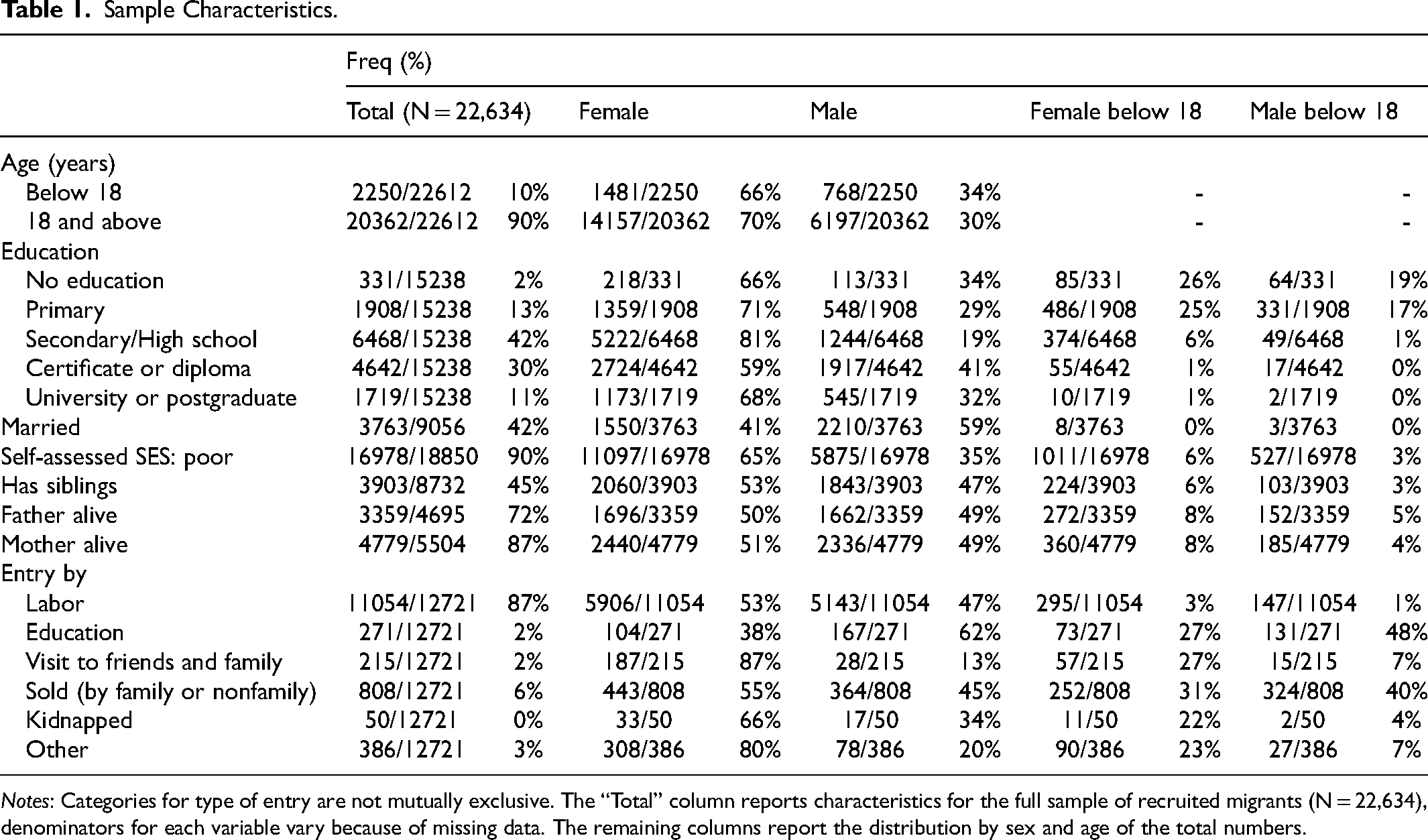
Notes: Categories for type of entry are not mutually exclusive. The “Total” column reports characteristics for the full sample of recruited migrants (N = 22,634), denominators for each variable vary because of missing data. The remaining columns report the distribution by sex and age of the total numbers.
Analytical Approach
Given the VoTD data's administrative nature and, therefore, its inherent limitations in the definition of concepts and variables such as “recruitment,” “entry into trafficking,” “exploitation,” and “violence,” we have intentionally adopted a descriptive-analytical approach aimed at providing an overview of global recruitment patterns. Our analysis begins with a summary of different forms of recruitment for the overall sample and their distribution across subgroups of trafficking victims defined by gender, age, and type of exploitation (forced labor and sexual exploitation). We then present the characteristics of recruitment by the labor sector in which the exploitation for victims of forced labor and sexual exploitation took place. To explore the relationship between recruitment and experiences of abuse and violence, we show the prevalence rates of experiences of psychological, physical, and sexual violence and of specific types of controlling behaviors among the overall population of recruited victims, female victims, and minors. Finally, we summarize how forms of control and violence were distributed across labor sectors of exploitation, such as agriculture, fishing, and sexual exploitation.
Results
Recruitment Patterns
Table 2 shows how types of recruitment, such as through personal contact, advertisements, or employment agencies, were distributed across sectors in which victims were exploited. Recruitment was frequently reported as the pathway into trafficking situations: Individuals were more likely (at least 94 percent) to report that they were recruited if they were engaged in the following labor sectors: agriculture, fishing and aquafarming, construction, hospitality, manufacturing, and domestic work. Those who were least likely to report having been recruited were engaged in forced begging (67 percent).
Characteristics of Recruitment of Victims of Forced Labor by Sector of Activity.
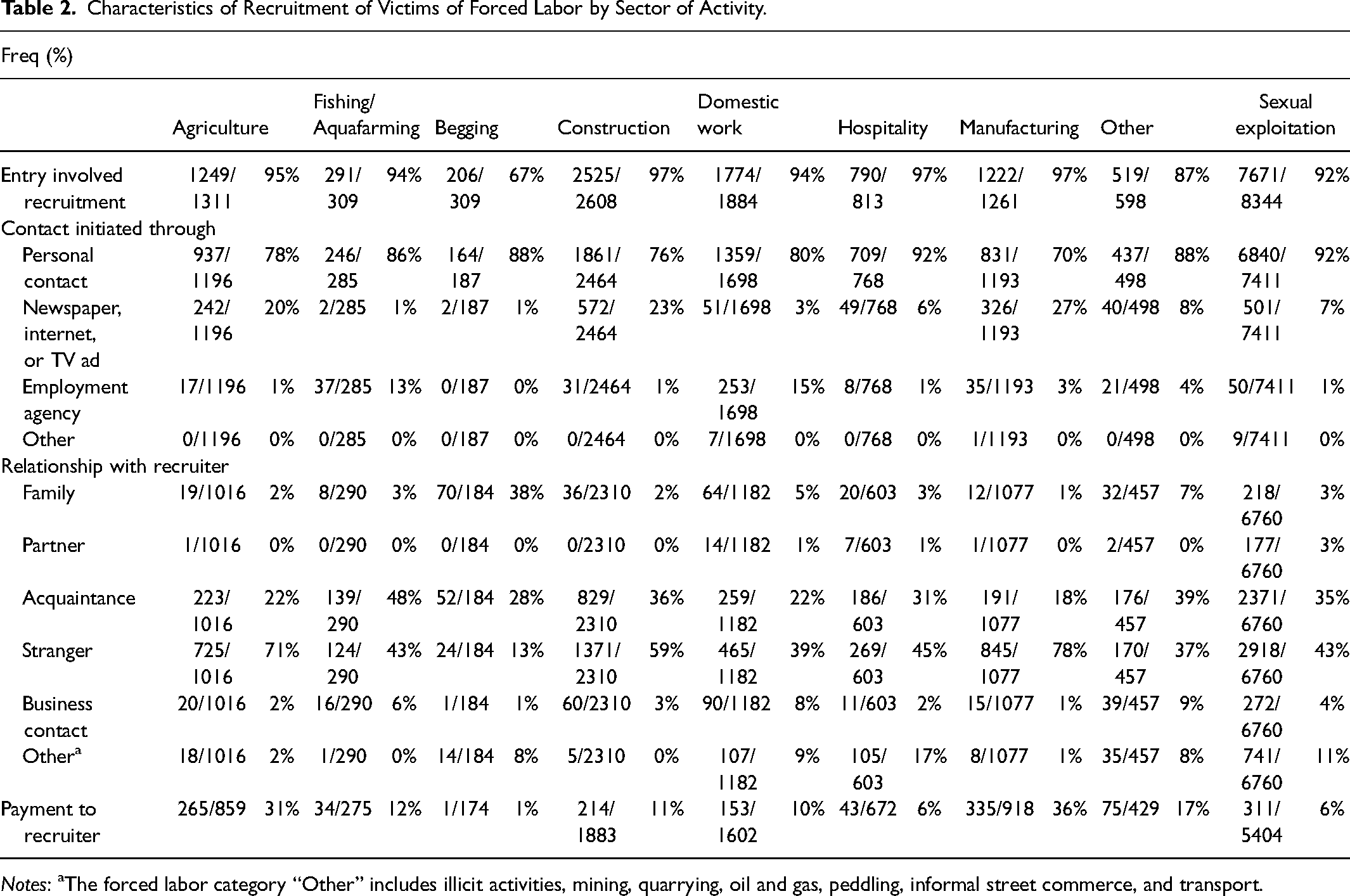
Notes: aThe forced labor category “Other” includes illicit activities, mining, quarrying, oil and gas, peddling, informal street commerce, and transport.
Table 3 describes the characteristics of different types of recruitment across subpopulations defined by gender, age, and type of exploitation. More than 80 percent of the IOM's registered victims reported that their recruiter had initiated contact directly, which was more commonly reported by children (96 percent) and victims of sexual exploitation (92 percent). Victims of forced labor were frequently recruited via personal contacts (78 percent) and through advertisements posted in newspapers, shown on television, or shared on the internet (15 percent). A large proportion of reported recruiters were described as having some personal relationship with the victim, with 37 percent across the whole sample reporting family members, partners, or acquaintances as recruiters. More than one in three recruited children reported that their recruiter was a family member. However, Table 3 shows that recruiters overall were most frequently described as strangers (48 percent). About 14 percent of victims reported that their recruiter was compensated 4 with an advance monetary payment before they facilitated their migration, particularly in the agriculture and manufacturing sectors, where more than one in three victims reported making an advance monetary payment to the recruiter (Table 2). Advance payments were less prevalent among recruited minors and victims of sexual exploitation. Recruitment through personal contact was predominant across all sectors, with the highest proportion among victims of sexual exploitation and of forced labor in the hospitality sector (Table 2). Trafficking victims in the agricultural, construction, and manufacturing sectors were also frequently recruited through newspaper, internet, and television advertisements (20, 23, and 27 percent, respectively). Employment agencies were a relevant platform for recruitment into the fishing and aquafarming sector (which comprised primarily adult males from Indonesia and Myanmar) and into domestic work (which primarily recruited women from Sri Lanka and Indonesia).
Characteristics of Recruitment by Gender, age and Type of Exploitation.
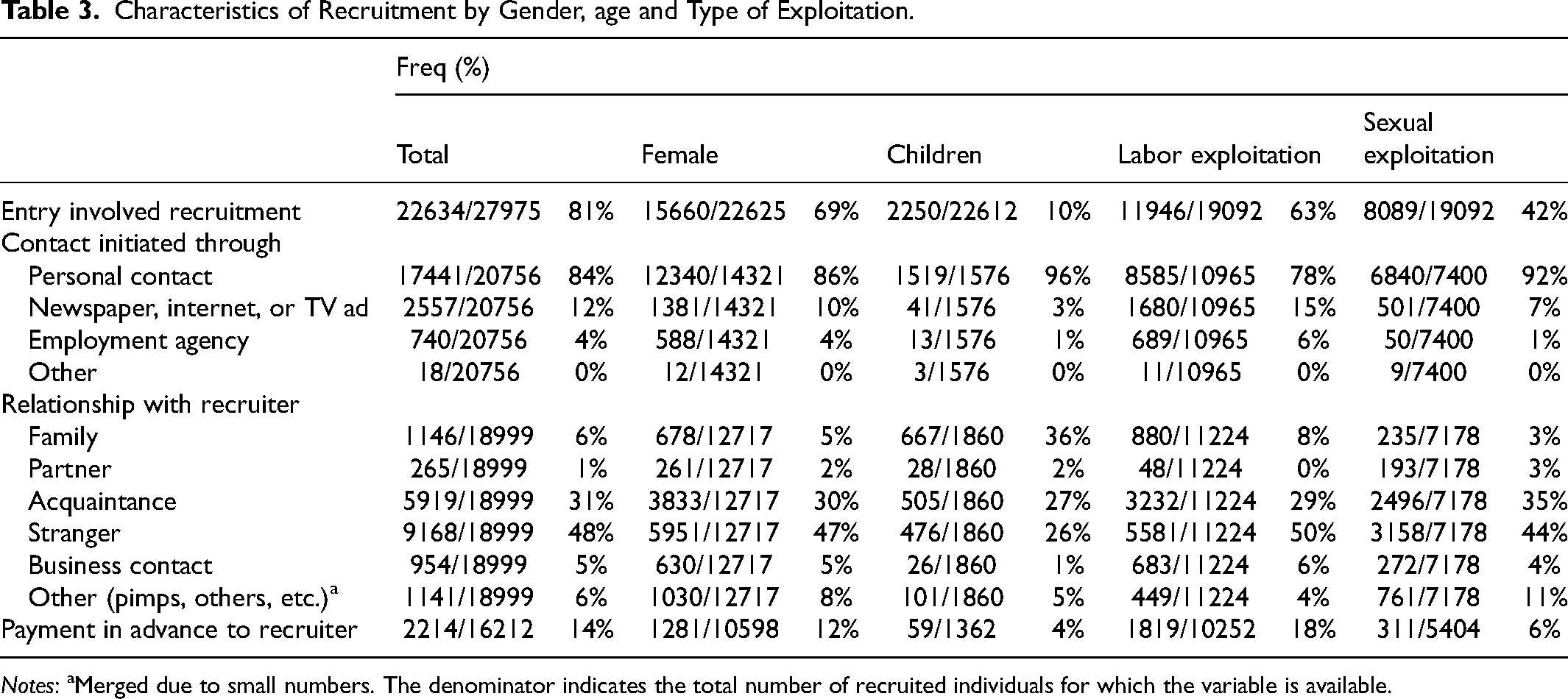
Notes: aMerged due to small numbers. The denominator indicates the total number of recruited individuals for which the variable is available.
Recruitment and Experiences of Violence and Abuse
Trafficking victims were likely to experience various forms of violence and abuse during the time spent in the trafficking situation. On average, individuals reported being victims of at least four forms of abusive or controlling behaviors. We report in Table 4 the prevalence of experiences of violence and abuse among recruited trafficking victims. Nearly eight in 10 victims experienced some form of violence during their time in trafficking, with the proportion remaining stable for female victims and minors. Nearly 70 percent of victims recruited into trafficking experienced psychological violence, about half experienced physical violence, and more than one in 10 experienced some form of sexual violence, with higher levels among female victims (23 percent) and minors (17 percent). Overall, deception and false promises, denial of essential needs and rights, and abusive working conditions were the types of abuses most frequently experienced by recruited trafficking victims.
Experiences of Violence and Abuse by Gender, age, and Type of Exploitation.
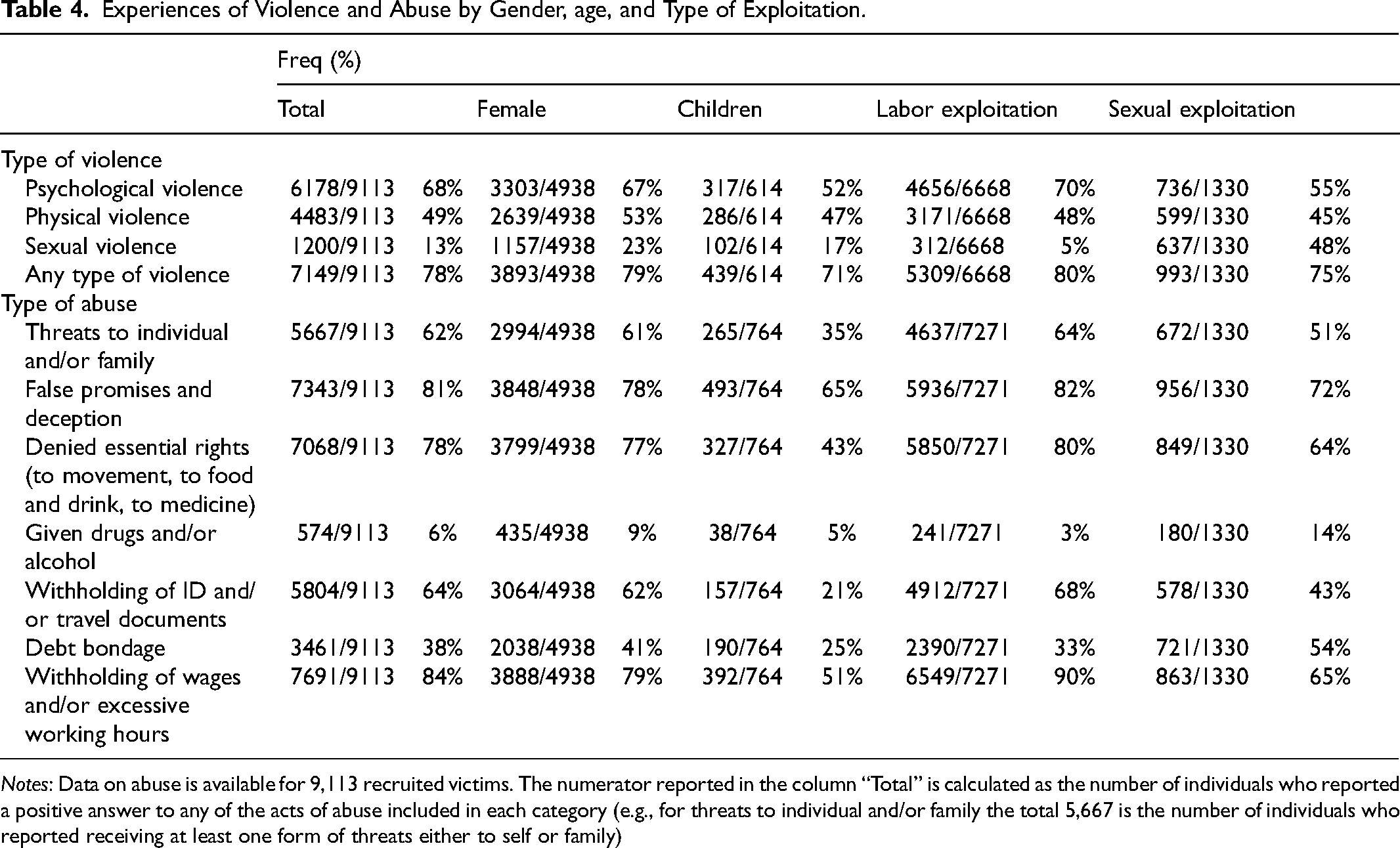
Notes: Data on abuse is available for 9,113 recruited victims. The numerator reported in the column “Total” is calculated as the number of individuals who reported a positive answer to any of the acts of abuse included in each category (e.g., for threats to individual and/or family the total 5,667 is the number of individuals who reported receiving at least one form of threats either to self or family)
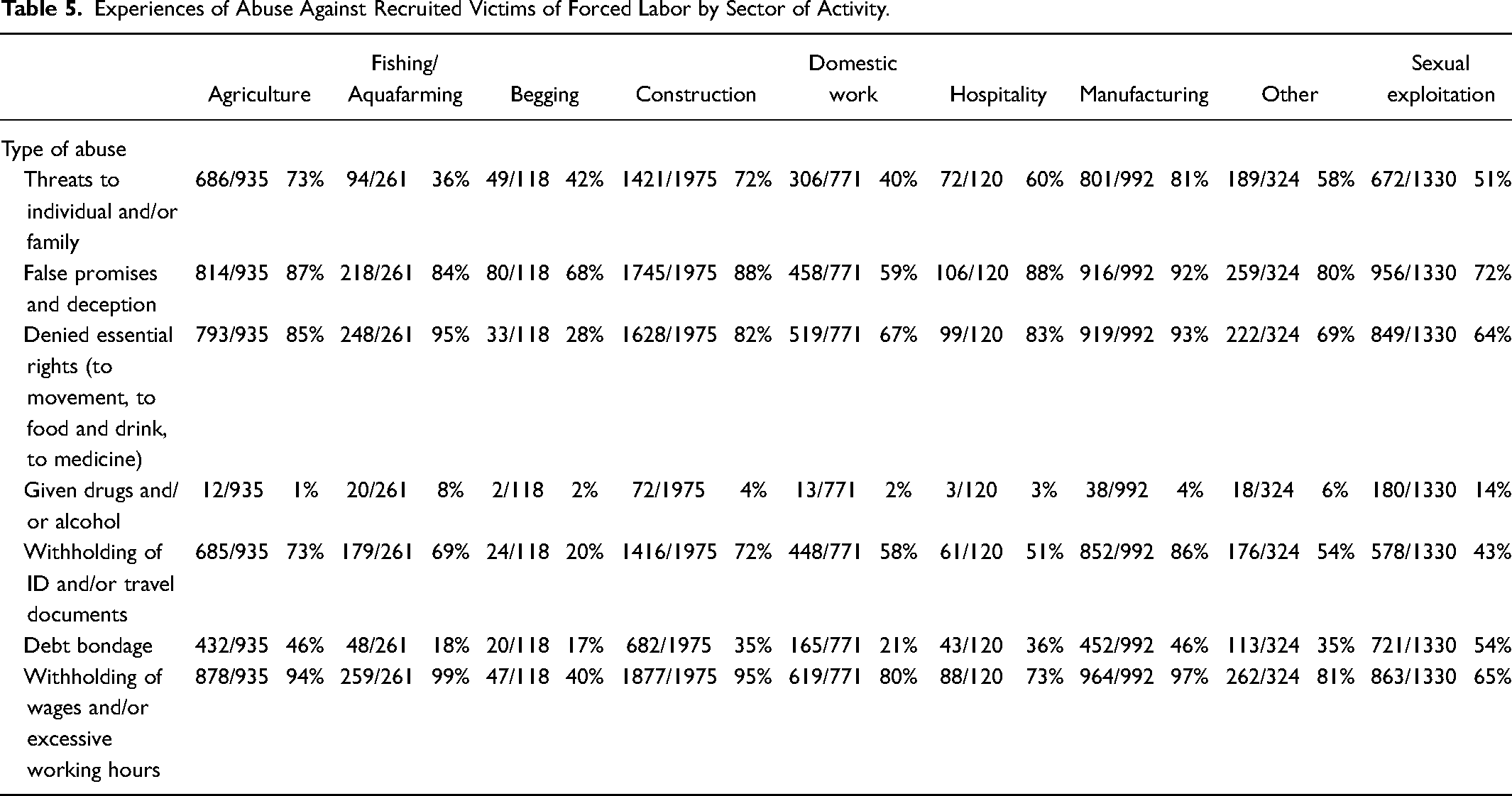
The means used to control victims varied across sectors (Table 5). The use of threats to either the individual or their family was frequent in the agriculture, construction, and manufacturing sectors, together with the denial of essential needs such as movement, food and medicines, and forced engagement in excessive working hours; these last two types of abuse were also predominant in the fishing and aquafarming sectors. Victims were deceived and misguided into and during trafficking across all exploitation sectors, while substance use was the least common type of abuse. Nonetheless, nearly 15 percent of victims of sexual violence reported being given alcohol or drugs as a mean of coercion. Debt bondage was also frequently used to control individuals who were sexually exploited and was common in the agricultural and manufacturing sectors as well. As this data analysis shows, recruitment into human trafficking was often connected to trafficked victims’ experiences of control and abuse across sectors of exploitation. We discuss these findings in light of current literature and policy developments in the next section.
Experiences of Abuse Against Recruited Victims of Forced Labor by Sector of Activity.
Discussion
Increasingly, international efforts to prevent human trafficking and forced labor have targeted exploitative third-party recruitment, mostly in migrants’ origin countries (ILO 2015; IOM 2020). Interventions to prevent human trafficking that are focused on providing prospective migrants with information on safe migration are often based on assumptions that there is a linear, causal link between recruitment and the likelihood of becoming a trafficking victim, especially for those who have paid recruitment fees (UNODC 2015). For example, according to a project evaluation, women did not necessarily believe that they should only utilize formally registered recruitment agencies, and neither had they always access to them, especially in rural areas of Nepal. Furthermore, even when using formal, licensed recruitment agencies, women commonly reported deception (Zimmerman et al. 2021). Thus, while policy makers consider initiatives, such as increased regulation of recruitment, enforcement actions against unlicensed recruiters, training of recruiters, and improved pre-departure information for migrants, to be essential items in the anti-trafficking toolbox (IOM 2019b; ILO 2018; Zimmerman et al. 2021), our analysis of IOM's VoTD data suggests this is not enough.
The data show that experiences of third-party recruitment were highly prevalent among victims of trafficking; eight in 10 victims said they were recruited in some way, and many of them were recruited via employment agencies, meaning third-party recruiters. Victims reported two forms of abuse that they associated with third-party labor recruiters: deception and debt bondage. More than four out of five victims reported that they had experienced “false promises/deception,” which likely suggests that they were intentionally or unintentionally deceived about the type of work, salary, or working conditions they would face. More than one-third of victims reported being in a situation of debt bondage, often associated with recruitment fees that they could not afford to pay back (UNODC 2015). However, the data do not show if the recruiters or employers were responsible for the deception. In other words, trafficking victims may experience situations of debt bondage because recruiters charge high fees, because their wages were too low to cover recruitment fee repayments, or because the employer neglected to pay them, a situation known as “wage theft” (Harkins 2020). In this dataset, over nine in 10 victims of labor exploitation reported wage theft, which likely contributed to the situations of debt bondage they also reported.
In addition to deception and debt bondage, victims also experienced other forms of abuse, some of which may have more likely been perpetrated by employers than recruiters. For instance, victims reported experiencing excessive working hours, restricted movement, and withholding of passports and identification documents. These types of abuses are consistent with reports of extremely poor employment conditions for migrants in agriculture, fishing and aquafarming, hospitality, construction, and manufacturing, the primary sectors in which victims were working (Jones, Visser and Simic 2019; Business and Human Rights Resource Centre 2019, 2021; Verite 2014; Oxfam 2018). Qualitative research has emphasized that employers in these sectors routinely seek to drive down labor costs through exploitative employment practices with adverse consequences for migrants (LeBaron 2020). However, the dataset does not enable analysis of the extent to which recruiters were specifically and directly responsible for the exploitation or where the exploitation occurred.
Overwhelmingly, victims in the dataset had migrated from poor countries to seek better employment opportunities: 90 percent reported that they had decided to migrate for work. In many parts of the world, migrants require assistance from intermediaries, including labor recruiters, to help them migrate and find jobs and to navigate the practical and legal logistics involved in migrating (Deshingkar 2019; Xiang and Lindquist 2018; Jones 2021).
Furthermore, these data highlight the hidden diversity of who or what can play a role in the recruitment process, broadly speaking. Our analysis shows that most victims of labor and sexual exploitation reported that they were recruited through personal contacts (78 and 92 percent, respectively). Nearly four in 10 victims were recruited by a family member, partner, or acquaintance. This recruitment is substantially different from recruitment through strangers and employment agencies. While it is still recruitment in the sense of the Palermo Protocol, it does not mean that there is not a broad spectrum of recruitment types, in which family networks can be involved.
By providing evidence on the wide variety of recruitment patterns among trafficking victims and the diversity of recruiters, our results provide a data-driven foundation that warns against interventions based on simplified or potentially misinformed views of labor recruitment. Simplified views include those that only focus on alerting prospective migrants that recruitment into migration has to be avoided. There is little doubt that recruitment is an important part of the labor migration process, which, at times, can be exploitative (Lindquist 2017; Deshingkar 2019; Jones, Ksaifi and Clark 2022). As our findings show, 8 in 10 trafficking victims reported a recruiter's involvement in their migration journey. Yet, this high number of recruiters does not mean that recruiters are directly responsible for the trafficking. There is a complex relationship between labor migration, migrants’ employment conditions, and human trafficking (Phillips 2011). Our findings establish that trafficked victims were often recruited by family members, people known to them, as well as by official agencies and strangers. Recognition of this diversity of labor recruiters should foster an examination of the systemic determinants of human trafficking, such as laws favoring employers’ over workers’ rights, immigration laws disadvantaging migrants, weak protections for migrant workers, bans on trade unions, and migrants’ poor access to justice mechanisms (LeBaron 2020). While the dataset does not allow us to investigate in further detail, it is possible that cases of family recruitment underpin harsh economic realities in which families face difficult choices and maybe make gambles — prevention of trafficking, therefore, goes hand in hand with broader development and social security issues.
Research Implications
This analysis had certain limitations. First, it is important to note that the primary purpose of IOM's case management system, through which the VoTD data are collected, is to support assistance programs for trafficking victims. The dataset does not originate from a standardized survey tool or research program; therefore, the data's quality and completeness vary substantially between registered individuals. Second, data quality and consistency may also be affected by the relative caseload of staff working in different contexts, by priorities of local rescue and assistance programs, and by varying levels of resource constraints. Nevertheless, in the countries where IOM provides direct assistance to trafficking victims, VoTD data are broadly representative of the identified victim population (Stöckl, Fabbri, Cook et al. 2021) and the most representative case data with the widest global coverage on human trafficking.
Despite the above limitations, this IMR Research Note highlights the importance of large-scale administrative datasets in future migration research. In particular, research on migration has increasingly pivoted away from privileging the individual experience of migrants toward studying the infrastructure that facilitates or hinders and controls mobility (Cranston, Schapendonk and Spaan 2018; Zhang, Sanchez and Achilli 2018; Xiang and Lindquist 2018; Deshingkar 2019); large microlevel quantitative datasets are especially valuable to complement in-depth qualitative studies. Here, we offer a cautionary note: to avoid misinterpretations and reductive narratives, it is important to conduct statistical analyses in the context of theoretically informed literature that recognizes the politics of migration and the agency of migrants (O’Connell Davidson 2015; LeBaron 2020; Deshingkar 2019). Our analysis suggests the urgent need for better definitions, tools, and measures in human trafficking research that focuses on recruitment.
One important near-term improvement in data collection would be to investigate both, and distinguish between intermediaries who are friends and family members and intermediaries who are more formal licensed recruitment businesses to get a more complete view of the recruitment processes leading to trafficking. Specifically, this would allow us to separately explore their connection with human trafficking and establish whether different prevention strategies for human trafficking are needed based on the recruiter type. Interventions and advocacy programs should, therefore, provide information about recruitment by family members versus more formal licensed recruitment services separately and provide prospective migrants with appropriate tools on how to assess the credibility of migration offers when provided by these different recruitment intermediaries.
To achieve relevant and comparable data on recruitment, indicators must be able to represent the different recruiter roles and responsibilities for the different stages of migration and specific employment sectors. Indicators should be adapted, by those designing the data collection instruments, to be relevant for different work sectors (e.g., agriculture versus hospitality industry), geographical contexts, or subpopulations and designed to capture the complexity of relationships between employers, recruiters, and migrants. Future improvements in research on recruitment, thus, depend on the development of more accurate and representative definitions of different types of labor intermediation.
Because labor intermediation generally takes place over time and in several places, future understandings of recruitment patterns into trafficking must also be informed by data that detail the points at which recruiters and employers are involved and their respective functions (McAlpine et al. forthcoming). Furthermore, migrant recruitment and human trafficking take place in a larger environment that is guided by policies and laws regarding border crossing and foreign labor that influence what policy makers, border guards, and the police consider legal and illegal. Future strategies must consider evidence on these systemic factors related to migration, employment laws, and conditions for migrants that are modifiable by policies or programs. Ultimately, safer migration depends on well-targeted interventions that address the actual risk and protective factors encountered by migrant workers.
Footnotes
Authors' Note
Heidi Stöckl, Institute for Medical Information Processing, Biometry and Epidemiology, Medical Faculty, Ludwig–Maximilians–University Munich, Germany.
Naomi Grant, St Mungo's, London, UK.
Declaration of Conflicting Interests
The authors declared no potential conflicts of interest with respect to the research, authorship, and/or publication of this article.
Funding
The authors disclosed receipt of the following financial support for the research, authorship, and/or publication of this article: This work was supported by The Freedom Fund (grant number PHGHZN90).
