




Abstract
Lack of data transparency and administrative data quality issues have hindered our understanding of the treatment of unaccompanied minors in the United States to date. This Dispatch from the Field provides new statistics on nearly a half million unaccompanied minors navigating removal proceedings in US immigration courts nationwide between 2009 and 2023 (through March), including population demographics, geographic location of cases, representation rates, and case outcomes. We extrapolated these statistics, even the most basic of which have not been available to the public since 2017, by using a novel approach that we developed to identify unaccompanied minors in administrative data from the Executive Office for Immigration Review. During the study period, only 51% of unaccompanied children were represented by an immigration attorney at any time during their removal proceedings. There are significant geographic and demographic disparities in representation rates. Representation for unaccompanied minors declined almost every year during the first Trump presidency. Nearly half of children's cases (49%) ended in deportation order. More children were ordered deported under the first Trump administration (70% of completed cases) than under either the Obama (51%) or Biden (31%) administrations. Children who were not represented by an attorney were far more likely to be ordered deported.
Since 2009, nearly 800,000 unaccompanied minors 1 have been apprehended at the US–Mexico border. The vast majority come from El Salvador, Guatemala, Honduras, and Mexico, migrating to flee child abuse and gang violence, reunify with relatives, and seek opportunity (UNHCR 2014). Thanks to advocacy victories, most notably, the 1997 Flores Settlement and the 2008 William Wilberforce Trafficking Victims Protection Reauthorization Act (TVPRA), unaccompanied minors benefit from due process protections unavailable to adults at the border, in detention, and in immigration court. After they are apprehended, unaccompanied minors from noncontiguous countries are allowed entry and placed in the custody of the Office of Refugee Resettlement (ORR). Since 2012, over 600,500 unaccompanied minors have been entrusted to ORR shelters (ORR n.d.). ORR, in turn, releases these children to family member “sponsors” while they await the outcomes of their removal proceedings in immigration court: the bureaucratic process that determines whether they will be ordered deported or allowed to remain in the US, sometimes, with legal status and a path to citizenship.
This Dispatch from the Field provides new statistics on nearly a half million unaccompanied minors navigating removal proceedings in US immigration courts nationwide between 2009 and 2023 (through March), including population demographics, geographic location of cases, representation rates, and case outcomes. We extrapolated these statistics, even the most basic of which have not been available to the public since 2017, by using a novel approach that we developed to identify unaccompanied minors in administrative data from the Executive Office for Immigration Review (EOIR) that integrates and builds on previous methods (Eagly and Shafer 2024; Vera 2008; TRAC 2016, 2019, 2021a, 2021b, 2021c, 2022c, 2022d).
Lack of transparency and administrative data quality issues have hindered our understanding of the treatment of unaccompanied minors in the United States to date. Unaccompanied children interact with several agencies in the federal immigration system: Customs and Border Protection (CBP), ORR, US Citizenship and Immigration Services (USCIS), and the EOIR's immigration courts. Only some of these agencies keep statistics on unaccompanied minors. Since 2009, CBP has disaggregated unaccompanied minors from single adults and families in its statistics on apprehensions at the US–Mexico border, providing crucial information on the yearly influx of these children. Since 2012, ORR has published aggregate statistics on the unaccompanied children in its care, including information on their age, gender, country of origin, and counties where children are released to “sponsors.” There are major data gaps, however, that make it difficult to know how unaccompanied minors fare once they are placed in removal proceedings in US immigration court and whether they obtain deportation relief.
The Transactional Records Access Clearinghouse at the University of Syracuse (TRAC) has filed several Freedom of Information Act (FOIA) requests that have been crucial in promoting data transparency on immigration issues in the US, publishing aggregate statistics on its website (e.g., TRAC n.d.a, n.d.b, n.d.c) and facilitating scholars’ access to raw data from multiple US immigration bureaucracies (for a review of the data TRAC provides, see Weitzman, Behrman, and Ascherio 2023). For the period following 2017, however, TRAC (2021a) reported that the US immigration court data on unaccompanied minors are “too faulty to be trusted.” That year, the Trump administration introduced changes to the “J-codes” that could previously be used to identify unaccompanied children, making these unreliable. As a result, TRAC stopped updating the website where it made aggregate statistics on unaccompanied minors publicly available (TRAC n.d.b).
The challenges inherent in identifying unaccompanied minors in the EOIR data have constrained both immigration research and advocacy, making it impossible to monitor the US government's treatment of this formally protected group of immigrant children in immigration court. While children are usually considered dependents on their parents’ immigration cases, unaccompanied minors make independent legal claims to the state, making this a group of interest to scholars examining the intersection of migration and children's rights (Galli 2023a, 2024). For legal advocates, knowing how many unaccompanied children are facing removal proceedings without representation is crucial to petition the government for enough funding to meet existing needs.
The first goal of this paper is to describe our method for identifying unaccompanied minors in detail so that it may be replicated by others seeking to study this population. Building on past approaches, we use other sources of available information on immigrants’ cases to disaggregate unaccompanied minors from other immigrant populations in the EOIR data, including: the immigrant's age at arrival, the dockets where cases are heard, and whether cases comprise part of family units. We thus identify 483,432 cases of unaccompanied minors in removal proceedings in US immigration court between 2009 and 2023 (through March), which, as we detail below, constitutes the vast majority of this population.
The second goal of this paper is to offer descriptive statistics on our sample of nearly a half million cases of unaccompanied minors, providing data that has not been available to the public since 2017 due to Trump's changes to the courts' record keeping practices, as well as additional, never-before-seen statistics. Our findings reveal adverse outcomes for this formally protected group of vulnerable immigrant children in the US immigration courts. We highlight some of the most notable here. During the study period (2009–2023), only 51% of unaccompanied children were represented by an immigration attorney at any time during their removal proceedings. We find geographic disparities in representation rates, with children residing in large cities faring better than those in mid-sized cities and rural areas, and those in Republican states faring worse than those in Democratic states. Data gaps masked the scope of the deleterious effects of the first Trump administration's tenure — something that has been documented by legal scholars and the first author's qualitative research with unaccompanied children (Schrag 2020; Galli 2023a) — as well as lesser-known enduring problems. Representation rates for unaccompanied minors in removal proceedings declined steadily almost every year during the first Trump presidency and continued to plummet under Biden, despite increased federal investments in funding for legal aid by the latter administration (Barrera 2022). Almost half (49%) of unaccompanied children's cases on which a decision was reached during the study period ended in a deportation order or voluntary departure. More children were ordered deported under Trump (70% of completed cases) than either Obama (51%) or Biden (31%). Children who were not represented by an attorney were far more likely to be ordered deported.
The rest of this paper proceeds as follows. First, we review the limited existing quantitative data on unaccompanied minors in the United States and the scholarship making use of these data. Second, we discuss the limitations of the EOIR immigration court data, and we describe our method for identifying unaccompanied minors (STATA code for replication is available from the authors). Next, we report descriptive statistics on this population, providing an analysis of the most important trends nationwide. We end by suggesting avenues for future research using our method and by making policy recommendations to improve data transparency and better the treatment of unaccompanied children in the United States.
What We Know About Unaccompanied Minors: The Quantitative Data
Available statistics provide only a partial picture of global child migration. While there have been quantitative studies of child migration in more well-researched migration streams, such as the Mexico–US migration corridor (e.g., Hamilton and Bylander 2000; Zenteno, Giorgiuli, and Gutierrez 2013; Donato and Sisk 2015; Donato and Perez 2017; Galli and Garip 2024), most migration surveys recruit adult respondents while ignoring children. Administrative statistics are also lacking, and many countries fail to disaggregate migration flows by age or to distinguish unaccompanied from accompanied children, despite the fact that the former group benefits from special protections in most countries of reception in the Global North. Even when unaccompanied minors are captured in administrative data, legal definitions for this population vary slightly across countries, leading to discrepancies that make comparative research challenging (Humphris and Sigona 2016).
In light of these data limitations, unsurprisingly, the vast majority of the scholarship on global child migration is based on qualitative studies that use ethnographic and in-depth interview methods to identify children within migration flows (Galli 2024). These studies provide nuanced accounts of how unaccompanied minors subjectively experience migration and navigate school, the workplace, the immigration process, and reunification with family in the host countries like the United States (Heidbrink 2014, 2020; Terrio 2015; Statz 2018; Galli 2018a, 2020a, 2023a; Martinez 2019; Menjivar and Pereira 2019; Canizales 2023). Quantitative research is needed to supplement this qualitative scholarship, providing representative data on national trends for unaccompanied minors.
Before we proceed, we review the limited existing quantitative research on unaccompanied minors in the US context, which our research builds upon. To begin, there have been a number of surveys of unaccompanied minors apprehended at the US–Mexico border. Most notably, the United Nations High Commissioner for Refugees (UNHCR 2014) surveyed about 400 unaccompanied children in its “Children on the Run” report. Findings revealed that children were migrating from Guatemala, Honduras, El Salvador, and Mexico driven by a combination of violence, deprivation, and family reunification, and most of these children had valid claims to international protection, including refugee status. Some scholars have opted for identifying children after their deportation from the United States. For example, Hernandez (2019) surveyed deported unaccompanied children in migrant shelters in Mexico to examine their migration strategies, such as reliance on family members and smugglers during the trip. Coulter et al. (2020) surveyed 97 recently deported Mexican unaccompanied children to examine their experiences with the Border Patrol. Unlike children from noncontiguous countries, Mexican children must pass screenings to be admitted to the US on the grounds of trafficking or persecution; the survey revealed that these screenings were performed inadequately, and the Border Patrol failed to identify Mexican children who should have been admitted.
As noted above, ORR has tracked the demographics of unaccompanied children in its care since 2012, making aggregate data available online: www.acf.hhs.gov/orr/about/ucs/facts-and-data. The Government Accountability Office has published a series of more detailed analyses of these data (GAO 2016, 2017, 2018, 2020), and there have been two scholarly quantitative studies on children in ORR shelters. Ryo and Humphrey (2021) find that an increasing proportion of children in ORR custody are extremely vulnerable, including children of tender age, and most children are detained in shelters located far from where their sponsors reside. In a recent Dispatch from the Field, Alcaraz et al. (2024) find that a significant proportion of children in ORR custody were detained in emergency facilities that do not comply with Flores Settlement standards of care, and roughly 15,000 “aged out” while in custody or had their age redetermined to be adults, which may lead youth to be transferred to adult detention centers.
When it comes to tracking how unaccompanied minors fare in US immigration court and in their applications for deportation relief, there is a severe lack of administrative data transparency. It is important to specify that, while they are placed in removal proceedings in immigration court, unaccompanied minors usually apply for two forms of relief that are adjudicated outside of the court: (a) they apply for asylum at the USCIS asylum office; 2 (b) they apply for Special Immigrant Juvenile Status (SIJS) for children abandoned, abused, or neglected by their parent(s) at USCIS, after obtaining findings from state-level probate, delinquency, or dependency courts stating that it is not the child's best interest to return to the home country (Figure 1).
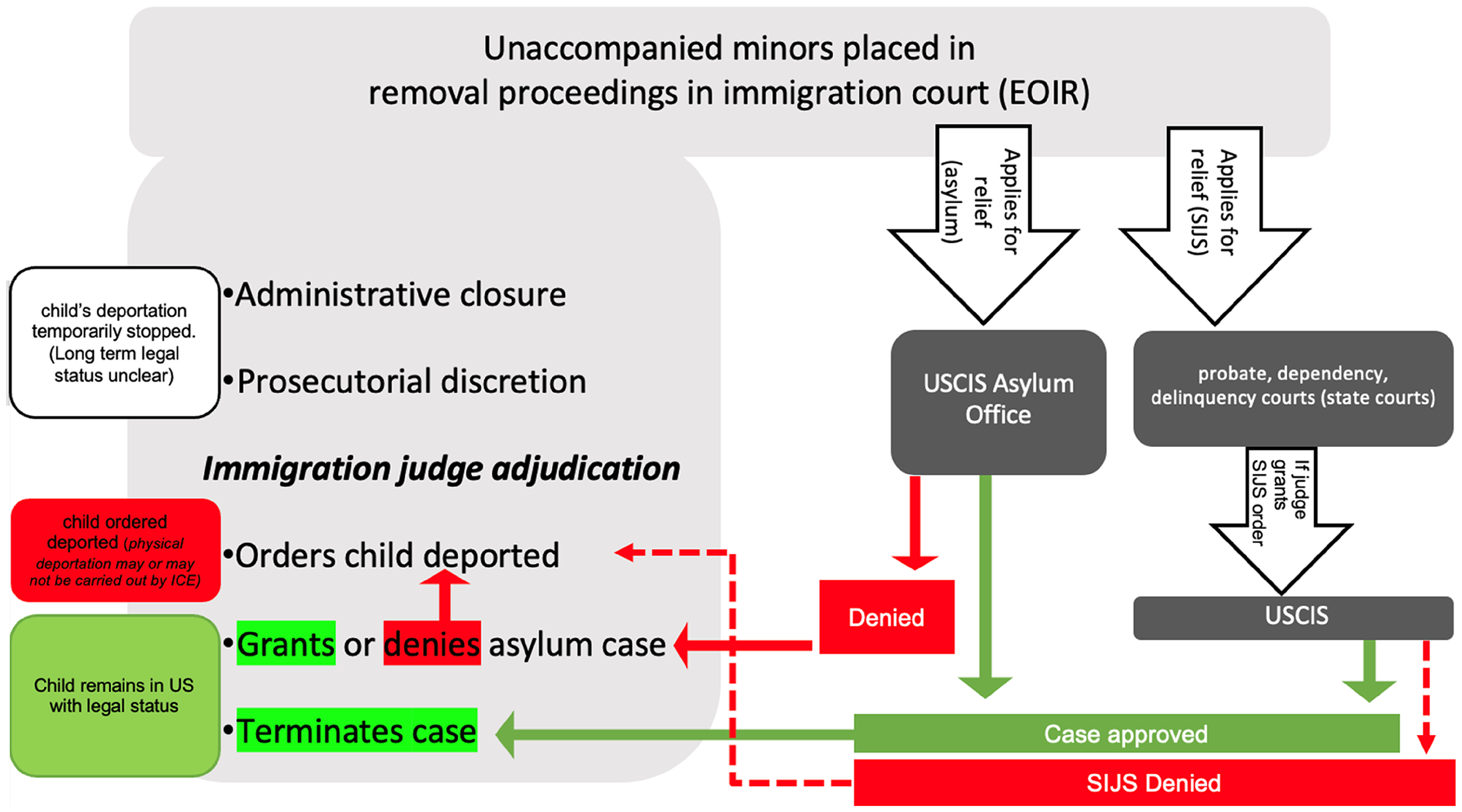
Multiagency Process of Applying for Relief and Case Outcomes for Unaccompanied Minors in Executive Office for Immigration Review Data.
During the Obama administration, the USCIS asylum office published data on “minor principal applicants” (e.g., number of asylum applications and grant rates for each office) following its quarterly stakeholder meetings, but the government ceased to provide these statistics during the first Trump administration. 3 Until a recent FOIA disclosure obtained by Laila Hlass and her colleagues (2022), we lacked information about unaccompanied minors’ SIJS applications. This important new work has revealed that over 100,000 youths whose SIJS cases have been approved are in legal limbo, waiting four or more years before they obtain legal permanent residency (see also End SIJS Backlog Coalition 2021, 2023). The authors also found that there are significant and avoidable delays in SIJS adjudication at USCIS, and approval rates vary widely by nationality and gender.
To further complicate matters, the databases of the different agencies that process unaccompanied children — CBP, ORR, USCIS, and EOIR — are not connected, making it impossible for scholars to track children across agencies, despite the fact that their treatment in one often has a direct impact on outcomes in another. To give one example, if children are granted asylum at USCIS, their removal proceedings are usually terminated in court, and they can remain in the United States (Figure 1).
Scholars have previously examined immigration court outcomes for unaccompanied minors. These studies show that, when children lack legal representation, they are less likely to apply for relief and more likely to be ordered deported (TRAC 2014a, 2014b; Eagly and Shafer 2015, 2020). The overwhelming majority (95%) of unaccompanied minors who are represented show up to their immigration hearings (AIC 2014). Braaten and Braaten (2021) examine case outcomes for unaccompanied children whose asylum cases were denied at USCIS and are now under the jurisdiction of the immigration judge. Consistent with research on adults, they find that the background and ideology of the judge are important determinants of case outcomes. Factors relative to the receiving context (e.g., percentage of Latino residents) and conditions in sending countries also shape judicial decisions on children's asylum cases. 4 However, all of this research predates the 2017 changes that made unaccompanied minors impossible to identify in the EOIR data.
After these changes were introduced, TRAC (2021b) researchers identified the following problems with the “juveniles history” table and its “J-codes.” First, accompanied and unaccompanied children are no longer appropriately disaggregated. Second, many cases of individuals who were under age 18 when they arrived in the US are excluded. Third, after 2017, 79% of records in the “juveniles history” file are categorized using a new “not applicable” J-code. Among records coded “not applicable,” 40% were adults, including individuals much older than 18 at the time of their Notice to Appear (NTA) (i.e., the date when the formal document initiating court proceedings was filed). Finally, it is worth noting that even prior to the 2017 changes, relying exclusively on J-codes to identify unaccompanied minors has resulted in both an undercount of this population and errors of inclusion (more on this below), providing further support for instead relying on our multipronged identification method.
Identifying Unaccompanied Children in the EOIR Immigration Court Data
We obtained the EOIR's administrative US immigration court data from TRAC. 5 The data includes information on the cases of all immigrants processed in immigration court, including removal proceedings and other types of proceedings (e.g., credible fear interview appeals), from 1990 until 2023 (through March). In the data, each case has multiple proceedings; for example, for different applications for deportation relief or to request a change of venue or a continuance. Each proceeding, in turn, may have multiple hearings. The data includes 11.6 million proceedings associated with 8.8 million cases.
We focused on the case level, examining removal cases (case_type==RMV) opened between calendar years 2009 and 2023 (through March). 6 We measured when the case was opened by using the calendar year associated with the date of the immigrant's entrance in the United States. When the date of entrance is missing, we filled out information using the calendar year associated with the date of the NTA. We chose this study period because the TVPRA was passed in December 2008, introducing special protections for unaccompanied minors. Also, the first available statistics on unaccompanied minors from another agency (CBP) start in 2009, and we use these data below to check the validity of our estimates.
Integrating and expanding on past approaches (see Eagly and Shafer 2024; Vera 2008; TRAC 2016, 2019, 2021a, 2021b, 2021c, 2022c, 2022d), we devised a multipronged strategy to identify unaccompanied minors in the EOIR data by leveraging other information to generate a series of “flags” that make it possible to identify unaccompanied minors either by inclusion (UM==1) or exclusion (UM==0) (summarized in Table 1).
Flagging Unaccompanied Minors (UM) in the Executive Office for Immigration Review Data.
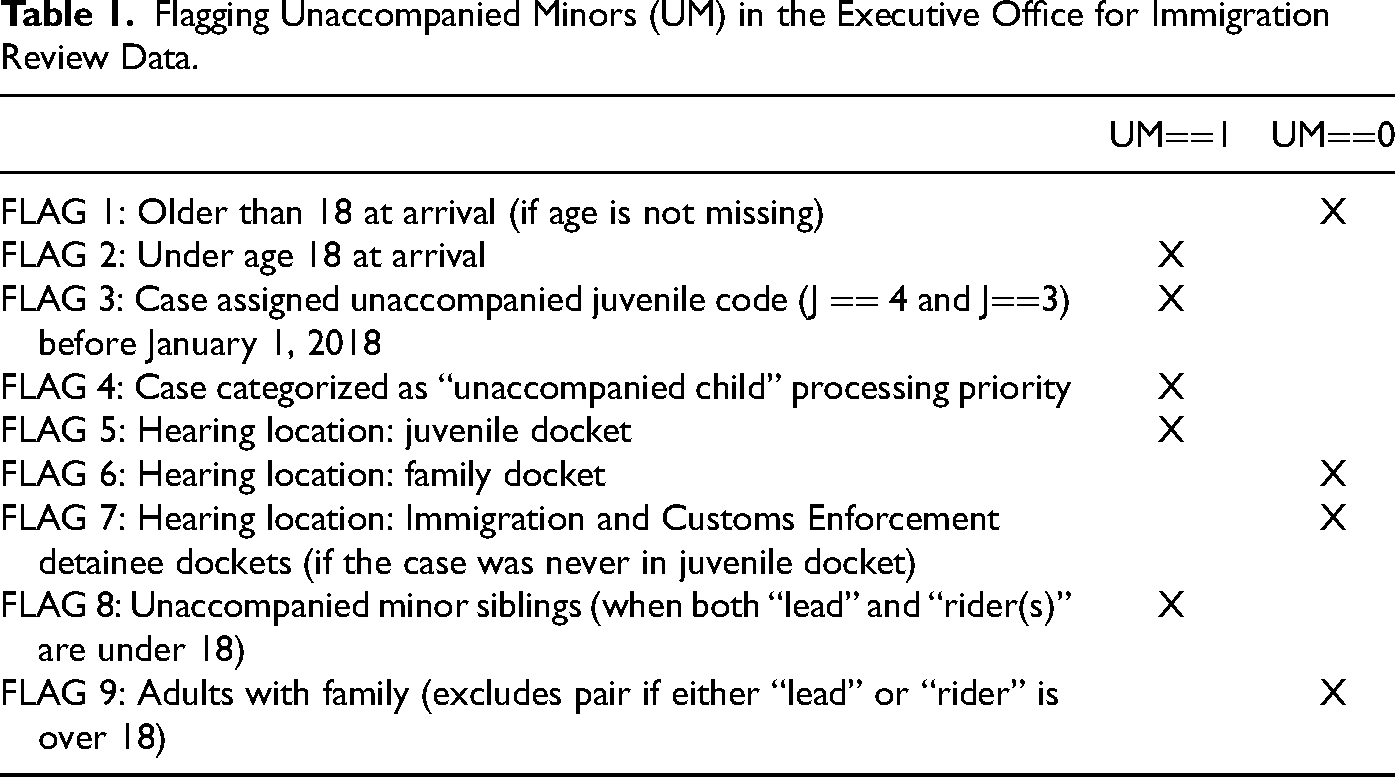
The EOIR data is composed of a series of data tables that contain different kinds of information, all of which can be linked to the immigrant's case in the “master file” table, using a unique identifier (idn_caseid). In this section, we describe our method, specifying the data tables from which we extracted the relevant information. For ease of explanation, Table 1 and the writing is organized by data table, rather the order of construction of the sample. 7
First, we used age information to construct our sample. To do so, we computed age at arrival as the estimated difference between date of birth and date of arrival, both variables available in the “master file.” 8 When date of arrival was missing, we filled in information with the date of the NTA. We excluded cases from our sample when individuals were over age 18 when they arrived in the US (FLAG 1). We did not exclude individuals for whom age information was missing. We included in our sample cases under age 18 at the time of arrival in the US (FLAG 2).
It is important to note that several cases have missing information on age, which is a limitation of the underlying EOIR data. Missingness on age is more problematic in the early study period (48% of cases from 2009–2017) than in the post-2017 period (14% of cases from 2018–2023). It is in the latter period that our sampling strategy is most important given the lack of reliability of the J-codes following the Trump administration's changes discussed above. TRAC has relied on age for several analyses of the EOIR data, especially in recent years when age information is more thoroughly filled out, lending support to our reliance on age measures to construct our multipronged method (e.g., TRAC 2021a, 2021b, 2022d).
Second, we relied on some of the information in the EOIR “juveniles history” table (file name: tbl_JuvenilesHistory) available for cases that predated the changes that undermined the reliability of “J-codes.” The “juveniles history” table includes six “J-codes”: J, Juvenile (idn_juvenile==1); J1, Juvenile released to guardian or has turned 18 (idn_juvenile==2); J2, Unaccompanied Juvenile — Asylum (idn_juvenile==3); UJ, Unaccompanied Juvenile (idn_juvenile==4); NA, Not Applicable (idn_juvenile==5); AJ, Accompanied Juvenile (idn_juvenile==6). We included in our sample cases with an NTA date before January 1, 2018, which were assigned the two codes that explicitly mention unaccompanied juveniles (idn_juvenile==4 and 3) (FLAG 3). 9 We did not use codes J and J1 because the “juveniles” designation is ambiguous and does not specify unaccompanied status.
Third, we used information on case processing priorities from the data table “Case Priority History.” We included those cases that were designated as “unaccompanied child processing priority” (casepriority_code=="UC”) (FLAG 4). For example, under Obama, following increased arrivals of children at the border in 2014, unaccompanied minors were designated as a processing priority in immigration court as a way to expedite their cases, speedily deport children, and deter future arrivals (Schrag 2020). 10 In recent work on detainees’ outcomes in immigration court, Eagly and Shafer (2024) similarly rely on J-codes prior to 2018 and on the “UC” processing priority code to identify unaccompanied children.
Next, we used the “schedule” data table to identify individuals whose cases were assigned to dockets for unaccompanied minors. These so-called juvenile dockets were created within immigration courts to process unaccompanied minors’ cases in a child-friendly setting, with some minimal accommodations to consider their developmental capacity; for example, judges are encouraged address children in an informal manner and to refrain from wearing robes (EOIR 2007, 2017). To do so, we manually coded data on “hearing locations” (hearing_loc_code), which includes information regarding specific dockets within each immigration court. Using information on docket names and addresses and conducting online searches to verify information about ambiguous names, 11 we coded dockets under the following categories: (a) juvenile dockets; (b) family docket; (c) Immigration and Customs Enforcement (ICE) detainee dockets; and (d) other/unknown. Juvenile dockets include both those that hear cases of unaccompanied children released to sponsors, as well as those that hear cases of unaccompanied children detained in ORR shelters; we included in our sample all cases assigned to both kinds of juvenile dockets (FLAG 5). 12 Next, we excluded cases assigned to family dockets, which hear the cases of family units (FLAG 6). We also excluded cases heard in dockets that process adults detained in ICE detention facilities, but only if these cases had not previously been assigned to a juvenile docket (as noted above, unaccompanied youth may be transferred to ICE custody after turning 18) (FLAG 7).
The Vera Institute of Justice and TRAC have similarly relied on docket information to identify unaccompanied minors and other populations in the EOIR data (see Vera 2008; TRAC 2016, 2019, 2021c, 2022d). It is important to note that this strategy is effective but not sufficient on its own as not all immigration courts have special dockets that hear unaccompanied minors’ cases.
We extend past approaches by also leveraging information from the “lead rider” data table, which groups together individuals applying for relief with family members, as our final strategy to identify unaccompanied minors. In this table, the principal applicant is usually coded as lead, with his or her derivatives (e.g., dependent children, spouses, or siblings) linked to their case and coded as rider(s). 13 We included in our sample members of a lead-rider pair if they were both under age 18 at arrival (FLAG 8). These individuals could be unaccompanied minor siblings or teenaged parents in removal proceedings with their offspring. We excluded cases if any member of a lead–rider pair was over 18 at arrival because we infer that these are adults applying for relief with (child or adult) family members (FLAG 9).
We conducted a series of robustness checks to test the validity of our method. First, we examined the period prior to 2018, when J-codes were considered reliable. We compared the cases flagged by our method to those captured by the relevant government J-codes (3 and 4). Our method captures the vast majority of cases designated as unaccompanied minors by the government. Concretely, using all flags, we capture 94% of unaccompanied minors identified by relevant J-codes. Without relying on Flag 3, which itself uses pre-2018 government J-codes, we capture 91% of cases identified by relevant J-codes.
We conducted further tests on the ∼9% of cases that were identified by J-codes 3 and 4 but not by our flags (excluding Flag 3). These cases were excluded from our sample because: (a) they were heard in a docket that does not process unaccompanied minor cases; (b) they were coded as riders on an adult's case (lead); (c) age at arrival was over 18, including much older than 18. Furthermore, excluded cases are not concentrated in any given year, assuaging concerns of sampling bias. Because the capture rate is 91%-94% during the years in which our method can be verified (2009–2017), we are confident that our flags can also be used to correctly identify unaccompanied minors in the EOIR data in the post-2017 period.
It is worth noting that, even prior to the aforementioned 2017 changes, there were limitations to government J-codes, which included both errors of inclusion and omission. As regards the latter type of error, a Vera Institute of Justice analysis of the EOIR data (Vera 2008) found that J-codes neglected to capture a significant share of children whom they found to be unaccompanied minors using docket information like we do, as well as by linking EOIR and ORR custody data using A-numbers provided to them by the US government (A-numbers are not currently available to scholars). The Vera report suggests that relying exclusively on J-codes to identify unaccompanied minors was not entirely reliable even before the 2017 changes. In agreement with Vera's analysis, our flags identify n = 83,066 cases that are most likely unaccompanied minors and are not captured by government J-codes (idn_juvenile==4 and 3).
To further test the validity of our method, without relying on J-codes and including cases opened after 2017, we compare our estimates with other available administrative data on unaccompanied minors below. Figure 2 compares the unaccompanied minor sample that we extracted from the EOIR data by the calendar year in which the case was opened (between 2009 and 2022) to CBP data on apprehensions of unaccompanied minors at the border (between fiscal years 2009 and 2022) and ORR data on minors in its custody (data available only for fiscal years 2012–2022). In interpreting these data, it is important to note that not all unaccompanied minors apprehended at the border are transferred to ORR custody. Unlike Central Americans, Mexicans must pass Border Patrol screenings before being admitted. Most youths fail to pass these screenings and are immediately deported to Mexico via so-called voluntary removal (Coulter et al. 2020). This explains why Mexicans comprise a large portion of unaccompanied children apprehended at the border but a relatively small portion (only 4%) of children in ORR custody and in our sample (see Table 2). Given that the vast majority of Mexican children do not make it into the US, we compare our yearly sample numbers to both overall apprehensions and non-Mexican apprehensions.
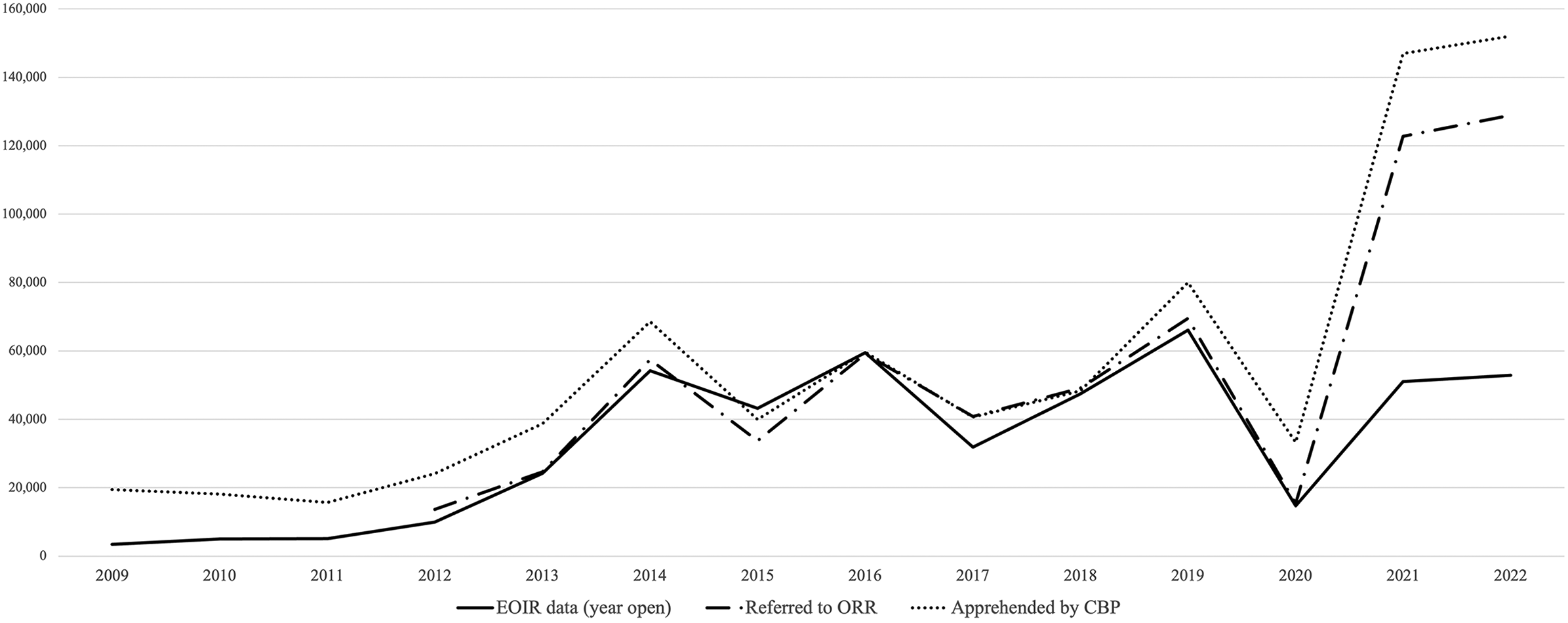
Numbers of Unaccompanied Minors in the Customs and Border Protection Data (2009–2022), Office of Refugee Resettlement Data (2012–2022), and Executive Office for Immigration Review Data (2009–2022).
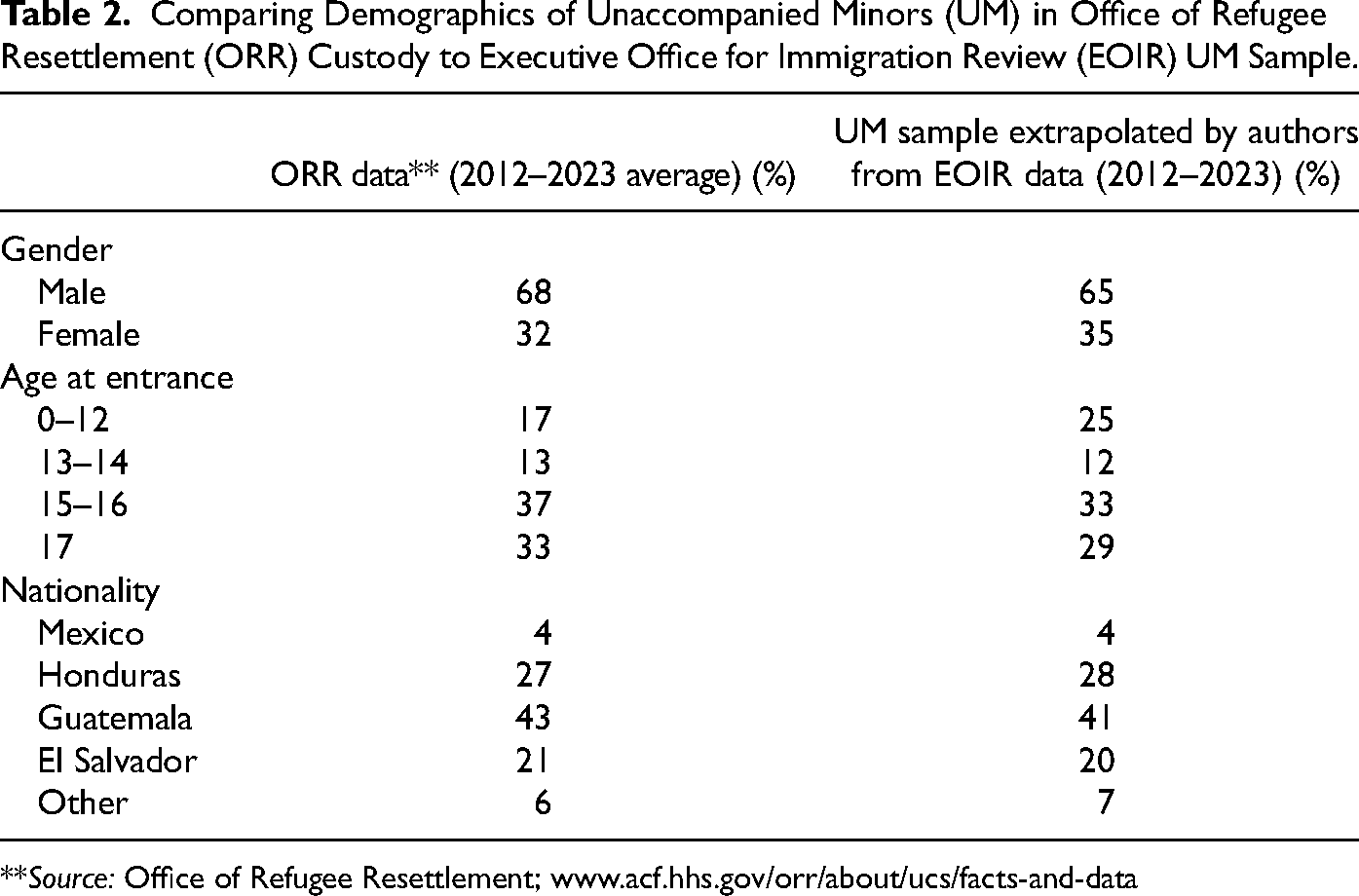
Comparing Demographics of Unaccompanied Minors (UM) in Office of Refugee Resettlement (ORR) Custody to Executive Office for Immigration Review (EOIR) UM Sample.
Source: Office of Refugee Resettlement; www.acf.hhs.gov/orr/about/ucs/facts-and-data
For the years 2009–2011, our method captures an average of 26% of all border apprehensions of unaccompanied minors or 116% of non-Mexican unaccompanied minors apprehended during that same period (ORR data is not available for this period). Between 2012 and 2017, our method captures an average of 95% of children in ORR custody and an average of 78% of unaccompanied minors apprehended at the border (or 116% of non-Mexicans). Between 2018 and 2020, following the changes to the J-codes made by the Trump administration, our method captures 96% of children in ORR custody and 75% of those apprehended at the border (or 105% of non-Mexicans). For 2021 and 2022 (Biden administration), our method captures 41% of children in ORR custody and 35% of those apprehended at the border (or 43% of non-Mexicans).
The numbers pertaining to the last two years (2021–2022) might seem to suggest that our method is less effective at identifying unaccompanied minors in immigration court under the Biden administration. This larger gap, however, at least in part reflects real-world changes in case processing: CBP failed to file NTAs for some of the individuals it apprehended at the border during this period. In 2022, one in six removal cases were dismissed by the immigration courts because no NTA had been filed (see TRAC 2022a, 2022b). According to a recent government report (OIG 2024), as of May 2024, more than 291,000 unaccompanied minors who were apprehended at the border had not been issued NTAs, including 90,000 who entered in 2021 and still did not have a date to appear in court. Unaccompanied minors who were not issued an NTA would not show up in the EOIR data, even if they are recorded in the CBP and ORR data.
According to Kids in Need of Defense (KIND), the largest nonprofit legal service provider representing unaccompanied minors in the US, 14 during the first 23 months of the Biden administration, only 41% of their unaccompanied minor clients had an NTA filed in immigration court. These numbers are remarkably similar to our method's capture rate for 2021–2022 (i.e., 43% of non-Mexicans apprehended at the border; 41% of children in ORR custody). With available administrative data, it is impossible to estimate representation rates and case outcomes for unaccompanied minors who are in the US but have not been formally placed in removal proceedings; our descriptive statistics below capture only unaccompanied children who are in removal proceedings in US immigration court.
Not having removal proceedings initiated in immigration court has mixed real-world implications for unaccompanied children. On the one hand, legal scholars argue that removal proceedings are harmful to children, who should not be placed in the adversarial immigration court system, where judges do not consider the best interests of the child when deciding whether to allow them to stay in the US (Statz and Heidbrink 2019; Barrera 2022). Further, immigration judges do not have jurisdiction over most unaccompanied minors’ applications for relief, including asylum — which is decided at the asylum office in the first instance for this population — as well as SIJS, the U-visa, and the T-visa, all of which are decided at USCIS (Figure 1). Hence, it is not necessary for children to be in removal proceedings to apply for these forms of relief. On the other hand, exposure to the legal orientation presentations that take place in juvenile dockets in immigration court can help unaccompanied minors learn about local nonprofit legal service providers and find an attorney (Galli 2023a, 2023b). Children who are not in proceedings may delay finding an attorney and applying for relief and, thus, potentially age out of protections they may otherwise have qualified for.
Our final test of the reliability of our method compares the demographics of cases in our sample to those in the ORR data for the period between 2012 and 2023. Table 2 reaffirms the broad similarities between our sample and data on children in ORR custody, when comparing across nationality, gender, and age groups. The breakdown of nationalities in our sample is nearly identical to the nationalities of children in ORR custody. For cases with gender information filled out, 65% were male and 35% were female, which is comparable to ORR's data on the gender breakdown of the children in its custody (68% males; 32% females). Gender was missing for 16.3% of our sample, and cases with an earlier start date are more likely not to have gender information (see TRAC 2021b for a discussion of this limitation in the EOIR data).
Similar to ORR demographic data on age, for children that have a value for age (age is missing for 4.6% of our unaccompanied minor sample), 17-year-olds make up 29% of our sample (33% of ORR data), 15–16-year-olds make up 33% our sample (37% of ORR data), and those ages 13–14 make up 12% of our sample (13% of ORR data). Conversely, those 12 and under make up 17% of children in the ORR data and a higher 25% of our sample. The higher capture rate for the youngest children may point to limitations in EOIR's recording of age and/or in our method's capacity to fully disaggregate between unaccompanied and accompanied children.
Results: New Statistics on Unaccompanied Minors in US Immigration Court
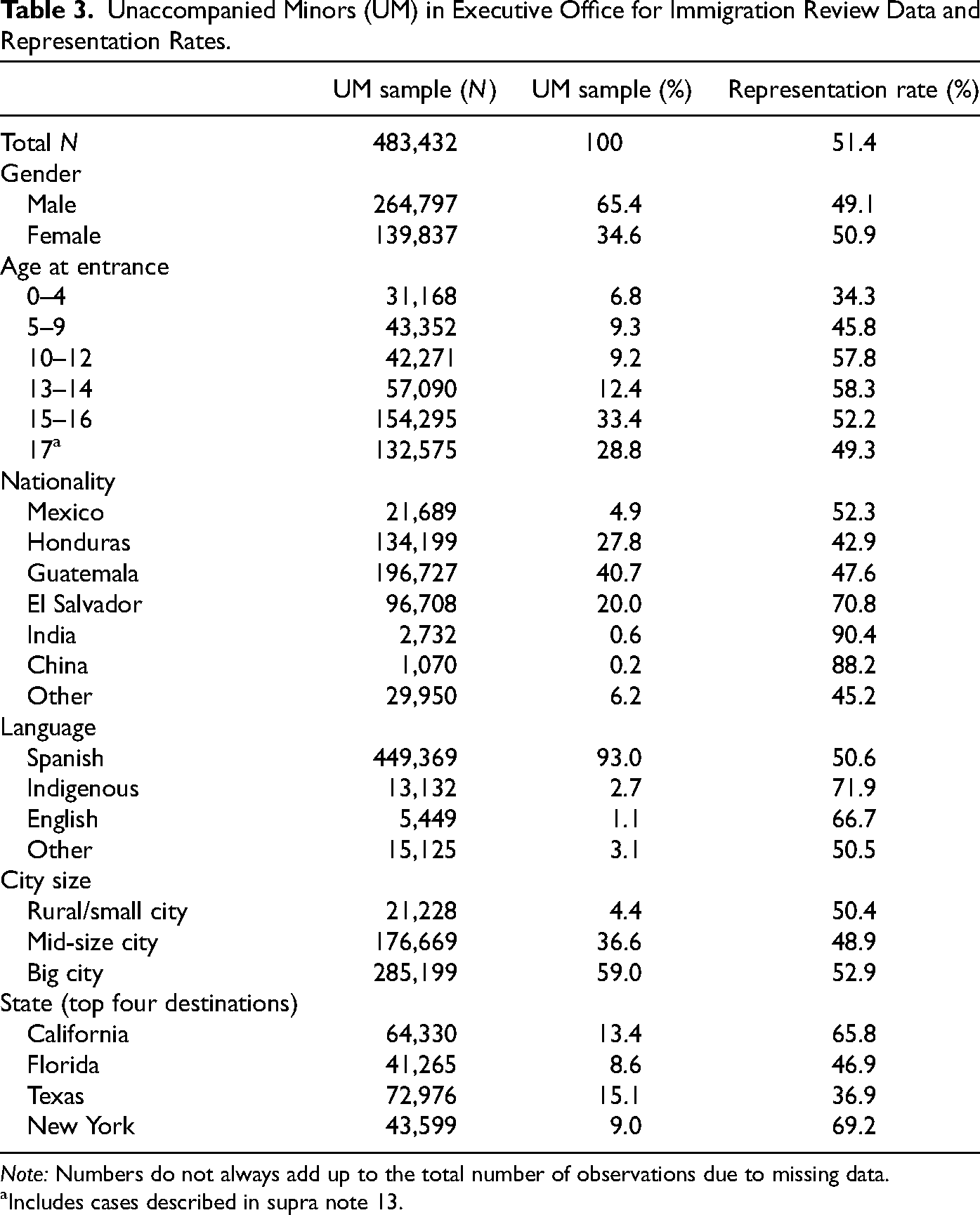
Our method identifies 483,432 cases of unaccompanied minors in removal proceedings in US immigration court between 2009 and 2023 (through March). 15 As shown in Table 3, most unaccompanied minors in our sample are male 16 and between ages 15 and 17 at the time of their arrival in the US. The top three sending countries, Guatemala (40.7%), Honduras (27.8%), and El Salvador (20.0%), comprise the overwhelming majority (88.5%) of our sample, while Mexicans comprise 4.9%, Indians are 0.6%, and Chinese are 0.2%. The remaining 6.2% of unaccompanied minors come from other countries, mostly in Latin America. 17 More recent years have a higher proportion of children from other countries (similar to ORR data, see ORR n.d.). In the EOIR data, we have a language variable that records whether the child used an interpreter during the proceedings, and if so, for what language. Based on this information, we can infer that 93.0% of unaccompanied minors in our sample are Spanish speakers, while 2.7% speak various Latin American Indigenous languages, 18 1.1% speak English, and 3.1% speak other languages. 19
Unaccompanied Minors (UM) in Executive Office for Immigration Review Data and Representation Rates.
Note: Numbers do not always add up to the total number of observations due to missing data.
Includes cases described in supra note 13.
Slightly over half of our unaccompanied minor sample (51.4%) obtained legal representation at some point during their removal proceedings to date. 20 It is worth noting that some children in our sample have cases that have been opened recently, respective to the end of the study period, and may have later found an attorney. By comparison, the representation rate for the rest of the EOIR data during the study period (including single adults and families) is 43.0%. The higher representation rate among unaccompanied minors as compared to adults and families (8.4% more) is not surprising since there is more federal funding for the legal representation of the former group.
However, we still note that the overall representation rate for unaccompanied minors is concerningly low, considering that this a protected group particularly in need of counsel to be able to navigate complex and legalistic court proceedings (Galli 2018a, 2023a). What's more, the TVPRA states that “the Secretary of Health and Human Services shall ensure, to the greatest extent practicable […] that all unaccompanied alien children who are or have been in the custody of the Secretary of Homeland Security […] have counsel to represent them in legal proceedings or matters and protect them from mistreatment, exploitation, and trafficking […] [and] shall make every effort to utilize the services of pro bono counsel who agree to provide representation to such children without charge” (8 US Code 1232, emphasis added). There remains a wide gap between the stated goal of providing counsel to all unaccompanied minors under the TVPRA and the reality on the ground in which nearly half of these children face removal proceedings alone.
Table 3 also shows variation in representation rates across population demographics. Unaccompanied children from India and China have some of the highest representation rates, at 90.4% and 88.2%, respectively. Conversely, Hondurans and Guatemalans have the lowest representation rates, just 42.9% and 47.6%, respectively. Mexican children follow at a slightly higher representation rate of 52.3%, while unaccompanied children from El Salvador have a representation rate of 70.8%. Salvadoran children may fare better in their access to counsel than their Central American counterparts because their migrant networks may be better developed since many legal aid organizations that exist today were founded in the 1980s to help Salvadorans fleeing violence in those years and hence have extensive ties to the Salvadoran community (Coutin 2003).
Representation rates are also considerably higher for Indigenous-language speakers (71.9%) and English-speakers (66.7%) than for Spanish speakers (50.6%). English speakers may have higher representation rates because their language skills better enable them to navigate US bureaucracies. However, the higher representation rates among unaccompanied minors who speak Indigenous languages is surprising, considering problems of language access in court pointed out by other scholars, including the difficulties involved in finding an interpreter for many indigenous languages (Wallace and Hernandez 2017, Obinna 2023); this topic could be an avenue for future analyses.
Representation rates by age are represented in Figure 3. We see a troubling pattern in the data here: the youngest children have the lowest representation rates, just 34.3% on average for children ages 0–4 and 45.8% for those ages 5–9. Children ages 10 to 14 have the highest representation rates (58.3% on average), and representation declines progressively again among older teenagers.
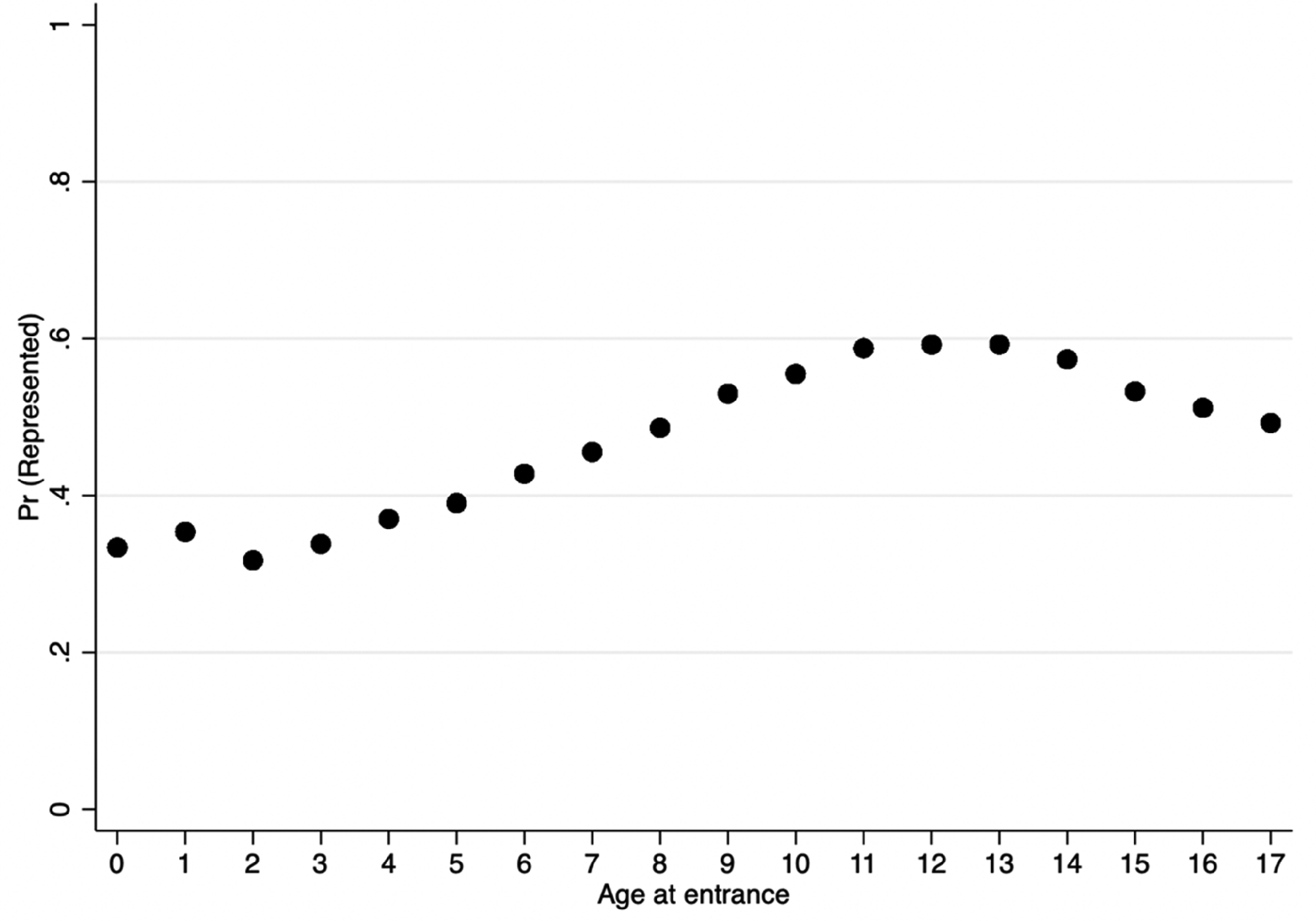
Executive Office for Immigration Review Data: Unaccompanied Minor Representation Rates by Age (%).
Representation rates also vary by place and are higher for unaccompanied minors living in big cities (52.9%) than for those living in mid-sized cities (48.9%) and rural areas (50.4%). 21 These findings mirror well-established trends documented in the broader research on access to counsel in immigration and other civil proceedings, showing that residents of rural areas have unique difficulties accessing legal services (Eagly and Shafer 2015; Albiston and Sandefur 2013).
The map in Figure 4 shows the states where unaccompanied minors attended immigration court during the study period. Four states — California, Texas, Florida, and New York — together account for nearly half of our sample (46.1%). Among these top four destinations, the highest representation rates are in New York (69.2%), which likely reflects the fact that New York City had a universal legal representation program starting in 2015 (until funds ran out) (New York City Council 2015), followed by California (65.8%). These Democratic states have higher representation rates than the Republican states of Florida (46.9%) and Texas (36.9%). Looking across all 50 states, unaccompanied children residing in Republican states have an average representation rate of 43.1% as compared to a much higher 61.3% for those in Democratic states.
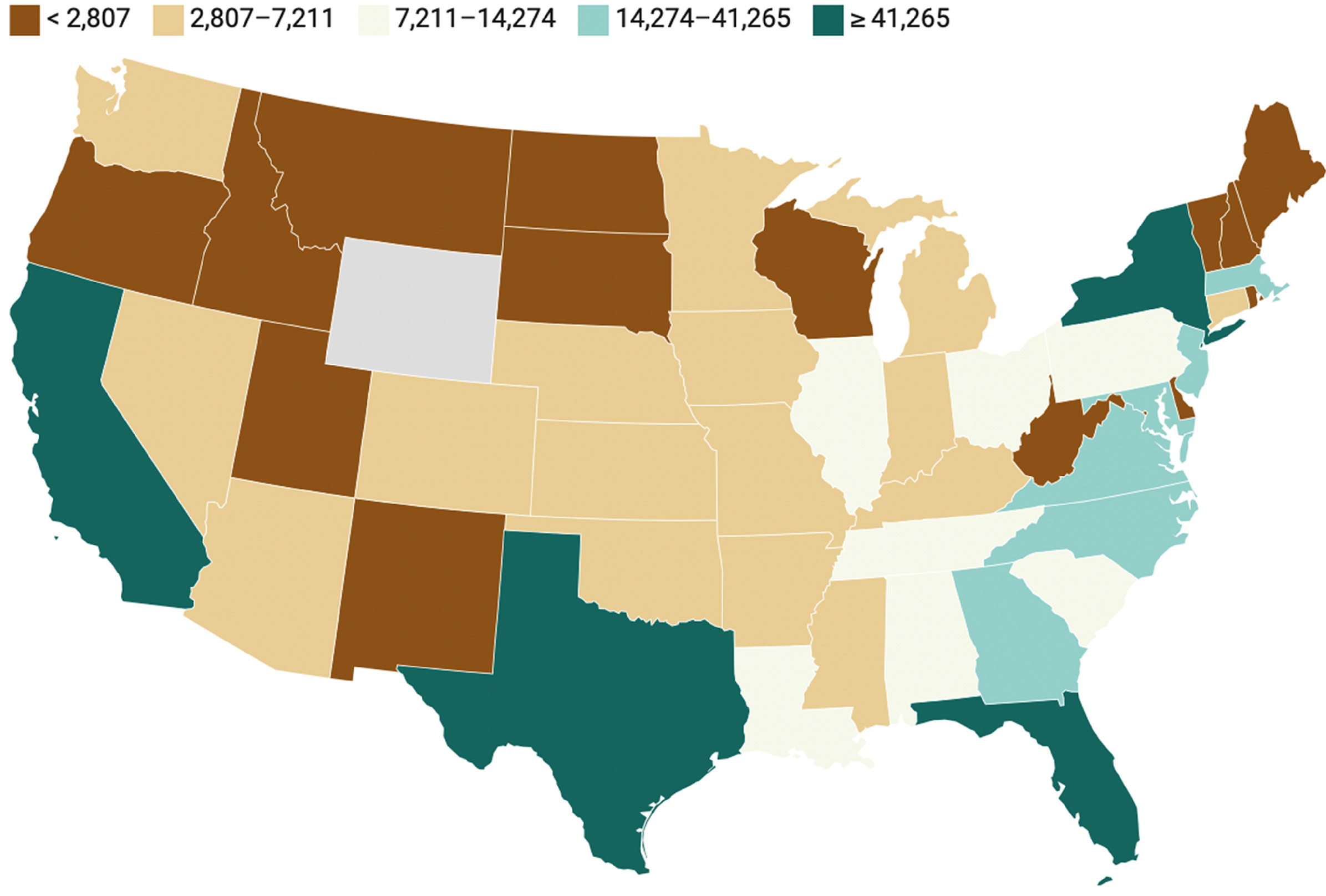
Executive Office for Immigration Review Data: Unaccompanied Minor Cases in US Immigration Courts by State.
These discrepancies likely reflect differences in state-level funding for legal aid, as not all legal aid for unaccompanied minors is federally funded, and immigrant friendly states often fund their own legal aid programs (see Statz 2018; Galli 2020b; on the importance of legal resources for access to counsel; see Eagly and Shafer 2015; Albiston and Sandefur 2013; Pruitt et al. 2018; Sandefur 2019). An alternative (or additional) explanatory factor may be that immigrants in more immigrant-friendly states feel more comfortable interacting with the courts and looking for attorneys than those residing in states hostile to immigrants (Garcia 2019).
The map in Figure 5 shows representation rates for unaccompanied minors by state, highlighting significant discrepancies in access to counsel depending on where children reside. Representation rates range from a high of 73.0% in Maine to a low of just 17.1% in Montana.
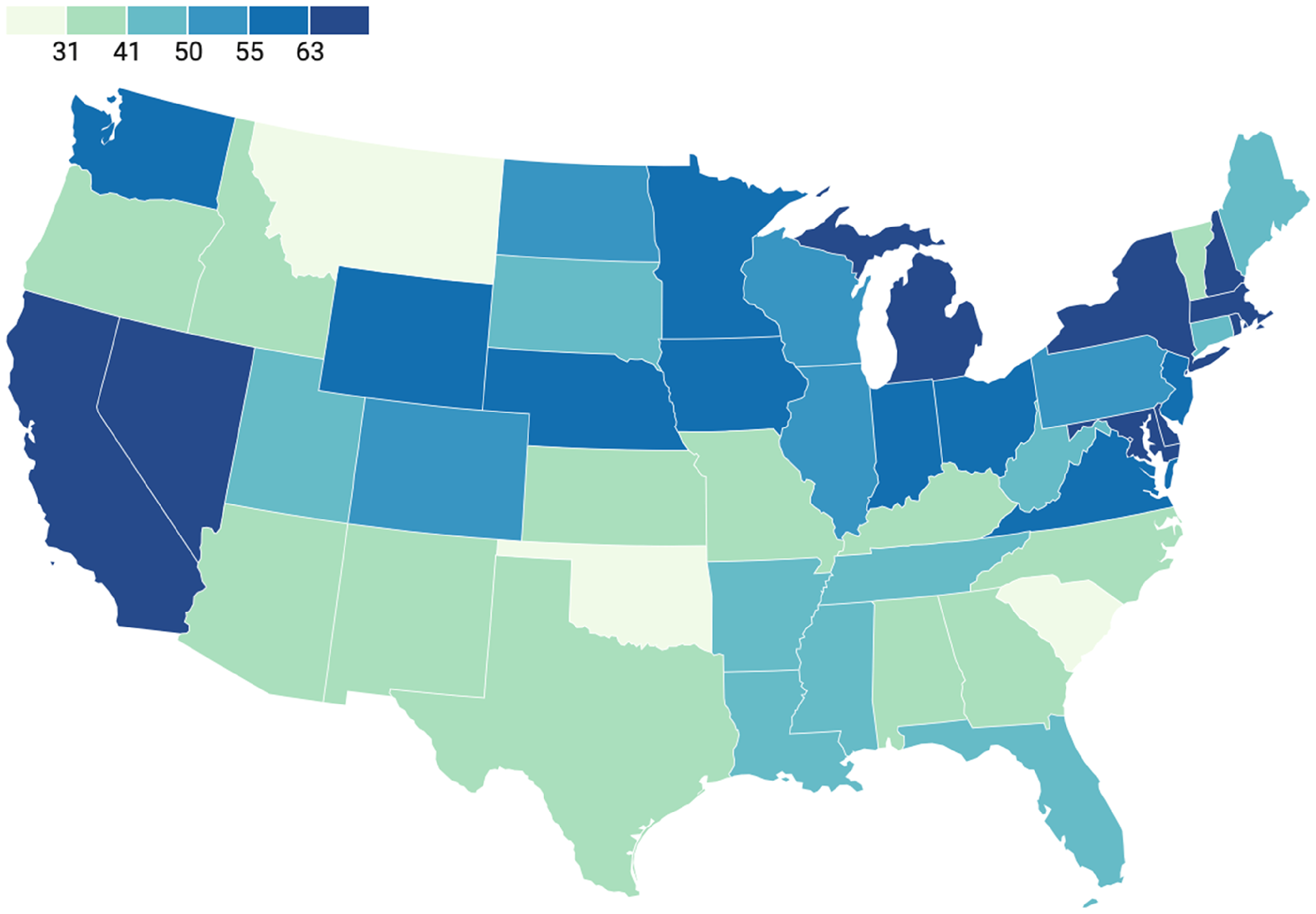
Executive Office for Immigration Review Data: Unaccompanied Minor Representation Rates by State (%).
Figure 6 shows yearly representation rates between 2009 and 2023 (through March) measured by the calendar year when the case was opened. 22 It is worth noting that part of what is driving the downward trend in more recent years is the fact that it takes time to obtain legal representation, leading to higher representation for cases that began earlier in the study period. Representation rates for unaccompanied minors increase slowly from 59.3% in 2009, after the passage of the TVPRA, reaching an all-time high of 71.8% in 2015 under Obama. In 2016, representation rates start to plummet and continue to do so under both Trump (2017–2020) — dropping to 40.3% — and Biden (2021–2022). The only exception is 2020, the first year of the COVID-19 pandemic, when the Trump administration used Title 42 to block entries at the border; unaccompanied minors were not admitted for much of that year (for more on this, see Galli 2023b). This likely explains the increase in representation rates (49.4%) in 2020 as fewer children were competing for available legal services (see Galli 2023b).
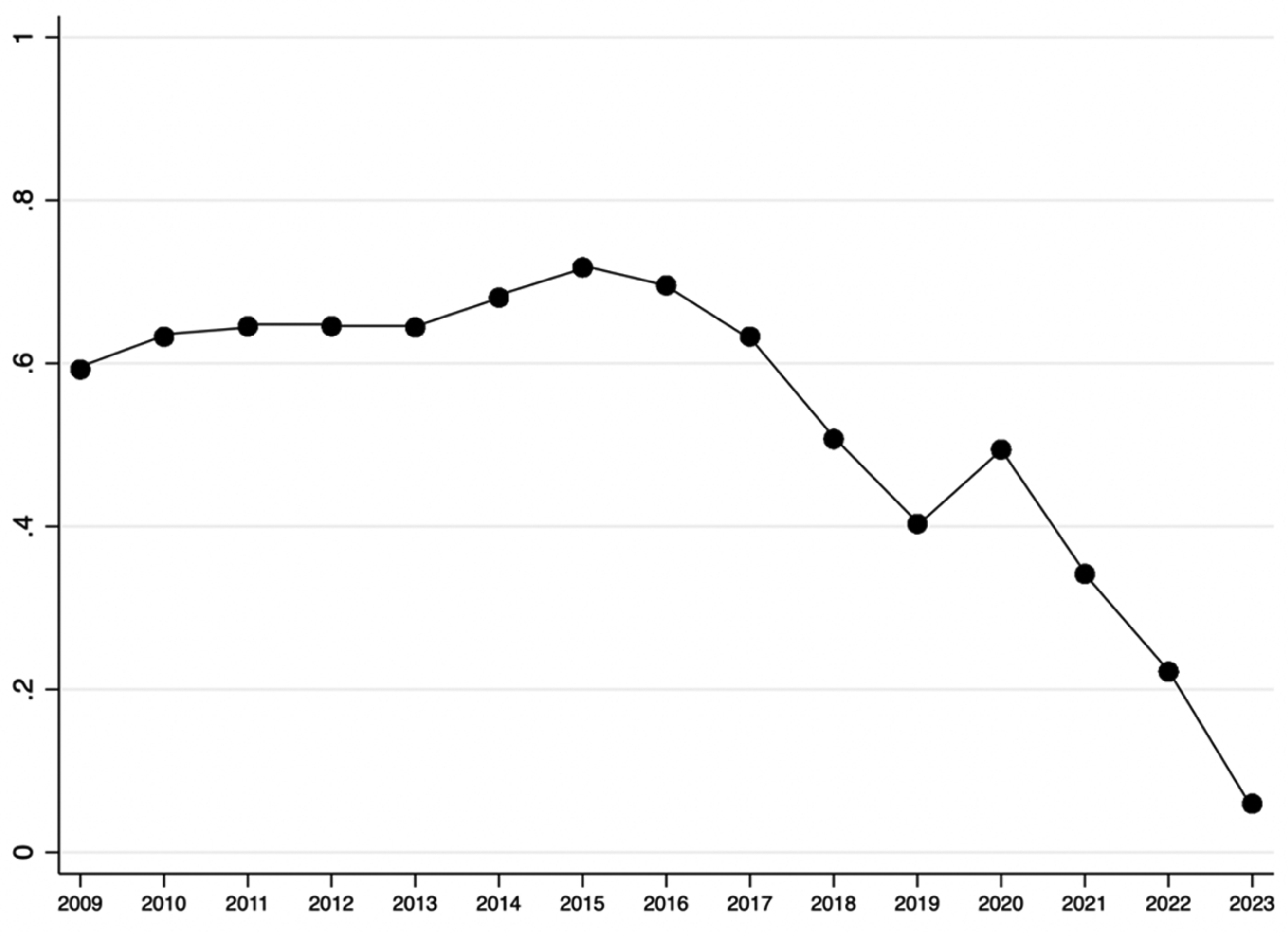
Executive Office For Immigration Review Data: Unacompanied Minor Case-Level Representation Rates (by Year Case Opened) (%).
Overall, it is clear that the first Trump administration's tenure was detrimental for unaccompanied minors’ access to counsel. This trend is not surprising. While the Obama administration increased federal funding for legal aid for unaccompanied minors, Trump cut funding (Galli 2018b), creating more competition for increasingly scarce resources, as arrivals of children at the border continued to increase (Figure 2). What is more surprising is that, despite increases in federal funding for the legal representation of unaccompanied minors under Biden (Barrera 2022), the number of unrepresented unaccompanied children in removal proceedings continued to increase during at least the first 2 years of the Biden administration, with representation rates reaching an all-time low of 22.2% in 2022. 23 This is likely due to the fact that 2021 and 2022 were both record-breaking years for unaccompanied minor arrivals in the US (Figure 2), and children's demand for legal services likely surpassed the supply and outpaced funding increases. Of course, we interpret this finding with caution as some of these children may well have found representation since the study period concluded.
Nearly half (42.1%) of the cases in our unaccompanied minor sample were pending at the end of the study period and did not have a closing date or final resolution. The remaining cases that were adjudicated had been pending for 6 years on average. In other words, unaccompanied children face long periods of legal limbo while their cases are decided. Qualitative research has shown the harms of inhabiting this precarious legal status on children and adults alike (see, e.g., Terrio 2015; Menjivar and Pereira 2019; Galli 2020a, 2023a; Hass 2023). Table 4 reports case outcomes for those unaccompanied minors (n = 279,703) whose cases were adjudicated during the study period (2009–2023). The data show that a concerning 49.9% of unaccompanied minors' cases ended in deportation (including both removal orders and so-called voluntary departure) (Table 4). 24 Only 26.8% of children ordered deported were represented.
Decision Type and Representation Rates among Unaccompanied Minors in Immigration Court.
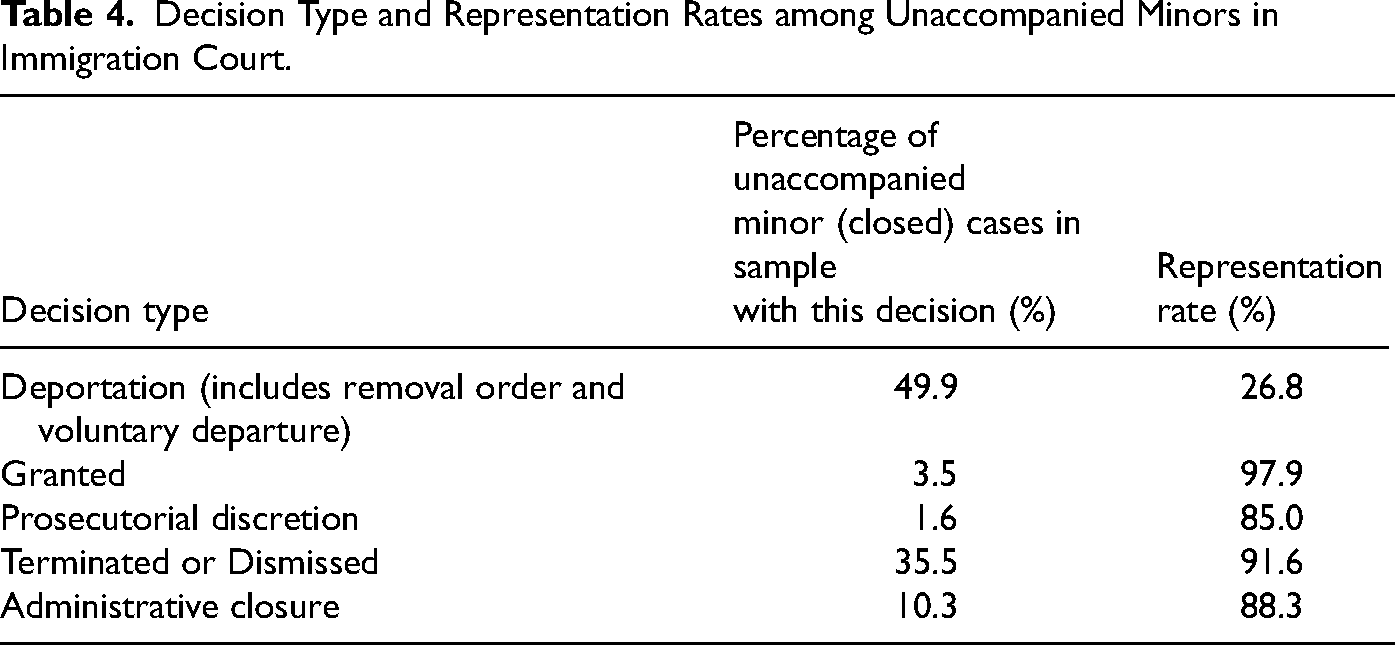
Conversely, 35.1% of unaccompanied children's cases ended in termination or dismissal, which can be considered a positive outcome because it denotes that the charging document against the child was dismissed, the removal case is closed, and deportation is halted (CRS 2024). This usually but does not always denote that the child was granted immigration relief. As noted above, cases are terminated by EOIR if the child was granted relief by another agency (e.g., asylum at the asylum office, SIJS at USCIS) (Figure 1). However, cases may also be terminated or dismissed in the EOIR records for a host of other reasons that have nothing to do with obtaining relief, such as because the government failed to obtain authority for removal or because there was a flaw in the charge. Because datasets are not linked across immigration agencies, we cannot determine for sure whether relief was granted outside the court for terminated cases (and, if so, what form of relief was granted). If the Department of Homeland Security choses to subsequently pursue the case following a termination, it must issue a new charging document (CRS 2024).
Next, 3.3% of unaccompanied children's cases were granted, which denotes receiving relief in immigration court, following a decision made by the immigration judge. In our sample, out of cases granted by the immigration judge, 68.7% received asylum, withholding of removal, or withholding under the convention against torture, while 29.3% adjusted their status to lawful permanent residence in court under INA Section 245. 25 In the case of the former outcome, immigration judges may grant children asylum in the second instance, if their cases are denied at the USCIS asylum office and referred to the court. In the case of the latter outcome, the data do not specify through which legalization pathway the person qualified for adjustment of status; however, for unaccompanied minors, it is most likely that SIJS was awarded or, less frequently, a T-visa (for trafficking victims), or a U-visa (for victims of crime in the US).
Immigration judges may also grant temporary deportation relief through prosecutorial discretion (1.3% of children in our sample). Finally, 10.5% of children in our sample had their cases administratively closed, meaning that the immigration judge has removed the case from their docket, which usually indicates that an application for relief at USCIS has been filed and is pending. This case could always be reopened in the future, and it is impossible to know how many children whose cases were administratively closed have been awarded or denied relief at USCIS with the information available in the EOIR data.
Importantly, children with all types of positive case outcomes have much higher representation rates than children ordered deported, with the highest representation rates (97.9%) among children granted relief in immigration court, followed by those whose cases were terminated (91.6%) (Table 4). Immigration case outcomes for unaccompanied minors also varied significantly by year (Figure 7) and depending on the administration in office (Table 5).
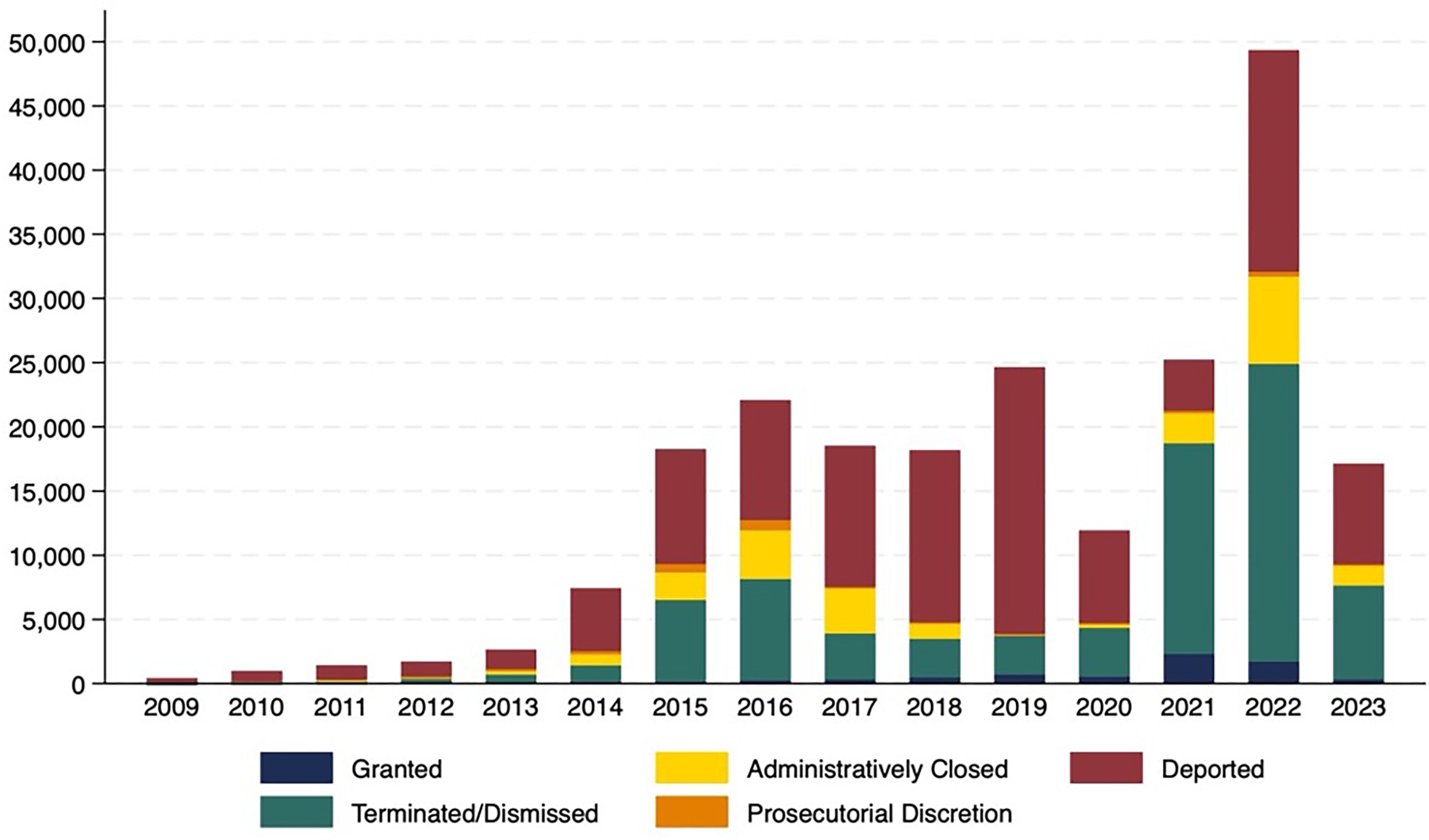
Unaccompanied Minor Case Outcomes by Year (2009–2023).
Decision Type by Administration.
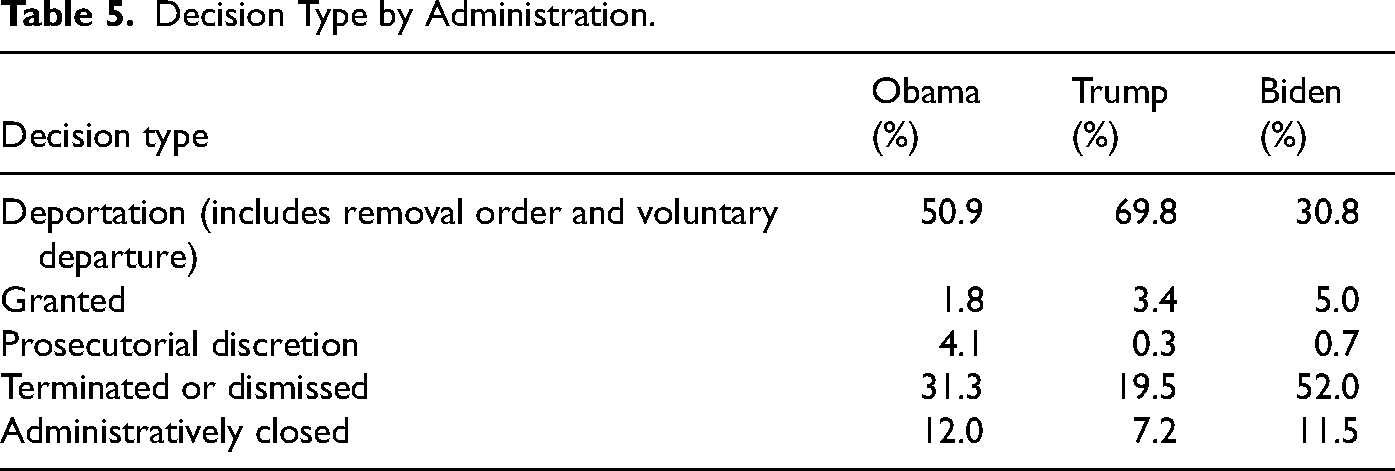
The rates of children ordered deported were highest under Trump (69.8%) and lowest under Biden (30.8%). Conversely, terminated and dismissed cases were highest under Biden (52%) and lowest under Trump (19.5%). Unaccompanied minors’ cases were less likely to be administratively closed or granted prosecutorial discretion under Trump than other administrations, reflecting executive changes that made it more difficult for judges to independently manage their dockets during those years (see Schrag 2020; Galli 2023a).
Conclusion
This paper introduced a new method that makes it possible to reliably identify unaccompanied minors in the EOIR's immigration court data, which integrates and builds on previous approaches (e.g., Vera 2008; Eagly and Shafer 2024). We thus overcome data reliability issues introduced by the Trump administration's changes to the courts’ record-keeping practices in 2017 (TRAC 2021a). This method is an important contribution because it will make future quantitative research on unaccompanied minors in US immigration court possible. We hope that this article will start a broader conversation, and other scholars will replicate, update, and build upon our work.
Future scholarship can examine determinants of access to counsel and case outcomes using multivariate analysis, allowing us to better understand how unaccompanied children fare in immigration court. For instance, scholars could explore how place of residence (e.g., in rural versus urban areas) and children's mobility across the US act as determinants of access to counsel. Scholars could also examine the impact of legal representation, adjudicator- and case-level characteristics, and procedural factors in shaping which children are allowed to remain in the US. It is likely that these future analyses will continue to highlight inequalities among unaccompanied children that our descriptive statistics already begin to show, such as the troubling finding that the youngest unaccompanied children have the lowest representation rates. Finally, because our method makes it possible to disaggregate unaccompanied from accompanied children in the EOIR data, others could adapt our flags to identify and examine outcomes for accompanied children, a group often ignored by sociolegal scholarship since they are derivatives on their parent's cases.
The second contribution of this paper is to provide readers with statistics on unaccompanied minors that have not been available since 2017, as well as novel descriptive data. We reported on demographics, representation rates, case outcomes, length of legal limbo, and a host of other trends for unaccompanied minors navigating removal proceedings in US immigration court between 2009 and 2023 (through March). The data gap on unaccompanied minors’ cases had previously masked the deleterious effects of the Trump administration and continuing problems under Biden. Most notably, unaccompanied children were far more likely to be ordered deported under Trump, as a series of policies attacking their rights were implemented (see Schrag 2020; Galli 2023a, 2023b), and their representation rates plummeted both during those years and under Biden, despite the latter administration's increased investments in legal aid for this population (Barrera 2022). These data are crucial to monitor the treatment of unaccompanied minors in US immigration court and better advocate on their behalf.
Our results suggest several avenues for policy change to improve due process and substantive rights for unaccompanied children in US immigration court. With an overall representation rate of just 51.4% during the study period (2009–2023, through March), it is clear that the US is falling short of its goal to provide counsel to all unaccompanied minors, stated in the TVPRA. We call on the US government to provide access to counsel to all unaccompanied minors and to make special efforts to connect the youngest, who are both most vulnerable in these complex proceedings and least likely to be represented, to legal service providers. The government could conduct special outreach programs aimed at the sponsors of these young children. Qualitative work has found that the vast majority of unaccompanied minors’ family member sponsors are undocumented immigrants (Galli 2023a). These adults are fearful of interacting with the immigration bureaucracy, especially during anti-immigrant administrations. The youngest unaccompanied minors are most reliant on their adult family members to help them navigate the legal process, which may explain why the youngest have such low representation rates. Alternatively, the US government might consider exempting the youngest children from undergoing removal proceedings in immigration court altogether, instead providing them fast-tracked access to legal status to promote family unity and the best interests of the child, neither of which are currently considered by judges who decide unaccompanied minors’ cases (see EOIR 2007, 2017).
The data also show that representation rates are lower in rural areas and in Republican states, suggesting that targeted investments should be made to bolster the infrastructure of legal service providers in these settings. Representation is crucial, as our results show, and represented children are far less likely to be ordered deported from the United States.
We call on the US immigration bureaucracy to improve data transparency and quality across its various agencies. First, EOIR should resume coding immigrants’ cases in the “juveniles history” data file using the coding scheme predating the changes of 2017 to ensure that, moving forward, unaccompanied children can easily be identified. Second, EOIR should seek to improve its data quality as, currently, there is a large amount of missing data, most notably, in the fields of gender and date of birth.
Third, other agencies, including the asylum office and other branches of USCIS, should also disaggregate unaccompanied minors from other immigrant populations in their data and make statistics on outcomes (e.g., number of applications, grant rates) for each group publicly available. The asylum office should also make more detailed deidentified information on cases available to researchers, including applicant demographics, whether applicants were represented, what languages they spoke, and on what grounds they were granted relief (e.g., was an asylum case granted due to persecution on account of race or membership in a particular social group).
Finally, it would be extremely beneficial for research if scholars could link information across the different agencies that process each immigrant's case. As mentioned above, this is especially important for unaccompanied minors who almost always apply for relief at USCIS while also being in removal proceedings and subject to judicial decisions in immigration court. Immigrants’ cases can be easily linked using the government's A-number, a unique identifier assigned to each immigrant and used across all US immigration agencies (see Vera 2008 for an example of a study that connected datasets using A-numbers). It is feasible to provide researchers access to this information while also protecting the privacy of individuals by replacing real A-numbers with pseudo A-numbers that can be used to identify and track cases across datasets.
Data transparency on the treatment of all immigrant populations is crucial to ensure government accountability. Improved administrative data transparency and quality would foster progress in immigration scholarship and further our understanding of migration phenomena, which are increasingly shaped by state policies and categorization practices.
Footnotes
Declaration of Conflicting Interests
The authors declared no potential conflicts of interest with respect to the research, authorship, and/or publication of this article.
Funding
The authors disclosed receipt of the following financial support for the research, authorship, and/or publication of this article: This work was supported by the American Bar Foundation.
