




Abstract
Background:
Interest in how the neighborhood environment impacts age-related health conditions has been increasing for decades. Epigenetic changes are environmentally derived modifications to the genome that alter the way genes function—thus altering health status. Epigenetic age, a biomarker for biological age, has been shown to be a useful predictor of several age-related health conditions. Consequently, its relation to the neighborhood environment has been the focus of a growing body of literature.
Objective:
We aimed to describe the scope of the evidence on the relationship between neighborhood environmental characteristics and epigenetic age.
Methods:
Using scoping review following methods established by Arksey and O’Malley, we first defined our research questions and searched the literature in PubMed, PsycINFO, and EMBASE. Next, we selected the literature to be included, and finally, we analyzed and summarized the information.
Results:
Nine articles met the inclusion criteria. Most studies examined deprivation as the neighborhood characteristic of interest. While all studies were observational in design, the articles included diverse participants, including men and women, adults and children, and multiple ethnicities. Results demonstrated a relationship between the neighborhood environment and epigenetic age, whether the characteristic of interest is socioeconomic or physical.
Conclusions:
Overall, studies concluded there was a relationship between neighborhood characteristics and epigenetic age, whether the characteristic of interest was socioeconomic or physical. However, findings varied based on how the neighborhood characteristic and/or epigenetic age was measured. Furthermore, a paucity of investigations on physical characteristics was noticeable and warrants increased attention.
Keywords
For decades, there has been increasing interest in how social conditions become biologically embedded—impacting health and disease risk. 1 It has become increasingly clear that social circumstances, such as neighborhood environment are associated with age-related chronic conditions. Specifically, the burden of age-related chronic conditions disproportionately affects individuals living in high-deprivation neighborhoods.2-5 High-deprivation neighborhoods are geographic areas characterized by socioeconomic indicators, such as high unemployment, high poverty, and low educational attainment.6,7 These neighborhoods often lack resources needed to live a healthy life, such as walkability, 8 access to healthy foods, 9 healthcare, 10 and safety.11,12 The literature on the connection between neighborhood socioeconomic status and age-related chronic conditions continues to grow. Residents of high-deprivation neighborhoods are less likely to have hypertension, diabetes, and hypercholesterolemia that is being well-controlled compared with residents of low deprivation neighborhoods. 3 In addition, neighborhoods with lower education levels have been linked to a higher risk for myocardial infarction and stroke. 13 Specifically, Pedigo et al 13 found that neighborhoods with lower education levels have a 14.56-fold increase in myocardial infarction mortality and a 3.9-fold increase in stroke mortality compared with neighborhoods with the highest level of education. In addition to experiencing a greater burden of multiple chronic conditions, residents of high-deprivation neighborhoods are more likely to carry this burden even after controlling for other socioeconomic status measures. 14 Furthermore, residents of high-deprivation neighborhoods can live up to 20 years shorter lives than residents of different neighborhoods in the same city.15-17
The relationship between high-deprivation neighborhoods and age-related chronic conditions is complex and impacted by many factors. Beyond a lack of socioeconomic resources, residents of high-deprivation neighborhoods are disproportionately exposed to adverse environmental factors like greater noise,18,19 increased air pollution,20,21 higher ambient heat, 22 and less vegetation.23-25 These neighborhood characteristics have been linked to poorer health-related outcomes in age-related conditions.26-30 For example, neighborhoods with the highest level of greenness have been associated with 25% reduced odds of myocardial infarction, 20% reduced odds of ischemic heart disease, and 16% reduced odds of heart failure compared with neighborhoods with the lowest greenness level. 30 Yet the exact biological mechanisms underlying the relationship between neighborhood environment and age-related health conditions remain inconclusive.
Even though advancing age is a crucial determinant of age-related conditions, emerging evidence suggests that biological age, such as epigenetic age, is a better predictor of age-related morbidity. 31 While chronological age proceeds at a consistent rate for everyone, 32 individuals experience the aging process in different ways 33 and at different rates. 34 For example, some older adults may require assistance with activities of daily living (eg, bathing, dressing), while others remain independent. 35 Chronological age refers merely to the passage of time.36,37 On the other hand, biological age refers to physiological characteristics that indicate functional decline of the body. Advancing biological age may be a more useful way to assess disease risk.
Epigenetic changes are environmentally sensitive changes to the DNA that alter gene expression without changing the nucleic acid sequence. 38 Epigenetic age is a measure of biological age that captures the impact of environmental factors across time on cellular and molecular function, and consequently, potential disease risk.39,40 Several approaches (also called “clocks”) have been developed to estimate an individual’s epigenetic age based on DNA methylation patterns. Depending on the clock, epigenetic age is estimated based on the extent of methylation at dozens or even hundreds of cytosine-phosphate-guanine (CpG) sites across the genome. Epigenetic age usually correlates with chronological age, and the first clocks created separately by Horvath 40 and by Hannum et al 39 were developed primarily to do just that. Later clocks, including the PhenoAge, 41 GrimAge, 42 and DunedinPoAm, 43 were developed with the goal of predicting diseases associated with age-related decline. 44
Sometimes there is incongruency between epigenetic age and chronological age. For example, epigenetic age acceleration (EpAA) is what occurs when an individual’s epigenetic age is advancing faster than their chronological age. It has been suggested that EpAA may serve as a biomarker of the degree of wear and tear that the body has experienced. 45 In support of this perspective, EpAA has been identified as a strong predictor of age-related conditions31,46-49 and all-cause mortality.50,51
The literature demonstrates a link between neighborhood residence and age-related health conditions and a clear connection between EpAA and age-related health conditions. However, it remains unclear which neighborhood characteristics correlate with epigenetic age and whether specific epigenetic clocks better predict age-related chronic health conditions. To our knowledge, no review has examined the relationship between neighborhood characteristics and epigenetic age with the goal of capturing various aspects of the neighborhood setting beyond socioeconomic status. Thus, there is a need to map neighborhood characteristics in relation to epigenetic aging, including the nature of the relationship. To address this need, we use a scoping review methodology to answer the following research questions: (1) What does the current literature reveal about the relationship between neighborhood characteristics and epigenetic age? (2) In studies of this relationship, how have neighborhood characteristics and epigenetic age been measured? and (3) What are the gaps in the research?
Methods
We used the framework developed by Arksey and O’Malley 52 to conduct this scoping review. The method was used to identify the extent of a body of research on a topic and/or gaps in the evidence base.52,53 Neighborhoods are small, spatially defined residential areas comprised a number of both social and physical characteristics.54,55 In addition, several ways to measure epigenetic age have been developed. 56 A scoping review is the most suitable option when the literature to be examined is heterogeneous in nature. 57 Thus, since both the neighborhood characteristics and measures of epigenetic age to be included in this review are heterogeneous in nature, a scoping review is the ideal methodology for the aims of this study.
Search Strategy and Eligibility Criteria
We completed a search of the scientific literature available in the PubMed, PsycINFO, and EMBASE databases until January 16, 2022. The search strategy combined various key terms related to neighborhood-level factors and DNA methylation age: ([ OR community] AND [characteristics OR status]) AND [DNA methylation]). No time restriction was placed on the searches. However, we limited the searches to articles published in English. Studies were included if they were peer-reviewed articles, primary studies, enrolled human subjects, and addressed the relationship between a neighborhood-level environmental characteristic (physical or social) and epigenetic age. Figure 1 depicts the complete article identification process. Articles that used the term neighborhood to refer to proximity on the genome, rather than geographical residence, were excluded. Final eligibility was assessed on articles using the inclusion/exclusion criteria detailed above that were available in full text.
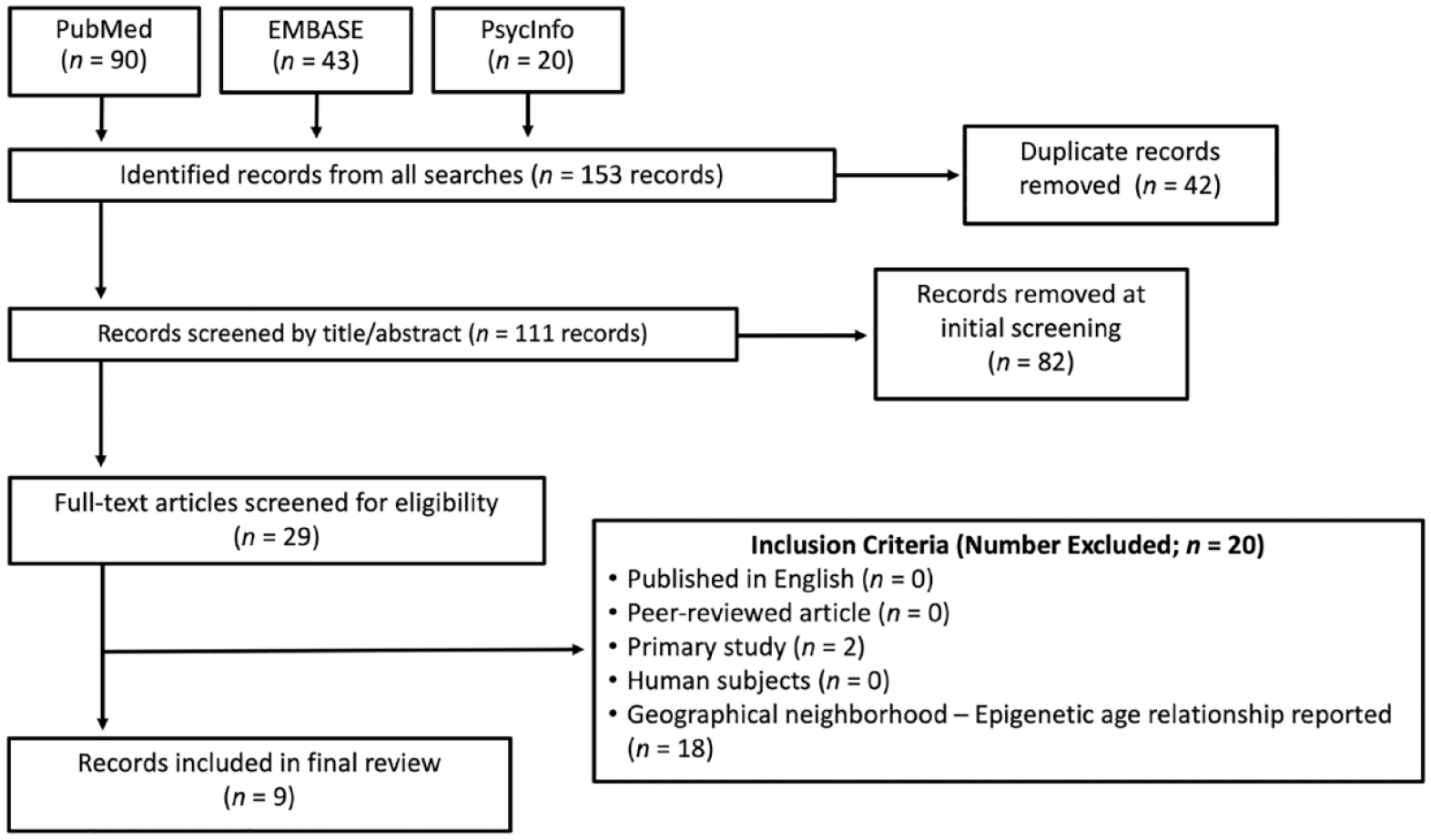
Study search and selection process.
Data Extraction and Analysis
One review author independently extracted data and performed data analysis. After removing duplicates, the title and abstract of each article were reviewed for inclusion in the full-text review. Next, the full text was obtained, and inclusion and exclusion criteria were applied. Data were extracted from the eligible articles using a matrix table. Data elements included citation information, study purpose and design, sample and setting, methods, key findings, and conclusions. We added a descriptive analysis of elements into the matrix to assess the range of neighborhood characteristics that have been studied, the nature of the relationship between those characteristics with epigenetic age, and research gaps.
Results
The search yielded 153 initial results. After removing duplicates and screening for eligibility based on title, abstract, and full text, 9 articles were included in the final analysis.58-66 All articles included in the final analysis were published between 2019 and 2021. As summarized in Table 1, 7 of 9 articles used a cross-sectional design, and the sample sizes ranged between 100 and 2630 participants. Seven of the 9 studies used samples from adults,58-61,63,64,66 1 from adolescents and children, 65 and 1 from children exclusively. 62 Fewer than half of the studies included used multiethnic samples,59,64-66 primarily reporting the inclusion of non-Hispanic black and non-Hispanic white participants, with only one study reporting the inclusion of Hispanic participants. 65 A few studies used samples from only non-Hispanic black60,63 and non-Hispanic white61,62 participants exclusively. One study (based in Australia) did not report the race or ethnicity of its sample. 58 All but 2 of the studies were conducted in the United States,59-61,63-66 with the others conducted in the United Kingdom 62 and Australia. 58 Altogether, for the small number of studies conducted thus far, they have used a broad range of sample sizes, age ranges, and included a fair amount of diversity in ethnicity and sex but have been limited in their research design.
General Characteristics of Reviewed Articles.
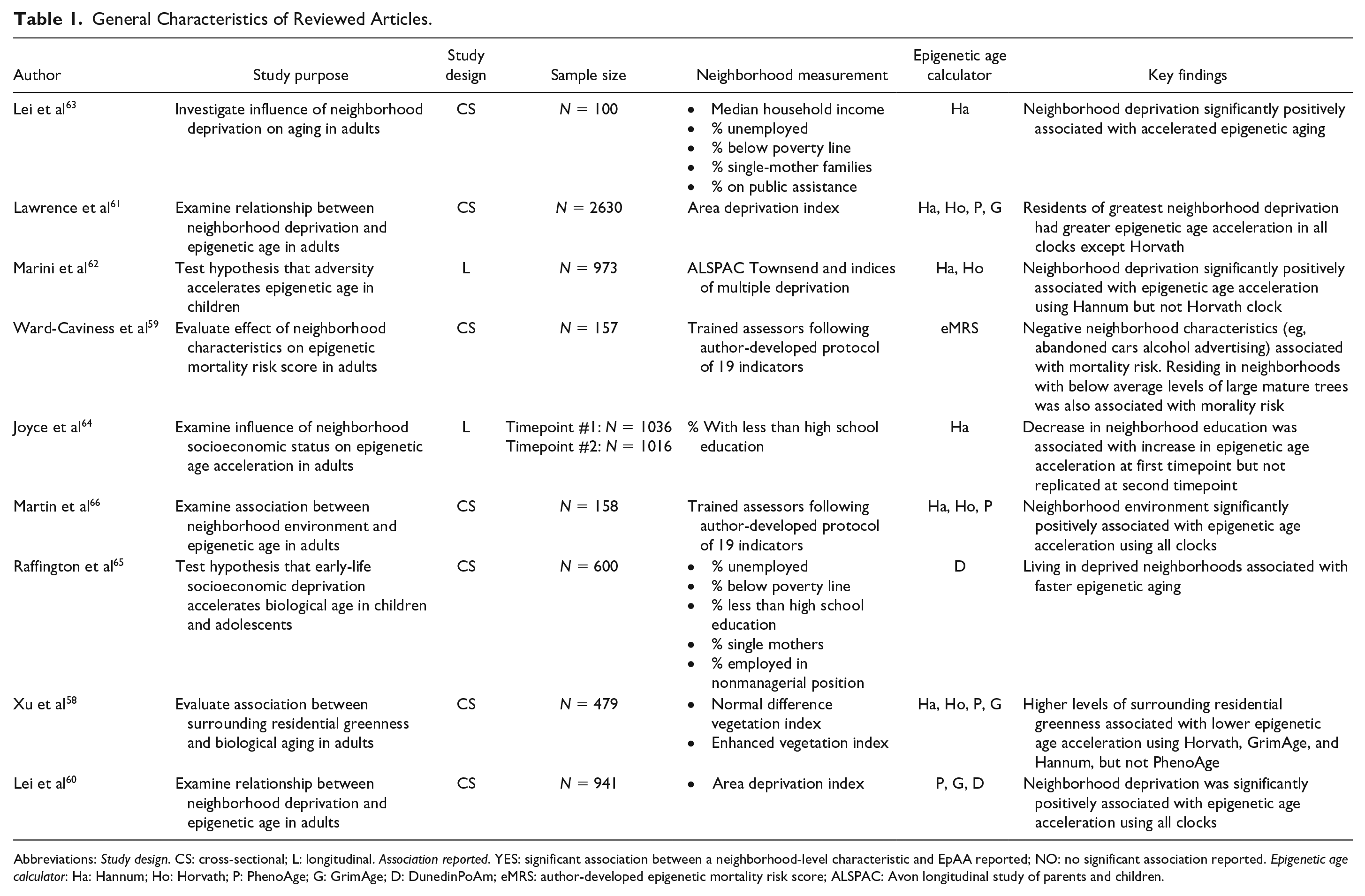
Abbreviations: Study design. CS: cross-sectional; L: longitudinal. Association reported. YES: significant association between a neighborhood-level characteristic and EpAA reported; NO: no significant association reported. Epigenetic age calculator: Ha: Hannum; Ho: Horvath; P: PhenoAge; G: GrimAge; D: DunedinPoAm; eMRS: author-developed epigenetic mortality risk score; ALSPAC: Avon longitudinal study of parents and children.
Associations Between Neighborhood Characteristics and Epigenetic Age
Nearly, all studies included in this review reported a relationship between neighborhood characteristics and epigenetic age. The only exception was a longitudinal study that reported a significant association at the first timepoint, but no significant relationship at the second timepoint 5 years later. 64 In that study, the investigators used a single indicator of neighborhood deprivation (ie, education), which may not be a robust indicator as multivariate measures. Thus, there appears to be a relationship between neighborhood characteristics (such as neighborhood socioeconomic status and level of residential greenness) and epigenetic age. A more thorough discussion of the measurement of neighborhood characteristics is presented below.
Variation in associations by neighborhood characteristic
To further understand the relationship between neighborhood characteristics and epigenetic age, we examined whether this relationship depended on specific neighborhood characteristics. Overall, the studies reviewed suggest epigenetic age is associated with socioeconomic as well as physical neighborhood characteristics. In most studies, epigenetic age increased with negative neighborhood characteristics (neighborhood deprivation). For example, Lawrence et al 61 found that participants with the highest level of neighborhood deprivation (ie, greater than the 75th percentile) had greater epigenetic age compared with participants residing in neighborhoods with the lowest level of neighborhood disadvantage (ie, lower than the 25th percentile). Similarly, other investigators reported that positive neighborhood characteristics, such as greenness and the presence of large mature trees correlated with slower epigenetic aging.58,59,66
The methodology used in the study appears to affect the relationship between neighborhood characteristics and epigenetic age. Studies that robustly measured neighborhood characteristics with previously compiled information like census data60-65 and those that utilized trained personnel to assess neighborhood characteristics59,66 found an association with epigenetic age. For example, using an index based on American Community Survey data and DNA methylation samples from a cohort of adult men and women randomly selected from neighborhoods in Iowa and Georgia, Lei et al 60 found an association between neighborhood deprivation and epigenetic age. Likewise, in a population-based cohort of adults from Detroit, Michigan, Martin et al 66 found an association between epigenetic age and neighborhood environment using trained study personnel making assessments on the ground in their participants’ neighborhoods. In contrast, a study that relied on a single indicator of socioeconomic status found inconsistent associations between the level of neighborhood education and EpAA at different timepoints within the same cohort. 64
Variation in associations by epigenetic clock
There are slight differences in the number of genes in each clock, so that, we also investigated whether the relationship between epigenetic age and neighborhood characteristics depended on the epigenetic clock. All studies that used the Hannum clock61-64 and GrimAge60,61 reported associations with neighborhood characteristics, while 3 of 4 studies using PhenoAge reported an association.60,61,66 Interestingly, in the studies reviewed that used the Horvath clock, none detected a relationship between epigenetic age and neighborhood socioeconomic characteristics. However, 2 studies found an association between epigenetic age and physical neighborhood characteristics when using the Horvath clock.58,66
Regarding intra-study variation, 4 studies analyzed the relationship between epigenetic age and neighborhood socioeconomic characteristics using more than 1 clock,60-62,66 with one of these studies considering physical in addition to socioeconomic neighborhood characteristics. 66 Two studies found consistent associations.60,66 Among non-Hispanic black adults, Lei et al 60 found significant associations between neighborhood deprivation and EpAA using the PhenoAge, GrimAge, and DunedinPoAm clocks. Similarly, using the Horvath, Hannum, and PhenoAge clocks, Martin et al 66 detected a significant positive association between neighborhood poverty and physical neighborhood characteristics (such as the presence of graffiti, abandoned cars, and unkept roads) and EpAA among predominantly non-Hispanic black adults. However, in 2 other studies, no association was detected using the Horvath clock61,62 despite finding a significant association using Hannum61,62 as well as the PhenoAge and GrimAge clocks. 61 This inter-study and intra-study variability suggests that selection of the epigenetic clock chosen to examine the relationship between epigene-tic age and neighborhood characteristics is an important consideration.
Variation in associations by age, sex, or ethnicity
Emerging evidence suggests that the relationship between epigenetic age and neighborhood characteristics exists in both children/adolescents and adults. Two studies in this scoping review included children or adolescents and both detected a relationship between neighborhood characteristics and epigenetic age.62,65 Their results align with the 7 studies conducted using adult participants.58-61,63,64,66
Overall, studies that included all female participants found an association between some neighborhood characteristics and epigenetic age,58,61,63 but there was some variation based on the neighborhood characteristic and the epigenetic age calculator used. The Hannum clock was consistent across all 3 studies that included only female participants, irrespective of neighborhood characteristics. Two studies with all female participants used multiple epigenetic clocks.58,61 The findings of these 2 studies agreed with each other using the GrimAge clock but did not when using PhenoAge. Lawrence et al 61 detected a relationship between neighborhood deprivation and epigenetic age using the PhenoAge clock, while Xu at al. 58 did not detect an association between the level of neighborhood greenness and epigenetic age. These same 2 studies also differed in detecting a relationship using the Horvath clock. Specifically, Xu et al 58 found an association, while Lawrence et al 61 did not. Since no studies included in this review included all male participants, we were unable to assess for variation in association between sexes. These findings suggest that, at least for women, the association between neighborhood characteristics and epigenetic age depends on both the neighborhood characteristic being examined and the epigenetic clock used.
Studies that reported multiethnic participants were nearly unanimous in detecting an association between neighborhood characteristics and epigenetic age59,64-66 with the exception being a multiethnic longitudinal study that found an association at the initial timepoint but failed to replicate the association at the second time point. 64 Overall, the studies that used samples from all non-Hispanic black participants60,63 and studies that included samples from predominantly non-Hispanic white participants61,62 agreed in finding a link between neighborhood characteristics and epigenetic age. However, some variation was noted based on the epigenetic age calculator used. The Hannum clock consistently detected associations across ethnicities. The studies that included samples from all non-Hispanic black participants agreed using multiple clocks—Hannum, PhenoAge, GrimAge, and DunedinPoAm.60,63 Both studies with samples from predominantly non-Hispanic white participants found an association using Hannum, but not using the Horvath clock. There was also agreement using the PhenoAge and GrimAge clock when they were used with samples from non-Hispanic white 61 and non-Hispanic black 60 participants. These findings suggest that the relationship between epigenetic age and neighborhood characteristics holds true across different age ranges and ethnicities and further supports the notion that associations vary depending on the epigenetic clock used.
Measurement of Neighborhood Characteristics
More than half of the studies included in this review examined the relationship between neighborhood socioeconomic status and epigenetic age.60-64 Of these, Martin et al 66 and Ward-Caviness et al 59 included additional non-socioeconomic status indicators, considering other aspects of the neighborhood environment, such as noise, the condition of sidewalks, and the presence of graffiti. One study examined only one aspect of the physical environment—the level of greenness. 58
Figure 2 shows categories of social and physical neighborhood characteristics reported in the articles. The most common neighborhood characteristics considered were household composition, income, and education. In most studies, neighborhoods were characterized based on attributes of the social environment using census data.60-65 Three studies measured physical neighborhood characteristics;58,59,66 of these, 2 studies relied on a protocol in which trained personnel manually assessed neighborhood attributes, such as the condition of the sidewalks, graffiti, noise, and the presence of large mature trees.59,66 One study used satellite-derived measurements of the level of greenness or vegetation surrounding participants’ addresses. 58
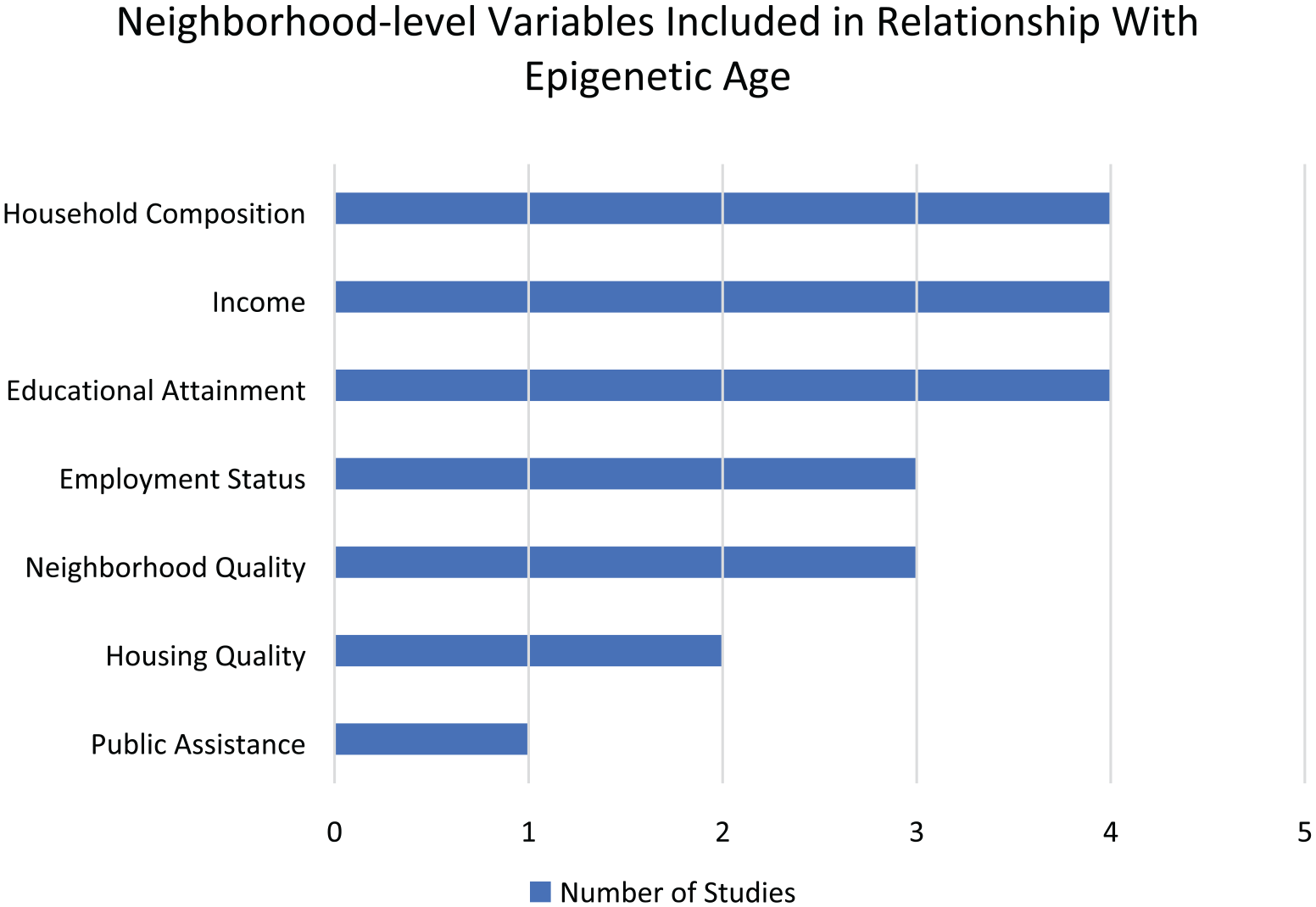
Neighborhood-level Variables Included in Relationship with Epigenetic Age.
Most studies used a multivariate index, capturing several neighborhood factors within the scope of the particular neighborhood characteristic of interest. For example, in most studies of neighborhood deprivation, a multivariate index was used to assess neighborhood socioeconomic status.59-63,65,66 Likewise for 2 of the 3 studies measuring physical neighborhood characteristics, a multivariate index was also used.59,66 Of the 8 studies that reported the details of its scoring, the number of neighborhood characteristics included in the multivariate indexes ranged from 563,65 to 19.59,66 Only 2 studies relied on a single indicator to assess neighborhood characteristics (Figure 3).58,64 Since multivariate indexes measure multiple aspects of a concept, these findings suggest that researchers have considered the multidimensional nature of the neighborhood environment to be of importance when investigating the relationship between epigenetic age and neighborhood characteristics.
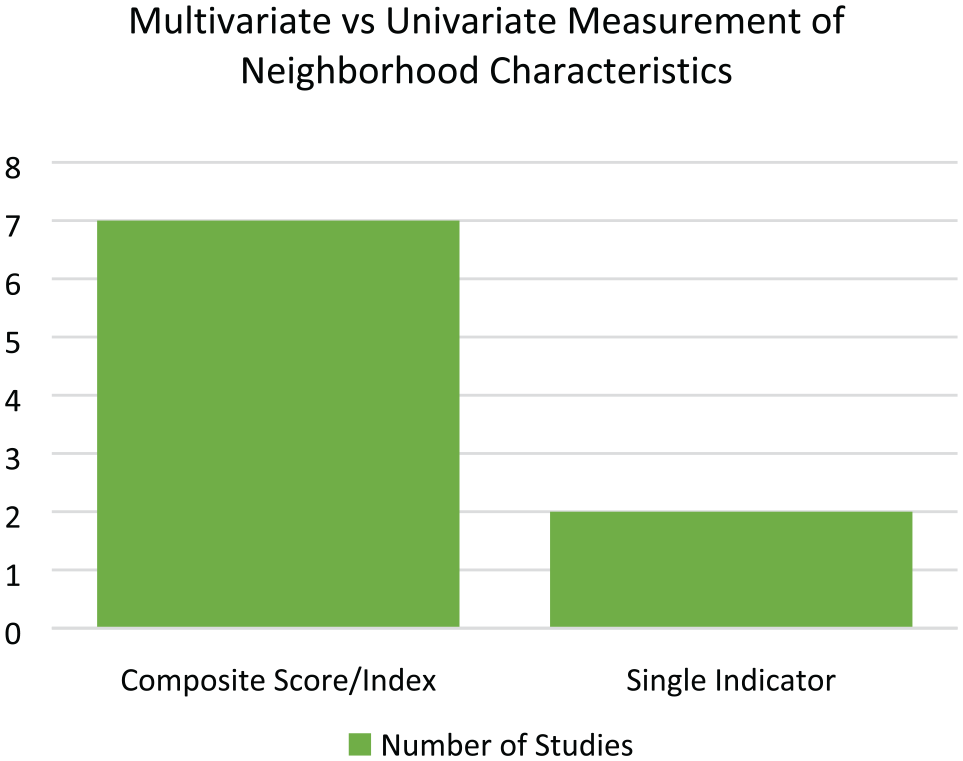
Multivariate vs Univariate Measurement of Neighborhood Characteristics
Findings were mostly consistent regardless of whether the neighborhood characteristic was measured using a multivariate index or a single indicator. All studies using a multivariate index found an association, but some variation was noted for studies using a single indicator. Specifically, a study using a single indicator of neighborhood greenness detected an association with epigenetic age. 58 However, when examining the relationship between the single indicator neighborhood education and epigenetic age longitudinally, Joyce et al 64 detected an association at the first timepoint, but not the second.
Measurement of Epigenetic Age
Six epigenetic clocks have been used to measure the relationship between neighborhood characteristics and epigenetic age, with greater reliance on the original clocks developed by Hannum et al 39 and Horvath. 40 As depicted in Figure 4, Hannum’s clock is the most frequently used clock. Five studies assessed the relationship between epigenetic age and neighborhood characteristics using multiple clocks.58,60-62,66 Four studies used a single epigenetic age calculator.59,63-65 Of the 4 studies, 1 used an author-developed method to assess mortality risk based on DNA methylation 59 rather than an epigenetic clock previously described in the literature.
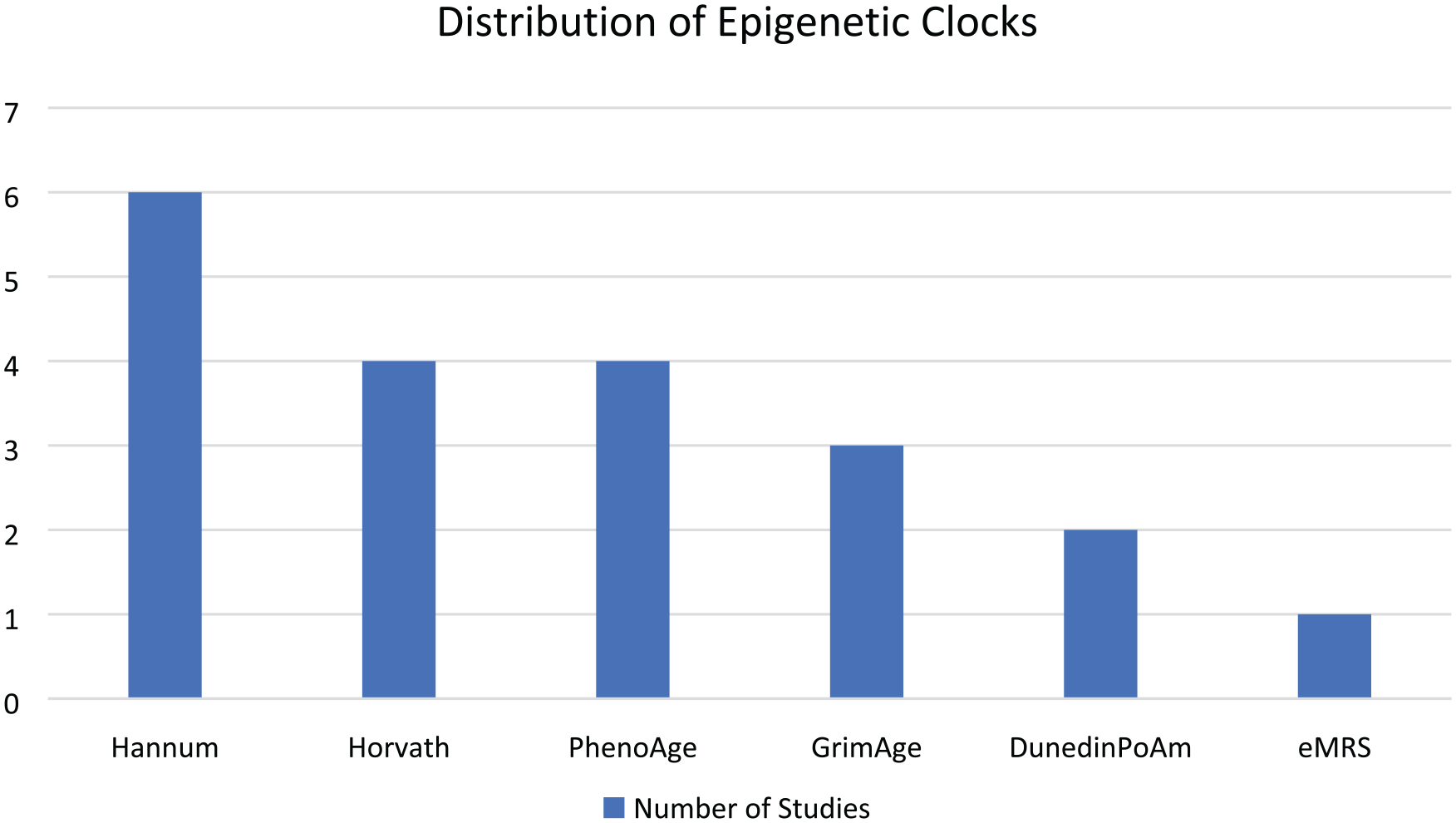
Distribution of Epigenetic Clocks
There has been less variation in the type of samples collected for DNA, with all studies reviewed relying on a single tissue type for its DNA source. Some DNA methylation changes associated with aging are tissue-specific. 67 So, the type of sample used for DNA extraction for subsequent epigenetic age calculation is a necessary consideration. Most studies in this review used blood samples.58-64,66 The one exception used saliva (ie, primarily epithelial cells). 65 The variety of clocks used suggests that there is yet no gold standard for epigenetic age calculation, and the variation in findings depending on the clock that was used supports this notion.
Discussion
The purpose of this review was to examine the literature on the relationship between neighborhood characteristics and epigenetic age, describe how studies of this relationship have measured neighborhood characteristics and epigenetic age, and identify gaps in the current research. The neighborhood environment has been associated with many age-related conditions, and this review suggests a nascent but growing body of evidence of the relationship between neighborhood characteristics and epigenetic age. We identified 3 main findings relating to epigenetic age and neighborhood characteristics. First, current evidence supports the assertion that neighborhood characteristics are significantly associated with epigenetic age. Specifically, negative neighborhood characteristics (neighborhood deprivation) correlate with older epigenetic age. These results are consistent with previous studies linking older epigenetic age with age-related health conditions and all-cause mortality.46,48,50,51 The relationship between neighborhood characteristics and epigenetic age suggests that neighborhood characteristics may induce epigenetic changes that correlate with accelerated aging and age-related health conditions, providing a potential biological mechanism for this phenomenon.
A second major finding of this review is that various neighborhood characteristics are associated with different epigenetic clocks. For example, a significant association was found between neighborhood deprivation and EpAA using the Hannum clock,61,63 but not using the Horvath clock,61,62 although a significant association was found using the Horvath clock in the relationship between a physical neighborhood characteristic (greenness) and EpAA. 58 The variability in findings suggests that the ability to detect an association between neighborhood characteristics and epigenetic age may be influenced by neighborhood characteristics, epigenetic calculator, and the interaction of both. Of the clocks used in the studies reviewed here, the Horvath 40 and the Hannum 39 clocks were developed to predict chronological age, 68 while PhenoAge, 41 GrimAge, 42 and DunedinPoAm, 43 developed later, were explicitly created to capture healthspan. 68 However, there is no gold standard measure of epigenetic age and there is still a need to fully discern how environmental factors impact epigenetic age. 69
Epigenetic clocks have most often been constructed using machine learning to identify a parsimonious number at which DNA methylation of those CpG sites will correlate with chronological age. 69 As a result of this process: (1) the number of CpG sites used in the epigenetic age calculation is greatly reduced from the total number of CpG sites in the genome and (2) the specific CpG sites chosen for each clock differ. Indeed, there is not much overlap in the CpG sites used in different epigenetic clocks. 70 Furthermore, DNA methylation changes vary based on the particular environmental exposure.71,72 In this way, the influence of specific neighborhood characteristics on epigenetic age may be revealed by 1 clock but not another and a specific clock may pick up some neighborhood characteristics but not others. The variability of findings in this review suggests this is the case.
Identified Gaps
The literature reviewed revealed that few studies have explored a relationship between epigenetic age and physical neighborhood characteristics. Neighborhood socioeconomic status was the predominant neighborhood characteristic examined.59-66 Exceptions included 1 study that examined epigenetic age with the level of residential greenness 58 and 2 studies that included neighborhood socioeconomic status along with physical aspects of the neighborhood environment.59,66 Another gap in the literature is the lack of Hispanic and Latino participants. Only 1 study included Hispanic or Latino participants, 65 with most relying on samples collected from non-Hispanic white or non-Hispanic black participants. Finally, only 2 studies utilized a longitudinal design,62,64 so that, more studies are needed that investigate the potential effects of long-term exposures to neighborhood characteristics.
Gaps were identified regarding the types of neighborhood characteristics studied in relation to epigenetic age. Several features of the physical environment have been linked to age-related disease outcomes. For example, exposure to air particulate matter, residential noise, and pollutants correlate with an increased risk for type 2 diabetes. 26 Similarly, worse cardiovascular disease outcomes, including increased hospitalizations and cardiovascular disease-related mortality, have been associated with air pollution, 27 while noise has been associated with hypertension and stroke. 29 Also, aspects of the neighborhood-built environment like walkability and access to healthy food have been linked to cardiovascular disease outcomes. 28 However, studies of these neighborhood characteristics in relationship with epigenetic age do not appear to have been examined thus far. For most studies in this review, the authors focused on neighborhood socioeconomic factors and relied heavily on census-based measures. Diez-Roux and Mair’s 73 seminal work on the effects of the neighborhood on health recognized that most early studies involved predominantly socioeconomic and census-based measures of the neighborhood. Since then, researchers have collected additional measures of the neighborhood environment to understand neighborhood effects on health behaviors and outcomes, such as obesity and hypertension. 73 Interestingly, our review reveals a similar evolution in the body of research about neighborhood and epigenetic age.
While the research is still in its infancy, and this review cannot speak to causality in the relationships examined, future research is promising in its potential to 1 day help explain neighborhood disparities in health. More well-designed studies are needed to explore the full range of neighborhood characteristics that may impact the pace of epigenetic aging.
Strengths and Limitations
This review has strengths and limitations that must be considered. One strength is that, to our knowledge, this is the first scoping review examining the relationship between various aspects of neighborhood characteristics and epigenetic age beyond neighborhood socioeconomic status. A second strength is the use of the scoping review methodology. Scoping reviews allow for exploring an area of research that is broad and still emerging. 53 Considering the small number of studies conducted thus far that cover a wide range of possible neighborhood characteristics and use multiple epigenetic clocks, this approach was a good fit to answer the research questions.
Despite the strengths mentioned above, our review has some limitations. Though the entire team reviewed the results, one abstractor performed data extraction. Second, we focused primarily on articles published in the English language. Thus, it is possible that we missed unpublished studies and studies published in other languages. Also, while a scoping review was the most appropriate approach to address the study’s aims, the methodology has downsides. The nature of taking a broad perspective on the data prevents the ability to do a meta-analysis of the extracted data. 74 In addition, scoping reviews can be helpful in the determination of the need for a subsequent systematic review. 53 However, the studies selected for review intentionally included multiple measures of neighborhood characteristics and epigenetic age, and evaluating the suitability for a systematic review was not an aim of this study and was not addressed.
Conclusion
Neighborhoods do impact health outcomes and the development of age-related diseases. Still, no review had yet reported the breadth of neighborhood characteristics associated with epigenetic age, a biomarker strongly correlated with age-related diseases. This review mapped the existing literature on the relationship between neighborhood characteristics and epigenetic age and found support for a connection overall. The findings suggest that variations in neighborhood characteristics are associated with different epigenetic clocks, including aspects of both the socioeconomic and physical environment. This review enhances our understanding of the importance of neighborhood characteristics for future work on the effects of the neighborhood on epigenetic aging, morbidity, and mortality.
Footnotes
Declaration of Conflicting Interests
The author(s) declared no potential conflicts of interest with respect to the research, authorship, and/or publication of this article.
Funding
The author(s) disclosed receipt of the following financial support for the research, authorship, and/or publication of this article: This study was funded in part by the National Institute on Aging grant R36AG077084, the National Institute of Arthritis and Musculoskeletal and Skin Diseases grant R01AR079178, and the National Institute on Minority Health and Health Disparities grant R01MD010441.
