




Abstract
This article investigates the affective experiences of Australian Football League Women's (AFLW) players’ digital self-tracking. The research finds that digital self-tracking amplifies the objective metrics of physical activity at the expense of sensed and felt bodily experiences. This is leading to consternation and confusion and is challenging for athletes establishing a professional sporting identity in the emergent AFLW. A digital ethnography comprising interviews, qualitative reflective surveys, and video re-enactments was conducted with eight AFLW footballers. Insights were also sought with four AFLW fitness staff who oversee their clubs’ tracking programs. The findings indicate that AFLW footballers experienced digital self-tracking through a carousel of gendering and othering which needed sense-checking and self-management, resulting in increased emotional labor. The footballers were socially expected to engage in digital self-tracking; this engagement elevated the athlete's sporting identity offering legitimacy and credibility as footballers. However, the subprofessional infrastructure supporting the AFLW resulted in digital self-tracking becoming a contested and confounding practice. These confounding experiences reminded the footballers of their gendered positionality: space invaders to the game. This study extends research and scholarship pertaining to athlete interactions with digital technology and broadens understandings of how social constructions of gender, technology, and sport impact athletes in emergent sporting arenas.
Introduction
Digital Self-Tracking: Research Background and Implications
Digital self-tracking: the data driven quantifying of individual actions, behaviors, or feelings with the use of static computers or small sensor-driven devices worn on the body that provide feedback to people via processors, tablets, or smart devices (e.g., phones or watches) (Bergroth, 2019) is an ever-expanding endeavor across a multitude of settings. Highlighting digital self-tracking's popularity is “the global market size of wearable technologies [which] was USD 37.10 billion in 2020 and is expected to reach USD 104.39 billion by 2027” (Kamal Basha et al., 2022, p. 1). Digital self-tracking's popularity is predicated on its potential to efficiently stimulate self-optimisation and self-improvement for the tracker through introspection (Lupton, 2016; Sysling, 2020). Underpinning this potential for self-improvement is the widely held social belief that bodily actions quantified into two-dimensional data are objective and truthful, and this makes it unquestionable (Lupton, 2020; Neff & Nafus, 2016). The objective social construction of digital self-tracking and the data it produces is however, problematic as the practice is inherently subjective. Meanings ascribed to digital self-tracking and its data are culturally and socially mediated by position, context, and use (Bowell et al., 2023). Digital self-tracking then can mean different things to different people, highlighting its subjective qualities. Hence, the process can be enriching for some and confusing for others. Considering these complexities and concerns, digital self-tracking demands deeper investigations, for instance among semi/professional athletes, who are at the center of this research.
Despite the extensive usage of digital self-tracking in different sport settings, little is known about how athlete interactions with performance monitoring technologies are qualitatively experienced and understood—especially among a community of practice such as with a sporting team (Rapp & Tirabeni, 2018). This has prompted Fors et al. (2020, p. 21) to call for “a research approach that accounts for the experience of self-tracking and personal data” (emphasis added in original). Therefore, our study sought to address two research questions:
RQ1: How do women Australian Rules footballers experience and understand digital self-tracking performed at their clubs and in their own time? RQ2: What impact does digital self-tracking have on the footballer's sense of self?
Our research, in essence, is questioning the taken-for-granted positive social framing given to digital self-tracking within semi/professional sporting settings.
Semi/professional sports have led the way in wearable technology adoption. Arguably, the first digital self-tracking device used in professional sports was in 1977, with a heart-rate monitor designed by the Finnish company Polar (Page, 2015). Today, athletes across team and individual sports at all levels engage in digital self-tracking with smartwatches, wearable sensors, and Global Positioning Systems (GPS) (Page, 2015). These devices monitor for movement like pace, distance covered, intensity and heart rate, bodily actions of sleep, food consumption, menstruation, and mood tracking (Mopas & Huybregts, 2020; Page, 2015; Rapp & Tirabeni, 2018, 2020). Digital self-tracking for semi/professional athletes is positioned to improve performance, minimize injury and over-exercise, stimulating self-awareness and self-discipline while informing sports management including coaches and training staff (Mopas & Huybregts, 2020; Rapp & Tirabeni, 2018). Research has found that athlete experience levels can dictate digital self-tracking practice. For example, elite athletes tend to use digital self-tracking as a guide, trusting their embodied understandings of their body; meanwhile, amateur sportspeople will ascribe greater authority to their tracking data (Rapp & Tirabeni, 2018; Thorpe et al., 2020). This highlights the possibility of tensions to arise in application and understanding of digital self-tracking for athletes where the sporting experience levels differ such is in the emergent elite competition of women's Australian Rules football.
Australian Rules Football: Research Background and Implications
Australian Rules football—the national indigenous football code of Australia—is a high-speed and demanding contact team sport played on an expansive oval-shaped field (Wedgwood, 2008). Australian Rules football is one of the most popular sports in Australia and has been described as “a cultural icon” in relation to its uniqueness and position within Australian society (Sanders, 2020, p. 685). Traditionally Australian Rules has been culturally and socially framed as a men's game (Kernebone et al., 2022; Pavlidis et al., 2022; Wedgwood, 2008). Women's participation in Australian Rules has been far slower to gain cultural and social acceptance. For example, 2017 was the inaugural season of the elite national women's competition: the Australian Football League Women's (AFLW) (Sherry & Taylor, 2019)—over 120 years later than the commencement of the men's competition. Notwithstanding women's increased participation in Australian Rules, the traditional gendered social and cultural beliefs and stereotypes of the sport persist (Sanders, 2020). Given the relatively young history of the elite competition, and slowly evolving cultural position of women playing Australian Rules the athletic backgrounds of AFLW footballers differs significantly—some are elite, and others are amateur athletes (Alomes, 2019). These differing sporting experiences are critical when considering athletes digital self-tracking understandings and prompted the inclusion of AFLW footballers in the study.
Introducing the Study
Eight AFLW footballers participated in our study which sought to qualitatively understand how they experienced digital self-tracking. They participated in our innovative three-tiered digital ethnography of interviews, qualitative reflective surveys, and video re-enactments. The footballers were asked to consider how digital self-tracking made them feel, what were the benefits and challenges of the practice and how they engaged with their tracking data. The three approaches offered opportunities to generate collective, personal, and embodied experiences of digital self-tracking. To complement this data an additional four interviews were conducted with AFLW fitness staff who oversee the footballers’ tracking programs. What we found was that the footballers experiences of digital self-tracking was complicated, messy, and frustrating which reinforced to them that they are gendered subjects and outsiders to the game of Australian Rules football. As a result, the players had to self-manage these outcomes which involved increased emotional and invisible labor.
In our literature review we consider the academic arguments relating to the social construction of digital self-tracking, data and gendered construction of technology and sport. The theoretical and methodological directions of the research are then discussed including theories of embodiment, vital materialism and affect before presenting the study's research design. Methodologically digital ethnography was implemented supported by our three-tiered data generation approach. Next, the findings are discussed and analyzed from a more-than-human perspective: factoring in the impacts and effects that the technology has on the footballers and vice versa (Lupton, 2020). In analyzing these findings we found a lack of governance and oversight underpinning the administering of performance monitoring programs among AFLW clubs. We address this detected practical gap by developing a suite of social policy recommendations for the AFLW and wider sporting clubs and organizations to create a more user-centric experience of performance monitoring for women athletes from emerging sports. The article concludes by highlighting future directions and the addressed limitations of the study.
Literature Review
Social Construction of Digital Self-Tracking
Digital self-tracking and the data it produces is socially constructed as objective; with normalized practice encouraged and seldom questioned. Prior research demonstrates that digital data and technology are socially linked to scientific methods and practices, that elevates the status and objective positioning of digital self-tracking (Lupton, 2016, 2020; Neff & Nafus, 2016). Moreover, data, numbers, and quantification can be relatively easily produced and understood further elevating self-tracking's objective social construction, resulting in increased community trust in the accuracy of technology and data (Espeland & Stevens, 2008). Data and numbers then become persuasive, powerful, and ubiquitous in the social construction of athletic identity and meaning. Proponents of digitized quantification would frame the tracking of an athlete's bodily actions as an effective and objective way to overcome subjective human shortcomings (van Es & Schäfer, 2017).
Understanding the social construction of technology and data as objective has seen digital self-tracking designers market their products accordingly. For example, Clue, a menstruation, and ovulation tracking application (app), has positioned itself as being closely linked to the scientific process yet is simple to use and understand (Kressbach, 2021). A further example of positioning technology and data as objective is the societal tendency to situate technology as a solution for individual and collective problems. For instance, Australian government officials suggested that ending COVID-19 induced lockdowns were dependent on the uptake of a technology driven contact tracking app. However, these innovations were mostly ineffective (Andrejevic et al., 2021; Selby, 2021), demonstrating that technology and data are profoundly subjective. Technology is experienced, interpreted, and understood differently depending on it operationalized context and discourse (Lupton, 2015; Mennicken & Espeland, 2019). The objective social construction of digital self-tracking verses its subjective reality is the critical tension this study will pivot off. The objective social positioning of digital self-tracking has meant that it’s experiential impacts on semi/professional athletes has been relatively unquestioned.
Several studies have examined recreational tracker's digital technology experiences and engagements (Esmonde, 2020; Esmonde et al., 2023; Mopas & Huybregts, 2020; Pink et al., 2017). However, far less research has focused on the experiences of semi/professional athletes (Rapp & Tirabeni, 2018). Notable studies focussing on elite athlete experiences with digital self-tracking include Rapp and Tirabeni's (2018, 2020) research of digital self-tracking among amateur and elite athletes. Here there were distinct differences found in how elite and amateur athletes approached digital self-tracking. Elite athletes saw digital self-tracking as secondary to their sensed and felt bodily experiences while amateur athletes would trust their tracking data over their sensed experience (Rapp & Tirabeni, 2018). Baerg's (2017) study of data usage in the National Basketball Association (NBA) found that professional basketballers were disconnected from their self-tracking data as ownership and usage were contested. As such, a digital divide was created between the sport organization and athletes in which the basketballers did not have agency to use their self-tracked data (Baerg, 2017). From a gendered perspective, Thorpe and Clark (2020) looked at the bodily experiences of women long-distance endurance runners and the ways digital self-tracking shaped these understandings. The social constructed meaning attached to digital self-tracking and women long-distance endurance runners impacted behaviors that led to unhealthy exercise habits which were detrimental to the athlete's health (Thorpe & Clark, 2020). These studies all highlight the complexities found in using digital self-tracking among semi/professional sport.
Digital self-tracking presents benefits and issues for the athletes, yet often the social discourse and construction of performance monitoring focuses on the positives at the expense of its un/intended consequences. This article will address this gap by investigating the potential negative implications that AFLW footballers experience through using digital self-tracking. A further critical consideration that is under researched is the impact of digital self-tracking on athletes of team sports. All the studies mentioned above focused on individual athlete impacts. To the authors’ knowledge, there has yet to be a study focused on digital self-tracking experiences conducted with athletes from a team sport. Supporting this research agenda are Rapp and Tirabeni (2018, p. 2), who state, “[d]espite an increasing understanding of how self-trackers track, we know far less about how these technologies are used in particular contexts and communities of practice”. This study aims to address this by uncovering how AFLW footballers experience digital self-tracking in a team environment.
Gender Constructions of Sport and Technology
Previous research has demonstrated how sports at all levels perpetuate gender stereotypes and reinforce taken-for-granted socially constructed gender binaries of men and women (Jeanes et al., 2021; Pfister & Bandy, 2015). Masculine qualities of strength, assertiveness, and competitiveness are celebrated within mainstream popular sports; at the same time, feminine traits of nurturing, delicateness, and unmanaged emotions are seen to discredit these competitive sports (Jeanes, 2017; Sanders, 2020). These gendered sporting framings have positioned women as outsiders to the most popular sports in the world today, for example, Australian Rules football, cricket, soccer, American football, and baseball, to name just a few.
Socially and culturally, Australian Rules football has been framed as a men's sport, with women's participation in the game being “slower to gain social and cultural acceptability” (Sanders, 2020, p. 686). Moreover, gender distinctions with Australian Rules football are only made when referring to women's participation (i.e., gender marking in competition names: the Australian Football League Women's compared to the Australian Football League (AFL) for the men's game). Therefore, the normalized Australian Rules footballing athletes are men (Pavlidis et al., 2022). From the outset, women participating in Australian Rules are outsiders as they struggle culturally and socially for acceptance. Research has positioned women's entry into settings like this to be space invading—not fulfilling the socially accepted body that normally occupies that space (Puwar, 2004). Further to the gendered construction of sport, research has positioned technology as a gendered object that impacts men and women differently.
There are social constructed thinking that science and technology are masculine domains. Demonstrating this is the imbalance of men compared to women working in STEM (Science, Technology, Engineering, and Mathematics) related fields. For example, Kahn and Ginter (2018) found that over a 10-year period only 25% of U.S. women bachelor level graduates were from different STEM fields. Research has also indicated that developments in medical research and artificial intelligence (AI) are deeply embedded with gender biases. Perez (2019) found there is an underrepresentation of women within medical research, which is troubling considering the differences in male and female bodies. While Noble (2018) demonstrated that algorithms driving Google's search engines were value-laden with people's subjectivities that can materialize in gendered and racist biases. What results is that women are socially and culturally framed, for the most part, as being—at best—ambivalent to technology and, worse, ignorant, and unable to operate it (Wajcman, 2010). Given that social research broadly has demonstrated that the gendering of technology is ubiquitous, it is imperative that this be considered as a significant issue in digital self-tracking. Thus, highlighting the gendered socially constructed nature of technology, which underpins its adoption and usage.
Considering the socially constructed discourses attributed to digital self-tracking, women's sport and technology, these cultural considerations are critical in framing the approach to researching AFLW footballers’ digital self-tracking experiences. By understanding the power and ubiquity of these social constructions, a theoretical framework can be positioned to enhance the study and offer new and original insights into knowledge relating to women athletes’ engagement with digital technology. Here is a further critical gap in which this study contributes new insights and knowledge. This study will take a more-than-human theoretical approach to understand the footballer's tracking experiences, allowing for new and innovative considerations of the impact of gendered social constructions on women athletes’ technology usage.
Theoretical Framework
The process of embodiment is critical in understanding how people experience and interact with digital technology. Embodiment is the tangible state of experiencing, sensing, and feeling, thus offering an intersubjective knowledge of being in the world (Fors & Pink, 2017; Lupton, 2020). As people move through the world, they interact with humans and nonhumans (like technology), embodying these encounters and shaping understandings and knowledge of being in the world. Digital self-trackers then can embody their tracked actions reshaping their understandings of the activity. For example, Ruckenstein (2014) found that people who track their heart rate variabilities embodied their domestic labor duties as decisive moments of health improvements when they produced positive data outputs during the activity. Understanding digital self-tracking experiences through embodiment highlights the subjective nature of the process. Moreover, there are positive and negative impacts for the tracker through their embodied and learnt experiences of digital self-tracking as data can differ from activity to activity. Thus, indicating a relational connection between the tracker and their device in which both impact the experience of the tracked activity.
Vital materialism, conceptualized by Jane Bennett (2010), was the theoretical approach enlisted to underpin the ontological direction of the study. Vital materialism offers analytical importance to humans and nonhumans within a particular research site. Here, the nonhuman's potential to impact the human world is accounted for and seen as critical in understanding human experience (Bennett, 2010). Underscoring this approach is a flat ontology where all matter: things, bodies, and objects—animate or inanimate—are prioritized equally (Bennett, 2010). Applying this thinking is critical when researching women athletes and their interactions with technology. Through a vital materialist approach, inanimate ideas such as the social construction of gender, sport and technology can become critical sites of analytical consideration. More-than-human approaches have been fruitful in understanding how people interact with technology in the past. Studies have highlighted that humans are not passive operators of digital technology; instead, there is an interplay in which technology interacts with the user and vice versa (Lupton, 2019a, 2019b, 2020; Pink et al., 2017; Thorpe et al., 2023). Enlisting a vital materialist approach allowed for the uncovering of the different affects produced between the footballer and their digital self-tracking.
Affect theory was the second theoretical approach of our study. Affects are intensities felt through the body that have the potential to bring about change in a person or change on others (Massumi, 2002; Moore, 2018). Affects are separate from feelings, they are bodily intensities experienced before the mind can register them—this acknowledgement of the affect by the mind is interpreted as a feeling (Massumi, 2002). Hence, as you are crossing a busy street, your heart can begin to pound faster; this is an affect that might be interpreted as fear by your mind (Massumi, 2002). Nonhumans also have the potential to impart affects onto people. This could be an art installation or different forms of technology, for example (Clough, 2008; Colman, 2008; Papacharissi, 2015). Sumartojo et al. (2016) found that recreational cyclist received affective forces of disappointment and frustration when the digital data of their rides was not successfully uploaded to the sharing athletic social media site Strava. By considering the different affects produced between the footballers and their digital self-tracking, a more detailed understanding of the different experiences created between the athlete and their digital technology was possible. To investigate these affective moments, between the footballers and their digital self-tracking devices, this research was approached as a digital ethnography.
Methodological Approach
Digital Ethnography
An innovative three-tiered qualitative digital ethnography produced the rich, deep experiential data required to understand the mixed and varied experiences the AFLW footballers had with their digital self-tracking. This study's goal was to uncover complex qualitative experiences, not a generalizable study which has typified digital self-tracking research among AFLW footballers in the past (Clarke et al., 2018; Cust et al., 2019). To achieve this a digital ethnography underpinned the methodological approach of the study. Digital ethnography is concerned with the everyday interactions that the participant has with their technology and how these interactions impact their digital-material-sensory lives (Pink, 2014, 2015; Pink et al., 2016). Critical in this thinking are the relational connections between the participants and their digital technology. Thus, digital ethnography married well with the theoretical approaches of vital materialism and affect.
Methods
A three-tiered approach of:
Interviews, Qualitative reflective surveys, and Video-re-enactments
was used to collect evidence in the digital ethnography. Considering the study aimed to uncover the different affects produced among the footballers and their digital self-tracking, this three-tiered approach created a more comprehensive dataset. As we have depicted in Figure 1, the interviews offered the footballer space to describe broader collective affects produced among the playing group. Conversely, the reflective survey captured more personal affects and the video re-enactments uncovered embodied hard-to-articulate affects. Finally, to produce a more well-rounded dataset, interviews were also conducted with the footballer's fitness staff, who were responsible for the players’ digital self-tracking program.
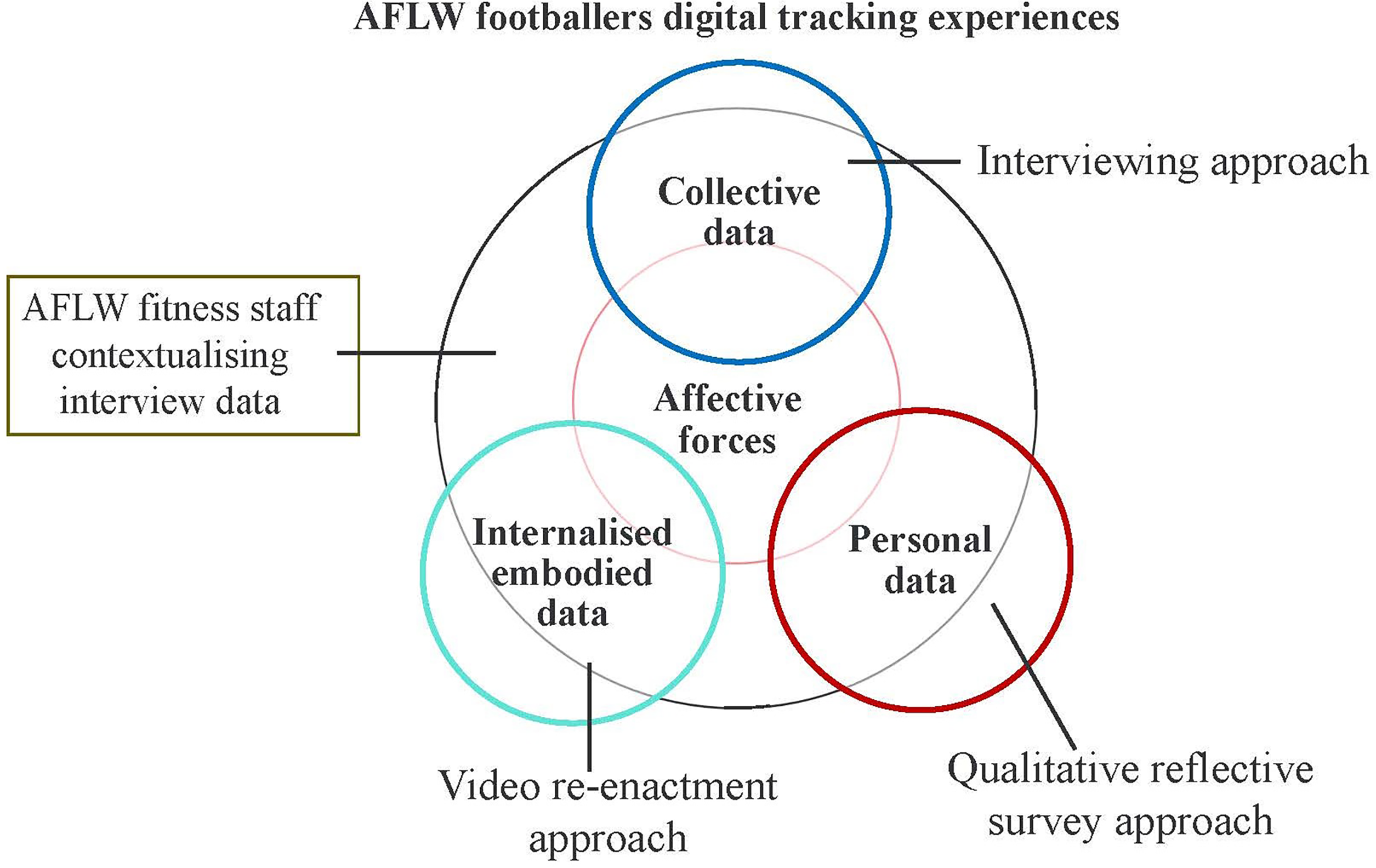
Data generating function of the three-tiered digital ethnography.
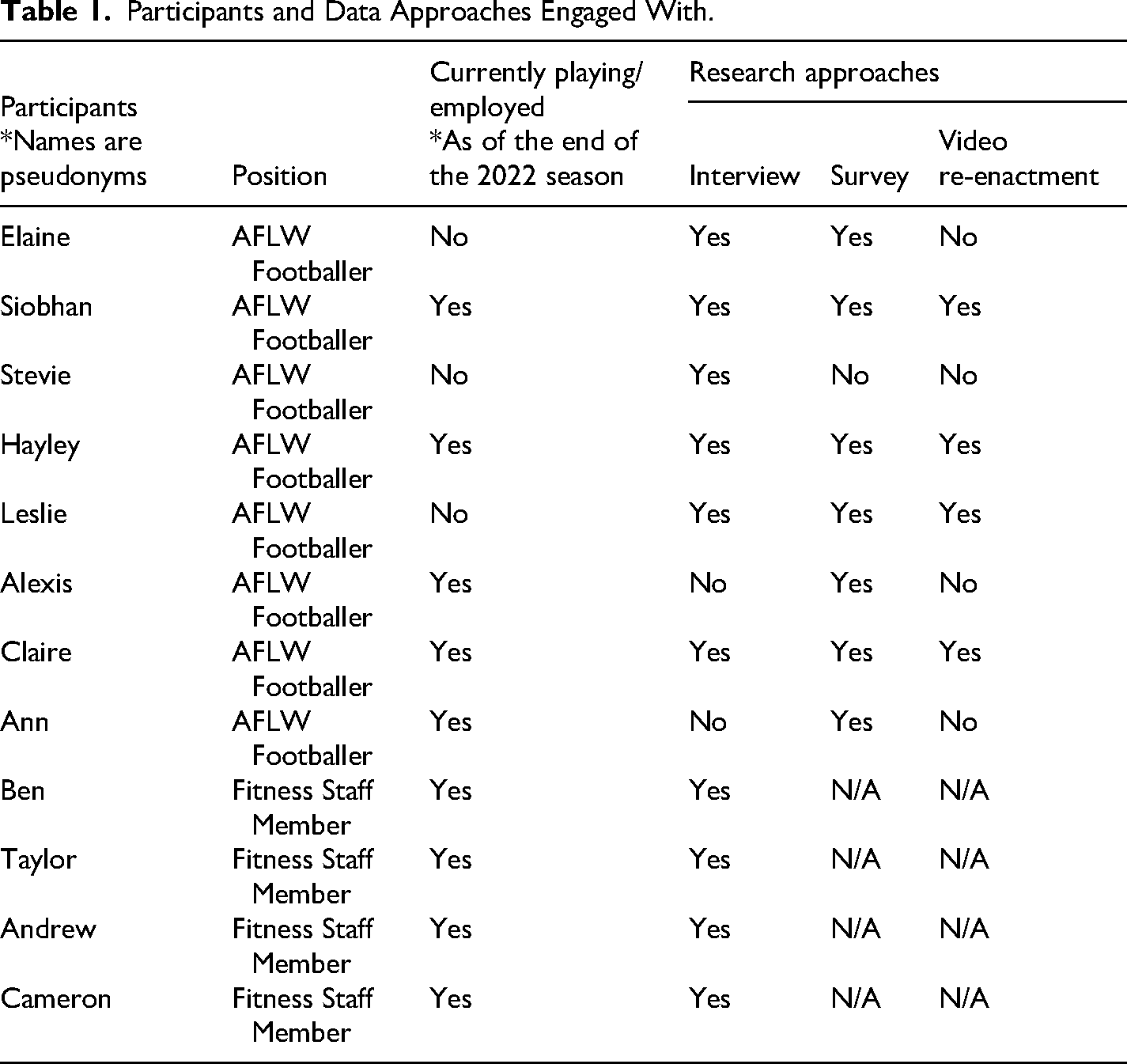
Recruiting participants began via a snowball approach, with our networks putting us in contact with six different AFLW clubs. Four clubs responded and sought further information about the study through an initial meeting. In this initial round of meetings, three clubs agreed to participate and share the study among their playing cohort. Thus, a snowballing sample method was used in which an initial gatekeeper of the sample (the clubs) was approached, and from there, the study was shared and then reshared by the different members participating in the study (Robson, 2011). In total, 11 players were approached to participate. Eight footballers from five different clubs agreed to and participated in at least one data collection approach. Considering the richness of responses that each approach produced, all data was included in the study even if the footballer did not participate in all three approaches. Six footballers participated in an interview, while a further seven completed the survey. Finally, four players participated in a video re-enactment. To complement this data, four fitness staff members from two clubs were also interviewed. The football sample consisted of current and past players who ranged in experience from seven playing seasons to one single season. Table 1 below outlines each participant's current position in the AFLW competition and the different research activities they participated in.
Participants and Data Approaches Engaged With.
Data collection began in October 2021 with the interviews. As data collection was conducted while Melbourne COVID-19 restrictions were in place all research activities were conducted online through MS Teams and Qualtrics survey software. The semistructured interview questions sought to understand how digital self-tracking made the footballers feel and if there were any complications experienced in the day-to-day operations of their tracking. There was also consideration for data sharing practices and how the footballer engaged with their data. Similar questions were asked to the fitness staff members, who were able to offer valuable club and team perspectives.
The second phase of our three-tiered approach with the players was the reflective survey. The survey had four short answer operational questions and two yes/no questions. Depending on how the footballers answered the yes/no prompts there was up to 10 open-ended questions addressed. The footballers were encouraged to approach these questions as if they were writing in a diary, asking them to reflect on how digital self-tracking made them feel and what personal challenges the process presented. There were also questions relating to the reliability of the technology and how that impacted their exercise, and how the wearability of the device was experienced. A further advantage of the reflective survey, which helped stimulate more personal responses, was that it lessened the impact of the researcher on the study as the footballers were able to complete their survey away from the researcher's gaze—stimulating more personal responses that were not mentioned in the interviews. The final approach of our three-tiered digital ethnography was the video re-enactments.
The video re-enactment systematically followed the footballer from start to finish as they recreated a tracking activity. All participants recreated a training activity such as long-distance runs or sprinting drills. We focused on how the player interacted with their device and how these interactions made the footballer feel. This included haptics and sounds produced by the device and how these impacted the footballer's experience. Therefore, the video re-enactments focused not just on spoken words but also movement, touch, and sound. Through the video re-enactments we were able to produce hard to verbalize embodied experiences that the footballer had with their digital self-tracking which we were unable to be captured during the interviews or surveys. Data collection concluded in July 2022 with the final video re-enactment.
Once data collection was completed, recordings and notes from all three methods were transcribed and confirmed with participants, with the aim of honoring the participants’ voice throughout the research analysis. All participants were then given pseudonyms to protect their identity. Transcripts and audio and video recordings were then uploaded into NVivo for analysis. The data was read line-by-line in the first analysis stage, resulting in several different analytical threads being detected and coded (Charmaz, 2014). A second round of analysis was carried out once the line-by-line coding was complete. Here, focused coding was performed, with greater analytical focus on the most frequently mentioned codes. A robust thematic framework resulted with themes including affects described and experienced, collective player understandings, social construction of digital self-tracking, the complications of digital self-tracking, displays of athletic identity through digital self-tracking and the more-than-human connections. These themes will now be presented in the following findings section and are discussed in detail for their analytical importance.
Findings and Discussion
The major findings of our study are that AFLW footballers’ experiences of digital self-tracking reinforced their position as gendered subjects highlighting that they are outsiders to the game of Australian Rules football. As a result, AFLW footballers’ digital self-tracking was anything but straightforward. Due to resource constraints, the athletes were not fully supported by their clubs with their tracking activities. This led to their experiences being contested and confounding, making their digital self-tracking confusing and messy, which the footballer needed to make sense of and self-manage. A critical factor predicating engagement of the digital self-tracking and leading to the footballers feeling this way was the social and cultural expectation placed on them to engage with data-driven performance monitoring.
Social and Cultural Constructions of Digital Self-Tracking
The footballers had explicit and implicit social expectations placed on them that they needed to engage in digital self-tracking as elite athletes. Through these social expectations the footballers normalized performance monitoring as an expected part of being in an elite sporting system. Claire, a current AFLW footballer, explained: When I was younger, you know, 15 … I never had an Apple Watch or anything like that and I only got it when I started moving my way up because it's … essential.
While Hayley, also a current AFLW footballer, felt that younger players entering the system: Just embraced [digital self-tracking] … there hasn’t really been any hesitancy or, I guess, negative feelings towards it … I think they think it's pretty cool and exciting that we wear GPS and see everything you do.
Driving these expectations are the AFLW club coaches and fitness staff. For example, Stevie, a former AFLW footballer, stated: [The club is] really driven on numbers and data. They would put up [the data] after every session … we would see who did the most sprinting … they plan everything … we actually did, no extra conditioning, because they made sure that every drill we would do enough conditioning.
Supporting Stevie's sentiments was Siobhan, a current AFLW footballer, who said: “our strength and conditioning coach … and our head coach [value digital self-tracking] … when they’re planning sessions … [they do] bounce off data from previous sessions.” Typifying the positive social construction of digital self-tracking, framed by the clubs, staff, coaches, and players, was Hayley, who stated: We get the data report sent and you can see what everyone's done and it's kind of like there's no hiding it's a really good thing at this level. Like we’re at an elite level where you need to be putting in the work and training hard and with the GPS data there is no hiding it. It all shows up with what you do, and I think that's a really positive thing at our level.
There were also explicit reasons for the footballers to engage in digital self-tracking. Ben, a current AFLW fitness coach, explained the investment their club had made in their digital self-tracking infrastructure: I think it's $25,000 that we rent the units for a 12-month period … we’re putting a significant investment … So particularly with things where we’re engaging with deals like that, we have to be getting outcomes as a result of that. So yeah, we see it [digital self-tracking] as being pretty important to utilise.
The footballers and fitness staff have described the positive social and cultural constructions attached to digital self-tracking. Digital self-tracking in the AFLW ecosystem was framed as an objective activity in keeping with the broader social construction of the practice (Lupton, 2016; Mennicken & Espeland, 2019). For example, the players would complete their drills guided by the data and be held accountable by these metrics. These social framings positioned the activity as an objective practice making performance monitoring almost unquestionable and difficult not to engage in as a member of the team. Further stimulating engagement was digital self-tracking's ability to elevate the athlete's sporting identity.
Digital Self-Tracking's Ability to Elevate the Footballers’ Athletic Identity
Athletic identity is critical to elite sportspeople as it underscores how people socially view them. Expanding on this Beamon (2012, p. 196) states that: [A]thletes receive elevated levels of social reinforcement for their physical abilities and have much of their individual conception of identity and “self” based upon athletic performance. Thus, their self-identity is composed solely of “athlete” and social identity is defined by others view of them as athletes.
Engaging with digital self-tracking offers the footballers avenues to elevate their athletic identity. Stevie, summed up how they felt using digital self-tracking: I love those targets … you can run a two km and then average out what you should be doing to get fitter. I think hitting targets and knowing that you can improve over a couple of weeks—[its] absolutely amazing. So, I think the benefit of seeing that data is a big part, and understanding it is the best part.
Stevie has described the enhanced feeling they get from their athletic identity. Elaine, a former AFLW footballer, described this as enacting “the one percenters.” Here, Elaine is invoking a common footballing vernacular, implying that if athletes focus on the small, seemingly insignificant parts of their preparation, they will be successful (Ellis, 2017).
Moreover, Leslie, also a former AFLW footballer, described the athletic improvements digital self-tracking offered them: In between the two [AFLW] seasons … I was essentially by myself because I was back [home] … I was really conscious of losing … fitness … my first endurance test that they do [back after the preseason] … was my best time ever … I think it [digital self-tracking] did make me a better athlete.
Echoing the potential positive impacts of digital self-tracking was Andrew, a current AFLW fitness staff member, who further explained how digital self-tracking enhanced the footballer's athletic identity: One player the other day [said] … “oh, the pace I’m actually hitting is a little better than I have before I’m feeling a lot better with that and seeing I’m running at a higher intensity compared to what I have previously” … [this] obviously means that … [they have] improved and … [their] fitness has gone up.
Stevie, Elaine, Leslie, and Andrew have explained how digital self-tracking made AFLW footballers better athletes and, in turn, increased their sense of athletic identity.
Further boosting the footballer's athletic identity was the opportunities digital self-tracking gave to receive open praise among their coaches and teammates. Hayley explained that: If a player has had a really great session and has hit a lot of kms or just had a really good effort or something, he [the head coach] … might make mention of that and acknowledge that person in front of the group.
These opportunities then created a competitive environment surrounding performance metrics. Hayley went on to state: We actually had a top three podium of who's ran the most kilometres in sessions through the preseason. So, we obviously had a player on top and then it was a big deal when a player then got more, and they took the lead.
Taylor, a current AFLW fitness staff member working at a different club to Hayley, supported their competitive sentiments: “So if they [the footballers] see that someone does X amount of high-speed running, they want to push to do a bit more.”
Unsurprisingly, digital self-tracking in the AFLW ecosystem produced a hyper-competitive environment, as Leslie reiterated: In the AFLW, it's like all the competitiveness is hyped up and put on steroids and you’ve got the girls that are like, I need to go out there and beat everyone, every single training and every single game.
These hyper-competitive actions help the footballers increase their sense of athletic identity by embracing traditional masculine norms and values associated with Australian Rules (Pfister & Bandy, 2015). Socially and culturally, embracing these masculine norms and values has been challenging and problematic for women athletes (Bowes & Culvin, 2021). Often if women athletes embrace masculine norms in sport, they are criticized as they are breaking well established gender norms (i.e., media discourses of Serena Williams, see Wilks [2020]) However, digital self-tracking allowed the footballers to increase their athletic identity as the practice allowed for competition, competitiveness and aggression—all values associated with masculine practices in sport. Digital self-tracking then offered the players legitimacy and credibility as Australian Rules footballers. Culvin (2021) presented similar findings in research with elite English women's football (soccer) players. Together, the social and cultural expectation to engage in performance monitoring and the increased levels of athletic identity—which resulted in legitimacy and credibility—facilitated the players’ engagement with digital self-tracking. Despite these positive affective outcomes, the players also described many negative experiences of using this technology.
The Structural Limitations of the AFLW: Negative Affective Experiences of Digital Self-Tracking
Despite the positive social framings and increased athletic identity formed by using digital self-tracking described in the preceding sections the day-to-day experiences of digital self-tracking were far less positive. The differing structural limitations of the AFLW were a factor in these negative experiences. The lack of development support for junior women footballers was one structural limitation. Leslie observed that: “unlike the men, they [women footballers] have not had years of [being told] you’re going to be an AFL player.” While Taylor noted that in their past work as a fitness staff member with a women's development football team, they did not have the same access to digital self-tracking as the men. Taylor went on to say: With the girls, if there were a few leftover [GPS trackers] from the men's program, you could use them every once in a while, but then you couldn’t draw any meaningful data because you are only getting one or two maybe.
There were also resource constraints that impacted the footballer's digital self-tracking experiences. These included time restraints to upskill the players on using digital self-tracking. From a priority standpoint, it's [education on digital self-tracking] not something that we have time for. So, obviously it takes time out of their schedule … we’ve only got the players in from 5:00–5:30 to 9:00–9:30 and you got training … a gym session, [and] have your meetings. Quickly time gets eaten up and if you want to have half an hour or whatever of talking through GPS stuff the coaches would be like, well, sorry … [we need] them out on the track and doing some skill work. (Andrew, Fitness staff)
The part-time nature of the players’ contracts also made continuous digital self-tracking difficult for the players. Ben explained these difficulties: [In the offseason] we’re not allowed to enforce following up or anything like that. So that is like the annual leave period and because of contracts … we can’t act if we notice a player … [is] not completing their program, we can’t go you have to complete this or you have to do this, and we can’t track them. We can’t give them like GPS [devices] or anything to do. It's sort of off their own bat.
Moreover, performance monitoring was complex in the footballer's own time as the cost of operating the device was left to the responsibility of the players. Andrew explained: With Strava … I think you might get better information … [if] you pay for them, but that's up to the player to pay for that and then getting the actual sort of numbers on the intensities and things like that. It's a little bit harder to quantify those things with those apps.
The footballers were also critical of the digital tracking equipment they were provided with at their clubs. This included GPS bras that housed their tracking device, which did not fit well. Stevie noted: “Yeah, it's basically because we are getting hand-me-downs from the men.”
What resulted from these structural limitations was a collective belief among the participants that digital self-tracking was not widely valued among AFLW footballers. Siobhan reflected on these sentiments, stating, “I would say that most players don’t place a lot of value in it … I’d say it's [digital self-tracking] underutilised, undervalued and not understood well” among the wider playing group. Andrew supported Siobhan's sentiments by explaining: I get the feeling that it's [digital self-tracking] not a big priority or focus for them. I think it's more something … that we do as a performance staff and it's not something that they can get a lot of benefit out of. Generally, it's only those handful of players that are driven that seek out the information and understand more so how beneficial it is and how they can use it.
Here, it was clear that the AFLW footballers valued the idea of digital self-tracking. However, they did not fully embrace the practice. This was due to the many structural limitations of the AFLW environment.
These structural shortcomings are not new to women's sport and have been documented in other sports, including rugby league (Taylor et al., 2022), cricket (Mooney et al., 2019), and soccer (Culvin, 2021). At the core of these structural issues is the gendered nature of women participating in Australian Rules football, it is currently not a fulltime professional activity for the majority of athletes. Traditionally, the social construction of sport has framed women as incompatible with hyper-masculine sports like Australian Rules (Pavlidis et al., 2022; Pfister & Bandy, 2015). Adding to this are the social constructions attached to the use of technology and gender (Budge et al., 2023), reminding the footballers through their digital self-tracking usage that they are gendered subjects within the AFLW. In a self-fulfilling way—mediated by the social constructions of gender, sport, and technology—most AFLW footballers do not fully embrace their performance monitoring practices. This is problematic as effective digital self-tracking practices could increase the footballer's fitness and improve the standards of the game reinforcing their position in it. At the same time, the club wastes finite resources on the programs as its operation lacks efficiency.
Theoretical Implications
The Carousel of Gendering and Othering
Our findings have indicated the complex nature of technology engagements for sportspeople. Digital self-tracking is not straightforward for the women footballers who participated in this research study. In analyzing these findings, the footballers engage with digital self-tracking in a cyclical way. We have labeled this a carousel of gendering and othering and the steps of this process are outlined in Figure 2. The footballers enter the carousel of gendering and othering by being nudged, persuaded and expected to engage in digital self-tracking through different social and cultural markers, as athletes participating in the elite women's Australian Rules footballing competition. Here the coaches, fitness staff, some players, and the wider footballing community position digital self-tracking as an expected action of an elite athlete. Performance monitoring is then socially positioned as a desirable action of an elite sportsperson. Digital self-tracking within elite sports takes on the same meaning as biomedical tracking devices have for the general public. Engagement with this technology embodies neoliberal sentiments of self-care and self-management, which are valued and endorsed as responsible behaviors across technocratic societies (Esmonde et al., 2023; Lupton & Smith, 2018; Schüll, 2016). So embedded is this social framing of digital self-tracking that the players themselves even expected to use digital self-tracking when they entered the AFLW. Further enticing the footballers to invest in these social constructions of digital self-tracking was the athletic credibility the practice gave them.
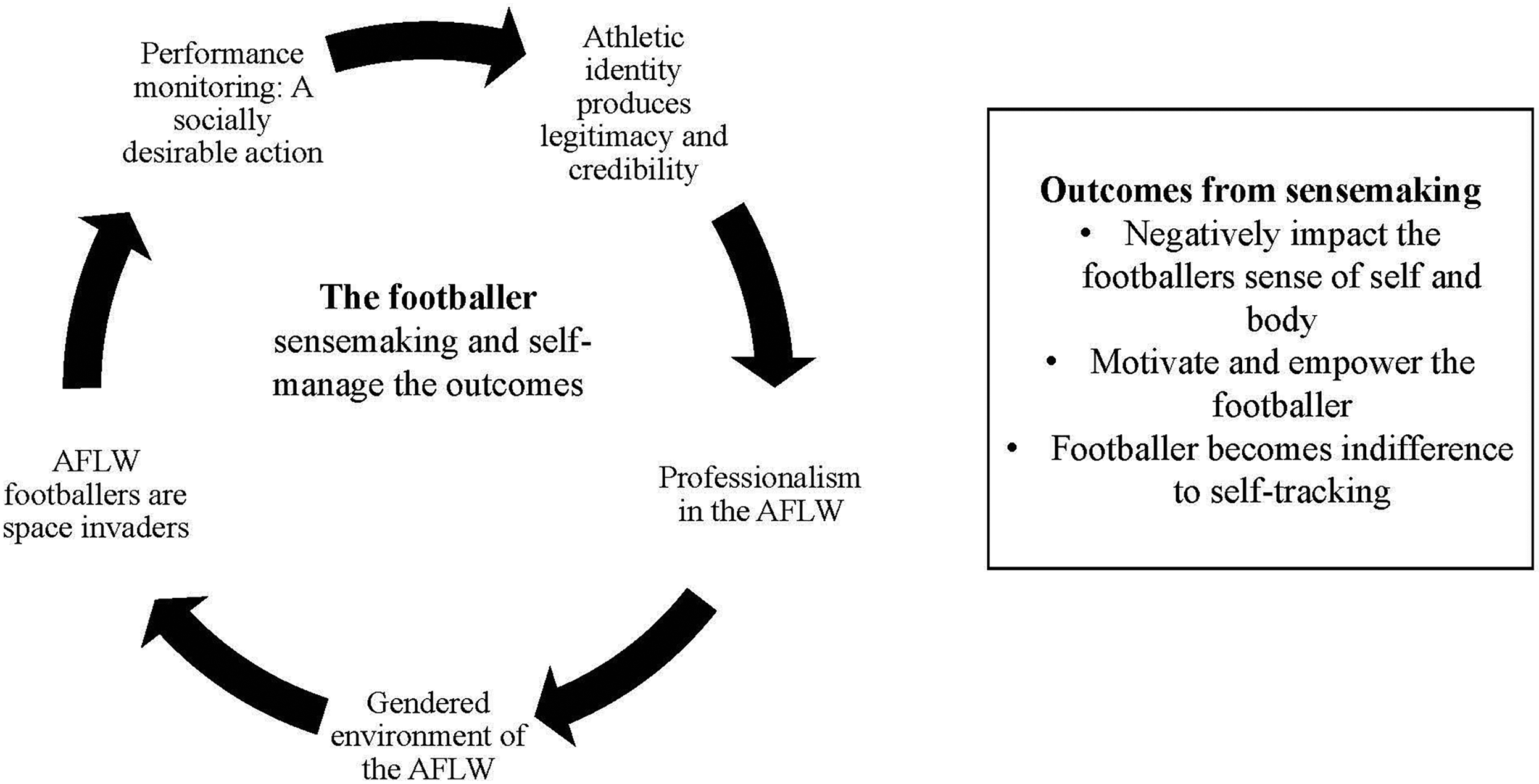
The carousel of gendering and othering.
Digital self-tracking offered the footballers increased levels of athletic identity, which helped legitimize their position in the game as emerging sportspeople. These athletes are participating in a contested space— they are the first generation of women participating in an elite national women's Australian Rules competition. This does not come without challenges, socially and materially. These footballers understand better than most their fraught position within the game of Australian Rules. Thus, achieving increased levels of athletic identity was critical to bolster their position within the game. Digital self-tracking offered the footballers increased levels of athletic identity, presenting the players with legitimacy and credibility as Australian Rules footballers. Therefore, the social positioning of digital self-tracking as a desirable action of elite athletes and the increased athletic identity the practice offered will continue to entice players into engaging in performance monitoring. However, our research shows that sustaining meaningful engagements is difficult as the tracking experiences are hindered by the professional structures, or lack thereof, within the AFLW.
The third phase of the carousel of gendering and othering was the semi/professional nature of the AFLW, which placed structural limitations on the footballers’ digital self-tracking experiences. In our research these included the lack of exposure to tracking technologies in development pathway programs. This left the footballers entering the game with little experience with digital tracking technologies. Further exacerbating the players’ tracking experiences was the lack of resources at AFLW clubs. The footballers were all on part-time contracts, specifically limiting their time and expectations at the clubs. Hence, when they were at the club, priorities were given to footballing training while upskilling on actions like digital self-tracking was not prioritized. Moreover, away from the club, tracking practices were the footballer's responsibility—procedurally and economically. Many footballers then could not fully engage with digital self-tracking away from their clubs. Even when they did track at their clubs, there were times when the tracking products were insufficient, such as receiving secondhand GPS bras from the men's team. What resulted was that the footballers valued the idea of digital self-tracking; however, they became passive operators, either unable or reluctantly using digital self-tracking as a directive of the club instead of an empowering practice.
These structural limitations on the AFLW resulted in digital self-tracking reminding the women footballers that they are gendered subjects within the AFLW. Furthermore, as gendered subjects, their digital self-tracking practices re-inscribes to the footballers that they are space invaders (Puwar, 2004) to the game of Australian Rules football. Here, the AFLW footballers are reminded through their digital self-tracking that they do not fulfill the somatic norm of an Australian Rules footballer.
This carousel of gendering and othering is leaving the footballer to make sense of their differing affective experiences and, if they could, self-manage the outcomes, as depicted in Figure 2. This is where digital self-tracking became confounding and confusing for the footballer. Some affects were encouraging, reaffirming to the footballer that digital self-tracking was a positive practice. As Claire explained, “I love it when you know I’ve smashed out a good workout and I can look at the results of that and I’ve done a personal best—that's amazing.” However, other affective experiences were less productive, demotivating the footballers and, at times, causing frustration, as Elaine stated concerning using digital self-tracking. “Yeah, it's frustrating … sometimes you question is it working all the time? … So yes, you wonder whether you failed or passed sometimes.” Understanding these different affects required the footballers to invest emotional and invisible labor (Pavlidis, 2020) into their athletic practice, which is problematic considering their semi/professional status and their many competing interests. As a result, digital self-tracking was not fully valued or utilized to its full potential within the AFLW. This analysis indicates that there needs to be practical interventions implemented to decrease these unintended consequences of digital self-tracking and minimize the amount of emotional and invisible labor invested by AFLW footballers.
Practical and Social Implications
Player-Centred Framework of Practice
The findings from this study have presented opportunities for social policy development within the AFL to shape AFLW digital tracking practices into the future. Considering the complex and contested nature of the women footballer's digital self-tracking experiences, a player centered framework of practice would be critical in achieving a more equitable application of technology across the AFLW. Taking the lead from past workplace tracking policy frameworks written for European (Akhtar & Moore, 2016) and Australian (Bowell et al., 2023) workers, six critical policy recommendations were derived from the study.
Increased communication—led by the clubs; open two-way communication channels made available where the footballers can receive feedback on their tracking and, if required, guidance on how to use the tracking technology. The footballers need a clear understanding of why digital self-tracking is performed and what the data is and is not used for. These clear understandings can only be achieved if communication is also increased. The footballers need to be reassured that the application and operation of performance monitoring by their club is practised consistently. Here, communication and understanding, along with consistent application, are critical. There needs to be proportionality in designing digital self-tracking programs within AFLW clubs. There needs to be a balance between meeting the clubs’ needs while not intruding on the footballers’ physical or mental welfare. Transparency is also needed in all digital self-tracking practices, from what is tracked, why, and why data might be shared and made public. The proportionality and transparency fields depend on the first three policy directives being met. Increased wearability for the footballers, through the clubs, ensuring—to the best of their abilities—that all digital tracking technology and associated accessories are manufactured for women's bodies and cater for an array of women and nonbinary body shapes and sizes.
Together, this player-centered framework of practice can offer women across all sporting arenas a way forward to practice digital self-tracking and utilize the positive benefits while minimizing the potential negative consequences. Moreover, this framework has the potential to benefit the teams and clubs by maximizing the physical performance of their players and capitalizing on their investments in their digital tracking programs.
Conclusion
This research study has uncovered the diverse and differing ways women Australian Rules footballers experience digital self-tracking. The experiences described by the AFLW footballers, and the fitness staff highlighted the complex intersecting relationships the footballers have with technology and the data it produces. Through their digital self-tracking engagements, the footballers entered a carousel of gendering and othering, reminding the athletes that they were outsiders to the game of Australian Rules. The carousel of gendering and othering commenced with the players being socially expected to engage in digital self-tracking, granted the elite environment they occupied. The footballers then found that digital self-tracking legitimized their position as elite athletes, giving them credibility as Australian Rules footballers. This was critical considering the fraught social position their gender and sport offered them. Despite these positives, the actual process of monitoring their sporting activities was complicated by the lacking professional structures of the AFLW. Players had limited experience or opportunity to use digital self-tracking devices in the development pathways to the AFLW. Moreover, once in the AFLW system, it was up to the footballers to seek help and guidance on operational aspects of their performance monitoring. The footballer's sense of self then is impacted negatively as they are reminded through their digital self-tracking that they are gendered subjects—space invaders to the game of Australian Rules.
As a result, the footballers had to make sense of these happenings and self-manage the outcomes. This further complicated their digital self-tracking understandings as some affective experiences were positive while others were negative. A player-centered framework of practice was developed to alleviate the negative and confounding aspects of the footballers’ digital self-tracking experiences. Here, critical processes of communication, understanding, consistency, proportionality, transparency, and increased wearability were offered as keyways to create a more user-centric model of operation for women athletes from emerging sporting arenas.
There were limitations found within the study. The size of the study was limited by the challenges faced by the AFLW during 2021 and 2022 due to COVID-19, changing season start dates and a protracted collective bargaining agreement (Birch, 2022a, 2022b; Black, 2021, 2022). However, the study's goal was never to have a generalizable sample across the whole population (Smith, 2018). Instead, rich experiential understanding was sought and produced from research conducted with a cross-section of players and fitness staff from nearly half of the teams who competed in the 2022 AFLW summer season. Further limitations were found in conducting all data collection approaches online due to Melbourne's strict COVID-19 protocols. This meant that the video recorded during the re-enactments were limited and unable to be used within the study as visual documentation. Despite this limitation, the verbal and observational data produced within the video re-enactments was still valuable and aided in the analysis.
Further research directions are critical in this emergent research area. A greater understanding of how women athletes from various sports (rugby league, rugby union, cricket, soccer, and basketball) experience and understand digital self-tracking is critical. This will inform if institutional and organizational differences impact athletes’ tracking programs. For example, the National Rugby League in Australia launched a women's competition at a similar time to the AFLW yet has chosen to expand the competition at a much slower rate (Taylor et al., 2022). Furthermore, the scope of this study should be extended to all genders—men, nonbinary, transgender—athletes playing semi/professional individual and team sports. The wider findings in this study are that there needs to be a consideration for the subjective nature of technology engagements among semi/professional athletes. Moreover, there needs to be an acceptance and appreciation for technology's impact on people. Without these understandings and applications, athletes and many other people who track daily will continue to find digital self-tracking confounding, confusing, messy, and frustrating.
Footnotes
Acknowledgments
Paul Bowell would like to acknowledge the Commonwealth's contribution through receiving of an Australian Government Research Training Program Scholarship during the researching of this study.
Author Statement
The first author conceptualised the idea of the paper. All four authors develop the research design and drafted and/or critically revised the work.
Declaration of Competing Interest
The authors declared no potential conflicts of interest with respect to the research, authorship, and/or publication of this article.
Funding
The authors received no financial support for the research, authorship, and/or publication of this article.
