




Abstract
In response to numerous highly publicized cases of athlete maltreatment, sport organizations have developed prevention and intervention strategies under the umbrella term of Safe Sport; however, confusion exists about what it does and does not encompass. To better understand what Safe Sport encompasses, this study sought to develop a conceptual framework of Safe Sport, informed by the perspectives of various stakeholders in sport. Using a social constructivist grounded theory approach, semi-structured interviews were conducted with forty-one participants, including athletes, coaches, sport administrators, and researchers. The results are interpreted to suggest that participants’ understanding of Safe Sport are informed by three overarching themes: environmental and physical safety, relational safety, and optimising sport, all of which are viewed as continuously evolving relative to the ever-changing context of sport and broader society. Recommendations are made to optimise sport experiences and thus prevent physical and psychological harms through a safeguarding approach that prioritizes the promotion of human rights.
Introduction
Organized sport is commonly viewed as a beneficial avenue for the positive growth and development of participants (David, 2005; Kjønniksen et al., 2009). However, critics of competitive organized sport cite a multitude of problems, including corruption, the commodification of athletes, cheating, and maltreatment, all of which may compromise the welfare of athletes and strip them of their human rights (Brackenridge, 1997; David, 2005; Fasting et al., 2004; Kerr et al., 2020). A particular concern recently centers on incidences of maltreatment in sport. According to the World Health Organization (WHO) (2020), maltreatment is a global issue that refers to: All types of physical and/or emotional ill-treatment, sexual abuse, neglect, negligence and commercial or other exploitation, which results in actual or potential harm to the child's health, survival, development or dignity in the context of a relationship of responsibility, trust or power. (para. 1)
Awareness of maltreatment experiences in sport has increased over the last several decades, in part due to highly publicized cases such as Larry Nassar of USA gymnastics (McPhee & Dowden, 2018) and Barry Bennell of UK youth football (BBC Sports, 2018), both of whom were convicted for perpetrating sexual abuse against minor athletes. Maltreatment is considered a systemic issue in sport (Kerr et al., 2019), affecting athletes of all ages, and sport types and levels across the globe (Lang & Hartill, 2015). Stemming from prevalence studies across several countries are disconcerting rates of psychologically harmful experiences in sport, in addition to experiences of physical and sexual harm and neglect (Alexander et al., 2011; Parent & Vaillancourt-Morel, 2020; Vertommen et al., 2016; Willson et al., 2021). Additionally, researchers have highlighted the increased vulnerability to maltreatment experiences of certain groups of athletes such as females, LGBTQ2S, racialized athletes, and athletes with physical disabilities (Alexander et al., 2011; Parent & Vaillancourt-Morel, 2020; Vertommen et al., 2016; Willson et al., 2021). Together, increased media scrutiny, public awareness, and studies indicating the high prevalence of maltreatment in sport have led to pressures on sport organizations to combat the harmful practices of sport (Boocock, 2002; Kerr et al., 2014; Lang, 2021), giving rise to what some refer to as the Safe Sport movement (Gurgis & Kerr, 2021). Although efforts to make sport safer are evidenced throughout the history of sport, including changes to rules of play and protective equipment, the term “Safe Sport” has gained popularity recently in response to athlete maltreatment.
Currently, conceptual confusion exists regarding the term Safe Sport based upon language used (Rhind & Owusu-Sekyere, 2018). For example, the United States Olympic Committee (USOC), which trademarked the term SafeSport in 2012, refers to misconduct in their definition of SafeSport: “creat[e] and maintain a sport community where all persons who participated in sport programs and activities can work and learn together in an atmosphere free of all forms of emotional, physical and sexual misconduct” (Koller, 2018, p. 1057). Safe Sport International (2021), which is an international advocacy body, is focused on the elimination of all forms of violence, abuse, and harassment against athletes of all ages. The International Olympic Committee (2021) centres on harassment and abuse stating that it “… firmly believes that harassment and abuse have no place in sport or in society, and advocates for safe sport, as the safety and wellbeing of athletes are paramount” (para. 1). Similarly, the Athlete365 (2021) initiative of the International Olympic Committee, which provides supports on and off the field of play through advice, services and tools, claimed that “Safe Sport is an environment where athletes can train and compete in healthy and supportive surroundings; an environment which is respectful, equitable, and free from all forms of harassment and abuse” (para. 1). Finally, in Canada, the country of interest in this study, Safe Sport is conceptualized through the term maltreatment. All Canadian National Sport Organizations must implement and adhere to the Universal Code of Conduct to Prevent and Address Maltreatment in Sport (UCCMS). In summary, although different definitions are used across the world, all refer to harm-free sport environments.
It is also important to recognize that the term Safe Sport is not used universally. For example, in the U.K. and Ireland, the term safeguarding is used based upon existing child protection legislation and is defined by four central tenets: protecting children from maltreatment; preventing harm to children's health or development; ensuring children grow up with the provision of safe and effective care, and; taking action to enable all children and young people to have the best outcomes (Department of Education, 2018). The U.K.'s Child Protection in Sport Unit (CPSU) aims to improve safeguarding and child protection practice within sport organisations, to ensure all children and young people are safe while participating in sport (Boocock, 2002; Lang & Hartill, 2015). The term safeguarding has also been used in reference to adults and those with disabilities to denote measures to protect the health, well-being and human rights of individuals and to live free from abuse, harm and neglect (Care Quality Commission, 2014; The National Board for Safeguarding Children in the Catholic Church in Ireland, 2021). These perspectives include freedom from experiences of harm as well as the promotion of well-being and human rights.
In summary, despite the proliferation of the term Safe Sport, and related initiatives, there is no consensus on the definition or conceptualization of Safe Sport. Having a generally agreed upon conceptualization is important for several reasons. First, the ways in which Safe Sport is conceptualized will drive the nature and content of prevention and intervention initiatives. As an example, the Coaching Association of Canada (CAC) first targeted its Safe Sport initiatives to address sexual abuses of athletes based upon the (erroneous) assumption that sexual abuse is the most egregious and harmful form of maltreatment (CAC Safe Sport Summit Ontario). As a result, the CAC encouraged sport clubs and organizations to sign on to the Responsible Coaching Movement which dictates that two certified coaches are present at all times. This initiative may help to prevent sexual abuse which typically occurs in private, however, it does not impact the far more prevalent and equally harmful type of maltreatment – psychological abuse – which occurs in public (Kerr & Kerr, 2020). If, on the other hand, Safe Sport is conceptualized as the promotion of human-rights, then interventions are more likely to educate coaches about their duties to respect athletes’ rights to be heard and to participate in safe, inclusive, and enjoyable sport. A consistent definition would help to ensure that all stakeholders understand their responsibilities to contribute to a Safe Sport environment, especially for those in positions of power and authority who have a duty to ensure the safety of others.
The purpose of this study therefore was to develop a conceptual framework of Safe Sport, informed by the perspectives of various stakeholders in sport. Specifically, the current study is conducted from a Canadian sport perspective. Considering recent revelations of maltreatment and toxic cultures across several sports in Canada, the mandating of the Universal Code of Conduct to Prevent and Address Maltreatment in Sport, and the development of an independent complaint mechanism (Office of the Sport Integrity Commissioner), it seemed appropriate to explore Canadian stakeholders’ understandings of Safe Sport as this movement is currently evolving. Inclusion of the perspectives of sport stakeholders is important as all participants—athletes, coaches, administrators, officials, support staff, etc.—contribute to ensuring a Safe Sport environment. Further, given that maltreatment is a systemic issue in sport, an approach to Safe Sport that addresses the perspectives, roles and experiences of everyone within the organization facilitates more sustainable and safer experiences for all (Kerr et al., 2019; Rhind & Owusu-Sekyere, 2018). Currently, little is known about how various stakeholders conceptualize Safe Sport. Although a plethora of research exists on stakeholders’ experiences of harms in sport (i.e., maltreatment, abuse, violence), there is an absence of research that has explored how stakeholders interpret and understand the concept of Safe Sport. Additionally, the absence of a participant-informed definition of Safe Sport has been identified as a shortcoming of advancing Safe Sport experiences (Lang & Hartill, 2015). Taken-together, the lack of clarity regarding what Safe Sport means as well as a dearth of research investigating stakeholders’ perspective of Safe Sport informs the purpose of this study.
Methodology
Charmaz's (2014) social constructivist variant of grounded theory was implemented, whereby priority is placed on understanding the complexities of participants’ subjective responses as well as the influential role of the researcher and the social context in the theory generation. The interpretive nature of constructivist grounded theory methodology enabled the researcher(s) to be flexible, creative, and reflexive when theorizing data (Charmaz, 2006). As such, this variant of grounded theory was deemed appropriate as the purpose of this study was to explore stakeholders’ subjective interpretations and meanings of Safe Sport.
The current study adopted a social constructivist paradigmatic position. Informed by a relativist ontological view, it was assumed that there are no singular truths but instead that several realities exist, as meanings, representations, and interpretations of experiences differ between participants (Sparkes & Smith, 2014). Although perceptions of reality vary between participants, elements of these realities may be shared, as meanings are socially constructed by each individual (Sparkes & Smith, 2014). Informed by a subjectivist/transactional epistemology, we recognized the importance of the co-construction of knowledge between ourselves as researchers and the sport stakeholders, as our collective values influenced the interpretations of the data and theory development (Sparkes & Smith, 2014). Together, grounded theory and a social constructivist paradigm were well-suited for this study given their emphases on participants’ subjective perspectives and social construction of knowledge and the study's purpose of understanding how sport stakeholders interpret Safe Sport.
Role of the Researchers
Each member of the research team possesses extensive knowledge of the Safe Sport literature, including associated topics such as athlete welfare and maltreatment in sport, as well as practical experiences within sport in the capacity of instructors, administrators, coach developers, and former athletes. The researchers acknowledged how their interpretations of Safe Sport are shaped by knowledge formulated a priori through Safe Sport-related research and personal sport experiences, and thus, recognized the importance of remaining reflexive throughout the duration of the project (Sparkes & Smith, 2014). Specifically, the principal investigator, who was responsible for recruitment, data collection, and data analysis, utilized a research journal to record reflections stimulated by participant feedback, interpretations of the data, and critical discussions that regularly occurred with the co-authors.
Sampling and Participants
Once ethical approval for this study was obtained from the University Research Ethics Board, the data collection proceeded in an iterative fashion with subsequent sampling informed by the analysis at each stage of data collection. Sampling in grounded theory begins by recruiting participants who are believed to best address the research purpose. Informed by the study purpose, stakeholders who were affected by or responsible for Safe Sport were purposively recruited. Based upon researchers’ knowledge of relevant literature, specifically, that a collaborative responsibility of all sport stakeholders is required to contribute towards the advancement of Safe Sport and the elimination of maltreatment (Kerr et al., 2019), a concerted effort was made to include a diverse stakeholder sample.
The first phase of data involved sampling high-performance athletes and coaches. High-performance athletes were chosen, as researchers have indicated that unsafe sport experiences, such as physical abuse, psychological abuse, sexual abuse, and neglect are most prevalent at highly competitive levels where ‘win-at-all-costs’ mentalities are most prevalent (Ohlert et al., 2020; Roberts et al., 2020; Willson et al., 2021). Coaches were also identified as critical figures for providing safe environments and promoting values of safety in sport (Guskiewicz et al., 2014). Given most Safe Sport policies and programmes have been designed in response to maltreatment perpetrated by coaches (Donnelly et al., 2016; Kerr et al., 2014), coach recruitment was also required. Finally, as new insights emerged, the authors perceived it advantageous to seek the perspectives of sport administrators and researchers, who are often responsible for advancing Safe Sport practices and knowledge (Daube & Thomas, 2016; Gurgis & Kerr, 2021; Kerr & Kerr, 2020). It was anticipated that the inclusion of administrators and researchers would contribute to the development of a more comprehensive conceptualization of Safe Sport. Further, to-date, no research has collectively incorporated athletes’, coaches’, sport administrators’, and researchers’ perspectives when exploring Safe Sport, which further informed the desire to include these sample groups. Thus, the first stage of recruitment included high-performance athletes and coaches, as well as sport administrators and researchers.
Subsequent recruitment of participants was informed by theoretical sampling, which involves sampling individuals to further develop categories (Charmaz, 2014). Initial interviews with athletes, coaches, administrators, and researchers highlighted the need to gain more detailed perspectives on Safe Sport. As such, additional athletes, coaches, administrators, and researchers were recruited to participate in the study. The next phase of analysis was informed by the need to theoretically sample specific aspects associated with Safe Sport, such as the inter-relationships between physical safety, relational safety, and positive growth. Throughout the recruitment process, the ongoing analysis also revealed the need to further sample various Safe Sport experiences as well as the similarities or differences regarding views of Safe Sport between stakeholder groups. Sampling concluded when the process of constant comparison no longer yielded new concepts, theoretical insights, or interpretations between themes, and thus the research team felt that the conceptual framework was sufficiently developed (i.e., theoretical saturation; Charmaz, 2014).
This study included a total of 41 participants: 16 high-performance athletes (8 men and 8 women; M = 24.3-years), 9 inter-university coaches (5 women and 4 men; years of experience: 1–35 years), 11 sport administrators (7 women and 4 men), and 5 researchers (3 women and 2 men). Seven of the athletes were retired from sport, with the remaining nine participants still actively competing. The level of sport participation of the athletes included inter-university, Olympic, semi-professional, and professional. Coaches were actively instructing at the time of the study in the capacity as head coach or assistant coach and their experiences ranged between 1–35 years instructing both male and female athletes. All sport administrators were currently employed and held leadership roles in their respective organizations. The sport researchers had relative expertise within the field of Safe Sport, maltreatment, and athlete welfare. Collectively, amongst the sample sport represented included athletics, badminton, baseball, basketball, field hockey, football, kayak, ice hockey, lacrosse, soccer, swimming, volleyball, and water polo. All the participants were recruited from Canada. Most participants identified as Caucasian, apart from five athletes (three Black athletes, one East-Asian athlete, one Middle Eastern athlete) and four coaches (one Black coach, one South-Asian coach, two East-Asian coaches). Three participants identified with the LGBTQ2S community and only one participant identified as having a physical disability.
All participants were contacted through email in which the purpose of the study was explained, and questions were invited. Prior to data collection, all participants signed a Letter of Consent. Participants were assured of anonymity and confidentiality throughout the research process and the right to withdraw without penalty.
Data Collection
Individual semi-structured interviews were conducted with each stakeholder to understand their interpretations of Safe Sport (Charmaz, 2014; Charmaz & Belgrave, 2012). Interviews were conducted in-person, by telephone, or video conference, and were audio recorded with the participants’ consent. Interviews ranged in length 60 and 120 min.
Interviews began with introductory questions, such as “What is your current role in sport?” And “What are your responsibilities in sport?” Open-ended questions were then asked to explore participants’ interpretations and understandings of Safe Sport. Participants were reminded that Safe Sport applies to child and adult athletes and other sport stakeholders.
Sample questions included: What does Safe Sport mean to you?”; “What topics are included in conversations of Safe Sport?”; “What does it mean to feel safe or unsafe in sport?” Interview questions were modified as required for athletes, coaches, administrators, and researchers.
Although an interview guide was developed prior to speaking with the participants; given the concurrent process of data collection and analysis in social constructivist grounded theory research, the interview guide was periodically amended to address areas of interest (Charmaz, 2014). For example, analysis identified the prevention of harm and optimisation of the sport experience informed stakeholders’ interpretations of Safe Sport. To gain further detail, more specific probing questions were utilized (e.g., “What types of harm are prevented through Safe Sport?” And “What does an optimal sport experience look like?”). Such questions were asked to highlight congruencies or incongruencies between participants’ interpretations of Safe Sport as well as results and conceptualizations of Safe Sport in the literature.
Data Analysis
All personal identifiers were removed, and pseudonyms were used at the point of transcription and during the interpretation of results. Athletes are referred to by the letter “A”, coaches by the letter “C”, administrators by the letters “AD”, and researchers by the letter “R”, followed by a numerical value such as, A1, C1, AD1, R1. Data analysis started immediately following each interview to highlight the iterative nature of data collection and analysis consistent with grounded theory methods (Charmaz, 2014).
The analysis focused on addressing stakeholders’ interpretations of Safe Sport as well as the influence of the social context on such perspectives. Within social constructivist grounded theory, a flexible approach to advancing theoretical analysis that keeps codes simple, precise, active, and continuously open to reinterpretation is recommended (Charmaz, 2014). The principal investigator initially engaged in (line-by-line) gerund-based coding (action-oriented), which fosters theoretical sensitivity and “helps to define implicit meanings and actions, gives researchers directions to explore, spurs making comparisons between data, and suggests emergent links between processes in the data to pursue and check” (p. 121). For example, some initial gerund-based codes included “preventing sexual, physical, and psychological abuse”, “eliminating discrimination”, and “creating accessible and inclusive experiences in sport.” Constant comparison method was used to compare data, codes, categories, and concepts with one another as well as foster more abstract ideas to highlight similarities and differences throughout all the interviews (Charmaz, 2014; Charmaz & Belgrave, 2012). Further, to help stimulate theoretical sensitivity, the authors highlighted relationships between themes and sub-themes and integrated them as the analysis progressed (Charmaz, 2014; Charmaz & Belgrave, 2012). For example, through the initial stages of data collection and analysis, it became apparent that the athletes and coaches mentioned aspects such as physical safety, abuse-free sport, and rights-based sport, associated with Safe Sport experiences. These insights stimulated the need to recruit additional athletes, coaches, administrators, and researchers, to gain more diverse perspectives and refine concepts.
The Safe Sport literature was used to inform data collection and analysis procedures; however, the authors were cognizant of strengths and limitations of this literature, and thus, used this prior knowledge to inform rather than confine the analysis. This enabled an examination of the coherence of the conceptual framework with extant Safe Sport literature. For example, previous findings pertaining to Safe Sport experiences (e.g., maltreatment) as well as previous conceptualizations of Safe Sport (Coaching Association of Canada, 2020) were used as tools to compare, contrast, and integrate participants’ responses. As such, it was apparent that while participants highlighted common notions associated with Safe Sport, such as the prevention of physical danger and abuse, their responses and interpretations provided new depth, acknowledging the importance of optimisation of the sport experience, characterized by the promotion of inclusive, positive, and healthy sport experiences as well as the recognition of participation in sport as a fundamental human right. These insights highlighted the importance of safeguarding in sport.
Memo-writing and diagramming were used as analytic techniques to remain grounded in the data, think conceptually, and maintain reflexivity throughout the research process (Charmaz, 2014). Memo-writing techniques involved making notes as well as defining and comparing emerging codes/themes; this process facilitated critical dialogues among the research team regarding the data sets, which occurred until the final themes were established. Diagramming was used to visually represent the ideas, codes, categories, and their relationships (Charmaz, 2014). Given the intention of developing a Safe Sport framework, diagramming permitted the research team to design and pilot several visual representations of Safe Sport until an agreement regarding the best way to portray the identified themes was reached.
The first author used a reflexive research journal to record insights and interpretations about consistencies and inconsistencies in the data, relationships between developing themes, and explore new areas of interest. For example, the initial recordings of different interpretations of Safe Sport included discrimination and human rights for some participants. However, upon further reflection, the primary author reinterpreted these aspects as part of the ongoing evolution of safety in sport. During the latter phases of analysis, the first author presented participants with the proposed conceptual framework and invited member reflections. The co-authors also served as critical friends, stimulating discussion, challenging alternative meanings, and ensuring the development of comprehensive framework. For example, discussions with the co-authors fostered the evolution of the theme “harm-free sport” to “relational safety.” Additionally, the co-authors recommended the overarching framework depict the evolutionary nature of Safe Sport. Collectively, these conversations were recorded in the research journal and allowed the principal investigator to further clarify the participants’ meanings, remain adaptive and reflexive, and highlight the collective generation of knowledge between the research team and the participants (Smith & McGannon, 2018; Sparkes & Smith, 2014).
Results
In the following section, a conceptual framework is presented which outlines the dynamic and recursive influences of environmental and physical safety, relational safety, and optimising experiences categories that inform participants’ perceptions of Safe Sport. The results represent overarching interpretations and shared understandings of Safe Sport across all participant groups, as applied to all sport stakeholders (Figure 1).
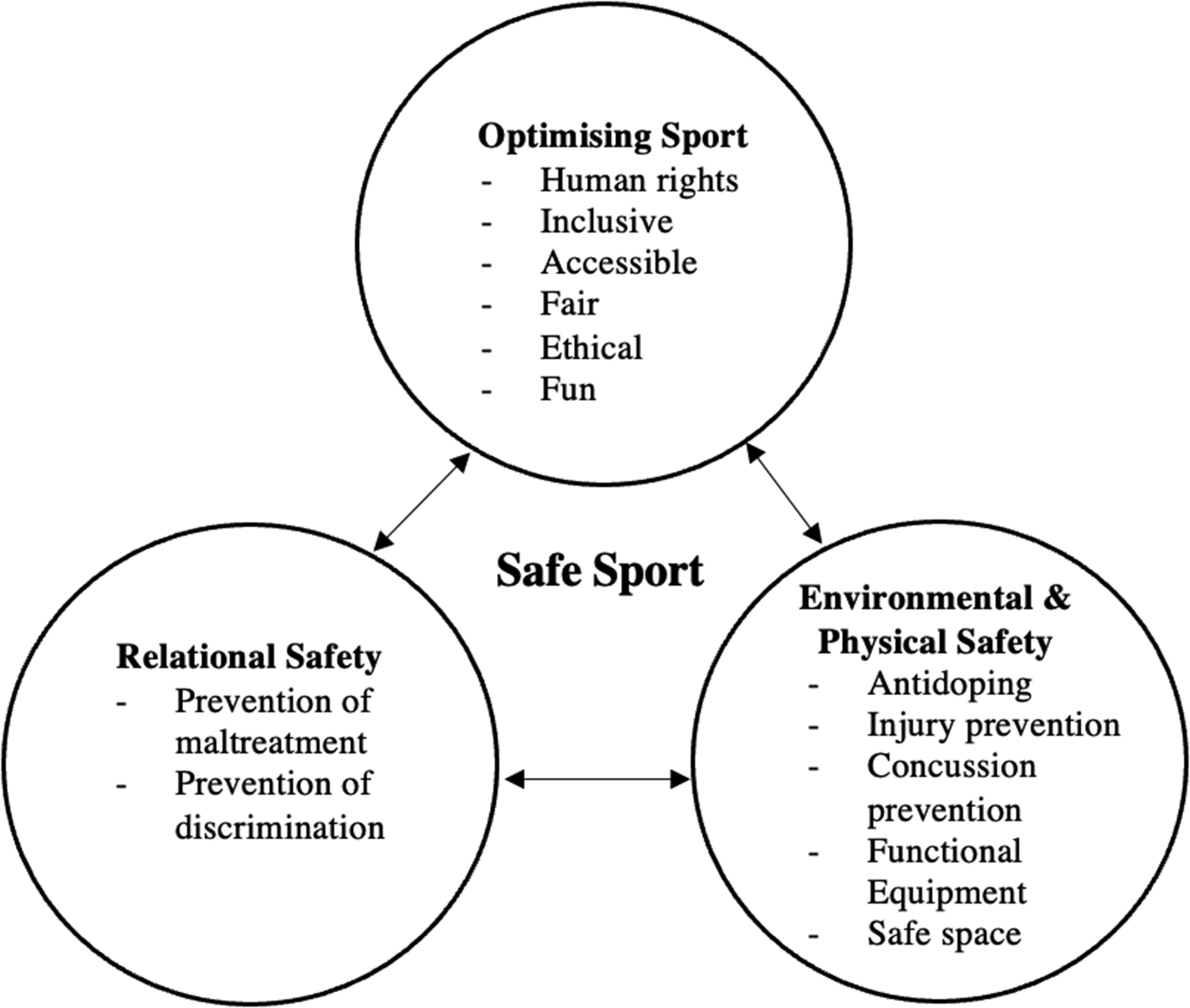
Safe Sport Framework. A conceptual framework that illustrates participants’ dynamic understanding of Safe Sport.
Overview of Framework
Three overarching themes were interpreted from participants’ responses and reportedly informed their understanding of Safe Sport: environmental and physical safety; relational safety; and optimising sport. Environmental and physical safety referred to the importance of addressing issues of physical danger that may stem from issues such as faulty equipment, participating in an unsafe environment, and doping. Relational safety involved the prevention and intervention of harmful experiences endured or witnessed in sport within interpersonal relationships, including sexual abuse, physical abuse, and emotional/psychological abuse. Further, optimising sport referred to the participation experiences for all stakeholders informed by positive development, rights of inclusion, accessibility, fairness, and safety.
Overall, sport stakeholders’ understanding of Safe Sport is underscored by their subjective and unique interpretations of environmental and physical safety, relational safety, and the optimisation of the sport experience. Although the data are organized into these themes, participant responses suggested dynamic and recursive interactions among these themes. Further, the participants identified that interpretations and understandings of Safe Sport are not fixed but instead are continuously evolving over time and in conjunction with the context of sport and broader societal influences. As such, behaviours that were once accepted in sport (e.g., excluding women from participation) are no longer accepted in current discourses of Safe Sport.
Environmental and Physical Safety
The participants indicated that environmental and physical safety concerns, which included preventing physical danger as a result of dysfunctional equipment, physically hazardous environments, injuries and performance enhancement issues, informed their interpretations of Safe Sport. Regarding participation in a physically hazardous environment, C6 explained: The physical surroundings would be safe, so no cut glass or broken bottles. That's just safe living. It would be the pool and deck are clean. You are not necessarily going to be exposed to some disease. I want to make sure that steam is not coming out of the pool, that the water isn’t too hot, so the swimmers are not experiencing difficulty training. The environment has to be safe in terms of physical objects … no equipment laying around.
In describing Safe Sport, A8 acknowledged the importance of fostering a safe physical environment by ensuring proper equipment was being used: “Yeah, my helmet saved my life a handful of times. When you play CB [cornerback], you’re going to get hit a lot. It's not uncommon to be concussed, which is why helmets are so essential for safety.” AD9 explained: Safety is a lot more comprehensive than not sexually or psychologically abusing your athletes. If my environment is unsafe, if I let our athletes play without a helmet or on poorly maintained ice, then we’ll have a whole slew of other problems that have nothing to do with abuse. Concussions and broken bones are still serious and we’re responsible for creating a plan that protects everyone from these avoidable injuries.
R5 emphasized Safe Sport in terms of the importance of return to play guidelines, which are needed to prevent athletes from injuries that may stem from prematurely returning to sport: The untimely and impulsive return to sport has been a long-standing issue in sport. And at what cost? Often, it's the health, career, or even life of the athlete that suffers. Return to play guidelines are lifesaving and need to be taken seriously. These guidelines are evidence-based and proactively ensure an athlete is well enough to return to play.
Participants alluded to unethical behaviours that are perceived as compromising the integrity of sport, or the safety of athletes, such as the use of performance enhancing drugs (i.e., doping). For example, AD2 explained: Doping is one of the biggest threats to the integrity of sport … it is a health risk to the athlete that consumes these large amounts of bad substances. That is a health and safety concern. We don’t want young kids seeing athletes doping in sport and modelling their behaviour because of particularly health compromising effects for younger athletes to be engaging in the use of some of these substances … that's not Safe Sport.
A2 echoed similar sentiments about Safe Sport in the context of his own sport, baseball: “It's about protecting athletes from all kinds of harm, whether physical, sexual, mental … I would include harm caused from using steroids, too. Juicing has always been an issue in baseball, and it really messes up an athlete's body and mind.”
Relational Safety
According to the participants, relational safety, which pertained to efforts of preventing maltreatment within interpersonal relationships in sport, also informed their interpretations of Safe Sport. For example, AD2 indicated “Safe Sport means the protection from all forms of sexual, physical, psychological abuse. That's how Safe Sport has come to be defined and understood in our work in the past few years.” R1 stated, “Safe Sport is protecting athletes from psychological, physical harm and in particular with respect to harassment and abuse.”
Emphasizing the importance of addressing issues of maltreatment, C7 claimed that Safe Sport ensures “The athlete is safe from physical violence, their emotional well-being is intact, they … are aware of abuse [and] coaches also avoid using language that is derogatory or harming the athlete from a psychological perspective.” A5 reflected on relational harm endured in sport and how Safe Sport requires the removal of such experiences: They [vets] would sit 6 of us in the middle of the shower and as the veterans came in one by one and they would piss on us. They would spit on us and … make us sing songs … we were regularly on the bus stuck in what we called the stuff pucks, which is stuffing as many guys as you can naked in the back of the bus bathroom … and taping all our clothes in a ball and once you un-taped them and put them on, then you can come out. As that happened … they would open the door and throw in piss cups and chew cups and threw all that on us … you asked me about Safe Sport; it's not letting this shit happen to anyone.
The intersection of environmental and relational safety was prevalent among several participant responses as R5 commented, “I can have the best equipment or state of the art training facilities but also be a victim of sexual abuse … if Safe Sport is about prevention, you have to consider preventing all harm.” AD9 explained: Sport must be a safe space for everyone participating and Safe Sport reminds everyone of this. Am I physically safe … emotionally safe … socially safe … mentally safe? Am I protected from all kinds of abuse and harassment? Can I participate fully as a woman? Or as another gender … or race … or ability? Am I at risk of getting injured … recovered from previous injury? Do I have the resources, education, or equipment to be kept safe? Are my coaches or leaders knowledgeable about how to keep me safe? Do they [coaches] have training on preventing abuse and keeping my dignity intact? These are important questions we’re trying to answer with Safe Sport. It's very complex, very broad and encompassing of so many variables.
Likewise, AD8 stated: It's about trust, nurturing relationships, having fun, reaching your individual potential, and encouraging health and wellness. You think about the physical environment and that should be safe, the psychological safety of participants … and an element of that is an environment that is free from abuse, harassment, and discrimination but that would be secondary to being able to show up and feel a sense of safety, like you belong, like you’re in an environment that won’t incur physical harm because the equipment is not safe or the type of activities are not relevant for the age and stage of development.
AD8's description of Safe Sport being harm free is supplemented by an understanding that optimising sport is essential to ensure sport is fun, positive, healthy, developmentally appropriate, and ultimately safe.
Optimising Sport
Participants’ interpretations of Safe Sport highlighted that, in addition to the importance of environmental and physical, and relational safety, optimising sport experiences for stakeholders must also be considered. Optimisation of the sport experience included a need for sport to be inclusive, positive, healthy, growth-enhancing, and respectful of human rights for all participants. R5 commented: Safe Sport is making sure everyone is safe from any type of harm and is about creating the best possible experiences for people to grow and develop in sport. We use multiple approaches to develop athletes; mental training, physical training, nutrition, technical, tactical, therapy, so, we need to consider multiple approaches to protect people from abuse, from injuries, concussion, while still creating a growth-enhancing environment.
Referring to Safe Sport as the attainment of positive outcomes, A4 shared: I should be focussed on being an athlete, doing the best I can, and not worrying about what the coaches are going to say or do. It should be about the sport and what I hope to get out of the sport, whether it is confidence, leadership skills, a healthy lifestyle, pride.
Likewise, C2 described Safe Sport as “an environment where athletes can be themselves. They can play with a free mind and an unburdened heart … and make mistakes and know that it is part of the learning process. A space where failure and learning are encouraged.”
Sport as a fundamental human right was also emphasized as being foundational to Safe Sport. AD13 shared, “Everyone participating in sport is a person first, so they are entitled to those basic rights like safety.” A11 recognized that it is a human right to experience abuse-free sport: I think feeling physically safe in your environment is a constant human right; people can’t hit you and hurt you and facilitate you getting injured. That's not Safe Sport … Are you treated well, with respect, do you have rights, are you emotionally abused, are you yelled at, are you neglected? You have the right to experience that level of safety in sport or else why bother … you’re better off not playing and remaining safe.
C3 recognized that the lack of consideration of athletes’ rights in sport placed them at greater risk of unsafe practices, “Our athletes have a right to feel safe and we as coaches don’t have the right to take that away from them. Athletes need to be educated about their rights or else what's the point? We’re jeopardizing their safety.” R3 suggested Safe Sport is the product on integrating human rights in sport: When we try and bring a more equitable, humanistic, rights-based approach to sport, then we do get to Safe Sport … a version that is accepting of others, inclusive, and a place where people can thrive in sport without having to put up with anything that detracts from that, whether malnutrition, poor economic supports, or abuse.
Evolution of Safe Sport
Participants’ responses suggested that their understandings of Safe Sport were not fixed but instead were dynamic, changing overtime and reflecting different sport contexts and changes in the broader society. R3 described the change of rules and regulations which were created to minimize the harms associated with sport practices known to celebrate violence: In every sport, you had gradual introductions of rules that made it safer … when you take a sport like [ice] hockey or [American] football and show the evolution of the rules and rule changes that made it safer, the introduction of padding and helmets for example. The rules prohibiting hitting another opponent on the head with a stick … increasing the limits on time to give people a chance to recover … all of those kinds of things was to make sport safer.
A13 commented on how Safe Sport has evolved to refer to more diverse issues, “Safe Sport showcases the inequities, struggles, and challenges endured by certain athletes that weren’t ever really taken seriously in the past. Black Lives Matter, MeToo, those are historical problems now covered by Safe Sport.” C3 recognized that topics of Safe Sport addressed today were not discussed earlier in his career: When I started coaching, a lot of that stuff was never talked about. Back 20 or 30 years ago to now, there's such a growth in promoting Safe Sport … we never talked about sexual abuse or women's rights or anything to do with the LGBTQ community before … we didn’t know nearly as much as we do now about the importance of helmets to prevent concussions … it has been a very positive change.
Descriptions of Safe Sport including references to gender equity, and inclusion for athletes who identify beyond the gender binary, further highlighted the evolving nature of participants’ interpretations. For example, referring to the emergence of addressing trans athletes in Safe Sport, AD1 commented: “Several decades ago the inclusion and consideration of trans athletes’ experiences was not considered. There was no space for them … that's still the case today to some extent, but we’re at least having those conversations now.”
Discussion
The present study sought to develop a conceptual framework of Safe Sport, informed by stakeholders’ perspectives. The results are interpreted to suggest that participants’ understandings of Safe Sport are informed by three overarching themes: environmental and physical safety, relational safety, and optimising sport, all of which are continuously evolving relative to the ever-changing context of sport and broader society. Environmental and physical safety considers efforts of preventing harm that stem from participation in an unsafe environment or with dysfunctional equipment, or engagement in unethical practices such as prematurely returning to sport after injury or using performance enhancing drugs. Relational safety refers to protection from maltreatment within interpersonal relationships. Finally, optimising sport considers the potential for sport to be an inclusive, accessible, growth-enhancing space where the welfare and rights of all participants are protected and promoted.
The findings of the current study contribute to the extant literature by proposing a stakeholder-informed conceptualization of Safe Sport; this is important to ensure that the needs of diverse stakeholders are adequately accounted for in the development of Safe Sport initiatives (Lang & Hartill, 2015), and to ensure all stakeholders have a shared understanding. Consistent with the athletes’ and coaches’ interpretations of Safe Sport in the current study, Mountjoy et al. (2020) found through survey results that youth athletes and entourage members interpreted Safe Sport as physical and environmental safety (e.g., injury free), fair play and drug-free sport. The findings of the current study extend this research by examining diverse stakeholder groups and implementing a qualitative methodological approach to gain a deeper insight on multiple stakeholders’ interpretations of Safe Sport. Participant responses in the current study suggest that a more comprehensive interpretation of Safe Sport is one that not only includes environmental and relational safety elements but also the optimisation of sport experiences.
Interpretations of environmental and physical and relational safety as representing Safe Sport is consistent with current Safe Sport discourses grounded within a framework of harm prevention. The participants’ interpretations of environmental and physical safety align with the existing emphases on policies and educational programmes focusing on rules and regulations, risk management, return to play protocols, antidoping, and the importance of using functional equipment (Frémont, 2019; Kibria & Fanning, 2016; Krutsch et al., 2020; Malcolm, 2020; Ting & Brison, 2015; Watson & Rickwood, 1999). Further, it reflects the participants’ understanding that sport, if not appropriately governed, makes athletes vulnerable to debilitating injuries (e.g., concussions; Malcolm, 2020). The prevention of sport injuries is an important element of ensuring safety in sport and has been reflected historically through such measures as the mandating of helmets (Goudie & Page, 2013), recommendations for mouthguards (Daneshvar et al., 2011), introduction of concussion protocols (Ellis et al., 2018), and development of bodychecking policies in ice hockey (Johnson, 2011). To complement these initiatives, sport organizations such as the Coaching Association of Canada (CAC) have designed and implemented training modules to increase stakeholders’ awareness of safety-related topics in sport, such as concussion management, prevention and recovery from injury, and leading drug-free sport. However, the effectiveness of such measures has yet to be evaluated. Additionally, motives of revenue generation, excitement, entertainment, and identity reinforcement, may foster resistance among participants of sport (e.g., sport owners, fans, athletes, media) to regulations (e.g., concussion protocols) and values that are perceived as interfering with obtaining such outcomes (Malcolm, 2020). For example, an athlete may refuse to report symptoms of concussion to return to play or a coach may knowingly play an injured athlete out of fear of losing the game, spot on the team or funding. When health and safety interests are supplanted by the pursuit of alternative sport-related interests, athletes may be increasingly exposed to harms. The commercialization of sport, pursuit of celebrity status, politicization of sport, outcome-based funding, hypermasculine narratives, and the win-at-all-costs mentality are some of the complex social processes that may increase athletes’ vulnerabilities to injury in sport (Malcolm, 2020).
Similarly, the findings regarding participants’ considerations of relational safety (i.e., prevention of maltreatment) appear to align with various existing Safe Sport initiatives that focus on preventing abuse and harassment in sport (Kerr et al., 2020; Mountjoy et al., 2016). Several sport organisations have developed training modules and policies on abuse, harassment, and maltreatment prevention, including the International Olympic Committee (IOC) and the CAC. Coupled with public knowledge of high-profile cases of abuse, these initiatives may have influenced stakeholders’ interpretations of Safe Sport as efforts to eliminate violence within interpersonal relationships in sport (Harris & Terry, 2019; Kerr et al., 2020). The association of Safe Sport with relational safety reflects participants’ understanding, or at the very least, recognition that maltreatment occurs within relationships.
Participants’ characterization of Safe Sport focused on the micro or interpersonal level of influences on safety to the exclusion of the broader context of harm and control that has characterized sport and has isolated athletes from basic rights of safety typically rewarded to those outside of sport. Here, Goffman's (1961) concept of the total institution may help to explain the insular nature of sport where stakeholders come to accept norms and standards of behaviour that would not be accepted outside of the sport context. The emphasis on outcomes (e.g., winning, success, excellence) and control (i.e., athletes would not be successful or committed to outcomes without external controls) in high-performance sport, as well as the limited autonomy of athletes to make decisions about their participation, is believed to breed a context where harm is normalized, approved, or rewarded (Young, 2012).
Although participants’ interpretations of Safe Sport share similarities with existing conceptualizations, they also provide new insights. The proposed framework expands beyond relational, environmental and physical safety to include–and arguably prioritize–efforts of optimising sport which is consistent with a safeguarding approach. Safeguarding has been suggested as the gold standard for preventing maltreatment against children as it is characterized by a child-focused approach that prioritizes the promotion of human rights to enhance the welfare of children (Lang & Hartill, 2015). The first two tenets of safeguarding (preventing maltreatment and impairment) correspond to participants’ understandings of relational and environmental and physical safety, whereas the final two tenets (providing safe and effective care and best outcomes; Department of Education, 2018) align with the importance of optimising sport. Importantly, however, the current findings contribute to existing perspectives of implementing a safeguarding approach in sport by highlighting the need to safeguard all participants regardless of age, including children, youth and adults.
The premise of safeguarding ensures that sport is not only harm-free but that it functions as a vehicle through which human rights are advanced (Kidd & Donnelly, 2000; Rhind & Owusu-Sekyere, 2018). Barnes (1996) explains that “a ‘right’ is a just claim or recognized interest; it is a moral or legal entitlement that others are duty-bound to respect” (p. 47). Many scholars highlight the importance of human rights in sport (David, 2005; Donnelly, 2008; Kidd & Donnelly, 2000) and several international charters exist advocating for the fundamental right of all participants to safely participate in sport. For example, the participants’ description of Safe Sport being fun, inclusive, safe, ethical, and accessible align with principles advocated for in the International Charter of Physical Education, Physical Activity and Sport (United Nations Educational, Scientific and Cultural Organization, 2015), which acknowledges the fundamental right of all participants to participate in a safe environment that protects the health, rights, and dignity of all participants. Participants’ interpretations of Safe Sport also appear to be captured by the constituents of the UNESCO (2015) charter, and other legislative pieces, such as the European Sports Charter (Council of Europe, 1992), thus reinforcing the need for a more elaborate understanding of Safe Sport. To further actualize the importance of human rights in the Safe Sport movement, organisations are encouraged to view Safe Sport through a safeguarding lens, which extends beyond environmental, physical and relational safety to consider the importance of promoting human rights in and through sport.
The framework suggests interpretations of Safe Sport are dynamic and continuously evolving relative to context-specific developments within sport and in broader society. Participants in the current study highlighted the advancement of safe-sport related issues such as the revision of sport rules, regulations, and equipment, and the inclusion of under-represented groups in sport. For example, participants referred to evolution of environmental and physical safety in sport via the change in rules and regulations over the last several decades, supporting the notion of sportization; the term embodies the period in which the rules of sport began to be formally written and nationally regulated (Elias & Dunning, 1986). Sport has often been considered a white male-heterosexual dominant environment, representing highly gendered practices (Bonde, 2009; Pike, 2015). However, the participants acknowledged a contemporary version of Safe Sport that reflects an evolution from its heteronormative, male, White, and ableist origins to a platform for athletes of different gender identities and expressions, races, sexualities, and abilities to challenge hegemonic norms (Boykoff & Carrington, 2019; Swartz et al., 2018). Broader societal influences such as the Black Lives Matters and growing understandings of transgender individuals were also identified by some of the participants as guiding important changes in sport and views of what constitutes safety in sport.
Although the analysis did not focus on comparing interpretations according to the specific sample group, administrators and researchers seemed to have more familiarity with and provided more complex descriptions of Safe Sport relative to athletes and coaches. This trend may be interpreted as reflecting a top-down movement; in this way, administrators and researchers represent the top echelon researching, designing, and implementing Safe Sport policies and procedures whereas coaches and athletes are expected to adhere to and behave in ways consistent with the Safe Sport policies designed at the top of the sport organization (May et al., 2013).
In summary, although the Safe Sport movement originated in response to publicized cases of athlete abuses internationally, the current findings emphasize a focus that includes prevention of harms but extends beyond this to ensure sport is positive, inclusive, accessible and reflective of human rights. We postulate that when sport organizations focus on the latter – optimizing experiences – the protection from relational, physical and environmental harms in sport becomes a by-product. The reverse, however, is untrue, as prevention of harms does not guarantee that a participant's sport experience will be optimal (i.e., inclusive, accessible, fair, enjoyable, fun, positive). Additionally, the term “Safe Sport” itself may lend itself to limited interpretations of physical and perhaps psychological safety, which should be inherently assured in sport experiences. But, to fully realize the purported benefits of sport – physically, psychologically, socially, and spiritually – sport must be designed and delivered in ways that provide joy, personal growth, inclusion, all of which require a foundation of promoting human rights. As such, based upon the findings of the current study, we propose that sport organizations adopt a safeguarding approach.
Limitations and Future Directions
Despite the contributions of the current study for further enhancing our understanding of Safe Sport, there are several limitations which must be considered when interpreting the findings. First, there was a non-random sample recruited from a Western country. Additionally, given the social constructivist paradigmatic position informing the current study, the proposed conceptual framework and interpretations drawn can never be considered finite, as meanings and understanding of Safe Sport may change. The conceptual framework developed is considered a substantive framework, providing insight on stakeholders’ interpretations and understandings of Safe Sport. Specifically, the framework and data must be interpreted with the current sample in mind and as such may only be generalizable to other stakeholders and their experiences in the Canadian sport context. With the inclusion of a larger, more diverse sample, different sport experiences and contexts, the conceptual framework can be adapted with future research. In doing so, future research may stimulate the development of the current substantive framework into a formal framework representing a more comprehensive and global interpretation of Safe Sport and/or recommendations for advancing Safe Sport.
Future research would benefit from exploring the perspectives of participants affiliated with sport in varying capacities and levels of sport (e.g., youth coaches, youth athletes, parents, lower-level sport participants). More diverse samples may shed light on the Safe Sport perspectives of those reportedly most vulnerable to maltreatment, such as athletes with disabilities and under-represented identities. Potential cross-sport and cross-cultural differences would be fruitful investigations. Moreover, future directions ought to explore how current Safe Sport movements may evolve to advance programmes and procedures grounded in human rights.
Conclusions
This study contributes to the extant literature by offering a conceptual framework of Safe Sport informed by stakeholders’ interpretations of Safe Sport. The findings are interpreted to suggest that stakeholders view Safe Sport as encompassing environmental and physical safety (i.e., prevention of physical harm), relational safety (i.e., prevention of maltreatment) and efforts to optimise the sport experience (i.e., inclusive, accessible, growth-enhancing, and rights-based participation for all). Dynamic changes across time in the sport context and broader society were also recognized as having a contributing influence on stakeholders’ views of Safe Sport. The current results may be used to signal to the sports community that to foster safer sport, the optimisation of sport experiences for all participants must be considered in addition to environmental/physical and relational safety. In doing so, Safe Sport initiatives should be framed and informed by a human rights and safeguarding lens. With such an approach, sport would be better equipped to embrace dynamic societal changes and promote an inclusive, accessible, rights-based space for all.
Footnotes
Declaration of Conflicting Interests
The author(s) declared no potential conflicts of interest with respect to the research, authorship, and/or publication of this article.
Funding
The author(s) received no financial support for the research, authorship, and/or publication of this article.
