




Abstract
A wide range of career options is available globally in the environmental toxicologic pathology (ETP) arena including academia, government, contract research organizations, and the agrichemical/chemical industry. This small and specialized subset of toxicologic pathologists addresses the effects of contaminants and pollutants on human, animal, and ecological health (One Health). Veterinary students and pathology trainees are primarily exposed to diagnostic pathology and often have limited exposure to toxicologic pathology and even less so to the issues and opportunities in environmental toxicology. The speakers provided a brief overview of global opportunities in their work sector and personal perspectives of their careers in ETP. The following panel discussion provided an opportunity to discuss issues related to careers in this specialty.
Keywords
Introduction
The Society of Toxicologic Pathology’s (STP) principal aim is the advancement of pathology as it pertains to changes elicited by pharmacological, chemical, or environmental agents and factors that modify these responses. The 2019 Annual Symposium’s topic of Environmental Toxicologic Pathology and One Health addressed STP’s vision to be an international leader for improvement of human, animal, and environmental health (One Health) using an interdisciplinary scientific approach based in pathology and toxicology.
The chair for the session, Wanda M. Haschek-Hock, Professor Emerita from the University of Illinois, opened the session by explaining that environmental toxicologic pathology (ETP) 1 is a subset of toxicologic pathology, which is a subset of pathology as a whole (Figure 1). Environmental issues are addressed by toxicologic pathologists employed in academia, government, industry, and contract research organizations (CROs). Representatives of these employment sectors provided their thoughts on employment in their sector and their personal career paths: for academia, Maria Dagli (University of Sao Paulo, Brazil); for government, Arun Pandiri (National Toxicology Program [NTP]/National Institute of Environmental Health Sciences [NIEHS]); for CROs, Jeff Wolf (Experimental Pathology Laboratories, Inc [EPL]); and for the Chemical/Agrichemical industry, Sibylle Groeters (BASF SE, Ludwigshafen, Germany).
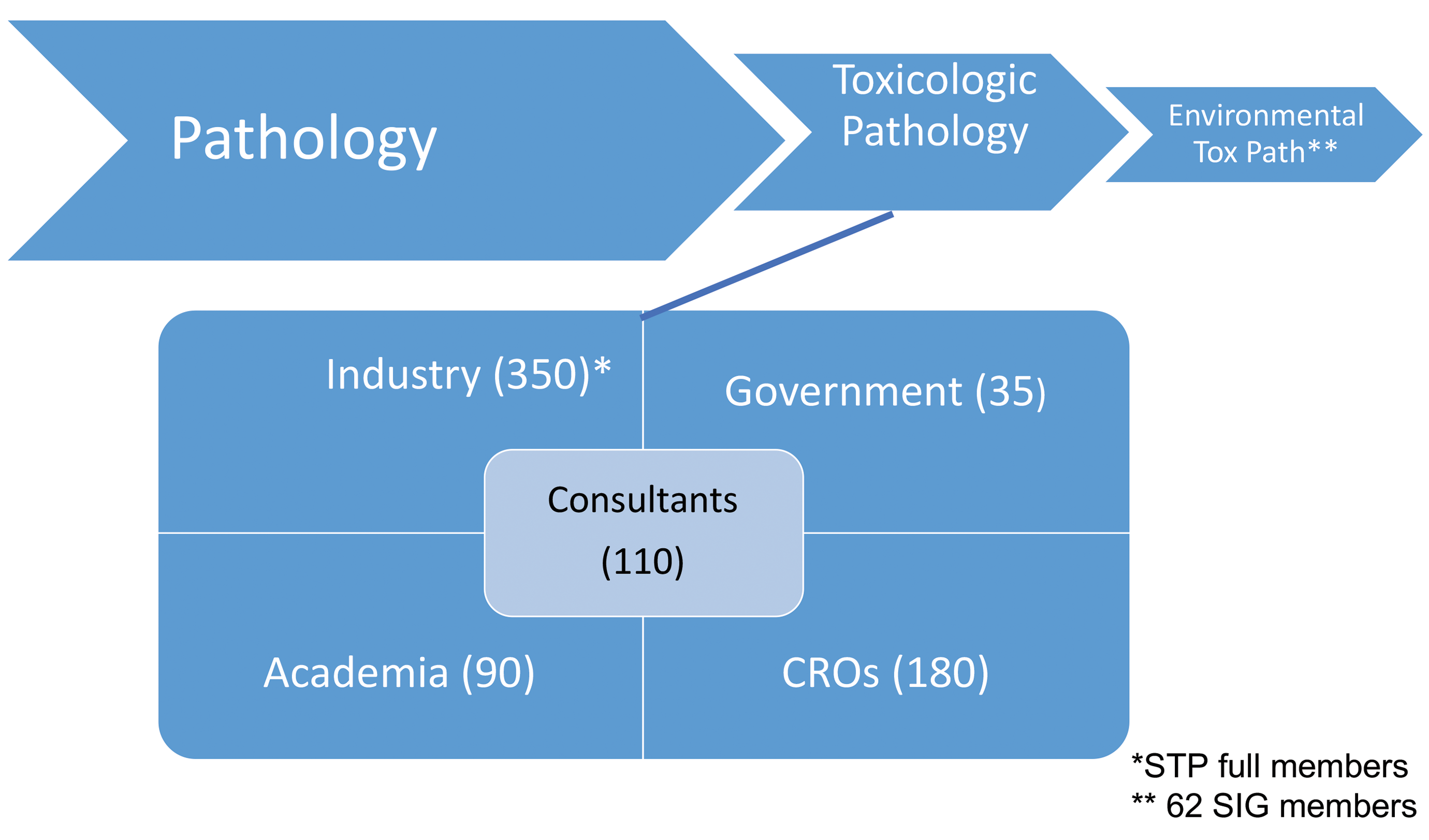
The Society of Toxicologic Pathology (STP) has 1250 members from 28 countries. There are 655 full members, of which 350 work in industry, 180 in contract research organizations (CROs), 90 in academia, 35 in government, and 110 are consultants (toxpath.org, Accessed June 2019). The Environmental Toxicologic Pathology Special Interest Group has 62 members.
Academic institutions provide the foundation required for the practice of toxicologic pathology, be it medicine, veterinary medicine, or experimental biology. Veterinary medicine provides basic training for most toxicologic pathologists worldwide. 2 In the United States and many other countries, this is followed by a residency to acquire advanced training in veterinary pathology. On-the-job training and relevant courses/workshops provide additional skills and knowledge, and in some countries these are the only methods for advanced pathology training. Experimental or investigative pathology experience is primarily acquired during a master’s and/or PhD degree and/or postdoctoral training. Veterinary student interest in pathology is often due to inspiration provided by their pathology teachers during the veterinary medicine program. However, their primary exposure is to diagnostic pathology, with toxicologic pathology exposure generally acquired outside the regular program or occasionally during their graduate training. Pathologists with interests in ETP can find careers within academia, government, industry, CROs, or as consultants (see Figure 1).
As a veterinary pathologist at the University of Illinois, Wanda Haschek-Hock taught professional, graduate, and postgraduate courses in pathology and a toxicologic pathology which culminated in editorship of toxicologic pathology handbook, 3 provided diagnostic pathology service, and led a research program. She briefly described her research career in ETP. After obtaining a BVSc from the University of Sydney, Australia, and a short time in veterinary practice, she obtained a residency/PhD position at Cornell University where the “dye was cast.” For her PhD research, she investigated the toxicity of vitamin D3 using the pig as a model and additionally provided pathology support of studies ranging from roadside lead in voles to plants grown on sewage sludge (leading to polychlorinated biphenyl [PCB] toxicity in sheep) and fly ash. After completing her pathology residency, PhD degree, and board certification by the American College of Veterinary Pathologists (ACVP), she took a position at Oak Ridge National Laboratory, Oak Ridge, Tennessee, where her research focused on respiratory effects of 3-methylfuran and silica, and pulmonary fibrosis. During this time, she obtained board certification by the American Board of Toxicology. After taking a position at the University of Illinois, her research focused on the mechanism of action of mycotoxins (particularly T-2 toxin and fumonisins) and algal toxins (especially microcystin-LR) using a variety of animal models including pigs and rodents.
The following presentations represent career paths in ETP in academia, government, industry, and CROs. The presenters are members of the STP Environmental Toxicologic Pathology Special Interest Group and were selected in order to provide a global perspective.
Environmental Toxicologic Pathology in Academia: A Stepwise Journey—Maria Dagli, University of Sao Paulo, Brazil
My journey in academia started with the basics. Pathology can be defined as the study of the causes and effects of disease. Guido Majno, an Italian pathologist and emeritus professor of the University of Massachussets, stated that “in the Tree of Medicine, the trunk is General Pathology, which draws from all the basic sciences, and divides into the many branches of Special Pathology; each one of these supports a specialized field of Medicine” (Figure 2). 4
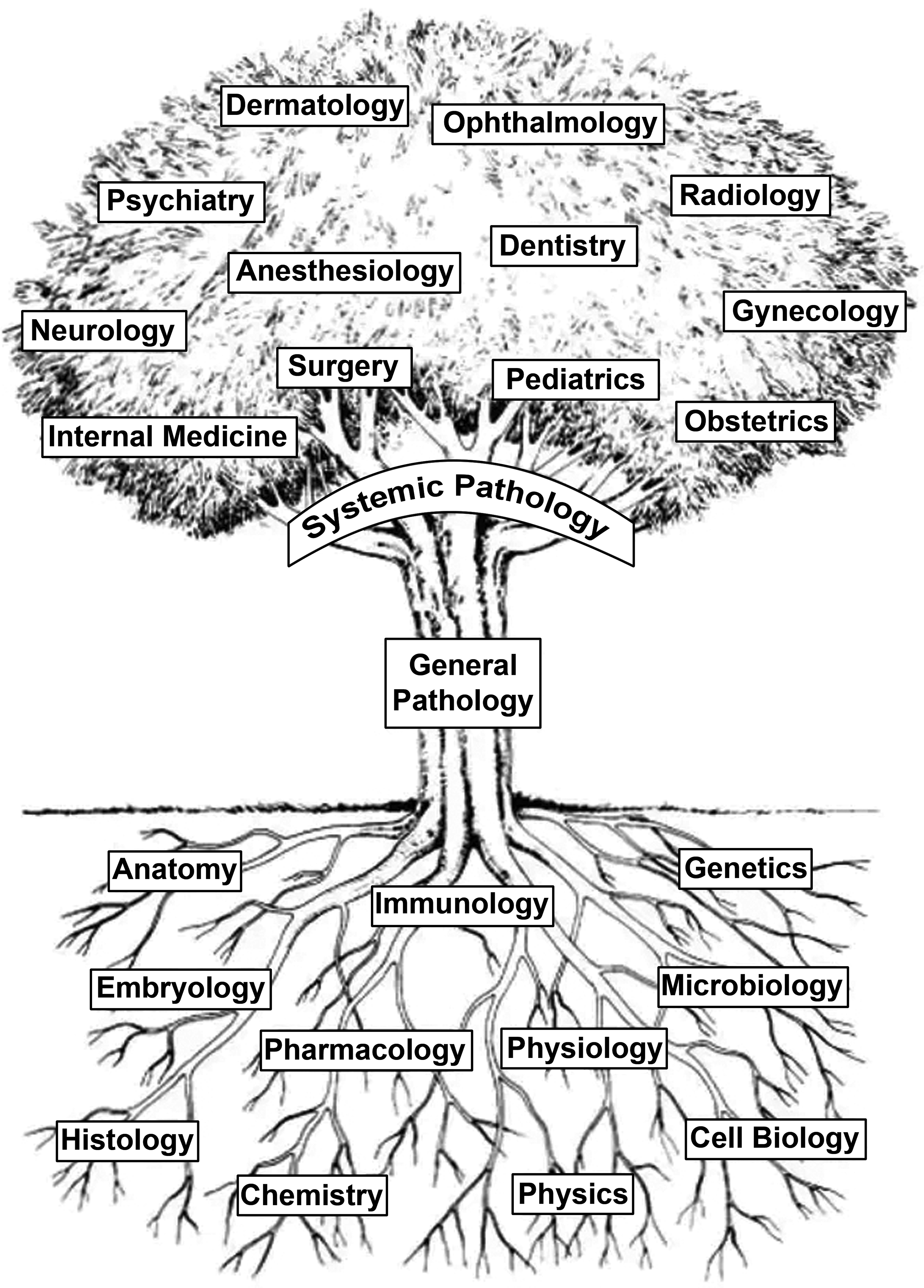
In the Tree of Medicine, the trunk is General Pathology, which draws from all the basic sciences and divides into the many branches of Special or Systemic Pathology; each one of these supports a specialized field of medicine. Reprinted with permission from Oxford University Press via PLSclear. 4
Pathology is considered the most applied among the basic disciplines and the most basic among applied disciplines of medical courses. And, of course, it serves as the basis for the discipline of toxicologic pathology.
The curricula of medicine and veterinary medicine traditionally include general and systemic pathology courses, often taught after the basic sciences courses or integrated into systems-based curricula in some universities. However and whenever it is taught, it is the teachers who inspire and motivate students to pursue a career in pathology.
That has been my personal case. As a veterinary medicine student at the School of Veterinary Medicine and Animal Science (SVMAS) of the University of Sao Paulo, I became interested in pathology during the early years of the course. Then, upon graduation, I started a 2-year residency program in anatomic pathology at the same school; the residency program had just started in the SVMAS and I had the honor to be the first resident in the program. During the residency, I performed necropsies of large and small animals and histopathological examination of necropsy and biopsy cases. This very intense diagnostic pathology training served as the foundation of my whole career.
After the residency program, I continued my career in pathology, starting with the master’s degree (3 years) and followed by the PhD (4 years) in Experimental and Comparative Pathology at the SVMAS. During the master’s and PhD, I worked with rodents as experimental models, transplantable tumors (Ehrlich tumor), and carcinogenesis models (the resistant hepatocyte model of carcinogenesis). While initially trained in diagnostic pathology, the master’s and PhD programs in experimental pathology opened new avenues for my career as a pathologist; I learnt how to ask relevant scientific questions and to use the most relevant methods to answer these questions. After having obtained the PhD, I received a scholarship from the Sao Paulo Research Foundation (FAPESP) for postdoctoral training at the International Agency for Research on Cancer (IARC), based in Lyon, France. At IARC, I worked with genetically modified mice 5 and learnt molecular biology techniques, which I still use for my current research and teaching. On completion of this training, I was employed as a professor in the Department of Pathology of the SVMAS to participate in the University’s tripartite pillars of teaching, research, and service/extension.
As the academic activities started, I shared my experiences with students and residents. I enjoyed supervising residents, helping them with gross and histopathological diagnoses. I introduced immunohistochemistry to research and routine diagnostics and also gained experience in ultrastructural microscopy using the transmission electron microscope. As a pathologist, I also had the opportunity to collaborate on many experimental and descriptive studies investigating the effects of toxic plants in animals. As I began my independent research career, I looked to combine my expertise in cancer research and environmental issues, selecting air pollution among other topics. Since Sao Paulo is one of the most populous cities in the world, the number of cars is very high, leading to high levels of air pollution from car emissions. My Laboratory of Experimental and Comparative Oncology developed studies on the role of air pollution in cancer, using dogs in Sao Paulo as sentinels of environmental contamination. 6 –9 In academia, we are free to choose our research area so long as we can get the projects funded including scholarships for master’s and PhD students. I was successful and my students were very motivated, quickly getting involved in ETP research.
Therefore, I evolved from veterinary (diagnostic) pathologist to experimental and toxicologic pathologist, and finally to environmental toxicologic pathologist. As stated by Turner et al, 10 by working in academia, I could fill many roles as diagnostician, educator, and researcher. It is very rewarding to help trainees understand pathology responses to toxic agents. In addition, the academic environment allows contact with young undergraduate students and young scientists, who are always highly motivated and challenging, constantly demanding our creativity, attention, and assistance.
Academia needs pathology professors who motivate students to pursue careers in this area. The stepwise approach of residency training followed by master’s and PhD research education is important in generating highly trained professionals who can dedicate their careers to pathology, toxicologic pathology, and finally, ETP, whether employed in academia, industry, government, or CROs.
Perspective on a Career in ETP in the Government—Arun Pandiri, NTP, NIEHS, United States
In this presentation, I’ll focus on the career of a toxicologic pathologist working at the NTP. The experience of a toxicologic pathologist at the NTP would be fairly representative of working at other governmental organizations. The NTP is an interagency agreement comprised of the NIEHS, the US Food and Drug Administration’s National Center for Toxicologic Research, and the Center for Disease Control’s National Institute of Occupational Safety and Health. There are about 50 toxicologic pathologists working on ETP in support of the NTP’s mission. About half of these pathologists are working in CROs. The NTP is the largest government program in toxicology in the world. The mission of the NTP is to evaluate agents of public health concern by developing and applying tools of modern toxicology and molecular biology. The primary focus of the NTP is on prevention of disease and public health, and it is achieved by identification and communication of potential health hazards associated with environmental exposures. National Toxicology Program’s objectives may be categorized into 4 broad categories: (1) NTP coordinates all the federal toxicology testing programs and provides hazard data associated with various environmental exposures; (2) NTP strengthens the science of toxicology through research and development to identify and fill the data gaps to better understand mechanisms of toxicity and carcinogenicity; (3) in support of the 3Rs (Replace, Reduce, and Refine) principle, the NTP develops and validates new mechanism-based high-throughput testing methods that are not only cost-effective and quick but also provide human relevant data; and (4) NTP provides information about potential toxic or carcinogenic substances to regulatory agencies so that they can determine safe exposure levels and protect public health in a scientifically justifiable manner. To date, the NTP had provided toxicity data on about 2500 substances and carcinogenicity data on up to 600 substances. These substances include a wide range of industrial, occupational, and environmental exposures, as well as pharmaceuticals, botanicals, and mixtures. In addition to routine general toxicity and carcinogenicity data, the NTP also comprehensively examines the adverse effects in other organ systems such as developmental neurotoxicity, reproductive toxicity, immunotoxicity, and genotoxicity. These data from the NTP are highly regarded by regulatory and scientific agencies across the world.
Pathologists play a significant role in fulfilling NTP’s mission and objectives. They are the subject matter experts on pathology and biomedical sciences. Among other things, the rodent cancer bioassay is one of the signature programs of the NTP. The data from this program are highly regarded for their gold standard pathology evaluation and stringent peer review. The regulatory agencies and scientific societies frequently rely on NTP’s data to understand the impact of environmental exposures on public health. In collaboration with toxicologists, chemists, and statisticians, the pathologists assist in designing complex bioassays and also examine the weight of evidence to determine the levels of carcinogenic activity, such as clear or some evidence, equivocal or no evidence. The pathologists oversee the pathology data for diagnostic consistency and, if needed, conduct pathology working groups to resolve diagnostic challenges. The pathologists are frequently called upon to advise in scientific committees at the IARC and Report on Carcinogens. The pathologists at the NTP have authored seminal textbooks on rodent pathology and also helped in developing the International Harmonization of Nomenclature and Diagnostic Criteria for toxicologic pathology.
11
In addition to the above activities, mentoring is also a significant activity for the NTP pathologists/scientists. The NTP offers dedicated training programs in toxicologic pathology (
My education and training to become a pathologist in ETP is a bit circuitous. I completed my veterinary degree in India, where the primary emphasis of the curriculum was on food animal medicine, and animal husbandry and management. I was drawn to the discipline of pathology mainly because it satisfied my curiosity and provided an insight into the mechanisms of disease by integrating several basic subjects such as anatomy, physiology, biochemistry, virology, bacteriology, parasitology, toxicology, and pharmacology with clinical subjects such as medicine and surgery (see Figure 2). During my internship, I quickly realized that I was not interested in clinical practice and wanted to pursue a graduate degree. I applied for several graduate programs in the United States and was fortunate to get accepted into a master’s program at the University of Arkansas, Fayetteville, under the guidance of Drs Kirk Skeeles and Dustan Clark. My master’s thesis was on the transmission and pathology of subgroup J avian leukosis virus (ALV J). Having a significant pathology component in my research encouraged me to pursue more pathology training. After completing my master’s degree, I was able to continue my research on ALV J for my doctoral degree at the US Department of Agriculture (USDA) Avian Disease and Oncology Laboratory at East Lansing and College of Veterinary Medicine at Michigan State University (MSU) with Drs Aly Fadly and Willie Reed, respectively. I’m grateful to Dr Reed for giving me the opportunity to pursue further training in veterinary pathology at MSU. Due to spousal relocation, I completed my pathology training at NCSU. After ACVP board certification, I accepted a postdoctoral Intramural Research Training Award (IRTA) at the NTP under the guidance of Drs Mark Hoenerhoff and Robert Sills. Within a year, I was hired by Experimental Pathology Laboratories, Inc. (EPL) and placed at the NTP to support the molecular pathology research program. I was fortunate to have learned pathology from the best mentors at MSU and NCSU. Working in the government in the area of ETP is gratifying, especially since you are contributing to NTP’s mission of protecting public health. As an NTP pathologist, I am an active member of multidisciplinary teams that are studying complex problems in environmental toxicology by applying principles of pathology, molecular biology, and novel technologies. My knowledge in toxicologic pathology was primarily gained during my IRTA fellowship and as a staff pathologist by learning from senior colleagues both at the NTP and at EPL. The residency training program at NCSU included the usual case load of pets and food animals but also other species such as fish, reptiles, and laboratory animals. This provided a broad comparative pathology training that I found useful in my environmental toxicology pathology career. I believe my training during my master’s and doctoral degree in a retroviral-induced cancer model in a nontraditional species (chickens) allowed me to gain a comparative perspective for studying chemical-induced carcinogenesis in rodents and subsequently applying the animal data to understand human disease.
Looking back at my training as well as in my current job as the leader of the Molecular Pathology group at the NTP, I believe it is important to remain curious and keep learning in order to expand the field of ETP beyond the expected boundaries. Taking on responsibilities that are slightly beyond our core expertise will provide new opportunities to learn more about other complementary disciplines and eventually increase the role and visibility of toxicologic pathologists in our respective sectors of employment. It is also important to engage the regulatory scientists to receive feedback on our data and also to understand the impact of our work. It is important to embrace new technologies such as digital pathology, artificial intelligence, big data, molecular biology tools, and next-generation sequencing technologies that will enable pathologists to address more complex questions and efficiently contribute to public health.
Perspective on a Career in ETP in a CRO—Jeffrey C. Wolf, Experimental Pathology Laboratories, Inc, United States
Following the completion of my undergraduate and veterinary education at Michigan State University, I worked at a large mixed animal practice in Columbia, Maryland. My original plan was to practice for 3 to 5 years and then enter a specialty residency, but life intervened when I met my future wife who eventually became the hospital manager, and I ended up staying in Columbia for 10 years. Although I enjoyed practice, the routine eventually became repetitive and I longed for an arguably more scientific pursuit. At that time, it seemed as if the smartest folks I knew were the pathologists that I consulted to discuss biopsy or clinical pathology results, so I set my sights in that direction. I was additionally encouraged by (and remain indebted to) local diagnostic pathologists Charlie McLeod and Anne Kincaid who worked for Maryland Medical Laboratories (now Antech Diagnostics, Inc) and who generously allowed me to repeatedly visit them to review slides and to the faculty at Johns Hopkins University who gave me the opportunity to participate in their weekly slide conferences. I wasn’t exactly sure where I expected a career in pathology to take me, but based on long-standing interests in fishing and fish tanks, I thought that if I was lucky I might land a job at a public aquarium. Toward that goal I completed anatomic pathology residencies at the University of Florida (a 2-year program) and a third year at Virginia Tech, where my mentor, Steve Smith, had established an aquatic medicine diagnostic laboratory. After earning ACVP certification in 1997, I labored toward a PhD degree in which I investigated the pathogenesis of mycobacteriosis in striped bass. By mid-1999, our family finances were not exactly robust, my wife and I had 2 young children, and the molecular component of my research had hit a wall (or at least a very opaque net). So when an opportunity to join EPL was presented to me, I felt I had to accept, despite not having completed my doctorate training. I spoke with Jerry Hardisty who told me that EPL already had a fish pathologist (the esteemed Marilyn Wolfe), but there might be similar work for me if I was willing to learn rodent toxicologic pathology. Although I had never previously entertained the idea of becoming a toxicologic pathologist, I thought that rodent toxicologic pathology might be a good skill set to acquire. I joined EPL in November 1999 and worked initially for 2 years in our Research Triangle Park facility and then transferred to my current location at our laboratory in Sterling, Virginia. For those who may not be familiar with EPL, we are a pathologist-run private independent contract histopathology laboratory that focuses almost entirely on toxicological studies. We do not have live animal facilities and typically do not initiate research, so our commercial model is based on agreements established with scientific government agencies, the pharmaceutical and agricultural chemical industries, other CROs, biotech start-up companies, and academic institutions. As might be expected, our core business involves studies that use conventional laboratory animal species, but I have been fortunate in that I have been able to work primarily on aquatic animal and avian projects, many of which have ecotoxicological implications. Most of the aquatic animal investigations in which I’ve participated involve substances with potential endocrine activity, although I’ve also assessed the effects of carcinogens, heavy metals, ecological calamities (eg, oil spills), fish pharmaceuticals, and even genetic modifications. During the period in which we overlapped, I learned a great deal from my colleague Marilyn Wolfe who has since retired. I also credit Marion Ehrich at Virginia Tech for giving me a solid foundation in veterinary toxicology.
As the current Chief Scientific Officer and staff pathologist at EPL, my responsibilities and activities are quite diverse. In addition to reading studies and management duties, I supervise and often design the majority of our image analysis and stereology projects. I’ve participated in on-site fish necropsies in locations as varied as Billings, Montana; Sapulpa, Oklahoma; Prince Edward Island, Canada; Newark, New Jersey; and Machrihanish, Scotland (Figure 3). At EPL, our pathologists are essentially our marketing agents, and consequently, there is ample opportunity for teaching, domestic and foreign travel, scientific publication, data presentation, and interacting with clients, professional societies, and regulatory agencies. For a number of years, I’ve helped to teach hands-on workshops in fish toxicologic pathology in the United States (Aquavet II, Bristol, Rhode Island) and in Europe (a short course that rotates between the Universities of Bern and Heidelberg). I also give lectures at the C.L. Davis Pathology of Laboratory Animals course and host Joint Pathology Center (new AFIP) Wednesday Slide Conferences. I’ve had opportunities to lecture at colleges in the United States and abroad, and I’m an adjunct faculty member at the University of Florida where I give presentations remotely by webinar.
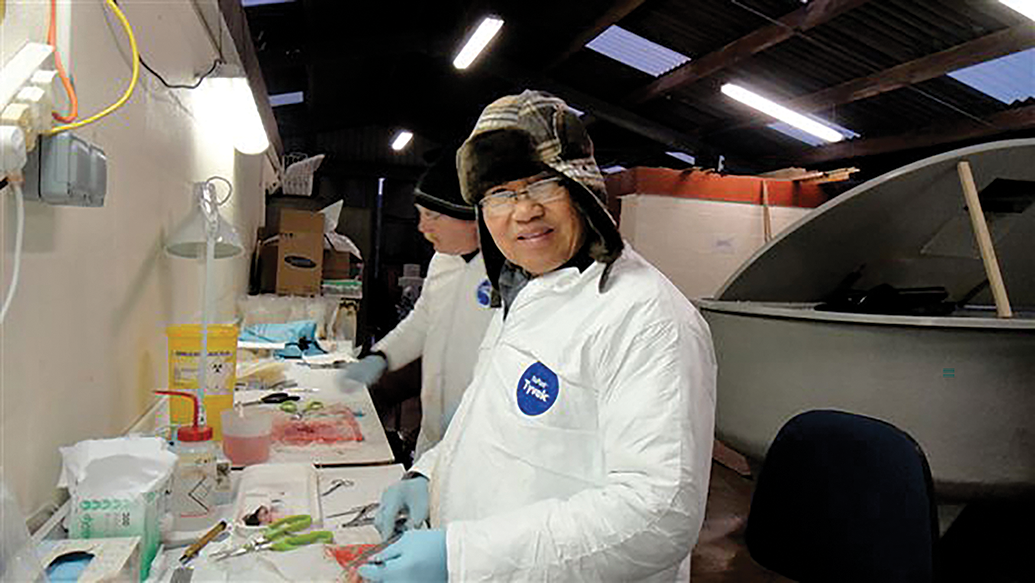
Atlantic salmon necropsies, Machrihanish, Argyll, Scotland, January 2013, in a minimally heated barn. Glamour job. Foreground: Rudy Nofuentes; Background: Jeff Wolf.
Endocrine disruption research has been fascinating and rewarding due in part to the many intricacies and complexities associated with this field. Not uncommonly, individual test chemicals do not perform toxicologically as would be anticipated based on their chemical class or structure. Additionally, substances may have agonist or antagonistic properties at different concentrations, and their effect in mixtures is not always predictable. Although endocrine physiology is remarkably well conserved, study outcomes may be influenced by interspecies differences in sensitivity or variations in reproductive system anatomy and physiology, and knowledge of species-specific characteristics can be essential to interpretation of effects. Also challenging is the tendency of many published endocrine disruption and fish toxicology articles to be either questionable or patently unreliable, especially in terms of the histopathology end point. 12 –18 Thousands of potential substances have been designated by governmental regulation for endocrine testing. Given the laudable desire to “reduce, refine, and replace” relatively expensive live animal experiments, there is an ever-increasing movement toward the use of in vitro or zebra fish embryo assays, especially at the screening level. However, many of these assays are not as yet sufficiently validated, or do not demonstrate superior performance characteristics, that would allow them to entirely replace in vivo testing; they are presently used primarily as adjuncts in a weight-of-evidence approach. Meanwhile, recent mandates in Europe to regulate pesticides according to a hazard-based (ie, no-threshold) rather than risk-based approach is stimulating an increased need for aquatic endocrine studies. I believe this field will continue to expand and mature as the database of histopathologic results grows, novel diagnostic tools are developed, and additional mechanistic information is obtained.
Perspective on a Career in ETP in Industry—Sibylle Groeters, BASF SE, Europe
Working as a toxicologic pathologist in an industrial chemical company offers a huge number of possibilities. The company I work for is BASF SE—“we create chemistry”—the largest chemical company in the world, founded 1865 in Mannheim, Germany, by Friedrich Engelhorn. The headquarters of BASF is located in Ludwigshafen, Germany, whereas the BASF Group comprises subsidiaries and joint ventures in more than 80 countries and operates 6 integrated production sites and >340 other production sites in Europe, Asia, Australia, the United States, and Africa. BASF has customers in over 190 countries and supplies products to a wide variety of industries. At the end of 2017, the company employed around 115 490 people, with over 52 000 in Germany. In 2017, BASF posted sales of €64.4 billion and income from operations before special items of about €8.5 billion.
BASF runs its own Department of Experimental Toxicology and Ecology, located at the headquarters site in Ludwigshafen, Germany, and belonging to the business unit “Bioscience Research.” The Department of Experimental Toxicology and Ecology employs about 250 people with >30 highly qualified and well-experienced scientists covering the whole range of toxicologic expertise from analytics and pharmacokinetics; to reproductive toxicity, carcinogenicity, and ecologic toxicity testing; to pathology and development of alternative methods including metabolomics. Almost all investigations of a chemical or a new active ingredient for crop protection, which have to be undertaken for dossier submission and successful registration worldwide, are performed in-house. We work strictly according to Good Laboratory Practice and ISO 17020 in an Association for Assessment and Accreditation of Laboratory Animal Care–accredited institute.
Within these investigations, which are performed according to international guidelines (Organization for Economic Cooperation and Development [OECD]; Office of Prevention, Pesticides and Toxic Substances [OPPTS], US EPA; Japanese Ministry of Agriculture, Forestry and Fisheries [JMAFF]; etc) , the pathology investigation is one of the most important ones. Pathology is the final end point described within most of the guidelines so that accurate diagnosis and assessment is essential. The pathology group, combining anatomical and clinical pathology, comprises 8 board-certified pathologists and 35 well-experienced technicians who are responsible for managing the main workload in pathology. In anatomical pathology, all routine pathology work starts with necropsy followed by tissue trimming and embedding and then slide sectioning and staining. Besides the routine histological work, numerous additional investigations are performed such as perfusion fixation, mini-pump surgery, immunohistochemistry, electron microscopy, and digital imaging and evaluation, for example, for brain morphometry. Fish and amphibian histopathology is an important area as most of the ecotoxicological investigations are also performed in-house.
My personal career at BASF started in 2005 when I joined the Pathology group as staff pathologist, becoming lab leader for General Pathology in 2006, group leader for the Pathology Group in 2010, and vice president, as Executive Expert for Pathology, in 2018. Starting my veterinary studies at the Justus-Liebig University in Giessen (Germany), I was not interested in pathology at all, I didn’t even know anything about pathology. But over time, I realized that pathology is exactly the discipline that would satisfy my curiosity and bring together all relevant knowledge since pathology is central to science and disease (see Figure 2). Therefore, I decided to write my doctoral thesis in Veterinary Pathology, accompanied by a residency and a postdoctoral fellowship at the Hannover Veterinary School (Germany). After 6 years of postgraduate education, I took the board exam of the European College of Veterinary Pathology as well as of the German Veterinary Chamber (Fachtierarzt fuer Pathologie Pathology). And then came the question, what should I do now? At this time, BASF posted an open position and I decided to at least have a look to see what industry can offer—although I always said I would never work in industry.
The first weeks in industry were extremely interesting—just the opposite to my assumption that I would be reading thousands and thousands of boring liver slides—and within a short time I learned how important and responsible our job is. The pathologist is the last scientist to determine whether a new compound causes any adverse (morphological) findings or not. In contrast to the pharmaceutical industry, where the intended use of a new compound is to have a desired effect in humans, this is not true for compounds developed for agrichemical use, for example, crop protection. Here, the intention for the compound is to have a toxic mode of action in fungi, plants, insects, and so on, but not in mammals (including humans), amphibians, birds, and the environment. Therefore, any morphological effect identified in animals would be very critical for risk assessment. As a young and inexperienced staff toxicologic pathologist, I had to read a regulatory OECD guideline study with dermal application of a specific new active ingredient. My boss told me “…take this easy study to start with as nothing ever happens in this type of study,” so I didn’t believe my eyes when it came to the skin slides. Having identified a specific finding/lesion, a very interesting and instructive 2 years followed, with extremely intense brain storming, project meetings, close collaboration with external experts and university professors, and numerous additional investigations to elucidate the exact mode of action and the human relevance of this very specific skin finding. After all this, we had to admit that human relevance seemed likely and safe use of this compound could not be guaranteed for the intended route of exposure. I learned a lot during this time and the experience was and is impressive.
Pathologists working in the chemical industry have a high degree of responsibility: we have to look not only for undesired (side-) effects within our studies and possible outcomes for risk assessment for humans but also for the whole environment including ground water and wildlife.
After 15 years in industry, I do not think that this is a boring job, but a job with a high degree of responsibility, wonderful team work, intense research, interesting development of new techniques, everyday interaction with other disciplines, and great challenges!
Panel Discussion
A lively panel discussion followed the presentations. This included student concerns regarding student debt following a DVM program and value of a PhD degree versus residency only. Student debt and family situation often leads pathology trainees to try and obtain employment as soon as possible after residency and to bypass the PhD degree. It was pointed out that a residency gives entrée to employment in CROs and diagnostic laboratories but industry and academic positions generally require a PhD due to the investigative nature of the positions. However, given the current shortage of veterinary pathologists, those with completed residencies were encouraged to apply for any open positions. Additional questions included how to obtain training in fish pathology and whether one could obtain this training on the job. Dr Wolf indicated that on-the-job training in this area was not feasible and that training in an established fish diagnostic pathology laboratory was required.
Footnotes
Acknowledgments
The Career Development Session was submitted by the STP Environmental Toxicologic Pathology Special Interest Group.
Declaration of Conflicting Interests
The author(s) declared no potential conflicts of interest with respect to the research, authorship, and/or publication of this article.
Funding
The author(s) received no financial support for the research, authorship, and/or publication of this article.
