




Abstract
The ReninAAV db/db uNx model of diabetic kidney disease (DKD) exhibits hallmarks of advanced human disease, including progressive elevations in albuminuria and serum creatinine, loss of glomerular filtration rate, and pathological changes. Microarray analysis of renal transcriptome changes were more similar to human DKD when compared to db/db eNOS−/− model. The model responds to treatment with arterial pressure lowering (lisinopril) or glycemic control (rosiglitazone) at early stages of disease. We hypothesized the ReninAAV db/db uNx model with advanced disease would have residual disease after treatment with lisinopril, rosiglitazone, or combination of both. To test this, ReninAAV db/db uNx mice with advanced disease were treated with lisinopril, rosiglitazone, or combination of both for 10 weeks. All treatment groups showed significant lowering of urinary albumin to creatinine ratio compared to baseline; however, only combination group exhibited lowering of serum creatinine. Treatment improved renal pathological scores compared to baseline values with residual disease evident in all treatment groups when compared to db/m controls. Gene expression analysis by TaqMan supported pathological changes with increased fibrotic and inflammatory markers. The results further validate this model of DKD in which residual disease is present when treated with agents to lower arterial pressure and glycemic control.
Introduction
Diabetic kidney disease (DKD) is the major cause of renal failure in the United States, with blockade of the renin angiotensin system remaining the only available therapy for this devastating disease. The prevalence of DKD and burden on health-care systems continues to rise, with little improvements for the treatment of DKD. Only recently, clinical data suggest sodium-glucose co-transporter 2 inhibitors play a beneficial role in DKD (Wanner et al. 2016). One factor impeding the development of novel therapeutics is the lack of animal models that mimic the human disease and progress to renal failure. Most available models focus on the early manifestations of DKD, proteinuria, and pathology. In contrast, clinical registration of a drug for the treatment of DKD requires demonstration of reduced creatinine doubling events, death, or dialysis, with proteinuria reduction alone being insufficient.
Recently, a novel murine model of progressive DKD was generated by inducing hypertension via ReninAAV in db/db uNx mice (Harlan et al. 2018). The ReninAAV db/db uNx model has many physiological features of advanced human DKD including robust proteinuria, decline in glomerular filtration rate (GFR), and increased serum creatinine and blood urea nitrogen (Harlan et al. 2018). Histopathological assessment of the model identified extensive mesangial matrix expansion, arteriolar hyalinosis, and tubular interstitial fibrosis and inflammation (Harlan et al. 2018). Transmission election microscopy identified basement membrane thickening and ultrastructural changes observed in human DKD (Harlan et al. 2018).
Testing the effects of standard of care (SOC) in the model would provide critical information regarding whether the model responds to treatments similar to human patients. To address this, the present study tested the effects of glucose-lowering (rosiglitazone), arterial pressure–lowering (lisinopril), or a combination of both glucose and arterial pressure–lowering agents in mice with advanced disease. The effect of these treatments in the ReninAAV db/db uNx model was assessed by examining physiological, renal pathology, and changes in gene expression in the kidney. The overall goal of these studies was to identify whether SOC therapies could attenuate or even abolish disease in the model. Information gleaned from these experiments in the model provides a basis for testing novel therapeutics when given with SOC.
Material and Method
Animals
All animal procedures were performed under approved Institutional Animal Care and Use Protocol. Animals were purchased from the following vendors: Harlan/Envigo (db/db KS with or without vendor performed surgical removal of one kidney at 4–5 weeks of age and db/m controls, Indianapolis, IN, USA). Mice were fed ad libitum a standard 5008 diet (Lab Diets). In some studies, water was supplemented with lisinopril (100 mg/L, Sigma, St. Louis, MO, USA) or fed a custom diet of 0.005% Rosiglitazone (Adipogen) supplemented 5008 diet (Lab Diets). Female db/db mice were used to reduce the risk of hyperglycemic-induced pyelonephritis based on anatomical difference rendering males more prone to pyelonephritis.
In Vivo Assessment of ReninAAV on DKD Progression
ReninAAV and LacZAAV were previously generated (Harlan et al. 2015). Mice received a single retro-orbital injection of ReninAAV (5 × 10⁹ GC/animal, doses based on previous studies) or LacZAAV at approximately 12 weeks of age (Harlan et al. 2015). The following parameters were measured after 9 weeks postinjection for randomization: body weight, albumin to creatinine ratio (ACR), and serum creatinine as previously described (Harlan et al. 2015). Treatment started 10 weeks post-AAV injection and mice followed with ACR measurements every 2 weeks, systolic blood pressure after 4 weeks of treatment using tail cuff plethysmography, and body weight every 4 weeks. Rosiglitazone treatment was administered in the diet at the concentration of 0.005% in 5008 diet ad libitum (Lab Diets). Lisinopril was administered ad libitum in the drinking water at 100 mg/L (Sigma). Treatment duration lasted 10 weeks for all treatment groups. Serum and plasma were collected at necropsy for the measurement of serum creatinine (enzymatic creatinine using a protocol validated by high-performance liquid chromatography) and glucose (Harlan et al. 2015).
Histopathological Evaluation
Formalin-fixed kidneys were transversely trimmed, routinely processed, paraffin-embedded, microtomed at a thickness of 5 µm, and stained with H&S, Masson’s trichome (MTS), or Periodic acid–Schiff (PAS) as previously described (Harlan et al. 2018) Tissue sections were examined by light microscopy and graded by board-certified veterinary pathologists. Jones’s methenamine silver staining was performed in deparaffinized sections using standard protocol. In brief, slides were soaked in 0.5% periodic acid for 15 min, washed, and stained using freshly prepared methenamine silver working solution prewarmed to 62°C for 50–55 min. Slides were rinsed, dipped in 0.2% gold chloride for 10 dips, and then rinsed. Slides were treated with 3% sodium thiosulfate for 10 dips followed by rinse. Slides were counterstained in 0.02% light green for 1.5 min and processed for mounting. Quantification of mesangiolysis and dilation of glomerular tufts with alterations of capillary walls (microaneurysms) were performed by board-certified veterinary pathologist.
TaqMan Analysis of Renal Cortex RNA
Trizol reagent was used to isolate the total RNA from the kidney (Thermo Fisher Scientific, Waltham, MA, USA). Equal concentrations of total RNA were synthesized from each sample using SuperScript III First-Strand Synthesis System kit (Thermo Fisher Scientific, Waltham, MA, USA). Real-time PCR was performed on the TaqMan real-time PCR (7900HT; Applied Biosystems, Foster City, CA, USA) using the TaqMan Master mix and RNA primers for mouse S18 (Mm02601778), glyceraldehyde 3-phosphate dehydrogenase (GAPDH; Mm99999915), collagen 4 COL4a1 (Mm01210125), collagen I COL1a1 (Mm00801666), fibronectin 1 Fn1 (Mm01256744), macrophage marker F4/80 (Mm00802529), vimentin (Mm01333430), monocyte chemoattractant protein 1 MCP-1 (Mm00441242), tumor necrosis factor alpha (TNF-α; Mm00443258), and transforming growth factor beta (TGF-β; Mm00441726).
Statistical Analysis
Statistical analysis of physiological and pathological parameters was calculated by compared treatment groups to baseline peel off groups using standard t test; p < .05 was considered statistically relevant. Combination treatments were further compared to rosiglitazone- and lisinopril-treated groups to see whether significant further reduction in parameters were observed with combination treatment (t test, p < .05 statistically relevant). For gene expression analysis, RNA from healthy controls and db/m and db/db uNx LacZ controls were included. RNA from ReninAAV db/db uNx-baseline mice were first compared to db/m and the LacZ controls for statistical relevance (t test, p < .05 statistically relevant). RNA from treatment groups were then compared to db/m, db/db uNx LacZ, and ReninAAV db/db uNx-baseline mice (t test, p < .05 statistically relevant). For gene expression analysis, Taqman was ran in triplicate for each mouse with N = 3 mice per group.
Results
Effects of Glucose and Arterial Pressure–Lowering Agents in the Model
The effects of glucose-lowering or arterial pressure–lowering agents on the ReninAAV db/db uNx model with advanced disease were tested by treating mice with rosiglitazone, lisinopril, or a combination of rosiglitazone and lisinopril (combination). Mice received a single retro-orbital injection of ReninAAV at 12 weeks of age and followed for 10 weeks before treatments started. A cohort of untreated mice were sacrificed at 10 weeks post-ReninAAV injection for baseline comparison. Interim arterial pressure measurement after four weeks of treatment using tail cuff plethysmography demonstrated lisinopril significantly (p < .01) lowered systolic arterial pressure (SAP) (136 ± 12 mmHg lisinopril only, 125 ± 9 mmHg combination) as compared to rosiglitazone (180 ± 8 mmHg)-treated mice (Figure 1A). Urine ACR significantly (p < .05) decreased when compared to baseline pretreatment values (36,567 ± 2,237 μg/mg) in both the lisinopril (12,547 ± 2,639 μg/mg) and combination (16,308 ± 4,798 μg/mg) groups after 2 weeks of treatment and significantly decreased in the rosiglitazone (21,199 ± 3,218 μg/mg)-treated group after 4 weeks of treatment (Figure 1B). All groups ACR remained significantly reduced for the duration of treatment period.
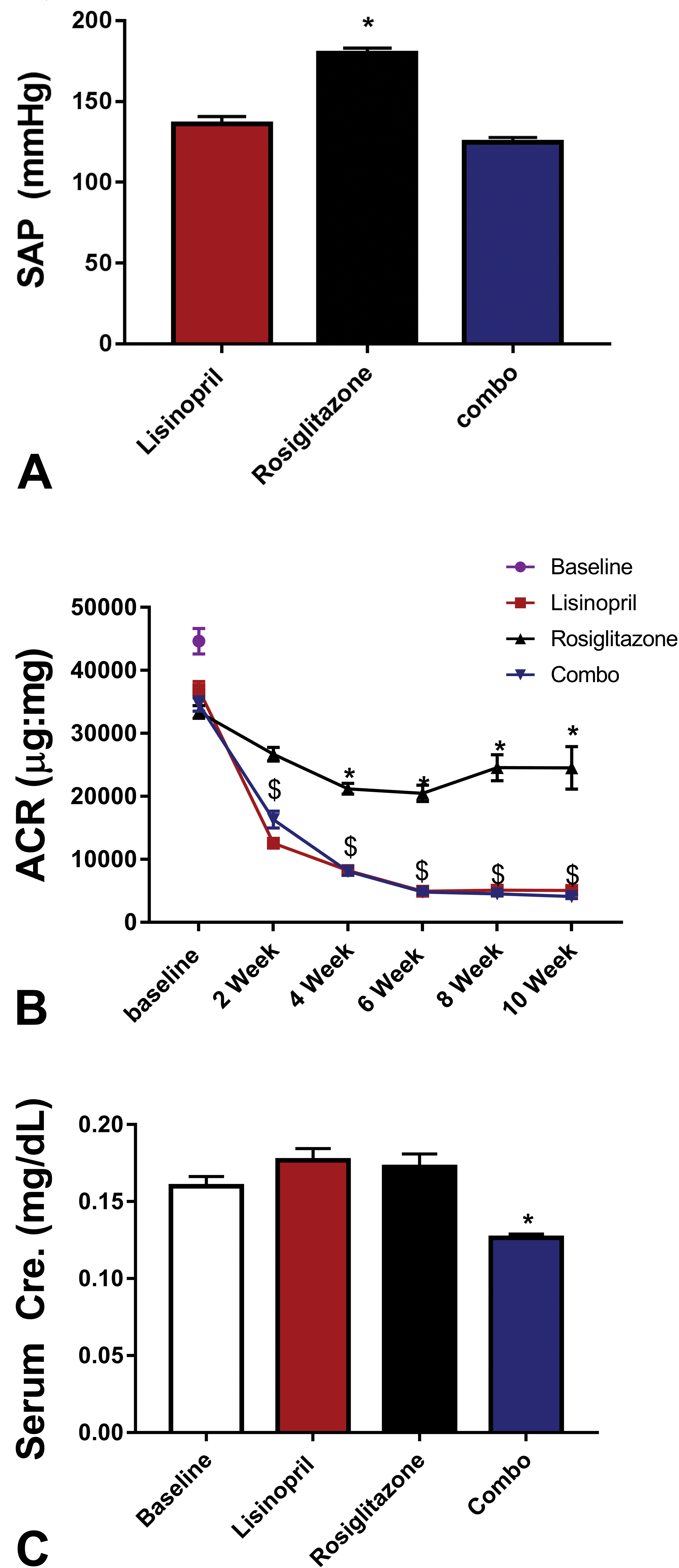
Effects of arterial pressure and glucose-lowering agents in the ReninAAV db/db uNx model. (A) Treatment with lisinopril either alone or in combination with rosiglitazone led to significant reductions in arterial pressure as compared to rosiglitazone-only-treated mice. (B) Treatment with lisinopril and combination treatment significantly lowered albumin to creatinine ratio (ACR) after two weeks of treatment and remained significantly reduced the duration of treatment. Rosiglitazone significantly lowered ACR after four weeks of treatment, which remained significantly reduced the duration of the study. (C) Serum creatinine remained unchanged in lisinopril or rosiglitazone treatment groups as compared to baseline peel off. Combination group had significantly lower serum creatinine compared to baseline peel off. (A) *p < .05 compared to lisinopril and combo groups. (B and C) *p < .05 compared to baseline peel off group, $ p < .05 versus baseline and rosiglitazone.
Serum was collected at baseline 10 weeks post-ReninAAV and after 10 weeks of treatment to assess the effects of treatment on renal function using serum creatinine as an indicator of renal function. After 10 weeks of ReninAAV, the baseline peel off group had an average serum creatinine of 0.16 ± 0.02 mg/dl, which is consistent with published work on the model in which elevations in serum creatinine were evident starting at 8 weeks post-ReninAAV injections (LacZ db/db uNx controls 0.08 ± 0.01 mg/dl). Treatment for 10 weeks with lisinopril or rosiglitazone only halted any further increase in serum creatinine as there was not a significant difference from baseline (0.18 ± 0.02 mg/dl and 0.17 ± 0.02 mg/dl, respectively; Figure 1C). Combination treatment with both rosiglitazone and lisinopril led to significant lowering of serum creatinine (0.13 ± 0.01 mg/dl, p < .05) compared to baseline pretreatment values as well as compared to rosiglitazone- or lisinopril only-treated cohorts.
Pathological Changes with Lisinopril or Rosiglitazone Treatment
Pathological assessment was performed using standard histopathological examination (H&S, MTS, and PAS) and Jones’s methenamine silver staining. Rosiglitazone-treated mice had similar histopathological scores as compared to the vehicle-treated peel off group, consistent with the modest effects on ACR lowering, with only a significant reduction in mesangial matrix expansion in the rosiglitazone-treated mice observed (Figure 2A). Lisinopril- and combination-treated mice had significant improvements in all histopathological parameters measured as compared to the baseline controls (Figure 2A and B). The combination group did not exhibit further improvements in pathological changes compared to the lisinopril-only group, except for a further reduction in mesangial matrix expansion (Figure 2A).
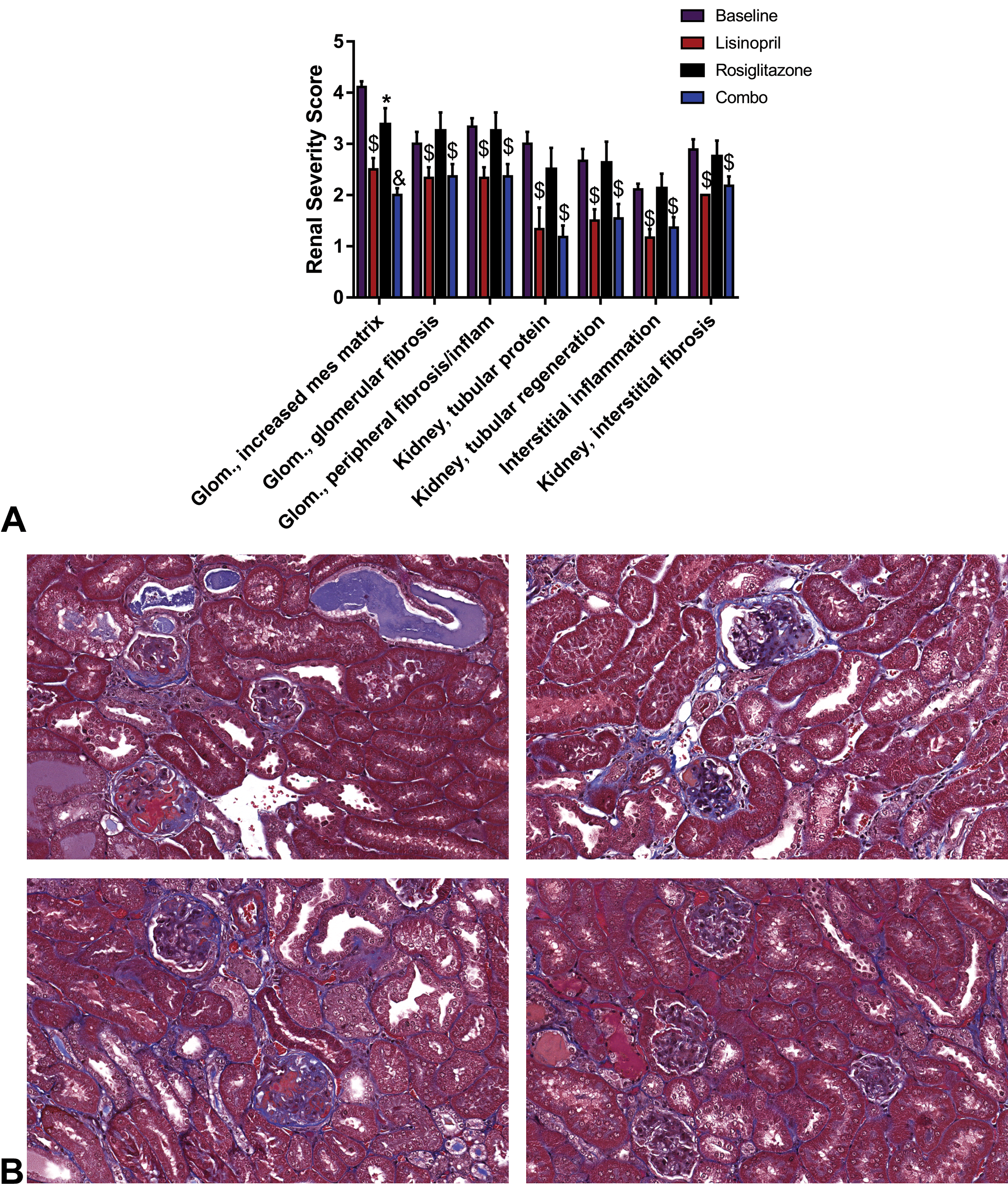
Histopathological changes in ReninAAV db/db uNx mice. (A) Quantification of the pathological changes observed in ReninAAV db/db uNx mice treated with lisinopril, rosiglitazone, or combination. *p < .05 versus baseline; $ p < .05 versus baseline and rosiglitazone; &p < .05 versus baseline, rosiglitazone, and lisinopril. (B) Representative photomicrographs of Mason’s Trichrome-stained renal sections. ReninAAV db/db uNx mice treated with lisinopril or combination show reduction in glomerular, periglomerular, and interstitial fibrosis compared to ReninAAV db/db uNx mice treated with vehicle or rosiglitazone alone (Masson’s trichome).
Jones’s staining was performed to identify whether the model exhibits mesangiolysis and/or dilation of glomerular tufts with alterations of capillary walls (glomerular microaneurysm), which are pathological features of human DKD. For this analysis, db/m and db/db uNx controls were included as pathological assessment using Jones’s staining in the ReninAAV db/db uNx model had not been assessed prior. Mesangiolysis and/or microaneurysm of glomerular capillary loops was not observed in either the db/m lean or db/db uNx mice necropsied at 22 weeks of age (Figure 3A and B). In general, mesangiolysis and/or microaneurysm was not a prominent feature of the ReninAAV db/db uNx model (Figure 3A, B); however, a small percentage of the glomeruli were identified with mesangiolysis and/or microaneurysms (Figure 3A, B). Treatment with lisinopril led to a trend (p = .07) in the reductions in the occurrence of mesangiolysis and/or microaneurysms which became statistically relevant in combination-treated mice (Figure 3B).
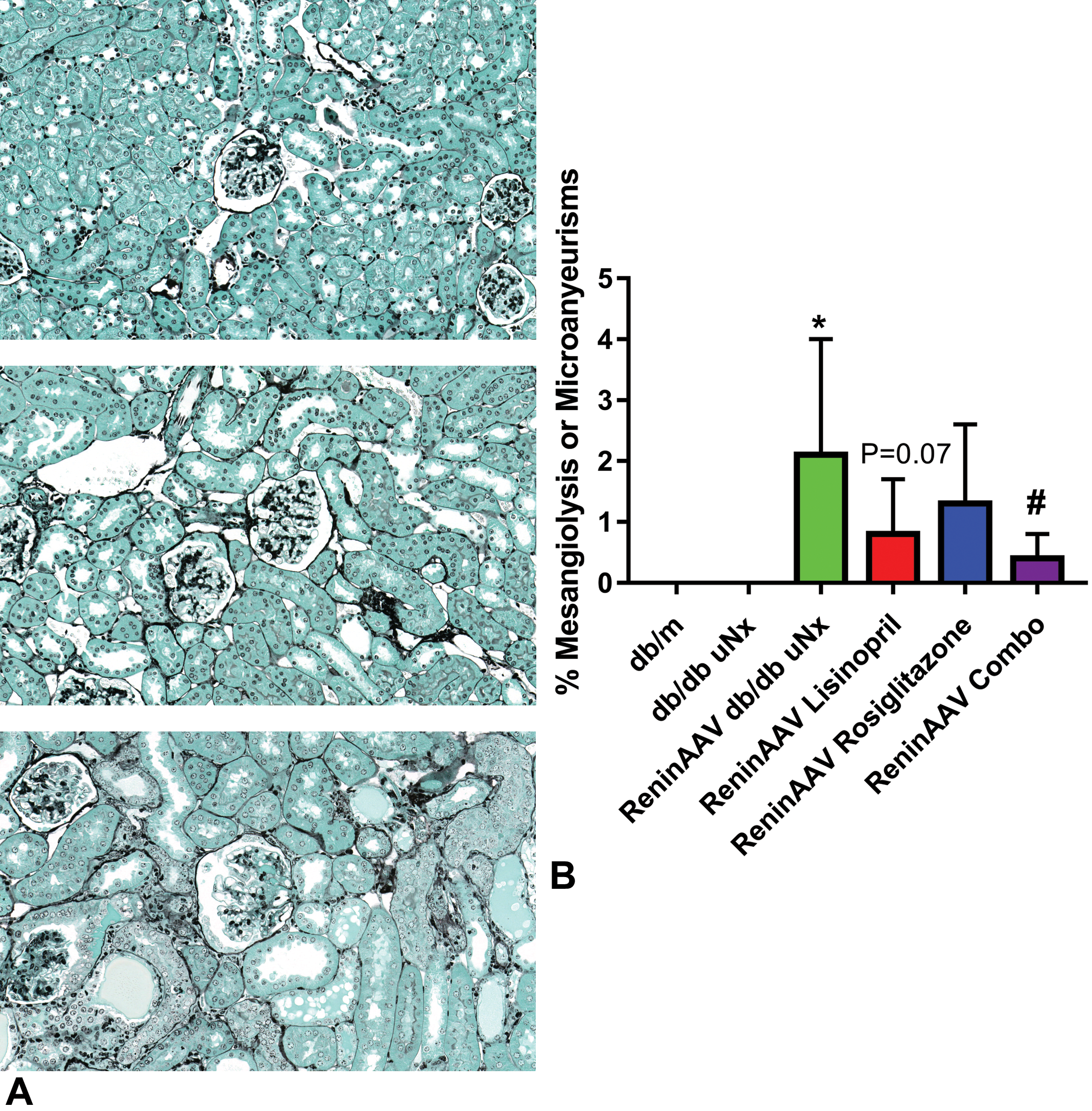
Mesangiolysis and microaneurysms in glomeruli of ReninAAV db/db uNx mice. (A) Jones’s methenamine silver staining of db/m, db/db uNx, and ReninAAV db/db uNx mice treated with standard of care (SOC) therapies (Jones’s stain). (B) Quantification of incidence of mesangiolysis and microaneurysms found in control and ReninAAV db/db uNx mice treated with SOC therapies. *p < .05 versus db/m and db/db uNx controls, # p < 0.5 versus ReninAAV db/db uNx vehicle peel off group.
Effects of Treatments on Fibrotic and Inflammatory Gene Expression
Pathological evaluation of the ReninAAV db/db uNx model indicated increased fibrosis and inflammation, which improved with lisinopril treatment. To identify whether the pathological changes were a result of gene expression changes of inflammatory and fibrotic genes, TaqMan analysis of renal cortex samples was performed using probes for inflammatory (F4/80, TNF-α, and MCP-1) and fibrotic markers (COL1A1, COL4A1, TGF-β, and vimentin). Consistent with our previous gene expression studies on the model (Harlan et al. 2018), elevations in fibrotic and inflammatory genes were detected when compared to db/m controls (Figure 4A). Treatment with lisinopril, rosiglitazone, or combination led to significant reduction in most fibrotic and inflammatory genes tested (Figure 4A, B). Lisinopril treatment did not affect the expression of vimentin, where rosiglitazone and combination treatment led to significant reduction when compared to ReninAAV db/db uNx vehicle-treated mice (Figure 4).
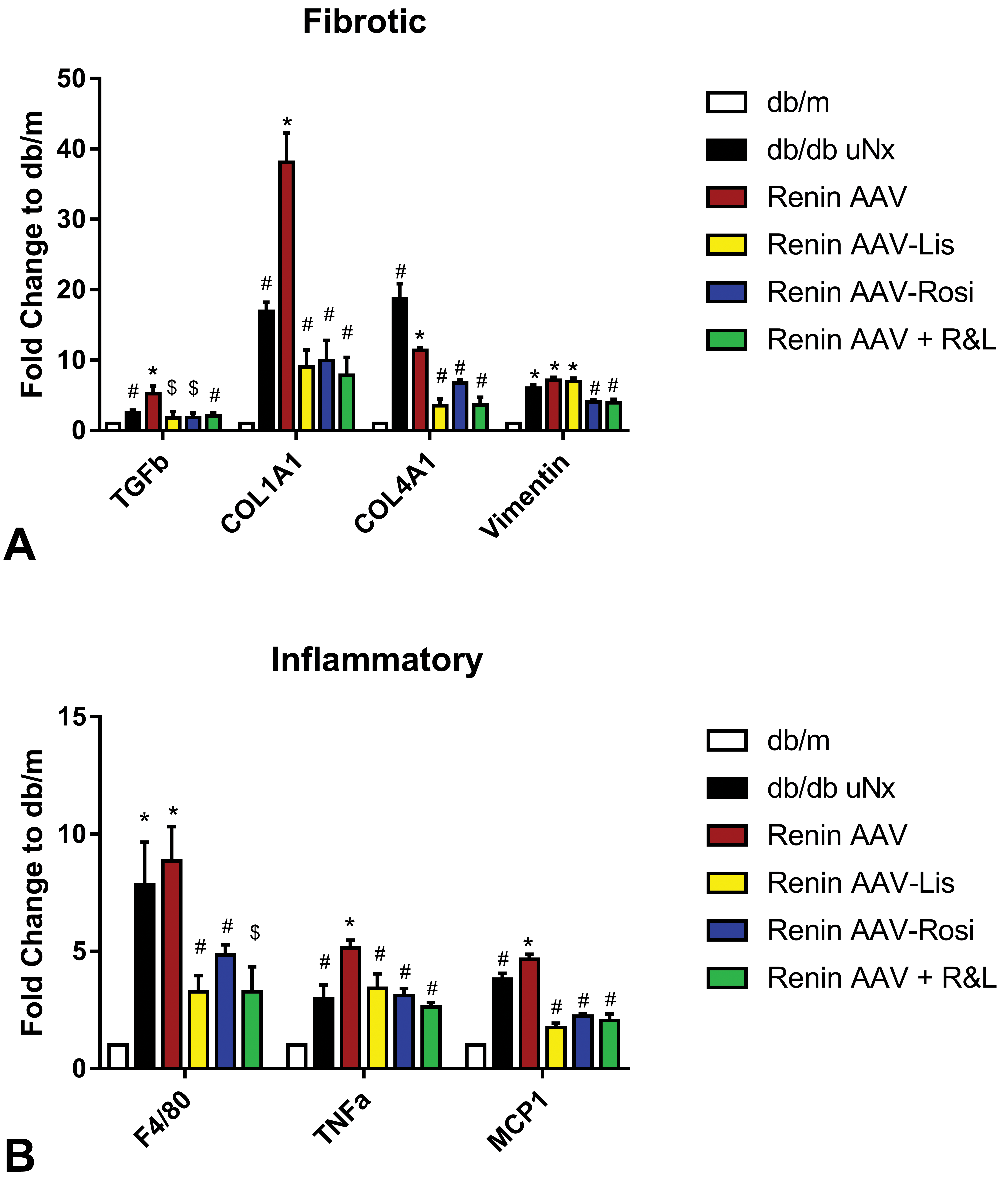
Gene expression analysis of fibrotic and inflammatory markers. TaqMan analysis of fibrotic (A) or inflammatory (B) markers from renal cortex RNA obtained from db/db uNx or ReninAAV db/db uNx mice treated with SOC therapies or vehicle and compared to db/m controls. *p < .05 versus db/m, # p < .05 versus db/m and ReninAAV db/db uNx Veh, $ p < .05 versus ReninAAV db/db uNx Veh.
Discussion
The ReninAAV db/db uNx model has key attributes of human DKD with progressive elevations of ACR, doubling of serum creatinine, decline in GFR, and pathological changes closely mimicking human DKD (Harlan et al. 2018). Similarity to human disease was demonstrated in that the mice respond to glucose-lowering or arterial pressure–lowering agents with residual disease present, resembling human DKD and eNOS −/− db/db mice (Zhang et al. 2012; Harlan et al. 2018). However, combination of both glucose and arterial pressure–lowering agents to identify whether combination treatment would abolish disease had not been tested and was the focus of the present study. In addition, the effects of these agents either singly or in combination in mice with advanced stage disease had not been investigated prior to these studies. The present study started treatment at advanced stage disease (doubling of serum creatinine) to address the question whether these agents could improve disease after more severe pathological changes have occurred. The data demonstrate that at advanced stage disease, rosiglitazone had modest yet significant effect on ACR and pathology, yet was effective in lowering expression of inflammatory and fibrotic genes suggesting it only halted further disease progression. Lisinopril treatment alone or in combination with rosiglitazone had robust ACR-lowering effect and reduction in renal pathological changes; however, residual disease was still present suggesting opportunity for novel therapeutics to add benefit when treated concurrent with glucose and arterial pressure–lowering agents.
Previous pathological characterization of the model focused on histopathological changes and ultrastructural changes. However, a key feature of human DKD and previously characterized models of advanced DKD such as the BTBR-ob/ob model is the presence of glomerular mesangiolysis and microaneurysms (Hudkins et al. 2010; Saito et al. 1988). To identify whether the ReninAAV db/db uNx model exhibited these features of DKD, renal sections from the model and control mice were stained with Jones’s methenamine silver stain. Pathological examination of the staining identified that mesangiolysis and microaneurysms are not a prominent feature of the model and detected in approximately 2% of the glomeruli. These mice were evaluated at an advanced stage in the disease; thus, it is plausible that the extensive mesangial matrix expansion and deposition that is occurring at this stage is overriding the presence of the mesangiolysis and microaneurysms (Saito et al. 1988). Future studies using kidneys from early-stage disease (4 weeks post-ReninAAV) would provide insight into whether this phenotype is present in the model early on in the disease.
In conclusion, this study substantiates the importance of hypertension and diabetes in progressive DKD. The effects of elevated blood glucose and hypertension led to pathological changes in the kidney that can only be partially reversed if the blood pressure and glucose levels are normalized. Inflammation and fibrosis that resides after treatment likely contribute to the residual disease present and after prolong time in human DKD patients may contribute to the progression of end-stage renal disease.
Footnotes
Author Contributions
Authors contributed to conception or design (SH, KH, JO, RH, MB, HJ); data acquisition, analysis, or interpretation (SH, KH, JO, RH, MB, HJ); drafting the manuscript (SH); and critically revising the manuscript (SH, KH, JO, RH, MB, HJ). All authors gave final approval, and agreed to be accountable for all aspects of work in ensuring that questions relating to the accuracy or integrity of any part of the work are appropriately investigated and resolved.
Declaration of Conflicting Interests
The author(s) declared potential, real, or perceived conflicts of interest with respect to the research, authorship, and/or publication of this article: S. Harlan, K. Heinz-Taheny, and J. Heuer are all employees of Eli Lilly and Company. J. Overstreet and R. Harris are employees of Vanderbilt University.
Funding
The author(s) disclosed receipt of the following financial support for the research, authorship, and/or publication of this article: J. Overstreet is a LIFA Postdoc funded by Eli Lilly and Company.