




Abstract
High doses in Tg.rasH2 carcinogenicity studies are usually set at the maximum tolerated dose (MTD), although this dose selection strategy has not been critically evaluated. We analyzed the body weight gains (BWGs), mortality, and tumor response in control and treated groups of 29 Tg.rasH2 studies conducted at BioReliance. Based on our analysis, it is evident that the MTD was exceeded at the high and/or mid-doses in several studies. The incidence of tumors in high doses was lower when compared to the low and mid-doses of both sexes. Thus, we recommend that the high dose in male mice should not exceed one-half of the estimated MTD (EMTD), as it is currently chosen, and the next dose should be one-fourth of the EMTD. Because females were less sensitive to decrements in BWG, the high dose in female mice should not exceed two-third of EMTD and the next dose group should be one-third of EMTD. If needed, a third dose group should be set at one-eighth EMTD in males and one-sixth EMTD in females. In addition, for compounds that do not show toxicity in the range finding studies, a limit dose should be applied for the 26-week carcinogenicity studies.
Keywords
Introduction
The 2-year rodent carcinogenicity assays involving conventional rats and mice have been conducted for over 3 decades. As an alternative to the 2-year rodent carcinogenicity bioassays, 26-week short-term carcinogenicity bioassays were approved using transgenic mouse strains, including Tg.rasH2 (International Conference on Harmonisation [ICH] 1998). The Tg.rasH2 model, which can be used for both genotoxic and non-genotoxic compounds, has gained popularity and its use has increased over the years. Over the last decade, 26-week transgenic Tg.rasH2 mouse studies have replaced more than half of all mouse carcinogenicity studies (Jacobs and Hatfield 2013; Nambiar, Turnquist, and Morton 2012; Paranjpe, Elbekai, et al. 2013). The Tg.rasH2 model predicts neoplastic findings relevant to human cancer risk assessment, produces fewer nonbiologically significant neoplastic outcomes, and is thus often preferable to a 2-year rodent study (Morton et al. 2013).
Since the Tg.rasH2 mouse assay plays an expanding critical role in carcinogenicity testing, it is important to continue to refine the Tg.rasH2 assays to best meet regulatory and industry testing needs. We recently published the largest historical control database for both neoplastic and nonneoplastic lesions in Tg.rasH2 mice (Paranjpe, Elbekai, et al. 2013; Paranjpe, Shah, et al. 2013). Based on extensive experience with this assay in our laboratory, a number of improvements have been made including reducing the number of animals in the positive control group from 25 mice/sex to 10 mice/sex, leading to a substantial reduction in animal use, and thereby contributing to the replace, reduce, and refine (3Rs) of animal research (Shah et al. 2012). We recently also proposed that only select tissues be examined in low- and mid-dose groups of Tg.rasH2 studies rather than a full tissue list, which will accelerate completion of these studies without compromising the quality and integrity (Paranjpe, Denton, and Elbekai 2014). Additionally, we recently established the relationship of body weight parameters with the incidence of common spontaneous tumors and performed trend analysis of important body weight parameters, mortality, and incidence of spontaneous tumors in the transgenic Tg.rasH2 mice (Paranjpe, Denton, et al. 2014a, 2014b).
Despite vast advances in carcinogenicity testing over the past several decades, the general experimental design for carcinogenicity studies has mainly remained the same. As per the current practices in 26-week Tg.rasH2 studies, there is usually a control dose group and 3 test article–treated dose groups (low-, mid-, and high-dose groups). The highest dose group is usually set at the maximum tolerated dose (MTD) that is derived from dose range finding studies. The low-dose group should not show signs of toxicity and should be close to or little more than the human clinical dose, and the middle-dose group should fall proportionately somewhere between the low- and high-dose groups (Neal 1983; Alden et al. 2011). Most also recommend that with the high dose at MTD, the mid-dose group should be one-half of MTD and the low-dose group should be one-fourth of MTD (Haseman 1985; Haseman and Seilkop 1992; Hayes et al. 2011). Doses spaced at a factor of 10, for example, 1, 10, and 100, are not advised as the high dose may be too high and the low dose may be too low (Ciminera et al. 1983; Hayes et al. 2011).
The MTD derived from the results of the earlier dose range finding studies is actually an estimated MTD (EMTD) because of predictivity aspects involved in the process (Sontag, Page, and Saffiotti 1976; Haseman 1985). At a stage when the EMTD is determined and when the doses are selected for the chronic carcinogenicity studies, no one really knows whether the doses selected are appropriate. There are certain expectations or assumptions that are made based on the analysis of data available from dose range finding studies. The assumptions are that the EMTD is not going to cause >10% decrease in the BWGs of the high-dose group, minimal toxic effects are expected, shortening of the animal’s normal longevity will not occur, and the normal well-being of the animal will not be unduly compromised except for the effects of carcinogenicity. However, retrospective analyses of the 2-year rodent carcinogenicity studies have shown that these assumptions have often failed resulting in overestimation of the MTD (Sontag, Page, and Saffiotti 1976; Haseman 1984, 1985; Haseman and Seilkop 1992; International Life Sciences Institute [ILSI] 1984; ICH 2008; Haseman and Lockhart 1994; Alden et al. 2011; Jacobs and Hatfield 2013). As such, the value of selecting the highest dose group at MTD in the 2-year rodent carcinogenicity studies has been questioned (Alden et al. 2011). Some believe that every bioassay would be positive at MTD due to chronic toxicity, if sample size and duration of the assay were increased. In fact, more than 80% of the chemicals tested by National Toxicology Program in the 2-year rodent bioassay are considered possible human carcinogens or nonclassifiable because most chemicals administered at MTD can cause cancer in rodents. Thus, administering chemicals at MTD in the 2-year bioassays is considered nondiscriminating because they do not really differentiate between carcinogens and noncarcinogens (Alden et al. 2011).
Apart from the problems associated with MTD, there have been several other factors that have been identified in the 2-year rodent studies that can complicate the interpretation of these studies. These factors that are interlinked with each other include increasing initial body weights (IBWs), high mortality, and high incidence of spontaneous tumors (Haseman 1984; Roe and Tucker 1978; Conybeare 1980; Haseman and Seilkop 1992; Seilkop 1995; Christian et al. 1998; Abdo and Kari 1996; Allaben et al. 1996; Keenan et al. 1994, 1996, 1999; Keenan 1996; Nold et al. 2001; Imai et al. 1990; Molon-Noblot et al. 2003; Rao, Morris, and Seely 2001). We have recently evaluated the body weight parameters, trend analysis, mortality, and spontaneous tumors in the Tg.rasH2 mice (Paranjpe, Elbekai et al. 2013; Paranjpe, Shah, et al. 2013; Paranjpe, Denton, and Elbekai 2014; Paranjpe, Denton, et al. 2014a; Paranjpe Denton et al. 2014b) and demonstrated that problems associated with increasing IBWs, high mortality, and high incidence of background tumors that exist in the conventional 2-year rodent model do not exist in the Tg.rasH2 mouse model. However, evaluation of the effectiveness of the high doses, set at MTD, in the Tg.rasH2 mouse has not been critically evaluated thus far. In this article, we present the findings of this evaluation based on the retrospective analyses of studies conducted at our facility. Furthermore, we present recommended modifications to the current approach used to set doses for 26-week carcinogenicity studies in Tg.rasH2 mice.
Material and Methods
Animals
CByB6F1-Tg(HRAS)2Jic (± hemizygous c-Ha-ras) mice, obtained from Taconic Farms (Germantown, NY), were used in all studies. The knock-in Tg element (human prototype c Ha-ras gene with its own promoter/enhancer) is injected into C57BL/6 × BALB/c F2 zygotes, which are crossed back to C57BL/6J forming C57BL/6JJic-Tg(HRAS)2Jic. The CByB6F1-Tg(HRAS)2Jic (± hemizygous c-Ha-ras) is the offspring from a cross of the C57BL/6JJic-Tg(HRAS)2Jic hemizygous male mice with the BALB/cByJJic female mice. Each mouse was genotyped by Taconic to verify the presence of the transgene before being placed on study. Animals were randomized by body weight into groups using a computer program. On the first day of treatment, animals were 6 to 10 weeks of age and weighed at least 20 or 15 g (males and females, respectively). Individual body weights for each dose group of each sex were within±20% of the mean at the start of the study.
Housing and Environmental Conditions
Housing and environmental conditions were similar in all studies. Animals were single housed in polycarbonate cages with hardwood bedding chips in environmentally controlled rooms. Animals were verified to be free of illness prior to being placed on a study. All animals had ad libitum access to water and powdered feed (Harlan TEKLAD Global Diet, Madison, WI).
Regulatory Requirements
The numbers of animals, procedures, and experimental design for each study were reviewed and approved by the BioReliance Institutional Animal Care and Use Committee (IACUC). All procedures followed the specifications recommended in The Guide for the Care and Use of Laboratory Animals and were conducted in an Association for Assessment and Accreditation of Laboratory Animal Care (AAALAC)-accredited facility. All procedures involving but not limited to quarantine and acclimation, randomization, application of unique identification system, housing, provision of food and water, administration of test article, recording of clinical signs, necropsy, and tissue processing were followed in strict accordance with the Good Laboratory Practice Regulations, Standard Operating Procedures and protocol for each study.
Retrospective Analysis
The database was constructed based on Tg.rasH2 mice assigned to 29 studies conducted at our facility, following the same study design. Animals in 24 of these studies were dosed by gavage, 3 were dosed with drug in feed, and the remaining 2 were dosed intravenously. The first of these studies was completed in 2004 and the last study was completed in 2013. We analyzed the data from 6,045 mice that included 810 male and 810 female mice assigned to the control groups, 810 male and 785 female mice assigned to the low-dose groups, 680 male and 680 female mice assigned to the mid-dose groups, and 735 male and 735 female mice assigned to the high-dose groups. Variations in the number of animals are due to differences in the design of each of the study protocols.
IBWs were collected on day 1, and mice were weighed weekly thereafter for the next 13 consecutive weeks. After 13 weeks, the body weights were collected biweekly until study termination at 26 weeks (terminal body weights, TBWs). The BWGs were calculated by subtracting the IBW from the TBW. The food consumption (FC) was recorded weekly for individual animals from day 1 until the termination. Upon the death or moribund sacrifice of an animal and at the termination of the study, all animals in each study were humanely sacrificed by CO2 overdose when applicable and subjected to complete necropsy. Protocol required tissues were saved in 10% neutral buffered formalin, processed routinely, stained with hematoxylin and eosin (H&E), and evaluated microscopically. Each study was peer reviewed.
For all studies in each of the 4 groups (control, low-, mid-, and high-dose groups), the mean ± standard deviation (SD) for each of the parameters, IBW, average daily FC for the entire study, mean % BWG, % mortality, and % tumor incidence were calculated. Further, the cause of death (COD) for each dead or moribund sacrificed animal was categorized as follows: (a) tumor: any tumor that was considered to be responsible for the COD; (b) nontumor: any nontumor lesion, test article induced or not, that was considered to be the COD; (c) undetermined: any animal in which the COD could not be determined based on the gross or microscopic examination of protocol required tissues; and (d) accidental: any animal in which an accident or gavage error was considered to be the COD. Further, based on greater than 10% drop in BWG as a single criterion for exceeding MTD, we calculated how many studies had actually exceeded MTD in the high- and mid-dose groups of males and in the high-dose group of females. We further calculated and compared the percentage of tumors in the corresponding vehicle and treated dose groups of both sexes in those studies in which the MTD was exceeded or was not exceeded.
Statistical analysis was performed by using nonparametric Dunn’s test (Hollander and Wolfe 1973) for the IBW, FC, % BWG, and % tumor incidence. Fisher’s exact test was applied for analysis of % mortality. Linear treatment–related trend analysis was performed for % BWG, % mortality, and % tumor incidence. The COD was analyzed by χ2 test for independence. The statistical analysis for the Fisher’s exact, trend test, and χ2 test were performed by SAS® Proprietary Software, Version 9.2 (SAS® 2008). For each sex, the comparison for each parameter was made between the control and the test article–treated groups, such as low, mid, and high.
Results
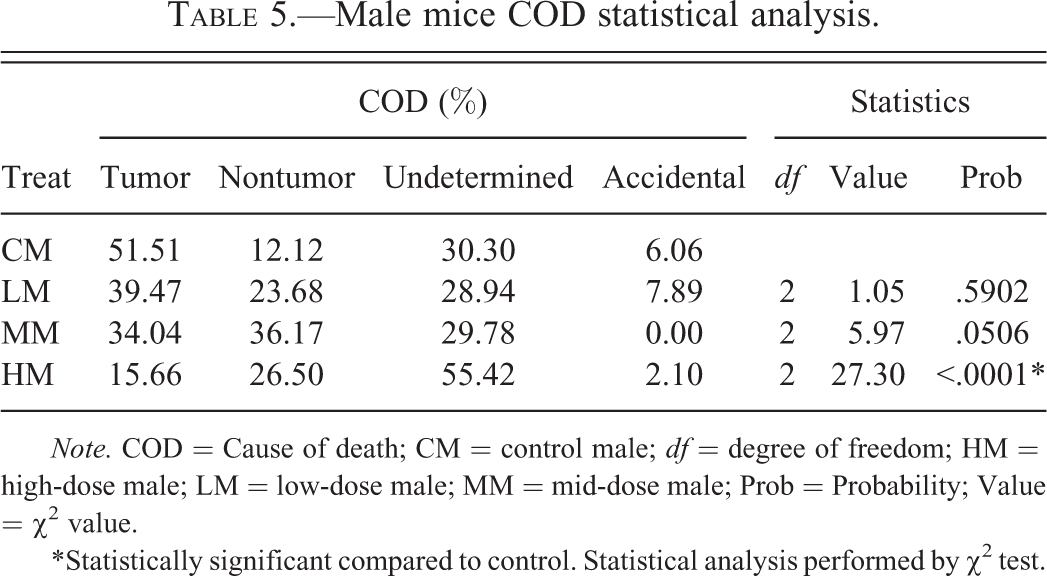
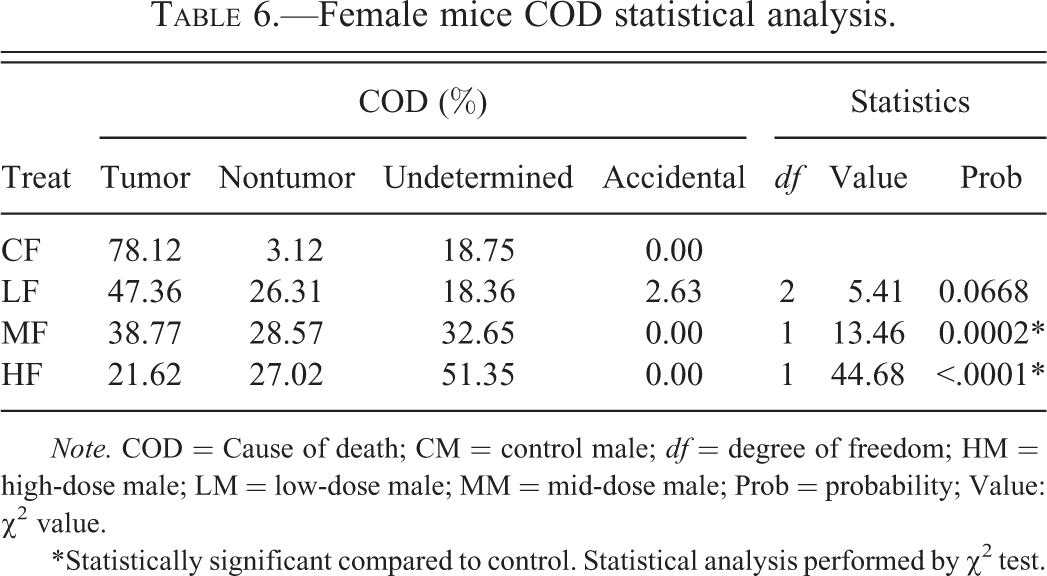
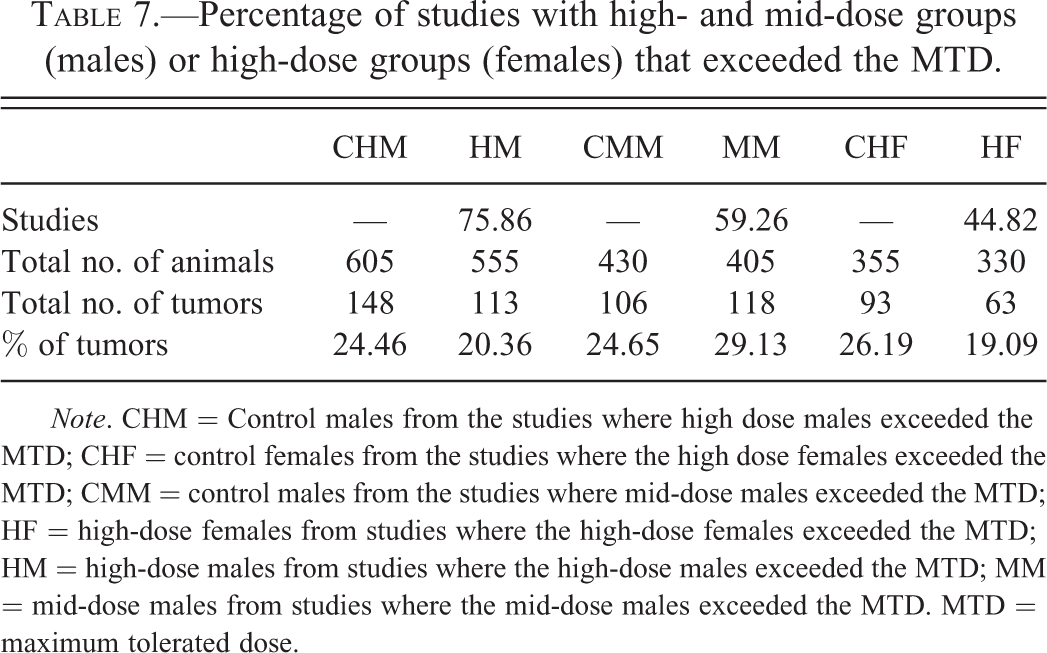
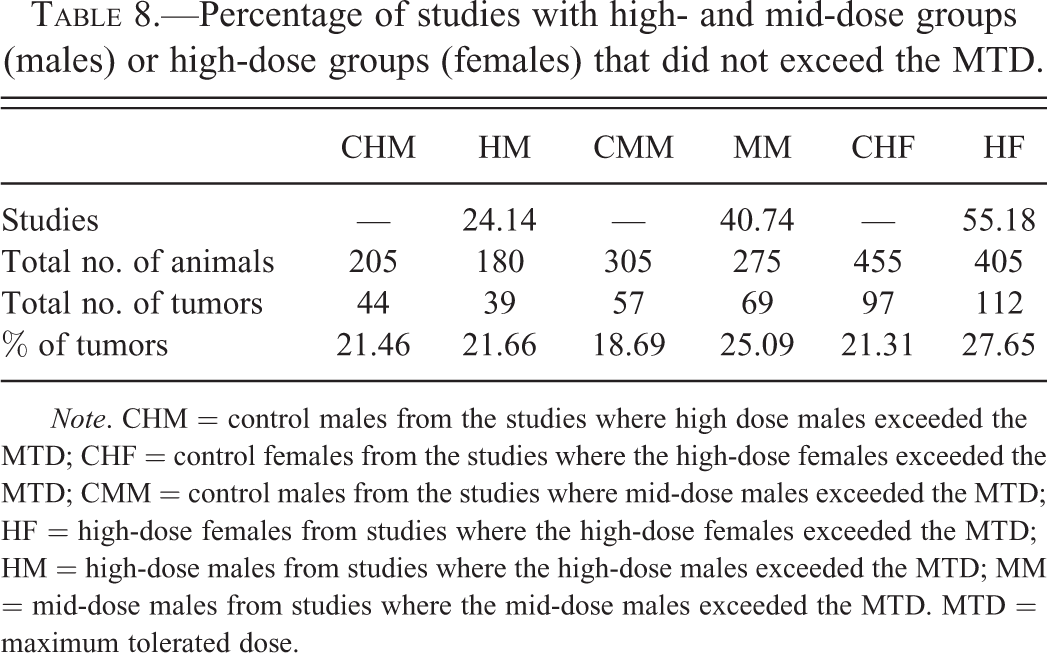
The summary data and the results of the statistical analyses for IBW, FC, % BWG, % mortality, and % tumor incidence for low-, mid-, and high-dose groups, compared to control, are presented in Tables 1 and 2 and Figures 1 and 2, for male and female mice, respectively. Results from the linear treatment–related trend analysis for % BWG, % mortality, and % tumor incidence are presented in Tables 3 and 4 for males and females, respectively. The data pertaining to the COD are presented in Tables 5 and 6 and Figures 3 and 4 for male and female mice, respectively. The data pertaining to studies in which the MTD was exceeded or MTD was not exceeded, and the percentages of tumors associated with these studies are presented in Tables 7 and 8. The statistical significance, whenever noted, is demonstrated by an asterisk in each table. The results for the males and females are summarized subsequently.
Male mice summary data and statistical analysis for IBW, FC, % BWG, % mortality, and tumor %.
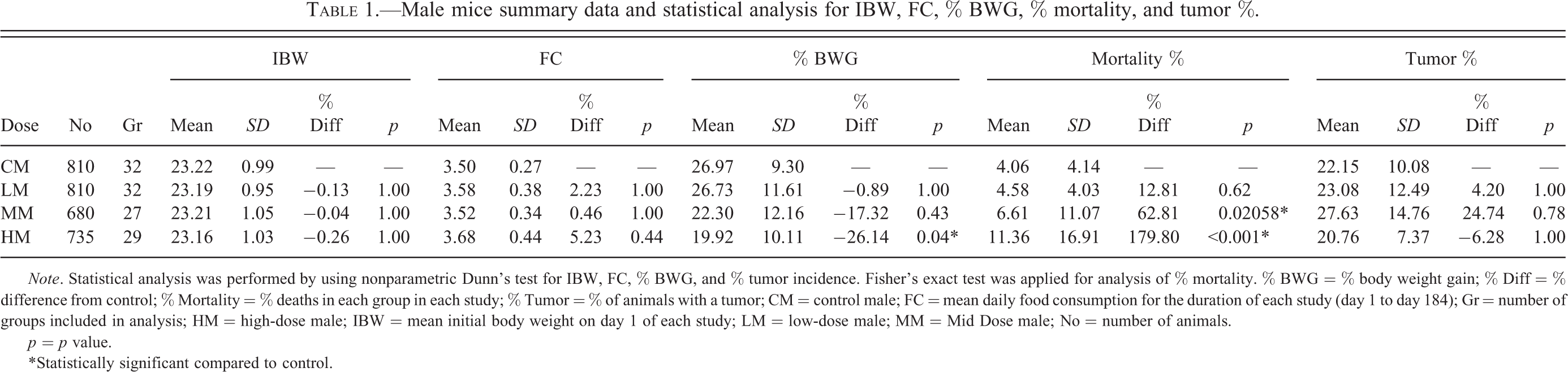
Note. Statistical analysis was performed by using nonparametric Dunn’s test for IBW, FC, % BWG, and % tumor incidence. Fisher’s exact test was applied for analysis of % mortality. % BWG = % body weight gain; % Diff = % difference from control; % Mortality = % deaths in each group in each study; % Tumor = % of animals with a tumor; CM = control male; FC = mean daily food consumption for the duration of each study (day 1 to day 184); Gr = number of groups included in analysis; HM = high-dose male; IBW = mean initial body weight on day 1 of each study; LM = low-dose male; MM = Mid Dose male; No = number of animals.
p = p value.
*Statistically significant compared to control.
Female mice summary data and statistical analysis for IBW, FC, % BWG, % mortality, and tumor %.
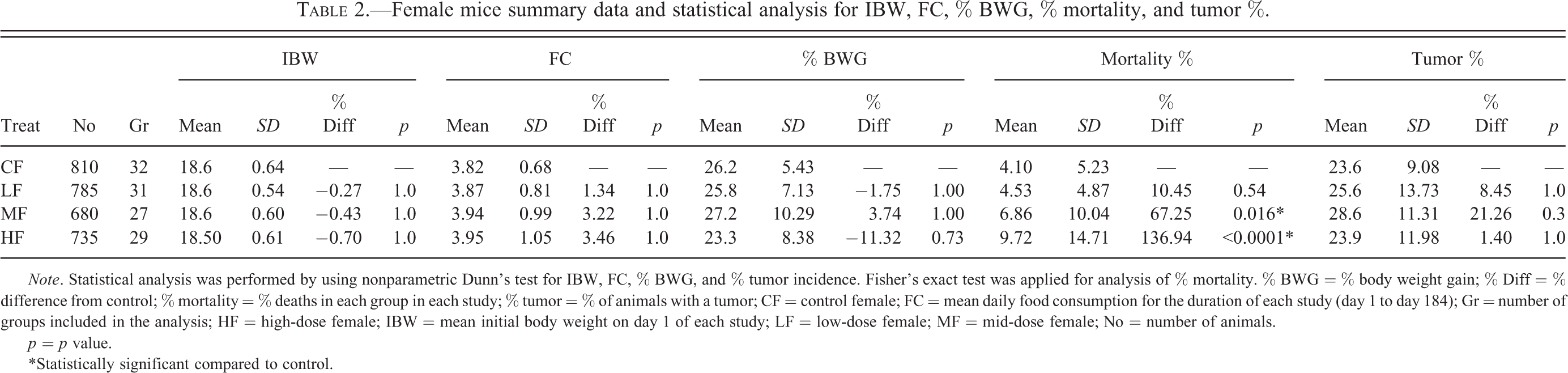
Note. Statistical analysis was performed by using nonparametric Dunn’s test for IBW, FC, % BWG, and % tumor incidence. Fisher’s exact test was applied for analysis of % mortality. % BWG = % body weight gain; % Diff = % difference from control; % mortality = % deaths in each group in each study; % tumor = % of animals with a tumor; CF = control female; FC = mean daily food consumption for the duration of each study (day 1 to day 184); Gr = number of groups included in the analysis; HF = high-dose female; IBW = mean initial body weight on day 1 of each study; LF = low-dose female; MF = mid-dose female; No = number of animals.
p = p value.
*Statistically significant compared to control.
Male mice linear treatment–related trend analysis.
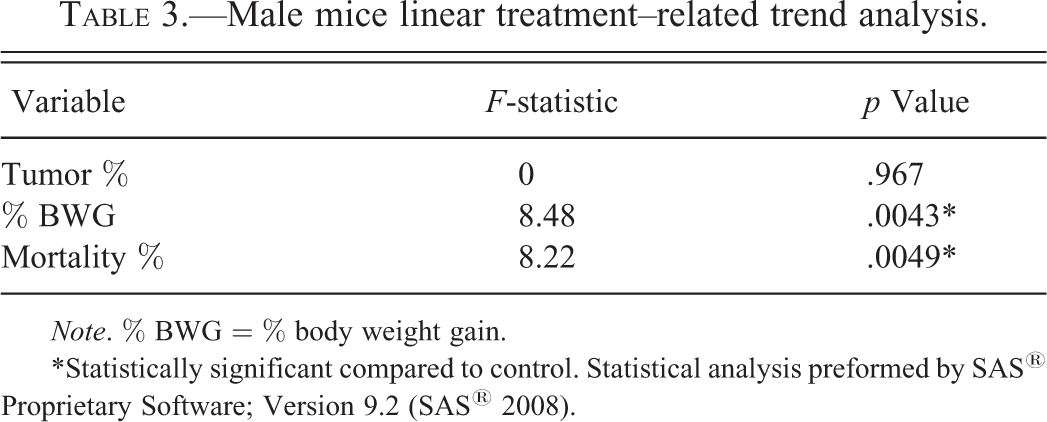
Note. % BWG = % body weight gain.
*Statistically significant compared to control. Statistical analysis preformed by SAS® Proprietary Software; Version 9.2 (SAS® 2008).
Female mice linear treatment–related trend analysis.
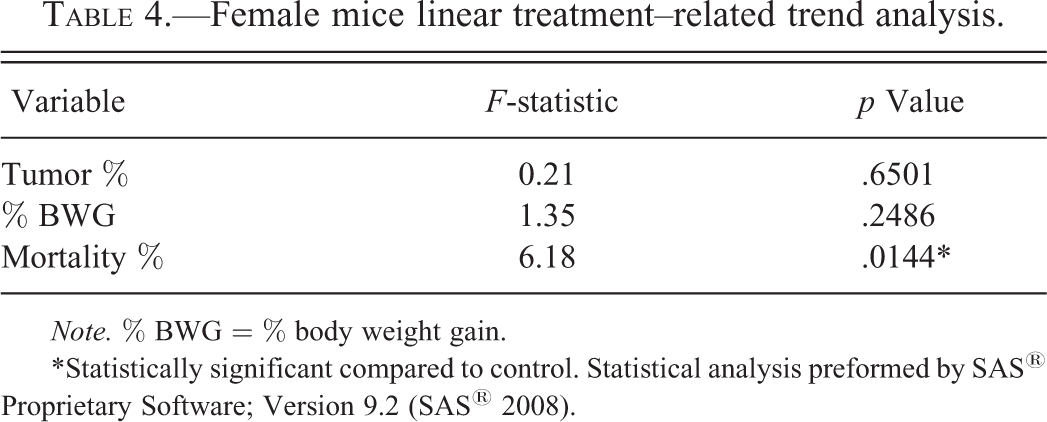
Note. % BWG = % body weight gain.
*Statistically significant compared to control. Statistical analysis preformed by SAS® Proprietary Software; Version 9.2 (SAS® 2008).
Male mice COD statistical analysis.
Note. COD = Cause of death; CM = control male; df = degree of freedom; HM = high-dose male; LM = low-dose male; MM = mid-dose male; Prob = Probability; Value = χ2 value.
*Statistically significant compared to control. Statistical analysis performed by χ2 test.
Female mice COD statistical analysis.
Note. COD = Cause of death; CM = control male; df = degree of freedom; HM = high-dose male; LM = low-dose male; MM = mid-dose male; Prob = probability; Value: χ2 value.
*Statistically significant compared to control. Statistical analysis performed by χ2 test.
Percentage of studies with high- and mid-dose groups (males) or high-dose groups (females) that exceeded the MTD.
Note. CHM = Control males from the studies where high dose males exceeded the MTD; CHF = control females from the studies where the high dose females exceeded the MTD; CMM = control males from the studies where mid-dose males exceeded the MTD; HF = high-dose females from studies where the high-dose females exceeded the MTD; HM = high-dose males from studies where the high-dose males exceeded the MTD; MM = mid-dose males from studies where the mid-dose males exceeded the MTD. MTD = maximum tolerated dose.
Percentage of studies with high- and mid-dose groups (males) or high-dose groups (females) that did not exceed the MTD.
Note. CHM = control males from the studies where high dose males exceeded the MTD; CHF = control females from the studies where the high-dose females exceeded the MTD; CMM = control males from the studies where mid-dose males exceeded the MTD; HF = high-dose females from studies where the high-dose females exceeded the MTD; HM = high-dose males from studies where the high-dose males exceeded the MTD; MM = mid-dose males from studies where the mid-dose males exceeded the MTD. MTD = maximum tolerated dose.
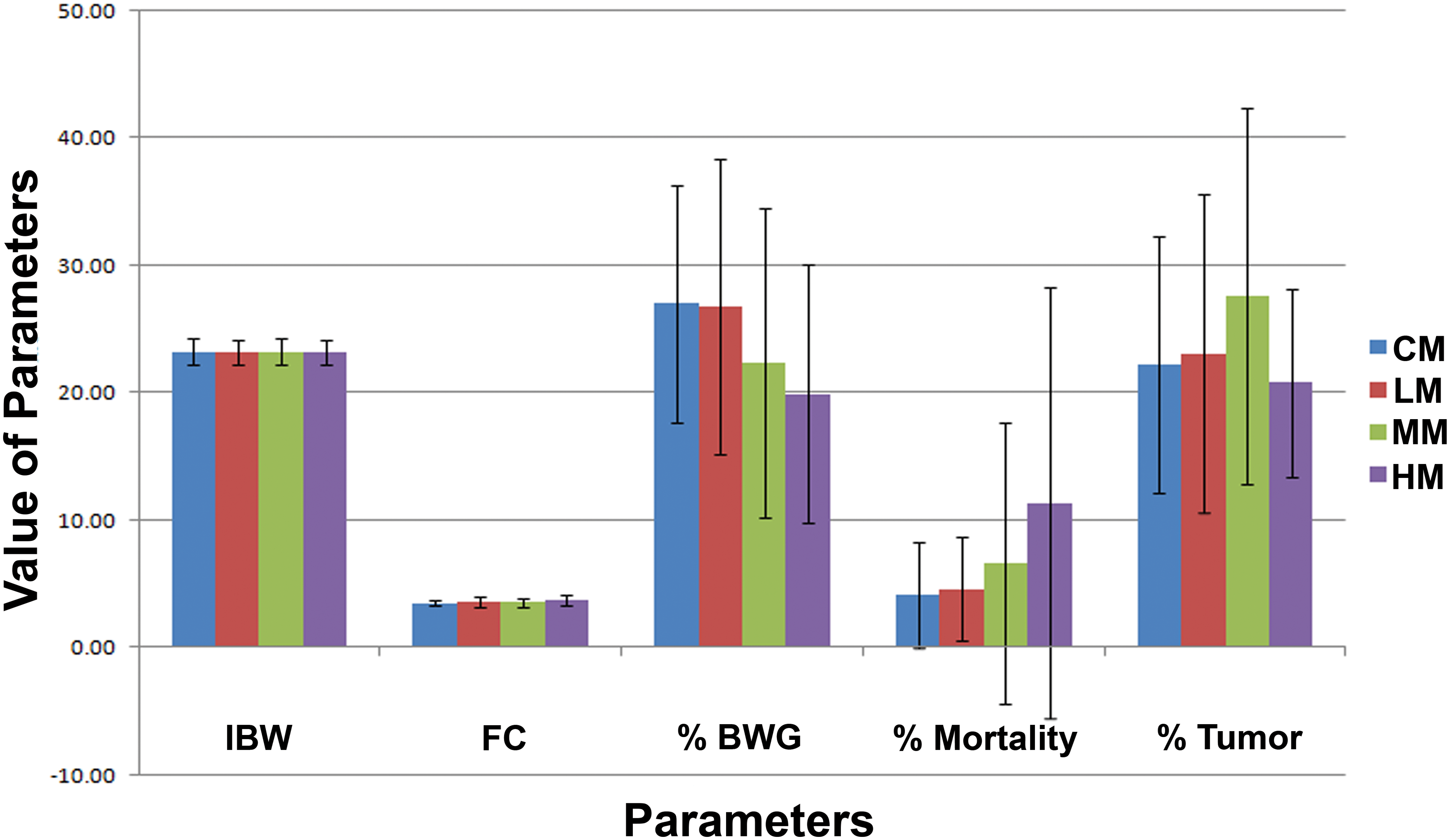
Comparison of mean (± standard deviation) of initial body weights (IBW), food consumption (FC), % body weight gain (% BWG), % mortality, and % tumor incidence in control males (CM), low-dose males (LM), medium-dose males (MM), and high-dose males (HM).
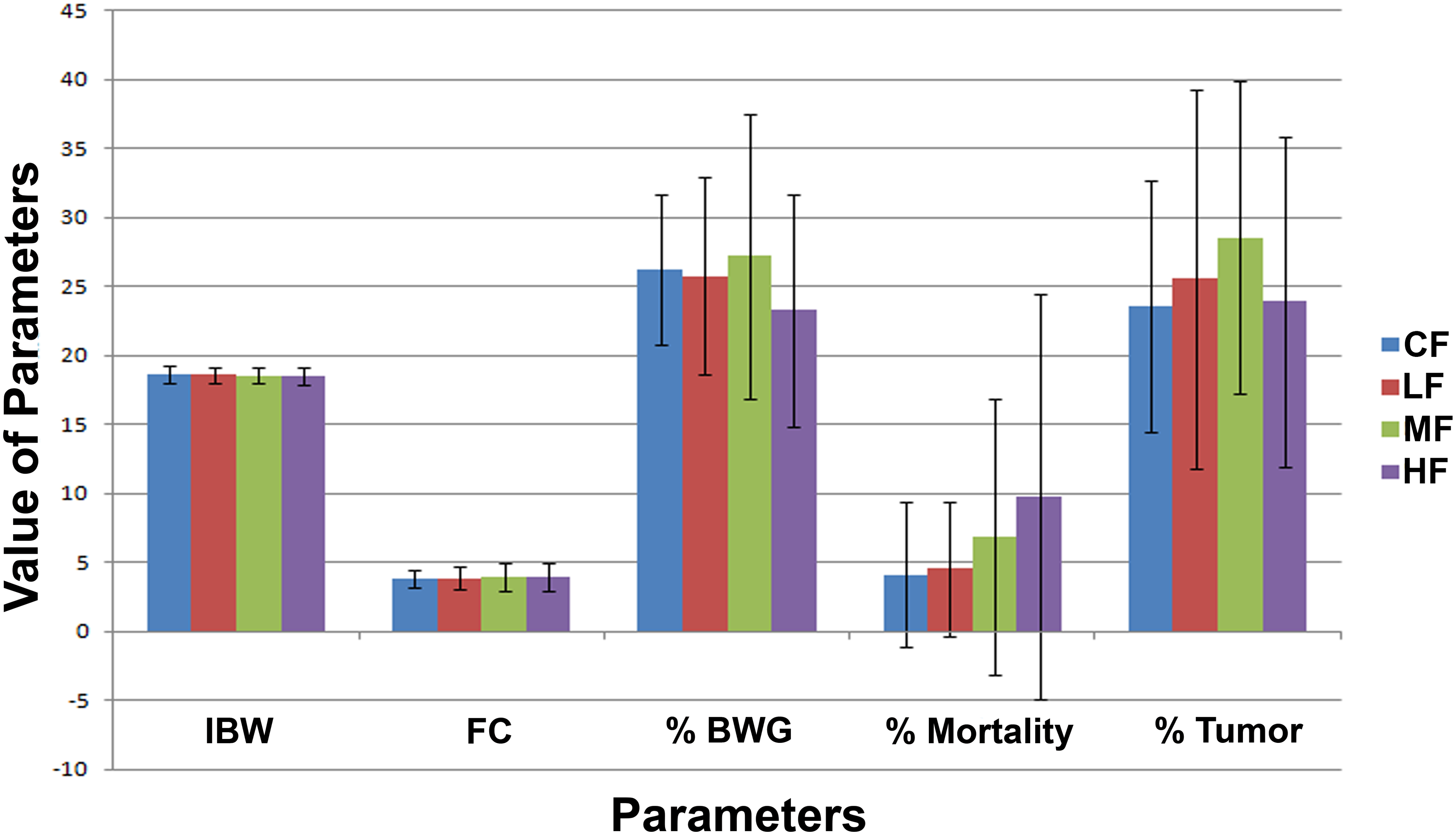
Comparison of mean (± standard deviation) of initial body weights (IBW), food consumption (FC), % body weight gain (% BWG), % mortality, and % tumor incidence in control females (CF), low-dose females (LF), medium-dose females (MF), and high-dose females (HF).
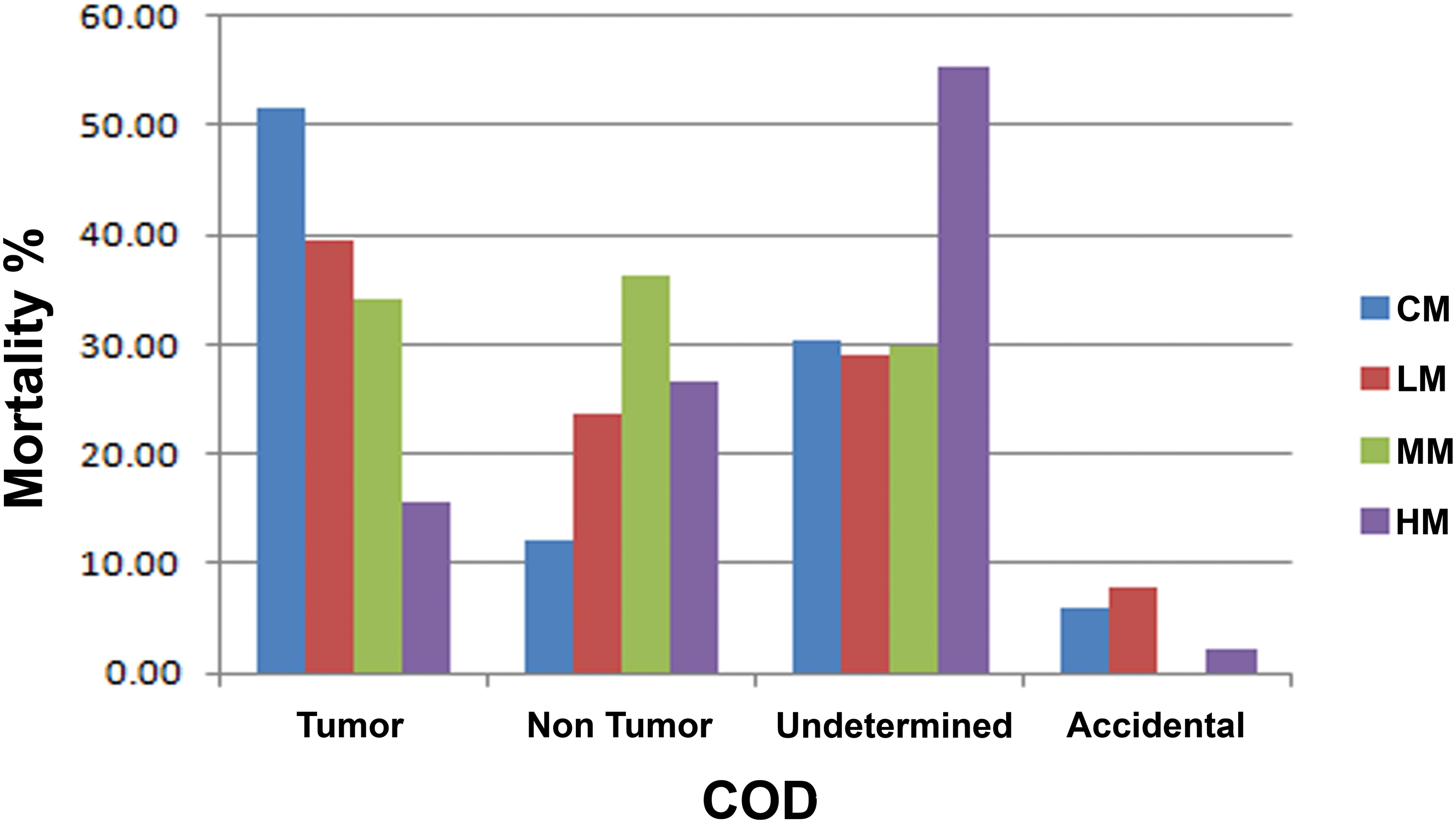
Comparison of cause of death (tumor, nontumor, undetermined, and accidental) between control males (CM), low-dose males (LM), medium-dose males (MM), and high-dose males (HM).
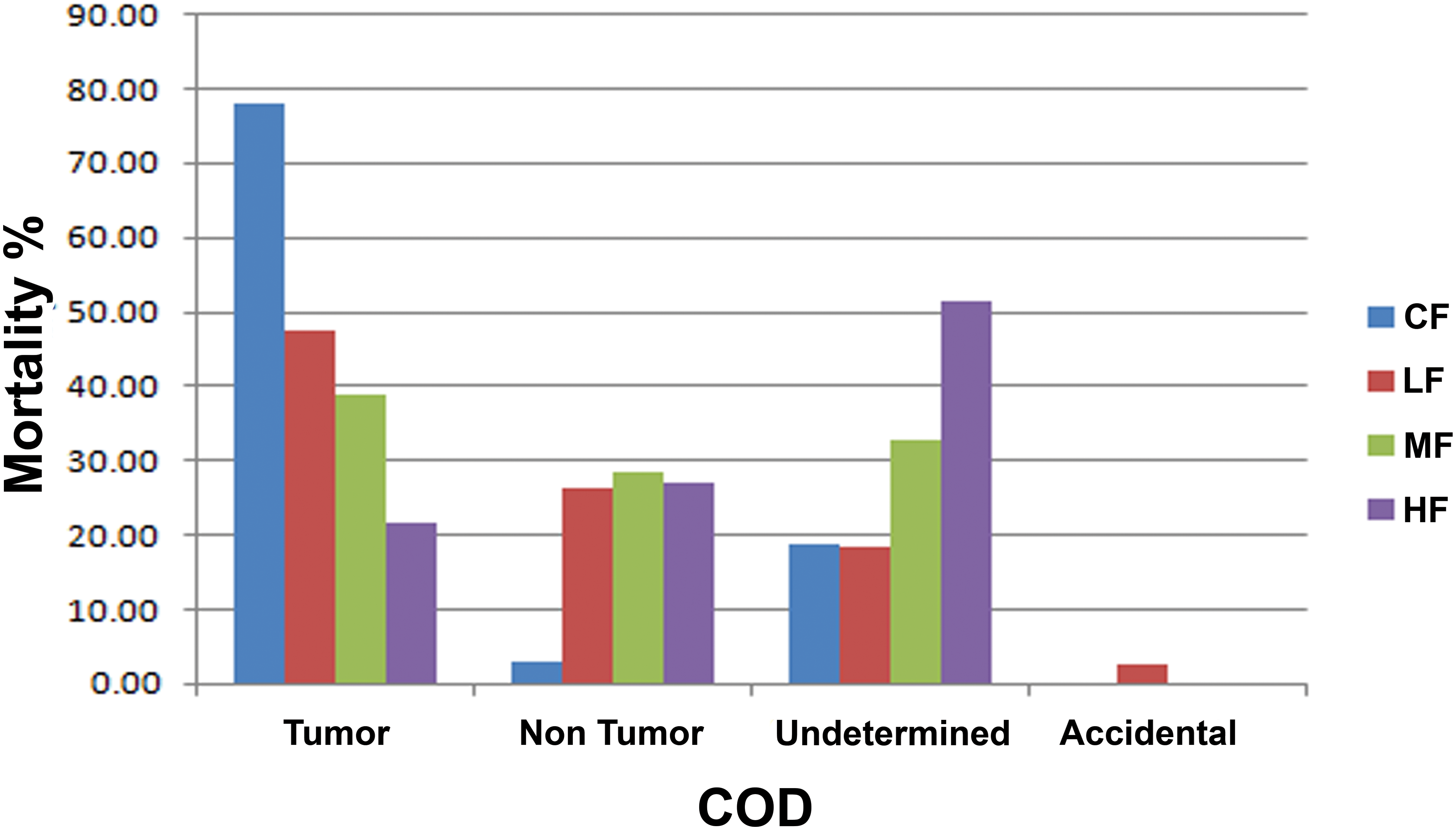
Comparison of cause of death (tumor, nontumor, undetermined, and accidental) between control females (CF), low-dose females (LF), medium-dose females (MF), and high-dose females (HF).
IBW, FC, % BWG, % Mortality, and % Tumor Incidence with Trend Analysis
The IBW of control, low-, mid-, and high-dose groups were similar across all groups, and there were no statistically significant differences between control and low-, mid-, and high-dose test article–treated groups in either sex. Since animals were randomized prior to the start of each study, and all animals were within 20% of the mean body weight at study initiation, it was expected that the IBW would be similar across all groups. FC was also similar across all groups in both males and females. However, FC was higher than controls in the high-dose males and females, although the differences were not statistically significant. Despite higher FC in the high-dose groups, % BWG was reduced in the high-dose groups of both sexes. In males, there was a dose-dependent decrease in the % BWG in the test article–treated dose groups, compared to control, and these differences were statistically significant in the high-dose group. The % BWG differences were −0.89%, −17.32%, and −26.14% in low-, mid-, and high-dose male groups, respectively, compared to the control groups. In females, there was a 1.75% and 11.32% decrease in the % BWG in both the low- and the high-dose groups, respectively, and there was an increase in the % BWG by 3.74% in the mid-dose group. Thus, the variations in the % BWG were neither dose dependent nor were they statistically significant in females.
There was a consistent, dose-dependent increase in mortality in male and female mice of test article–treated groups, and these differences were statistically significant in the mid- and high-dose groups. In males, the mean mortality was 4.06%, 4.58%, 6.61%, and 11.36% in control, low-, mid-, and high-dose groups, respectively. Thus, in males, % mortality increased by 12.81%, 62.81%, and 179.80% in the low-, mid-, and high-dose groups, respectively, compared to the control groups. In females, the mean mortality was 4.10%, 4.53%, 6.86%, and 9.72% in control, low-, mid-, and high-dose groups, respectively. Thus, in females, % mortality increased by 10.45%, 67.25%, and 136.94% in low-, mid-, and high-dose groups, respectively, compared to the control group.
Compared to the control in the males, there was a dose-dependent increase in the % tumor incidence in the low- and mid-dose groups by 4.20% and 24.74%, respectively; however, there was a decrease in the incidence of tumors in the high-dose group by −6.28%. Compared to the control, there was a dose-dependent increase in the % tumor incidence in the low- and mid-dose group females by 8.45% and 21.26%, respectively, but not in the high-dose group. The % incidence in the high-dose females was only slightly more than the control, but lower than the low- and mid-dose groups. However, none of these differences were statistically significant in either sex.
In males, % BWG and % mortality were significant for treatment-related trend (Table 3). Thus, increasing dose levels were associated with reductions in % BWG and increases in % mortality. On the other hand, there was no treatment-related trend in % tumor incidence because although the % tumor incidence increased in a dose-dependent manner in low- and mid-dose groups, it did not in the high-dose group. In females, only % mortality was significant for treatment-related increasing trend (Table 4). The trend for % BWG was not significant due to an increase in % BWG in the mid-dose group. The trend for % tumor incidence was not significant because even though the % tumor incidence increased in a dose-dependent manner in low- and mid-dose groups, it did not increase in the high-dose group.
COD
We analyzed the COD of all animals that died prior to study termination in each of the studies (Tables 5 and 6). Mortality due to tumors was highest in the control groups in both males and females. In the treatment groups, the percentage of animals that died due to tumor causes consistently decreased in a dose-dependent manner in the low-, mid-, and high-dose groups in both males and females. In both sexes, nontumor CODs were higher in all treatment groups, compared to control, although there was no dose-related increase in the low- to high-dose groups. Undetermined as the COD was similar in control, low-, and mid-dose groups in males and in the control and low-dose females, but increased substantially in high-dose males and mid- and high-dose females (Tables 5 and 6 and Figures 3 and 4). In the high-dose males, the tumors, nontumors, and undetermined as COD were different in a statistically significant manner compared to the control (<.0001), whereas the difference in mid-dose males was close to significance (0.0506). In the mid- and high-dose females, the tumors, nontumors, and undetermined as COD were different in a statistically significant manner compared to the control.
Comparison of Tumor Incidence in Studies That Did or Did Not Exceed MTD
Based on our retrospective analysis, 75.86% of the 29 studies had high-dose male groups that exceeded the MTD, while in the remaining 24.14% of the studies, high-dose males did not exceed the MTD. In the mid-dose male groups, 59.26% of the studies exceeded the MTD, while the remaining 40.74% of the studies did not exceed the MTD. In females, 44.82% of the 29 studies had a high dose that exceeded the MTD, while the remaining 55.18% studies did not exceed the MTD. The results of this analysis are presented in Tables 7 and 8. When comparing tumor incidence, the percentage of tumors in the male vehicle and high-dose groups that did not exceed the MTD were comparable. However, in the high-dose male groups in which the MTD was exceeded, the percentage of tumors was lower than the corresponding vehicle groups. In mid-dose male groups that did or did not exceed the MTD, the percentage of tumors was more than that of the vehicle group. In the female mice where the MTD was not exceeded in the high-dose group, the incidence of tumors was higher in the high-dose groups. However, when the MTD was exceeded, the incidence of tumors in the female high-dose groups was much lower than that of the corresponding vehicle dose groups. Although other criteria, such as mortality, were not considered in estimating the number of studies that exceeded MTD, the changes in the % BWG alone were severe enough to show that the MTD was exceeded at the high- and/or mid-dose groups in several studies. Decrements in % BWG likely masked tumor formation in high-dose groups. If excess mortality which is not due to tumors is added as criteria to determine the number of studies that exceeded the MTD, it is very likely more of the high-dose male and female groups exceeded the MTD.
Discussion
The purpose of the 26-week studies conducted in Tg.rasH2 is to evaluate the carcinogenic potential of a test article. Usually, 5- and 28-day range finding studies are conducted in CByB6F1 mice, the wild type littermates of Tg.rasH2 mice, before the 26-week Tg.rasH2 carcinogenicity study. The purpose of the 5-day study is to estimate the doses for the 28-day study, and the purpose of the 28-day study is to estimate the doses for the 26-week study. Following a 28-day study, the dose selection and particularly the MTD is determined based on criteria similar to the ones used in 2-year rodent studies. Parameters that are taken into account include, but are not limited to, mortality, BWGs, gross and histopathology findings, clinical findings, and clinical pathology findings. A draft protocol for the 26-week study is then submitted to the Carcinogenicity Assessment Committee (CAC) for the approval of the dose levels and the study design. In all our studies, if the high-dose groups at MTD were considered to be 100%, then the mid-doses were generally at 40% and the low doses were generally at 20% in both sexes.
The most well-accepted definition of MTD is the highest dose that will elicit minimal signs of toxicity, should not cause >10% decrease in the BWGs compared to concurrent controls, should not shorten the animal’s normal longevity, or unduly compromise normal well-being of the animal, except for the effects of carcinogenicity (ICH 2008). In addition to the MTD, the high dose in a carcinogenicity study may be the maximum feasible dose, or the dose at which saturation of exposure occurs. Further, a limit dose or the dose at which the exposure achieved is 25 times the efficacious exposure in humans can be used as the high dose in 2-year carcinogenicity studies only, but not 26-week carcinogenicity studies in Tg.rasH2 mice (ICH 2008).
While the high dose should elicit some signs of toxicity and biological effects, doses that produce excessive mortality apart from chemically induced carcinogenicity are undesirable (International Agency for Research on Cancer [IARC] 1980; ILSI 1984). Decreased survival does not automatically imply that the MTD was exceeded if the mortality was due to test article–induced carcinogenicity (Sontag, Page, and Saffiotti 1976; Haseman 1985).
Retrospective analysis of the data presented here showed that the MTD in the high doses of both sexes was overestimated for several reasons. The drop in % BWG was greater than 10% in the high-dose groups of both sexes. The data presented in this article also show that the decrease in % BWG in the high-dose group of both sexes was not due to decreased FC. There was in fact an increase in FC in all test article–treated groups of both sexes, compared to controls. The % mortality in the high-dose groups of both sexes was considerably higher than their control counterparts, and the mortality was not due to carcinogenic effects of the test article. If the MTD is estimated correctly, then the carcinogenic response observed at the high-, mid-, and low doses should be proportionate (Haseman and Lockhart 1994; Bucher et al. 1996; Hayes et al. 2011). However, in our retrospective analysis, while the tumor incidence increased proportionately in the low and mid-doses of both sexes, it did not increase proportionately in the high-dose groups of both sexes. In addition, tumors as the COD decreased in the test article–treated dose groups of both sexes compared to the control groups and this decrease was highest in the high-dose groups of both sexes. On the other hand, undetermined as COD was substantially higher in high-dose groups of both sexes. The undetermined as COD is assigned when there are no gross or microscopic lesions in a given animal that are considered to be responsible for death. However, this does not rule out that some deaths were likely due to toxicity, but morphological alterations, whether neoplastic or nonneoplastic, were simply not present. In fact, the higher incidence of undetermined COD for the unscheduled/early deaths means that these mice did not get the same opportunity to develop tumors as other animals in the study that survived to the terminal sacrifice. The incidence of tumors was lower in high-dose males compared to control groups, and it was only slightly more in high-dose females compared to their control counterparts. When the low-, mid-, and high doses were compared, the incidence of tumors was lowest in high-dose groups of both sexes compared to the other 2 groups. Based on these factors, the high-dose groups of both sexes were an overestimation of the MTD and did not contribute to the assessment of the carcinogenic response. On the other hand, the low and mid-doses of both sexes showed more tumorigenic response than the control and contributed to the interpretation of the study.
The comparison between males and females showed that the male mice were more sensitive to the increasing dose levels, particularly at the high-dose group, as the decrease in % BWG, increase in % mortality, decrease in the % tumor incidence, and undetermined as the COD were much higher in the high-dose males than females. Furthermore, the decrease in % BWG in the mid-dose groups continued to be greater than 10% in the male mice, while in the female mice, there was no drop in % BWG in the mid-dose groups.
Based on all the aspects discussed earlier, it is clearly evident that MTD in the high-dose groups of both sexes was overestimated, and these high-dose groups did not provide any information on the carcinogenic effects of the test article. This is because of a combination of excessively decreased body weights and high mortality, which were clearly not due to carcinogenic effects. Thus, the high-dose groups did not serve any purpose in these assays but rather defeated the purpose for which these carcinogenicity studies are conducted (Sontag, Page, and Saffiotti 1976; Haseman 1984, 1985; Haseman and Seilkop 1992; ILSI 1984; ICH 2008; Haseman and Lockhart 1994; Alden et al. 2011; Jacobs and Hatfield 2013). On the other hand, the low- and mid-dose groups of both sexes demonstrated increased tumorigenic response and provided vital information pertaining to the assays.
In our facility, we have never seen a statistically significant increase in the incidence of any tumors in all low-, mid-, and high-dose groups simultaneously in the same study. However, in a limited number of studies, we have seen a statistically significant increase in a particular tumor in a single-dose group, mostly in the low- or mid-dose groups, and infrequently in the high-dose group. In any group that was statistically significant for incidence of tumors, the % BWG of that group was similar to the % BWG of the control. Generally, there was no increase in tumors in any group that had a lower % BWG, compared to control. Therefore, it is clear that a drop in % BWG plays a major role in reducing the incidence of tumors in Tg.rasH2 mice.
Apart from an overestimation of the MTD in the 2-year rodent carcinogenicity bioassays, several other problems have been identified that can further complicate the interpretation of these 2-year studies. These problems that are interlinked with each other include increasing IBWs, high mortality, and high incidence of spontaneous tumors. We have previously shown that mortality and the incidence of tumors in Tg.rasH2 mice are far lower than what is reported in the 2-year studies and that increasing IBWs is not an issue in Tg.rasH2 mice (Paranjpe, Elbekai et al. 2013; Paranjpe, Denton et al 2014a and Paranjpe, Denton et al 2014b).
The body weights of the Tg.rasH2 mice are 80% to 90% of their wild-type counterparts—namely, C57BL/6 and the BALB/c mice (Paranjpe, Denton et al 2014a; Paranjpe, Denton et al 2014b) Taconic Information 2013; Yamamoto et al. 1997). The IBWs of CD-1 and B6C3F1 mice when placed on study at 6 to 8 weeks of age are about 20 to 25% more than the Tg.rasH2 mice (Charles River Information 2013; Harlan Information 2013). Thus, the smaller size of the Tg.rasH2 mice compared to conventional mice may make these mice more susceptible to the decrease in body weights caused by toxicity, eventually leading to decreased incidence of tumors in the high-dose groups set at MTD. Therefore, the rule of thumb of no greater than 10% decline in the body weights applied to conventional rodents may not apply to the Tg.rasH2 mice, and this decline in the body weights needs to be set at a much lower percentage, so that the true carcinogenic potentials of the test articles can be explored. Based on our analysis, we feel that no greater than 5% drop in BWG in the range finding studies would be more appropriate percentages in determining the EMTD. From retrospective analysis of MTD in 2-year studies as well as in 26-week Tg.rasH2 studies, it appears that due consideration is not given to the extended duration of the toxic effects of the drug compared to the shorter term dose range finding studies.
The original NTP/National Cancer Institute (NCI) 2-year carcinogenicity studies had included only 2 test article–treated dose groups, set at MTD and one-half MTD and these original NTP/NCI studies were designed to provide information on carcinogenicity of a test article at MTD. But NTP started adding a third lower test article–treated dose group to nullify the effects of overt toxicity and excess mortality in the high-dose groups and to provide a safety margin against overestimation of MTD. The third-dose group was also added because having only 2 test article–treated dose groups did not provide information on dose response relationship or trends and no observed effect level (NOEL) or no observed adverse effect level (NOAEL; Sontag, Page, and Saffiotti 1976; Haseman 1984, 1985; Hayes et al. 2011; Hess, Bretz, and Gfeller 1983; Portier and Hoel 1984; Rhomberg et al. 2007). Since our findings clearly demonstrate that the high-dose group at MTD could not detect a carcinogenic effect while the mid and low doses served the purpose in detecting the true carcinogenic potential of the assay, a high dose set at MTD is not needed. If the high dose at MTD is taken out of the equation, then the cushion against excessively decreased body weights and high mortality is not required and doses set lower than the MTD, for example, one-half MTD and one-fourth MTD, will fully serve the purpose of the assay.
Based on the earlier discussion, it is clear that the problems that significantly contribute to the interpretation of 2-year rodent carcinogenicity studies, mainly the variations in the body weight parameters, high mortality, and high incidence of spontaneous tumors, are not as profound in 26-week Tg.rasH2 studies (Paranjpe, Elbekai et al. 2013; Paranjpe, Denton et al 2014a; Paranjpe, Denton et al 2014b). However, similar to the 2-year rodent studies, in the 26-week Tg.rasH2 studies, the estimation of MTD was not accurate and the high dose was set at a dose level above the MTD; therefore, the dose selection process in these studies requires modifications. Based on these evaluations, we propose the following: The high dose as it is chosen now should be dropped from 26-week Tg.rasH2 studies because it failed to detect any possible tumorigenic response, defeating the purpose of the assay. Because the drop in % BWG exceeded 10% in both the mid- and high-dose male groups, the highest dose group in male mice should be set at no more than one-half of the EMTD. The female mid-dose groups did not show a drop in % BWG and female Tg.rasH2 mice seem to be less sensitive to the effects of a drop in % BWG. Thus, the highest dose group in female mice should be set at no more than two-third of the EMTD. The lower dose groups should be approximately one-fourth of the EMTD in the male mice and one-third of the EMTD in the female mice. Only 2 test article treatment groups in each sex may be needed for every study. As per the current protocols, a typical 26-week Tg.rasH2 study contains 1 control dose group and 3 test article-treated dose groups of 25 mice/dose group/sex, in addition to 10 mice/sex in the positive control group. If future studies are conducted with 1 control group, 2 test article–treated groups, and 1 positive control group per sex, these studies will be conducted with a total of 170 mice, which will result in 25% reduction in the use of animals, contributing significantly to the 3Rs of animal research and reducing the cost of the studies. While we do not consider that it is necessary to have the third test article–treated group, if needed then the third-dose group should be set at one-eighth of the EMTD in males and one-sixth of the EMTD in females. For compounds that do not show toxicity in the range finding studies, a limit dose should be applied for the 26-week carcinogenicity studies, in the same manner as the 2-year studies. For example, a limit dose of 2,000 mg/kg/day or 1,500 mg/kg/day for compounds not used clinically at >500 mg/day and have at least 10× nonclinical area under the curve (AUC) margin.
Footnotes
The author(s) declared no conflicts of interest with respect to the research, authorship, and/or publication of this article.
The author(s) received no financial support for the research, authorship, and/or publication of this article.
*
This is an opinion article submitted to the Regulatory Forum and does not constitute an official position of the Society of Toxicologic Pathology or the journal Toxicologic Pathology. The views expressed in this article are those of the authors and do not necessarily represent the policies, positions, or opinions of their respective agencies and organizations. The Regulatory Forum is designed to stimulate broad discussions of topics relevant to regulatory issues in toxicologic pathology. Readers of Toxicologic Pathology are encouraged to send their thoughts on these articles or ideas for new topics to
Author Contribution
Madhav G. Paranjpe, Melissa D. Denton, Tom J. Vidmar, and Reem H. Elbekai contributed to conception or design, data acquisition, analysis, or interpretation; Madhav G. Paranjpe and Melissa D. Denton drafted the manuscript; Tom J. Vidmar and Reem H. Elbekai critically revised the manuscript. All authors gave final approval and agree to be accountable for all aspects of work in ensuring that questions relating to the accuracy or integrity of any part of the work are appropriately investigated and resolved.