




Abstract
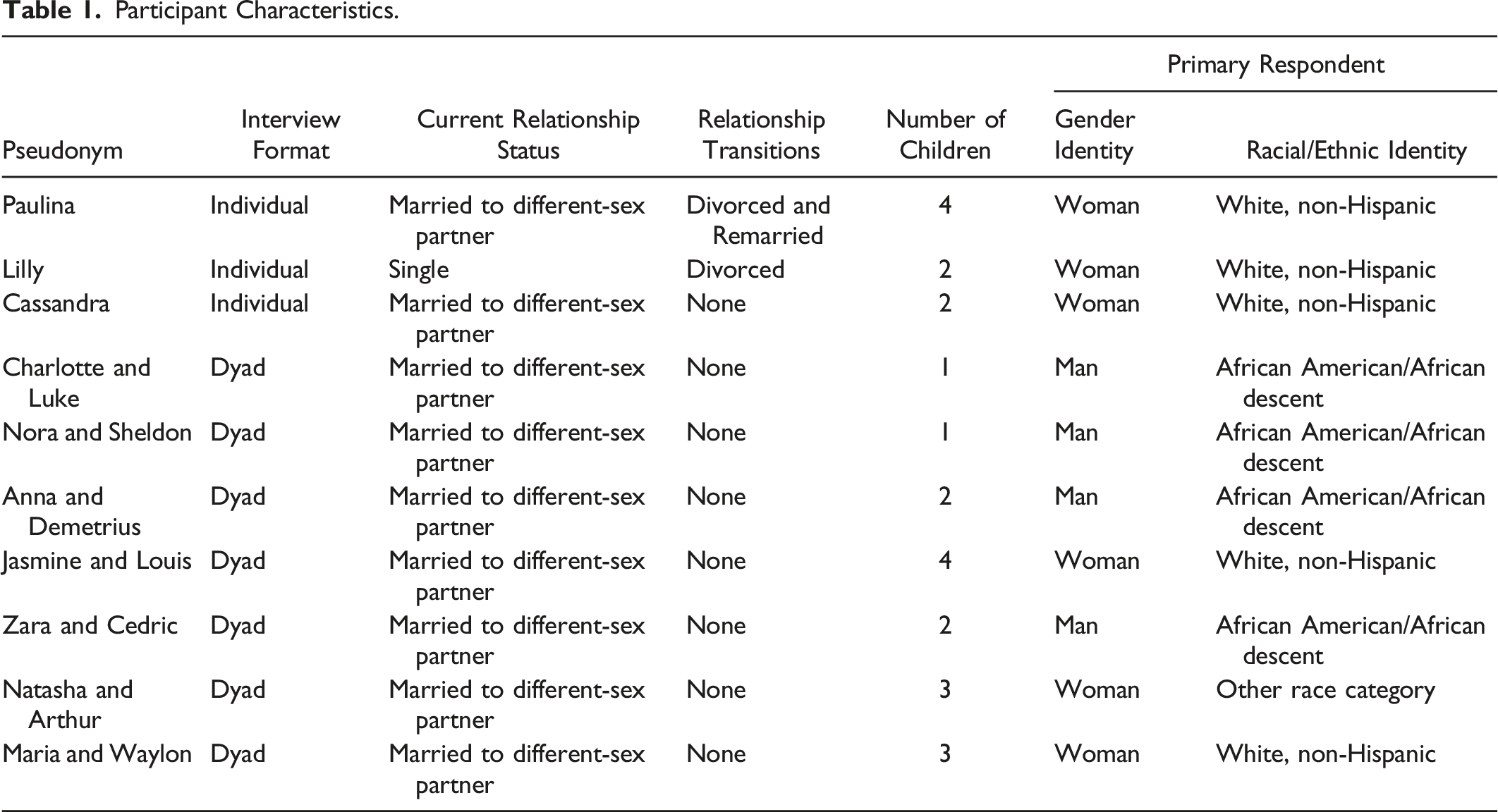
There remain gaps in the literature with respect to how individuals perceive, identify, and make sense of the functions of their families over time as social systems. Leveraging a qualitative approach rooted in a contextual constructionist epistemology and life course theory, the prioritized functions of family systems were explored via semi-structured, in-depth interviews among 17 adults in various regions of the United States (50% non-Hispanic White; 40% non-Hispanic Black/African American/African descent) who indicated providing care for at least one child from infancy to legal adulthood. Qualitative analyses foregrounded five prioritized functions, namely, secure and maintain connection, procure resources, bolster development, foster safety and well-being, and support self-actualization. Analyses also highlighted several important contextual factors that influence (a) what functions families prioritize in a given period of time and (b) help or hinder families’ ability to fulfill those functions. Study limitations, practical implications, and directions for future research are discussed.
Introduction
Disciplines across the social, behavioral, and health sciences recognize families as proximal social contexts in which individual development unfolds across the life course. Although defining “family” is not a straightforward task, there is value in favoring an inclusive definition, such as “a continuing system of interacting persons bound together by processes of shared roles, rules, and rituals, even more than shared biology” (Boss et al., 2017, p. 4). An inclusive conceptualization of family is especially appropriate given the rich and diverse landscape of family experiences, compositions, and structures that pervade societies across the world (Jensen & Sanner, 2021; Raley & Sweeney, 2020; Reczek, 2020; Sanner & Jensen, 2021; Sassler & Lichter, 2020). It is increasingly likely that family-serving professionals and systems will engage with structurally diverse families; viewing families inclusively can bolster efforts to understand and support families and promote the well-being of their members (Jensen, 2022).
In addition to shaping the development of individuals, families as social systems also develop over time. Over the last several decades, scholars have theorized about and researched features of family development, attending to concepts such as family life stages, family developmental tasks or functions (i.e., a family’s set of key purposes), family functioning (i.e., processes by which a family fulfills its developmental tasks or functions), family resilience, family stress management, and family health (Anderson & Tomlinson, 1992; Boss et al., 2017; Crandall et al., 2020; Epstein et al., 1978; Feinberg et al., 2022; Patterson, 2002; Ramaswami et al., 2022; Walsh, 2016). However, extant theory—largely rooted in a structural functionalist tradition—has limited our understanding of how individuals themselves identify and make sense of the core functions of their families. Instead, extant theory posits key functions that families serve for society and individual family members, generally shaped by racially informed and historically situated social constructions of “the ideal” family. As a result, there remain valuable opportunities to explore inductively the prioritized functions of family systems as perceived and experienced by individual family members—an approach aligned with a constructionist epistemology. Understanding how individuals view and experience the prioritized functions of their families can inform family-focused research, practice, life course intervention development, and policy.
There also remain valuable opportunities to enrich theorizing and empirical exploration related to family functions by leveraging life course theory. Life course theory posits that health is a dynamic developmental process that unfolds over time, shaped by a multi-level context. A life course approach offers a set of assumptions and concepts that can potentially unearth novel insights regarding prioritized functions of family systems over time and the various contextual factors that influence them. Thus, the purpose of the current study is to employ a qualitative approach, rooted in a constructionist epistemology and life course theory, to explore the prioritized functions of family systems over time. To begin, we overview extant perspectives on family development and functions as featured in theoretical and empirical literatures. We then offer an application of life course theory and present our specific research questions.
Perspectives on Family Development and Functions
Family developmental theory represents one of the first efforts to theorize specifically how families develop and function over time as social systems (Allen & Henderson, 2023). A core assumption of family developmental theory is that “the family and its members must perform certain time-specific tasks set by themselves and by persons in the broader society” (Aldous, 1978, p. 15). Family developmental theory foregrounds the concept of family developmental tasks, which represent normative goals that must be accomplished prior to moving forward to the next level or stage of development. Deviations from normative developmental tasks and goals are theorized to catalyze family dysfunction and individual pathology, in addition to societal disapproval or rejection (Allen & Henderson, 2023). Thus, family developmental theory emphasizes a linear, sequential approach to family development, leaving little room to acknowledge ongoing, overlapping, or dynamic functions that families might prioritize for themselves over time. Family developmental theory is also anchored to racially informed social constructions of “the ideal” family as popularized in the United States during the 1950s—a time in which the so-called Standard North American Family (SNAF; i.e., White, heterosexual, and legally married couple with co-residential children; Smith, 1993) was explicitly viewed by privileged citizens as optimal for families and society.
Consistent with an emphasis on the SNAF experience, family developmental theory emphasizes the concept of the “family life cycle”—perhaps the most enduring concept of the theory (Allen & Henderson, 2023). The family life cycle highlights a set of “normative” stages of family life that involve sequences of relational initiations, expansions, and contractions that reflect change over time in the social structure of the family system, at least as commonly experienced by families that reflect the SNAF model. Frequently emphasized family stages include: (a) the establishment of the adult couple relationship, (b) childbearing, (c) young child(ren), (d) older child(ren), (e) child(ren) launching from home, (f) parents in mid-life, and (g) parents in late life (Allen & Henderson, 2023). The appeal of the family life cycle is that it provides a relatively simple and (deceptively) predictable framework by which to understand families as they develop over time. To be sure, family developmental theorists have endeavored to expand or refine the theory over time to be more inclusive of diverse family experiences (Crapo & Bradford, 2021; Hill, 1986; McGoldrick et al., 2015; Papernow, 1993; Slater, 1999).
In any case, many iterations and forms of family development theory emphasize discrete stages of family life and associated family developmental tasks or functions. An assessment of whether a family is “doing well” is often gauged on the basis of whether a family is performing its expected functions, which are viewed as prerequisite to a family realizing positive outcomes for individual family members and society. Family scholars have summarized several expected family developmental tasks or functions, including the following foci: (a) membership and family formation; (b) economic support; (c) nurturance, education, and socialization; and (d) protection of vulnerable members (Patterson, 2002). The theoretical literature remains marked by a limited understanding of what functions are prioritized by the actual members of family systems. From a sociological perspective, we acknowledge that individuals’ perceptions about and prioritizations of family functions over time are likely shaped by societal forces (e.g., social constructions of “the ideal” family and what optimal families “should” do) and their own cultural and social locations. Still, even if families themselves pursue and experience the family life cycle as traditionally articulated, we argue there is value in exploring prioritized functions of family systems over time from the perspective of family members; that is, what do families believe about their own experiences and what functions their families prioritize over time?
The family-research literature also features notable efforts to enrich our understanding of family experiences over time; however, much of this literature has attended to matters of family functioning rather than family functions. Recall that family functions refer to a family’s set of key purposes, whereas family functioning refers to processes by which a family fulfills those functions. Ramaswami and colleagues (2022) recently conducted a scoping review by which they identified 50 distinct measures of family functioning, noting the utility of such measures in bolstering life course research by incorporated a focus on family processes, many of which conceptually cluster within one or more of the following domains: belief systems, communication processes, and organizational patterns (Walsh, 2016). In addition to offering a helpful overview and context for the research literature associated with family functioning, Ramaswami and colleagues (2022) highlighted opportunities for future research to deepen its focus on the functions that families prioritize over time. Indeed, understanding what families are attempting to accomplish over time could be a critical prerequisite to assessing whether families are functioning well—that is, how can we know whether a family is employing optimal processes at a given point in time if we do not understand what they are trying to accomplish?
Application of Life Course Theory
Given the assumption that family development and individual development are intertwined, understanding salient family functions—and the contextual factors that influence them—from the perspective of family members seems paramount to effectively informing how best to engage with and support families across the life course and foster the well-being of family members (Feinberg et al., 2022; Ramaswami et al., 2022). It is in this context that we employ life course theory as a framework and orientation for the current study. Life course theory offers a novel paradigm “to liberate the family life cycle from the gridlock of rigid stages…and take into account the dynamic interplay among individual, family, and sociohistorical time” (Allen & Henderson, 2023, p. 117). Indeed, life course theory can recognize that family functions emerge, change, or become less or more salient in response to family life experiences, without having to specify or predict any set of family life experiences for a particular family. Life course theory also supports the inductive investigation of prioritized functions of family systems over time by drawing from several core concepts such as linked lives, timing, and agency (Elder, 1998).
The concept of linked lives offers a backdrop on which to better understand how groups of family members, or social convoys, dynamically traverse the life course together, prioritize various family functions, and support families’ ability to fulfill those functions. The concept of linked lives represents the mutually interlocking connections between significant others over time (Elder, 1998), which can be marked by support and reciprocity. Examples of linked lives include connections between and across family generations (i.e., intergenerational connections), as well as connections between kin within the same family generation. Linked lives can also represent connections between family members and their larger social networks and informal communities.
The concept of timing also is relevant to understanding families and their prioritized functions over time. Timing generally refers to the degree to which individuals experience major life events as expected, or whether such events are perceived as “early,” “on time,” or “late” (Allen & Henderson, 2023; Elder, 1998). The general timing and sequence of various life events could influence (a) whether families prioritize a particular family function, (b) the duration a family function is prioritized, (c) the overall salience of a family function, and (d) whether families are able to fulfill other related family functions effectively.
Life course theory also highlights the concept of agency, which describes how individual or family decisions and actions interact with societal expectations and constraints (Elder, 1998). Generally speaking, agency can be thought of as purposive and directed action (Allen & Henderson, 2023; Wong, 2018). Thus, a family’s prioritization of particular functions can be shaped both by the active choices of that family as well as the barriers or constraints placed upon the family by society and other structural forces. As a result, agency serves as a useful concept for exploring prioritized functions of family systems over time and the contextual factors that influence them.
Overall, key strengths of life course theory include its utility as a contextual and integrative theory with applicability for qualitative empirical inquiry. Indeed, the emphasis on multiple social contexts that can exert influence on families showcases the utility of life course theory for the current study, particularly our effort to understand what contextual factors (a) influence what functions families prioritize in a given period of time and/or (b) help or hinder families’ ability to fulfill their prioritized functions over time.
Current Study
On the basis of extant theory and research, we have called attention to gaps in the literature with respect to how individuals perceive, identify, and make sense of the functions of their families over time as social systems. Although there is no shortage of expected family functions as articulated by family scholars and theorists, often shaped by culturally informed and historically situated social constructions of “the ideal” family, the actual voices of families remain underutilized in empirical work aiming to further our understanding of family systems and the functions they endeavor to fulfill on behalf of individual family members, the community, and society. Consequently, we pose two core research questions. First, what are the prioritized functions of family systems over time as experienced by family members? Second, what contextual factors enable, inhibit, or otherwise influence families’ prioritized family functions?
Methods
Epistemology and Reflexivity Statements
We first want to make explicit the epistemological framing of the current study. Our work was shaped by contextual constructionism, which views knowledge as “local, provisional, and situation dependent” (Madill et al., 2000, p. 9). This flexible approach can yield rich, participant-centered understandings of participants’ distinct contexts. Contextual constructionism also highlights the value of multidisciplinary research teams and encourages explicit articulations of the perspectives, backgrounds, and identities from which team members approach a given project. In this vein, we want to offer brief reflexivity statements for each author. The first author is a White, cisgender, male-identifying faculty member in a School of Education at a research-intensive university in the Southeast region of the United States. He is married to a cisgender woman and is a father of a young child. The second author self-identifies as a second generation Asian-American and a cisgender female-identifying pediatrician at a research-intensive medical school in the Northeast region of the United States. She is married to a self-identifying man and together they have two young children. The third author identifies as a cisgender female of African ancestry, specifically of African American/Black heritage. She is a licensed psychologist, a junior faculty member at a private university, and is married to a White-facing male of Jewish heritage. The fourth author is a White, cisgender, female-identifying faculty member in a School of Social Work at a research-intensive university in the Southeast region of the United States. She is married to a cisgender man and is a mother of two emerging adult children.
Data Collection and Procedures
Prospective study participants were recruited via an online, university-sponsored, public-facing participant recruitment platform. The platform enables members of the public to learn about university-affiliated research projects for which they might be a suitable participant. Between January and February 2023, the platform housed a brief description of the current study, including our specific effort to conduct semi-structured, in-depth interviews with individuals or couples who have at least one child who is between 20 and 25 years old. While embracing an inclusive definition of family, for the purposes of this project, we prioritized contexts in which an individual or couple has raised at least one child through the years of emerging adulthood (often conceptualized as the period between the late teens and the mid-to-late-20s; Arnett, 2007). Our intention was to enable participants to reflect on their experiences raising a child to age 18, while also having enough temporal distance from that period to reflect with an added measure of clarity and meaning-making.
The recruitment platform also provided a link to a brief Qualtrics survey (about 5 minutes in duration) whereby prospective participants, if interested, could respond to two screener questions (confirming study inclusion criteria: [a] being at least 18 years old and [b] having at least one child who was between 20 and 25 years of age), receive study information and informed consent materials, provide basic sociodemographic information, and indicate preferred methods of contact (e.g., email, phone call, and text message) in the event they were selected to receive an interview invitation. Prospective participants were also asked whether they would like their partner to join the interview, if applicable. In the event a prospective participant indicated they would like their partner to join the interview, they were asked to confirm that their partner reviewed the study information and informed consent materials.
Consistent with a purposive sampling approach in general, and a maximum-variation sampling approach in particular (Rubin & Babbie, 2016), we endeavored to select eligible participants for interviews that would maximize variability with respect to racial and ethnic identity and family composition (i.e., general size and structure of family relationships). All prospective participants selected to receive an interview invitation indicated a preference to be contacted by email. Consequently, we developed a second Qualtrics survey by which prospective participants could indicate their availability for specific interview dates and times. We sent the survey link by email to prospective participants; once completed, we sent a follow-up email to confirm the date, time, and format of the interview. The email message included information needed to participate in a virtual interview via Zoom web-conferencing software. Zoom has been shown to be an effective platform for qualitative research (Gray et al., 2020). The email message also included an attachment representing an optional pre-interview primer entitled “Family Experience Timeline,” with an anticipated duration of 15–30 minutes. In preparation for the interview, the primer was intended to help participants reflect on their family experiences between (a) the transition to parenthood/caregiving and (b) when at least one child reached age 18. Participants were instructed to identify salient periods, stages, chapters, or episodes (hereafter referred to as stages) for their family over time and consider what made each of these stages important or distinct.
The first author conducted all interviews, each with a scheduled duration of 60 minutes. As noted earlier, interviews were conducted virtually via Zoom web-conferencing software, and participants were able to enable or disable their video feed as preferred. The interview guide was co-developed and refined by members of the study team, with emphasis placed on coherence with a life course perspective, minimizing respondent burden, and aligning interview prompts with the core aims of the study. The interview guide was then pilot tested, and feedback was incorporated into the interview guide. The final interview guide contained prompts intended to elicit information from participants about (a) particular functions the family system was endeavoring to fulfill over time and (b) what factors (e.g., assets, resources, and capacities) helped or hindered the family system’s execution of prioritized functions. These general prompts were re-examined chronologically for each distinct family stage emphasized by the participant. In the context of both the pre-interview primer and the interviews, participants were encouraged only to share information that they were comfortable sharing while not sharing overly sensitive information about their past family experiences.
All scheduled interviews were completed between February and March 2023, with attention placed on the acquisition of information power and thematic saturation (Malterud et al., 2016). Each interview was audio recorded. In addition, Zoom-generated transcripts were generated following each interview. A graduate research assistant used the audio recordings to clean and refine the Zoom-generated transcripts, resulting in final transcripts suitable for data analysis. Randomly generated pseudonyms were used to anonymously distinguish participants, and all de-identified transcripts were stored, accessed, and analyzed privately and securely using University-endorsed applications and processes.
In terms of participant incentives, we provided a $50 digital Amazon gift card for the completion of the pre-interview primer, a $100 digital Amazon gift card for individual interview participants, and $150 for couple or dyad interview participants. Digital Amazon gift cards were sent to the email address provided in the original screener and study information survey. All study procedures were reviewed by the Office of Human Research Ethics at the first author’s university (study #: 22-3214). Following approval, the project was determined to be exempt from further review according to regulatory category 45 CFR 46.104 given our approach to data de-identification and the minimal risk associated with study participation.
Sample
Participant Characteristics.
Data Analysis
Our epistemological framing (i.e., contextual constructionism) shifted us away from viewing data analysis as an effort to yield rigid conclusions that reflect a universal, objective reality. Instead, our epistemological framing encouraged us to approach the data gathered from participants as being reflective of rich and subjective “situated truths” (Terry & Hayfield, 2021). Thus, our chief analytic goal was to robustly synthesize, substantiate, and summarize the situated truths of participants as they pertained to the prioritized functions of family systems over time and the various contextual factors that influenced them.
Our initial engagement with the data was informed by the concept of familiarization rooted in the reflexive thematic analysis tradition (Terry & Hayfield, 2021). Our approach was also informed by the sort and sift, think and shift strategy as articulated by Maietta et al. (2021), which represents an iterative process whereby researchers immerse themselves in the data to “understand its content, dimensions, and properties, and then step back to assess what they have learned and to determine next steps” (p. 2045). Following our initial engagement with the data, we saw value in applying an episode profile analytic technique (Maietta et al., 2021), which prompted us to code and analyze the full interview transcript for each participant distinctly (i.e., vertical analysis) to query for family functions, the summaries (or episode profiles) of which became the focal unit of analysis. In our case, episode profiles for each participant reflected a rich summary of salient prioritized family functions over time and contextual factors that influenced them. Consistent with a life course perspective (Elder, 1998), each episode profile was developed while attending to time, such as an assessment of which periods of family life particular functions and contextual factors appeared most pronounced. We then used diagramming to begin visualizing an aggregation of episode profiles (Hamilton et al., 2011). Iterative versions of the diagram were developed, serving as objects for ongoing discussion and triangulation among members of the multidisciplinary research team. Reflective team discussions, which we recorded via Zoom, created an audit trail that enabled further analytic triangulation and allowed us to assess (a) the extent to which interview data corroborated elements in the diagram and (b) whether interview data prompted the inclusion of additional diagram elements. Reflective team discussion also supported our efforts to explicitly reflect on the impact of presuppositions and biases related to our own lived experiences. A final diagram was developed by team consensus.
Results
Prioritized Functions of Family Systems
As depicted in Figure 1, our analysis foregrounded the following five prioritized functions of family systems over time (in no particular order): (a) secure and maintain connection, (b) procure resources, (c) bolster development, (d) foster safety and well-being, and (e) support self-actualization. Below we provide a description for each function as well as illustrative quotes, which we link to participant pseudonyms for context. Visualization of prioritized functions of family systems over time and contextual factors. Note: *the “secure and maintain connection” function also operates as a contextual factor.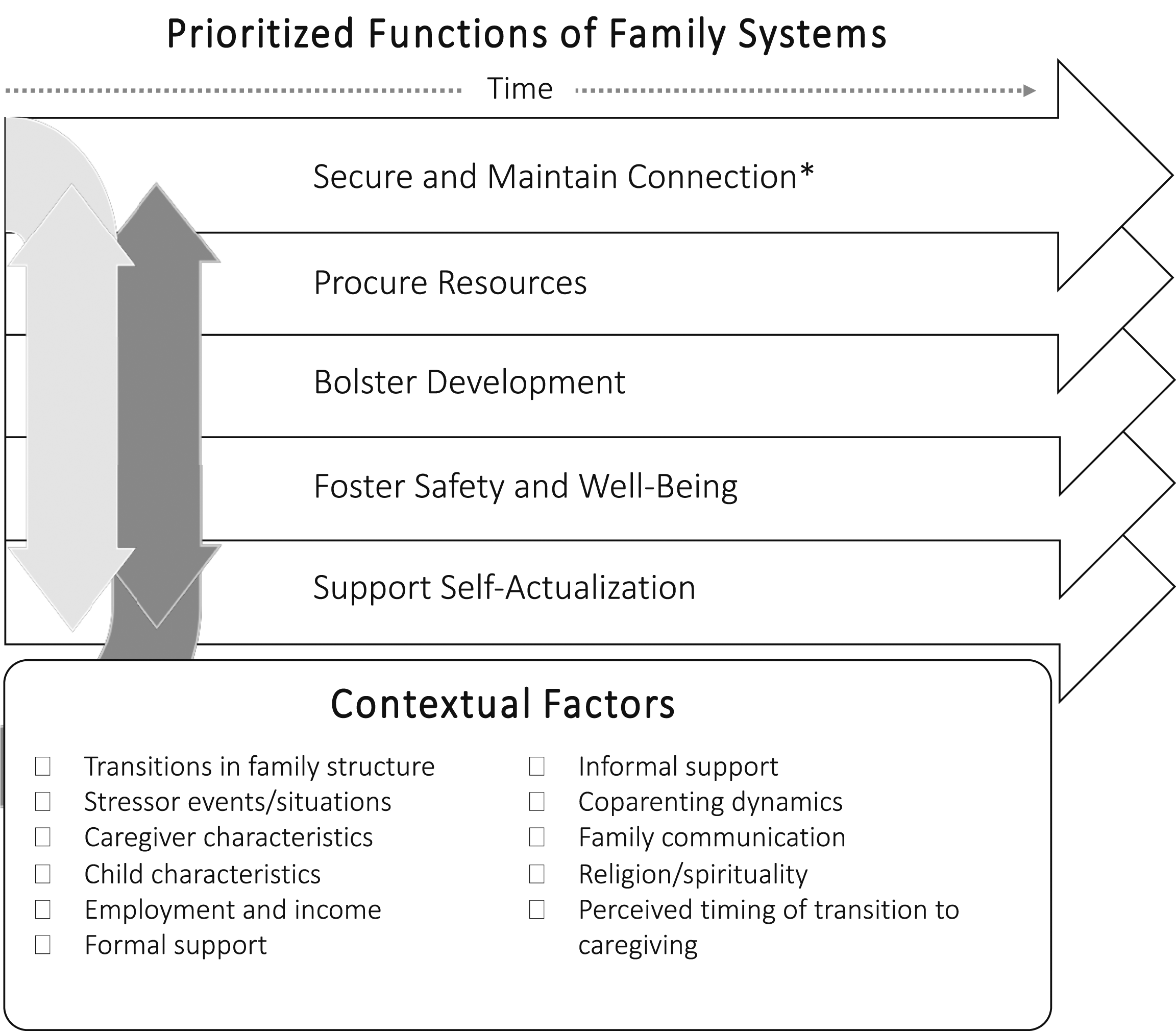
Secure and Maintain Connection
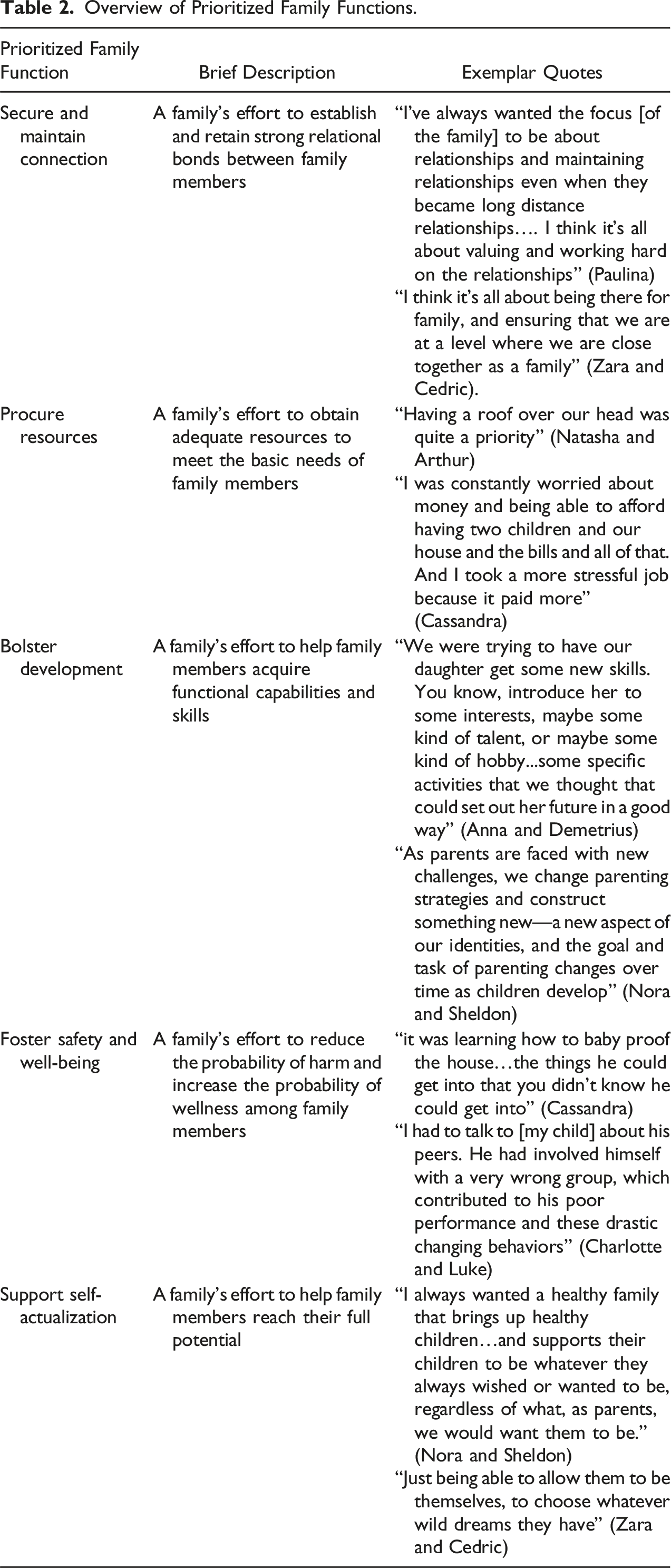
One prioritized family function was to secure and maintain connection, reflecting a family’s effort to establish and retain strong relational bonds between family members. This function was evident across various relationships, including relationships between caregiver and child, between caregivers, and within extended kin networks. This function was also evident across various stages of family life. Upon transitioning to the caregiver role, participants described an effort to forge a strong connection with their infant, often viewed as an important foundation upon which to build the health and development of the child. As families traversed the early life course, particularly as children entered adolescence and began seeking autonomy, efforts to secure and maintain connection were evident in families’ attempts to strengthen the quality of their relationships and orchestrate situations that could aid in that cause. As one participant stated, “I’ve always wanted the focus [of the family] to be about relationships and maintaining relationships even when they became long distance relationships…. I think it’s all about valuing and working hard on the relationships” (Paulina). Another participant reflected, “I think it’s all about being there for family and ensuring that we are at a level where we are close together as a family” (Zara and Cedric).
Compared to the other family functions we identified, the secure and maintain connection function was unique in that it represented both a prioritized function of family systems and an important contextual factor that enabled families to pursue and fulfill other prioritized functions over time. For this reason, the secure and maintain connection function is highlighted with an asterisk in Figure 1; there is also a bidirectional arrow flowing from this function that moves across the other four family functions identified in our analysis. The visualization is intended to represent the secure and maintain connection as foundational and facilitative. From a general systems perspective (Cox & Paley, 2003), these characteristics are not surprising given that connection between members of the family system is a self-protective and self-sustaining property. Indeed, a family system would cease to be a system in the event relational ties are significantly severed.
Procure Resources
Another prioritized family function was to procure resources, which reflected a family’s effort to obtain adequate resources to meet the basic needs of family members. This function appeared most pronounced during early stages of family life, although some participants emphasized this function as children entered adolescence and approached legal adulthood—a time when caregivers were re-assessing the various costs associated with supporting children in their pursuit of higher education and other career preparation activities. Efforts to procure resources were often framed in terms of creating financial stability, easing stress, and meeting the physical and psychological needs of all family members. As one participant noted rather concisely, “having a roof over our head was quite a priority” (Natasha and Arthur). For some families, procuring sufficient resources required caregivers to pursue employment opportunities that relocated the family or required caregivers to move away from home temporarily (e.g., several weeks or months).
Bolster Development
Another prioritized function of family systems was to bolster development, which reflected a family’s effort to help family members acquire functional capabilities and skills. This function was evidenced across all commonly identified stages of family life, with notable upticks in salience during early childhood and adolescence. In this context, families possessed inclusive conceptualizations of development. Indeed, over time families attended to the advancement of children’s cognitive abilities, social skills, physical abilities (e.g., active sports), and spiritual growth or cultivation of strong moral character and an ability to draw meaning from adversity. Efforts on these fronts often reflected direct efforts by caregivers through the provision of scaffolding, coaching, behavior modeling, and activities consistent with the concept of “concerted cultivation” as articulated by Lareau (2011)—overt attempts by caregivers to foster a child’s talents or abilities through structured or organized activities. Efforts to bolster development were also pursued indirectly, as caregivers endeavored to select or promote environments (e.g., schools and peer groups) that were perceived as being optimal for individual development.
The function of families to bolster development was not confined to a focus on children. Participants described how their families functioned to promote their own development as adults and caregivers. Consider the following participant reflection: “As parents are faced with new challenges, we change parenting strategies and construct something new—a new aspect of our identities, and the goal and task of parenting changes over time as children develop” (Nora and Sheldon).
Foster Safety and Well-Being
Across various stages of family life, families also prioritized the function to foster safety and well-being, representing a family’s effort to reduce the probability of harm and increase the probability of wellness among family members. In relatively early stages of family life, this function involved the removal or avoidance of dangerous objects or situations, particularly when caring for an infant. As children grew older, offers to foster safety and well-being involved striking a delicate balance between supporting children’s growing desire for autonomy and preventing children from engaging in dangerous behaviors or activities (e.g., substance misuse and delinquency). Concerns around safety were often intertwined with a desire for family members to be happy and thrive. As one participant noted, “all I needed was the reinforcement that [my child] was happy—that’s what I needed” (Lilly).
Support Self-Actualization
Overview of Prioritized Family Functions.
Contextual Factors
With respect to our second research question, Figure 1 also features a list of identified contextual factors that could enable, inhibit, or otherwise influence prioritized family functions over time. Consistent with a life course perspective, salient contextual factors could stem from individual characteristics or elements of individual life course development (including some that highlight agency and timing), features of the interdependencies and dynamics between members of the family system (social convoy), and aspects of the larger social environments in which families were situated. Our analysis yielded the following 11 contextual factors: • transitions in family structure, such as the birth or addition of more children in the family or shifts in the structure of adult relationships (e.g., divorce, separation, and repartnership/remarriage); • stressor events or situations, such as family relocation or the death of a family member; • caregiver characteristics, such as mental health concerns, grit or determination, self-awareness, and efforts to learn or grow over time; • child characteristics, such as physical health challenges, personality or temperament, and experiences of adversity and growth; • employment and income; • formal support, such as professional counseling or support from medical professionals (e.g., pediatricians and family doctors); • informal support, such as instrumental or emotional support from extended family, friends, coworkers, and acquaintances;
1
• coparenting dynamics, such as alignment, support, and cooperation between parental figures; • family communication, consistent with the Circumplex Model that views high-quality communication as a family capability that promotes functioning and enables families to adapt effectively over time (Olson, 2000); • religion/spirituality; and • perceived timing of transition to caregiving, such that a perceived “early” or unexpected transition to caregiving could significantly elevate the procure resources function of family systems.
Before turning to a discussion of our findings, one foundational finding we have highlighted is that prioritized functions of family systems often transcended specific or discrete stages of family life. For some, a family function was prioritized across all identified family stages captured in our analysis. For others, a family function was most pronounced during specific stages. This general variability further signaled value in shifting away from an over-emphasis on discrete family stages and toward a focus on the various functions that families prioritized and what contextual factors enabled, inhibited, or otherwise influenced them. As a result, our review of key findings focused on providing descriptions of prioritized family functions and contextual factors, with some discussion of the family stages to which they were frequently tethered. Participants were strikingly similar in terms of the stages of family life they identified as salient. Participants also generally described stages of family life in terms that reflected the developmental stage of the focal child. Common stages highlighted by participants included the following: transition to caregiving (including pregnancy), early and middle childhood, child entering adolescence, child in adolescence, and child reaching legal adulthood.
Discussion
Focusing on a sample of individuals who had experience raising at least one child from infancy to legal adulthood, we sought to identify (a) prioritized family functions over time and (b) the contextual factors that influence them. Our analysis foregrounded five prioritized functions, namely, secure and maintain connection, procure resources, bolster development, foster safety and well-being, and support self-actualization. As noted earlier, each prioritized family function transcended any specific stage of family life; highlighting the dynamic, fluid, and potentially overlapping nature of family functions over time. This foundational finding enriches extant theorizing and hypothesizing about families as social systems—in particular, it challenges the time-specific nature and rigid sequencing of family developmental tasks posited by traditional theorizing about family systems (e.g., family developmental theory). Consistent with a life course perspective, our findings showcase family systems as social convoys dynamically pursuing functions that meet their needs at a particular point in time, all while navigating contextual constraints and leveraging available assets and strengths.
In some respects, the prioritized functions of family systems identified in this study align with earlier theorizing about families and the functions they can fulfill for individuals and society. Indeed, the family functions we identified arguably connect with one or more of the family functions articulated by Patterson (2002) as follows: (a) membership and family formation; (b) economic support; (c) nurturance, education, and socialization; and (d) protection of vulnerable members. However, our findings placed special emphasis on the secure and maintain connection function; highlighting its foundational and facilitative role for families across the life course. Supporting self-actualization also was uniquely emphasized in our data. Taken together, our findings showcase the value of exploring the “situated truths” of families, enabling family members themselves to describe the functions their families are aiming to fulfill over time.
Although participants were encouraged to identify any stage of family life they deemed important while considering prioritized family functions, it is notable that participants often highlighted stages of family life in terms of a child’s developmental progress. The salience of caregiving and its many demands undoubtedly make a child’s developmental progress a clear anchor for caregivers as they seek to describe their family experiences over time. This might be especially true if caregivers evaluate the success of their families in terms of child behavior and outcomes—an experience some participants described in their interviews. From a sociological perspective, the societal entrenchment of traditional views of the family or family life cycle also might have influenced how participants cognitively mapped their family experiences. In any case, among those striving to understand what families aim to accomplish over time, our findings encourage a shift in emphasis away from discrete stages of family life and toward lifting up the voices of families to articulate for themselves what functions their families want to fulfill and when.
In addition to highlighting prioritized family functions, participant responses called attention to several contextual factors that can enable, inhibit, or otherwise influence a family’s effort or choice to fulfill various functions. The identification of these contextual factors is a notable contribution of the current study. Moving beyond a deepened understanding of what families endeavor to accomplish over time, making explicit key contextual factors that can help or hinder families will prompt researchers, practitioners, and policymakers to be thoughtful about the dynamic environments in which families attempt to function, perhaps highlighting malleable factors that can be targeted by programs and policies to reduce barriers to or increase facilitators of families’ fulfillment of their self-directed functions over time. Although extant family theories attend to contextual factors as they relate to producing family demands or family capabilities, the balance of which can influence family adjustment or adaptation over time (e.g., Contextual Model of Family Stress; Boss et al., 2017), our study uniquely attends to contextual factors as they relate to successful fulfillment of prioritized family functions.
Practical Implications
Our findings have insightful practical implications. Foremost, our study findings could support efforts to frame various family-oriented practice or policy approaches through the lens of what a family is striving to accomplish and what contextual factors might help or hinder their efforts. The selection of treatments, interventions, programs, policies, practices, or other relevant approaches to engaging with or supporting families could be guided notably by this perspective as opposed to relying on presuppositions about what a family “should” be striving to accomplish given their apparent stage of family life. Practitioners and policymakers could be better positioned to determine whether a family is “doing well” if they know precisely what it is families are trying to accomplish from their own perspectives. Consistent with the concept of cultural humility (Tervalon & Murray-Garcia, 1998), our findings encourage practitioners and policymakers to continually challenge their own assumptions and resist imposing their own values and beliefs onto the families they aim to serve.
Following additional research (for which we offer specific suggestions below), there could be value in developing a measure or assessment tool that efficiently captures information about families’ prioritized functions and the contextual factors that shape them. For example, in pediatric primary care delivery, providers can more effectively deploy motivational interviewing and other relevant techniques if they understand a family’s current prioritized functions and contextual factors as indicated by a brief assessment tool. Practitioners who deliver family-based interventions like HealthySteps, Nurse-Family Partnership, and other home visiting programs might also benefit from such an assessment tool, using it to make explicit the prioritized functions of the families they serve and guide goal-setting and the effective engagement of multiple family members. On a larger scale, family function assessments completed by many families in a particular environment could inform local policymaking intended to support families in achieving their aspirations and shape environments that are optimally promotive and supportive.
Our findings also have practical implications for mental health practitioners. For instance, the prioritized family function secure and maintain connection can be reflected upon as a strengths-based reframe, as opposed to labeling relational dynamics as “enmeshed or fused”—the notion that someone is emotionally overinvolved with someone else (Gladding, 2019). For some families, such a reframe can engender a felt sense of validation and acknowledgment, particularly for familial constellations that do not reflect what is considered a “traditional family structure” (e.g., SNAF). Additionally, as the landscape within and across environments to which families are connected continue to evolve, mental health practitioners may have more traction in treatment progress when they hold an understanding of the value families create in efforts to foster safety and well-being as well as to support self-actualization.
Limitations and Directions for Future Research
The current study possesses several limitations that could be addressed by future research. For one, although we embraced an inclusive conceptualization of “family,” our sample was largely comprised of individuals in different-sex marriages. There remain valuable opportunities to explore further the experiences of families headed by same-sex couples, unmarried couples, families headed by one caregiver, and families with expansive multigenerational caregiving approaches (e.g., active involvement from grandparents, aunts, uncles, and other extended kin), among others. Some participants mentioned experiencing relationship transitions such as divorce and remarriage; however, it would be insightful to continue exploring prioritized functions among stepfamilies—families in which one or both partners bring a child or children from a previous relationship. Stepfamilies are an increasingly common family form in the United States and across the world (Ganong & Coleman, 2017), and can include constellations of various sibling types (e.g., half-siblings and stepsiblings; Sanner & Jensen, 2021) and coparenting networks that transcend a single household (Jensen, 2017). Because our sample focused on individuals who had at least one child who recently arrived at the age of legal adulthood, future research should also attend to the experiences of families during late life, such as when caregivers approach older adulthood. Importantly, not all adults in families opt to transition to caregiving or parenthood and not all adults form and maintain intimate partnerships (Beckmeyer & Jamison, 2023); it will be highly insightful to attend to the perspectives of individuals with these experiences.
Our study sample was also limited in terms of the racial and ethnic identities represented. While our findings largely represent the experiences of participants who identify as non-Hispanic White or non-Hispanic Black/African American/African descent, future research should focus on the experiences of families with numerous other racial/ethnic identities to ensure research focused on prioritized family functions is inclusive of all families. Various engaged scholarship approaches could be leveraged to facilitate those efforts (Jensen & Kainz, 2019).
Another limitation of the current study is the exclusive focus on the perspectives of adult caregivers. Due to various resource constraints, we were unable to include the voices of adult children and other family members. Future research would be well served by incorporating multiple perspectives across family members, including adult children, to deepen our understanding of the situated truths of prioritized functions of family systems over time. At the least, including couple dyads, when possible and applicable, in qualitative interviews could enrich data collection significantly.
From a methodological standpoint, we also want to note that the pre-interview primer was not as directly useful as originally expected. Without hands-on guidance from the researcher, it was not fully clear to participants what information to share that would effectively guide the interview and the intended direction of interview prompts. Future research could potentially bypass this pre-interview data collection feature, and instead allocate some time at the beginning of the interview to complete the family experience timeline in real-time with participants.
Limitations notwithstanding, the current study contributes to our understanding of families as social systems, the various functions they prioritize over time, and the contextual factors that enable, inhibit, or otherwise influence their realization of those functions. Our findings highlight several practical implications and serve as a foundation for future empirical inquiry.
Footnotes
Acknowledgments
The authors would like to acknowledge and express gratitude to Dr. Shari Barkin, Dr. Shirley Russ, Dr. Ali Crandall, Dr. Nomi Weiss-Laxer, Dr. Neal Halfon, Saswati Ramaswami, Mary Berghaus, and other partners within the Life Course Intervention Research Network and Family Measurement Node for their contributions and support.
Declaration of Conflicting Interests
The author(s) declared no potential conflicts of interest with respect to the research, authorship, and/or publication of this article.
Funding
The author(s) disclosed receipt of the following financial support for the research, authorship, and/or publication of this article: This project is/was supported by the Health Resources and Services Administration (HRSA) of the U.S. Department of Health and Human Services (HHS) under award UA6MC32492, the Life Course Intervention Research Network. The information, content, and/or conclusions are those of the author and should not be construed as the official position or policy of, nor should any endorsements be inferred by HRSA, HHS, or the U.S. Government.
