




Abstract
Transnational marriages between Singaporeans and non-Singaporeans have increased significantly in the 21st century, peaking at 41% among citizen marriages in 2009. About three-quarters of these couples are Singaporean grooms marrying foreign brides originating from lower income countries in Asia. We use a new nationally representative study—Singapore Longitudinal Early Development Study (SG LEADS)—to examine gender relations between spouses with young children and their family dynamics. Results show that compared to native-born mothers, foreign-born mothers have a more traditional gender ideology, bear heavier responsibility for housework, and are less likely to take primary responsibility for financial matters in the family. Data also reveal that there are more disagreements about childrearing between spouses and a higher level of family conflicts in these cross-national families. These differences can partly be accounted for by the age gap between spouses, mother’s education, family income, mother’s employment status, and family composition.
Introduction
Transnational marriages between Singaporeans and non-Singaporeans have increased significantly in the 21st century, accounting for a substantial proportion of all marriages involving citizens registered in Singapore (see Figure 1). According to official statistics, this proportion peaked at 41% in 2009 and subsequently declined to 36% in 2019 (Department of Statistics, 2019). About three-quarters of these couples are Singaporean grooms with foreign brides, with the majority of foreign brides originating from lower income countries in Asia, such as China and Vietnam. Statistics show that among all registered newborns, nearly 30% of the newborns had a non-citizen mother and 25% of them had a non-citizen father (Immigration and Checkpoint Authority, 2020). Previous studies have shown that transnational marriages also tend to have multiple disadvantages due to low socioeconomic status and lack of access to formal and/or informal support systems. The increase in transnational marriages raises new questions about the well-being of these families and the challenges they may face in raising children. Trend of Cross-national Marriages in Singapore, 1984–2019.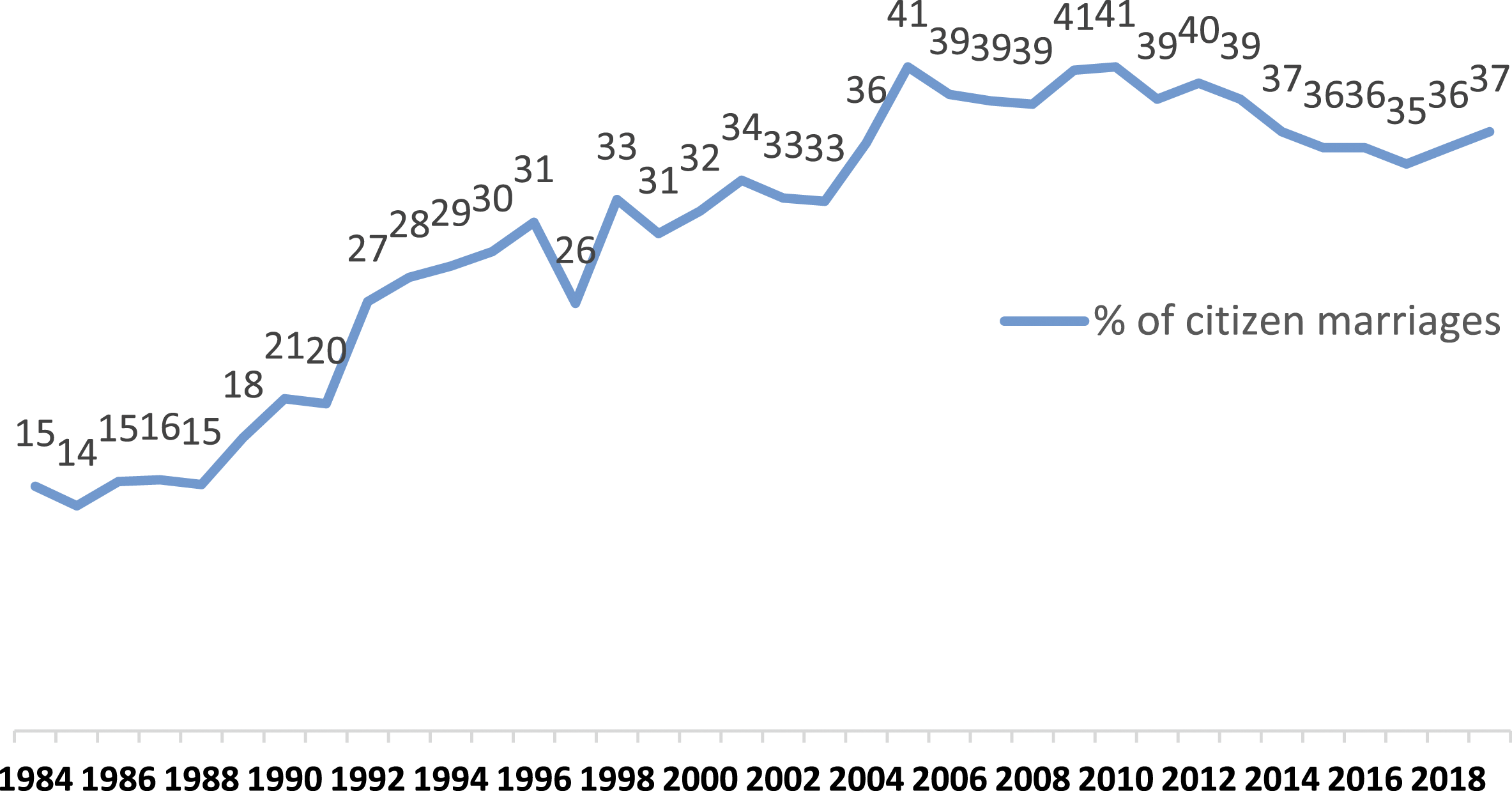
In this paper, we focus on couples with Singapore-born grooms and foreign-born brides that have at least one child younger than 7 years. In such cross-national families, foreign brides are often seen as subordinate and dependent on their Singapore husbands because of their lower socioeconomic status and insecure immigration status. We examine the gender relation between spouses and family dynamics. We use data collected from a new study—Singapore Longitudinal Early Development Study (SG LEADS) conducted in 2018–2019—to examine the domestic division of labor, the level of disagreement on how to raise their children, and conflicts between partners. We investigate whether the cross-national couples are different in these aspects from other Singaporean parents, and if so, what are the factors that contribute to such differences.
Gender and Cross-national Families
Among Asian cross-national families, female marriage migrants are usually from less developed countries and disadvantaged in terms of social status and resources compared with their male partners, due to hypergamy (Chiu, 2017; Yeung & Mu, 2019). Men who enter the international marriage market to look for a wife from the less developed region also tend to be of lower socioeconomic status who are squeezed out of the local marriage market and expect to find a more submissive wife to maintain their sense of masculinity (Cheng et al., 2015; Jones & Shen 2008; Raymo et al., 2015). Research shows that in such cross-national marriages, the local men are often substantially older than the foreign brides, and the gendered power relations are often skewed toward men (Chiu, 2017; Chang, 2019; Li & Yang, 2019).
Another factor that may affect the gender dynamics between a local husband and his foreign spouse is the latter’s legal status. In some countries, foreign-born spouses do not automatically gain legal status and work authorization when they marry a citizen. In Singapore, foreign-born spouses need their local spouses’ sponsorship to apply for citizenship (ICA, 2018). Studies show that many foreign-born wives hold a Long-Term Visit Pass (LTVP) rather than a permanent resident status, which can only be obtained after their local husband applies for it (Cheng et al., 2015; Quah, 2019). The LTVP needs to be renewed every 5 years based on a Singaporean’s support (usually by their spouses). For a foreign-born spouse to be employed, he/she needs a Singaporean spouse to sponsor her/him to obtain an employment permit (Ministry of Manpower, 2018). Studies have noted that some native-born husbands assert their masculinity by controlling their foreign wives’ visa applications (Yeoh et al., 2013). Such dependency on the local spouse increases the likelihood of less egalitarian gender relations and greater conflicts in cross-national families.
According to the relative resources theory, spousal education, income, and employment status (Hamplová et al., 2019; Teerawichitchainan et al., 2010) may transform into bargaining power for division of labor and decision making at home (Ruppanner, 2010). It would be more challenging for foreign wives to leverage their bargaining power at home if they have a lower socioeconomic status than their native husbands. The native-born men in cross-national families tend to have more traditional gender ideology, and qualitative studies have documented that some native-born men in cross-national marriages use such marriage to practice their masculinity (Jongwilaiwan & Thompson 2013; Yeoh et al., 2013). It can be more difficult for foreign wives to be financially independent since some of them do not have the legal status to work. Foreign wives thus often have unequal gender power due to their lower economic status, being much younger than their husbands, and from lack of social ties and family support in the receiving country (Chiu, 2017; Choi et al., 2012; Chong, 2014).
Several studies have shown that the consequences of gender inequality are reflected in the relatively high family conflicts in cross-national families (Chiu, 2017; Choi et al., 2012; Williams & Yu, 2006). A study in Korea has found that foreign-born mothers had 3.19 times higher anxiety levels than native Korean mothers because foreign-born mothers tend to have more children at a younger age and have lower education and socioeconomic status than native Korean mothers, which may affect their ability to adjust to marriage and childrearing responsibilities (Lee et al., 2014). Research has also shown that cross-national couples have a higher risk of divorce (Chen & Yip, 2020; Choi et al., 2019; Quah, 2019). In Singapore, the dissolution rate before the fifth anniversary for each marriage cohort was about 7.1%–7.9% for cross-national marriages and 6.4%–6.8% for non-cross-national marriages from 2007 to 2009 (Ministry of Social and Family Development, 2016). A study in South Korea found a similar pattern (Choi et al., 2019).
For reasons noted above, we expect the gender relations between cross-national couples to be less egalitarian, with more disagreements regarding childrearing and a higher level of family conflict.
Methods
Data
We draw data from the Singapore Longitudinal Early Development Study (SG LEADS). The data were collected in 2019 from a nationally representative sample of 5017 Singaporean children (citizens and permanent residents) aged 0–6 and their primary caregivers living in 3481 households across the nation. Children from all socioeconomic statuses and racial groups were properly represented in this study. The study oversampled those living in 1–2 and 3-room flats to obtain an adequate sample size to analyze the low-income population (Yeung et al., 2020). Sampling weights were created to be used in the analysis to adjust for initial selection probability and response rates so that the data represented the entire population. Results presented in this paper were adjusted with these sampling weights.
Sample
The analysis in this paper only includes households where the primary caregiver (PCG) of the target child was the mother in the household. This is because the PCG was the respondent in the survey, and 95% of PCGs were the mothers, with only a small number of households having a father, a grandparent, or others as the PCG of the target child. In 3121 households, the PCG was the mother of the target child.
Measures
In this paper, we define a cross-national couple in Singapore as a Singaporean-born individual with a spouse born outside Singapore. Based on this definition, there are four types of families: (1) families with both Singapore-born parents (native family), (2) cross-national families with a foreign-born mother and a Singapore-born father, (3) cross-national families with a foreign-born father and a Singapore-born mother, and (4) families with both foreign-born parents. These four family types were the main independent variables in this study.
Dependent Variables
We examined several variables that capture the PCG’s gender ideology, family dynamics, and couple’s attitudes and behavior in raising children together. These were the PCG’s gender ideology, the share of the domestic division of labor including the core household chores, responsibility for childrearing activities, handling financial matters in the households, family conflicts, and spousal disagreement about how to raise children.
Gender Ideology
The first dependent variable measured the respondent’s perception of men’s and women’s roles with a set of questions assessing the extent to which the mother agreed with the following nine statements: husband and wife should share household tasks, women are happier at home, it is better if a man earns a living and woman cares for the family, it is important for wife to help husband’s career, employed mom can be as warm as an unemployed mom, same independence for daughters as sons, preschool children suffer if mom is employed, mom should not work full time when a child is below 5 years, and it is fine for children under 3 years to be in all-day care.
All items were ordinal variables on a 4-point Likert scale from “1—strongly disagree” to “4—strongly agree.” We coded all items so that they were all in the same direction. A lower value indicated a more traditional gender ideology, and a higher value indicated a more egalitarian gender ideology. Then, we created a composite index of gender ideology by taking the mean values of these nine indicators. In this sample, all PCGs were mothers; the mean of gender ideology ranging from 1 to 4 was 2.80 (SD = 0.40). A higher number indicates PCG mothers hold a more egalitarian gender ideology.
Domestic Division of Labor
We used 14 items to capture the domestic division of labor in the household. The survey questions asked the PCG to assess who did a specific housework task in the household. The PCG was asked to select from the following options: 1—“Primarily you”; 2—“Primarily your spouse/partner”; 3—“Primarily other household members (including living-in domestic helper)”; 4—“Shared almost equally by household members (including living-in domestic helper)”; and 5—“Primarily non-household members.”
We conducted an exploratory factor analysis to examine the internal reliability of this group of variables. The factor analysis result showed that the 14 variables on the division of labor were loaded on two latent variables with loadings above 0.4 for each factor. The first latent variable was on the core household chores, and the second latent variable was on childcare activities. The internal consistency reliability for these two main factors was all above 0.8 (alpha = 0.8 for the core housework chores and 0.82 for childcare activities), which expressed a good internal consistency of >0.7 (DeVellis, 2003).
Responsibility for the Core Household Chores
The first latent cluster was the household chores consisting of five variables, including washing dishes, cleaning the house, washing, ironing, mending, preparing meals, and shopping for groceries.
To determine the extent of household chores done by the PCG mothers, we created a new dummy variable for each item on the household chores. We coded these variables on household chores as 1—“Primarily spouse/partner,” 2—“Shared almost equally by household members,” and 3—“Primarily you.” There was a small proportion of items that were reported as primarily done by other households or non-household members. Therefore, we treated those cases as missing. 1 Next, we created a composite index by taking the means of these recoded variables. The index for the core household chores ranged from 1 to 3, with a higher score indicating the PCG had a heavier responsibility for the core housework. This index had a mean of 2.34 (SD = 0.51).
Responsibility for Childcare Activities
The second latent variable contained seven variables that were related to childcare activities, including bathing children and changing diapers; choosing children’s activities; selecting a childcare program, preschool, or school; taking children to activities, selecting a pediatrician and making appointments; disciplining children; and playing with children. Less than 1% of childcare was performed by other household or non-household members.
Therefore, we treated these cases that were performed by other members as missing. 2 We created an index for the childcare responsibility in the same way we did for the core household chores. We recoded the six variables on childcare activities as “1—Primarily spouse,” “2—Shared equally,” and “3—Primarily you.” Subsequently, we created a composite index of childcare activities by taking the mean of these recoded items with a higher score indicating a heavier childcare responsibility for the PCG mother. The mean of responsibility for childcare activities was 2.14 (SD = 0.37).
Responsibility for Financial Management
We used another indicator that captured who took care of the financial matters in the household as the fourth dependent variable. One survey question asked the PCG who paid the bills and kept financial records in the household. We recoded this variable into three categories: “1—Primarily spouse/partner,” “2—Shared equally,” and “3—Primarily you,” with a higher score indicating the PCG had a heavier responsibility for managing financial matters in the household. In this sample, around 1.3% of financial matters were managed by non-household members; thus, we treated them as missing data. The mean of managing financial records was 1.54, with a standard deviation of 0.73.
Disagreement on Childrearing Practices
The fifth dependent variable measured the level of disagreement between the PCG and their spouses on childrearing practices; a 4-item measure asked the PCG to indicate whether they “1—never,” “2—hardly ever,” “3—sometimes,” or “4—often” had a disagreement with their spouse on how to raise children, how PCG spent money on children, and spouse/partner’s time with children. We generated a composite index by taking the mean of the above items. The mean of this index was 2.10, with a standard deviation of 0.83. In this sample, 0.84% of respondents did not answer these questions; thus, we treated them as missing cases.
Family Conflict
The sixth dependent variable in this study captured family conflict. The questionnaire asked PCG whether they “1—strongly disagree,” “2—disagree,” “3—agree,” or “4—strongly agree” on five statements: “we fight a lot,” “family members sometimes get so angry they throw things,” “family members always calmly discuss problems,” “family members sometimes hit each other,” and “family members often criticize each other.” We reverse-coded the item of “family members always calmly discuss problems,” so that it was in the same direction as the rest of the items. Then, we generated the composite index of family conflict by taking the mean of these five items. A higher value indicated that the household had greater conflicts in the family. In this sample, the mean score of family conflict was 1.54, with a standard deviation of 0.46.
Explanatory and Control Variables
To explain the variation of gender and family dynamics within the household for different types of couples, we included family socioeconomic status, parental demographic characteristics, and the family’s living arrangements. For family socioeconomic status, we examined the parents’ educational attainment, mother’s employment status, and monthly family income.
To test the relative resources theory, we generated an ordinal variable to compare mother’s and father’s educational attainment. The variable of relative education between parents had three categories: 1—father’s educational level is higher than the mother’s (F > M), 2—father’s and mother’s educational level are the same (F = M), and 3—mother’s educational level is higher than the father’s (F < M). We also conducted another set of multivariate analyses using the mother’s and father’s education separately (results not shown).
We grouped the mother’s employment status into three categories: 1—working, 2—housewife, and 3—others, not working consisting of mothers who were students or unemployed at the time of the interview.
Family income was measured by monthly per capita family income. As income is highly skewed, we used the logarithmic transformation of this variable in the analysis to lower the impact of heteroscedasticity.
As for parental demographic characteristics, we controlled for the mother’s age, the age differences between the spouses, and marriage duration. We also controlled the number of years of marriage for the mother. Around 99% of respondents in this sample were married at the time of the interview. We also controlled for the number of years the PCG had lived in Singapore, the type of housing the couple lived in, and the household composition of the family. We grouped the housing type into three categories: 1-to-3-room HDB, 4-to-5-room HDB, and condominiums or landed property. This variable captured the living space and environment for the family. For family composition, we controlled the number of children under 18 years and the number of adults above age 65 living in the household at the time of the interview, which was expected to affect the division of labor and decision making in the four types of families.
Results
Descriptive Statistics of Dependent Variables
Table 1 presents the number and percentages of cross-national families in the analysis sample. All descriptive statistics are weighted with sampling weights created by SG LEADS that adjust for the initial selection probability and the non-response rate to have proper national representation. In 56.9% of families, both parents were born in Singapore. Almost one in four families (23.4%) was a cross-national family with one foreign-born parent born outside Singapore. Cross-national families with a foreign-born mother accounted for 17.8% in this sample, and cross-national families with a foreign-born father accounted for 5.7%. In about one in five (19.7%) families, both parents were born outside Singapore.
Family Types of PCG Mothers.
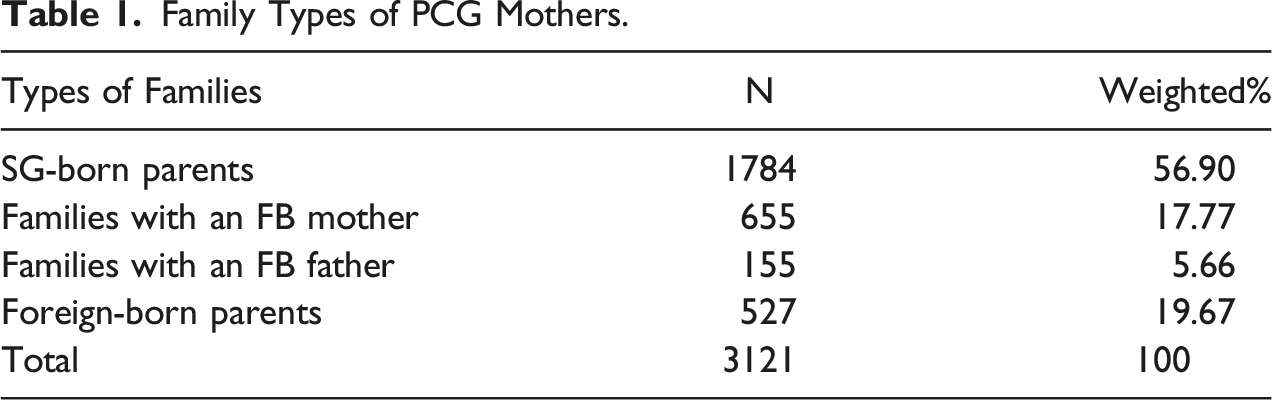
Table 2 presents the place of birth of foreign-born parents. Among the cross-national families in this sample, foreign-born mothers hailed from 28 countries. China (PRC) (26.0%), Malaysia (24.6%), and Vietnam (13.6%) were the top three countries of origin of the foreign mothers, followed by Indonesia (11.2%), the Philippines (7.4%), and Thailand (5.6%). Among the foreign-born fathers, the top five countries were Malaysia (46.2%), India (18.1%), PRC (7.5%), Indonesia (7.3%), and Switzerland (3.9%). 3 For both couples born outside Singapore, the majority of mothers and fathers were born in PRC, Malaysia, or India. The top 3 combinations were couples who were both born in India, both born in China, and both born in Malaysia.
Country of Birth of Foreign-born Spouse.
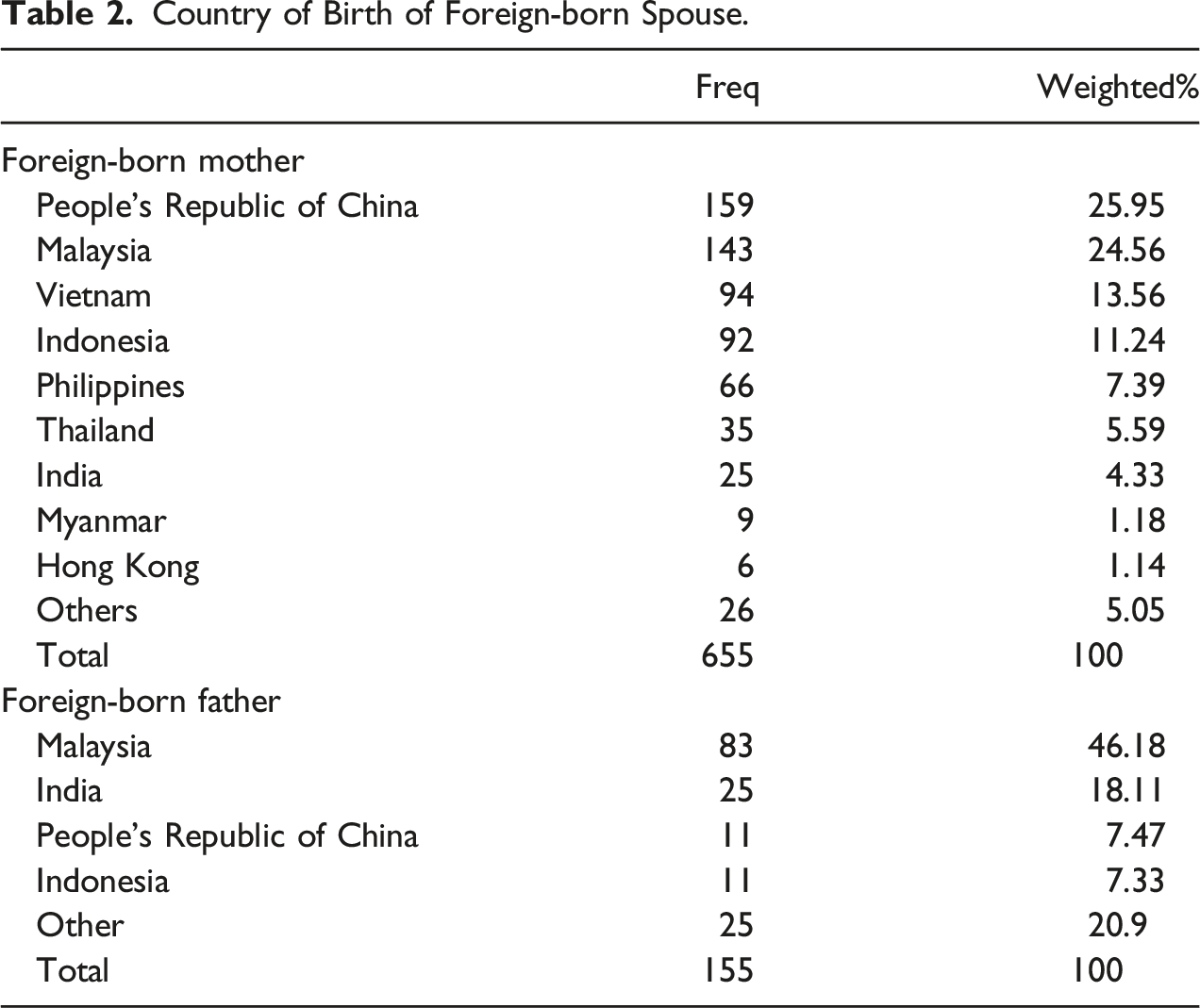
Table 3 presents the summary statistics of the dependent variables by the four types of families—native families, cross-national families with a Singapore-born father and a foreign-born mother, cross-national families with a Singapore-born mother and a foreign-born father, and families with both spouses born outside Singapore.
Summary Statistics of Dependent Variables by Four Types of Families, Mean (standard deviation).
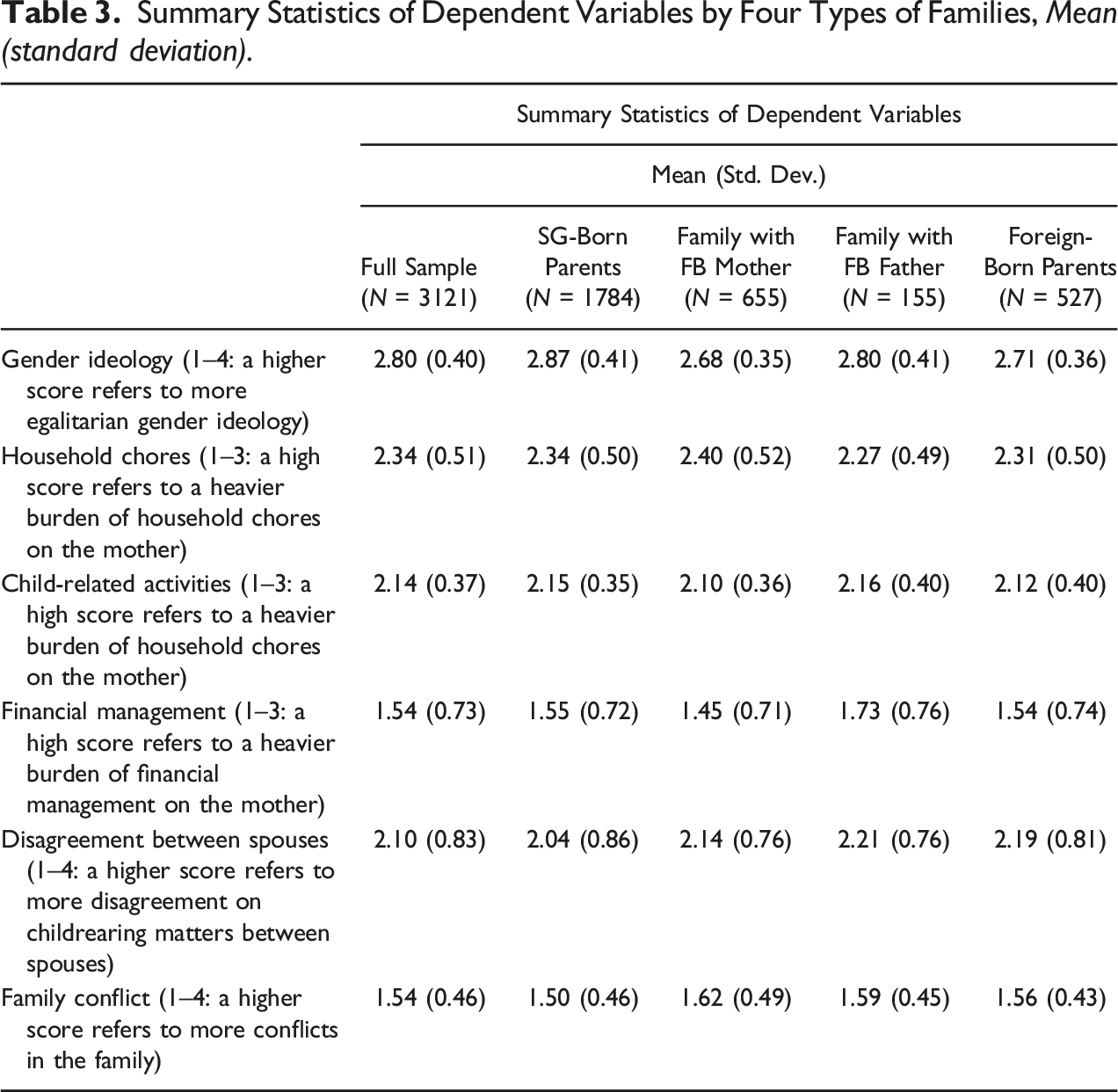
Among the four family types, the foreign-born mothers in cross-national families had the least egalitarian gender ideology and were more likely to be primarily responsible for the core household chores. They were less likely to be primarily responsible for childcare activities and for managing financial matters than mothers from other types of families. Cross-national families with a foreign-born mother reported more family conflicts than the other three types of families. These differences were all statistically significant. Compared to native families, cross-national families with foreign-born mothers reported a higher level of disagreement with their spouses about how to raise their children. However, this difference was not statistically significant.
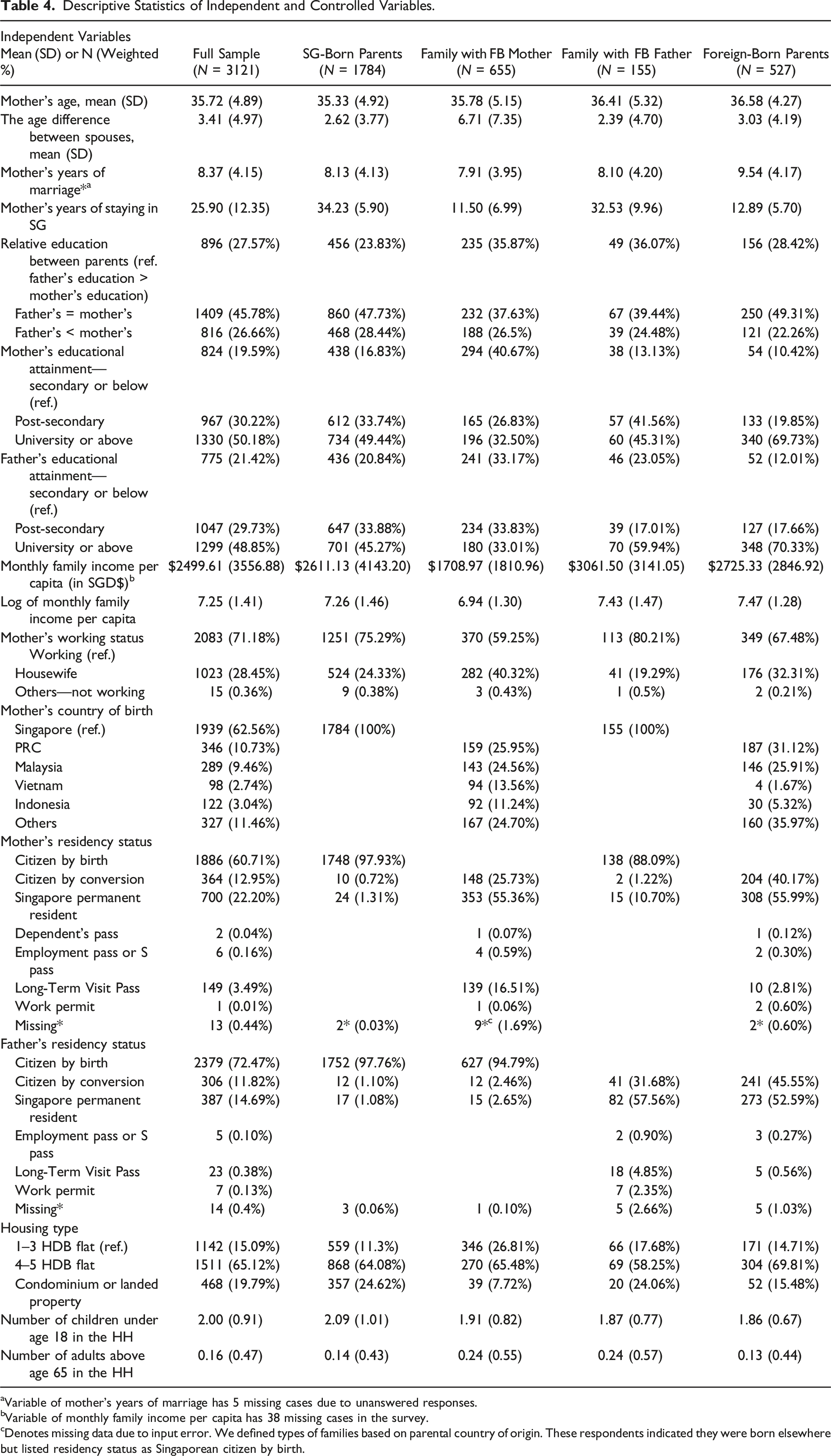
Table 4 presents the descriptive statistics of the socioeconomic and demographic characteristics of these four family types. The mean age of mothers was around 35–36 years old. The age difference between the partners, calculated by subtracting the wife’s age from the husband’s age, was substantially larger for the cross-national couples with a foreign-born mother. While the average age difference was 3.4 years, it was 6.7 years between a foreign-born mother and her Singapore-born husband.
Descriptive Statistics of Independent and Controlled Variables.
aVariable of mother’s years of marriage has 5 missing cases due to unanswered responses.
bVariable of monthly family income per capita has 38 missing cases in the survey.
cDenotes missing data due to input error. We defined types of families based on parental country of origin. These respondents indicated they were born elsewhere but listed residency status as Singaporean citizen by birth.
On average, cross-national couples had been married for about 8 years (ranges from 1 to 25 years) at the time of the interview. More than half of the mothers in this sample had university or above education. However, foreign-born mothers in cross-national families had a significantly lower educational attainment level, with 32.5% of them having had completed university or above education, and a larger portion (41%) of them had an education level lower than secondary school. In terms of father’s education, Singapore-born fathers in cross-national families had the lowest education level across family types, with one-third of them having a secondary education or lower and just one-third having completed university or above education. Foreign-born fathers had higher educational attainment, especially those who married a spouse born outside Singapore. Couples born outside Singapore had the highest educational attainment, with 70% of both parents attaining university or above education. Regarding relative education between the spouses, fathers had higher education levels than mothers in both types of cross-national families with foreign-born fathers and foreign-born mothers at a higher proportion of 36%, compared to 24% among the native couples.
On average, cross-national families with a foreign-born mother and a Singaporean father had the lowest monthly per capita family income (SGD 1709). In contrast, the cross-national families with a foreign-born father had the highest monthly per capita family income ($3062).
71% of the mothers were working at the time of the interview. Foreign-born mothers in cross-national families had the lowest employment rate, with almost 40.3% of them being housewives and almost 60% employed at the time of the interview. Cross-national families with a foreign-born father had the largest proportion of working mothers (80%) among the four family types.
A look at the foreign-born wives’ residency status shows that at the time of the interview, a majority of them (55%) had become permanent residents of Singapore, 26% had become Singaporean citizens, and 16.5% of them still held a Long-Term Visit Pass (LTVP). As for the foreign-born fathers, 57.6% of them were permanent residents, 31.7% had become citizens, and about 5% of them held a long-term visit pass at the time of the interview.
As for living arrangements, most families (about 65%) live in a 4-to-5 room HDB flat. However, the largest proportion living in smaller units were cross-national families with a foreign-born mother and Singapore-born father, with 26.8% of them living in a 1–2 room or a 3-room HDB flat compared to 11% of the native couples who live in this housing type. About 25% of the native couples and cross-national families with a foreign-born father lived in condominiums or landed properties compared to 7.7% of the cross-national couples with a foreign mother who did so.
On average, all four types of families had two children under the age of 18, with the native couples having a slightly higher number of children in the household than the other three types of families. A higher proportion of both types of cross-national families with a foreign-born parent (25%) lived with an adult aged 65 or above compared to about 14% of native-born couples and couples who were both foreign-born.
Multivariate Analysis Results
Gender Ideology, Housework, and Childcare
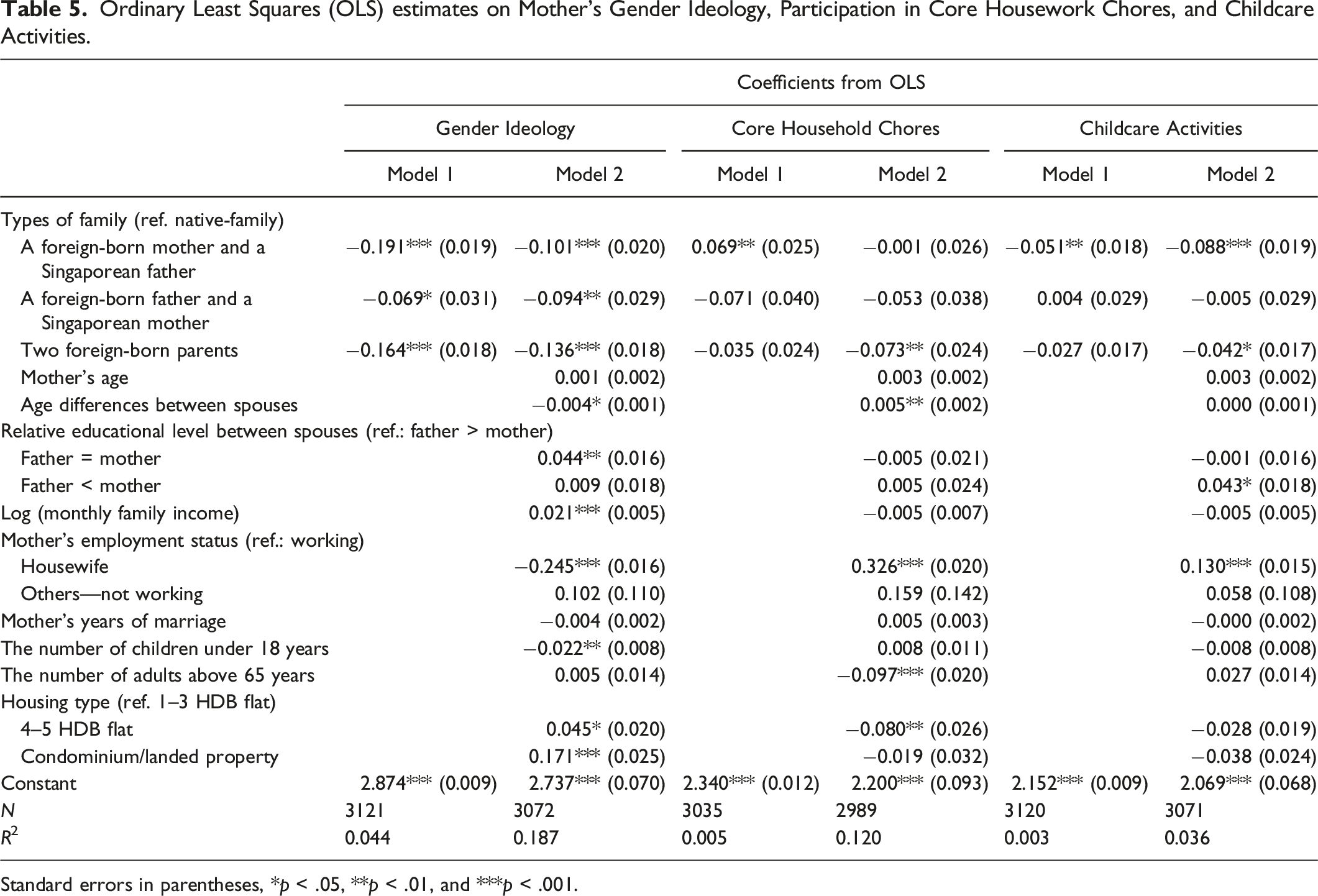
Table 5 shows the results of the mother’s gender ideology and responsibility for household chores and childcare activities. Model 1 includes only the family type in the model while model 2 includes the control for socioeconomic and demographic characteristics of the family and the partners. For gender ideology, model 1 shows that compared to mothers in native-born families, mothers in the three other family types had significantly less egalitarian (or more traditional) gender ideology. After controlling for SES and demographic variables (model 2), these differences remain significant. Foreign-born mothers with a Singapore-born husband held more traditional gender ideology than a local mother with a local husband. We further investigated whether the gender ideology among the foreign wives differed by country of birth and found that Indonesia-born and Vietnam-born wives had more traditional gender ideology than those born in Malaysia and PRC (data not shown). The significant predictors of mothers’ gender ideology were the age gap between spouses, relative educational attainment between spouses, family income, mother’s employment status, number of children under 18, and housing types. The foreign wives had a more traditional gender ideology if they were much younger than their husbands. A mother had a more egalitarian ideology when her education was at a similar level to the fathers than those who had lower education than the fathers. As expected, holding other covariates constant, the higher the mother’s educational attainment, the more egalitarian attitudes she had. Working mothers had a more egalitarian gender ideology than housewives.
Ordinary Least Squares (OLS) estimates on Mother’s Gender Ideology, Participation in Core Housework Chores, and Childcare Activities.
Standard errors in parentheses, *p < .05, **p < .01, and ***p < .001.
For the responsibility for the core household, Table 5 shows that while foreign-born mothers in cross-national families tended to shoulder a heavier burden of the household chores in the family, after controlling for SES and demographic variables, they were not statistically different from mothers in native families. The SES and demographic variables that explain why foreign-born mothers tended to bear heavier responsibilities include the age gap between spouses, the mother’s employment status, living with an older adult, and the housing type. The older the father was compared to the mother, the more likely the mother was to take primary responsibility for the core housework chores. Living with an older adult reduced the likelihood of the foreign-born mother being primarily responsible for the household chores. As to childcare activities such as selecting a child’s school or daycare, selecting a pediatrician, and choosing children’s activities, Table 5 shows that compared to mothers in native families, foreign-born mothers in cross-national families were significantly less likely to take primary responsibility for childcare activities. This might be because foreign-born mothers are less familiar with the local systems and practices related to childcare in Singapore or have language barriers, so Singapore-born fathers bear more responsibility in these childcare responsibilities. After we controlled for SES and demographic variables, this difference remained statistically significant. The significant factors predicting childcare responsibilities were relative educational attainment between spouses and the mother’s employment status. When the mothers had a higher educational attainment level than the father, the mother was more likely to take primary responsibility for childcare activities. Moreover, compared to working mothers, housewives were more likely to take primary responsibility for childcare activities.
Financial Management
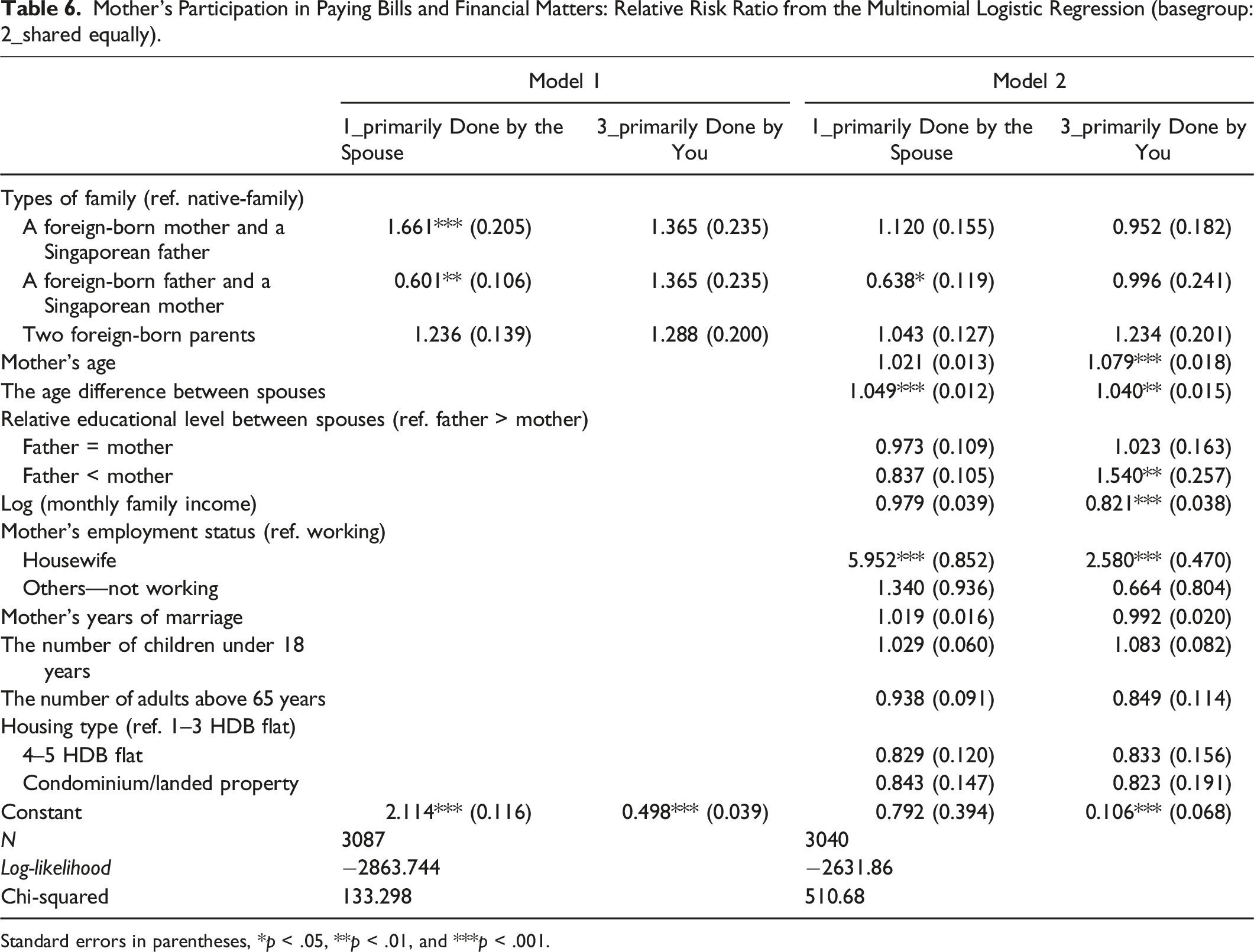
Table 6 presents the odds ratio of the mother’s participation in paying bills and financial matters in multinomial logistic regression models. The reference category is that the responsibility for financial management in the household was shared equally between household members. Model 1 shows that, compared to native families, Singapore-born fathers in the cross-national families were more likely to take the primary responsibility of paying bills and for financial matters (odds = 1.66***, p < 0.001), and the foreign-born fathers married to Singapore-born mothers were less likely to have the primary responsibility of managing the financial matters in the household (odds = 0.601***, p < 0.01), with financial responsibility more likely to be shared between spouses. However, after controlling for SES and demographic characteristics (model 2), these differences were no longer significant. Other significant covariates explaining financial responsibility between the spouses included the mother’s age, the age difference between spouses, the relative educational level between spouses, family income, and the mother’s employment status. The older the father was than the mother, the more likely he took the primary responsibility for financial matters. Fathers married to housewives were more likely to take the primary responsibility than those with employed wives. However, if the father was less educated than the mother, the financial matters were more likely to be primarily managed by the mother.
Mother’s Participation in Paying Bills and Financial Matters: Relative Risk Ratio from the Multinomial Logistic Regression (basegroup: 2_shared equally).
Standard errors in parentheses, *p < .05, **p < .01, and ***p < .001.
Parental Disagreement on Childrearing and Family Conflict
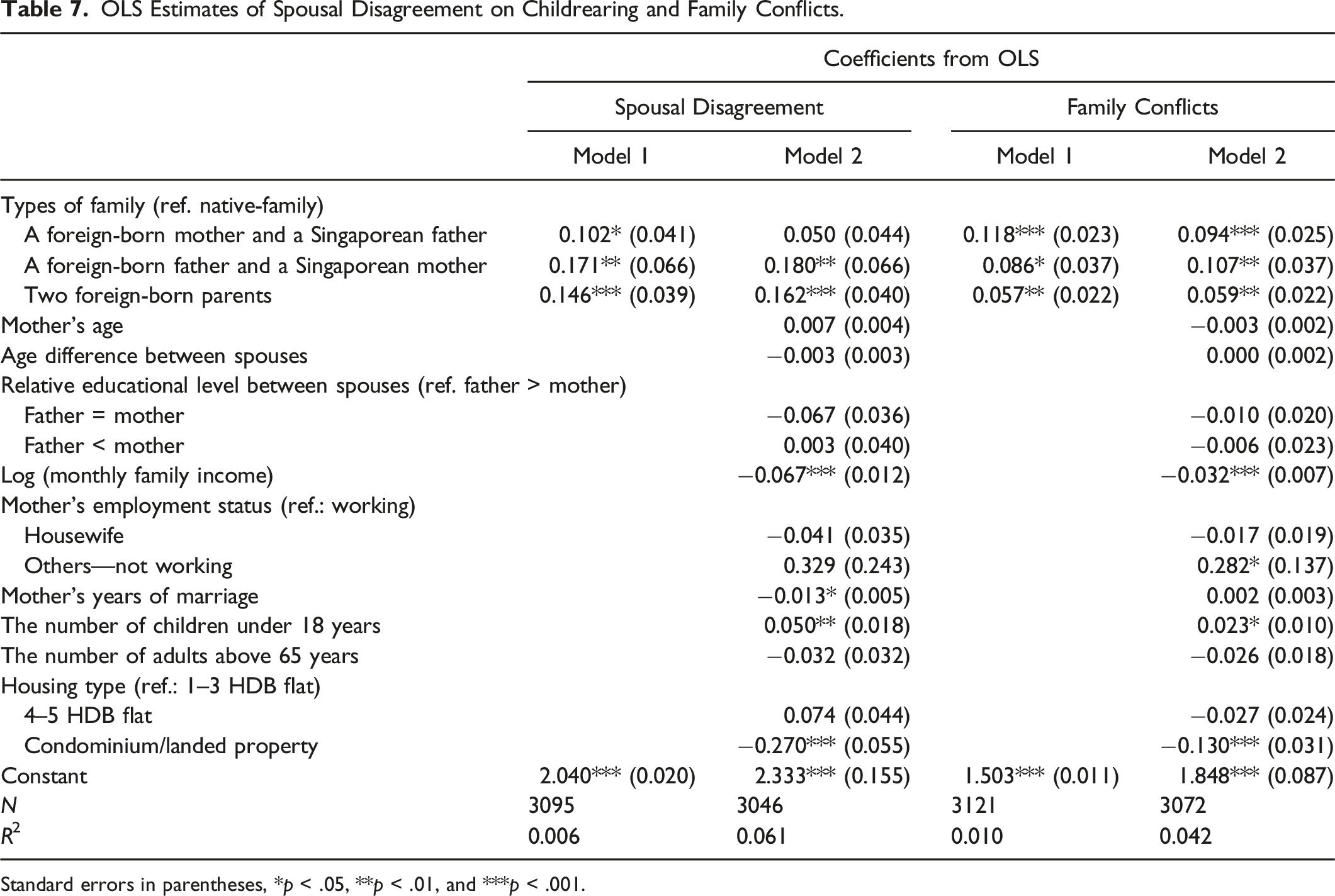
Table 7 shows that compared to native-born couples, cross-national families with a foreign-born spouse had a higher level of disagreement on how to raise their children. After holding SES and demographics constant, the difference in the level of disagreement between native families and cross-national families with a foreign-born mother became non-significant. However, the case in families with a foreign-born father remained statistically significant. Family income, years of marriage, the numbers of children in the family, and housing type accounted for the spousal disagreement on childrearing. A higher household income was significantly associated with less disagreement on childrearing. The longer the duration of the marriage, the less disagreement there was. Moreover, families living in a condominium/landed property had a significantly lower level of disagreement than families who lived in 1-to-3 room HDB housing. However, having more children in the household was significantly and positively associated with a higher level of disagreement on childrearing practices.
OLS Estimates of Spousal Disagreement on Childrearing and Family Conflicts.
Standard errors in parentheses, *p < .05, **p < .01, and ***p < .001.
Table 7 also shows the results of family conflicts. Compared to couples who were both native-born, the other three types of families had significantly more conflicts. After controlling for SES and demographics, these differences remained significant. Other covariates that partially accounted for the higher level of family conflict include household income, mother’s employment status, and living arrangement. A higher family income was significantly related to a lower level of family conflict. Living with more children under 18 years is significantly associated with greater family conflicts. Lastly, compared to families living in 1-to-3 room HDB flats, those living in condominiums or landed property had significantly fewer conflicts in the family when other covariates were held constant.
Discussion
SG LEADS data show that almost one in four (23.5%) Singapore resident families in the sample with at least one child under the age of 7 had a parent who was born outside Singapore. Three-quarters of these cross-national families were those with a foreign-born mother and a Singapore-born father. The top six countries where these foreign-born mothers came from were China (PRC), Malaysia, Vietnam, Indonesia, the Philippines, and Thailand. 6% of the Singapore families with young children had a native-born mother and a father who was born in Malaysia, India, China, Indonesia, or other countries.
Consistent with previous literature, data show that families with a foreign-born mother were more socioeconomically disadvantaged in terms of parents’ education and family income compared to other types of families in Singapore. Foreign-born mothers had a lower education level and were more likely to marry older men with low educational attainment. However, our national data also show a large middle-class group in this category, with about a third of them having university and above education. The average age gap between spouses was 7 years between a foreign-born mother and her Singapore-born husband compared to a gap of 2 to 3 years between couples in the other three types of families. Foreign-born mothers were less likely to be employed, with more than 40% of them being housewives. At the time of the study, the average duration of marriage of the couple was about 8 years. 26% of these foreign-born mothers had become Singapore citizens, over half had become Singapore permanent residents, and 16.5% of them still held a Long-Term Visit Pass. Families with a foreign-born father tended to be more socioeconomically advantaged than those with native-born parents and those cross-national families with a foreign-born mother.
The foreign-born mothers had a less egalitarian gender ideology than mothers in other family types. They were more likely to be primarily responsible for the housework but less likely to bear the primary responsibility for financial matters in the family than native-born mothers were. These differences can partly be explained by factors such as the age differences and the relative education between spouses, the mother’s employment status, and family income supporting the perspective that the relatively low resources of the migrant spouse put them in a less egalitarian position with their spouses. Scholars have argued that the global hierarchy of nations, transnational patriarchy, and transactional nature of the marriage renders the migrant wives with less bargaining power compared to their citizen husbands. In exchange for a survival route and upward social mobility, they are expected to contribute to intimate, emotional, and domestic labor (Quah, 2019).
The SG LEADS data show that foreign-born mothers were less likely to bear primary responsibility for childcare activities such as finding a daycare or school for children than their spouses, possibly because they were less familiar with the institutional setup and practices in Singapore or due to language barriers. A separate analysis shows that fathers with higher educational attainment were more likely to share childcare activities with the mother.
We also find that there were more disagreements about childrearing and greater conflicts between the parents in cross-national families with a foreign-born mother than in families with native-born parents. These differences can be explained partly by family income and the number of children in the household. A lower family income and having more children in the family were associated with more disagreement and greater conflicts in the family. It should be noted that although these differences are statistically significant, the magnitude of the differences is small, particularly when holding the SES constant. The disagreement can also be due to cultural differences in parenting and other family practices.
SG LEADS data show that the majority of the cross-national families had integrated into Singapore society after an average of 8 years in the country, with over 80% of the foreign-born mothers and about 90% of the foreign-born fathers having attained Singapore citizenship or permanent residency. Nevertheless, 17% of the foreign mothers (139 in the SG LEADS) who had one to five Singaporean children and had been married for an average of 8 years were still holding a Long-Term Visit Pass. The well-being of this group of foreign-born mothers is of particular concern and warrants further investigation and special policy attention. More detailed analysis shows them to be the most socioeconomically disadvantaged group. Their household income was only half of the average income of all cross-national families with a foreign-born mother (monthly income per capita at $873). These foreign-born mothers had a lower education (64% with secondary or lower education) and were less likely to have a gainful job (64% as a housewife). Their husbands also had lower educational attainment (57% with secondary or lower education) and were on average 10 years older than their wives. The foreign-born mothers were more likely to be primarily responsible for the core housework but less so for managing childcare, which is likely due to language or institutional barriers. They had less disagreement with their husbands about how to raise children, and financial management for the household was more likely to be primarily handled by their husbands. SG LEADS data show that there were greater conflicts in these families. Their lower socioeconomic status and temporary visa status likely create instability for family lives which may foster a climate unconducive for building healthy couple relationships and for children’s development. More concerted efforts from the government and communities to help these women integrate better into Singapore should be a high policy priority.
Footnotes
Declaration of Conflicting Interests
The author(s) declared no potential conflicts of interest with respect to the research, authorship, and/or publication of this article.
Funding
The author(s) disclosed receipt of the following financial support for the research, authorship, and/or publication of this article: This work was supported by the The Ministry of Education Social Science Research Thematic Grant (MOE2016 – SSRTG – 044).
