




Abstract
Although public communication is a key aspect of political leadership, there is no systematic comparative research on the speeches of presidents in European semi-presidential countries. In such regimes, constitutionally weaker presidents are tempted to use the public podium for increasing their influence, potentially igniting intra-executive quarrels that debilitate decision-making. To gauge this general dynamic, this article analyses the official speeches of Czech, Finnish, French, Polish, Portuguese and Romanian presidents between 2000 and 2020. It first explores the ‘politicalness’ of presidents’ public activity through the general tone and the share of references to economy in the speeches. It then examines how societal conditions, party-political dynamics and public opinion impact the tone and content of presidential addresses. Presidents largely adopt a positive or neutral tone even during cohabitation or economic downturn, but occasionally intervene in issues under the government’s jurisdiction. The results highlight the complex and precarious nature of semi-presidentialism.
Introduction
The basic idea of semi-presidentialism – constitutional power-sharing between two executives – has built-in potential for intra-executive conflicts. Presidents are typically weaker than governments, and public speeches provide a highly important medium for presidents to raise their profile. Even strictly ceremonial presidents tend to be experienced and esteemed public figures whose views are broadly covered in the media. As emphasized in the emerging research on presidential activism (e.g. Grimaldi, 2023; Köker, 2017), public speeches are therefore a central aspect of presidents’ toolkit. Yet there is essentially no comparative, systematic empirical research on presidential speeches in semi-presidential regimes. The literature provides plenty of examples of presidents utilizing ‘going public’ strategies for attacking the prime minister and, often, the presidents seem to emerge as winners from such conflicts (e.g. Jastramskis and Pukelis, 2023; Raunio and Sedelius, 2020), but these studies have mainly focused only on specific instances of intra-executive conflict. Even general patterns of presidential speeches therefore remain unexplored.
This article starts bridging this gap through examining the annual ‘official’ speeches – those delivered in the parliament and New Year’s addresses – of Czech, Finnish, French, Polish, Portuguese and Romanian presidents between 2000 and 2020. It first explores more generally the ‘politicalness’ of the speeches and then examines the impact of societal conditions, party-political dynamics and public opinion on the presidents’ addresses. Following Shugart and Carey’s (1992) seminal classification, all six countries are ‘premier-presidential’ where the government can only be dismissed by parliament and not also by the president. Still, the six countries contain considerable variation in terms of the formal prerogatives of the presidents as well as party system dynamics and political culture, offering generalization potential within the regime-type category. The longitudinal data also enable us to explore whether presidential speeches vary between individual presidents, thus addressing the question of presidency-centred versus president-centred explanations (Hager and Sullivan, 1994).
In line with our explorative approach, the theoretical discussion draws primarily on the literature on semi-presidentialism which has emphasized the conflict-prone nature of such regimes (Åberg and Sedelius, 2020). We also introduce another line of argument concerning the ‘statespersonlike’ conduct of presidents (Beardsworth, 2017). Methodologically, we employ sentiment analysis and thematic analysis to gauge the ‘politicalness’ of the presidential speeches. Sentiment analysis has recently become a standard tool in political science for examining the linguistic sentiment in a diverse range of topics and contexts, including presidential election campaigns (Haselmayer, 2021), war-time speeches of President Zelenskyy (Maia Polo et al., 2023) and conflict in legislatures (Proksch et al., 2019). We interpret negative tone to reflect presidents’ criticism of political competitors and concerns with the ‘state of affairs’, whereas positive tone indicates less conflictual and more ‘statespersonlike’ behaviour. Although tone can be seen as a rather crude measure, sentiment analysis does capture the overall nature of the speeches. Thematic analysis, in turn, is a dictionary-based approach for analysing presidents’ speeches (Kujanen et al., 2023, 2024). We examine references to economy which we take to indicate presidential involvement in a key area of domestic policy typically in the competence of governments in semi-presidential regimes. For this purpose, we have designed a dictionary that captures the most relevant words related to economy.
Reflecting our two-stage explorative research design, the article is guided by three main research questions:
1. Do presidents’ official speeches systematically contain a positive or negative tone?
2. To what extent do presidents’ official speeches contain references to economy? and
3. Do external factors (e.g. societal conditions, party-political dynamics and public opinion) influence the tone and content of the speeches?
The first two questions are more descriptive, addressing the general lack of research on this topic, whereas the third seeks to gauge more explicitly whether factors identified in previous research on semi-presidentialism impact variation in the speeches. Following our theoretical discussion, we introduce our data and present the results of our two-stage analysis, which are reflected upon in the concluding section.
Presidential speeches in semi-presidential regimes: general context, functions and drivers
Kernell (2007: 115) divides presidential public addresses into major and minor speeches, of which major addresses ‘are those in which the president speaks directly to a national audience over radio or television’ and minor addresses those where ‘the president delivers to a special audience either in person or via some broadcast medium’. Due to the public prominence of presidents, the media covers their statements closely and publishes them widely, providing the presidents with an opportunity for sending political signals. For example, discussing presidents’ New Year’s messages, Köker (2015, 2016) noted that although presidents often talk about general events and trends, the speeches also contained serious political material from commenting on the state of the economy to terrorism or other topical issues. Analysing the New Year’s and Christmas speeches of Austrian, Finnish, German, Irish, Italian and Portuguese presidents since the 1990s with qualitative content analysis, Grimaldi (2023: 409–482) found that the speeches focused on policy issues (as opposed to polity issues and values), with the heads of state speaking more about domestic policies than foreign affairs. In fact, one can argue that presidents as guardians of national interest are expected to address relevant domestic and foreign policy issues. Not speaking about them would probably be a bad strategy, as the president could be accused of neglecting societally salient matters. As noted by Čech (2014: 903–904; see also Kubát et al., 2021) in his comparison of the New Year’s addresses of the Czech communist and democratic presidents, the New Year’s addresses ‘are always essentially political speeches. Given that these speeches belong among the most important means of public expression open to the head of state, we expect the influence of ideology and authorship to be reflected in them.’
Previously, presidential speeches have mainly been studied in the presidential regimes of the United States and Latin America (Eshbaugh-Soha, 2016; Kernell, 2007). In the context of the powerful US presidency, a central theme has been presidents’ ‘going public’ strategies, with presidents using the speeches for ‘winning the hearts and minds’ of the citizens – and thereby influencing the Congress. In his seminal study, Kernell (2007: 1–2) defined going public as ‘a strategy whereby a president promotes himself and his policies in Washington by appealing directly to the American public for support’. Kernell (2007: 3–4) further emphasized the potential for conflict: through public speeches and writings, the president ‘seeks the aid of a third party – the public – to force other politicians to accept his preferences’. At the same time, modern presidential addresses have become parts of the ‘permanent campaign’ that contain more references to the people and national unity (e.g. Coe, 2017; Eshbaugh-Soha, 2006; Hoffman and Howard, 2006; Lim, 2002; Teten, 2003). In similar vein, examining the State of the Nation addresses of Philippine presidents, Miranda and Bringula (2021) uncovered considerable thematic continuity in the speeches that were also positive in tone. Overall, the findings from presidential countries indicate that official presidential speeches contain a mix of policy goals and ‘statespersonlike’ behaviour, with the heads of state appealing to national unity and sending positive signals about the future.
These lessons should also be relevant for semi-presidential regimes, where, instead of the tug-of-war between executive and legislative branches, political disputes often occur between the president and the government. This power-sharing is included in the standard definition of the regime type, according to which there is ‘both a directly elected fixed-term president and a prime minister and cabinet who are collectively responsible to the legislature’ (Elgie, 2011: 3). Indeed, much of the literature has focused on explaining the level of intra-executive conflict, a concern that is understandable particularly in less-stable semi-presidential regimes in Europe and on other continents (Åberg and Sedelius, 2020; Elgie, 2016). Therefore, any study on semi-presidentialism must acknowledge this basic feature of intra-executive power-sharing.
In terms of the general functions of presidential speeches in semi-presidential regimes, we begin from the ‘going public’ strategies identified in presidential systems: in line with the ‘conflict’ argument that dominates the field, presidents can utilize public addresses for mobilizing support for their policy goals, or presidents may attempt to undermine the legitimacy of the prime minister or the governing parties. For example, in his topic model analysis of speeches by Slovak presidents, Ovádek (2021) showed that they indeed contained frequent references to the governments, with variation depending on party-political dynamics and the leadership styles of the presidents. Essentially, the Slovak presidents conformed with the ‘popular tribune’ model, where presidents use the speeches for mobilizing the public against the government.
However, another, rather different conception of presidents’ public activities also exists. In the stereotypical Gaullist tradition, presidents as heads of state are considered as guardians of national interest and unity. It might be regarded inappropriate for presidents to become explicitly involved in party-political disagreements or to voice their opinions too loudly with an aggressive tone. As argued by Beardsworth (2017), ‘statespersons’ should unite, not divide. Labbé and Savoy (2021) and Romāne-Kalniņa (2022) found the French and Baltic presidents’ speeches containing increasingly the use of the ‘we’ noun and references to national unity and history. In addition, statespersonlike style may benefit presidents in terms of both policies and popularity. For example, presidents can speak neutrally or in a positive tone about an issue they feel deserves more attention. A good example from the countries in our study is the ‘Educated Romania’ project initiated by President Klaus Iohannis. Instead of negative language and blaming their political competitors, presidents can thereby win support for their objectives through positive and uplifting discourse.
Turning to external factors that could impact presidential speeches, they can be divided into three categories: societal conditions, party-political dynamics and public opinion (Åberg and Sedelius, 2020; Elgie, 2018a; Yan, 2021). Starting with societal factors, general socio-economic conditions could impact the tone and content of the speeches. If the country is suffering from corruption, lack of trust in politics, and political instability, this could negatively influence presidential speeches as they also reflect the broader societal situation. Presidents probably cannot ignore societal problems, even if they are not personally in any way responsible for them. This includes changes in the economy regardless of whether the root cause lies in domestic policies or in international developments such as the global financial crisis or the euro crisis. Moreover, during times of economic downturn, presidents may emphasize general concerns or blame their political competitors for the situation, and thus be more negative in tone. Here we must remember that of the countries included in our analysis, only in France is the president also responsible for economic policy. In the other five cases, the government oversees domestic politics, the economy included.
If societal conditions impact the speeches, we should find more variation between countries than within them. This logic is supported by comparative research on semi-presidential regimes that has generally pointed towards the primacy of presidency-centred explanations – that is, that the societal context matters more than individual officeholders, although in Central and Eastern European democracies individual presidents have tended to behave quite differently (Brunclík and Kubát, 2019; Brunclík et al., 2023; Hloušek, 2013). In stable regimes the presidents (and prime ministers) are also more constrained by intra-executive coordination mechanisms, which should enhance the positive tone as the two executives are engaged in regular cooperation (Raunio and Sedelius, 2020).
Our second category deals with party-political factors. As noted above, much of the research on semi-presidentialism has dealt with intra-executive conflicts – that is, situations where the two executives disagree over policies, constitutional jurisdictions or other matters. During such conflicts the presidents are more likely to engage in direct confrontation with the government, blaming the prime minister for poor performance or bad policies. A similar logic applies to cohabitation, as intra-executive conflicts occur particularly during such periods (Elgie, 2018a; Sedelius and Mashtaler, 2013; Yan, 2021). Cohabitation is usually defined as ‘a situation where the president and prime minister are from opposing parties and where the president’s party is not represented in the cabinet’ (Elgie, 2011: 12). Under cohabitation the president and the prime minister are ideologically more distant, and this could result in more disagreements between the two executives.
Finally, we consider public opinion, particularly the relative popularity of the president and the government. Tavits (2009) and Köker (2017), amongst others, have argued that presidents benefit from their position above the turbulence of daily politics. Higher levels of presidential popularity are associated with weaker prerogatives of the president (Kujanen, 2023). We connect this notion to presidential speeches with Ponder’s (2018) concept of presidential leverage, which measures presidents’ political capital by comparing presidential approval to general trust in government. According to Ponder, what matters is the relative popularity of the president, with the president having more leverage when the approval ratings of the government are low. In the semi-presidential context, the president could use such situations for policy purposes and hence the tone of presidential speeches should be more negative when presidential approval increases in relation to the popularity of the government.
Data and methods
The corpus
This article employs a corpus of presidents’ parliamentary speeches and New Year’s addresses translated into English with Google Translate API, an automatic translation service by Google. The speeches were collected from presidents’ official and archived websites. There are altogether 17 presidents from the 6 countries, and the corpus contains 248 speeches – 138 parliamentary speeches and 110 New Year’s addresses. The length of the speeches varies from around 100 to over 3000 words. Of course, some of the variation can be explained by the nature of each language, yet the word counts vary quite a lot within countries too. A summary of the corpus, including the number of speeches, average word counts, sentiment scores and references to the economy by each president, is in online appendix A. French presidents do not tend to speak in front of the parliament and therefore the French data only contains New Year’s addresses.
There are, of course, some disadvantages in using a translated version of the corpus. For example, translations may be incomplete or partially wrong (Proksch et al., 2019), as the program by Google may not identify all words or may translate them incorrectly. However, Proksch et al. (2019), for example, utilized the same procedure for translating dictionaries measuring sentiment in texts, and found that the automatically translated dictionaries performed well when compared, for example, to hand-coded results. The preparations for the speeches were performed with the Quantitative Analysis of Textual Data (Quanteda) package in Rstudio. First, all speeches were tokenized into separate words. Next, all special characters, including numbers, symbols, punctuations and separators, were removed from the texts. In addition, all common stop words were removed by using a collection of stop words for each language from the Quanteda package. If some of the stop words were overlapping with the sentiment dictionary or the economy-related dictionary, they were not removed from the texts.
Lexicoder Sentiment Dictionary
There are various dictionaries with lists of positive and negative words by tone (see, for example, the Linguistic Inquiry and Word Count (LWIC) dictionary by Pennebaker et al. (2001)). We rely here on the Lexicoder Sentiment Dictionary (LSD) by Young and Soroka (2012a) which is primarily intended for analysing political texts (Young and Soroka, 2012b: 211). 1 The original English-language LSD contains 1709 positive and 2858 negative words. The choice of LSD is based mainly on previous studies by Young and Soroka (2012b) and Proksch et al. (2019). Analysing political newspaper articles, Young and Soroka (2012b) conducted a large number of reliability tests by comparing LSD with other dictionaries, and the LSD performed better than the other dictionaries when compared to results by human coders.
Instead of machine-learning methods, we use a dictionary-based approach by simply counting the positive and the negative words in texts. Based on the frequency of the positive and the negative words, we calculate a sentiment score, the average tone, for each speech. There are different ways to do this, and Proksch et al. (2019) and Lowe et al. (2011), for example, used the logged ratio of positive to negative terms contained in a speech, whereas Young and Soroka (2012b) used the proportion of positive words minus the proportion of negative words (positive words/all words – negative words/all words). In this article, we follow Proksch et al. (2019) and calculate the logged ratio of the relative share of positive and negative counts in each speech. The only difference is that whereas Proksch et al. (2019) used the logged ratio of positive sentiment on negative sentiment, we turn the equation other way around and calculate the logged ratio of negative sentiment on positive sentiment as we are particularly interested in the negativity of the speeches. We add 0.5 to both positive and negative scores to reduce bias which might occur when dealing with small counts (Lowe et al., 2011; Proksch et al., 2019). The equation is:

Economy-related dictionary
For the thematic analysis, we designed a dictionary consisting of common economy-related words in English. The dictionary includes only words we believe are essential regarding the topic, and words that would likely be used in other contexts as well are not included. In addition, we did not include words that are only common in some countries’ discourses and not in others. Scores for references to the economy are calculated by matching the tokenized corpus speeches with the dictionary. The dictionary is available in online appendix A, Table A1, and it includes the frequency of separate words captured from the corpus.
Statistical methods
We use various descriptive and statistical methods to explore the tone and the content of the speeches. First, we employ analysis of variance (ANOVA) tests and t-tests and form descriptive figures to compare the mean values of the sentiment scores and references to the economy between the countries and the speech types. In the following phase, we use fixed effects regression models to explore the effects of societal conditions, party-political dynamics, and public opinion on the tone and the content of the speeches.
Our first dependent variable, the sentiment score for each speech, is calculated as the logged ratio of negative sentiment on positive sentiment, and our second variable, references to the economy, is calculated as the share of economy-related words of all words in the speeches. The sentiment scores vary between −0.3 and 1.3, and the share of references to the economy varies between 0 and 11.7. Proksch et al. (2019: 125) recommend controlling the effect of the countries in the regression models due to some shortcomings of comparing the sentiment estimates with translated dictionaries in cross-national analyses. Thus, all our models include countries as dummy variables to control the effect of country differences. We also provide a comprehensive set of additional models as robustness tests, which are discussed below in connection with the empirical results.
We gauge the impact of our main explanatory factors with the following variables. For corruption, we use the Corruption Perceptions Index (CPI) by Transparency International. 2 In the original data, higher values refer to lower level of corruption and vice versa. For example, the highest corruption score is 100 and was received by Finland in 2000, while the lowest score is 26, received by Romania in 2002. The variable is thus reverse-coded and measures as a continuous variable. As noted above, corruption operates as an indicator of general societal development, and we expect it to increase the negativity of presidential speeches. Other indicators of the societal conditions are inflation and unemployment rate from the World Bank 3 and they are measured as continuous variables. In line with the argument of conflict-seeking presidents, weakening societal conditions – that is, higher levels of corruption, unemployment and inflation – could increase the negativity and the economy-related content of the speeches. At the same time, the president could use more neutral rhetoric to avoid political disputes.
We measure our second explanatory category, party-political conditions, with intra-executive conflicts and cohabitation as listed by Elgie (2018a, 2018b). The number of intra-executive conflicts is supplemented with information from the European Journal of Political Research Political Data Yearbooks, and information regarding periods of cohabitation is supplemented with information from the ParlGov database by Döring et al. (2022). Both factors are coded as dummy variables (1 = conflict, 0 = no conflict; 1 = cohabitation, 0 = no cohabitation), which means that speeches given during periods of intra-executive conflict/cohabitation receive a value of 1. If the narrative of conflict-seeking presidents holds, we would expect both intra-executive conflicts and cohabitation to increase the negativity and the economy-related content of the speeches. Again, there is also the possibility that presidents rather avoid public conflicts during such situations.
For assessing the effects of public opinion, we follow the concept of presidential leverage by Ponder (2018) and measure it as the relative share (ratio) of presidential popularity on the percentage of government popularity, varying between 0.5 and 7.2. The popularity ratings were gathered from country-specific opinion polls, 4 with some of the data gathered from the Executive Approval Project by Carlin et al. (2019). Again, if the presidents would seek to raise their voice for policy purposes, we should expect that higher presidential popularity ratings in relation to the popularity of the government would boost such behaviour, or that such situations are at least beneficial for the president.
We also add two control variables: term in office and presidential powers. Presidents’ terms in office are coded as a dummy variable (1 = second term; 0 = first term). It aims to control the possibility that presidential behaviour varies during different stages of the presidency, especially as not all presidents in our dataset were elected for a second term. Information on presidential terms was gathered from the ParlGov database by Döring et al. (2022). Presidential powers, in turn, control general differences of the presidential institutions and the heterogeneity within the regime type. Presidential powers have been coded in various ways (e.g. Doyle and Elgie, 2016; Siaroff, 2003; Shugart and Carey, 1992), yet there is no common understanding of which is the best one. Here, we rely on Siaroff’s (2003) measures, that have been used by several authors (e.g. Elgie, 2011; Kim, 2015; Raunio and Sedelius, 2020; Van Cranenburgh, 2008). These scores include nine different sources of power, providing a score of 1 for the Czech Republic, 2 for Finland, 3 for Poland and Portugal, 5 for Romania and 7 for France. In this study, however, the score for Czech Republic is coded as 2 due to the constitutional changes regarding the presidential elections in 2012. These presidential power scores are certainly not unproblematic as they emphasize legislative powers and do not cover more informal, cultural aspects of the presidency. At the same time, these scores capture the institutional differences between our examined countries quite well. The French and Romanian presidencies are clearly the strongest among our six cases, but only in France is the president the chief executive. In Romania there is more even balance of power, with much depending on the context. In the Czech Republic, Finland, Poland and Portugal, the prime minister is the political leader, with presidential prerogatives mainly limited to conditional vetoes and a role in the external affairs of the country.
All dependent and independent variables are standardized between 0 and 1 in the regression analysis. To avoid multicollinearity problems, correlation tests were performed between the two economic variables and the two party-political factors. Neither of these pairs correlated significantly and were thus included in the models. 5
Results
Descriptive analysis
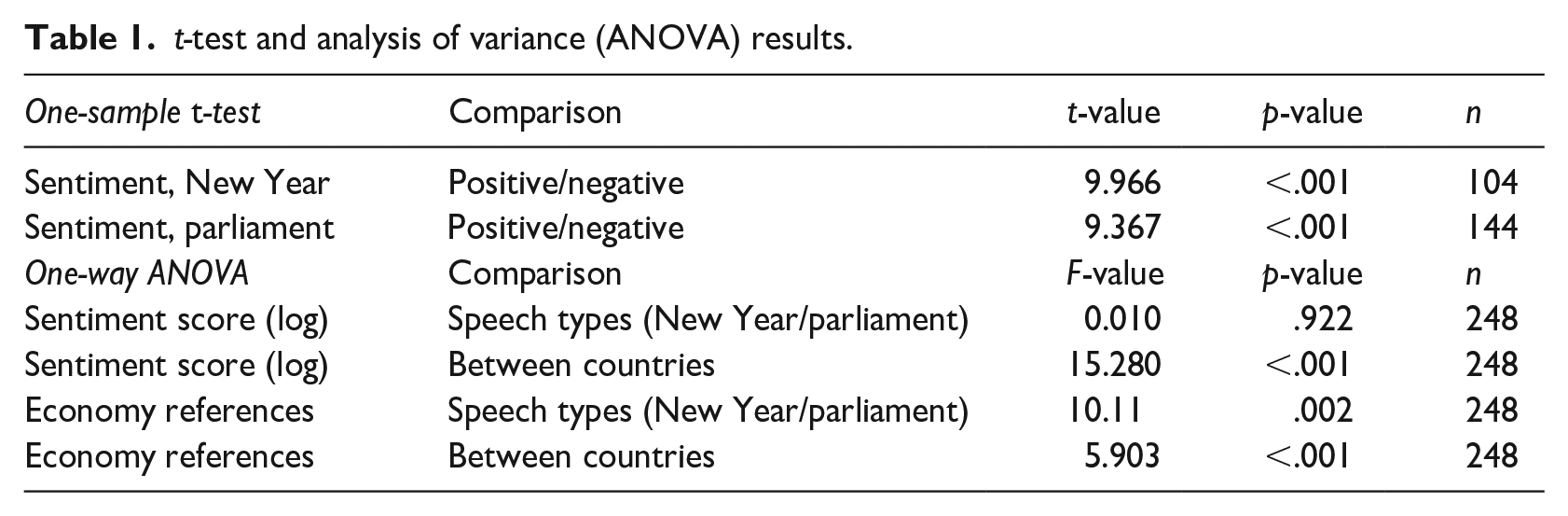
Reflecting our ambition to explore the basic features of the presidential speeches, Figures 1 and 2 show the average shares of positive and negative sentiment in New Year’s addresses and parliamentary speeches in each country. Overall, the tone of the speeches leans more towards positivity than negativity in all six countries, meaning that the average number of positive statements exceeds the number of negative statements. This is confirmed in a one-sample t-test in Table 1, showing that the difference between the share of positive and negative words is statistically significant in both speech categories (New Year: t-value = 9.966, p < .001; parliament: t-value = 9.367, p < .001). There seem to be very few differences between the speech types: positivity clearly dominates in both. We utilized this similarity to enhance the reliability of our more detailed analysis (see below). The Polish and Romanian presidents appear as the most positive, especially in their New Year’s addresses, but otherwise there seem to be no dramatic differences between the countries or the speech types.
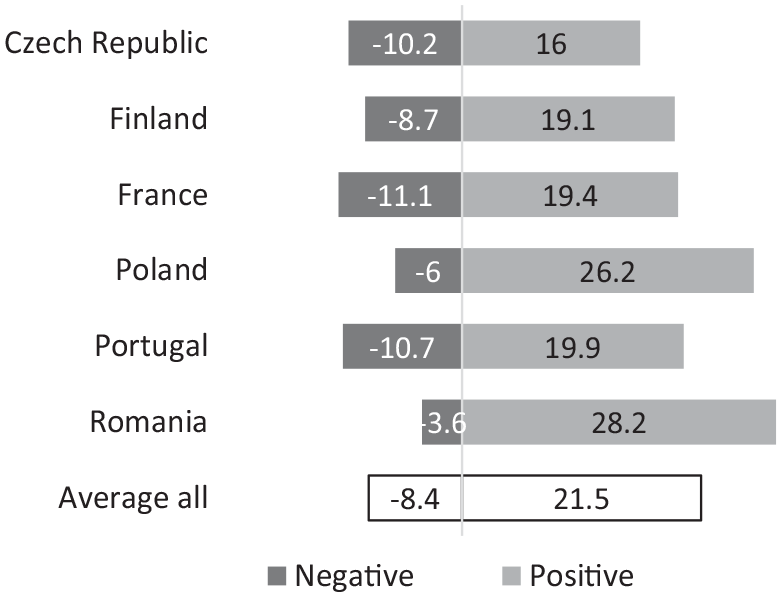
Positive and negative sentiments in New Year’s addresses, average shares (%).
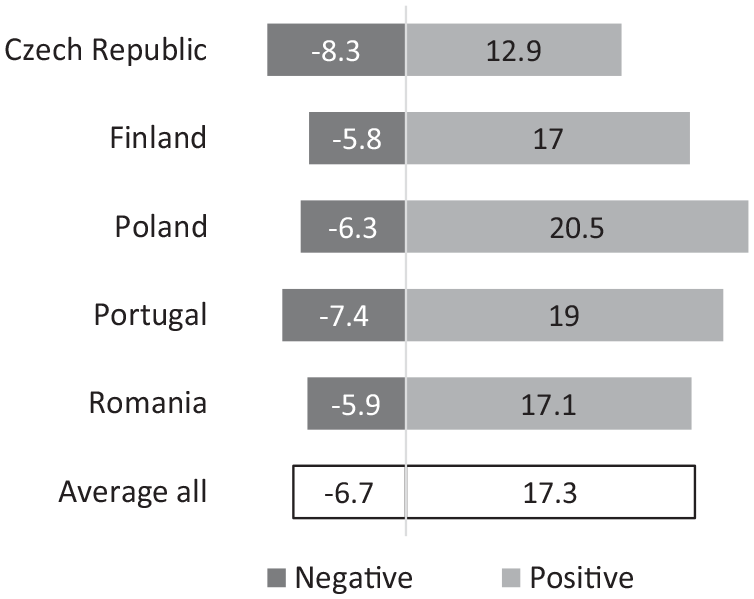
Positive and negative sentiments in parliamentary speeches, average shares (%).
t-test and analysis of variance (ANOVA) results.
Turning to references to economy (Figure 3), we see more variation between the countries and the speech types. First, and quite surprisingly, there seems to be a greater emphasis on the economy in New Year’s addresses than in parliamentary speeches. A possible explanation is that despite the ceremonial nature of the speech, presidents seek to raise their voice on policy matters specifically through speeches addressed to the whole nation and are more cautious when speaking in the parliament. Second, the Czech, French and Portuguese presidents refer more to the economy than their counterparts in Finland, Poland and Romania. In the context of the constitutional role of the presidents, the results are quite logical for the French, Finnish and Polish presidents, yet Romania stands out with its low reference scores, although the Romanian regime is well known for its conflictual relations between the executives (e.g. Gherghina et al., 2023). However, there are clear differences between Romanian presidents, as Traian Băsescu, for example, spoke more frequently about the economy than Ion Iliescu or Klaus Iohannis (see online appendix A, Table A1). In addition, New Year’s addresses in Romania are exceptionally short, and it is therefore logical that these speeches do not contain policy-oriented content. In the Czech Republic the economy-related content seems to be in line with Miloš Zeman’s public attacks towards the government (e.g. Brunclík et al., 2023), whereas in Portugal the presidents’ economy-oriented speeches may be explained by the significant impact of the financial crisis on the national economy. These country-specific examples only illustrate some potential patterns behind the presidents’ public behaviour.
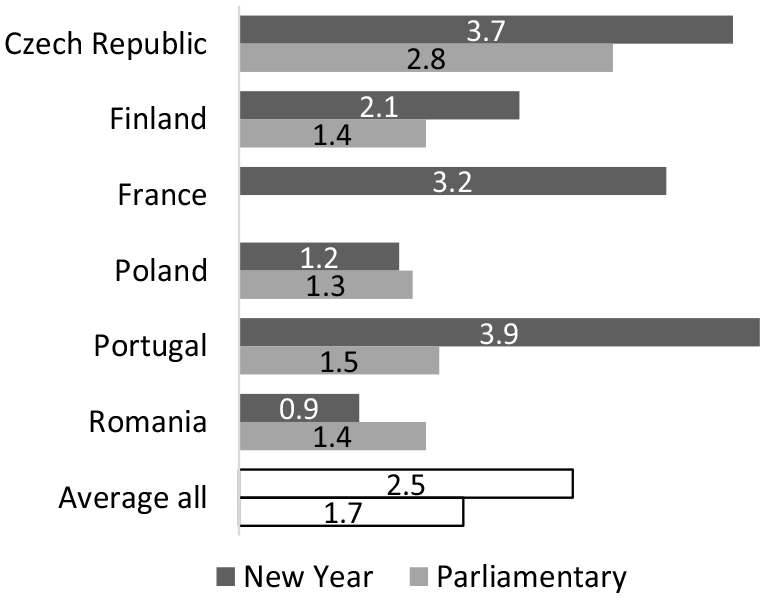
Economy references in New Year’s addresses and parliamentary speeches, average shares (%).
Overall, the counts for references to the economy may appear rather small, but one must consider them in light of all other potential themes included in the speeches. Furthermore, the aim here is not to compare the amount of references to the economy to other themes in the speeches, but to compare them between the countries and the presidents. Keywords from our dictionary that appeared quite often were, for example, ‘economy; economic; economical’, ‘finance; finances; financial’, ‘budget’ and ‘unemployment’, whereas words such as ‘deflation’ and ‘trade policy’ did not receive any mentions (see Table A2 in online appendix A).
Figures 4 and 5 show variation of the sentiment scores and references to the economy between New Year’s addresses and parliamentary speeches, as well as distribution within them. Results of the one-way ANOVA test in Table 1 confirm that the differences between the speech types in terms of both the dependent variables are indeed very small, especially regarding sentiment scores (sentiment: F = 0.01, p > .05; economy references: F = 10.11, p > .1). Overall, there seems to be more variation within speech types than between them.
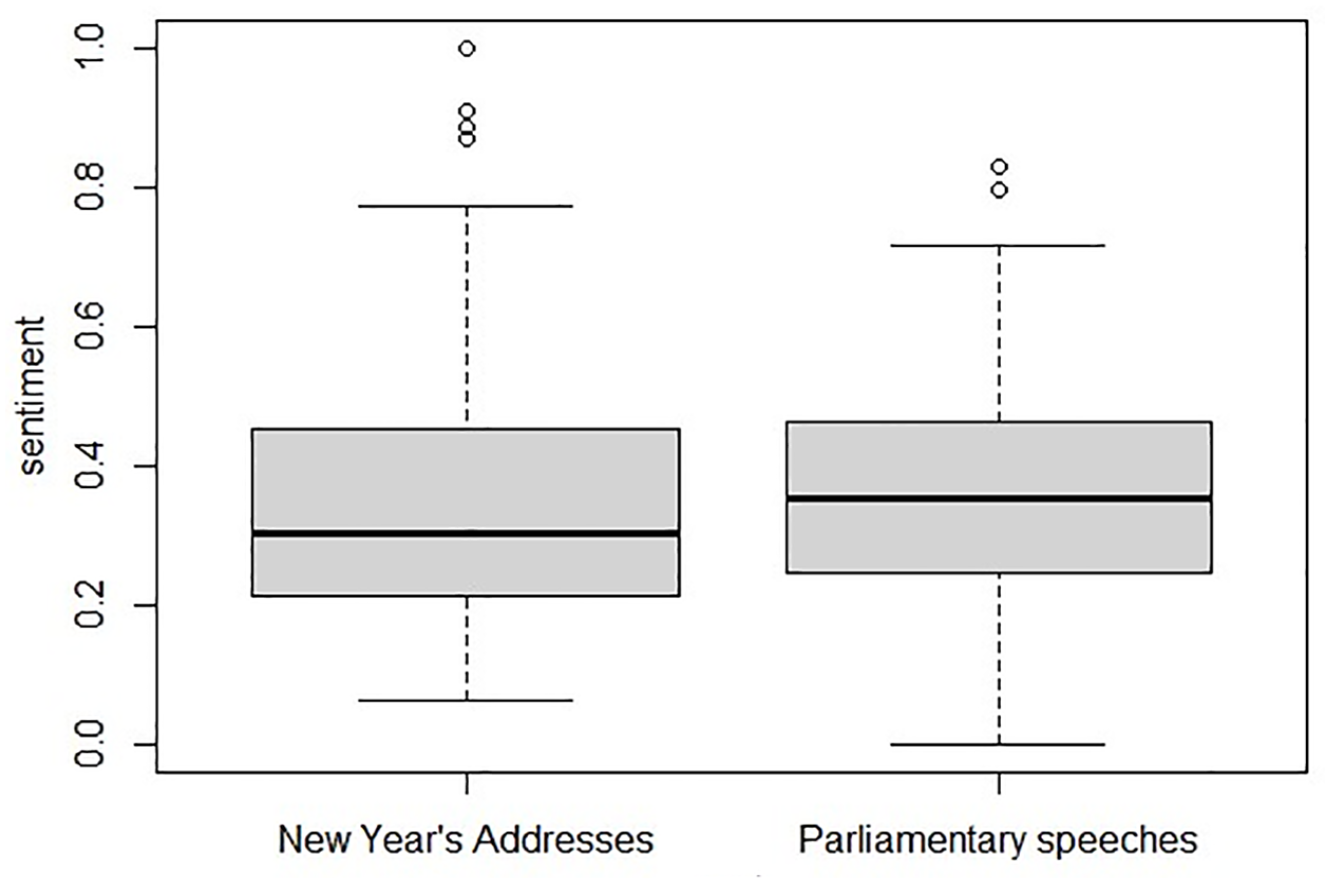
Variation of sentiment scores in New Year’s addresses and parliamentary speeches, pooled data.
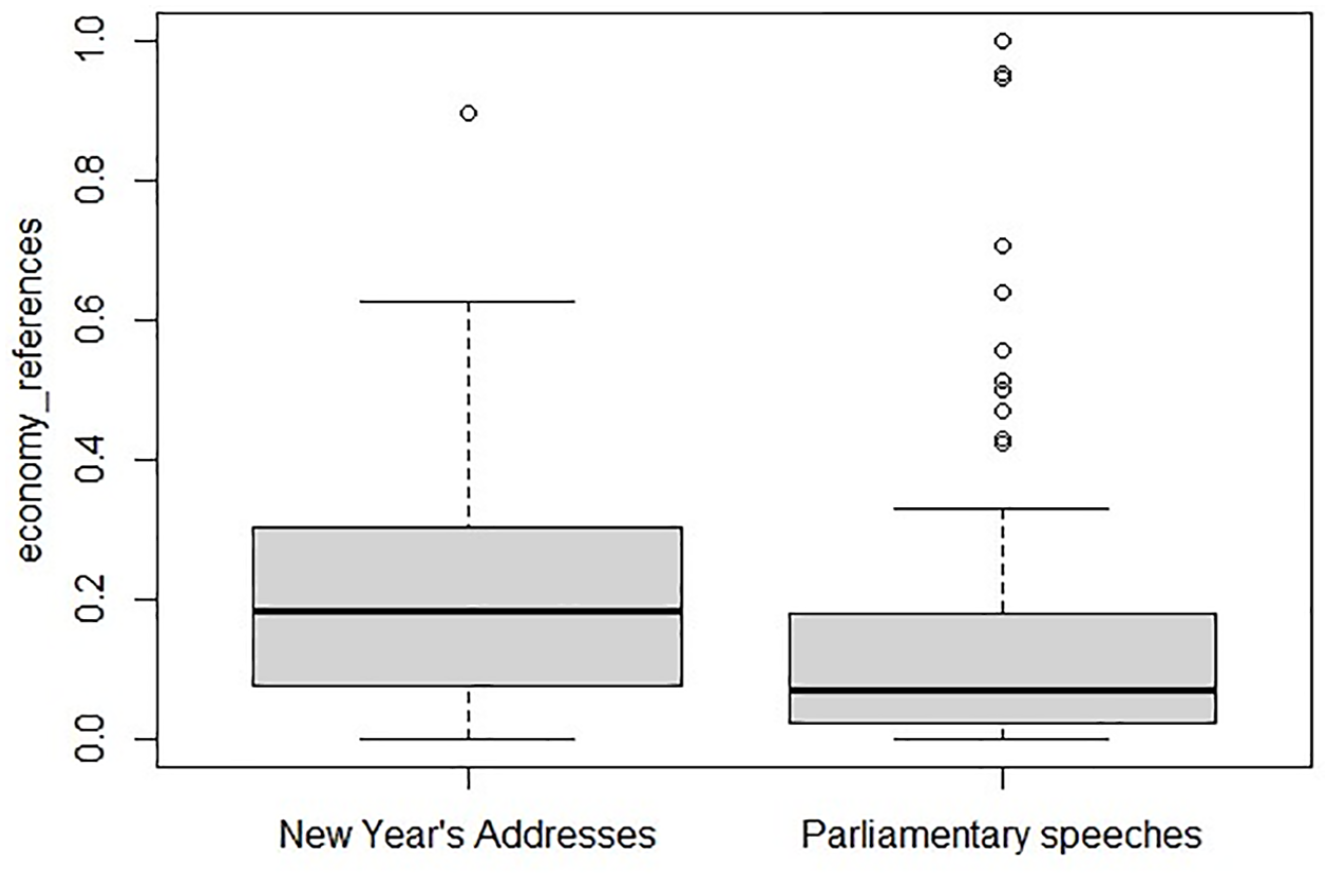
Variation of economy references in New Year’s addresses and parliamentary speeches, pooled data.
Turning to country-level differences, results of the ANOVA test in Table 1 reveal that there is a statistically significant difference between the six countries in terms of both the sentiment scores (F = 15.28, p < .001) and the share of references to the economy (F = 5.903, p < .001). Yet, when performing multiple pairwise-comparison (Tukey’s test, not reported) between the countries, roughly half of the sentiment score comparisons are statistically significant, and even fewer in the case of economy reference comparisons. Variation of the sentiment scores and economy references between and within countries is also presented in Figures 6 and 7. Figure 6, for example, reveals that there is surprisingly less variation in France, although the data consist of four different presidents’ speeches, whereas more variation was found in other countries. Moderate variation in the Czech Republic can be explained by the data as it consists of only one president’s speeches.
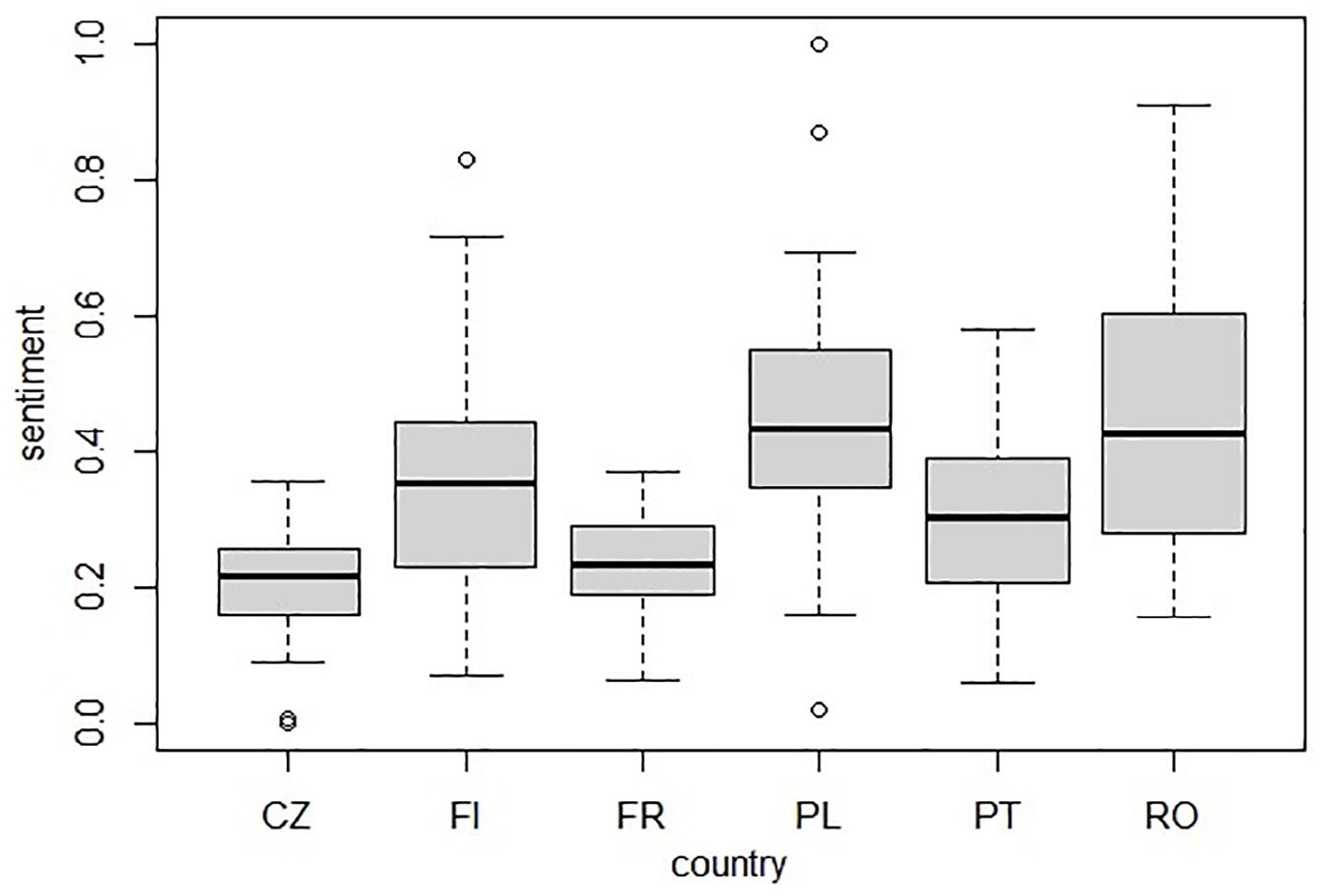
Variation of sentiment scores between countries.
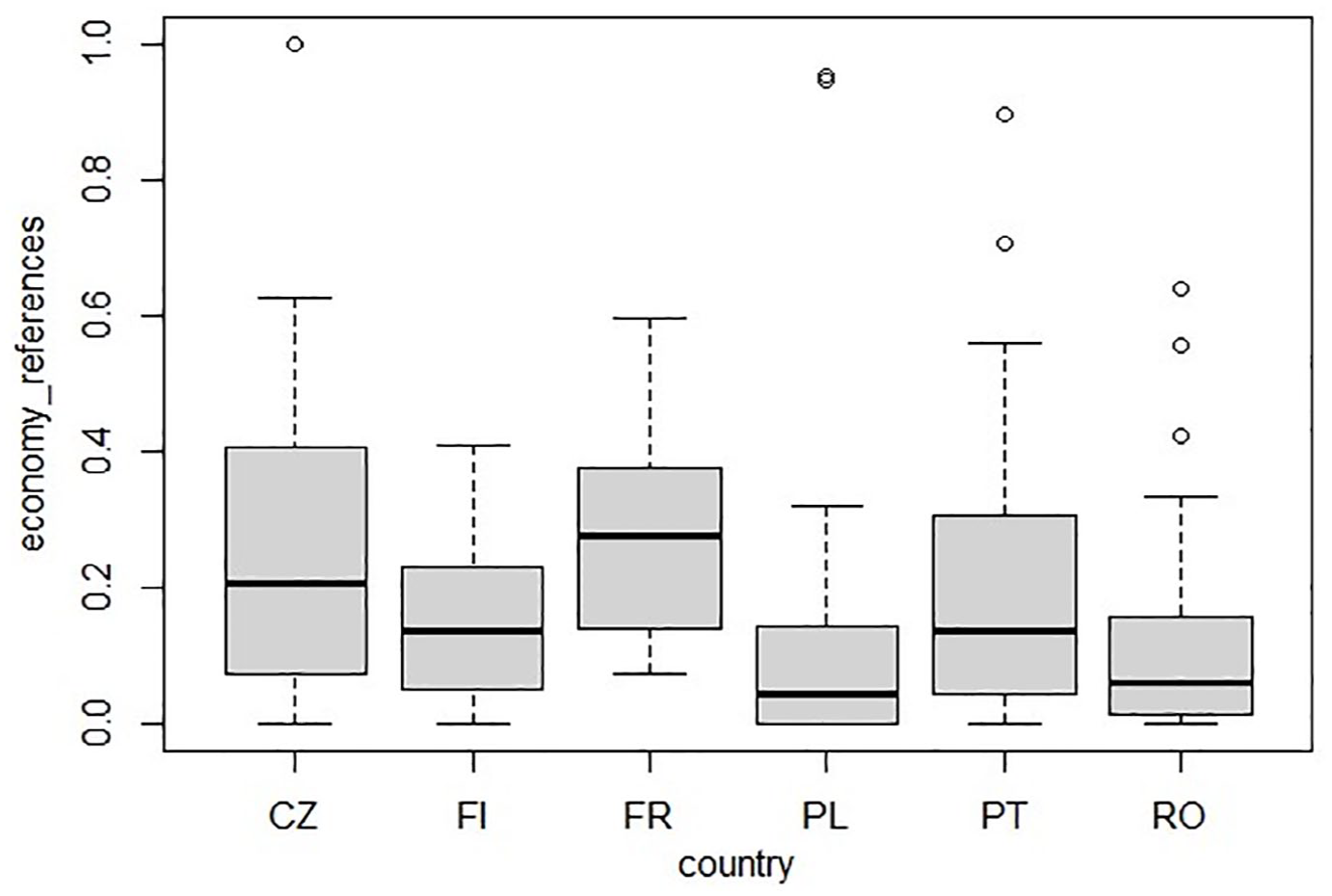
Variation of economy references between countries.
In turn, Figure 7 shows that the Czech, French and Portuguese presidents emphasize economic issues more than their counterparts in Finland, Poland and Romania, confirming the earlier findings of the mean comparisons. Although the overall amounts of references to the economy are quite similar within the regime type, the French presidents stand out with their focus on the economy as the median value (horizontal line inside the box) is higher and the minimum values are clearly above other countries’ minimum values. Although the difference is rather moderate, the finding is in line with the French president being constitutionally stronger than other presidencies in the data.
Regression models
Turning to the impact of the external factors on the tone and the content of presidential speeches, we ran two sets of fixed regression models for both dependent variables (Tables 2 and 3). All countries are included in the first set, whereas Romania is excluded from the second set due to missing data on the popularity ratings of Romanian presidents. Hence, the first set of models tests the effect of societal conditions and party-political dynamics, whereas the second set of models tests the effect of public opinion as well. The models were not run separately for the two types of speeches as the differences between their general tone were not statistically significant in previous mean comparisons. Speech types do, however, enter the models as control variables for assessing the possibility that some of the factors would have a differing impact on them. The models are built in a hierarchical manner, meaning that the control variables and country dummies enter the models before the three explanatory categories.
Fixed effects regression models, negative tone.
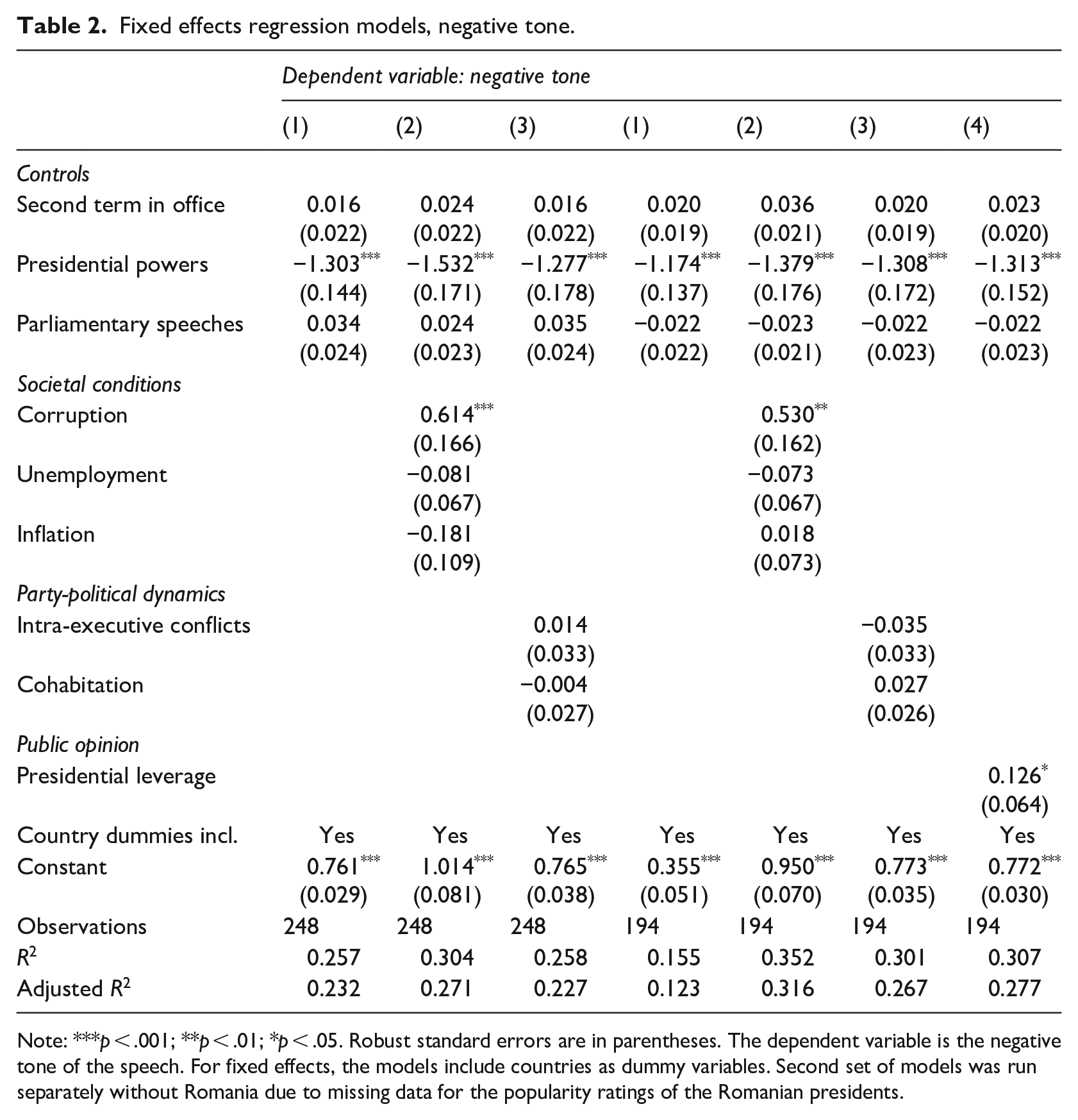
Note: ***p < .001; **p < .01; *p < .05. Robust standard errors are in parentheses. The dependent variable is the negative tone of the speech. For fixed effects, the models include countries as dummy variables. Second set of models was run separately without Romania due to missing data for the popularity ratings of the Romanian presidents.
Fixed effects regression models, economy references.
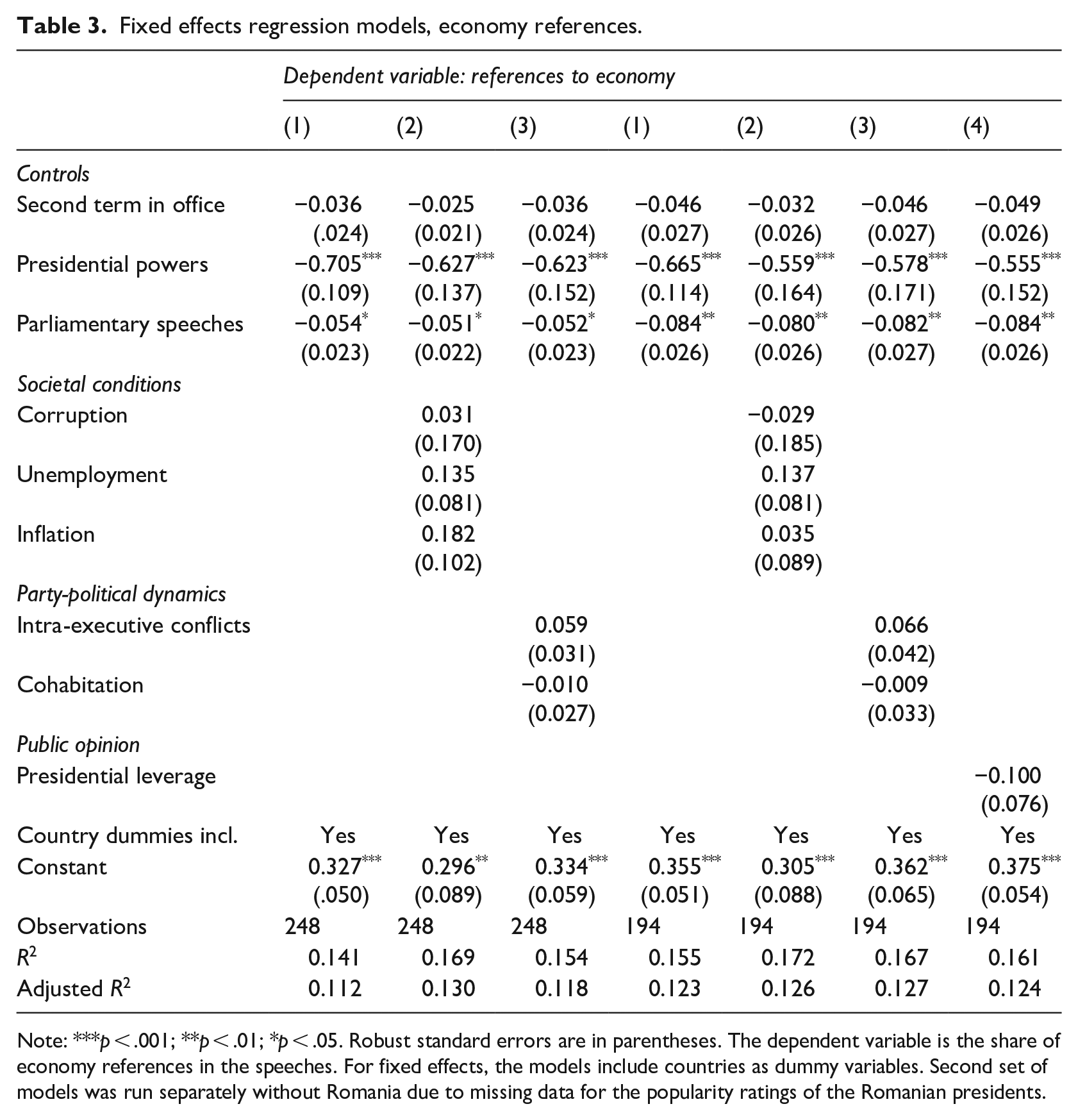
Note: ***p < .001; **p < .01; *p < .05. Robust standard errors are in parentheses. The dependent variable is the share of economy references in the speeches. For fixed effects, the models include countries as dummy variables. Second set of models was run separately without Romania due to missing data for the popularity ratings of the Romanian presidents.
The results show that neither societal conditions nor party-political dynamics nor public opinion cause much variation in the speeches. This applies to both the sentiment scores and references to the economy. All regression coefficients are quite small and not statistically significant. This indicates that instead of being conflict-seeking, the presidents tend to speak in a positive or neutral manner even in more turbulent times, or that they do not systematically utilize systematically such situations for policy purposes. Only in Model 2 in Table 2 is the effect of corruption positive and statistically significant, indicating that a higher level of corruption may raise the negativity of the speeches, which is quite a logical result given the societal impact of corruption. 6
Regarding the control variables, the two speech categories cause some minor variation between the presidents in terms of references to the economy, but terms in office do not have an impact. Instead, presidential powers turn out to be a statistically significant intervening factor, as stronger presidential powers decrease both the negativity of the speeches as well as the number of references to the economy. This may, however, result from, for example, the strong emphasis on the economy by the Czech president despite his relatively weak powers, and from the smaller counts in Romania, where, in turn, the president is more powerful. At the same time, as reported above in the descriptive analysis, constitutionally strong French presidents referred systematically to the economy, whereas constitutionally weaker Finnish and Polish presidents’ economy-oriented rhetoric was more moderate. Therefore, the results regarding the impact of presidential powers on the tone and the content of the speeches are quite mixed, suggesting that other factors such as the national political culture and the intentions of individual presidents (referring to president-centred explanations of presidential activism) may be more important. 7
For robustness, we ran the same descriptive figures and regression models on sentiment scores with the speeches in original languages and with translated sentiment dictionaries to ensure that our procedure of translating the speech corpus works. Proksch et al. (2019) translated the LSD into 20 languages by using the Google Translate API and found that the translated dictionaries performed well when compared to hand-coded results. Hence, we use the translations of the LSD provided by Proksch et al. (2019) that include dictionaries for all the six countries in our analysis. As a result, the ratio between negative and positive words (i.e., the relative share of negative sentiment on positive sentiment) remained similar, yet the translated version of the dictionaries by Proksch et al. (2019) captured fewer words with a sentiment compared with our analysis; whereas our analysis captured around 7.5% of negativity and around 19.5% of positivity of the speeches, the alternative procedure captured around 5% of negativity and 8.5% of positivity. Second, Portuguese presidents stand out with clearly more ‘sentimental’ rhetoric than in the original analysis, yet otherwise the country differences remain similar. Third, results of the regression models do not indicate any stronger impact of the external factors on the negativity of the speeches. Rather, the impact of corruption remains the same, yet the effect of presidential powers turns out to be statistically insignificant in all models. The results are reported in online appendix B in Figures B1 and B2 and Table B1.
Second, we conducted simple ordinary least squares (OLS) regression models on both the tone and the content of the speeches but without the country dummies. Results of these models are in online appendix B. They largely tell the same story as most of the primary independent variables in the three categories (societal conditions, intra-executive relations and public opinion) do not cause significant variation in the speeches. However, when country dummies are removed from the analyses, the effect of presidential powers weakens significantly, which, again, echoes the mixed conclusions regarding the impact of presidential powers in our empirical setting. Finally, additional models were run without presidential powers to examine whether the direction of the other independent variables changes due to the mixed evidence concerning the presidential powers variable. The results are not reported as removing presidential powers from the independent variables did not significantly change our results.
To sum up, our explorative analysis indicates that presidents in semi-presidential regimes utilize official speeches for policy purposes, as they systematically raise economic issues in such speeches. At the same time, the presidents use more positive than negative sentiment in both New Year’s and parliamentary speeches. More importantly, none of the external factors in our regression models caused statistically significant variation in the tone and the content of the speeches. This suggests that although presidents raise concerns about topics falling outside their jurisdiction (in this case, the economy), they do not systematically ‘take advantage’ of certain beneficial situations.
Conclusions
This article has been very much an exploratory analysis, as presidential speeches in semi-presidential regimes have so far remained largely uninvestigated, particularly from a comparative perspective. Our starting point was that presidents can utilize New Year’s addresses and parliamentary speeches for delivering political messages. Yet we recognized that the role of the presidents as heads of their countries could also impact the speeches, incentivizing presidents to speak in a politically neutral fashion. Regardless of their constitutional powers, presidents are often expected to behave like ‘statespersons’ and to stay above party-political disputes.
The findings show that the overall tone of presidential speeches is mostly positive, yet presidents occasionally utilize the speeches for intervening in matters belonging to the competence of the government, in this case the economy. This finding is in line with Grimaldi (2023), who showed that presidents in semi-presidential regimes address domestic policies routinely in their formal speeches. At the same time, weaker societal conditions, party-political distance and disputes between the executives, or stronger popularity of the president in relation to the government, did not boost either the negativity or the economy-related content of the speeches. This suggests that presidents do not systematically take advantage of such ‘beneficial’ situations for policy purposes. This goes against the negativity bias associated with political speech (Soroka, 2014) and is also rather counter-intuitive in relation to the traditional narrative of semi-presidential studies where presidents are expected to ‘compensate’ their constitutional weakness by publicly challenging the often less-popular governments (e.g. Ovádek, 2021; Raunio and Sedelius, 2020). Despite the different constitutional frameworks and political cultures of the six countries, the results suggest that generally presidents behave quite similarly on official occasions. The fact that formal powers do not impact the tone of presidential speeches provides evidence of ‘statespersonlike’ behaviour (see also Kujanen et al., 2024). Presidents’ messages are neutral or positive even when the presidents and prime ministers represent opposing ideological blocs. Clearly, cohabitation does not matter although it has been a key component of research on semi-presidentialism. A possible explanation for these seemingly contradictory findings might lay in our focus on presidents’ ‘official’ speeches. Instead, presidents could utilize various ‘minor addresses’ for politically motivated attacks – like blog texts, media interviews, social media posts or more low-profile speeches. However, Kujanen et al. (2023) found hardly any differences between the formal speeches and informal messages of Finnish and French presidents.
Overall, these findings point in the direction of an under-appreciated side of the presidency, where the heads of state focus on messages of unity and hope on most occasions. Yet the various forms of presidential activism in the context of semi-presidential regimes deserve further scrutiny. Brunclík et al. (2023) provide a wealth of examples of constitutional conventions structuring inter-institutional relations whereas Grimaldi (2023) argues that public support facilitates presidents’ use of informal powers, including public speeches. We encourage scholars to develop alternative measures of presidents’ public assertiveness and eagerness to challenge political rivals. Another potential line of inquiry concerns regime-type comparisons. Besides assessing differences between variants of semi-presidentialism, future research could delve into presidential activism in presidential, semi-presidential and even parliamentary systems to check to what extent the election method and constitutional powers really shape presidential behaviour. At the same time, we recognize the need for in-depth case studies, as presidents clearly operate differently and as more of them are elected into office without party-political background.
Supplemental Material
sj-docx-1-ips-10.1177_01925121241237527 – Supplemental material for Taking intra-executive politics into public arenas? Analysis of presidential speeches in six semi-presidential European countries
Supplemental material, sj-docx-1-ips-10.1177_01925121241237527 for Taking intra-executive politics into public arenas? Analysis of presidential speeches in six semi-presidential European countries by Maarika Kujanen, Vesa Koskimaa and Tapio Raunio in International Political Science Review
Supplemental Material
sj-docx-2-ips-10.1177_01925121241237527 – Supplemental material for Taking intra-executive politics into public arenas? Analysis of presidential speeches in six semi-presidential European countries
Supplemental material, sj-docx-2-ips-10.1177_01925121241237527 for Taking intra-executive politics into public arenas? Analysis of presidential speeches in six semi-presidential European countries by Maarika Kujanen, Vesa Koskimaa and Tapio Raunio in International Political Science Review
Supplemental Material
sj-docx-3-ips-10.1177_01925121241237527 – Supplemental material for Taking intra-executive politics into public arenas? Analysis of presidential speeches in six semi-presidential European countries
Supplemental material, sj-docx-3-ips-10.1177_01925121241237527 for Taking intra-executive politics into public arenas? Analysis of presidential speeches in six semi-presidential European countries by Maarika Kujanen, Vesa Koskimaa and Tapio Raunio in International Political Science Review
Footnotes
Funding
The authors disclosed receipt of the following financial support for the research, authorship and/or publication of this article: The research was supported by the Academy of Finland (grant number 333013).

Supplemental material
Supplemental material for this article is available online.
Notes
Author biographies
References
Supplementary Material
Please find the following supplemental material available below.
For Open Access articles published under a Creative Commons License, all supplemental material carries the same license as the article it is associated with.
For non-Open Access articles published, all supplemental material carries a non-exclusive license, and permission requests for re-use of supplemental material or any part of supplemental material shall be sent directly to the copyright owner as specified in the copyright notice associated with the article.
