




Abstract
Although public debate ensues over whether parents or nonparents have higher levels of emotional well-being, scholars suggest that being a parent is associated with a mixed bag of emotions. Drawing on the American Time Use Survey for the years 2010, 2012, and 2013 and unique measures of subjective well-being that capture positive and negative emotions linked to daily activities, we “unpack” this mixed bag. We do so by examining contextual variation in the parenting emotions gap based on activity type, whether parents’ children were present, parenting stage, and respondent’s gender. We found that parenting was associated with more positive emotions than nonparenting, but also more negative emotions. This pattern existed only during housework and leisure, not during paid work. Moreover, patterns in positive emotions existed only when parents’ children were present; patterns in negative emotions were primarily observed during earlier stages of parenting. Results were similar for men and women.
In U.S. culture, children are often presumed to be one of life’s greatest joys (Hansen 2012). Yet research on the topic of parents’ psychological and emotional well-being has produced an array of findings, with some studies suggesting that parents report higher levels of well-being (e.g., finding they have greater life satisfaction, happiness, and sense of meaning) than similar adults without children and other studies suggesting the opposite (parents have less happiness and life satisfaction as well as more depression, anxiety, stress, and anger than nonparents; for a detailed summary, see Nelson, Kushlev, and Lyubomirsky 2014). Although media representations of this issue tend to continue to focus on which group is better off, parents or nonparents (Villarica 2012; Dell’Antonia 2016), scholars have concluded that this mixture of findings likely reflects the fact that parenting and not parenting are “mixed bags” that yield both costs and rewards (Nomaguchi and Milkie 2003; Umberson, Pudrovska, and Reczek 2010). Substantive and theoretical understanding of this mixed-bag thesis, however, still remains limited. In this study, we aim to take steps toward “unpacking” this mixed bag. We do so two ways: by exploring the contexts under which differences in positive and negative emotions between parents and nonparents arise and by assessing these differences in terms of momentary emotional states.
Our focus on how contexts shape parental well-being is informed by a foundational social-psychological framework: the social structure and personality (SSP) perspective (for detailed descriptions, see House 1981; McLeod and Lively 2006). A key emphasis of the SSP framework is the importance of considering how microlevel contexts (i.e., patterned modes of social interactions) influence people’s feelings and self-evaluations as well as how these microlevel contexts are embedded in macrolevel social structures (i.e., social systems that surround and bound these microlevel contexts) that may moderate them. This insight highlights several questions about the links between parental status and well-being that have yet to be examined. As a starting point, we examine whether we observe evidence of the mixed-bag thesis. Building on this step, we then explore two microlevel contexts by pursuing two questions: how do gaps in parents’ and nonparents’ emotions vary by the daily activity that people are engaged in, and are these patterns differentiated by the presence of parents’ children? These two questions situate these patterns within broader macrolevel contexts by asking how they further vary by children’s ages, which reflect distinct norms and institutional constraints around parenting, and among subgroups who may experience and perceive their roles as parents and nonparents differently, namely, men and women.
We examine these questions by making novel use of multiple measures of momentary subjective well-being included in several of the American Time Use Surveys (ATUS; 2014). Unlike measures of generalized well-being used in the majority of studies on the parental well-being gap (see online supplement, Table A-1), momentary measures capture how one is feeling in a given moment. Thus, when combined with the ATUS time diary, these measures can link variations in parental well-being gaps to contexts that fluctuate across the course of a day (i.e., activity, children’s presence) as well as at the intersection of other broader contexts measured by ATUS (i.e., parenting stage, children’s ages, and respondent’s gender). The other advantage of these measures is that they assess both positive and negative dimensions of well-being (Krueger and Schkade 2008; Kapteyn et al. 2015) within the same activity. Prior studies have rarely examined both positive and negative emotions within the same investigation, let alone the same context. Drawing on the ATUS data and the SSP framework, this study will therefore advance both substantive understanding of the parental well-being gap as well as social-psychological perspectives on the experiences of raising children (or not raising children) in the lives of contemporary Americans.
Background
Research and Measurement on the Parenting Well-Being Gap
As mentioned earlier, prior research on parental well-being has produced a complex body of findings (see Umberson et al. 2010; Hansen 2012; Nelson et al. 2014). Several studies suggest that parents have lower levels of psycho-emotional well-being compared to nonparents (less happiness, marital satisfaction, and life satisfaction and more stress, anxiety, anger, and depression; Ross and Willigen 1996; Twenge, Campbell, and Foster 2003; Stanca 2012; Glass, Simon, and Andersson 2016). Yet, multiple recent studies suggest that parents experience higher levels of well-being than nonparents (more happiness, life satisfaction, and meaning in life; Nelson et al. 2013; Deaton and Stone 2014). Other studies find no significant differences in parents’ and nonparents’ well-being (Barnett, Marshall, and Pleck 1992; Rothrauff and Cooney 2008). For a summary of design, measures, and findings of prior studies, see Table A-1 in the online supplement.
One explanation for this mix of findings is methodological. Much of what is known about the parenting well-being gap is based on studies that have used generalized (global) measures of well-being (Kahneman and Krueger 2006). A common generalized measure of well-being, life satisfaction, is based on the question, “All things considered, how satisfied are you with your life as a whole these days?” This type of measure tends to have lower levels of inter- and intrareliability than momentary measures of well-being, which are tied to a specific activity (Kapteyn et al. 2015), because they are retrospective evaluations based on “a non-systematic review of one’s life” (Krueger and Schkade 2008:1843). Scholars also argue that generalized measures are negatively biased because negative experiences outweigh positive ones (Baumeister et al. 2001).
Yet this mix of findings may also reflect conceptual differences in what generalized measures tap compared to momentary measures. Generalized measures capture people’s overall life circumstances (Kahneman and Krueger 2006), which are connected to parental status, but also the ways that parental status interfaces with life factors, like marital status or work. Thus, generalized measures may reflect a dimension of well-being that captures overall self-concept and life circumstances. They do not capture the fluctuations in well-being that occur in people’s daily lives in response to the various contextual factors highlighted by the SSP framework, as momentary measures do, which we discuss more later. Momentary measures also capture changes in emotions in response to emotion norms (i.e., unwritten but widely accepted expectations about how to feel when enacting a given role; Hochschild 1979; Thoits 2004). For example, parents may feel that they should feel happier during time with their children and less happy during time away from their children.
Examining Parent and Nonparent Positive and Negative Emotions
Few studies have tested the mixed-bag thesis by examining differences in daily positive and negative subjective well-being among parents and nonparents. Among those that have, Nomaguchi and Milkie (2003) used data from the National Survey of Families and Households (1992–1994) to compare the well-being of nonparents to that of new parents. They found that all parents experienced increased social integration, but single mothers experienced reduced self-efficacy and more depression. More recently, Deaton and Stone (2014) used data from Gallup-Healthways Well-Being Index’s World Poll (2008–2012) and a sample of parents with mostly older children to examine generalized feelings of anger, sadness, stress, worry, physical pain, enjoyment, smiling, and happiness. They found that parents reported more daily joy but also more daily stress than adults not living with children. The handful of other studies highlighted in Table A-1 in the online supplement were generally based on older cohorts or nonrepresentative samples. None examined momentary well-being tied to daily activities or children’s presence or explored variation in parental well-being across different parenting stages.
The mixed-bag thesis has also been inferred based on a synthesis of the extant literature. This literature, consistent with the studies highlighted previously, suggests that parents experience both more negative emotions than nonparents and more positive emotions. Specifically, parents experience greater stress because they experience more financial demands (like housing, education costs; Ross and Willigen 1996), more worry (about child’s safety, health; Eccles 1999), and more struggles to meet the time demands of modern-day parenting while dealing with the competing strains of domestic work and paid labor (Jacobs and Gerson 2004); greater fatigue as a result of these factors as well as greater sleep disturbance and less time for leisure activities (Burgard and Ailshire 2013); and more sadness due to feelings of disappointment stemming from their performance as parents or their unfulfilled expectations of their children (Mintz 2004).
At the same time, parents may also experience more positive emotions than nonparents, including more happiness because children provide a source of love and closeness and invoke feelings of pride and joy (Edin and Kefalas [2005] 2011) and more meaning because parenting often provides opportunities to achieve a variety of goals (for example, providing a moral education; Nelson et al. 2014), perform a socially valued role (Barnett and Hyde 2001), and engage in an array of challenging activities (such as teaching lessons; Craig, Powell and Smyth 2014). Nonparents, on the other hand, may experience less stress than parents because they have more time for self-care activities, such as exercise (Augustine, Aveldanes, and Pfeffer 2017), are less tired because they may engage in less housework and more leisure, and are less sad because they have more time for social activities; by the same token, however, they may experience less happiness and meaning because they are not meeting societal expectations of parenthood or experiencing its purported joys (Nelson et al. 2014).
Given the limitations of prior research, the first aim of this study is to provide evidence of the mixed-bag thesis based on a contemporary, nationally representative sample and measures of positive and negative dimensions of subjective well-being tied to everyday activities. Building on the results of this aim, our main goal is to unpack this bag. The first way we do so is by examining how the microlevel proximate features of people’s daily lives—reflected in what activity they are doing and, for parents, whether they are doing this activity with their children—modulate and help explain this mix of positive and negative experiences. This specific focus is informed by the SSP framework. We describe this framework and its linkage to our study questions next.
Innovations of the Current Study
The SSP framework comprises three key principles (McLeod and Lively 2006). The first, the components principle, underscores how the links between social structure and personality operate via a multitude of pathways, or components. Although this principle has most often been applied to understanding the mechanisms of social stratification (for example, in Kohn and colleagues’ [1990] work on occupational prestige), the components principle also indicates that structures are hierarchically arranged. This insight draws attention to the importance of considering components that may operate at a more micro level, such as daily activities, which—like social class—carry normative expectations, reflect opportunity structures, and shape behaviors. For example, work by Milkie and Warner (2011) draws on this notion to investigate the role of children’s classroom experiences in shaping their mental health. This study also draws on the second principle, the proximity principle, which highlights the social interactions that exist within these structures, for example, children’s interactions with teachers and peers. In the case of our study, this principle highlights how the basic presence, and absence, of parents’ children may affect their well-being. Finally, the psychological principle calls attention to the ways that different individuals perceive and process these experiences and the impact this cognitive process has on more psychological dimensions of well-being, such as positive and negative emotions.
Integrating these principles together, the second aim of this study is to tease out patterns in the parenting well-being gap across three central activities: market work (i.e., paid work), housework (e.g., cooking, cleaning), and leisure (e.g., recreation, relaxing, socializing). We focus on these activities because, aside from sleep, they are the most common daily activities and take up the largest share of people’s time. Beginning with market work, work–family role conflict is a well-documented phenomenon that is suggested to exacerbate parents’ negative emotions (Jacobs and Gerson 2004; Bianchi, Robinson, and Milkie 2006). However, prior research also suggests that many parents find refuge from the demands at home in market work (Hochschild 1997), relish the opportunity to interact with other adults, and derive a sense of purpose from work in the face of home-related frustrations (Damaske, Smyth, and Zawadzki 2014). Thus, we expect that parents will feel more stress and fatigue than nonparents during paid work, but the gap in positive emotions will not exist in this context. In the context of housework, we expect that parents—who tend to do more extensive nonmarket work, which is regarded as more unpleasant than most other activities—are likely to experience more negative emotions than nonparents (Jacobs and Gerson 2004; Bianchi et al. 2006; Kahneman and Krueger 2006). Yet they will also report higher levels of positive emotions during housework because it is perceived as for the benefit of their children (Hays 1996). In the context of leisure, we expect that parents will report more negative emotions than nonparents based on insights from studies that show parents are more likely to switch among activities (e.g., watch television, then play a game with a child; Cornwell 2013) or multitask in them (i.e., pair leisure with secondary activities, like cleaning or caretaking; Bianchi et al. 2006). They may also report more positive emotions than nonparents because they perceive leisure as a scarce resource and thus experience time in it as more valuable and enjoyable (Cialdini 1987).
The shape of these patterns, however, may depend on whether parents’ children are present (i.e., present in the room/accompanying the parent), especially for housework and leisure. Exploring this possibility is the third aim of this study. Prior research finds that parents report more happiness and meaning during time spent with their children than during time without children (Nelson et al. 2013; Musick, Meier, and Flood 2016), but they also feel more stressed when their children are present than when they are absent (Campos et al. 2013). Negative emotions may also abate if parents are doing less multitasking or activity switching when children are absent. Thus, parents’ greater levels of negative and positive emotions in housework and leisure (compared to nonparents) might be observed only in activities when their children are present.
Connecting Micro- and Macrolevel Contexts of the Parenting Well-Being Gap
Going one step further, we connect these contextual features of daily life to two macrolevel social contexts highlighted by previous research (Umberson et al. 2010) and the SSP framework (McLeod and Lively 2006), which reminds us that microlevel features of daily life are embedded in larger systems of stratification. The first macrolevel context is parenting stage. More typically, parenting stage is considered within the life-course tradition (Umberson and Gove 1989), which highlights how parenting young children involves time-intensive routines that wane as children enter elementary school and adolescence (Negraia, Augustine, and Prickett 2018). Yet these factors are also a reflection of the macro context in which norms around parenting young children operate, and there is little institutional support for parents of young children (e.g., leave policies, affordable childcare; Glass et al. 2016), who must often make career compromises that affect both emotional well-being and economic mobility (Kalil, Ryan, and Corey 2012). These factors suggest that parents’ greater levels of negative emotions in all activities, versus those of nonparents, may be most pronounced when their children are young. At the same time, the macro context also conveys cultural norms of social development and values around children of different ages (Brown, Larson, and Saraswathi 2002). Experiences with young children that emphasize closeness are deemed emotionally “priceless” (Zelizer 1994) and more satisfying than experiences with older children (Nomaguchi 2012; Meier et al. 2018), whereas adolescence, which is a period of autonomy (Steinberg and Morris 2001), is perceived to be less satisfying for parents. Thus, we also expect that parents’ greater levels of positive emotions in housework and leisure are greater when their children are younger than when they are older. The fourth aim is to test the moderating role of parenting stage.
The second macrolevel context is gender, which, as identity theories underscore, shapes one’s exposure to different stressors, expectations attached to social roles, and self-conceptions (Stets and Burke 2000). Women compared to men are expected to take on more housework, childcare, and management duties (e.g., scheduling doctor visits) and, in turn, experience more interrupted sleep and solo parenting, less leisure time, lower pay, fewer work promotions, and more periods of leaving the workforce, whereas men tend to do more of the “fun” parenting activities (e.g., play) and experience fewer of these consequences of work–family conflicts (Blair-Loy 2003; Hill 2005; Correll, Benard, and Paik 2007; Burgard and Ailshire, 2013; Negraia et al. 2018). Thus, the associations between negative emotions and parenting status may be stronger for women (than men), especially during market work and housework and when children are present. At the same time, because parents’ roles in actively shaping children’s growth and success is more salient among women than among men (Craig et al. 2014; Schiffrin et al. 2014), and women without children experience more stigma or ambivalence about their “childless” status than men (Koropeckyj-Cox and Pendell 2007), the parenting gap in positive emotions may also be strongest among women in all activities, regardless of children’s presence. The fifth aim is to explore this gender-related expected pattern.
Summary of Study
This study aims to test and unpack the mixed bag of parenting well-being. We do so by drawing on assessments of positive and negative dimensions of momentary well-being linked to specific activities from a contemporary, nationally representative sample of Americans and insights from a foundational social-psychological framework that underscores how the experiences of parenting and not parenting are embedded in proximate contexts that are hierarchically situated within broader social structures (McLeod and Lively 2006). These insights invite us to examine how the parenting well-being gap may vary across activities, focusing on market work, housework, and leisure, and depending on children’s presence and whether patterns based on activity and children’s presence are further conditioned by parenting stage and the respondent’s gender.
Methods
Data come from the American Time Use Survey (ATUS), a time-diary survey collected annually starting in 2003 by the U.S. Census Bureau and sponsored by the Bureau of Labor Statistics. Participating households were randomly selected from those participating in the Current Population Survey, which was conducted two to five months prior. From each household, one household member older than age 15 was randomly selected to be interviewed about their activities over the past 24 hours (4 a.m. to 4 a.m.). Respondents were asked about the duration of the activity, where it took place, and who was with the respondent. Interviews were conducted over the phone using a computer-assisted telephone instrument during both weekdays and weekends. A key feature of ATUS was the addition of the Well-Being Module in 2010, 2012, and 2013. Data collections for this module were based on the day reconstruction method (DRM). Unlike the experience sampling method (ESM), in which participants are prompted during an activity to report how they feel at that moment (Larson and Csikszentmihalyi 2014), the DRM asks respondents to rate how they felt in activities selected from their time diary. As such, reports of well-being collected via DRM are still considered to be momentary, albeit from the day before. Estimates obtained using DRM are similar to those from ESM (Kahneman et al. 2004).
Analytic Sample
The analytic sample was formed by pooling data at the activity level across the three cross-sectional survey rounds of the Well-Being Module (N =102,796; ATUS 2014; Hofferth, Flood, and Sobek, 2013). We then restricted the sample to include only activities by respondents ages 21 to 50 (52,036 activities nested in 17,481 individuals). We limited the sample to adults ages 50 and younger because ATUS did not ask respondents if they had children older than 18 living outside the household. Thus, we ran the risk of our nonparent sample including parents of adult children (i.e., empty-nesters). Similar to other work using this data (Meier et al. 2018), we also do not include in the analysis respondents age 20 or younger to limit the share of adolescent and late-adolescent parents from the parent sample, for whom raising children can be particularly challenging and detrimental to one’s well-being (Myrskylä and Margolis 2014; Mollborn 2017).
Given our focus on adult parents raising minor residential children (compared to adult nonparents), we also excluded from the parent sample respondents who reported only residential adult children (n = 1,505), non-own residential minor children (n = 1,405), nonresidential own minor children (n = 714), residential grandchildren (n = 131), or foster children (n = 38). Following on these restrictions, the parent sample included respondents ages 21 to 50 who lived with at least one own child under age 18, and the nonparent sample included respondents ages 21 to 50 who do not have any residential children or minor nonresidential children. We recognize these important exclusions, but for brevity, we refer to these two groups as “parents” and “nonparents.” The final sample of parents included 32,580 activities by 10,941 adults, and the final sample of nonparents included 15,649 activities by 5,265 adults. Tables A-2 and A-3 in the online supplement present sociodemographic and activity characteristics of the parent and nonparent groups.
Measures
Emotional well-being
Participants were asked to rate how they felt during three sampled activities along six dimensions of subjective well-being: happiness, meaning, sadness, stress, pain, and fatigue. These measures are broadly conceptualized as and generally referred to as emotions (Noakes 2012; Musick et al. 2016), although some scholars have used other terms, such as “affective well-being.” We focus on five of the six measures (we not include pain, which is used mainly in disability studies). The order of these questions was randomized, although meaning was asked about last. Responses ranged from a scale of 0 = not stressed at all to 6 = very stressed (for details, see online supplement, Figure A-1). Well-being in activities shorter than five minutes, personal activities, sleep, grooming, and nonresponse were not assessed.
Daily contexts
First we created a category of all-time, which represented all well-being reports taken together across all selected activities. We used this measure to provide a baseline understanding of how parents’ and nonparents’ well-being generally varied. Market work included time spent working for pay as well as breaks from work, meals at work, and searching for and interviewing for jobs. Housework reflected time spent maintaining the household (e.g., cooking, vehicle repair), shopping, household management (e.g., pay bills), and arranging and supervising household services (e.g., securing cleaning services). Note, following convention, housework did not include childcare. Childcare was included in the measure of all-time. Leisure included time spent relaxing and socializing (e.g., talking to others, watching television, attending arts), eating and drinking, and doing or observing sports, exercise, and recreational activities (e.g., fishing, dancing). Table A-4 (see online supplement) provides additional description about activities and associated ATUS codes.
Using data from the “Who” files (ATUS 2014), which asked respondents, “Who was in the room with you?/Who accompanied you?” we created a marker of child presence to indicate whether any of the minor children were with the parent during the reported activities (for details, see online supplement, Figure A-2).
Macro contexts
Parenting stage was based on the age of the youngest household child, categorized into one of three major stages of child development: infancy through preschool (ages 0–4), middle childhood (ages 5–12), and adolescence (ages 13–17; for similar approaches, see Kalil et al. 2012; Negraia et al. 2018). Gender reflected self-reports of whether one identified as male or female.
Covariates
Sociodemographic factors that may correlate with respondents’ reports of well-being (Umberson et al. 2010; Hansen 2012; Nelson et al. 2014; Kapteyn et al. 2015) included respondents’ age (measured continuously), racial-ethnic background (dummy coded: White non-Hispanic, Black non-Hispanic, Asian non-Hispanic, Other non-Hispanic, Hispanic), and gender (0 = male; 1 = female). Note that the control for gender was omitted from analyses exploring variation by gender. Life-course factors that may impact the demands one encounters in everyday life included partnership status (spouse/partner in the home: 1 = yes, 0 = no), educational attainment (dummy coded: less than high school degree, high school degree, some college, college degree and higher), employment status (dummy coded: full-time employed, part-time employed, unemployed, not working), student status (enrolled in high school/college: 0 = no, 1 = yes), family income (dummy coded: <$24,999; $25,000–$49,999; $50,000–$99,999; >$100,000), geographic region (dummy coded: West, Midwest, Northeast, South), and whether one lived in a metropolitan area (defined by the U.S. Census; 0 = no, 1 = yes). Activity characteristics that may affect how one feels in and about an activity (Kahneman and Krueger 2006) included duration of activity (measured in minutes per day), whether the activity took place at home (= 1) or elsewhere (= 0), and time of day when the activity took place (4:00 a.m. to 8:59 a.m., 9:00 a.m. to 1:59 p.m., 2:00 p.m. to 4:59 p.m., 5:00 p.m. to 8:59 p.m., 9:00 p.m. to 3:59 a.m.). Survey factors included whether the diary was collected on a weekday (= 1) or a weekend (= 0), a summer month (0 = no, 1 = yes) or holiday (0 = no, 1 = yes), year of interview (dummy coded), and order in which the well-being questions were asked (dummy coded: first through fifth).
Analysis Plan
Following other studies (Musick et al. 2016; Meier et al. 2018), we modeled the outcome variables continuously. We used linear regression to predict each well-being measure separately, resulting in a total of five models. We incorporated random effects, which accommodated the nested structure of the data (i.e., multiple reports within individuals) while adjusting for nonindependence and correlated measurement error in the activity reports. All models were estimated in Stata 14 and employed the full set of covariates. Activity-level weights accounted for the unequal probability that different activities were selected for the Well-Being Module as well as other aspects of the ATUS design, like the oversample of weekends (ATUS 2014). Weights were applied to all descriptive analyses. To deal with missing data, we used listwise deletion rather than multiple imputation techniques (which have become the modal practice; Allison 2003) because the ATUS contains a small amount of missing information on few variables (1.18 percent on family income and less than 0.60 percent on each of our five outcome variables).
Results
Unpacking the Mixed-Bag Thesis
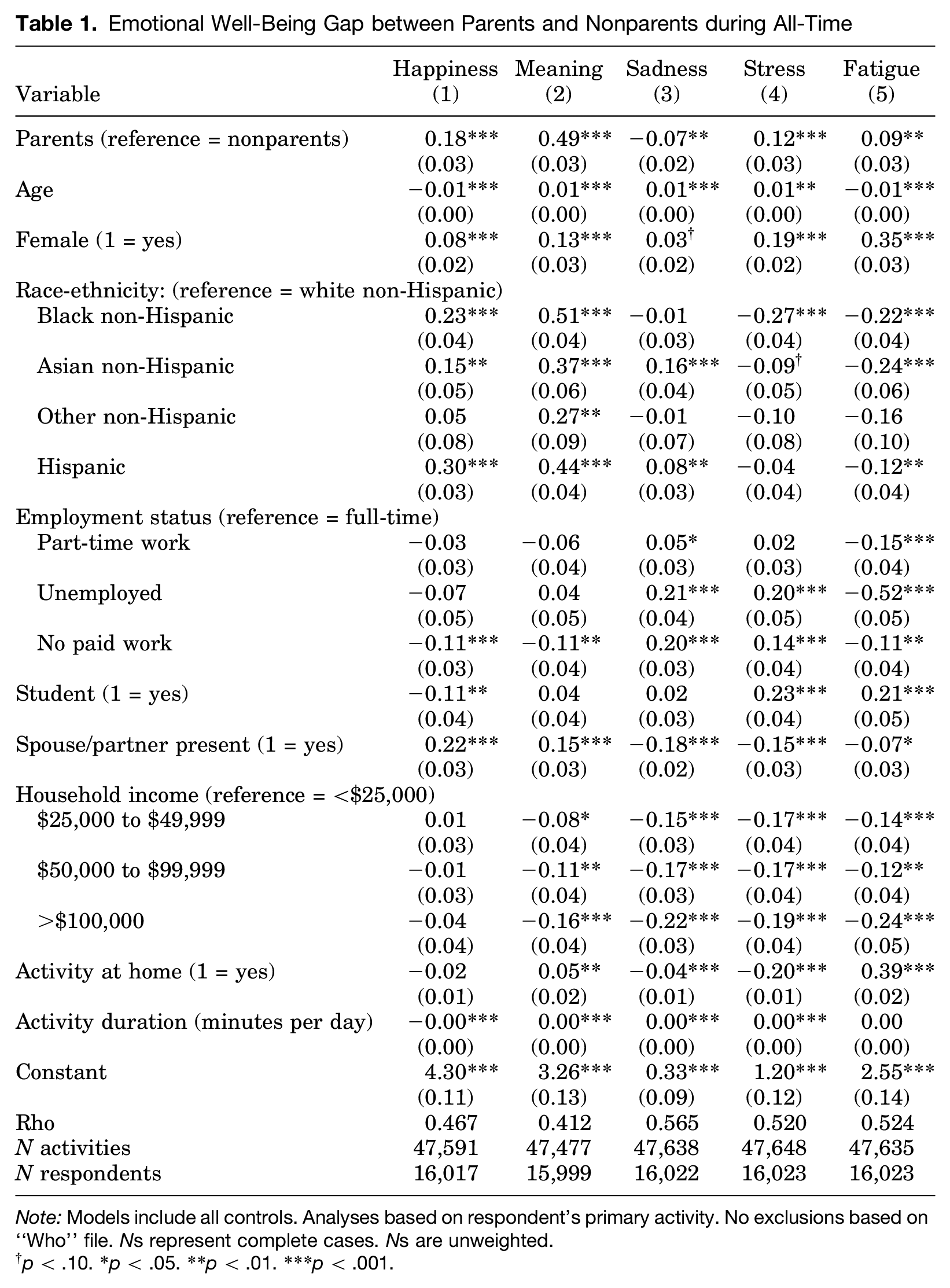
The first aim was to provide evidence that parenting (i.e., raising minor household children vs. not) is a mixed bag of both positive and negative emotions. We did so by examining well-being in “all-time.” All-time was calculated by pooling across all activity reports in which well-being was assessed. The reference category in all models is nonparents. These results provided support for the mixed bag thesis (see Table 1). When all activity records were examined together, parents reported significantly more happiness (b = .18, SE = .03) and meaning ( b = .49, SE = .03) and less sadness (b = –.07, SE = .02) than nonparents, but also more fatigue (b = .09, SE = .03) and more stress (b = .12, SE = .03).
Emotional Well-Being Gap between Parents and Nonparents during All-Time
Note: Models include all controls. Analyses based on respondent’s primary activity. No exclusions based on “Who” file. Ns represent complete cases. Ns are unweighted.
p < .10. *p < .05. **p < .01. ***p < .001.
To provide a sense of the magnitude of these patterns, we calculated standard deviation effect sizes based on the coefficients from Table 1 and means/standard deviations from Table A-2 in the online supplement (Kahneman et al. 2004). Overall, these effect sizes are similar to those found in other research (Meier et al. 2016; Musick et al. 2016). They translate to 11 percent of a standard deviation for happiness, over a quarter of a standard deviation for meaning, 5 percent for sadness, 7 percent for stress, and 5 percent for fatigue. To provide a more substantive understanding of these effect sizes, we also compared them to those of another central social status: having a partner/spouse. The effect size for happiness is nearly the same (87 percent as large) as the effect associated with having a partner/spouse; for meaning, the effect is 70 percent larger than that associated with having a partner/spouse. For stress and fatigue, the effect of being a parent is about the same as being single. For sadness, the reduction is about half of that associated with having a partner/spouse.
Variation by Activity
Building on these results, we aimed to unpack this mixture of positive and negative emotions by examining how parents (compared to nonparents) felt during the most common daily activities. Note this analysis step resulted in a reduction of sample size (notated in the tables) because not all respondents were asked about their well-being during market work, housework, and leisure. Models estimating momentary well-being separately for each activity type (see Figure 1; full coefficients available in online supplement, Table A-5) revealed that during market work, parents’ and nonparents’ momentary emotional well-being were similar, with parents reporting only marginally more meaning (b = .13, SE = .07) than nonparents. During housework, parents continued to report significantly more meaning (b = .24, SE = .05) but also marginally more fatigue (b = .09, SE = .05) and significantly more stress (b = .17, SE = .05) than nonparents. During leisure, parents reported significantly more happiness (b = .23, SE = .03) and meaning (b = .48, SE = .04) as well as less sadness (b = –.11, SE = .03) but also more stress (b = .07, SE = .04) and fatigue (b = .12, SE = .04) than nonparents. Thus, the suggested parenting well-being gap existed primarily during leisure activities.
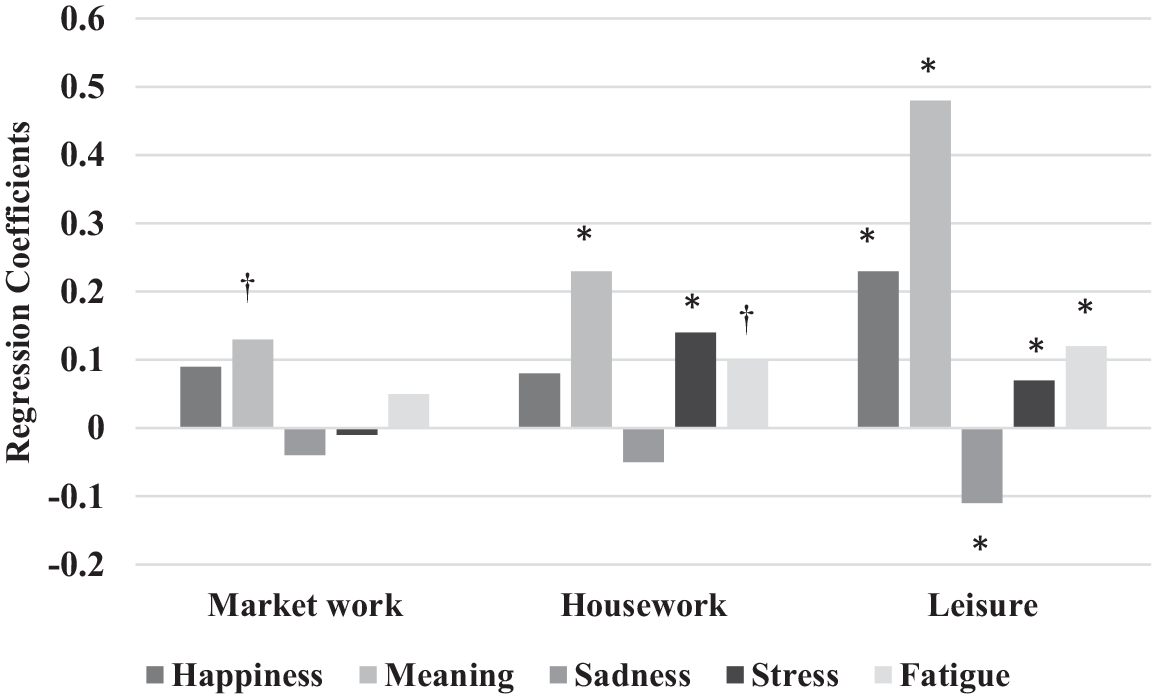
Emotional Well-Being Gap between Parents and Nonparents (reference group) by Activity Type
The Role of Child Presence
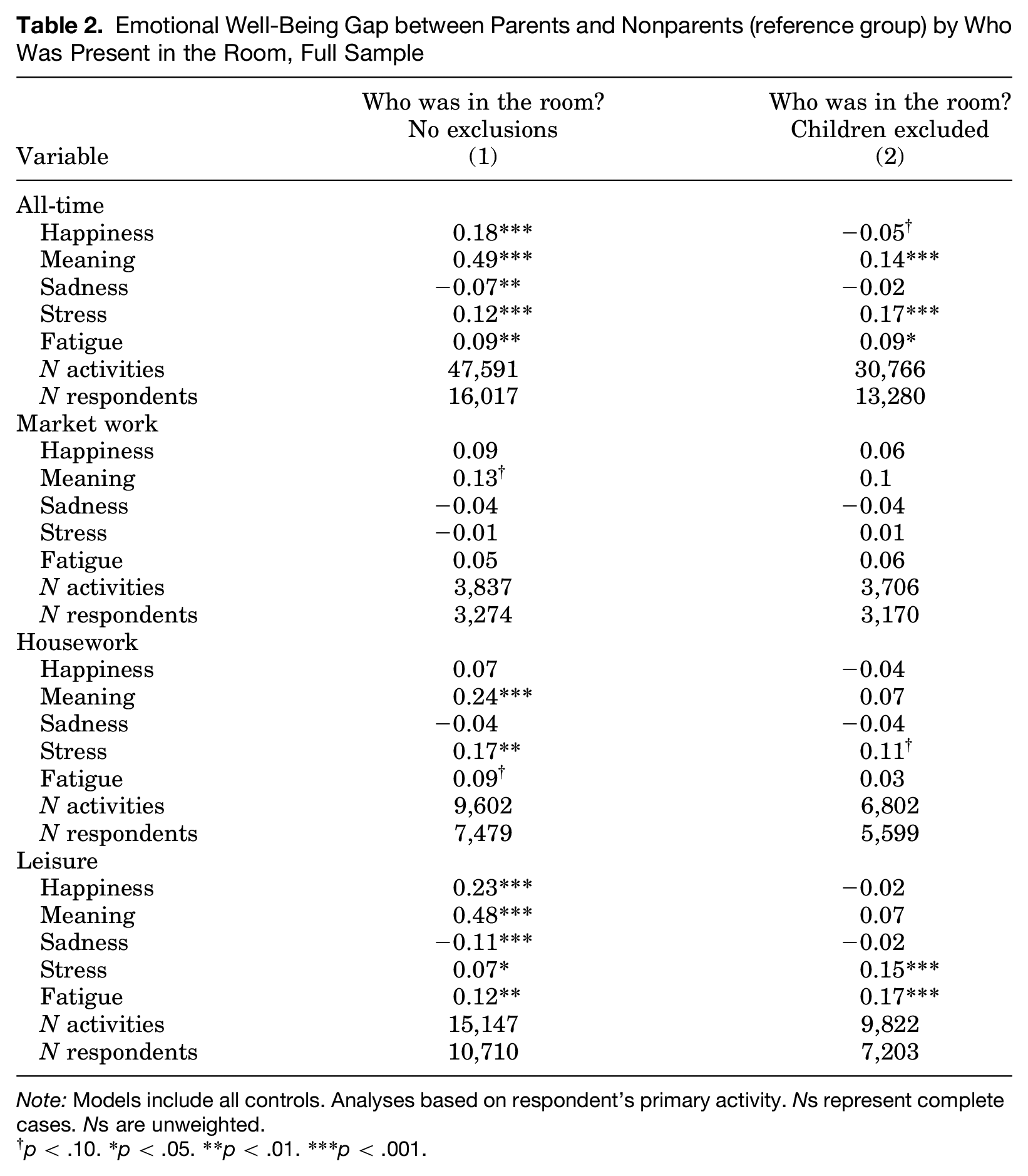
To examine if differences in emotional well-being by parenting status were conditioned by the presence of children during these activities, we excluded from the parent sample all activity reports in which children were present. Because nonparents do not have minor children, the activity reports for nonparents were the same as in previous analysis steps. We find that the positive associations between parenting and momentary emotional well-being were driven by the presence of children (see Table 2, columns 1 and 2). When parents were not with their children, parents reported less positive emotions, particularly in all-time (b = .18 vs. b = –.05) and in leisure (b = .23 vs. b = –.02), in which their happiness levels dropped below those for nonparents. We also observed a sharp decline in meaning in all-time (b = .49 vs. b = .14), leisure (b = .48 vs. b = .07), and housework (b = .24 vs. b = .07). Consistent with this pattern, parents’ significantly lower levels of sadness during all-time (b = –.07 vs. b = –.02) and leisure (b = –.11 vs. b = .02) became insignificant during time when they were without their children. At the same time, parents’ greater levels of stress and fatigue compared to nonparents remained relatively unchanged during time when they were without their children, and during leisure, their stress (b = .07 vs. b = .15) and fatigue (b = .12 vs. b = .17) intensified. Note that for market work, patterns do not differ from those using all market-work reports because only 3 percent of parents’ market-work reports were with children present.
Emotional Well-Being Gap between Parents and Nonparents (reference group) by Who Was Present in the Room, Full Sample
Note: Models include all controls. Analyses based on respondent’s primary activity. Ns represent complete cases. Ns are unweighted.
p < .10. *p < .05. **p < .01. ***p < .001.
Variations by Parenting Stage
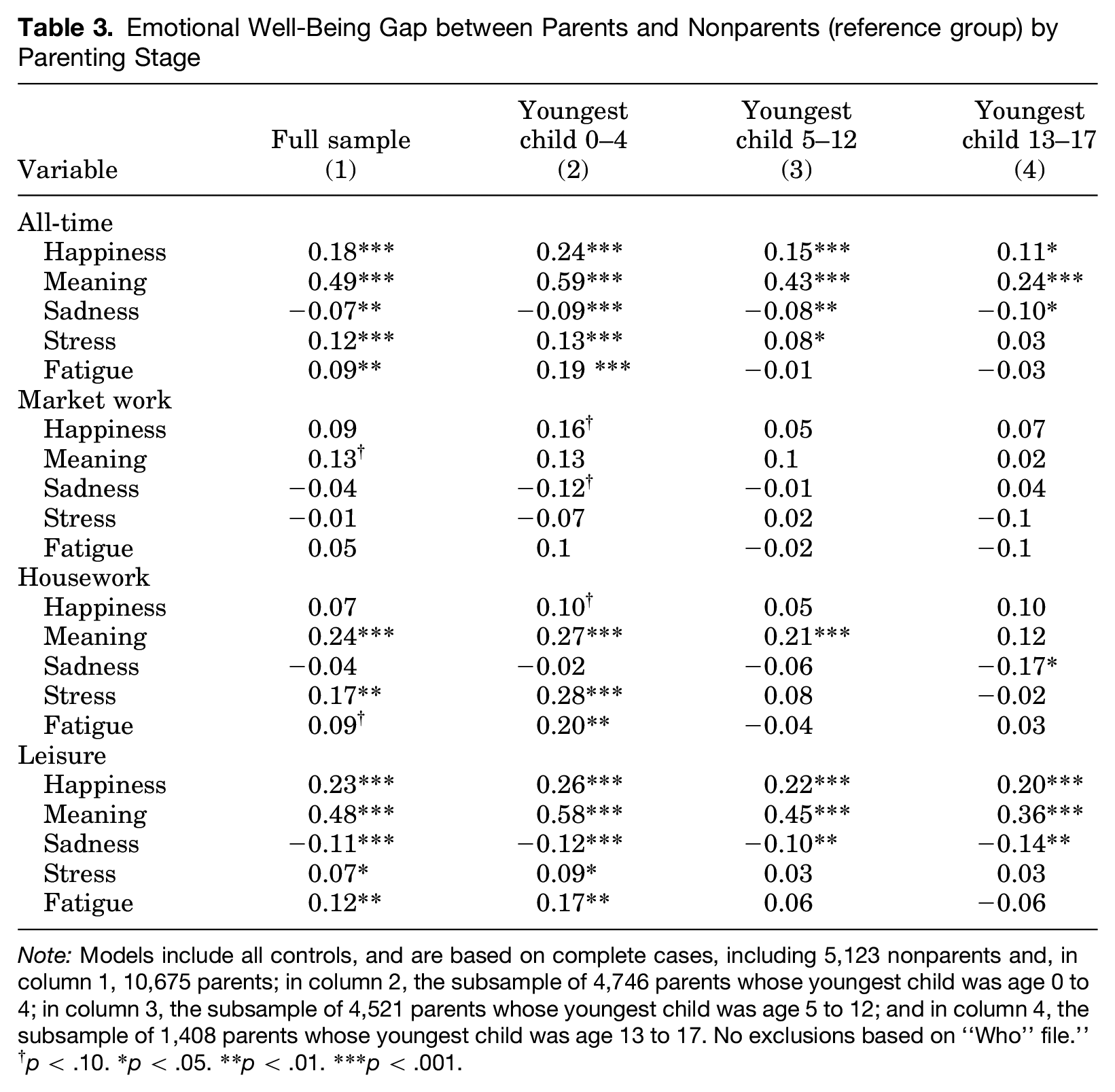
To examine whether parenting stage moderated the association between momentary emotional well-being and parenting status, we stratified the parent sample based on three parenting stages reflecting the age of the youngest household child (see Table 3). Note that we could not estimate interaction models because child age is not a relevant variable for nonparents. Results by parenting stage appear in columns 2 through 4, where we compared the well-being of parents whose youngest child is an infant/toddler (0–4 years old), elementary school (5–12), and teenager (13–17) to the well-being of nonparents. For the first step in this analysis, we made no exclusions based on who was in the room/present during the activity.
Emotional Well-Being Gap between Parents and Nonparents (reference group) by Parenting Stage
Note: Models include all controls, and are based on complete cases, including 5,123 nonparents and, in column 1, 10,675 parents; in column 2, the subsample of 4,746 parents whose youngest child was age 0 to 4; in column 3, the subsample of 4,521 parents whose youngest child was age 5 to 12; and in column 4, the subsample of 1,408 parents whose youngest child was age 13 to 17. No exclusions based on “Who” file.”
p < .10. *p < .05. **p < .01. ***p < .001.
During all-time, we found no variation in momentary well-being for positive emotions by parenting stage. Mirroring the results for the full sample (see column 1), parenting was associated with significantly more happiness and meaning and less sadness, regardless of whether parents had a youngest child who was an infant, a middle schooler, or a teenager (compared to nonparents). Negative emotion gaps, however, were largest among parents whose youngest child was 0 to 4 (compared to nonparents), narrowed for parents whose youngest child was in middle childhood (parents experienced only more stress than nonparents; they did not experience more fatigue), and disappeared for parents whose youngest child was an adolescent.
When looking within specific activities, we found that, mirroring results from analyses based on the full sample, patterns in positive emotions were most pronounced during leisure, in which parents of children of all ages reported more happiness and meaning; during housework, only differences in meaning for parents whose youngest child was younger than 13 were statistically significant (compared to nonparents). Likewise, reported differences in negative emotions were primarily observed during leisure.
Next, we focused on activity reports when parents were not with their children. The results again parallel the results from the full sample (therefore, we summarize them here and present full coefficients in online supplement, Table A-6). The patterns in positive emotions were reduced or disappeared during time when parents of children of all ages reported not being with their children, while the negative emotions gaps remained significant during all-time and leisure and for parents whose youngest household child was younger than 13.
Variation by Gender
To assess whether the associations between parenting status and emotional well-being differed for men and women, we added an interaction between parenting status and adults’ gender and calculated average marginal effects (AMEs; Esarey and Sumner 2015; see Figure 2; full coefficients available in online supplement, Table A-7). From these AMEs, we did not find significant differences in the size of the well-being gap by gender (i.e., [mothers – nonmothers] – [fathers – nonfathers]), along positive or negative dimensions, within any activity, with two exceptions. During market work, mothers reported more happiness than women who were not raising minor children, but there was no such difference in happiness by parenting status for men. In housework, mothers reported more fatigue than women not raising minor children, but again, there was no such difference for men. This pattern persisted when we considered only activity reports when parents were not with their children (thus, we summarized the results here and present the coefficients in online supplement, Table A-8).
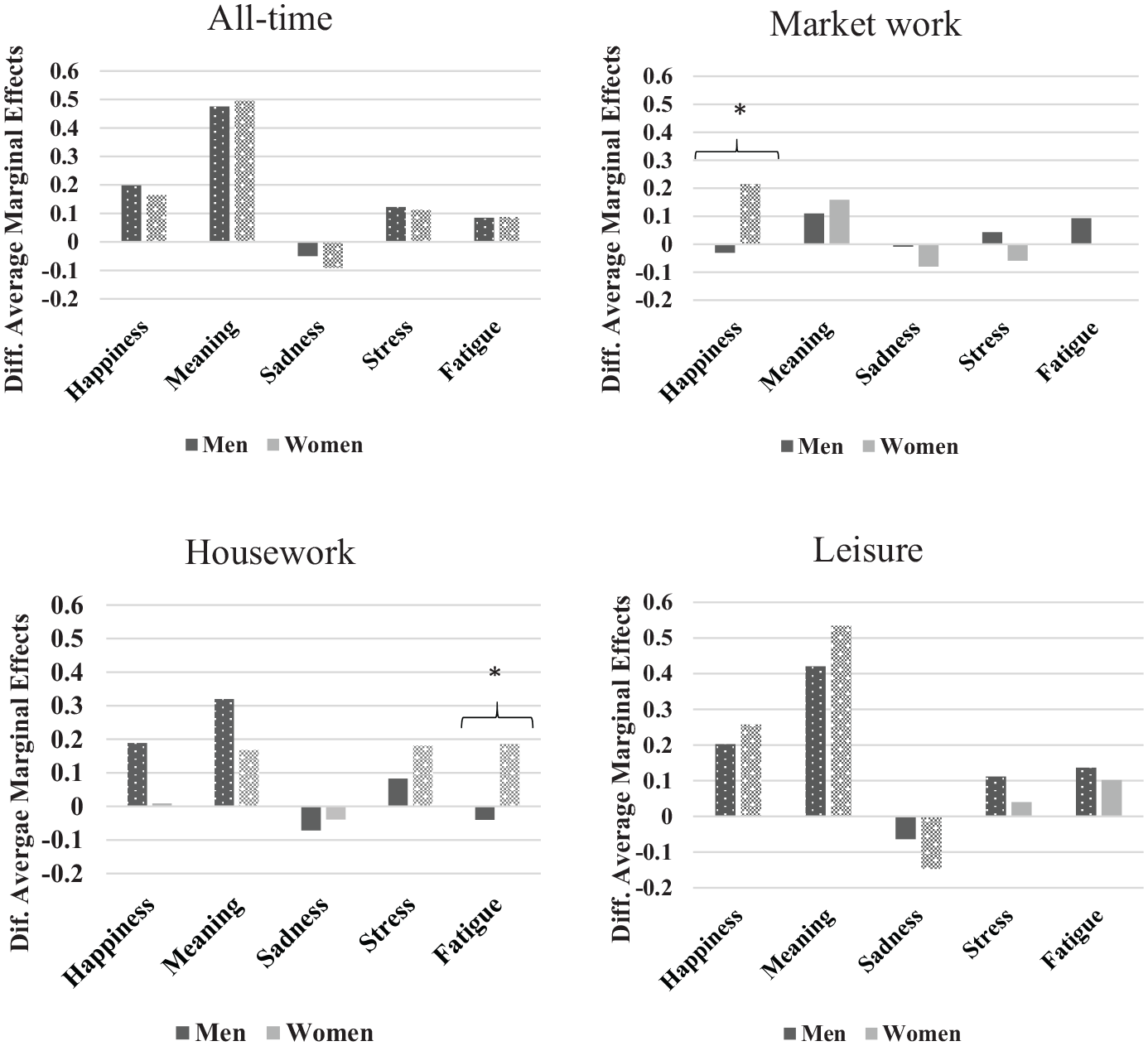
Emotional Well-Being Gap between Parents and Nonparents (reference group) by Respondent’s Gender
Robustness Analyses
Union status
Some studies suggest that differences in well-being by parental status are more pronounced among single adults (Meier et al. 2016) or are driven by union status (Twenge et al. 2003). To test these possibilities, we repeated the analysis on partnered adults (results available in online supplement, Panel B). Results from models of all-time parallel those for the full sample for positive emotions and sadness; parents reported significantly more happiness and meaning and less sadness than nonparents. For stress and fatigue, there was no longer a significant gap. This result may be linked to the fact that single parents (most of them women) reported the highest levels of stress and fatigue (as also highlighted by Meier et al. 2016), while single nonparents reported the lowest. Focusing on activities in which parents were not with their children, we found a very similar pattern to the one observed in the full sample. Patterns by parenting stage and adult’s gender also did not change. Thus, the results in the full sample appear generalizable to partnered and single adults, with the exception that single parents experienced more negative emotions in the presence of their children than partnered parents.
Sample age
By censoring the sample at age 50, we aimed to limit the inclusion of empty-nesters in the nonparent group but also excluded many parents who, compared to the full parent sample, were more likely to be male, college educated, non-Hispanic white, and employed full-time. Thus, we replicated the analysis on adults ages 21 to 58, adding 973 parents and 2,928 nonparents to create more equal comparison groups in terms of age (mean age of parent = 38.34; nonparents = 39.17) as well as other sociodemographic factors (see online supplement, Panel C). The pattern of results was the same, with one minor exception: during all-time and leisure, in activities where parents were without their children, the parent sample ages 21 to 58 reported significantly less happiness than nonparents, whereas for the sample ages 21 to 50, this coefficient was marginally significant (during all-time) or not significant (during leisure). We also replicated the analysis including respondents ages 15 to 20, finding very similar results.
Discussion
For decades, scholars across disciplines have sought to determine whether parents or nonparents have greater psychological and emotional well-being. After much debate, they have concluded that both parenting minor children and not parenting minor children convey emotional costs and rewards that vary across contexts, parenting stages, and segments of the population (for reviews, see Umberson et al. 2010; Hansen 2012; Nelson et al. 2014). In spite of this recognition, there has been limited attention to unpacking this mixed bag, especially in ways that consider the contextual aspects of daily life. Our aim was to make such advancements by drawing on a unique set of well-being measures tied to time-diary data, a nationally representative contemporary sample, and a foundational social-psychological framework—SSP (McLeod and Lively 2006). This perspective pointed to explicit considerations of microlevel factors (like activity type and the presence of children) in shaping one’s experience of parenting or nonparenting as well as the ways these experiences are bounded and shaped by children’s ages and one’s gender.
Our results provided some of the first evidence of the mixed-bag thesis based on momentary measurements of positive and negative dimensions of subjective well-being in a representative sample. We found that parents of minor household children experienced greater levels of positive emotions (happiness, meaning) and less sadness than nonparents in their day-to-day-lives but also more negative emotions (stress and fatigue). These results echo the small body of literature examining the mixed bag of parental well-being as well as the larger body of research and theory providing further evidence of it. They also highlight the utility of the SSP framework by underscoring the importance of examining psychological well-being in more nuanced ways by drawing on momentary assessments as opposed to just generalized measures. We hope these results can lay to rest ongoing public debates about whether parents or nonparents fare better (Villarica 2012; Dell’Antonia 2016) while setting the foundation for investigations that go beyond general descriptions of “all-time” to considering particular contexts, such as activity type and children’s presence.
Doing so revealed that the differences in positive and negative dimensions of well-being for parents compared to nonparents occurred during specific contexts: activities outside of paid work. This insight speaks to discussions of work–family conflict, suggesting that more of this “conflict” is experienced at home than at work (Damaske et al. 2014) and how, in contrast to popular wisdoms about working parents (Correll et al. 2007), parents experience and manage negative emotions at work to the same degree as adults without minor children. At the same time, when parents were not with their children, we found that the positive-emotions gaps observed during housework (for meaning) and leisure (for happiness and meaning) declined to equal or lower levels than those of nonparents. Such findings dovetail with the recent finding that parents’ time with children is the happiest time of the day (Musick et al. 2016) and challenge assumptions of prior research (Bittman and Wajcman 2000; Mattingly and Bianchi 2003) and the popular press (Senior 2014) that children’s presence decreases parents’ positive emotions. Beyond this substantive insight, these findings underscore how proximal processes—not status—shape parental emotional well-being gaps by suggesting that parents’ greater levels of positive emotions are activated by the experience of being in the company of their children during housework and leisure activities and that being a parent does not carry an “emotional advantage” to all parts of their day.
We also found that parents’ negative feelings (stress and fatigue) did not improve when parents were without their children. In fact, for partnered parents, higher negative feelings were observed only during leisure activities when children were not present. We propose four explanations for this finding that point to specific microlevel processes: (1) parents may be more acutely aware of their stress and fatigue once they are no longer in the presence of their children; (2) the fatigue and stress experienced during time with children linger into parents’ subsequent activities when children are not present (a spillover effect); (3) parents experience more switching between activities (e.g., reading, caretaking, more reading), which is associated with higher levels of stress (as shown by Cornwell [2003], although controlling for the number of activity reports did not alter the results); and (4) parents’ roles as parents shape their expectations about time with and away from children, such that time without children may be associated with lower well-being because parents feel they should be with them (Milkie, Nomaguchi, and Schieman 2019).
We also found that the emotional costs of parenting were highest for parents with young children—who reported both more stress and more fatigue than nonparents. On the other hand, the positive-emotions boost associated with parenting remained across all parenting stages. Such findings for negative emotions are consistent with research documenting how time investments in children decrease at each parenting stage (Eccles 1999; Kalil et al. 2012; Negraia et al. 2018). Our findings for positive emotions, however, offer a refinement of the recent findings by Meier and colleagues (2018), who reported that parents’ positive emotions decline as children age, by revealing that they nevertheless remain higher than those of adults who are not caring for minor children. More broadly, our findings emphasize the importance of considering child age as macrolevel context in research on parental well-being as well as other parenting-related outcomes.
We also find that the size of the gender gap is greater for women compared to men in two activity contexts. First, mothers reported more happiness during paid work than women not raising minor children, but there was no difference in happiness by parenting status for men. This finding is surprising given conflicting ideologies of good mother and good worker (Hays 1996), which are expected to leave mothers feeling guilty about working outside the home (Blair-Loy 2003). Rather, the finding is consistent with Hochschild’s (1997) argument that mothers perceive the workplace as a haven away from home and findings from Garey (1999), who suggests that working mothers have a positive emotional experience at work, relish interactions with other adults, and value work as a source of identity and self-regard. We also found that mothers reported more fatigue during housework than women not raising minor children, but there was no difference in fatigue by parenting status for men, underscoring the importance of looking more closely at qualitative differences in men’s and women’s experiences in these contexts in future research (Musick et al. 2016). Together, these findings underscore the interface between micro- and macrolevel contexts in shaping well-being among different groups.
Finally, our robustness analyses revealed that regardless of partnership status, parenting minor children was associated with higher levels of positive emotions (more happiness and meaning) and less sadness than nonparenting. At the same time, partnership status was relevant for the negative emotions of stress and fatigue, although only for time spent with children. This pattern may be because single mothers spend more solo time with children than partnered mothers (Kalil et al. 2012) and may have to combine caretaking with other activities.
Despite these contributions, there are also limitations. Foremost, because ATUS is cross-sectional, we could not measure momentary emotional well-being at multiple time points (e.g., prior to/after fertility, as children age). Doing so would allow us to rule out issues of selection into parenting (e.g., happy people are more likely to become parents; fertility intendedness) and out of parenting and assess changes in parents’ well-being across the transition to parenthood. Thus, we cannot make causal claims about the impact of parenting status on adults’ well-being. Second, ATUS interviews only one respondent per household. Couple-level data would allow us to better disentangle the role of gender in the parenting well-being gap. Third, ATUS does not provide measures such as social support, child behavior, and parent–child relationship quality, which may moderate the link between parenting and well-being, as well (Nelson et al. 2014). Likewise, child gender and the interplay between well-being and parental status versus other qualitative aspects of parenting (e.g., intensity of activity, time in activity) are factors we did not explore but intend to in future research. Additionally, as with other work on the parenting well-being gap, effect sizes were modest (Hansen 2012). We acknowledge that these differences do not amount to what would conventionally be considered large effects, although the substantive significance of effect sizes for assessments of subjective well-being remains an area of ongoing discussion and development.
Last, there are several elements of the SSP framework that remain unexamined, such as the mechanisms linking parents’ and nonparents’ experiences to their reports of positive and negative emotions. For example, how did parents’ proximate interactions with their children contribute to their stress and fatigue? We also did not examine other proximate “stimuli,” such as interactions with other family or friends; systems of stratification, like education; relevant contexts, such as custody arrangements among parents; and parenting stages, such as the empty-nest phase. We hope that by bringing the SSP framework to research on parental well-being, this study provides a road map for exploring these questions as well as other previously unexplored questions about parental well-being.
In sum, this study provides new insights into an area of research that has long interested scholars and the public alike: the parenting well-being gap. Our findings provide evidence for the mixed bag of parental well-being but also how it did not generalize to all contexts. For negative emotions, it was chiefly observed in contexts outside of paid work among parents with young children. For positive emotions, it was constrained to time during housework and leisure but spanned all parenting stages. Patterns were largely consistent between men and women, although mothers were happier in paid work and more fatigued in housework compared to women not raising minor children. These findings highlight the dynamic and diverse proximate factors that moderate the costs and benefits of raising versus not raising minor children and their linkages to larger macrolevel factors. They refine knowledge of the parenting well-being gap, and they help push beyond simple cultural narratives that seek to claim that parents or nonparents are better off than the other.
Supplemental Material
Supplementary_Material_SPQ_CA_19-12-19_v2 – Supplemental material for Unpacking the Parenting Well-Being Gap: The Role of Dynamic Features of Daily Life across Broader Social Contexts
Supplemental material, Supplementary_Material_SPQ_CA_19-12-19_v2 for Unpacking the Parenting Well-Being Gap: The Role of Dynamic Features of Daily Life across Broader Social Contexts by Daniela Veronica Negraia and Jennifer March Augustine in Social Psychology Quarterly
Footnotes
Acknowledgements
We are thankful to conference and seminar participants for many useful suggestions and comments and in particular to Sarah Flood, Kate C. Prickett, Kei Nomaguchi, Ashley L. Harrell, and Matthew Andersson.
Author’s Note
Earlier versions of this work were presented at the 2016 Annual Meeting of the American Sociological Association, the 2016 Annual Meeting of the Population Association of America, meetings of the Carolina Consortium on Health, Inequalities, and Populations at the University of South Carolina, and of the Lab of Digital and Computational Demography at the Max Planck Institute for Demographic Research.
Funding
We gratefully acknowledge support from the University of South Carolina through the SPARC Graduate Research Grant and Russell J. and Dorothy S. Bilinski Dissertation Fellowship to Daniela Veronica Negraia and support from the Minnesota Population Center (5R24HD041023) and the American Time Use Survey Data Extract Builder project (5R01HD053654), funded through grants from the Eunice Kennedy Shiver National Institute for Child Health and Human Development.

Supplemental Material
The supplemental material may be found in the online version of the article.
Bios
References
Supplementary Material
Please find the following supplemental material available below.
For Open Access articles published under a Creative Commons License, all supplemental material carries the same license as the article it is associated with.
For non-Open Access articles published, all supplemental material carries a non-exclusive license, and permission requests for re-use of supplemental material or any part of supplemental material shall be sent directly to the copyright owner as specified in the copyright notice associated with the article.
