




Abstract
The article develops the concept of “spacing sexuality” to explore the construction of alternative women-oriented workspaces aimed at challenging traditional workplace gender norms and fostering a new ideal type of woman entrepreneur. By highlighting the dialectical process of spacing, the study investigates how sexuality is constructed through aesthetic means and how space users negotiate and experience this. The study explores the interplay among space, sexuality, and gender, and it offers a theoretical framework to understand the role of sexuality in establishing women-oriented workspaces. Its contribution is threefold: First, it illuminates how workspaces for women are shaped through spacing processes and aesthetic assemblages that involve complex negotiations around femininity. Second, it highlights how sexuality is both empowering women at work—challenging gender norms and fostering a supportive community—and rooted in unequal gender power relations. Finally, it explores how the construction of alternative gender regimes in women-oriented spaces intersects with the pressures of the entrepreneurial world, emphasizing the nuanced negotiation of femininity and success.
Keywords
Introduction
Sexuality—broadly defined as a “plurality of polymorphous pleasurable sensations and emotions” (Burrell, 1984, p. 98)—is a central component of the gender regime that generates and reproduces gender relations in general and within organizations in particular (Fotaki, 2011; Pullen, Thanem, Tyler, & Wallenberg, 2016). However, despite being an often overlooked aspect of workplace dynamics, sexuality continues to profoundly shape employees’ experiences in workplaces, with organizations frequently upholding dominant heteronormative assumptions (Priola, Lasio, Serri, & De Simone, 2018; Pullen & Thanem, 2010; Rumens & Broomfield, 2014).
In contemporary feminist thought, sexuality frequently serves as a point of contention, central to numerous theoretical disputes due to its role in shaping and challenging gender relations (Gill & Scharff, 2011). Broadly put, two main positions have arisen within this discourse: the first is the queer theory, in which some scholars advocate for the deconstruction of traditional gender and sex categories, proposing a complete dissociation of sexuality from these constructs and challenging the fundamental binary distinction between men and women. The second approach addresses the debate between the postfeminist and critical perspectives regarding sexuality as a tool for women's empowerment. While postfeminists perceive sexuality as a means to reject victimhood and celebrate agency and personal choice, critical theory considers sexuality as embedded in traditional gender perceptions, thereby perpetuating existing gender power relations (for this debate see Gill, 2007; Just & Muhr, 2020).
In the organizational context, this complexity of sexuality has raised numerous ways in which gender order could be challenged and alternative sexualities could be formed. Some scholars, who acknowledge that women have unique experiences and needs, have offered a broad definition of sexuality and eroticism to include pleasure, passion, and love that subvert masculine rationality (Bell & Sinclair, 2014). According to this perspective, by constructing workspaces that allow for the expression of emotions and interpersonal closeness, it is possible to foster inclusive environments where individuals can express emotions without fear of judgment or exclusion. Other scholars aligned with queer theory have suggested challenging heteronormativity by constructing “other” spaces tailored to various gender identities and sexualities (Steyaert, 2010; Vitry, 2021). For instance, by incorporating inclusive design principles into organizational aesthetics, such as using signage and decor that affirm diverse sexual identities, organizations actively contribute to dismantling the rigid gender dichotomies that persist in many aspects of society (e.g., through non-binary restrooms; Skoglund & Holt, 2021).
Parallel to the theoretical endeavor to better understand how to design spaces to include diverse identities, critical scholars in the field of organizational aesthetics have shown the pivotal role of space in constructing various identities (Dale & Burrell, 2008; Hancock & Spicer, 2011), including gender identity (Hirst & Schwabenland, 2018; Tyler & Cohen, 2010; Wasserman & Frenkel, 2015). These studies scrutinized women’s experiences in conventional organizational spaces and showed how these spaces reinforce gender norms and power relations. They highlighted women’s discomfort in organizational spaces resulting from a design that fails to meet their needs or that contains sexist symbols. For instance, Grazian (2020) noted that many contemporary workspaces primarily cater to young men, often to the exclusion of women. The gendered design was especially noticeable in amenities such as taps of flowing beer (that mostly men seem to drink), ping-pong and arcade games (that mostly men seem to play), and posters glorifying violent macho movies such as Fight Club and Pulp Fiction. He described the decor as resembling a college dorm lounge, with wallpaper depicting graphic macho symbols (e.g., men’s underwear briefs, clinking beer steins, bottles of bourbon and tequila) and hanging slogans implying a macho sexist atmosphere such as “If it’s really funny, it’s probably harassment” (Grazian, 2020, p. 1009). Thus, scholars argue that to create a space suitable for women, aestheticization should follow “feminine” and egalitarian principles and offer a safe space for women (Wasserman, 2020). From a performative perspective, Panayiotou (2015) suggests the term “spacing gender” to describe how women use spatial practices to resist or even transform the symbolic gender order. However, how such spaces are designed and constructed through constant negotiation around femininity and what role sexuality plays in the process of spacing are still commonly disregarded.
Drawing on a processual perspective in organizational aesthetics, we focus on spacing as an ongoing process of space production, involving planning, embodiment, and continuous negotiations of its meaning (Beyes & Steyaert, 2012; Kingma, Dale, & Wasserman, 2018). To explore the spacing of alternative sexuality as a means of liberating women, we analyze how sexuality is spaced, manifested, and experienced through constant negotiations and mediating tensions. We treat spacing as a dialectical process (Beyes, 2018; Sivunen & Putnam, 2020), through which workspaces are defined and experienced in ways that subvert heteronormativity and the dominant gender order (Steyaert, 2010).
To examine the research questions, we base our study on fieldwork in two women-oriented coworking spaces (WOCWS), one in Tel Aviv and one in New York, which are part of a broader attempt by women worldwide to find, design, and manage feminist spaces. These places aim to create a workspace suited for women’s needs, promote women’s businesses, and help them cope with the sexism and general discomfort many experience in gender-mixed environments (Akhavan, Fuzi, & Calogero, 2022; Kelly, Kimakwa, & Brecht, 2020).
By examining the triangular relationships between space, sexuality, and gender, the article contributes an innovative theoretical framework to understand sexuality’s pivotal role in establishing women-friendly workspaces that are suited to their needs. Through an in-depth analysis of the dialectical process by which alternative sexuality is spaced, experienced, embodied, and continuously negotiated, the article provides a rich understanding of the contradictory ways women navigate and assert agency by undermining heteronormativity while simultaneously maintaining the existing gender norms. This nuanced perspective not only empowers women to claim ownership of a space of their own but also facilitates the construction and affirmation of new and diverse feminine identities and sexualities within the broader business/entrepreneurial context, fostering inclusivity, equity, and empowerment in the work environment.
To delve into how spacing sexuality within the workplace may disrupt the hegemonic model of masculine entrepreneurship, we build upon two streams in organizational literature: the first examines sexuality in organizations from a feminist perspective, and the second scrutinizes the existing studies on space, gender identity, and sexuality within organizational contexts.
Sexuality in Organizations from a Feminist Perspective
Since the 1970s, feminist discourses regarding sexuality have evolved around two interrelated dichotomies (Jackson & Scott, 2010). The first debate concerns whether individuals’ sexuality and attraction to others stem from their gender identity or genitals and whether the gendered ways they go about fulfilling these desires are predominantly biological or socially constructed—that is, female/male versus woman/man. While conservative views of gender as a biological binary prescribed the “appropriate femininity” (or masculinity), most feminists acknowledge by now that feminine sexuality is the outcome of politics and sociocultural restrictions (Rubin, 2007). These ideas have been built upon to challenge conventional gender dichotomies, calling for the recognition of multiple femininities rather than a singular, unified femininity and promoting the expression of diverse sexualities (Bell, Meriläinen, Taylor, & Tienari, 2019; Lewis, 2014).
The second debate concerns sexuality as associated with pleasure or danger (Vance, 1992), focusing specifically on the social expectations of women regarding the satisfaction and threats of engaging in sexual activities within and outside societal boundaries. While some scholars link femininity and victimhood (and masculinity and aggressiveness) and view sexual engagement as endangering women (MacKinnon, 1979), others point to the potential of sexuality in reversing gender power relations, partly through the performance of a “tough woman” who exhibits female sexual aggression (Noble, 2010). This ambivalence toward sexuality in the feminist discourse led to the emergence of two complementing processes related to sexuality in work organizations: de-sexualization and re-sexualization.
De-sexualization is a process aimed at eradicating sexuality from the modern workplace based on the bureaucratic model. Leaning toward “sex as danger” at the end of the axis, de-sexualization involves inaugurating supervisory mechanisms to control sexuality and eliminate emotions and personal relationships from corporations. According to the bureaucratic model, modern organizations should be based on rationality, hierarchy, and impersonal relationships, whereas qualities such as love, comfort, and sexuality are relegated to the private sphere (Burrell, 1984). While allegedly protecting women from sexual harassment and reproducing the gender-stereotypical male-predator/female-victim dynamic at work, scholars have illuminated how, by means of eliminating emotions and intimacy at work, this process also propagates a gender-based inequality regime that favors stereotypical masculine behavior (rational and one that separates the public and private spheres) over feminine behavior (Acker, 2006). Since modern organizations privilege rationality—representing a particular form of masculinity—over the emotional, sexual, and personal aspects that are associated with femininity, women were viewed as less suitable for the workplace (Pringle, 1989).
Despite the bureaucratic attempts to keep sexuality away from organizations, acts of intimacy and personal relations frequently occur in the workplace (Burrell, 1984), and it becomes a frequent venue for romantic encounters (Kakabadse & Kakabadse, 2004). In some cases, sexual feelings can be compelled and submerged within organizational power relations and may be harnessed rather than stifled by management to enhance labor productivity (Burrell, 1984). That is, the construction of sexuality in the workplace may be mobilized as a managerial tool to achieve organizational goals (Fleming, 2007; Warhurst & Nickson, 2009). This process is often called re-sexualization. When addressing this issue, organizational researchers emphasize the coercive elements of heteronormative sexuality at work, exploring the entanglement between sexual behavior and power relationships (Priola et al., 2018). They demonstrate how hierarchies of authority and control mechanisms can be translated to sexualized and gendered markers to dominate and control women (Witz, Halford, & Savage, 1996). Therefore, sexuality serves the “hegemonic masculinity” and men’s dominance over women (Connell & Messerschmidt, 2005) as well as signifying the bureaucratic, hierarchical feature that obligates subordinates to please their superiors (Acker, 1990; Connell, 1987; Pringle, 1989). These oppressive gender relations can also result in sexual harassment (MacKinnon, 1979; McDonald, 2012).
While many studies focus on the offensive aspects of organizational sexuality, little is known about the connections between re-sexualization in organizations and challenging traditional gender assumptions. Building on Burrell’s (1984) insights that sexual relations among organizational members involve more than just “genitals” and may reflect manifestations of human emotions, such as love and affection, recent studies have suggested that organizational scholars should look beyond the most obvious reconstruction of (gendered) norms regarding sexuality (Bell & Sinclair, 2014; Vachhani, 2015). Instead, there could be other forms of eroticism and love at play. For example, Mandalaki and Pérezts (2022) suggested conceptualizing eros as the imagination, anticipation, and yearning for audacious interactions of love and pleasure, including sexual attraction, passion, affect, and joy. They stressed that erotic intercorporeal encounters within workplaces may be expressions of mutual exchanges of care, trust, and respect. Therefore, involving eroticized bodies during work could resist organizational conventions and gendered stereotypes and challenge the sexual male gaze. Similarly, Kiriakos and Tienari (2018) coined the term “love as doing,” suggesting that working with love is an embodied, sensuous, emotional, and social activity that represents a feminine way to challenge the masculine conventions of productivity. To challenge traditional mainstream approaches to workplaces, feminist organizations seeking to reject hegemonic masculinity and embrace multiple sexualities offer an opportunity for alternative accounts of sexuality, power, and organizing (Ashcraft, 2000; Gayle, 1994; Reger, 2004). Thus, giving space for sexuality, which involves emotions, desires, social experience, and expression, can counteract the traditional male-dominant working life.
In line with these views that consider sexuality as a potential catalyst for reshaping gender discourse, Sullivan (2014) proposed seeking an alternative to the re-sexualization of the workplace that allows for the inclusion of eroticism and desire in the conversation, elevating sexuality beyond shame and danger while redefining professionalism and sexuality as legitimate and valued components of work. Just and Muhr (2020) adopted a more critical approach that emphasizes the ambiguous relationship between empowerment and objectification in the context of sexualized work. In their article, they show how pole dance instructors discursively resist sexualization and simultaneously materially perform sexuality. By adopting a more nuanced perspective, the authors problematize the postfeminist assumption regarding sexuality as an empowerment tool, advocating for a more complex perspective of sexuality. While such a nuanced approach highlights the importance of critically examining the use of sexuality as a tool for women’s empowerment, the organizational processes through which sexuality in feminist workplaces is constructed and materialized to challenge gender identities have yet to be fully explored.
Space, Gender Identity, and Sexuality
In the broader field of organizational aesthetics, originally defined as knowledge about organizations derived from sensory experiences (Strati, 1999), critical researchers have revealed the various manners in which space serves both as a means of control and a site of resistance (Dale & Burrell, 2008; Hancock & Spicer, 2011; Wasserman & Frenkel, 2011). In recent years, scholars have begun to develop a more processual understanding that weaves the interplay among spatial planning, materials, events and activities, users’ experiences, and embodied practices (Stephenson, Kuismin, Putnam, & Sivunen, 2020). Introducing the notion of spacing (Beyes & Steyaert, 2012) or spatial work (Wasserman & Frenkel, 2015), scholars consider space not as a static container but rather as a dynamic process that involves ongoing negotiations, adaptations, and transformations within the spatial context (Hancock & Spicer, 2011; Taylor & Spicer, 2007). Beyes (2018), drawing on Lefebvre’s spatial triad, proposes the term “dialectical materialism” to reframe spacing as an open-ended process emphasizing the dynamic process of production, the emancipatory moments of change, and the importance of self-organization. Building on this dialectic, Beyes argues that spatio-organizational analyses should prioritize understanding these dynamics, focusing on the ongoing production and transformative moments within space and the constant negotiation between contradictions.
This theoretical perspective allows a multifaceted understanding of space production, through which space is constantly produced, enacted, and reproduced for and by users. Implementing the notion of the “architecture of complexity” (Kornberger & Clegg, 2003), scholars have emphasized the tensions that often arise as organizations navigate the complexities of spatial design, practices, identities, and symbolic meanings (Sivunen & Putnam, 2020). For example, coworking spaces embody processes of becoming and ever-changing interactions that often stem from the constant turnover of space users and the heterogeneous, sometimes contradictory, practices that coexist therein (Cnossen & Stephenson, 2022).
Despite the growing recognition that aesthetics is more than merely beautifying space, little attention has been paid to the various relationships between sexuality and spacing (Pullen & Thanem, 2010). Fleming (2007) investigated how expressions of sexuality in a call center organization were spatially manifested in certain places and times. Other scholars examined the role of “aesthetic labor” in encouraging sexuality in workplaces, focusing mainly on the sexy body as a commodity in service organizations (Dean, 2005; Warhurst & Nickson, 2009). Although not focused on sexuality and space, Alexandersson and Kalonaityte (2018) identified four design styles that characterize the contemporary workspace: greenery, amusement park, home, and nightlife. The authors argue that in nightlife, pleasure, danger, and erotic encounters are stimulated by aesthetic cues such as an alcohol bar, dark furniture, and grand piano. However, they do not elaborate on how space and sexuality are interconnected.
Other examples of connections between sexuality and space can be found outside the boundaries of the workplace in studies examining streets, public places, and sex shops (Green, Follert, Osterlund, & Paquin, 2010; Hubbard & Sanders, 2003; Tyler, 2012). For instance, Green et al. (2010) demonstrated how public restrooms, bathhouses, and sadomasochistic dungeons are organized around sexual activity. Their analysis highlighted the socializing and cultivating properties of space concerning sexual sociality and sexual practice. Similarly, Tyler (2012), who examined sex shops in London’s Soho district, described how the carefully managed aesthetics of the work environment, both within the shops and in the surrounding district, were meant to provide the “right setting” for producing and consuming sex. Evidence of the importance of space in constructing sexuality can also be found in sexual minorities’ appropriation of specific places and areas (Bell, 2006; Skeggs, Moran, Tyrer, & Binnie, 2004; Steyaert, 2010). For example, in a study on Derek Jarman’s garden, Steyaert (2010) adopted the Foucauldian concept of heterotopia to describe spaces that disrupt the normalizing discourses of everyday life. He suggested that new forms of sexual identity contest dominant forms of sexuality and become practiced in “other” spaces or heterotopias.
Although examining the interaction between sexuality and space mainly focuses on sex organizations, public sex spaces, or queer spaces where various sexualities are displayed openly, scarce scholarly works exist on how sexuality is spaced and aestheticized within work organizations that are not primarily concerned with sex. This gap is especially notable given the vibrant debate in feminist theory surrounding the role of sexuality in shaping gender identities. Furthermore, not much is known about how spacing might facilitate the construction of alternative gender identities among space users and how sexuality within organizations is understood as a socio-spatially constituted experience. To fill these gaps, our study focuses on the spacing of sexuality in for-profit business organizations to challenge traditional workplace gender regimes.
Methodology
Our study employs a qualitative, interpretative approach to analyze spacing practices in WOCWS. We chose a collective case study method, which is often appropriate for generating a theory (Siggelkow, 2007) from similar cases. Our collective case study (Stake, 1995), which consists of two WOCWS located in different countries, allowed us to enrich our data, reveal repeated practices, and increase the generalizability of these cases to better understand how sexuality is constructed in feminine spaces and how it affects women’s experiences.
The case
Coworking spaces offer flexible, shared work settings where individuals can rent desks on a daily, weekly, or monthly basis (Merkel, 2015). These shared workspaces enable an eclectic group of remote workers, entrepreneurs, and freelancers to “work alone together,” share a physical space, and allocate their time between work-related tasks and community-forming activities (Garrett, Spreitzer, & Bacevice, 2017; Howell, 2022; Spinuzzi, 2012). Overall, coworking spaces are highly aestheticized to encourage communication, collaboration, and creativity (Bouncken & Aslam, 2023) as well as to attract paying members, with their design promoting social interactions among users.
Coworking spaces for women stand out as unique organizations in the coworking landscape because they are not just shared work environments but also social hubs and support networks. These spaces, founded, designed, and managed by women worldwide, are specifically tailored to meet women’s needs. They offer a flexible, communal-oriented working environment that aims not only to promote women’s businesses but also to provide a safe space from the sexism and general discomfort often experienced in gender-mixed coworking spaces (Akhavan et al., 2022; Kelly et al., 2020).
This study was based on two private, for-profit, vibrant, city-centered WOCWS: one located in Tel-Aviv, Israel, which we refer to as Artemis, and the other located in Manhattan, New York, which we named Enlightenment (names are pseudonyms). Based on Poussier’s (2020) classification of WOCWS—parent-friendly, clubs, women-first, women-only, work collectives, and diversity promoters—both our case studies are combinations of women-first and social clubs. Nevertheless, both WOCWS operate on a business model centered around attracting and retaining customers. As such, they must focus on drawing in clients, ensuring their continued engagement, and maintaining a steady flow of membership renewals.
Despite their different locations, the two workspaces are embedded in a similar gender culture, and both places were founded by women to empower, nurture, and support women entrepreneurs. For a monthly membership fee of $200–325, they offer large shared workspaces, options for private offices, office services, and work facilities such as a kitchenette, meeting rooms, and a lounge area. Approximately 100 space users regularly attend each of the workspaces; the majority are middle-class women from diverse ethnicities, along with a small number of men who identify with the feminist agenda of these workplaces.
The founders of both workplaces hired women designers, were highly involved in the workspace’s planning and design processes, and managed them daily. Both workplaces offer activities to promote women professionally, such as workshops, lectures, and mentoring sessions on various entrepreneurial topics. Finally, to encourage a supportive community, they allocate unique areas for social interactions, such as a bar or restaurant, where members eat and drink alcoholic beverages together. Despite the similarities, there was no prior acquaintance or mutual impact between the two WOCWS. Thus, we assumed that the similarities between both places reflect a comparable managerial mindset.
Data collection
The study was conducted between 2019 and 2022, during which the first author joined the WOCWS as a member to gain full access to the coworking space and its social and professional activities. After identifying herself as an academic researcher interested in women’s coworking spaces, she ensured that participation in the study was grounded on informed consent.
The study included observations and interviews that allowed us to examine the organizational aesthetics, spacing practices, and space users’ subjective experiences. Specifically, we interviewed 40 space users, aged 22 to 65, from various occupations: four women founders/managers, four women employees (who worked at the front desk or in customer relations), and 32 members (19 women and three men), who were “purposively” sampled (Blaxter, Hughes, & Tight, 1996). The interviews, lasting 60 to 90 minutes and audio recorded, began with a description of the study’s purpose and obtaining informed consent. All the names used in the study are pseudonyms. In addition, we have conducted 530 hours of on-site participant observations to detect social interactions, movement patterns, and bodily gestures and to capture space aesthetics. We documented the workspace’s visual and material features (design, furniture, lighting, artwork, decorative objects, and various artifacts) through photographs with the founders’ consent.
Data analysis
An interpretive analysis was conducted based on a meticulous synthesis of the managers’ and designers’ intentions regarding the workspace, the users’ experiences, and the workspace’s observable material and aesthetic qualities. The analysis was carried out at numerous levels and stages.
We initially examined the data using thematic analysis, in which interviews were coded to generate first-order concepts from the participants’ descriptions. At the same time, we classified bodily practices and spatial habits, such as movement, gestures, and social interactions, as observed through researchers’ observations and users’ depictions, to identify repeating behavioral patterns.
In the second stage, we visually analyzed the organizational aesthetics, including artworks, decor, furniture, shapes, colors, textures, and light, to discern the cultural and social messages these aesthetic choices transmitted. We employed an “archaeological approach” that analyzes existing visuals (artwork and artifacts) within the organization to reconstruct the underlying meaning structures evident in their features (Meyer, Höllerer, Jancsary, & Van Leeuwen, 2013). We analyzed the social knowledge or cultural conventions “stored” and “transmitted” in these visuals. For example, we analyzed the colors or patterns in the artwork presented in the workspace and traced the underlying social significance embedded within them. Such an approach can help uncover how visuals and other aesthetic forms are utilized to construct subjects and subjectivity, particularly regarding gender (Meyer et al., 2013).
The first coding process revealed a prominent motif of sexuality that characterizes the workplace, so in the third stage, we reread the materials, mapping all indications relating to sexuality while establishing subcategories and related issues, as well as looking for codes across interviews and observations.
In the fourth stage, we continued the visual analysis while employing a “dialogic technique,” which incorporates images to stimulate discussion about organizational life (Meyer et al., 2013). We further questioned participants about sensual and erotic visuals displayed in the workspace. We asked them to describe the visuals not in terms of what is in the image but rather in terms of what the image means, represents, or symbolizes (Shortt & Warren, 2019). Integrating the archaeological and dialogical methods enabled us to leverage material and aesthetic items to expose underlying meaning structures.
In the fifth and final stage, we organized all the information gained from the thematic and visual analyses. We searched for links between categories to group these into theoretically distinct clusters of related themes. This involved revisiting the literature and sifting, charting, and sorting the data by key themes. This open-ended yet systematic approach provided fuller insights into organizational dynamics (Shortt & Warren, 2019) and allowed three themes concerning sexuality in a feminine workspace to be identified and theorized.
Findings
Our findings suggest that in women-oriented environments—where the danger associated with masculine domination was reduced—organization members felt a greater sense of freedom to question conventional gender and sexual identities, behaviors, and aesthetics. Analysis of our findings reveals that WOCWS embody a feminist endeavor to challenge the traditional conceptions of women’s sexuality and heteronormativity by spacing an alternative workplace that provides women with a greater sense of comfort compared to the male-dominated entrepreneurial environment. The process of spacing and designing these workplaces reflects the founders’ contesting ambitions: on the one hand, to construct a new, ideal type of woman entrepreneur who complies with the conservative expectations of the competitive, masculine entrepreneurial world in order to succeed, and on the other hand, to defy the existing gender conventions in this world.
Furthermore, despite the founders’ desire to space sexuality as a way to establish a feminist space that challenges gender conventions, both workspaces were grounded in a business logic aimed at attracting paying members who want to succeed in the business world. Consequently, the femininity they envisioned was characterized by duality, encompassing both the acceptance of mainstream images of femininity and the adoption of alternative ones. This business logic resonates with Knappert, Cnossen, and Ortlieb (2025), who show that in commercial coworking spaces, the ideal worker is masculine-oriented. However, in this case, women have adopted both images. Rachel, the founder of Artemis, articulated this tension: The goal of this place is to help women find their inner balance. On the one hand, you want to be a career woman who makes a lot of money, but you also want to be soft, gentle, and cry sometimes—accepting that you have a uterus, menstruate, and are sensitive and hormonal while also developing “go out and get it” sperm qualities. You need to act like a man in order to get out there and get what you need.
Whereas queer theory calls for the eradication of gender conventions and binaries to drive social change (Butler, 1990/1999), Rachel operates in a world with established norms where business success is associated with masculinity. She attempts to “produce” a “woman” who embodies an assemblage of both femininity and masculinity (a woman entrepreneur “with a uterus and qualities of sperm”). Thus, she wished to challenge the dichotomous binary between femininity and the masculine goal-oriented entrepreneurial world by constructing a multifaceted, complex image of a woman entrepreneur who could succeed in the masculine world of entrepreneurship while embracing her “femininity” (see also Lewis, 2014; Muhr, 2011).
This duality in the desired femininity was manifested in a process we term “spacing sexuality”—that is, producing a space that enables the construction of an alternative female sexuality. Though controversial in feminist thought (Gill, 2007), stereotypical sexual representations of femininity were used to empower women and allow them to reclaim the right to a space tailored to their preferences. This was exemplified by Eva, one of Artemis’s founders, who admitted that her intention was to create a sexy and indulgent space while preserving a women-oriented workspace: It’s a space for women. . . We wanted to create a sexy space. Everything here is sexy. . . We chose warm lighting, carpets, and velvet. The colors here are warm: brown, black, yellow, and red. . . We wanted a new world, the design of which is suited to women’s needs, and we’ll set the game rules in this mini-site.
The design elements that Eva describes as “sexy” illustrate that sexuality as manifested in the space design is a product of interpretations of what is considered “sexy” (or not) in the eyes of the entrepreneurs and designers. Therefore, the process of spacing sexuality should be viewed as local and context dependent.
By highlighting the complex, multifaceted, and dialectical nature of spacing sexuality, we next demonstrate how WOCWS were designed, enacted, and experienced by various actors through ongoing negotiation over the meanings of space and sexual identity. We present three dialectic axes that manifest the spacing process, resulting in a workspace that integrates the two contesting sexual representations: (A) the dialectics between the socially constructed contradicting images of femininity—the emotional-nurturing and the sexual—as they are manifested through aesthetic representations; (B) the dialectics between vulnerable and pleasure-seeking feminine sexualities manifested through embodiment; and (C) the dialectics between sexual fluidity and heteronormativity manifested through boundary work in the lived space.
Spacing sexuality through the dialectics between emotional-nurturing and sexual femininities
Our findings reveal that the process of spacing sexuality and constructing a new image of woman entrepreneurship was conducted by integrating two stereotypical, contrasting images of femininity: emotional-nurturing and sexual femininity. We exemplify this process through the aesthetic choices that resulted in an aesthetic assemblage of these two images of femininity, thus opposing the dichotomy between them. This assemblage aligns with Kornberger and Clegg’s (2003) notion of “architecture of complexities” as it fosters plurality and contradictions. To analyze how this aesthetic complexity was materialized, we draw on Alexandersson and Kalonaityte’s (2018) design styles, showing how both WOCWS were planned as an assemblage of home-like and nightlife designs—for instance, soft home-like couches along with photographs of sexy women, a pastel-colored dressing room with sexual phrases engraved on mirrors, and a homey kitchen with drinking glasses adorned with sexist statements (see Figure 1).
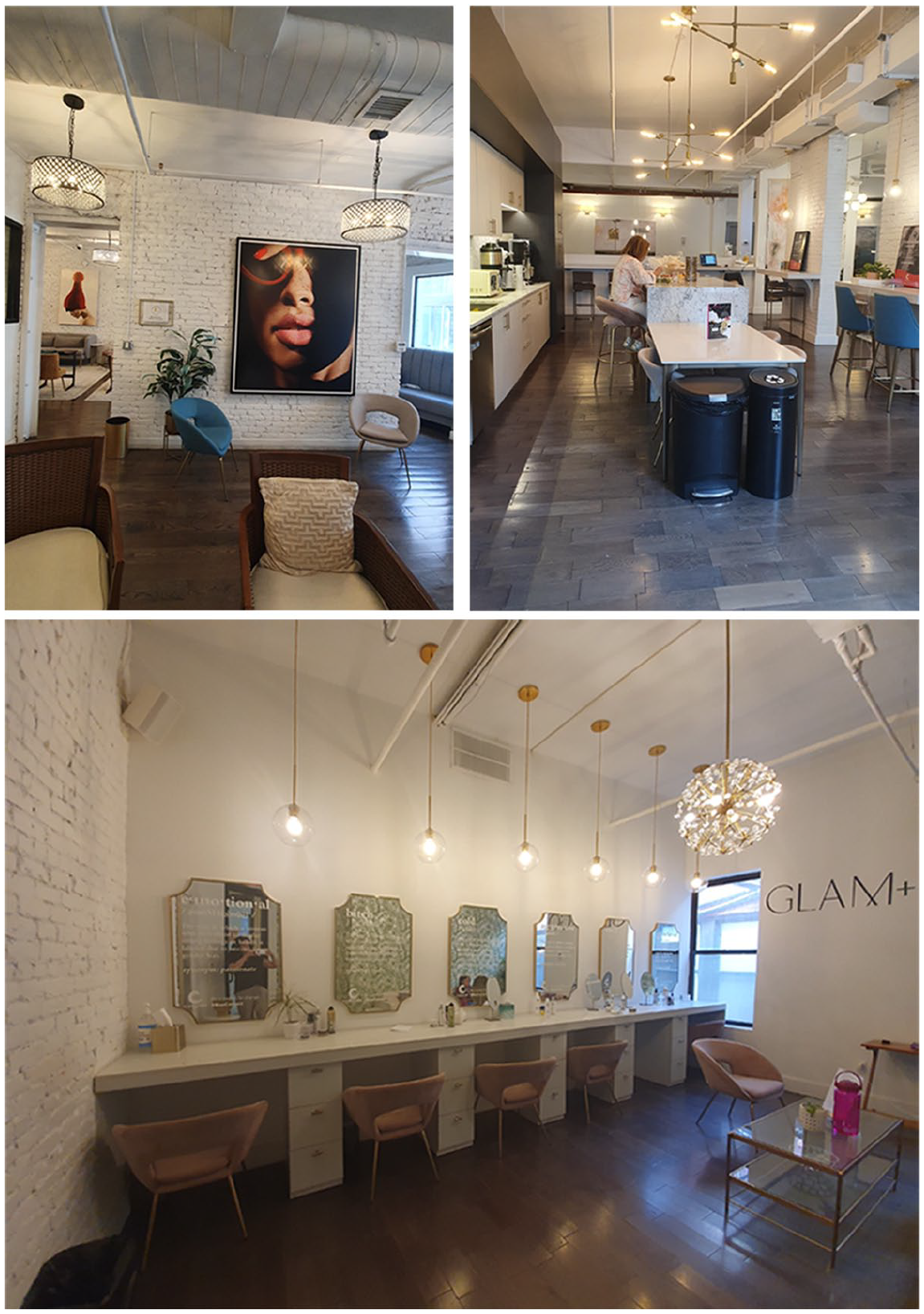
Spatial assemblages at Enlightenment.
The two aesthetic styles of home and nightlife echo two sets of gender performances that the founders of the WOCWS saw as complementary and wished to encourage simultaneously. Whereas the home-like design aimed to encourage interpersonal intimacy (by providing a comfortable space for women that promotes interpersonal closeness and nurturing relations), the nightlife design aimed to enhance physical intimacy through blunt sexuality, outgoingness, and “having fun” (by shaping a vivid, updated, and dramatic environment). Aesthetically, the home-like design was represented through the arrangement of sofas, armchairs, coffee tables, and bookshelves, reminiscent of a living room or drawing room. In contrast, the nightlife design drew on bold colors and images, imitating restaurants, bars, or nightclubs. Spacing such an “architecture of complexity” involved harmonizing between two aesthetic designs, as Artemis’s designer stated: It’s very difficult to create a space that, on the one hand, functions as a very pleasant work environment in the daytime and looks dramatic and powerful in the evening. We decided to take the [furniture] colors from the greens to blues and velvets to that drama that takes place at night.
However, while Alexandersson and Kalonaityte (2018) contrasted these two design styles, attributing sexuality merely to the nightlife design, in our case, they were entangled to comprise an aesthetic assemblage where sexuality was also present in the kitchen, the living room, and other workspaces. Consequently, a new, more complex, and multilayered form of sexuality was constructed for the women users of both WOCWS through constant negotiation between the two aesthetic representations of femininity. In both WOCWS, this new form of sexuality was realized through furniture and cushions covered with velvet or fur-like fabrics, large art images, and other decor artifacts along with blunt sexual images. For example, large pictures displayed women’s figures or body parts in what interviewees interpreted as a sensual and sexy manner and below living room sofas. As seen in Figure 2a, in Enlightenment’s space, one of the pictures showed two women posed in a way that suggests a kiss or intimate touch between them. Figure 2b shows a topless woman floating in pool water, and Figure 2c shows a close-up of slightly parted woman’s lips—a pose that suggests stereotypical feminine sexuality.
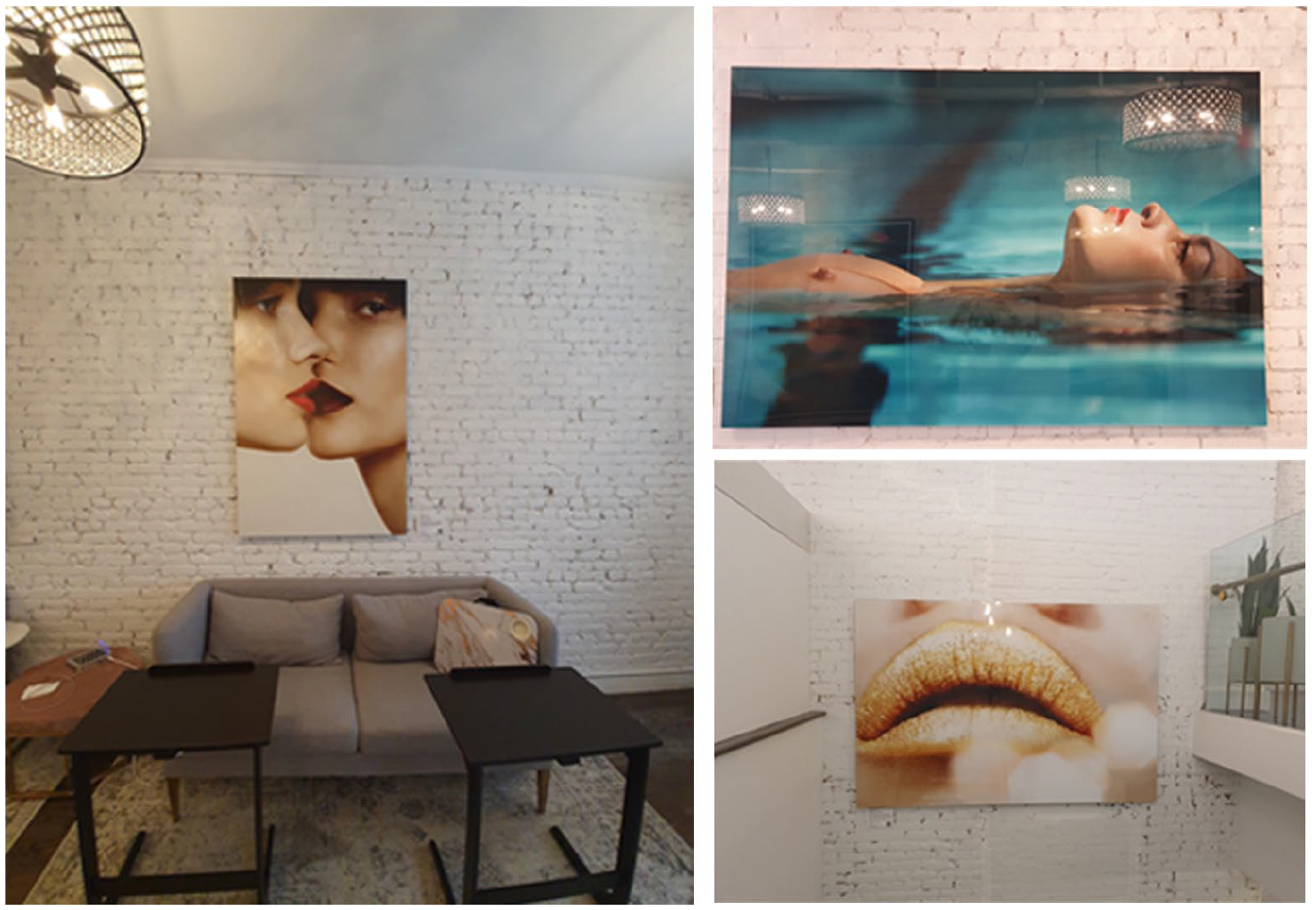
Art pictures in Enlightenment space.
Similarly, the art choices in Artemis exemplified a blunt sexuality entangled with a homey environment. The predominant color of the pictures and artworks hanging in the workspace is red, which participants interpreted as a symbol of temptation and seduction (Elliot & Niesta, 2008), as well as interpersonal warmth and intimacy. Figure 3a depicts a woman with bold, sensual lips and a red eye mask that makes her look mysterious and seductive. Figure 3b, located at the workspace’s entrance, presents two photos displayed side by side, posing two women’s images facing each other. Both are identical: bare shoulders, one hand close to their highlighted lips, and a bright-red earring dangling from their ears. The third picture, Figure 3c, displays a heavily made-up woman figure with a tattoo on her bare shoulder and a black collar around her neck against a vivid red background.
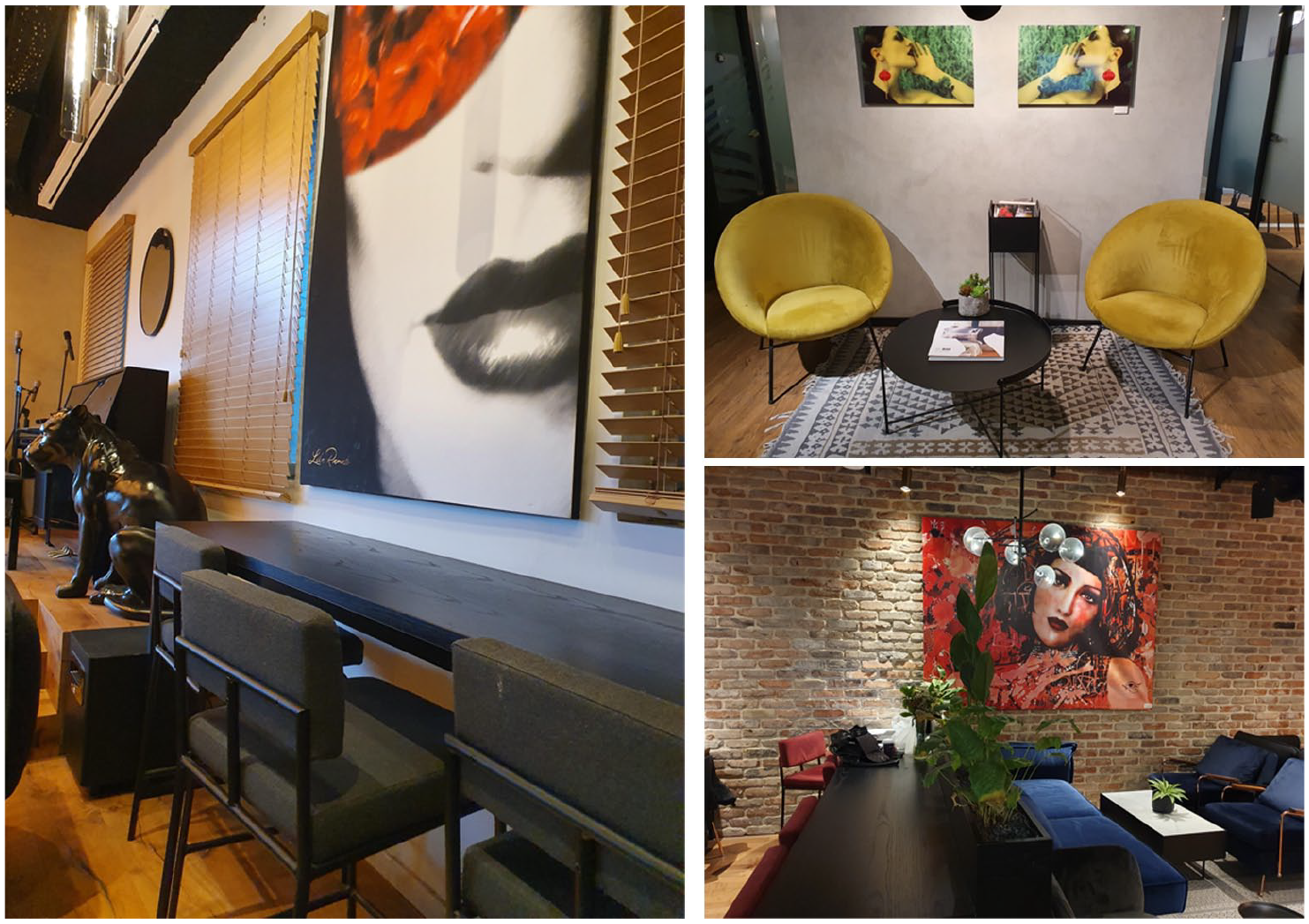
Art pictures in Artemis space.
Although these images were experienced as sexualized, they also represented a new form of sexuality that echoes “love as doing” (hooks, 2000; Kiriakos & Tienari, 2018) not in its traditional sense that associates sexuality with physical intercourse but rather as an act of women’s proximity and intimacy (Bell & Sinclair, 2014). This is exemplified in the designer’s words regarding Figure 3b: We wanted women to call each other. . . This is actually the model; this is the vision. The picture is meant to encourage women to interact with each other.
This design was interpreted by many space users as unusual. Ben, a male member at Artemis, contended that eroticism was present but in a “different” manner: The black ceiling combined with this soft yellow light and the art choices. . . look [points to one of the art pictures]. This is not a picture you would see in any other workspace; it has an implicit and subtle eroticism.
Furthermore, Liz, Enlightenment’s founder, offers another interpretation as she admits that sexuality was deliberate and that the sexual images were a feminist statement aimed at reclaiming the female body. According to Liz, the images’ message is that female nudity is not intended to satisfy male lust but to make women feel comfortable and proud: These images were created by a woman artist who took old magazine advertisement shots and transformed them into something artistic. Why not? Instead of using a woman’s body to sell some product, here we celebrate it, looking at it as something artistic.
However, adopting a critical perspective reveals that the way the founders materialize sexuality is embedded within gendered stereotypical perceptions (Just & Muhr, 2020). Despite the attempt to construct a new form of woman entrepreneur that integrates both feminine images (emotional and sexual), it remained, to some extent, limited by the heteronormative perspective, where female sexuality is presented through artistic images of naked, seductive, and youthful women. This tension between the two feminine spatial representations also aligns with the dialectical perspective of spacing (Beyes, 2018). From this perspective, everyday interactions both enable and constrain how femininity is imagined and reshaped (Beyes & Steyaert, 2012; Steyaert, 2010).
The dialectic of reproducing gender stereotypes and masculine norms while simultaneously reclaiming sexuality was also manifested in other artifacts within the space. Figures 4a–4c exemplify objects that use common sexist phrases to give them a different meaning. In Figure 4a, the term “bitch,” a sexist pejorative epithet for women, was imprinted on a mirror, accompanied by an interpretation offering an alternative, positive meaning: “a woman who confidently expresses her opinion in the workplace.” Another decor piece, shown in Figure 4b, alters the term “gold digger”—typically referring to a woman who enters into a personal relationship with a man to extract money from him—to “goal digger.” This rephrasing accords women with the qualities of goal orientation and motivation to achieve their targets. Figure 4c displays the sentence, “It takes balls to be a woman,” which uses male genitalia to indicate qualities of power, courage, and determination and attributes them to women, stamped on glasses.
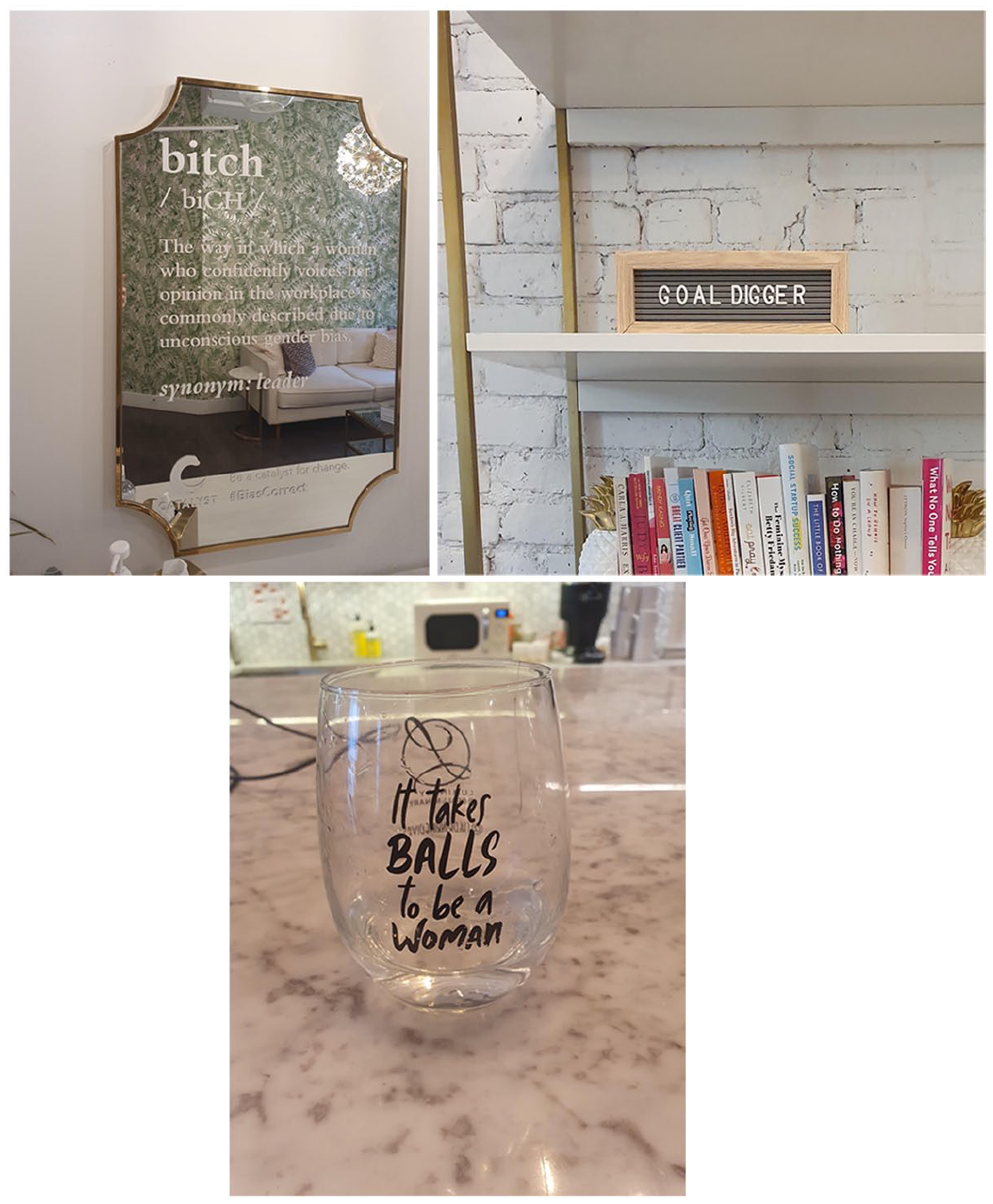
Decor objects in Enlightenment.
Spacing a safe space through the dialectics between vulnerable and pleasure-seeking feminine sexualities
A second dialectic in constructing a safe space for women revolves around conceptualizing sex as either danger or pleasure (Noble, 2010). While WOCWS as safe spaces attempted to disassociate sexuality from unequal (dangerous) power relations, they also reconnected power and sexuality by facilitating sexual extroversion and aggressiveness for pleasure. The same space that some used to associate sexuality with interpersonal closeness and affection (Burrell, 1984)—thereby weakening the link between sex and power—others employed to engage in aggressive acts of reversing the male gaze by objectifying men. As we next exemplify, this tension was manifested in various embodied practices and corporeal gestures.
In many of our observations in both WOCWS, we noticed that women often compliment each other on their sexual appearance during corridor conversations and engage in intimate discussions. In one case, we heard a woman commend her friend on how the shirt “look[ed] good on her breasts.” On a different occasion, we overheard another woman telling her friends about her habit of keeping her phone in her bra while wearing a dress or skirt without pockets and how it feels when her phone vibrates. These examples reflect the ambiguity of women’s sexuality as empowerment: on the one hand, they may be seen as manifestations of affection, love, and proximity, while on the other, they perpetuate women as sexual subjects. To remain faithful to the interviewees’ experiences, we will present their interpretations of performing sexuality before critically examining how these behaviors are also rooted in gender conventions they resist.
While in mixed-gender environments, sexual cues might have been interpreted as sexually threatening or harassing, in the context of WOCWS, these were interpreted as flattering and pleasurable. In contrast to the masculine, competitive, entrepreneurial environment, in the safe spaces of WOCWS, women could practice embodied, sensuous, and emotional experiences without risking commodified sexual objectification. Drawing on Kiriakos and Tienari’s (2018) notion of “love as doing,” these acts aimed to empower oneself and others in the community. Linda, a member at Artemis, attested: We dance together, go wild, and don’t feel the need to apologize. This is our place. . . It creates a genuine camaraderie that empowers me.
Sexual expressions were more prominent during social events or in the early evening, and they included daring physical touches between women—for example, women sitting close together with their legs entwined. Several interviewees described the common custom of women sitting together in the early evening on the balcony, drinking wine or beer, and talking about sexual experiences and fantasies. Ben (one of a few male members in Artemis) testifies to this: I was invited to join the ladies on the balcony. Each of them shared her most daring sexual experiences. It was amazing. This doesn’t happen in any male workplace. . . I felt that I had to be very careful. I know that this is a women’s workspace, and I must be cautious that nothing that I do or say is misinterpreted as offensive. . . I am a guest here.
This testimony illustrates how WOCWS were organized differently to appropriate space and reclaim it as a women-centric environment, where the female body is the standard and the male body is considered the other (Panayiotou, 2015). The intimate conversations and the sexual performance aimed to enhance solidarity and a sense of community rather than satisfying male lust. Thus, in these workspaces, men become “space invaders” (Puwar, 2004), feeling that their bodies are “out of place” and, therefore, must be cautious not to disrupt the unique dynamics among women.
Women’s sensual and erotic bodily gestures also reflected their sense of ownership of the space. For example, as shown in Figure 5, one woman went up on stage during a performance at Artemis and joined the flamenco dancer, mimicking her sensual movements in front of an audience of women. In a later interview, she shared that she would never have dared to dance like that anywhere else, interpreting the freedom to perform such sexual embodiment as empowering.
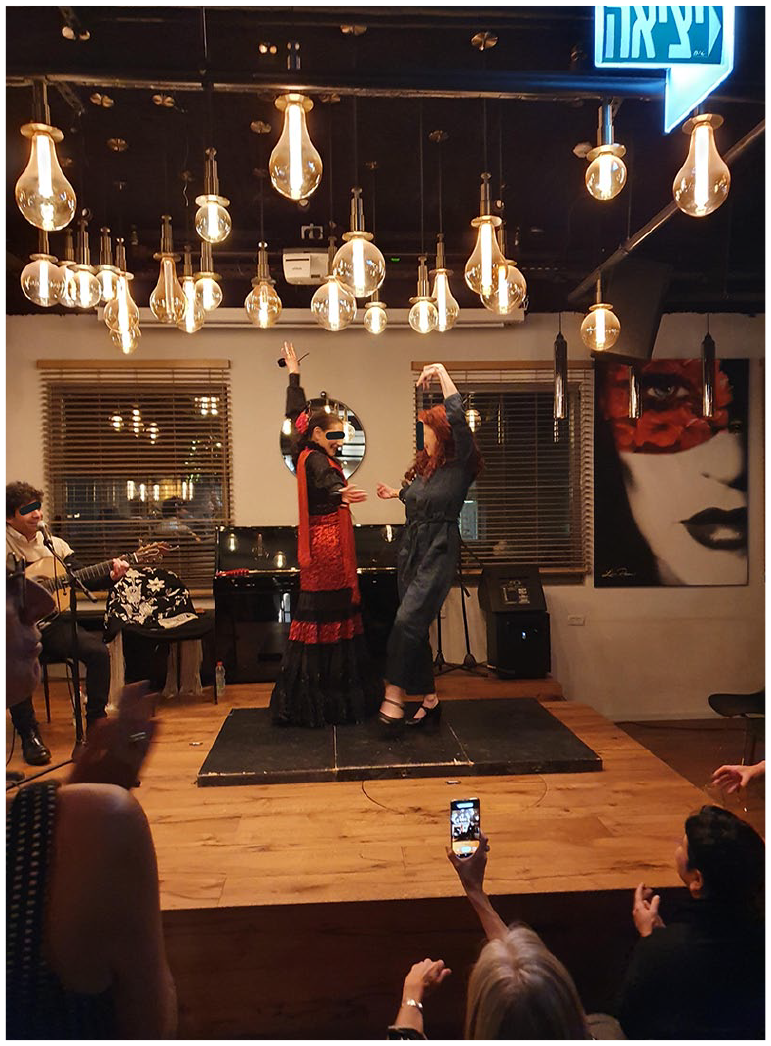
Members dancing in Artemis space.
The experience of WOCWS as safe spaces, free of the male gaze, was embraced by women as an opportunity to explore and express their sexual freedom. This was evident in Naomi’s words, a member at Artemis: If there were men around, I might be sitting at the bar, but I would act differently. Here, I am very loose, easygoing, and very sociable, and I like it. Usually, you try not to stand out when you are in a male space. So, you probably don’t sit at the bar with a glass of whiskey and talk into the evening freely without fearing that men will suddenly make all kinds of sexual moves on you. Here, I’m a woman who allows herself to go wild.
While women’s experiences reflect a postfeminist perspective suggesting that reclaiming sexuality can empower women, adopting a more critical lens reveals these behaviors as rooted in the existing gender order. Accordingly, regardless of individuals’ experiences, the emancipatory potential of these acts is constrained (Just & Muhr, 2020). Specifically, embracing pleasure-driven sexuality inadvertently led to the reproduction of sexist behaviors, as attempts to dismantle the socially constructed association of women as sexual victims prompted some women to perpetuate the link between power and sexuality by performing an extroverted and aggressive sexuality. For instance, during our fieldwork, we witnessed several cases of sexual objectification directed toward men. In one case, a woman who worked as a marketing consultant presented to a group of other women a photo of a male client who used to work as a stripper. She humorously suggested that those who found him attractive were invited to join the next meeting with him and take a glimpse. While looking at his pictures online, women made sexual comments and laughed. While laughing, one of them said, “That’s not nice; we’re objectifying him.”
In another situation where several women were sitting on the balcony drinking alcohol, they invited one of the male members to join them, and he agreed. Soon afterward, he felt uncomfortable as one of the women began to ask him intimate questions, physically approached him, and even touched him. After a few minutes, he got up and left.
By mantling the “tough women” image (Noble, 2010)—women who identify with aggression and fantasies of revenge—they gained control and renewed power. However, objectifying others out of desire and pleasure reflects a paradoxical process since it both contests and reaffirms sexual power relations. By disassociating femininity and vulnerability and simultaneously perpetuating the link between sexuality and power, WOCWS members exhibited both traditional femininity (through bodily performances) and masculinity (aggressive behavior). In alignment with Muhr (2011) and Lewis (2014), who illustrated that women in power positions often employ both extreme feminine and masculine practices, our analysis reveals that this amalgamation manifests also within the realm of sexual conduct. Specifically, in WOCWS, the attempt to create a safe space that liberates from the male sexual gaze was also involved in the exertion of aggressiveness on their behalf.
Perpetuating the association between sexuality and power was also demonstrated by the adoption of neoliberal norms, according to which sexual attraction was associated with economic success. Our observations showed that successful women entrepreneurs were frequently perceived as attractive. Women often described their role model as a woman who was “professional,” “successful in business,” or “put a lot of effort into developing her business.” This appreciation was, in some cases, translated into sexual feelings. For instance, in one of the workshops we attended, in which members presented the challenges and successes of their entrepreneurial businesses, one of the women described how she achieved her business goals. In response, all the women applauded her, and one shouted at her, “Oh my god, you are so sexy.” Another cried, “Your success makes me horny.”
To succeed in the male-dominated entrepreneurial world, alongside their desire to construct a new, liberated femininity, women in WOCWS integrated neoliberal norms into their new sexuality. They embraced a subjectivity that embodied power, sexual freedom, and boldness while simultaneously adhering to gendered social dictates. Their self became a woman entrepreneur defined and controlled by ideas of autonomy, personal responsibility, and the constant pursuit of business success—standards deeply rooted in neoliberal and patriarchal norms.
Spacing sexuality through the dialectics between sexual fluidity and heteronormativity
The third dialectic is between encouraging sexual fluidity as a feminist subversive mechanism against heteronormativity and maintaining it to succeed in the entrepreneurial world. We elucidate this process through boundary work as a spatial mechanism (Cnossen & Stephenson, 2022) enacted by WOCWS members in the lived space; that is, regardless of their sexual orientation outside the space, women could experiment with fluid sexuality inside the workspace. Although WOCWS were not formally defined as queer places, they encouraged a form of female homosociality that served to reinforce social bonds and intimacy between women rather than identify as lesbian or queer (Priola et al., 2018). Nevertheless, these behaviors did not extend beyond the organizational boundaries. As we next demonstrate, the constant boundary work and continuant negotiations vis-a-vis sexual orientation turned WOCWS into a fragile project that endeavors to reconcile contradictions and paradoxes.
As sexually liberating places for women that allowed them to experience different sexualities, WOCWS provided an “other space” where new forms of sexual identity, contesting dominant forms, were generated and practiced (Steyaert, 2010). Being a feminist space, WOCWS challenged the standardized sexual identity in straight spaces in which members who do not align with heteronormativity will always be seen as “other” and thus “out of place” (Vitry, 2021). The management of these workplaces explicitly declared their welcoming and supportive stance towards members of the LGBTQIA+ community, as Tammy, a member at Enlightenment, noted: I think that many members here are from the LGBTQIA+ community; I think the founder herself is gay, and a lot of the staff are as well. So, I think the space is designed primarily to make others feel safe, heard, welcome, and unembarrassed.
During our observations, we found that while WOCWS operate within the boundaries of the business world and most of their members are entrepreneurs who wish to succeed in the broader entrepreneurial world, there are still attempts to strive against the heteronormative and to create an “island of sexual freedom” within the boundaries of the space. Therefore, the process of spacing involved reconciling the tension between the desire to maintain the normative boundaries and engage in subversive actions. Similar to Steyaert’s (2010) analysis of the ways through which a space can become queered, here, too, the connection between sexual difference and space contributes to its construction as a site of resistance, where it is possible to challenge the predominant gender power structures and the prevalent sexuality perceptions at work and in organizations. Eric, a male member at Artemis, described this: I identify with the open LGBTQIA+ spirit here because I define myself as bisexual. One of the things that has always threatened me is traditional masculinity. Talking about sports makes me want to vomit. It doesn’t interest me, and I’m not sure how to talk about it, so it’s like the masculine heterosexuals’ talk at the office, which I find threatening. But here it is different. You’re allowed to be different. It’s not the main discourse here.
Other members we interviewed also testified that being a member of WOCWS enabled them to reject heterosexual normativity and enact alternative sexuality. While in workplaces, space restraints guide employees to align along heteronormative lines, WOCWS construct a safe space for others who are “out of line.” Alexandra, a member at Enlightenment, also made this evident: I work in a building where the majority of employees are men, and if there are any women there, they’re typically someone’s mother or daughter. . . I detest being there because they always try to fit me into a mold. They’re aware of my attraction to women because I’m open about it, but I also occasionally enjoy dressing sexy. So, they either treat me as a “woman,” examining my body and making comments, or they treat me like a “man” and make sexist, crude jokes in front of me. It’s very restrictive. I’m willing to pay, even though I already have an office, just to come here and have a place to be myself.
Moreover, the management not only encouraged space users to accept multiple sexual identities openly but also fortified women to experiment with various types of sexuality actively. Some of our informants quoted one of Artemis’s managers, Eva, whose motto is, “Every woman is heterosexual until the opportunity to sleep with another woman comes her way.”
Although most members defined themselves as heterosexuals, these quotes reflect an atmosphere of openness for sexual fluidity. Specifically, the freedom “to be yourself” and experience alternative sexual identities has been felt not only by LGTBQIA+ members but also by women who are daily engaged in heterosexual relationships, as Naomi explained: I have been married for 30 years. I love my husband, and I’m with him, but here, I allow myself to develop another facet. I mean, there are women here who love women, so there is a certain vibe here that enables many women, including me, to be free. You know, I’m a CEO, so my image must be conventional, and here, I can connect better with my inner desires. In a workspace with men, I’d be less able to allow myself [this conduct].
As part of their boundary work, the norm regarding sexuality, as many members expressed, was that “what happens here, stays here.” This norm demarcated the boundaries wherein sexual freedom is enabled: while queering practices were encouraged within WOCWS, outside the workspace, compliance with heterosexist normativity was expected. For example, despite describing herself as heterosexual, Vicky, a member at Artemis, disclosed that she fell in love with one of the women at work and even transformed her affections into a sexual act as part of a workplace game: I had a crush on Eva when I first came to Artemis. She turned me on, even though I’m not a lesbian, and this has never happened to me before. One evening, we sat on the balcony and played “Truth or Dare.” I was tasked with giving a kiss to someone, so I went straight to Eva and kissed her on the lips.
Other women reported ambivalence about sexual fluidity in these workspaces. For example, Alice, a member of Artemis, described mixed feelings of reluctance and attraction to engage in homosocial relationships with women: I was initially very attractive and received sex offers, and some people attempted to persuade me to switch sides. I like some of the women here, and perhaps one day, I’ll consider them as sex partners.
As an “other” space (Steyaert, 2010), WOCWS foster the emergence of new forms of sexual identity that challenge heteronormativity. The management in WOCWS encouraged members to accept, celebrate, and experience different sexualities. This sexual openness was viewed as empowering, allowing women to break free, “be themselves,” and oppose the behavior expected of them daily. As many interviewees noted, it also conveyed a message that a good and valued member is open to accepting different sexualities and does not shy away from sexual experiences.
Discussion
By coining the term “spacing sexuality,” we have investigated the establishment of alternative “feminine” spaces that aim to deconstruct the conventional workplace gender regime and reconstruct an alternative ideal type of woman entrepreneur. Analyzing the triangular relationships between spacing, sexuality, and gender elucidates how sexuality is constructed and materialized through aesthetic assemblages and how space users experience, enact, embody, and negotiate the meaning of an alternative gendered and gendering space. Our main findings suggest that in navigating the somewhat contradictory aims of constructing an alternative gender regime and entrepreneurial identity while ensuring success in a business-oriented and gender-conservative environment, the process of spacing sexuality is riddled with dialectic dynamics across aesthetic, embodied, and discursive realms.
Overall, our findings show that the “feminine” space in WOCWS allowed for traditional femininity to unravel as well as to construct an alternative femininity through three processes. The first concerned the assemblage of two femininities (sexy and nurturing), which are traditionally considered contradictory. The second refers to disassociating feminine sexuality from victimhood and re-associating femininity with power (sexiness and business success). The third pertains to encouraging fluid sexuality to oppose heteronormativity and the femininity–masculinity dichotomy. Consequently, a new female identity was constructed in WOCWS, embodying a role model of an entrepreneurial woman who continuously navigates between celebrating her traditional femininity and internalizing masculine traits.
In what follows, we articulate our findings’ contribution to three theoretical fields: organizational spacing and its role in shaping organizational identities, sexuality in and around organizations, and organizational gender regimes. Despite the tight intertwining of the three contributions, we present them separately for analytical clarity.
The role of spacing in constructing workspaces for women
Drawing on the literature on spacing processes (Beyes, 2018; Beyes & Steyaert, 2012; Stephenson et al., 2020), our findings underscore how women-oriented workspaces are constructed through spatial assemblages and boundary work performances that intertwine various social and material aspects. While prior studies have acknowledged the influence of aesthetics on identity construction and power dynamics, particularly concerning gender (Hancock, 2005; Hancock & Spicer, 2011; Tyler & Cohen, 2010; Wasserman & Frenkel, 2011, 2015), our article expands this understanding by highlighting the dialectical nature of spacing, which encompasses multiplicity, complexity, and constant negotiations around the meaning of a “feminine” space. Specifically, whereas the literature on organizational spacing has already examined the dialectical processes inherent in workspaces, it has mostly focused on tensions between the planners’ intentions and the space users’ interpretations and experiences, primarily through Lefebvre’s triad spatial theory (Sivunen & Putnam, 2020; Wasserman & Frenkel, 2011). In contrast, the current study suggests that spacing processes may be particularly complex when designing women-oriented spaces since the definitions of what femininity is, what an appropriate woman entrepreneurship is, and what the right conduct of such women is in a male-dominated entrepreneurial world are highly controversial. Thus, by epitomizing the ways in which the design of aesthetic assemblages was dialectical, tension-filled, and constantly negotiated, this study’s contribution lies in highlighting the parallelity between processes of spacing and constructing an appropriate femininity/entrepreneur in a highly controversial environment. Furthermore, whereas existing studies on spacing have already acknowledged its dialectical nature, our study offers additional insights into the complex ways in which sexuality and gender are spaced and negotiated. By identifying three dialectical spatial axes particularly relevant to the context of women-oriented spaces, this study contributes to the spacing literature, offering new perspectives on how these spaces foster inclusivity for diverse groups while simultaneously challenging the existing social order.
The first axis pertains to the aesthetic assemblage of emotional-nurturing and sexual femininities that home-like and nightlife designs represent (Alexandersson & Kalonaityte, 2018). By juxtaposing and integrating the two designs, space users simultaneously acknowledged the contradictions between the two feminine images and challenged this contradiction. The second, the tension between vulnerable and pleasure-seeking feminine sexualities, was manifested through embodiment and corporeal gestures, highlighting the multiple, often contradictory, interpretations of safe spaces for women. The third axis refers to the tension between sexual fluidity and heteronormativity manifested through boundary work; that is, inside the organization, women could subvert heteronormativity by experiencing sexual fluidity while maintaining heteronormativity outside. These three dialectical interplays, emblematic of what can be termed an “architecture of complexity” (Kornberger & Clegg, 2003), reconstitute women-oriented workspaces in different and more complex ways than other workspaces.
The aesthetic choices and the social activities that took place in the workspace and space users’ bodily movements, sensations, and experiences created an indulgent environment and fostered a sense of safety and confidence among women. Consequently, space users felt empowered as they re-appropriated and claimed the workspace as their own. While existing literature on the role of aesthetics in constructing women’s experiences has documented how they feel excluded and “out of place” (Tyler & Cohen, 2010), our study highlights the pivotal role of spacing workspaces tailored to women’s needs. The research findings suggest that there is no one way to construct and design a feminine space; rather, it is a complex process that entails reconciling tensions, dilemmas, and conflicting interpretations and intentions. In other words, rather than subscribing to a monolithic conception of “feminine spaces,” our study advocates for a more nuanced understanding that embraces the multifaceted nature of this process, suggesting that crafting such workspaces emerges as a dynamic and iterative endeavor requiring continual engagement with the complexities inherent in the spacing process. Drawing on Panayiotou’s (2015) notion of “spacing gender,” the current study emphasizes the centrality of spacing sexuality as a crucial aspect of this process that was overlooked hitherto.
Sexuality and the deconstruction of conventional femininity at work
Whereas existing organizational literature on sexuality demonstrates how re-sexualization processes are primarily employed by management to increase employee productivity and commitment (Burrell, 1984, 1992; Fleming, 2007), the present study indicates that re-sexualization processes and the use of sexuality may also serve as a mechanism to reshape gender identities.
Aligned with Just and Muhr (2020), who offer a more complex perspective on women’s sexuality and empowerment in the workplace, our study demonstrates that the attempt to challenge the association between feminine sexuality and victimhood and between sex and danger is ambiguous and contradictory even in feminist workspaces. Our findings highlight the pivotal role of sexuality in empowering women and increasing their sense of belonging, thus viewing the display of love and eroticism as a subversive action against the heteronormative masculine gender regime (Kiriakos & Tienari, 2018; Mandalaki & Pérezts, 2022). Simultaneously, however, the embodiment and materialization of sexuality in WOCWS are deeply embedded in gendered social conventions.
This complexity was reflected in aesthetics that included stereotypical images of women (young, beautiful, and thin) along with subversive artifacts that incorporated messages challenging traditional femininity. The findings showed how sexual bodily expressions (such as physical touches, intimate conversations, and erotic dances) and encouragement to experiment with homosexual relationships among women served to reinforce a sense of safety, encourage interpersonal relationships, and build a supportive community but inherently contained stereotypical images of femininity. Since the goal was not to design a queer space but a workspace where all women (heterosexual and non-heterosexual) could feel comfortable, the process of re-sexualization was dialectical and fraught with internal tensions. Accordingly, WOCWS evoked various interpretations among space users: some saw it as a safe place for sexual experiences away from the male gaze, others interpreted sexuality as an indicator of affection, love, and close relationships, and others saw it as an opportunity to reverse sexual power relations and to objectify men.
Another noteworthy contribution pertaining to the subversive potential of sexuality is sexual fluidity as a means of challenging the gender-based power dynamics prevalent in many work organizations. The term “sexual fluidity” describes women’s adaptability in WOCWS concerning their sexual preferences, where attraction to men or women becomes situational and variable rather than fixed. By accepting the idea that normative heterosexuality is a mechanism shaped by male dominance to reinforce traditional organizational hierarchies and gendered power relations (Pringle, 1989), founders chose to encourage alternative conceptions of sexuality that embrace diverse sexual relationships and disrupt the accepted dichotomy between heterosexuality and homosexuality, thereby challenging these traditional structures. While previous studies have discussed the inclusion of homosocial relations as a feminist act against powerful capitalism (Ashcraft, 2000; Fleming, 2007), our study goes beyond that by illustrating how, in a feminine setting (not necessarily queer), resistance involves actively promoting one’s experimentation with different sexualities rather than merely accepting others.
Social games that frequently involved sexual interactions between women and statements the managers and other space users made about how any heterosexual woman could experience homosexual relationships exemplify how adventurous sexual experiences, distinct from the everyday, help to establish women-oriented spaces as safe environments for challenging existing preconceived notions and nurturing novel ideas. Space users described how the space granted them the freedom to behave differently from their traditional roles. However, by adopting a more critical perspective, we call scholars to question whether and how the emancipatory potential of “sexual fluidity”—as both an agentic mechanism and a form of resistance against heteronormative organizations—extends beyond “other spaces” (Steyaert, 2010), such as WOCWS.
Reconstructing an alternative gender regime in women-oriented spaces
Finally, our findings highlight the potential of spacing sexuality in the workplace to challenge the gender regime that is common in most business environments (Acker, 2006, 2012). Studies on gendered and gendering organizations have repeatedly pointed to the role of organizational spaces, culture, and gender ideology in reproducing gender hierarchies, making women feel uncomfortable, and stressing the distance between the imagined ideal worker in desired and profitable positions and the stereotypical woman (e.g., Acker, 2012; Amis, Mair, & Munir, 2020; Calás, Smircich, & Holvino, 2014; Muhr, 2011). Attempts to introduce organizational practices aimed at negating this gender regime have often reproduced gender differences instead of challenging gender dividing lines. Our case studies allowed us to examine how the common regime may be challenged through the construction of “feminine” spaces.
Nevertheless, “feminine spaces” are not exempt from the broader gender inequality regime (Acker, 2006). Although WOCWS aim to cater to women, they remain embedded in the masculine entrepreneurial environment. Thus, intending to confront the distance between the ideal entrepreneur, as most business environments imagine it in stereotypical masculine terms (competitive, tough, powerful, and goal-oriented), and the stereotypical woman (nurturing, soft, and relationship-oriented), WOCWS’ founders used the sexual environment to encourage women to pursue success, a common practice in the male-dominated entrepreneurial world. The dialectical sexualized space transcended binary conceptualizations of femininity and masculinity, conveying a message that women can comfortably move between toughness and softness, between being predators and supporting others, and between performing stereotypical masculine entrepreneurship and that of the stereotypical soft and nurturing woman (or anywhere between these two ends of the spectrum). In contrast to the cyborg woman metaphor (Muhr, 2011), which represents a hybrid individual combining femininity and masculinity, the current study demonstrates the constant negotiation and movement between opposing poles that space enables at different times.
Our findings suggest that, in the absence of an existing successful role model, both WOCWS have independently chosen sexuality to challenge the conventional gender regime, resulting in similar ambiguous outcomes regarding the construction of an alternative regime. Maneuvering between managerial social (gender equality and equity) and business (profit for them and members) somewhat contradicting goals, the project has had spatial boundaries. Within the WOCWS’ boundaries, women have reconsidered the meaning of femininity and womanhood and felt “at home,” whereas outside the boundaries, they were encouraged to act more cautiously to succeed in the competitive entrepreneurial work environment.
Moreover, the alternative femininity constructed in WOCWS reflected a dialectical negotiation between embracing and resisting existing gender norms. For example, the admired entrepreneur was a woman who was successful in business and thus perceived as sexy. Associating success with sexual attraction perpetuated the masculine norm of entrepreneurship but simultaneously reestablished a link between alternative femininity and success. Notably, whereas WOCWS set out to construct an alternative space in terms of its gender and sexual convention and aesthetics, they still adhere to neoliberal norms, striving to be profitable endeavors that help their members achieve success as it is commonly measured in the business world. Consequently, women moved away from binary and stereotypical conceptualizations of gender, allowing them to challenge the perceived negation between femininity and business success. By adopting multiple femininities, they felt comfortable performing traditional femininity (in the form of conventional sexy female attire, grooming, and celebrating their sexuality) as long as they could also perform nontraditional feminine roles. Relatedly, the sexually aggressive behaviors some exhibit—which women typically encounter in male-dominated workplaces—may simultaneously challenge and reaffirm gender norms.
Conclusion
In conclusion, this study introduces the concept of “spacing sexuality” within women-oriented workspaces, exploring how space and sexuality are co-constructed to challenge gender norms and foster a supportive environment for women entrepreneurs. It provides significant insights into the interplay of space, sexuality, and gender, elucidating the dialectical process involved in “spacing sexuality” and an ideal type of woman entrepreneurship. This process highlights the tension between the aspiration to assimilate into a male-dominated sphere and the endeavor to construct an alternative femininity. The article highlights the complexity of the feminist project in regard to sexuality. While it illustrates how women entrepreneurs harness sexuality as a means of empowerment and a tool to redefine femininity, it simultaneously problematizes the enduring subjugation to patriarchal structures, exposing a tension between subversion and conformity to male-centric paradigms.
Nevertheless, several limitations should be acknowledged: first, the study is limited to two case studies, both of which are profit-oriented workplaces situated in neoliberal cultural contexts in major business cities in Western countries. The establishment of both spaces reflected a similar feminist approach and a commitment to assisting businesswomen in achieving success in the entrepreneurial realm. Thus, these cases may limit the generalizability of the findings to other women-oriented spaces in diverse cultural or organizational contexts. Second, although the research addresses the construction of alternative femininity through the performance of diverse sexualities, it primarily centers on women’s experiences, with limited focus on other gender identities or sexualities. Future studies should explore how processes of spacing sexuality might contribute to the development of inclusive spaces suited to diverse, non-mainstream sexualities. Such spacing processes are inherently dialectical, as they reflect complexity and contradictions between different worldviews, thereby necessitating a nuanced and context-sensitive examination of the spacing process.
Footnotes
Acknowledgements
Support for this study was provided by the Research Authority of the Open University and by the Shaine Center for Research in the Social Science. The authors wish to thank the anonymous reviewers for their extremely helpful comments and suggestions. We also thank session participants of the EGOS workshop 2023 in Cagliari for the opportunity to present these ideas and the useful conversations that followed.
Funding
The author(s) received no financial support for the research, authorship, and/or publication of this article.
