



Abstract
This article contributes to critical theory building in relation to political corporate social responsibility (PCSR) by conceptualizing the underlying processes and practices through which corporations seek to counter threats posed by activist groups. We argue that the problematic nature of PCSR is entangled not only in its state-like aims, but also in its covert deployment of military tactics towards the maintenance of corporate hegemony. We illuminate how corporations use counterinsurgency tactics to undermine the ability of activists to hold them accountable for their wrongdoing. Building on the work of Gramsci, we propose that counterinsurgency tactics combine elements of force and persuasion that enable corporations to maintain hegemony (i.e., secure consent over time). We ask: How are counterinsurgency tactics used by corporations to neutralize activist pressures and maintain corporate hegemony? We draw upon historical sources regarding the Nestlé infant milk boycott case to undertake a genealogical analysis that exposes counterinsurgency tactics enabling corporations to counter activists and sustain their hegemony. We find that Nestlé deployed four key counterinsurgency tactics to nullify activist pressures (suppressing external support, isolating the activist(s), capturing the dialogue, and covert intelligence gathering). From our analysis, we propose the term corporate counterinsurgency and theorize the historic use of corporate counterinsurgency tactics as an example of a hegemonic strategy that enables corporations to covertly undermine activist pressures. We conclude by calling for further reflexivity in organizational studies research on the military origins of PCSR, and by outlining how activist organizations might mobilize against corporate counterinsurgency tactics.
Introduction
“What a big voice you have, Grandma!” said the little girl, in surprise. “It’s to greet you better, my dear,” said the wolf. “And what big eyes you have, Grandma . . .” “It’s to see you better, my dear!” “And what big hands you have!” exclaimed Little Red Riding Hood, approaching the bed. “It’s to hug you better, my dear!” “. . . And what a big mouth you have,” murmured the little girl in a feeble voice. “It’s better to EAT you with!” growled the wolf, and he leapt out of the bed and swallowed her as well. (Le Petit Chaperon Rouge, Charles Perrault, 1697)
Corporations are frequently the targets of activist pressures (de Bakker, den Hond, King, & Weber, 2013) that seek to expose corporate wrongdoing, encourage more responsible corporate behaviors (Briscoe & Gupta, 2016), and drive transformational societal change (Briscoe & Gupta, 2016; DeJordy, Scully, Ventresca, & Creed, 2020; Fotaki & Daskalaki, 2021). Critically, activism encompasses forms of resistance, opposition, and dissent that are inherently antagonistic towards the corporate status quo (de Bakker et al., 2013) and that pose a threat to corporate hegemony (Nyberg & Wright, 2024). Corporate responses to activist pressures are often associated with political corporate social responsibility (PCSR) (Scherer, Rasche, Palazzo, & Spicer, 2016) and include a range of tactics (McDonnell & King, 2013) such as making concessions, rejecting activist demands, engaging in symbolic responsiveness, or participating in dialogue (Hadani, Doh, & Schneider, 2019). While some accounts highlight the positive role played by PCSR in creating space for corporate-activist dialogue (Baur & Arenas, 2014; Girschik, Svystunova, & Lysova, 2022; Scherer & Palazzo, 2007), other more critical accounts position PCSR as inherently problematic (Rhodes & Fleming, 2020). Opponents of PCSR suggest that it shifts the balance of power between the state, market, and civil society (Mena, Rintamäki, Fleming, & Spicer, 2016); captures governance mechanisms in the environmental arena (Kaplan, 2024); threatens democracy (Rhodes, 2023); fails to achieve the pace and scale of change sought by activists in relation to focal issues (Rhodes & Fleming, 2020); and sometimes involves the use of coercive dynamics (Soundararajan, Brown, & Wicks, 2019). Despite this recent critical attention to the problematic nature of PCSR (Rhodes & Fleming, 2020), relatively little is known about how corporations attempt to maintain power in the face of challenges to their hegemony (Murray & Nyberg, 2021).
We focus on the less-researched concern of how corporations attempt to secure hegemony over other groups, including those antagonistic towards them, through counterinsurgency techniques with military origins. Our goal is to examine the repertoire of hidden power tactics used by corporations to neutralize activist pressures and sustain corporate hegemony (Fleming & Spicer, 2014; Nyberg & Wright, 2024). In doing so, we answer calls “for organizational scholars to engage with historical topics of social and moral relevance” (Godfrey, Hassard, O’Connor, Rowlinson, & Ruef, 2016, p. 599). We begin by drawing on work by the philosopher Chamayou (2021), who argues that corporations have historically deployed military counterinsurgency tactics to undermine activists’ legitimacy. Limited work in organization studies has analyzed the tactics used by corporations to counter activism (for an exception, see Kraemer, Whiteman, & Banerjee, 2013), and few studies have focused on counterinsurgency tactics. While standard military tactics are about organizing to defeat an opposing army (Kornberger, 2013), counterinsurgency is “a competition with the insurgent for the right and the ability to win the hearts, minds, and acquiescence of the population” (Kilcullen, 2010, p. 37). To theorize how corporations use counterinsurgency tactics to neutralize activist pressures, we draw on the concept of Gramsci (1971) hegemony to “gain an appreciation for the connections between techniques of subjection and broader hegemonic projects” (Ekers & Loftus, 2008, p. 707). According to Gramsci (1971, p. 80), hegemony is a new form of domination that simultaneously combines force and consent. Hence, there is a strong parallel between Gramscian (1971) hegemony and counterinsurgency tactics. We ask: How are counterinsurgency tactics used by corporations to neutralize activist pressures and sustain corporate hegemony?
We confront theory to history (Heller, 2023; Maclean, Harvey, & Clegg, 2016) by drawing on a genealogical approach (Foucault, 1977; Simpson, Clegg, & Pitsis, 2014; Smith & Kaminishi, 2020; Vaara & Lamberg, 2016) to illuminate the covert use of counterinsurgency tactics by Nestlé against activists during the boycott. As Rowlinson and Carter (2002, p. 542) argue, drawing on historical perspectives can allow us “to demonstrate the historical specificity of aspects of organizations that have generally been overlooked in the discourse of organization studies.” Exploring covert corporate practices and wrongdoing is methodologically challenging (Fotaki & Daskalaki, 2021), and focusing on a rich historical case allows us to draw on extensive preexisting data sources created by a broad range of stakeholders (Hargadon & Douglas, 2001; Rowlinson, 2004) to critically examine Nestlé’s use of counterinsurgency tactics. A genealogical approach is selected because it allows us “to problematize the present by revealing the power relations upon which it depends and the contingent processes that have brought it into being” (Garland, 2014, p. 372). Foucault (1977) genealogical analysis is therefore particularly well suited to theorizing how the specific corporate tactics used by Nestlé have permeated PCSR practice over time. We connect Gramsci’s (1971) conceptualization of hegemony with Foucault (1977) genealogical analysis. While notable differences exist between the works of Gramsci (1971) and Foucault (1977), with the former emphasizing political economy and a more centralized view of political agency (e.g., Kreps, 2016) and the latter usually described as a poststructuralist, notably both theorists conceptualize power not as an object that is owned but rather a “relation of force that only exists in action” (Daldal, 2014, p. 149). In other words, theorizations of hegemonic consent for domination (Gramsci, 1971) and disciplinary power (Foucault, 1977) both recognize that power does not occur in a vacuum, and that researching power therefore requires an understanding of historicity, such as that afforded by genealogical analysis (Foucault, 1977).
We make several contributions to the critical PCSR literature. First, we analyze the classic Nestlé boycott case to expose the hidden military origins of the tactics used to neutralize activist pressures. From our analysis, we identify four key tactics deployed by Nestlé (suppressing external support, isolating the activist(s), capturing the dialogue, and covert intelligence gathering) and propose the new term corporate counterinsurgency to capture the hidden ways in which corporations adapted military tactics to neutralize activist pressures. Second, our analysis illuminates new facets of the dark side of PCSR, highlighting how seemingly positive or benign practices such as multi-stakeholder dialogue can be weaponized against activist groups and civil society interests to maintain corporate hegemony (Girschik et al., 2022; Rhodes & Fleming, 2020). Third, we contribute to the emerging literature on historical PCSR (Djelic & Etchanchu, 2017; Schrempf-Stirling, Palazzo, & Phillips, 2016) by exposing the largely forgotten military origins of corporate counter-activism tactics.
We begin by theorizing the use of counterinsurgency tactics in corporate-activist relations, highlighting its military roots. Then, we present the methods and findings of our study. We close by calling for further reflexivity in organizational theory research about the problematic military origins of PCSR, and by outlining how activist groups might mobilize against corporate counterinsurgency tactics.
Critical PCSR, Corporate Counter-activism, and Counterinsurgency
This section draws on the literature on power, hegemony, and counterinsurgency to theorize the hidden repertoire of power strategies used by corporations to neutralize activist pressures and sustain corporate hegemony (Nyberg & Wright, 2024).
Hegemony, power, and counterinsurgency
Hegemony is theorized as a key dimension of power (Fleming & Spicer, 2014) in organizational theory. For Gramsci (1971, p. 80), hegemony is a new form of domination combining force and consent at the same time; ‘‘[i]ndeed, the attempt is always made to ensure that force will appear to be based on the consent of the majority.” The notion of consent, therefore, differs from the traditional concept of consensus, as it does not rest on the result of a deliberate product of specific institutions enforced with the approval of the majority. Therefore, force in Gramsci’s (1971) work is never far away, waiting in the shadows when needed. In advanced capitalist regimes, Burawoy (2003) argues that hegemonic actors (corporations) closely monitor civil society (activists) to sustain their dominance. Within this framework, civil society dynamics become crucial to the processes by which corporations come to be (1) held to account for their transgressions and wrongdoings, and (2) prevented from capturing state-like powers (Burawoy, 2003).
The hegemonic dimension of power has been emphasized in the PCSR literature. Notably, Levy and Egan (2003) showed how “unnatural” strategic temporary alliances between NGOs and corporations could be interpreted as a Gramscian attempt to reverse the hegemonic order. At the organizational level, Levy and Scully (2007) theorized that NGOs could act to misalign material, organizational, and discursive forces to reverse the hegemonic order in stable field structures, while Kourula and Delalieux (2016) illustrated how “friendly” NGOs were selectively chosen to engage in dialogue to maintain corporate power. More recently, Zueva and Fairbrass (2021) show that the Russian government’s engagement with “CSR” served to legitimize its power over large business organizations.
Counterinsurgency tactics and corporate hegemony
While PCSR traditionally involves corporations playing state-like roles (Eberlein, 2019), corporate counter-activism arguably entails corporations using state-like behaviors (i.e., military tactics, such as counterinsurgency) towards corporate ends, especially the maintenance of their hegemony (Levy & Scully, 2007). Few organizational studies have critically analyzed how corporations deploy tactics to counter activism, and even fewer have theorized their widespread use. An exception is Kraemer et al. (2013, p. 825), who highlight “the active role of the corporation in countering the resistance movement,” which they frame as counter-mobilization. In this sense, organization studies research identifies that state-like tactics can be mobilized by corporations to maintain their hegemony within civil society, acting, in Gramscian terms (see, Jones, 2007), as a rampart against change.
While organization studies research has largely neglected the corporate use of military tactics, broader social sciences have paid greater attention. For example, anthropologists have analyzed the military tactics used by corporations to colonize new markets and territories (Li, 2010), political scientists have explored the use of military tactics by organizations (see Lubbers, 2009), and geographers have described the normalization of counterinsurgency tactics used by corporations against protest movements (Brock & Dunlap, 2018). Most notably, in philosophy, Chamayou (2021) argues that the ways in which corporations seek to counter activism have their roots in counterinsurgency strategies and tools.
Counterinsurgency is a set of military tactics that emerged in the aftermath of the Second World War to resist anticolonial struggles and national liberation movements in Algeria, Indochina, and Malaya (Kitson, 2010 [1971]). Insurgent groups harness narratives to communicate goals, grievances, and actions to local and global audiences (U.S. Government Counterinsurgency Guide, 2009) to resist and subvert national governments. Insurgents use organized patterns of subversive activities that often fall “just short of violence,” including boycotts, strikes, clandestine radio broadcasts, riots, newspapers, pamphlets, and civil disorder (Department of the Army, 2009, pp. 2–23). In addition, leaders of insurgency movements sometimes proactively develop patterns of cooperation with legitimate political actors and organizations (e.g., charities, religious organizations, and trade unions) (Department of the Army, 2009, pp. 2–23). Moreover, similar to activist groups, insurgents can have varying levels of training, capability, commitment, involvement, and experience (Department of the Army, 2009). The focus of counterinsurgency is therefore on developing tactics that allow (primarily) Western powers to undermine support from local populations for insurgent groups (Anderson, 2011; Kilcullen, 2010) through nonviolent military interventions (e.g., aid, medical support) (US Government Counterinsurgency Guide, 2009). The use of aid as a deflective strategy to maintain dominance resonates with how corporations have responded to activists who seek to expose corporate wrongdoing (Chamayou, 2021).
As such, military counterinsurgency strategies and tactics contain an unusual blend of force and persuasion, as summarized in Table 1.
Counterinsurgency tactics in the military and security studies literature.
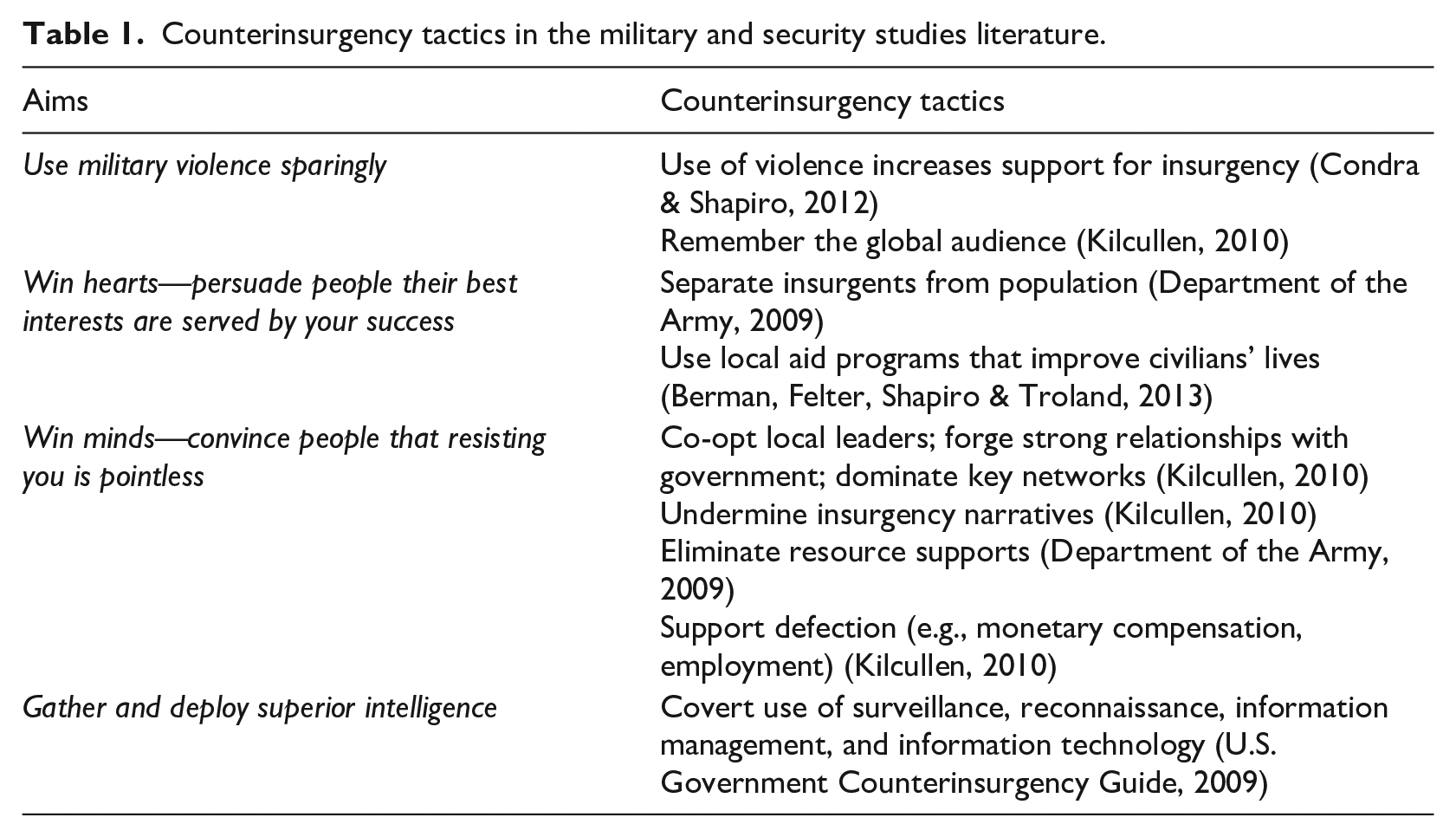
Chamayou (2021) explains that corporations can draw on a continuum of military tactics to undermine activists and their agendas in the face of a hegemonic challenge such as a global boycott. For example, Chamayou (2021) finds evidence to suggest that dialogue has been used to co-opt activists towards corporate goals, tactically delay the introduction of codes of conduct, and undermine the legitimacy and social capital of activist groups. In contrast, in PCSR, research dialogue is positioned as a corporate vehicle through which deliberative processes involving “public justification, inclusion, and absence of oppression, coercion, and threats, as well as the commitment to the general interest” occur (Baur & Arenas, 2014, p. 160). While work in PCSR has recognized power asymmetries between dialogue participants (Levy, Reinecke, & Manning, 2016), limited attention has been directed towards the strategic intent of dialogue beyond the presumption of the aim of reaching consensus. However, the practice of consensus building can be deployed to weaken the power of activist voices by recasting them as antagonistic to the shared goal of consensus (for postcolonial critiques, see Banerjee, 2018; Kraemer et al., 2013). Once dangerous opponents are neutralized, concessions are not required (Chamayou, 2021). Therefore, it is important to note that PCSR can be motivated in heterogeneous ways and can involve either coercive or deliberative politics (Acosta, Acquier, & Gond, 2021).
Our analysis contributes to critical analyses of PCSR by drawing greater attention to the role of counterinsurgency tactics mobilized by corporations that aim to undermine anti-corporate activism. We theorize and evidence a rich repertoire of counterinsurgency tactics, including practices that have become commonplace in relationships between corporations and civil society actors, and show that these tactics contribute significantly to advancing corporate interests and maintaining their hegemony.
Methodology
Building on interdisciplinary scholarship (e.g., Brock & Dunlap, 2018; Chamayou, 2021), our aim is to use historical methods in organization studies research (Heller, 2023) to illuminate the tactics used by corporations to neutralize activist pressures and sustain corporate hegemony.
Research Setting: The Nestlé boycott of the 1970/80s
As we were looking for historical examples of interactions between corporations and activists, we began to engage with extensive scholarship on the Nestlé boycott (e.g., Chamayou, 2021; Knapp, 2015; Lubbers, 2009; Richter, 2001). In the 1970/80s Nestlé’s promotion of dangerous infant milk (i.e., causing malnutrition and disease) to vulnerable populations in the Global South resulted in a high-profile international campaign by activist groups to boycott its products (Davies, 2014). The timing of Nestlé’s boycott is particularly relevant because it was situated in a period when multinational corporations reshaped their strategies in relation to society in the context of a shift from Fordism to neoliberalism, financialization (Harvey, 2007), and globalization (Rodrik, 2011).
Notably, the Nestlé boycott consisted of an activist-linked opposition to a powerful corporation that provoked a considerable level of global public debate. The global activist-linked boycott led to a US Senate hearing whose conclusion was that Nestlé’s “harmful marketing” (Richter, 2001, p. 50) about its infant milk products should be regulated at a global level by the World Health Organization (WHO). Due to conversations with a variety of stakeholders, the WHO created an international code of ethics to regulate corporate marketing in relation to breastfeeding (Richter, 2001, p. 51), thereby effectively setting a standard in terms of business and society regulation. However, despite these political responses, Nestlé demonstrated its capacity to successfully resist the boycott and ultimately reestablish its corporate hegemony (Levy & Scully, 2007).
Studying a historical case allowed us to concentrate on a period characterized by the emergence of activists as new stakeholders of corporations (Davies, 2014). The Nestlé boycott was also pivotal in terms of a transnational NGO campaign (Davies, 2014, p. 150). Chamayou’s (2021) philosophical consideration of the role of counterinsurgency techniques employed by Nestlé against NGOs was central to informing our data analysis of the extensive literature on the case (Knapp, 2015; Lubbers, 2009; Richter, 2001), leading us to prioritize counterinsurgency in relation to Nestlé’s strategies in connection with activist groups, as opposed to focusing on the overall Nestlé boycott.
Genealogical approach
We considered several ways to reflect on the historical dimensions of the relationship between activists and corporations in the Nestlé case. For instance, Djelic and Etchanchu (2017) adopted an ideal-type methodology inspired by Weber to analyze business and society relationships. However, our research question was about the use of counterinsurgency tactics by corporations to undermine activist pressure. Consequently, we aim to unveil the covert ways in which corporations seek to undermine activists’ power. Therefore, we draw methodologically from Foucault’s (1977) approach to genealogy (Jørgensen, 2002; Smith & Kaminishi, 2020; Vaara & Lamberg, 2016). Foucault (1977) employed genealogical analysis to examine the development of the modern prison system as a set of power relations characterized by discipline. Disciplinary power was linked to the production of specific discourses, subjects, and practices (1977). Foucault deployed genealogy through archival work and paid attention to contingent events without providing a positivistic methodology. Foucault’s genealogy is characterized by an anti-positivist questioning of power relations by understanding how entities, values, and events emerge through multiplicity and historical contingency (Simpson et al., 2014). Moreover, Foucault’s genealogy brings about a denaturalization of discourses without developing a form of a linear and deterministic account of history.
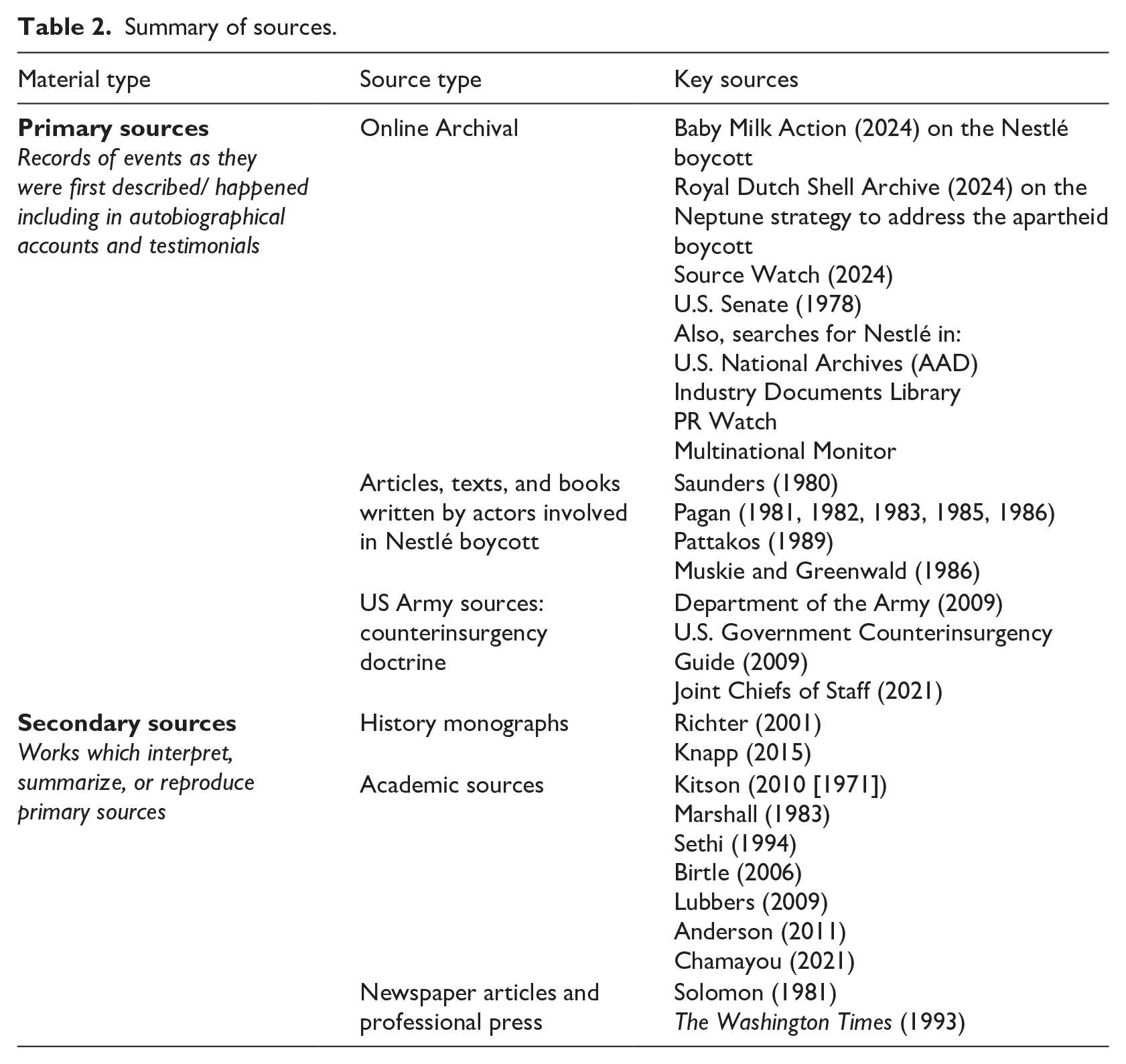
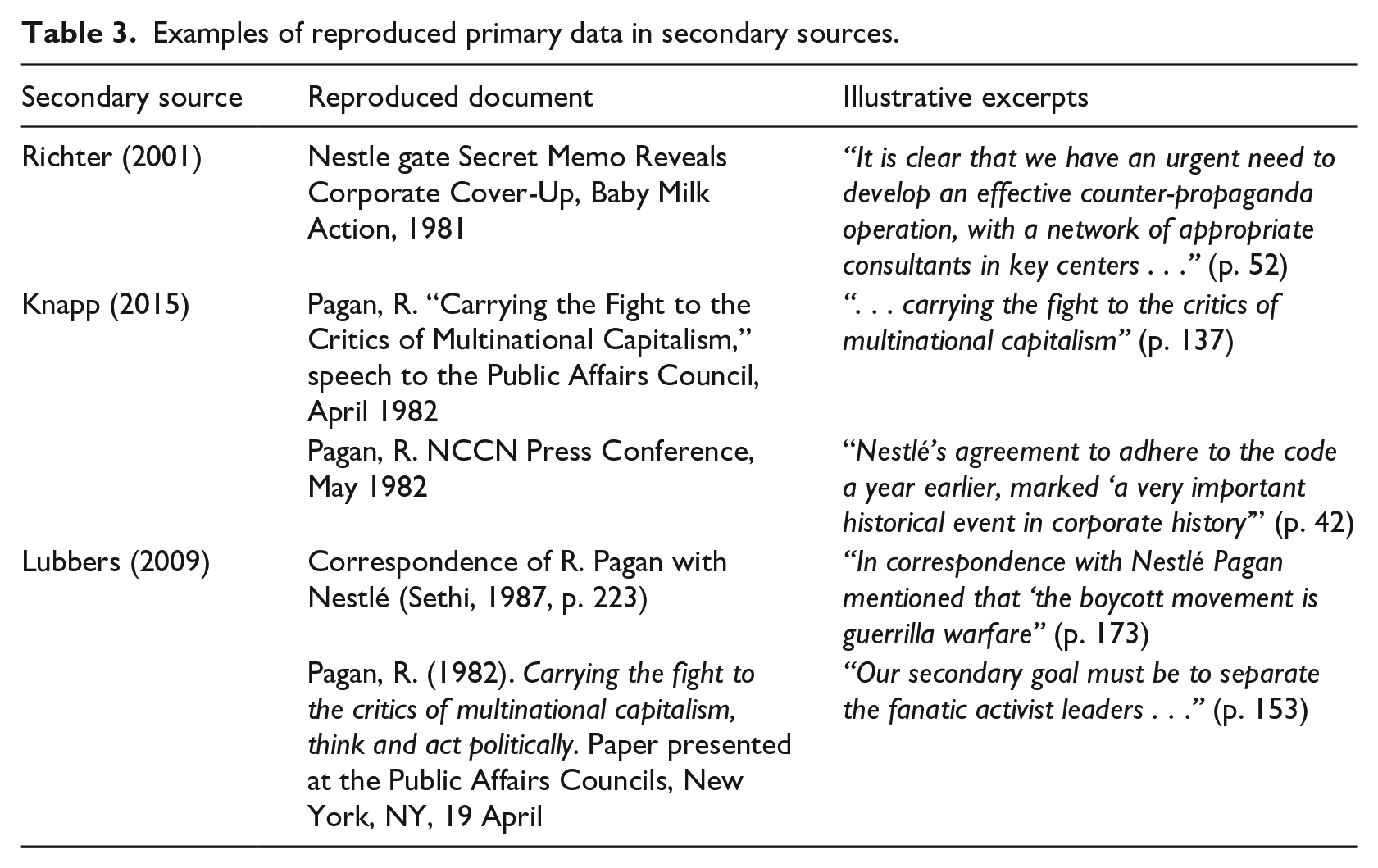
Genealogical analysis involves a “historical [account] . . . in relation to a field of power through which we constitute ourselves as subjects” (Foucault, 1997a, p. 262). The Foucauldian genealogical analysis is a “history of the present” whereby “its intent is to problematize the present by revealing the power relations upon which it depends and the contingent processes that have brought it into being” (Garland, 2014, p. 372). However, we have taken on board the critiques of archeo-genealogy as not meeting the standards of historical analysis in terms of lack of reliability and negligence about “historical facts” (Rowlinson, 2004; Rowlinson & Carter, 2002, p. 527) by engaging with a substantial number of primary and secondary sources (Tables 2 and Table 3), including historical monographs (Knapp, 2015; Richter, 2001).
Summary of sources.
Examples of reproduced primary data in secondary sources.
There is substantial work in management and organization studies that draws upon the methods of genealogical analysis (e.g., Simpson et al., 2014; Smith & Kaminishi, 2020). We associate Foucauldian genealogical analysis with Gramsci’s conception of hegemony. Notable differences exist between the works of Foucault and Gramsci in that the former is usually described as a poststructuralist with the idea that there are no stable social structures, whereas Gramsci is a Marxist who relies on the political economy of capitalism and the Communist Party to conceptualize a centralized political agency (e.g., Kreps, 2016). However, a key similarity between Foucault and Gramsci is the idea that power is not an object that is owned but rather a “relation of force that only exists in action” (Daldal, 2014, p. 149). Combining a Foucauldian genealogy with the Gramscian hegemony approach enables us to articulate two corporate power dimensions, especially by “gain[ing] an appreciation for the connections between techniques of subjection and broader hegemonic projects” (Ekers & Loftus, 2008, p. 707). Therefore, we build upon work that reveals how seemingly neutral power relations can conceal wrongdoing (Simpson et al., 2014) and colonial domination (Smith & Kaminishi, 2020).
Primary and secondary sources
While recognizing the limitations of a single case study, a historical focus on Nestlé allowed us to draw on an extensive range of primary and secondary historical sources (e.g., Chamayou, 2021; Knapp, 2015; Lubbers, 2009; Richter, 2001) to render the historic use of counterinsurgency tactics by Nestlé observable. These types of tactics are hard to research in contemporary corporations because of their covert and contentious nature. Therefore, the utility of this case study lies in its illustrative capacity (Siggelkow, 2007) for a complex theory, rather than its generalizability. Analyzing a historical case study (Hargadon & Douglas, 2001, p. 481) enabled us to draw on “considerable data from a wide range of sources,” something that would be less likely for a contemporary case. As a result, we deployed genealogical analysis methods to explore the historical origins of the tactics used by corporations to undermine activist pressures (Foucault, 1977; see also Smith & Kaminishi, 2020; Vaara & Lamberg, 2016).
In developing our analytical approach, we were mindful of Rowlinson, Hassard, and Decker’s (2014, p. 250) advice that “[i]f history matters for organization theory, then we need greater reflexivity regarding the epistemological problem of representing the past; otherwise, history might be seen as merely a repository of ready-made data.” To avoid “historical tourism” we sought to search a range of “eclectic but verifiable documentary sources” (Hargadon & Douglas, 2001; Rowlinson at al., 2014, p. 251). This allowed us to recognize that sources do not cumulatively produce an unproblematic historical record (Rowlinson et al., 2014) but rather produce partial and positioned accounts of historical events that require reflexive interpretation. In practical terms, identifying which sources to include involved three iterative steps.
We began by reviewing a wide range of potential primary historical sources, including monographs, by those directly involved in the Nestlé case, and searchable online archives that included sources (e.g., reports) about the boycott. Next, we followed Rowlinson et al.’s (2014) advice to supplement primary sources with other materials, such as news and professional press coverage, and academic articles that would provide editorialized accounts of the boycott and enable access to further primary historical data. For example, an academic article by Sethi (1994) included an interview with a former US military strategist who advised on Nestlé’s counter-activist strategy. Finally, once we had a sense of the available primary and secondary sources, we undertook an initial review of the materials produced. Owing to the variable lengths (pp. 100–300) and formats of the identified sources (e.g., book, PDF, web content), we saved the files to a shared folder to enable reading and then met to undertake a sifting process to determine which sources to analyze for the study. From this meeting, we decided on the following inclusion criteria: (1) directly relevant to the Nestlé boycott case; (2) directly or indirectly relevant to counter-activism; and (3) available in French or English. Table 2 summarizes the primary and secondary sources. Table 3 provides examples of how secondary sources led to identification of new primary sources.
Analysis of historical sources
To undertake our genealogical analysis, we followed an iterative process involving back-and-forth navigation between cases, the practice of counterinsurgency tactics, theory including Gramscian hegemony (1971), and conversations between authors.
First, we began by immersing ourselves in the selected historical sources (especially Chamayou, 2021; Knapp, 2015; Lubbers, 2009; Richter, 2001; see also Table 2) through the process of reading and rereading. Key excerpts from primary and secondary sources were copied (sometimes requiring transcription owing to their format) and saved in a shared Excel file. Excel was used for this purpose because of the scale of the data and to enable an accessible and ongoing process of source categorization and theme identification. From this initial process it was possible to create a chronology of key events in the Nestlé boycott: the writing of the pamphlet The Baby Killer in 1974 that started the boycott; the US Senate hearings in 1978; the creation of an international NGO network to coordinate globally the Nestlé boycott—the International Baby Food Action Network (IBFAN)—in 1979; the WHO code of ethics in 1981; and the suspension of the boycott in 1984.
Second, we supported our analysis with accounts (e.g., Anderson, 2011; Birtle, 2006; Kitson, 2010 [1971]) of how the US Army deployed counterinsurgency tactics. In doing so, we identified and captured the major strategic objectives of US Army counterinsurgency strategies in our Excel sheet: isolate insurgents from the actual or potential support of the civilian population; deny insurgents access to external support and resources; and destroy the insurgents. This allowed us to compare the military counterinsurgency tactics of the 1970/80s with counter-activism tactics proposed by Nestlé’s ex-military advisors.
Third, through our team discussions we became increasingly aware of the centrality of key stakeholders to the case. For example, Rafael Pagan, a former US intelligence officer, and his militarily trained team deployed counterinsurgency tactics to respond to the boycott between 1981 and 1985. In so doing, we were able to analyze two types of documents: (a) documents written by Pagan (1981, 1982, 1983, 1985, 1986) himself for an academic audience or the wider public and (b) documents written about Pagan in the media, including his obituary (The Washington Times, 1993). Additionally, we relied on previous extensive archival and documentary works (e.g., Knapp, 2015; Lubbers, 2009; Richter, 2001) and materials from online archives. Other actors in the Nestlé boycott authored academic articles, such as Senator Muskie (Muskie & Greenwald, 1986). By focusing on key individuals, as they appeared in historical sources including their own accounts, we began to build our own evidence base in Excel for Nestlé’s use of counterinsurgency tactics. This approach provided a unique insight into practices that are covert, and in some cases illegal, such as outright spying upon NGOs. Simultaneously, as we discussed the themes emerging from our analysis, we sought to remain reflexive. For example, they discussed alternative explanations of the use of military-informed advice and tactics.
Fourth, drawing on our now long-run immersion in historical sources, captured data analysis, growing familiarity with counterinsurgency strategies (Anderson, 2011; Birtle, 2006; Kitson, 2010 [1971]), and the crucial work of Chamayou, we could now demonstrate from multiple sources that Nestlé’s successful strategy to respond to the boycott utilized tactics that were (1) historically associated with military counterinsurgency tactics, and (2) proposed by Pagan and his team. Moving on from these two insights, we sought to understand how counterinsurgency tactics were adapted to the non-military context of an activist-triggered corporate boycott. We used an abductive process to draw upon theory (corporate hegemony) and practice (military counterinsurgency tactics) to recode our extensive data excerpts in Excel to identify the specific tactics used by Nestlé.
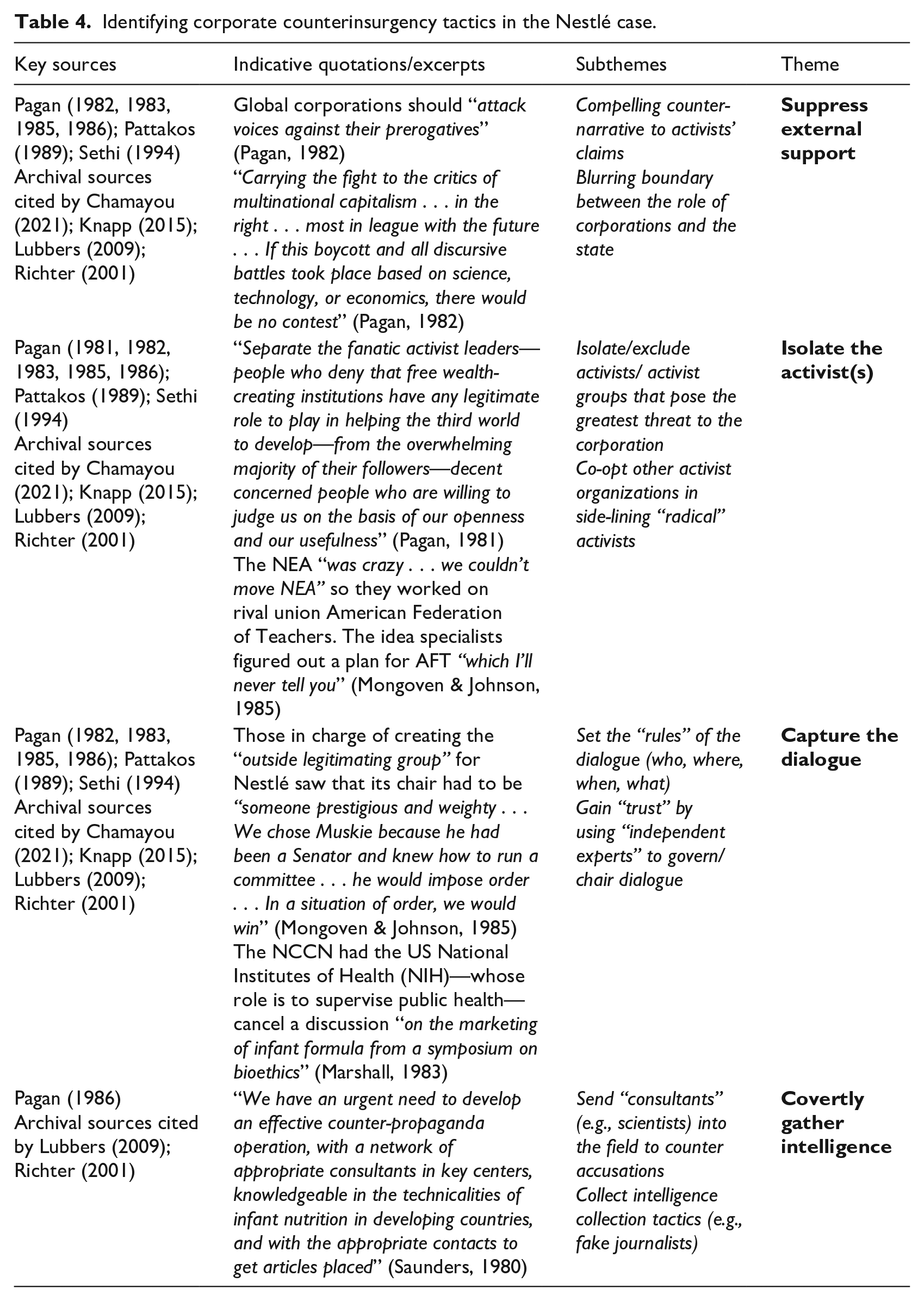
Finally, iterating between coding and team discussion, we identified four key counterinsurgency tactics deployed by Nestlé. Suppress external support composed of subthemes of compelling counter-narrative to activists’ claims and blurring boundary between the role of corporations and the state. Isolate the activist(s) composed of subthemes purposely excluding the activists/activist groups that pose the greatest threat to the corporation and co-opting other activist organizations in sidelining radical activists. Capture the dialogue composed of the subthemes of setting the rules of the dialogue (who, where, when, what) and gaining trust by using independent experts to govern/chair dialogue). Covertly gather intelligence composed of the subthemes of sending consultants/experts (e.g., scientists, journalists) into the field to counter accusations.
Findings: A genealogy of counterinsurgency in corporation–NGO relations
We now present our genealogical analysis of Nestlé’s use of counterinsurgency tactics to counter activist pressure during the boycott. By situating our analysis historically, we demonstrate that the implementation of counterinsurgency tactics was ultimately successful and led to the suspension of the boycott in 1984.
The state of counterinsurgency in the early 1980s
The US counterinsurgency practices, to which Pagan had been exposed as a US Army employee working as “an intelligence officer with the Office of the Secretary of Defense” (The Washington Times, 1993) in the 1950s and 1960s, were formally developed in the early 1950s through a series of field manuals (Birtle, 2006; Kitson, 2010 [1971]). Reflecting this, one of Pagan’s associates observed that “the director of [his] intelligence department was . . . a former US army intelligence officer” (Lubbers, 2009, p. 177). US counterinsurgency field manuals included an analysis of insurgencies in the Second World War, the French experience in the Algerian War, and the UK experience against the Malay insurgency (Gentile, 2009). Since then, counterinsurgency has remained a central strategy used and taught by the US Army (Gentile, 2009). The US Army regularly 1 publishes a counterinsurgency doctrine “to plan, execute, and assess counterinsurgency operations.” The US Army deployed counterinsurgency in the Philippines and Korea (1950s) and in the Vietnam War (1963) (Long, 2008). For instance, the 1962 National Security Action Memorandum clearly links insurgency to its support for the population.
Insurgency is grounded in the allegiances and attitudes of the people. Its origins are domestic, and its support must remain so. The causes of insurgency therefore stem from the inadequacies of the local government to requite or remove popular or group dissatisfactions . . . The U.S. must always keep in mind that the ultimate and decisive target is the people. Society itself is at war and the resources, motives and targets of the struggle are found almost wholly within the local population. (National Security Action Memorandum 182 cited in Long, 2008, p. 5; our emphasis)
An important aspect of counterinsurgency is its link to the morale of the army performing counterinsurgency. Counterinsurgency is supposed to boost the morale of armies fighting insurgencies that might feel isolated among hostile populations or be demotivated by propaganda from their enemy (Kilcullen, 2010). Conversely, counterinsurgency is supposed to isolate and thereby demoralize insurgents. One of the first counterinsurgency manuals (FM 31–20), developed by the US Army in 1951, points out three strategic objectives (Birtle, 2006). The first objective was to isolate insurgents from the actual or potential support provided by the civilian population. While propaganda and supportive policies persuaded the population, military operations broke up insurgents and drove them from populated areas (Birtle, 2006). The second counterinsurgency objective is to deny insurgents access to external support, and the third is to destroy the insurgents (Birtle, 2006). The first and second objectives are often framed as civic or psychological actions, respectively. For instance, the French Army developed a civic program in Algeria that involved building hospitals and developing schools. Additionally, counterinsurgency emphasizes intelligence to be able to know the population and its level of support for the insurgency and to gather military information about the insurgency. Therefore, recruiting local fighters for counterinsurgency is essential so that they can share their knowledge about the population and thereby help gather intelligence about the insurgency.
However, counterinsurgency is not only focused on civil action and casting away military operations. Counterinsurgency is also about combining a “mix of civil and military programs” (Birtle, 2006, p. 46) or using civic action on the population to achieve military victory—the destruction of the insurgent—and more importantly, political victory so that no new insurgents can be recruited from the population. Thus, counterinsurgency sees that “a nation’s people (or population) are the key to defeating an insurgency . . . If the people are properly handled and controlled, the insurgency, which must use the people for cover and concealment, can, over time, be defeated” (Gentile, 2009, p. 21). In sum, Pagan, as a high-level US Army intelligence officer, had detailed knowledge of the US Army practices of counterinsurgency, which he thereafter used as a consultant in the private sector.
How activists were constructed as “insurgents”
The Nestlé boycott put pressure on Nestlé. The boycott—involving a variety of activist organizations such as churches, trade unions, or activist collectives—began in 1974 with the circulation of pamphlets such as The Baby Killer by the UK-based NGO War on Want (Knapp, 2015, p. 65). Initially, Nestlé had adopted a low profile. However, in 1976, Nestlé decided to initiate a “libel suit in Bern that, for the first of many times doomed Nestlé in the public relations realm” (Knapp, 2015, p. 66). In fact, Nestlé sued a German far-left NGO—the Arbeitsgruppe Dritte Welt (Third World Action Group)—which had circulated a German translation of The Baby Killer (p. 66). Although Nestlé won this case, the trial increased global media attention. The pressure intensified when US Nestlé executives faced the 1978 Senator Edward Kennedy hearings. The outcome of the Kennedy hearings was to involve the WHO in a resolution to what had become a global public debate (Knapp, 2015, p. 131).
At that point, Nestlé’s management realized that its traditional strategies involving public relations or legal methods were not effective in resisting the boycott. Ernest Saunders, the vice-president of Nestlé, recognized the “professionalism” of the organizations carrying out the boycott and mentioned “an urgent need to develop an effective counter-propaganda operation, with a network of appropriate consultants in key centers, knowledgeable in the technicalities of infant nutrition in developing countries, and with the appropriate contacts to get articles placed” (Saunders, 1980 cited in Richter, 2001, p. 52). Strikingly, Nestlé recognized the boycott’s ability to operate like an insurgency, that is, through a dispersed and coordinated network of organizations, including churches, unions, and other groups, which would seek support from the broader population.
To counter these activist pressures, Nestlé appointed Pagan, a former intelligence officer, in 1981 (The Washington Times, 1993). Therefore, Pagan’s (1986) appointment is an important first signal that Nestlé’s new strategy was inspired by counterinsurgency. First, Pagan became the head of “a self-sufficient unit called the Nestlé Coordination Center for Nutrition, Inc. (NCCN),” whose specific goal was “the development of a political strategy capability for business . . . tailored to deal with the boycott crisis” (p. 13). The idea that an autonomous and stable team should lead a counterinsurgency strategy is in line with the counterinsurgency doctrine (Kitson, 2010 [1971]; Long, 2008). Second, Pagan clearly identified the boycott actors as insurgents performing a “social guerrilla war” in the form of “sociopolitical conflict” (1986, p. 14). Similarly, in correspondence with Nestlé, Pagan mentioned that “the boycott movement is guerrilla warfare . . . an international war; its roots are ideological and political” (Sethi, 1987, p. 223 cited in Lubbers, 2009, p. 176). Strikingly, as with the Vietnam War, the context of war is not only local but also global in that there were global movements against the Vietnam War in the United States and elsewhere. Accordingly, a military-inspired “strategy to combat” the latter is necessary for Nestlé (Pagan, 1986, p. 14). Furthermore, Pagan argued that this new strategy he implemented was about moving beyond purely economic logics and “acquiring sociopolitical competence . . . dynamic and assertive in shaping its political environment as it is in shaping its financial and marketing environment” (1986, p. 13; our emphasis). In line with counterinsurgency, Pagan aimed to target the environment and, thus, the population of boycott actors (Anderson, 2011).
Identifying corporate counterinsurgency tactics
We now build upon our genealogical analysis to show how Pagan and others implemented counterinsurgency tactics to undermine activist organizations in the context of the Nestlé boycott. From this, we identify which of the military counterinsurgency tactics outlined above were adapted to neutralize activist pressures. Table 4 summarizes the corporate counterinsurgency tactics identified in our analysis and the key sources that support our interpretations. We unpack these corporate counterinsurgency tactics in the proceeding sections.
Identifying corporate counterinsurgency tactics in the Nestlé case.
Suppress external support
We will now turn to our first objective of implementation of a counterinsurgency strategy: “deny . . . access to external support” (Birtle, 2006, p. 137). A key aspect of a counterinsurgency strategy is winning “the hearts, minds, and acquiescence of the population” (Kilcullen, 2010, p. 37), suggesting the importance of Nestlé developing compelling counternarratives to undermine the accuracy, truthfulness, or relevance of activists’ claims. From our analysis, there were three dimensions of external support that the NCCN sought to neutralize during the Nestlé boycott: the UN, the media, and the scientific community.
First, the NCCN targeted the WHO to ensure that it was not a source of support for the boycott. Pagan (1986) mentioned that “the industry simply had not established any basis for constructive negotiations with the WHO staff, which already was inclined toward establishing a precedent for the international regulation of multinational business” (p. 14). To counteract the WHO’s inclination towards regulation, the NCCN ensured that “international business organizations such as the International Council of Infant Food Industries (ICIFI) and the International Pharmaceutical Manufacturers’ Association (IPMA)” would actively engage with UN officials (Richter, 2001, p. 117). Second, the NCCN sought to neutralize the scientific community in terms of potential support for the boycott by including scientific figures from the Muskie Commission. The NCCN had the US National Institutes of Health (NIH), whose role is to supervise public health, cancel a discussion “on the marketing of infant formula from a symposium on bioethics” (Marshall, 1983, p. 469). Additionally, Nestlé refused to join discussion with the US National Institutes of Health in that the latter would be an anti-corporate body, thereby delivering “a critique of NIH itself” (Knapp, 2015, p. 216) and of science. Third, the NCCN ensured that the media would provide less external support to the boycott movement by engaging mainstream media with “articulate, well-trained spokespersons, who were scientists well experienced in the nutrition problems” (Pagan, 1986, p. 15), organizing press conferences, and circulating information in the media about Nestlé enforcing the WHO code. From this perspective, the media presence of the Muskie Commission was central to ensuring that the media would consider Nestlé’s efforts on the WHO code as credible. This led the Washington Post to stop its support for the boycott at the end of 1982 (Pagan, 1986, p. 16). Here, Pagan’s team engagement with external stakeholders was not a bona fide effort for the sake of truth, but rather consisted of hidden tactics to solely make visible biased expertise to influence potential external support to the detriment of the boycott coalition. Pagan’s team therefore hid the intent of the dialogue (i.e., weakening the boycott’s coalition). Neutralizing external support for the boycott enabled Nestlé to permanently prevent it from becoming a threat. If the NCCN had not pushed back on external support, it is likely that the boycott would have been a serious challenge to Nestlé when it started again in 1988.
Isolate the activist(s)
The next “objective” (Birtle, 2006, p. 136) was about dividing activist followers from their leaders and activist organizations from one another. An important aim of counterinsurgency is to isolate the distinct groups of the insurgency to marginalize and put on the defensive the most combative groups. The objective of this was to exploit the heterogeneous coalition of the boycott. For example, the International Baby Food Action Network (IBFAN), which was created in 1979 to lead the international boycott, “was founded by six organizations—the Arbeitsgruppe Dritte Welt, Interfaith Centre on Corporate Responsibility (ICCR), Infant Formula Action Coalition (INFACT), International Organization of Consumer Unions (IOCU), Oxfam and War on Want” (Richter, 2001, p. 141). In other words, there was a religious group with the ICCR, a consumer organization (IOCU), two ad-hoc NGOs with the Arbeitsgruppe Dritte Welt [Third World Action Group] and War on Want, an ad-hoc coalition mainly based in the United States with INFACT, and an NGO with Oxfam. INFACT was itself heterogeneous, as it was formed of churches and trade unions, such as the American Teachers Association.
One of Pagan’s associates, Pattakos (1989), explains the importance of dialogue in responding to activist pressure.
With many there is room for dialogue and interaction—the trick is knowing with whom one can interact effectively. Some are idealistic or pragmatic while others are intransigent, opportunistic or driven by political agendas; still others see compromise as a cop out. It is important, therefore, to determine motivation in order to understand the basis for activist criticisms and later to establish a foundation for effective dialogue and negotiation. (p. 99)
In this typology, two groups—pragmatics and idealists—can be engaged in dialogue, while other groups—such as radicals—refuse any dialogue. These latter radical groups are the core of insurgency; as such, according to counterinsurgency tactics, they should be isolated and marginalized to render them insignificant. Dialogue with the more pragmatic groups is therefore a key counterinsurgency tactic, weakening the boycott movement by detaching the most radical groups from those that accept dialogue with Pagan and his team.
First, pragmatic groups want actual changes to occur. This included the “church-oriented critics . . . [who] were willing to work with Nestlé on behalf of the world’s poor and to see if multinationals were as useful and as caring as Nestlé claimed” (Pagan, 1986, p. 16). The dialogue was about persuading them that they achieved limited gains, which made the situation slightly better. Strikingly, creating a code of ethics such as that developed by the WHO is an efficient strategy in that it symbolically creates such modest gains without necessarily leading to actual changes on the ground. Second, idealists are engaged in dialogue and neutralized by persuading them that their own principles prevent them from deploying a radical boycott. For example, Pagan (1986, p. 16) mentions how he weaponized the fact that “many church people did not like the idea of being used for extraneous purposes by activists or of being viewed as clever, amoral, or radical political strategists.”
Finally, the radicals were isolated from the other groups. One way to isolate radical groups is to present them as political activists who are only interested in power as opposed to ethics. Pagan and NCCN “considered the groups coordinating the Boycott [in the United States]—INFACT and the Interfaith Center on Corporate Responsibility—to be more radical” (Lubbers, 2009, p. 150). Therefore, they targeted “the National Council of Churches [and] . . . moderate church groups,” which were considered idealists, committing to the boycott only on ethical grounds. Jack Mongoven, another associate of Pagan, mentioned that “[t]he weakness and the strength of the church institutions are first and foremost that they have a conscience, and that, once they know the truth, the pressure on them to act accordingly is very heavy. Because they are committed to doing that which is ethical, they became our best hope” (Sethi, 1994, p. 229 cited in Lubbers, 2009, p. 150). These religious groups were then told that supporting the boycott was not ethical and pushed towards a pragmatic position by conflating their moral obligations with those of Nestlé. Pagan (1985, p. 29) mentions that “neither churches nor business can afford to see the world’s poor become pawns in a political game . . . I expect business and the churches to spur each other on . . . for the benefit of those who need what businesses, and the churches can offer, materially and spiritually.” The symmetry of the dialogue with two interlocutors engaged in discussion is rhetorically replicated in the realm of moral obligation, whereby disadvantaged people in the Global South joining the boycott involve acting to their own detriment. Effectively, dialogue is weaponized by corporations as a vehicle to hide corporate operatives’ strategic decisions (i.e., Pagan’s team) from activists. The illusion of symmetry of dialogue between equals, therefore, is part of an asymmetric trick whereby corporations secretly deploy corporate counterinsurgency tactics with the seeming consent of activist groups. Thus, while corporations tell activists that they are legitimate interlocutors, they are covertly positioned as insurgents whose threats need to be eliminated.
Capture the dialogue
The third objective revealed by our genealogical analysis is the corporate capture of dialogue. In the Nestlé case, dialogue is a key tool for defeating activist insurgency. An effective element in terms of fostering dialogue was “to create an ‘independent social audit committee’ called the Nestlé Infant Formula [Audit] Commission (NIFAC) provided with a regular budget by Nestlé and chaired by a former US Secretary of State, Edmund Muskie” (Richter, 2001, p. 116). The Muskie Commission was presented as independent from both Nestlé and the boycott movement in that it was comprised of “leaders, scientists, and educators of undoubted integrity, independence, and expertise” (see also Lubbers, 2009, p. 156; Pagan, 1986, p. 17). The Muskie Commission’s role was to check whether Nestlé implemented the 1981 WHO code against the aggressive marketing of infant formula in the Global South (Muskie & Greenwald, 1986). The Muskie Commission was instrumental in gaining the trust of activists, so they would engage in a dialogue with Nestlé and thus move away from radicals. Pagan (1986) mentions that the “establishment of this Commission was a most important step in the process of creating . . . trust and credibility needed for Nestlé to help resolve the conflict . . . that created much disarray and confusion among the activist leadership” (p. 17). In other words, making dialogue possible by producing trust entailed de facto the marginalization of radical groups in that they rejected engaging with the Muskie Commission. Dialogue would take place through “meeting with leaders, offering medical and scientific evidence against activist ‘misinformation,’ and then following up with letters and more evidence” (Knapp, 2015, p. 212). Pagan and his team targeted activist leaders such as Albert Shanker for the American Federation of Teachers.
Covertly gather intelligence
Finally, Pagan and the NCCN developed intelligence capabilities to understand the boycott actors—one thing that is essential for effective counterinsurgency. This meant “to listen” to the activists criticizing Nestlé. This “enabled NCCN to gather information about Nestlé’s critics and their objectives” (Pagan, 1986, p. 15). To collect intelligence, Pagan (1986, p. 15) and NCCN “sent . . . scientists . . . to the field of the political battle . . . [who] met with the media, church groups, and public interest groups to answer publicly the accusations leveled against Nestlé.” Additionally, it is likely that the NCCN would resort to outright spies to gather information through nontransparent methods. For example, Pagan used the same intelligence protocol when hired by Shell to neutralize the anti-apartheid boycott against its operations in South Africa (Lubbers, 2009). In the Neptune Strategy, where Pagan’s organization detailed to Shell its plan to counter the anti-apartheid boycott by drawing on “a network of correspondents” (cited in Lubbers, 2009, p. 164), Pagan’s organization employed a spy who would pretend to be a journalist to gather information about the “work, funding, opinions and networks” of Dutch boycott groups (Lubbers, 2009, p. 164). Additionally, the spy confirmed that he was reporting to Pagan when journalists exposed his covert role.
Discussion
Building on interdisciplinary research concerning counterinsurgency tactics (see also Brock & Dunlap, 2018; Chamayou, 2021), we have extended and enriched the theorization of corporate counter-activism through a genealogical analysis of the classic Nestlé case study. Through our critical analysis, we illuminate how Nestlé used counterinsurgency tactics to neutralize activist pressures and reestablish its corporate hegemony (Levy & Scully, 2007; Moog, Spicer, & Böhm, 2015; Nyberg & Wright, 2024) when a widespread boycott threatened its survival. Empirically, we show how exposure to counterinsurgency tactics informed Nestlé’s practices at the time of the boycott, and identify how these military tactics were adapted for use against civil society actors by corporations.
By revealing the use of corporate counterinsurgency tactics in the Nestlé case, we demonstrate the military origins of contemporary corporate counter-activism and find evidence to suggest that some PCSR activities ought to be reconceptualized as tactics used to reinforce corporate hegemony. As theorization of Gramscian hegemony suggests (Ekers & Loftus, 2008), it is important to understand how hidden repertoires of power are deployed by corporations to neutralize dissent against their wrongdoings and preserve their hegemony at the overall level of the global political economy. Yet, even when individuals have revealed in their autobiographical accounts, public statements, or personal correspondence that Nestlé used counterinsurgency tactics against activist groups, this problematic knowledge continues to lack salience in public and academic discourse. The military tactics used by corporations are hidden, at least in part, in plain sight. Therefore, we propose that hiding corporate counterinsurgency tactics within PCSR activity—for example, by capturing multi-stakeholder dialogues—is one way that corporations disempower activists to sustain corporate hegemony. By establishing a genealogical link between corporate counterinsurgency and PCSR, we propose the need to reconsider the implications for the PCSR literature and open an avenue for reflection on corporate counterinsurgency tactics. We make three contributions to the critical PCSR literature.
First, drawing on philosopher Chamayou (2021; see also Lubbers, 2009), we propose that the hidden ways corporations seek to neutralize activist movements have roots in military tactics that were born out of the counterinsurgency tactics used in the 1980s. We propose a new term, corporate counterinsurgency, to capture the tactics used by corporations to undermine activist groups and maintain corporate hegemony. We define corporate counterinsurgency as,
The covert use of counterinsurgency tactics—such as suppressing external support, isolating the activist(s), capturing the dialogue and covert intelligence gathering—to neutralize activist pressures and sustain corporate hegemony.
We propose that corporate counterinsurgency is a useful concept because it (1) reveals the hidden practices that corporations use to neutralize activist movements, (2) explains a potentially hidden mechanism that sustains corporate hegemony in the face of activist pressure, and (3) suggests how the military-type tactics used by corporations against activists have been, at least in part, concealed through their presentation as PCSR. We show how corporate counterinsurgency tactics were used to co-opt individual activists, tactically delay codes of conduct and other initiatives, and undermine the legitimacy and/or social capital of activist groups through smear campaigns. Therefore, this contribution extends prior critical CSR and PCSR research beyond its unethical and undemocratic effects (Djelic & Etchanchu, 2017; Hanlon & Fleming, 2009; Moog et al., 2015; Rhodes & Fleming, 2020) to a greater appreciation of the practices and tactics through which corporations maintain their hegemony.
Second, our analysis has implications for understanding the ways in which PCSR activity (Girschik et al., 2022) can be mobilized to hide the ways in which corporations seek to neutralize activist pressures, and therefore avoid being held to account for their wrongdoings. PCSR has attracted several critiques, largely concerned with the naivety of assumptions regarding the viability of genuine dialogues between civil society actors and corporations that are untainted by power differences (Rhodes & Fleming, 2020), and the outcomes of PCSR and the reification of forms of neocolonial power implied in the distribution of political roles (Acosta & Pérezts, 2019). This is in line with broader critiques of CSR as an expression of Global North neoliberal discourse (Banerjee, 2000, 2018; Hanlon & Fleming, 2009; Rhodes & Fleming, 2020). Our analysis adds to these critiques a concern to problematize the tools and processes of PCSR. The use of counterinsurgency tactics suggests that corporations’ political actions could be considered a continuation of the war, thus reversing the classical Clausewitzian perspective considering war as the continuation of politics through other means (Kornberger, 2013, drawing on Foucault 2 ) and suggesting new avenues of research regarding political dissensus (Barthold & Bloom, 2020). Our detailed genealogical case analysis demonstrates that corporate counterinsurgency tactics developed by Nestlé and likely other corporations, on the advice of Pagan and his associates, were deployed to nullify activist opposition and regain hegemony through hidden ways. We emphasize the dark side of PCSR, highlighting how seemingly positive or benign practices, such as multi-stakeholder dialogue, can be weaponized against activist groups and civil society interests. Therefore, we suggest that critical PCSR scholars should give further consideration to the tactics corporations use to maintain their hegemony.
Third, we contribute to the literature on historical PCSR (Djelic & Etchanchu, 2017; Schrempf-Stirling et al., 2016). We deploy historicization through a genealogical approach by suggesting past continuities, inflection points, or crucial moments (Maclean et al., 2016; Smith & Kaminishi, 2020). Our analysis highlighted profound forgotten dimensions of current practices and contemporary phenomena by uncovering the counterinsurgency origins of modern CSR and PCSR tactics developed by corporations against activists to neutralize them through hidden tactics. Through the Nestlé boycott, we explain how counterinsurgency tactics were from the beginning part of a broader strategy, designed to eliminate opponents, avoid stricter government regulations, and reinforce domination without resorting to violence. Thus, by highlighting the military history of CSR and PCSR in the context of counterinsurgency, we contribute to the historical scholarship that has paid relatively little attention to this significant dimension of CSR and PCSR history (Djelic & Etchanchu 2017; Schrempf-Stirling et al., 2016). Through our analysis, we extend and contribute to the growing recognition of the “dark sides” of superficially pro-social corporate activities (Murphy, 2010).
Through our genealogical analysis, we demonstrate how corporate counterinsurgency tactics are examples of a hegemonic strategy that enables corporations to negate the power of activists and activism in covert and hidden ways. Further, we revealed how hidden repertoires of power tactics are deployed by corporations to nullify the threats posed by activist groups to corporate hegemony. These same experts later advised other corporations, such as Union Carbide, Shell, and Monsanto, thereby contributing to the diffusion process of corporate counterinsurgency tactics.
This study has several practical implications. Recognizing the key role played by activism in civil society (Burawoy, 2003; Schrempf-Stirling, 2018), we propose a range of steps that activists and activist organizations can take to potentially counter corporate counterinsurgency strategies and tactics. First, to reveal covertness, activists might connect with local and global publics to expose the use of corporate counterinsurgency tactics (e.g., ex-military employees in ostensibly public relations roles) and sensitize others to the hidden nature of the steps taken by corporations to undermine activist pressures. Second, our analysis suggests that corporations are likely to typologize their activist opponents, particularly those considered more radical, and use this status to isolate them from external resources. To avoid allegations of radicalization, activists might develop narratives to communicate the key role played by activists in civil society. Third, our findings suggest that activists should be cautious of dialogic spaces and agendas controlled (or co-opted) by corporations and may want to create alternative spaces for dialogue, where it is harder for corporations to set the rules of engagement. Fourth, to avoid silencing the most powerful activist voices, it is important to ensure that the activists that pose the greatest threat to the corporation are not isolated or excluded. At the same time, it is useful to be mindful of collaborating with (radical) activist organizations whose historical actions or affiliations can be mobilized by corporations to undermine the cause. Our evidence suggests that activist groups ought to be cautious of engagement with corporations. Corporate counterinsurgency tactics are designed to distract activist groups, waste their time and resources, and obstruct the pursuit of political and legal recourse. History shows that for activists, it may be better to play the long game, as those using counterinsurgency strategies typically seek to rapidly stamp dominance.
This study has several limitations. We draw upon a single historical case; therefore, the utility of this genealogical study lies in its illustrative capacity (Siggelkow, 2007) of a complex theory rather than its generalizability. Consequently, our analysis cannot directly reveal the extent to which contemporary corporations use corporate counterinsurgency tactics. Similarly, the timing of the case (1970/80s) precludes understanding the impacts of recent technologies (e.g., social media) on corporate counterinsurgency tactics or activist responses to them. Therefore, our analysis suggests several important avenues for future research. First, while grounding our analysis in a historical case brings benefits in relation to accessing covert organizational processes, it would be illuminating to explore the forms that corporate counterinsurgency tactics adopt in contemporary organizations. Recent technologies provide myriad opportunities for corporate counterinsurgency because of their capacity to hide the identities of actors and mobilize and promote narratives on a global scale. Empirical research examining the roles of such technologies in corporate counterinsurgency contributes significantly to the understanding of contemporary responses to activism. Second, exploring how the activists approach responding to and overcoming corporate counterinsurgency tactics would bring both intellectual and practical benefits. While technologies potentially foster corporate counterinsurgency tactics, they also provide activists with multiple new ways to organize and mobilize against corporate wrongdoing. Examining whether corporations or societies are net beneficiaries of technological change in activism is important. Third, examining the interdependencies between corporations, activists, and the government in relation to addressing specific issues would illuminate complementarities and contingencies that shape the efficacy and legitimacy of activism and corporate counterinsurgency. Exploring how governments might support and leverage activism while inhibiting corporate counterinsurgency would likely promote a more democratic role for corporations in relation to social and environmental issues.
Conclusion
We find that the problematic nature of PCSR is entangled not only in its state-like aims, but also in its deployment of military tactics to maintain corporate hegemony. Our genealogical analysis revealed some of the hidden tactics that corporations have used to undermine the ability of activists to hold them to account for their wrongdoing. We argue that deploying corporate counterinsurgency tactics to control activism within civil society is therefore intrinsic to a hegemonic vision of power. We argue that corporate counterinsurgency tactics—such as suppressing external support, isolating the activist(s), capturing the dialogue and covert intelligence gathering—have been, and likely still are, used to undermine activist groups. Our analysis reveals corporations’ hegemonic vision through their antipathy towards civil society. While the military origins of corporate counterinsurgency tactics may be unknown to those who now implement them, the disconnection between the origins of these tactics and their continuing effects does not negate the societal harms caused by the silencing of civil society and the encroachment of the corporation into the territory of the (military) state. The hidden nature of corporate counterinsurgency strategies, whether due to the covert nature of such tactics or historical drift, may therefore continue to cast a long shadow over corporations’ illegitimate deployment of state-like actions towards corporate ends. By linking this hegemonic vision of power with critical PCSR, we contribute to organizational theorizing of how corporate counterinsurgency tactics undermine the power of activist groups to hold corporations accountable.
Footnotes
Acknowledgements
We are grateful to The Open University Business School for the opportunity to present and receive feedback on an early draft of this paper. We also acknowledge and are thankful for the clear editorial guidance and encouraging and insightful reviewer feedback we received during the review process.
Funding
The author(s) received no financial support for the research, authorship, and/or publication of this article.
