




Abstract
Organizational ratings exude anxiety and allure, but relatively little is known about how managers balance resisting and mobilizing ratings. We explore this duality with a qualitative study on managerial responses to corporate social responsibility (CSR) ratings. Based on interviews focused on CSR ratings with managers of 60 companies, we induce four responses to ratings: grumbling, contestation, cherry-picking and microstatactivism. We further show how managers combine resistance and mobilization in two ambivalent engagement modes. Our analysis contributes to the literature by developing a more nuanced theory of corporate responses to organizational ratings, which demonstrates the importance of ambivalence in managing institutional pressure.
Corporate social responsibility (CSR) ratings, which quantify information regarding a firm’s corporate environmental, social and governance (ESG) policies and practices into a comparable measure of performance, are becoming ever more important to target audiences today. 1 It is estimated that over 600 of such ratings exist globally (SustainAbility, 2019). Originally created for the benefit of niche investors interested in the CSR performance of investee companies (Déjean, Gond, & Leca, 2004; Waddock, 2008), surveys suggest that investors managing $30 trillion in assets may currently consider CSR ratings when making their investments (Amel-Zadeh & Serafeim, 2018). The use of CSR ratings data is also popular in academic research (Eccles, Lee, & Stroehle, 2019; Gond, Vigneau, & Johnson-Cramer, 2018), and the ratings are used by corporate managers to set strategic goals or showcase their CSR performance (Carlos & Lewis, 2018; Lewis & Carlos, 2019; Slager, Gond & Moon, 2012).
Despite their evident popularity among these audiences, CSR ratings are both criticized and praised, much like ratings in other fields (Esposito & Stark, 2019) such as university education (Espeland & Sauder, 2007; Sauder & Espeland, 2006, 2009). Ratings can be viewed as alleviating information asymmetries about aspects of performance that are difficult for outsiders to observe, thereby aiding organizations’ reputations and enhancing market transparency. At the same time, ratings have ‘disciplining effects’ (Foucault, 1978) that force organizations to try to conform to their measurements (Rindova, Martins, Srinivas, & Chandler, 2018). In the extant literature, these effects are captured by the mechanism of reactivity, according to which rated organizations seek to improve their performance in line with evaluation criteria (Espeland & Sauder, 2007), but which can also lead to ‘gaming’ where organizations decouple rated activities from actual performance or provide deceptive information to rating agencies (Sauder & Espeland, 2009; Sharkey & Bromley, 2015).
Research on CSR ratings shows that companies respond to being rated by improving their CSR performance when their initial performance is rated as subpar (Chatterji & Toffel, 2010) or when surrounded by rated peers (Sharkey & Bromley, 2015). Such reactivity (Espeland & Sauder, 2007) may, in highly regulated industries, spill over to nonrated peers (Sharkey & Bromley, 2015), but this effect is dampened for companies that experience financial pressure (Rowley, Shipilov, & Greve, 2017). Recent insights suggest that companies whose performance is rated highly may respond by lowering their subsequent performance (Lewis, 2018) or deciding not to publicize their high ratings from a fear of being accused of hypocrisy (Carlos & Lewis, 2018). While it is clear from prior research that some companies seek to obtain favourable CSR ratings to secure reputational benefits, we have limited understanding of how corporate managers deal with the ‘anxiety’ and ‘allure’ exerted by CSR ratings (Espeland & Sauder, 2016; Sauder & Espeland, 2009). Therefore, we ask: How are CSR ratings resisted and/or mobilized by managers?
We address this question through a qualitative inquiry informed by interviews held with managers of 60 international companies and by multiple sources of secondary data. We analytically induce four modes of managerial engagement with CSR ratings – grumbling, contestation, cherry-picking and microstatactivism – which we categorize as involving different levels of resistance and mobilization. Furthermore, we show that the four modes are not mutually exclusive, but rather that managers may employ multiple modes at the same time by combining modes across the spectrum of resistance and mobilization, suggesting an ambivalent response to CSR ratings. Finally, we explore how organizational characteristics influence these responses.
Our study makes two main contributions. First, our results contribute to research on ratings and quantification (Mennicken & Espeland, 2019; Pollock, d’Adderio, Williams, & Leforestier, 2018) and specifically to studies of CSR ratings (Carlos & Lewis, 2018; Clementino & Perkins, 2020; Rowley et al., 2017) by providing an extended repertoire of corporate reactivity to CSR ratings that includes previously overlooked dimensions such as grumbling and microstatactivism. Second, our analysis also extends studies of corporate reactions to institutional pressures (Crilly, Zollo, & Hansen, 2012; Oliver, 1991) by providing evidence of ambivalent managerial responses that combine resistance to ratings with their simultaneous mobilization. Such hybrid responses to institutional pressures can enrich the analysis of selective de/coupling (Pache & Santos, 2010, 2013).
Ratings, Commensuration and the Politics of Reactivity
Contemporary organizations are subjected to an increasing number of ratings, rankings and lists (Esposito & Stark, 2019; Pollock et al., 2018). Creating a rating involves commensuration – a process by which different entities are compared according to a common metric (Espeland & Stevens, 1998). This requires the elaboration of evaluation criteria to compare the performance of a given group of organizations. Commensuration can be based on qualitative data, but often requires quantification to facilitate comparison (Déjean et al., 2004; Espeland & Stevens, 1998).
Commensuration through ratings has been both criticized and praised. Ratings are commended for reducing information asymmetries regarding aspects of performance that are difficult to measure (Rindova et al., 2018) and as ‘social tests’ that might incentivize low-ranked organizations or their peers to improve their performance (Chatterji & Toffel, 2010; Sharkey & Bromley, 2015). Critics focus on the simplification of qualitative differences into quantitative scores or ranking positions, a lack of transparency regarding the evaluation criteria used, or a lack of predictive power based on historical data (Chatterji, Levine, & Toffel, 2009; Espeland & Sauder, 2016; Esposito & Stark, 2019).
The commensuration process underlying ratings leads to reactivity – ‘the idea that organizations change their behavior in reaction to being evaluated, observed, or measured’ (Espeland & Sauder, 2007, p. 1). Reactivity towards CSR ratings depends on company characteristics such as performance in the ratings (Carlos & Lewis, 2018; Lewis, 2018) and is subject to moderating effects such as financial performance (Rowley et al., 2017), the cost–benefit tradeoff of improving performance (Chatterji & Toffel, 2010) and the extent of industry-specific regulation (Sharkey & Bromley, 2015).
Recent qualitative and theoretical work focused on fields in which multiple ratings for a similar feature coexist, such as in the CSR context, suggest that under such circumstances ratings may be more actively resisted (Clementino & Perkins, 2020; Pollock et al., 2018). Such ‘plurality in the evaluative landscape’ will weaken reactivity due to uncertainty regarding relevant evaluation criteria and will reduce the power of status signals (Brandtner, 2017). This invites a reconsideration of the politics of organizational responses to ratings, which involve both ‘anxiety’ (Elsbach & Kramer, 1996) induced by a mismatch between unique organizational features and standardized rating templates, and the ‘allure’ of showcasing good performance to external audiences (Sauder & Espeland, 2009).
Anxiety: Resisting CSR ratings
Even though ratings are so pervasive among organizations in our ‘neoliberal’ society that they may seem irresistible (Bruno, Didier, & Vitale, 2014), individuals and organizations can and do engage in various forms of resistance to commensuration (Giamporcaro & Gond, 2016; Rindova et al., 2018). Organizational resistance to ratings can take the form of ‘gaming’, whereby organizations provide incomplete or inaccurate information to the evaluator to improve their rating. Such gaming undermines the motivation behind evaluation criteria (Espeland & Sauder, 2007) as shown for example in a study of nursing homes in the United States, where higher reported staff numbers necessary to obtain high ratings did not lead to improvements in care outcomes (Ody-Brasier & Sharkey, 2019). Organizations not only ‘internalize’ expectations from rating agencies (Espeland & Sauder, 2007) but also interpret rankings in ways that best serve their needs. They may seek to weaken a rating’s influence by providing competing narratives to their stakeholders (Elsbach & Kramer, 1996; Gerdin & Englund, 2019).
Allure: Mobilizing CSR ratings
Ratings not only invoke anxiety and resistance but also have allure (Sauder & Espeland, 2009). Previous research drawing on impression management has shown that rankings are actively sought by management to impress external audiences (Carlos & Lewis, 2018; Elsbach & Kramer, 1996). Ratings can be used by managers to create ‘comparative orderings’ or to provide signals about status and reputation, which can create stratification at the field level (see Rindova et al., 2018, p. 2183). However, we know relatively little about the mobilization of ratings as a means to advance intraorganizational goals.
Recent research in the sociology of quantification has coined the concept of ‘statactivism’ (Bruno et al., 2014; Didier & Tasset, 2013), which merges the notion of statistics and activism, to recast commensuration not only as a hegemonic neoliberal tendency to be resisted but also as a potentially effective lever for emancipatory reform. Quantification can be regarded as an instrument for opening ‘possible worlds’ (Didier & Tasset, 2013). Activists may recast interpretations of official statistics to highlight the side effects of specific politics or may design alternative indicators to trigger political debate (Boltanski, 2014). In the context of corporate reactions to CSR ratings, the notion of microstatactivism suggests that ratings are not necessarily only a constraint weighing on managers and employees, but that they could also be recast to serve progressive social change or advance distinct CSR agendas within organizations.
In sum, the extant research on organization ratings in general and on CSR ratings in particular shows that ratings evoke both allure and anxiety. However, we have limited insights into how managers balance the anxiety and allure of ratings and how contingencies such as their rating performance or discrepancies between different ratings influence their responses through this balancing act.
Research Design, Methods and Data
Given the lack of empirical evidence on resistance to ratings and our focus on how corporate managers perceive and react to CSR ratings, we adopted a qualitative research design (Eisenhardt & Graebner, 2007, p. 26). We focused on managers in charge of responding to various CSR ratings. Due to the nature of our inquiry, we focused on publicly held corporations, as they are usually subjected to the scrutiny of socially responsible investors and thus heavily solicited by social rating agencies (e.g. MSCI and Sustainalytics) and/or CSR stockmarket indices (e.g. the Dow Jones Sustainability Index [DJSI] and FTSE4Good). Following a logic of theoretical sampling, we did not aim to yield a statistically representative sample but rather tried to capture diverse reactions to CSR ratings by examining multinational corporations (MNCs) headquartered in a variety of countries and industries (Yin, 2017).
In doing so, our sample reflects the fact that emerging market firms are underrepresented in CSR ratings. The resulting lack of pressure also means that these firms have been relatively unaware of ratings or have not responded to interview requests. Equally, while we managed to speak to respondents whose firms had dropped out of the CSR stock indices, our sample does not include firms that have never been rated and does not feature laggard CSR firms. 2 CSR ratings cover relatively large, liquid firms, which is reflected in our sample (mean firm size measured by the number of employees is 74,769). The majority of our respondents come from European countries. Table 1 provides more descriptive information about our respondents and firms.
Respondent and company characteristics.
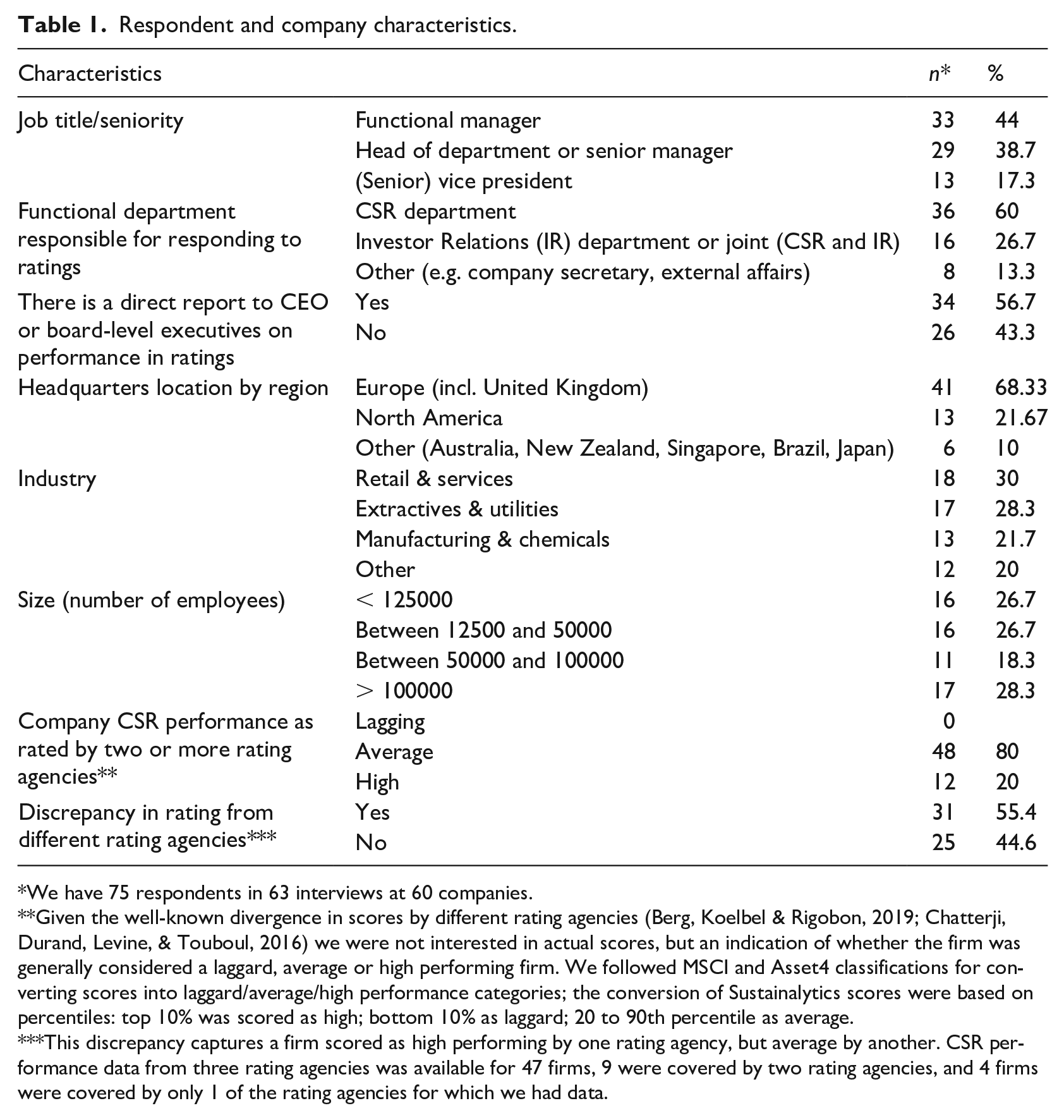
We have 75 respondents in 63 interviews at 60 companies.
Given the well-known divergence in scores by different rating agencies (Berg, Koelbel & Rigobon, 2019; Chatterji, Durand, Levine, & Touboul, 2016) we were not interested in actual scores, but an indication of whether the firm was generally considered a laggard, average or high performing firm. We followed MSCI and Asset4 classifications for converting scores into laggard/average/high performance categories; the conversion of Sustainalytics scores were based on percentiles: top 10% was scored as high; bottom 10% as laggard; 20 to 90th percentile as average.
This discrepancy captures a firm scored as high performing by one rating agency, but average by another. CSR performance data from three rating agencies was available for 47 firms, 9 were covered by two rating agencies, and 4 firms were covered by only 1 of the rating agencies for which we had data.
Data collection
Our core dataset consists of 63 interviews with 75 managers in charge of responding to CSR ratings at 60 MNCs. The interviews were conducted through two distinct rounds of interviewing: one focused on how corporations manage stockmarket indices such as the FTSE4Good index while the other was dedicated to measuring corporate responses to external requests from financial actors about CSR. The respondents were identified through intermediary databases, e.g. based on their inclusion in CSR stockmarket indices, and approached simultaneously within each round of interviews. The interviewees were functional managers or executives (more than half of our sample reported directly to a board or were members of board committees) in charge of managing requests from financial actors and CSR ratings and held job titles such as sustainability officer or director of CSR, although some were based in investor relations or other departments of their organizations.
During both interview campaigns, we asked managers open-ended questions about how they managed requests from investors in the domains of CSR and sustainability. Although the second campaign did not initially include any specific questions about CSR ratings, most of the managers used the interviews, perhaps strategically as a form of ‘political action’ (Alvesson, 2003), as an opportunity to express their concerns and grievances regarding CSR rating agencies. Therefore, we progressively included more follow-up open-ended questions about this topic. The interviews, which lasted approximately one hour, were recorded and fully transcribed. When rereading the transcripts from both interview campaigns, we realized that issues related to CSR ratings were covered in depth by almost every interviewee. We therefore decided to focus our analysis of this rich empirical material on the topic of ‘corporate responses to CSR ratings’.
To complement our interview data and gain a better sense of each corporate position and context in relation to CSR and CSR ratings, we also collected relevant company documents such as sustainability reports and annual reports in addition to secondary data from third-party sources. We collected data on CSR performance from Asset4, MSCI and Sustainalytics. We also collected data on company characteristics (e.g. size, location and industry) from Orbis. We use these secondary data to triangulate information about the positioning of our respondents in their organizations and to specify the various characteristics of the interviewees’ corporations.
Data analysis
Once we identified managerial responses to CSR ratings as a central topic of our inquiry, our analysis followed a standard structured process of analytical induction in line with the so-called ‘Gioia method’ (Gioia, Corley, & Hamilton, 2013). First, we remained as close as possible to our interviewees’ perspectives and engaged in open coding to capture all facets of their activities and viewpoints. Through this procedure, we first generated numerous provisional codes that captured the views of the interviewees (e.g. ‘rating agencies are painful middlemen’) and that corresponded to first-order codes. Second, for axial coding (Locke, 2001), we identified recurring patterns in the corpus and abstracted sentences into second-order themes. For instance, complaints about CSR ratings that were generic in nature (e.g. ‘it takes much time to answer all the questions’) were grouped under a theme labelled ‘complaining about commensuration overload’. Another pattern we distinguished focused on the use of CSR ratings by investors or their uselessness in contrast with direct discussions with shareholders – critiques that we label ‘voicing concerns about commensuration utility’.
Third, in moving back and forth between data and theory, we progressively subsumed distinct themes under theoretical aggregate constructs corresponding to more conceptually informed categories. For instance, building on Levin and Espeland (2002), we were able to distinguish contestation of ‘technical commensuration’ – criticizing the method and/or data used by CSR ratings (i.e. the process by which ratings are produced) – from contestation of ‘cognitive commensuration’ – when target companies contested their membership to a specific category (i.e. how suitable a rating template is for their specific company and in particular the industry group that they are compared to). While we initially focused on constructs from the literature on responses to ratings (Rindova et al., 2018), we found that only some of our second-order themes corresponded to practices documented in this literature (e.g. cherry-picking engagement with ratings and contestation of rating outcomes). We therefore had to broaden our theoretical scope to account for two types of activities related to ratings. On one hand, we had expressions of generic complaints that did not neatly correspond to the forms of contestation discussed in prior studies. In reading the literature on resistance to the adoption of new technologies, we realized that such complaints correspond to a managerial equivalent of ‘employees’ grumbling’ (Laumer, Maier, Eckhardt, & Weitzel, 2014), which can be defined as ‘resistance behavior expressed in conversations’ (Mahmud, Ramayah, & Kurnia, 2017, p. 1625). We therefore labelled these themes as ‘grumbling’. On the other hand, we identified forms of the political mobilization of ratings that resonate, in a microscale context, with what French sociologists of quantification have recently coined ‘stat-activism’ (see Bruno et al., 2014) or a reliance on statistics to promote social change. We therefore labelled these practices as ‘microstatactivism’.
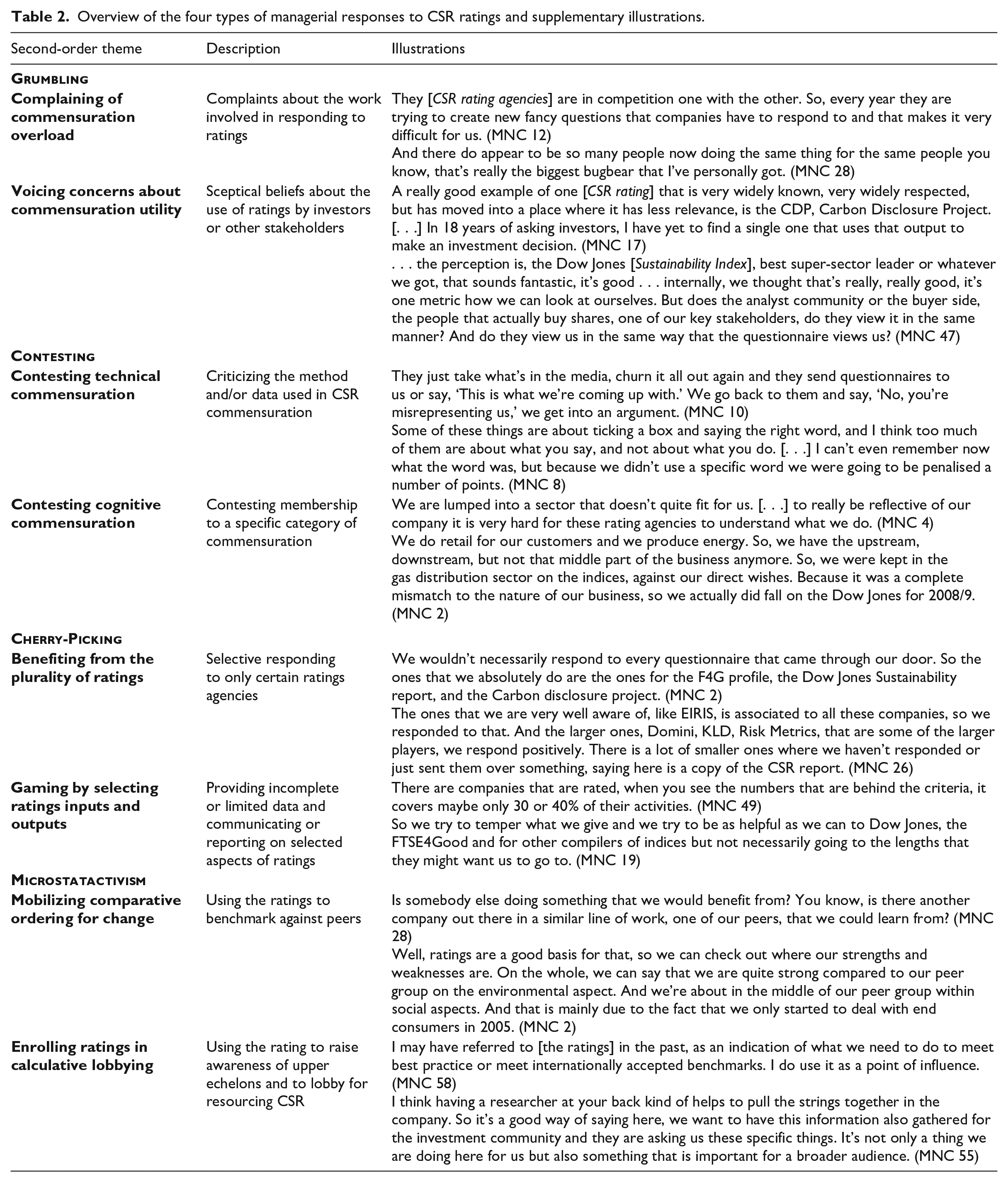
Figure 1 presents the data structure resulting from our inductive analysis. Table 2 provides supplementary illustrations of our data. The first part of our findings section describes these four aggregate constructs in more detail.
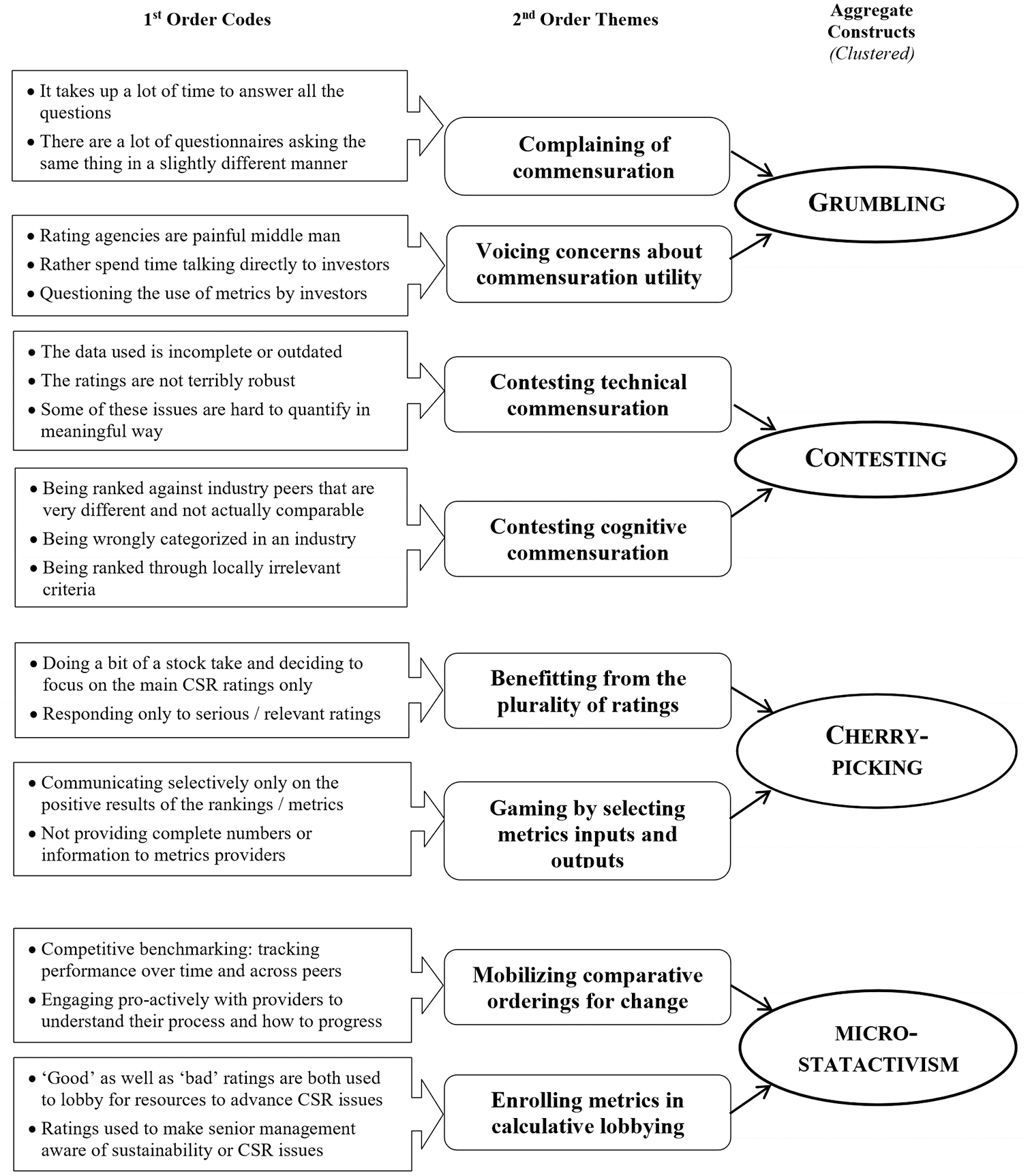
Data structure.
Overview of the four types of managerial responses to CSR ratings and supplementary illustrations.
Once we identified these four aggregate constructs, we also analysed the extent to which managers drew on both sides of the resistance/mobilization duality. This enabled us to conceptualize the ambivalent management of CSR ratings, as we found that responses were often used conjointly. To further explore these insights, we analysed in depth two specific ambivalent patterns of responses: a ‘cynical’ response to ratings that combines grumbling with cherry-picking and a ‘pragmatic’ response that combines contestation with microstatactivism. We focused on these two modes of engagement, as they combine elements of mobilization and resistance and therefore represent ambivalent approaches to CSR ratings. We furthermore explored the extent to which respondents and company characteristics identified in Table 1 were contingent for corporate responses to CSR ratings. Our second findings section specifies ambivalent responses and highlights the organizational characteristics that appear to be contingent to these responses.
Four Managerial Responses to CSR Ratings
Grumbling
The most evidenced response to CSR ratings is grumbling: a low mobilization, low resistance response that involves a denigration of work involved in the production of ratings: it involves complaining about commensuration overload. In our case, such grumbling may be ‘contagious’ in the sense that it predominantly takes place among peers and is not overtly addressed to CSR ratings: If you get three or four CSR managers from big FTSE100 corporates in the pub together, at some point, we will all engage in a joint rant about how resource hungry these things [the CSR ratings and rankings] are and about how little value they bring to us. I think it is at the top of our minds at the moment. (MNC 6)
Complaints voiced by managers in charge of responding to CSR ratings are related to the time-consuming nature of providing data and to the fact that the number of CSR ratings has substantially increased over the last two decades. Notably, all of the studied companies have devoted at least some resources to responding to CSR ratings, and many have seen the total amount of time spent on such ratings grow in recent years due to more frequent demands for information and data (see also Table 2 for supplementary evidence): Just to give you a rough idea [of the time and resources expended], we are about to enter in marching order from March 30, and for a period of two full months, we are going to respond to Robecco SAM, which we consider, together with Vigeo, to be the most important CSR rating agency for us. (MNC 51)
In addition to complaints made about the time-consuming nature of responding to CSR ratings and the multiplicity of CSR ratings, grumbling also takes the form of a generic contestation of the utility of information generated by rating agencies and thus involves voicing concerns about commensuration utility. Such concerns relate to the use of CSR ratings by investors for capital allocation purposes. Here we find a range of managerial beliefs ranging from an acceptance of CSR ratings as a taken-for-granted source of information for investors to more challenging, if not radically sceptical attitudes: I believe that investors look at key ratings agencies like FTSE4Good and take their findings on board. What I would like to find out from investors and from FTSE4Good is empirical evidence to support that. But that’s my belief, for the time being. . . until proved otherwise. (MNC 8, emphasis in the original citation) They [the CSR rating agencies] claim to, sort of, have the ear of some investors, as a sort of benchmark study for them to see how good different companies are. I seriously question that, and if it were just me, and not the company I worked for, I would actually be more resistant and stop filling them in, because if you don’t fill them in, then they lose traction, if everyone else follows suit. (MNC 6)
As grumbling responses are conversational, they do not always translate into active resistance. However, they are widely shared among our interviewees and may become systemic in nature as a standard item of discussion among corporate CSR professionals.
Contesting
Contesting seeks to confront CSR commensuration in a more upfront manner and involves the elaboration of focused and sophisticated arguments to criticize and resist CSR ratings. We find managers contesting technical commensuration by discussing the capacity for ratings to ‘actually’ measure CSR performance. Attacks on and resistance to the technical dimension of commensuration focus on the accuracy, methodological rigour and robustness of the commensuration process. For example, CSR managers directly voice criticisms of rating agencies in terms of the data used to determine their companies’ ratings. These managers problematize reliance on media reports as a source of data that can be used in ratings, claiming that these reports may be outdated or unrepresentative of their companies’ actual performance or recent progress in CSR-related domains: You could say that perhaps some of the [CSR] ones aren’t quite as well thought through and have a tendency to rely on things like media headlines rather than company releases. I think that can be damaging because it completely ignores all the market information that companies put out, which has to be accurate because it goes to the stock exchange. There is also a sort of overemphasis on local newspaper headlines and this sort of thing, which. . . in my view, doesn’t quite capture the tone of the debate. (MNC 14)
Managers not only question the data sources that CSR ratings are based on but also frequently deem methods used to convert company-specific CSR data into comparative ratings ‘not terribly robust’ (MNC 6) and as doing ‘things that are slightly crazy’ (MNC 52) in terms of identifying relevant evaluation parameters for carbon dioxide emissions, for instance. Some managers had questioned the overall outcomes of ratings with raters directly. One company manager recounts that their company once threatened rating agencies with legal action after receiving a rating that the company felt was not representative of its performance.
I think the thing with the agencies is, what we have tended to find is, that the people doing the analysis bring their own prejudice into it. They are not objective. We have had a number of conversations with them where they started with the point of view that all defense companies are bad companies and then they reflected this in their report and looked for the media stories to support this. So, this is not an objective assessment. There have been a few times when we have actually threatened them with legal action because we think their misrepresentation is so bad. That tends to scare them into actually taking out the offending statements. We do not use this very often, but if there is something that we think is downright untrue, then we will challenge it. (MNC 10)
Another variant of this approach used by a more limited number of companies involves contesting cognitive commensuration or criticizing how the conversion of data into ratings applies to them. In the case of CSR ratings, companies are mostly rated on criteria that are industry-specific. This means that conglomerate companies that cross multiple industry sectors or that employ a different business model from those of industry peers do not fit the industry ‘template’ and are penalized for this in the rating.
[The CSR ratings] take a bit of a ‘one size fits all’ approach, because of course, they cannot do something specific for each corporation, but our core business is very different from that of the other companies we are compared to. (MNC 21)
Beyond such complaints about industry classifications, CSR managers of French corporations (e.g. MNC 18, MNC 21 and MNC 52) also question the fact that several CSR ratings adopt an ‘Anglo-American’ type of categorization that fails to capture important continental European features, especially in domains such as diversity or governance. As a result, some questions posed by these ratings appear to be loosely relevant, if not totally irrelevant, in light of local legal frameworks. Other companies have placed statements on their websites explaining their contestation of rating agencies, such as: ‘We work hard to engage with both investors and [CSR] research agencies to explain when our information does not fit neatly into a survey or standard question set.’ 3
Cherry-picking
Cherry-picking is usually performed by deciding to selectively engage with specific CSR ratings and/or with the sub-dimensions of a given CSR rating. Such a response has elements of both resistance and mobilization. 4 One form of cherry-picking involves benefiting from the plurality of ratings. Our analysis shows that when considering which CSR ratings to respond to, managers will weigh up the characteristics of a given rating, such as its legitimacy, the saliency of its clients and their expected performance and the fit between rating criteria and CSR strategies and policies. For example, absolute benchmarks such as the FTSE4Good Index are considered ‘easier to meet’ than those of an index such as the DJSI, which uses ‘relative’ benchmarks and only includes top performing firms.
Cherry-picking is used not only to decide whether to deal with specific CSR ratings but also to gain the most from a specific rating through gaming by selecting rating inputs and/or outputs. For example, one manager recounts that if rating criteria are not considered relevant and no accurate company-level data exist, more limited information is provided to the rating agency rather than spending resources gathering company-level data: So, we try to temper what we give and we try to be as helpful as we can to Dow Jones, the FTSE4Good and other compilers of indices, but do not necessarily go to the lengths that they might want us to go to. We do not have a global data center for all of our employment data, so we rely on 55 different systems in different countries for that data, and it would be impossible for us to provide data across the 55 countries for the proportion of the workforce doing this, that or the other. So, what we tend to do then is take the [home country] as a barometer and still comply with the requests, but we do so with a specific country only. (MNC 19)
Interestingly, several managers suspect such gaming behaviour to be present in peer companies (see Table 2 for more exemplary evidence). In the context of multiple CSR ratings, gaming also involves selectively communicating only on the best ratings externally. Managers from some corporations may decide to mobilize only CSR ratings on environmental performance, for example, if these are considered more strategic or if a company has stronger performance in the environmental domain relative to its policies and practices around social issues. Most CSR ratings provide grades or quantified indicators on multiple dimensions of CSR performance, and several corporations included in our sample report only on the dimensions in which they dominate their peers.
Microstatactivism
We found managers to mobilize CSR ratings to advance their own CSR-focused agendas within their organizations following a logic of ‘microstatactivism’. One form of microstatactivism involves mobilizing comparative orderings for change to use ratings to benchmark against peers or track performance over time.
We use the rankings to compare ourselves to the companies in our peer group and in this way, we see how many points we get on the criteria, on the different criteria. Then we say okay,. . . this is the area that we have to work on and this area is the most important for our company. (MNC 57)
This often involves company managers seeking to remain proactively involved with rating agencies not only to gain insights into ratings of their own performance but also to be aware of changes to rating methodologies that may affect performance outcomes.
Microstatactivism also involves leveraging CSR ratings to internally obtain more power or resources by enrolling ratings in calculative lobbying. For example, CSR ratings are used to convey a company’s performance in CSR to senior management, especially if limited awareness or knowledge of the topic exists at the board level. Managers point to the rating criteria as ‘objective’ measures requested by external audiences. Interestingly, we found that both ‘good’ and ‘bad’ ratings offer equally useful levers for managers to internally progress CSR. On one hand, underperformance relative to peers provides welcome pressure to justify an increase in CSR-related resources. One manager recalls what happened after their company lost its place on the DJSI, a rating that only includes the top scoring companies in each industry sector: Actually, not last year but the year before, we made it into the Dow Jones World [Index], we were actually number four and not number three, not in the top three, and there was quite a lot of discussion as a consequence of that. The board and actually the owners of the company s. . . they took it very personally, I have to say. Incredibly personally. And then last year [they said], you know, ‘You will get us back in, won’t you? Whatever resources you need you can just. . . you can use whatever name you need to get the information, this is the highest priority.’ (MNC 47)
On the other hand, good performance is also used as a lever to maintain access to resources or improve managerial status. Positive company performance according to CSR ratings is systematically communicated to senior management. For some CSR managers, maintaining favourable rankings is an explicit part of personal performance objectives; we found numerous managers to use microstatactivism behaviour to internally further their personal or professional objectives, interests and status.
The only tangible criteria that I get [to monitor our CSR performance in the eyes of investors and board members], is thanks to CSR rating agencies. [. . .] I can see whether we are in the rankings such as the FTSE4Good, I mean within a certain number of such indices, for instance. Now, we have just entered an MSCI index on sustainability. So, we are very happy to have good ratings from a CSR rating agency, because it demonstrates that our efforts are worth pursuing. Especially for the investors of a company like ours, this is one of the only ways to show [to board members] the payoffs of our investments in CSR. (MNC 54)
Ambivalence and Contingencies of Managerial Responses to CSR Ratings
We classified the four responses according to the extent of mobilization and resistance and located them within each one of the four quadrants in Figure 2. In analysing the interactions between these responses, we identified two cross-cutting responses corresponding to ambivalent forms of management of CSR ratings in the sense that they combine forms of political mobilization and resistance to ratings. We label them ‘cynical’ and ‘pragmatic’ ambivalent responses. Figure 2 displays these responses.
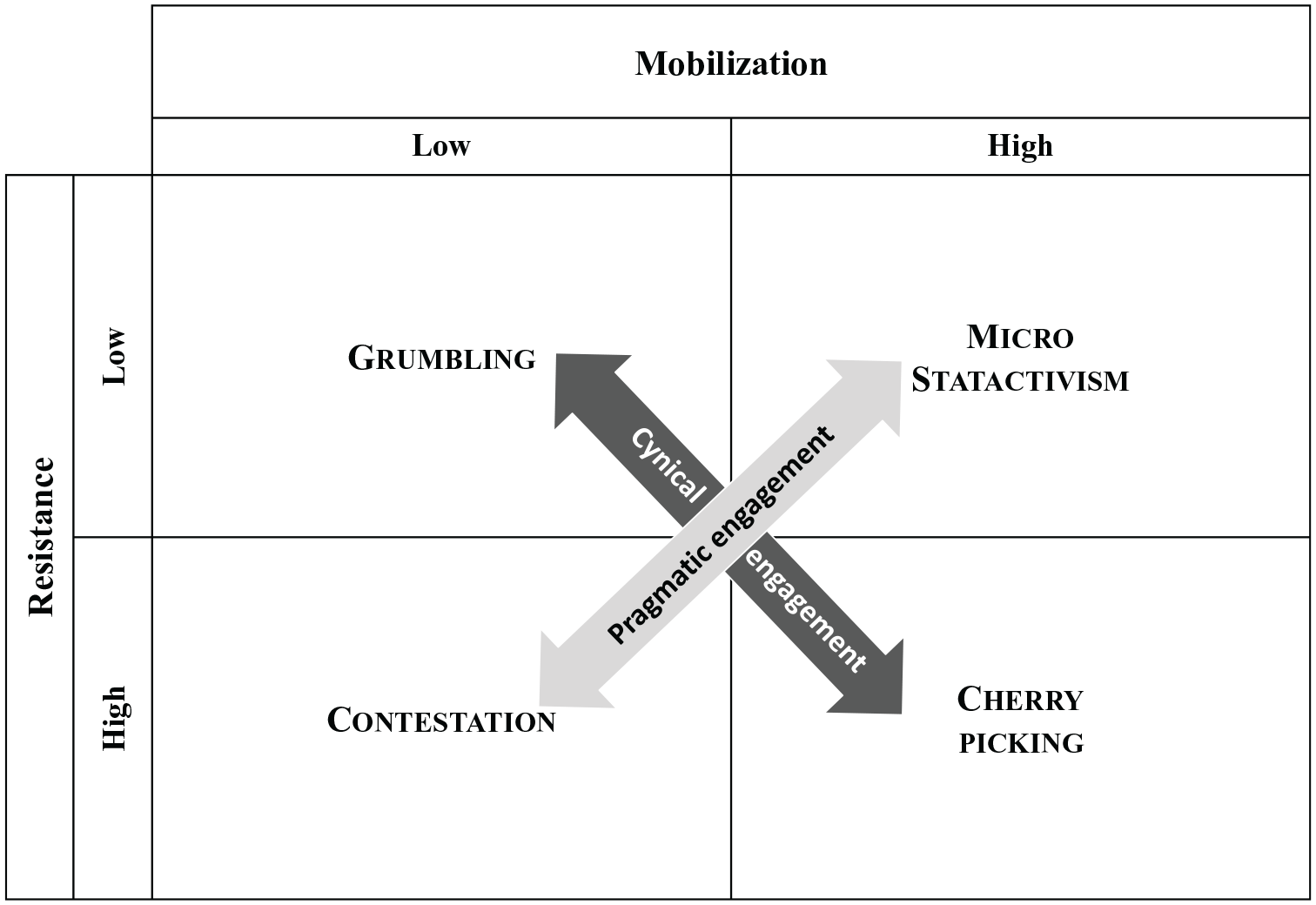
Managerial Responses to CSR ratings.
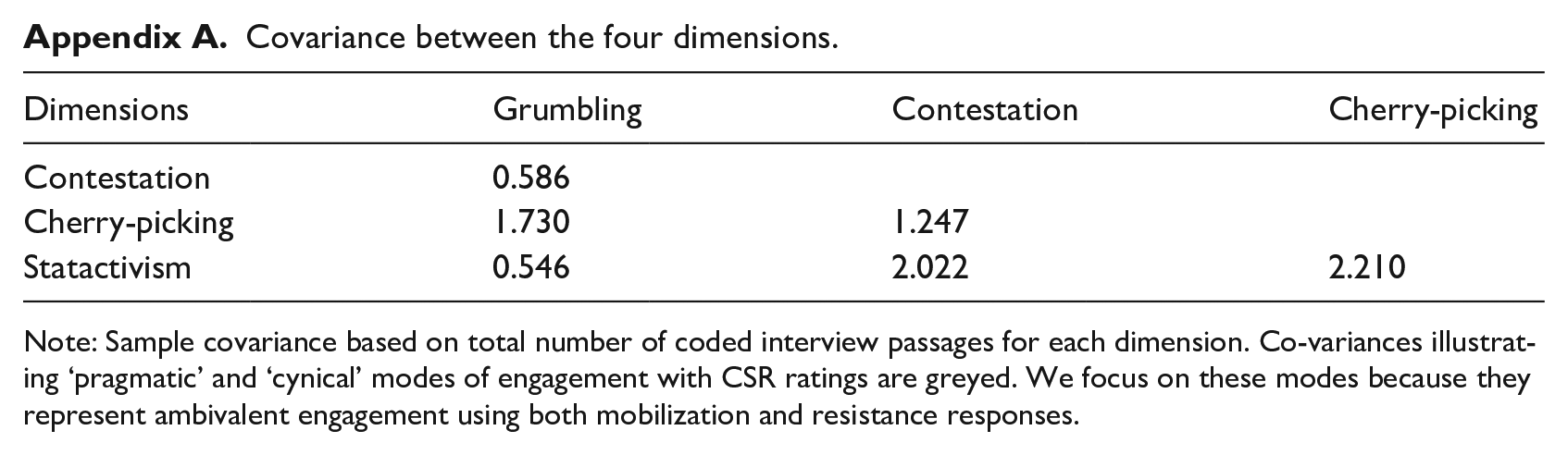
Although one could expect managers to be oriented towards either anxiety or allure, in our interview data we find managers to draw on multiple or even all responses. When we test the covariance between responses (results shown in Appendix A), we find positive covariance between the four dimensions of responses that we can identify. Overall, these results suggest that the four responses identified above are not mutually exclusive. We focus on the most ambivalent responses, which combine elements of mobilization and resistance. The covariance for cherry-picking and statactivism is also relatively high, but since this involves the combination of two responses high in mobilization, we do not discuss this further.
A combination of microstatactivism and contesting reflects a pragmatic engagement with the dual politics of commensuration. During his interview, a CSR manager from an energy MNC headquartered in Europe, for instance, mentions first how time-consuming the rating exercise is, which is described as a ‘gigantic pain’ (a form of generic grumbling), before actively contesting by pointing to several issues inherent to the interpretations and methods of various CSR ratings agencies. However, soon after he recognizes that these ratings serve as ‘an extraordinary stimulus to launch our policies of global performance,’ as the company’s supportive board wants the company to be ‘ever ahead’ of its competitors (MNC 51). Focused contestations of rating agencies can be seen here as a corollary of this manager’s dependence on the presence of CSR rating agencies to secure executive support through microstatactivism. Such a pragmatic response was found in 45% of cases and was more likely to be reported for firms with high CSR performance (X2 (1, N = 60) = 8.91, p = .000), and for those showing discrepancies between different CSR ratings (X2 (1, N = 56) = 11.124, p = .002).
The co-occurrence of cherry-picking and grumbling, which is also frequent (45% of cases), expresses a more cynical engagement with the dual politics of commensuration. Here, grumbling is combined with cherry-picking responses, such as benefiting from the plurality of ratings. We interpret this response as cynical, as it involves using an instrumental approach to enhance rating outcomes, while ratings are at the same time interpreted as a nuisance. For example, a respondent from one North America-based MNC from the retail industry reported that the ratings had become a distraction and that their company had decided to put less effort into responding to the different rating agencies and more effort into its CSR programmes. This led to a selection exercise where only the ratings deemed ‘professional’ were responded to (a cherry-picking response); all other rating agencies were told to obtain relevant information from the company’s website. Other companies have placed statements on their websites indicating which rating agencies they choose to respond to and why. We found no evidence of a statistically significant difference in reported frequencies of this cynical response across our cases. 5
Discussion, Implications and Conclusions
We opened this paper by asking how CSR ratings are resisted or mobilized by managers. Through a qualitative analysis of interviews held with managers who interface with CSR rating agencies, we induced four distinct types of responses – grumbling, contesting, cherry-picking and microstatactivism – that combine the mobilization of and resistance to ratings. We then identified how organizations had combined these responses through pragmatic and cynical engagement with ratings (see Figure 2). The findings offer a number of insights for the analysis of corporate responses to ratings and for studying ambivalent responses to institutional pressures, which we discuss before specifying the limitations and managerial implications of our study.
Opening the black box of responses to CSR ratings
Our analysis first contributes to the analysis of organizational reactivity (Mennicken & Espeland, 2019; Pollock et al., 2018) and specifically to studies focused on CSR ratings (Carlos & Lewis, 2018; Clementino & Perkins, 2020) by opening the ‘black box’ of reactivity to CSR ratings. While previous studies on ratings and reactivity have outlined that commensuration leads to both anxiety and allure (Espeland & Sauder, 2007; Sauder & Espeland, 2009), the research on CSR ratings has mainly focused on external organizational outcomes of reactivity such as improvements in CSR scores. Our results provide further insights into the ways in which managers seek to balance the allure and anxiety exerted by CSR ratings and show the extended repertoire of responses being used to do so.
At one extreme, our results reveal the potential importance of grumbling. Although grumbling may seem anodyne or innocuous, as it does not involve high levels of mobilization or resistance (see Figure 2), prior information technology studies (Laumer et al., 2014) suggest that grumbling can nevertheless hinder the adoption of new software through its contagious effects. While most managers interviewed who were grumbling saw CSR ratings as a ‘necessary evil’, this could result in more active resistance over time. We found some anecdotal evidence for this trend. One of our interviewees with a grumbling response warned that they were considering no longer responding to the most demanding CSR rating agencies. Follow-up research showed that the case company has since published a statement announcing its decision to decline participation with certain rating agencies. Future research could explore further whether and how CSR managers’ grumbling may lead to more sophisticated and overt forms of resistance to specific CSR rating agencies.
At the other extreme, we identify the managerial use of CSR ratings for internal political purposes in the form of microstatactivism. This response has not received much attention in prior analyses of CSR ratings or in the broader domain of reactivity to rankings. The idea that CSR performance, which relates to corporate practices for which often only qualitative information is available, can be quantified into a set of numbers comparable across firms was not generally contested in our setting. Ratings perpetuate and strengthen the ‘ideology of numbers’ (Chelli & Gendron, 2013) in CSR reporting practices. We show that this quantitative nature of CSR ratings is precisely what makes these ratings useful for managers when mobilizing them through microstatactivism responses. Statactivism has thus far been used by sociologists to capture the mobilization of quantified information to further the causes of groups that may feel marginalized; to develop and inform a critique of society; or to use commensuration as a tool in power struggles (Boltanski, 2014). Our analysis shows that CSR ratings can operate as intraorganizational political tools that could be used by CSR managers to promote specific projects. Prior studies of rankings have focused on negative disciplining effects such as the repurposing of work activities in line with ranking criteria that may not add value to the mission of the ranked organization (Espeland & Sauder, 2016; Power, Scheytt, Soin, & Sahlin, 2009). Here, we find that CSR ratings may be used in intraorganizational politics to further CSR policies and practices. This is consistent with Gond and Nyberg’s (2017) argument that materialized forms of CSR can be repurposed to promote collective rather than solely corporate welfare. Other ratings such as the recently launched Corporate Human Rights Benchmark (CHRB) could move from an ‘engine of anxiety’ (Espeland & Sauder, 2016) to become a ‘performativity engine’ (Leca, Gond, & Barin Cruz, 2014), encouraging the corporate management of issues such as human rights. Of course, the emancipatory potential of microstatactivism can be delivered only if managers responding to ratings do not ‘capture’ this potential of ratings only for their own benefits, as illustrated by Mun and Jung’s (2018) study on gender diversity. Future studies could analyse these political dynamics by closely following trends of CSR ratings within assessed organizations, as suggested by Ben Khaled and Gond (2020) in relation to ethical regulations. Studies of reactivity to rankings (Mennicken & Espeland, 2019; Pollock et al., 2018) could build on our results to further analyse how rankings equip actors in ways that enable various forms of microstatactivism within organizations.
Ambivalent responses to institutional pressures
Our results also confirm and extend insights from institutional studies of organizational responses to wider environmental pressures that extend beyond ratings (Meyer & Rowan, 1977; Oliver, 1991; Sharkey & Bromley, 2015). First, our repertoire of managerial responses points to forms of mobilization and resistance extending beyond those frequently identified in the literature. Although contestation can be seen as a type of ‘challenge’ – a ‘vocal and active departure from rules, norms or expectations’ (Oliver, 1991, p. 156) – and cherry-picking overlaps with tactics related to ‘avoidance’ (e.g. concealing nonconformity by reporting partial information) as well as to ‘compromise’ (e.g. using only the most flattering scores from CSR ratings), our two other responses extend this repertoire. Grumbling, despite being a symbolic rather than substantive form of resistance, makes explicit the questioning of the usefulness and the rationality of ratings (Clementino & Perkins, 2020). Microstatactivism suggests that an externally perceived acquiescence to institutional pressures may be explained by the interests of internal actors seeking to use specific demands from the institutional environment to enhance their own status or initiatives within their organizations. Such a subversion of external pressures for internal micropolitical purposes blends elements of acquiescence and manipulation, two responses originally conceptualized as distinct by Oliver (1991). Further research could explore how microstatactivism in other contexts may contribute to a ‘seeping in’ of external institutional pressure and pay close attention to how microstatactivism may mediate organization-level outcomes in relation to such pressures (Weber & Waeger, 2017, p. 886).
Second, by stressing the role of ambivalence in organizational responses to institutional pressures, our analysis connects early and recent insights from institutional theory on the nature of decoupling. Meyer and Rowan (1977) already envisioned that the organizational search for conformity with ‘rationalized myths’ would often be at odds with efficiency demands, creating situations in which organizations would react ambivalently. More recently, it has been recognized that selective coupling or ‘the purposeful enactment of selected practices among a pool of competing alternatives’ ‘to satisfy symbolic concerns’ (Pache & Santos, 2013, pp. 993–4) helps hybrid organizations navigate contradictory institutional pressures (Pache & Santos, 2010). Our analysis shows that such ambivalent responses can be driven not only by the will to project external conformity (Pache & Santos, 2013) but also by internal political interests. Cynical and pragmatic engagements can explain the forms of decoupling observed by Crilly et al. (2012) in the CSR domain, as firms: . . .decouple their behaviour from stated commitments not only for intentional, exploitative reasons, but also as a result of uncoordinated, exploratory attempts to respond to diverse and conflicting demands in a generally well-intended ‘muddling through’ process. (p. 1443)
Our results suggest that managers’ ambivalence, and the resulting combination of resistance and mobilization, may explain such forms of ‘muddling through’ above and beyond a lack of internal coordination. As a possible explanation for this ambivalence, the mobilization of CSR ratings through microstatactivism may create a form of dependence, which would also increase managers’ contestation of the same ratings as they feel more pressured to enhance their rating quality or mitigate rating discrepancies.
Limitations and perspectives for future research
While managerial responses to ratings and their ambivalence identified here can be used to explore organizational responses to other types of ratings, the generalizability of our results is bounded by the nature of our research design and by our global take on corporate responses. In relation to the study’s design, we prioritized the number of firms over the number of respondents per firm, which may have led to the generation of incomplete information, as managers within the same organization may express different views about the usefulness of CSR rating agencies. In addition, our sample is biased towards sustainability and CSR managers, and the insights of these actors could contain social desirability bias. Finally, while our results suggest that relational dynamics between firm managers and rating agencies may also drive managerial responses and their combination, our study focuses only on managerial responses and does not take social rating agency actors into account. Future studies could analyse in more depth the micro-level interactions that occur between CSR rating agencies and rated firms to further unpack the relational dynamics underlying organizational reactivity to ratings.
In addition, we did not systematically explore whether responses to CSR ratings reflect the various institutional systems within which corporations operate. However, a key insight of the research on comparative CSR (Brammer, Jackson, & Matten, 2012) that the home institutional environments and historical legacies influence forms of CSR (for a contrast, see e.g. Kinderman, 2012 for the United Kingdom and Marens, 2012 for the United States) may also apply to the criteria that rating agencies use to measure CSR performance. Early theoretical work on differences in CSR across national business systems (Matten & Moon, 2008) identified CSR ratings as a driver of a more explicit form of CSR, and such ‘explicitization’ seems to have been unabated in recent years (Matten & Moon, 2020). Future studies could expand our analysis by documenting how features of national business systems interact with corporate characteristics to explain managerial responses to CSR ratings.
Managerial implications
By exploring the intraorganizational complexities underlying corporate responses to ratings and providing empirical evidence of ambivalent uses within organizations, our study has implications for three groups of actors that participate, directly or indirectly, in CSR ratings. The first group includes managers in charge of responding to CSR ratings. One source of managers’ complaints about such ratings is their multiplicity, making participation in all ratings too time-demanding for most. While avoidance of CSR ratings could be one solution to this problem, participation in decision-making forums which aim to streamline and standardize the various ratings might also help alleviate concerns about their reliability. The second group of actors includes the CSR rating agencies themselves. Here, too, much can be gained by working towards increased levels of coordination between CSR rating agencies and initiatives such as Science-Based Targets, which is a partnership between several nonprofit organizations that encourages companies to set carbon emission reduction targets. Given the ambivalence found in our analysis, CSR rating agencies would also benefit from paying more attention to corporate responses to their ratings. Pragmatic rather than cynical engagement could be encouraged by emphasizing enhanced communication about methodologies (e.g. data used and peer group comparisons) and on how ratings may be used by investors to allocate capital (Atta-Darkua, Chambers, Dimson, Ran, & Yu, 2020). This approach might overcome some contestation and potentially increase microstatactivism within rated companies. Finally, multiplicity in the CSR metric domain has also been identified as a concern by policymakers, especially in the European Union (HLEG, 2018). While the commercial nature of most CSR rating agencies may prohibit complete standardization according to a common rating template, the field has recently seen a trend towards consolidation, with smaller local rating agencies being taken over by larger mainstream financial intermediaries such as Morningstar and MSCI. As policymakers work to standardize sustainable finance as part of the EU Taxonomy Framework, they are advised to heed the systemic properties of metrics as well as their capacities to actually govern corporate efforts, allocate capital to leading CSR companies and orient economic actors towards the search for the greatest common good.
Footnotes
Appendix
Covariance between the four dimensions.
| Dimensions | Grumbling | Contestation | Cherry-picking |
|---|---|---|---|
| Contestation | 0.586 | ||
| Cherry-picking | 1.730 | 1.247 | |
| Statactivism | 0.546 | 2.022 | 2.210 |
Note: Sample covariance based on total number of coded interview passages for each dimension. Co-variances illustrating ‘pragmatic’ and ‘cynical’ modes of engagement with CSR ratings are greyed. We focus on these modes because they represent ambivalent engagement using both mobilization and resistance responses.
Acknowledgements
A prior version of this paper was presented at a seminar of the Entrepreneurship, Innovation, and Strategy department of the University of Sydney in June 2019, and we thank the participants for their useful comments. We thank Sustainalytics and the FTSE4Good for having provided us access to their data, as well as the United Nations supported Principle for Responsible Investment (PRI) for their support for a part of the data collection used in this paper.
Funding
The author(s) received no financial support for the research, authorship, and/or publication of this article.
